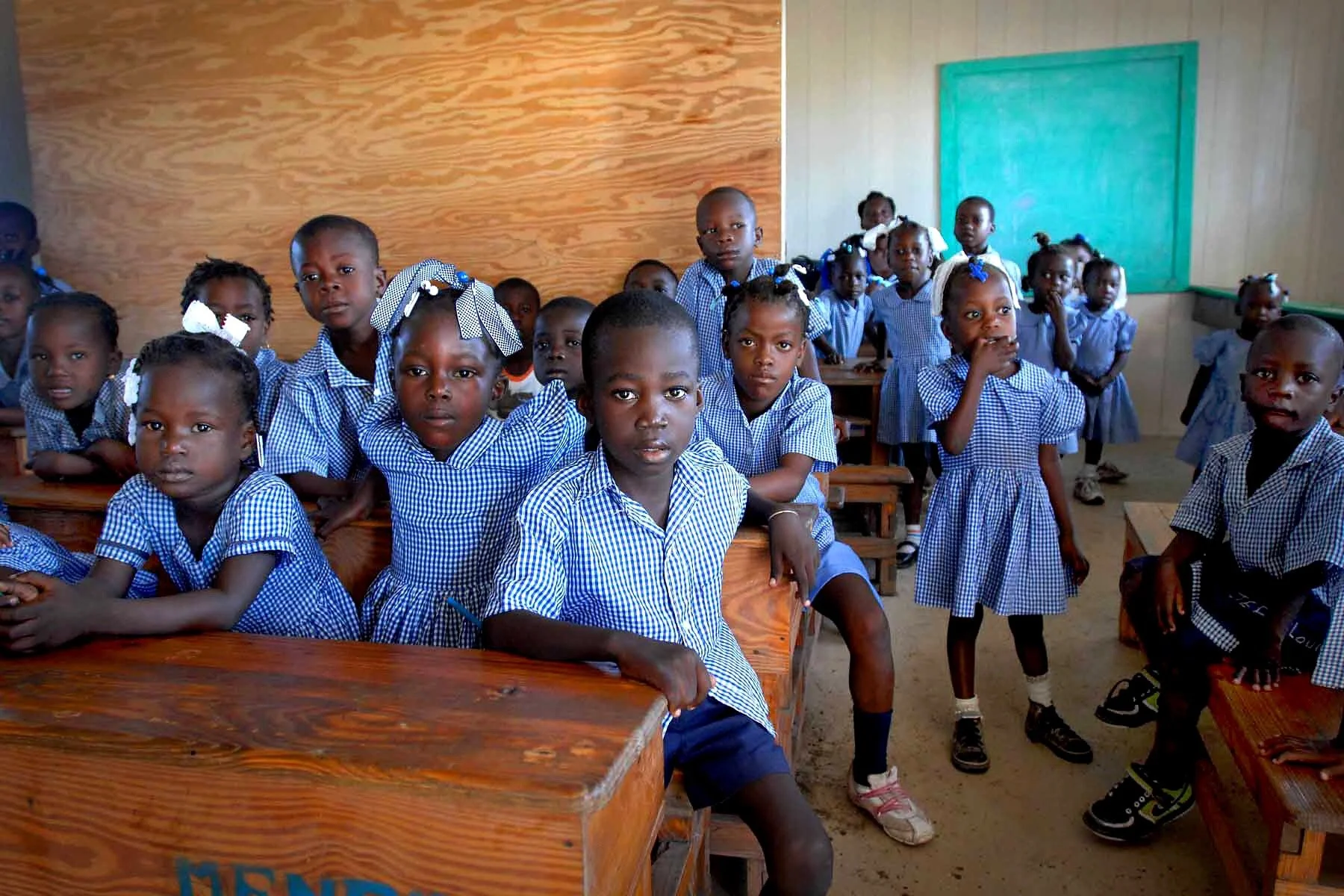
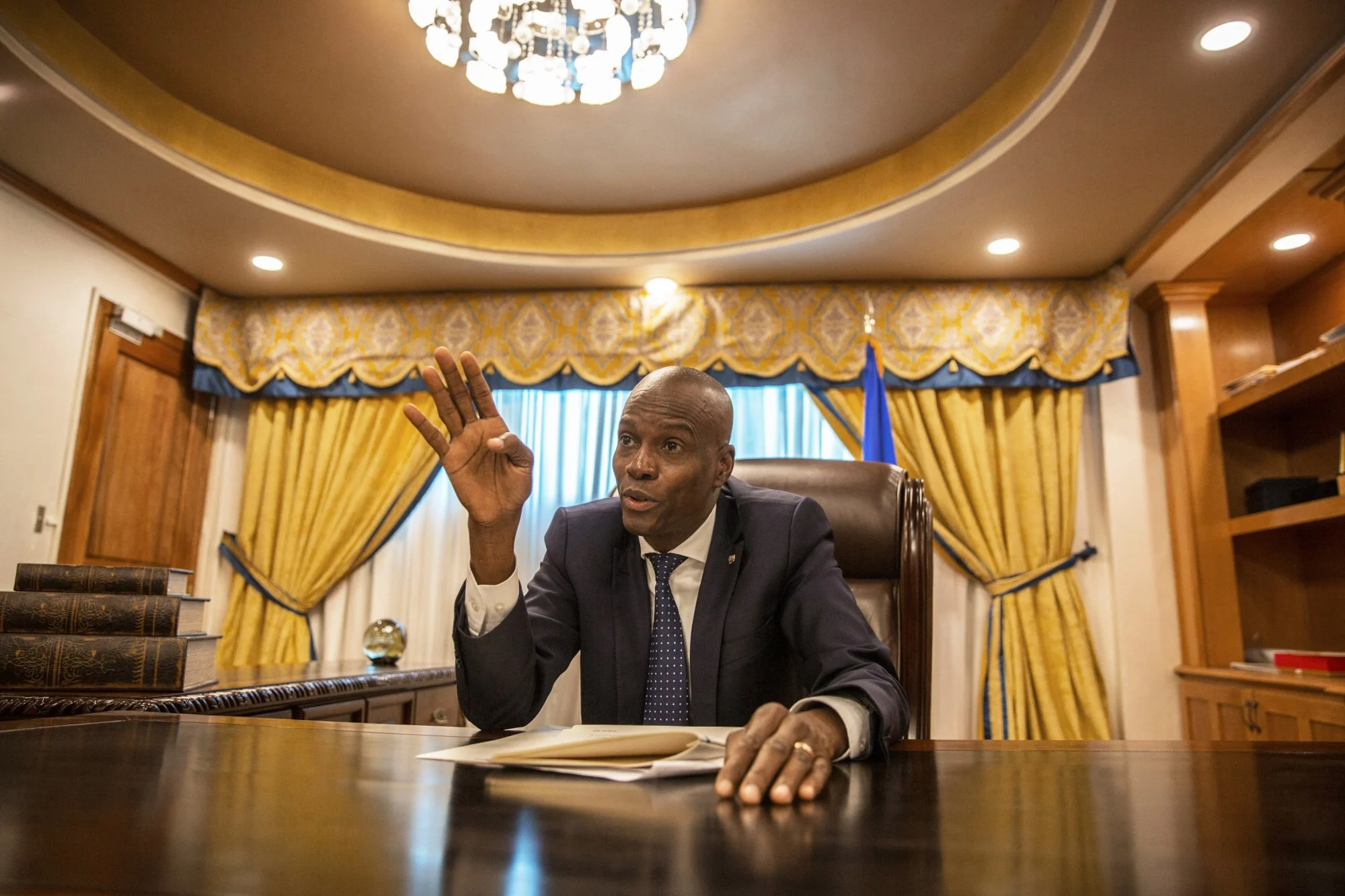
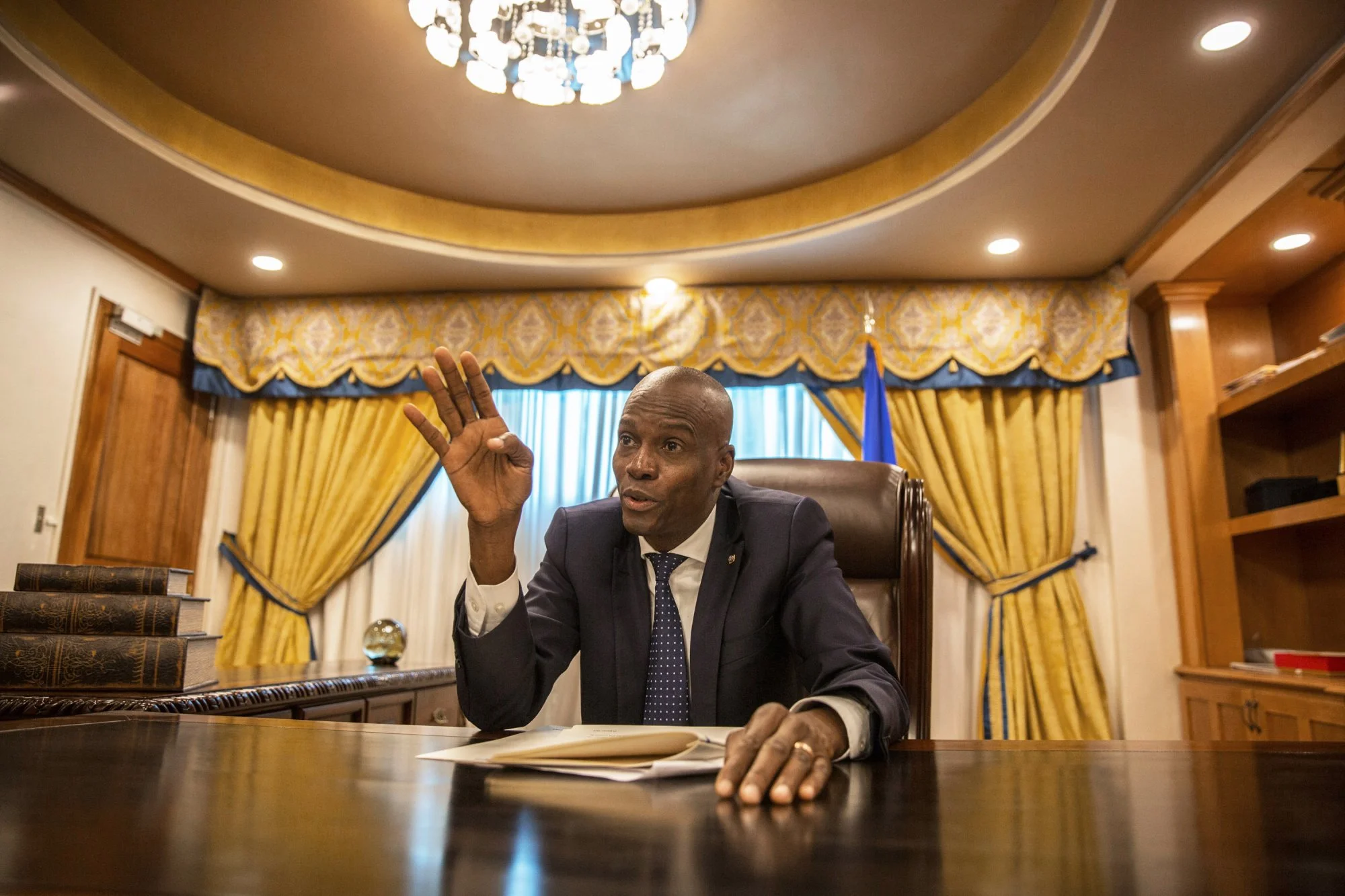
President Donald Trump may have a point when he says the U.S. is wasting money sending aid to foreign countries. And that’s according to the president of one of Trump’s “shithole” nations.Haiti President Jovenel Moise said he was “taken aback” by the “bizarre” derogatory remark Trump allegedly made about Haiti in a White House immigration meeting last month. First reading about it on Twitter, Moise summoned U.S. diplomats for an explanation, one of whom was “embarassed“ and “at a loss for words,“ he said.
Despite the undiplomatic language, the two leaders would find common ground when it comes to foreign aid. Trump has threatened to cut funding and complained that the U.S. hasn’t received enough in return from foreign countries. Moise said billions have been squandered in Haiti.“Right now in Haiti, the money of foreign taxpayers, your money, is being wasted,” the president said in an interview in Port-Au-Prince. “Every year we receive $1.2 billion to $1.4 billion in aid, or more. However, it’s all consumed in a state of disorder that constitutes public international development aid.”Haiti, the poorest country in the Western Hemisphere, has received attention in recent months as Trump has pushed to overhaul U.S. immigration policy, favoring educated, skilled workers over immigrants from poor nations in Latin America and the Caribbean. The administration removed Haiti from a list of countries eligible for temporary work visa programs and plans to end a program protecting tens of thousands of Haitians from deportation.
‘Republic of NGOs’
Trump allegedly described Haiti and unspecified African nations as “shithole countries” in a heated discussion about immigration reform with U.S. lawmakers on Jan. 12. He subsequently posted on Twitter that he, “Never said anything derogatory about Haitians other than Haiti is, obviously, a very poor and troubled country.”
Moise, an entrepreneur who built a banana export business before taking office just weeks after Trump was inaugurated, said migration benefits all countries and that Haitians have made substantial contributions to the U.S. economy and culture. According to the Pew Research Center, about 110,000 undocumented Haitian immigrants live in the U.S., including those with protected status.Moise aimed his strongest criticism not at Trump, but at the way foreign aid has been administered in Haiti, a country with so many charities it’s been referred to by academics and local press as the "Republic of NGOs.”While he acknowledged Haiti still needs foreign funding, Moise said the Haitian government had been put “in hibernation” while multilateral organizations, charities, foreign governments and non-governmental organizations have wasted billions on development projects that are overpriced and inefficient.“If during the past 40 years the billions of dollars that were spent to assist in Haiti’s development did not provide the expected results, it’s because the paradigm, and approach must change,” Moise, who spoke mostly in Creole and French, said via a translator. “Haiti must have the ability to obtain loans for investments needs, to create wealth, to invest more, to provide electricity 24 hours a day.”
Government Plan
The Caribbean country of nearly 11 million has received $5.1 billion in aid from the U.S. alone since the 2010 earthquake, according to the U.S. Agency for International Development. The quake devastated the country, killing at least 200,000 people, leaving 1.5 million homeless and leveling much of its fragile infrastructure. Billions poured in from donors in the years that followed.Yet, the money has done little to address poverty. Haiti’s per-capita gross domestic product declined to $761 in 2017, according to the International Monetary Fund. Neighboring Dominican Republic, which shares the island of Hispaniola with Haiti, has a per capita GDP nearly 10 times higher.Haiti’s history of political instability -- marked by a series of coups in the 1990s and 2000s -- corruption and weak institutions have made charities and foreign donors wary of turning over funds to the government.Moise said he has held talks with the IMF, the World Bank, foreign governments and other organizations about giving the government more control. He wants aid agencies to follow a development plan that prioritizes the construction of a nationwide electricity grid, schools and health clinics, reforesting the countryside, and building roads. His four-year plan calls for $1.8 billion of investment.The government last year launched pilot projects in those areas, including one that equipped local public works departments to build roads for a fraction of the price that they were previously being constructed, he said. Moise keeps three toy construction trucks on his nearly empty wood desk in temporary government buildings located beside the remnants of the national palace that was destroyed during the quake.“We’re saying now we want to think of, conceive and implement the development ourselves,” he said. “It’s not that we’re telling our partners to leave, but we want to do it in a state of accountability.”
“So even if I’m here and I feel good my friends are aware of this I’m still bitter, very bitter.”
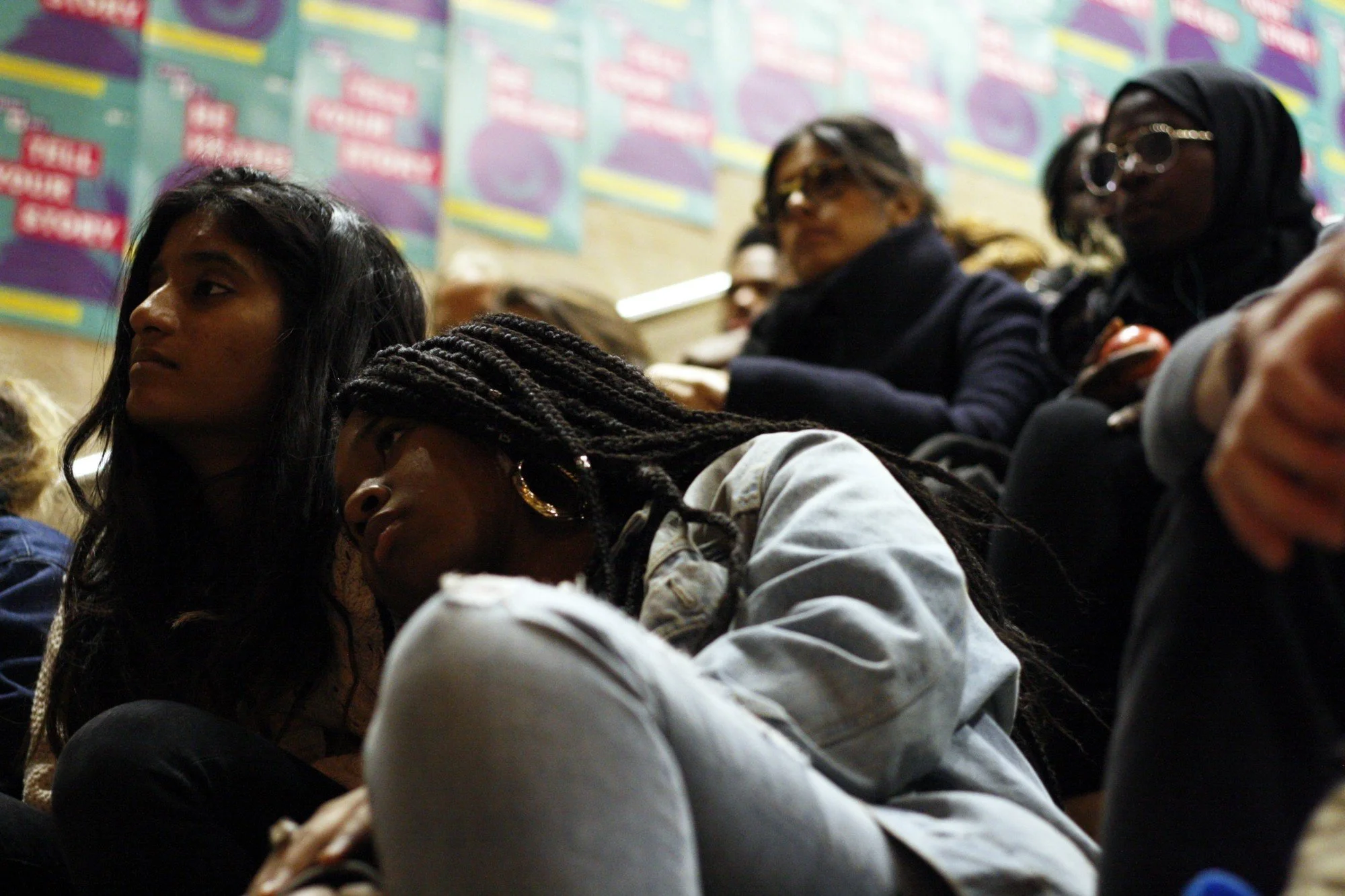
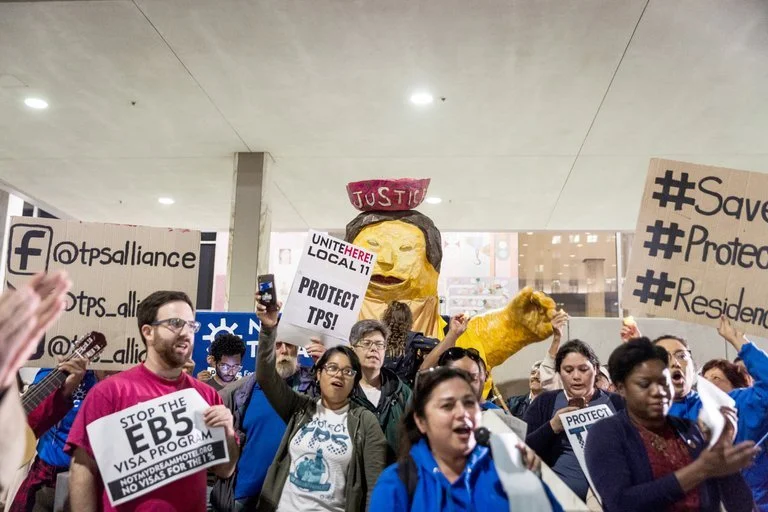
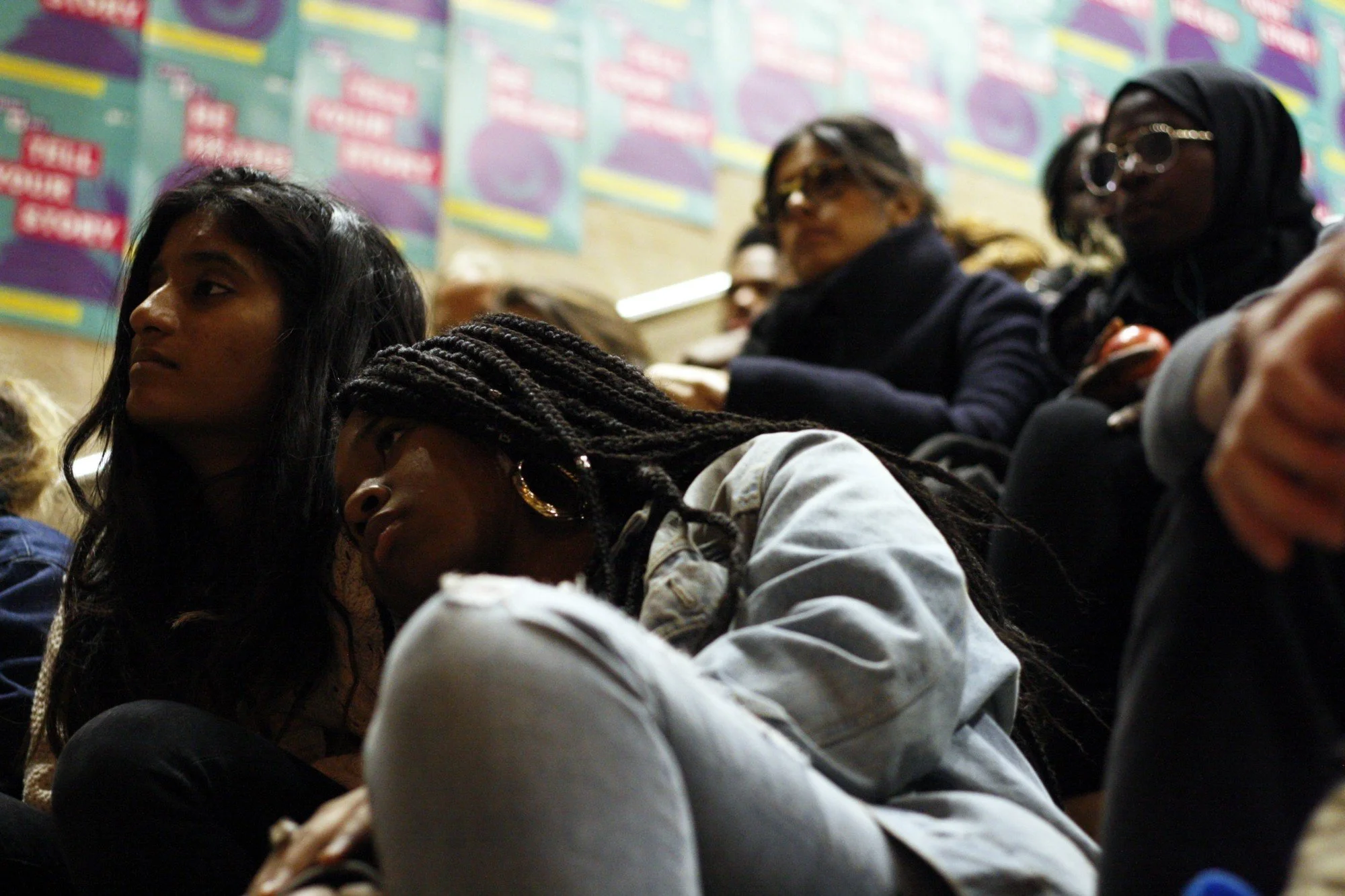
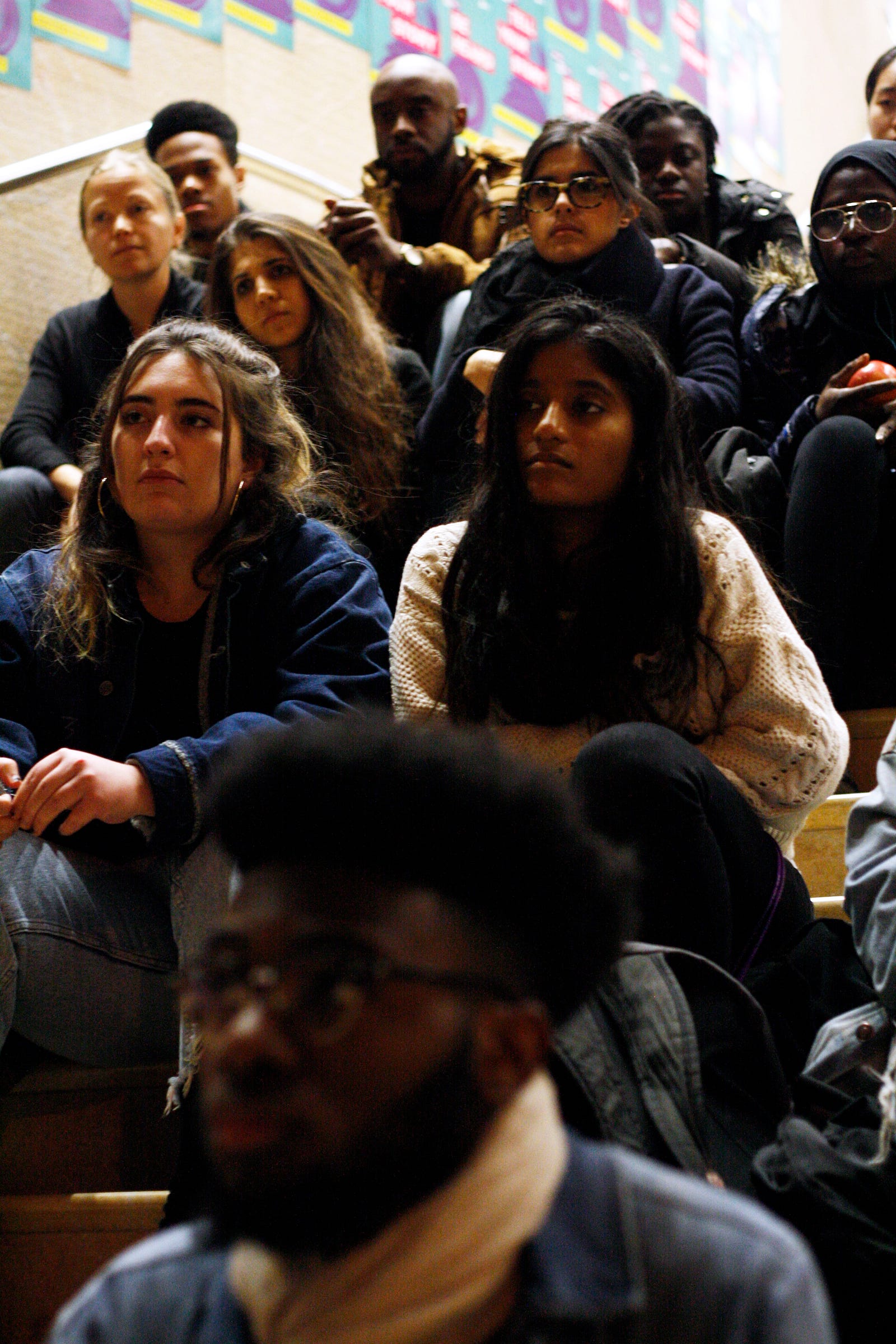
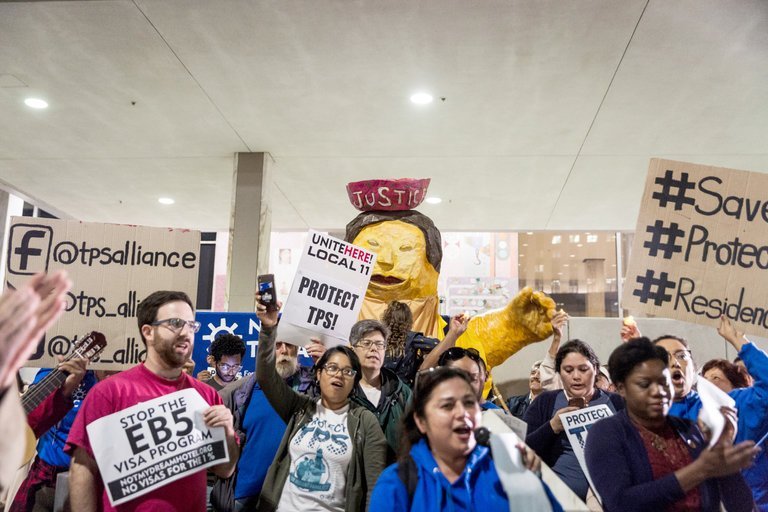
“When I say Haiti, you say ‘Rise Up,’” Mathania Toussaint, the PR chair for Haitian American Student Association (HASA), instructed the group of students and allies gathered on the steps of Kimmel Thursday night. Toussaint lead them in the chant, which swelled with each call and response.
This was the scene from the sit-in, organized in response to the Trump administration’s recent decision to strip immigrants of their Temporary Protected Status (TPS). HASA said it was necessary to bring attention to the move, which will affect immigrants from Honduras, Nicaragua, Sudan and Haiti, because they believe the issue has been overlooked in discourse regarding immigrant struggles.
“After we first found out about the decision, HASA was kind of scrambling because we found out about it over Thanksgiving break and had a planned meeting,” Toussaint said. “So we flipped everything because this is more important. We need to talk about TPS. Trump has systematically removed immigrants of color from the U.S., it’s been group by group.”
Initially, Toussaint expressed qualms about the prospect of organizing the demonstration because she hadn’t planned a protest before. But the reaction from students, especially Haitian students like sophomore Fatima Julien, made it abundantly clear her decision to highlight this issue was necessary.
“After finding out about the TPS removal, I was like ‘Shit, what are we going to do…What can I do?’” Julien said. “Then finding out about the sit-in I harassed all my social media followers saying ‘Come: if you’re a social justice type I’m taking attendance.’”
“Being here, especially during the chant,” Julien continued, “I got a little emotional but it was good. It feels nice to be able to say that I was here and that my friends know about it.”
Julien, who immigrated to the U.S. two years ago, has family members who will be directly affected by the decision: a sister will have to return and cousins that were trapped under the rubble of the massive 2010 earthquake, will also be forced out of the U.S. In light of their trauma, Julien expressed trepidation about them returning to Haiti.
Despite those fears, she also made it clear she and her family would continue fighting to ensure everyone remained in the states.
Albert Saint Jean addresses attendees.
The sit-in was planned to operate with the goals of bringing attention to the TPS matter and educating attendees on ways to help those affected going forward. Albert Saint Jean, the New York organizing fellow at the Black Alliance for Just Immigration (BAJI) and Ellie Happel an NYU Law graduate, both provided information on the latter.
Saint Jean recommended students reach out to organizations such as Haitian Women for Haitian refugees, Haitian Americans United for Progress and, the one he’s a part of, BAJI. “Because we’re actually in the communities doing work, helping people to get legal access,” he explained.
He added that often the help impacted communities need isn’t complex and can be as simple as assisting a family with filing paperwork.
Similarly, Happel suggested that helping the Haitian community could be very doable right here at NYU — with NYU Law and undergrads collaborating to monitor what’s happening in Congress, in Haitian neighborhoods and responding accordingly.
After the sit-in’s moment of silence for Haitians affected by the cholera epidemic the nation is still recovering from, attendees began to gather their belongings to leave. HASA president, Fabrice Juin, left those gathered with a final message.
“I personally only see things like these — sit-ins — as beneficial and productive if every single one of you leaves the space with more knowledge and ready to help physically and tangibly,” Juin said. “Thank you for showing up but I also want to let you know pay attention and ask yourself ‘What can I do in my own way to help the cause?’”
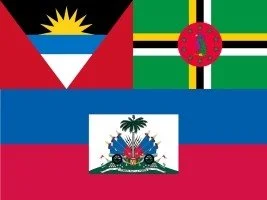
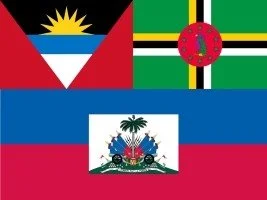
After providing urgent humanitarian aid to Turks & Caicos Islands, badly affected by the passage of hurricanes Irma and Maria (630 generators, 1,000 sheets of plywood, 4,500 tarpaulins, 2,000 gypsum boards and 4,000 sheets among others). Permanent Representative of Haiti to the UN, Ambassador Denis Regis at the last high-level donor conference for the Caribbean in New York, announced Haiti's assistance to the Antigua and Barbuda Islands and Dominica $ 250,000 each.In his speech, Ambassador Regis explained "[...] The Republic of Haiti, having been hit hard by a series of deadly natural disasters over the last 10 years, [...] knows from experience the multiplicity of obstacles to which is faced the reconstruction and rehabilitation of critical infrastructure, especially in countries such as ours or structural handicaps are legion and the public investment capacity is so precarious [...][...] in response to the recent call by the CARICOM countries, I have the honor to announce that the Government of Haiti, despite the difficult economic and financial situation of the country, but fully involved in international solidarity is pleased to contribute US $ 250,000 to the reconstruction efforts of each of the sister nations of Antigua and Barbuda and Dominica, so hard hit by hurricanes Irma and Maria [...][...] These contributions, although modest, are nonetheless a testimony of friendship and fraternity, in the tradition of mutual aid and regional solidarity of the Caribbean Community, and in the spirit of international cooperation [...]"By: HL/ PI/ HaitiLibre | November 30,2017
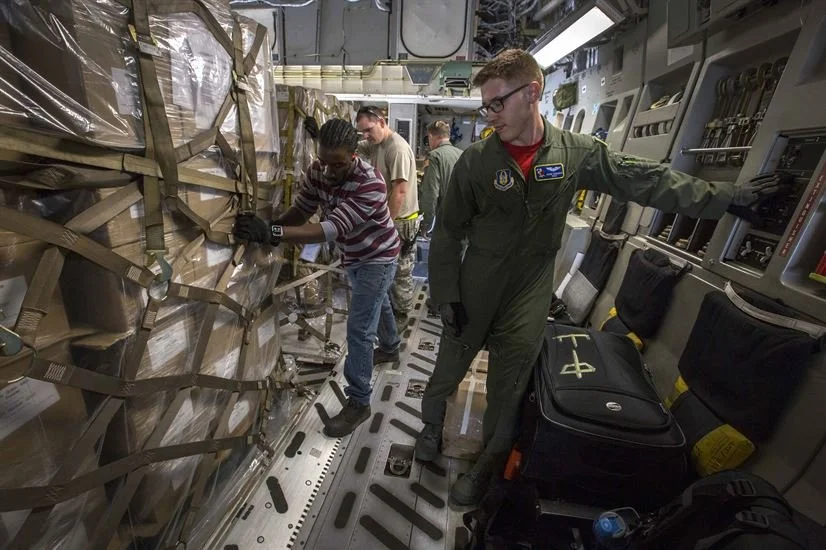
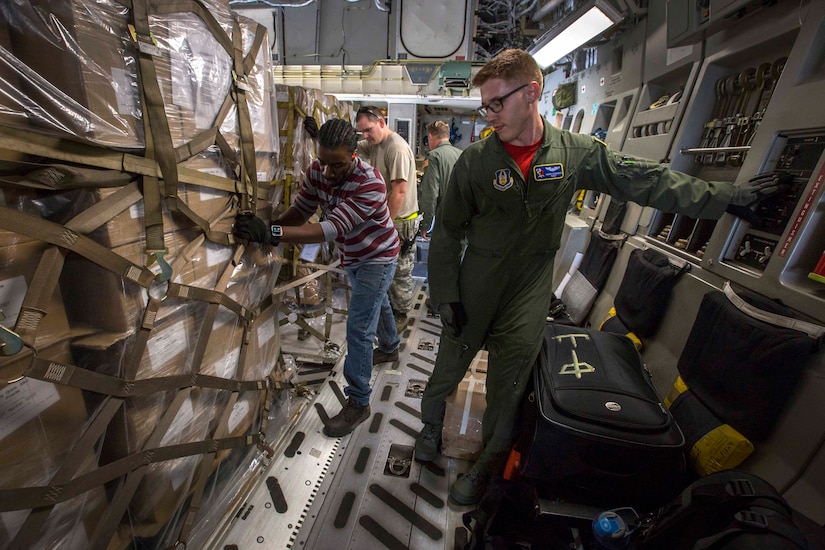
PORT-AU-PRINCE, Haiti, Nov. 27, 2017 — What can 15 airmen and a C-17 Globemaster III aircraft do on a Denton Program mission? A lot, if they're from the Air Force Reserve Command's 514th Air Mobility Wing.
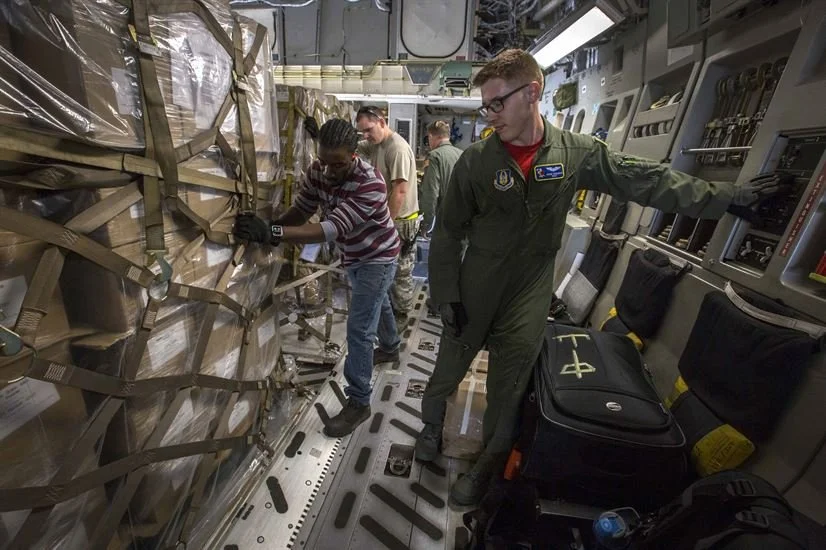
On Nov. 18, four pilots and a loadmaster with the 732nd Airlift Squadron, a loadmaster and two crew chiefs with the 514th, three Phoenix Raven Team members, and four 514th Security Forces airmen delivered 15 pallets of food, weighing 76,410 pounds, to Haiti."It's a high priority to get food down there," said Air Force Senior Master Sgt. Shawn R. Reynolds, a C-17 loadmaster with the 514th Air Mobility Wing. "Just the sheer volume of food we moved was impressive."The humanitarian mission, accomplished through the Denton Program, delivered fortified rice and soy protein and barley grass juice powder to Haiti. This was Reynolds' fifth Denton mission."That food will be used for a nutrition program for orphans and school children," said Jean Lubin St. Marc, executive director of Mission of Hope. "We appreciate the U.S. military that bring Denton cargo to us."Deliveries Began after 2010 EarthquakeSince a 2010 earthquake in Haiti killed more than 100,000 people, the 514th has delivered supplies and equipment through the Denton Program to Haiti. The program was an amendment to the Foreign Assistance Act of 1987, and it is named in honor of U.S. Sen. Jeremiah Denton, a former Navy pilot and Vietnam prisoner of war."Delivering relief supplies is one of the more rewarding missions we do," said Air force Lt. Col. Samuel F. Irvin, a C-17 pilot and the commander of the 732nd Airlift Squadron.Irvin has been on more than a dozen Denton missions during the past 10 years.The program is jointly administered by the U.S. Agency for International Development, the State Department and the Defense Security Cooperation Agency. It enables Americans and U.S. based nongovernmental organizations to use available space on military cargo aircraft to transport humanitarian goods -- agricultural equipment, clothing, educational supplies, food, medical supplies and vehicles -- to countries in need."This is the first time it has been strictly food," said Air Force Maj. Lee C. Schmeer, a 732nd Airlift Squadron C-17 pilot. "Usually it has been a mixed bag -- tractors, forklifts, trailers, and flatbed trucks, along with food."To give some perspective on how much cargo a Globemaster can handle, it can carry an M1A2 Abrams tank, which weighs 130,000 pounds, and still have room for 40,000 pounds more cargo.Cargo HubThe crew received the cargo at Joint Base Charleston in South Carolina, which is the cargo hub for the Denton Program. In 2016, Joint Base Charleston supported 85 missions to 10 countries delivering 609 pallets of cargo and 22 vehicles."We're in a position to help and we're happy to help," Schmeer said.While the Denton Program helps countries and people in need, it also serves military personnel. Aircrews that need to get qualified or have their qualifications updated volunteer for a Denton mission, and additional training will be scheduled during the mission."We schedule training at the bases we visit for our aircrews," Irvin said.During this mission, which began Nov. 16 and ended Nov. 19, the 514th Security Forces Squadron's combat arms training and maintenance team trained four C-17 pilots and two loadmasters at the pistol range at Naval Air Station Pensacola in Florida."By using our training time, it's a win-win for everyone," Reynolds said.Delivering the supplies was a team effort. In this case, the security forces airmen pitched in, helping to unload cargo."Moving Denton cargo is satisfying for me," Reynolds said. "We are moving something that matters."By: Air Force Master Sgt. Mark C. Olsen514th Air Mobility Wing for the US Department of Defense | November 27, 2017
The Trump administration is ending a humanitarian program that has allowed some 59,000 Haitians to live and work in the United States since an earthquake ravaged their country in 2010, Homeland Security officials said on Monday.
Haitians with what is known as Temporary Protected Status will be expected to leave the United States by July 2019 or face deportation.
The decision set off immediate dismay among Haitian communities in South Florida, New York and beyond, and was a signal to other foreigners with temporary protections that they, too, could soon be asked to leave.
About 320,000 people now benefit from the Temporary Protected Status program, which was signed into law by President George Bush in 1990, and the decision on Monday followed another one last month that ended protections for 2,500 Nicaraguans.
Haiti, the poorest country in the Western Hemisphere, is still struggling to recover from the earthquake and relies heavily on money its expatriates send to relatives back home. The Haitian government had asked the Trump administration to extend the protected status.
“I received a shock right now,” Gerald Michaud, 45, a Haitian who lives in Brooklyn, said when he heard the news. He has been working at La Guardia Airport as a wheelchair attendant, sending money to family and friends back home. He said he feared for his welfare and safety back in Haiti now that his permission to remain in the United States was ending.
“The situation is not good in my country,” he said. “I don’t know where I am able to go.”
Haitians are the second-largest group of foreigners with temporary status. The protection is extended to people already in the United States who have come from countries crippled by natural disasters or armed conflict that prevents their citizens from returning or prevents their country from adequately receiving them. The government periodically reviews each group’s status and decides whether to continue the protections.
The Obama administration renewed the protections for Haitians several times, after determining that conditions in Haiti remained precarious. But the Trump administration, which has sought greater controls on immigration, has said that the program, which was intended to provide only temporary relief, has turned into a permanent benefit for tens of thousands of people.
In a statement, the Department of Homeland Security said that after meeting with Haitian government officials and Haitian communities in the United States, it had decided to let the protections end.
“Since the 2010 earthquake, the number of displaced people in Haiti has decreased by 97 percent,” the statement said. “Significant steps have been taken to improve the stability and quality of life for Haitian citizens, and Haiti is able to safely receive traditional levels of returned citizens.”
The protection for Haitians was most recently extended in May, by John F. Kelly, the Homeland Security secretary at the time. He allowed only a six-month extension, a shorter one than is typical, saying that the Haitians “need to start thinking about returning.”
The decision on Monday by Elaine Duke, the acting secretary, set a termination date of July 2019 to give people time to make arrangements to leave.
The largest group of Temporary Protected Status beneficiaries, nearly 200,000 people, are from El Salvador. The Department of Homeland Security is scheduled to announce next month whether it will rescind or renew protection for that country, which is plagued with gang violence and high unemployment. The protection applies to Salvadorans who were in the United States without permission on Feb. 13, 2001, and was granted after deadly earthquakes in their home country.
Though Ms. Duke ended protections for Nicaraguans last month, she continued, at least for now, protections for Hondurans despite pressure from Mr. Kelly, now President Trump’s chief of staff, to end them.
Others who now benefit include people from Nepal, Somalia, Sudan, South Sudan, Syria and Yemen. In 2016, the Obama administration decided to end temporary protection for citizens from three West African countries that had been devastated by the Ebola virus several years ago.
The United States offered the protection to Haitians after the earthquake in January 2010 that killed hundreds of thousands of people, displaced more than a million and led to a cholera outbreak. Haitians who entered the United States within a year of the disaster qualified for the status.
A variety of American groups, including the Congressional Black Caucus, the United States Chamber of Commerce and immigrant advocacy organizations had urged the Trump administration to extend the protections again. On Monday, Senator Bill Nelson, Democrat of Florida, called the decision “unconscionable.”
“There is no reason to send 60,000 Haitians back to a country that cannot provide for them,” he wrote on Twitter. “I am strongly urging the administration to reconsider.”
There is no reason to send 60,000 Haitians back to a country that cannot provide for them. This decision today by DHS is unconscionable. And I am strongly urging the administration to reconsider. Ultimately, we need a permanent legislative solution. https://t.co/Ft0bE0itf6— Bill Nelson (@SenBillNelson) Nov. 21, 2017
Ileana Ros-Lehtinen, a Republican congresswoman from South Florida, said on Twitter that she had traveled to Haiti after the earthquake in 2010 and after Hurricane Matthew in 2015. “So I can personally attest that Haiti is not prepared to take back nearly 60,000 TPS recipients under these difficult and harsh conditions,” she said.
I travelled to #Haiti after the earthquake in 2010 and after hurricane Matthew in 2016. So I can personally attest that #Haiti is not prepared to take back nearly 60,000 #TPS recipients under these difficult and harsh conditions.— Ileana Ros-Lehtinen (@RosLehtinen) Nov. 21, 2017
Those with temporary protection constitute about half of the estimated 110,000 Haitians living in the United States without permanent permission, according to the Pew Research Center. Since Mr. Kelly signaled that Haiti might lose its special designation, thousands of Haitians have crossed the border between the United States and Canada to apply for asylum in Quebec.
Nearly 30,000 children have been born in the United States to Haitians with protected status. Those children are citizens and entitled to stay. Some of their parents may seek to avoid deportation by claiming it would cause extreme hardship to a United States-born child, but that option is limited.
Most will soon have to make a wrenching decision: take their children back to Haiti; leave them with relatives or guardians in the United States; or remain in the country illegally and risk arrest and deportation.
Mark Silverman, an attorney and director of policy at the Immigrant Legal Resource Center in San Francisco, said that if they are arrested, they would be entitled to deportation hearings. And contesting their cases “gives them at least seven to 10 years,” he said, because of the long backlogs in the immigration courts.
The decision is sure to be felt in Haiti, where remittances from the Haitian diaspora totaled $2.36 billion in 2016, an increase of 7 percent over the previous year, according to the World Bank. That money represented more than one-fourth of the country’s national income.
But Dan Stein, president of the Federation for American Immigration Reform, which lobbies for restrictions on immigration, said the cancellation of temporary protections for Haitians was “long overdue.”
“The notion that this would be reflexively renewed again and again is a corruption of the entire concept,” said Mr. Stein, adding, “it’s not a refugee program or an immigration program.”
“It’s supposed to be reviewed and it’s supposed to be temporary,” he said.
One of the younger beneficiaries of the program, Peterson Exais, barely survived the earthquake. He arrived in the United States when he was 9 years old to receive emergency medical care after surviving for days under the rubble. He endured more than a dozen surgeries and has become a promising dancer at a magnet school in Miami.
Now 17 years old, he dreams of pursuing studies at the Juilliard School.
“This is very devastating for me,” he said on Monday. “I might not be able to give all that I could give back if I went back to Haiti.”
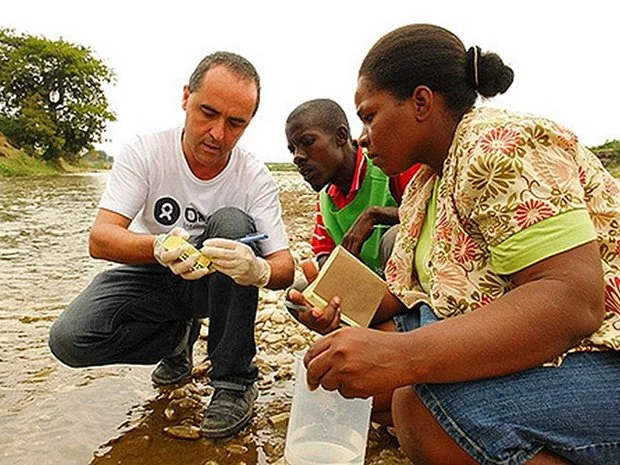
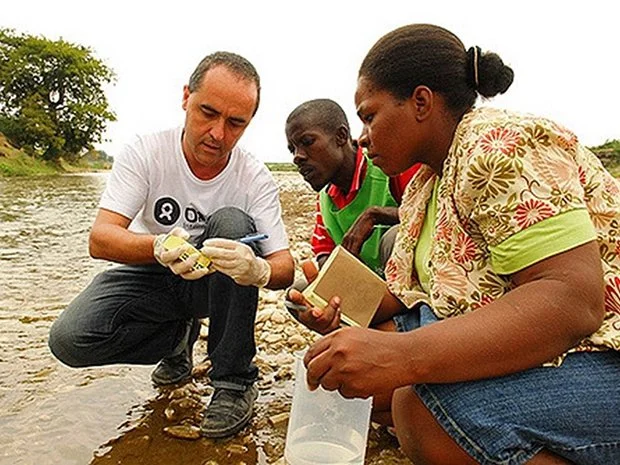
Global health experts don’t worry about if a major infectious disease outbreak will occur; it’s just a matter of when.A daunting barrier in that ongoing fight against infectious diseases—including malaria, dengue fever, Zika and more—is the ability to detect infectious agents in the environment before an outbreak begins.In June, the Vodafone Americas Foundation recognized a technology attempting to tackle exactly that problem in its ninth annual Wireless Innovation Project competition. A Purdue University spin-off called PathVis won first place and $300,000 for a smartphone-based platform designed to enable anyone to rapidly measure the level of a pathogen in an area and report back to health authorities with real-time data of when and where that pathogen was detected.Thanks to the award money, the team will take their prototype to Haiti in November and work with the Emerging Pathogens Institute to test its ability to detect cholera bacterium in water. Cholera is a highly infectious disease marked by watery diarrhea that can kill within hours if left untreated. It is transmitted through contaminated food and water. The World Health Organization estimates that there are up to 143,000 deaths each year due to cholera.The technology stems from work done over the last several years in the biomedical engineering labs of Jacqueline Linnes and Tamara Kinzer-Ursem at Purdue. In collaboration with Purdue mechanical engineer Steven Wereley and his postdoc Katherine Clayton, Kinzer-Ursem developed a method to measure Brownian motion, the erratic and random movement of microscopic particles in a fluid.The team first used the method to measure the presence of proteins in solution: When proteins fall apart in the presence of tiny beads—from 1 micron down to 100 nanometers—in a liquid, it increases the viscosity of the solution, and the researchers were able to detect the slowing motion of the beads.Kinzer-Ursem then enlisted Linnes, an expert in pathogen detection, to apply the same idea to detect DNA in solution. The team perfected their technique under a microscope, but then decided they could shrink the technology.(PathVis from Vodafone Americas Foundation on Vimeo.)“All we needed was a microscope, a camera to capture images, and a computer to crunch the algorithms. And we thought, well, we carry these computers and cameras around in our pockets everyday. Why not make this portable?” recalls Kinzer-Ursem.So they adapted the system for a smartphone. A user puts a sample of liquid, say, potentially contaminated water, into a small microfluidic chip attached to a smartphone. If cholera bacterium DNA is present, a chemical reaction on the chip will copy that DNA over and over, producing many DNA strands that increase the viscosity of the solution. If the bacterium is not present, there is no change in the liquid.
The user then takes a short video of the sample using the phone’s camera equipped with a small microscope. An accompanying app processes and analyzes the video for changes in Brownian motion of the liquid. The app then flags the sample as contaminated or not.Currently, the platform provides results in less than 30 minutes, compared to the five days it normally takes to send a water sample to a lab and get a result, says Kinzer-Ursem. Plus, a GPS tag in the app records the exact location where the sample was taken, so that locations can be compiled in a map for health officials. “The whole idea is that they can use this information to efficiently target where their resources need to go,” she notes.Cholera isn’t the only disease in PathVis’s crosshairs. The team is also adapting the technology to detect malaria in patient blood samples in collaboration with Indiana University’s School of Medicine, and hopes to also apply it to HIV and dengue virus detection.
Haiti (MNN) — When Hurricane Irma was barreling towards the Caribbean as the Atlantic’s strongest Category 5 storm ever recorded, many feared the worst for Haiti — the poorest nation among in the Caribbean Islands.Thankfully, Haiti did not take a direct hit from Irma, but as Josh Ayers with Food for the Hungry explains, “Because of the sheer size of Irma, she dropped quite a bit of rain…along [Haiti’s] northern coast there. There was some localized flooding, particularly along rivers and with storm surge along the coast. We did see quite a bit of flooding.”Nearly 40 percent of the Haitian population faces moderate to severe food insecurity. And now according to Haiti’s agriculture ministry, around 18,000 farming families have lost all their food crops to Hurricane Irma.Additionally, one of the biggest fears now is a resurgence of cholera in the nation. Ayers says, “You may recall after the 2010 earthquake that cholera was introduced to Haiti for the first time. So anytime you have large amounts of water flowing in a country that doesn’t enjoy the same level of infrastructure development that countries like the United States enjoys, you often see waterborne illnesses spike. So with the introduction of cholera in the last ten years there, that has become a key concern going forward in the future.”Cholera is contracted when a person consumes human feces, typically through accidental water contamination. It leads to a severe form of diarrhea and can cause death if not treated. And Haiti is extremely vulnerable to cholera outbreaks in natural disasters.“Our response effort at Food for the Hungry has been focused on those waterborne illnesses; particularly around hygiene promotion and hygiene kits, and so those kits consist of things like soap and basic hygiene materials. We dispatched a shipment from one of our partners in Georgia and those materials are on their way. They may have already arrived and we’ll be distributing those shortly.”FH works through the local church whenever possible, enabling them to be the hands and feet of Christ to their own communities. “Because the local church [in Haiti] is under-resourced, as you might imagine, Food for the Hungry can provide much-needed goods and finances to empower that local church to reach out to its neighbors.”As FH strives to stem an outbreak of waterborne diseases in Haiti following Irma, they’re asking for the Body of Christ to come alongside them in a few ways.First, Ayers says, “Your prayers would be welcomed for the local church as well as the local organizations who are responding, Food for the Hungry being one of those. We’ve been working in Haiti for decades. Most of our staff are local Haitians and so sometimes they’re families are impacted by these things. You can pray for our staff.”And finally, you can be a tangible support through generous giving, and know that your gift is going to resource the Haitian Church acting as the hands and feet of Christ to their neighbors in disaster recovery.By Lyndsey Koh | September 25, 2017
Turbulent times and Haiti have gone hand-in-hand over the years. From inclement weather to internal strife, it’s a way of life for the island nation, which just survived hurricane Irma.
Football then is a lifeline in these parts, giving Haitians a reason to celebrate each time the boys take to the field, whether in a local game or during competition. The distraction is both welcome and needed, bringing relief to a nation and its hopeful youngsters, who dream of alleviating their misery through the beautiful game. When it’s the World Cup, Haiti comes to a standstill.Fabien Vorbe, 27, who signed for I-League club Neroca FC this season, is all too familiar with it, given that he was instrumental in helping Haiti qualify for the Fifa Under-17 World Cup in 2007. While growing up in the capital, Port-au-Prince, it didn’t take him long to catch the football bug that had long infected the Vorbe family.
“In Haiti, if you say my last name, the first thing that comes to anyone’s mind is football. All my uncles and cousins play football, whether professionally or as a hobby. Even the women in our family are football addicts. My uncle (Philippe Vorbe) started it all when he played in Haiti’s only Fifa World Cup in 1974,” Vorbe says.Haiti had stunned competition in the region by clinching the CONCACAF Championship, an association football tournament, in 1973. It helped them qualify for the World Cup in (West) Germany the following year.
Philippe, was an integral part of the squad, which was drawn in a tough group alongside Italy, Argentina and Poland. The Haitians lost all three matches, but the tournament produced an epic moment in World Cup history when Emmanuel Sanon scored against the Italians in the opener. The assist was a perfect through ball in space from Philippe, as Sanon outran his marker, cut past a diving Dino Zoff and slotted the ball in an empty net.
It wasn’t like Haiti registered an upset win through that goal; Italy were 3-1 winners eventually. However, the striker had wrecked an Italian defence, which had not conceded in 12 games that stretched back to September 1972. In goal was the legendary Zoff, who had also been a part of a stubborn Juventus side that had gone without conceding a goal in the league for an incredible 903 minutes.The rest of the tournament was rather forgettable, but for Haiti and its people, just qualifying for a World Cup, clubbed with Sanon’s heroics, meant the world.“It is obvious why from such a young age I started playing the sport. In fact, my mother and godmother founded the team FC Shana just for the purpose of pushing my cousin and me into football and trying to make our dream a reality. It is today the biggest youth football academy in Haiti,” says Vorbe.Under the watchful eye of his mentors, Vorbe learnt the tricks of the trade. All that changed in 2004 when Haiti was rocked by a revolt that disrupted daily life in general, let alone football. One moment, 14-year-old Vorbe was at school studying, the next, they would hear of violence erupting in the streets and had to rush home as soon as possible.Even as the political situation improved, Haiti was constantly rocked by torrential rains, hurricanes and heavy flooding that brought devastation time and again between 2004 and 2007. At a time the nation needed relief, yet again, it was football that was the saviour, this time through the exploits of the Under-17 team.In Honduras in April 2007, Haiti got their qualifying campaign underway for the Under-17 World Cup that would be played in South Korea later that year. Haiti started with a draw against Honduras (1-1) and Mexico (0-0), followed by a win over El Salvador (3-0), with Vorbe scoring in both games. As Group A toppers, they booked their berth for the World Cup, sending Haiti, across the Caribbean Sea, into raptures.“We stunned the world by finishing toppers, even eliminating mighty Mexico. They were favourites, having lifted the trophy two years earlier in Peru,” Vorbe says.“We couldn’t really come to terms with what had happened until we landed in Haiti. There we realized the enormity of what we had just accomplished.”It was yet another moment in Haiti’s history that had given people hope, similar to what the 1974 team had done. The airport was packed with well-wishers when the team arrived, as well as when they left for Korea.
But there was more drama on hand even before the team flew out. Haiti had been drawn in a group featuring Japan, Nigeria and France.
This was about an old grudge that dated back to the 17th century, when France colonized Haiti and started an era of slavery and oppression in the nation’s history. St Dominique, as Haiti was called back then, eventually became one of their most profitable colonies. The Haitian Revolution began in 1791, and lasted for another 13 years after which the colonial rulers were defeated. Haiti earned its independence in 1804 and became the first independent black republic in the process.However, the French slave owners demanded compensation from independent Haiti. A huge sum was eventually paid, which remains a bone of contention to this day.“Ever since we saw the draw, we knew that if there was one game we had to make sure we played well, it was against France. Everyone in Haiti felt the same and made sure we knew it too. You can only imagine what the game represented for us,” Vorbe says.The 1-3 opening loss to Japan then didn’t matter, as all eyes were on the France fixture three days later. The French team comprised players such as Yann M’Vila and Mamadou Sakho, who went on to play for the senior team. As if to answer the prayers of an entire country, Haiti played a game to remember, holding the European giants to a 1-1 draw.“We actually should have won the game, having scored a late goal which was pulled back by the referee for no reason. It prompted Fifa officials to formally apologize to us at our hotel, after having reviewed the footage. We did our job though and left it all behind on the field. Our countrymen applauded it, so we were all happy at the end of the day,” he says.A 1-4 loss to Nigeria, who went on to win the tournament, brought an end to Haiti’s campaign.“But at the end of the day, we left with our heads held up high. I can never forget the moment we stepped out on the pitch against France, and sang our national anthem, soaking it all in,” he says.
The 2007 edition is the only time Haiti has appeared at the Under-17 World Cup. It gave Vorbe the experience of playing at the top level and boosted his confidence in the years to come.
After the tournament, he joined the reserve squad of French club Bordeaux, then coached by World Cup and Euro winner Laurent Blanc. He went on to ply his trade in the US, Haiti and last played in Peru.
On the advice of old buddy, Sony Norde, a Haitian who turns out for Mohun Bagan, Vorbe made his way to India and will play for Neroca this season, who qualified for the I-League after winning the second division last year.
Back home, Vorbe supports FC Shana in every way that he can, as they continue to churn out more Vorbes, who give the nation of Haiti a reason to smile every once in a while.By Bill Cooke |
Online, television, radio and print news services are awash with reports of Hurricane Harvey and Irma’s devastating effects in Texas, Florida and neighboring southeastern U.S. states, and justifiably so. Attaining record-setting proportions and sustained wind speeds, Hurricane Irma swept across the Caribbean’s Greater and Lesser Antilles from the Leeward Islands of Antigua and Barbuda to Cuba this past week, leaving a path of destruction in its wake before proceeding to batter and inundate Florida and parts of neighboring Georgia and Alabama.An executive from NextEra Energy-owned Florida Power & Light, the third largest rate-regulated utility in the U.S., said that more than half the state had lost grid power during the hurricane. That would amount to more than 10 million people. Furthermore, he added that the subsequent rebuilding effort may amount to the largest, most complex undertaking of its kind in U.S. power industry history.Hope springs eternal, however; and the devastation left in Harvey and Irma’s wake also presents golden opportunities to design and build more resilient, reliable, efficient and environmentally ways to produce, store and distribute energy and power. Rather than pitting strength against strength and using force against force, distributed solar and renewable energy services providers and their customers are designing, engineering, rolling out, operating and maintaining on-site and local power and energy systems and microgrids that promise to be more sustainable – economically and in terms of reliability, as well as when it comes to human and environmental health and integrity.That includes pioneering climate-smart solar PV-energy storage and distributed energy services providers in the Caribbean, as well as in the U.S. and worldwide. Micro-utility Sigora Haiti, for example, went to great lengths to ensure that its solar PV-battery energy storage microgrids withstood Irma’s onslaught, as well as re-energized and soon after began delivering emissions-free electricity services to some 8,000 customers in rural towns in northwestern Haiti. Their efforts have paid off.
Following a Path of Destruction
Damage caused by Hurricane Irma in Hinche, central Haiti. | Credit: UN
Hurricanes Harvey and Irma were the latest of nature’s extreme weather phenomena to reveal the weaknesses and faults in even the most modern, high-tech and disaster-hardened communications, water, power and energy grids and infrastructure. Whether living in a small Caribbean island nation or overseas territory, such as the Dominican Republic, Haiti or Puerto Rico, or in a modern city in a thoroughly industrialized country, such as Houston or Miami Beach, power grids, as well as water distribution systems and telecommunications networks, were shut down or knocked out if not completely leveled, leaving residents without critical public services.
Harvey and Irma should lend yet more urgency to current U.S. and international initiatives aimed at developing and deploying a new generation of more resilient, more efficient, socioeconomically equitable and environmentally friendly emissions-free power and energy technologies and network systems.
Occupying the western one-third or so of the Caribbean island of Hispaniola just east of Cuba, Haiti has borne more than its fair share of natural disasters and strife. Hurricane Irma strafed the Caribbean island nation, knocking down and flooding buildings, homes and roads and leaving residents along the north coast largely in the dark.Non-profit, public and private sector organizations flocked to Haiti to lend assistance in the wake of the 2010 earthquake that left large portions of the population homeless and devastated much of what existed in the way of public infrastructure. Keen to make a lasting, positive difference, some have stayed on while others have arrived and are pitching in to help Haitians with ongoing recovery efforts, as well as take on a host of persistent issues and challenges, such as population growth, unemployment, lack of education and training, deforestation, freshwater, land and natural resources degradation, agricultural production and access to safe, reliable and affordable electricity.Sigora Haiti numbers among a small but fast growing crop of sustainable energy development-minded social enterprises that have taken root in developing countries worldwide. They have found fertile ground for growth amid global efforts to reduce carbon and greenhouse gas (GHG) emissions and address longstanding issues that have been serving as barriers to sustainable socioeconomic development.
From Electrifying a Single Health Clinic to Becoming a Pioneering Sustainable Micro-Utility
Founded with the intention of bringing safe, sustainable electricity to a single health clinic, Sigora Haiti now finds itself managing just over 1-MW of solar power generation capacity and having earned a place at the leading edge of the shift to building out sustainable power and energy infrastructure and fostering equitable socioeconomic development.Sigora Haiti connected its first solar-storage microgrid customer, the Môle-St. Nicolas Public Health Clinic in the rural northwest Haitian town it was named after, in December 2015. The ambitious founders then went on to build and commission their first community solar-storage microgrid less than a year later, and then gained a concession from the Haitian government to build out microgrid infrastructure and connections to some 100,000 residents, VP of Operations Drew Lebowitz explained in an interview.Sigora is making use of solar PV, supplementing that with diesel-based power generation as needed, and integrating that with intelligent battery energy storage and smart metering communications technology. The microgrids are managed via its own micro-utility management systems platform.
Credit: Twitter @frankbergh
The sustainable energy and development start-up is in the midst of expanding from a current level of around 8,000 microgrid connections, an estimated 40,000 people. That encompasses three community microgrids – Sigora’s first in Môle-St. Nicolas, a larger system in the larger, nearby town of Jean Rabel, and a smaller, recently commissioned hybrid solar-diesel and battery energy storage “pico-grid” in the neighboring, yet remote, fishing village of Presqu’île.Management aims to increase the number of microgrid connections and residents served substantially over the course of the next six months, to around 1,500 (4,500 people) in Môle-St. Nicolas and from about 450 in Jean Rabel to around 3,000 (an estimated 15,000 people). Sigora also intends to build a new community microgrid and connect its first customers in the town of Bombardopolis over the next six months.
Building a Green, Hurricane-Proof Micro-Utility for Sustainable Development
All told, Sigora is well on its way towards achieving its phase one goal of increasing microgrid connections from 1,500 to 5,000, an estimated 15,000 people. Part B of its phase one plan entails boosting that all the way up to 27,000, or an estimated 135,000 individuals across Haiti’s northwest coastal area, Lebowitz told Solar Magazine.Sigora management is looking out over an even longer term horizon. “Our 10-year plan is to electrify 2 million people by 2025,” the company states on its website.Sigora Haiti on Sept. 6 announced that it was “taking pre-emptive action to minimize potential damage to its microgrids and protect the health and safety of its people and the wider community ahead of the anticipated landfall of Hurricane Irma.” With wind speeds exceeding 75 miles (121 kms) per hour, Irma was a rated a Category 5 hurricane at the time, the maximum on the Saffir-Simpson index scale.Forecasts called for Irma to land and make its way across Haiti’s northern coast, some 65 miles (105 kms) north of the three solar-storage microgrids the company built and operates in Môle-St. Nicolas, Jean Rabel and Presqu’île over the course of the succeeding two days.“We are expecting severe winds, flying debris, storm surge, and flooding. Any waterway, including those that are normally dry, may jump their banks and become dangerous” Lebowitz explained. “The most dangerous aspect of the storm in these towns is debris. In a high-wind scenario, everything that’s not bolted down becomes a missile.”“Our priority is providing reliable electricity to our customers and if a temporary interruption in service is necessary, we want to ensure that it is as short as possible” added Sigora Haiti’s Deputy Director of Operations Tyler Welsh.
Taking Preemptive Measures
The preventive measures Sigora Haiti enacted included pruning trees at risk of falling on power line, and reinforcing potentially unstable structures in both towns. Employees in Môle-St. Nicolas removed all the solar panels from the company’s recently completed 200-kW (kilowatt) solar array so as to prevent flying debris from damaging them, which could have caused problems bringing PV electricity production back online once the hurricane passed.Sigora Haiti management stood ready to shut down power generation and distribution preemptively when wind speeds and rainfall were at their highest, and then restore it once repairs had been made and safety and security had been assured. They also advised customers of planned grid shutdowns in advance via radio and via megaphone announcements as employees made their way through the towns, a common means of doing business and delivering products and services to customers’ homes through the Caribbean and Latin America.The company was also stockpiling water purification materials, medical kits and food at its offices in Jean Rabel and Môle-St. Nicolas. The latter is a nine-hour drive from Haiti’s capital Port au Prince and road conditions aren’t really all that good even at the best of times, management pointed out. Furthermore, In preparation for post-hurricane operations, Sigora pledged to the mayors of both towns that its work crews and equipment could be called upon to support any relief and reconstruction efforts that might have been required in the wake of Irma’s passing.Commenting on the progress Sigora Haiti was making as it carried out its hurricane preparedness plans, Lebowitz said: “It’s the community and capacity we have built locally that makes the difference. We have an incredibly capable team that is trained in technical matters and safety concerns for preparing the population, taking precautions, and being ready to put things back together whatever happens.”
Well Trained, Well Prepared, On Location and On Call
Last October, Hurricane Matthew, a Category 4 hurricane, left parts of Haiti without power for more than three weeks. Sigora Haiti was able to restore power to its Môle-St-Nicolas grid in just 55 hours, management noted. The company bested that mark, and by a wide margin, in responding to Category 5 Hurricane Irma.“Sigora Haiti has restored power to all of its 8,000 customers in Môle-St-Nicolas and Jean Rabel, in northwest Haiti following Hurricane Irma, which traversed Haiti’s northern coast in the early hours of Friday, September 8th. Sigora customers experienced less than 10 hours of down time as the Category 5 Hurricane raged offshore and tropical storm winds pummeled the coast,” management announced in a Sept. 8 press release.Management shut down all power generation around 2:30 AM local time on Friday, Sept. 8. Work crews began carrying out field inspections and grid walks to verify that grid infrastructure had not sustained any damages as soon as the hurricane passed and it was deemed safe to do so. The micro-utility’s grid systems were cleared to re-energize at around 7:40 AM and full power was restored to both towns by 11:55 that morning, local time, according to Sigora.Irma made a slight, but somewhat fortuitous change in course as it passed across Puerto Rico, sparing the towns and communities dotting the north coasts of the Dominican Republic and Haiti from taking direct hits from the hurricane’s core “eyewall,” where wind speeds are updrafts of water and water vapor are highest.That said, one Môle-St. Nicolas resident described the thoughts and feelings that ensued: “We were scared. We didn’t know if today was going to come.”
Setting a New Mark for Power Restoration
On Friday morning, Sigora work crews also began deploying equipment to support clean-up, reconstruction and general recovery efforts in the two towns. A team also was sent to Presqu’île, a remote fishing village that lies across the bay from Môle-St. Nicolas to inspect the solar PV-battery energy storage “pico grid” Sigora operates and carry out any repairs to prepare to re-energize it.
The 2.7-kWh sustainable energy system provides each of 51 households with 120-volt electricity, which enables families to light their dwellings and charge their mobile phones. Family members previously had to trek three hours to the closest town, some 5 miles (8 kms) away, and pay much more to charge their phones, Sigora pointed out.“We take hurricane preparedness very seriously – given where we are located, we have to,” Lebowitz commented. “There is a lot of talk about resilience, but this is what it looks like in practice.“It’s thanks to the preemptive action of our local teams that the grid didn’t sustain more extensive damage, and that’s what enabled us to get power back to our customers so quickly today.”By: Andrew Burger | September 20, 2017
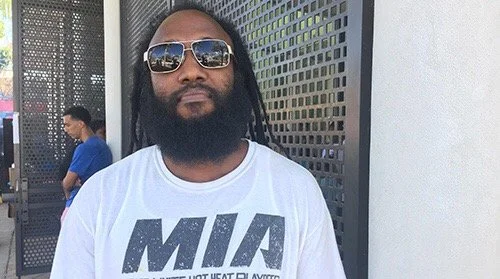
MIAMI, Fla. – In the days since Hurricane Irma knocked out his family’s electricity, Adrian Knowles (pictured above) learned that the floor is a cooler place to sleep than a bed when it’s 90 degrees and there’s no air conditioning.“You feel kind of helpless,” he said as he ate a meal of chicken and rice on Friday afternoon - a break from the cookies and chips on which he had been subsisting during the preceding 3 days. “This is very comforting.”Knowles and more than 500 other people had gathered in the courtyard of Miami’s Little Haiti Cultural Center on Friday afternoon for a free cookout in conjunction with the Sounds of Little Haiti, a monthly concert series.“It’s been a week and most people have no electricity still,” said Sandy DorSainvil, executive producer of Sounds of Little Haiti. “Something like (the hurricane) can totally put people’s world upside down.”Hurricane Irma made landfall in Florida on September 10 after breaking records as the most powerful Category 5 storm ever recorded in the Atlantic, with sustained winds of 185 mph. By the time Irma reached Florida on Sept. 10, it had been downgraded to a Category 4 storm, packing winds of around 130 mph.While Miami was spared the brunt of the storm, widespread damage and other disruptions have been reported, including some 2.6 million people who were left without power in the immediate aftermath of the storm. One woman in Little Haiti reportedly delivered a baby in her home the day of the storm, as rescue crews were unable to reach her.Damage estimates in Florida are in the billions, while the death toll stands at 34.Friday’s event was one of several organized by local groups in the Little Haiti community since the storm. Nearly one week after the hurricane, most of Little Haiti still did not have electricity, and residents were struggling with downed trees, damage to their homes and spoiled food in the midst of Miami’s unrelenting heat.Food is in fact one of the biggest challenges for storm victims. With power out and no refrigeration, most people are forced to eat out if they can afford it or rely on local charities.In addition to the cookouts, community groups that included The Haitian American Relief Effort and Make the Homeless Smile had delivered hundreds of meals to elderly residents in their homes in Little Haiti and other nearby neighborhoods. DorSainvil estimated that the groups had fed 1500 people on Friday alone, with private donations.“We started being proactive before Irma,” said Francois Alexandre, a community organizer with New Florida Majority, who together with other volunteers has been going door to door in Little Haiti, installing and then removing plywood over windows and clearing branches and fallen trees off of houses and cars. “People don’t want to go to the authorities. Everybody has opened up their hearts but our community has not recovered as much as the state says.”President Trump approved disaster relief funds for Florida soon after Irma, though reports note more will be needed in the weeks and months to come.NPR reported that residents of Little Haiti say relief efforts there are proceeding slower than other parts of the city. Francesca Menes with the Florida Immigrant Coalition says even before the storm parts of the neighborhood were already food deserts without options for fresh food. “That's why there are organizations like ours who stepped up. Because if we're not doing it, we don't know who else is going to do it for them,” she told reporters.Alexandre echoed that sentiment. “We’re going to have these events until the lights come on,” he said, but added, “How can we sustain people for the next two or three months so that we can get our community back?”Despite the hardship, DorSainvil said that many in the neighborhood were relieved that the storm hadn’t been worse. “This is almost celebratory,” she said of the cookout. “People are uncomfortable, but no one’s grieving.”By Erin Marcus | Sep 19, 2017
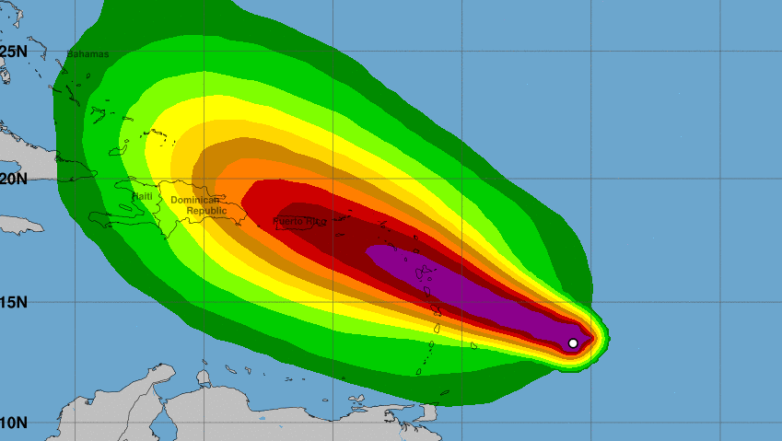
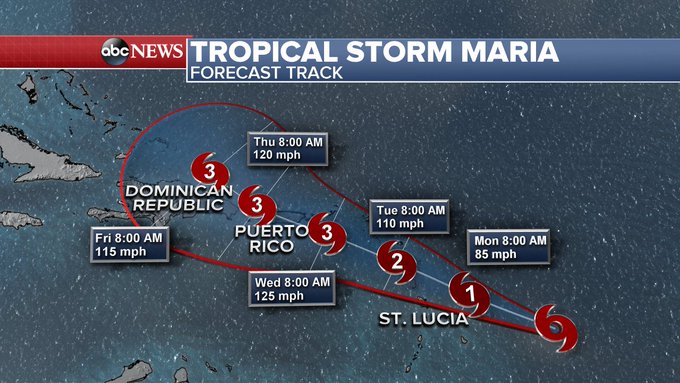
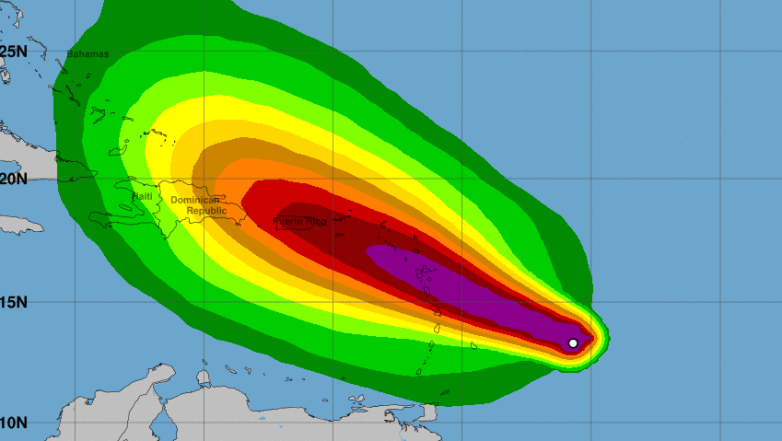
Hurricane Maria has Haiti in its path. The country, which sits on the west side of Hispaniola was already hit by Hurricane Irma earlier this month. The latest forecast from the U.S. National Hurricane Center predicts that Maria will reach the Leeward Islands by Monday night and could reach Haiti by Friday.
NHC/NOAAHurricane Maria forecast at 8 a.m. from the National Hurricane Center.
The 8 a.m. ET cone track from the NHC shows Maria reaching Hispaniola, the island Haiti shares with the Dominican Republic, by early Friday morning after it passes Puerto Rico. The latest public advisory reports that Maria is 85 miles (135 km) east of Martinique and is moving west-northwest at 12 mph (19 kmh). Its maximum sustained winds are at 110 mph (175 kmh).
NHC/NOAAMaria wind speed probabilities map from the National Hurricane Center.
Hurricane Irma caused damage throughout Haiti, although it could have been much worse. As The Miami Herald reported on September 9, the storm dealt a blow to the country’s economy and food supply.
SFWMDSeptember 18 spaghetti model for Maria.
“We didn’t have people who died, but homes and farms were destroyed,” Artis Esperance told the Herald. “Just because you don’t see a lot of damages, it doesn’t mean that we haven’t been left deeper in misery.”
Last year’s Hurricane Matthew was a catastrophic event for Haiti by comparison. There were reports that as many as 1,000 people died, but the official number was 546 deaths. It caused $2.8 billion in damage to the country, which is considered the poorest in the Western Hemisphere.“If [Hurricane Irma] had come with a lot of rain, a good amount of people here would be dead,” Neckson Joseph, a motorcycle taxi driver, told the Miami Herald. “There wasn’t a lot of rain, but there was this strong wind. We had this kitchen outside, covered with aluminum. It didn’t even leave a beam standing.”The CIA World Factbook estimates Haiti’s population at 10.6 million. Its capital city is Port-Au-Prince.By Daniel S. Levine/Heavy - Sept. 18, 2017
MIAMI — It’s been several days since Hurricane Irma’s winds battered Miami’s ‘Little Haiti,’ but Magdalena Ortiz still finds herself crying and shaking in the middle of the night.“I felt panic, the biggest terror in the world,” says Magdalena, a Honduran-native. “I felt in my heart that I would explode … the pain of a heart attack.”Miami, Florida escaped the worst of Hurricane Irma, but in ‘Little Haiti’ — home to a low-income African-American and diaspora community from across Haiti, the Caribbean, and Latin America — residents felt the damaging, costly wrath of winds, and still lack electricity days later, amid Florida’s sweltering heat.For the diverse neighborhood — strong in resemblance to its namesake country, and now plush in scattered palms — a humid 32-degree celsius weekday afternoon with no electricity, and no back-up generators is wearing on an already wary community.With their stocked coolers quickly diminishing, along with all their perishables, the family barbecues can only last so long.‘We really need help’Anthony Bennett, like others in his community, is frustrated that wealthier neighborhoods have begun to see their lights turn on, and not theirs.“We all bleed the same, so we feel like if they got lights, we should have lights too,” Bennett said. “We shouldn't be over here suffering waiting till next week or the week after.” Passing by Bennett’s home, neighbor Haitian-native Sylvie Lucien borrowed a purple crayola marker, and penned a cardboard sign asking for assistance.“We have newborn babies and disabled elderly...we desperate,” Lucien read aloud. “We need help. We really need help.”For Lucien, the personal financial struggles she endures began long before Irma. But the passing of a hurricane, she says, reveals a devastating reality: if it were worse, she might not have survived.“You can't go nowhere,” Lucien said, frustrated. “We were going to stay here and die because where can you go with no car, and nobody picking you up?”Ortiz, on the other hand, says she and her husband had a choice, but decided to stay and not risk separating from their pet dog. Next time, she admits, the decision will be easier.“I couldn’t handle it again,” Ortiz said.By: Ramon Taylor | September 13, 2017
A man has died and another is missing in Haiti following flooding caused by Hurricane Irma, authorities said Monday.
An elderly man who tried to cross a river in the town of Mirebalais, central Haiti, Saturday was swept away by floodwaters. Four other people survived the crossing, according to the Haitian interior ministry.The body of a 35-year-old motorcyclist who was swept away in another river in the same region has not been found.Six of Haiti's 10 departments were affected by the severe weather, and emergency services reported only 17 people were injured there.Hurricane Irma's path moved slightly northward on Thursday, away from Haiti's coast, limiting the effects on the Caribbean's poorest island.But flooding and strong winds still hit the country, particularly in the impoverished northeast region.Authorities said 5,000 houses flooded, while 8,000 families were declared disaster victims after their homes were severely damaged or destroyed.Prime Minister Jack Guy Lafontant traveled to the hardest-hit areas Saturday, before announcing the creation of a commission to evaluate the extent of damage Monday.By AFP | September 12, 2017
The Department of State warns U.S. citizens to carefully consider the risks of traveling to Haiti due to its current security environment and lack of adequate medical facilities and response. The Department of State also warns U.S. citizens to carefully reconsider travel to Haiti due to Hurricane Irma, a category 5 storm projected to impact Haiti. This storm may bring significant rainfall and wind that may result in life-threatening flooding, flash flooding, mudslides, and storm surge. Disruptions to travel and services are likely throughout the country. On September 5, the Department authorized the voluntary departure of U.S. government employees and their family members due to Hurricane Irma. This replaces the Travel Warning dated May 22, 2017.
Rates of kidnapping, murder, and rape rose in 2016. While there is no indication that U. S. citizens are specifically targeted, kidnapping for ransom can affect anyone in Haiti, particularly long-term residents. Armed robberies and violent assaults reported by U.S. citizens have risen in recent years. Do not share specific travel plans with strangers. Be aware that newly arrived travelers are targeted. Arrange to have your host or organization meet you at the airport upon arrival or pre-arranged airport to hotel transfers. Be cautious when visiting banks and ATMs, which are often targeted by criminals. Fewer incidents of crime are reported outside of Port-au-Prince, but Haitian authorities' ability to respond to emergencies is limited and in some areas nonexistent. U.S. Embassy employees are discouraged from walking in city neighborhoods, including in Petionville. Visit only establishments with secured parking lots. U.S. Embassy personnel are under a curfew from 1:00 a.m. to 5:00 a.m. Embassy personnel must receive permission from the Embassy security officer to travel to some areas of Port-au-Prince and some regions of the country, thus limiting the Embassy’s ability to provide emergency services to U.S. citizens.Protests, including tire burning and road blockages, are frequent and often spontaneous. Avoid all demonstrations. The Haitian National Police’s ability to assist U.S. citizens during disturbances is limited. Have your own plans for quickly exiting the country if necessary.The U.S. Embassy remains concerned about the security situation in the southern peninsula departments of Grand Anse and Sud following the devastation of Hurricane Matthew. Embassy employees are not permitted to travel to those departments without special approval for and official trips only.Medical care infrastructure, ambulances, and other emergency services are limited throughout Haiti. Check that your organization has reliable infrastructure, evacuation, and medical support in place. Comprehensive medical evacuation insurance is strongly advised for all travelers.This travel warning informs U.S. citizens that on September 5, the Department authorized the voluntary departure of U.S. government employees and their family members due to Hurricane Irma. This replaces the Travel Warning dated May 22, 2017.For further information:
See the State Department's travel website for the Worldwide Caution, Travel Warnings, Travel Alerts, and Haiti’s Country Specific Information.
Enroll in the Smart Traveler Enrollment Program (STEP) to receive security messages and make it easier to locate you in an emergency.
Contact the U.S. Embassy in Port-au-Prince, located at Boulevard du October, Route de Tabarre telephone: 509-2229-8000; after hours emergency telephone: 509-2229-8000; fax: 509-2229-8027; e-mail: acspap@state.gov; web page: http://haiti.usembassy.gov.
Anyone who missed a scheduled American Citizen Services appointment at the U.S. Embassy due to Hurricane Matthew is welcome to call 509-2229-8000, 509-2229-8900 or send us an email at the acspap@state.gov to reschedule your appointment. For Immigrant or nonimmigrant visa cases, please contact the call center at 509-2819-2929 or by email at support-Haiti@ustraveldocs.com.
Call 1-888-407-4747 toll-free in the United States and Canada or 1-202-501-4444 from other countries from 8:00 a.m. to 8:00 p.m. Eastern Standard Time, Monday through Friday (except U.S. federal holidays).
Situation report after the passage of IRMA Following the passage of Category 5 Hurricane IRMA on Haiti, the National Emergency Operations Center (COUN) in its bulletin #3 informs us:16 communes of the departments of the North-East, North, Central, Artibonite and West are partially flooded by runoff and floods of the main rivers of the said departments:Northeast: Ouanaminthe (severe flooding in places), Fort-Liberté, Caracol, Ferrier and Trou-du-NordNorth: Pilate and LimonadeCenter: Hinche and Mirebalais, Lachapelle, Grande Saline, Dessalines, Saint-MarcWest: Cabaret, Tabarre and ThomazeauCivil Protection and its partners have evacuated people from 10.085 to 59 temporary shelters in 6 departments and thousands went to foster homes;Northwest: 1,553 people in 11 open shelters;Grand-Anse: 529 people in 6 shelters (Chambellan and Beaumont);Northeast: 6,290 people in 14 shelters;Artibonite: 169 in 4 shelters;Center: 550 people in 13 shelters; North: 994 people in 11 shelters.Sections of roads are cut in the center, between Hinche and Thomassique and also Hinche and Cap-Haïtien via Pignon, because of the floods of the Ravine Couine. National road number 3 is divided in two places, at the level of Ravine La Couine and between Saint-Raphaël and Pignon;The red alert is lifted all over the national territoryIn the aftermath of passage of passage of IRMA, which caused flooding, falling trees, damage to agriculture and buildings, the Organization for the Development of the Artibonite Valley alerted the population downstream of the opening on Friday morning of the locks of the dam Cannot, to allow 500 m3 of water to pass, due to the increased flow of the Artibonite river due to the tributaries (Fer-à-Cheval river, Latème river and some gullies);On Friday, heavy rains stopped early in the morning across the country and weather conditions are gradually returning to normal.Habitat :Houses are destroyed or damaged, including roofs blown by winds, at the level of affected departments. Assessments are under way to complement the data on the impacts on the built environment.Agriculture and Environment :The Ministry of Environment is in the process of mobilizing civil engineering equipment to facilitate the cleaning and clogging of the gaps.Flooding of 450 hectares of agricultural perimeters of Jassa by the river bearing the same name. Considerable losses have been recorded in rice, okra, sweet potato, banana, pepper and pea plantations.The Artibonite River has been in flood since the beginning of the evening of 7 September.HaitiLibre | September 9, 2017
With the passage of Hurricane IRMA on several islands in the Caribbean, Digicel today announced that it will provide customers in affected markets with free calls so they can communicate with their relatives.Digicel Haiti will accompany its customers in the affected areas by providing them with a special allowance of 10 minutes and 50 SMSs after the passage of RMA to communicate with Digicel subscribers."We understand the need to be able to quickly contact our relatives to ensure that they are safe and sound after an emergency and we are happy to offer our customers the means to do so," said Maarten Boute, the President of Digicel Haiti "The safety of our customers is always our highest priority. Thus, we encourage everyone to stay tuned to weather messages and to follow the safety instructions."In anticipation of Hurricane Irma, as of Monday, Digicel has activated its emergency plan.With respect to the reopening of its offices in the affected areas, Digicel will keep its subscribers informed as the situation evolves.By: HL/ HaitiLibre | September 8, 2017
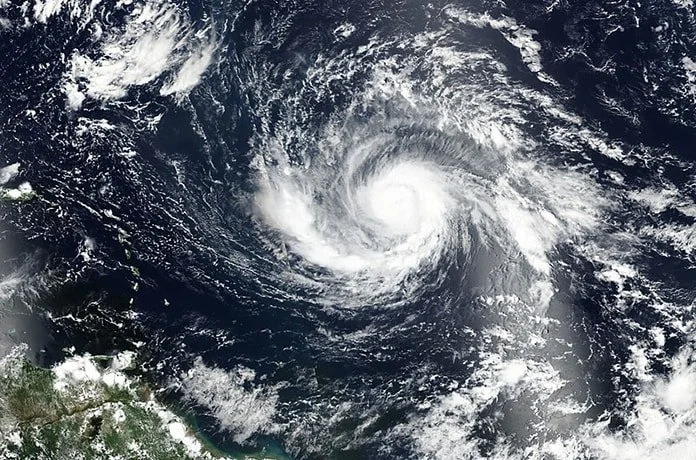
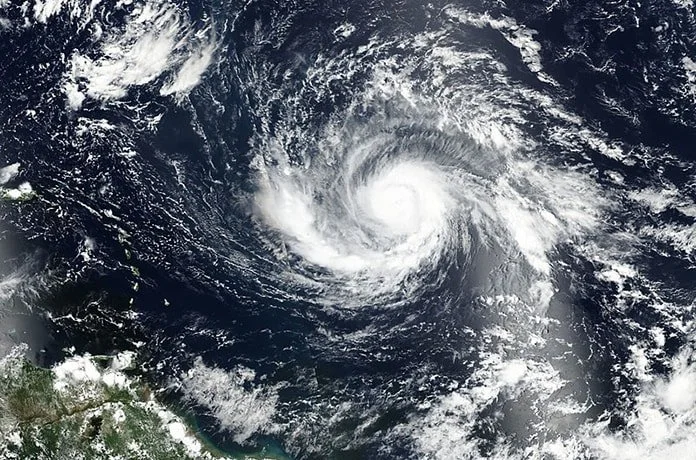
Barreling through the Caribbean, the “extremely dangerous” core of Irma was predicted to strike northern Haiti.
BOGOTA, Sept 6 (Thomson Reuters Foundation) - Haitian authorities and aid agencies were scrambling on Wednesday to prepare for Hurricane Irma, the strongest Atlantic storm on record, warning it could devastate the country still reeling from drought and last year’s Hurricane Matthew.Barreling through the Caribbean, the “extremely dangerous” core of Irma was predicted to strike northern Haiti and the Dominican Republic as well as the Turks and Caicos and Bahamas on Thursday with winds of 185 miles per hour (295 km per hour), the U.S. National Hurricane Center said.The eye of Irma, a Category 5 storm, passed over the northern Virgin Islands on Wednesday after crossing the half-French, half-Dutch island of St. Martin and the Dutch islands of Saba and Sint Eustasius. Category 5 is the highest hurricane ranking used by U.S. forecasters.Haitian authorities put the nation on alert, closing schools, moving people to shelters and mobilizing 18,000 civil and Red Cross volunteers backed by police and the military.“Irma is expected to sweep across the northern part of the country, so besides the strong winds and rain that could cause damage to houses, it is likely that many areas will be affected by flooding, landslides, and loss of livestock,” said Jessica Pearl, Haiti country director for aid agency Mercy Corps.More than half of the population depends on agriculture, “so any damage to their farms or livestock could make the difference of eating or not for the next few months,” she said.Farming communities in Haiti, one of the world’s poorest nations, are struggling to recover from Category 4 Matthew last October.Matthew killed about 1,000 people and left 1.4 million others in need of food aid.Irma will also bring “major consequences” to northern Haiti, which also has suffered three years of drought, said Ronald Tran Ba Huy, Haiti country director for the U.N World Food Programme (WFP).But systems to handle health, water and housing put in place for Matthew remain and can be utilized for Irma, he said.“Lessons learnt and mechanisms are fresh,” he told the Thomson Reuters Foundation.The WFP said it has food supplies across Haiti, a nation of 10.8 million people, for 150,000 people for one month, and trucks carrying emergency food aid to northern Haiti would be able to reach 40,000 people immediately.Poor infrastructure and a lack of flood prevention measures such as coastal embankments and drainage systems, along with widespread deforestation, are likely to magnify damage from Irma as they did with Matthew, aid agencies say.The international aid community has been criticized for a slow response and poor coordination to disasters in Haiti, including a 2010 earthquake.“There is an effort on the part of the international community to address the lessons learned from Matthew and have a more efficient response this time,” Pearl said.“That said, the government consists of new people on a steep learning curve,” she added. Haiti’s new government took power in March. HuffPost | September 6,2017Photos: Hector Retamal via Getty Images
Wednesday in a note, the Embassy of Haiti in the Dominican Republic informs the Haitian community that in anticipation of the passage of hurricane IRMA which will touch, on Thursday, September 7, much of the Dominican territory, an emergency unit composed of diplomatic officials was created to meet its needs.Emergency Cell Phone Numbers : (829) 259-0579, (829) 885-3133, (809) 617-7376, (829) 443-8994The Embassy recommends that you prepare an emergency kit for 7 days :"Water, provide at least 3 liters per day per person, plan a stock for 3 to 7 days;Consume non-perishable food (mainly canned), consider the specific needs of infants and the elderly;Kitchen utensils: a can opener, plastic plates and cutlery and other kitchen utensils...;First-aid kit: anti-bacterial product, pair of scissors;Hygienic products;Torch, oil lamp, candles, matches and battery;Mosquito repellent;Portable radio with new batteries;Cash (some banks may remain closed or not replenished for several days),Disinfectant tablets for water;Toys, books, games;Important documents (insurance, medical records, bank, passport, birth certificate, etc...)Gas bottles, Blankets, pillows, Clothes (seasonal, boots, raincoats)For your animals (water, food, cage, leash, muzzle, etc...)"HaitiLibre | September 7, 2017
This morning at 5:00 am, the center of Cat. 5 Hurricane Irma on the Saffir-Simpson Hurricane Scale, was located near latitude 20.0 North, longitude 68.3 West, or 160 km north of the eastern tip of the Dominican Republic and 415 km north-east of Cap-Haitien.Irma is moving toward the west-northwest near 17 mph (28 km/h), and this general motion is expected to continue with some decrease in forward speed for the next couple of days. On the forecast track, the center should pass north of the coast of Hispaniola later today, be near the Turks and Caicos and southeastern Bahamas by this evening, and then be near the Central Bahamas by Friday, according to the National Oceanic and Atmospheric Administration (NOAA).Maximum sustained winds are near 180 mph (285 km/h) with higher gusts. Irma is a category 5 hurricane on the Saffir-Simpson Hurricane Wind Scale. Some fluctuations in intensity are likely during the next day or two, but Irma is forecast to remain a powerful category 4 or 5 hurricane during the next couple of days.Hurricane-force winds extend outward up to 50 miles (85 km) from the center and tropical-storm-force winds extend outward up to 185 miles (295 km).The combination of a life-threatening storm surge and large breaking waves will raise water levels above normal tide levels by the following amounts within the hurricane warning area near and to the north of the center of Irma. Near the coast, the surge will be accompanied by large and destructive waves on the North Coast of Haiti and the Gulf of Gonâve where floods are to be feared...Hurricane conditions are expected to begin within the hurricane warning area in the Dominican Republic and Haiti today, with tropical storm conditions beginning in the next few hours.Irma is expected to produce the following rainaccumulations through Saturday in the Northern Dominican Republic and northern Haiti...4 to 10 inches (10 à 25 cm),isolated 15 inches (37cm).In the Southern Haiti 1 to 4 inches (2,5 à 10 cm) of rain is excepted.Flights canceled :Port-au-PrinceLe vol de Jet Blue 1510 à destination de Fort Lauderdale a été annuléLe vol de Jet Blue 1509 en provenance de Fort Lauderdale a été annuléLe vol de Jet Blue 1835 en provenance de New York a été annuléThe flight Jet Blue 1510 to Fort Lauderdale was canceledThe flight Jet Blue 1509 from Fort Lauderdale was canceledThe flight Jet Blue 1835 from New York was canceledCap-HaïtienThe flight American Airlines 2732 from New York was canceledHaitiLibre | September 7, 2017
In anticipation of the passage of Hurricane IRMA of Category 5 on the Saffir-Simpson scale the Ministry of National Education informs the general public and educational agents in particular that it has been decided to declare 3 days of leave in public and non-public schools from Wednesday 6 to Friday 8 September 2017.The Ministry invites departmental directors to make all arrangements for the full application of this provision.Directors of schools are also invited to make all arrangements for the security of materials and especially the archives of their respective institutions.HaitiLibre | September 6, 2017









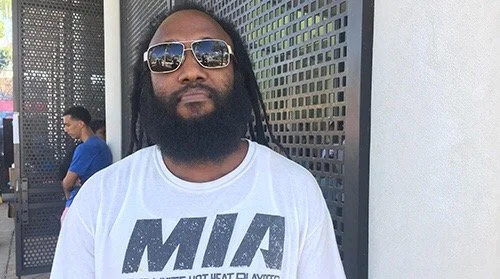


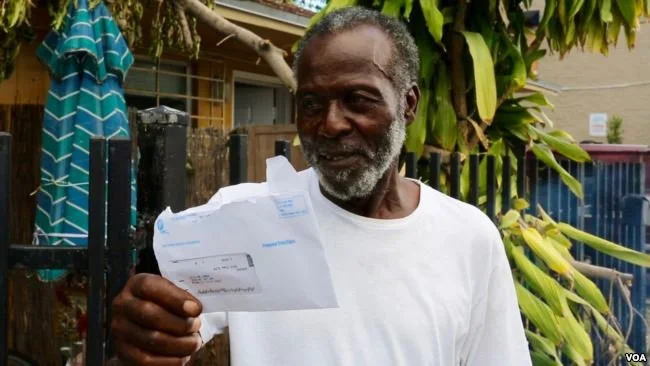
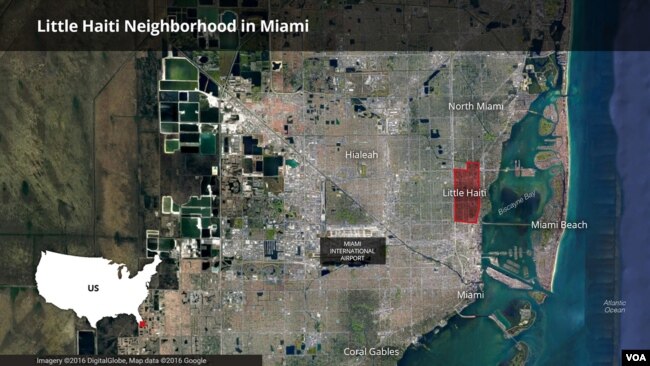
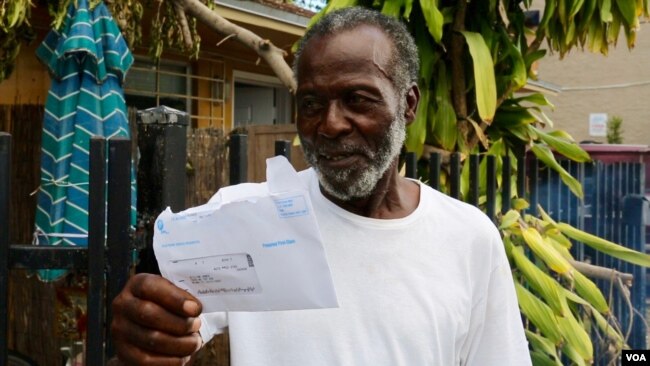 For the diverse neighborhood — strong in resemblance to its namesake country, and now plush in scattered palms — a humid 32-degree celsius weekday afternoon with no electricity, and no back-up generators is wearing on an already wary community.With their stocked coolers quickly diminishing, along with all their perishables, the family barbecues can only last so long.‘We really need help’
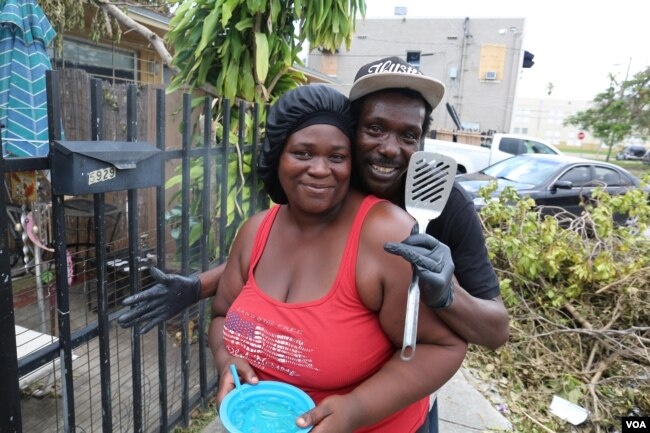 Anthony Bennett, like others in his community, is frustrated that wealthier neighborhoods have begun to see their lights turn on, and not theirs.“We all bleed the same, so we feel like if they got lights, we should have lights too,” Bennett said. “We shouldn't be over here suffering waiting till next week or the week after.”
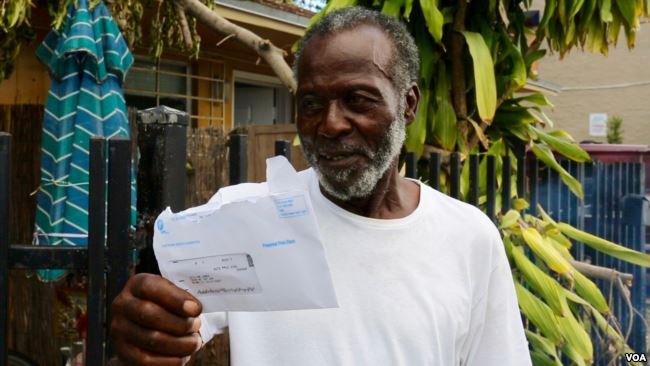
 Passing by Bennett’s home, neighbor Haitian-native Sylvie Lucien borrowed a purple crayola marker, and penned a cardboard sign asking for assistance.“We have newborn babies and disabled elderly...we desperate,” Lucien read aloud. “We need help. We really need help.”For Lucien, the personal financial struggles she endures began long before Irma. But the passing of a hurricane, she says, reveals a devastating reality: if it were worse, she might not have survived.“You can't go nowhere,” Lucien said, frustrated. “We were going to stay here and die because where can you go with no car, and nobody picking you up?”
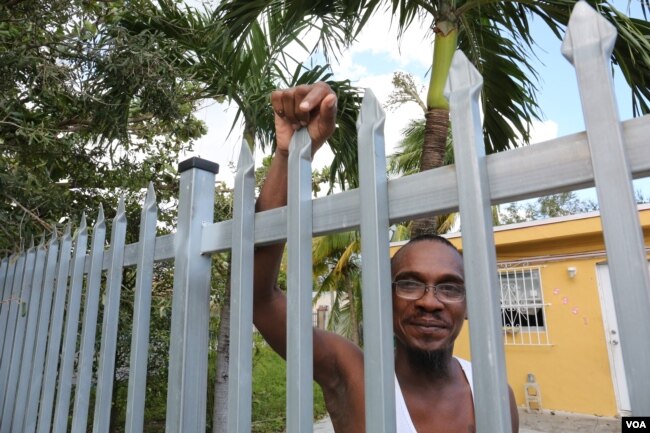 Ortiz, on the other hand, says she and her husband had a choice, but decided to stay and not risk separating from their pet dog. Next time, she admits, the decision will be easier.“I couldn’t handle it again,” Ortiz said.By: Ramon Taylor | September 13, 2017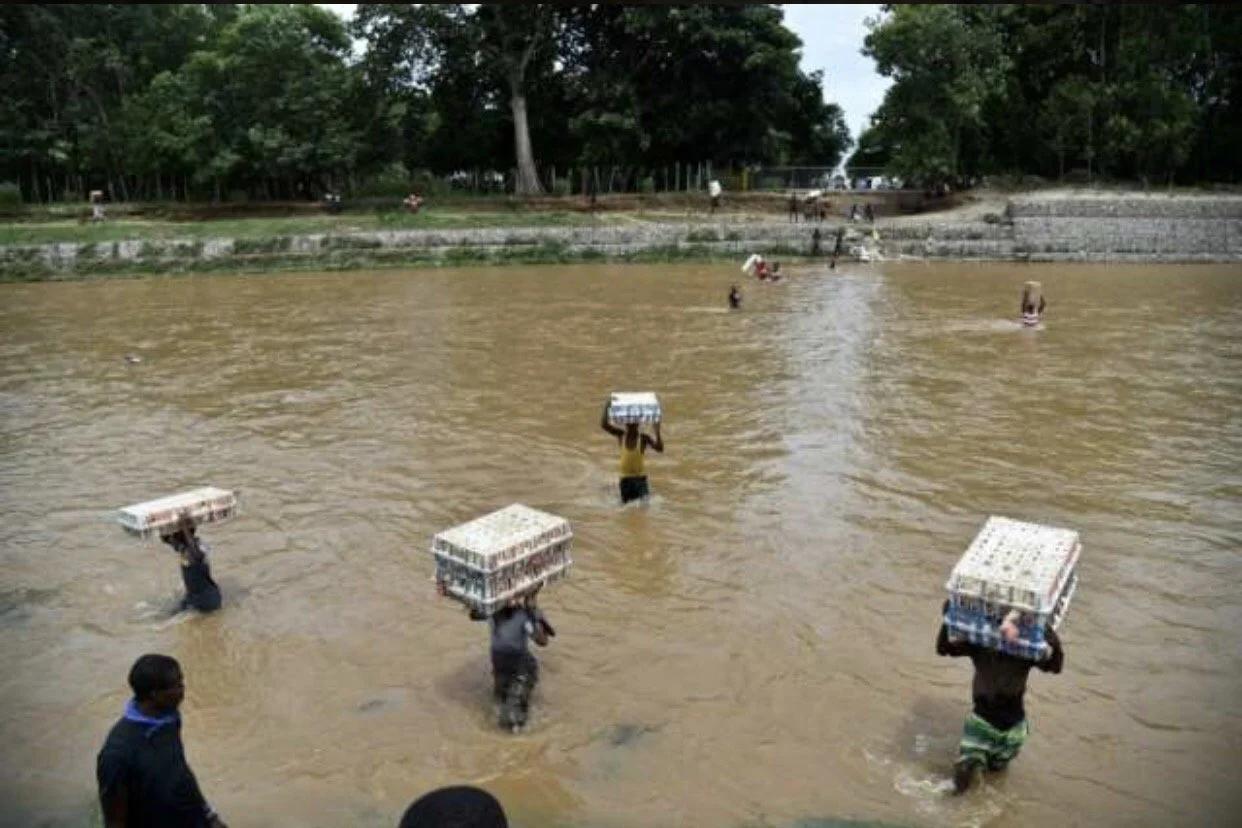
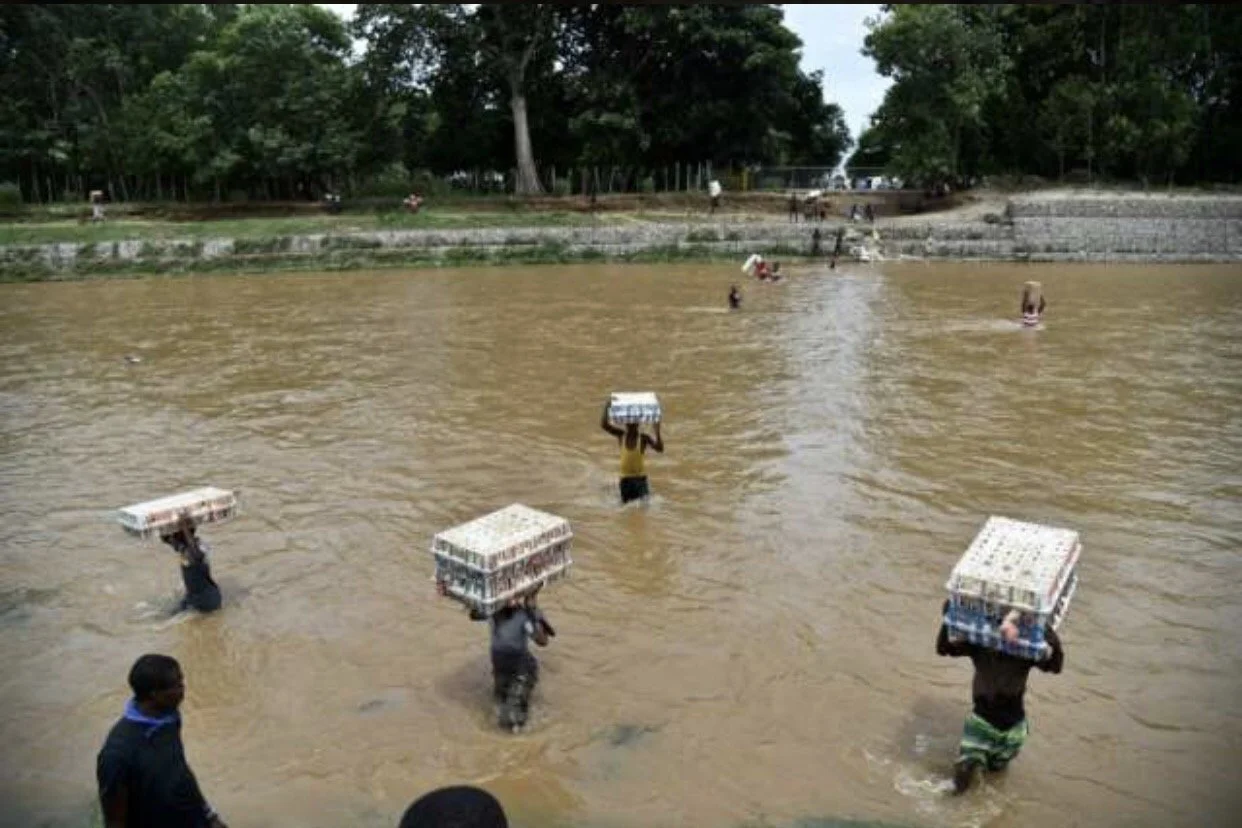
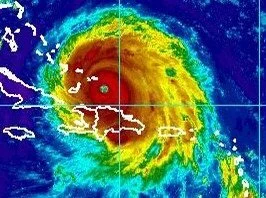
 Situation report after the passage of IRMA Following the passage of Category 5 Hurricane IRMA on Haiti, the National Emergency Operations Center (COUN) in its bulletin #3 informs us:16 communes of the departments of the North-East, North, Central, Artibonite and West are partially flooded by runoff and floods of the main rivers of the said departments:Northeast: Ouanaminthe (severe flooding in places), Fort-Liberté, Caracol, Ferrier and Trou-du-NordNorth: Pilate and LimonadeCenter: Hinche and Mirebalais, Lachapelle, Grande Saline, Dessalines, Saint-MarcWest: Cabaret, Tabarre and ThomazeauCivil Protection and its partners have evacuated people from 10.085 to 59 temporary shelters in 6 departments and thousands went to foster homes;Northwest: 1,553 people in 11 open shelters;Grand-Anse: 529 people in 6 shelters (Chambellan and Beaumont);Northeast: 6,290 people in 14 shelters;Artibonite: 169 in 4 shelters;Center: 550 people in 13 shelters; North: 994 people in 11 shelters.Sections of roads are cut in the center, between Hinche and Thomassique and also Hinche and Cap-Haïtien via Pignon, because of the floods of the Ravine Couine. National road number 3 is divided in two places, at the level of Ravine La Couine and between Saint-Raphaël and Pignon;The red alert is lifted all over the national territoryIn the aftermath of passage of passage of IRMA, which caused flooding, falling trees, damage to agriculture and buildings, the Organization for the Development of the Artibonite Valley alerted the population downstream of the opening on Friday morning of the locks of the dam Cannot, to allow 500 m3 of water to pass, due to the increased flow of the Artibonite river due to the tributaries (Fer-à-Cheval river, Latème river and some gullies);On Friday, heavy rains stopped early in the morning across the country and weather conditions are gradually returning to normal.Habitat :Houses are destroyed or damaged, including roofs blown by winds, at the level of affected departments. Assessments are under way to complement the data on the impacts on the built environment.Agriculture and Environment :The Ministry of Environment is in the process of mobilizing civil engineering equipment to facilitate the cleaning and clogging of the gaps.Flooding of 450 hectares of agricultural perimeters of Jassa by the river bearing the same name. Considerable losses have been recorded in rice, okra, sweet potato, banana, pepper and pea plantations.The Artibonite River has been in flood since the beginning of the evening of 7 September.HaitiLibre | September 9, 2017
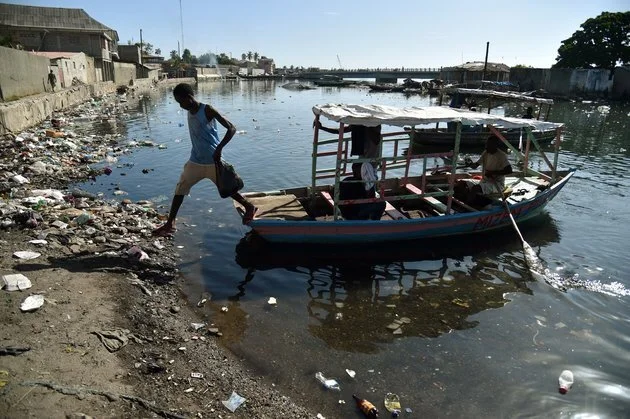
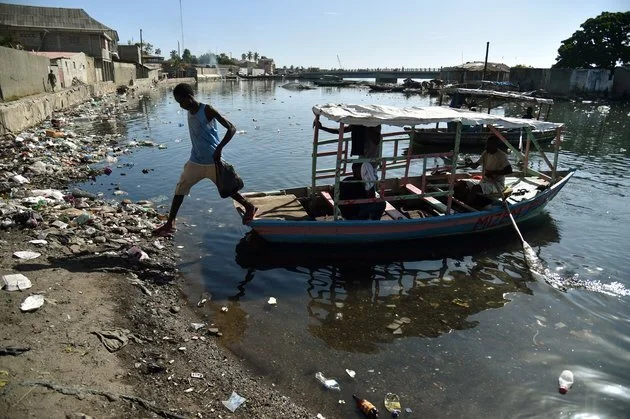
 The eye of Irma, a Category 5 storm, passed over the northern Virgin Islands on Wednesday after crossing the half-French, half-Dutch island of St. Martin and the Dutch islands of Saba and Sint Eustasius. Category 5 is the highest hurricane ranking used by U.S. forecasters.Haitian authorities put the nation on alert, closing schools, moving people to shelters and mobilizing 18,000 civil and Red Cross volunteers backed by police and the military.“Irma is expected to sweep across the northern part of the country, so besides the strong winds and rain that could cause damage to houses, it is likely that many areas will be affected by flooding, landslides, and loss of livestock,” said Jessica Pearl, Haiti country director for aid agency Mercy Corps.More than half of the population depends on agriculture, “so any damage to their farms or livestock could make the difference of eating or not for the next few months,” she said.Farming communities in Haiti, one of the world’s poorest nations, are struggling to recover from Category 4 Matthew last October.Matthew killed about 1,000 people and left 1.4 million others in need of food aid.Irma will also bring “major consequences” to northern Haiti, which also has suffered three years of drought, said Ronald Tran Ba Huy, Haiti country director for the U.N World Food Programme (WFP).But systems to handle health, water and housing put in place for Matthew remain and can be utilized for Irma, he said.“Lessons learnt and mechanisms are fresh,” he told the Thomson Reuters Foundation.The WFP said it has food supplies across Haiti, a nation of 10.8 million people, for 150,000 people for one month, and trucks carrying emergency food aid to northern Haiti would be able to reach 40,000 people immediately.Poor infrastructure and a lack of flood prevention measures such as coastal embankments and drainage systems, along with widespread deforestation, are likely to magnify damage from Irma as they did with Matthew, aid agencies say.The international aid community has been criticized for a slow response and poor coordination to disasters in Haiti, including a 2010 earthquake.
 “There is an effort on the part of the international community to address the lessons learned from Matthew and have a more efficient response this time,” Pearl said.“That said, the government consists of new people on a steep learning curve,” she added. Haiti’s new government took power in March. HuffPost | September 6,2017Photos: Hector Retamal via Getty Images

 Wednesday in a note, the Embassy of Haiti in the Dominican Republic informs the Haitian community that in anticipation of the passage of hurricane IRMA which will touch, on Thursday, September 7, much of the Dominican territory, an emergency unit composed of diplomatic officials was created to meet its needs.Emergency Cell Phone Numbers : (829) 259-0579, (829) 885-3133, (809) 617-7376, (829) 443-8994The Embassy recommends that you prepare an emergency kit for 7 days :"Water, provide at least 3 liters per day per person, plan a stock for 3 to 7 days;Consume non-perishable food (mainly canned), consider the specific needs of infants and the elderly;Kitchen utensils: a can opener, plastic plates and cutlery and other kitchen utensils...;First-aid kit: anti-bacterial product, pair of scissors;Hygienic products;Torch, oil lamp, candles, matches and battery;Mosquito repellent;Portable radio with new batteries;Cash (some banks may remain closed or not replenished for several days),Disinfectant tablets for water;Toys, books, games;Important documents (insurance, medical records, bank, passport, birth certificate, etc...)Gas bottles, Blankets, pillows, Clothes (seasonal, boots, raincoats)For your animals (water, food, cage, leash, muzzle, etc...)"HaitiLibre | September 7, 2017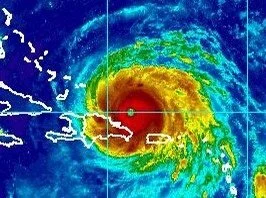
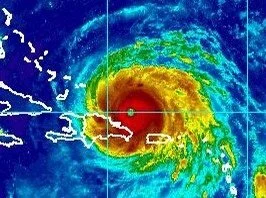
 Irma is moving toward the west-northwest near 17 mph (28 km/h), and this general motion is expected to continue with some decrease in forward speed for the next couple of days. On the forecast track, the center should pass north of the coast of Hispaniola later today, be near the Turks and Caicos and southeastern Bahamas by this evening, and then be near the Central Bahamas by Friday, according to the National Oceanic and Atmospheric Administration (NOAA).Maximum sustained winds are near 180 mph (285 km/h) with higher gusts. Irma is a category 5 hurricane on the Saffir-Simpson Hurricane Wind Scale. Some fluctuations in intensity are likely during the next day or two, but Irma is forecast to remain a powerful category 4 or 5 hurricane during the next couple of days.Hurricane-force winds extend outward up to 50 miles (85 km) from the center and tropical-storm-force winds extend outward up to 185 miles (295 km).The combination of a life-threatening storm surge and large breaking waves will raise water levels above normal tide levels by the following amounts within the hurricane warning area near and to the north of the center of Irma. Near the coast, the surge will be accompanied by large and destructive waves on the North Coast of Haiti and the Gulf of Gonâve where floods are to be feared...Hurricane conditions are expected to begin within the hurricane warning area in the Dominican Republic and Haiti today, with tropical storm conditions beginning in the next few hours.Irma is expected to produce the following rainaccumulations through Saturday in the Northern Dominican Republic and northern Haiti...4 to 10 inches (10 à 25 cm),isolated 15 inches (37cm).In the Southern Haiti 1 to 4 inches (2,5 à 10 cm) of rain is excepted.Flights canceled :Port-au-PrinceLe vol de Jet Blue 1510 à destination de Fort Lauderdale a été annuléLe vol de Jet Blue 1509 en provenance de Fort Lauderdale a été annuléLe vol de Jet Blue 1835 en provenance de New York a été annuléThe flight Jet Blue 1510 to Fort Lauderdale was canceledThe flight Jet Blue 1509 from Fort Lauderdale was canceledThe flight Jet Blue 1835 from New York was canceledCap-HaïtienThe flight American Airlines 2732 from New York was canceledHaitiLibre | September 7, 2017