
Neighbors on call: Haiti may offer window to Montana’s healthcare future
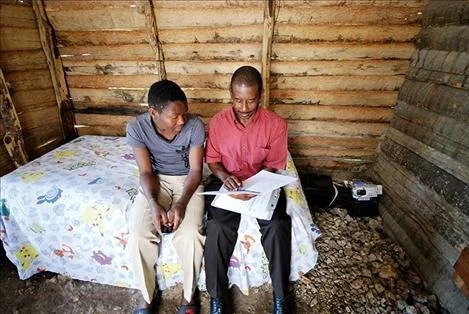
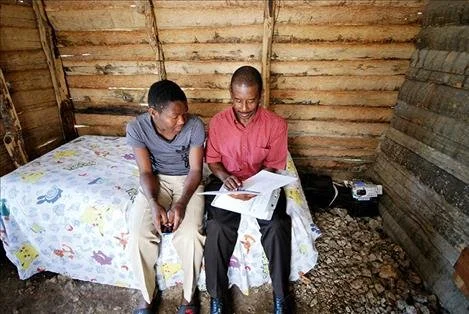
This is the first part of a three-part story on the role of community health workers in rural health care from the Montana Gap project. Part one: What’s working abroad? In rural Haiti, locals trained as community health workers help mentally ill neighbors where full-fledged physicians are few and far between.As a child, Presandieu Charles suffered severe headaches and stomach pains. One day he beat his mother on the foot and thigh with a stick, and later cried when he saw what he had done.In October 2017, Charles began to hammer at the timber walls of his family’s dirt-floored home with his fists. He would not stop. Neighbors bound his ankles and wrists with leather straps and metal chains. They called his affliction “the madness.” He still has the scars: dark star-shaped marks on the skin on his right wrist.The house perches on the edge of a lush, forested ridge several miles outside Cange, a remote Haitian village near the Dominican border. Inside it is cool, and slivers of light stream through the white lace curtain hanging in the front door frame. Charles’ shoulders droop as he sits on a bed dressed with Pokémon sheets. The 24-year-old wears an Adidas t-shirt and plastic Nike sandals. Beside him is Joseph Benissois, a local community health worker with the Boston-based global health nonprofit Partners in Health (known in Haitian Creole as Zanmi Lasante). The two exchange no small talk, and Benissois begins to ask Charles questions from a clipboard in his lap. Charles doesn’t often smile as Benissois asks them. When he does, though, it’s a sweet, knowing flash of pride at the progress his answers reveal.Does he cry? Not as often as he used to.Does he have difficulty sleeping? No, but he feels weak when he wakes, and he has trouble going to the garden or fetching water. That might be the drugs he is taking.Does he feel bad or uncomfortable with himself? In the past he felt bad. Now he tells jokes to the friends he sees on the street, smiles and laughs with them.In the past 15 days, has he wanted to die? “He used to say to himself that it’s better if he died, but not now,” an interpreter relays.Partners in Health, which was founded just down the road in Cange by renowned physician and humanitarian Paul Farmer, has been recruiting and training individuals like Benissois since the late 1980s and placing them on the frontlines of the organization’s efforts to combat cholera, HIV and other major health threats. But the 2010 earthquake that devastated this rugged Caribbean nation — killing an estimated 220,000 people, injuring more than 300,000 more and leaving some 1.5 million homeless — brought to the forefront another widespread Haitian health risk: This country of more than 10 million people had only 10 psychiatrists. The loss of homes, jobs and loved ones in the quake triggered a rash of depression that Haiti’s few specialists, already struggling to treat a host of other mental-health issues, were ill-equipped to handle. In the central plateau, Partners in Health tasked its community health workers to help fill the gap in mental-health coverage.The questions Benissois asks Charles come from a depression symptom inventory developed by the nonprofit. They’re identical to those asked by its 58 other mental-health-focused CHWs. Since April 1987, Benissois has worked with the organization as a CHW (or accompagnateur in Creole), a non-specialist position designed to provide patient check-ups and administer basic health care in small, remote communities. The model traces its roots back to the mid-1950s and China’s so-called barefoot doctors: farmers and other villagers who received short-term medical training to meet immediate needs in isolated towns. Gradually embraced and refined by the global health community over subsequent decades, the model is now a vital component of health-care strategies in scores of developing nations, and is being increasingly implemented in the United States. In fact, after five years of coordinated development by various stakeholders, Montana recently rolled out a CHW training curriculum of its own to support statewide implementation of a model that the Montana Office of Rural Health/Area Health Education Council says is proven to increase health-care access, reduce costs and improve responsiveness to patient needs. That the timing of that roll-out coincides with state budget cuts and widespread layoffs among community-based health-care service providers is entirely coincidental.Benissois is a familiar face in the hills around Cange, having served as the local pastor and a community advocate for more than 30 years. He visits as many as 20 patients a month throughout the Cange and nearby LaHoye regions. Occasionally, he’ll take a moto — a motorcycle taxi, one of the more popular modes of transportation in Haiti — to visit people like Charles. Today he’s on foot, shuffling with a lopsided gait along the shoulder of the highway, smiling casually to those he passes and greeting them with a familiar “bonjour.”Benissois visits Charles once a month. While Charles keeps regular appointments with Partners in Health physician Reginald Fils Aime in Cange, and is currently taking antipsychotic medications, the at-home check-ups with a trusted neighbor free him from having to make extra trips — a mile walk each way — to the clinic. When asked what the veteran CHW has done to help him, Charles wraps an arm around Benissois and beams.“I love him so much,” Charles says. “He is my father and Jesus Christ.”That Montana, an isolated, largely rural state nearly 3,000 miles from Haiti and, geographically, nearly 14 times the size, has recently embraced the CHW model in the face of its own health-care challenges makes the organization’s decades of work a compelling case study. Though culturally distinct, the two areas share many commonalities: remote populations, impoverished communities and, particularly in the wake of last year’s cuts to Montana’s mental-health budget, a pressing need for local solutions. And if the benefit that Benissois delivers to Charles is any indication, CHWs could become a valuable asset for Montanans as well.by: Alex Sakariassen Missoula Independent via Valleyjournal.net | October 10, 2018
Death toll in Haiti earthquake rises to 15; at least 333 injured
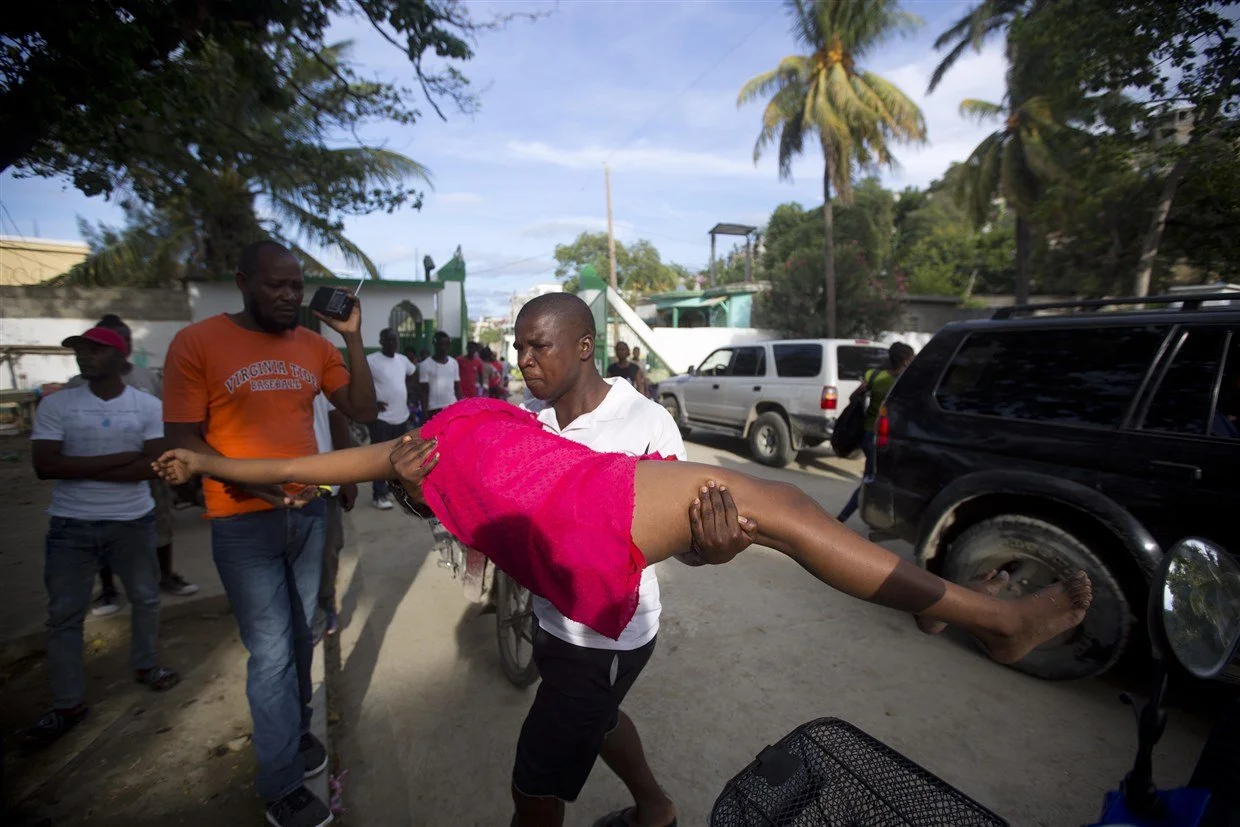
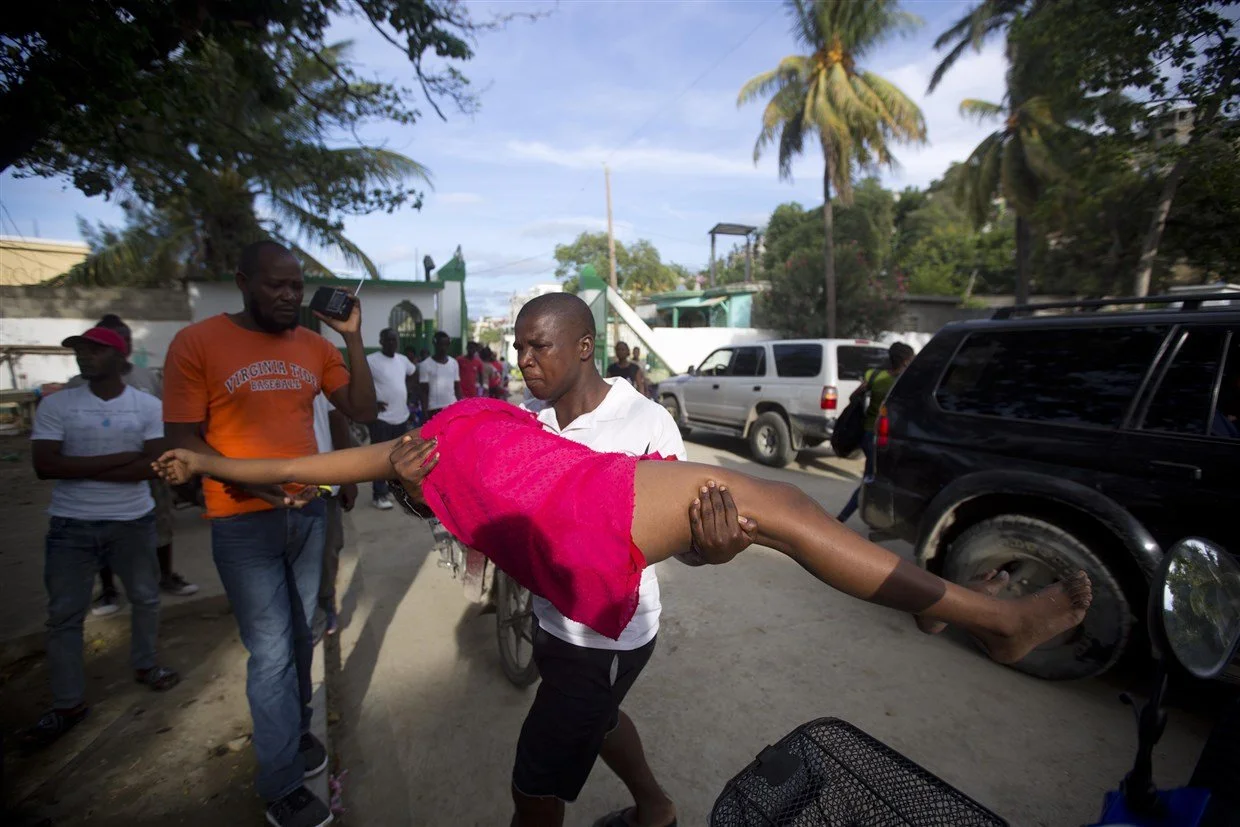
PORT-DE-PAIX, Haiti — The death toll from a 5.9 earthquake that hit Haiti over the weekend rose to at least 15 people with 333 injured, according to updated figures released Monday by authorities, as rescue crews worked to help victims spooked by strong aftershocks.Haiti's civil protection agency said in a statement that it will soon deploy 70 soldiers to the Nord-Ouest and Artibonite provinces that were hardest hit, noting it already sent 14 soldiers along with nurses and doctors to the area over the weekend.
Among them was Marc-Sena Docteur, a 24-year-old carpenter whose girlfriend died in the earthquake."Now I'm left with a 9-month-old baby with no aid at all," he said. "I'm still crying. I don't know what I'm going to do without her."The walls of the room that the couple had been renting for a year collapsed, and he and the baby have been sleeping outdoors since the quake.
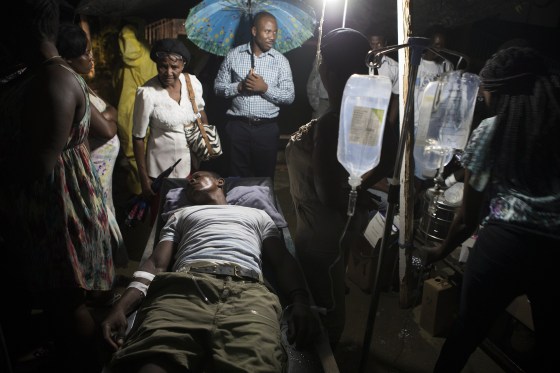
Sunday's aftershock caused panic on streets where emergency teams were providing relief to victims after cinderblock homes and rickety buildings toppled in several cities. The U.S. Geological Survey said the epicenter of the aftershock was located 9.8 miles (15.8 kilometers) north-northwest of Port-de-Paix.Among the dead were a 5-year-old boy crushed by his collapsing house.Impoverished Haiti, where many live in tenuous circumstances, is vulnerable to earthquakes and hurricanes. A vastly larger magnitude 7.1 quake damaged much of the capital in 2010 and killed an estimated 300,000 people.Etanvie Dimorne, a 50-year-old mason, said people have to rebuild stronger given the earthquakes that have hit Haiti. He lost his home in Saturday's quake and is now sleeping under a tarp in someone's yard."Last night it rained," he said. "I have to sleep under difficult conditions."
The USGS said Saturday's quake was centered 12 miles (19 kilometers) northwest of Port-de-Paix, which is about 136 miles (219 kilometers) from the capital of Port-au-Prince.It was felt lightly in the capital, as well as in the neighboring Dominican Republic and in eastern Cuba, where no damage was reported.In Haiti, officials have struggled to shore up buildings despite the two major fault lines along Hispaniola, which is the island shared with the Dominican Republic.
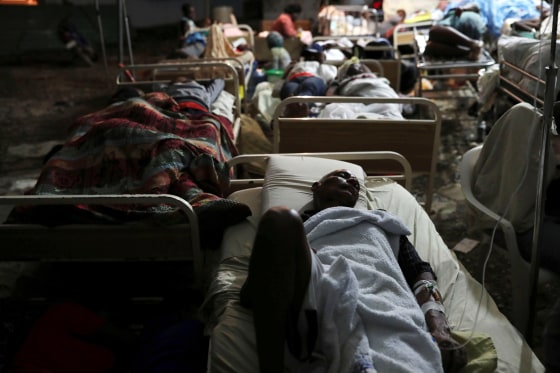
The damage from the temblors was visible. In Gros-Morne, one bed was covered in rubble, while the exterior walls of some homes were cracked. Others tilted at precarious angles.Pierre Jacques Baudre, a farmer and father of seven, said he was afraid to return to his home after one wall built with rocks and cement crumbled."The house can fall at any time," he said.The civil protection agency issued a statement saying that houses were destroyed in Port-de-Paix, Gros-Morne, Chansolme and Turtle Island.Damage was also reported at the Saint-Michel church in Plaisance and the police station in Port-de-Paix. Parts of a hospital and an auditorium collapsed in Gros-Morne, where parliamentarian Alcide Audne told The Associated Press that two of the deaths occurred.By: Associated Press via NBCnews.com | October 8, 2018
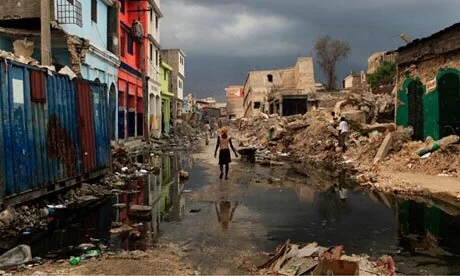
An excerpt from Lavil: Life, Love, and Death in Port-au-Prince
An excerpt from Lavil: Life, Love, and Death in Port-au-Prince
An excerpt from Lavil: Life, Love, and Death in Port-au-Prince, part of the Voice of Witness series of oral history.
Haiti-earthquake-
Fran is from Bainet in the southeast of Haiti. On the day of the earthquake, Fran was on an upper floor of a government building. We spoke to him in front of a church where a commemoration of the 2010 earthquake was taking place. When the quake hit, Fran was knocked unconscious as a government building collapsed around him. He then walked for miles to report from the quake’s epicenter. As a choir sang inside a church, Fran talked to us about the day of the quake and its aftermath.
On the day of the earthquake, I was at a government building to pay taxes... I heard the noise, and I thought that it must be a thunderstorm. I was on the fourth floor. I suddenly felt that I was flying. I can’t explain what happened because the next thing I knew, I was in a different part of the building. I don’t now how I jumped or flew, or whatever happened. I was jumping up, and then I quickly lost consciousness.
When I woke up, I heard a lot of yelling and screaming. It was me. I was the one screaming, screaming, screaming, screaming. Yes I was. And then people around me were crying and there was all this smoke. Black smoke, black dust, everywhere. As a journalist I felt that I had to report what happened at this damaged building, but that was impossible. There wasn’t any communication. My cell phone wasn’t working.
My first reflex was to go and find my own children. I left that damaged building and walked to the school to see my children. I have two kids. One girl, one boy. My son is eight and a half. My daughter is seven. When I got there, my kids were scared, but once they saw me they were ne. My house in Port-au-Prince is in the south part of town. In this area there wasn’t any damage because the structural support is very strong. I brought my children home to my wife. I told them that I would be back. They know that as a journalist, I have a passion, a need, to be where the events are happening.
I set out for Léogâne, the epicenter of the earthquake. I didn’t come home for three days. I didn’t realize that distance was so far. I’d always driven there. In a big event like that, you just walk and you don’t feel tired or anything. The only thing I remember is that I had to carry water. I took my water with me, that’s all I remember. I was not the only one walking. There were people all over the streets and everybody was walking for miles.
I knew Léogâne well. I’m a director of a network of journalists that meets periodically in that city. And even before the quake I knew that the houses in Léogâne were slowly sinking into the ground. I once interviewed a geologist, who is well known in Haiti, about this problem and what might happen in a possible earthquake.
When I got there, 70 percent of Léogâne was gone. It wasn’t like in Port-au-Prince, where you could see still some houses standing. I couldn’t call on a cell phone or radio or anything so I just got paper and wrote down what I saw. People were trying to pull friends and relatives from under the rubble. I heard people shouting: “Come and help, come and save me, come and save me.” But because there was nothing to be done to save most of those people, I began crying. They weren’t dead yet. They were under all that rubble. And they were asking us to come and save them, but we didn’t have any tools or materials to pull them out.
You know, in the immediate aftermath, some people didn’t call it an earthquake. They said that an enemy was attacking us. Some said this is the end of the world. There was a Haitian senator who said that there was a bomb, a big bomb that the U.S. was testing, and they dropped it on Haiti. People eventually received information about the earthquake through the telephone companies after the cell networks were repaired. They sent text messages to people saying that an earthquake happened. I didn’t receive messages about where people could get water or where people could get food, but some people said that they received messages like that.

It took Radio Galaxie three months to be able to report news again. After three weeks, we started broadcasting, not giving live radio news, but we were able to put songs on the air.
At this time in the aftermath of the quake, I would give news ashes, or brief reports to foreign journalists, for instance to a reporter I know from Miami. But I wasn’t able to do any local reporting. The little money that I made came from the outside.
Do you think that Bill Clinton has any real desire to help Haiti? He’s dealing with a group of people who don’t have any incentive to change. The reconstruction funds are doled out on the basis of nepotism and nepotism only. Clinton never asks, “Where is the reconstruction?” All those places that Bill Clinton said he’s going to build. None of them happened. You’ve seen the city. Look at some of the bourgeoisie. They’re the only ones who’ve had their houses fixed.
Those who have money get the help, not the poor. In many tent cities, people were given the deadline to leave, but they don’t have the money to move. Clinton never asks why. But I can’t say that on the air. I would be in trouble. I might lose my job. I’m not the owner of the radio station, I’m just a worker. There are certain things you can denounce, but there’s a limit in the denouncing.
What else can I say? I can show the reaction of the people. I can say they give some people 1,400 Haitian dollars, and then they kick them off a property. Where are they going to go now? That is something I can report. But I can’t say that it’s been three years that they said they were going to build, and they still don’t build. I can’t ask, “Where has all the money gone?” I can’t say that. I can say that Clinton and his committee didn’t do the reconstruction they promised, but I cannot say that the bourgeoisie have somehow gotten all the money. If the bourgeoisie hear something like that, they will call the director of the radio station.
What we’re starting to do now is to talk about these problems every day. If there is a fire in the tents or if someone dies for specific reasons, I can take advantage of that moment and say something that I wouldn’t say in normal times. But after that, everybody closes their eyes. That’s the system under which we journalists operate. We try, but we know our limits. Sometimes the radio owner will say, “I don’t want to lose my advertising revenue.”
Fran, excerpted from Lavil: Life, Love, and Death in Port-au-Prince, edited by Peter Orner and Evan Lyons.
VersoBooks | August 2017