
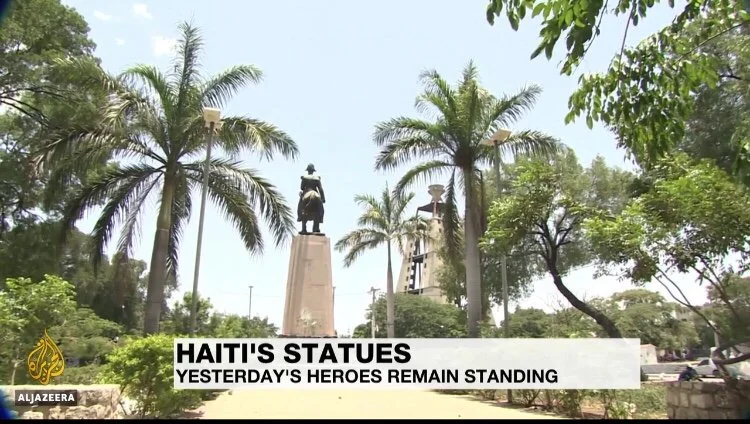
Haitians Resurrect Honour For Historic Heroes
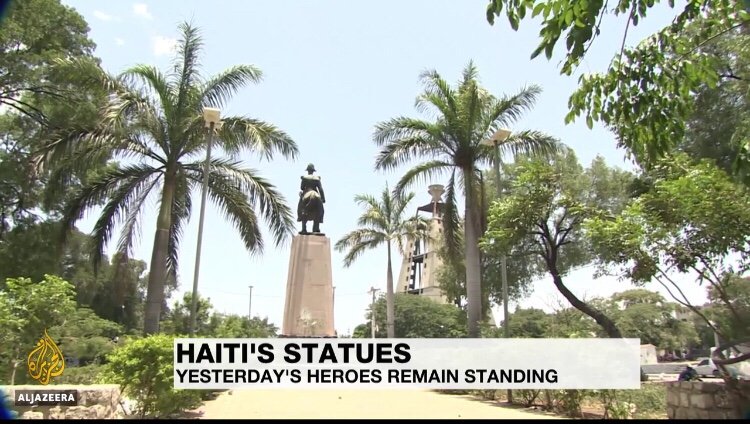
Newer generation reminded of roots by statues of iconic figures that went unnoticed for long time.Most countries have statues to honour iconic figures of the past, but in Haiti, statues of former heroes often go unnoticed.However, for the younger generation, they are now becoming a reminder of their roots.Al Jazeera's Gabriel Elizondo reports from Port-au-Prince.By: Gabriel Elizondo for Aljazeera.com | August 19, 2018
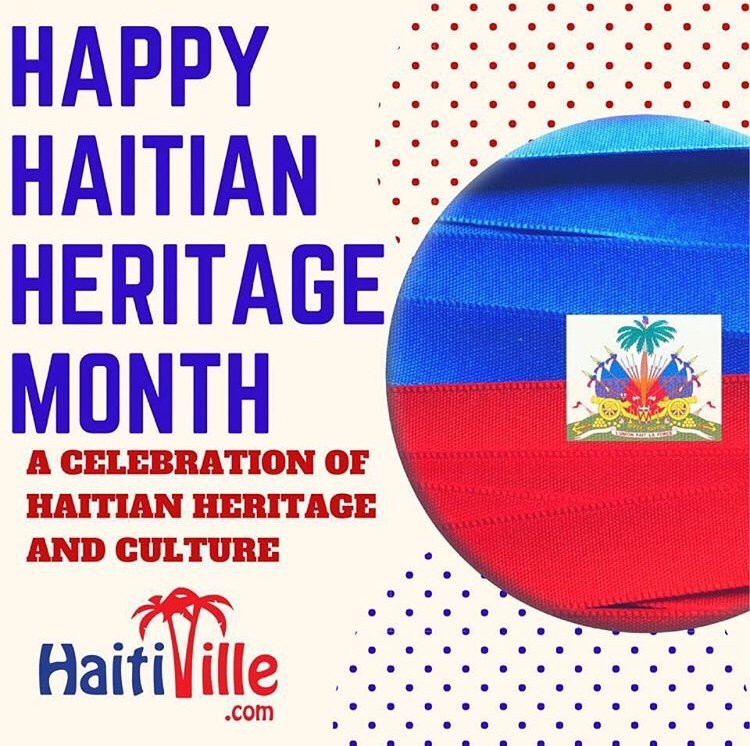
Haitian Heritage Month (May)
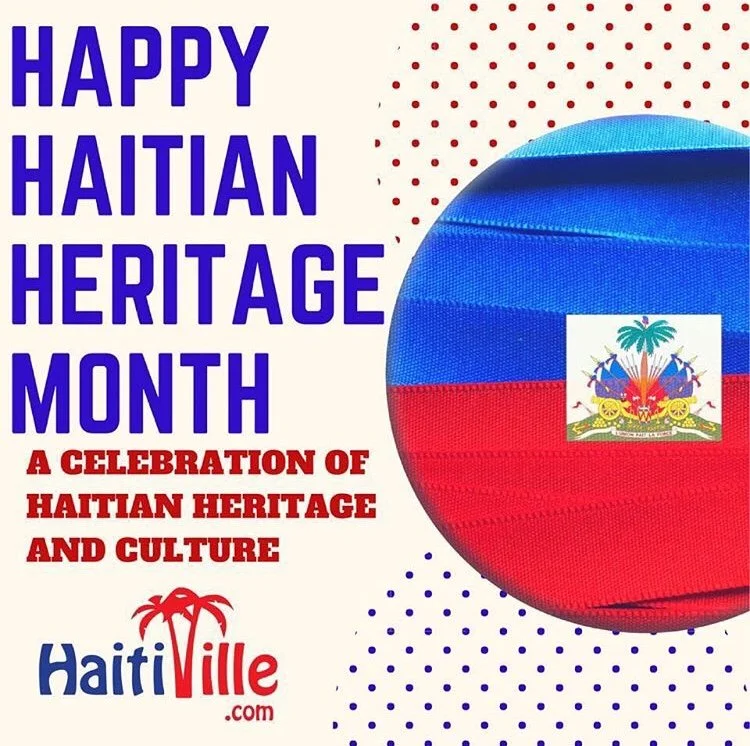
Haitian Heritage Month is not only a celebration of Haitian culture, it also has great historical significance based on the inherited traditions that have been passed on from generation to generation since Haiti's independence in 1804.Over the past few years, Haitians in New York, Florida, Boston, Philadelphia, and New Jersey have celebrated Haitian Heritage Month proudly with parades, conferences, festivals, exhibits, book fairs and the like. It’s a pride-filled month that carries out exciting events within the Haitian community and brings memorable souvenirs, including patriotic songs and the recollection of the history behind the creation of the Haitian Flag.In Florida, Haitian Heritage Month is recognized and celebrated by the School Board of Miami Dade County and supported by the School Board of Broward County. The celebration in Miami includes the largest Haitian festival - Haitian Compas Festival, also known as KompaFest.In Boston, the Annual Haitian American Unity Parade is held annually around May 18th, which is recognized by all Haitians as Haitian Flag Day. This parade features Haitian leaders, state and city officials, marching bands, delegations from schools, colleges and universities. Many youth groups, cultural, professional, and religious associations as well as, community, political and regional organizations and Haitian and American businesses also take part in the festivities.In New York, there is a Haitian Day Parade that usually takes place on the last Sunday of May. Other patriotic and cultural activities are held in Chicago, Georgia, Texas, Philadelphia to acknowledge Haitian Heritage Month with pride and dignity in order to promote and share the Haitian culture.While Haitians never need a reason to "stand-up" and "rep our flag", this year, Haitian Heritage Month definitely comes at a time where perhaps people, including us Haitians, need to be reminded of WHO Haitians are and of our significant contributions to the world, both historically and in present times.
Notable dates in May for Haitian History and Culture
May 1st - Labor and Agricultural Day celebrated in Haiti as a public holiday.May 2nd - Flowers’ Day During the Duvalier era, May 2nd was celebrated as Flowers’ Day. Many cultural activities were held in the capital’s bicentennial plaza, decorated with flowers and the blue and red colors of the Haitian flag. Well known artists and musical groups also took part in the annual celebration.May 18th - Haitian Flag Day - In a pact signed by the Black and Mulatto officers at the May 1803 congress, the officers created the Haitian Flag on the last day of the congress, May 18, 1803. Bearing this newly created Haitian flag with pride, they fought and expelled the French army and thus Haiti became the first Black independent country in the world on January 1st, 1804.May 20th - Toussaint L'Ouverture 's Birthday General Toussaint L'Ouverture, who was born on May 20, 1743, was the mastermind behind the Haitian Slave Revolution. He organized and led the slaves to victory against Spain, Great Britain and France.Last Sunday of May - Haitian Mother's Day In Haiti, Mothers’ Day is celebrated on the Last Sunday of May. On that day, Haitians honor their mothers by wearing a red flower for mothers that are living and a white or purple flower in remembrance of the mothers who have passed away.
Haiti Has Been Mistreated By Politicians Like Donald Trump for Centuries
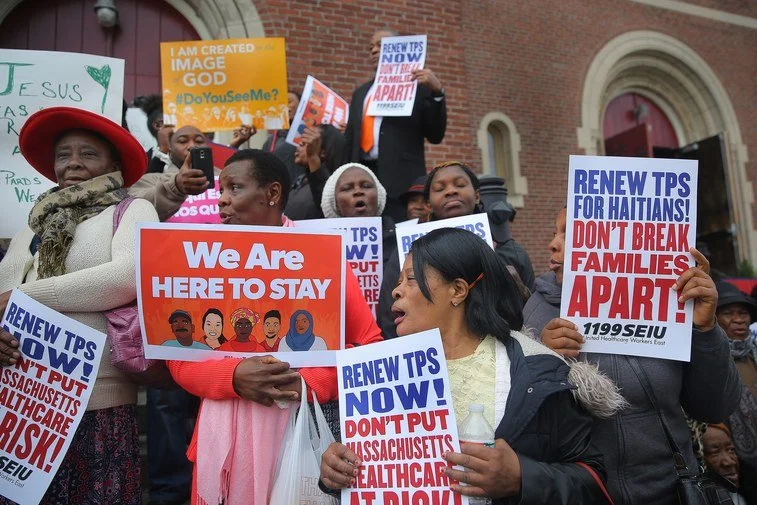
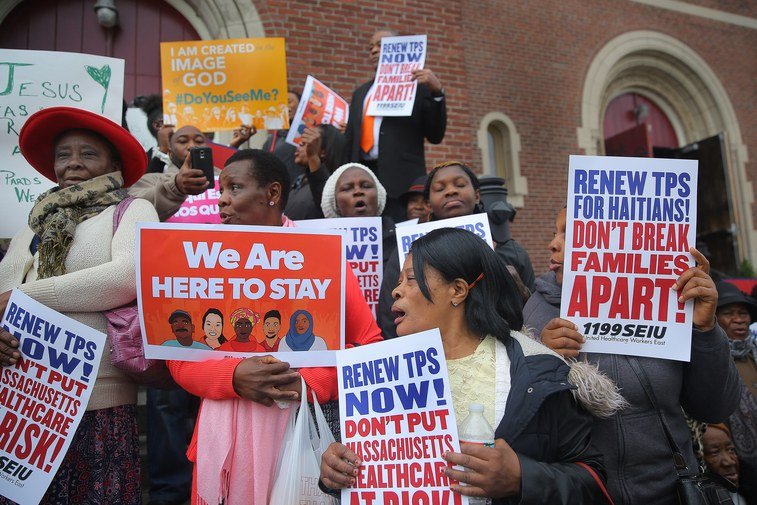
 In this op-ed, writer Fabienne Josaphat explains the history of Haiti, and how it has been mistreated by politicians long before President Donald Trump's recent remarks.President Donald Trump’s ignorance of Haitian contributions and history continues to mislead the American people. On January 11, the President of the United States met with officials on immigration and allegedly said, regarding Haitians and Africans, “Why do we want all these people from shithole countries coming here?” The Washington Post first reported the news.These statements made on the eve of the anniversary of the January 12, 2010 earthquake that killed up to 300,000 Haitians. As a Haitian immigrant living in South Florida — where, in 2015, an estimated 127,189 people of Haitian ancestry lived in Miami-Dade County alone — I could feel the indignation broiling beneath my people’s skin. Locally, councilman Alix Desulme, who represents District 4 in the City of North Miami, called the alleged comments “divisive and racist,” and demanded an apology.“Sadly, we have a president who continues to show America how great we can become through his destructive selfishness,” the councilman said. The mayor of North Miami himself, Dr. Smith Joseph, chimed in with his own statement, saying, “Our nation should not tolerate this overt racism from a president who is sworn to protect us.” Haitian-American Congresswoman Mia Love, a Republican from the state of Utah, said, “The President must apologize to both the American people and the nations he so wantonly maligned.”Instead, what came hours after the news of the reported comments broke, was a tweet from the president in which he denied making the comments, calling Haiti “poor and troubled.” He claimed to have wonderful relationships with Haitians, but failed to acknowledge a single one by name. None of this, again, is surprising.Fox News host Tucker Carlson affirmed that the president was merely voicing what his base was already thinking, casually asking, “Why can’t you say that?” on air. Many Trump supporters disagree with the notion that Trump is a racist, despite his allegedly saying “We should have more people from Norway” after his “sh*thole” comment was made.Describing a person’s country as a “sh*thole” shows an absence of critical thinking, and is a display of ignorance. It echoes an existing sentiment of xenophobia in this country from Trump voters, most of them white, now referred to as “the forgotten men and women.” They are being misled by a man who knows nothing about the Haitian people and their history. Yes, the U.S. should respect the Haitian people simply because of their humanity. But Haiti also deserves respect because it spent its entire existence as a nation contributing to the enrichment and greatness of superpowers like America.Historically, Haiti has always offered its best to the world and is proud of its accomplishments. It was the first to lead a successful slave-led rebellion to topple French slave owners, claiming its freedom in 1804. Without Haiti, there would be no Louisiana Purchase, a treaty that earned the United States the entire Louisiana territory and more than doubled the country’s size. New Orleans’ vibrant culture would not be the same without the influence of integrated Haitians. In Illinois, what would later become the city of Chicago was founded by a Haitian-born pioneer named Jean-Baptiste Point du Sable. In addition to liberating slaves in other countries, Haitians helped America fight its Revolutionary War, and when World War II drove countries to form urgent alliances, Haitian pilots joined the Tuskeegee Airmen as part of the U.S. Army Air Force.Our decision in 1804 to live free or to die was heroic, but the U.S. did not officially recognize this independence until 1862. France put the nation in the humiliating position of having to pay reparations at an annual rate for the slaves they lost, so Haiti was forced to borrow money to repay their oppressors, and borrowed from banks in France and the U.S.. Several initiatives have been launched to cancel Haiti’s debt, but pressure to repay debtors initiated further borrowing, keeping Haiti in constant crushing debt.The U.S. profited off Haiti during the American occupation of Haiti from 1915 to 1934, suppressing riots and killing rebels. Initially led by then-President Woodrow Wilson, the U.S. military imposed racist soldiers onto the Haitian people, introducing a new strain of cruelty that led to the decapitation and dehumanization of insurgents.The dictatorship of François “Papa Doc” Duvalier, which lasted in Haiti from 1957 to 1971, was able to endure because of American complicity. Specifically, as Duvalier murdered and brutally oppressed Haitians, the U.S. looked the other way because Duvalier was effective at staving off communism, which the U.S. saw as a threat. When that regime was toppled when Duvalier’s son was overthrown in 1986, the nation was completely impoverished, its funds depleted to line the pockets of tyrants like the Duvaliers. In addition, because of its debts to the U.S., Haiti has been by default constantly subjected to American intervention.Despite our contributions to America, Trump’s language doesn’t necessarily come as a surprise to Haitians, as we too often face this type of disregard from so many in power. Yet, during his presidential campaign, Trump made sure to draw attention to Hillary Clinton’s actions regarding Haiti to discredit the Democratic candidate. In 2009, when she was Secretary of State, Clinton suppressed Haitian minimum wage, at the behest of manufacturers, then after the 2010 earthquake, Bill Clinton became head of the Interim Haiti Recovery Commission. He enlisted the Clinton Foundation to build shelters, a relief effort considered to be a disaster, called out even by the likes of Oxfam.With more than one million people displaced after the 2010 earthquake, the U.S. poured aid money into Haiti, but years later, investigations have found that very little money actually reached Haitian citizens. Haitians still lack shelter that was promised by the American Red Cross after the humanitarian organization raised almost half a billion dollars from helpful donors. The Clinton Foundation, again, is also implicated in failing in their recovery efforts to aid Haiti with reconstruction projects after the earthquake despite raising more than $30 million.Then, Haiti suffered a devastating cholera outbreak that started at a United Nations peacekeeping camp, and as of November 2017, the Trump administration has refused to assign unspent UN peacekeeping money to help combat the epidemic. Instead, his administration chose to end Temporary Protective Status for 60,000 Haitians sheltered in America as a result of the earthquake.This sent a clear message to Haiti and its diaspora, and now, his comments about them speak volumes. In Trump’s world, there is no room for black and brown people to thrive. Yet, he shows an acceptance of white nationalists, identifying as “very fine people” some of the those protesting to keep Confederate monuments after the deadly Charlottesville rallies.He does not know the history of Haiti, and he doesn’t comprehend the significance of Haiti’s contributions, because he doesn’t care to. His wealth and privilege have allowed him to erase others to the point of invisibility.But Haitians exist as a reminder that the damages of racism and oppression cannot sway self-determination. We are not going anywhere. In fact, Haitians continue to thrive despite adversity. Our ancestry and culture empower and enable us to bounce back and carry on. If the whip of slavery did not break us, the words of an inveterate racist will not kill us. Haitians sacrifice for others even when others don’t sacrifice for them. I see this as the definition of love: the continuous devotion to others with no expectation of reciprocity.As a Haitian immigrant, I am tired of always asking for apologies, so I’m not personally interested in one from Trump. I’m interested in active and constructive repairs to our dignity in the American media, demonstrating an intent to rebrand and respect Haiti, rather than baiting audiences into buying into images of poverty and misery, because one narrative does not define us. Apologies, to me, are futile unless they are backed up by action and determination for change. Until then, we are planting our feet in the ground and waiting for the next insult to fly.By: Fabienne Josaphat for TeenVogue.com | January 16, 2018
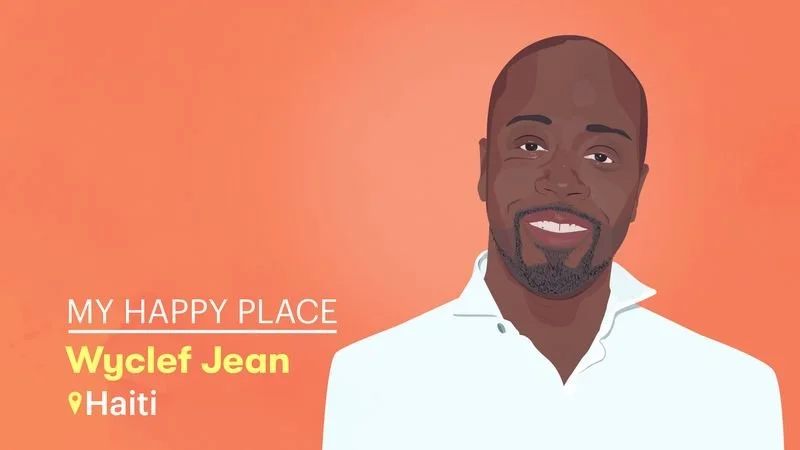
My Happy Place: Wyclef Jean Reveals His Hidden Paradise In Haiti
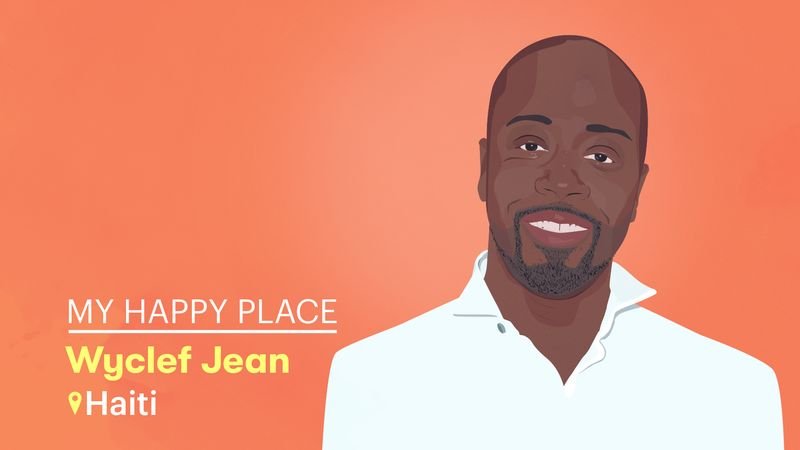
In My Happy Place, we talk to some of our favorite people about their emotional connection with an unforgettable destination.
Wyclef Jean is one the biggest musical names to ever come out of the island nation of Haiti. His star first rose as a member of the famed hip-hop group the Fugees and continued to climb as Jean pursued a career as a solo artist, collaborating with everyone from Shakira to Young Thug. A three-time Grammy award recipient, Jean has never forgotten his home country of Haiti and regularly extols his love for the country through his music. Mic caught up with Jean at an October benefit for VH1’s Save the Music Foundation, which is dedicated to bringing instrumental education to U.S. public schools.For Jean, there’s one place in Haiti that he can’t forget. "It’s like a magical river. It’s called Saut d’Eau," he said. Saut d’Eau is the name of a town and 100-foot waterfall about 60 miles north of Haiti’s capital, Port-au-Prince.

Saut d’Eau -- or Sodo in Creole -- is a place where natural beauty and Haiti’s rich history meet. The towering waterfall was created by an earthquake in the mid-1800s. According to local lore, shortly after a man saw the Virgin Mary appear near the waterfall. Saut d’Eau became a sacred site, and now, as Jean explains, "they have great ceremonies" every year.

The annual festival at Saut d’Eau occurs in mid-July, when Haitians, tourists and members of the diaspora travel to the waterfall to take part in the festivities. Attendees bathe in the water, hoping it will rid them of sicknesses or bring them good fortune. Both the Virgin Mary and her Vodou analog, the Haitian spirit Erzulie Dantor, are associated with the waterfall.Vodou -- more commonly spelled as "voodoo"-- is a key part of Haitian culture, and stems from its colonial history. When French colonizers made African slaves in plantation colonies like Haiti practice Catholicism, many combined the religion with indigenous African gods, giving birth to Vodou. That’s why Vodou spirits, like Erzulie are often so similar to Catholic religious figures like the Virgin Mary.

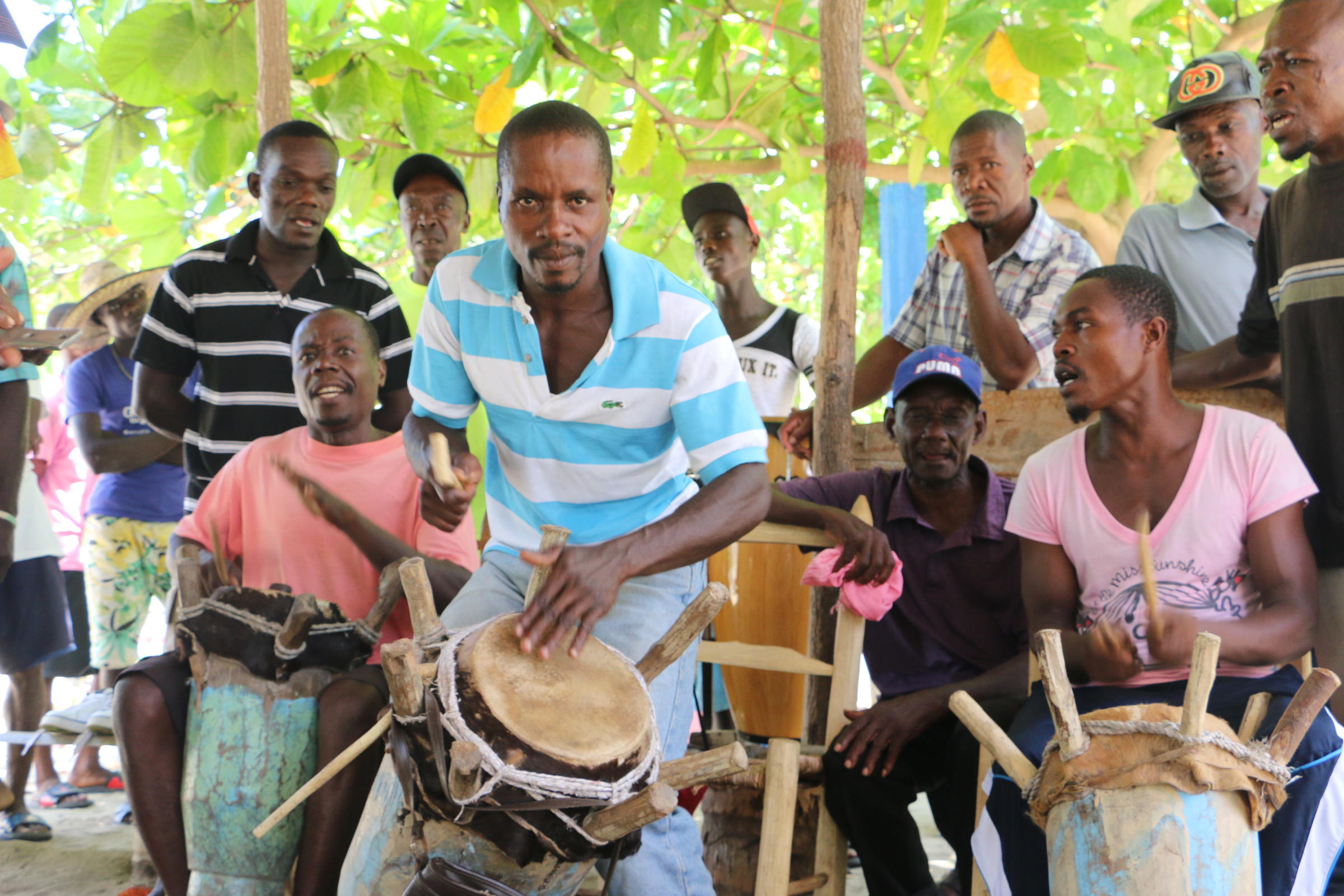
Music is woven into the yearly Saut d’Eau festivities. "You go out there, a lot of music is played," Jean said. "The style of the music is called rara. Rara is the roots." During the festival, rara musicians lead a procession from a church in Saut d’Eau to the waterfall. The main instrument used in rara is a bamboo or metal cylinder called a vaksen, which is accompanied by drums and other percussion instruments.
Rara is also played during Easter and Haiti’s equivalent of Mardi Gras, Carnival, which happens every year in the weeks leading up to Lent.

Jean hasn’t always had such a rosy relationship with his home country. After a catastrophic earthquake upended Haiti in 2010, his charity Yéle was accused of overspending on travel and luxury office expenses, as well as not fully paying its contractors. Jean responded to criticism in 2010 saying, "I never would ever take money for my personal pocket when it comes to Yéle," and that he has "always been committed to the people of Haiti." Despite being roiled by the Yéle controversy, Jean remains dedicated to uplifting his country, and he released a song named "Lady Haiti" in February 2017. For Jean, the synesthetic combination of music, nature and religious ceremonies make the Saut d’Eau waterfall and festivities one of the most treasured pieces of Haiti. And at the end of the day, it sums up what Jean loves so much about his native home: "You chill. You meditate. You enjoy nature."By: Benjamin Moe for Mic.com | November 6, 2017
Haiti & New Orleans: Is The Feeling Mutual?
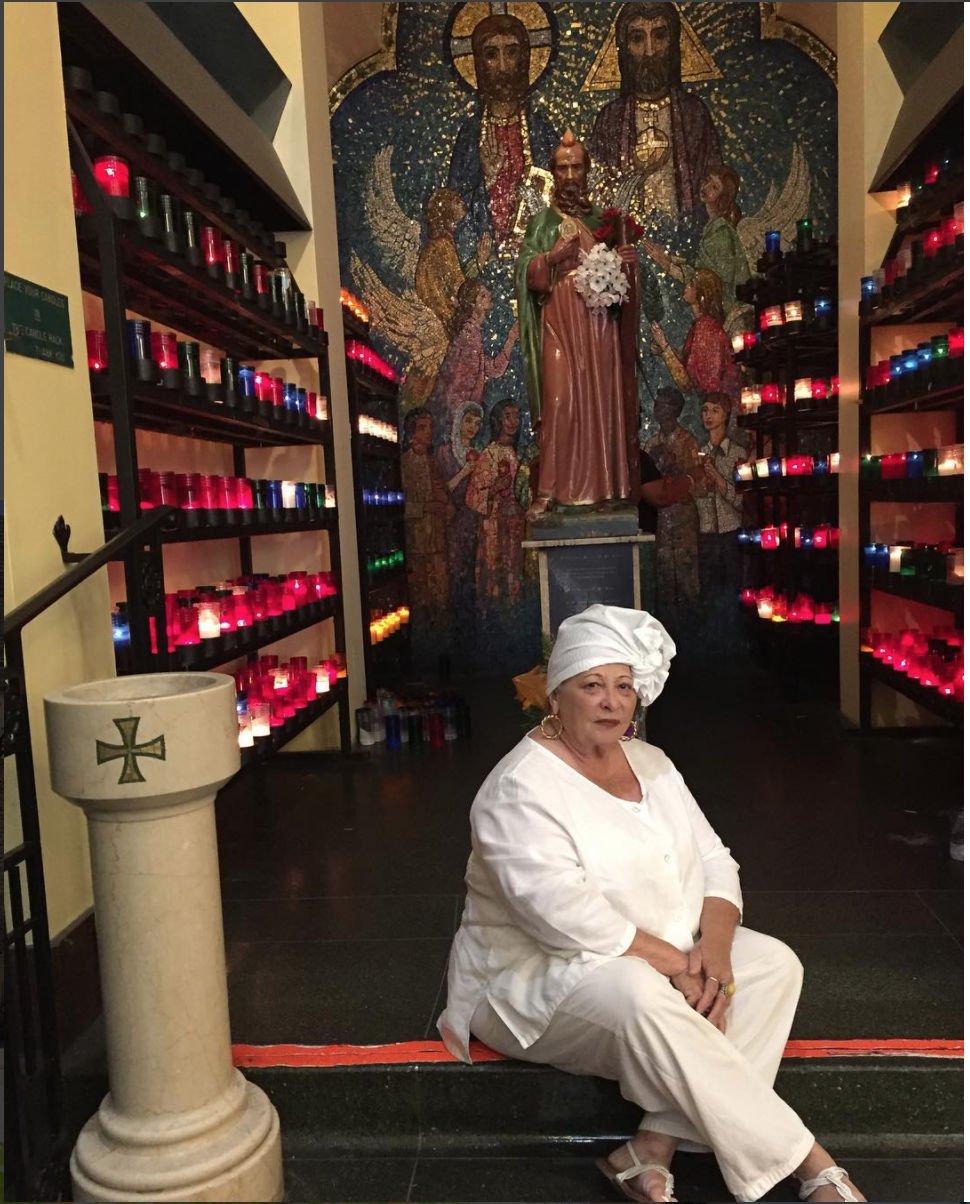
By "we," Barbara means native New Orleanians. And then, as if it was a setup, Barbara turns to a woman sitting a few pews behind her, and asks, "You have ancestors from Haiti?"The woman replies that she does not, but has friends that do. "Do you know the Burns? Or the Dumas?" responds the woman. "Yeah!" said Barbara. Those families come from Haiti, the woman responds. Barbara smiles and says "Ha! Same tribe, Same tribe."Barbara’s relatives leaving Haiti and making their way to New Orleans, is part of a larger migration of people fleeing Haiti during its revolution at the turn of the 19th century. The Haitian Revolution is the only successful rebellion by enslaved people in the Americas. And when it ended, and Haiti became independent, thousands of white, free black, and enslaved people -- fled or were forced from the island. Most went to New Orleans and Cuba. Then, a few years later, those same Haitian refugees that went to Cuba were expelled from Cuba, so they also came to New Orleans. This was 1809, when 10,000 Haitians arrived, and doubled the population of the city. This is partly why so many New Orleans families today are people of Haitian descent. And why a creole culture, born from African and European ancestry, define both places, and bind them together.They’re these similarities in heritage and homelands, and there’s also the architecture, religion, music, dance, food, carnival, and vulnerability to natural disaster. For all these reasons, Barbara believes Haiti is part of her city’s identity, and says other New Orleanians do, too. I’m not a native New Orleanian, but a lot of locals associate this connection with who they are as people. Even all these generations later. There’s this saying that New Orleans is "the northernmost point of the Caribbean," that basically comes from the city’s relationship with Haiti, and is one reason why New Orleans fancies itself part of the Caribbean, and Haiti, in particular, something of a sister city. But is New Orleans just fancying itself? Do Haitians think of New Orleans this way? Do they think of New Orleans at all? These two places were tied at the hip 200 years ago, But where does their relationship stand today?This story is told in three parts: The history of the original connection between these two places, what happened over time, and what the future can hold.PART I: The One-Way TripAndre Paultre belts his brains out behind the wheel of his forest green 4runner as it shakily bumps down a dirt road. Andre’s what’s called a fixer, he works with reporters when they travel to Haiti. We’re driving to a city called Jacmel, about three hours south of Port-au-Prince.
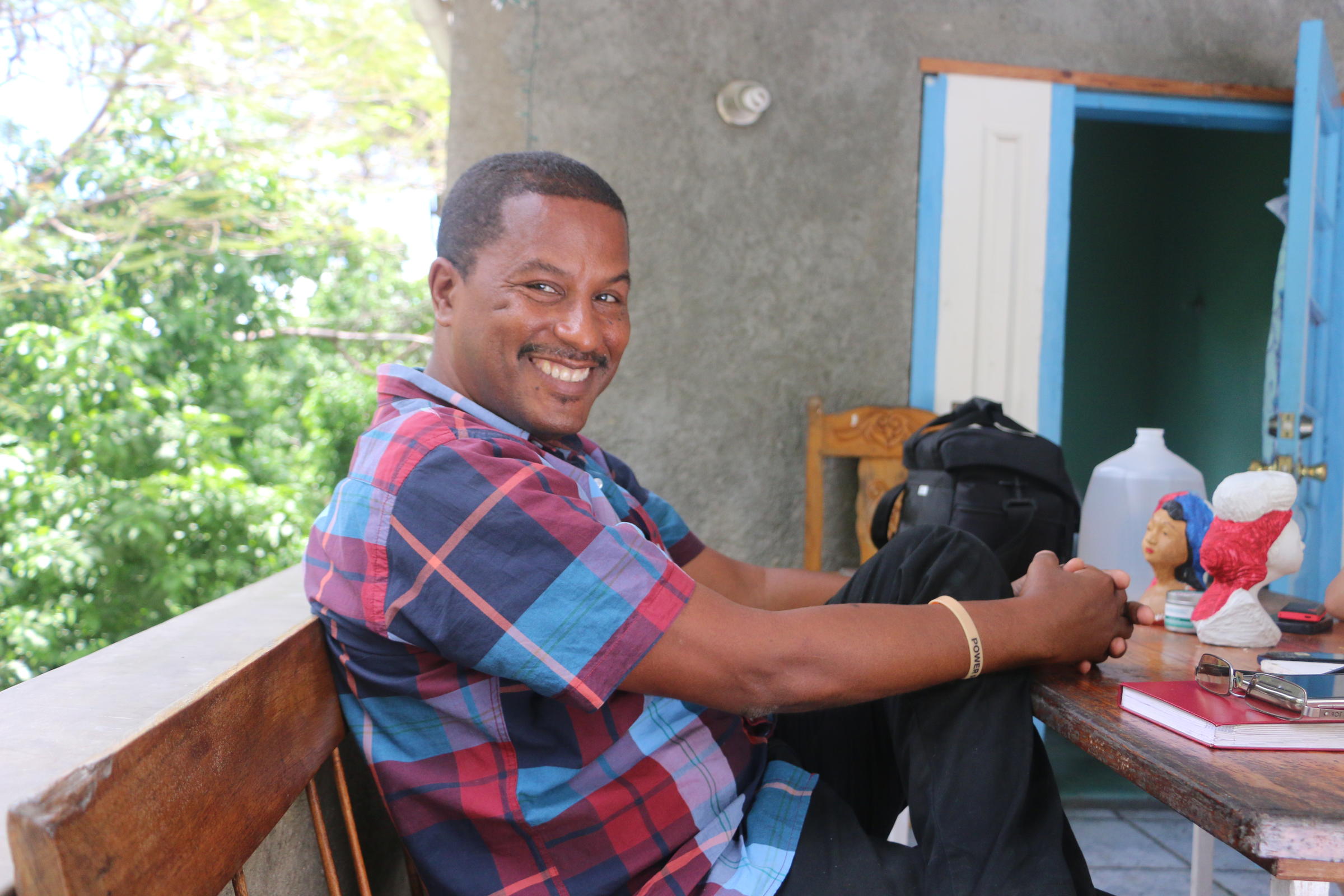
Jacmel is right on the coast, and feels like a beach town, surrounded by lush, green mountains. It gets more tourists than Port-au-Prince these days, not only because there are beautiful beaches, but because Jacmel is known for its Carnival celebration. The city is famous for its paper maché Carnival masks that people collect year round, and no matter when you visit, you’ll find artists painting them as you walk through the streets.We arrive at our first stop, and meet our tour guide for the day, Jean-Elie Gilles. He’s an opera singer, a professor, and the author of many books about Jacmel. He leads us towards the Florita Hotel, where he orders a round of drinks.
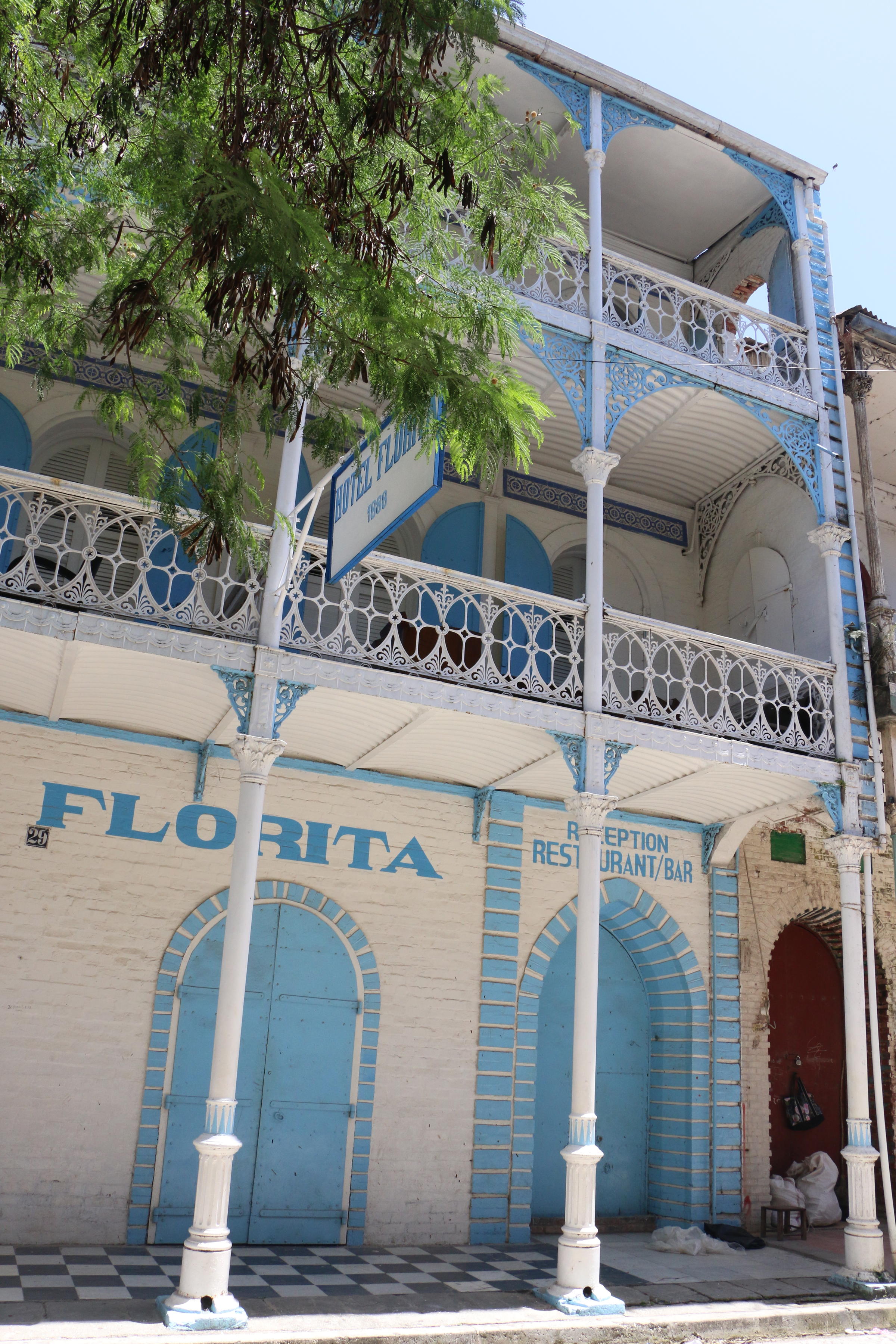
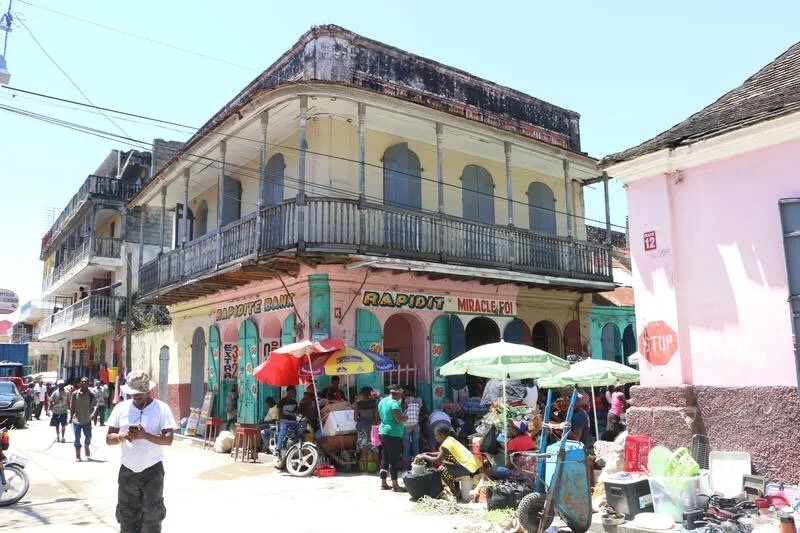
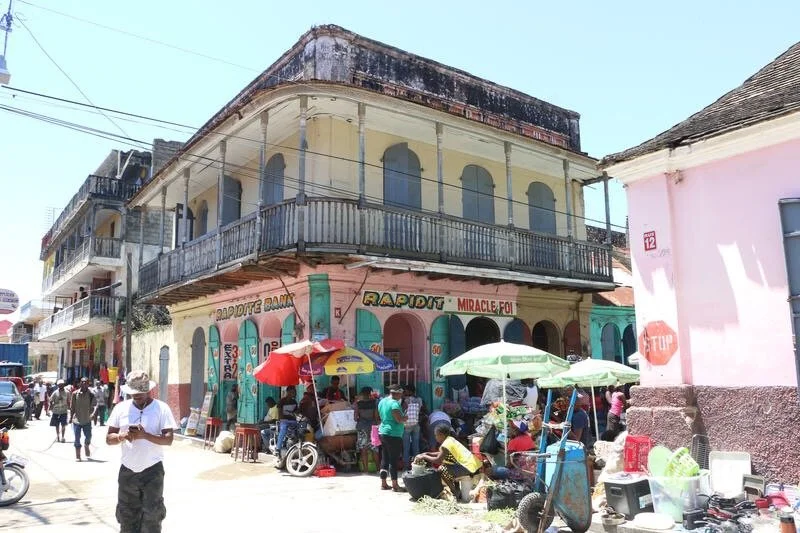
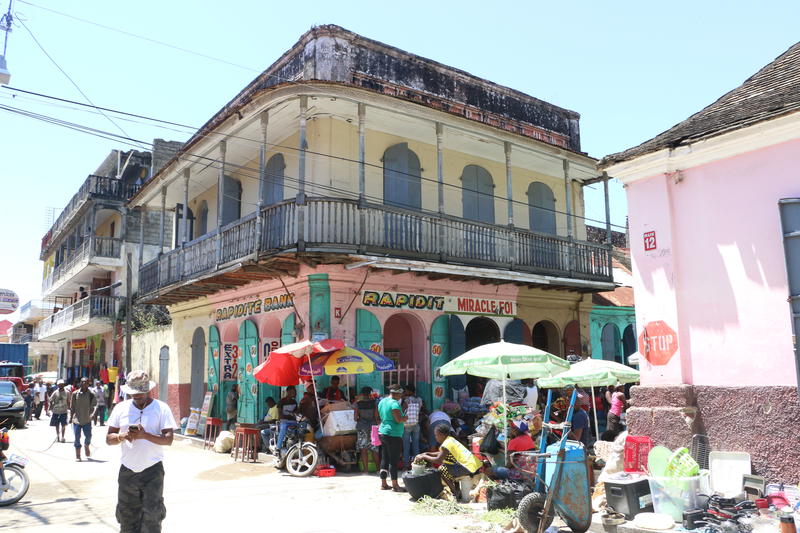
"The best rum sour is here in Jacmel, in Florita hotel," Jean-Elie says. It’s the best rum sour in Haiti, because this guy has a secret of doing something, I don’t know what! But it is good."That rum sour wasn’t the only reason Jean Elie brought us to the Florita Hotel. First of all, it’s beautiful -- the exterior is painted a cream-colored brick, the doors sky blue. Slim columns support an iron-lace balcony off the second floor that have huge ferns with water dripping through the bottom of their planters down to the curb. Everything about it looks exactly like what you would find in the French Quarter.It’s not just the Florita Hotel. Most of Jacmel is built in the same colonial style seen in the French Quarter, the Treme, the Marigny, and all over New Orleans. Two story buildings with wrought iron railings stuffed with hanging ferns. Bright colored shotgun houses, creole cottages. It was like a spitting image. To literally see the connection through this architecture was almost dizzying."This is what remains from that connection with Jacmel, and New Orleans, and Louisiana," says Andre, meaning this is what remains of that connection. Which makes it seem like something happened to this connection, something’s changed. But when did this connection start in the first place? Where does this shared history begin?Let’s start with the Haitian Revolution, says Henry Robert-Jolibois, an architect and historian who lives in Pétion-Ville, a wealthy suburb about 20 minutes -- or two hours -- south of Port-au-Prince, depending on the traffic. Most people who can afford it, choose to live in Pétion-Ville over Port-au-Prince. Unlike most towns in
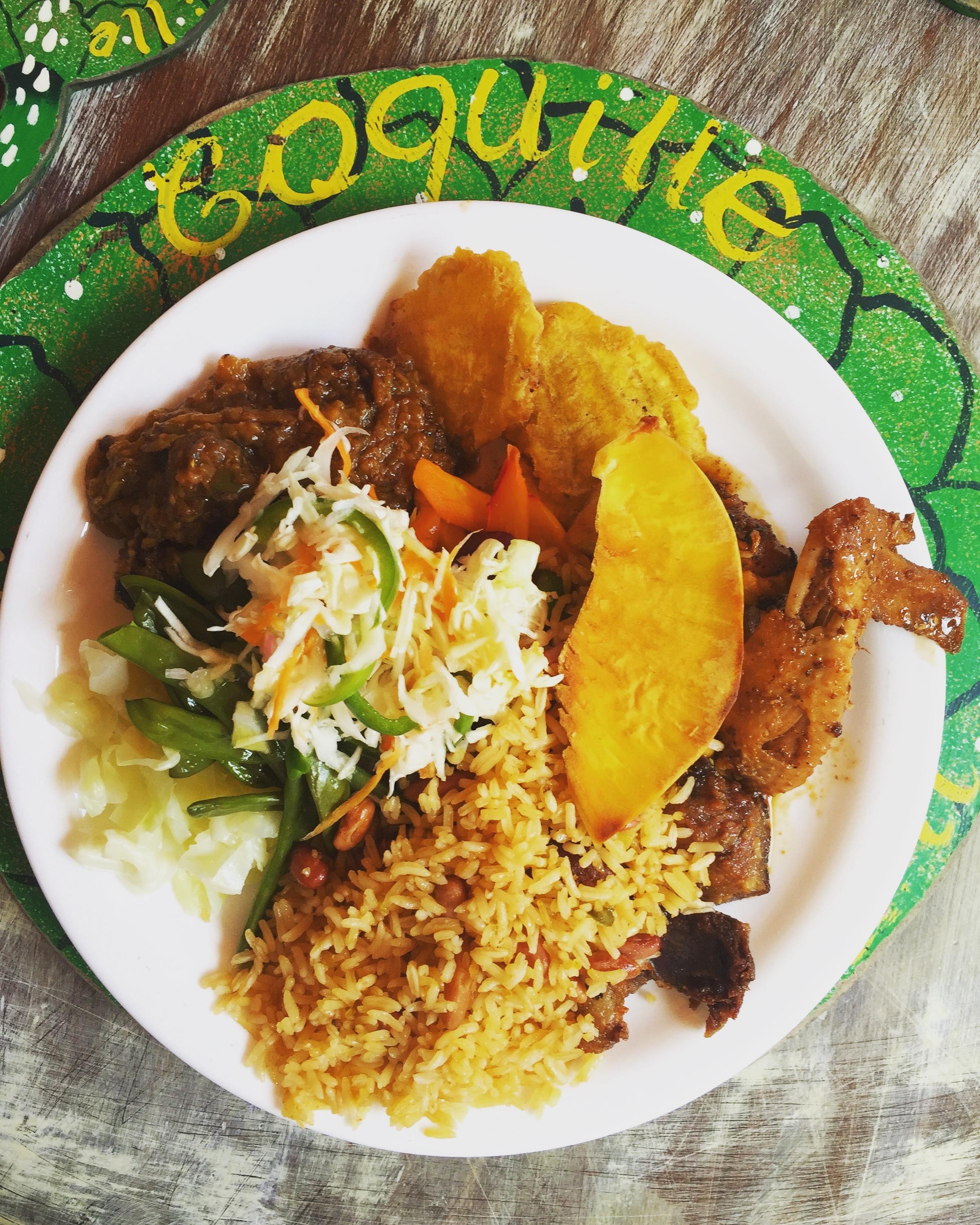
Haiti, Pétion-Ville’s got sushi restaurants, yoga studios, iced coffee, and has its own private trash pickup service. It’s a stark contrast from Port-au-Prince, where poorer residents often get rid of their trash by burning it on the side of the road. This type of disparity is not new to the island."Well, everybody wanted their freedom," says Henry. Before Haiti was Haiti, it was a French colony called St. Domingue. Sugar and coffee ruled, and made the colony wealthy, on the backs of thousands of enslaved Africans. By the 1760s, St. Domingue was the most profitable colony in the Americas. This prosperity came at the expense of brutal, often fatal labor in the fields. Large numbers of enslaved people fled the plantations for the mountains, where they established maroon colonies. And started planning a revolution."The revolution started with the French Revolution," Henry says. When the French Revolution began in 1789, there was lots of division, to put it mildly. Some whites in St. Domingue opposed the Revolution in France, while others supported it in hopes of gaining the colony's independence. The free people of color, or gens de couleur, pressed for the equal rights that French Revolution seemed to promise. Then there were the enslaved and maroon populations -- which by the way, outnumbered whites on the island 10 to one -- they saw this political crisis as an opportunity to strike for their freedom. Which led to The Boukman Eksperyans, what’s widely considered the start of the Haitian Revolution. This happened in 1791, when a vodou priest named Dutty Boukman led a religious ceremony to kick off the first successful slave rebellion in the northern part of the colony.
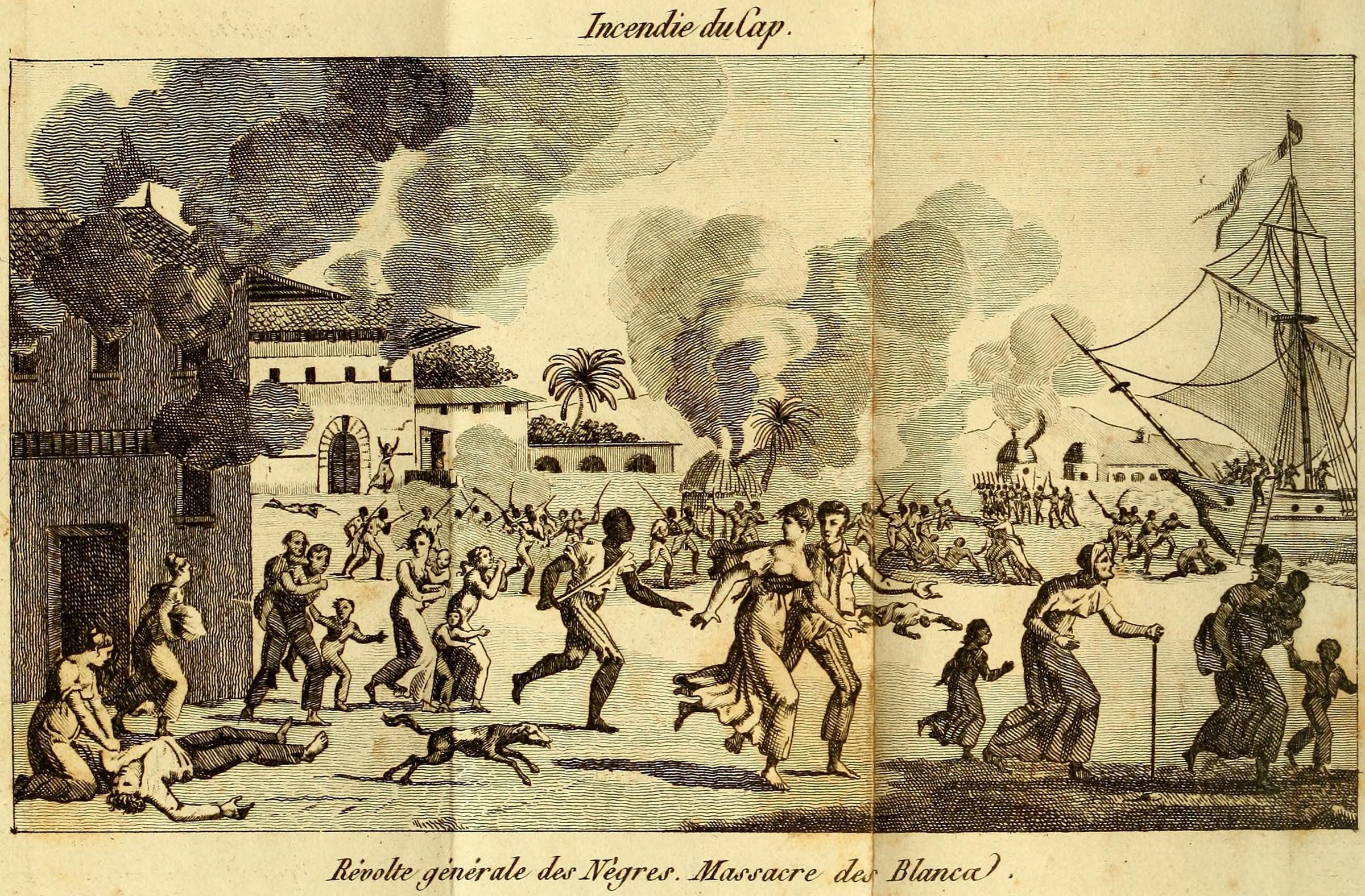
"The revolutionaries, their idea was simple: at the end of it all, we will be able to better negotiate agreements, and freedom for all," says Henry. "When finally we stopped fighting, the Haitians had won, and they had created one nation."It was 1804. Thirteen years after the Boukman Eksperyans, the enslaved population liberated itself, and their victory remains the largest and most successful slave uprising in the Americas. This uprising shed the colonial name St. Domingue, and the new black nation was called Haiti. The name Haiti comes from the indigenous language of the Taíno people who were native to the island. It means "land of high mountains." So they ditch the French name, and all the French are like, we should probably go."They went to Louisiana because it was another colony of France," says Henry. "It was part of the French network."Now, people had been fleeing Haiti over the course of this 13-year revolution to go live in other French colonies. Some went to Caribbean islands like Guadeloupe and Martinique, a lot went to Cuba, and many went to Louisiana. And it wasn’t just white people who fled -- a lot of enslaved and free people of color went with white Haitians to New Orleans, either with their master, or to escape the violence and turmoil that was happening on the island. When the revolution finally ends, Napoleon realizes he’s spread too thin. He decides to forget about Haiti, and double down on Europe. This led to the Louisiana Purchase.When you put the last battle of the Haitian Revolution and the signing of the Louisiana Purchase on a timeline, they happened just months apart in 1803. Now fast forward to 1809. Spain's at war with France -- and all that bad blood seeps into the Caribbean. Cuba is a Spanish colony, but it's full of French emigres that left Haiti during the revolution. So during this war, Spain up and kicks out all the French. Which means that all the people who had fled to Cuba from Haiti need to leave again. Where do they know a guy? Louisiana.Jean Marie Theodat is a geographer who lives in a town also called Theodat. "A part of our society just went to reproduce itself there. Like a chemical process. A lot of slaves, a lot of masters, escaped from St. Domingue, went to Louisiana and created a creole culture."
Almost overnight, 10,000 people of Haitian descent, ⅓ white, ⅓ enslaved, and ⅓ free people of color arrived at the port of New Orleans, and straight up doubled the size of the city. And it shows, Jean Marie says, "I mean, when I listen to your music, and sometimes taste your cook -- the dish, I think, this is ours!"This is how Jean Marie sees it: the St. Domingue colony didn’t disappear, parts of it just kind of picked up and started over again somewhere else. Which had a big impact on both economies. The Revolution devastated Haiti’s economy, leaving the new nation with almost nothing but burnt sugarcane fields. But when all these refugees, many of them planters, came to Louisiana, they started new plantations along the Mississippi river. The sugar industry exploded, and brought a lot of wealth to Louisiana, and New Orleans. This influx of Haitian refugees also came at an oddly convenient time to reshape the city. Even though New Orleans had been around for almost a century when they arrive, in a lot of ways the city was also a blank slate at that moment. The refugees pull up to this little frontier town that’s recovering from two massive fires that almost entirely wiped out New Orleans in the late 1700s. The first fire happened in 1788 and destroyed roughly 80 percent of the city. And then six years later another fire wiped out another 212 buildings.
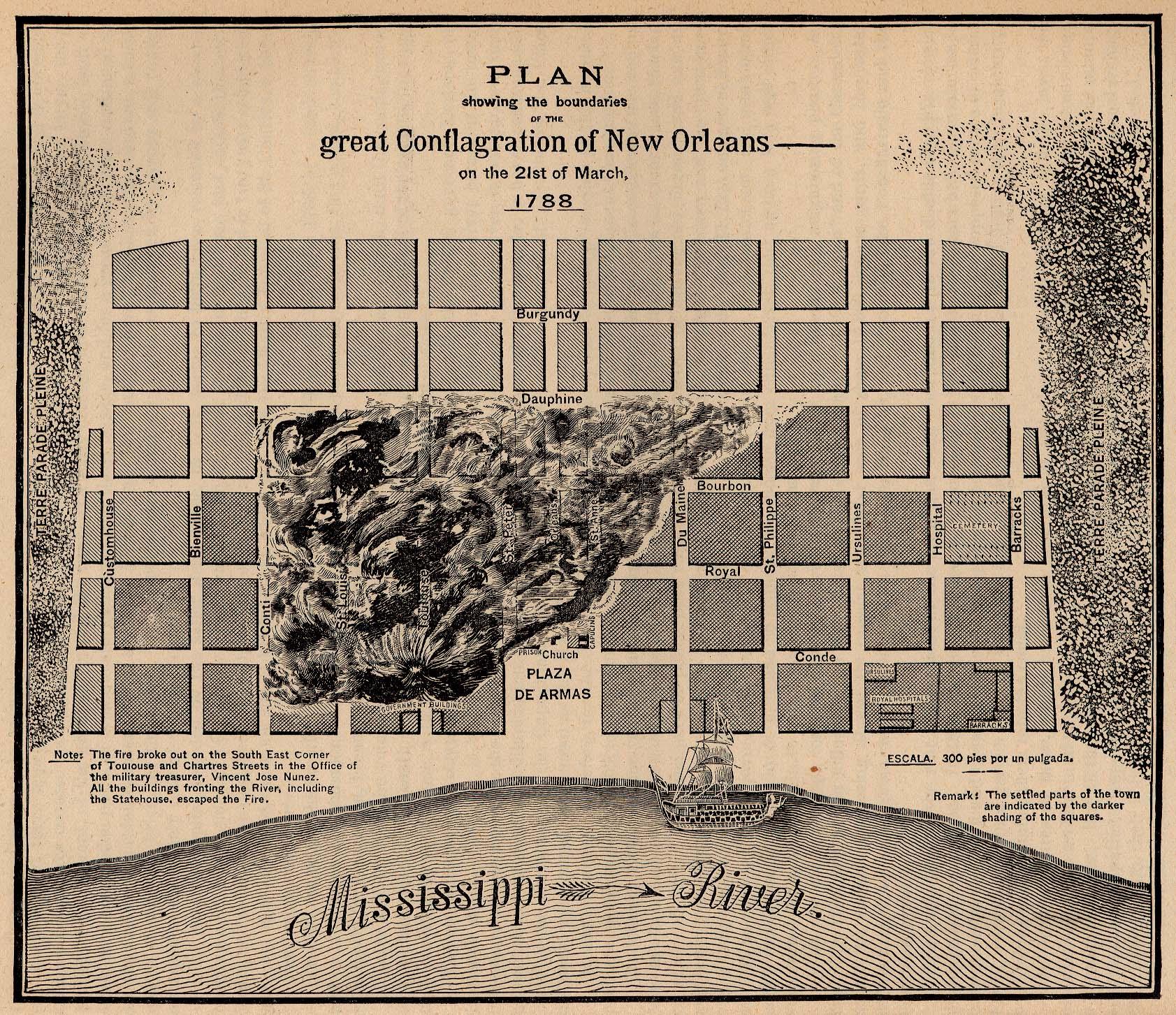
New Orleans was rebuilding itself, and at the same time had just become an American city. It was a prime time for all of these Haitians to come and develop this old and new town. This is the root of the connection between Haiti and New Orleans: These major migrations transformed the future of the city during such a pivotal time, influencing its culture in every aspect -- food music, art, dance, language -- but with all that was brought to New Orleans, was there a reciprocal influence happening back in the new country of Haiti?Again, Jean Marie Theodat. "I mean, I personally, as a geographer, I know about it. I’ve heard and I’ve read about it. But still I think, that the average Haitian don’t know about that."For him, it’s simple: "I look to Louisiana, it’s like another island, far away. It was a one-way trip."PART II: Two IslandsMy field producer Wynne Muscatine Graham and I are walking around one of the main public squares in Port-au-Prince called the Champs de Mars. It’s a series of public parks that are separated by large boulevards congested with cars, motorbikes, and colorfully painted public transportation buses called Tap Taps. It’s late afternoon, and street vendors push carts offering freshly chopped coconut, candy, beer, ice cream. Others ring bells as they call out the service they’re offering, like a shoe shine, or a small bag of drinking water. People walk through the park and pass us in business attire, on their way home from work. Others sprawl out under a shady tree and watch a pickup game of soccer on an open patch of dirt.We wonder how many of these people know about the connection between New Orleans and Haiti? How many people walking past us in the heart of Port-au-Prince, have ever heard of New Orleans, period? We ask people as they pass by, if they’ve heard of New Orleans. And we did this in a few different cities in Haiti. Port au-Prince and Jacmel in the south, and up north in cities like Gonaïves, Cap-Haïtien, and villages in between. Everywhere we went we got mostly the same response: No.

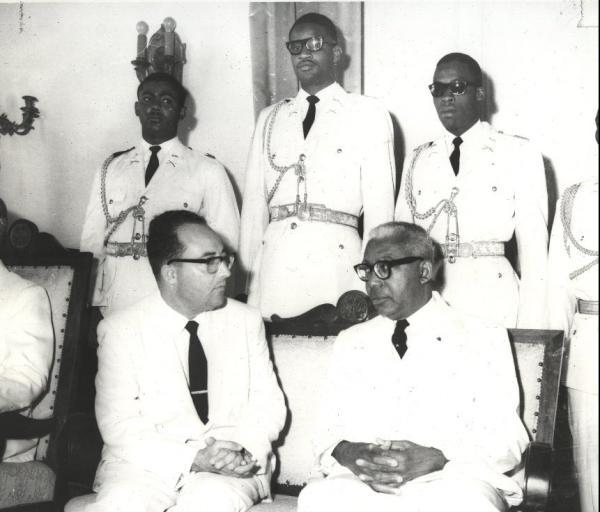
The average person on the street had never heard of New Orleans. With a few exceptions. Some high school students had heard of Hurricane Katrina, through hearing it on the news. Others knew that New Orleans celebrates carnival, just like they do in Haiti. And then someone who knows New Orleans because he’s an NBA fan. "Because there’s a good basketball team from there," he says. Maybe he’s talking about The Pelicans?Wynne asks him if he knows any people who live in Louisiana. "Well, I’ve heard Haitians live there, but me personally, I don’t have family living in Louisiana. My family lives in Florida or New York City, if they live in the United States."Florida, and New York. That’s where you’ll find much of the Haitian diaspora today, the man tells us. So, if thousands of Haitians moved to New Orleans 200 years ago, why’d they stop coming? What happened?"Louisiana has largely forgotten Haiti, and Haiti has largely forgotten Louisiana exists," says historian George Michel. "Louisiana has sunk into oblivion." George Michel is knowledgeable and dramatic. He started to list links that once existed between New Orleans and Haiti. Links that are now gone."When I was a boy, you had a thrice a week direct flight by Delta Airlines from Port-au-Prince to New Orleans. No more. So that was a link," he says. This direct flight he mentions was active in the mid 20th Century. He adds that there used to be a Haitian consulate in New Orleans. That’s also gone. George Michel continues: "We used to have shipping lines between New Orleans and the Haitian ports. This is long gone, as New Orleans dropped as an important port in the United States."New Orleans still has an active port. But it’s not what it used to be. The port employs a lot fewer people. Haitians looking for a better life in the United States can find more prospects in other cities. Like Miami, the city with the highest Haitian population (by a lot), followed by New York and then Boston. There is still an active Haitian community here, but it’s also not what it used to be. New Orleans doesn’t even crack the top 10 for Haitian populations in the United States.So to explain why Haitians stopped migrating to New Orleans, we arrive at factor #1: Jobs.Vladimir Laborde, a Haitian businessman who lives and works in Port-au-Prince. "New Orleans is not the most prosperous place." He says when Haitians think of the United States, "You don’t think of New Orleans. And then the proximity, as far as logistics, people go to Miami. Miami is less than an hour in the air."Factor #2: Geography. Michele Pierre Louis is a former Prime Minister of Haiti who now teaches the history of the Caribbean at a University in Port-au-Prince. "Getting into the Gulf was too difficult, whereas the tides take you to Miami," he says. Plus, Miami’s population exploded in the 20th Century. In 1910, Miami was brand spanking new. Only 5,000 people lived there. Ten years later, there were 30,000. And people just kept on coming. As Miami grew, so did the economy. So why go to New Orleans, when you can get to a faster growing city, even faster?Michele says Haitians went to cities in the United States, even though they might have felt more at home in a city like New Orleans. "But I don’t think it was in their mindset. They didn’t travel with an idea that that particular state had a connection to Haiti."Why not?"History is not well taught, at all, in Haiti," he says. Factor #3 to explain why Haitians stopped coming to New Orleans: Education."I’m telling you, I’m teaching at the University and I can see the ignorance of our students with so little knowledge of our own history which is so incredible," Michele says. "The dictatorship killed a lot of things here. There was a big darkness, in a way."The Duvalier dictatorship started when Haiti elected Francois Duvalier, aka Papa Doc, on a populist platform in 1957. He ruled the country with his own militia called the Tonton Macout. When he died in 1971, his son Jean-Claude, aka "Baby Doc" took over.
"Duvalier had changed the curriculum of teaching history at the primary and secondary level. Our heroes were the most important," he says. Michele’s point here is that Haitians are mostly unaware of the connection that they have to New Orleans, because that’s just one of many gaps in their history curriculum. But it goes both ways- there’s a parallel gap going on here in the United States. Did you learn about the Haitian Revolution in high school?There’s a big silence on this end.Dennis Kelly has been doing business with Haiti for the past 30 years, and splits his time between New Orleans and Port-au-Prince. "Many Haitians, or people of Haitian heritage who live here, have never been to Haiti."New Orleanians talk about Haiti. But they don’t actually go to Haiti. Factor #4: Not going to Haiti. Which explains why these two islands are no longer close. And they’re being referred to as two islands, but it’s important to remember that one is a small country, one of the poorest in the world, and the other a small city, that’s part of the wealthiest country in the world.So these "two islands" are no longer close. Vladimir Laborde, the Haitian businessman you heard from earlier (who actually moved to New Orleans from Haiti with his family when he was a kid, and went to high school here), he has a phrase for this kind of unconsummated love: "Affinity diaspora." New Orleans, he says, "don’t know how they’re related to Haitians. They really can’t put their finger on it. They just feel a connection. Sometimes I’m uncomfortable because they haven’t been here yet, and they’re talking about something they don’t know."Loyola University professor Angel Parham agrees. She wrote a book called American Routes, that traces the experience of Haitian descendants in Louisiana. She interviewed a lot of folks in New Orleans for the book. And how many of those people had actually visited Haiti?Angel says, "I don’t think any of them have visited Haiti. I do not recall anyone making a real trip to Haiti, and really being there for any length of time. No."Remember Barbara Trevigne, the woman in the beginning, wearing all white and praying at the St. Jude Shrine? We met at that shrine because it’s a place in New Orleans that reminds Barbara of Haiti. But Barbara has yet to visit Haiti. She wants to, but hasn’t made Haiti happen -- yet.
"People may be interested in talking about it," Angel suggests, "but how interested are they in actually traveling to Haiti? Are they going to feel that it’s a place that they will be safe? Haiti does not have this image as much of the Caribbean as a tourist destination that everyone wants to go to." A lot of the people Angel interviewed feel this nostalgic affinity towards the Haiti they have in their minds, but it’s almost like they want to keep it that way."It’s one thing to kind of claim this Caribbean heritage and memory, but then to not be supportive of it, I think is problematic," she says.Some of this could be financial. As Vlad Laborde said, New Orleans is not the most prosperous place. There may be plenty of folks who would love to travel to Haiti, but simply can’t afford it. That’s real. But there are other reasons why New Orleanians, and others, don’t visit."We have bad press," says Vladimir Laborde. "The perception is this is a no man's land. People think of Haiti and they say, 'dude, I need security you know? My insurance won’t let me go down there.'" And this negative image of Haiti, has been broadcast to the world since day one."We paid a dear price for that revolution," said Gigi Dupuis, a Haitian woman now living in New Orleans. It all goes back to the Haitian Revolution. It’s like what brought New Orleans and Haiti together, is the exact same thing that was used to keep them apart. "For doing away with the slave system. And we were isolated because of that," Gigi says. Architect Henry Robert- Jolibois agrees, "We were punished many times, and many times over, for daring to free ourselves. And we have been paying for it a long time."Ron Bluntschli is an American who lives with his wife, Carla, in the mountains outside Port-au-Prince. They run an organization called NASONJ, which in Creole means "We Will Remember.""They could not accept that a group of black people could win a battle against France and establish their own country and have it work. Because that would destroy the whole ideology of racism. Europe, France, and the United States were determined to see Haiti fail from the start. So they set the course in motion to destroy this country, and they never let up," Ron said.In the 1820s, South Carolina Sen. Robert V. Hayne made the U.S. position absolutely clear when he stated: "Our policy with regard to Haiti is plain. We never can acknowledge her independence." It took the United States until 1862 to recognize Haiti as an independent country. Almost 60 years after the revolution.

Now fast forward to 1893, the Chicago World Fair. Frederick Douglass is the U.S. ambassador to Haiti, and in a speech at that world fair Douglas says: "Haiti is black, and we have not yet forgiven Haiti for being black."Dennis Kelly is the businessman who lives in New Orleans and Port au Prince. He says the revolution remained unthinkable into the 20th century, because it overturned white power. "Haiti was still viewed as a slave colony that was insurrectionist and just didn't affirm any values of the power elite in the South, shall we say. I think that sums it up right there," he says.Dennis says that that can likely be traced back to the events of the beginning of the 19th century of the successful revolution. "Absolutely. That's directly traced to that."Haiti’s been painted as a dangerous place since the beginning, and people are still not encouraged to visit there. The poverty, the threat of natural disaster, the political instability, all of this dominates what we hear on the news about Haiti, and has done permanent damage to the country’s reputation, economy, and tourism industry. Americans are not eager to go over there. So while many New Orleanians may appreciate all the cultural ties they share with Haiti -- the music, the food, the architecture -- they’ve never actually seen it for themselves. This is the complicated nature of the current relationship: New Orleans might love Haiti, but at arms’ length.Andre Paultre, our driver in Haiti, has a cousin named Lionel Pressoir. He’s a tour guide outside Port-au-Prince. Some of their ancestors actually left Haiti for New Orleans during the Revolution. And Lionel says both places were neck-and-neck back then. But now, he says, they’ve gone in different directions. "There is not the connection that I thought that there was between Haiti and New Orleans. But we are looking for it. We need it."Pressoir says it’s not enough just to say that Haiti and New Orleans are "Sister Cities.""You know, we can talk about it. But let’s see what we can do as far as bringing something positive," he says.PART III: More Than A FeelingGigi Dupuy was born in Haiti, but her family moved to the states when she was a kid. Now her kids are all grown up, and they live in New Orleans. They urged her to move here, and said she would feel at home. So, she did.
"Leyla, my daughter called me, and she said, 'Mom, you need to move to New Orleans. It's so much like Haiti, you're gonna love it. There's corruption, there's potholes. It's just an incredible place,'" says Gigi. "Of course that's not what I love about Haiti but…"With a last name like Dupuy, a lot of people assume Gigi is from New Orleans. "But it took me a while to realize that," she says. "Until I went to yoga class. The woman registering participants said to me, ‘What's your first name?’ And I said, 'well, I'm sure there's only one Dupuy,’ because there never was more than one Dupuy! And she said, ‘no, actually I have six.’ And I was like what?!""You go into the phone book in New Orleans, and it’s like you’re looking in the phone book in Haiti," says Vladimir Laborde, the Haitian businessman who went to High School in New Orleans, and then moved back to Haiti. "You find Labordes, you find Toussaints, you know. All those people have my family’s last name.When Gigi goes back to Haiti to visit her cousins, she talks about New Orleans. "I say it's very similar. The most similar."No matter what’s happened to this relationship over time, New Orleans and Haiti still have so much in common.

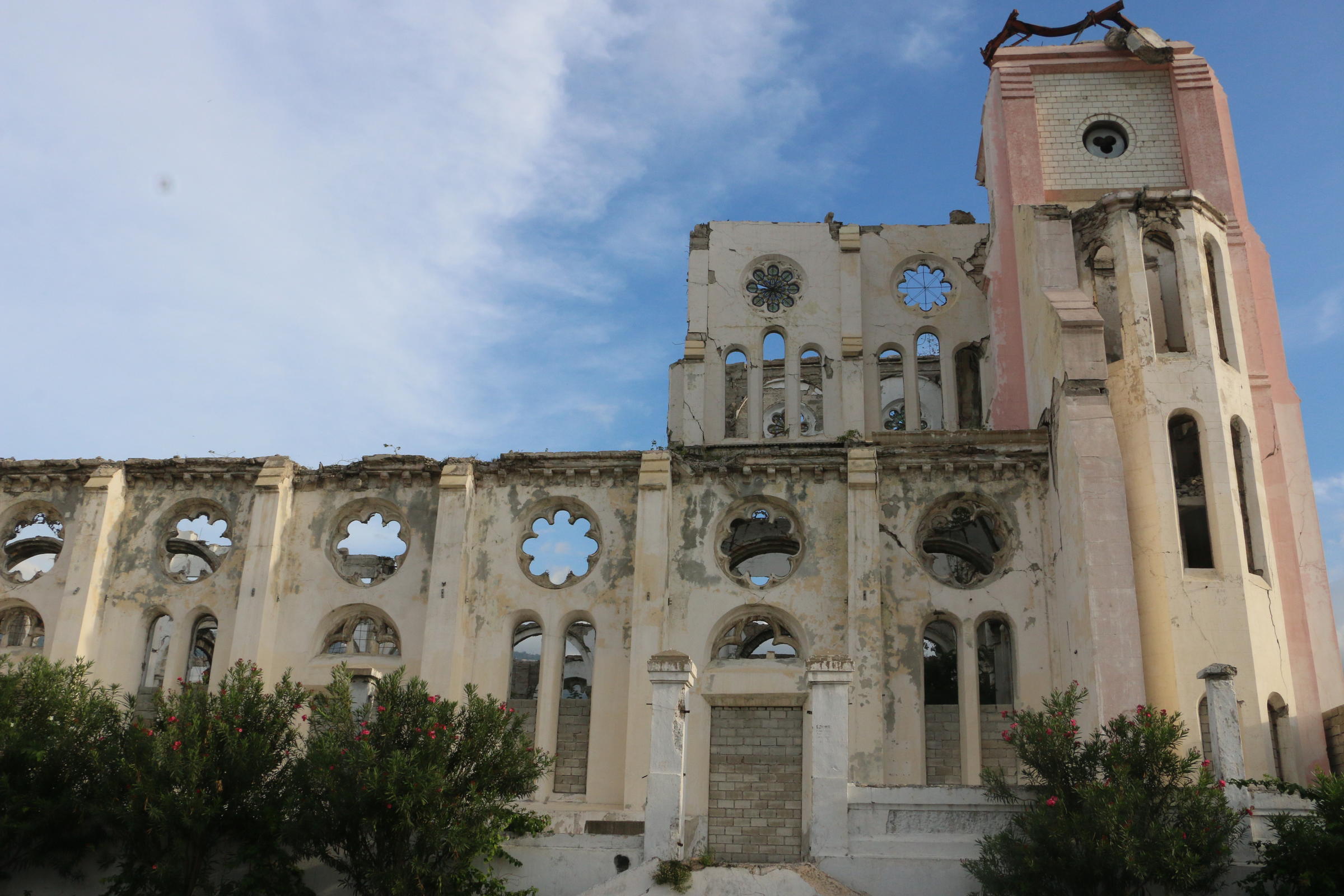
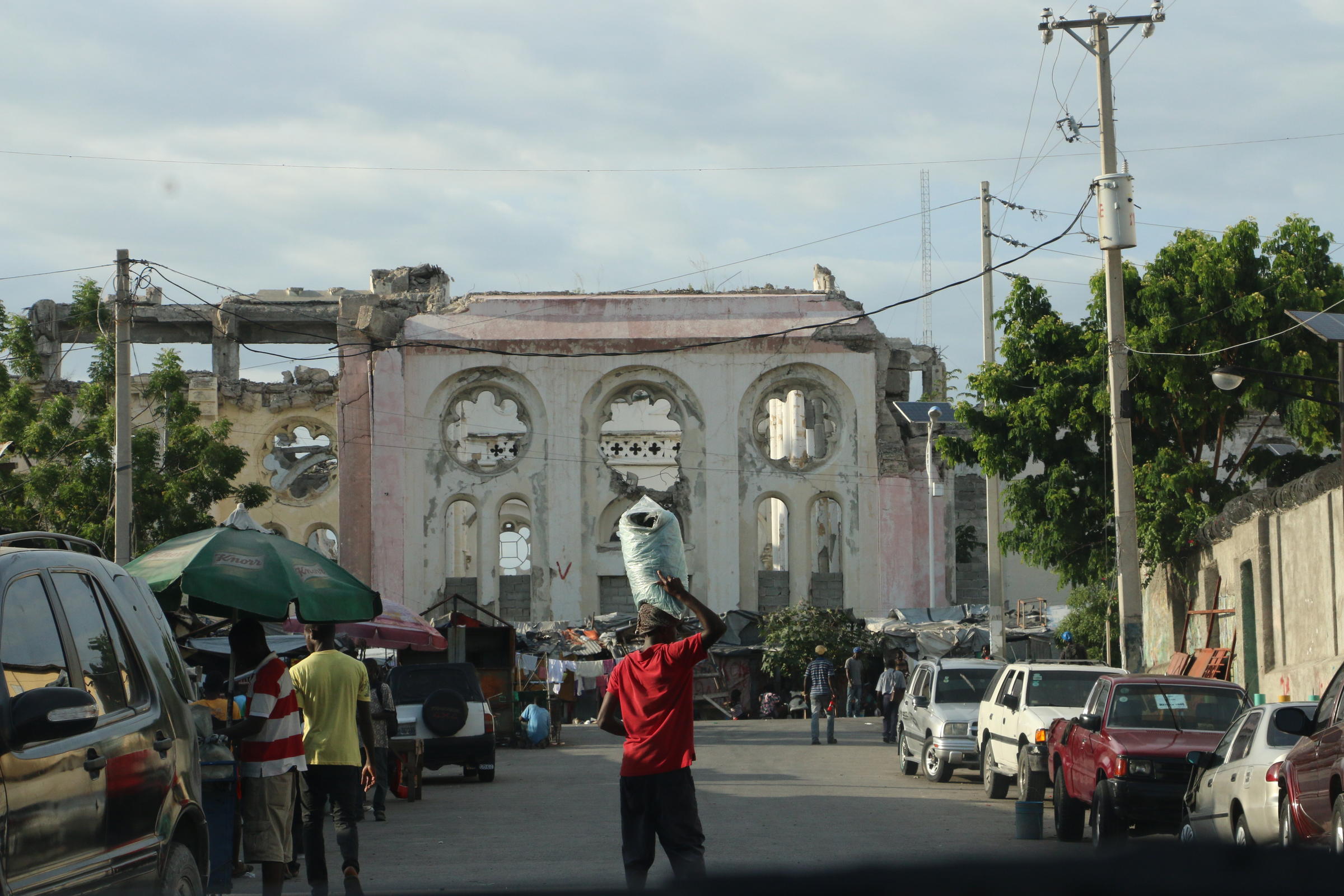
"Not only do we have historical and cultural ties, but we have a traumatic experience that almost wiped us out," he says.New Orleans has Hurricane Katrina, which ravaged the city in 2005, and Haiti has its earthquake that hit in 2010. The quake devastated most of the country, leveling cities and destroying major landmarks, that, as of 2017, are still piles of rubble. The degree of blight reminded me of some of the largest buildings in New Orleans that have been left virtually untouched since Katrina. Like Charity Hospital in the center of downtown. And, like in New Orleans, the aftermath of disaster isn’t just seen. It’s heard.
Jean-Elie Gilles, the tour guide in Jacmel, gave us a long tour of his house that day, because he has a large collection of Haitian art and antique furniture he wanted to show off. He started talking to us about a coffee table in his living room. There must have been something about that table, because before we knew it, Jean-Elie was back in 2010.
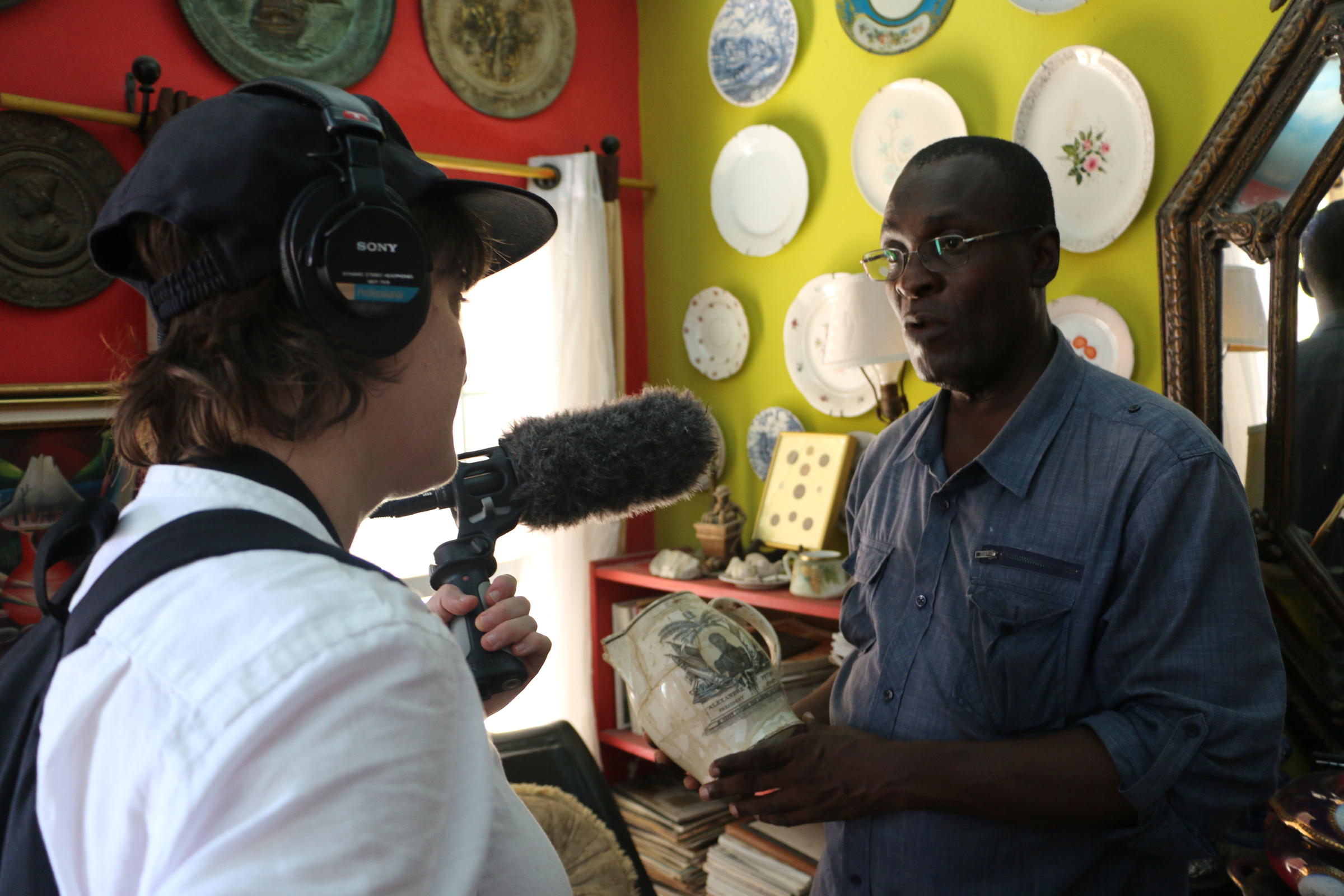
"I was living on the 6th floor and the house went down. I was inside. I was all the way living upstairs, and then I fell. And then I look up outside and I saw the house that was beside me, that was taller, didn’t exist anymore. That house became a pile of crap. And then pretty soon, the house just went down like that. It was like a pile of cards, you know? Like nothing," he says.He went on, with no idea how long ago he had stopped at the top of his staircase, looking beyond all of us, past the house we were all standing in, at the house he lost. "Now I am telling you, I am swearing that I could hear the sound of the earth crying. It’s worse than anything that you have ever heard. It’s like the sound of 10,000 women screaming from the womb. Oh it’s scary. I heard it, and I was not the only one! Very painful, painful. OK let’s go." And then, just like that, he turned on his heels and flew down the stairs.This kind of time travel, this relived trauma, still happens in New Orleans, too. "New Orleans went through Katrina, so they know a lot about disaster," Vlad recalls.And they know what it’s like to see a city full of holes. When our driver Andre gave us a tour of Port-au-Prince, most of what he stopped to show us were things that used to be there. Things that aren’t there anymore. "And that's why after the quake we felt like we were lost. Because all the landmarks that we could use to indicate a place...like we say, 'near the Cathedral,' 'near the national palace,' most of them were gone. Same as after Katrina, I guess."After the earthquake slammed Haiti in 2010, and again after Hurricane Matthew in 2014, people around the world asked themselves what their obligations are to this country. A country that, throughout history, has been cast aside, and treated as "other." Well, Vlad Laborde says, New Orleans knows what that’s like, too.

"New Orleans, Louisiana, often times feels apart from the rest of the United States. Haiti often times feels itself apart from the rest of the Caribbean," says Laborde.After Katrina, people threw around the idea of not rebuilding the city, period. Like New Orleans was an expendable part of the United States. Or not part of it at all. The same way Haiti has been punished for its blackness, New Orleans was shunned, many say, for that same reason. Still, thousands of people did rush in to try to help. Haiti and New Orleans have both been on the receiving end of countless recovery projects, and NGO missions. And both places have felt exploited, seeing too many of these fail, over and over again. This shared experience and the mutual understanding it creates might put Haiti and New Orleans in a position to work together.There’s a fear in Haiti that things are disappearing. Literally. Much of Haiti’s built environment is deteriorating. Whether it’s an earthquake that swiftly wipes huge landmarks off the map, or the slow crumbling of a 300-year-old shotgun house. Because New Orleans shares this distinct architecture, it knows how to restore -- and preserve -- Haiti’s historic buildings. John Williams runs Williams Architects in New Orleans. He’s done over 500 projects in the French Quarter and has also done a lot work in the Lower 9th Ward since Katrina.
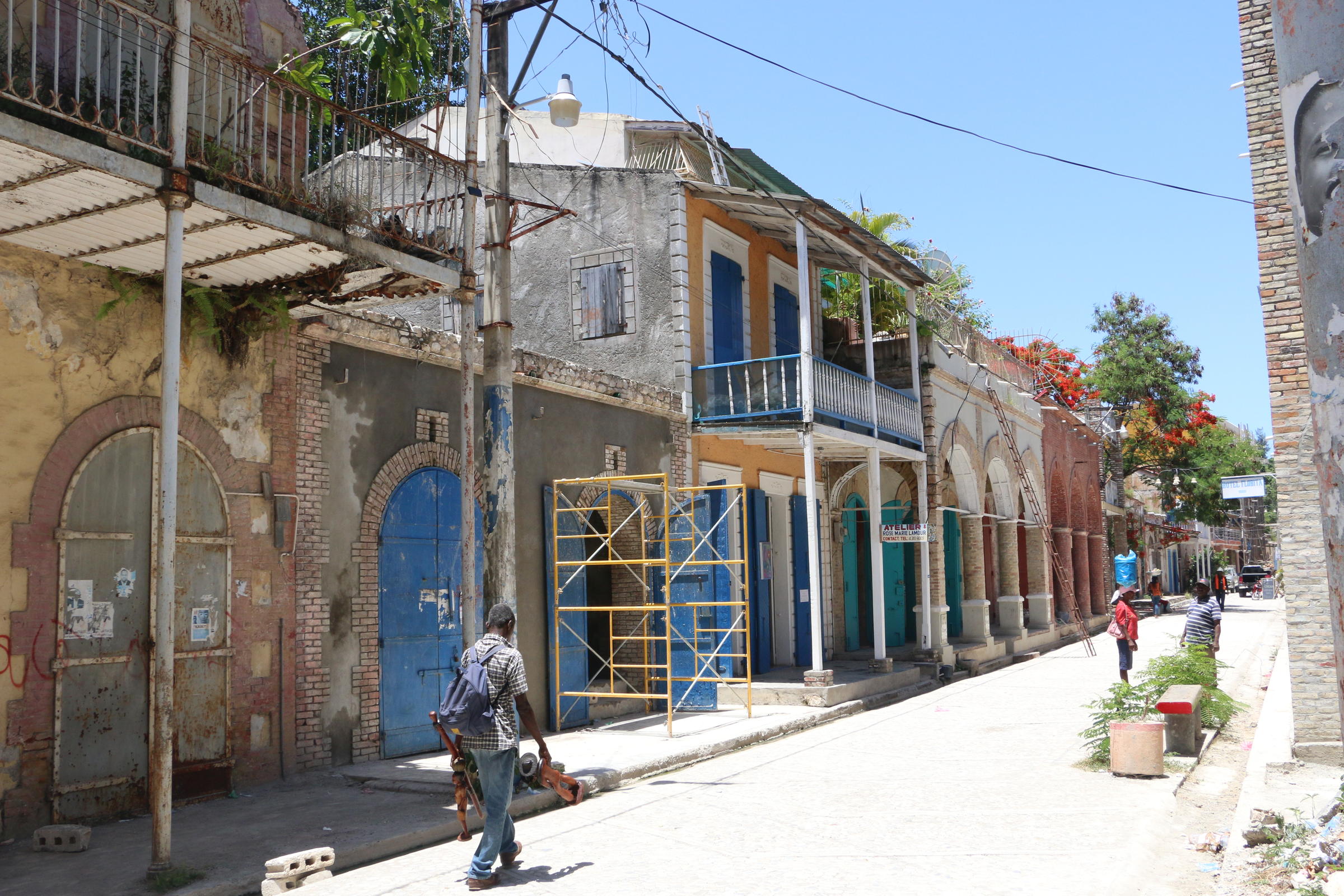
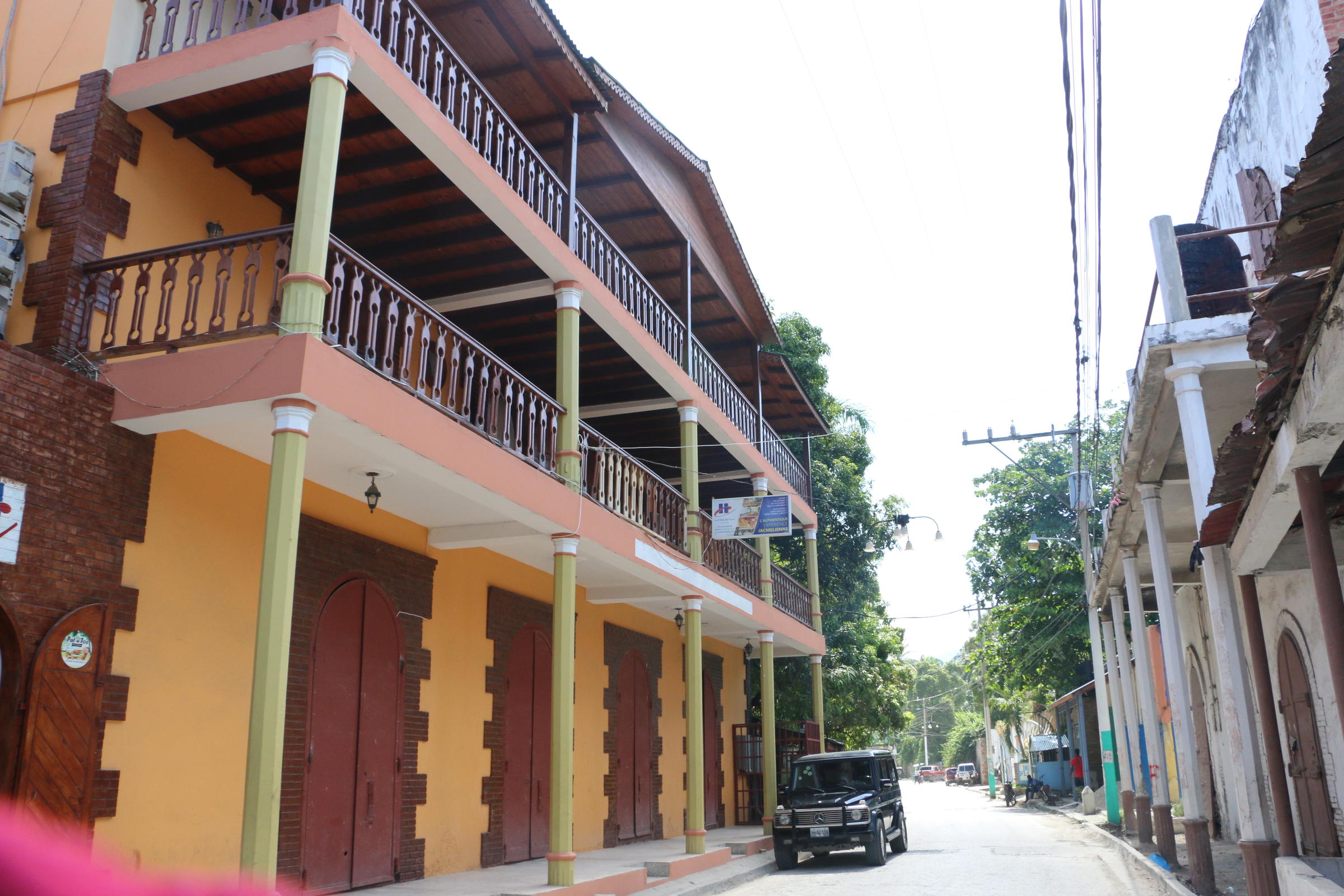
"I didn't ever intend to go to Haiti," he said. Nor did he want to. But after the earthquake, Vlad Laborde came a knocking."Well he brought me two bottles of Barbancourt," he said. (Barbancourt is Haitian rum.) "So it was over then, you know? And I said OK."Since then, John’s been to Haiti more than 10 times, visiting cities devastated by earthquakes and hurricanes."I know little teeny hardware details and woodwork details that I saw in Cap Haitian that are exactly copied in the French Quarter," he says. "Which means, he knows how to repair those details."
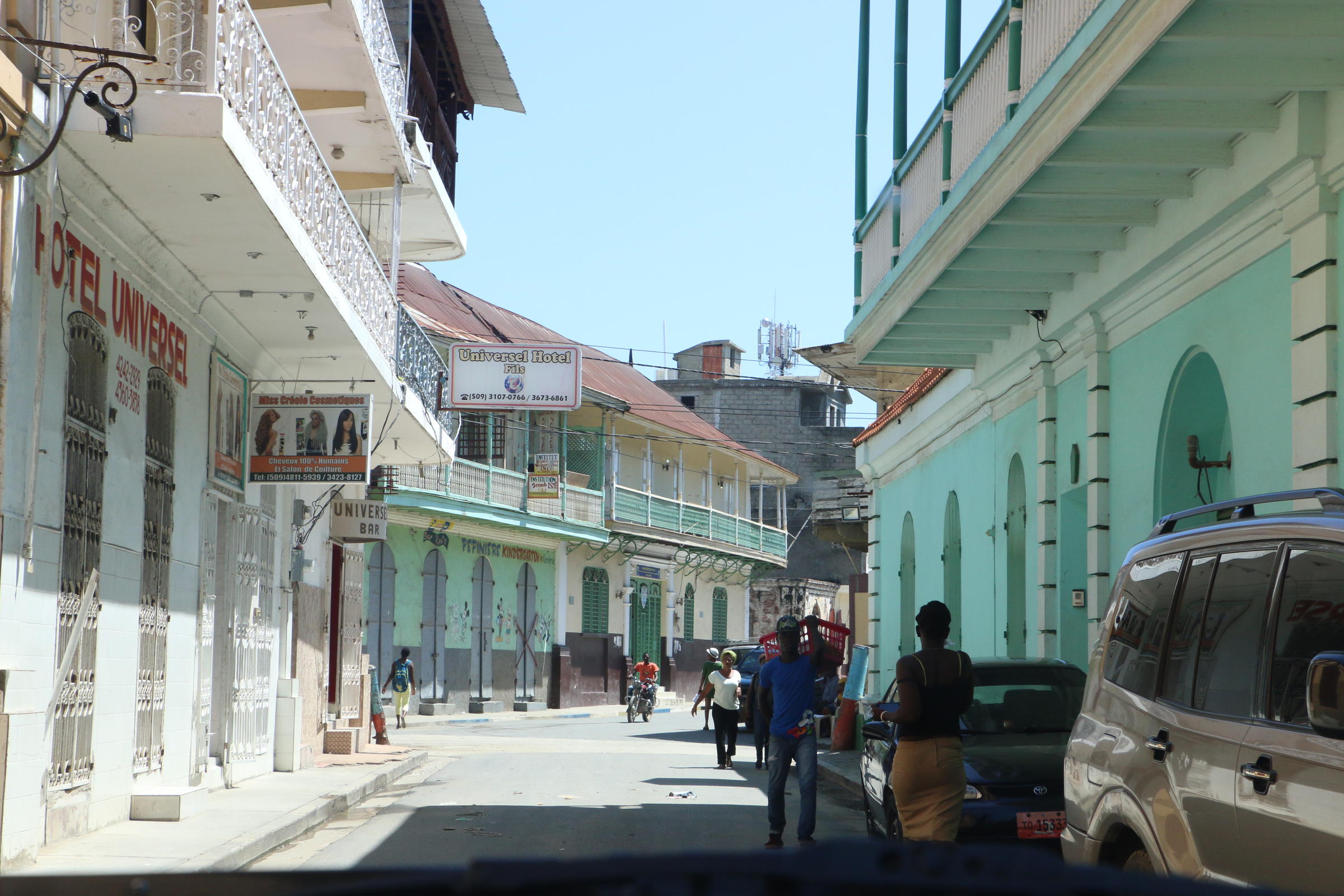
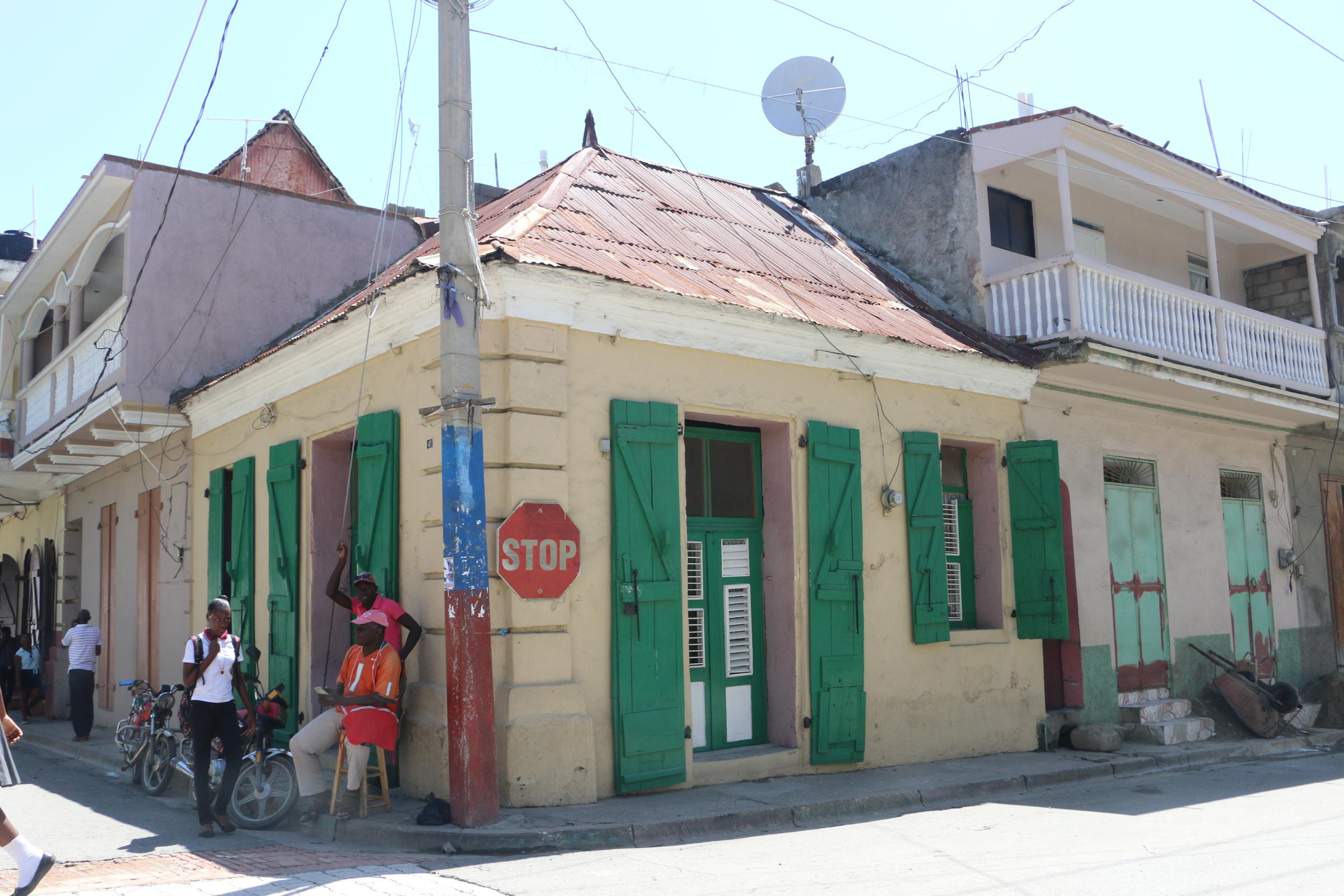
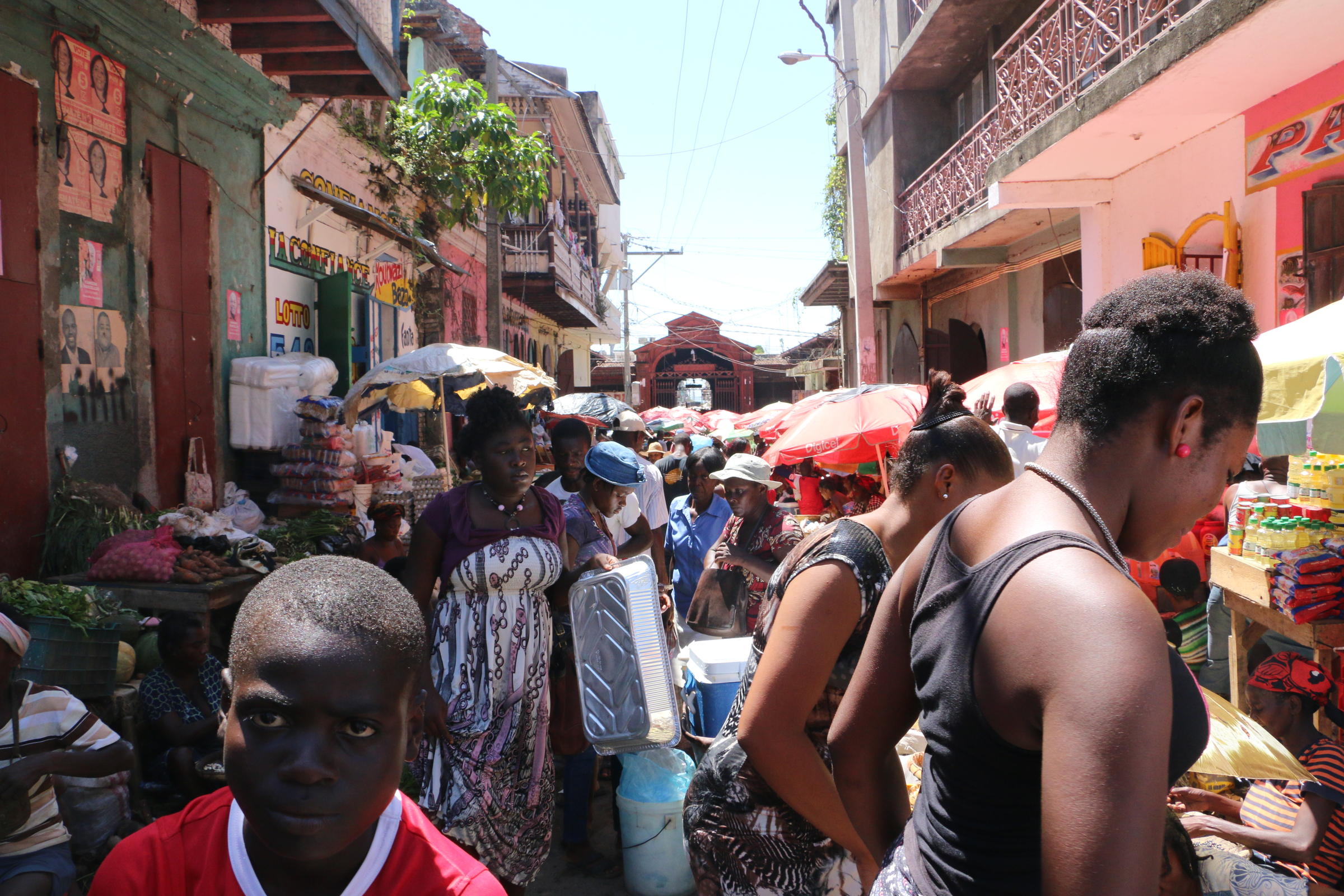
This is crucial, says Pierre Chauvin. He’s the former minister of tourism in Haiti, and says architecture in New Orleans is a huge attraction for tourists. Those walking tours of the Garden District, they’re all about ‘oohing and aahhing’ at old buildings. An artist named Paul Baruk knows this. "This is what I want Jacmel to look like. Nouvelle Orleans."Paul runs one of the many Carnival themed art galleries in Jacmel. When I told Paul where I was visiting from, that’s when she said she wished Jacmel looked like New Orleans. Or, even more like it.
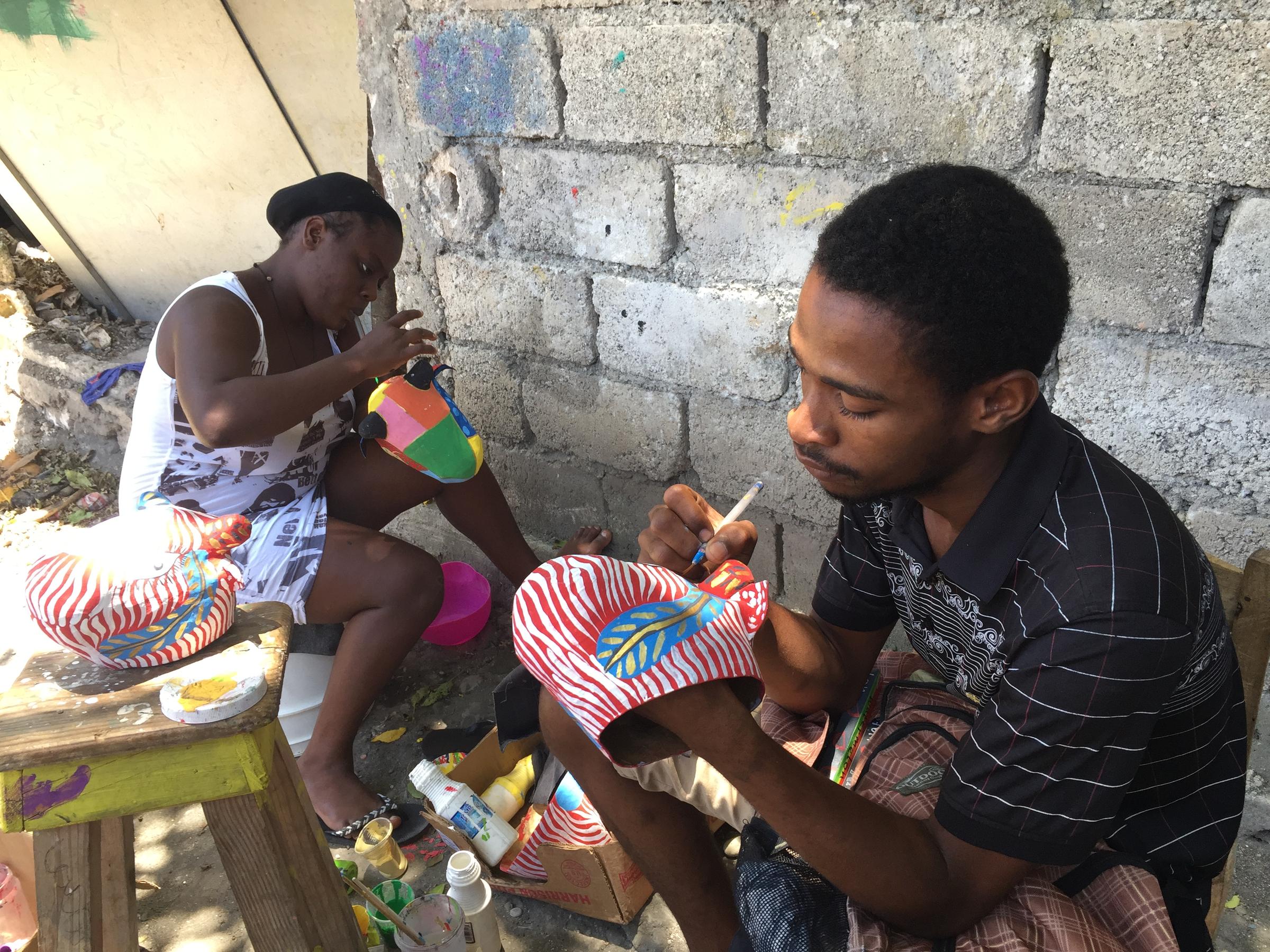
"Because New Orleans looks like Jacmel, but Jacmel is not well taken care of. New Orleans is well taken care of, you see. And that would bring tourism. That would bring a new life for the people here. And it’s really what we need. Why don’t you send us some tourism?" She laughed too, but she was serious. Like she was egging us on to share the wealth. Which is an interesting thought. Just because New Orleans can do this stuff, does that mean it should?Dennis Kelly, the American businessman who works part-time in Haiti. Says there’s no way New Orleans can be responsible for Haiti or Haiti responsible for New Orleans, "but what you can do is look at what's coming down the road and say what opportunities are there that I want to take advantage? So I would say that there are many opportunities for the city of New Orleans and the city of Jacmel, and others, to mutually benefit one another."Vladimir Laborde is all about the mutual benefit, and says an obvious opportunity here, is Mardi Gras. "Imagine the Miami Herald, the Times Picayune, and The New York Times: ‘New Orleans and Jacmel, Haiti, Share Carnival 2018.’"
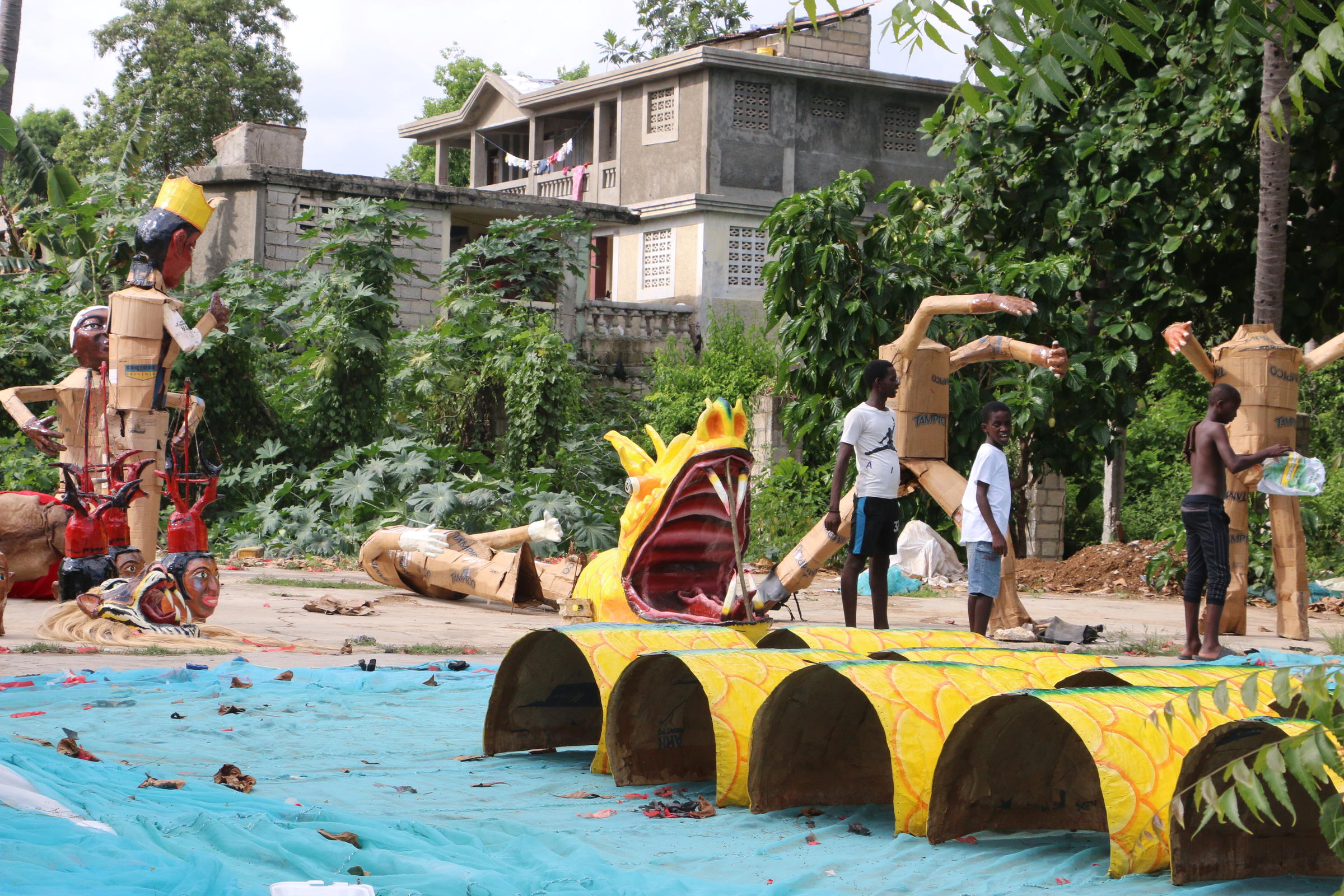
He sees Mardi Gras as an overlapping tradition that could raise the big bucks to revitalize cities like Jacmel. And that these revenue streams will make communities more livable for Haitians, and more hospitable for tourists. But these are tricky words in New Orleans. There’s endless debate surrounding who’s actually benefitting from preservation and tourism efforts. There’s skepticism towards these projects; are they actually improving the quality of life for the New Orleanian, or the quality of experience for the visitor?These are some of the questions Haiti has to reckon with as it grows its tourism industry and preservation program. And both those things are important, not only for the economic boost, but that more existential fear of disappearing.Pierre Chauvin, the former minister of tourism, will never forget a conversation he once had with a European colleague. "He came to visit Haiti and after one week, we ask him how do you find the country? And he said ‘you know, I have come to realize that in Haiti, you are full of diamonds. The whole country is full of diamonds. But you know, diamonds are stones. They have to be polished. Yet in Haiti, you don't polish them at all.’ And he was talking about these old houses, and you know our nature, and everything else that we have...And certain things are really crumbling. And you cannot re-create them."Haiti’s former prime minister Michele Pierre Louis says it’s not just about tourism dollars, or physical structures. It’s about Haiti reclaiming its image. "It’s extremely important that little students, little pupils know that the country is not deductible to violence and misery and poverty. Because we don’t have just drug dealers and bad politicians! We have Haitians that are great, that are artists, that are creative, that live with dignity."
It’s a reminder that so much of what we love about New Orleans, the culture we package to the outside world, and profit off of, a lot of that we got from Haiti. So what can New Orleans do in return? Michele says stop looking backwards 200 years when you think of Haiti, and make some new memories. "That would be great! That a new generation creates a momentum for, I wouldn't say reconciliation, but creating a connection back! That’s a good utopia."When I got back to New Orleans, I took a walk in my own neighborhood in Midcity. It was a Sunday afternoon, and I saw a group of people standing around this now empty pedestal where a statue of Jefferson Davis once stood. The city removed this and three other confederate monuments in the spring of 2017. People took turns passing around a crappy PA system and climbing up onto the empty pedestal, sharing their visions of replacement statues. This is where I met Nic Aziz. "Looking forward I think we need to have monuments that reflect the true identity of the city. For me I think that identity is Haiti."

Nic is 26. His mom was born in Haiti, and he’s a first generation New Orleanian. "Many people do not realize all the contributions that Haiti has to this city. I think a lot of the issues that we see, whether it's violence or you know economic opportunity or whatever some of that is rooted in identity issues. And I think if you show people who they are and like where they come from, that can have an impact on where they go."We’ve heard about folks not visiting Haiti. But Nic is one New Orleanian that did, back in 2011. He was 20. "As soon as I got there I felt something like you just felt...it was one of the most unique feelings of my life."But it became more than that. He met family members he had previously only known on facebook. He played soccer and talked about Kobe Bryant with kids in the neighborhood he was staying in. He got made fun of for not speaking Kreyol...and that’s when Nic was like, yeah, you’re right, I wanna know Kreyol. "I had this very deep desire that like I want to find that side of myself more. Because like I said I don't speak Kreyol but like I have a Haitian mother and my grandfather is from Haiti but still at the same time I don't feel enough of that side of me."In a lot of ways he embodies the utopia the former prime minister Michelle Pierre Louis talked about -- the young generation returning to Haiti to dig further into their roots, and reignite an exchange. When Nic goes to Haiti and talks to Haitians about New Orleans, they learn how they’re tied to the States. That forms them, the way it forms him, Nic says. It’s about shaping his home. Both of his homes.
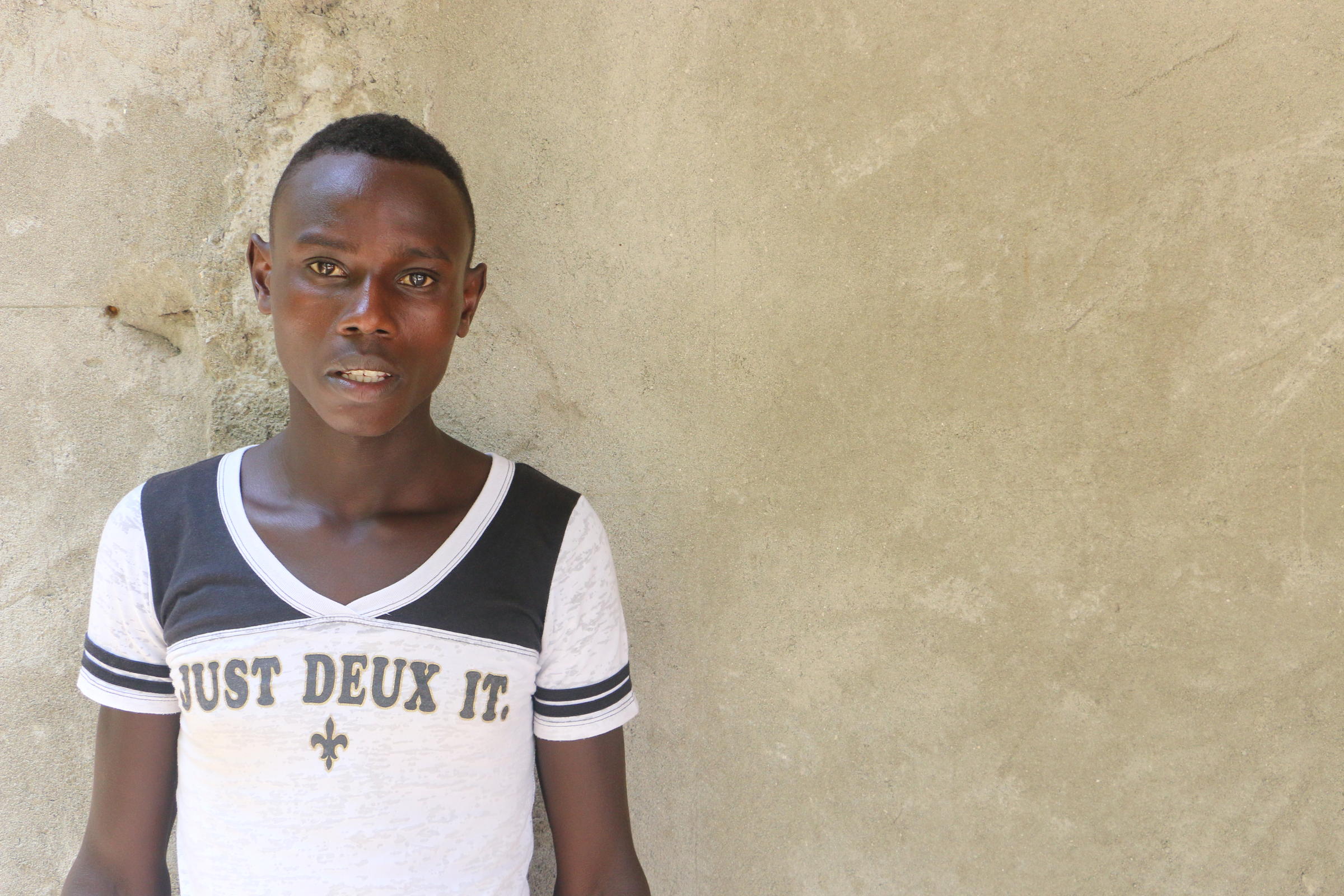
"There should definitely be like, so much more cultural connecting going between two cities," says Nic. "Just creating that channel to share that knowledge will allow both places, you know, really seeing the sides of its identity that you know really doesn't see and know yet."That’s why he sees the New Orleans Tricentennial as a perfect opportunity to move beyond the warm and fuzzy feelings the city has for Haiti, and formally acknowledge it as a key part of the city’s identity, past and present. And he’s got an idea for a new monument to replace the white confederate statues. Nic envisions a sculpture that celebrates one of the most iconic and meaningful traditions that Haiti gave to New Orleans: people second lining. Second lining has roots in West Africa, but in Haiti it became a celebration called Rara. It came to New Orleans from Haiti during the migration following the Revolution."Put a scene that people can obviously identify and resonate with because everybody in New Orleans knows a second second line, everybody loves second lining, that part of our culture," he says. "But then have a historical blurb by it that shows like, 'Oh wow, like I didn't know this came from Haiti. Wow.'"Epilogue: Same Same, But Different
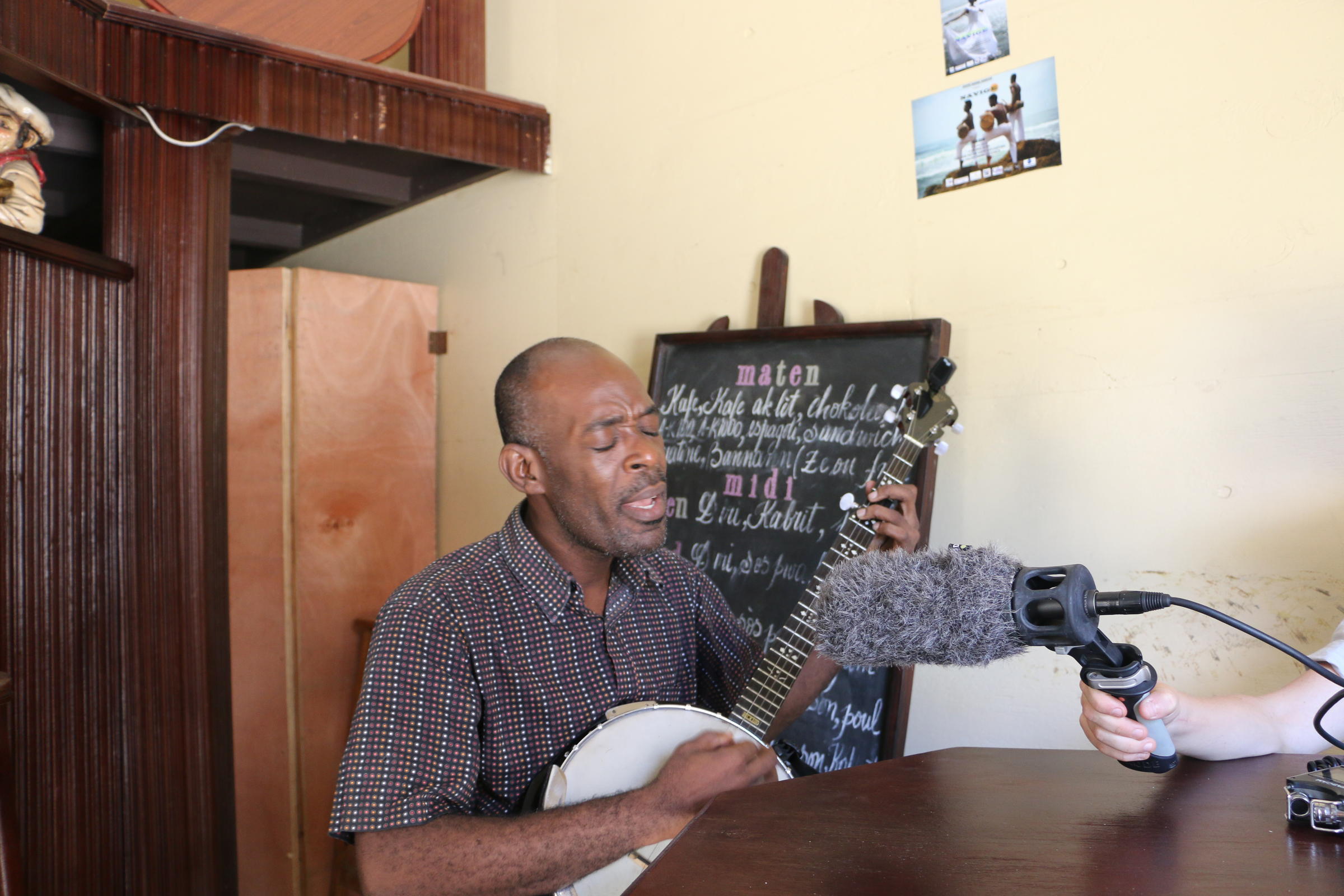
A banjo player named Pierre Ronnel Antoine sits in a little coffee shop around the corner from his apartment in Cap Haitien, with floor to ceiling shuttered doors that open out onto the busy street. He talks about his life as a musician in Haiti, about Jazz, and why he chose the banjo. He plays one of his favorite songs, a children’s song called "Panama M Tombe." It’s based on the Haitian proverb that says: When one’s hat falls, trouble is coming.The song reminded me of a a classic New Orleans tune called "Iko Iko" about two Mardi Gras Indian tribes that have a confrontation in the street. I play him the version by the Dixie Cups to play for Ronnel. "It sounds like Haitian music," he says and he starts humming along. "I thought it was a traditional Haitian song when I heard it. It’s the rhythm that does that. It’s almost the same music."It’s almost the same he says, not exactly, but almost. TriPod is a production of WWNO New Orleans Public Radio in collaboration with the Historic New Orleans Collection and the Midlo Center for New Orleans studies at UNO. This TriPod special was made possible with support from the New Orleans Center for the Gulf South at Tulane University through the Global South Fellowship program. Thanks to Evan Christopher for our theme music, and a special thanks to Bruce ‘Sunpie" Barnes for providing us with some of his original music that you heard in the program. Eve Abrams is the editor of TriPod. Molly Mitchell and Jess Dorman are TriPod's senior advisers, along with the rest of the Tripod editorial board Kevin Harrell, Connie Atkinson, Lee Leumas, Karen Leathem, Charles Chamberlain, Christina Bryant, and Christopher Harter. Special thanks to field Producer Wynne Muscatine Graham, fixer Andre Paultre, sound engineers Thomas Walsh and Peter Klingelhofer, and TriPod interns Ann Hackett, Tori Bush, and Michael Ceraso. Additional thanks to Alexis Erkert and Ben Depp, Nicole Phillips, Jacques Bartoli, Maryse Dejean, Mehdi Chalmers, Ned Sublette, Elektra Carras, Zach Niles, Rolando Bunster, Gregory Mevs, The ASB Hospital in Borgne, Haiti, The George Family in Cap Haitien, Viki Merrik, Maggie Herrman, Sanga Tabb, and Marina Magloire.By: Laine Kaplan-Levenson for wwno.org | October 27, 2017
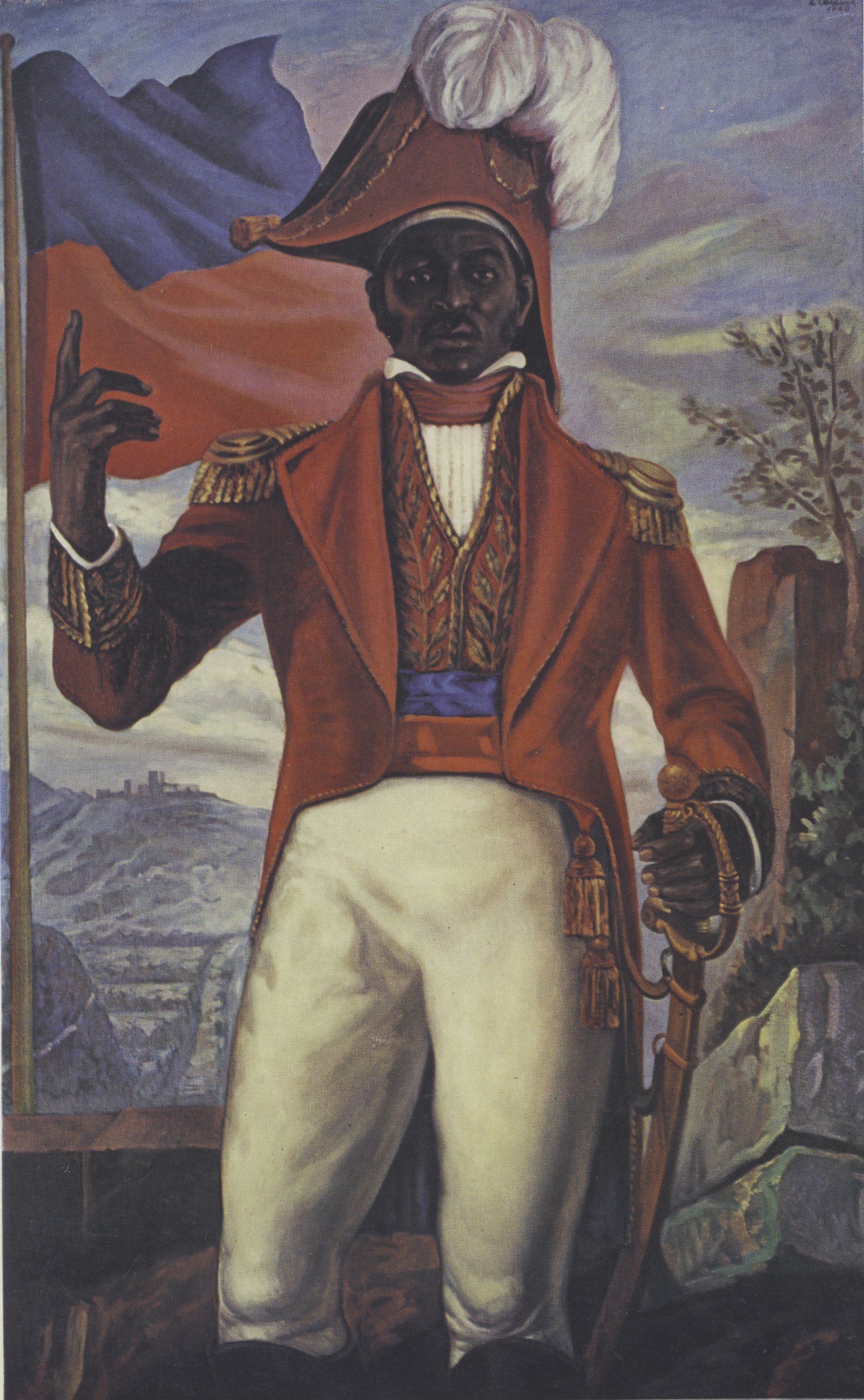
Haitian National Holiday: October 17th -Death of Jean-Jacques Dessaline
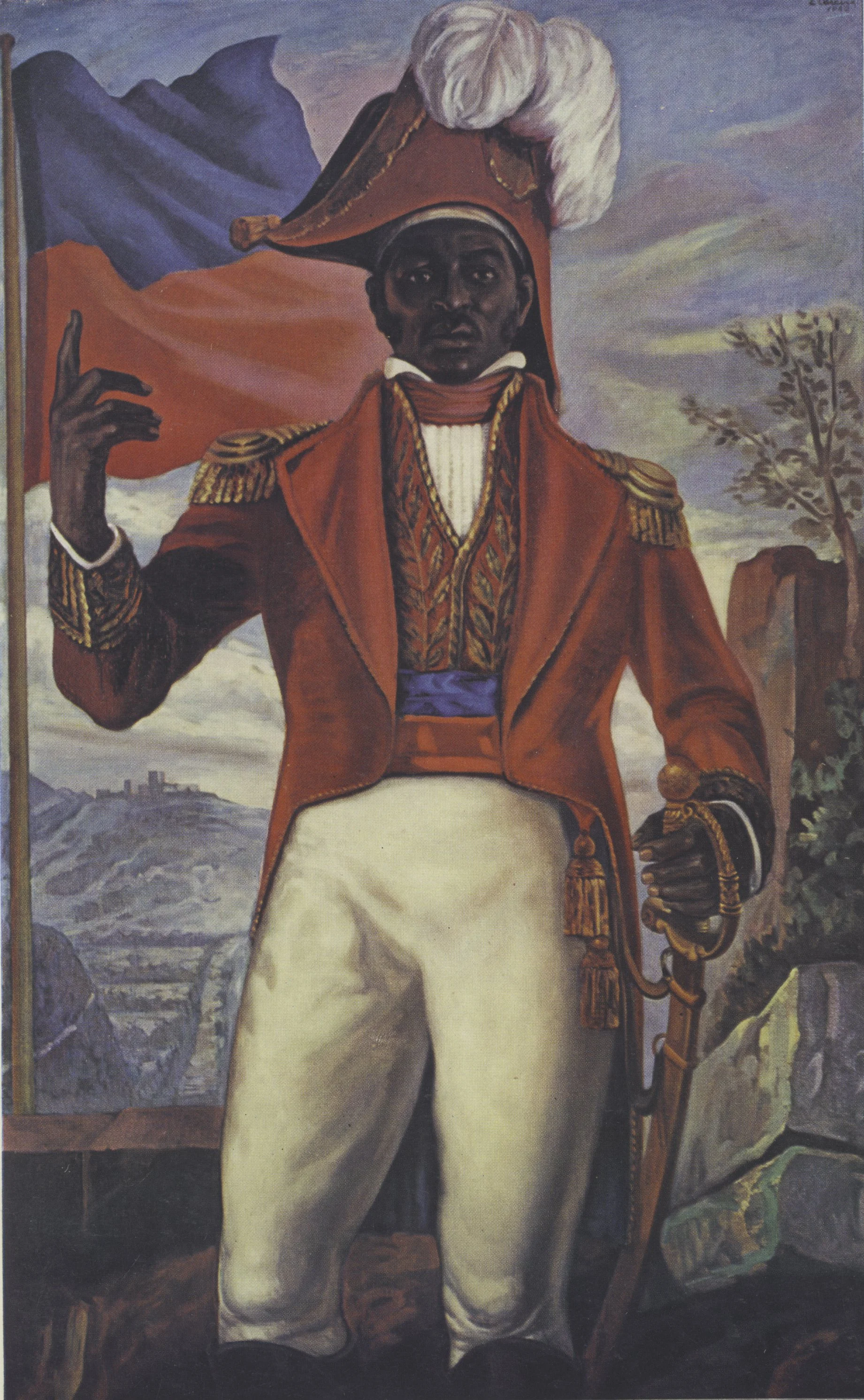
"We have dared to be free. Let us dare to be so by ourselves and for ourselves."— Jean-Jacques Dessalines
The death of Jean-Jacques Dessaline is a public holiday in Haiti. Haiti dignifies no other individual with an official national holiday. He is considered the “Père de la Patrie.”Born to Congolese parents, Dessalines was born on a plantation in an area called Cormiers, (today, Cormier), in the hills near the town of Grande Rivière du Nord 25 kms from Cap-Haitien. That plantation belonged to a French man named Duclos. The young man was ultimately given the name of Jacques Duclos. There isn’t much history about his parents, but there have been mentions of a beloved aunt, Victoria Montou, that he affectionately called “Toya.” At the age of 30 or so, he would be sold off on the market and be bought by a free black man named Dessalines, at which point he changed his name from Jacques Duclos to Jean Jacques Dessalines. He worked as a field hand for the black master until 1791, when he joined the slave rebellion that broke out in the colony amid the turmoil caused by the French Revolution.Upon joining the slave revolt that would ultimately lead to independence, Jean-Jacques followed the example of early band leaders, Boukman, Jean François and Biassou. He became a lieutenant in the Army of Jean François. He followed Jean François when he lent his services to the Royal majesty of Spain. There, he met Toussaint Bréda, who we would later come to know as Toussaint L' Ouverture who himself, was climbing the ranks and gaining notoriety for his successive brilliant victories against forces far superior to his. When the French Republic proclaimed freedom for all slaves, Dessalines followed Toussaint who rallied to the French flag in order to fight the armies of the Spanish and British crowns.Unable to read or write, Dessalines was nonetheless a quick study under L’Overture earning the nickname “the Tiger” for his fury in battle. In 1794 Dessalines’s military skill and leadership was vital to L’Overture’s success in capturing the Spanish-controlled eastern half of the island, and in return, L’Overture made him governor of the south.For a brief period of time after L’Overture’s capture in 1802 Dessalines appeared to be siding with the French, but the move was nothing more than a ruse designed to trick the French into trusting Dessalines so that he could regroup the insurgents and continue the fight for independence. It was successful. They expelled the French from Saint-Domingue, and on January 1, 1804, Dessalines, as governor-general, proclaimed the entire island of Hispaniola an independent country under the Arawak-derived name Haiti.Independence, however, did not bring peace, and from January 1804 until his death two years later, Dessalines “governed with terror.” Like L’Overture, Dessalines had himself appointed governor “for life.” The following September , emulating Napoleon, he adopted the title of emperor as Jacques I—and crowning his wife, Claire-Heureuse, empress. Fearing a French resurgence and the reinstatement of slavery that would accompany it, he ordered the massacre of approximately 5,000 of the island’s white men, women, and children declaring “I have saved my country. I have avenged America.” It was a move that two of Dessalines most influential generals, Alexandre Pétion and Henri Christophe, could not countenance and one that spoke to the growing political instability of the new government.On October 17, 1806, Dessalines met a violent death at the hands of his own lieutenants when he was ambushed; his body dragged through the streets before it was dismembered.Jean Jacques Dessalines was by all accounts a fearless soldier, a formidable general, great strategist, ruthless leader and unforgiving commander. However, most importantly, he was a man who fought for something he believed in. He fought for something bigger than just him. He fought for freedom.Sources: (1) "Jean-Jacques Dessalines: Demon, Demigod, and Everything in Between" by Lindsay J. Twa; (2) Blackpast.org "Dessalines, Jean-Jacques (1758-1806)" by Deborah McNally; (3) "Death of Dessalines Remembered in Haiti" by Aglobalworld.com; (4) "Jean Jacques Dessaline Emperor of Haiti by the Editors of the Encyclopedia Britannica
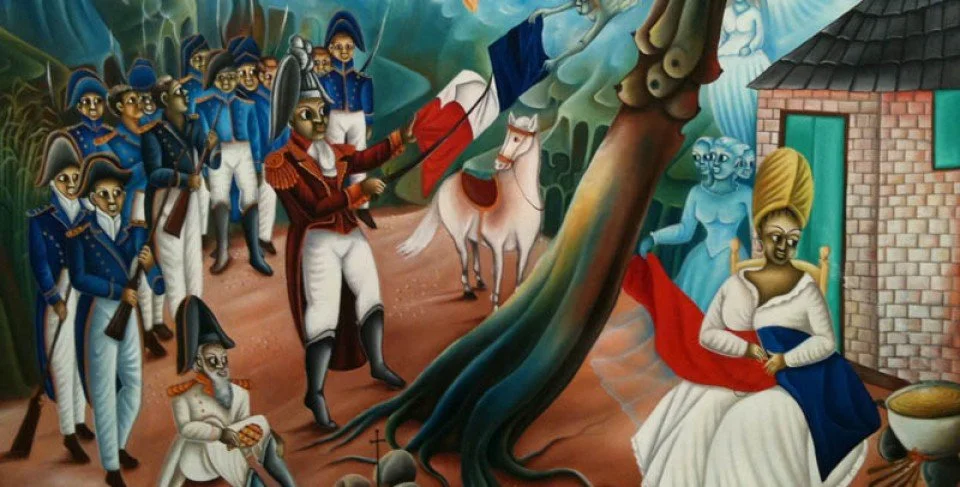
Biography of Haitian Revolution Leader Toussaint Louverture
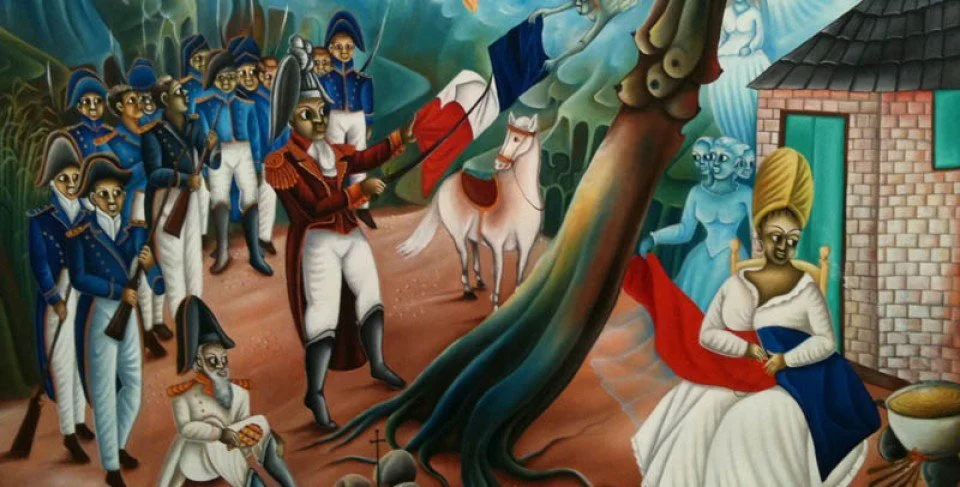
Toussaint Louverture led what is known as the only triumphant mass slave revolt in history. Thanks largely to his efforts, Haiti won its independence in 1804. But the island-nation didn't live happily ever after. Institutional racism, political corruption, poverty and even natural disasters have left Haiti a nation in crisis. Still, Louverture remains a hero to the Haitian people and those throughout the African diaspora. With this biography, learn about his rise, fall and the political prowess that resulted in him leaving an indelible mark on the island-nation once known as Saint Domingue.EARLY YEARSLittle is known about François-Dominique Toussaint Louverture before his role in the Haitian Revolution. According to Philippe Girard, author of 2016's "Toussaint Louverture: A Revolutionary Life," his family came from the Allada kingdom of West Africa. His father, Hippolyte, or Gaou Guinou, had been an aristocrat. Around 1740, however, members of the Dahomey Empire captured his family and sold them as slaves to the Europeans. Hippolyte specifically was sold for 300 pounds of cowrie shells.His once aristocratic family now the property of European colonists, Louverture was not born in West Africa but likely on May 20, 1743, in the city of Cap on the Bréda plantation in Saint Domingue, a French territory. Louverture displayed a giftedness with horses and mules that impressed his overseer, Bayon de Libertat.He also received training in veterinary medicine. His godfather, Pierre Baptiste Simon, likely played a large role in educating him. He may have also received training from Jesuit missionaries and from West African medicinal traditions.Eventually Libertat freed Louverture, although he had no authority to do so, as the absentee slaveholders the Brédas owned Louverture. It is unclear exactly which circumstances led Libertat to free him. The overseer reportedly had him drive his coach and then released him. Louverture was about 33 years old at the time.Biographer Girard points out that it was highly unusual that Louverture was freed. The slave mothers of mixed-race children were most often freed, with men making up fewer than 11 percent of liberated slaves.In 1777, Louverture married Suzanne Simone Baptiste, born in Agen, France. She is believed to have been his godfather's daughter, but she may have been Louverture's cousin. He and Suzanne had two sons, Issac and Saint-Jean. Each also had children from other relationships.Biographers describe Louverture as a man filled with contradictions. He led a slave insurrection but never took part in smaller revolts that occurred in Haiti prior to the revolution. In addition, he wasn't partial to any religious faith. He was a Freemason, who practiced Catholicism devoutly but also engaged in voodoo (in secret). His embrace of Catholicism may have factored into his decision not to participate in voodoo-inspired insurrections that took place in Saint Domingue before the revolution.After Louverture won his freedom, he went on to own slaves himself.Some historians have criticized him for this, but he may have owned slaves to free his family members from bondage. As the New Republic explains:To free slaves required money, and money on Saint Domingue required slaves. As a free man, Toussaint leased a coffee estate from his son-in-law, including the slaves. True success navigating the slave system meant joining the other side. The revelation that the 'Black Spartacus' drove slaves spurred some modern historians to over-correct, speculating that Toussaint was a well-heeled bourgeois by the time of the revolution. But his position was more precarious. The coffee estate failed, and a slave register unearthed in 2013 records his tragic next move: Toussaint resumed his place on the Bréda plantation.In short, Touissant remained a victim of the same exploitative system he'd joined to free his family.But as he returned to the Bréda plantation, abolitionists begin to gain ground, even convincing King Louis the XVI to give slaves the right to appeal if their overlords subjected them to brutality.HAITI BEFORE AND AFTER THE REVOLUTIONBefore the slaves rose up in revolt, Haiti was one of the most profitable slave colonies in the world. About 500,000 slaves worked on its sugar and coffee plantations which produced a significant percentage of the world's crops. The colonists had a reputation for being cruel and engaging in debauchery. The planter Jean-Baptiste de Caradeux, for example, is said to have entertained guests by letting them shoot oranges off the tops of slaves' heads. Prostitution was reportedly rampant on the island as well.After widespread discontent, slaves mobilized for liberty in November 1791, seeing an opportunity to rebel against colonial rule during the throes of the French Revolution. Toussaint’s comrade Georges Biassou became the self-appointed Viceroy and named him general of the royal army-in-exile. Louverture taught himself about military strategies and used his newfound knowledge to organize the Haitians into troops. He also enlisted deserters of the French military to help train his men. His army included radical whites and mixed-race Haitians as well as blacks.As Adam Hochschild described in the New York Times, Louverture "used his legendary horsemanship to rush from one corner of the colony to another, cajoling, threatening, making and breaking alliances with a bewildering array of factions and warlords, and commanding his troops in one brilliant assault, feint or ambush after another."The slaves successfully fought the British, who wanted control over the crop-rich colony, and the French colonizers who'd subjected them to bondage. Both French and British soldiers left detailed journals expressing their surprise that the rebel slaves were so skilled. The rebels had dealings with agents of the Spanish Empire as well. Haitians also had to confront internal conflicts that sprang up from mixed-race islanders, who were known as gens de couleur, and black insurgents.Louverture has been accused of engaging in the very practices for which he criticized the Europeans. He needed weapons to defend Saint Domingue and implemented a forced labor system on the island that was virtually the same as slavery to ensure that the nation had sufficient crops to exchange for military supplies. Historians say he held onto his abolitionist principles while doing what was necessary to keep Haiti secure. Moreover, he intended to free the laborers and wanted them to profit from Haiti's achievements.“In France, everyone is free but everyone works,” he said.Louverture has not only been criticized for reintroducing slavery to Saint Domingue but also for writing a constitution that gave him the power to be a lifelong leader (much like the European monarchs he despised), who could choose his own successor. During the revolution, he took on the name "Louverture," which means "the opening" to emphasize his role in the uprising.But Louverture's life was cut short. In 1802, he was lured into talks with one of Napoleon’s generals, which resulted in his capture and removal from Haiti to France. His immediate family members, including his wife, were captured as well. Abroad, tragedy would befall him. Louverture was isolated and starved in a fortress in the Jura mountains, where he died in April 1803. His wife survived him, living until 1816.Despite his demise, Louverture biographers describe him as a leader who was far savvier than either Napoleon, who completely ignored his attempts at diplomacy, or Thomas Jefferson, a slave owner who sought to see Louverture fail by alienating him economically.“If I were white I would receive only praise,” Louverture said of how he'd been slighted in world politics, “But I actually deserve even more as a black man.”After his death, Haitian revolutionaries, including Louverture's lieutenant, Jean-Jacques Dessalines, continued to fight for independence. They won freedom in January 1804, when Haiti became a sovereign nation. Two-thirds of the French army died in their bid to squash the revolution, most from yellow fever rather than armed conflict.LOUVERTURE'S LEGACYLouverture has been the subject of numerous biographies, including 2007's “Toussaint Louverture” by Madison Smartt Bell as well as biographies by Ralph Korngold, published in 1944; and Pierre Pluchon, published in 1989. He was also the subject of 1938's "The Black Jacobins” by C.L.R. James, which the New York Times has called a masterpiece.The revolution Louverture led is said to have been a source of inspiration to abolitionists such as John Brown as well as the many African nations that won independence in the mid-20th century.by Nadra Kareem Nittle
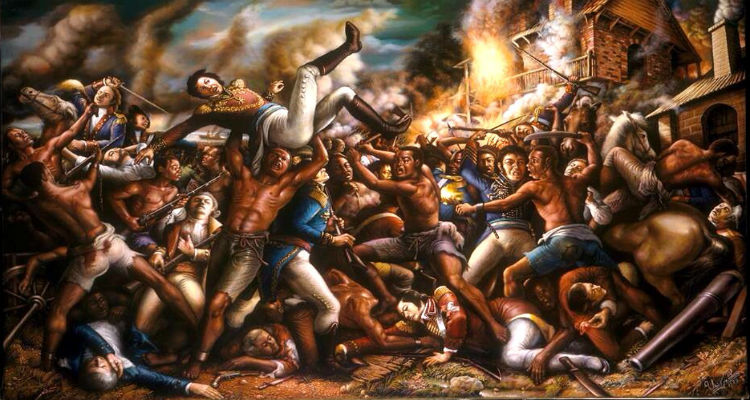
Chronicles of a Chronic Caribbean Chronicler: Europe and US dodging demands for slavery reparations
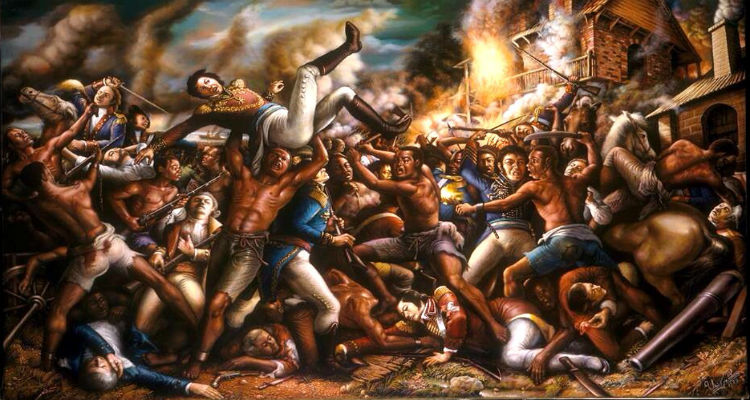
Today, over 180 years after abolition, descendants of African slaves in the Caribbean, North and South America are demanding reparations for slavery from Europe – and the United States.
 |
| Earl Bousquet is Editor-at-Large of The Diplomatic Courierand author of the regional newspaper column entitledChronicles of a Chronic Caribbean Chronicler |
In the Caribbean, the demands include apology and atonement for 400 years of both slavery and native genocide; in the USA it’s about compensation for African American descendants of slaves; and in South America, today’s descendants of Africans (who arrived both as shipwrecked mariners and slaves) are demanding their fair share of recognition, equality and atonement.Africa and the Caribbean experienced the brunt of the brutal slave trade that saw Europeans sail to West Africa, kidnap millions of men and women and ship them like animal cargo to the newly colonized ‘West Indies’ captured through wars of extermination against the original native ‘Caribs’ and ‘Arawaks’.While the focus of British and French slavery was mainly concentrated on the Antillean (Caribbean) islands and mainland territories (including Haiti) that they claimed to own, the Portuguese and Spanish concentrated on South American mainland territories such as Argentina, Brazil, Colombia, Costa Rica, Chile, Ecuador, Peru and Venezuela, as well as the larger islands of Cuba and Puerto Rico.In the case of the USA and South America (except in Brazil), African descendants form small minorities, unlike the 15 Caribbean Community (CARICOM) member-states, where they form an absolute majority, in each case.CARICOM governments have thus easily and collectively agreed to a joint approach to the European Union (EU) member-states that benefited from slavery, inviting them to discuss reparations by way of acknowledgement and atonement.The EU countries have so far resisted engaging the Caribbean in any discussions whatsoever on reparations, the likes of former British PM David Cameron saying during an official visit to Jamaica that traditional aid and assistance given by Britain since independence to the former colonies has sufficed.But the response by the Britain, Denmark, France, The Netherlands, Portugal and Spain, thus far, (or lack thereof) is very much unlike when France demanded reparations after the first African slaves in the Caribbean – and the world -- successfully revolted.Haitian slaves, led by Toussaint L’Ouverture, rebelled in 1791 and declared their independence in 1804. Not even in Africa had a free nation yet been born and the humiliated slave masters enlisted the support of the French government to make the former slaves pay dearly for their freedom.In 1825, France demanded 90 million gold francs to recognize Haiti’s independence -- the same amount demanded in compensation by the former slave masters.Historians and economists agree that this high cost paid by Haiti to France over 122 years (payments continued until 1947) is largely responsible for the country having been almost eternally anchored in poverty.In 2003, Haitian President Jean Bertrand Aristide called on Paris to return the 90 million gold francs, by then estimated at US $21 billion. Soon after, however, he was swiftly and secretly taken hostage by US and French forces and exiled to South Africa.French President Francois Hollande, in May 2015, ahead of a visit to Port au Prince, said Paris “will repay its debt” to Haiti – only to later retract, saying he only meant repaying France’s “moral debt”.The Hollande disappointment notwithstanding, no other concerned EU member-state has even mentioned the possibility of considering paying reparations for slavery – in the Caribbean or North or South America.Same in the USA, where not even President Barack Obama accommodated calls to initiate reparations moves and to pay to survivors the wages of the slaves who built the White House.In 1865, Union General William Sherman set aside thousands of acres of land for newly-freed American slaves, by way of a special field order. But President Andrew Johnson soon returned the titles to the original white owners. Freed slaves were also each promised “40 acres and mule” to start their own lives. But here too they were disappointed.The US Congressional Black Caucus has for the past 28 years backed a bill called HR-40, submitted annually by Michigan Rep. John Conyers, calling for a commission to study “the Reparations Proposals for African Americans Act”. Designed to examine the negative effects of slavery, it also seeks to “recommend appropriate remedies”. But HR-40 has long been referred to the House Judiciary Committee, where it has since remained...US blacks are somewhat divided over what mechanism to use to assess the real costs and value of slave wages and related rates of conversion over the centuries slavery lasted.Likewise, white Americans largely reject calls by blacks for reparations, some seriously arguing that ‘slaves were freed by the Civil War’ and ‘blacks benefited from affirmative action’ government policies over the years.The reparations movement is however gaining traction across the hemispheric horizon.The momentum has just begun in South America, with an International Reparations Conference held in Cali, Colombia in March 2017, essentially to outline a road map for the movement for recognition and inclusion of the African-descended minority across the continent.The African Americans are encouraged by a 2016 report by the Geneva-based United Nations Working Group on People of African Descent, urging US lawmakers to implement reparations, citing “a legacy of colonial history, enslavement, racial subordination and segregation, racial terrorism and racial inequality.”Also, according to an exclusive poll released in March 2017 in conjunction with a new PBS Series ‘Point Taken’, 40 percent of US ‘millennials’ think there should be reparations for African American descendants of enslaved people.Indeed, some of the leaders of the revived reparations movement in the USA are confident enough of the momentum gained thus far to conclude that ‘this could be reparations’ best chance since 1865.’In the Caribbean, the governments’ approach is naturally quite different from North and South America – more diplomatic than agitational, seeking dialogue over confrontation.In March 2014, the CARICOM governments unanimously adopted the ten-point plan to demand “Reparatory Justice for the victims of Crimes against Humanity in the forms of genocide, slavery, slave trading and racial apartheid.” The EU member-states that built their imperial wealth on slavery were also duly informed.A CARICOM Regional Reparations Commission was also appointed (chaired by the vice chancellor of the University of the West Indies Sir Hilary Beckles), with national reparations committees also established in member-states.The Caribbean hasn’t put a price tag on slavery, even though a sum of US $17 trillion is often mentioned. Instead, it’s seeking a mutually agreed CARICOM-EU approach to what forms the atonement will take, to the common and mutual benefit of all the CARICOM states and peoples.Failing this negotiated approach, the Caribbean countries reserve the right to file formal criminal charges against the culprit EU member-states at the International Criminal Court (ICC)).Citing the will of the Western world to proudly acknowledge and atone for the Jewish Holocaust, reparations paid by the US government to Japanese interned during World War II, reparations made to US native peoples and Britain recently being ordered by its own courts to pay reparations to tribal Kenyan ‘Mau -Mau’ independence fighters, CARICOM feels it has a very good case.Those demanding reparations for slavery everywhere are also buoyed by the UN’s declaration of 2015 to 2024 as the Decade for People of African Descent.The CARICOM Prime Ministerial Subcommittee on Reparations (led by Barbados Prime Minister Freundel Stuart) met in late April 2017 to review European responses to their request for a negotiated settlement.In the meantime, the 15 member-states, including Haiti, are preparing their individual legal cases for collective submission to the ICC, should the culprit EU member-states continue to dodge and dither to duck their individual and collective responsibilities for the greatest ‘crime against humanity’ known to mankind.The reparations demands by African descendants in CARICOM, US and South American states do have the backing of regional and international entities, including similar non-governmental Europe-based movements and an increasing level of interest and support from African states and entities, including the African Union (AU) and the Pan African Congress (PAC).The European and American governments today may continue to duck their responsibilities. But the results of the strong reparations demands on them, whether achieved today or tomorrow, also offer added hope to the likes of the Australian Aborigines and New Zealand’s Maori first peoples, who may have received formal apologies, but continue to feel treated less than equal in the lands they first inhabited.Meanwhile, the Grenada ‘slavery and tourism’ discussion is an interesting starting point to revive earlier discussions on the establishment of a national reparations committee (NRC) for Grenada, Carriacou and Petit Martinique.That will not only be in line with the reality of the vast majority of CARICOM member-states (where NRCs exist), but will also facilitate ongoing discussion across the three-island state on reparations and related issues during the UN Decade for People of African Descent, which continues until December 31, 2024.Caribbean News Now

"Jeu de Bâton" A Fighting Art of the National Army

Monday in Lagrange (Artibonite Department), as part of the Day of Agriculture and Labor, the National Bureau of Ethnology (BNE) in collaboration with the Ministry of Tourism and Ministry of Culture organized a show of «Jeu de bâton» (stick game). This tradition that has existed since the colonial period in St Domingue, was also a means of combat used by the native army during the war of independence. It is also a martial art inspired by the forms of African combat. A variety of stick styles such as : "Baw Blan", "Migel" and "Pati kola" were used during this activity. An intangible cultural heritage strongly practiced and preserved in the Artibonite. Jessy C. Menos, the Minister who traveled to encourage stick Practitioners and BNE dancers, said the show "is part of a promotion of the 'Jeu du bâton' and a duty to remember."According to Erol Josué, the Director General of the BNE "This ritual was the means of combat of the native army" recalling that "Gran Toya", great aunt of the Emperor Jean Jacques Dessalines, was a great warrior and would have initiated the Emperor at this game from a young age. Other peoples like the Amazons of the former Dahomey also practice stick fighting.From this collaboration around the development of Ethno-Tourism in Haiti, an inventory of cultural practices and sites will be launched, which will begin in the Department of Artibonite in order to highlight the riches Haitian heritage. HaitiLibre | May 3, 2017