



 Courtesy of PapJazz
10 years after devastating earthquake, Haitian Latter-day Saints welcome friends to nation's first temple
Unimaginable horror fell upon Haiti in the opening month of 2010 when a massive earthquake claimed hundreds of thousands of lives and displaced legions more.
The disaster prompted a world-wide humanitarian response — including tens of millions of dollars from the Church to help fund food, clean water and other disaster aid efforts.
Almost a decade later, the quake recovery continues. But Haitian Latter-day Saints are celebrating this week as they welcome their friends and neighbors to their nation’s first temple.
The Port-au-Prince Haiti Temple public open house officially begins on Tuesday, Aug. 6 — although a few visitors have already toured the new edifice, surrounded by lush gardens reflective of Caribbean flora.
“I can’t believe my eyes,” said Michael Paquette, a Canadian who was one of the first international missionaries to serve in Haiti in the 1980s. “I used to walk up and down this road outside the temple, Route de Freres. (That) was in the early days of missionary work; now there are (several) stakes here in Port-au-Prince. Now the temple is here.”
The building’s beauty is amazing, he added. “It is very special for the saints in Haiti.”

Counted among the first visitors to the Port-au-Prince temple was a delegation from the U.S. Embassy. They were hosted by Caribbean Area President Elder José Alonso, a General Authority Seventy, and Elder Bien Aimé Huberman, an Area Seventy and chairman of the temple’s organizing committee.
Elder Huberman noted the historic significance of having a temple operating in his homeland.
"The temple is, first and foremost, important because the members will be able to do their sacred ordinances,” he said.
In the past, the high cost of travel and passports prevented many Haitian Latter-day Saints from worshipping regularly inside temples in neighboring Dominican Republic and other nearby nations.
“(Now) we will also be able to go to the temple in our own country with our friends, family and our own people,” he said. “It is a new day for us, a new program. We are very satisfied. Everyone is excited and we are ready now for the open house to begin."
The Port-au-Prince temple is distinctly Haitian.
Turquoise blue and lime green carpets throughout the interior mimic the neighboring sea and the island’s fecund plant life. It’s patterned after an array of local vegetation — including palm leaves, tropical flowers and the hibiscus, Haiti’s national flower, according to a Church-provided facts report.

Palm leaf motifs are found in several areas of the temple such as the celestial room, sealing room, baptistry and foyer. Palm leaves, of course, were used to celebrate Christ’s triumphant entry into Jerusalem.
Temple visitors will also spot hibiscus-inspired wall plaster patterns in the brides’ room.
Artwork adorning the Port-au-Prince temple includes two original works: “Haiti Palm Trees by the Sea” and “Mountains near Port-au-Prince,” both by Russian artist Emin Zulfugarov, the report noted.
The public open house will continue through Saturday, Aug. 17 — except for Sunday, Aug. 11.
A youth devotional in Haiti will be held on the eve of the Sept. 1 dedication of the Port-au-Prince Haiti Temple. The temple will open for ordinances on Sept. 10.
Haiti is home to more than 23,000 Latter-day Saints.
By: Jason Swensen for churchnews.com | August 5, 2019
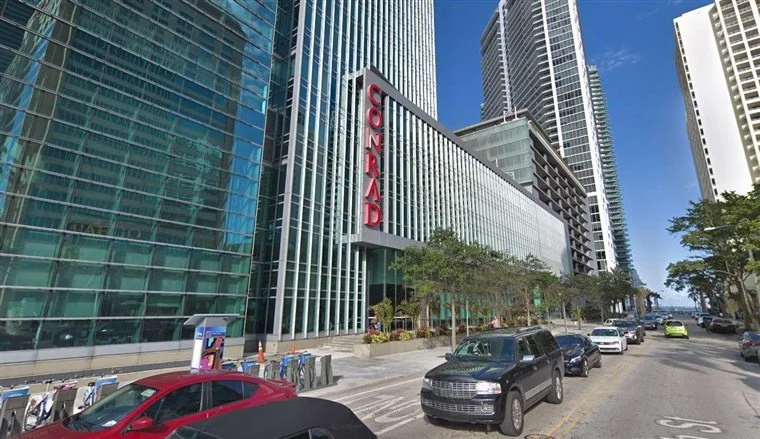
Hotel dishwasher awarded $21 million after boss made her work on Sundays
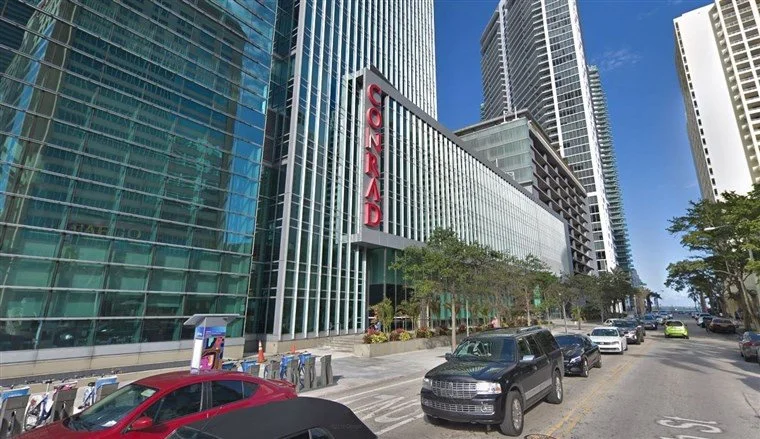
The jury also found she was due $35,000 in back wages and $500,000 for emotional pain and mental anguish.But a cap on punitive damages prevents her from receiving anywhere close to that amount.Marie Jean Pierre, who worked as a dishwasher at the Conrad Miami, sued Virginia-based Park Hotels & Resorts, formerly known as Hilton Worldwide, in 2017 for violations of the Civil Rights Act of 1964. The landmark law bans employment discrimination on the basis of race, color, religion, sex or national origin.The award was filed on Tuesday with the U.S. District Court in Miami. The jury also found she was due $35,000 in back wages and $500,000 for emotional pain and mental anguish.Pierre, 60, is a mother of six and a member of the Soldiers of Christ Church, a Catholic missionary group that helps the poor, her attorney Pierre said in the lawsuit that she informed the Conrad Miami from the beginning of her employment that she could not work Sundays because of her religious beliefs.Her lawyer, Marc Brumer, said Hilton argued in court that it was unaware Pierre was a missionary, and never knew why she always wanted Sundays off.In 2009, she alleges the hotel scheduled her to work on a Sunday, according to the lawsuit. She says she told her employer she would have to resign, but in an effort to persuade her not to quit, they accommodated her request until 2015.Sometime in 2015, the kitchen manager at the Conrad Miami, "demanded" Pierre work Sundays, the lawsuit states and for a short time allowed her to swap shifts with other coworkers to have the day off.On March 31, 2016, Pierre says she was fired for alleged misconduct, negligence and “unexcused absences,” according to the lawsuit.Although there is a cap on punitive damage awards in federal court, Pierre's attorney said he expects she will receive at least $500,000."I asked for $50 million, knowing that I was capped at $300,000," Brumer told NBC News on Wednesday. "I didn't do this for money. I did this to right the wrongs."The jury was unaware that the law caps the amount of punitive damages she could receive.Hilton said it was "very disappointed by the jury's verdict, and don't believe that it is supported by the facts of this case or the law.""During Ms. Pierre's ten years with the hotel, multiple concessions were made to accommodate her personal and religious commitments," a spokeswoman said. "We intend to appeal, and demonstrate that the Conrad Miami was and remains a welcoming place for all guests and employees."By: Janelle Griffith for NBCnews.com | January 16, 2019
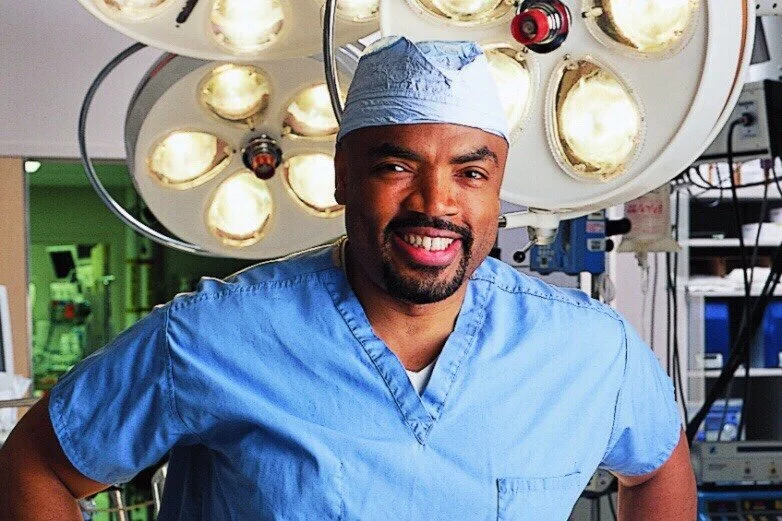
Eleven Things You Need to Know About Henri R. Ford, MD
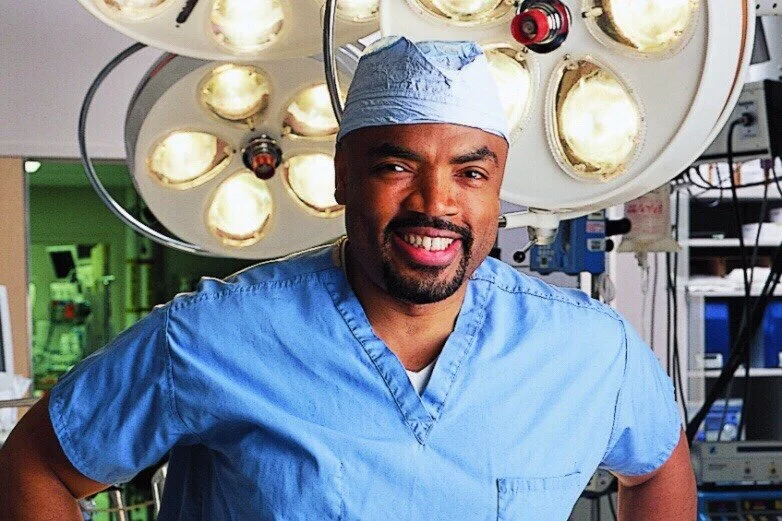
 Henri R. Ford, MD, MHA, FACS, FRCS, FAAP: The Vice President and Surgeon-in-Chief at Children's Hospital Los Angeles and Haitian-born medical maven who has dedicated his life to not only helping the many kids that walk through CHLA's doors, but also the children and people of his home country.These are the top things you need to know about Ford.1. He’s an Honorary Fellow of the Royal College of Surgeons, and President of the American Pediatric Surgical Association.
 More: Children's Hospital Los Angeles Surgeon-in-Chief Receives Two Prestigious Honors2. He attended Princeton University for his undergraduate degree, earned his medical degree from Harvard Medical School, and received his Master of Health Administration degree from the University of Southern California.More: Henri R. Ford, MD, MHA, FACS, FRCS, FAAP3. He is an expert in necrotizing enterocolitis (NEC), which is a severe and often life-threatening intestinal inflammation in pre-term infants.
 More: Ford's Laboratory4. He was presented with the National Humanism Award by American Association of Medical Colleges, which recognizes his mentorship to medical students and the discovery and implementation of surgical alternatives for several pediatric disorders.More: American Association of Medical Colleges Will Present National Humanism Award to Henri Ford, M.D. of Keck School of Medicine of USC, Children’s Hospital Los Angeles5. When the devastating 7.0 earthquake hit in his home country of Haiti, he quickly moved to lead a humanitarian mission there.
 More: Humanitarian Efforts in Haiti6. He helped organize a huge donation of used medical equipment to Haiti from CHLA.
 More: Children's Hospital Los Angeles Donates to Haiti's Kids7. He’s a member of the Board of Regents of the American College of Surgeons.More: Henri R. Ford, MD, MHA, FACS, FAAP, Elected to the Board of Regents of the American College of Surgeons8. He led Haiti’s first conjoined twin separation surgery during a medical mission trip in 2015.
 More: Children's Hospital Los Angeles Leads Historic Medical Moment 3,000 Miles Away9. He’s helped lead efforts to establish critical care and trauma facilities in Haiti.
  More: Children's Hospital Los Angeles Surgeon Helps Lead Effort to Develop Critical Care and Trauma Facilities in Haiti10. He's working to save more babies' lives through research.
 11. Dr. Ford was just appointed as the Dean of Miami University's Miller School of Medicine,Congratulations Dr. Ford!!!Thank you Dr. Ford for your dedication and determination in helping kids here and around the world!By: CHLA.org

Haitian Heritage Month (May)
Haitian Heritage Month is not only a celebration of Haitian culture, it also has great historical significance based on the inherited traditions that have been passed on from generation to generation since Haiti's independence in 1804.Over the past few years, Haitians in New York, Florida, Boston, Philadelphia, and New Jersey have celebrated Haitian Heritage Month proudly with parades, conferences, festivals, exhibits, book fairs and the like. It’s a pride-filled month that carries out exciting events within the Haitian community and brings memorable souvenirs, including patriotic songs and the recollection of the history behind the creation of the Haitian Flag.In Florida, Haitian Heritage Month is recognized and celebrated by the School Board of Miami Dade County and supported by the School Board of Broward County. The celebration in Miami includes the largest Haitian festival - Haitian Compas Festival, also known as KompaFest.In Boston, the Annual Haitian American Unity Parade is held annually around May 18th, which is recognized by all Haitians as Haitian Flag Day. This parade features Haitian leaders, state and city officials, marching bands, delegations from schools, colleges and universities. Many youth groups, cultural, professional, and religious associations as well as, community, political and regional organizations and Haitian and American businesses also take part in the festivities.In New York, there is a Haitian Day Parade that usually takes place on the last Sunday of May. Other patriotic and cultural activities are held in Chicago, Georgia, Texas, Philadelphia to acknowledge Haitian Heritage Month with pride and dignity in order to promote and share the Haitian culture.While Haitians never need a reason to "stand-up" and "rep our flag", this year, Haitian Heritage Month definitely comes at a time where perhaps people, including us Haitians, need to be reminded of WHO Haitians are and of our significant contributions to the world, both historically and in present times.
Notable dates in May for Haitian History and Culture
May 1st - Labor and Agricultural Day celebrated in Haiti as a public holiday.May 2nd - Flowers’ Day During the Duvalier era, May 2nd was celebrated as Flowers’ Day. Many cultural activities were held in the capital’s bicentennial plaza, decorated with flowers and the blue and red colors of the Haitian flag. Well known artists and musical groups also took part in the annual celebration.May 18th - Haitian Flag Day - In a pact signed by the Black and Mulatto officers at the May 1803 congress, the officers created the Haitian Flag on the last day of the congress, May 18, 1803. Bearing this newly created Haitian flag with pride, they fought and expelled the French army and thus Haiti became the first Black independent country in the world on January 1st, 1804.May 20th - Toussaint L'Ouverture 's Birthday General Toussaint L'Ouverture, who was born on May 20, 1743, was the mastermind behind the Haitian Slave Revolution. He organized and led the slaves to victory against Spain, Great Britain and France.Last Sunday of May - Haitian Mother's Day In Haiti, Mothers’ Day is celebrated on the Last Sunday of May. On that day, Haitians honor their mothers by wearing a red flower for mothers that are living and a white or purple flower in remembrance of the mothers who have passed away.
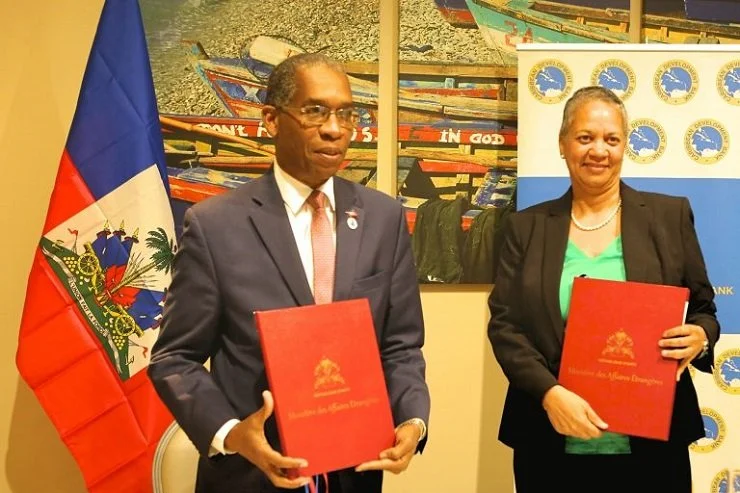
Caribbean Development Bank to Establish First Country Office in Haiti This Year
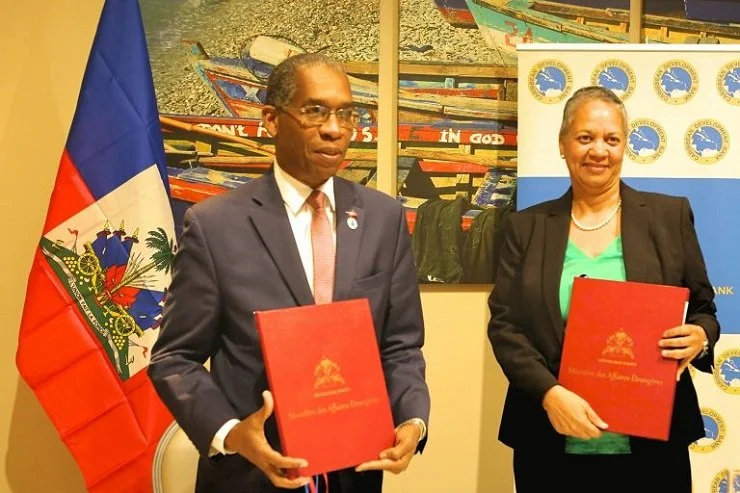
BRIDGETOWN, Barbados, Thursday March 15, 2018 – The Barbados-based Caribbean Development Bank (CDB) will establish its first country office in the Republic of Haiti later this year.Minister of Foreign Affairs Antonio Rodrigue and the Bank’s Vice-President (Operations), Monica La Bennett, recently signed the Country Agreement to pave the way for that to become reality.La Bennett said the signing of the agreement further cements the strong partnership between CDB and Haiti.“Last year, CDB, in collaboration with the Government of Haiti, developed a country strategy plan for the period 2017 to 2021, with an indicative resource envelope of US$100 million to help Haiti meet its development priorities. The strategy focuses on three main themes: agriculture and community development, sustainable energy development and education and training. It is this deepening engagement between CDB and the Government of Haiti that has led us to conclude that there is a need for a country office,” she said.“We expect that this will lead to the development of closer relationships with the Government and the people of this country, enabling CDB to be a more proactive, responsive development partner.”Haiti became a member of CDB in 2007. Since joining the Bank, the country has been allocated grant resources from CDB’s most concessional resource pool, the Special Development Fund (Unified). In 2017, an allocation of US$45 million was approved under the ninth cycle of the Fund.To date, a total of US$133 million has been committed to Haiti. Projects supported included the Education for All Phase II Project; the Technical and Vocational Education and Training Project II; interventions in agriculture and rural development; technical assistance for micro, small and medium enterprise development, and improving the quality of, and access to basic education.CDB’s ongoing work in Haiti includes projects in education, including technical and vocational education and training; climate resilience; and community-based agriculture and rural development. In addition, since May 2013, the Bank has paid the country’s insurance premiums to CCRIF SPC. The payments cover Haiti’s earthquake, tropical cyclone and excess rainfall policies. Under this arrangement, the country has received three major payouts, most recently following the passage of Hurricane Matthew in October 2016.By: Carribean360.com | March 15, 2018
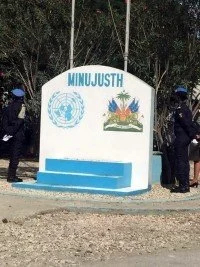
Haiti, U.N. Clash Over Probe Into Alleged Misuse of Petrocaribe Funds
PORT-AU-PRINCE (Reuters) - A diplomatic row has erupted between the Haitian government and the United Nations over comments made by a senior U.N. official cheering an investigation into the alleged misuse of Venezuela-sponsored Petrocaribe funds by previous administrations.
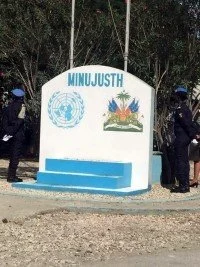
Haiti recalled its ambassador to the U.N. on Tuesday, and summoned Susan D. Page, the special representative and head of the United Nations Mission for Justice Support in Haiti (MINUJUSTH), to explain comments she reportedly made applauding a criminal probe into the alleged siphoning of Petrocaribe money.
Haiti's foreign minister, Antonio Rodrigue, said in a statement on Tuesday that Page had exceeded her authority and that her comments reflect an "attitude harmful to the political and institutional stability acquired during the past few years."
The case is the latest example of governments across the Americas - including Guatemala and Honduras - chafing at criticisms by U.N. bodies, which have highlighted lackluster efforts to tackle corruption, human rights abuses or impunity.
Haiti has a long tradition of corruption, and international partners and anti-graft watchdogs have often blamed Haitian politicians for failing to crack down on the scourge.
Last weekend, local media reported that Page said the U.N.'s Haitian justice mission welcomed the assignment of judges to probe possible acts of corruption with Petrocaribe funds during the administrations of former presidents Rene Preval and Michel Martelly, between 2008 and 2016.
Current President Jovenel Moise, who is from the same party as Martelly, has faced criticism for not pursuing corruption as actively as he had vowed to.
Page was quoted as saying she saluted "the initiative and active role of Haitian citizens and civil society engaged in the fight against corruption and impunity. Their actions demonstrate that the population defends accountability and justice."
Reuters was unable to reach Page.
Venezuela's Petrocaribe scheme, launched in 2005, has furnished about 12 Caribbean states with oil supplies under a flexible credit mechanism, obliging them to pay cash for part of every shipment and finance the rest at low interest rates, or buy it with goods like food and clothing.
A collapse in oil prices, however, has caused a recession in Venezuela, and stalled many of the Petrocaribe shipments.
(Reporting by Gabriel Stargardter; Editing by Leslie Adler)
Copyright 2018 Thomson Reuters.By Joseph Guyler Delva via US News | February 28, 2018
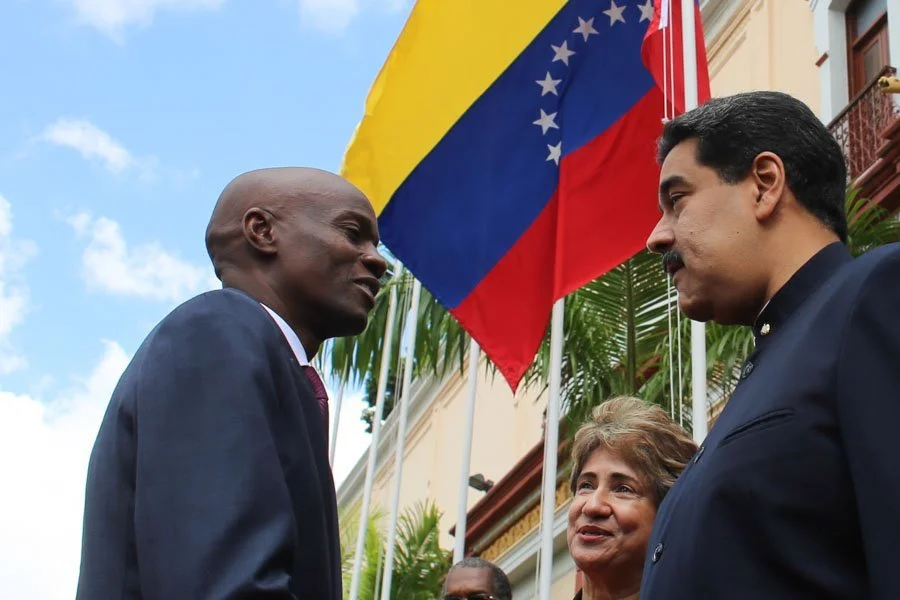
Venezuela and Haiti Sign New Bilateral Deals
The agreements will see Venezuela and Haiti deepen their collaboration in agricultural production as well as in joint infrastructure projects
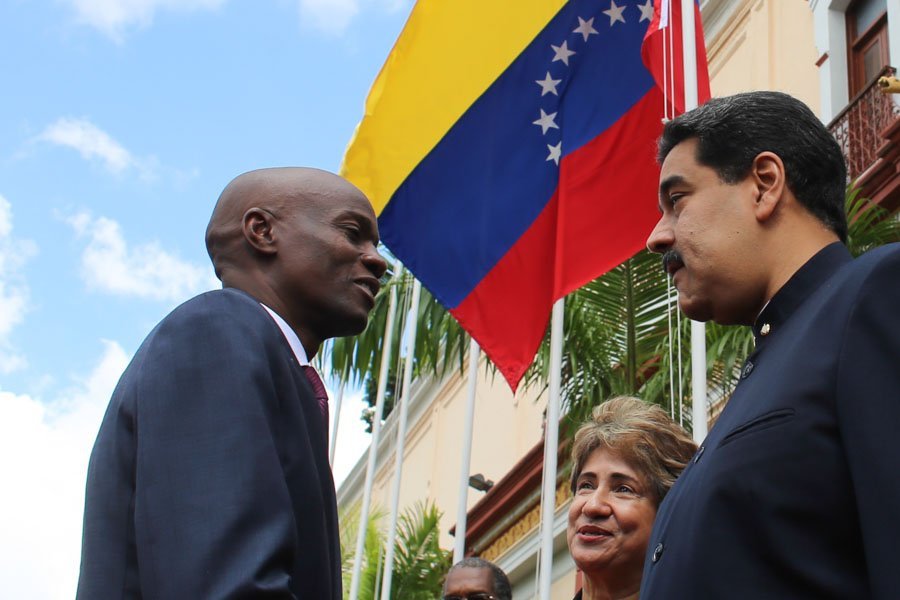
Caracas, November 28, 2017 (venezuelanalysis.com) – Venezuelan President Nicolas Maduro and his Haitian counterpart, Jovenal Moise, held bilateral talks in Caracas Monday where they signed fresh agreements in the areas of energy and agriculture.Known as the Energy and Agriculture Cooperation Agreement, the deal will see Venezuela and Haiti deepen their collaboration in agricultural production as well as in joint infrastructure projects. Further details have yet to be released.Both leaders also reaffirmed their governments’ commitment to the PetroCaribe program, an initiative created by former President Hugo Chavez Frias which sees Venezuela export oil to Haiti and other Caribbean and Central American nations at 40 percent of the market cost, with the remainder payable via 25-year low interest loans.The trip marks President Moise’s first visit to Venezuela since taking office in February on behalf of the right-wing "Bald Heads" (PHTK) party. The businessman was elected to office last November to replace fellow PHTK member, Michel Martelly, as president - though the elections were marred by accusations of fraud.Speaking during a meeting at Miraflores Presidential Palace, the Haitian leader paid tribute to the historic bonds uniting the two countries.“We have been in permanent partnership since the beginning of our history and we thank the people and the Venezuelan president,” he said, alluding to Haiti’s support for Venezuelan independence leader Simon Bolivar, who subsequently abolished slavery in the South American country.President Maduro, for his part, pledged his solidarity with the Caribbean island, which has been rocked by severe natural disasters in recent years.“We will always be together, Haiti and Venezuela. I ratify all of our support, love, and solidarity [for the Haitian people],” he declared.Under the leadership of Chavez and Maduro, the Venezuelan government has moved to strengthen ties with Haiti in recent years via PetroCaribe and other regional integration initiatives. Nonetheless, bilateral agreements between the two countries have been dogged by reports that the Haitian government has embezzled millions of dollars in Venezuelan aid.Between 2011 and 2014, Venezuela helped finance 234 projects in Haiti to the tune of US$1.2 billion.By:
UN to Haiti: 'Proof is in the pudding' on Corruption
PORT-AU-PRINCE, Haiti (AFP) — The United Nations, which last month launched a fresh mission to promote long-term development in Haiti, has had it with nice words: when it comes to corruption and human rights, "the proof is in the pudding.""They have said they want to fight corruption, so they have to take responsibility," insisted Susan Page, who is heading the UN Mission for Justice Support in Haiti (MINUJUSTH)."I'm going to take them at their word, but I'm also going to help them if that is really what they want," the American career diplomat said.Elected president after an electoral crisis that paralyzed the country for two years, Jovenel Moise insists he is going to use his time in office to clean up Haitian politics."Corruption, in all its forms, eats away and atrophies the economy, it profoundly weakens the political foundations and destabilizes society's social tissue: corruption is a crime against development," the president, who took office earlier this year, told the UN general assembly in New York in September.The concern is that his words are taking their time in being translated into action. In late August, a minister was sacked over corruption allegations, but no legal action has yet been taken.The new UN mission starts just as one of the symbols of financial waste in Haiti resurfaces: on Thursday, the Senate will debate a parliamentary report accusing a dozen former ministers, who held office between 2010 and 2016, of "fraud on a grand scale.""We'll see how they react, not just in regard to the report but in general," said Page, pointing to Haitian institutions in charge of fighting corruption and money laundering."Will they strengthen the capabilities of agents in these organizations? Really put investigations in place which they will then pursue to the very end? Will they bring people to justice? We will see."Gnawed away by corruption, the country's justice system is notoriously slow-moving. Its prison population, 400 percent above capacity, is one of the highest in the world.Maintaining the rule of law also demands a real commitment to improving conditions in detention centers, but there, too, MINUJUSTH will not take the lead."It's an age-old problem that the Haitians will have to sort out themselves," said Page. "We are here to support, not to do it for them. They need to have the political will to do it."Restoring the UN's image in Haiti during this new mission will prove almost as big a task as overhauling its justice system.The 13 years of the preceding UN mission, known as MINUSTAH, were blighted by sex crimes perpetrated against Haitian woman and children by UN police and peacekeeping troops, as well as a cholera epidemic sparked by Nepalese peacekeepers that has already claimed 10,000 lives.MINUJUSTH is the UN's sixth peacekeeping mission in Haiti over the past 25 years, a country where there is very little risk of civil war, regional conflict or terrorist attacks. The label "peacekeeping" exasperates many Haitian politicians, who may support the drive against corruption but also want a debate to redefine the UN mandate.Aware of that debate, Page prefers not to take sides: "The UN Security Council considers it necessary to keep a certain level of stability here and to tackle the great challenges which threaten long-term development... that is not a mandate for development – that is to enable a transition between a peacekeeping mission and a lasting development."
By: Jamaicaobserver.com | November 29, 2017
Artist finds ‘calling’ after 2010 earthquake in Haiti

West Palm Beach artist Jason “JaFleu” Fleurant was so profoundly affected by the 7.0 magnitude earthquake in Haiti, which left an estimated 200,000 to 300,000 dead and many more displaced on Jan. 12, 2010, that he had to do something to channel his emotions. So, Fleurant started to create.
“When the earthquake happened in Haiti back in 2010, something just took over me,” he said. “I couldn’t stop creating and in that, I found my calling or maybe my calling ended up finding me.”
Fleurant, 33, is a self-taught painter, but thinks his gift is greater than what he has learned so far.
“It started with me drawing what I was seeing on TV and then my friend Yanatha recommended I try painting on canvas, and the moment I did, everything changed,” Fleurant said.
“My family is from Haiti. So that feeling of knowing I had family and friends in the midst of it, that powerless feeling devastated me,” he said.
Fleurant believes it was a spiritual and artistic awakening. “That’s nothing but God,” he said. “The ancestors and spirits, whenever I create. I’m just the vessel.”
“I’d say the universe (had a plan). I didn’t go to school for it,” he said. “It’s all been from trial and error. Practice makes perfect, so I just kept doing it and doing it and in the process developed all my own unique styles.”
Although he explores imagery and an array of colors in his paintings, no image or color really excites Fleurant in particular. “I tell people all the time I have no earthly idea what I’m doing,” he said. “I just kind of go with the flow and whatever happens, happens.”
Fleurant, however, admits that color has always played an important role in his life. “I’ve always loved color, and that may be tied to being Haitian because in Haitian art there is often (many colors),” he said. “The only real conscious decision I make when it comes (down) to it is always trying to use blue and red somewhere in honor of Haiti.”
Fleurant has had celebrity encounters and is slowly gathering a following for his artwork. “My brother Jamaal ‘Visualist’ Clark and I (believe) if there’s a door cracked, we’re going in,” he said. “That mentality has led us to meet and give artwork to the likes of Dr. Michael Eric Dyson, U.S. Sen. Cory Booker, Jill Scott, Swizz (Beatz) and more.”
Fleurant and Clark were at the Drink Champs Podcast where they got to meet Hip Hop star Noreaga and DJ EFN, which led to a meeting with music producer Swizz Beatz, Fleurant said.
“One minute I’m just chilling in the back and next I look up to see Swizz walking directly towards me. He didn’t even, at the time, know I had art,” he said. “For whatever reason he just walked directly to me and started talking. So then I told him I had this painting I wanted him to see. We unrolled it and he digged it.”
Fleurant said he envisions himself becoming a version of Walt Disney, Dr. Suess and Stan Lee. “Art is cool, but I don’t really care for the art world or just making paintings,” he said. “I’ve come to use all my artistic skills now to be able to create my own books — be it family books, graphic novels or more. I’ve created and fallen (in) love with my own characters and I want to bring them to life.”
For more information about Fleurant, visit jafleutheartist.com.
Q & AWhat are your hobbies? Honestly, I don’t have any hobbies. I think some would view art to be, but that’s my career and therapy, too.What would you do if you were invisible for a day? I’d have an exhibit of my works and wander around and listen to people’s true thoughts on it. That was always a dream that nowadays seems even more less than likely.If you could have dinner with anyone in history, who would it be? Stevie Wonder — he’s hands down my favorite artist in all genres. I’d love to pick his brain.What’s the best advice you ever received?Paul Fisher once told me “Never wait to get your (expletive) together.” Too often we say ‘I’m going to do this or want to do this, but first I must do this.’ But, life is too short and the universe conspires for you when you move towards your dreams.What event in history would you have liked to have witnessed?Not so much an event but the whole movement of the Harlem Renaissance. From the artists going to Paris to get their props and coming home and banning together. I’d love to have been amongst that.What is your favorite childhood memory? Being at the kitchen table while my mom cooked and drawing ninja turtles and other cartoons that she too loved. Those were awesome memories that still stay in my head. Even when I quit art as a teen well into my adult years.Who is your hero, someone who inspires you?I’ll take that back to Stevie Wonder and the reason being, for someone to have no sight but see the world so clearly and create art that means so much. It’s inspiring and a reminder anything is possible.What is something that most people don’t know about you? How heavily I battle depression and mental illness. I used to be ashamed to say it. In fact, this is definitely the first time in any interview I have. But it’s important to address that, particularly in the black community. The arts have been very helpful with it and speaking to someone (about it) (with similar issues).What three things would you bring with you if you were stuck on a desert island? Music, art supplies and books and I’m good to go. I spend a lot of time outdoors, so I’ve grown accustomed to that.
By: Kyoto Walker Special to The Palm Beach Post for the Palmbeachpost.com | November 29, 2017
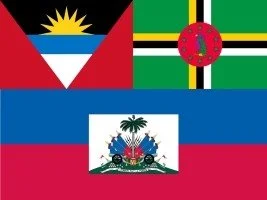
Haiti - Humanitarian : $250,000 donation from Haiti to Antigua and Barbuda and Dominica
After providing urgent humanitarian aid to Turks & Caicos Islands, badly affected by the passage of hurricanes Irma and Maria (630 generators, 1,000 sheets of plywood, 4,500 tarpaulins, 2,000 gypsum boards and 4,000 sheets among others). Permanent Representative of Haiti to the UN, Ambassador Denis Regis at the last high-level donor conference for the Caribbean in New York, announced Haiti's assistance to the Antigua and Barbuda Islands and Dominica $ 250,000 each.In his speech, Ambassador Regis explained "[...] The Republic of Haiti, having been hit hard by a series of deadly natural disasters over the last 10 years, [...] knows from experience the multiplicity of obstacles to which is faced the reconstruction and rehabilitation of critical infrastructure, especially in countries such as ours or structural handicaps are legion and the public investment capacity is so precarious [...][...] in response to the recent call by the CARICOM countries, I have the honor to announce that the Government of Haiti, despite the difficult economic and financial situation of the country, but fully involved in international solidarity is pleased to contribute US $ 250,000 to the reconstruction efforts of each of the sister nations of Antigua and Barbuda and Dominica, so hard hit by hurricanes Irma and Maria [...][...] These contributions, although modest, are nonetheless a testimony of friendship and fraternity, in the tradition of mutual aid and regional solidarity of the Caribbean Community, and in the spirit of international cooperation [...]"By: HL/ PI/ HaitiLibre | November 30,2017
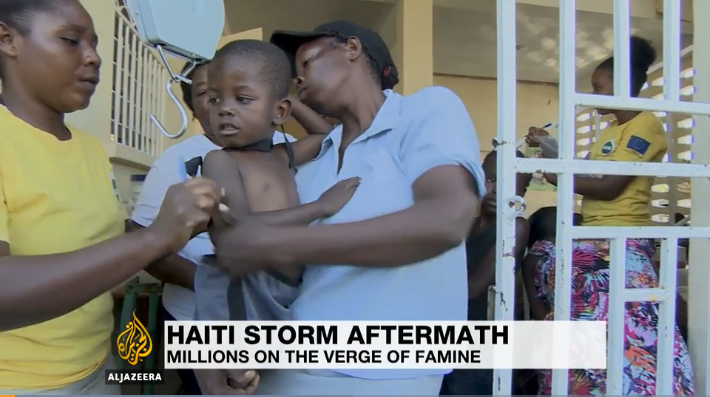
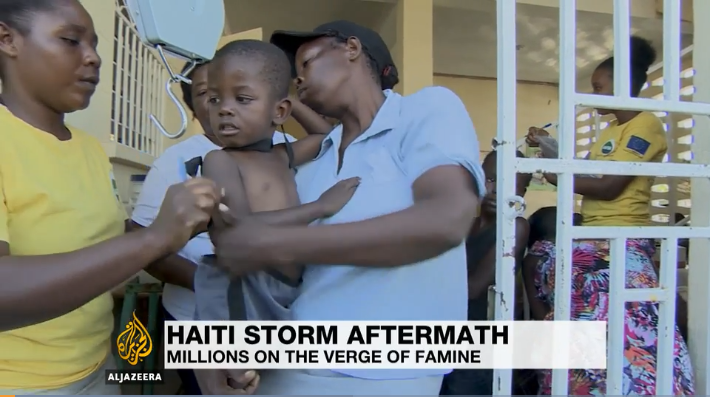
Millions at risk of famine in post-hurricane Haiti
It's been almost a year since southern Haiti was devastated by Hurricane Matthew.It has also been almost eight years since an earthquake killed more than 300,000 people and left hundreds of thousands homeless.But a recent visit to a UNICEF treatment centre in the south shows everything continues to go wrong in the country.Dozens of malnourished children visit the centre daily, struggling against diseases and the endemic poverty that is so deeply entrenched in Haiti.Half of the country's population is malnourished. According to the World Food Programme, 1.32 million people are in Phase 3 Crisis, which means they are severely food insecure. Additionally, three million people are in Phase 2 Stress, which mean they are food insecure.Unfortunately, this is nothing new.Haiti has been struggling to feed its people for years. It is one of the poorest countries in the world.Natural disasters only deteriorate the situation. Hurricane Matthew had a devastating effect on food production. Agricultural plots, seeds and irrigation systems were destroyed.One year on, not much has changed.Everyone we spoke to repeated the same phrase over and over again: "I used to have … but now it's gone."It was very little, but at least some had a business, or seeds, or nets and other sources that would help them feed themselves. But they were destroyed by the hurricane.The UN has some small programmes assisting farmers, and is currently working on long-term development ones. But that's not enough to get people out of the current crisis.The UN appealed for more than $56m for food security. I have been told that less than 50 percent of that was provided by donor countries.
Political issues
But that's not the only problem. Nine months ago, Haiti's new President Jovenel Moise took office, with the promise to increase support to the country's agricultural sectors.Farmers denounce that only 6.9 percent of next year's budget has been assigned to assist communities in desperate need of help. Moise has also raised taxes and that's why demonstrations have been ongoing in the capital for months.The president was elected in an electoral process in which only 20 percent of the population voted."Moise has very little support. The only ones that are keeping him in power are the United States, France and the international community," a source told me in Port-au-Prince.And the budget?"It's been designed to benefit the elite and to continue strangling the poor," said economist Camille Charlemers."It is what keeps us dependent on foreign aid. Without food production, Haiti needs to import almost everything."And of course there is massive corruption. A recent investigation showed how politicians, including the presidents and prime ministers, allegedly embezzled around $2bn from a Petrocaribe deal with Venezuela.Haiti is currently paying off that debt while millions are going hungry.Some historians have said that the country has been condemned since it was born, adding that the first black republic was a bad example. They say that 'slaves' were not supposed to have a nation and that's why a brutal embargo was imposed by France, Spain, the US and the UK.Over 200 years later, Haiti continues to struggle, a victim of the ruling elites that profit from the enormous poverty rates in the country, and of an international community that, for whatever reason, continues to fail.By: Teresa Bo for Aljazeera.com | November 28, 2017
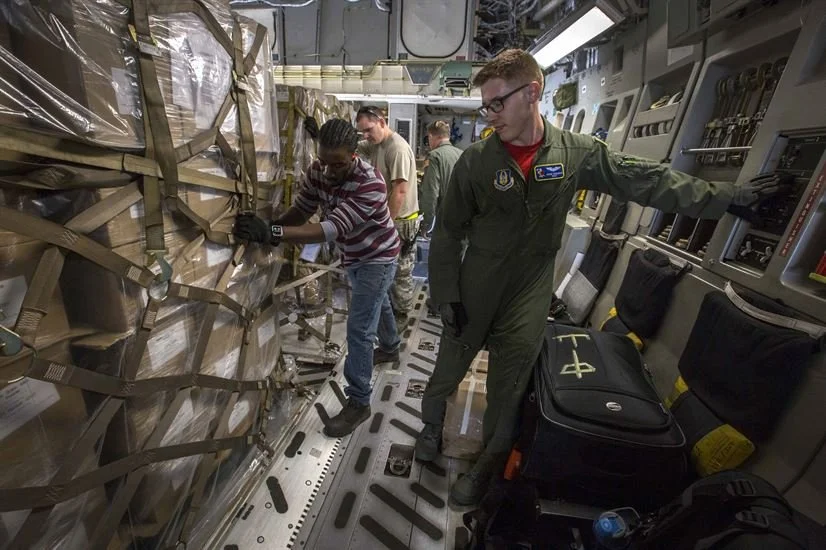
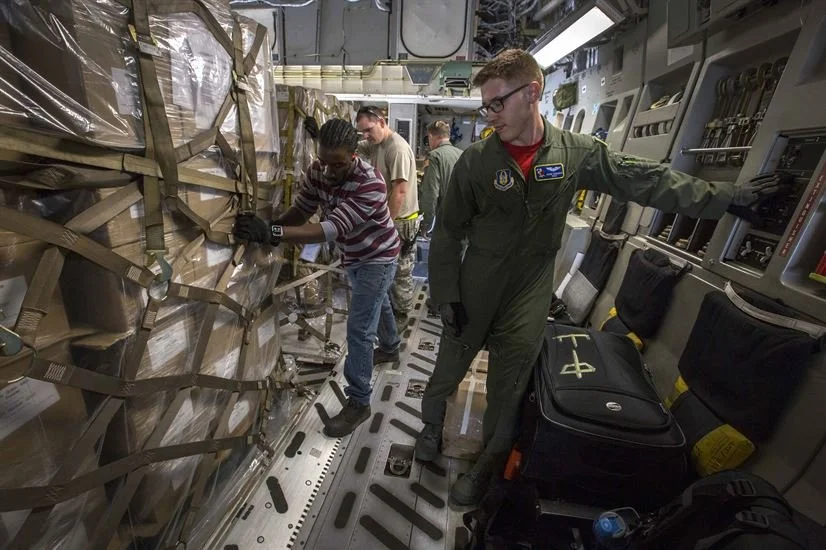
Air Force Reservists Deliver Humanitarian Aid to Haiti
PORT-AU-PRINCE, Haiti, Nov. 27, 2017 — What can 15 airmen and a C-17 Globemaster III aircraft do on a Denton Program mission? A lot, if they're from the Air Force Reserve Command's 514th Air Mobility Wing.
On Nov. 18, four pilots and a loadmaster with the 732nd Airlift Squadron, a loadmaster and two crew chiefs with the 514th, three Phoenix Raven Team members, and four 514th Security Forces airmen delivered 15 pallets of food, weighing 76,410 pounds, to Haiti."It's a high priority to get food down there," said Air Force Senior Master Sgt. Shawn R. Reynolds, a C-17 loadmaster with the 514th Air Mobility Wing. "Just the sheer volume of food we moved was impressive."The humanitarian mission, accomplished through the Denton Program, delivered fortified rice and soy protein and barley grass juice powder to Haiti. This was Reynolds' fifth Denton mission."That food will be used for a nutrition program for orphans and school children," said Jean Lubin St. Marc, executive director of Mission of Hope. "We appreciate the U.S. military that bring Denton cargo to us."Deliveries Began after 2010 EarthquakeSince a 2010 earthquake in Haiti killed more than 100,000 people, the 514th has delivered supplies and equipment through the Denton Program to Haiti. The program was an amendment to the Foreign Assistance Act of 1987, and it is named in honor of U.S. Sen. Jeremiah Denton, a former Navy pilot and Vietnam prisoner of war."Delivering relief supplies is one of the more rewarding missions we do," said Air force Lt. Col. Samuel F. Irvin, a C-17 pilot and the commander of the 732nd Airlift Squadron.Irvin has been on more than a dozen Denton missions during the past 10 years.The program is jointly administered by the U.S. Agency for International Development, the State Department and the Defense Security Cooperation Agency. It enables Americans and U.S. based nongovernmental organizations to use available space on military cargo aircraft to transport humanitarian goods -- agricultural equipment, clothing, educational supplies, food, medical supplies and vehicles -- to countries in need."This is the first time it has been strictly food," said Air Force Maj. Lee C. Schmeer, a 732nd Airlift Squadron C-17 pilot. "Usually it has been a mixed bag -- tractors, forklifts, trailers, and flatbed trucks, along with food."To give some perspective on how much cargo a Globemaster can handle, it can carry an M1A2 Abrams tank, which weighs 130,000 pounds, and still have room for 40,000 pounds more cargo.Cargo HubThe crew received the cargo at Joint Base Charleston in South Carolina, which is the cargo hub for the Denton Program. In 2016, Joint Base Charleston supported 85 missions to 10 countries delivering 609 pallets of cargo and 22 vehicles."We're in a position to help and we're happy to help," Schmeer said.While the Denton Program helps countries and people in need, it also serves military personnel. Aircrews that need to get qualified or have their qualifications updated volunteer for a Denton mission, and additional training will be scheduled during the mission."We schedule training at the bases we visit for our aircrews," Irvin said.During this mission, which began Nov. 16 and ended Nov. 19, the 514th Security Forces Squadron's combat arms training and maintenance team trained four C-17 pilots and two loadmasters at the pistol range at Naval Air Station Pensacola in Florida."By using our training time, it's a win-win for everyone," Reynolds said.Delivering the supplies was a team effort. In this case, the security forces airmen pitched in, helping to unload cargo."Moving Denton cargo is satisfying for me," Reynolds said. "We are moving something that matters."By: Air Force Master Sgt. Mark C. Olsen 514th Air Mobility Wing for the US Department of Defense | November 27, 2017
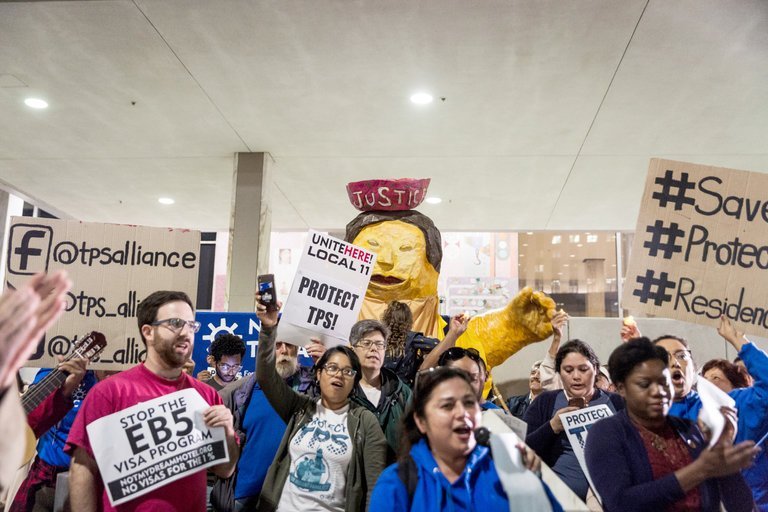
Trump Administration Ends Temporary Protection for Haitians

Haitians with what is known as Temporary Protected Status will be expected to leave the United States by July 2019 or face deportation.
The decision set off immediate dismay among Haitian communities in South Florida, New York and beyond, and was a signal to other foreigners with temporary protections that they, too, could soon be asked to leave.
About 320,000 people now benefit from the Temporary Protected Status program, which was signed into law by President George Bush in 1990, and the decision on Monday followed another one last month that ended protections for 2,500 Nicaraguans.
Haiti, the poorest country in the Western Hemisphere, is still struggling to recover from the earthquake and relies heavily on money its expatriates send to relatives back home. The Haitian government had asked the Trump administration to extend the protected status.
“I received a shock right now,” Gerald Michaud, 45, a Haitian who lives in Brooklyn, said when he heard the news. He has been working at La Guardia Airport as a wheelchair attendant, sending money to family and friends back home. He said he feared for his welfare and safety back in Haiti now that his permission to remain in the United States was ending.
“The situation is not good in my country,” he said. “I don’t know where I am able to go.”
Haitians are the second-largest group of foreigners with temporary status. The protection is extended to people already in the United States who have come from countries crippled by natural disasters or armed conflict that prevents their citizens from returning or prevents their country from adequately receiving them. The government periodically reviews each group’s status and decides whether to continue the protections.
The Obama administration renewed the protections for Haitians several times, after determining that conditions in Haiti remained precarious. But the Trump administration, which has sought greater controls on immigration, has said that the program, which was intended to provide only temporary relief, has turned into a permanent benefit for tens of thousands of people.
In a statement, the Department of Homeland Security said that after meeting with Haitian government officials and Haitian communities in the United States, it had decided to let the protections end.
“Since the 2010 earthquake, the number of displaced people in Haiti has decreased by 97 percent,” the statement said. “Significant steps have been taken to improve the stability and quality of life for Haitian citizens, and Haiti is able to safely receive traditional levels of returned citizens.”
The protection for Haitians was most recently extended in May, by John F. Kelly, the Homeland Security secretary at the time. He allowed only a six-month extension, a shorter one than is typical, saying that the Haitians “need to start thinking about returning.”
The decision on Monday by Elaine Duke, the acting secretary, set a termination date of July 2019 to give people time to make arrangements to leave.
The largest group of Temporary Protected Status beneficiaries, nearly 200,000 people, are from El Salvador. The Department of Homeland Security is scheduled to announce next month whether it will rescind or renew protection for that country, which is plagued with gang violence and high unemployment. The protection applies to Salvadorans who were in the United States without permission on Feb. 13, 2001, and was granted after deadly earthquakes in their home country.
Though Ms. Duke ended protections for Nicaraguans last month, she continued, at least for now, protections for Hondurans despite pressure from Mr. Kelly, now President Trump’s chief of staff, to end them.
Others who now benefit include people from Nepal, Somalia, Sudan, South Sudan, Syria and Yemen. In 2016, the Obama administration decided to end temporary protection for citizens from three West African countries that had been devastated by the Ebola virus several years ago.
The United States offered the protection to Haitians after the earthquake in January 2010 that killed hundreds of thousands of people, displaced more than a million and led to a cholera outbreak. Haitians who entered the United States within a year of the disaster qualified for the status.
A variety of American groups, including the Congressional Black Caucus, the United States Chamber of Commerce and immigrant advocacy organizations had urged the Trump administration to extend the protections again. On Monday, Senator Bill Nelson, Democrat of Florida, called the decision “unconscionable.”
“There is no reason to send 60,000 Haitians back to a country that cannot provide for them,” he wrote on Twitter. “I am strongly urging the administration to reconsider.”
There is no reason to send 60,000 Haitians back to a country that cannot provide for them. This decision today by DHS is unconscionable. And I am strongly urging the administration to reconsider. Ultimately, we need a permanent legislative solution. https://t.co/Ft0bE0itf6— Bill Nelson (@SenBillNelson) Nov. 21, 2017
Ileana Ros-Lehtinen, a Republican congresswoman from South Florida, said on Twitter that she had traveled to Haiti after the earthquake in 2010 and after Hurricane Matthew in 2015. “So I can personally attest that Haiti is not prepared to take back nearly 60,000 TPS recipients under these difficult and harsh conditions,” she said.
I travelled to #Haiti after the earthquake in 2010 and after hurricane Matthew in 2016. So I can personally attest that #Haiti is not prepared to take back nearly 60,000 #TPS recipients under these difficult and harsh conditions.— Ileana Ros-Lehtinen (@RosLehtinen) Nov. 21, 2017
Those with temporary protection constitute about half of the estimated 110,000 Haitians living in the United States without permanent permission, according to the Pew Research Center. Since Mr. Kelly signaled that Haiti might lose its special designation, thousands of Haitians have crossed the border between the United States and Canada to apply for asylum in Quebec.
Nearly 30,000 children have been born in the United States to Haitians with protected status. Those children are citizens and entitled to stay. Some of their parents may seek to avoid deportation by claiming it would cause extreme hardship to a United States-born child, but that option is limited.
Most will soon have to make a wrenching decision: take their children back to Haiti; leave them with relatives or guardians in the United States; or remain in the country illegally and risk arrest and deportation.
Mark Silverman, an attorney and director of policy at the Immigrant Legal Resource Center in San Francisco, said that if they are arrested, they would be entitled to deportation hearings. And contesting their cases “gives them at least seven to 10 years,” he said, because of the long backlogs in the immigration courts.
The decision is sure to be felt in Haiti, where remittances from the Haitian diaspora totaled $2.36 billion in 2016, an increase of 7 percent over the previous year, according to the World Bank. That money represented more than one-fourth of the country’s national income.
But Dan Stein, president of the Federation for American Immigration Reform, which lobbies for restrictions on immigration, said the cancellation of temporary protections for Haitians was “long overdue.”
“The notion that this would be reflexively renewed again and again is a corruption of the entire concept,” said Mr. Stein, adding, “it’s not a refugee program or an immigration program.”
“It’s supposed to be reviewed and it’s supposed to be temporary,” he said.
One of the younger beneficiaries of the program, Peterson Exais, barely survived the earthquake. He arrived in the United States when he was 9 years old to receive emergency medical care after surviving for days under the rubble. He endured more than a dozen surgeries and has become a promising dancer at a magnet school in Miami.
Now 17 years old, he dreams of pursuing studies at the Juilliard School.
“This is very devastating for me,” he said on Monday. “I might not be able to give all that I could give back if I went back to Haiti.”
By: Mariam Jordan for Nytimes.com | November 20,2017
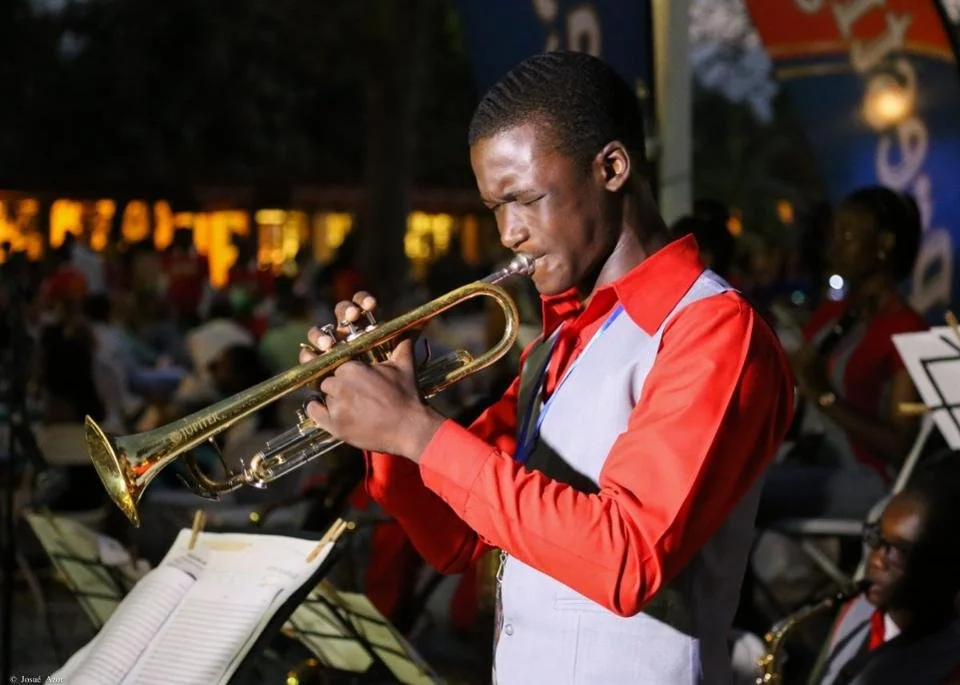
Why Jazz Lovers Should Travel To Haiti For This Unique Musical Experience

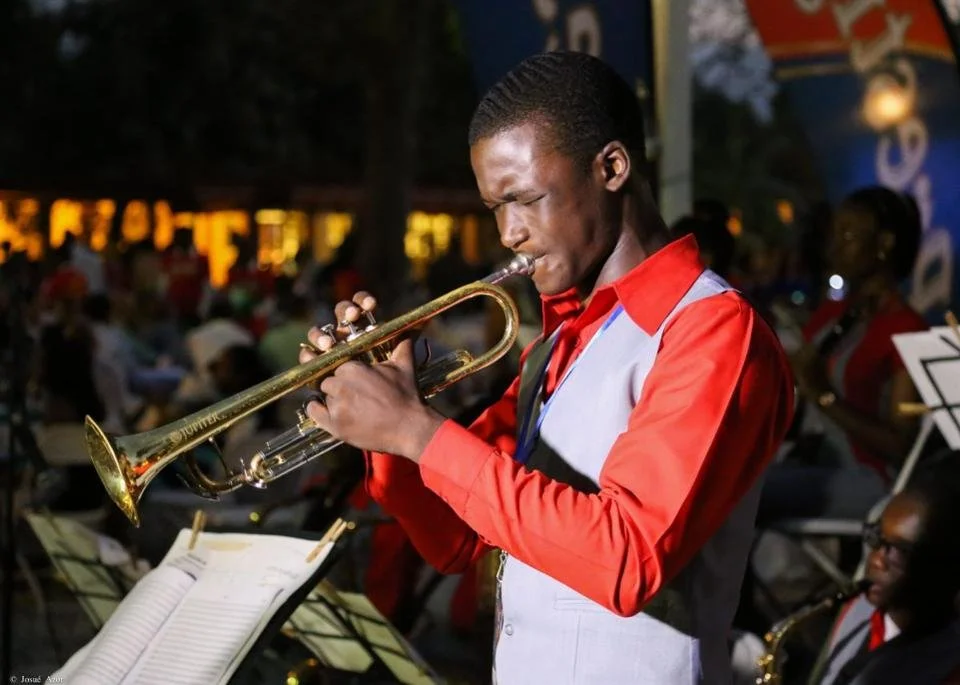
A trumpeter at the Catts Pressoir Music School during PapJazz.
Haiti might be off the beaten path, but it's home to one of the most unique music festival experiences around. Into its 12th edition, the annual Port-au-Prince International Jazz Festival, also known as PapJazz, is back and better than ever this January 2018.The event is opening the world to seeing the country's special culture and the genre of jazz music in a new light. From after hours jam sessions at some of the best local restaurants in the capital city to hit Haitian-born DJ, Michael Brun, dropping a dance influenced set, expect an unexpected combination of sounds to come together. Instead of planning for your usual festivals, dare to go somewhere different. To get a deeper understanding of what attendees can look forward to, I spoke with the foundation's manager, Milena Sandler, who made it clear why this is a can't miss adventure.Isis Briones: What was the inspiration behind the PapJazz? Milena Sandler: "It came naturally to musician and President of the Haiti Jazz Foundation, Joel Widmaier. From a jazz background through his dad, the late Herby Widmaeier — who has been a promoter of jazz in Haiti through his radio shows — he wanted to do something that would honor the legendary genre in his country. Joel has also taken part in many festivals around the world and knew what it took to put one together on an international level."IB: It's remarkable that the festival also includes a mentorship program for native artists. Can you elaborate on its mission and how it came about? MS: "Since the first edition back in 2007, artists have always been asked to offer workshops geared towards aspiring, young musicians — free of charge. There is no jazz education and very few music schools in Haiti, so this is an opportunity for them to learn from professionals from all over the world.Today we can pride ourselves in having participated in the creation of new generation jazz musicians. Moreover, we recently started a school program, where we will give free jazz, harmony, composition, and music appreciation classes. We also plan to obtain grants that will improve the students' equipment and provide seminars for them"IB: EDM was also incorporated in the lineup through Michael Brun and given the influence dance music has on the festival scene, do you foresee the different genres blending on a larger scale? MS: "Our challenge and objective since the start has been to attract a larger crowd to this jazz festival, including a public not familiar with it. Plus, the Haitian music is very diverse and the inclusion of all kinds of music is what's made us successful.However, we still plan to focus the majority of the lineup on jazz musicians and at the end of the day, Michael is a great illustration of this. We didn't pick just any DJ, Michael includes his Haitian jazz roots into his sound. He will be closing out the festival this year showcasing the perfect example of diversity."
Courtesy of PapJazzAn inside look into PapJazz.
IB: Beyond revolutionizing people's perspective on jazz, what are some stereotypical misconceptions about Haiti that you feel the festival is helping change? MS: "The first thing that comes to mind is that in Haiti great things can happen. We offer events that meets international standards in terms of organization logistics, sound quality, comfort, and of course, security. Yes, there's a lot of poverty, but at the same time, the Haitian people have a real 'Joie de Vivre' that you can feel through their smiles and faith for a better tomorrow. Attending PapJazz does something to you, anyone who goes come back with a new outlook on Haiti and a better understanding of what the country could become.IB: 12 years is also a long time to be hosting a worldwide event, what would you say about this year makes things even better than the last? Can you point out some highlights festival goers shouldn't miss? MS: "We strive to bring better lineups each year, which is no easy task. Jazz musician fees can be quite expensive and it's important to remember that the festival is a nonprofit with most shows being free. Luckily, this year, we are proud to include two Grammy Award winners and thanks to the participation of foreign embassies, we were able to have artists from 12 countries.In this edition, we also made a commitment to make the event a tourist destination, in which we created various packages that allow for the possibility to explore the country, the kindness of its people, its rich culture, and beautiful beaches on a higher level. We know it will be an unforgettable experience."By Isis Briones for Forbes.com| November 20, 2017
My Happy Place: Wyclef Jean Reveals His Hidden Paradise In Haiti
In My Happy Place, we talk to some of our favorite people about their emotional connection with an unforgettable destination.
Wyclef Jean is one the biggest musical names to ever come out of the island nation of Haiti. His star first rose as a member of the famed hip-hop group the Fugees and continued to climb as Jean pursued a career as a solo artist, collaborating with everyone from Shakira to Young Thug. A three-time Grammy award recipient, Jean has never forgotten his home country of Haiti and regularly extols his love for the country through his music. Mic caught up with Jean at an October benefit for VH1’s Save the Music Foundation, which is dedicated to bringing instrumental education to U.S. public schools.For Jean, there’s one place in Haiti that he can’t forget. "It’s like a magical river. It’s called Saut d’Eau," he said. Saut d’Eau is the name of a town and 100-foot waterfall about 60 miles north of Haiti’s capital, Port-au-Prince.

Saut d’Eau -- or Sodo in Creole -- is a place where natural beauty and Haiti’s rich history meet. The towering waterfall was created by an earthquake in the mid-1800s. According to local lore, shortly after a man saw the Virgin Mary appear near the waterfall. Saut d’Eau became a sacred site, and now, as Jean explains, "they have great ceremonies" every year.

The annual festival at Saut d’Eau occurs in mid-July, when Haitians, tourists and members of the diaspora travel to the waterfall to take part in the festivities. Attendees bathe in the water, hoping it will rid them of sicknesses or bring them good fortune. Both the Virgin Mary and her Vodou analog, the Haitian spirit Erzulie Dantor, are associated with the waterfall.Vodou -- more commonly spelled as "voodoo"-- is a key part of Haitian culture, and stems from its colonial history. When French colonizers made African slaves in plantation colonies like Haiti practice Catholicism, many combined the religion with indigenous African gods, giving birth to Vodou. That’s why Vodou spirits, like Erzulie are often so similar to Catholic religious figures like the Virgin Mary.

Music is woven into the yearly Saut d’Eau festivities. "You go out there, a lot of music is played," Jean said. "The style of the music is called rara. Rara is the roots." During the festival, rara musicians lead a procession from a church in Saut d’Eau to the waterfall. The main instrument used in rara is a bamboo or metal cylinder called a vaksen, which is accompanied by drums and other percussion instruments.
Rara is also played during Easter and Haiti’s equivalent of Mardi Gras, Carnival, which happens every year in the weeks leading up to Lent.

Jean hasn’t always had such a rosy relationship with his home country. After a catastrophic earthquake upended Haiti in 2010, his charity Yéle was accused of overspending on travel and luxury office expenses, as well as not fully paying its contractors. Jean responded to criticism in 2010 saying, "I never would ever take money for my personal pocket when it comes to Yéle," and that he has "always been committed to the people of Haiti." Despite being roiled by the Yéle controversy, Jean remains dedicated to uplifting his country, and he released a song named "Lady Haiti" in February 2017. For Jean, the synesthetic combination of music, nature and religious ceremonies make the Saut d’Eau waterfall and festivities one of the most treasured pieces of Haiti. And at the end of the day, it sums up what Jean loves so much about his native home: "You chill. You meditate. You enjoy nature."By: Benjamin Moe for Mic.com | November 6, 2017
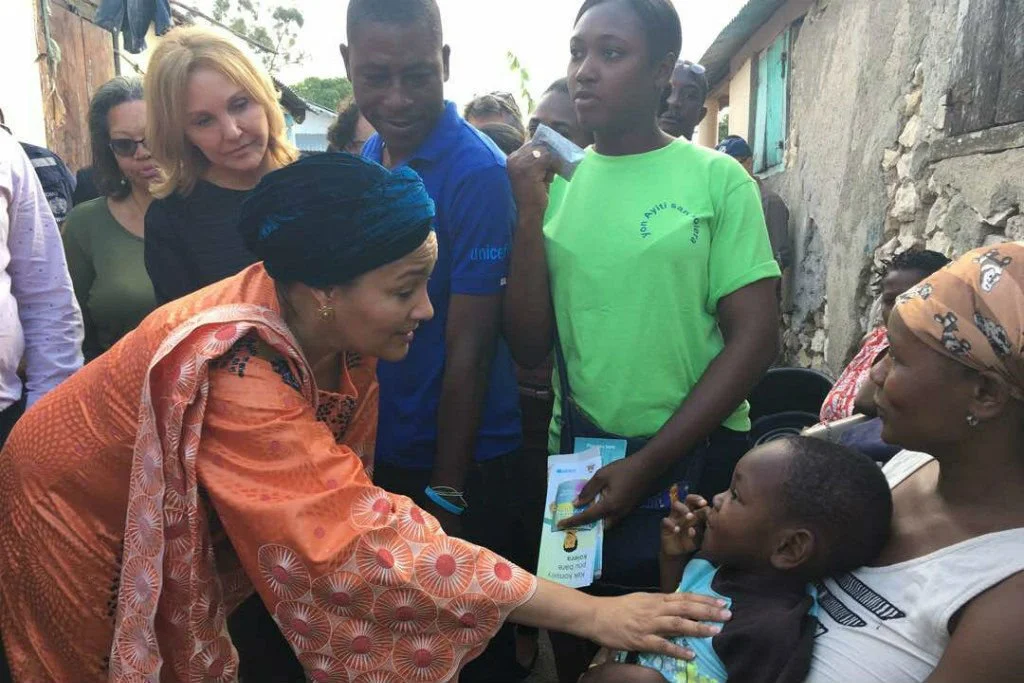
UN 'Will Walk With Haiti' On Path Towards Sustainable Development, Senior Official Pledges
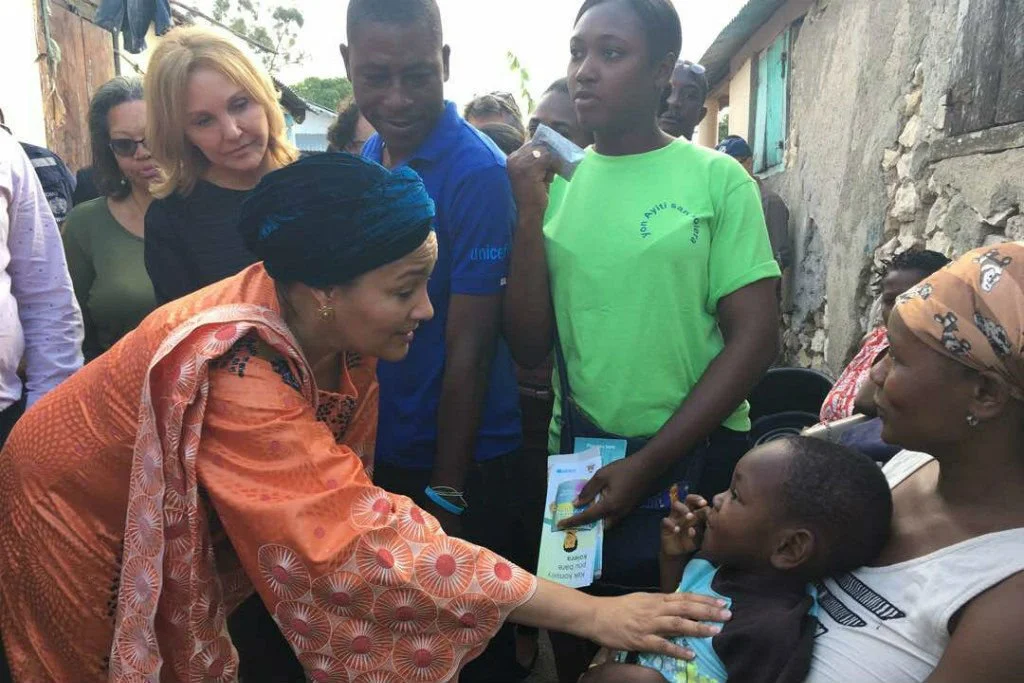

United Nations Deputy Secretary-General Amina Mohammed and UN Special Envoy for Haiti Josette Sheeran wrapped up a three-day visit to the island on Sunday, pledging more help to defeat cholera and assist the Government in achieving the broader aims of the UN 2030 Agenda for Sustainable Development.“The UN will walk this path with Haiti,” Ms. Mohammed said on Twitter, referring the work under way inside Haiti towards becoming an emergent country by 2030, the finish line agreed by all nations to achieve of the Agenda and its landmark 17 Goals, knows as the SDGs.The high-level delegation was dispatched by Secretary-General António Guterres to reaffirm the commitment of the United Nations to the Haitian people in a “new spirit of partnership.”In an opinion piece late last week in the Miami Herald, the UN chief said the partnership would stretch across the UN's work on the island – including to continue addressing Haiti's cholera challenge and the “unacceptable incidents” of sexual exploitation and abuse by UN personnel – and aims to help Haiti move “from an emergency approach to durable solutions, from assistance to investment support, from handouts to hand-to-hand cooperation for sustainable development, to democracy and dignity for all Haitians.”On Saturday, Ms. Mohammed echoed the “new spirit of partnership” set out by Mr. Guterres, saying: “We come to try to find another way to do things better; because in the past, we have fallen short. We were not able to do what we had planned,” she said in a joint press conference with Haitian President Jovenel Moise in the capital, Port-au-Prince.The visit of the two UN officials comes just after the appointment of Susan Page, of the United States, as the Special Representative of the Secretary-General and Head of the UN Mission in Support of Justice in Haiti (UNMIJUSTH), which succeeded the UN Stabilization Mission, known as MINUSTAH, on 16 October.The role of the new UN mission is to assist the Haitian Government to strengthen the rule of law institutions, to continue to develop the capacity of the national police and to promote human rights.
UN reaffirms commitment to eradicating cholera
As a key part of the visit, the two UN officials met families affected by cholera and coping with lack of access to water and sanitation.Ms. Mohammed and Ms. Sheeran also co-Chaired a High-Level Cholera Committee meeting (HLCC) alongside Haitian Prime Minister Jack Guy Lafontant. The Haitian Government and the UN representatives jointly expressed their determination work in partnership to achieve zero transmission of cholera. They further expressed their commitment to achieving the SDGs, including improving access to water, sanitation and healthcare.While cholera transmission has dropped dramatically, from over 18,000 new cases per week at the onset of the epidemic in 2010, to 250 per week this year, success will require more funding to maintain the highly effective work of emergency response teams, and commitment to the fight against cholera in the medium and long-term, the officials jointly agreed.Urging UN Member States and partners to provide comprehensive support, the Deputy Secretary-General emphasized during the meeting that “addressing the root causes of cholera in Haiti is critical to achieving the Sustainable Development Goals (SDGs). Additionally, in the immediate term, we urgently require funding to ensure continued operation of the rapid response teams; failure to do so risks losing the gains achieved to date.”The Deputy Secretary-General and the Special Envoy also witnessed the efforts of the “many heroes” working to eradicate the disease. Their visit was also an opportunity to learn about successful cholera control programmes, including in communities that ended open defecation, mobilized to build toilets, and raised awareness of the importance of sanitation.By: UN News Centre | November 5, 2017
Rally Supports Haitian Immigrants With Temporary Protected Status
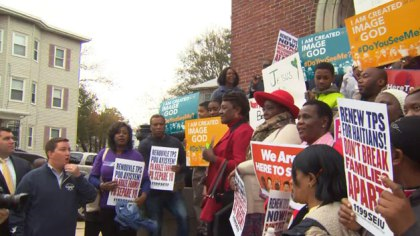
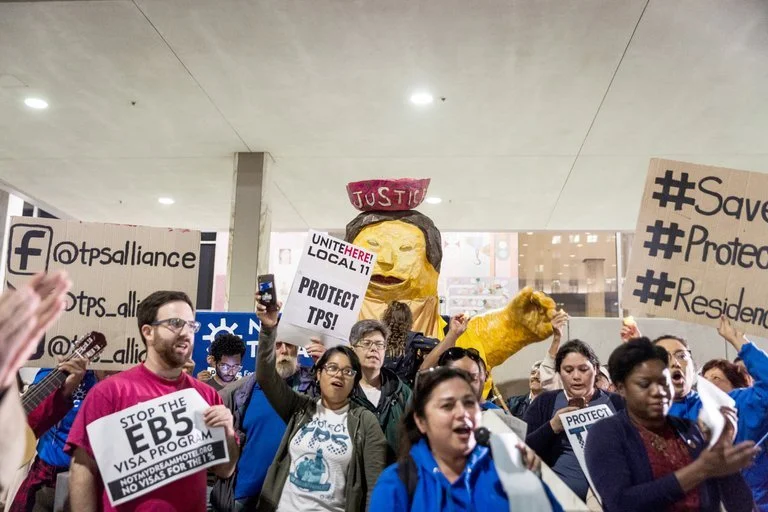
BOSTON (CBS) — A rally in Mattapan on Sunday demonstrated support for the local Haitian community as they wait for the Trump administration to decide if they will be deported.
The Temporary Protected Status (TPS) program that allows about 5,000 Haitian locally, and 58,000 nationwide to remain in the country. Overall, 320,000 people from ten different countries live in the United States because of TPS.


A rally in Mattahan to support Haitian who might lose their temporary protected status (WBZ-TV)
President Donald Trump has until November 6 to extend the status to citizens of Nicaragua and Honduras. The deadline for Haitians is November. 23.“I’m a student. I’m graduating in about six months. And getting deported would actually stop me from getting my Bachelor’s degree as an accountant so its a whole lot of things we would be deprived of after we’ve worked so hard to accomplish them,” said Marvens Leconte, who was at the rally.
Marvens Leconte (WBZ-TV)
The program was designed for immigrants from countries where natural disasters, war, or other factors make returning unsafe.Without the extension, those residents would have to leave by January.The State Department says conditions in their homeland has improved enough for them to return.Many at the rally said Haiti is still recovering from an earthquake, a hurricane, and a cholera epidemic.“It won’t be safe for us to send 58,000 people back to Haiti right now with everything that is going on so we want to make our voices heard to say that those people deserve an extension because it will take time for Haiti to rebuild,” explained Geralde Gabeau, a rally organizer.The Haitian community is hoping for an 18-month delay.By: CBS Boston | November 5, 2017
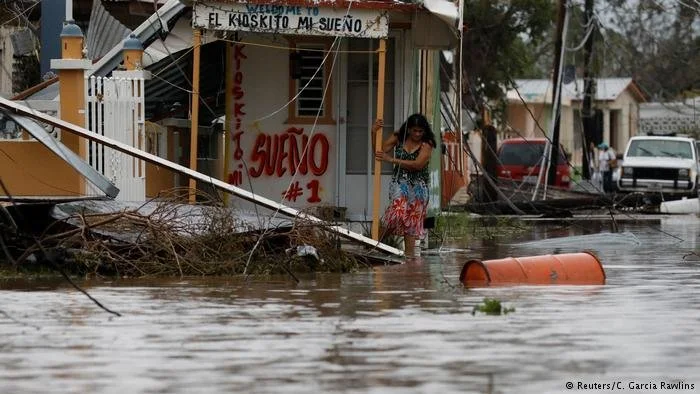
Lessons from Haiti for Puerto Rico: Charity Is A Poor Tool For Rebuilding A Country
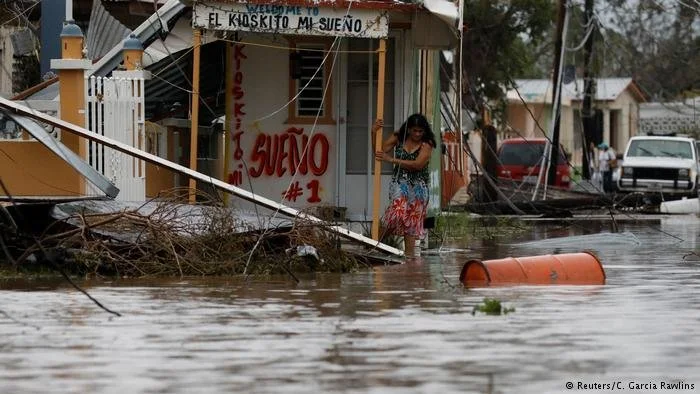
Charitable aid solves immediate problems, but long-term recovery needs to address root problems, too.
When an earthquake shattered the capital of Haiti in 2010, they learned the hard way that charity is a great tool for disaster relief but an often very poor one for rebuilding countries. After seven years and over $3 billion dollars in charitable aid deployed, post-earthquake Haiti has come to serve as the standard for what not to do in disaster relief. In the wake of the hurricanes that devastated Puerto Rico, St. Thomas and other islands, Haiti offers critical lessons about how to rebuild the region in a sustainable way.
Finance has largely been a destructive force in the Caribbean — especially in the case of Puerto Rico. But ironically, finance may also have just the right elements that can enable the island to rebuild in a way that doesn’t just recreate the same level of inequality and fossil fuel dependency present before the hurricane.
When it comes to rebuilding a country, not all resources are created equal. Charity and donations can help in the short-term, but harm the economy over the long-term. Private capital can help local businesses get back on their feet, but also perpetuate entrenched inequality. Rebuilding efforts can seem beneficial, but end up going to waste when they don’t account for the needs of communities. Finance and private capital can play a huge role in rebuilding Puerto Rico, but we must draw key lessons from what went wrong in Haiti to ensure that this time, we get it right.
Charity solves immediate problems, but not root problems. In the case of Puerto Rico, it’s easy to point to the hurricane as an “act of God” and look to aid to try to return to “business as usual.” But business as usual was not working so well in Puerto Rico long before the storm hit. As The Atlantic reported, 65 percent of Puerto Rico’s electricity grid was down this summer, with hundreds of millions in deferred maintenance, far before Hurricane Maria accelerated its permanent demise. The main problem here isn’t natural disasters, it’s that extractive finance has become the norm, and communities get left behind. Rather than making investments that build community wealth and renewable infrastructure, finance favors the quick and easy options that provide quick money but don’t fuel long-term development. Charity can rebuild torn-down bridges, but it’s not enough to rebuild a full economy — especially one that is based on an extractive financial model.
Aid is external, but recovery is local. After the disaster settled and Haiti started to find a new normal, the prevalence of imported food items sustained the decline of the local economy. Donated clothes, materials, food and medical supplies — all sent with good intentions by charitable organizations — inundated the country, and local vendors, both micro and commercial, could not compete. Even donated services, such as volunteer doctors, shifted the balance and eventually made it very hard for local doctors to get jobs in hospitals. Why hire the local doctor when the foreign doctors work for free?
If Puerto Rico can learn anything from Haiti, it would be to take ownership of their own recovery and get local businesses back on their feet. So far, some communities have mobilized to support each other and are leading relief efforts by coordinating efforts and mapping needs. Now businesses need help re-opening their doors and finance can help fill this gap in more ways than one. Small local businesses need some small working capital to get moving again, and private investment can play a critical role here. Larger businesses with track records and histories can be supported in rational, non-extractive ways.
Let’s get the charitable dollars flowing to address immediate needs in Puerto Rico — and then invest in a more sustainable future. Just as private citizens are stepping in to address the lack of charitable action from the U.S. government to its own people, private capital can do the same. But rather than cementing the extractive practices of the past, we can invest in the creation of a more sustainable future. Puerto Rico’s power grid was in shambles before the storm; while short-term repairs are crucial in order to restore power to citizens, this is an opportunity to invest in the creation of a renewable energy infrastructure similar to states like Hawaii. Rather than further the expansion of U.S. mainland chains that pay low wages with minimum benefits, investors can support local businesses that focus on quality job creation and expanding local ownership. Let’s not rebuild the old economy — let’s start investing in the new economy; one that is sustainable, generative and just.
Finally, the guiding principle of any effort to rebuild Puerto Rico must acknowledge that even in a disaster, communities know what’s best for them. In the case of Haiti, the level of disaster relief was truly phenomenal, but disaster relief is not meant to be long term. Billions of dollars were pledged for projects that were designed in the top-down fashion that excluded the voices of affected communities. For instance, close to $100 million was spent in Haiti on the construction of ghost-like towns in the middle of nowhere, filled with charming little houses, on charming little streets without schools, marketplaces, hospitals, or a police station. If donors had asked the communities what they wanted, they might have focused on much more comprehensive community development and spent these dollars more wisely. As the saying goes, “nothing about us without us.”
We missed this opportunity in Haiti — let’s not miss it in Puerto Rico.
By:Morgan Simon, Isabelle Clerie for Salon.com| November 6,2017
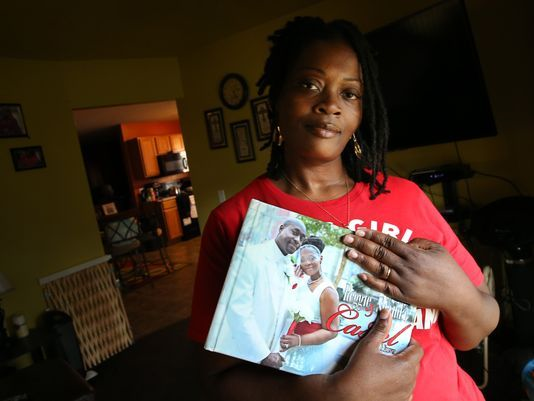
Rochester Family Torn Apart After Dad Deported
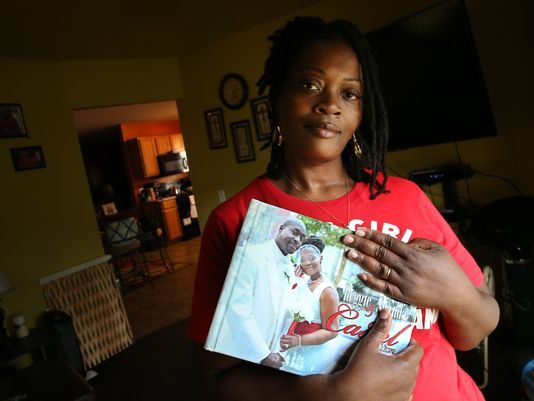
Reginald Castel was deported last Tuesday. The United States government flew him to Haiti in shackles, leaving him on an island he had not seen since he was 8 years old. He does not speak the language of his native country. When the plane landed, he knew no one there.
Castel, 44, went to Gates-Chili High School, sold cars for Vision Hyundai and lived with his family on Bay Street. His sole memory of Haiti was of the house with a metal roof where he lived as a boy. He was in despair as he flew to the island, handcuffed with 12 other Haitians and 49 men from the Dominican Republic.
“I was scared to death,” he said. “I am on the plane just praying to God.”
The plane landed in Haiti’s capital, Port au Prince. The deportees were handed over to Haitian officials who were friendly, at first. When the American officials left, deportees were told to hand over any money in their pockets if they wanted to call someone to pick them up. If no one came, they would be taken to prison.
Castel only had 8 cents, but he was allowed to call his mother in Greece. She had been frantically trying to find a relative or friend to go and get him. She told him that someone had managed to track down his estranged father, whom he had not seen or spoken to since he left Haiti at age 8.
It was his father who arrived to pick him up. “I did not even recognize the man,” Castel said. “One of the officials told me it was my father.”
They hugged each other. His father doesn’t speak English so they were unable to communicate much. Castel said his father pointed to his heart to express love. He pointed to his head to say don’t stress and don’t worry. “He said ‘it has been a long time,’” said Castel. “I understood that.”
They left the facility with Castel’s one bag. It contained the clothes he was wearing when immigration officials took him into custody on Aug. 10, a pack of oatmeal, some legal papers and a 30-day supply of insulin to treat his severe diabetes.
Until Aug. 10, Castel was among more than 900,000 immigrants in the United States living under final orders of removal, or deportation, that had not been enforced. Deportation officials generally focused on people considered to be a threat to national security.
“They didn’t make me a priority under George Bush or Obama,” Castel said, by phone, from a home of his father’s friend in Port au Prince. Under the Trump administration, things have changed.
“With the executive order from President Trump, everybody with a removal order is at risk,” said Wedade Abdallah, program director for immigration for Legal Aid Society of Rochester.
Castel was subject to deportation because he pled guilty to a felony in 1999, after a dispute with his friend Reginald McQueen turned violent. Castel said that McQueen started chasing him with a knife and he ran to his truck to get a gun. “I defended myself,” he said. “I shot Reginald.”
At the time, Castel was a permanent resident with a green card, having come to the United States with his mother at age 8. He was eligible for citizenship, but hadn’t filled out the paperwork. His public defender advised him to plead guilty to assault to avoid risking the lengthy prison sentence that could result from being found guilty in a trial.
The lawyer did not tell him that a guilty plea, and his lack of citizenship, would make him eligible for deportation. Castel served six years in jail. When he was released, the U.S. Department of Homeland Security picked him up and held him in a detention center for 18 months as he appealed his deportation order.He was granted deferral of removal under the Convention Against Torture act because a judge ruled that his lack of ties in Haiti, combined with his need for daily insulin would likely cause him to die in the impoverished country. He was released in 2007 under an order of supervision.The federal government appealed this deferral and won, reinstating the deportation order against him. In 2011, Castel lost his final appeal. But he was not deported.
U.S. Immigration and Customs Enforcement gave him permission to work legally and required him to check in periodically. Castel built a career, got married, stayed out of legal trouble and never missed a check-in appointment, including one in Batavia on Aug. 10. His wife Lashanda waited for him outside as he went into the meeting. When she saw him next, he was handcuffed in the back of a patrol car. He was not allowed to get out of the car to give her a hug goodbye.
Every time she saw him after that was through glass at immigration detention centers.
“How do they tear a family apart and think nothing of it?” Lashanda Castel asked. “Where is the humanity in this?”
The laws that led to Castel’s deportation have long been on the books. President Donald Trump is just enforcing them, as promised in his campaign. Five days after his inauguration, Trump issued executive orders directing executive departments and agencies "to employ all lawful means to enforce the immigration laws of the United States.”
He criticized previous administrations for failing to remove people with deportation orders. “We cannot faithfully execute the immigration laws of the United States if we exempt classes or categories of removable aliens from potential enforcement,” the president wrote.
In the past undocumented immigrants who had long histories of obeying the law and living quiet lives were not deportation priorities. Trump's executive orders have changed things, said Wedade Abdallah, program director for immigration for the Legal Aid Society of Rochester. “We are seeing a more unpredictable type of enforcement,” she said. "It could be anybody (with a final removal order) at this point." She said she would encourage any immigrant who has a final order of removal to speak to an immigration attorney.
“Make America great,” Lashanda Castel said, with bitterness. “Let’s get the immigrants out of here.” She believes the government ought to make allowances for people like her husband, who has turned his life around and stayed out of trouble for more than a decade.
Reginald McQueen, the man shot by Castel in 1999, agrees. He made a statement in support of Castel that appears in a petition asking Gov. Andrew Cuomo to pardon Castel for his crime. Such a pardon would make it possible to reinstate his green card. “An unfortunate incident occurred that caused me harm and got Reggie arrested. However, it was the result of a personal problem between us and we have become friends again,” McQueen wrote, adding that he does not want to see Castel deported. ”I am satisfied that he has paid his debt to society and to me and I don’t think he should be punished any more for what he did. I have my health back and my life back and I would like Reggie to have his life back, too.”
Castel’s life is now spent in a spare room in the home of his father’s friend, a man who speaks a bit of English. Electricity comes and goes, sometimes for days. Clean drinking water is hard to come by. It is hot. Castel has been warned not to go out alone. His lack of language skills makes him an obvious outsider and easy target for desperate criminals found in a country where people must survive on an average of $2.25 a day.
So he sits in the house, waiting for his father to get out of work. He has time to wonder about another deportee he met on the plane who also had no connections in Haiti because he had grown up in Bermuda. “I am pretty sure he ended up in prison,” he said. He wonders what would have become of him if his father hadn’t been found. And, most painfully, he misses his family. He and his wife have a blended family of seven children. His youngest child, a daughter, has taken the situation very hard. There has not been a time they’ve spoken on the phone that she was not in tears. “They took someone who is loved,” said his wife.
She also cries. But she knows that tears won't help her husband return to the United States. If getting him home proves impossible in the short term, she must find a way to get him a stable supply of insulin. Castel suffers with Type 1 diabetes that his physician assistant at Anthony Jordan Health Center called “severe, chronic and incurable.” It requires daily insulin shots, which are extremely difficult to get in Haiti. Castel's plans to visit the Diabetes Association in Port au Prince have been disrupted by unrest and violence on the streets.
Lashanda Castel is trying to navigate the permits, licenses and fees that would allow her to ship insulin to Haiti. She has applied for her passport so she can visit her husband, though she is concerned about U.S. State Department warnings about the risks of traveling to Haiti, including violent crime, instability and lack of adequate medical facilities.
She is buoyed by a group of local supporters including Rochester City School Board President Van White, who is also an attorney and volunteered to submit Castel's petition for the governor’s pardon. The petition includes statements of support from his boss at Vision Hyundai, the bishop of his church and many friends and family members. Rochester City School Board member Mary Adams continues to rally community activists to fight for his cause and to lobby Gov. Cuomo to pardon him quickly.
Adams was among the people who went to the Buffalo Federal Detention Facility to try to block the bus when Castel was being taken away for deportation. They could not see him through the tinted windows of the bus, but he saw them standing, praying and protesting his deportation. “I felt hopeful,” he said. “I had people in my corner.”
Those people will host an “Updates and Organizing to Support Reggie Castel and Family” meeting at 6 p.m. Sunday at the Freedom School, 630 N. Goodman Street. All are welcome, said Adams, to join the effort to bring Castel home.
For now, he remains in Port au Prince. He has learned how to say “please,” “thank you,” “I’m hungry,” and “water” in Kreyol. His hope for a return to Bay Street remains. His insulin is running out.
By: Erica Bryant | September 29, 2017
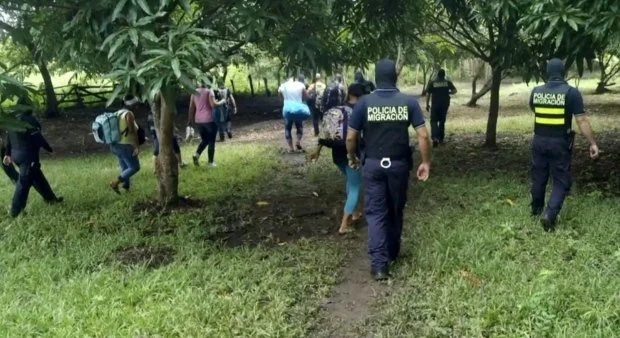
'Anywhere But Haiti': Asylum Seeker Retraces His 15,000-km Odyssey To Canada
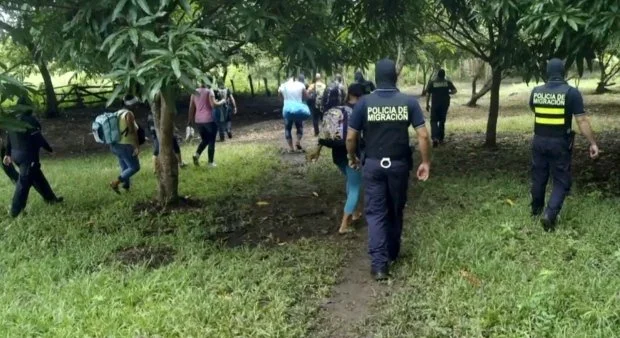
Travelling by boat, bus and on foot, treacherous journey from Brazil ends at Roxham Road, Que.When Pierre left Cap-Haïtien for South America, he never imagined he'd wind up in the woods of upstate New York.But nine years and 10 countries later, he stepped into Canada and was arrested by the RCMP.He had survived a two-and-a-half-month, 15,000-kilometre odyssey from Brazil to Roxham Road with his wife and seven-year-old son, through some of the most dangerous territory in the Americas.By plane, by boat, by bus, taxi or on foot, the destination was always the same: "Anywhere but Haiti."Pierre is not his real name. CBC News has agreed to protect the identities of the 30-year-old Haitian and his family to prevent any potential impact on their asylum claim in Canada.
Building a life in Chavez's Venezuela
A self-described socialist, Pierre left Haiti in 2008 to study in Venezuela. He made a new life for himself in Hugo Chavez's Venezuela, where he worked as a warehouse manager.Pierre left Haiti to study music in Venezuela in 2008, later studying accounting and administration. (submitted by Pierre)When the revolutionary president died in 2013, Pierre went south to Manaus in the Brazilian state of Amazonas.But work dried up, so in 2016 he decided to head north to "conquer the American dream."It's a path countless others have taken — a backwoods channel for waves of undocumented Latin Americans, Africans, South Asians, Haitians and Cubans seeking a better future.It's also a route fraught with exhaustion, fear, robbery, rape and death.
Desperate journey through the Darien Gap
With his wife and child, Pierre set out on June 16, 2016, crossing into Venezuela from Brazil."It wasn't easy to get into Colombia, but with a lot of tenacity we managed," he said.From there the family boarded a bus to the Colombian port town of Turbo, where the South American stretch of the Pan-American Highway ends.There they joined a group of 100 or so other migrants - Cubans, Africans and other Haitians ready to make the same desperate journey."From Turbo, we took a little boat," Pierre recalls. "Many people died because some boats sank. But we arrived at the entrance to the Darien Gap."The Darien Gap is a lush rainforest on the border of Colombia and Panama, thus named because it's a break in the Pan-American highway.Migrants must travel through the untamed wilderness on foot. "Crossing the Darien Gap was a very cruel experience," says Pierre. "I spent six days in the mountains with no food and no water.""So as not to get dehydrated, my family and I had to drink our own urine."The migrants also had to avoid snakes and other wild animals lurking in the dense forest."Many people died," Pierre says. "But we had to go on because otherwise, we'd die too. Whenever my son thinks about it, he cries."This video was taken by other Haitian migrants while crossing the Darien Gap.
Smuggled across Nicaraguan border
After 15 days in Panama and a bus ride to Costa Rica, authorities stopped them at the Nicaraguan border."It was really tough to get across," says Pierre."We had no papers." Stuck at the border and living in tents, Pierre paid smugglers nearly $3,000 US to get him and his family into Nicaragua.
 Others were not so lucky."Some were ripped off and never did get across," he says. "There were many bandits who raped people when they were going through the forests."Once in Nicaragua those that made it took a bus through Honduras and Guatemala to Mexico.Pierre says Mexican authorities gave them passage on the condition they move on to the USA.But arriving at the American border in Tijuana, Pierre was detained and spent nine days in lockup.Upon release, he moved his family to Florida.
Taste of the American dream
 Pierre got a work permit while his U.S. asylum claim was processed, working as a check-in manager at the Orlando airport and at Disney World."I worked and waited for the [asylum] process to run its course," Pierre says. "But when Donald Trump came to power things got complicated."He was worried that without permanent status, he and his family could be deported at any time.Then Prime Minister Justin Trudeau tweeted his support for refugees during Trump's efforts to enact a travel ban from Muslim-majority countries, and Pierre turned his eyes northward.
To those fleeing persecution, terror & war, Canadians will welcome you, regardless of your faith. Diversity is our strength #WelcomeToCanada— @JustinTrudeau
"When [Trudeau] said, 'Canada's ready to welcome refugees,' I said, 'Well, if that's the case, I'll come to Canada,' because I'm looking for a better life."So the family flew to Plattsburgh, N.Y., and boarded a bus to the border, crossing into Canada illegally at Roxham Road and making an asylum claim."When [Trudeau] said, 'Canada's ready to welcome refugees,' I said, 'Well, if that's the case, I'll come to Canada,' because I'm looking for a better life."- Haitian asylum seeker Pierre, 29They spent 24 hours in a temporary camp near the border, then two weeks living in the shelter set up at Montreal's Olympic Stadium.The family now has an apartment, and Pierre is trying to get a work permit while he awaits his Immigration and Refugee Board hearing.
Accusations, beatings and stabbings back home
In his asylum claim, Pierre says he can't go back to Haiti because his family is being targeted by a gang of street criminals. He says the trouble started in 2009 when a woman in his neighbourhood accused his father of witchcraft and threatened to have a gang attack him with machetes.Pierre says his father fled but the gang beat up his mother. He has copies of statements to the local police to help prove his story and a picture of his mother after the beating.He claims the same group of thugs attacked him for his political views in 2010 on a visit home, accusing him of trying to organize an uprising against the government.Then just this year, Pierre says his brother was stabbed by the gang and had to move his family to another part of the country."It's a country with no justice," Pierre says. "If I go back there they'll kill me."
'Such a cruel journey'
Sitting in a coffee shop near Jarry Park in Montreal's Villeray neighbourhood, Pierre sketches out a drawing of his long journey on the back of one the myriad documents and forms that make up his refugee case file.The map fills the page. His home country is conspicuously absent.Pierre sketches his journey from Brazil to Roxham Road."We left the U.S. because we were scared they'd deport us to Haiti," he says."In Haiti most people are unemployed. It's miserable. There are kidnappings all the time."Pierre hopes the Canadian government will give extra consideration to those like him who have come so far."Such a cruel journey," he says. "It was a very hard road to get here."By: Simon Nakonechny | September 26, 2017