
Haiti's new president taps medical doctor to be the country's new prime minister!
 PORT-AU-PRINCE - A relatively unknown medical doctor was tapped to be Haiti’s new prime minister, tasked with steering the government’s legislative agenda through parliament, President Jovenel Moise said late Wednesday.The choice of Jack Guy Lafontant as prime minister of the impoverished Caribbean country came two weeks after Moise took power as president.If parliament confirms Lafontant, perhaps best known as the president of the Rotary Club in the upscale district of Petionville, and allows him to choose other ministers, it would mark the country’s first elected government in a year.Moise announced the surprise pick on Twitter and noted that he consulted with the heads of both chambers of parliament on the selection. Moise did not indicate why he had chosen Lafontant. The two men are believed to be friends, according to local media.Haiti has been headed by a caretaker government since Michel Martelly, the last elected president and Moise’s political benefactor, stepped down early last year without a designated successor.Source: http://www.nydailynews.com/news/world
![Phyllisia Ross - KONSA [Official Music Video]](https://images.squarespace-cdn.com/content/v1/68e70239ce60bd21b04f1e3f/1765740118911-LWPICD6SNOHYBCHZXDEP/image-asset.jpeg)
Phyllisia Ross - KONSA [Official Music Video]

Lux Media and Marketing & Phyllisia Ross Music Presents- KONSADirected by Abdias Laguerre
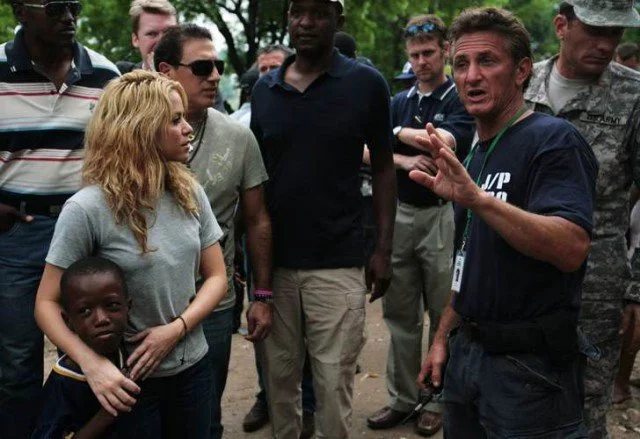
News Flash: Sean Penn "Haiti Is on the Upswing"
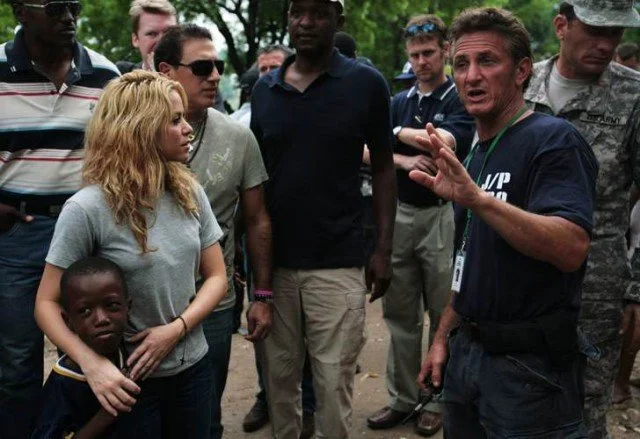
The country has made tremendous progress, but needs more support to defeat cholera and homelessness.By SEAN PENN The rains have come to the Caribbean and hurricane season is upon us. But for the first time in four years, the nearly 60,000 people who sought refuge on the Petionville Club golf course after the earthquake are now under solid roofs in safer homes.Our team at J/P Haitian Relief Organization continues to support these families as they rebuild resilient, sustainable and self-sufficient communities. Elsewhere in Haiti, Doctors Without Borders has brought health care to the most remote areas of the country, and the Haitian government has developed new building codes as part of a national housing policy.Port-au-Prince, the capital city, has made remarkable progress. Nearly all of the 10 million cubic meters of rubble that buried the city have been cleared from the streets. More than 90% of the almost two million people left homeless have moved from tent camps to more permanent housing.Haiti’s economy is among the fastest-growing in the Caribbean, as the government continues to make economic development a priority. Hundreds of kilometers of roads are now paved, thousands of homes built and tens of thousands of damaged homes repaired or retrofitted. Crime rates have dropped, and in May 2011, one political party transferred power to another peacefully after an election for the first time in modern history.The people of Haiti have come a long way, which may shock those who watch the news. Headlines continue to spin Haiti as a dark, poverty-entrenched no-man’s-land. Even on the left, efforts at economic development have been portrayed as colonization by corporations or occupation by a foreign force.Such cynicism sells papers and entices people to click, but at the cost of Haitian lives. This coverage scares away would-be investors, hindering economic development and reinforcing prejudices that Haiti is beyond help. And those who work every day to overcome the country’s challenges become gun-shy about discussing the real challenges, fearing that they will perpetuate the negative stereotypes and invite even more criticism.This is tragic, because there are two urgent problems that need to be addressed: postearthquake homelessness and cholera.Less than 10% of those initially displaced remain in camps, but that’s still almost 140,000 people—a big number that when taken out of context makes Haiti’s recovery so easy to criticize. Rather than cynicism and apathy, these families need help to leave the camps, find safe homes and return to a normal life.At J/P HRO, we intend to ensure that each of these families makes it home. In partnership with the Haitian government and other organizations such as the International Organization of Migration and the Red Cross, we have helped develop a successful conditional cash transfer program. It gives displaced families the money they need to move out of the camps, while also injecting much-needed capital into the local economy. We’ve come so far, but flagging financial support is preventing the remaining families from returning home. They should not have to endure the deluge of another hurricane season homeless.Haiti also is suffering the largest cholera epidemic in the world. Death from this bacterial infection is preventable, and with soap and safe water, infection is avoidable. Nevertheless, many in Haiti play down cholera for fear of scaring away tourists and deterring economic investment. Yet Kenya, India, Thailand and China also are fighting cholera. None of these countries is forced to bear the stigma Haiti endures.To eradicate this disease, Haiti needs international support. We support a two-pronged approach, which Haiti’s government has already begun implementing. In the short-term, health education, vaccinations and treatment supplies can prevent further deaths. In the long-term, the country needs assistance to strengthen its health-care system and build better sanitation infrastructure. All organizations on the ground will have to coordinate their efforts with the government and international institutions. None of us can do it alone.Cholera has already spread to the Dominican Republic and Cuba. If the epidemic is not stopped it will spread to the rest of the Caribbean, Mexico, Central America and beyond. The only thing we have to fear from cholera in Haiti is the tragic consequences of our own inaction.Haiti has made tremendous progress after one of the greatest natural disasters in history, but there’s still a long road ahead. In collaboration with local and national government leaders, other international NGOs, U.N. agencies, donors and the community members themselves, the team at J/P HRO will continue to fulfill our mission of “saving lives and building sustainable programs with the Haitian people quickly and effectively.”And with continued support and investment, our resourceful and inspiring neighbors in Haiti will overcome post-earthquake homelessness and cholera. With more help, they will soon be prospering on their gorgeous tropical island just 90 minutes from Miami.Mr. Penn is an actor, director and the founder of J/P Haitian Relief Organization.
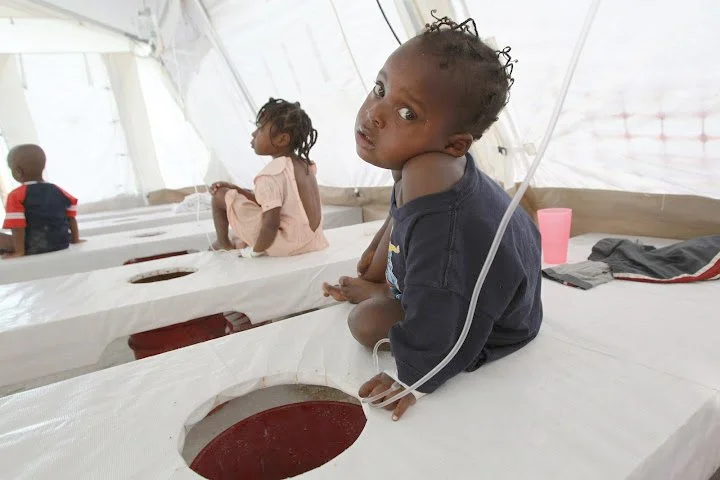
United Nations Secretary General Sued Over Cholera Outbreak
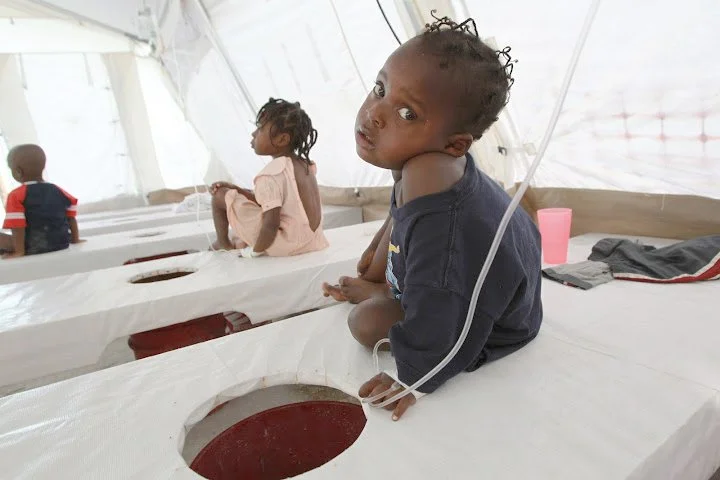
 In the aftermath of the January 2010 earthquake nearly 9,000 Haitians died from a cholera outbreak that hit the already devastated country. After months of speculation, the general consensus was that the source of the outbreak was the very body of people that were supposed to be helping the small island nation–the United Nations (UN) peacekeepers.In an unprecedented move, UN Secretary-General Ban Ki-moon was served on June 20 with court papers as he entered an event at the Asia society in midtown Manhattan. The complaint, which is a part of a Brooklyn federal lawsuit, was filed against Ki-moon and the UN over the cholera outbreak that killed thousands of Haitians.“This is a significant development in the fight to hold the United Nations responsible for the tragic events in Haiti,” said Stanley Alpert, an attorney representing more than 1,500 Haitian plaintiffs who filed suit against Ki-Moon and the UN. They are seeking compensation for victims and for the UN to bring critical sanitation systems to devastated Haitian communities.
 Ban Ki-Moon, Credit: United Nations“The United Nations now must directly respond to the fact that they have repeatedly waived immunity for their actions in Haiti,” said Tim Howard, another lead attorney for the plaintiffs. The plaintiffs’ lawyers cite a statement made by the UN in a 1996 report that implies the “assumption of liability is not a new concept for the UN.”According to the UN secretary general’s 1996 Report of the Secretary-General, Administrative and Budgetary Aspects of Financing of United Nations Peacekeeping Operations, the UN assumes “liability for damage caused by members of its forces in the performance of their duties.”“The UN explicitly agreed to set up a compensation process when they entered Haiti,” said Howard.”They now must face a U.S. federal judge and explain why they feel they are immune from fulfilling that agreed-upon responsibility.”The plaintiffs argue the UN failed to adequately screen troops headed for Haiti after the earthquake; and failed to engage in “sanitary practices of waste disposal.”“Silence is the worst weapon,”Gustavo Gallon, a United Nations’ independent expert on human rights, said. “The UN must take responsibility and “fully compensate victims.”By Vania André