Four men were arrested on Jan. 16 for the murder of Father Joseph Simoly in Port-au-Prince, Haiti. The four men are also accused of carrying illegal firearms and criminal conspiracy. A Port-au-Prince police inspector told local media that the suspects were known to the police and could be involved in two other murders committed in April and July 2017.The murder of Father Simoly in December had raised concerns about the safety of members of religious communities in a country that has suffered previous attacks on those in religious life. Father Simoly was shot and killed last Dec. 21 while returning to his home from a nearby bank.The Catholic Bishops of Haiti issued a statement following the attack, saying, “We associate ourselves with the grief of the family of the Reverend Father Joseph Simoly, of the whole Church that this mourning plunges into consternation and affliction.”They added, “We expect, from the judicial authorities, that light be made as soon as possible on this assassination and that concrete measures are taken to protect life and secure all Haitian citizens and foreigners living in the country.”Some Haitians found the bishops’ statement lacking. During Father Simoly’s funeral on Dec. 30, a group disrupted the service, shouting that the church needed to take a firmer stance and demand justice and that otherwise Cardinal Chibly Langlois must step down.Msgr. Aris does not believe those in religious life in Haiti are currently being targeted more than other groups. Violent crime in Haiti is high but hard to measure since most crimes go unreported.The protestors interpreted the wording of the bishops’ statement as a sign the government was involved in the murder, said Monsignor Patrick Aris, spokesperson of the Episcopal Conference of Haiti, who was at the funeral.“We don’t know if they are Catholics or if they are not Catholics,” Msgr. Aris said of the group who shouted out during the funeral. “We don’t know if they belong to a political party or not.… These people don’t know Father Simoly. These people do not belong to the parish where Father Simoly was working. We believe these people coming inside the Catholic church just wanted to make disruptions.”Although police have not confirmed the motive for the killing, there is little evidence to suggest collusion between the Haitian government and the attackers, despite some precedent for that in the past. Haitian dictator François “Papa Doc” Duvalier expelled Catholic priests, including the Jesuits, at the start of his reign in the late 1950s. And former Catholic priest Jean-Bertrand Aristide, who rose to power in the 1990s, was frequently the target of attacks orchestrated by government.During his time as a local priest and presidential candidate, he spoke out for the rights of the poor. He survived multiple assassination attempts, including the famous St. Jean Bosco massacre, which was likely carried out by the Haitian government’s secret police. During his two presidential terms, Mr. Aristide was twice forced into exile by coups. He was continually opposed by the country’s elite, who had previously controlled the government.The church and the Haitian government are intertwined in ways unknown in most other countries. According to the U.S. State Department, the Haitian government provides funds and services to the Catholic Church but not to other religious groups in Haiti. That support includes monthly stipends and diplomatic passports for priests, plus funds for Catholic schools. In a country strained by poverty, the churches are institutions with money and, therefore, targets for the desperate or malicious.The murder of Father Simoly recalls other attacks on clergy and religious in Haiti in recent years, apparently acts not of political violence but crime. In February 2015, the home of some Catholic clergy was robbed, a priest was shot and nuns were threatened at gunpoint. The Miami Herald reported that between November 2014 and March 2015, “at least 27 religious communities, mostly nuns, have been the target of 39 attacks in six regional departments.”Despite those crimes, Msgr. Aris does not believe those in religious life in Haiti are currently being targeted more than other groups. Violent crime in Haiti is high but hard to measure since most crimes go unreported. In 2016, the country experienced more than 1,000 homicides. Reports of burglary and home invasions, however, have declined in recent years, according to the Overseas Security Advisory Council.
CAMP PERRIN, HAITI — Marise Laguerre, 60, says she is thrilled. She has learned a skill many of us apply every day and take for granted. Laguerre can now read and write.Laguerre is one of 45 graduates of an adult literacy program organized by local women's group CODEFEC (Combite Pour le Developpement Des Femmes de Camp Perrin) held in Laporte, a small town near Camp Perrin, in Les Cayes, southern Haiti. The participants ranged in age from 25 to 75 years old."I was so happy to participate in the program," Laguerre told VOA Creole after the graduation ceremony, "because I couldn't read or write; now I can write my name, I can write my children's names - I'm so grateful (to the organizers and teachers of the program)."After thanking each organizer and teacher by name, Laguerre proudly added, "Now when I go to the [American] embassy I don't have to give them a thumb print, I can sign my name." She was all smiles.Cevaire Carline, 46, also raved about the program."Now wherever I go, I can write my name; I can write my children's names. I can write down phone numbers, and I couldn't do any of those things before," she said.Haiti's average literacy rate is 61 percent, according to statistics published in 2015 (in the CIA Factbook). While 64 percent of males can read and write, only 57.3 percent of females are able to do so. That number is far below the current literacy rate for Latin American and other Caribbean countries, which stands at 90 percent.During CODEFEC's literacy classes, which lasted six months, students were taught to read, write and count.Program coordinator Numa Jasmine said before leading classes, the teachers were trained by Alfalit - an international faith-based adult literacy program. Each teacher also received a small salary to cover expenses.Did any of the students give the teachers a hard time?"Yes, it wasn't easy," Numa acknowledges, "but Alpha teaches us that you have to have a lot of patience and tolerance to teach adults."
Graduates of the Adult Literacy program sing during their graduation ceremony, Feb. 11, 2018. (Photo: Esnal Sincere / VOA Creole)
At the graduation ceremony, students read bible passages and sang songs to demonstrate their proficiency.Each graduate received a certificate and a bible, donated by Alfalit. According to Numa, 45 of the 60 students enrolled in the program graduated on February 11. The remaining 15 adults were not yet proficient enough in reading and writing. But Numa is confident they will be soon.Lawmaker Bertin Augustin, who represents Camp Perrin in Haiti's national parliament, spoke at the graduation. He told the students that he considers himself the godfather of the graduating class."You must work every day to increase the number of literate citizens in our community," he told them, noting that the area has one of the highest literacy rates among Haiti's 10 departments.
Lawmaker Bertin Augustin who represents Camp Perrin in Haiti’s National Parliament, was the keynote speaker at the graduation. (Photo: Esnal Sincere / VOA Creole)
"I'm sure some of you here who have phones could only talk on the phone - if you called someone and they didn't answer, you weren't able to send them a text message to say - 'Mrs. Georges just called you.' But today you are able to not only speak, but also write and that's a huge step forward in your evolution," he said.Augustin also joked that they can now apply for jobs as cashiers because they can count, and that he is looking forward to receiving their text messages in the future.CODEFEC organizer Numa is pleased with the results of the literacy program and had advice for illiterate adults who are too proud to go to school."It's never too late to learn," she said. "We have a school for all adults who want to learn to read and write, so do it."By: Sandra Lemaire | February 14, 2018
The President of Haiti has condemned Oxfam’s handling of a sex scandal in his country, describing the controversy as a “serious violation of human dignity”.President Jovenel Moise last night described the aid workers who are alleged to have exchanged “aid for sex” as “sexual predators”, amid reports that the country is preparing to launch a criminal investigation.
Taking to social media, Mr Moïse said: “There is nothing more undignified and dishonest than a sexual predator who uses his position as part of the humanitarian response to a natural disaster to exploit the needy people in their moments of great vulnerability.
“What happened with Oxfam in Haiti is an extremely serious violation of human dignity.”Mr Moïse’s condemnation of the charity comes as Haiti’s ambassador to the UK suggested on Monday that the country could launch a criminal probe in the coming weeks.
Describing the disclosures as a “big surprise” Bocchit Hammond said: “There was no report of those crimes being committed in Haiti by Oxfam.”He also attacked the former chief executive of Oxfam, Dame Barbara Stocking, who he said had insulted the country by suggesting the authorities would not have dealt with the allegations in 2011, at the time of the report being issued.
“I saw the then-Oxfam director, Dame Barbara Stocking, mentioned that one of the reasons that those crimes were not reported was because they believed nothing would have been done about it, which is really an insult to my country because you are working in a place and country which is not a forest,” he added.“Even though there was a chaotic situation after the earthquake...the state of Haiti did not cease to exist. Our police was still there.“How can you not report those crimes because you believe nothing would be done. It is a cover up. We need to differentiate it, it is not an attempt. It was a cover up. Because the top executives here in London were informed.”
Last week, Dame Barbara defended the charity’s handling of the Haiti scandal, claiming that it had taken “immediate action...to get the disciplinary matters resolved”.Pressed on why the charity had not alerted the Haitian authorities, she claimed that they had received legal advice that the country’s authorities would not take any action."We were in the middle of an earthquake response,” she told the BBC. “In a short time, within a month or so, we managed to investigate nine staff and deal with all of them.
“Four were dismissed, one resigned early, two resigned in the process of the investigation - before we could dismiss them - and two were found not culpable.”Meanwhile, amid new claims that reports of sexual abuse in charity shops were not acted upon in the UK, a poll by Sky has found that 46 percent of the public think that Oxfam should have their state funding withdrawn.It comes as as the charity's former head of safeguarding, Helen Evans, accused her bosses of ignoring her evidence and her pleas for more resources, forcing her to quit in despair.Ms Evans said that staff had been accused of rape and that sexual abuse by shop managers in UK stores against young volunteers was covered up.
Ten per cent of staff in some countries had been sexually assaulted by colleagues or witnessed abuse, she added.Her allegations emerged just hours after Penny Lawrence, the charity's deputy chief executive, quit over the scandal and the Government announced that it would be launching a unit to investigate sex abuse in the aid sector.In the wake of the scandal, the charity watchdog announce a statutory inquiry late last night.The watchdog said Oxfam may not have "fully and frankly disclosed material details about the allegations at the time in 2011" and it also had concerns about its handling of the incidents since, and the impact that these have both had on public trust and confidence.
The commission's deputy chief executive David Holdsworth said: "Charities and dedicated, hard-working aid workers undertake vital, lifesaving work in some of the most difficult circumstances across the world."However, the issues revealed in recent days are shocking and unacceptable. It is important that we take this urgent step to ensure that these matters can be dealt with fully and robustly."
Can using blockchain to verify cotton as organic help revive the industry in Haiti?
Haiti hasn’t grown cotton in decades. Its once-abundant industry collapsed in the 1970s due to government corruption, economic mismanagement, and U.S. embargoes. But now, thanks to a project involving thousands of smallholder farmers, apparel brands like Timberland, and a blockchain network, it could be set for a comeback. Within a few years, if all goes to plan, the island will be supplying millions of pounds of organic cotton for shoes, shirts, and other clothing sold in U.S. stores.
The Blockchain Cotton Project in Haiti is one of several around the world looking to use a distributed digital ledger for supply chain management. The same technology that tracks transactions of bitcoin and other cryptocurrencies can also track commodities and products as they leave fields and move through factories and distribution centers. Blockchains have the potential to boost transparency and lower the cost of authenticating the origin of products, particularly those of an organic and fair trade variety, say supply chain experts.
Smallholder Nerlande Dautarn holds a basket of cotton she and other farmers harvested at the Smallholder Farmers Alliance (SFA) cotton field trial site near Gonaives, Haiti. [Photo: Thomas Noreille / SFA]
“The promise of blockchain is that we can trace the purchase back to the farmer and the field. That not only increases the visibility of our supply chain but also enables us to share more robust stories with our consumers,” says Atlanta McIlwraith, Timberland’s senior manager for community engagement and relations, in an interview.The blockchain project is led by the nonprofit Smallholder Farmers Alliance (SFA) and isn’t the first that Timberland has been involved with on the island. Starting in 2010, Timberland, the SFA, and the Clinton Global Initiative started planting millions of trees across 19 nurseries, hoping to avert serious deforestation. They encouraged farmers to tend to the trees by offering “tree currency”: seeds, tools, and training that allow farmers to increase their own yields. The project has doubled household incomes, according to the SFA, and is now self-sustaining without corporate sponsorship. The trees produce enough seeds to create recurring seed banks, as well as food, like moringa, a “superfood” which is sold to a company in California called Kuli Kuli.In 2015, the SFA and Timberland started exploring the idea of the brand becoming not just a sponsor of Haiti’s agriculture, but also a customer. Cotton was the obvious candidate, as it had been grown there before. “We were thinking about what sustainability looks like for smallholder farmers,” says Hugh Locke, cofounder of the SFA. “They said, ‘you know, it’s been great sponsoring you guys, but what if we became a client?’ We felt that was a better basis for sustainability in the long-run because it creates a market.”Timberland has committed to meeting up to a third of its global cotton needs from Haiti–2,750 metric tons a year–assuming the project can meet quality and cost targets. The SFA recently planted the first cotton trees using funding from Timberland and Vans, which is part of the same retail group, VF Corporation (Patagonia has also expressed interest in being involved). Better Sourcing Program, a supply chain technology provider, and RCS Global, a supply chain advisory firm, are helping to develop the concept, along with students from Columbia University’s School of International and Public Affairs. For now, the project only involves a handful of farmers, but, once ramped up, it could see up to 17,000 onboard within five years, Locke says.Blockchains create permanent ledgers of transactions as they occur. They are viewable and updatable by multiple parties who join together to ensure the record is accurate. As such, Locke hopes the system will help to cut the cost of certifying Haiti’s cotton as organic–for instance, proving that no pesticides were used during growing and harvesting. Rather than outside inspectors coming in and certifying farms one by one, the system will instead allow farmers to create their own consensus version of the authentication process.
“Most systems for tracking input and outputs, yields and net profit are very expensive and proprietary,” Locke tells Fast Company. “We want something open source. We’re still figuring out how the farmers do the live reporting. But we hope it will replace the normal organic or fair trade certification through a radical transparency approach.”McIlwraith sees an opportunity in blockchain to improve the way brands talk about their products. She says many consumers want to purchase from companies that take a stand on social issues like ethical sourcing. Blockchains can open up supply chains and potentially take consumers down to the farmer level, by proving products have arrived in-store as advertised.“Consumers want to purchase from brands that they trust and one of the things that helps build that trust with consumers is this transparency and the ability to tell stories about your product that aren’t just fizzle,” McIlwraith says. “They want real stories about real people and this help makes our products more relatable.”BY: BEN SCHILLER | 02.09.18
LONDON (Reuters) - Oxfam, one of Britain’s biggest charities, on Friday condemned the behavior of some former staff in Haiti after a newspaper report said aid workers had paid for sex while on a mission to help those affected by the devastating 2010 earthquake.“The behavior of some members of Oxfam staff uncovered in Haiti in 2011 was totally unacceptable, contrary to our values and the high standards we expect of our staff,” Oxfam said in a statement.“As soon as we became aware of the allegations we immediately launched an internal investigation,” Oxfam said when asked to comment on a report in The Times newspaper that aid workers had paid prostitutes for sex.“Allegations that underage girls may have been involved were not proven,” Oxfam said, adding that four members of staff were dismissed as a result of the investigation and three resigned before the end of the investigation.Reuters could not independently verify the allegations contained in The Times report and was unable to immediately reach any of the Oxfam staff who worked in Haiti.Oxfam neither confirmed nor denied The Times newspaper report but said its misconduct findings had “related to offences including bullying, harassment, intimidation and failure to protect staff as well as sexual misconduct”.The Times quoted one unidentified source as saying that Oxfam workers had invited groups of young prostitutes to their guesthouse in Delmas, near Port-au-Prince, for sex parties with some of the sex workers wearing Oxfam T-shirts.The 2010 earthquake in Haiti killed 220,000 people and left millions more homeless. Prostitution is illegal in Haiti.The Charity Commission said such allegations risked undermining public trust in charities.
“The public expects charities to be safe and trusted environments that safeguard those who come into contact with them,” a Charity Commission spokeswoman said. “Allegations such as those involving Oxfam staff risk undermining public trust.”“We will expect the charity to provide us with assurance that it has learnt lessons from past incidents and is taking all necessary steps to safeguard all who come into contact with it,” the Charity Commission spokeswoman said.http://By: Reuters | World News | FEBRUARY 9, 2018
PORT-AU-PRINCE, Haiti - Haitian President Jovenel Moise said the controversy surrounding U.S. President Donald Trump's disparaging comments about his county has hampered Haiti's burgeoning tourism industry.“I must be clear with you,” Moise said in exclusive interview with Local 10 News. “These comments haven't helped our image or tourism industry. But to the rest of the world, I say Haiti is a beautiful place, an amazing place to visit.”Moise, who will mark his first year in office on Wednesday, had been reluctant to comment on Trump's remarks. Moise said he regrets the negative comments coming from another country's leader."The Haitian people are proud, and aspire for a better future," he said in French, the country's official language. "I see it as a call to arms."President Trump's vulgar comments about Haiti at a White House meeting in January are now well-known, and so is the bitterness and anger resulting from it. The remarks caused a firestorm of protests around the world, including in Port-au-Prince and Miami's Little Haiti neighborhood.However, Trump's comments weren't the only setback facing Haiti's tourism industry, which in recent years the government has desperately tried to revive. The U.S. State Department recently changed its travel advisory for Haiti from "exercise increased caution" to "avoid travel."The State Department cited the country's high crime rate and civil unrest when it announced the decision in early January.In the recent decades, Haiti has been beset by poverty, fiery political strife and corruption. But historically, the Caribbean nation was a desired destination for the rich and famous.Moise wants Haiti to return to its days as a tourist hot spot. The country has added more than 2,000 hotels rooms in recent years and has seen modest increases in the number of visitors each year.Meanwhile, the Royal Decameron Indigo Beach Resort & Spa opened in December about 42 miles outside the capital. The four-star getaway -- the county's only all-inclusive resort -- is beginning to cash in on new tourists."We really want to take this momentum to show Haiti is not all that negative on the news," Moise said.Outside of tourism, Moise is focused on creating jobs, building new health centers, expanding and rebuilding Port-au-Prince's airport. Haiti is also building a new airport in Les Cayes, the county's third-largest city, and providing electrical power to people 24 hours a day.Moise keeps toy construction trucks on his desk in his office -- a constant reminder of his promise to transform Haiti's lacking infrastructure.Moise really wants to build hope in Haiti, and he says a visit from Pope Francis could do exactly that. He said his discussions with the Vatican began last week."We hope to the Pope this year ... if not, we hope to get next year," Moise said.It's been 35 years since the Pope John Paul II visited Haiti more than a generation ago.More than half of the country's population is under the age of 30. And if they don't have hope of a better Haiti, then there's no one to carry the torch. It's for the next generation that Moise is banking on with a papal visit to Haiti."We think that we can have a change in the mentality of the people with this visit,” Moise said. "The young people must believe in this country because it is their country."By: Calvin Hughes - Anchor, Tim Swift - Local10.com Digital Editor Posted: 6:23 PM, February 05, 2018
Under the warm midday sun that lit the city of Jacmel on Sunday, a colorful procession of spectacular masks and costumes took over the streets of the Haiti's arts capital.The coastal city turned into a giant 24-hour party, which started at noon and ended the next day, setting the stage for a parade of strange and elaborate artwork.But the event was more than just a street party. Under the theme “Change,” it sought to send a message to the world about the will of people in Haiti to develop the country. The artistic creations expressed the joys, frustrations and hopes of the population.“It is one of a kind it’s like not any other carnival people will see in the world,” said Lee Rainboth, 33, who runs the newly renovated art centre of Jacmel, a space that stopped functioning for a few years after the 2010 earthquake killed its former manager and damaged the building itself. It is now slowly being renovated and expanded, and has become the vibrant hub for artists who go there to exchange ideas, support and inspire each other.“The costumes that are created and the kind of art that you will see in the Jacmel carnival is wild and out of this world,” Rainboth added. “The papier-mâché creations alone are the best that you will see anywhere, they are what makes the Jacmel carnival what it is.”
Charlotte Charles looks at her creations in her boutique in Jacmel. (Jean Marc Herve Abelard)
The carnival is a huge occasion in Jacmel, as it gives artists in the city and its surrounding areas the chance to come together to show off their Haitian identity, and denounce slavery and inequality in the poorest country in the Western Hemisphere.The Haitian identity finds its roots in a successful slave rebellion and independence from France in the 19th century. It’s an identity that the people of Haiti cannot dissociate from freedom and resistance and the country’s exceptional resilience to the political instability and natural disasters that have struck countless times.In the days leading up to the carnival, dozens of artists worked tirelessly to finish their pieces on time. Many worked in studios in downtown Jacmel, where pioneering papier-mâché artist Simonis Lionel was based as he earned worldwide acclaim for his pieces some three decades ago.It takes a lot of money and long weeks of intense work to make the elaborate masks and costumes. Some artists get funding from the Haitian government, while others, who aren’t yet known, have to find ways to borrow money to participate with the hope of selling their art to tourists and getting recognition outside of Haiti.“There is some money from the government and the Ministry of Culture, but to access that money, you have to know the right people,” said Rainboth of the art centre. “It’s not available for everybody and it is difficult for many artists to get access to it.”Fanel Saint Hilaire, 37, a father of three, hopes to make enough of a splash at this year’s carnival to make a living through his art.This year, with the help of 12 other artisans, Hilaire worked for two months on several creations including a tractor, which echoes the politics of newly-elected President Jovenel Moise, who has a strong agricultural background and promised to boost the country’s farming industries.
Fanel Saint Hilaire paints his tractor creation (Jean Marc Herve Abelard)
“Change cannot be made without [adequate] infrastructure,” Hilaire said. “The idea of the work I have made is to show the Haitian people’s need for development.”While many consider Jacmel’s carnival to be well-organised and managed, times are hard for the artisans who only get the attention of the world once or twice a year. They say it is difficult for them to get the acclaim their work deserves and they wish they had more support from the Haitian government.Raphael Salnave, a disabled 48-year-old artisan, watched the bustle along Saint Anne Street without much enthusiasm. Salnave is well-known for his carnival creations, but that doesn’t mean he’s made much money from them. This year Salnave says he had to borrow money at high interest in order to participate.“I hope I get the money back but as of now nothing is sure,” he said.Salnave said his creations are being copied by others and he lamented that there is no system to copyright or protect innovative creations. His friend, Charlotte Charles, 48, owns an art shop in downtown Jacmel and has been an advocate for the rights of carnival artists.“We don’t have a market, we don’t have access to show our work abroad,” she said. “We don’t have health insurance. We don’t have anything. We are all on our own.”But despite any reservations, over the weekend, the city was flooded with tourists from all over the country and from abroad who wanted to experience art that celebrates the traditions of the country and the Haitian heritage.
Ernst Payen, 33, worked on five different art pieces for one month, including a carnival figure of Ayida-Weddo, a Voodoo spirit that is believed by many to have helped liberate Haiti from slavery.
“The carnival is an important opportunity for me,” he said. “It’s the only way for me to make a little bit of money. It’s the only way for me to show my talent.”By: Aida Alami | Euronews | February 5, 2018
Based in 191 countries, the Airbnb platform, specialized in the reservation and rental of online housing, took a decisive step on January 31, by signing with the Haitian Government, through the Ministry of Tourism, an agreement aimed among others, to promote Haiti as a touristic destination.By signing this document, the two parties want to allow all those interested in the matter, once they own "a house, a smartphone and a bank account", "to register their home on Airbnb platform and possibly to rent it to tourists or visitors passing through Haiti, for a time not exceeding 120 days ".The Loop Haiti editorial board got in touch with one of Airbnb's managers for an exclusive interview. Shawn Sullivan, Head of Public Policy at Airbnb for the Caraibean and Latin America first explains why his platform has taken its toll on Haiti.Airbnb loves Haiti"Airbnb was founded on the belief that travel and tourism help break the walls between people, broaden the understanding of the world around them, and help build trust between people. We believe that Haiti is a unique destination with a fascinating history and culture and that Haitians are very warm, welcoming and hospitable people. Sustainable tourism can have a significant positive impact on a country's economy and we believe there is significant potential for developing the tourism industry in Haiti. Airbnb loves Haiti, "says Shawn Sullivan.
He continues, "Through this agreement, Airbnb will provide global data to the government on the use of Airbnb in the country; we will promote Haiti as a tourist destination; we will launch a digital marketing campaign, establish a stakeholder working group, and organize discussion meetings and training across the country. "In its 2016 report, the International Tourism Organization estimated that Haiti received 516 thousand tourists. While the Dominican Republic, the neighbor next door, has received 5 million 600 miles (ten times more than Haiti). Jamaica, though half as small as Haiti geographically, received for the same period, 2 million 123 thousand tourists. And according to experts, Haiti does not take enough advantage of the international publicity on tourism.Hence questions about what Haiti should do to be more attractive to tourists. Shawn Sullivan from Airbnb wanted to provides this answer : "Promoting destinations in major markets, especially in the United States and Europe, is essential for any country seeking to attract visitors. This is something that Minister Menos (Haitian Tourism Minister) and this government are committed to do. Another thing that destinations must do is build their tourism infrastructure. This obviously takes time and a significant investment, but Haiti is ideally suited for that. Airbnb is in talks with the Inter-American Development Bank to see how we can help with this issue in Haiti, "he says.
LOOP: On this point, we know that Airbnb intends to invest in the construction of its own homes (which will be named Niido powered by Airbnb). According to the latest news, the kickoff should be given in Florida. Is there a similar plan for Haiti? "Not for the moment," says Sullivan, while stressing that, contrary to what some believe, the discussions on the partnership between Haiti and Airbnb were already beginning even before the outbreak of the controversy related to the statements of the American president, Donald Trump about Haiti, El Salvador and African countries.
After announcing mid-January, the investment of at least $ 100,000 in digital advertising for its accommodation in Haiti, El Salvador and Sub-Saharan Africa, to propel tourism in these places, Airbnb has just taken the step in signing with the Ministry of Tourism of Haiti.Created in 2008, Airbnb is now present in more than 34,000 cities and 191 countries. According to a Fortune.com report, the company generated $ 170 million in revenue last year. Its head office is in Ireland.By: Loop | WIDLORE MÉRANCOURT | FEBRUARY 1, 2018 | LOISIRS
After Gonaïves, Jacmel City Council decided in turn, in a note dated January 29, not to allow the participation of the group "Sweet Micky" at the carnival carnival of Jacmel 2018 which will be held next weekend around the theme "K-naval chanjman : jakmèl tout moun ladan l".In this note bearing the signature of Mayor Marky Kessa and the two deputy mayors Benissoit Jean Pierre and Lourdie Cesar, it is stated that this decision was taken after consultation with the sectors of civil society, including university, religious, women's organizations, teachers, academics, human rights and the Association of Southeast Mayors (AMASE).The note explains that the Carnival must not be "[...] a moment of debauchery, violence, revenge, incitement to debauchery, even less offense to morality [...]"However, the note mentions that the former President Michel Martelly and his family are welcome as festival-goers at the Carnival of Jacmel.By: ICIHAITI | January 30, 2018
Robbinsville High School’s FIRST Robotics Team 2590 Nemesis went global.Sponsoring a fun and exciting engineering experience in Haiti over the holidays, Nemesis shared it love of STEM (science, technology, engineering, and mathematics) with the House of Hope Orphanage, thanks to one of its own.Nemesis alumna Jolia Thadal, currently studying at the Rochester Institute of Technology, joined the New York Society of Cosmetic Chemists on a mission trip she co-organized to the House of Hope. The orphanage cares for more than 70 orphaned and abandoned children while also operating a K-13th grade school program where all expenses are covered by public donations.On behalf of Nemesis, Thadal hosted an engineering camp modeled after Discovery Day, a camp held annually at Robbinsville High School where children learn about the engineering design cycle through open-ended challenges. Nemesis, the technology sponsor of the trip, supplied the resources and training needed to engage 43 children from both the orphanage and surrounding areas. Through the camp, entitled “Discover Engineering: Let’s Build and Be Creative,” Haitian children were exposed to basic engineering principles in a fun and collaborative environment. Utilizing their creativity and problem solving skills, the campers worked in small teams to address engineering challenges.The children treasured their experiences, as well as the T-shirts, hats and goody bags that Nemesis provided.By: Likhitha Patlolla | February 1, 2018
According to editor in chief Amy Astley, charity initiatives are a big part of Architectural Digest's future.
IT TAKES A SHELTER TITLE TO RAISE MONEY FOR A VILLAGE: Architectural Digest is partnering with San Francisco-based nonprofit start-up New Story to build a 100-home village in Haiti. On Monday, the Condé Nast shelter title hosted a breakfast at The Guild, the new restaurant/home goods store from interior design duo Roman & Williams in New York’s Lower Manhattan, to promote the initiative.“I believe in the power of art and design and beauty, and certainly in the importance of home. But I just felt like we have to stand for something else,” said Architectural Digest editor in chief Amy Astley. “I want the idea of design making a difference — not just in the lives of the lucky people whose homes we photograph — to become part of the DNA of AD.”The initiative, which launched in December, is set to coincide with the theme of the February issue: “Design Making a Difference,” and, as Astley made sure to tell the crowd, will be featured on all of AD’s platforms, which include social media, online and print. Over yogurt decorated with citrus segments and croissants served on ceramics in muted colors, New Story cofounder Brett Hagler pitched what was repeatedly referred to as “the design community” on the opportunity to make the world a better place and build a house for a Haitian family — for just $6,500 a pop. “Some of you might see me up here and think ‘what a good little boy, starting a charity. He must have always been like this.’ Quite the opposite, actually,” Hagler, who was named to Forbes list of 30 under 30 in 2016, when he was 22, said. “That could not be further from the case. I actually lived a pretty self-consuming lifestyle, before this, chasing after what I call the three Gs. And that didn’t include gratitude and generosity.”But pursuing “girls, gold and glory,” Hagler said, did not prove fulfilling. So he decided to create a charity. Gina Sanders, venture partner, Advance Venture Partners, and adviser to Y Combinator, became involved with the organization after meeting Hagler during a visit to Y Combinator, the start-up accelerator located in Mountain View, Calif.“When Amy came to AD, it just clicked that this would be a wonderful partnership,” she said.An attendee interrupted Sanders to say that the pitch was working. “I’m doing one house, I may do more. I’m so excited,” the passing attendee exclaimed. Another said she had already funded half a house, and planned to fund the other half shortly.According to Astley, who jumped over to AD from Teen Vogue nearly two years ago, funding goodwill projects is part of her vision for Architectural Digest’s future.“Showing that design can make a difference in the world, and how important home is — that’s ultimately what it’s all about,” Astley said. “And trying to humanize us, too.”By: Kara Bloomgarden-Smoke | January 29, 2018
Washington, D.C. - The Lambi Fund of Haiti, located in Washington D.C. and Port au Prince, Haiti, will launch 9 various projects with smallholder farmers in Kavayon, Manich and Okay to improve family livelihoods and create income-generating opportunities in the southwest corridor of Haiti.The project is funded by a $ 139,321 grant from the W.K. Kellogg Foundation of Battle Creek, Michigan."We are thankful for the partnership with the W. K. Kellogg Foundation that will result in enhancing potential for livelihood and working out of poverty for families in farming communities working together to change the course of their lives. We welcome the Foundation's approach to focus on the corridor maximizing opportunities for that region of the South of Haiti." said Marie Marthe Saint Cyr, Executive Director of the Lambi Fund of Haiti.Efforts will focus on assisting local organizations with agricultural infrastructure, capacity building, ox-plowing services, agricultural transformation that contribute to improve food security and farming efforts.Projects will vary in all three areas and a total of 7 partner organizations in Haiti will benefit. These partner organizations vetted by the Lambi Fund's board will receive much needed aid to strengthen their livelihoods. The projects will include community fund for KOFEKA woman organization, ODRO mill transformation for rice, UPLADEP storage of grain, animal husbandry (goat), oxen and ox-plow, and 120,000 seedlings for planting addressing concerns with the environment.These projects will provide much needed aid to these organizations that were devastated by Hurricane Matthew in 2016 and continue to face uncertain weather patterns due to climate change.About the Lambi Fund of HaitiFounded jointly in 1994 by Haitians and Americans, the Lambi Fund of Haiti is a unique grassroots organization whose mission is to assist the popular, democratic movements in Haiti. Its goal is to help strengthen civil society in Haiti as a necessary foundation for democracy and development.The Lambi Fund has developed a bottom-up approach to development. The approach engages communities in a democratic process whereby communities themselves decide what is most important to their own development. In addition to financial and technical support, Lambi provides workshops on leadership, community organizing, democratic principles and gender equity. Lambi programs have impacted over 2 million Haitians, which is 20% of Haiti's entire population and has planted over 2 million trees since 2006. For more information, visit www.lambifund.org.About the W.K. Kellogg FoundationThe W.K. Kellogg Foundation (WKKF), founded in 1930 as an independent, private foundation by breakfast cereal pioneer Will Keith Kellogg, is among the largest philanthropic foundations in the United States. Guided by the belief that all children should have an equal opportunity to thrive, WKKF works with communities to create conditions for vulnerable children so they can realize their full potential in school, work and life.The Kellogg Foundation is based in Battle Creek, Michigan, and works throughout the United States and internationally, as well as with sovereign tribes. Special emphasis is paid to priority places where there are high concentrations of poverty and where children face significant barriers to success. WKKF priority places in the U.S. are in Michigan, Mississippi, New Mexico and New Orleans; and internationally are in Mexico and Haiti. For more information, visit www.wkkf.org.By" The Lambi Fund of Haiti | January 30, 2018
During Saturday night’s Conan In Haiti special, Conan O’Brien encountered a crowd of Haitians who were uneasy with the presence of someone they perceived to be an American journalist after President Trump (allegedly?) called Haiti a shithole (or a shithouse, as some contend). In order to win over the group, O’Brien told them, “[the] reason I’ve come to Haiti is because I and a lot of Americans are angry at what President Trump said, so I wanted to come here and show positive, great beautiful things about Haiti.” But while Trump’s words were inextricably linked to O’Brien and his crew’s journey, and while his name certainly came up often when the late night host interacted with Haitian citizens, the special wasn’t really about Trump.To get technical, Trump’s remarks aren’t necessarily what sparked O’Brien’s exploratory trip. CNN anchor Anderson Cooper’s stirring words in response to Trump and in favor of Haiti helped to inspire O’Brien to seek an understanding of the country beyond a crude label and glimpses of the worst parts of it on the news. That’s a big part of O’Brien’s Conan Without Borders specials: to listen and learn about places that, despite technology’s awesome reach, remain walled off from many of us. That, and to make people laugh while transcending language and cultural barriers, two things that, as O’Brien demonstrated in the Conan In Haiti special, go hand in hand.To accomplish their mission before another round of Trump gaffes somehow made people forget about the “shithole” remark, the Conan team went into overdrive. Thankfully, they had a lot of help. Conan producer and writer Mike Sweeney tells Uproxx that a collection of journalists, celebrities, and prominent Haitians reached out to the show as soon as the special was announced. “Thanks to the outpouring of suggestions and assistance,” Sweeney says, “we were able to figure out where to visit in and around Port-au-Prince on only three days’ notice.”Unfortunately, the tight schedule led to some limitations for the nimble production of just nine on-the-ground crew members (including O’Brien). “There are many beautiful sites in northern and southern Haiti we were dying to visit, but we couldn’t pull it off on such a tight schedule,” said Sweeney, who did note that they got to make one 90-minute trip to a beach.Unsurprisingly, some on the right took issue with the special (sight-unseen) as well as O’Brien’s remarks and social media posts, saying they all fed into the idea that Haiti is a flawless and majestic locale. But portraying Haiti in that wholly positive light was never the goal, according to Sweeney.“Our intent was always to try and present a balanced picture of Haiti, both the bad and the good, but primarily, through Conan’s one-on-one interactions, shine a light on the amazing strength, warmth, and wit of the Haitian people.”
TBS
Whether critics will be silenced after seeing the special is unknown. Trump supporters will be uncomfortable watching as Haitian citizens roast Trump, but they should push past that and still listen to the impassioned history lesson delivered by one man (a moment that aired twice in the special, including at the very end) and the proud elementary school-age girl with a strong opinion on US-Haitian relations. Most importantly, they (and all viewers) should open their eyes to the diverse picture Conan painted with this special because there is clearly a complexity to the place that supersedes any one-word assessment, good or bad.Hope, joy, pride, and passion were all on display in O’Brien’s interactions with the Haitian people as he goofed off, danced, and got caught in the act of learning while touring a school for the poor, riding in the back of a tap-tap (the colorful vehicles used as cabs), learning about Haiti’s culinary culture, and, most importantly, talking to people.While there were plenty of positives covered in the special, O’Brien didn’t exactly ignore Haiti’s challenges. He explained that while the purpose of the trip “was to highlight the positive attributes of Haiti and its people […] It’s impossible to ignore Haiti’s ongoing crises,” before listing off statistics and showing images that make it clear that many Haitians struggle to live healthy and happy lives. That’s the Haiti many of us are familiar with, which means, in the absence of contrast, it becomes the only Haiti that exists. And that’s why it was so important that O’Brien pivoted from that brief exploration of Haiti’s troubles to a segment highlighting a group of expatriate women who returned to Haiti to grow businesses and the economy.There is hope in the story of that group — D.O.T. Haiti — and a connection to the idea of a better Haiti than the “shithole” narrative allows for; a narrative that assumes Haitians are sitting in rubble while dreaming about America’s gold-covered streets. People aren’t supposed to want to return to Haiti and they aren’t supposed to think about the future or ways that they can secure it with their own two hands. And yet, as the Conan In Haiti special demonstrated, they have and they do.The Conan In Haiti special also stands as a reminder of a fact that’s too easy to forget: Trump may be president, but he is not solely responsible for defining these times. Ultimately, it comes down to how we respond to him. Do we nod approvingly without investigation? Do we throw our hands up and turn away from the debate when we’re outraged by his actions or his remarks? Or, do we embrace that third option where we examine his words and actions and also reexamine our own preconceived notions, opening ourselves up to new ideas in the process? Conan In Haiti wasn’t about Trump, it was about looking at Haiti with fresh eyes and an open mind.By: JASON TABRYS | UPROXX | January 29, 2018
Over the past 15 years, Haiti has experienced a rapid urbanization and the number of urban dwellers has doubled from 3 million to 6 million people. Haiti is now the third most urbanized country in Latin America and the Caribbean, after Trinidad and Tobago, and Mexico. Each year more than 133,000 Haitians move to cities.What does this mean for the future of urban dwellers? And how best can cities respond to growing demands for services, jobs, and accessibility? These are some of the questions the Haitian government and the representatives of many other countries and cities will be asking during the World Urban Forum in Kuala Lumpur next month.For Anabela Abreu, World Bank Country Director for Haiti, “Effective policies and investments are key to build sustainable cities with the participation of citizens and local communities; future cities where economic opportunities go hand in hand with population growth.”Many residents of Port-au-Prince struggle to find a place to live with affordable rent and running water, and many spend hours in traffic as they commute to their work place every day. Responding to our twitter poll on @WBCaribbean, our audience identified resilient infrastructure and access to services as the two most pressing priorities in building resilient cities in Haiti.Despite the challenges of rapid urbanization, extreme poverty levels have declined in Haiti and coverage of some services in cities has improved. Major cities are now all connected to the main road network, and access to micro credits has improved.
"The report aims at promoting a debate on the future of Haitian cities and identifies priority areas for action that can generate better services and opportunities for Haitians."
Sameh Wahba
World Bank Director for Social, Urban and Resilience Global Practice
Here are five challenges and opportunities to build resilient cities in Haiti, highlighted in a new report, “Haitian Cities: Action for today with an eye on tomorrow”:
Sixty-four percent of Haitians live in cities and the number of urban dwellers could surge from 6 million to 11 million people by 2050: Such rapid urbanization comes with growing demands for infrastructure, services and jobs, but most importantly it also brings economic opportunities. This is particularly striking in the streets of Port-au-Prince, which is bustling with people, small street vendors, telecom shops and colorful tap-taps – painted vans used as public transports. To seize these opportunities, the report calls for more resilient urban planning to close the gap in infrastructure, services and to prepare for future urban growth.
Access to basic services has improved, particularly in urban areas, but more needs to be done to respond to fast growing needs: While residents in the capital of Port-au-Prince or the second largest city of Cap Haitian have better access to schools, health services and electricity, two thirds of urban residents lack improved sanitation and the collection rate of solid waste is very low. Strengthening municipal financing will allow local governments to make the right investments and engage citizens in decision making.
Accessibility and affordable transport is key to access economic opportunities: 60 % of households are not using motorized transport. Tap Taps are the most widely used form of public transport, yet some of the most vulnerable can spend up to 73 percent of their total income in Tap Tap fares just by riding in these collective vans twice a day during the week. Investing in roads and improving efficiency and affordability of public transport, as well as strengthening urban land management, will be key to reducing the time people spend sitting in traffic and in improving the accessibility to jobs and markets.
Costly natural disasters have undermined the benefits of the urbanization process: More than 96 percent of Haitians are at risk of two or more natural hazards. High concentrations of construction are found in seismic areas, and half are built in flood prone areas. Following the 2010 earthquake, Haiti developed disaster risk management information and planning tools, such as multi-hazard risk assessments, the mapping of seismic zones and exposed assets. A first open data platform - Haitidata.org - was also launched to better allocate public resources in post-disaster situations.
A stronger system of municipal finance is needed to close the infrastructure and service gap and accommodate the growing urban population: Only 0.6 percent of GDP is currently spent by communes (municipalities). As cities expand in size and population, the challenge is to finance sustainable and inclusive urban development growth.
For a number of complicated reasons, I chose Haiti to begin what’s planned to be a round of near-global travel. Like most white North Americans, my travels to the Caribbean have focused primarily around vacations; maybe I’ve been a little more adventuresome than most, but it’s still a perverse and inaccurate way of seeing the lives of others. My goals, for a book I’m researching, are to see how people in other countries raise food; how they market and process it; what they eat and why; and how they cook. I’ll look at policy and the regulations that shape growing and eating also. This is in an attempt to help find, define, showcase, and popularize the alternative agricultural methods (broadly known as agroecology, though there’s more to it than that) that are equally productive, but less extractive and exploitative — and therefore more sustainable — than many of the industrial methods that dominate agriculture in the United States and elsewhere.
I wanted to start with someplace both different and nearby. Haiti, which has intrigued me since I read Graham Greene’s The Comedians in the late ’60s, seemed a good candidate. Plus, I had the offer of a guide, in the person of Steve Brescia, who runs Groundswell International, which supports the development of agroecology among family farmers — “peasants” is really the better word — in several locations around the world, including here.
At this point, it’s impossible not to refer to our president, who undoubtedly has never set foot in Haiti. It’s easy to call a poor place a shithole, if you’re arrogant, ignorant, and lack empathy. It’s another to try to understand why Haiti is so poor. (I’m not sure whether the best one-word answer is “racism,” “slavery,” “colonialism,” “neoliberalism,” or “globalization,” but they have all played important roles and, except for outright slavery, continue to, as the developed world uses Haiti and similar nations as captive markets.) To visit is to appreciate what a stunning display of humans’ ability to adapt to the challenging circumstances — the poverty has been compounded by earthquakes, hurricanes, even choleraAfter the devastating 2010 earthquake, U.N. “relief” forces brought cholera to Haiti, sickening hundreds of thousands and killing about 10,000. — you can see here. At least, that was one of my major takeaways.
We spent 72 hours in Haiti, much of it in cars. There were highlights, to be sure, but I want to be clear that although I saw farming on steep hillsides, organizations of peasants and their families, generally a side of the country that most Americans don’t, the truth is that I saw some noteworthy things in a few villages. Steve has been to Haiti dozens of times; he started visiting in 1992, and has gone pretty much annually since. Along with his friend and colleague Cantave Jean-Baptiste,A fascinating man around my age, who grew up in a peasant family from this region, and whose brother, Chavannes, was one of the founding members of La Via Campesina, perhaps the most important peasant organization in the world. More on that another time. he has supported good work there for much of that time, and still learns with each visit. For me to pretend that I saw more than one-tenth of one percent of anything significant would be arrogant.
Straight from the airport, we met with Ricot Jean-Pierre, the program director of PAPDA (Haitian Platform to Advocate Alternative Development), a collection of groups working to organize peasants and workers and focusing on better development models. After a stop on the way out of town for a lunch of overcooked goat meat, fried plantains, and Prestige, the local beer, we began the five- (or was it six?) hour drive to the areas near Hinche (with a quarter of a million inhabitants) and the town of St. Raphaël, around which are dozens of villages.
This is the heart of the region where Cantave — who’s an organizer, agronomist, educator, and founder of PDL (Partenariat pour le Développement Local) — works closely with a number of local farmer groups organizing around women’s and children’s health, and human rights, as well as both farming techniques (and therefore income) and self-government.
“To visit is to appreciate a stunning display of humans’ ability to adapt to the challenging circumstances.” Photo: Mark Bittman
Haiti is not only the poorest country in the hemisphere, it’s also the second-oldest republic (formed in 1804, mostly by former slaves), with a history clouded by colonialism, cruel dictatorship,The infamous “Papa Doc” Duvalier. I reread The Comedians (fun piece) on the flight home and couldn’t help but think of Trumpie when I read Papa Doc’s attempt to damn and discredit Greene by describing him as “a cretin, a stool pigeon, sadistic, unbalanced, perverted, a perfect ignoramus, lying to his heart’s content , the shame of proud and noble England, a spy, a drug addict, and a torturer.” and of course, natural disaster. Like many countries, it’s seeing an abandonment of the countryside, as both soil and people have moved downhill. The soil washed to the sea as a result of deforestation, and the people to Port-au-Prince in search of work and (I’m guessing) infrastructure. Supporting, establishing, and reestablishing sustainable farming in those hills forms a great part of the work of both Cantave’s and Steve’s organizations.
The drive was hair-raising and eye-opening from the get-go. Port-au-Prince’s “public” transportation system comprises hundreds of hacked, small pickups (“tap-taps”), brightly painted, often with religious slogans, and capable of carrying 20 or more people at what would appear to be great risk; as well as thousands of motorcyclists (mostly, if not all ,young men) who will pick up anyone who flags them down. Combine that with narrow and badly maintained streets (maybe “unmaintained” is more accurate); a fair amount of barely regulated private-car and truck traffic; tens of thousands of pedestrians;Maybe hundreds of thousands; Port-au-Prince, with 2.5 million people, is only a little less populated than Chicago. few sidewalks; and many roadside piles of rubble, lumber, sugar cane, tires, crates of sugary beverages, vendors of almost everything, 4-year-old kids — you name it. The scene is just short of chaotic, at least to the sheltered New Yorker.
As the newly arrived guest, I rode shotgun. In my opinion, that’s the scariest seat, and the last time I remember being so jumpy was on the national highway headed south from Saigon toward the Mekong Delta; that was 1997.But then I was traveling with Jean-Georges Vongerichten and the late (and missed) Kerry Simon. I got to sit in the back. Less frightening. We sped along on the national highway, large stretches of which are unpaved.
A few things I saw on that drive:
• Some 6-year-old kids walking down the “highway” with five-gallon plastic water drums on their heads. Running water isn’t common in the countryside, so people carry water, wash clothes (and themselves, and cars, and whatever) in streams. (There’s also little electricity, and no national grid.)“So where do you charge your phone?” — which most, or at least many, people seem to have, I asked someone. “In every village, there are a couple of people who have a generator or a solar-powered battery, and you pay them a few gourdes” — the local currency — “to charge your phone.” Of course, there are also women of all ages carrying huge piles of a variety of things on their heads, including 50-pound bags of rice.
• A settlement of 300,000 people (according to Carla, our translator) 30 minutes outside of Port-au-Prince, with no roads, no plumbing, no electricity, no services of any kind. People were resettled in tents after the 2010 earthquake, and then created makeshift houses with available materials.
• People riding burros with saddles made of dried sugar-cane leaves. Not uncommon. Oxcarts, too. A striking sight was a funeral procession led by an oxcart with two yoked oxen, the coffin in the back, decorated with cane leaves and draped with white muslin.
• A huge supermarket with almost no fresh ingredients and almost nothing from Haiti.
• Zero white people. We were the people from another planet. In fact, the only two white people I saw from arrival at the airport until departure were Steve and Carla.
Piles of American rice at a Haitian market. Photo: Mark Bittman
Once at Cantave’s place — a nascent training center for farmers and organizers a few kilometers outside St. Raphaël — I felt settled into a place of beauty and energy, a different world; people in general were energetic, engaging, and talkative. I can speak French (badly), but it’s not as helpful as it might be here, because so much of Haitian Creole is different. I imagine part of that was rebellion, the development of a code language different from that of the oppressor. Part of it, too, is simply time and distance; my impression is that the French influence here is far less important than the African or the American.
Most of the rest of my waking hours were spent visiting farmers and their families and a couple of farmer-run enterprises, including a newly functioning sugar mill (sugar cane remains an important crop, but there aren’t enough processing facilities for small farmers), and a peanut-butter “factory” — basically a small-scale but powerful grinder in a 60-square-foot concrete building.
The St. Raphaël daily outdoor market was, like the supermarket, notable for its lack of local food; almost all shelf-stable staples come from the United States and, not surprisingly, thanks to (American) subsidies, are cheaper than healthier, domestically produced food. It’s impossible not to wonder how to get over this. Farmers’ organizations seem, unquestionably, to be making a difference: Peasants I met grew much of their own food, and relied upon it — they understand, in the most important ways, what’s healthy. But they also grow surplus, and it’s difficult for them to sell it — there’s no real market for it, and therefore imported foods continue to dominate. There’s an opportunity here, and some people are talking about a special daily or weekly market for local produce only.
Down the road a bit was the meat market, which comprised a few dozen people selling live goats and chickens. It was not uncommon to see people walking to market with chickens under their arms or carried in sacks, or goats on a leash or tied to the back of a cycle. I loved this, both for its spectacle and as a reminder that good meat — all the meat raised here is “free-range” and “organic” — shouldn’t be taken for granted.
I had four notable meals. Dinner that first night at Cantave’s was, oddly enough, a near replica of lunch, only five times better: beautifully seasoned, pan-roasted goat meat, tender and mildly spicy; fried plantains, crisp-tender and salty; thin, fried slices of breadfruit — big chips, essentially; pikliz,a kind of barely cooked, spicy slaw; cucumbers, lettuce, and tomatoes. And more Prestige, too.
Lunches, prepared (mostly) by women of the village organizations that we visited, were cooked in huge pots over open wood fires: sorghum, mayi moulen(which means, literally, “milled corn,” but that doesn’t mean much to non-Creole speakers, and it is, essentially, polenta); root vegetables (sweet potato, yam, cassava, plantain, and more); 10 or 15 kinds of greens, most unidentifiable by me, I was told what they were, but none of the words mean what we think they mean, which is to say, the word translated as spinach is not what you think of as spinach. pounded together while cooking to make a kind of beaten sauce; okra with chilies and a little bit of goat (sensational); black beans, some mashed and strained, also to become saucy; and a red bean I’d never seen before.
I have to say that my favorite meal was the first breakfast: The table was adorned with a cooked goat’s head, next to which was a stew called ragout tonbe — fallen ragout — so named because it’s made from the offal that falls out of the goat after the first butchering cut is made. (Meat from the head and feet are involved, too.) All of that is stewed with leeks, bitter-orange juice, parsley, garlic, thyme, chilies, black pepper, salt, tomato, and oil. I didn’t see it get made, though I wish I had, because it reminded me of nothing so much as bouillabaisse, I guess because the seasonings were similar and the intestines virtually indistinguishable from squid. It was all served with boiled roots and cassava bread.
I left Port-au-Prince a little over a week ago, and have since been to Brazil (quickly), home, and am writing this from London. The contrasts are staggering, and will not become less so.
After leaving Haiti, I couldn’t help but compare the “shithole” comment to Greene, who noted that the poor are not the source of the world’s troubles: “Wars are made by politicians, by capitalists, by intellectuals, by bureaucrats, by Wall Street bosses or Communist bosses — they are none of them made by the poor.”
The NAACP has sued the U.S. Department of Homeland Security, citing President Donald Trump's disparaging comments about immigrants and their home countries as evidence of racial discrimination influencing his administration's decision to end protections for roughly 60,000 Haitians.In a lawsuit filed Wednesday in Maryland federal court, the NAACP Legal Defense and Educational Fund said Homeland Security officials failed to follow the normal decision-making process when considering whether to renew the temporary protected status granted to Haitian immigrants since a devastating earthquake struck the Caribbean country in 2010.Instead of reviewing facts about conditions in Haiti since the earthquake, including an ongoing cholera outbreak and destruction from Hurricane Matthew in 2016, Homeland Security officials sought to bolster stereotypes about blacks and immigrants committing crimes and receiving public assistance, according to the lawsuit.The temporary protected status allowing Haitians to legally live and work in the U.S. after the 2010 earthquake had been renewed repeatedly, to the chagrin of critics who said the humanitarian measure never intended to allow immigrants to establish roots in this country.The Trump administration announced in November that Haitians with the protected status would have until July 2019 to get their affairs in order and return home.The lawsuit cites a 2017 report from The Associated Press detailing U.S. immigration officials' attempts to find data on Haitians with protected status committing crimes or receiving public assistance. It also quotes separate reports that Trump said thousands of Haitians who came to the U.S. in 2017 "all have AIDS," and that he used vulgar language to question why the country needed more immigrants from Haiti or from African countries instead of from countries like Norway.Trump's comments on immigration from his presidential campaign, including statements about "bad hombres" he would expel from the country, also were cited by the lawsuit, along with reports that former Homeland Security Acting Secretary Elaine Duke was being pressured by administration officials to rescind temporary protected status for immigrants from Honduras.The lawsuit, filed on behalf of the NAACP and its members with protected status, names Duke and Homeland Security Secretary Kirstjen Nielson as defendants.
“Make sure Trump knows that you guys are the ones who have bullied us, and have caused us to be in the state that we’re in.”
https://youtu.be/Go4QrE_0MHU
Conan O’Brien did not receive the warmest of welcomes during his recent trip to Haiti.
Angry locals berated the late-night talk show host and his camera crew while they were filming for the upcoming “Conan Without Borders” episode in the Caribbean country’s capital of Port-au-Prince.
“We’re being told through our interpreter that when Americans come here they only shoot the bad things, which obviously is not what we want to,” said O’Brien, in a preview clip shared online late Wednesday. O’Brien decided to visit Haiti after President Donald Trump reportedly called the country a “shithole.”
O’Brien explained to locals via a translator that the “reason I have come to Haiti is because I and a lot of Americans are angry at what President Trump said, so I wanted to come here and show positive, great beautiful things about Haiti.”
But one woman was not having it:
“Make sure Trump knows that you guys are the ones who have bullied us, and have caused us to be in the state that we’re in,” she added.
All was not lost. O’Brien ended up charming his audience with a speech in Creole ― and then further bonded with locals, and the woman, with a Trump-themed joke.
Check out the clip above. “Conan In Haiti” airs Jan. 27.
AN ELDERLY GENTLEMAN sits in the shade in Port-au-Prince, the capital city of Haiti. (Photo by Kennth Neely)
In the hills of Haiti, about 40 minutes from the capital of Port-au-Prince, under the lavender bougainvillea and the fiery orange flamboyant trees, something even more beautiful happens behind the gate of the Maison Georges Anglade.The house, in the Thomassin community, is a sanctuary for Haiti writers.So it is a place where poets, novelists, and essayists come to complete their projects and engage in the practice of free expression. It is a place that takes care of the writer. A small fee is charged and the writer gets food and lodging. For those who don’t want to reside here, writers can come to use the library or the computer lab, where they sit in the shade of the bougainvillea and write.
ONE OF THE COMMON ROOMS at PEN Haiti. (Photo by Germaine Watkins)
It is a creative space. During the day, it is a space that welcomes all types of writers. There are those who are educated, those who live in tent cities, from those who believe they were born to write. It is also a space that provides workshops to students, local residents, pushing the realization that all can develop the capacity to be a writer. Most nights there are readings and music.PEN Haiti began in 2002 and is part of PEN International, a global organization that promotes freedom of expression as a way to advance human rights. The house was acquired in 2012 and named for a Haitian scholar and ethnographer.
A LOCAL RESIDENT RESTS during the heat of the day on a wall at the beach in Jacmel, a sun-splashed town in south Haiti known for its artists’ communities and music festivals. (Photo by Kenneth Neely)
Since the residence has opened, more than 400 young writers have come through. Some have had the opportunity to work and engage with such famous author poet-playwright Franck Etienne, and poet-novelist Lyonel Trouillot, both whom write in French and Haitian Creole, and with Emmelie Prophète, writer and diplomat, who represents a broadening and outreach to women writers in Haiti.PEN Haiti is an important space. In Haiti, only about 60 percent of the population can read or write and only about 20 percent progress to school beyond the eighth grade.“To fight against those kinds of statistics, the work we do encourages literacy,” said Evans Momparnousse, a director of PEN Haiti, who spoke through an interpreter and recently gave American visitors a tour of home. “We see what we do as a way to use writing as a way to preserve our culture, but also because it values freedom of speech and expression. We believe that supporting writers helps to bolster freedom of speech.”
EVANS MOMPARNOUSSE, a director of PEN Haiti. The organization advocates for literature and arts to help advance human rights. (Photo by Germaine Watkins)
To expand its mission, PEN Haiti is now providing yearly reading and writing seminars in rural areas, such as Jacmel, Gonaives, and Saint-Marc. “We want to reach the young people,” said Momparnousee, “giving them a way to use their voices to debate political, social, and economic issues in Haiti.”One way to do this, said PEN Haiti, is to encourage writing in Creole, the language that is a mix of African, French, and the indigenous tongue of the native people of Haiti. It is spoken by 7 million people and is the language of the everyday man and woman in Haiti. Though French is the formal language in Haiti, many Haitians speak another language–English, Spanish and more–as way to engage visitors, but “we support writing in the local tongue; to give value to it,” said Momparnousee. “Using it to create novels and poems is a way to preserve the language, too.”
WADSON DESIR, a Haitian who works to improve health, education and other outcomes in his community of Boutilliers. (Photo by Germaine Watkins)
In fact, PEN Haiti has instituted what it calls Creole Academy to promote the writing and sharing of culture among the people who use the local language, advocating its use as kind of confrontation with French, the language inherited from the colonial power and spoken by the elite minority. It’s a way, said Momparnousse, to tell the local people that their language and culture matters.The poet and writer Shelo Francois was recently at PEN Haiti in Thomassin on a three-week artist-in-residence to finish a book of poems that address environmental justice and cultural identification.He said he’s been a writer since he was born. One of his influences and favorite writers is the noted Haitian author Jacques Roumain, who wrote of peasant life and culture and was friends with American poet Langston Hughes.
ERVIN DYER, PHD, interviews Wadson Desir, a Haitian who works to improve health, education and other outcomes in his community of Boutilliers. (Photo by Germaine Watkins)
But growing up in Port-au-Prince, Francois was deeply influenced by urban culture and the diaspora arts that penetrated city life. He was drawn to slam and spoken-word poetry and rap music from France. He would perform in school and a teacher told him he had a potential to be a writer.He studied and earned a license in clinical psychology, but the love of writing and being creative never left his soul. Today, in addition to writing, he makes a living holding writing workshops in Kenscoff, a small city in the hills about 40 miles from Port-au- Prince.Francois said PEN Haiti is an important project because it provides writers with connections, a network of support, a peaceful environment to write, and a creative space to be inspired.
CHILDREN on their way from school in Milot, the town that sits at the bottom of the mountain that holds the Citadelle Laferriere, the grand fortress built in the early 1800s. (Photo by Kenneth Neely)
“It’s also important for its outreach and nurturing of young writing,” he said, filling a hole left by the government, which too often ignores writers until they find acclaim.Young writers today, said Francois, see writing as form of protest, a way to push for equality, embrace the intellectual canon, and to highlight social and cultural issues such as influence of voodoo on society.“We are grateful,” he said, “that a place like PEN Haiti opens the doors to help make this happen.”
A LOCAL MUSICIAN stopped by PEN Haiti to practice and share his music in an outdoor garden at the building. (Photo by Germaine Watkins)
The Trump administration’s decision to exclude Haitians from receiving temporary agricultural and seasonal visas in the U.S. could work against the interests of the Trump Organization.An announcement from the Department of Homeland Security (DHS) Thursday noted that citizens of Haiti, as well as Belize and Samoa, will be prohibited from applying for the temporary H-2A and H-2B visas. But that could cause staffing problems for Mar-a-Lago, which Trump has dubbed the ‘Winter White House.’The resort reportedly employs more Haitians than nearly any other nationality. (Romania is the only other one that comes close, according to The New Yorker.) Mar-a-Lago applied for and received 70 H-2B visas for its recent 2017-2018 season.The DHS action comes just days after Trump made a series of comments that brought condemnation to the Oval Office. Speaking of Haiti, El Salvador, and African nations, Trump reportedly asked, “Why are we having all these people from shithole countries come here?,” during a meeting.Trump has denied saying anything derogatory about Haitians and denied using the word “shithole.” That prompted Sen. Dick Durbin to publicly assert that the president did indeed use the word.By: CHRIS MORRIS January 18, 2018
He sold the Trump Tower apartment to Jean-Claude "Baby Doc" Duvalier through a Panamanian shell corporation in 1983.
CLAIM
Donald Trump sold a Trump Tower apartment to the brutal and corrupt former Haitian leader Jean-Claude “Baby Doc” Duvalier.
RATING
TRUE
ORIGIN
On 7 February 1986, facing a domestic populist revolt and international pressure to step down, embattled President of Haiti Jean-Claude “Baby Doc” Duvalier, fled his country for exile in France onboard a United States Air Force jet. A New York Times obituary from 4 October 2014 described his rule over Haiti as one of “bloody brutality”, widespread corruption, and lavish excess:
When he fled Haiti, American officials said he held $200 million to $500 million in foreign bank accounts and had a reputation for giving family members million-dollar vacations at luxury resorts, as millions of Haitians lived in squalor and scrounged for food.
Once he fled, a new government in Haiti attempted recover these assets, which they believed the Duvalier regime had looted from the government and people of Haiti. A 14 July 1986 story in New York Magazinefirst reported that one of the assets the government of Haiti was trying to seize was an apartment in Trump Tower purchased in August 1983 through a shell corporation:
Investigators working for the new government of Haiti have uncovered what they believe is almost $5 million worth of New York real estate owned by interests linked to the family of deposed president Jean-Claude Duvalier.
These assets consist of five Manhattan apartments, including a fifty-fourth-floor Trump Tower condominium bought in August 1983 for $1.65 million. This is the first reported instance of Duvalier assets being discovered in the United States.
The apartment in question, 54K, was purchased by “Lasa Trade and Finance” and — at the time of the 1986 article — was occupied by a friend of the Duvaliers named Jean “Johnny” Sambour.
Serendipitously, thanks to a combination of late telephone bills and several checks issued to Sambour by the Treasury of Haiti, a United States law firm hired by the Government of Haiti was able to ascertain that, indeed, the apartment was owned by the Duvaliers.
Recounting his experience hunting down the assets of the Duvaliers in a 2009 New Yorker profile, prolific corporate intelligence investigator Jules Kroll (who had been hired by the U.S. law firm retained by the Haitian government) said that Duvalier’s looting from the Haitian treasury was far from subtle:
Baby Doc, Kroll said, was “not the sharpest nail in the box.” He had looted the Haitian treasury by writing big checks. “Apartment in Trump Tower?” Kroll made a show of laborious penmanship. “ ‘Trump . . . Tower.’ Even we could figure that one out.”
In March 1987, President Ronald Reagan signed an executive order freezing any U.S.-based Duvalier assets, which included — according to the New York Times — Trump Tower apartment 54K.
The tale of Duvalier’s ownership of a Trump Tower apartment gained renewed interest in January 2018, thanks to a BuzzFeed News investigation of possible money laundering by the Trump Organization, combined with Trump’s alleged derogatory comments about Haiti.
That BuzzFeed report investigated every U.S. sale of a Trump Organization or Trump-branded property since 1980 to see how many fit the U.S. Government’s criteria for possible money laundering, finding that a full 21 percent could fit that bill:
Trump condo sales that match Treasury’s characteristics of possible money laundering totaled $1.5 billion, BuzzFeed News calculated. They accounted for 21% of the 6,400 Trump condos sold in the US. Those figures include condos that Trump developed as well as condos that others developed in his name under licensing deals that pay Trump a fee or a percentage of sales. […]
The property records analyzed by BuzzFeed News would not by themselves reveal money laundering – only warning signs.
That story does mention the Duvalier incident, reporting that Trump himself signed the deed of sale for Apartment 54K in 1983, but notes that there is no evidence that the Trump Organization, or Trump personally, participated in any untoward money laundering scheme in this case.
However, as Donald Trump did sell an apartment in Trump Tower to Duvalier through a Panamanian shell corporation in 1983, we rank the claim as true.

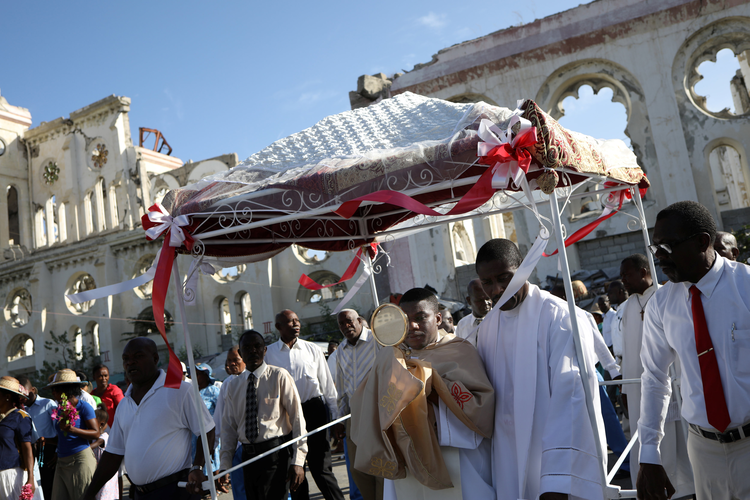
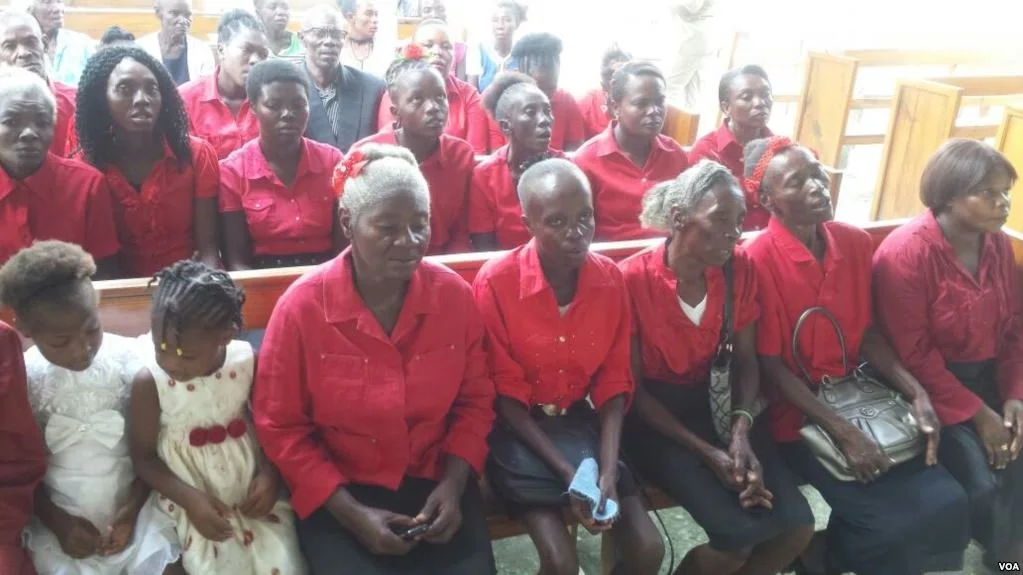
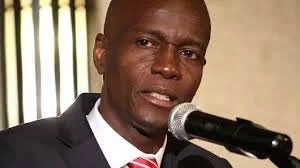
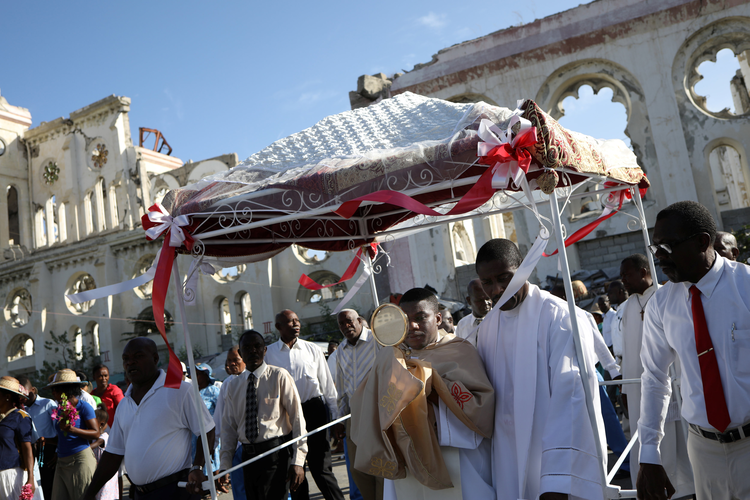
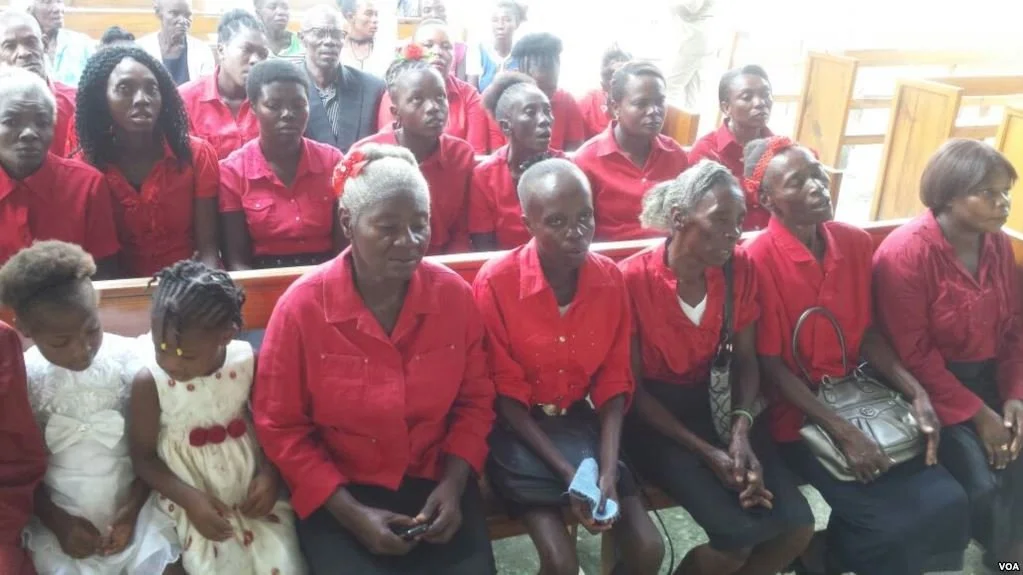
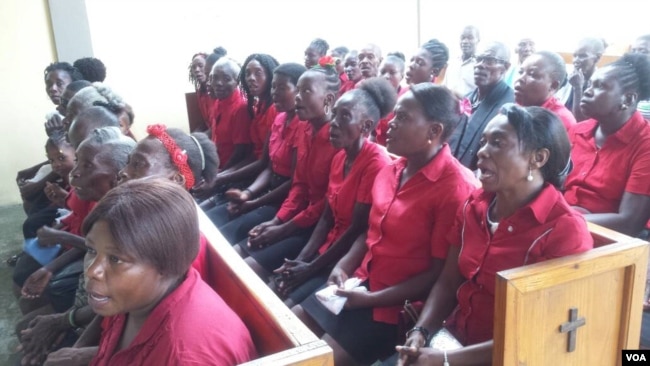
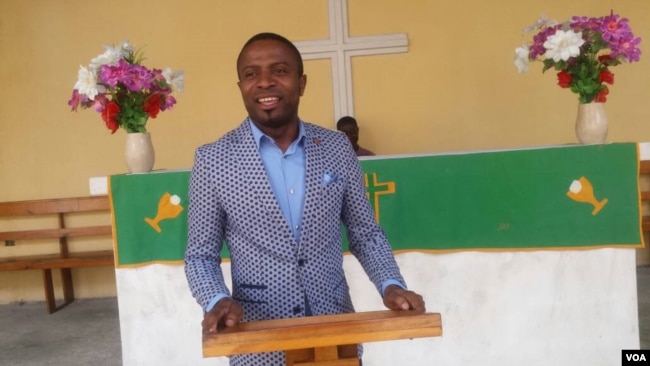
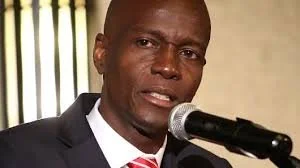


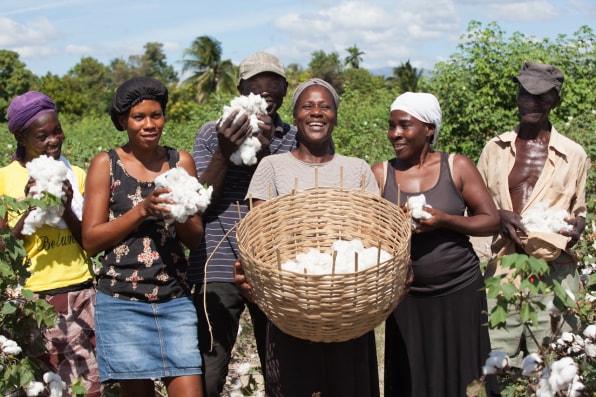
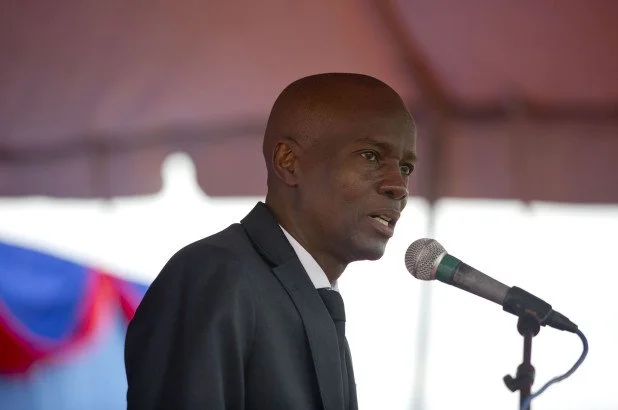
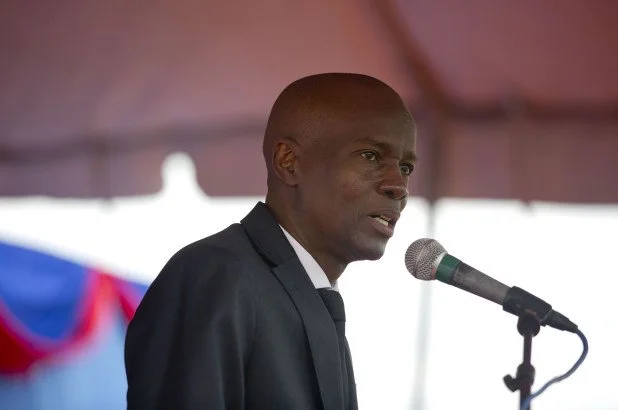
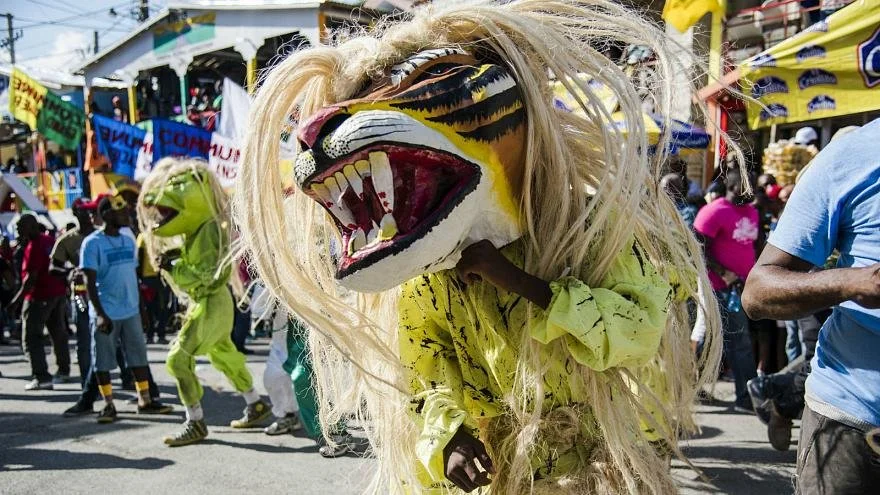
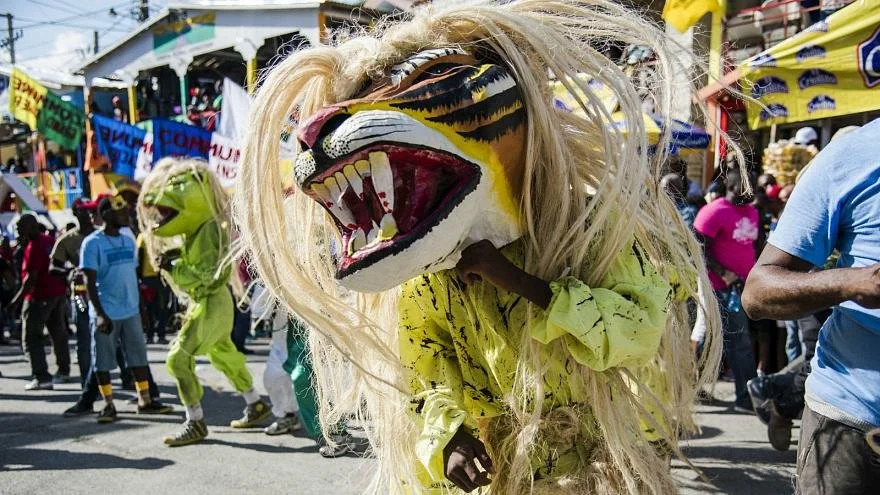
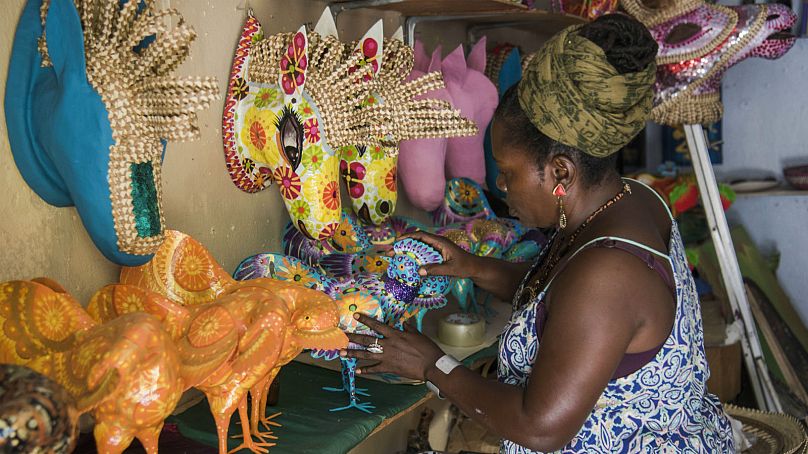
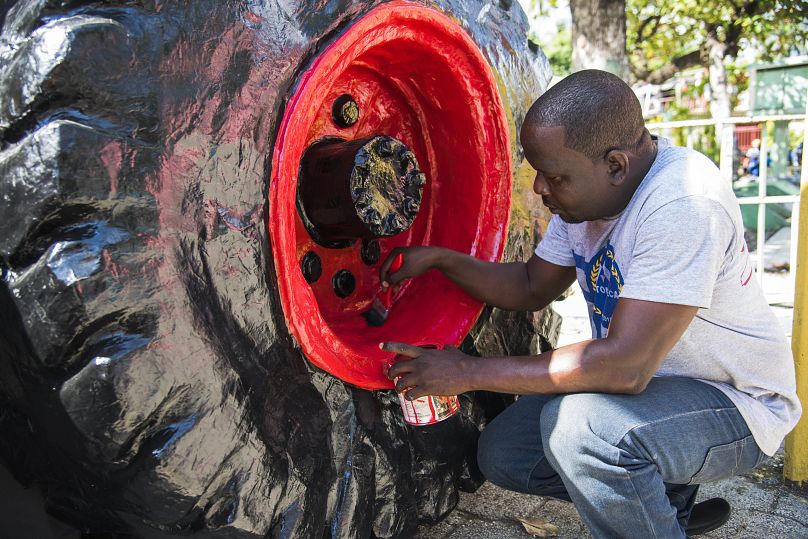
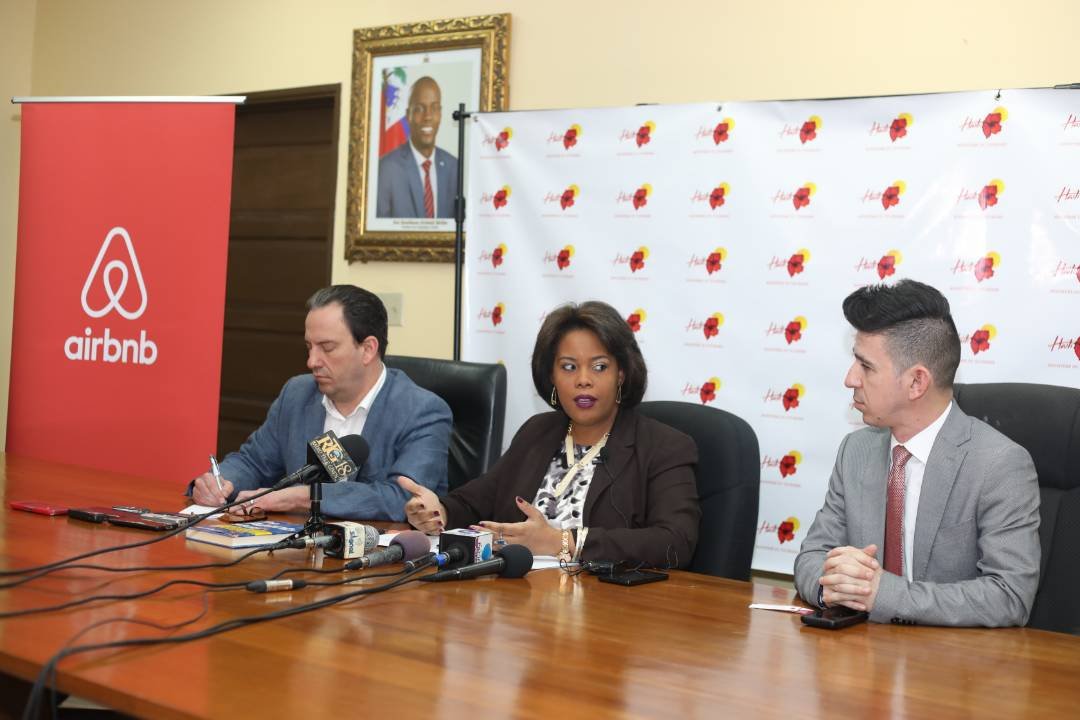
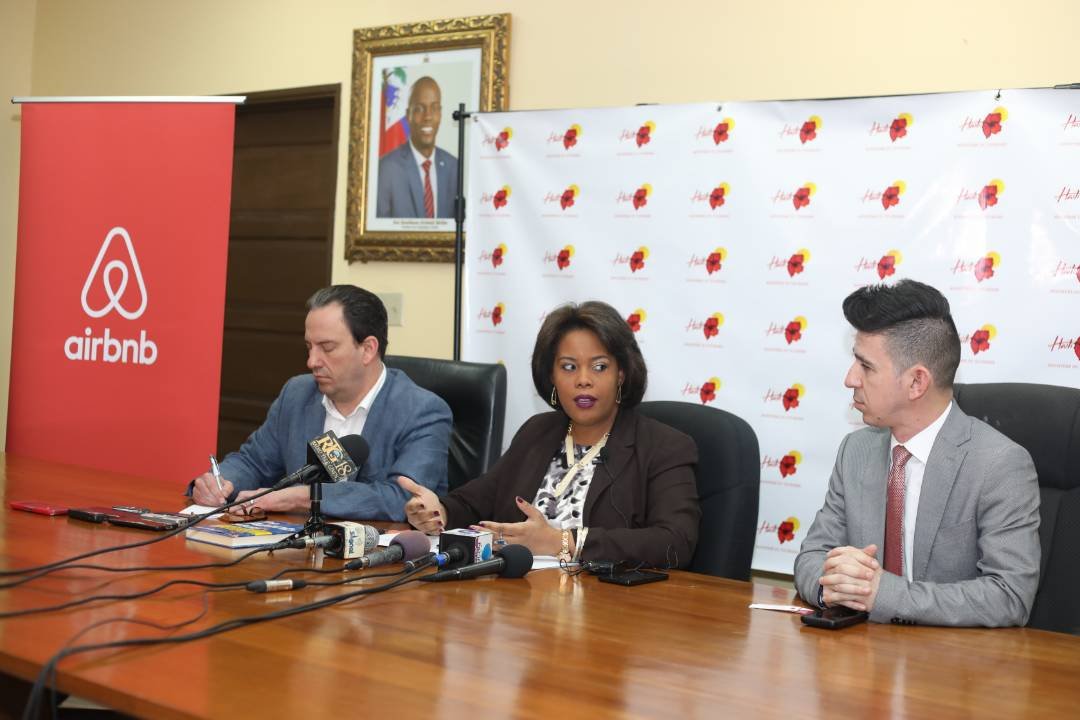
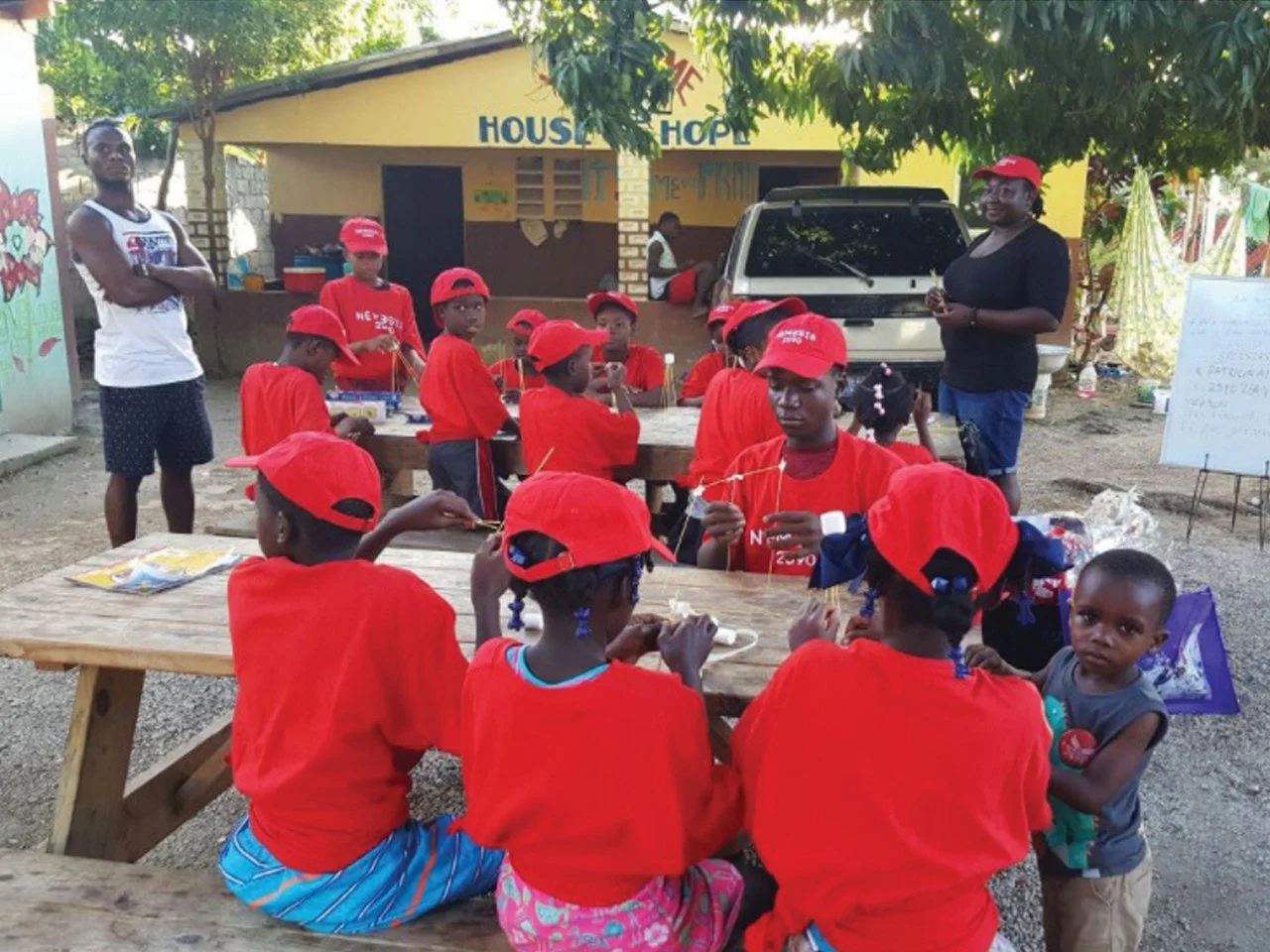
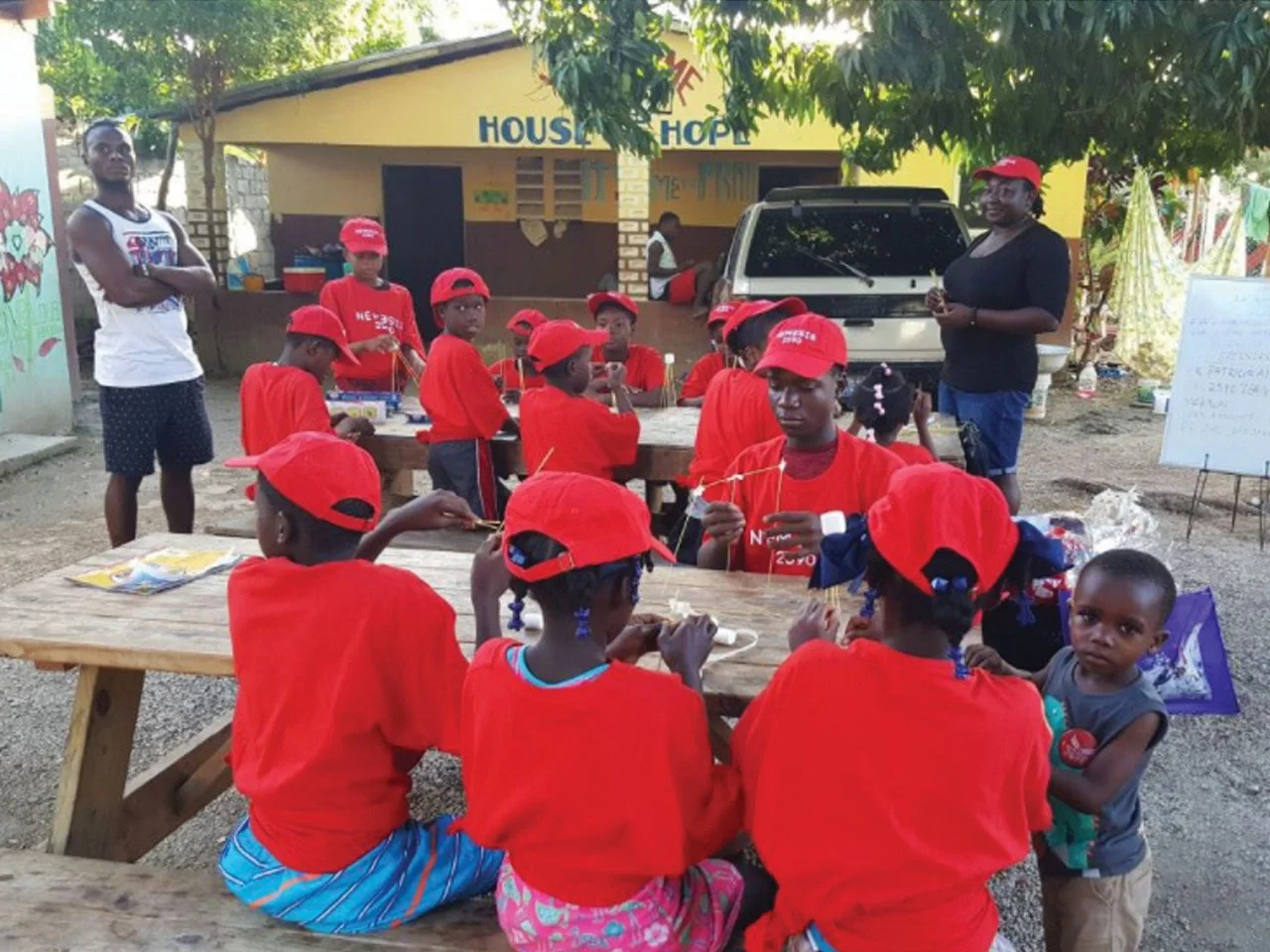
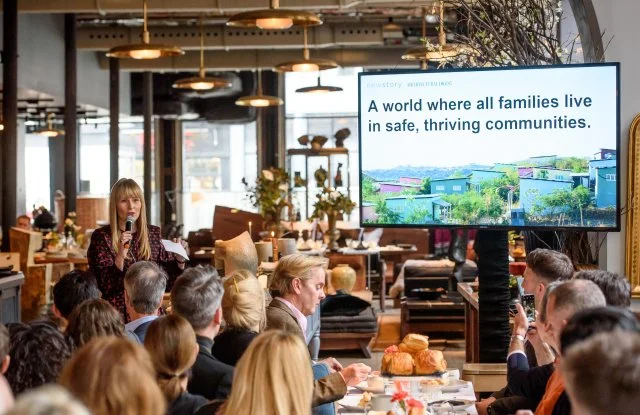
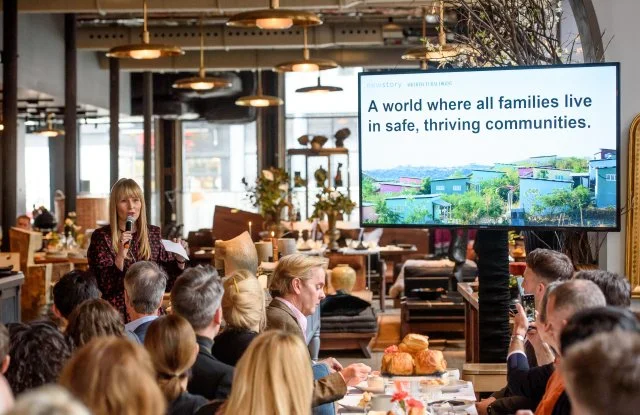


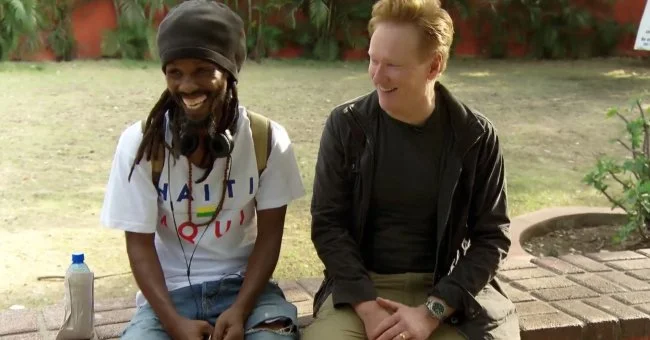
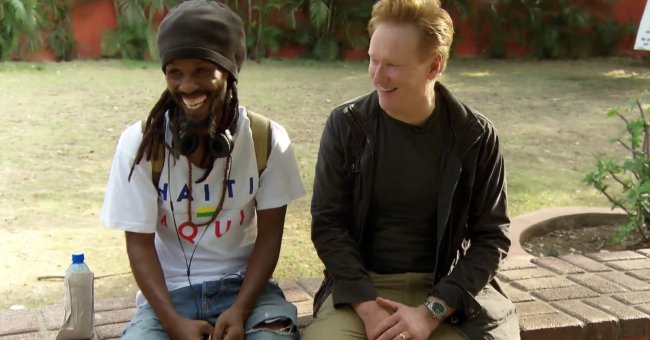

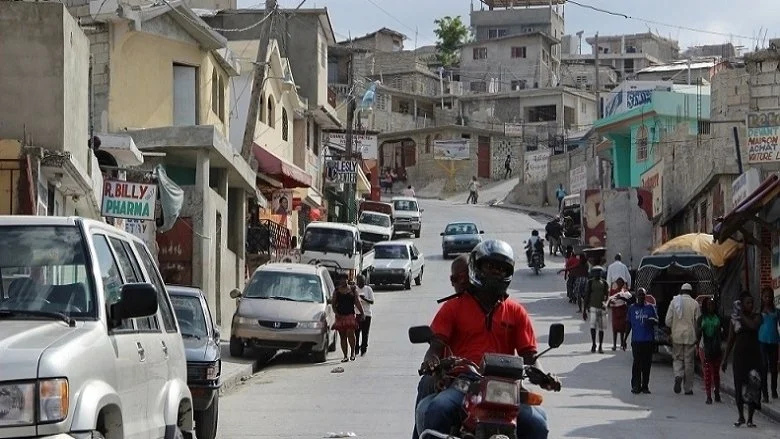
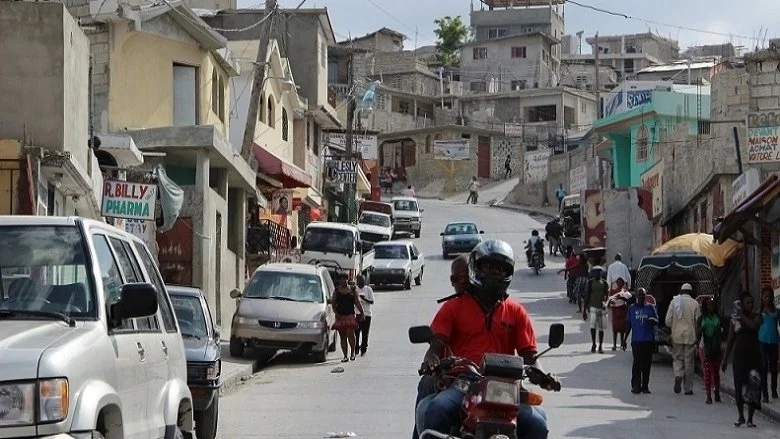
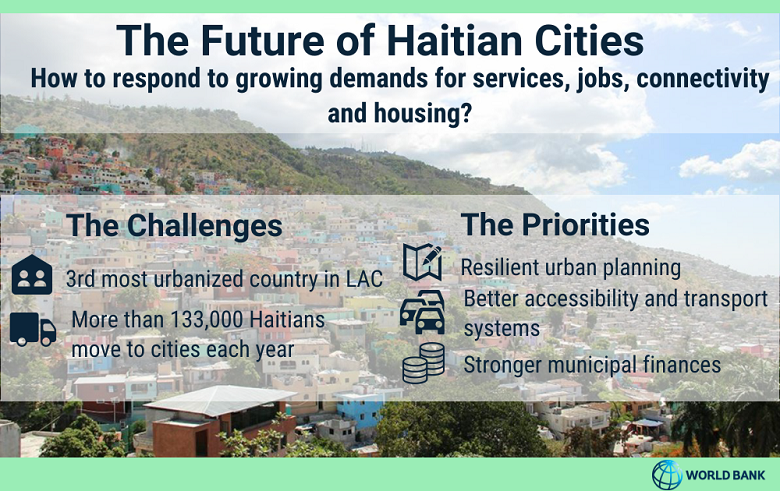
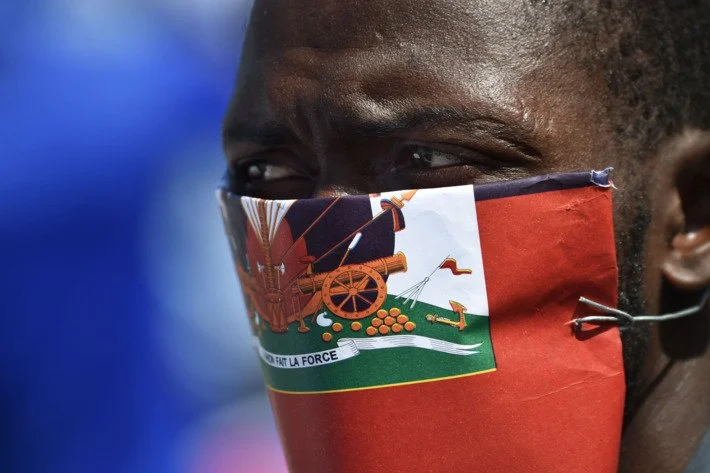
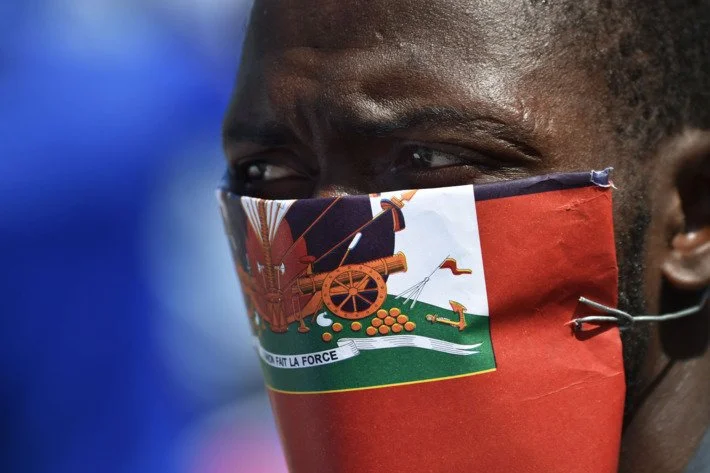
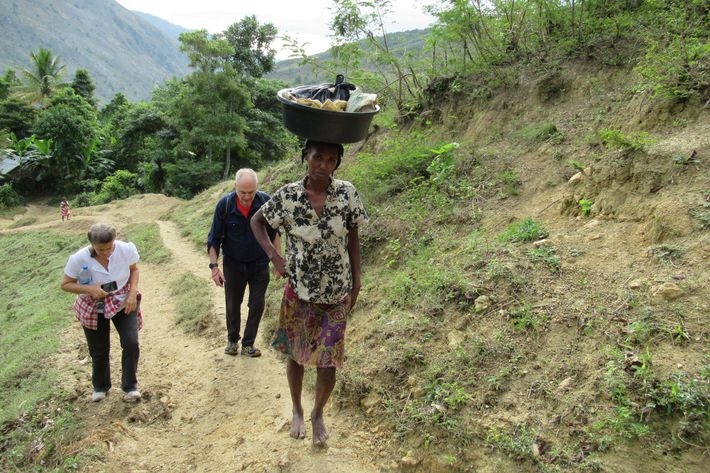
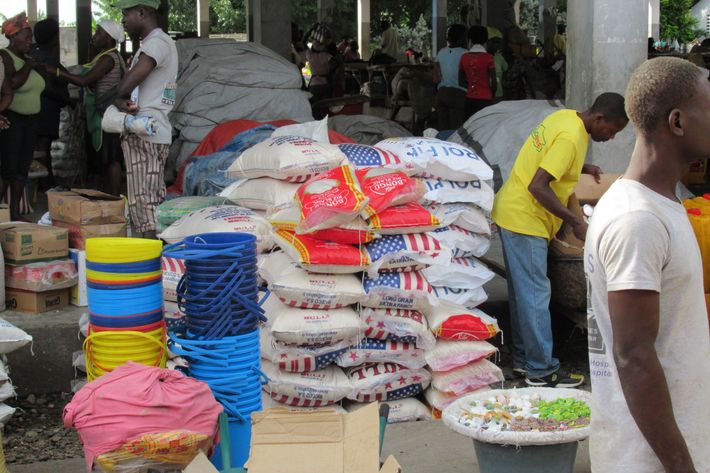
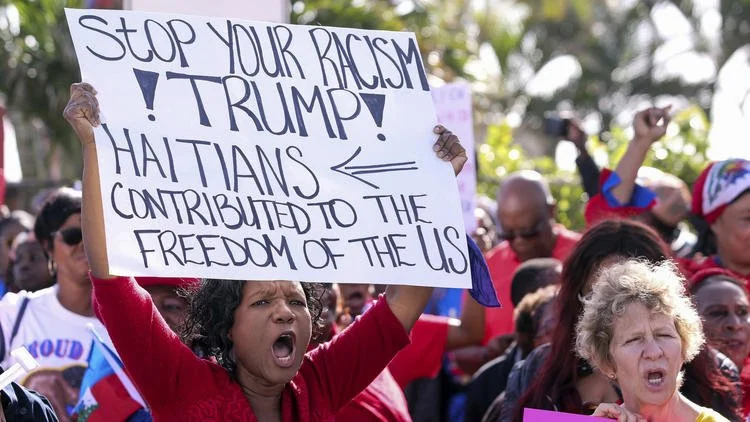
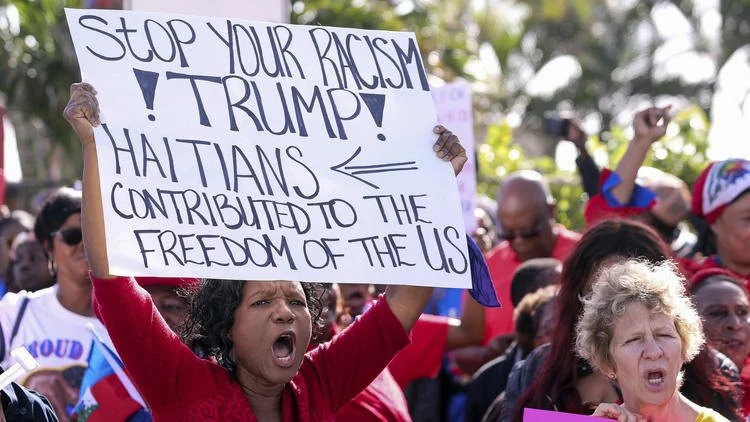






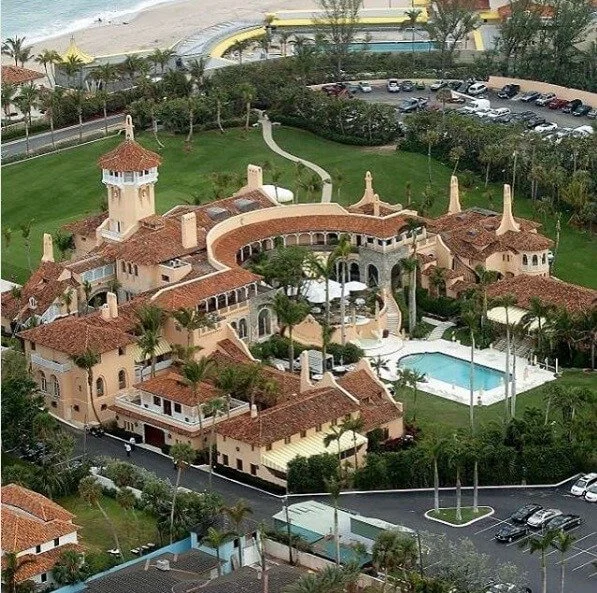


 TRUE
TRUE