


The 22-year-old Japanese tennis player racked up $37 million in earnings in the past year, more than any other female athlete in history.
Naomi Osaka was only a year old when Serena Williams won her first Grand Slam title in 1999. Nineteen years later, Osaka beat Williams at the U.S. Open final to win her first Grand Slam. It was one of the most controversial matches in Open history, involving three code violations called against Williams. Now the 22-year-old ace has beaten her legendary rival once again, this time for bragging rights as the highest-paid female athlete in the world.
Osaka earned $37.4 million the last 12 months from prize money and endorsements, $1.4 million more than Serena, setting an all-time earnings record for a female athlete in a single year; Maria Sharapova previously held the record with $29.7 million in 2015.
Osaka ranks No. 29 among the 100 highest-paid athletes while Williams is No. 33. It’s the first time since 2016 that two women have made the ranks of the 100 highest-paid athletes, with the full 2020 list set for release next week.
“To those outside the tennis world, Osaka is a relatively fresh face with a great back story,” says David Carter, a sports business professor at USC’s Marshall School of Business. “Combine that with being youthful and bicultural, two attributes that help her resonate with younger, global audiences, and the result is the emergence of a global sports marketing icon.”
The ascension puts an end to a decisive winning streak for Williams, who has been the world’s highest-paid female athlete each of the past four years, with annual pre-tax income ranging from $18 million to $29 million. The 23-time Grand Slam champion has collected almost $300 million during her career from endorsers that have swarmed the 38-year-old star.

Osaka’s rise to the head of the charts was a perfect convergence of several factors. She first proved herself on the court, with back-to-back Grand Slam titles at the 2018 U.S. Open and the 2019 Australian Open. That plus her heritage—a Japanese mother and a Haitian-American father—helped separate her from the pack; at only 20 when she won her Open title, she had a cool factor and an engaging personality.
Osaka’s roots are crucial to her endorsement stardom. She was born in Japan. When she was 3, she and her family moved to the U.S., settling on Long Island and then heading to Florida; her older sister, Mari, also plays on the pro circuit.
She turned pro in 2014, a month before her 16th birthday. She cracked the WTA’s top 40 in 2016 and won her first title in March 2018 at Indian Wells. In the 12 months that followed, she became the first Japanese player to win a Slam, and the first Asian tennis player ever to be ranked No. 1 in the world.
Osaka held dual citizenship growing up but made the wise choice to represent Japan ahead of the Tokyo 2020 Summer Olympics, now postponed to 2021. The decision made her an even hotter commodity for Olympic sponsors, like Procter & Gamble, All Nippon Airways and Nissin, which signed endorsement deals with Osaka to use her around marketing for the Games. She is expected to be one of the faces of the Olympics, which had triggered unprecedented levels of excitement among the Japanese public before the coronavirus outbreak.
A Decade Of Highest-Paid Female Athletes
Tennis has been a winning strategy for the highest-paid female athletes. Before Naomi Osaka arrived on the scene, Maria Sharapova and Serena Williams were the top-earning women of the decade, holding the top spot for five and four years, respectively.
The last top-earning female athlete outside of Williams and Sharapova was Serena’s sister Venus in 2003. Tennis remains the only route for women to rank alongside the top-paid male sports stars. Sharapova, Li Na, Serena Williams and now Osaka are the only women to rank among the 100 top earners in sports since 2012. The highest-paid female athlete every year since Forbes started tracking the data in 1990 has been a tennis player, with Steffi Graf and Martina Hingis the top earners for most of the 1990s.
Tennis players are walking billboards in the only major global sport where men and women have some level of equality in their paychecks, thanks to similarly sized audiences tuning in to watch tournaments. Prize money at the four Grand Slam events has been even since 2007, although men still earn more at lower-level tourneys.
The demographics of the tennis fan make sponsoring top players attractive for brands. At the U.S. Open last year, attendance skewed in favor of women by a ratio of 56 to 44, a rarity at big-time sporting events; 78% held at least a bachelor’s degree versus 35% for the U.S. overall; the average household income was $216,000. This is a group with significant disposable income, ready to buy apparel, sporting equipment, cars, watches and financial services.
Steering Osaka’s brand is powerhouse tennis agency IMG, which leaned on its history with breakout female tennis stars when Osaka started blowing up, having represented Sharapova and Li. Stuart Duguid is her lead agent at IMG.

The apparel deal is almost always the biggest endorsement for tennis stars, and Osaka’s timing was perfect there as well as she hit the open market just after winning two Grand Slams. It triggered a free agency bidding war between Nike and Adidas—her previous apparel sponsor. The Swoosh emerged on top and paid her more than $10 million last year in an agreement that runs through 2025.
Osaka secured an extremely rare but lucrative provision in her Nike contract. The sportswear giant always requires its tennis players to be clad in Nike gear from head to toe, without any other logos on their shirts or hats. This is lucrative real estate for marketers because cameras focus closely on the player as they serve or get set to return serve.
Nike never made an exemption for Williams, Sharapova, John McEnroe, Andre Agassi or any of the other marketable tennis stars in its stable. The only exception until last year was China’s Li; Osaka became the second, thanks to massive leverage with Sharapova headed for retirement and Williams turning 39 this year. Her “patch” deals are with All Nippon Airways, MasterCard and ramen noodle maker Nissin Foods.
Nike plans to launch an Osaka streetwear line in Japan in the fourth quarter, featuring hoodies, leggings and shirts, as well as a new collection each season. There will not be any tennis apparel.
Osaka now has 15 endorsement partners, including global brands like Nissan Motor, Shiseido and Yonex, whose tennis racquets she has used for more than a decade; almost all are worth seven figures annually.
Sharapova was 17 when she defeated Williams to win the 2004 Wimbledon crown. IMG quickly mobilized to lock up lucrative long-term deals for the Russian, who ranked as the highest-paid female athlete for 11 years before injuries and a suspension for taking a banned substance dented her earnings.
IMG got an education on marketing a female Asian tennis star with China’s Li. She became the first Grand Slam singles champion from Asia, man or woman, when she captured the 2011 French Open at age 29. IMG quickly secured seven multimillion-dollar deals, pushing her off-court earnings from $2 million to $20 million. She challenged Sharapova as the sport’s top earner until her retirement in 2014.
IMG used its expertise in Japan with Kei Nishikori, who has never won a Grand Slam but is the most successful Japanese male player ever, resulting in an endorsement portfolio worth $30 million a year.

Sharapova, Li and Nishikori paved the way for Osaka’s marketing breakthrough. “We were fortunate to have a very sophisticated office in Tokyo that already had the experience with Kei,” IMG’s head of tennis Max Eisenbud told Forbes last year. “The relationships in that region are important.”
With plenty of endorsement cash, Osaka partnered with several brands last year, with significant equity components, including emerging sports drink BodyArmor and Hyperice, which makes recovery and movement products.
BodyArmor marketing exec Mike Fedele says Osaka was one of the inspirations for its “Only You” ad campaign launched this week. “Naomi is fiercely dedicated to perfecting her game on the court and a huge part of that is what she does off the court with her training, nutrition and hydration,”he says.
“I’m really interested in seeing a young business grow and adding value to that process,” Osaka told Forbes last year. “I tasked my team with finding brands that align with my personality and my interests.”
Brands are lining up to get into the Naomi Osaka business.

Haiti Becomes CARICOM Country with Highest COVID-19 Cases

PORT AU PRINCE, Haiti – Haiti has become the Caribbean Community (CARICOM) country with the highest number of positive cases of the coronavirus (COVID-19) after the country recorded 77 news cases on Monday.
The Ministry of Public Health said that the new cases bring to 533, the number of people who have tested positive for the virus since the first case in Haiti on March 19.
It said that the death toll also increased by on to 21.
Jamaica had been the CARICOM country with the highest number of positive cases of the virus that was first detected in China last December and blamed for 315, 488 deaths and 4. Million others being infected globally.
Jamaica’s health ministry on Monday said no new cases had been reported and that the total remained at 520 with nine deaths.
On Sunday, Haiti recorded nearly 100 positive cases and the Ministry of Public Health in its latest statement said that the number of active cases now stands at 491 cases with the number of suspected cases followed being 2,120 cases.
It said that the number of people hospitalized is 253 while 1,330 persons remain in quarantine at home.

The Lived Experiences That Shaped Haitian Flag Day

The butt of anti-immigrant jokes. Fistfights after school. Inner-shame in public spaces. Haitian-Americans across social media say it wasn’t always cool to be Haitian.
Their parents who emigrated to the United States by boat or by plane, legally or illegally, experienced vicious anti-Haitian sentiments that spilled into their childhood. Wedged between cultures, their coming-of-age stories are ripe with resilience, as their strict parents kept them bound to their traditional roots — an airtight proximity to the homeland through a Haitian value system, food, dance, and music:
Lekol, Legliz, Lakay (School, Church and Home).
And as the Haitian diaspora increases their influence online, they’re controlling their own stories — stories once marred by dehumanizing narratives. But for many first-generation Haitian-Americans, Haitian Flag Day isn't really an ode to national pride, it’s a celebration of the variety of lived experiences that make up Haitian culture and identity.
Two internet influencers, Wanda Tima and Success Jr., say dignity and respect is currency in a country that too often devalues their worth. They explain why their content and individual stories reach across cultural differences, and how Haitians are celebrating Haitian Flag Day, May 18, during Haitian Heritage Month.
Whenda “Wanda” Tima, founder of L’Union Suite:
Wanda Tima is the founder and owner of L’Union Suite, an established media gateway for all things Haitian. With appearances in Forbes, BET and Black Entreprise, and nearly 500,000 combined followers on Instagram, Facebook and Twitter, Tima says being forced to navigate multiple spaces inspired her to create L’Union Suite.
Wanda Living Between Two Worlds: “I have all these other connections from Okap, Cape-Haitien, where my family .. is from. And then I was raised in Turks and Caicos and Grand Turk and Provo for the first half of my life,” Tima told WLRN. “And then I moved to the U.S. in South Florida and have lived in South Florida ever since.” Tima says she consumed everything about Haitian culture in South Florida — the music, food, and church services.
“But then I'm also very Turks Islander. And I was very American because there was this missing connection piece like living in two different spaces at all times and not knowing how to even blend two,” Tima said.
The Creation of L’Union Suite: Tima says she sought a better understanding of Haiti, researching its history and culture — the diaspora stretches from Brazil, Cuba and the Bahamas to Chile, Canada and the United States. She was mostly inspired by Haitians in professional spaces — doctors, musicians, and Haitians “in the boardrooms.”
“And people are doing some of the most amazing things, you know, in the world. You know, are Haitian. We're creating our own narrative. We know our pain. We know our stuff. And we know what's going on in our country. We know what's going on at home, you know, but at the same time, we can't allow the world to just tell only the pain and the suffering story. That's not our only story.”
How Are Haitians Celebrating Haitian Flag Day: “So, social media is definitely, highly red and blue for the whole month [the colors of the Haitian flag]. There's more food. There's more people speaking Creole. There's more connecting."
"The comments sections are definitely, you know, more engaging. So, no, we definitely know how to find each other no matter where we are in the world. All May.”
Success St Fleur, Jr:
Sketch comedian Success Jr is known for his coming-of-age viral videos that invite viewers inside his traditional Haitian-American home. With a combined 287,000 dedicated followers on Instagram and Facebook, Success, who goes by Success Jr, produces situational comedy that is filled with insider jokes about traditional Haitian upbringing. His videos, produced with a mixture of English and Haitian Creole, often seek to “bridge the Haitian and American cultural gap.”
Success Jr playing his popular Manman Junior character.CREDIT SUCCESS JR

Success Jr Living Between Two Worlds: “My upbringing was tough — being most of my upbringing was in the early '90s, and, you know, we weren't accepted and we didn't accept ourselves. So we tried to hide it, “ Success Jr told WLRN.
“Now we have other nationalities that want to celebrate the flag with us. And they are also enjoying our culture where we used to get beat up for it. And now we have people like these same bullies, now they're wanting to join us in celebrating the first black independent country.”
The Creation of Success Jr: “I see my page as like therapy. I didn't even realize when I started this. Like so many of us are raised some way alike, like identical,” Success Jr said. “And I have people who come up to me as they're like, ‘hey, I feel like you're my family. Like you grew up in the next room from me.’
How Are Haitians Celebrating Haitian Flag Day: Success Jr says normally Kompas music revelers would get together and celebrate Haitian Flag Day, but the COVID-19 pandemic this year is forcing people to celebrate online.
“Kompas fest has been in our tradition for the past 20-plus years, so everybody knows Kompas fest, and you got like the new generation such as DJ Stakz, who brings New York, Boston, Montreal, and all those northeast cities — he brings them all down to Miami, and we all celebrate together.”
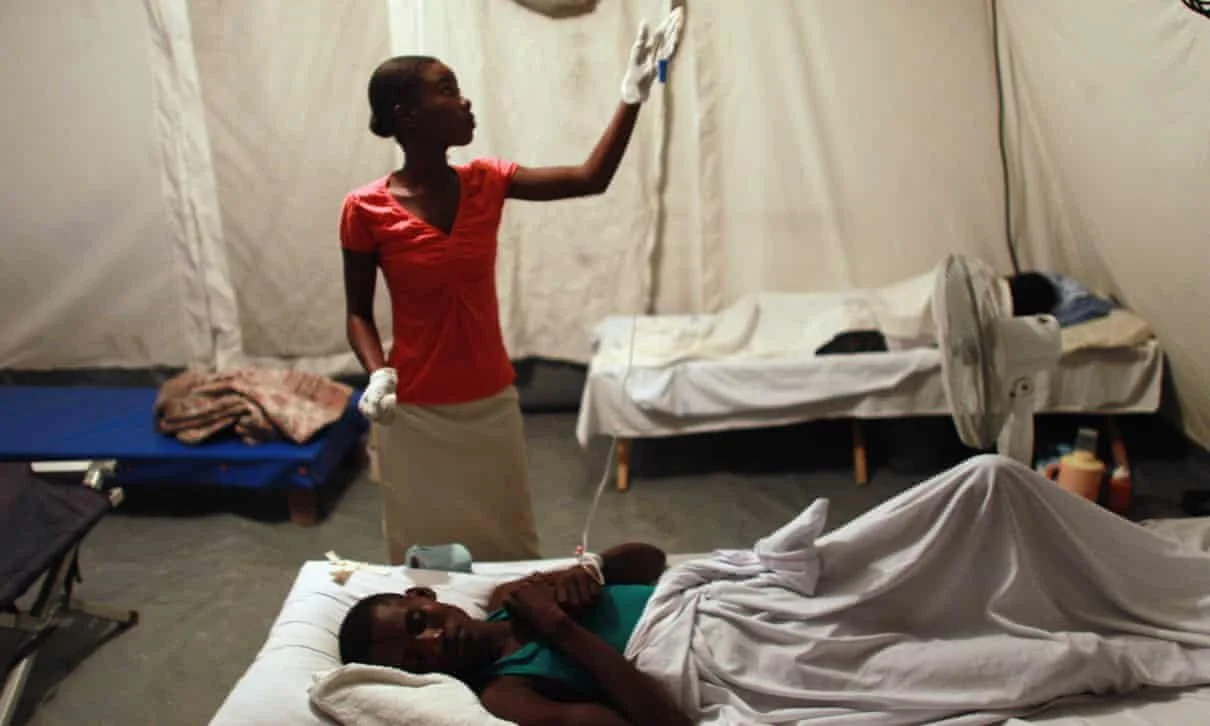
UN response to Haiti cholera epidemic lambasted by its own rights monitors
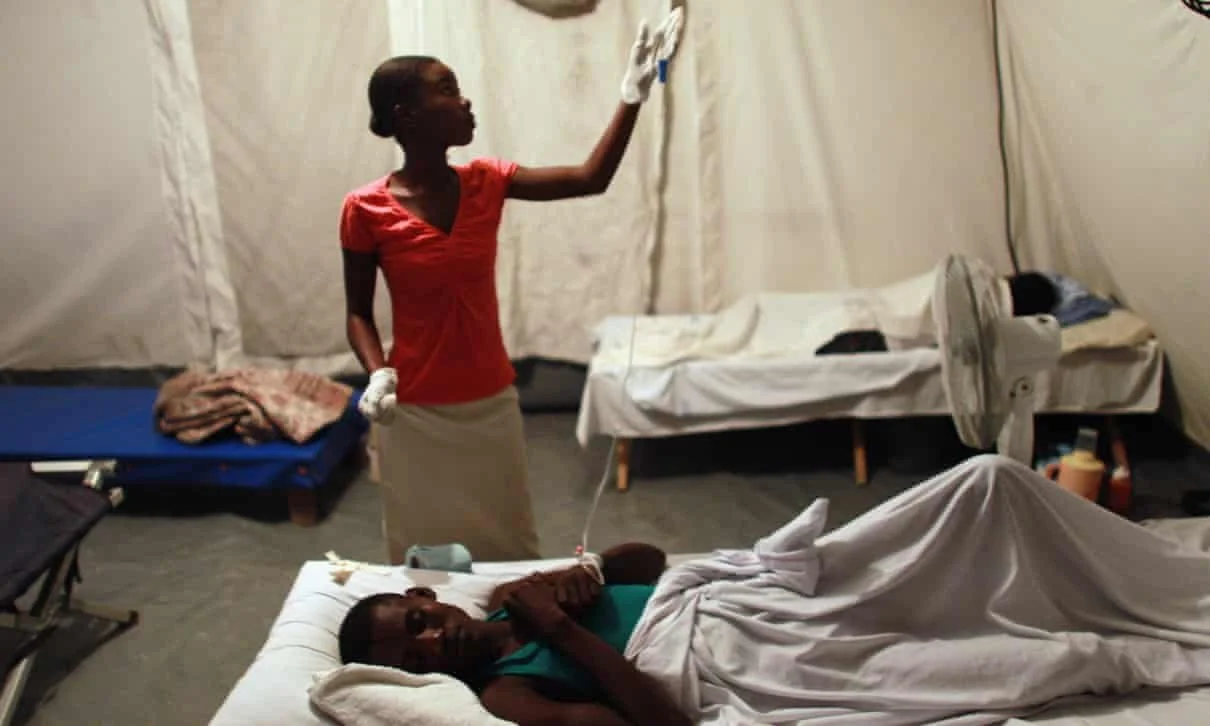
- 13 top officials denounced ‘illusory’ promises to Haitian people
- Disease brought to Haiti by UN peacekeepers killed 10,000
Thirteen UN rights monitors have unleashed blistering criticism of the United Nations for its “deeply disappointing” failure to make amends for having brought cholera to Haiti causing the deaths of at least 10,000 people.
In a letter to the UN secretary general, António Guterres, the independent monitors excoriate the world body for making “illusory” promises to the Haitian people. They note that having pledged $400m for a cholera clean-up mission, the UN has raised just $21m and spent “a pitiful” $3m.
“This is a deeply disappointing showing following the loss of 10,000 lives,” the letter states.
Scientific evidence has conclusively shown that cholera was imported into the country by sick Nepalese UN peacekeepers who were relocated in 2010 to Haiti to help with a devastating earthquake. The UN failed to screen the Nepalese force for the disease, which could have been done before they deployed from Nepal for less than $2,000.
For six years the UN denied any involvement in the transmission of the cholera bacterium. In 2016 it issued a fudged apology, but has continued to resist accepting any legal responsibility or to pay compensation.
Philip Alston, the UN monitor on extreme poverty and human rights who is lead signatory of the letter, told the Guardian that the UN’s failings were put into clear relief by the coronavirus pandemic.
“The world is rightly focused on the horrors of Covid-19 and losing thousands of people. But 10,000 people died in Haiti and there was no response,” he said.
Alston, who prepared a report to the UN general assembly on Haiti’s cholera disaster in 2016, added: “What upsets me most is that the UN has still not acknowledged its responsibility for taking cholera to Haiti.”
Cholera appears to have been halted in Haiti with the last case reported in January 2019. Even then, the bulk of the public health work devoted to root out the illness was carried out by local health workers and aid groups and not by the UN.
In December 2016, the then UN secretary general, Ban Ki-moon, made an apology of sorts, but it was carefully worded to avoid any legal accountability. He said: “We did not do enough with regard to the cholera outbreak and spread in Haiti.”
Alston said: “There continues to be an explicit refusal to accept any formal responsibility, let alone legal responsibility.”
The independent UN monitors who signed the letter include Leilani Farha, special rapporteur on adequate housing; Léo Heller, special rapporteur on water and sanitation; and five members of the working group of experts on people of African descent.
The lack of any compensation for the cholera disaster has had serious consequences for thousands of people in the poverty-stricken country. Many of those who died in the epidemic were the main income earners of their families, and their deaths had catastrophic implications for those left behind.
Alston told the Guardian that having studied the cholera disaster over many years he had concluded that the UN’s reprehensible conduct could only be understood by accepting that “an element of racism is involved here”.
He said: “If this happened to a white community in a country with any standing globally the UN wouldn’t have done – and wouldn’t have been able to do – nothing. But this is Haiti, a country which has largely been written off.”
In a statement, a UN spokesman said: “Since taking office, the Secretary-General has been strongly committed to supporting the people of Haiti and the fight against cholera. He reiterates the UN’s deep regrets for the loss of life and suffering caused by the cholera epidemic.”

Haiti releases over 300 detainees to prevent COVID-19 spread

PORT AU PRINCE, Haiti, Apr. 18. CMC – The Government of Haiti has released just over 300 detainees in the country’s 19 prisons in an effort to control and prevent the spread of COVID-19.
Officials in the National Penitentiary Authority (APN), recently informed the United Nations and non-governmental organizations of its needs in terms of infection prevention and control.
The NPA said this is in accordance with national and global advocacy, adding that 12 children have also been released from detention.
“To date, 322 detainees have already been released from Haitian prisons, including 21 women and 12 minors.”
Most of the detainees were in prolonged pre-trial detention while others were convicted for minor crimes, nearing the end of their sentence, or had co-morbidities linked to the COVID-19.
According to UNICEF, in Haiti, more than 11,000 people are detained in prisons listed – of this number, over 200 are minors.

From Haiti to Chile, a Singer Bridges Styles – and Cultures

With Haitian rhythms and Spanish lyrics, Ralph Jean Baptiste shows integration is possible for other migrants.
SANTIAGO, CHILE — Escápate conmigo otra vez, sings Ralph Jean Baptiste in his Santiago apartment, over a demo track of slow R&B beats. His rhythmic Haitian accent deepens the melody of the Spanish lyrics.
Although born and raised speaking French Creole in Haiti’s capital, Port-au-Prince, Baptiste, 29, writes all his songs in Spanish. He moved to Chile after Haiti’s devastating earthquake in 2010, with dreams of a music career in tow.
“To get to audiences in Chile you have to sing in Spanish. They’ve never heard anything in French or Creole. I had to adapt,” he said.
Adapt—he says the word as if it is inherently natural to him. Baptiste has had to adapt daily to be accepted in his new homeland. Beat by beat, over nine years of performances, he built a name for himself, and in 2019, Baptiste was finally able to release his first album, Rafa.
Musicians have always been a nomadic sort, and Baptiste is no different. He had spent time in the Dominican Republic, where he learned Spanish, so after the earthquake struck, Baptiste chose to pursue his music in Latin America — unlike the 46,000 displaced Haitians who sought asylum in the United States He settled in Chile after short stints in Peru and Argentina.
Baptiste was among the first in what would become a surge of Haitian migrants in Chile. The country had granted fewer than a 1,000 visas to Haitians between 2005 and 2009, and when Baptiste arrived in 2010, only 713 Haitians received Chilean working visas — a marked difference from 2018, when 126,000 were granted.
Haitians were the first black, non-Spanish-speaking migrant group to arrive in Chile. They stood out. “When I arrived people looked at me strangely. They hadn’t seen Afros before. They touched my skin for luck,” Baptiste told AQ. “I have faced a lot of discrimination and rejection.”
When pressed to explain, Baptiste breaks into a broad smile and laughs. “I don’t like to remember the bad times.”
Beyond discrimination, being a migrant compounds the economic challenges that already exist for aspiring artists, said Dr. Marisol Facuse, who researches migration and music at the University of Chile.
“It is very hard for migrants to live off music, especially for migrants who don’t have networks, and Haitians are a community in Chile that isn’t very integrated culturally,” Facuse told AQ. “The question of survival is the biggest barrier.”
 Baptiste performs at a special show for migrants at a Valparaiso music festival in 2018.
But survive Baptiste has, and his positive outlook provides a model of the kind of integration possible for migrants with the right support and attitude. His song “Aguante” (Endurance) sums up his experience living in a foreign land:
I had to leave everything and go far / to start from zero on a long road. / It has not been easy, but you have to move forward / cry and laugh / life has to be lived.
“I’m inspired by his character and strength,” said Charlie Checkz, who produced several of Baptiste’s songs, including “Aguante.” Checkz values the Haitian musician’s unique contribution to Chile’s musical scene.
“We combine rhythms — us as Chileans, and his Haitian music and culture. We put that in the music.”
Baptiste describes his music as worldly, priding himself on the unique fusion of styles he creates, mixing Chilean urban and cumbia sounds with African rhythms and North American soul. In his music videos, he celebrates Chilean traditions — such as performing the country’s national dance, Cueca — reflecting his embrace of Chile’s culture.
And in spite of the challenges, Baptiste notes that things are changing for the better. “Around three years ago there started to be more inclusion for migrants,” he said. In 2018, he performed at an annual festival for migrant artists, organized by Chile’s cultural ministry. Last year, he won a state-funded grant to support migrants in music, which enabled him to record and produce two music videos. Things were starting to look up.
However, the momentum he was building came to an abrupt halt when the mass protests broke out in Chile last October. The following months were tense and violent — people died in clashes with the police, festivals were canceled, and few people went out to concerts.
“I had to cancel all my shows. I haven’t been able to perform since November,” Baptiste said.
However, he is sympathetic to the struggle of the Chileans. It’s a frustration shared by the migrant community, he explained. In August 2018, Chile’s president, Sebastián Piñera, claimed to be “putting the house in order” when he signed a reform outlining stricter migration policies. Three months later, the government began flying some Haitians back to their country in what it called a “humanitarian return plan.”
“People who needed help, he just sent them back,” Baptiste said.
“Chile is a complicated country,” Baptiste added. “And Chileans are fighting for a fairer life. They should include migrants in that too.”
Baptiste believes his role as a musician is important in giving voice to his community.
“A lot of Haitians would like to say something, but they can’t because they don’t speak Spanish or they just aren’t heard,” he said.
“In my songs, I can pass on the message of what they feel.”

'Our heritage is abandoned': burning of Haitian church fuels anger at politicians

Damage to part of Unesco world heritage site is emblematic of uncaring government, critics say.
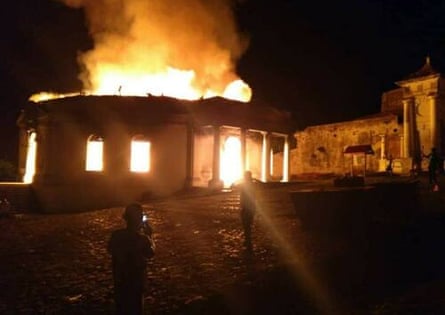
Cultural leaders in Haiti have described the gutting by fire of a celebrated 200-year-old church as an avoidable tragedy that highlights the fragility of the Caribbean nation’s patrimony – and the need to preserve its historical treasures.
The Our Lady of the Immaculate Conception church in the town of Milot is part of a Unesco world heritage site that includes the ruins of the Sans Souci palace and the Citadelle Laferrière, an imposing fort that looms over Haiti’s northern plains.
Fire tore through the church on Monday, causing its distinctive black wooden dome to collapse. The cause of the blaze has not been determined, but some saw it as indicative of the malaise of misrule that has long bedeviled the island – some of it locally rooted, and some imported by more powerful neighbors.
“[For years] we have been asking the state to ensure the protection of these colonial dwellings, which are important as monuments of slavery, yet nothing has been done,” said Laënnec Hurbon, a sociologist with the State University of Haiti.
“But the state spends its time buying luxurious cars for ministers, functionaries and parliamentarians. It is therefore not surprising that everything concerning the national heritage is abandoned.”
The church was constructed between 1810 and 1813 by Henri Christophe, one of a cadre of revolutionary leaders including Toussaint Louverture and Jean-Jacques Dessalines who helped Haiti oust the French and end the system of slavery.
Christophe went on to declare himself King Henry I and ruled in autocratic splendour over northern Haiti until his death by suicide in 1820 amid a protracted civil war.
On Christophe’s death, the church was ransacked, and its dome had collapsed following an 1842 earthquake. In the 1970s, the renowned Haitian architect Albert Mangonès led an effort to restore the complex. It was named a world heritage site in 1982.
Some worry the legacy that the buildings at Milot attest to is being lost amid Haiti’s current political upheaval.
“The structural inequalities in our society mean there has never been an education accessible to all that would teach the idea of the common good,” says the Haitian author Yanick Lahens.
Haiti has been shaken by often violent unrest for months, prompted in part by a long multibillion-dollar corruption scandal which has engulfed the administration of President Jovenel Moïse.
Despite the political battles, however, the church seems to pierce to the heart of Haiti’s national identity, across party lines.
In a letter to the government after the fire, educational and civil society figures called on the nation’s political leaders to “stop this denial of our history as a people [as] only these monuments remain, testimonies of our history of struggles, suffering and hope.”
One former president, Prosper Avril, who ruled the country from 1988 to 1990, has called for a taskforce to protect the country’s cultural heritage.
In a land that often seems beset by internecine political vendettas, some hope that even in this dire moment, the church’s reconstruction might serve as a point of unity.
“The royal chapel of Milot is a testimony to the history of our people,” said Erol Josué, director of Haiti’s national bureau of ethnology (BNE). “The Haitian state should engage all layers of the population in its reconstruction, because this is our heritage.”
We are not prepared at all': Haiti, already impoverished, confronts a pandemic
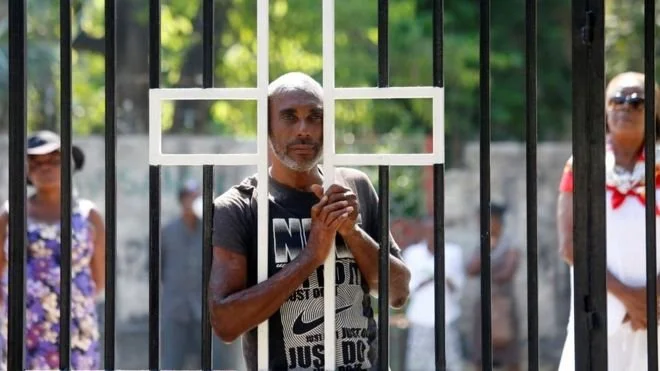
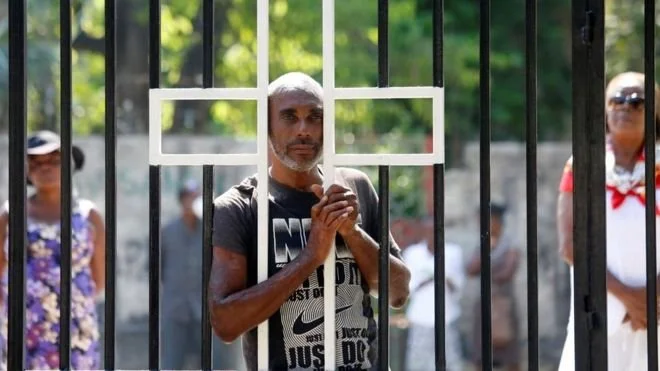
With barely 60 ventilators for 11 million people, Haiti is the most vulnerable nation in the Americas to the coronavirus. While many countries would struggle to cope with a serious spread of Covid-19, Haiti might never recover from one.
The reality inside Haiti's intensive care units is even bleaker than that number - taken from a 2019 study - suggests. According to Stephan Dragon, a respiratory therapist in the capital, Port-au-Prince, the true number of ventilators is actually closer to 40, and maybe 20 of those aren't working.
"We also have a very, very limited group of doctors who know how to operate them," Mr Dragon said.
The Haitian government has recently attempted to buy much-needed equipment - from ventilators to PPE, including tens of thousands of facemasks from Cuba - but Haitian healthcare practitioners like Mr Dragon fear it is too little, too late.
"To tell you the truth, we are not prepared at all," he said.
So far, this small impoverished nation has only registered three deaths from the virus and 40 confirmed cases, but many more cases may be going unreported, especially in remote areas.
Levels of testing are low and enforcement of social distancing is patchy at best. The Haitian population also suffers high levels of diabetes and other health conditions, and a major coronavirus outbreak would place an unbearable strain on a collapsing healthcare system.
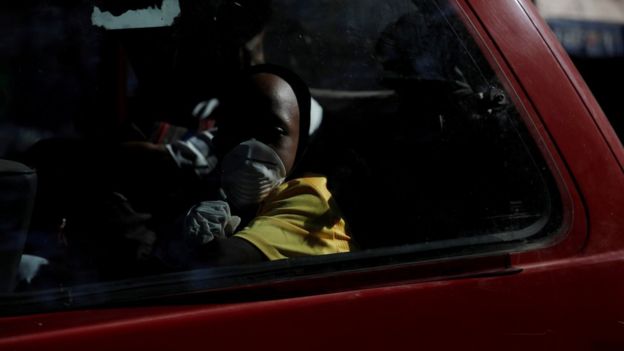
Haiti's ability to respond is confounded by its economic straits. Around 60% of Haitians live below the poverty line and many face a stark choice: either go about your daily business and run the risk of contracting COVID-19, or stay indoors, as the government advises, and be unable to put food on the table.
It is little wonder that so many are taking their chances.
That is the dilemma facing Jean Raymond and his family. He lives in Furcy, a mountainous village outside of Port-au-Prince where most families scratch a meagre living from land.
Jean Raymond, however, isn't a farmer but a motorbike taxi driver, part of Haiti's vast informal economy. Rremaining indoors is not an option if he is to feed his wife and two young children, he said.
"It's impossible for me to not leave the house," he said. "If I'm obligated to stay in my home, what would we eat?"
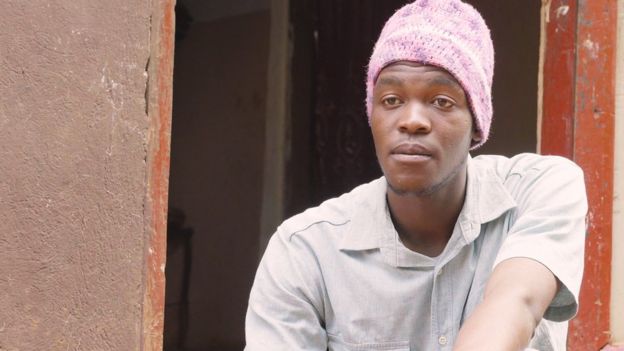
Jean Raymond's wife, Lucienne, criticised the government for failing to show enough support in the village. "We want to respect the rules but we can't," she said. "I see what governments are doing in other countries, but here they aren't doing anything."
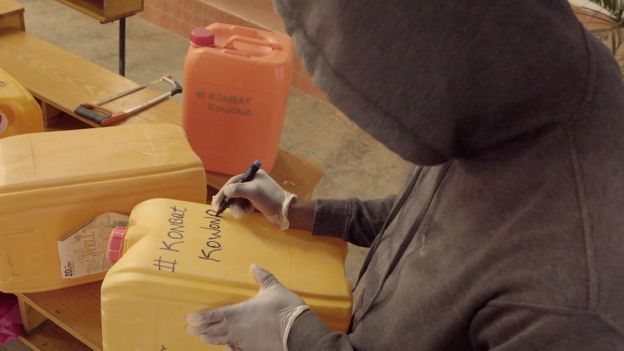
In the absence of the state, it has fallen to local grassroots organisations to carry out basic but vital tasks. Clean water is a precious commodity in Furcy - indeed it is a scarce resource across Haiti - and one environmentalist group called Ekoloji pou Ayiti has prepared dozens of water canisters to make handwashing stations in some of the neediest communities.
Given the deep distrust of NGOs in Haiti, it was crucial to "make sure the community leaders were part of the project," said Max Faublas, co-founder of Ekoloji pou Ayiti.
As well as building 88 water stations, the group showed people how to make their own hand-sanitiser using vinegar. They have also tried to tackle widespread misinformation with a public education campaign on the importance of wearing a facemask, avoiding handshakes and disinfecting shoes and clothes.
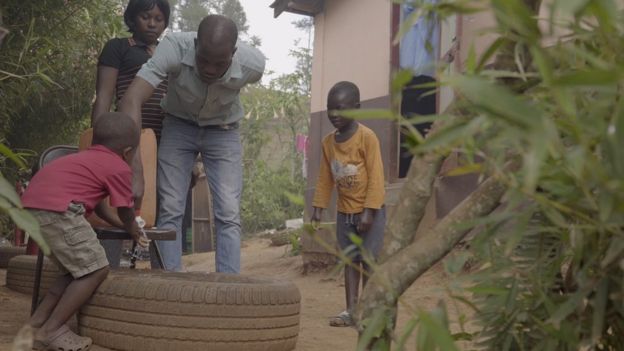
Still, although members of the community appreciate the rules in theory, putting them into practice can be hard. For example, Jean Raymond and his family live with his parents - six people in a tiny home, all living on top of each other.
And if social distancing is difficult in rural Furcy, it is almost out of the question for many in Haiti's sprawling, densely-populated shantytowns.
In Port-au-Prince, market days have been cut back, creating further demand for basic food supplies. Some are growing desperate. There have been chaotic scenes outside food distribution points and trucks selling bread. The government has been distributing food parcels to the most vulnerable households but many are angry at having to jostle and compete in a crowd for food.
"The way they are distributing food is humiliating," one resident, Mesmin Louigene, told the Reuters news agency. "People do not respect social distancing. The government should organise it better. I'm very concerned at the sanitary conditions, it's very worrying."
That the looming healthcare crisis is a great threat to Haiti is of little surprise - that is true of most of Latin America and the Caribbean. What's especially deadly in the region's poorest country though is the combination of the pandemic and a crippling economic crisis. In a bid to stave off further economic ruin, the Prime Minister Joseph Jouthe said this week the country's textile factories would re-open later this month, but the move runs contrary to advice from the Pan American Health Organisation to keep lockdown restrictions in place.
In Furcy, Jean Raymond was under no illusions about what a major COVID-19 outbreak would mean to his village.
"If Coronavirus comes into my community, it would be a disaster. We don't have a hospital or even a good road. The conditions we live in…" his voice trailed off.
"There's no way. We will all die if coronavirus comes here."
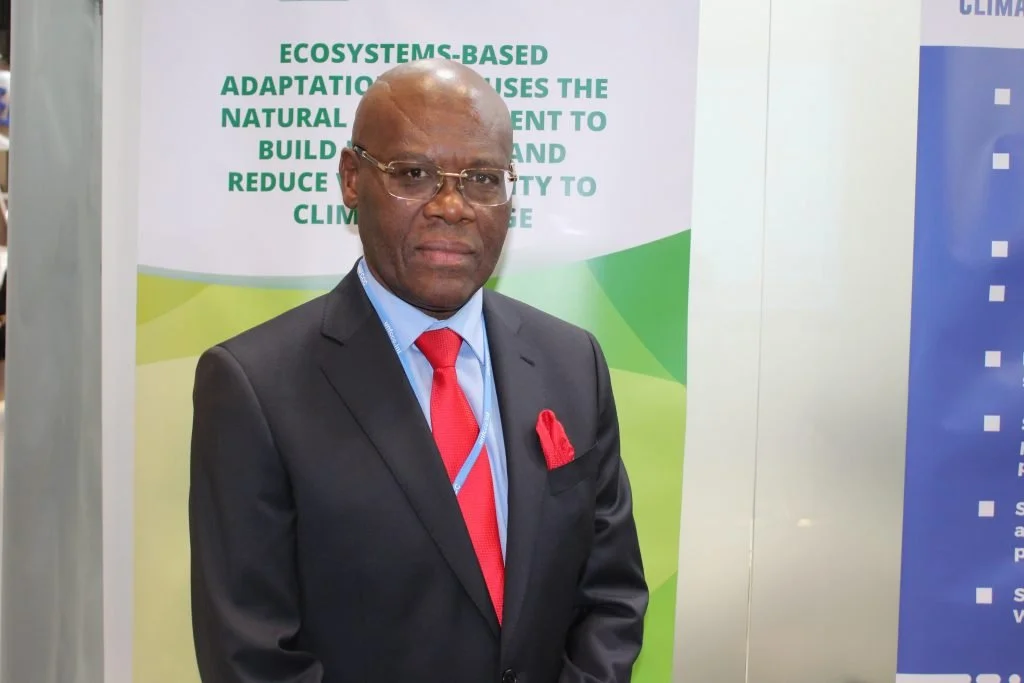
Haiti in Canada Health System Link-Up
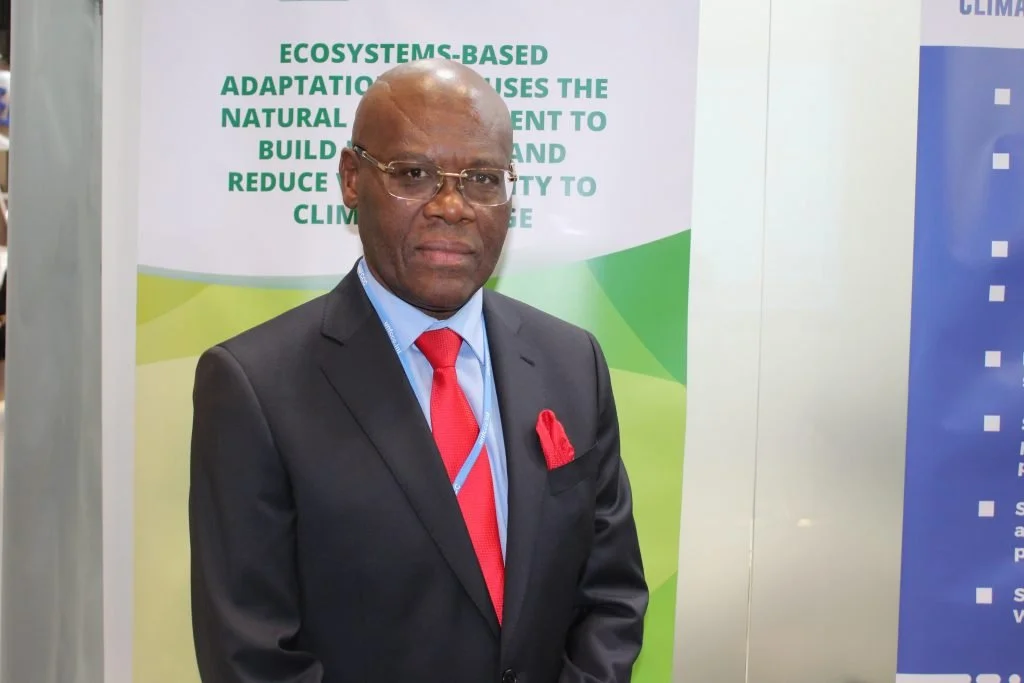
PORT-AU-PRINCE, Haiti – Haiti is seeking to strengthen its health system by developing enhanced cooperation with Canada.
This was one topic discussed during a meeting between Prime Minister Joseph Jouthe and the Canadian Ambassador accredited to Haiti, Stuart Savage.
During the recent meeting, Savage said he was open to any request from the Haitian Government relating to the consolidation and extension of its body of health workers, the need for equipment for health infrastructure in the country.
He stressed that synergy must be developed in order to provide proportional responses to the fight against the coronavirus pandemic.
Jouthe informed Savage that Haiti had already placed orders for more than 400 tonnes of medical equipment and he hopes to acquire powerful sprayers for disinfecting urban spaces.
The Prime Minister also informed the Canadian diplomat that steps were underway with the Minister of Finance to open a solidarity account intended to collect funds from donors, the private sector and citizens wishing to help the country to face the health crisis in which the country engages.
He also mentioned, among other things, the program of distributing food kits to the most vulnerable people in society.
Another Protest In The Capital of Haiti After Journalist Arrestation
PORT AU PRINCE, Haiti – In March 2020, the media reported that the Haitian Government announced the first two cases of coronavirus in Haiti before the cases reached to 16, but however the Haitian Government failed to tell the media and the Haitian population the names of the victims as proof.
Days later after the Haitian Government announced the first two cases in the country, the World Bank and the USAID donated millions of dollars to Haiti to deal with the COVID-19, but unfortunately, some health organizations across Haiti said President Jovenel Moise and Prime Minister Jouthe Joseph failed to release the names of the people infected with the COVID-19.
“They said there are cases of COVID-19 in the country but Ministère de la Santé Publique failed to release the names of the people infected to some health organizations”, said Mr. Evans Jean, a healthcare worker at Hôpital De L’Ofatma located in Port-Au-Prince.
According to a press conference on Thursday, political leaders, journalists, the whole population, even the opposition leaders across the country have doubts about the COVID-19 in Haiti. After the reports of the 16 cases in Haiti, here’s what a political leader in Haiti said about the current situation in the country. He said:
“I don’t think the COVID-19 is a joke but how come President Jovenel Moise and Prime Minister Jouthe Joseph ordered masks from China to give the population in Haiti when everyone knows the COVID-19 is originally from China. Unfortunately, after the Haitian Government reported cases of COVID-19 in Haiti, those 3 questions came in my mind. My first question is, How the COVID-19 arrived in Haiti?, my second question is, Who took it to Haiti?, and the third question is, What are the steps the Haitian Government is taking to stop the COVID-19 from spreading across Haiti since they said there are cases?”, said Mr. Werley Nortreus, a political leader and the founder of Vanyan Sòlda Ayiti and A New Haiti Before 2045 (ANHB 2045).
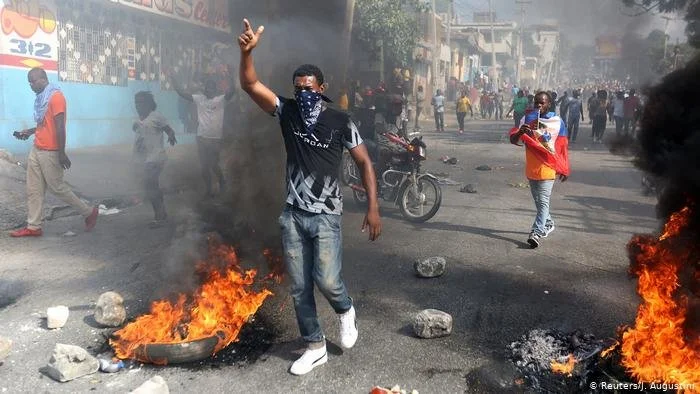
On Friday, another protest broke out across the capital of Haiti after the arrestation of Mr. Louko Desir after saying a speech on Radio Télé Eclair during his popular radio show called Matin Debat. From some reports, the journalist and the radio host was released from Jail hours later. Although everyone is wondering what are the reasons behind the arrestation of Mr. Louko Desir, however, Mr. Louko Desir believes that he got arrested for saying something on his radio show.
According to local media like Bon Déjeuner! Radio (BDR! Live) and Radio Télé Eclair, Mr. Louko Desir who is a Journalist and the host of Matin Debat at Radio Télé Eclair were arrested after saying the Haitian Government is lying about the COVID-19 in Haiti. After Mr. Louko Desir said that there are no cases of COVID-19 in Haiti, he was arrested shortly after that speech on the radio.
“Pa gen Koronaviris Ayiti vre, epi kale je nou paske nou pa dwe asepte Prezidan Jovenel Moise voye chache mask lachin kote maladi a ye pou vin touye moun tankou poul Ayiti”, said Journalist Louko Desir on Radio Télé Eclair, before he was arrested a day later by the Haitian Government.
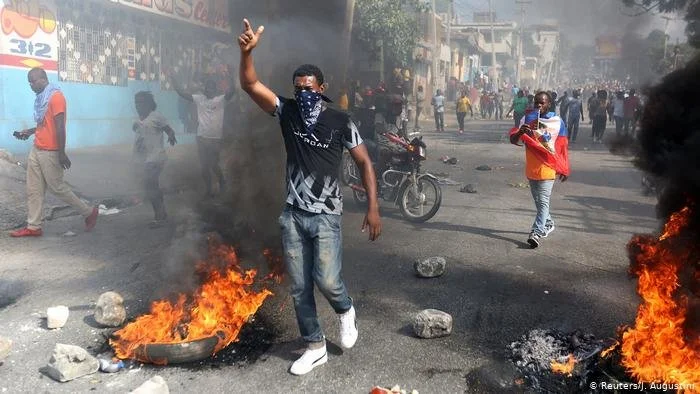
After the arrest of Mr. Louko Desir, a protest broke out in the Capital of Haiti and videos show that the protesters took the buckets that were donated by the USAID to the streets then burnt them. From some reports, most of the buckets that were donated by the USAID for the COVID-19 got burnt by angry protesters across the Capital of Haiti.
According to reports, most leaders across the country are against the arrest of Mr. Louko Desir because they said no one deserves to be arrested for simply saying something on his own radio show.
“No one deserves to be put in jail or prison for simply defending the population in Haiti”, said some protesters while burning some buckets that were donated by the USAID for the COVID-19.
“IRRESPONSIBLE AND DANGEROUS”: U.S. DEPORTS HAITIANS DESPITE CORONAVIRUS RISKS
THE UNITED STATES, the new epicenter of the global coronavirus pandemic, deported 61 Haitians on April 7 despite warnings that such deportations could contribute to the spread of the virus in Haiti. Public health experts fear that an outbreak could have particularly deadly consequences for the impoverished island nation, where many people lack access to basic necessities like health care and food.
Haiti lacks the resources to cope with a major outbreak of Covid-19, warned Cate Oswald, chief policy and partnership officer for Partners in Health, a Boston-based global health nonprofit whose Haitian sister organization, Zanmi Lasante, is coordinating with Haiti’s government to respond to the virus. For its population of 11 million people, Haiti has just 124 ICU beds and the ability to ventilate less than 70 patients, according to a 2019 study by the Research and Education Consortium for Acute Care in Haiti. “I’m nervous to see how this new disease has overwhelmed even the better-resourced health care systems,” Oswald told The Intercept.
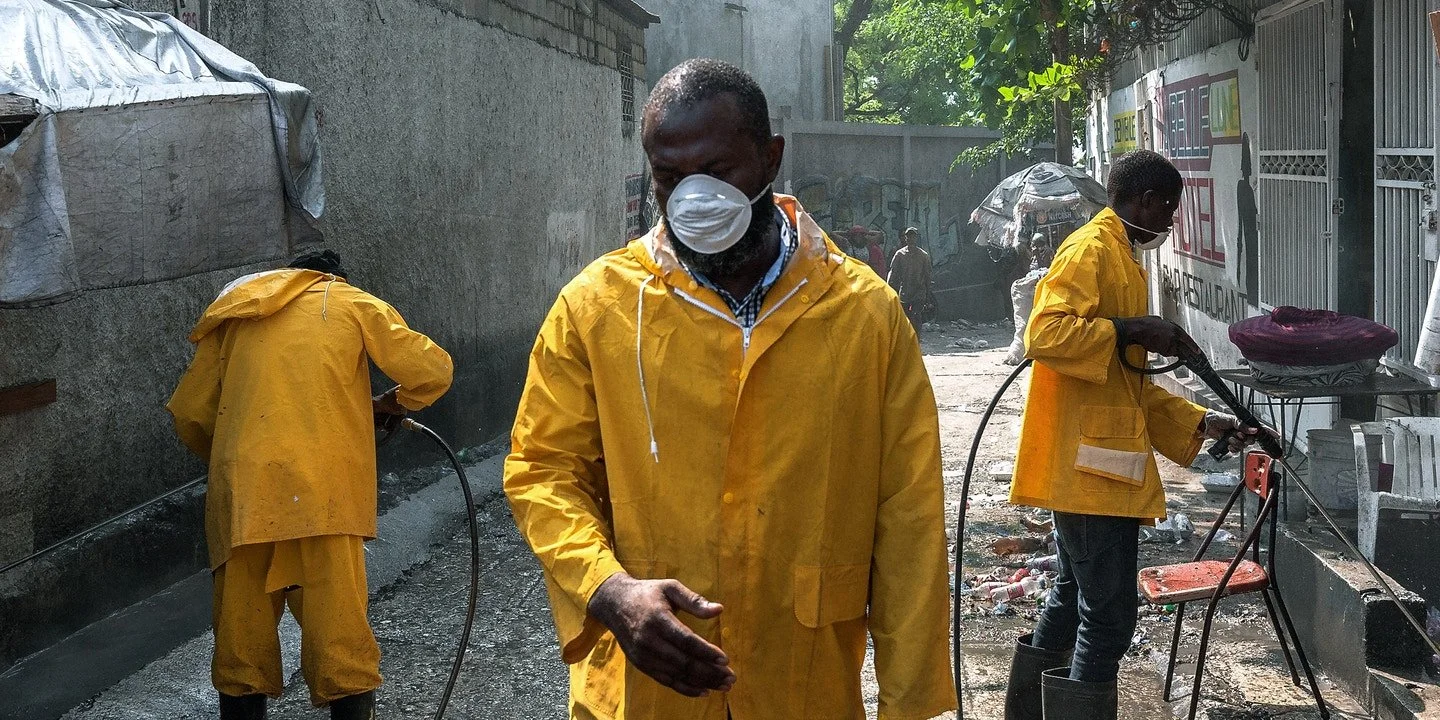
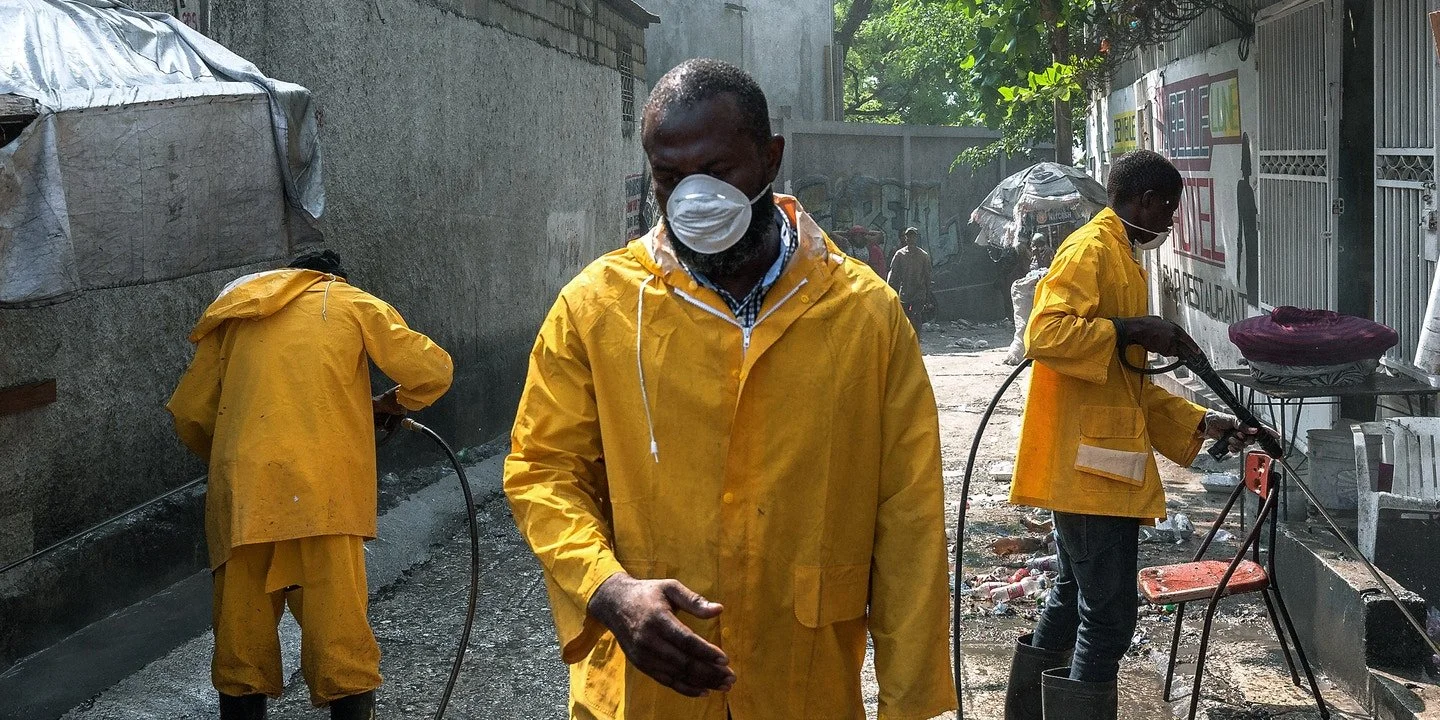
To prevent the virus’s spread, the Haitian government has closed schools and most factories and is encouraging people to adopt social distancing measures. However, the majority of Haitians live on less than $2 a day and many work in the informal sector. The significant depreciation of the value of local currency and skyrocketing inflation have driven up prices of basic necessities like food. For people already struggling to feed their families, staying home is a luxury few can afford. And in the markets and public transit systems that informal sector workers depend on, it is often all but impossible to adhere to the social distancing guidelines recommended by public health authorities.
The weaknesses of Haiti’s health care system, and the precarious conditions in which many Haitians live, have both been identified as factors in the deadly toll of the cholera outbreak that killed an estimated 10,000 Haitians between 2010 and 2018. Oswald points out that other nations were able to help Haiti respond to the cholera epidemic by sending medical personnel and supplies. She fears that international assistance will be less forthcoming amid the Covid-19 pandemic because governments around the world are already struggling to respond to outbreaks within their own borders.
In this context, Oswald said, U.S. deportations to Haiti are “irresponsible and dangerous from a public health standpoint.” Because none of the 61 migrants the U.S. deported had been tested for the coronavirus, the Haitian government was forced to divert its scarce resources into quarantine measures. “It is certainly adding a strain to the already overburdened system that has been set up,” she said.
While more than 545,000 people in the U.S. have tested positive for the coronavirus, Haiti has reported 33 cases of infection and three deaths from Covid-19. Given how limited testing has been in Haiti — only 365 tests had been carried out nationwide as of April 9 — Oswald suspects that the actual number of cases could be much higher.
A Haitian public servant involved in Haiti’s coronavirus response agreed with this assessment. “There could be a lot of infections and some deaths that are not reported,” the official, who declined to be named over concerns of retaliation, told The Intercept. He warned that in addition to “creating stress on an already vulnerable system,” the U.S. deportations are “creating a very dangerous precedent.”
The deportations, which were carried out via a plane chartered by U.S. Immigration and Customs Enforcement, took place weeks after the Haitian government officially closed its borders in the wake of discovering the country’s first two coronavirus cases.
For its population of 11 million people, Haiti has just 124 ICU beds and the ability to ventilate less than 70 patients.
Haiti’s foreign minister, Claude Joseph, said he pleaded with the U.S. government to suspend the scheduled deportation flight. Partners in Health, which is calling for a moratorium on all deportations amid the pandemic, also mobilized to try to stop the U.S. from deporting the Haitian migrants, as did the Institute for Justice and Democracy in Haiti, a Boston-based human rights group, and several U.S. members of Congress. A lawyer representing one of the Haitian migrants who was scheduled to be deported spoke out about the public health risks, pointing out that his client had been detained in two separate ICE facilities with reported Covid-19 cases.
Despite these concerns, and the U.S. government’s own public advisories, which emphasize the need to “avoid all international travel due to the global impact of Covid-19,” the U.S. deportation flight proceeded as scheduled. Yet seven of the Haitians on board were removed at the last minute. Among those yanked from the plane was the man who was potentially exposed to the virus in ICE custody. ICE did not provide a public explanation for its actions and did not respond to The Intercept’s requests for comment. The man’s wife later reported that he had been taken to another ICE facility where a detainee had tested positive for the virus.
Oswald, who participated in the mobilization to stop the deportations, said the outcome left her extremely frustrated. “It showed me the powers that exist in that system,” she said, and “that we all need to be advocating for an end to deportations during this time.”
COVID-19: Killer of Black, Brown and Poor of US and Haiti
We are supposed to be thinking this week about the health disparities in the United States based on race and ethnicity, since the New York Times, Washington Post, National Public Radio, and even USA Today are going on about it. This is the hot topic presumably because of a recent analysis of the demographics of COVID-19 deaths by the Center for Disease Control and Prevention (CDC). Such an analysis, however, cannot be found. Instead, the public health departments of several US states simultaneously published their COVID-19 racial breakdowns. One cannot help but suspect that this orchestrated and sudden discovery of the institutional racism of the US is nothing but an election-year ploy to sway Black and Hispanic voters from one to another of two politically parties that care nothing about them. Politicians have learned, from Obama’s speechwriters, that when they state a problem accurately while not promising to do anything about it, they leave everyone in the room thinking that they’ve said they will address the problem. But nothing ever gets done: not by the overtly xenophobic and racist political party that courts far-right elements at home and abroad, and not by the metrosexual party that says all the right things but embraces the same xenophobic and racist policies on the quiet.
Nevertheless, these data should make us think more deeply about why the poorer citizens of this country are dying in greater numbers from a virus that, in principle, does not discriminate by race and ethnicity. For a while the CDC trumpeted the fact that 90 percent of the people hospitalized for COVID-19 had underlying health problems like old age, pulmonary or cardiovascular issues, diabetes, or cancer. Since many of these problems are linked to obesity, this has been used as a way to blame the victim. To be blunt about it, some writers stopped just short of declaring, particularly to the populations of states with large Black and Latino populations: “It’s your fault that you’re dying, because you’re fat.” To this I say: “No. You’re dying because you’re poor.”

If you had been fat, middle class and in relatively poor health, you would have fled your city and worked from your vacation home. You would have scrupulously observed the directives to shelter at home, ordered deliveries of groceries, wine and take-out foods, and still got your paychecks. And if you had been obese, rich and in poor health, you would have done the same things and maybe also worried about the stock market making you less rich. But even if you had schmoozed with people like Prince Charles and caught SARS-CoV-2 from them, you would have had a platinum health insurance policy, and you would have received excellent care and been unlikely to die from COVID-19.
In Louisiana, for example, the chance of a black person dying from COVID-19 is 70 percent, although African-Americans represent only 32 percent of the state’s population. By contrast, a white person has only a 29 percent chance of dying although this demographic represents 62 percent of the population. The figures in Illinois and several other states are also gruesome. Even in areas like California and New York City, where the data in the aggregate appear not to belie any institutional racism, if one dissects away the areas with a large black population, the same pattern emerges. As startling as these figures might be, however, they would be far worse if they were broken down by income and wealth. But I believe the idea is to make us think about race before we begin to form a thought about class: much like a red cape distracts an enraged bull from impaling a matador.
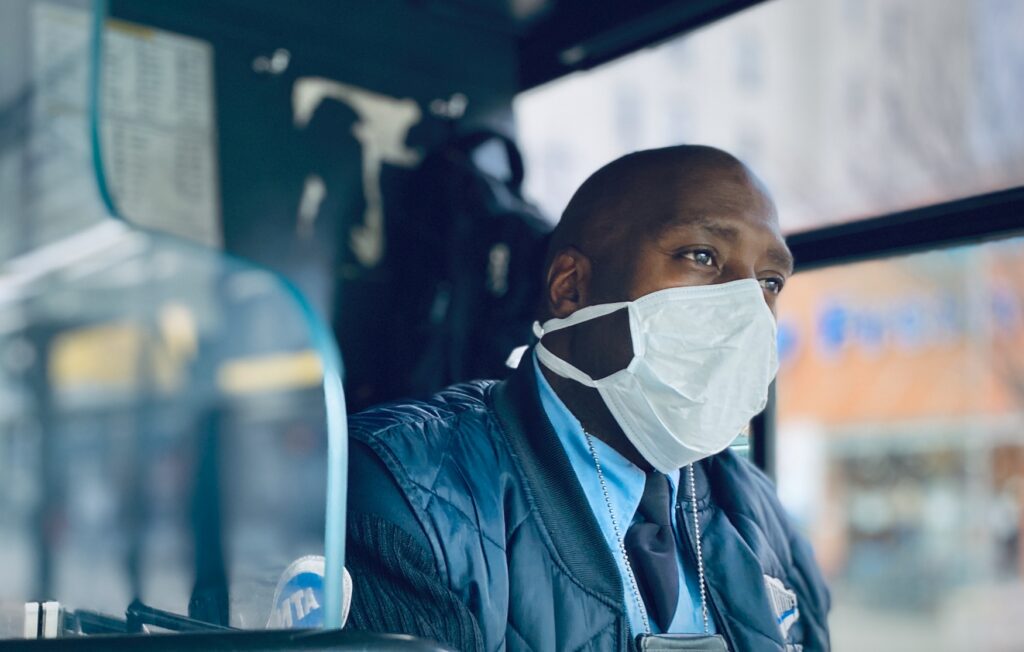
A major factor that makes the poor more vulnerable to being killed by SARS-CoV-2 is their job. The poor are overwhelmingly employed in more exposed jobs, like care of children, the mentally ill and the elderly; janitorial work; low-level hospital jobs; transit jobs like bus driving, and jobs as baristas and grocery clerks. Many such workers must keep two or three jobs to make ends meet, in a system that denies them full-time work so they get no health insurance. Consequently, they come into contact with many more people at work, usually in situations where they are enclosed in poorly ventilated spaces. To get to work, the poorest of such workers take public buses and trains, which are often crowded and also poorly ventilated. At home, they live in larger family groups in neighborhoods where the air and water are often polluted. Finally, for the poor, the next paycheck takes priority over all other issues, including health problems. And so the poor age prematurely: most never find a moment to care for themselves and work till they’re used up.
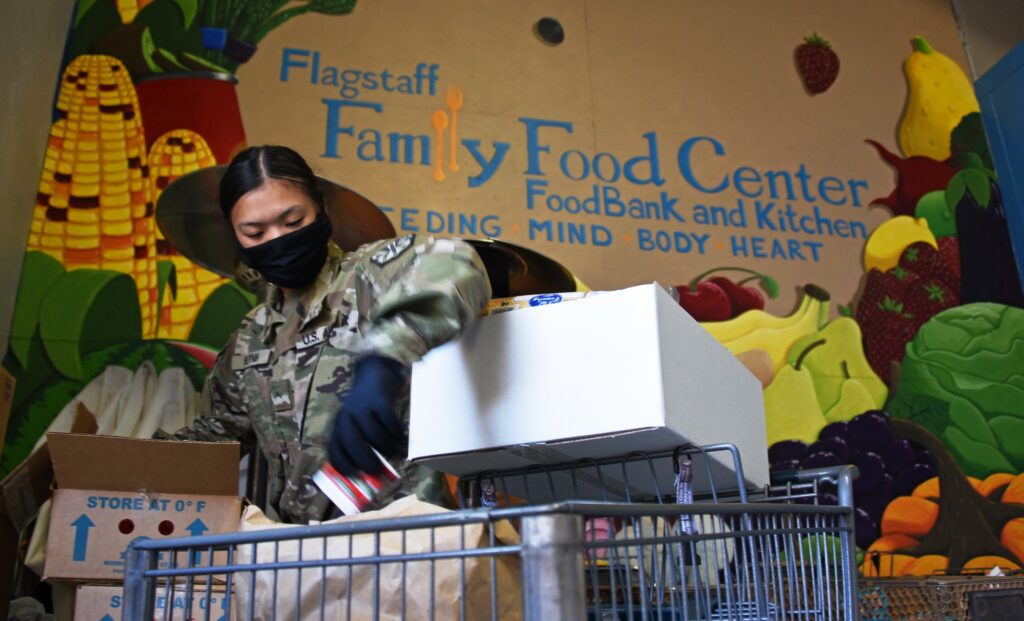
As dire as the situation might appear in the US, it is far worse in the developing world, where many governments are inimical to their populations and propped up from outside. In Haiti, for example, the so-called government, which is now reduced to only the executive branch, has done everything in its power to create an emergency situation that will cause aid money to flow to a small group of politicians. Despite the raging pandemic, on March 17, Haiti left its airports open to flights to and from the US and Cuba. Deportations from the US, including a recent one from Louisiana, continue. A Cuban medical contingent of 1,500 people left Haiti on March 22, to care for the Cuban sick, the passengers of a cruise ship, and the Italian sick. This was terrible news, because the Cuban health brigades have been the main protection of Haitians from health NGOs. Such NGOs are, for the most part, unqualified. Furthermore, they are often predatory and less interested in healing the sick than in conducting drug trials for big Western pharmaceutical companies. After a brief shutdown, on March 30 Haiti reopened its assembly factories to manufacture medical gowns and masks. Despite the supposed greater distance between workers, this situation effectively gathered large numbers of women in fluorescently lit boxes with appalling ventilation. The government also chose to roll out its National ID Distribution around the same time, forcing long lines of people to stand around together for hours.
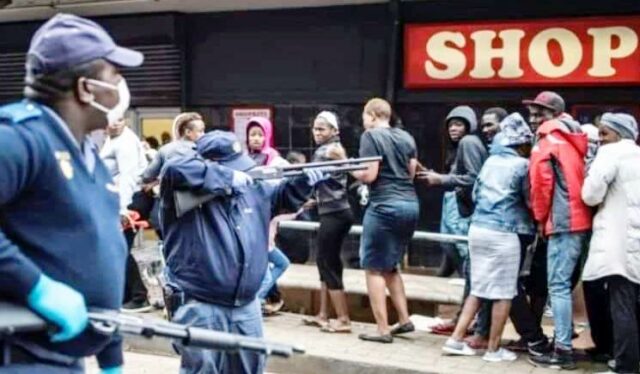
Why would a government be so eager to kill its own citizens? I believe the incentive is the lucrative business of supplying human subjects to big Western pharmaceutical companies for their drug trials. On April 2, Haiti got $20 million from the World Bank, which required COVID-19 deaths as a precondition for its donation.
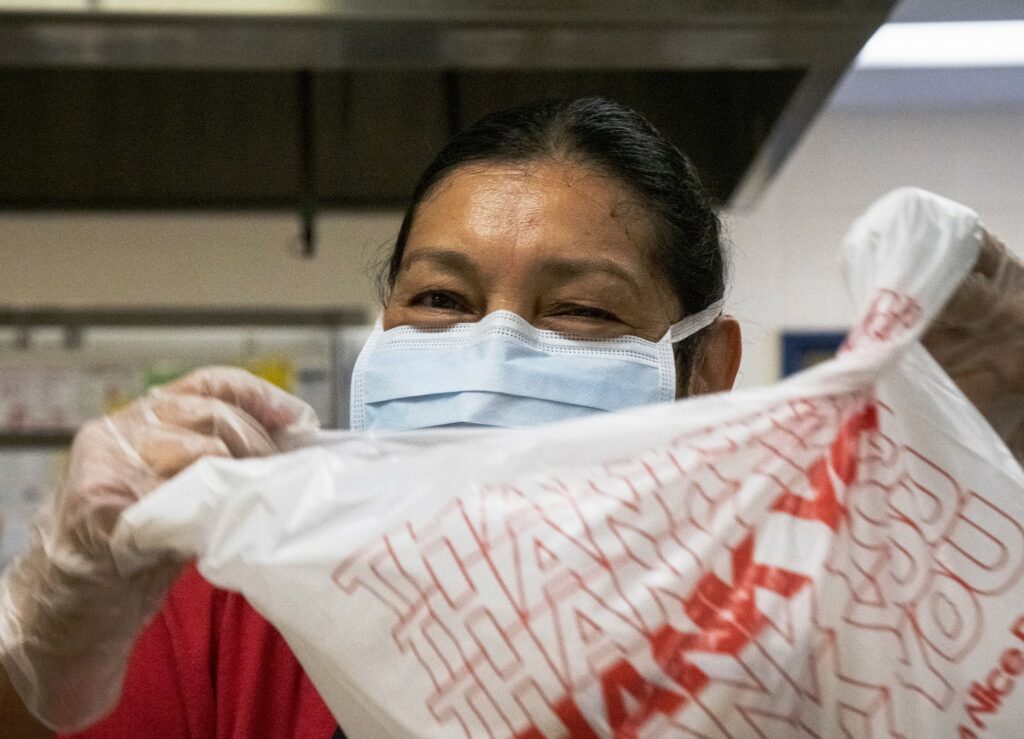
Indeed the deathwatch has started again in Haiti, this time for COVID-19 instead of the cholera that was permitted to kill 10,000 people. So far, two people have died from the viral infection and human neglect: a 55-year old lawyer from the Ministry of Justice, and an unidentified 69-year-old woman. The cause of the first death is being contested by the man’s family. Whether or not it is correct is hardly worth one’s attention, because most of the news from the country is a tissue of lies. As of April 7, only 270 tests had been done, although the Ministry of Public Health and Population (MSPP) supposedly had in hand 2,000 tests and ordered 10,000 more. Most of the tests were administered to politicians — and no doubt their families too — on the order of the prime minister, who demanded testing of all the country’s ministries. Indeed, 187 of those 270 tests were in the West Department, where the capital city and politicians are.
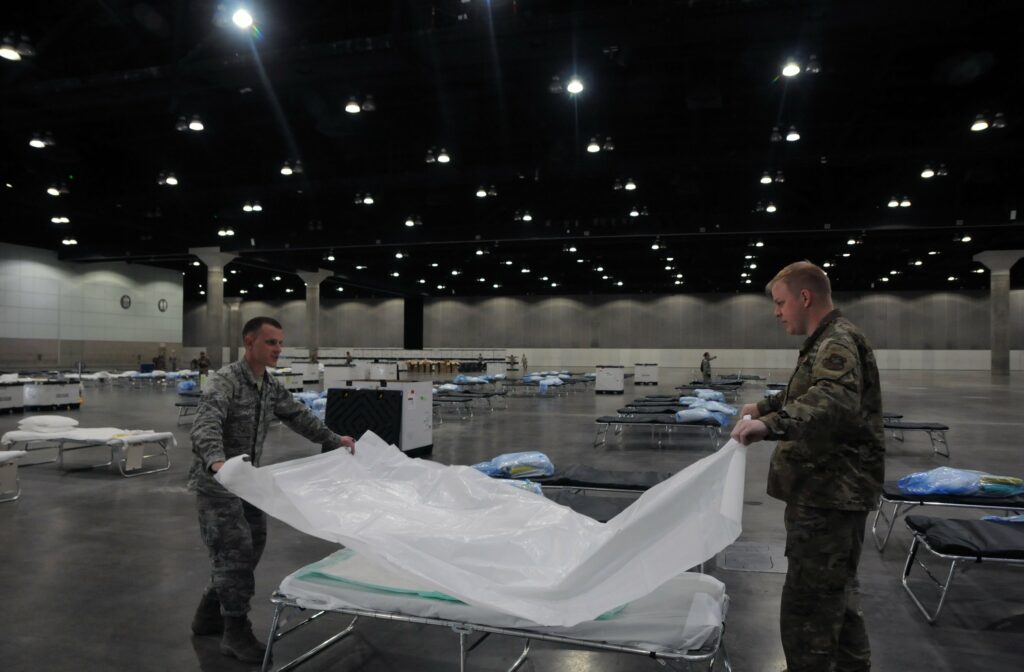
To say that the COVID-19 pandemic is compounded by societal problems is an understatement. In Haiti, for example, the diaspora’s remittances account for about 30 percent of the GDP, but everywhere the diaspora is losing its jobs because of the global economic shutdown. Haiti is a place where people walk for miles and then stand in line for hours to buy their water, where even the street markets sell mainly imported produce and dry goods, and where the exchange rate has deteriorated from 75 to 100 Haitian gourdes per US dollar. The Minister of Public Works says he is ready to bury 1,000 to 1,500 people. The scenario for Haiti is quite analogous to that of most the developing world, with only changes in the details. Let us hope the poor bury their governments first.
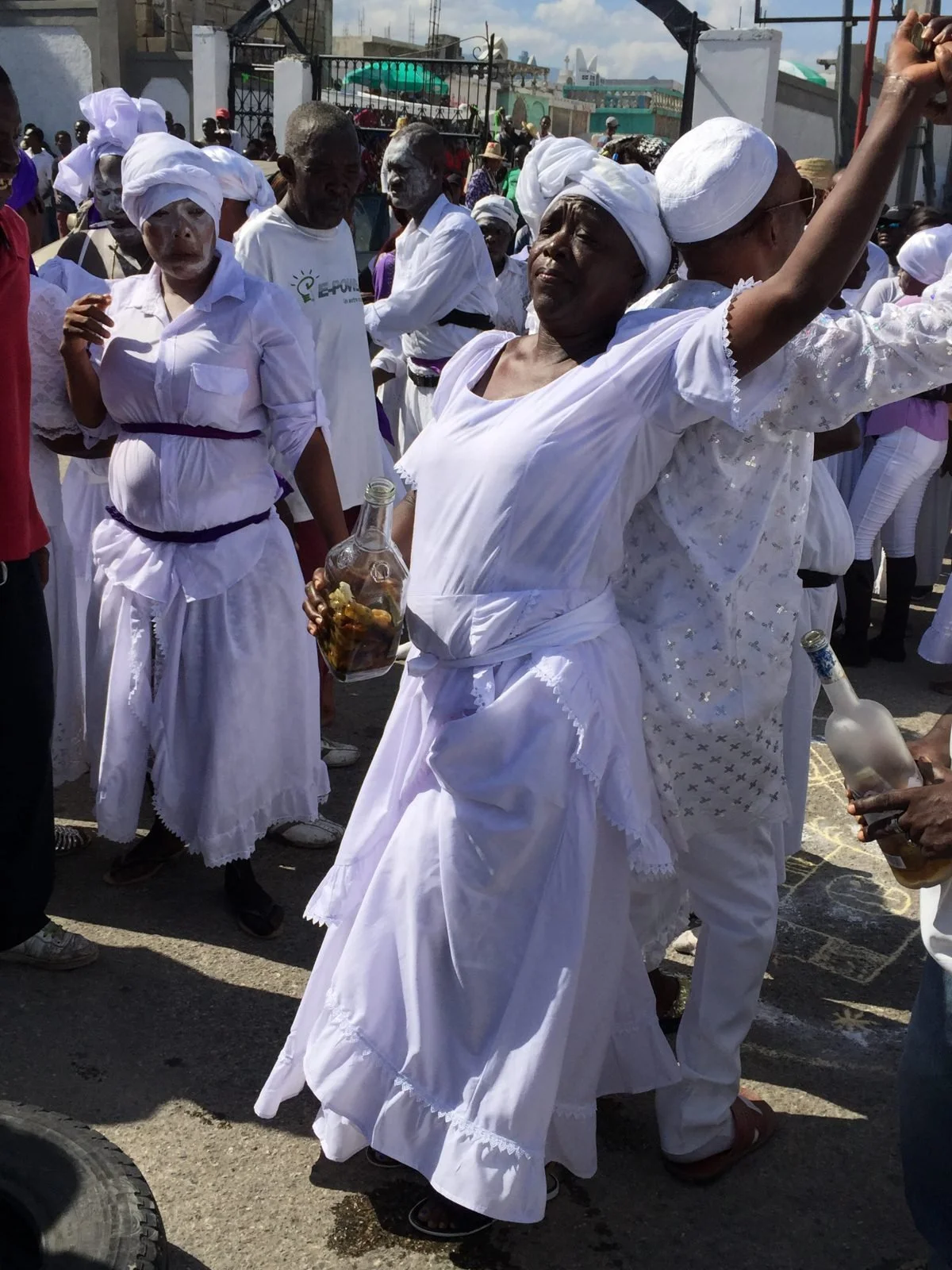
Haiti and the US Covid-19 Crises–Closer Than We Think
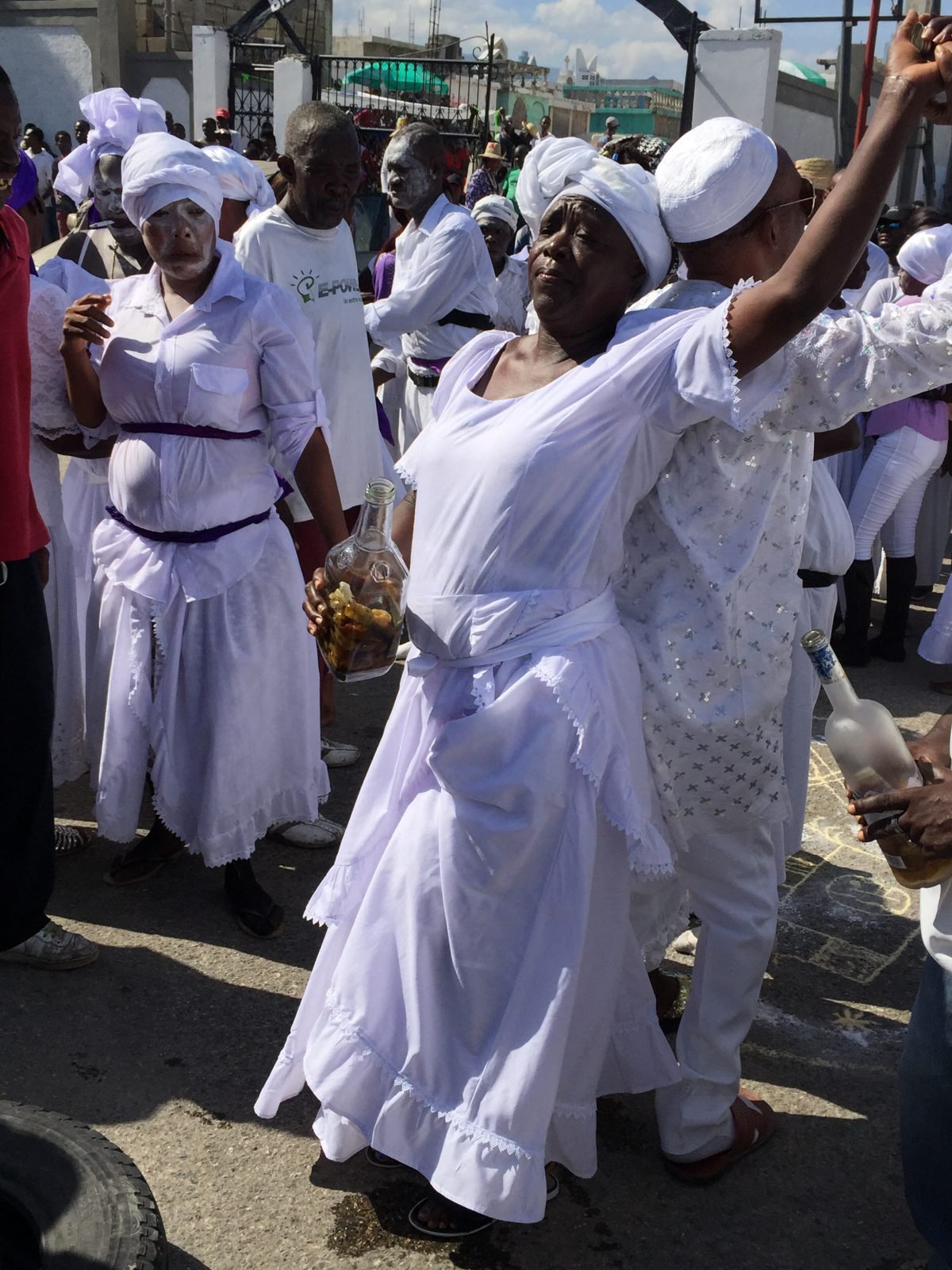
Haiti has a population of 11 million and reports 31 cases of confirmed coronavirus and one death as of today (April 10, 2020). Several hundred diagnostic PCR tests have been done.
The Dominican Republic (DR) has 10 million people and shares the island of Hispaniola with Haiti. The DR reported several days ago that they have 2,349 coronavirus cases with 118 deaths. Thousands of Dominicans have been tested.
I always wonder how many Haitians and Dominicans have coronavirus signs and symptoms which have not been recognized and have not been reported. Probably many.
Since the summer of 2015, hundreds of thousands of people with Haitian blood have been sent back to Haiti from the Dominican Republic. However, within the last couple of weeks, thousands of Haitians in the DR have been fleeing back to Haiti to escape the virus. They fear not only the viral illness but what could happen to them by their Dominican neighbors if they show signs of the virus.
Jacqueline Charles/Miami Herald 4/9/2020–
“A daily exodus of Haitians fleeing the rapid increase of coronavirus cases in the neighboring Dominican Republic — many evading military patrols and medical screenings as they sneak back into Haiti through the closed land border — is raising concerns about Haiti’s ability to halt the spread of the deadly virus.
“Even in normal situations, managing the flows at the borders is incredibly difficult,” said Giuseppe Loprete, the country director for the United Nations’ International Organization for Migration. The agency has adapted its tracking of migrant flow along the 224 miles dividing Haiti and the Dominican Republic on the island of Hispaniola to support the ongoing preparedness and response to the COVID-19 global pandemic.”
—–
During recent months in Haiti, healthcare workers have staged numerous walkouts, protesting a lack of essential supplies and abysmal sanitary conditions in Haitian hospitals. Unsurprisingly, hospitals in Port are reporting they are utterly unprepared to face the looming pandemic. Medical staff have limited access to Personal Protective Equipment (PPE), and quarantine rooms (in public hospitals) are nowhere near fit for that purpose. (Haiti Support Blog)
Consequently, Haitian doctors and nurses who work in Haiti’s public hospitals, have publically said that they will not care for Covid-19 patients unless they have the proper PPE. And they don’t really believe that the Haitian government will be providing it for them.
And why doesn’t Haiti have PPE? Well, I cannot say for sure, but is anyone surprised? Their dysfunctional health care system does not have much of anything.
However, there was an article from the New York Times yesterday which spins the situation a little differently and describes “modern-day piracy” which may limit some countries from having adequate supplies to fight the virus.
The Times (April 9, 2020)–
“As the United States and European Union countries compete to acquire scarce medical equipment to combat the coronavirus, another troubling divide is also emerging, with poorer countries losing out to wealthier ones in the global scrum for masks and testing materials.
“Scientists in Africa and Latin America have been told by manufacturers that orders for vital testing kits cannot be filled for months, because the supply chain is in upheaval and almost everything they produce is going to America or Europe. All countries report steep price increases, from testing kits to masks.”
And even if the Haitian health care providers had the requisite PPE, so what? Haiti has only 130 ICU beds in the entire country and most of them are not functional. And there are an estimated 64 ventilators in the country–but ventilators don’t run themselves and need to be controlled by highly trained physicians who are able to monitor the settings while evaluating the patient’s clinical status at the same time.
It is easy to understand how Haitian medical staff may lack PPE, but what about the United States? The US medical providers have been short on PPE also. How can this be?
And to make matters worse, threats have been made against numerous doctors and nurses by their hospital administration when they spoke out on social media and reported that their workplace was not safe because PPE was not sufficient to protect themselves and their patients in the face of the growing Covid-19 pandemic. Both physicians and nurses in the States have lost their jobs for stating this. And many other healthcare professionals have said they feel they can’t tell their story for fear they too will face disciplinary action from their employer, as reported by Medscape Medical News.
——
Currently, the US is in the middle of social distancing. However, this public health maneuver attempting to “beat the virus” has been politicized.
The Hill (April 9, 2020)–
“Attorney General William Barr late Wednesday suggested that the federal government in May should begin relaxing some of the “draconian” social distancing restrictions imposed throughout the U.S.
“Barr said in an interview with Fox News that the U.S. had to be “very careful” to ensure some of the measures being “adopted are fully justified, and there are not alternative ways of protecting people” amid the novel coronavirus outbreak.
“I think, you know, when this — when this period of time is — at the end of April expires, I think we have to allow people to adapt more than we have and not just tell people to go home and hide under the bed, but allow them to use other ways — social distancing and other means — to protect themselves,” he said.
“Leading health experts have continually called for keeping social distancing requirements in place until the U.S. sees a significant and consistent drop in the number of hospitalizations from the virus. Those requirements have devastated the economy, leading to a wave of business closures and a surge in unemployment applications.”
In short, human lives compete against the economy and time will tell which wins out.
In Haiti, where people live on top of each other, it is very hard for the poor to practice social distancing for so many reasons. The poor in Haiti are like the poor in the United States–they both need to provide for their families during this pandemic.
“…the government of President Moïse Jovenel has called for people to isolate themselves, stay home, frequently wash their hands and engage in social distancing.
“But on $2.41 a day or less, it is hard to feed yourself and your family and buy the soap, and in many instances, the water, needed to wash your hands. Most poor Haitian families live in a single room, which makes social distancing impractical, especially since their neighbors are just a wall away.
“If people don’t go out to work, they starve.”
And on Twitter today was this Tweet which is nauseating–
And if the challenges in Haiti are not big enough, many Haitians do not believe that coronavirus even exists in Haiti. They believe it is a white man’s disease that they will not get.
However, data from the United States is telling a different story.
USA Today (April 9, 2020)–
“Black Americans are overwhelmingly dying of the coronavirus at much higher rates compared to others in some major cities. But most federal officials and states are not keeping track or releasing racial data on coronavirus victims.
“While black residents make up about 29% of Chicago’s population, a whopping 72% of the city’s residents who have died from COVID-19 so far are black. And according to the public health commissioner, 52% of those testing positive are black.”
And in New York City—
“As of Wednesday morning, more than 3,500 residents had died of coronavirus, the city Department of Health and Mental Hygiene reported. That figure does not count more who died at home and were not tested for the virus.
“Black and Latino city residents have died from coronavirus at twice the rate of white or Asian New Yorkers, preliminary data released Wednesday by city officials shows.
“Latinos have died at a rate of 22.8 per 100,000 residents and black New Yorkers at a rate of 19.8 per 100,000 the analysis shows.
“By comparison, whites in New York City with confirmed cases of COVID-19 have died at a rate of 10.2 — and Asians at a rate of 8.4 — per 100,000 people.
“Health disparities and access to care play a key role. Many essential workers holding down jobs like driving buses, childcare or in grocery stores are black. As the pandemic continues to take a toll on health and economics, there are calls for addressing underlying racial inequities.”
—-
Conclusion–
Eric Topol, MD reports in Medscape his view of this pandemic–
“The handling of the COVID-19 pandemic in the United States will go down as the worst public health disaster in the history of the country. The loss of lives will make 9/11 and so many other catastrophes appear much smaller in their scale of devastation. Perhaps what we in the medical community will remember most is how our country betrayed us at the moment when our efforts were needed most.”
And in Haiti, Dr. Ernst Noël, of the Faculty of Medicine and Pharmacy, in Port-au-Prince, believes that a projection of 800,000 deaths from COVID-19 is not an exaggeration.
Other Haitian experts are talking about 1,000 deaths per day in Haiti by May and the distinct possibility of burying bodies in mass graves as was done after the Haitian earthquake in 2010.
I hope all of these predictions will be wrong. But looking 700 miles north and seeing what is happening with Covid-19 in the States, Haiti most likely will not be spared.
Haiti's crowded prisons a coronavirus catastrophe waiting to happen
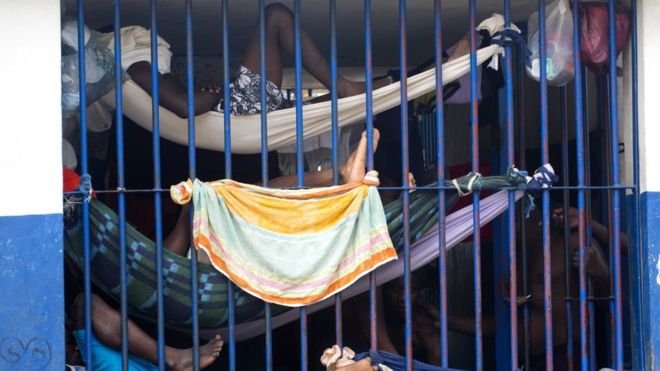
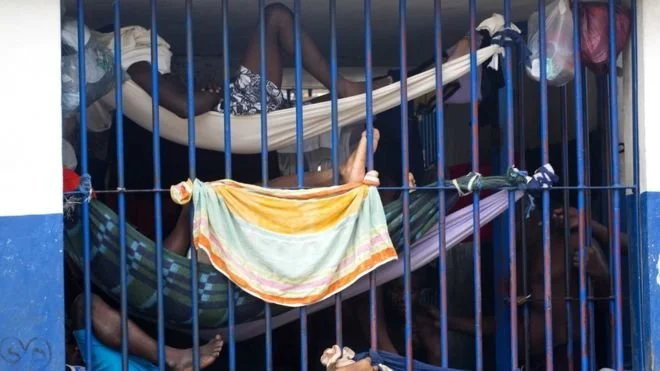
PORT-AU-PRINCE, Haiti (AFP) — Imagine the struggle of containing the coronavirus if it hits Haiti's hellish prison system, the world's most overcrowded, where filthy, sometimes windowless cells meant to house 20 people are teeming with up to 80, unable to even go outside for fresh air.
The poorest country in the Americas has reported only one coronavirus death out of 25 recorded cases so far. But activists and officials fear the prison network is an epidemiological ticking time bomb.
The system is a mess, from a new women's prison built in 2016 to crumbling provincial jails that over time have become places for long-term detention rather than short stays. All of them are overcrowded.
Haiti has 11,300 people behind bars — most of them waiting to go on trial, sometimes for years—- in conditions that human rights activists liken to torture.
“Prison cells in Haiti are small rooms with space for 10 to 20 people if you use the rule of 4.5 square meters per prisoner,” said Marie Rosy Auguste Ducena of the National Human Rights Network. That works out to about seven feet by seven feet per man or woman.
“But these cells hold up to 80 people. So you can just imagine the levels of overcrowding these people are forced to endure,” she added.
“The cells are also very poorly lit and have little ventilation, so the prisoners become very weak,” said Auguste.
Because there is not money to hire enough guards, prisoners are not allowed outside to get fresh air or exercise, said Auguste.
Human rights groups have complained for decades about the appalling conditions in Haiti's prisons.
But now, as the novel coronavirus sweeps the globe and even countries as rich as the United States struggle to keep prisoners safe — sometimes simply releasing them — Haiti is in a race against time.
The idea is to thin out the prison population before coronavirus hits the destitute Caribbean nation in earnest and conceivably spreads like wildfire through the inmates.
Charles Nazaire Noel, the director of the national prison system, said he has sent the Justice Ministry a list of 600 prisoners as candidates for release.
“That is not much,” Nazaire added, although he is making up a second list that would comprise only people awaiting trial.
Indeed, that is the case for a staggering three-quarters of the prison population. And some have been held even longer than they would be if found guilty of the crime they are accused of.
“There are people in prison for stealing a cellphone or a goat. For petty larceny like that, they are supposed to spend a year in prison. But some have been in prison for five or six years,” said Nazaire.
SHORTAGE OF MASKS
He said he has warned the government time and time again about the dangerous conditions in the prison system, to no avail.
“Our prison overcrowding has reached a limit. The government should have been aware of this,” said Nazaire.
Another threat comes from a shortage of protective masks for prison guards.
“Prison guards and other employees are people who go home at night. They are potential COVID-19 vectors for the prison system,” said Auguste.
“If COVID-19 makes it into the prisons, we will be facing an absolute catastrophe,” she warned.

Savings and Credit for Haiti
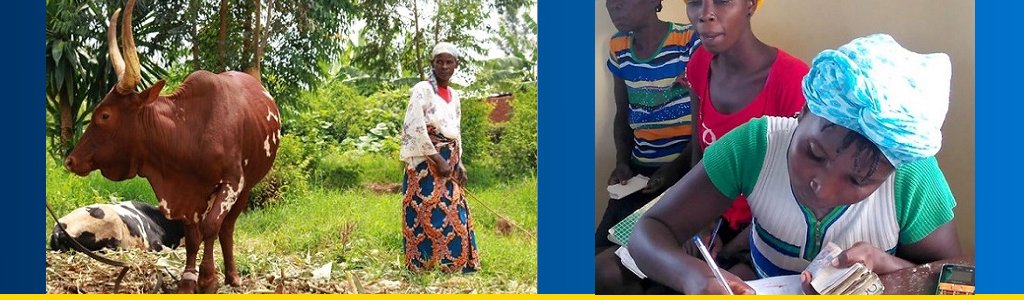
Haitians pool resources, launching small savings and credit groups that lend and invest in community projects – with an emphasis on saving.
A magnitude 7 earthquake devastated Haiti a decade ago – and NGOs launched many programs including a network of small credit and savings groups. The community-run programs set their own low interest rates and terms with the emphasis on long-term savings rather than aid or loans. Individuals “pool their resources, and then lend to each other or invest in their communities,” explains Kate Schecter, who leads the nonprofit World Neighbors. “By taking control over their own finances, individuals can decide whether they want to invest in a small business or farm, invest in a child’s education or address other needs.” Community groups that save substantial sums establish cooperatives, identifying leaders and developing the management skills. Savings grow in rural areas that lack banks, and over the course of years, financial security contributes to political leadership and community stability. Schecter notes, “Like savings itself, these programs build upon themselves.” – YaleGlobal
OKLAHOMA CITY: In the decade since an earthquake devastated Haiti, the United States and other governments poured more than $13 billion into recovery and rebuilding efforts. Well-intentioned international organizations drew up elaborate plans for industrial parks and other large-scale investments, with talk of stable democratic governance and an escape from the cycle of poverty that has long troubled the country of 11 million people.
While the money relieved suffering and did help build some infrastructure, it did not catalyze sustainable development. There are many reasons, including Haiti’s longstanding political problems. But there can be little doubt that traditional strategies did not achieve intended goals. Yet some development projects have worked in Haiti over the past 10 years, and one of these is savings and credit programs.
Development is premised on the concept of investment in human capital. However, donors rarely focus on the fundamentals of saving for those communities in international development projects. Donors want to distribute grants, measuring and evaluating results of that spending over a relatively short time. While this makes sense in terms of accountability, over the long term, individuals do not save to build capital.
One response has been microfinancing in the Grameen tradition – small loans from banks with low interest rates. This model, successful in the short term, has shown some drawbacks over time. Banks expect repayment in a timely fashion; borrower defaults can lead to debt traps and further poverty. In many rural areas, no banks or small loans are available, with the poor often forced to borrow from unscrupulous lenders who charge high interest rates and defaulters, again, forced into deeper poverty.
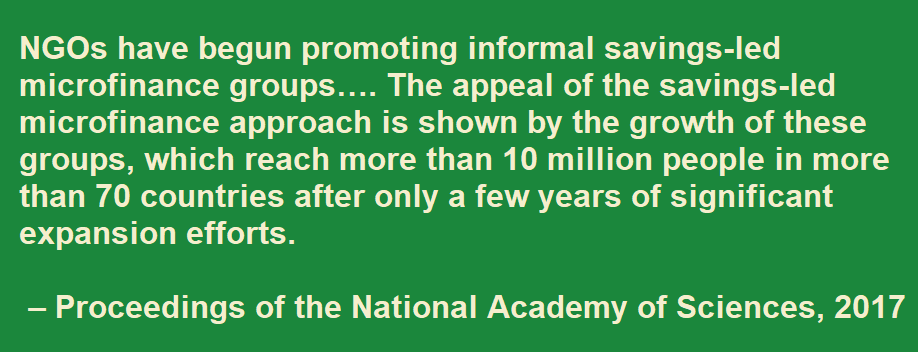
Another take on microfinance are savings and credit groups. In this model, participants pool their resources, and then lend to each other or invest in their communities. It is estimated more than 10 million people participate in such programs around the world. By taking control over their finances, individuals can decide whether they want to invest in a small business or farm, invest in a child’s education or address other needs. Many community savings groups use pooled funds to build water wells, schools or clinics. They set their own priorities and establish control over the public goods they build.
Often, community groups grow capital so quickly they need to form cooperatives to manage it. They then move to a higher level of credit and growth, developing accounting, marketing, public advocacy and other business skills necessary to expand markets and output.
This is what is happening in some communities in Haiti.
Before the January 2010 earthquake, Meladine Dalphinis was a tailor. With her workplace and livelihood destroyed, she went into farming. This provided her and her children a sustenance income. In 2015, Dalphinis learned about World Neighbors and a local community-based partner organization. The savings and credit groups determine interest rates and she became involved. This Haitian group offered a rate of 2.5 percent, a rate recommended by World Neighbors. Dalphinis took out a $35 loan, which she used to expand her leek fields and build a small fishpond. Her family eats the fish, a crucial source of protein, and she sells the surplus in the local market. This generated enough profit to invest in livestock. Our local partner taught Dalphinis to use animal waste to fertilize her crops – a critical method to reduce costs, increase profit and avoid the health risks of handling chemical fertilizers. Surplus livestock fertilizer is another source of revenue and profit.
Today Dalphinis runs a substantial family farm, and many of her neighbors in Odige do the same. It all comes back to the ability to save and invest, relying on technical support to make that investment profitable and sustainable. Right now, World Neighbors works with 20 savings and credit groups in the Artibonite region of Haiti. Another 28 groups thrive on their own after graduating from assistance. Each group averages about 30 people, with 1,500 people working together to save for their families and communities. These 48 groups grow their businesses, in the process learning financial skills and lifting entire communities out of poverty.

There are five ways international development groups can assist communities with savings and credit initiatives:
1) Self-management: A savings and credit group needs to manage itself, free of direct control by non-government organizations. Otherwise, the group cannot sustain itself after the development group leaves. By training community-based groups and offering a participatory process to identify community leaders, an international development organization can relinquish day-to-day management of the funds. In Haiti and the 13 countries where World Neighbors works, including Kenya, Nepal and Timor-Leste, community leaders have gone on to teach other communities how to establish and run their own savings and credit programs. Like savings itself, these programs build upon themselves.
2) Long-term commitment: The often-lengthy time involved in amassing significant capital argues for long-term involvement by international development groups. In Haiti, this means up to 10 years. This requires that donors not be rigid about measuring success through short-term “metrics.” Investors in tech companies are patient. Consider, it took Amazon nearly 10 years before it reported its first profit. Development groups and donors should be likewise patient as poor communities work to amass enough capital to catalyze self-sustaining income and wealth creation. World Neighbors does not provide seed money so it can take time to accumulate savings. In very poor communities, the groups start out saving small amounts, but quickly amass capital and begin lending.
3) Gender equality: An inclusive approach helps communities begin to challenge the gender assumptions and discrimination that hinder women’s ability to work and earn an income outside of the home. As Dalphinis's experience demonstrates, women are eager to take advantage of opportunities and share their success. In many countries, this economic leadership translates into political leadership. For instance, in Bihar, India, Munni Devi joined a savings and credit program run by a local partner of World Neighbors. Successful in increasing her family’s agricultural output, she formed her own savings and credit group. Group members served as her base when she successfully ran for sarpanch, the head of her village council – the first woman to serve in that position.
4) Avoid banks: Community-based savings and credit programs avoid high interest rates and onerous conditions placed on borrowers when they struggle to repay loans. In small communities, groups set their own low rates and help when borrowers fail to make a payment.
Lack of bank involvement does not mean these groups cannot scale up to have the capital to invest in larger projects, like food processing plants. To do so, they come together to form savings and credit cooperatives. In Kenya, for example, the Akukuranut Development Trust has successfully evolved from a collection of small savings and credit groups to a sizeable cooperative registered with the government. Nevertheless, the cooperative maintains roots in the communities and continues to lend at low rates.
In rural isolated areas where bank branches are rare, these groups provide the opportunity for credit without the dangers of high-interest lenders who often prey on the poor.
5) Help communities create endowments: Many groups invest the capital they initially saved back into the community through institutions that live on long after original funders leave. World Neighbors is not alone. Other development organizations, large and small, use the methodology with great success, including CARE, Oxfam, CRS, PLAN, and the Bill and Melinda Gates Foundation – all helping communities to create endowments with an eye toward sustaining the wealth they accumulate.
Savings and credit groups are no magic wand. They only work as part of a holistic approach that involves health, water, sanitation, improved agricultural techniques, education and other services. But income generation and wealth creation are not sustainable without some kind of long-term savings mechanism.
In light of the current COVID-19 pandemic, these mechanisms will be essential as the global economy tries to get back on its feet. This crucial component that improves lives in Haitian communities will help there and numerous countries as all begin to recover from the pandemic.
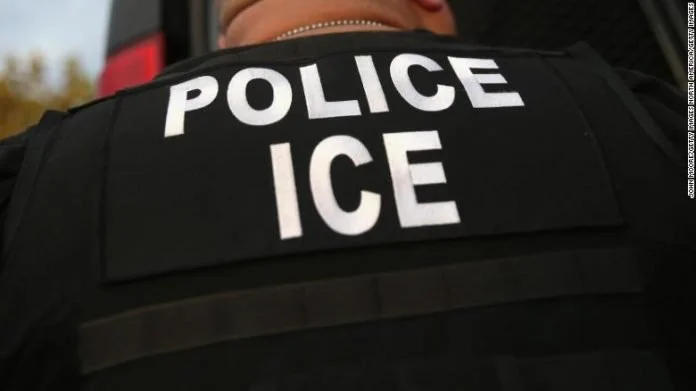
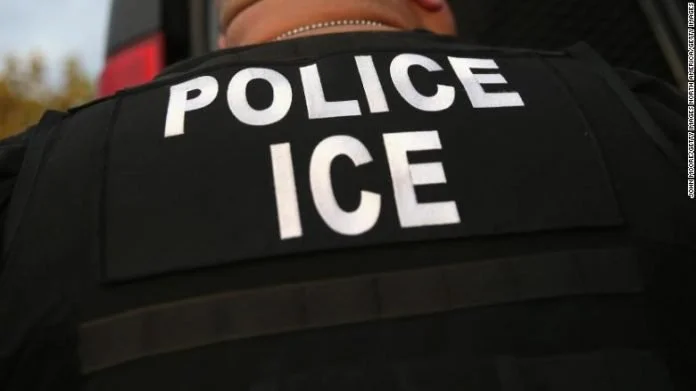
South Florida Haitian Leaders Want Trump Administration to Pause Deportations to Haiti During COVID-19
MIAMI – The COVID-19 pandemic has infected nearly 1.5 million people globally and killed at least seventy thousand. Because of this, the Centers for Disease Control and Prevention (CDC) have urged the American public to stay at home when possible in order to safely avoid exposure and curb the outbreak.
Yet, despite the highly contagious nature of this virus, the Department of Homeland Security has continued to detain and deport immigrants.
On April 7th, 2020, at least 68 Haitian nationals were deported to Port-au-Prince. One of them was exposed to coronavirus at two different facilities.
Deporting exposed detainees is incomprehensible. By sending these immigrants to vulnerable nations, The Department of Homeland Security knowingly put the detainees, the officers, Haiti, and neighboring Dominican Republic at risk.
Haiti does not have the capacity to respond to a pandemic of this magnitude. It lacks ventilators, essential medical equipment for workers, and sufficient intensive care units for critically ill patients. The potential outbreak that could emerge would be disastrous for the country.
Marleine Bastien, Executive Director of Family Action Network Movement (FANM) in Miami stated, “If the US government wants to contain the spread of the coronavirus, it will immediately order a halt on all deportations. We have a moral obligation to defeat this virus for the people of Haiti and of the world. Deporting immigrants at this time of crisis is inexplicable and runs contrary to the orders and mandates our own local and state lawmakers have put in place. This must stop now.”
Institute for Justice and Democracy Haiti (IJDH) Policy Coordinator Steve Forester exclaimed, “Recklessly spreading coronavirus, one would think, should be a crime with maximum penalties attached. But that’s what DHS is doing by continuing deportations to Haiti and many other countries as if the coronavirus didn’t exist! All “normal” deportations, like yesterday’s of 68 persons to Haiti, of persons who have been detained in facilities which government officials have acknowledged are breeding grounds for infectious diseases, from a public health perspective, is a catastrophe endangering hundreds of thousands of vulnerable people in foreign lands.”
FANM Board Chair Marie Paule Woodson stated, “ICE’s decision to deport the detained Haitians in spite of the coronavirus concerns is wrong and will only worsen the crisis in Haiti. It is inhuman, barbaric, and insane. The entire country stands the chance of being wiped out knowing the current conditions.”
Prominent Immigration lawyer Ira Kurzban stated, “It is disgraceful that while Haiti is closed to all flights from the U.S., President Jovenel Moise accepts Haitians with the coronavirus in a county of 8 million, many with compromised immune systems resulting from the UN imported cholera epidemic.”
Family Action Network Movement (FANM) urges The Trump Administration to put a moratorium on deportations to Haiti and all other nations in order to stop the spread of the coronavirus in this time of grave crisis. This virus is deadly and the federal government must respond in kind. In addition, all non-criminal immigrants should be freed to ease overcrowding and reduce the risk of contamination.
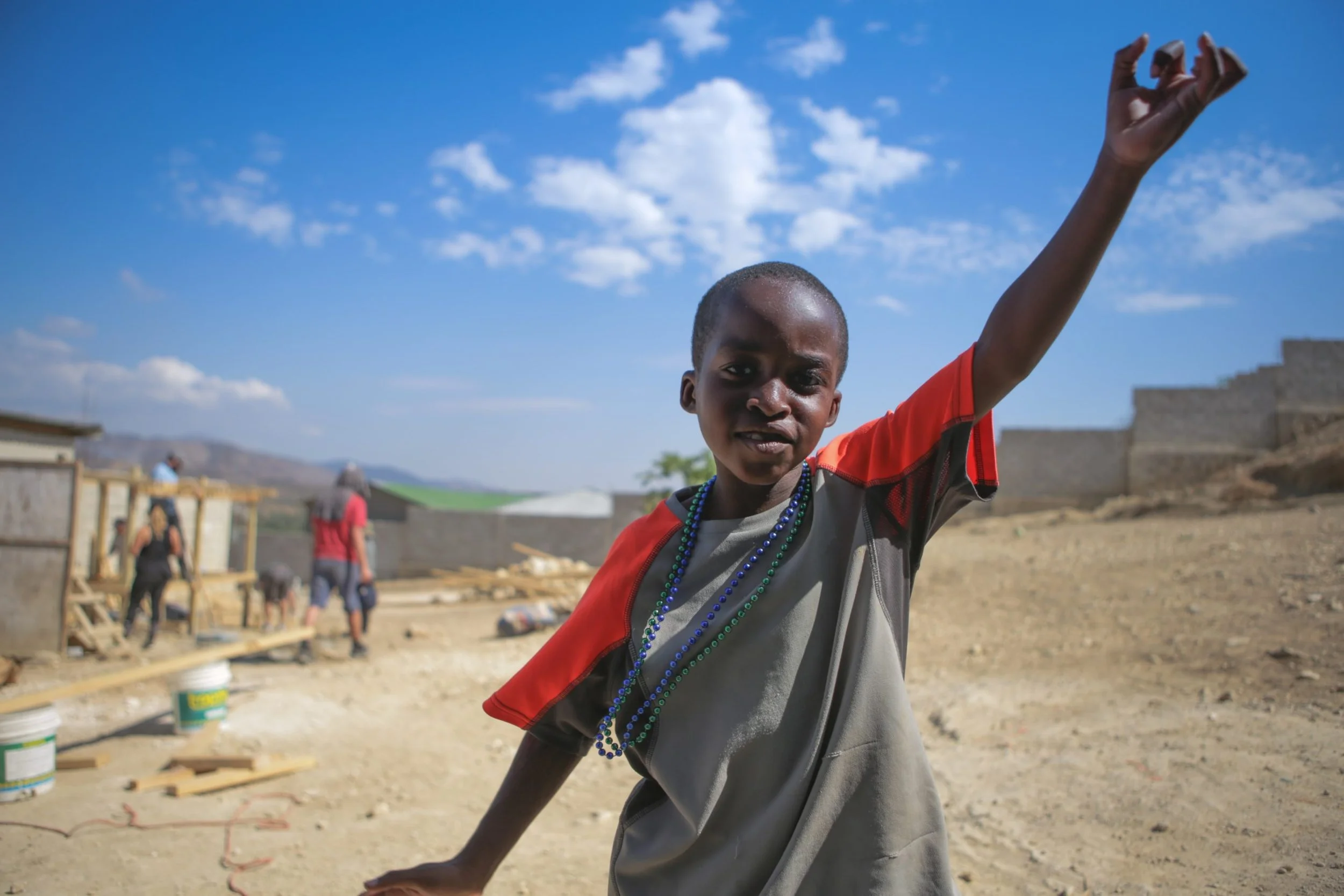
Breaking cycles of disaster and poverty in Haiti
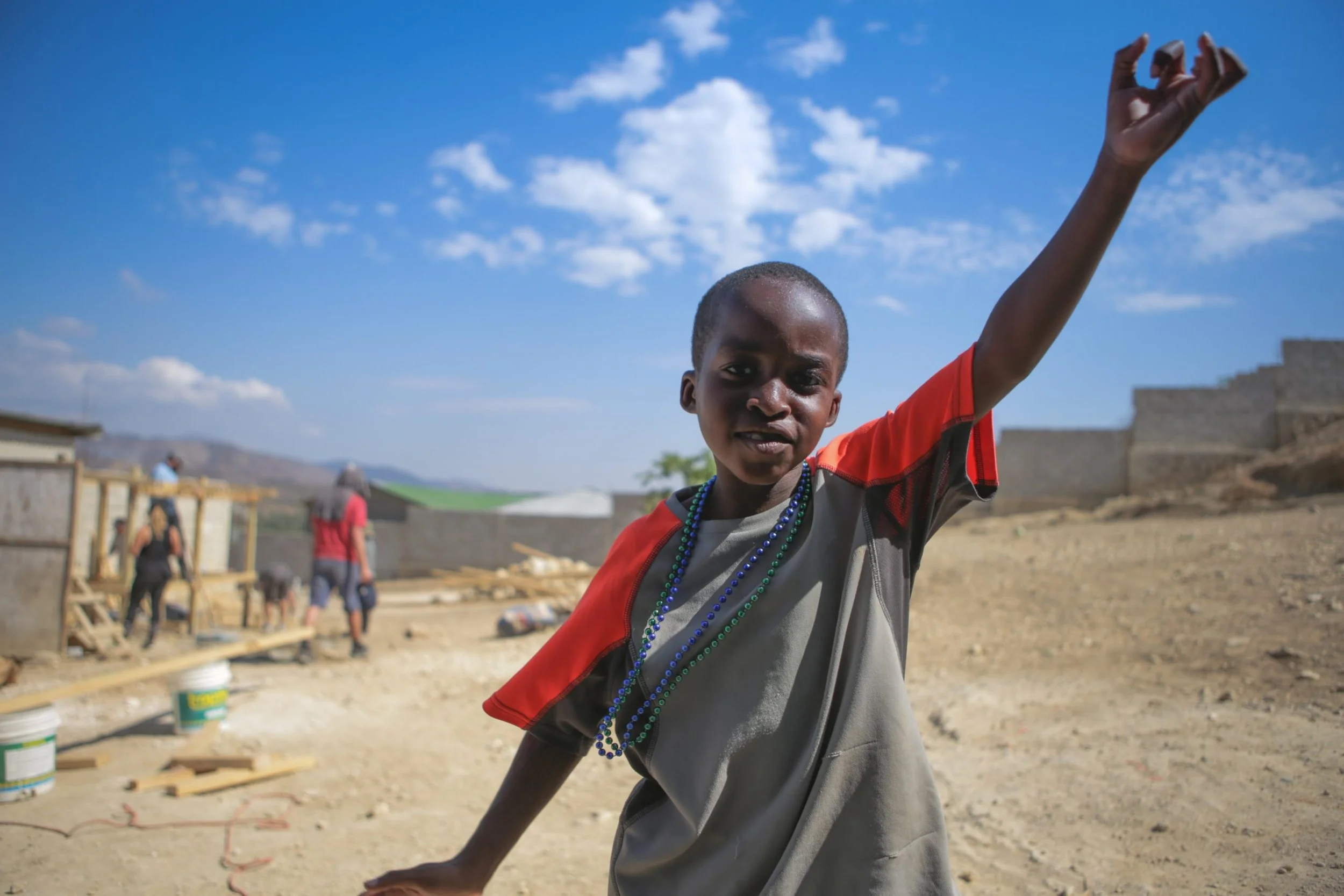
Haiti (MNN) – The people of Haiti have a long-running history with disaster and poverty. One ministry is using business loans to help locals build themselves out of the cycle.
For 20 years FARMS International has operated two separate loan programs in Haiti. Surviving hurricanes, earthquake, and sickness, these locally-run programs seek to strengthen communities by offering business loans through local churches. Projects typically revolve around agriculture and livestock, says FARMS Executive Director Scott Clifton.
One program issues 35 loans a year while another had issued more than 300 before natural disaster setbacks. They’re working back up again, and 60-65 families are currently loan recipients.
(Photo courtesy of FARMS International).
Among the recipients are many large families with 7-10 kids. Widows with FARMS loans have been able to create livelihoods for themselves and their families.
Haitian loan participants often buy goats and pigs. With the additional money or livestock they are able to pay back the loan, allowing money to go out again.
Those extra livestock are a form of security for many families.
“If they have goats and they need an emergency expense… then they’ll sell one of the goats and they’ll have that money available,” Clifton says.
The earnings also go back into the community through church offerings, adding an extra layer of support. Learn more about FARMS here.
Relief vs. Development

(Photo courtesy of FARMS International).
There is an important place for relief, but that’s now where FARMS does its best work. In cases of disaster and war, fast externally sourced relief can be life-saving. FARMS does its best work by addressing the long term.
“Haiti really is a place with a lot of need and a lot of poverty. It’s a difficult situation to work in, because the need is so evident, yet at the same time there’s so many people trying to help. There’s more NGOs per capita than any other nation and so there can be a real problem of dependency as well,” Clifton says.
The FARMS approach focuses on local development and dignity.
“They’re joining the purpose that God has for their life by using the gifts and talents that God has given them. And when people have that… dignity, participating in the kingdom in that way, that can be really transformative,” he says.
Haiti’s Unique Training Program
FARMS loan programs are each run by a local board of directors who receive training in business and on what to look for in a loan. The Haitian directors decided to go a step beyond and provide general and technical training for all loan recipients, Clifton says.
Pastor Renaud, one of the Haiti program directors, describes the process as ‘like training a toddler to walk.’
First they stand, then they take their first steps, and soon they’re running around having completed their business development.
Pastor Renaud and the other Haitian FARMS leaders have made development even easier for program participants.
“It was something that they developed because they saw the need, and when they developed it, they saw it meet that need. And so they continued with it. And that’s a great model to follow,” Clifton says.
He thinks the Haitian Loan Program’s training may be helpful in other locations.
How Can I Pray?
Pray for the residents of Haiti and other FARMS locations around the world during the COVID-19 pandemic. Cases have now reached Haiti, but social distancing is often not possible due to close quarters and an inability to stop working.
“It’s just a very difficult situation if diseases start to spread rapidly.”
Pray for the success of FARMS programs and local loan recipients. Ask that successes now would create a domino effect for future generations and communities.
Consider donating to help support initial loan investments in places like Haiti.
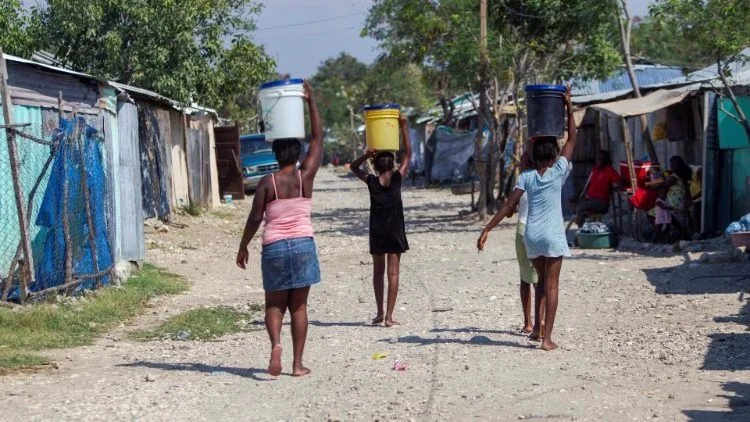
Covid-19: Holy Week in poverty-stricken Haiti
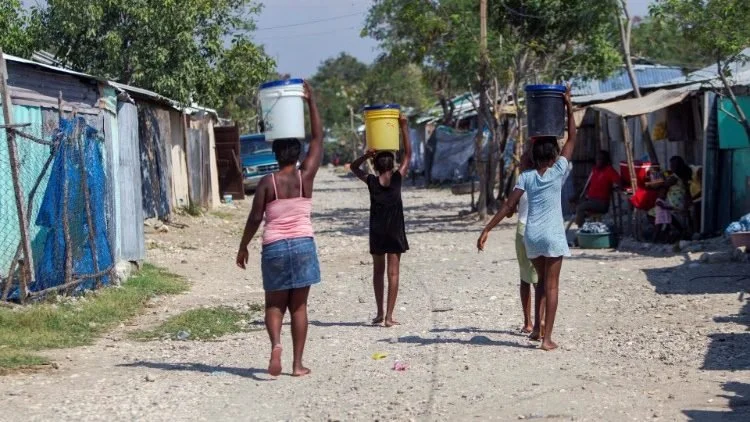
Fr Richard Frechette, a 67-year-old American doctor and priest is performing both of these duties with all his heart as the poor, quarantined, nation of Haiti celebrates Holy Week.
Haiti is the poorest country in the western hemisphere. Over 6million people live below the poverty line and over 2.5 people live below the extreme poverty line. The coronavirus pandemic has led to economic downfall even in the richest of countries. Where does that leave one of the world’s poorest nations?
The fears
The news reaching Haiti from abroad is “terrible”, says Fr Rick. Speaking to Vatican Radio’s Marie Duhamel, he says that “the focus is not on the fact that 80% of the people get better”. The focus is on those who are ending up in hospital in critical conditions, the deaths and the “solitary funerals”, he says.
Fr Rick also expresses the fear people face “of being targeted” and of “what might happen to you if you are sick” noting that “There has already been hostility towards centres offering a place to those affected by Covid-19, as well as “towards people who have actually been sick”.
The first confirmed case of Coronavirus in Haiti dates back to 19 March. Since then, 21 cases of Covid-19 have been officially confirmed throughout the country.
The Haitian reality
The Haitian government has applied similar measures to those that are being seen in other countries: borders are closed, the airport has been closed and a lot of businesses and factories are also closed. But “the application of all these is very difficult in an economy that was already disastrous”, says Fr Rick. In an economy which has “such a high cost of living for people who have literally almost no income”, quarantine is making life extremely difficult.
“Just to give an example, my sister in the United States, sheltering in her place, is enjoying swordfish and salmon every night and playing scrabble. But for here, somebody having to shelter in a place with no chance to go on the streets and hustle to make enough money to live for today, means that tonight they are going to be sitting on their own, hungry with their children and worried about tomorrow.”
Living in total panic, “hand to mouth every day. That’s what makes the measures difficult to apply”, he reiterates.
A hospital's help
Hospital activity has been reduced. Fr Rick explains that they have “stopped bringing people together for lesser problems and have reduced their staff”. A 40-bed unit has opened up and they have managed to equip it with some ventilators. “It’s not huge in face of the need”, says Fr Rick, and “there aren’t a lot of other hospitals stepping up”. They do what they can, making the area “very tightly controlled with whatever protective gear they can find” in the midst of a global scarcity.
No mass for the children
The 600 children living in our children’s homes are all in quarantine, says Fr Rick. “They can’t come out and nobody goes in.” Holy Week is difficult. In Haiti “as in many other countries, all the churches are closed to public ceremonies”. He says he will be not going to the children’s homes because as a priest and physician he is in direct contact with Covid-19 patients and “there is no way” he will break their quarantine to say Mass for them.
Enough to ask God for the strength
However, there are still some Masses taking place in the front of our chapel, says Fr Rick. There, it is nice and airy and everybody can be separated by 2-3 metres. Although very few people gather to hear the basic liturgies and to “keep the tradition”, it is enough, he says. It is enough to “invoke from God the grace of these prayers and these sacraments in these high holy days”. We need His protection, concludes Fr Rick, “so we can find the internal strength that we all need, to face this pandemic”.
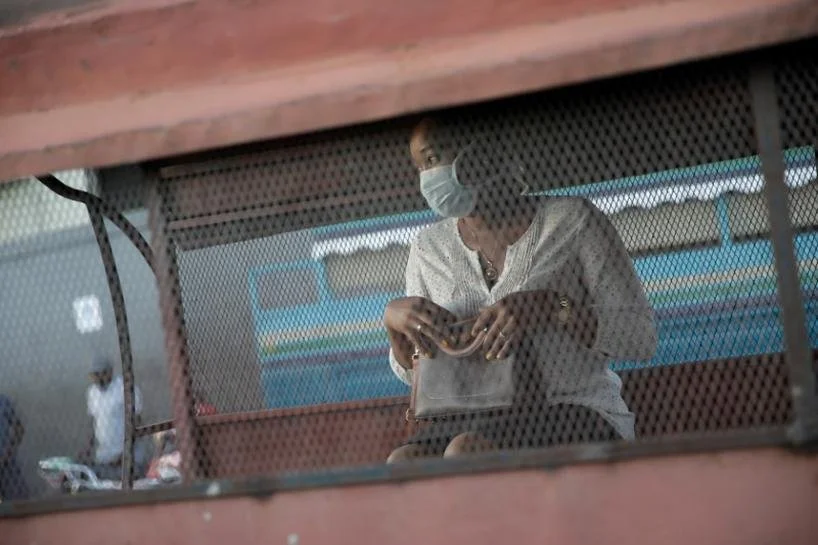
Haiti reports its first coronavirus death
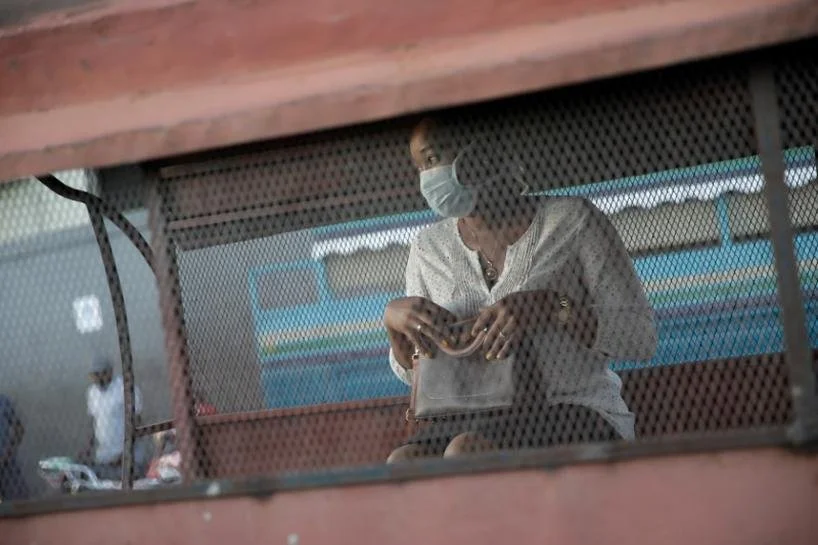
Port-au-Prince (AFP)
Haiti on Sunday reported its first novel coronavirus death, a 55-year-old man who had underlying health conditions.
The health ministry said the man suffered from diabetes and hypertension.
He was one of only 21 confirmed cases of the COVID-19 virus in Haiti, a demographically young country where over half those diagnosed with the disease have been under age 45.
Only 218 tests for the new coronavirus have been carried out in Haïti since the first two cases were confirmed March 19, however, leading to criticism from the national medical community of the government's handling of the pandemic.
Since the virus first appeared, the government has announced stringent measures to contain it, but they have not been rigorously followed or enforced.
A ban on gatherings of 10 or more people is routinely violated, notably in the country's crowded public transportation system.
Stay-at-home measures, like those in place in Italy and France, are difficult to apply in Haiti because the vast majority of its inhabitants depend on the informal economy to survive.
The density of the population of Port-au-Prince, the most populous capital in the Caribbean, with three million people, also makes strategies like social distancing impractical.
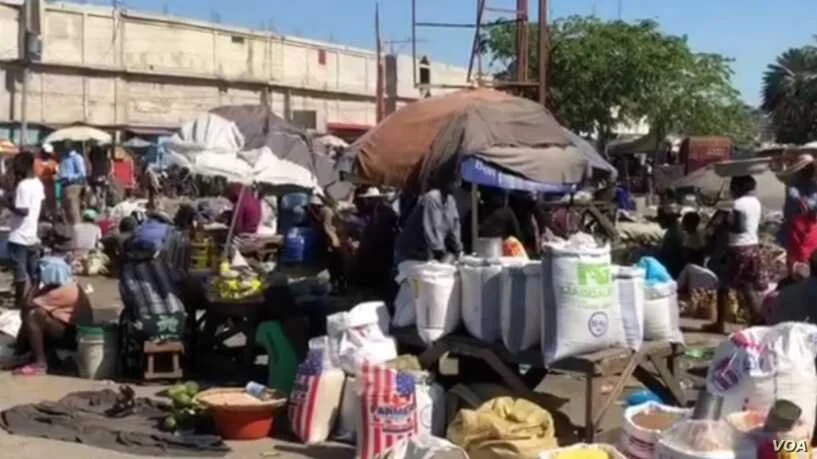
Haiti Street Vendors Have Little Knowledge of Looming Coronavirus Dangers
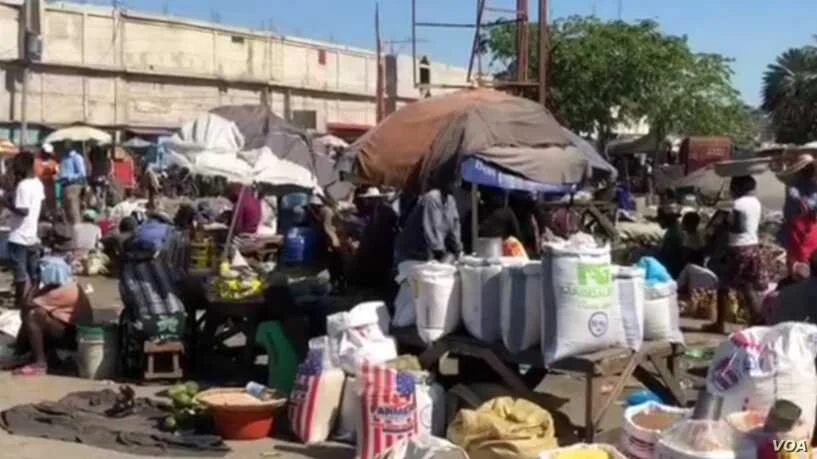

WASHINGTON/PORT-AU-PRINCE - Vendors at the busy Croix-des-Bossales market in downtown Port-au-Prince have not heard much about the coronavirus pandemic that is currently sweeping the world.
VOA Creole found Monday that half of the vendors were busy trying to make ends meet and had no knowledge or incorrect information about the virus.
“I haven’t heard about it. I only came back to the capital yesterday,” a female vendor told VOA. “I do have a radio at home, but it’s not working.”
“I heard it’s people who eat mice who have this disease,” a vendor in her 20s told VOA. “People who eat rats. I heard coronavirus is killing people, but I have no idea whether it’s here in Haiti.”
Farther down the row of merchants, another female vendor had more accurate information.

“I heard that corona is a virus that we should avoid. We should wash our hands, but that’s all I know,” she said. “But I did hear someone say it originated with white people who eat cockroaches, rats and mice — that’s what I heard on the street.”
A male vendor in his 40s knew that COVID-19 has infected people worldwide.
“I don’t know much else about it,” he said, “because I’m still waiting to hear what the experts have to tell us.”
Another vendor told VOA she believes drinking moonshine can keep the virus at bay.
“I heard the virus doesn’t like hot climates nor strong alcohol, so that’s our protection,” she said.
Among vendors who had some knowledge of the virus and the precautions they can take to keep it from spreading, several admitted the advice wasn't easy to follow.
“They told us we shouldn’t touch our faces, but after moving merchandise, sometimes we sweat, and out of habit, we wipe our forehead (with our hand),” a woman said. “How are we supposed to avoid doing that?”
A vendor selling rice and beans said she washes her hands often, but noted that her clients may or may not do the same.
“When a person is hungry, they may not remember to wash their hands before they come to my stand to buy food. All they can think of is eating,” she said.
A male vendor said he was praying for God’s protection. As for social distancing, he said Haitians will never stop kissing each other when they meet.
“We poor people are used to bacteria, so it doesn’t kill us,” he said, adding that he will say an extra prayer to remain healthy as he continues to greet his friends with kisses.

Haiti has no confirmed cases of COVID-19 and is working to keep it that way, through nationwide information campaigns, public service announcements on radio and television, and daily press briefings.
Over the weekend, the National Federation of Haitian Mayors announced a nationwide campaign in the country’s 10 departments to inform people about the pandemic.
On Sunday, Interior Minister Audin Bernadel Fils announced he would go downtown Monday evening, accompanied by members of the police force and Justice Ministry officials, to shut down roadside merchant stands.
“We will close them, because coronavirus is not a ghost, it’s not fake news, it’s real,” he said. “We have been fortunate not to have any cases yet, and we intend to keep it that way as long as we can.”
Monday at midnight, Haiti is shutting its border with the Dominican Republic, where the coronavirus has sickened 11 people. An exception is being made for merchandise coming across the border, which will be required to undergo screening both in the Dominican Republic and in Haiti immediately after entering the country.
Haiti has also stepped up patrols of its maritime borders and has suspended air travel from Europe and Latin America. Air travel between Haiti and the United States has not yet been halted but is currently under review, according to Prime Minister Jouthe Joseph.