Haiti PM Shuffles Cabinet After Ultimatum
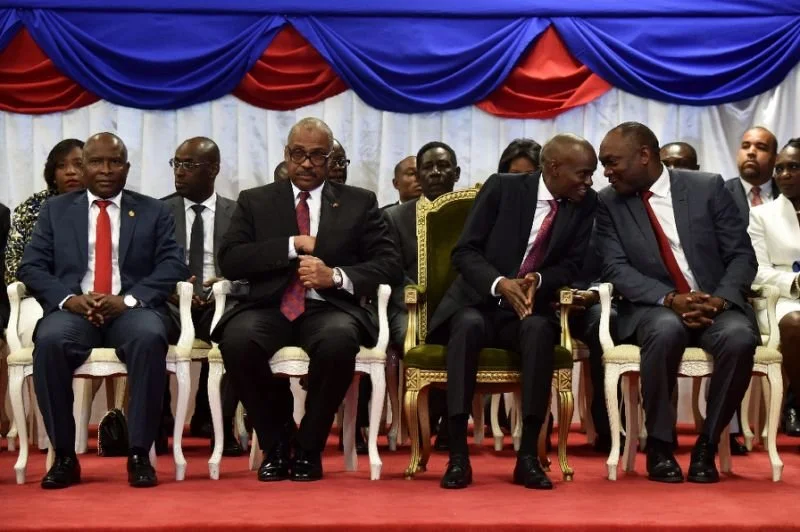
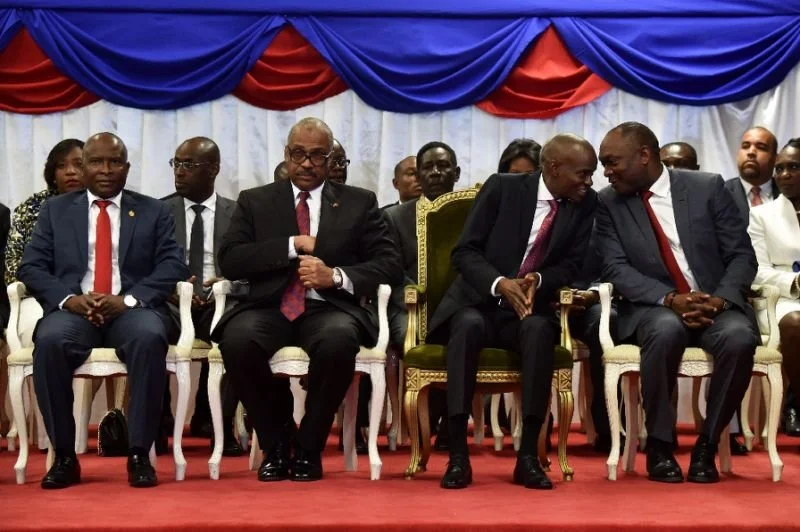
Port-au-Prince (AFP) - Haitian Prime Minister Jack Guy Lafontant, a political novice just over a year into governing the impoverished Caribbean country, has made his first cabinet shuffle after pressure from legislators.
Following his appointment in February 2017, Lafontant, a doctor by profession, nominated his first cabinet of 18 ministers overnight Monday, including five women.
They lack political experience except for a few technocrats.
On Thursday, a lawmaker who backs President Jovenel Moise -- a banana exporter who is also a newcomer to politics -- issued a 72-hour ultimatum for him to make ministerial changes.
The demand came after more than a month of pressure from lawmakers who publicly support the president.
Moise's spokesman had said Friday that the president was not acting "under either pressure or threat from another power," but in the end a shuffle took place.
State television overnight broadcast a recorded message from Lafontant announcing the cabinet changes, but there was no official explanation as to why the reshuffle occurred.
The changes are:
- Jean-Marie Reynaldo Brunet named minister of interior and territorial community. Until 2016, he was an acting mayor appointed by former president Michel Martelly in the absence of local elections.
- Jean Roody Aly appointed justice minister. He was previously the ministry's director general.
- Joubert Angrand, who was coordinator of the national coffee institute, became agriculture minister.
- Guy Andre Junior Francois was named minister responsible for Haitians abroad. He is a former consul in Miami, which is home to most of the diaspora.
- Guyler C. Delva, a journalist, will head the Ministry of Culture and Communication, where he served as secretary of state for communication between 2012 and 2013.
Haiti is still recovering from Hurricane Matthew, which struck in 2016, and almost 40,000 people remain in makeshift camps eight years after an earthquake killed more than 200,000 people.
Since 2010, about 10,000 people have died from a cholera epidemic in Haiti.
By: AFP.com | April 24, 2018
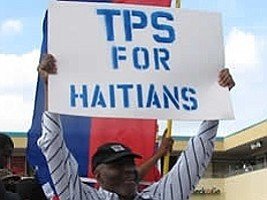
DHS decision to end Haitian immigrant protections questioned
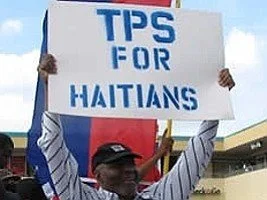
Washington (CNN) - Newly released internal documents are raising questions about the Trump administration's decision to end protections for tens of thousands of Haitian immigrants -- and whether the argument that the protections were no longer merited was valid.
Under President Donald Trump, the Department of Homeland Security has been aggressive in ending a number of temporary protected status designations that have been on the books, in some cases, for decades.
Roughly 300,000 people who have lived in the US with legal permission, most of whom have been here for upward of 15-20 years, could have their status pulled in the coming months as the protections expire. In the case of Haiti, nearly 60,000 immigrants are set to see their status expire next year.
The justification from the administration for ending the protections has been that by law, when the conditions from the original disaster that triggered the protections have improved, they must expire. DHS has been clear that it does not believe it can look at the totality of conditions in the country to factor in its decision making.
But the documents released Tuesday as part of a Freedom of Information Act lawsuit raise questions about whether DHS was accurately interpreting information in drawing those conclusions.
The documents suggest DHS contradicted its own staff assessment of Haiti when it opted to end TPS for the country, which was put in place after the devastating 2010 earthquake. The documents also include email correspondence showing Haiti's deep concern about ending TPS for the country.
While many of the documents are redacted, the release includes a report prepared by staff about the conditions in Haiti, which was included as part of a recommendation by the director of US Citizenship and Immigration Services.
Director L. Francis Cissna wrote in several instances that conditions in Haiti have improved enough from the 2010 earthquake to lift TPS. But the attached report in many cases paints a much more dire picture than the data points Cissna highlighted. Both documents were sent to then-acting Secretary Elaine Duke and resulted in her decision to end the program with an 18-month wind-down period.
In one example, the staff report stated: "Many of the conditions prompting the original January 2010 TPS designation persist, and the country remains vulnerable to external shocks and internal fragility."
The report closed with the conclusion that given a number of conditions -- including economic difficulties, a cholera epidemic, a housing crisis and food insecurity -- recovery has been severely hampered:
"Due to the conditions outlined in this report, Haiti's recovery from the 2010 earthquake could be characterized as falling into what one non-governmental organization recently described as 'the country's tragic pattern of 'one step forward, two steps back.' '"
Cissna, though, wrote to the secretary: "Haiti has made significant progress in recovering from the 2010 earthquake, and no longer continues to meet the conditions for designation."
The report did note that much of the recovery was exacerbated by Hurricane Matthew in 2016, which DHS maintains is not relevant to the earthquake and cannot be factored in.
DHS has made similar decisions about protections for hundreds of thousands of Central Americans, despite the Bush and Obama administrations both extending the renewable TPS designations in most cases.
In response to the documents, Cissna maintained that the government's review concluded that the 2010 conditions that prompted the status no longer exist.
"The decision to terminate TPS for Haiti was made after an inter-agency review process that considered country conditions and the ability of the country to receive returning citizens," Cissna said in a statement, saying the review included an "extensive outreach campaign: for others' input. "Based on all available information, Acting Secretary Elaine Duke determined that the extraordinary and temporary conditions that formed the basis of Haiti's TPS designation as a result of the 2010 earthquake no longer exist, and thus, pursuant to statute, DHS concluded the current TPS designation for Haiti should not be extended."
Separately from the report, email correspondence released as part of the FOIA suit showed that Haitian officials repeatedly reached out to the US government about their concerns over ending TPS, requesting that the program be extended for "at least another 18 months," per Ambassador Paul Altidor. DHS did opt to delay the official end date of TPS for 18 months, but did not formally renew the program.
The documents are the result of a lawsuit brought by the The National Immigration Project of the National Lawyers Guild, a pro-immigrant group.
"DHS' decision to terminate TPS for Haiti is manifestly contrary to the evidence reflected in this report," project Legal Director Sejal Zota said in a statement.
DHS will make a decision in May about another roughly 80,000 immigrants from Honduras protected by TPS. The agency has been sued by advocacy groups who allege racial motivations for ending Haiti's TPS.

Haitian army general staff appointed amid tensions with the Dominican Republic

Recent events show that workers and peasants face grave dangers as the ruling elite on both sides of Hispaniola resurrect figures from their violent pasts.Haitian President Jovenel Moïse announced on March 13 the appointment of six general staff members for the reconstituted Forces Armées d’Haïti. All six held senior posts in the FAd’H before it was disbanded by President Jean-Bertrand Aristide in 1995. Three have blood on their hands from the period of the Raoul Cédras military dictatorship in the early 1990s.Colonel Jean-Robert Gabriel, a new assistant chief of staff, was convicted in absentia for his role in the April 1994 Raboteau Massacre under Cédras. After his appointment to the new general staff was announced, the Bureau des Avocats Internationaux, which had secured his conviction in connection with Raboteau in 2000, issued a press release noting that not only was he complicit in the massacre, but he also was a torturer under Cédras.A Haitian court overturned Gabriel’s conviction in 2006, using a technicality it had dredged up from a 1928 law passed during the American occupation.Brigade General Sadrac Saintil, the new army chief of staff, was a Lieutenant Colonel during the Cédras regime and participated in the official whitewash of the Raboteau Massacre.Another assistant chief of staff in the resurrected army, Derby Guerrier, had his assets frozen by the US Treasury in 1993 because of his role in the Cédras dictatorship. The current acting commander in chief of the FAd’H, Jodel Lesage, served in the military of Jean-Claude “Baby Doc” Duvalier and was trained by the US military as a member of the Leopard Corps.In announcing the appointments, Moïse claimed that the army will be used to manage responses to natural disasters and as a coast guard. He undoubtedly views it as a replacement for the United Nations’ hated forces and the US military, which deployed far fewer marines after Hurricane Matthew than after the 2010 earthquake.The US, France, and the UN view the Haitian National Police, which they helped build up to 15,000 members, as a more effective means of suppressing domestic unrest than military troops. US Senator Marco Rubio had this tactic in mind when he pretended last month to oppose Moïse’s military appointments, telling the Miami Herald, “I continue to question why, with so many other needs, Haiti would pursue creating an army.”While the reconstituted army has fewer than 200 troops at present, Haitian Defense Minister Hervé Denis plans to recruit 5,000.Despite his protestations about human rights, Moïse also sees the army as a means of addressing tensions along the border with the Dominican Republic. There is currently no criminal extradition treaty between the two countries, but in March the Dominican military demanded the extradition of a Haitian suspected in the murder of a Dominican husband and wife in Pedernales.In response, Haitian judge Françoise Morailles told Le Nouvelliste that “more than ever it is time for the FAd’H…to get to work on the violent situation with which Haitians find themselves confronted at the border.”Ramfis Domínguez Trujillo, the grandson of murderous dictator Rafael Leónidas Trujillo, has announced his candidacy for the upcoming presidential election in the Dominican Republic. According to a Gallup poll last month, 42 percent of Dominicans support his candidacy while 51 percent are opposed. In order to give his campaign a populist air, Trujillo is promising to institute anti-corruption measures that would include 30-year jail terms for guilty officials.More ominously, he is proposing to build a border wall between Haiti and the Dominican Republic. The Dominican Republic is already monitoring parts of the border with drones and cameras.On Sunday, according to the Providence Journal, Trujillo told a group of Dominican emigrants in Rhode Island that “we need to hold a tough and firm stance before the peaceful Haitian invasion. We need to remove all Haitians who are in the country illegally.”In the Pedernales case, a Haitian named Edner Noël is accused of murdering a couple on whose Dominican ranch he had worked. He was captured and jailed in Haiti after crossing the border.After the murders, vigilantes drove through Pedernales in a pickup truck with a loud speaker on March 13 and demanded that all Haitians leave within 24 hours. At least 250 families fled across the border to Anse-à-Pitres. Dominican President Danilo Medina ordered the deployment of 60 soldiers to Pedernales, along with 30 anti-riot police.There are conflicting reports of whether Haitians had been killed in retaliation, with the mayor of Anse-à-Pitres on the Haitian side of the border telling Le Nouvelliste that he had heard reports of deaths. Tensions continued to be high two weeks after the murders, with the international market still closed by Dominican authorities.In a second incident, a Dominican was murdered on March 19 in Barahona province, with a Haitian co-worker named Jacques Estimphil accused of the crime. The Haitian refugee support group GARR told Alterpresse that approximately 100 people had fled across the border to Haiti to avoid reprisals. Dominican soldiers stopped people who were trying to flee and demanded bribes of 150 pesos.By John Marion for World Socialist Web Site | April 6, 2018
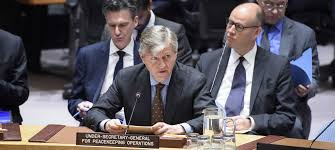
UN eyes transition of Haiti role from peacekeeping to development
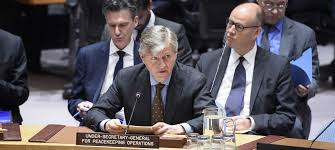
The United Nations has already started to prepare for a post-peacekeeping presence in Haiti, a senior UN official said Tuesday, stressing there are many reasons to be optimistic that the country’s progress towards stability is now irreversible.
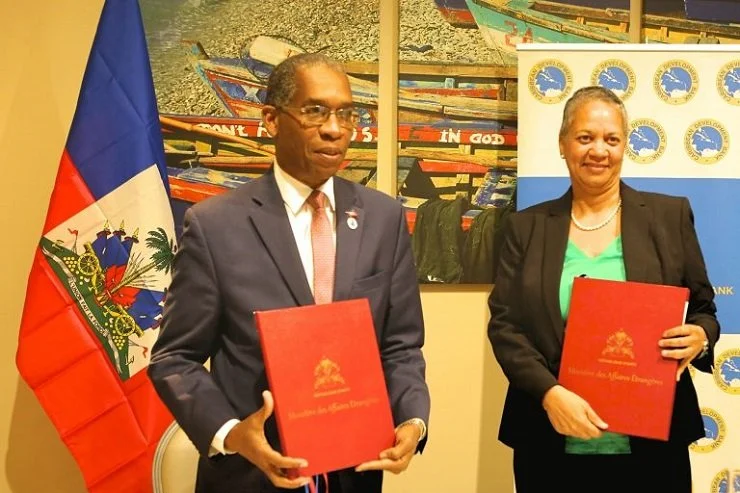
Caribbean Development Bank to Establish First Country Office in Haiti This Year
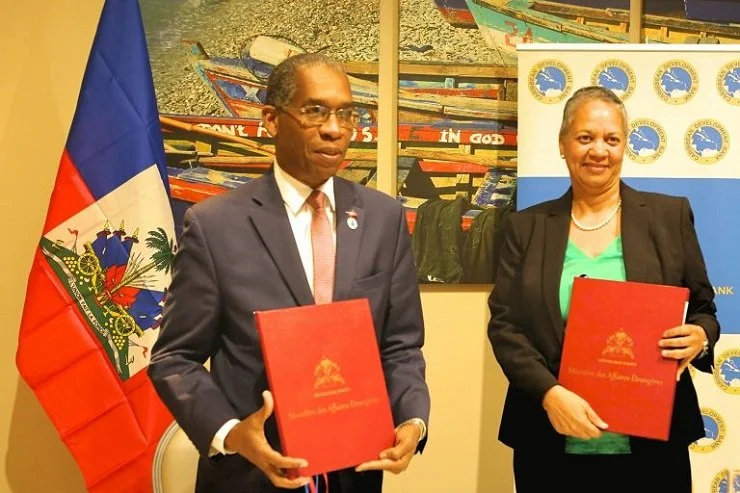
BRIDGETOWN, Barbados, Thursday March 15, 2018 – The Barbados-based Caribbean Development Bank (CDB) will establish its first country office in the Republic of Haiti later this year.Minister of Foreign Affairs Antonio Rodrigue and the Bank’s Vice-President (Operations), Monica La Bennett, recently signed the Country Agreement to pave the way for that to become reality.La Bennett said the signing of the agreement further cements the strong partnership between CDB and Haiti.“Last year, CDB, in collaboration with the Government of Haiti, developed a country strategy plan for the period 2017 to 2021, with an indicative resource envelope of US$100 million to help Haiti meet its development priorities. The strategy focuses on three main themes: agriculture and community development, sustainable energy development and education and training. It is this deepening engagement between CDB and the Government of Haiti that has led us to conclude that there is a need for a country office,” she said.“We expect that this will lead to the development of closer relationships with the Government and the people of this country, enabling CDB to be a more proactive, responsive development partner.”Haiti became a member of CDB in 2007. Since joining the Bank, the country has been allocated grant resources from CDB’s most concessional resource pool, the Special Development Fund (Unified). In 2017, an allocation of US$45 million was approved under the ninth cycle of the Fund.To date, a total of US$133 million has been committed to Haiti. Projects supported included the Education for All Phase II Project; the Technical and Vocational Education and Training Project II; interventions in agriculture and rural development; technical assistance for micro, small and medium enterprise development, and improving the quality of, and access to basic education.CDB’s ongoing work in Haiti includes projects in education, including technical and vocational education and training; climate resilience; and community-based agriculture and rural development. In addition, since May 2013, the Bank has paid the country’s insurance premiums to CCRIF SPC. The payments cover Haiti’s earthquake, tropical cyclone and excess rainfall policies. Under this arrangement, the country has received three major payouts, most recently following the passage of Hurricane Matthew in October 2016.By: Carribean360.com | March 15, 2018
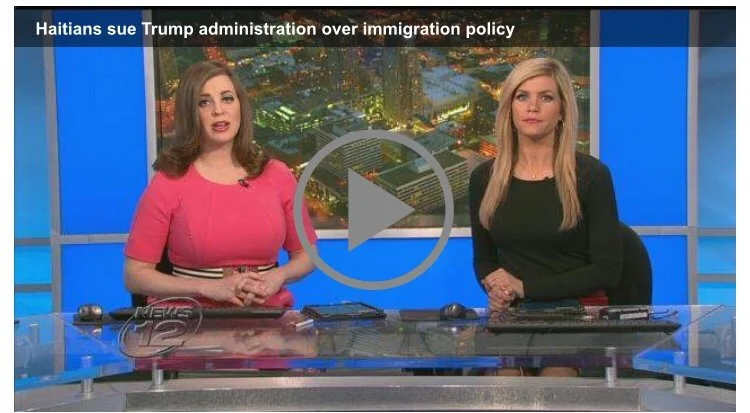
Haitians sue Trump administration over immigration policy
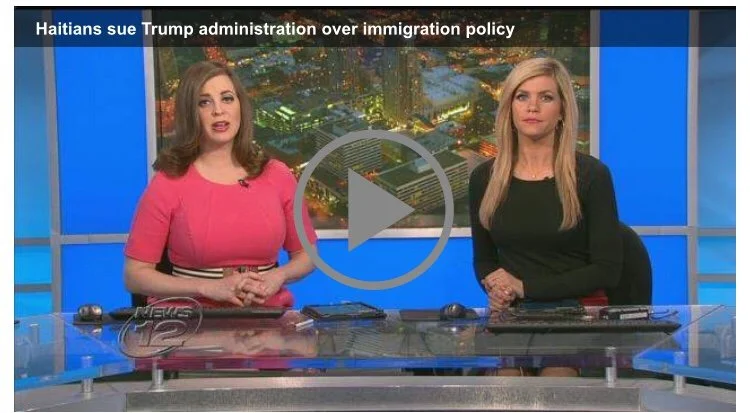
(AP) - Haitian immigrants are suing President Donald Trump and Homeland Security officials, alleging racism influenced a decision to end a program allowing them to live and work legally in the U.S. after disasters in their home country.The lawsuit filed Thursday in New York federal court is one of a handful nationwide challenging the Trump administration's decision to end temporary protected status for people from El Salvador, Haiti, Nicaragua and Sudan.The latest case details how the Haitian-American community could be harmed if roughly 60,000 Haitians become subject to deportation.The dozen plaintiffs include Haiti Liberte, a New York-based weekly Haitian newspaper, where a leading journalist with the protected status may be forced to return home, the lawsuit said.In Miami, the advocacy group Family Action Network Movement Inc. has had to divert resources from core services such as adult education and health care access to assist more Haitians fearing deportation. It also faces losing several activists who also are plaintiffs, the lawsuit said.Six plaintiffs face separation from their U.S.-born children, while another plaintiff with cerebral palsy would lose medical care if separated from his brother who is a U.S. citizen, the lawsuit said.The advocacy group's executive director, Marleine Bastien, said at a news conference in Miami that Haitians with the protected status make more contributions to the U.S. economy than they take."The plaintiffs who are based in Florida are not here because they are working. They have to pay taxes. They can't rely on charity," she said.The lawsuit claims U.S. Homeland Security officials failed to follow protocol when considering whether to renew protections granted to Haitian immigrants after a devastating earthquake struck their Caribbean country in 2010. Those protections were repeatedly extended until the Trump administration announced in November that Haitian recipients have until July 2019 to return home.Trump, Homeland Security Secretary Kirstjen Nielsen and Deputy Homeland Security Secretary Elaine Duke are named as defendants.Instead of reviewing conditions in Haiti, including a cholera outbreak and destruction from Hurricane Matthew in 2016, Homeland Security officials sought to maintain stereotypes about blacks and immigrants committing crimes and receiving public assistance, the lawsuit said.The lawsuit cites Trump's negative comments on immigration from his presidential campaign and separate reports that Trump said thousands of Haitians who came to the U.S. in 2017 "all have AIDS," and that he used vulgar language to question why the country needed more immigrants from Haiti or from African countries instead of from countries like Norway. Trump has denied the comments.The order to end temporary protected status for Haitians violates their due process rights "because the termination was based on the President's categorical and defamatory assertions about all Haitians, which the Haitian TPS recipients were given no opportunity to challenge," the lawsuit said.The NAACP and immigrant advocacy groups in California and Boston made similar allegations in previously filed lawsuits seeking reinstatement of temporary protected status for hundreds of thousands of immigrants.Homeland Security spokeswoman Katie Waldman said in an email Thursday that the agency does not comment on pending litigation.Copyright 2018 The Associated Press. All rights reserved. This material may not be published, broadcast, rewritten or redistributed.by News12 Westchester | March 15, 2018
Caribbean Development Bank To Open Haiti Office
At the 29th Intersessional Meeting of the Conference of Heads of Government of the Caribbean Community in Haiti, the country’s Minister of Foreign Affairs Antonio Rodrigue signed an agreement with the Caribbean Development Bank’s Vice-President (Operations), Monica La Bennett, to establish CDB’s first country office in Haiti.The agreement comes after the CDB and Haiti’s government developed a 100 million dollars country strategy plan for 2017 to 2021. La Bennett says this agreement will help Haiti meet its development priorities and further reinforce the country’s relationship with the CDB: “The strategy focuses on three main themes: agriculture and community development, sustainable energy development and education and training. It is this deepening engagement between CDB and the Government of Haiti that has led us to conclude that there is a need for a country office. We expect that this will lead to the development of closer relationships with the Government and the people of this country, enabling CDB to be a more proactive, responsive development partner,” she said.Haiti joined the CBD in 2007 and has since been allocated 45 million dollars in grant resources from the Special Development Fund.By: Coralie Saint-Louis | The Haitian Times | March 5, 2018

Haitian Designers Trump Politics At DC Fashion Week

WASHINGTON, D.C – During this year’s DC Fashion Week, the Haitian embassy showcased Haitian-American fashion designers’ collection lines for their first “Diplomacy by Design” event. Four renowned designers of Haitian descent, Prajjé Oscar Jean-Baptiste,Kerby Jean-Raymond, Victor Glemaud and Azède Jean-Pierre, used the occasion to illustrate their creative talent to a diverse audience of dignitaries and fashion insiders.The first of its kind, the event aimed to provide a window into some of Haiti’s finest couture and overall beauty. As models strutted their way through the opulent grand ballroom of the Haitian embassy, a crowd of onlookers admired the individual styles and techniques of the night’s fashionistas.Haiti’s ambassador to the United States, Paul Altidor, who has been on a mission to show a different side of his country since President Donald Trump’s disparaging comments, used this event to once again put Haiti on the center stage.“Most of the world has a singular view of our country that we are looking to reshape,” he said. “By showcasing our art and culture through events like these, most notable our fashion design talent, we are changing the narrative with artistry, innovation, and glamour.” Glemaud, a fashion industry veteran, opened the show with his colorful knitwear line. Prior to launching his own label, Glemaud worked in New York and Paris for popular fashion houses like Versace, Marc Jacobs, and Helmut Lang.Jean-Baptiste, a New York-based womenswear designer introduced his “EZILI” collection, named after the Vodou goddess of love and beauty, and handmade by Haitian artisan women. He uses original prints “Maitresse,” embroidery and beading for his designs.Independent womenswear designer Jean-Pierre, known for dressing former First Lady Michelle Obama, exhibited her personal line in a special display room. Jean-Raymond of Pyer Moss, whose politically-charged runway shows have taken social issues to the forefront of the fashion industry also displayed his signature line.
 Altidor’s latest affair brought out some of D.C.’s biggest names like former D.C. First lady Michelle Cross-Fenty, NFL star Pierre Garcon, and Miss Black America’s Brittany Lewis. Also in attendance was two-time former welterweight world champion Andre Berto, and the first Haitian-American appointed to municipal court in New Jersey, Judge Sibby Elias. For one glamorous night in the nation’s capital, Haiti was once again the talk of the town.By: Tarah-Lynn Saint-Elien | The Haitian Times | March 7, 2018

New military reinforcements, long-range UAVs and cameras on the border

President Danilo Medina, confirmed at the 174th anniversary of the independence of the Dominican Republic (February 27) the establishment of a new security plan on the border with Haiti, including a set of measures to prevent thge massive entry of illegal Haitians in Dominican territory declaring "Dominicans have their own national project, which is neither better nor worse than those of other countries, but it is ours and our responsibility is to strengthen it and to work for it [...] We understand that to be good neighbors we must respect and even collaborate, but we must also know where a house starts and where the other ends [...]"He thus indicated that 900 military trained in the academies of the country, will offer a professional monitoring service of the border, both in terms of formal and informal crossing points, will be sent as reinforcement. He also announced the addition of 30 new off-road vehicles [in addition to the 60 already in operation], 1 additional helicopters [in addition to the 2 already in operation]Medina also mentioned the strengthening of the crossings where there is the greatest flow of people emphasizing "We will coordinate all the institutions that work at the border: brigades of the army, navy and army of CESFRONT and the Directorate General of Migration (DGM) so that they can effectively apply the Dominican law on the border. "As part of the technological means involved in the surveillance, President Medina said that a fleet of long-range UAVs and infra-red detection systems for night surveillance, will be deployed as well as hundreds cameras that will be added to some 200 surveillance cameras already deployed at the border.On Friday, March 2, Lieutenant-General Rubén Darío Paulino Sem, Minister of Defense declared "The Dominican Republic has put in place a new security plan on the border with Haiti" explaining that the 900 soldiers announced by President Danilo Medina for control the illegal migration arrived Thursday at the border to be deployed there. Indicating that these reinforcements are in addition to the 4,500 soldiers already deployed along the border, bringing the total number of soldiers to 5,400 military TO which are added the CESRONT men and the Marine and Air Force units as well as the staff of intelligence and migration (DGM)He also said that the increase in surveillance at the border other than land, will also be provided by air and sea (coastal), including between Montecristi (North-West) and Puerto Plata (North), and Pedernales and Barahona (South West).With more than 10,000 Haitians in irregular migration, deported from the Dominican territory or returned to the border on average each month, more and more moderate political observers no longer hesitate to qualify the situation of "peaceful invasion". Even the high Dominican religious authorities call on the Medina Government to take control of the situation with respect and transparency...By: HaitiLibre | March 5, 2018
Haiti, U.N. Clash Over Probe Into Alleged Misuse of Petrocaribe Funds
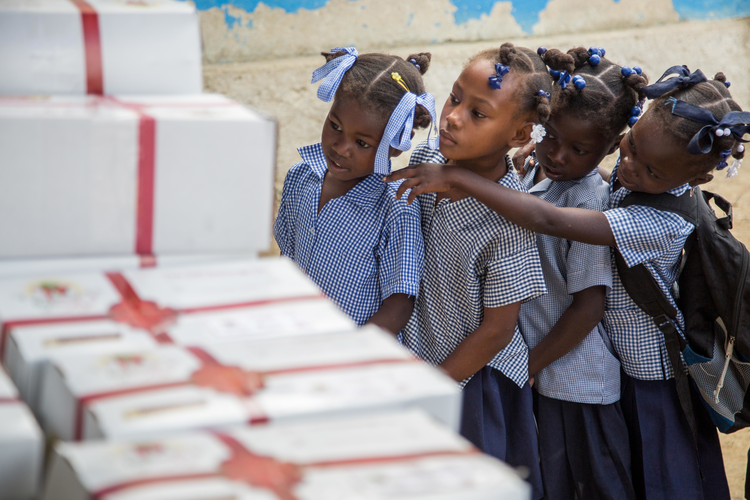
Are N.G.O.s in Haiti doing more harm than good?
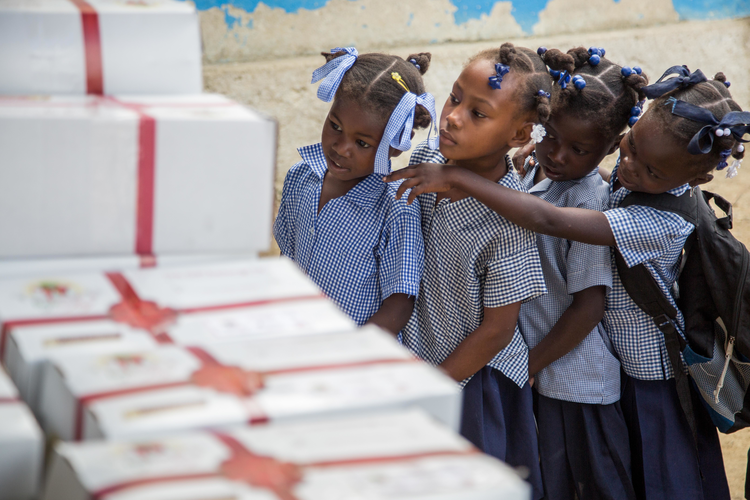
I was in Haiti early this month. It was my first trip there, and I arrived uncertain of what I would find. A country battered by one disaster after another and often represented as the problem child of the Western Hemisphere had come to seem almost imaginary to me, luckless and mythical. But Haiti was real and rewarding, a country of intriguing contrasts—between the richness of the country’s past and the poverty of its present, between the expansiveness and warmth of the people and the scarcity of the resources available to them. From the squalid shantytowns of Port-au-Prince to the bland suburbs of America, a starker contrast with the United States would be hard to find.The plane from Miami to Port-au-Prince was filled with Americans, most of whom seemed to be there on mission trips. There was much good will and no doubt much good work being done. The high school student sitting beside me was there to teach dental hygiene; her schoolmate was painting a mural as part of a group art project; a third friend was distributing water purification systems that use the sun’s ultraviolet light to filter out bacteria. Access to potable water is a major concern in Haiti. Contaminated water spreads disease and is the leading cause of infant mortality in a country with the highest infant mortality rate and the greatest poverty in the Western Hemisphere. I had assumed impure water was primarily a technical problem, but efforts to provide clean drinking water require education, community buy-in and ongoing attention, all of which can be difficult in a poor country with a high illiteracy rate."On the ground in Haiti, it is easy to see that just as wealth breeds wealth, poverty begets poverty."
On the ground in Haiti, it is easy to see that just as wealth breeds wealth, poverty begets poverty. People who are poor cannot be taxed much, and a government without resources cannot provide much for its people. Foreign aid can be problematic, as much a hindrance as a help. In Haiti, U.S food aid flooding the market has provided cheap food but driven many Haitian farmers off the land. Haiti has a reputation for corrupt government, but waste, mismanagement, fraud and corruption also plague charities, non-governmental organizations and aid agencies. Only a small fraction of the outside aid pledged to Haiti after the 2010 earthquake actually reached the Haitian people. Concerned about corruption, donors circumvented the Haitian government. Unfamiliar with local conditions and resources, they squandered millions of dollars in ill-conceived and poorly executed projects that actually made life worse for Haitians. A 2012 article by Ian Birrell in The Daily Mail reported that as mistakes mounted and money was wasted, “prices of food and basic supplies for local people soared, sanitation deteriorated, there was less safe water to drink and well-meaning interventions made matters infinitely worse.”"In Haiti, foreign aid can be problematic, as much a hindrance as a help."Jonathan Katz, the only full-time journalist in Haiti at the time of the earthquake, tells the story in his book The Big Truck: How the World Came to Save Haiti and Left a Disaster Behind. U.N. troops brought cholera to a country where it had not existed; charities, the American Red Cross notable among them, used the millions of dollars collected for earthquake relief for their own purposes; aid workers from outside the country who swarmed into Haiti operated without oversight or accountability.“Two centuries of turmoil and foreign meddling had left a Haitian state so anemic it couldn’t even count how many citizens it had,” Mr. Katz writes. After the quake, the almost-absolute power of aid groups operating independent of the Haitian government weakened an already weak state, delegitimizing it in the eyes of its people.“There was no way for Haitians to appeal an NGO decision, prosecute a bad soldier, or vote an unwanted USAID project out of a neighborhood,” he writes."More N.G.O.s exist per capita in Haiti than in any other country."
“They are helping, but they are not here to solve our problems,” said Jean-Ronald Jocelyn, a Haitian who is education program manager at Hope for Haiti, a nonprofit that has operated in Haiti for 28 years and is largely staffed by Haitians. Mr. Jocelyn said economic development is a long-term problem that the government should take care of.“The N.G.O.s help poor people but don’t help them to get out of poverty,” he said. “The government is like the N.G.O.s, providing day-to-day assistance but not a long-term program for development.” Incapacity, rather than indifference, is at the root of the government’s failure.“The N.G.O.s help poor people but don’t help them to get out of poverty.”
“Foreign assistance works best when institutions are stronger,” said Mr. Cohen. Without a strong ministry of education, Mr. Cohen said he wondered how nonprofits can complete the work they are doing in Haiti and leave the country.Leaving Haiti should be a goal of every N.G.O., Ms. Ciccarello said. While making a long-term commitment to the country and forming relationships with Haitians are critical to successful work, N.G.O. officials from outside the country need to train Haitians to replace them. Many N.G.O.s do not register with the government; Ms. Ciccarello said registering is important if they seek sustainability for their work."Leaving Haiti should be a goal of every N.G.O."
“Politics is one of the worst things in Haiti. Everyone wants to be in power to fill their pockets, not to help the country to grow,” one Haitian priest told me.I did not come back to the United States with any ready answers as to how Haiti can overcome the immense political and economic challenges it faces. I doubt there are many ready answers. As to why Haiti is plagued by poverty, I learned just enough to know it is complicated. There is a long history of foreign interference, intrusions and demands going back to Haiti’s first years as a nation when it was forced to pay France exorbitant reparations for the freedom it had won, reparations that continued until the 1950s. The United States, which occupied Haiti from 1915 to 1934, has its own checkered history there, often lending its support to nondemocratic elements and strong-arming unfair trade policies that benefit U.S. interests at the expense of Haitians. In different forms, the domination of Haiti by outside forces continues.The complexities of aid are daunting—the politics and the delivery of it, the effort, intelligence and sensitivity it takes to help others without depriving them of agency or imposing what can easily seem new modes of neocolonialism. Doing good well may be a form of grace. I met admirable Americans performing admirable deeds in Haiti, but I left thinking that despite significant, even life-saving work, Haiti’s fundamental problems are unlikely to be solved by outside angels swooping in and out. The country’s greatest need is not more aid groups or missioners but a more functional state with stronger public institutions and leaders committed to service, not self-enrichment.For all its manifold problems, Haiti is not a gloomy place. In the southern city of Les Cayes, a Catholic priest I spoke to offered the most encouraging words I heard. He had just offered a witheringly realistic assessment of Haiti’s present and immediate future when he said: “What gives strength is the conviviality, joy and courage of the Haitian people. Haitians are very courageous.”By: Margot Patterson | America - The Jesuit Review | February 22, 2018
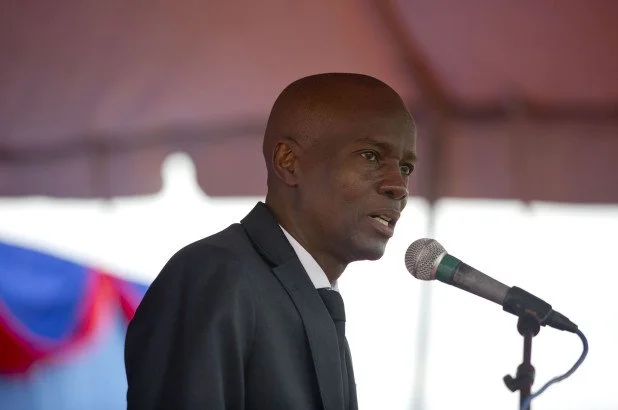
Haitian president says Trump's comments set back tourism industry
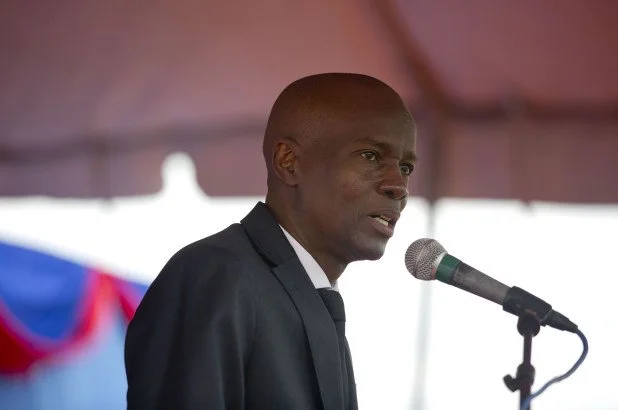
PORT-AU-PRINCE, Haiti - Haitian President Jovenel Moise said the controversy surrounding U.S. President Donald Trump's disparaging comments about his county has hampered Haiti's burgeoning tourism industry.“I must be clear with you,” Moise said in exclusive interview with Local 10 News. “These comments haven't helped our image or tourism industry. But to the rest of the world, I say Haiti is a beautiful place, an amazing place to visit.”Moise, who will mark his first year in office on Wednesday, had been reluctant to comment on Trump's remarks. Moise said he regrets the negative comments coming from another country's leader."The Haitian people are proud, and aspire for a better future," he said in French, the country's official language. "I see it as a call to arms."President Trump's vulgar comments about Haiti at a White House meeting in January are now well-known, and so is the bitterness and anger resulting from it. The remarks caused a firestorm of protests around the world, including in Port-au-Prince and Miami's Little Haiti neighborhood.However, Trump's comments weren't the only setback facing Haiti's tourism industry, which in recent years the government has desperately tried to revive. The U.S. State Department recently changed its travel advisory for Haiti from "exercise increased caution" to "avoid travel."The State Department cited the country's high crime rate and civil unrest when it announced the decision in early January.In the recent decades, Haiti has been beset by poverty, fiery political strife and corruption. But historically, the Caribbean nation was a desired destination for the rich and famous.Moise wants Haiti to return to its days as a tourist hot spot. The country has added more than 2,000 hotels rooms in recent years and has seen modest increases in the number of visitors each year.Meanwhile, the Royal Decameron Indigo Beach Resort & Spa opened in December about 42 miles outside the capital. The four-star getaway -- the county's only all-inclusive resort -- is beginning to cash in on new tourists."We really want to take this momentum to show Haiti is not all that negative on the news," Moise said.Outside of tourism, Moise is focused on creating jobs, building new health centers, expanding and rebuilding Port-au-Prince's airport. Haiti is also building a new airport in Les Cayes, the county's third-largest city, and providing electrical power to people 24 hours a day.Moise keeps toy construction trucks on his desk in his office -- a constant reminder of his promise to transform Haiti's lacking infrastructure.Moise really wants to build hope in Haiti, and he says a visit from Pope Francis could do exactly that. He said his discussions with the Vatican began last week."We hope to the Pope this year ... if not, we hope to get next year," Moise said.It's been 35 years since the Pope John Paul II visited Haiti more than a generation ago.More than half of the country's population is under the age of 30. And if they don't have hope of a better Haiti, then there's no one to carry the torch. It's for the next generation that Moise is banking on with a papal visit to Haiti."We think that we can have a change in the mentality of the people with this visit,” Moise said. "The young people must believe in this country because it is their country."By: Calvin Hughes - Anchor, Tim Swift - Local10.com Digital Editor Posted: 6:23 PM, February 05, 2018
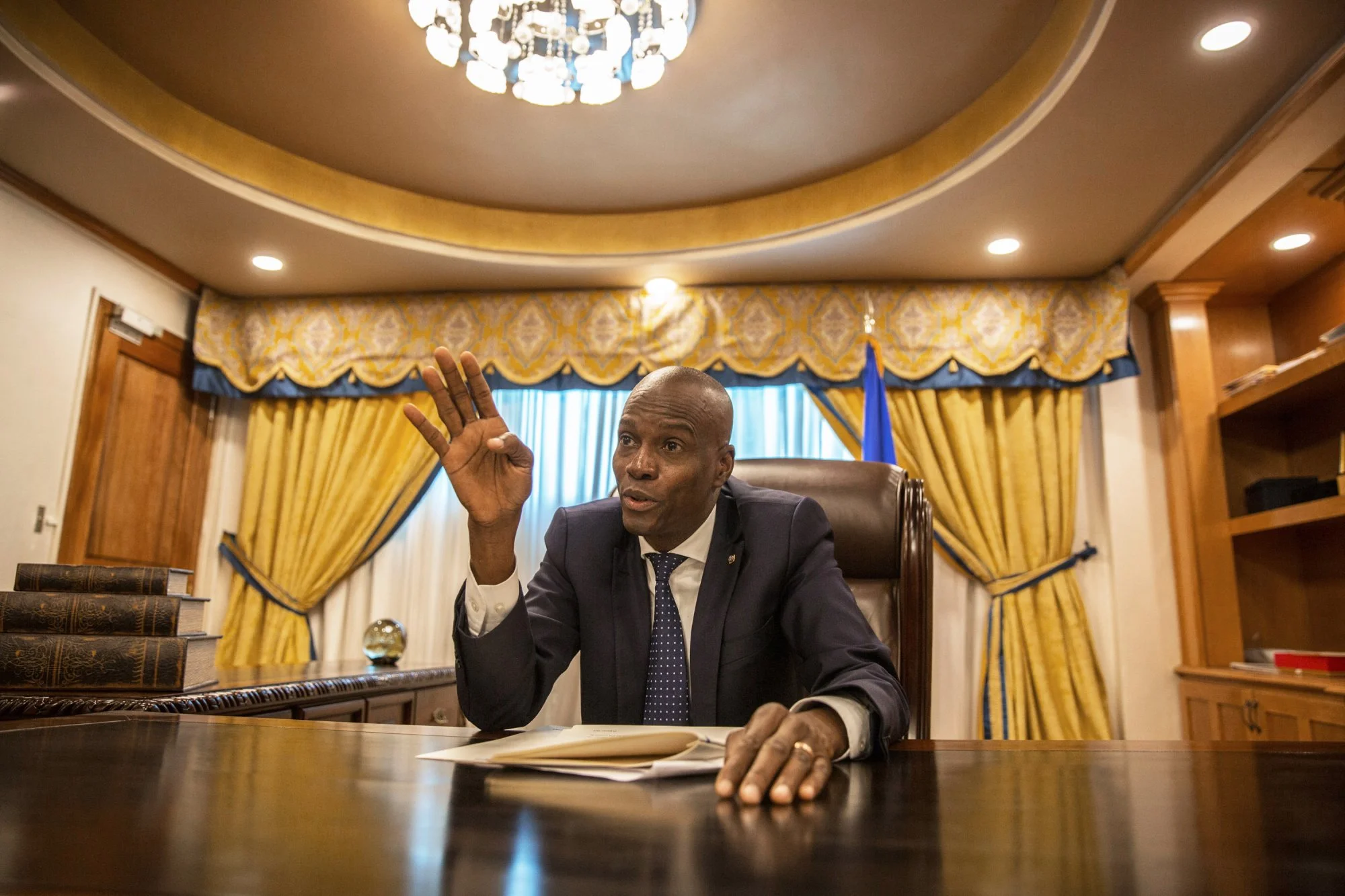
Haiti’s President Says Trump Got at Least One Thing Right
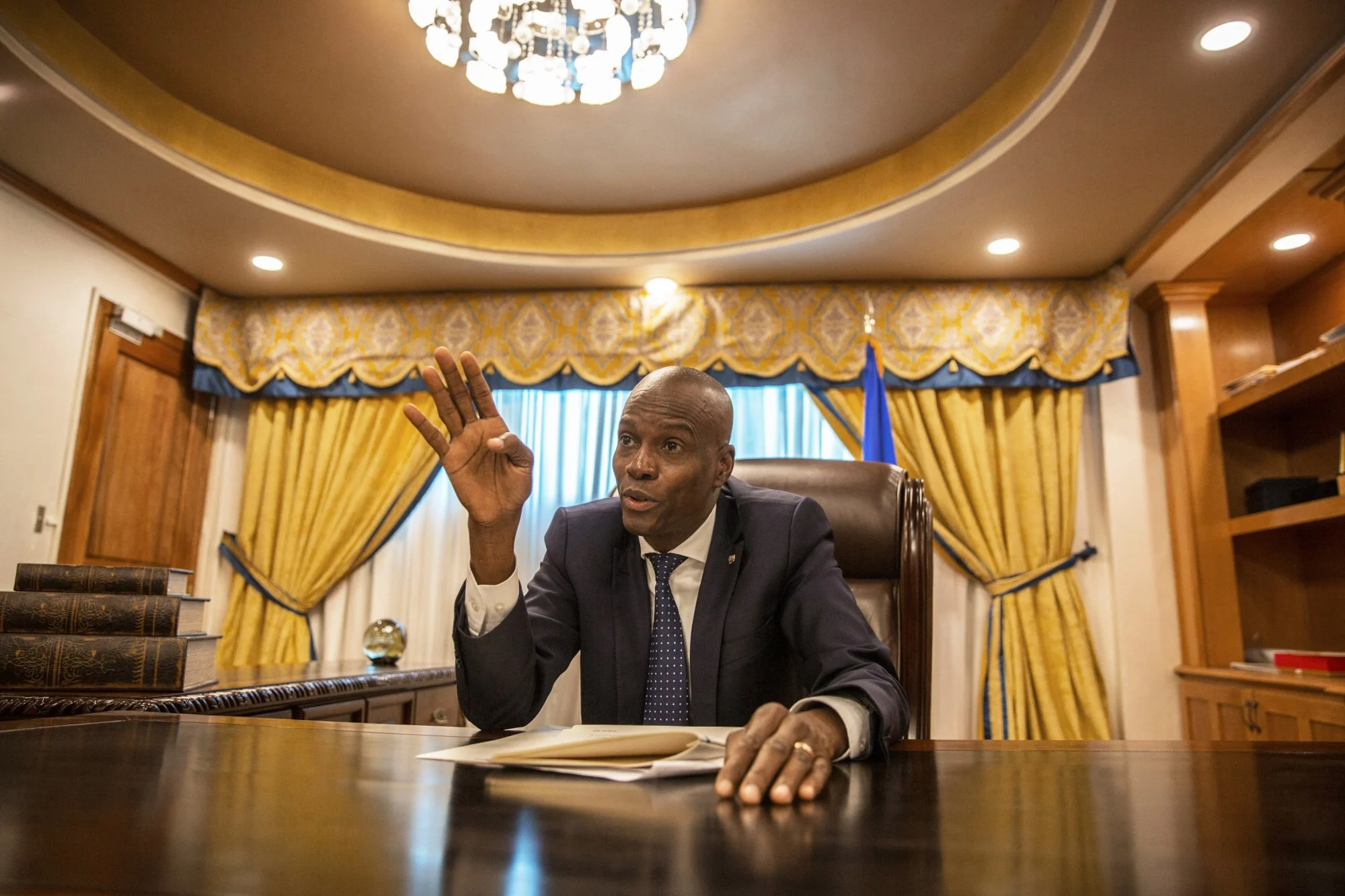
President Donald Trump may have a point when he says the U.S. is wasting money sending aid to foreign countries. And that’s according to the president of one of Trump’s “shithole” nations.Haiti President Jovenel Moise said he was “taken aback” by the “bizarre” derogatory remark Trump allegedly made about Haiti in a White House immigration meeting last month. First reading about it on Twitter, Moise summoned U.S. diplomats for an explanation, one of whom was “embarassed“ and “at a loss for words,“ he said.
Despite the undiplomatic language, the two leaders would find common ground when it comes to foreign aid. Trump has threatened to cut funding and complained that the U.S. hasn’t received enough in return from foreign countries. Moise said billions have been squandered in Haiti.“Right now in Haiti, the money of foreign taxpayers, your money, is being wasted,” the president said in an interview in Port-Au-Prince. “Every year we receive $1.2 billion to $1.4 billion in aid, or more. However, it’s all consumed in a state of disorder that constitutes public international development aid.”Haiti, the poorest country in the Western Hemisphere, has received attention in recent months as Trump has pushed to overhaul U.S. immigration policy, favoring educated, skilled workers over immigrants from poor nations in Latin America and the Caribbean. The administration removed Haiti from a list of countries eligible for temporary work visa programs and plans to end a program protecting tens of thousands of Haitians from deportation.
‘Republic of NGOs’
Trump allegedly described Haiti and unspecified African nations as “shithole countries” in a heated discussion about immigration reform with U.S. lawmakers on Jan. 12. He subsequently posted on Twitter that he, “Never said anything derogatory about Haitians other than Haiti is, obviously, a very poor and troubled country.”
Moise, an entrepreneur who built a banana export business before taking office just weeks after Trump was inaugurated, said migration benefits all countries and that Haitians have made substantial contributions to the U.S. economy and culture. According to the Pew Research Center, about 110,000 undocumented Haitian immigrants live in the U.S., including those with protected status.Moise aimed his strongest criticism not at Trump, but at the way foreign aid has been administered in Haiti, a country with so many charities it’s been referred to by academics and local press as the "Republic of NGOs.”While he acknowledged Haiti still needs foreign funding, Moise said the Haitian government had been put “in hibernation” while multilateral organizations, charities, foreign governments and non-governmental organizations have wasted billions on development projects that are overpriced and inefficient.“If during the past 40 years the billions of dollars that were spent to assist in Haiti’s development did not provide the expected results, it’s because the paradigm, and approach must change,” Moise, who spoke mostly in Creole and French, said via a translator. “Haiti must have the ability to obtain loans for investments needs, to create wealth, to invest more, to provide electricity 24 hours a day.”
Government Plan
The Caribbean country of nearly 11 million has received $5.1 billion in aid from the U.S. alone since the 2010 earthquake, according to the U.S. Agency for International Development. The quake devastated the country, killing at least 200,000 people, leaving 1.5 million homeless and leveling much of its fragile infrastructure. Billions poured in from donors in the years that followed.Yet, the money has done little to address poverty. Haiti’s per-capita gross domestic product declined to $761 in 2017, according to the International Monetary Fund. Neighboring Dominican Republic, which shares the island of Hispaniola with Haiti, has a per capita GDP nearly 10 times higher.Haiti’s history of political instability -- marked by a series of coups in the 1990s and 2000s -- corruption and weak institutions have made charities and foreign donors wary of turning over funds to the government.Moise said he has held talks with the IMF, the World Bank, foreign governments and other organizations about giving the government more control. He wants aid agencies to follow a development plan that prioritizes the construction of a nationwide electricity grid, schools and health clinics, reforesting the countryside, and building roads. His four-year plan calls for $1.8 billion of investment.The government last year launched pilot projects in those areas, including one that equipped local public works departments to build roads for a fraction of the price that they were previously being constructed, he said. Moise keeps three toy construction trucks on his nearly empty wood desk in temporary government buildings located beside the remnants of the national palace that was destroyed during the quake.“We’re saying now we want to think of, conceive and implement the development ourselves,” he said. “It’s not that we’re telling our partners to leave, but we want to do it in a state of accountability.”
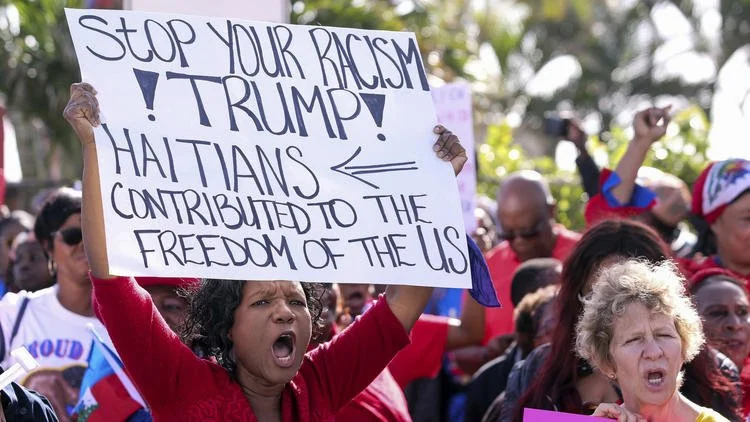
NAACP files lawsuit over Trump's Haiti immigration policy, citing disparaging remark
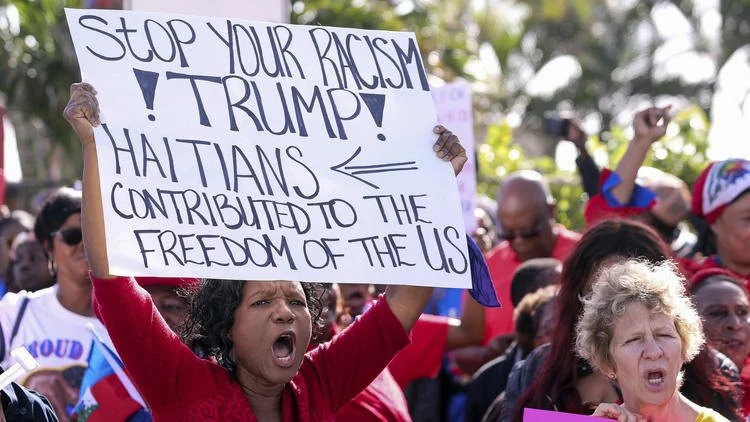
The NAACP has sued the U.S. Department of Homeland Security, citing President Donald Trump's disparaging comments about immigrants and their home countries as evidence of racial discrimination influencing his administration's decision to end protections for roughly 60,000 Haitians.In a lawsuit filed Wednesday in Maryland federal court, the NAACP Legal Defense and Educational Fund said Homeland Security officials failed to follow the normal decision-making process when considering whether to renew the temporary protected status granted to Haitian immigrants since a devastating earthquake struck the Caribbean country in 2010.Instead of reviewing facts about conditions in Haiti since the earthquake, including an ongoing cholera outbreak and destruction from Hurricane Matthew in 2016, Homeland Security officials sought to bolster stereotypes about blacks and immigrants committing crimes and receiving public assistance, according to the lawsuit.The temporary protected status allowing Haitians to legally live and work in the U.S. after the 2010 earthquake had been renewed repeatedly, to the chagrin of critics who said the humanitarian measure never intended to allow immigrants to establish roots in this country.The Trump administration announced in November that Haitians with the protected status would have until July 2019 to get their affairs in order and return home.The lawsuit cites a 2017 report from The Associated Press detailing U.S. immigration officials' attempts to find data on Haitians with protected status committing crimes or receiving public assistance. It also quotes separate reports that Trump said thousands of Haitians who came to the U.S. in 2017 "all have AIDS," and that he used vulgar language to question why the country needed more immigrants from Haiti or from African countries instead of from countries like Norway.Trump's comments on immigration from his presidential campaign, including statements about "bad hombres" he would expel from the country, also were cited by the lawsuit, along with reports that former Homeland Security Acting Secretary Elaine Duke was being pressured by administration officials to rescind temporary protected status for immigrants from Honduras.The lawsuit, filed on behalf of the NAACP and its members with protected status, names Duke and Homeland Security Secretary Kirstjen Nielson as defendants.
Homeland Security spokeswoman Katie Waldman said in an email Thursday the agency does not comment on pending litigation.By: Jennifer Kay | Chicago Tribune | January 25, 2018
DAYS AFTER 'SHITHOLE' CONTROVERSY, TRUMP ADMINISTRATION BANS HAITI FROM APPLYING FOR LOW-SKILLED WORK VISA
Following reports that President Donald Trump referred to several countries, including Haiti, as "shitholes" (reports the president partially denied), on Wednesday, the Department of Homeland Security (DHS) has now barred people from the Caribbean country from applying for low-skilled working visas.DHS said in a regulatory filing that it was removing Haiti from a list of more than 80 countries whose citizens can be granted H-2A and H-2B visas, given to seasonal workers in agriculture and other industries.It justified the decision by citing the “high levels of fraud and abuse” from Haitians on the program, and “a high rate of overstaying the terms” of their visas. Approximately 40 percent of Haitians overstayed on a variety of non-immigrant U.S. visas, including H-2As and H-2Bs, in the 2016 fiscal year, according to a DHS report.Just a few dozen Haitians entered the United States on the visas each year since they were given permission to do so in 2012 by the Obama administration, according to DHS data.Sixty-five Haitians entered the United States on H-2A visas, given for agricultural work, in the 2016 fiscal year, and 54 Haitians were granted H-2A visas by the State Department between March and November 2017. The number of Haitians entering in 2016 on H-2B visas, which are for non-agricultural seasonal work, was more than zero but too low to report, according to DHS.Belize and Samoa were also removed from the lists, for risks stemming from human trafficking and not taking back nationals ordered removed from the United States, respectively.Supporters of the visas say they gave Haitians a rare opportunity to work legally in the United States, contribute to the U.S. economy and help fund the recovery of Haiti after a major earthquake in 2010, which killed more than 200,000 people.The announcement was made less than a week after President Donald Trump reportedly asked lawmakers “why are we having all these people from shithole countries come here?”—referring to El Salvador, Haiti and several African nations.The controversial comment came during a heated discussion on the future of immigration policy between Republican and Democrat lawmakers in the Oval Office, where Trump questioned why the U.S. would continue to take in immigrants from poor countries. The president also reportedly wondered why the U.S. didn't have more immigrants from predominantly white and economically stable countries like Norway.However, though Democratic Senator Dick Durbin said Trump used the slur, Republican lawmakers, including Homeland Security Secretary Kirstjen Nielsen, said they could not recall the word being used. Trump defended his harsh language, but later denied using the language reported. He defended and his relationship with Haiti in an interview with Reuters on Wednesday.“I love the people. There’s a tremendous warmth. And they’re very hard-working people,” he said.By: CHRISTINA ZHAO AND REUTERS | 1/18/18
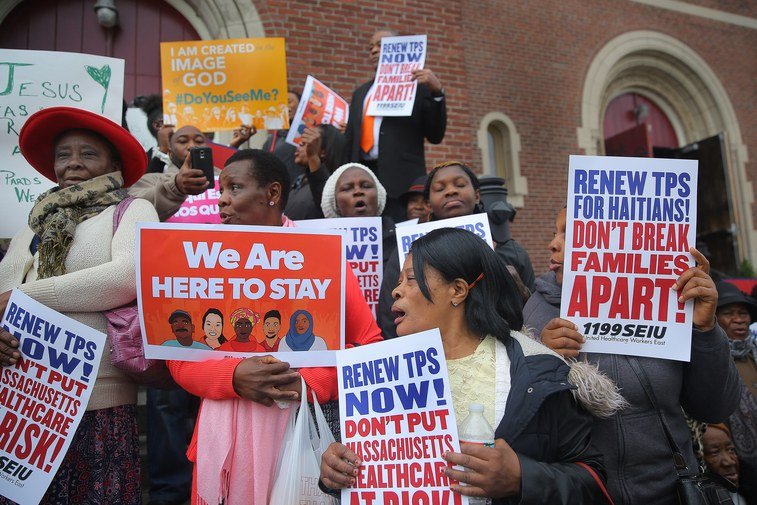
Haiti Has Been Mistreated By Politicians Like Donald Trump for Centuries
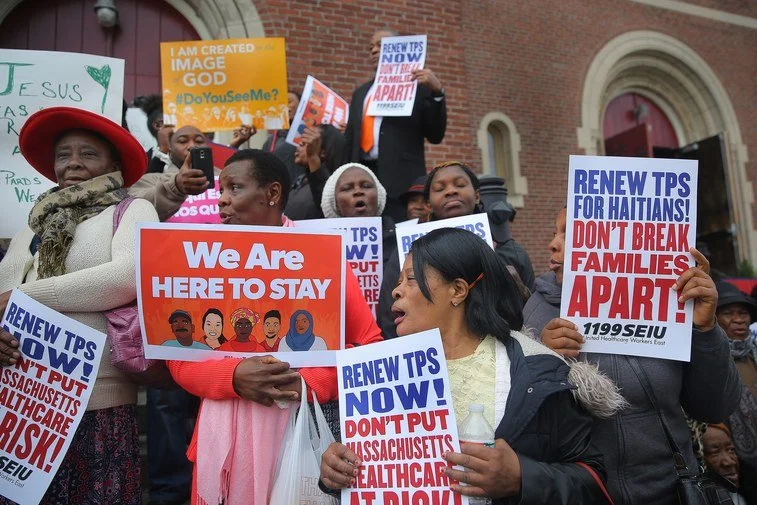
 In this op-ed, writer Fabienne Josaphat explains the history of Haiti, and how it has been mistreated by politicians long before President Donald Trump's recent remarks.President Donald Trump’s ignorance of Haitian contributions and history continues to mislead the American people. On January 11, the President of the United States met with officials on immigration and allegedly said, regarding Haitians and Africans, “Why do we want all these people from shithole countries coming here?” The Washington Post first reported the news.These statements made on the eve of the anniversary of the January 12, 2010 earthquake that killed up to 300,000 Haitians. As a Haitian immigrant living in South Florida — where, in 2015, an estimated 127,189 people of Haitian ancestry lived in Miami-Dade County alone — I could feel the indignation broiling beneath my people’s skin. Locally, councilman Alix Desulme, who represents District 4 in the City of North Miami, called the alleged comments “divisive and racist,” and demanded an apology.“Sadly, we have a president who continues to show America how great we can become through his destructive selfishness,” the councilman said. The mayor of North Miami himself, Dr. Smith Joseph, chimed in with his own statement, saying, “Our nation should not tolerate this overt racism from a president who is sworn to protect us.” Haitian-American Congresswoman Mia Love, a Republican from the state of Utah, said, “The President must apologize to both the American people and the nations he so wantonly maligned.”Instead, what came hours after the news of the reported comments broke, was a tweet from the president in which he denied making the comments, calling Haiti “poor and troubled.” He claimed to have wonderful relationships with Haitians, but failed to acknowledge a single one by name. None of this, again, is surprising.Fox News host Tucker Carlson affirmed that the president was merely voicing what his base was already thinking, casually asking, “Why can’t you say that?” on air. Many Trump supporters disagree with the notion that Trump is a racist, despite his allegedly saying “We should have more people from Norway” after his “sh*thole” comment was made.Describing a person’s country as a “sh*thole” shows an absence of critical thinking, and is a display of ignorance. It echoes an existing sentiment of xenophobia in this country from Trump voters, most of them white, now referred to as “the forgotten men and women.” They are being misled by a man who knows nothing about the Haitian people and their history. Yes, the U.S. should respect the Haitian people simply because of their humanity. But Haiti also deserves respect because it spent its entire existence as a nation contributing to the enrichment and greatness of superpowers like America.Historically, Haiti has always offered its best to the world and is proud of its accomplishments. It was the first to lead a successful slave-led rebellion to topple French slave owners, claiming its freedom in 1804. Without Haiti, there would be no Louisiana Purchase, a treaty that earned the United States the entire Louisiana territory and more than doubled the country’s size. New Orleans’ vibrant culture would not be the same without the influence of integrated Haitians. In Illinois, what would later become the city of Chicago was founded by a Haitian-born pioneer named Jean-Baptiste Point du Sable. In addition to liberating slaves in other countries, Haitians helped America fight its Revolutionary War, and when World War II drove countries to form urgent alliances, Haitian pilots joined the Tuskeegee Airmen as part of the U.S. Army Air Force.Our decision in 1804 to live free or to die was heroic, but the U.S. did not officially recognize this independence until 1862. France put the nation in the humiliating position of having to pay reparations at an annual rate for the slaves they lost, so Haiti was forced to borrow money to repay their oppressors, and borrowed from banks in France and the U.S.. Several initiatives have been launched to cancel Haiti’s debt, but pressure to repay debtors initiated further borrowing, keeping Haiti in constant crushing debt.The U.S. profited off Haiti during the American occupation of Haiti from 1915 to 1934, suppressing riots and killing rebels. Initially led by then-President Woodrow Wilson, the U.S. military imposed racist soldiers onto the Haitian people, introducing a new strain of cruelty that led to the decapitation and dehumanization of insurgents.The dictatorship of François “Papa Doc” Duvalier, which lasted in Haiti from 1957 to 1971, was able to endure because of American complicity. Specifically, as Duvalier murdered and brutally oppressed Haitians, the U.S. looked the other way because Duvalier was effective at staving off communism, which the U.S. saw as a threat. When that regime was toppled when Duvalier’s son was overthrown in 1986, the nation was completely impoverished, its funds depleted to line the pockets of tyrants like the Duvaliers. In addition, because of its debts to the U.S., Haiti has been by default constantly subjected to American intervention.Despite our contributions to America, Trump’s language doesn’t necessarily come as a surprise to Haitians, as we too often face this type of disregard from so many in power. Yet, during his presidential campaign, Trump made sure to draw attention to Hillary Clinton’s actions regarding Haiti to discredit the Democratic candidate. In 2009, when she was Secretary of State, Clinton suppressed Haitian minimum wage, at the behest of manufacturers, then after the 2010 earthquake, Bill Clinton became head of the Interim Haiti Recovery Commission. He enlisted the Clinton Foundation to build shelters, a relief effort considered to be a disaster, called out even by the likes of Oxfam.With more than one million people displaced after the 2010 earthquake, the U.S. poured aid money into Haiti, but years later, investigations have found that very little money actually reached Haitian citizens. Haitians still lack shelter that was promised by the American Red Cross after the humanitarian organization raised almost half a billion dollars from helpful donors. The Clinton Foundation, again, is also implicated in failing in their recovery efforts to aid Haiti with reconstruction projects after the earthquake despite raising more than $30 million.Then, Haiti suffered a devastating cholera outbreak that started at a United Nations peacekeeping camp, and as of November 2017, the Trump administration has refused to assign unspent UN peacekeeping money to help combat the epidemic. Instead, his administration chose to end Temporary Protective Status for 60,000 Haitians sheltered in America as a result of the earthquake.This sent a clear message to Haiti and its diaspora, and now, his comments about them speak volumes. In Trump’s world, there is no room for black and brown people to thrive. Yet, he shows an acceptance of white nationalists, identifying as “very fine people” some of the those protesting to keep Confederate monuments after the deadly Charlottesville rallies.He does not know the history of Haiti, and he doesn’t comprehend the significance of Haiti’s contributions, because he doesn’t care to. His wealth and privilege have allowed him to erase others to the point of invisibility.But Haitians exist as a reminder that the damages of racism and oppression cannot sway self-determination. We are not going anywhere. In fact, Haitians continue to thrive despite adversity. Our ancestry and culture empower and enable us to bounce back and carry on. If the whip of slavery did not break us, the words of an inveterate racist will not kill us. Haitians sacrifice for others even when others don’t sacrifice for them. I see this as the definition of love: the continuous devotion to others with no expectation of reciprocity.As a Haitian immigrant, I am tired of always asking for apologies, so I’m not personally interested in one from Trump. I’m interested in active and constructive repairs to our dignity in the American media, demonstrating an intent to rebrand and respect Haiti, rather than baiting audiences into buying into images of poverty and misery, because one narrative does not define us. Apologies, to me, are futile unless they are backed up by action and determination for change. Until then, we are planting our feet in the ground and waiting for the next insult to fly.By: Fabienne Josaphat for TeenVogue.com | January 16, 2018
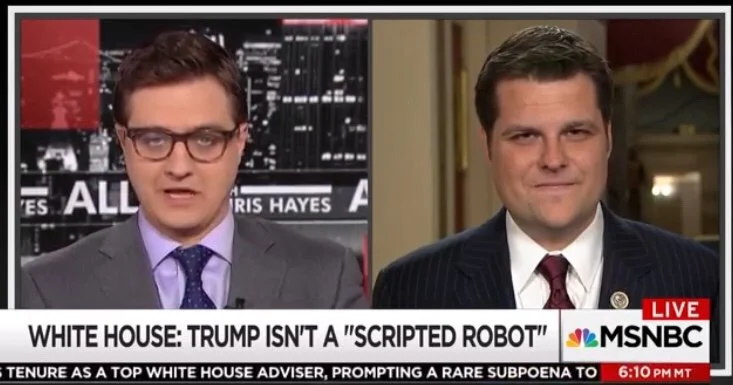
GOP Lawmaker Matt Gaetz Slams Haiti: ‘Sheet Metal And Garbage’ Everywhere You Look
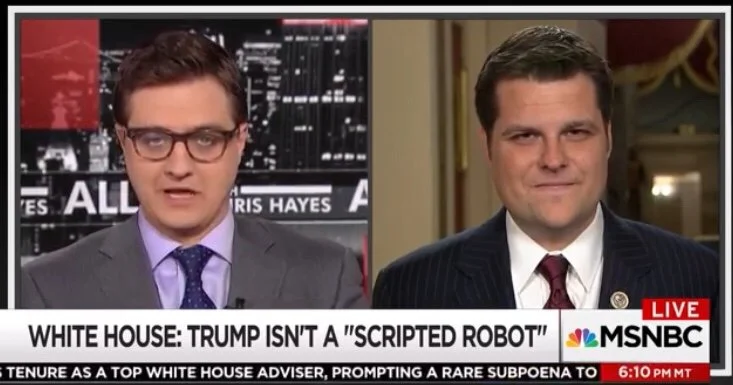
[embedyt] https://www.youtube.com/watch?v=Z31C6I9YUbg[/embedyt]Rep. Matt Gaetz (R-Fla.) slammed Haiti on Tuesday, saying the country is covered with garbage and that conditions there are “disgusting.”
“Yes; I could also prove you wrong, because I could bring you to Okaloosa County and show you that it’s the home of the most beautiful beaches in America. I don’t know that in Haiti they can make the same claim.”
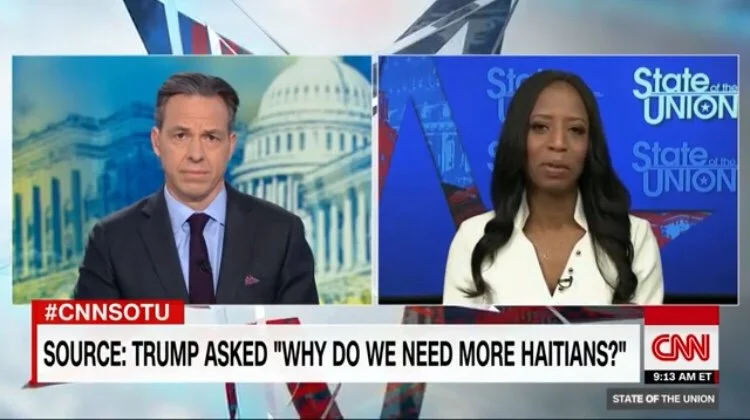
Trump meets with GOP Haitian-American congresswoman amid fallout from obscene remarks
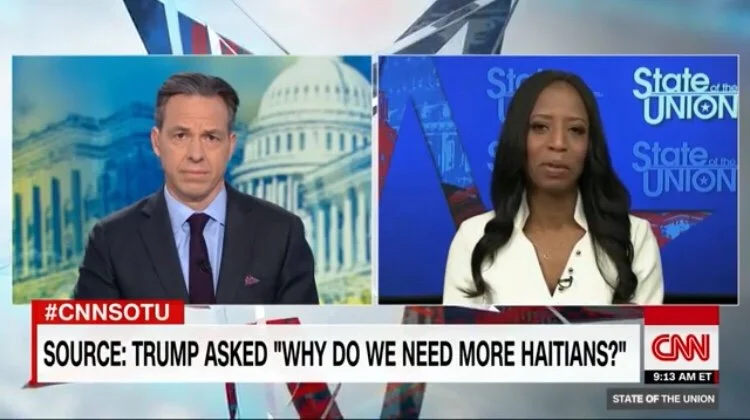
[embedyt] https://www.youtube.com/watch?v=-uvlvxiKec8[/embedyt] (CNN)Republican Rep. Mia Love discussed immigration with President Donald Trump in the Oval Office for half an hour Tuesday, just two days after she said she believed the President made racist remarks about Haitians during a meeting with lawmakers.
If You Think Haiti Is a Shithole, Then Blame America for Helping to Make It That Way
Centuries of mistreatment by the U.S. is a primary cause of Haiti's plight.
President Donald Trump reportedly described Haiti and a slew of other nations as "shithole countries" while meeting with lawmakers about immigration policy yesterday. If you expected more from from him, then you probably expect too much.But eight years to the day after an earthquake brought Haiti to its knees, most Americans view the country closer to the way Trump describes the place than they'd like to admit. The typical American's understanding of Haiti doesn't go much further than the global press's tagline: the "poorest country in the Western Hemisphere." And there is undeniably poverty in Haiti. The average economic output for a Haitian is $820 per year, compared with their neighbors in the Dominican Republic, who average $6,000.I spent nearly four years working in Haiti, first as an economics journalist and then as the manager of a coffee-farming venture. As I wrote in Haitian Coffee Grows on Trees, my book about my time there: "Over half of all Haitians are undernourished, compared to just 15 percent of Dominicans. Just one in four Haitians has access to a toilet. More than half of all adults cannot read. Money sent home by friends and family who live abroad powers almost a quarter of the economy. That's not too surprising once you know a figure that development economist Michael Clemens often cites: 80 percent of Haitians who have escaped poverty have done so not by staying in their own country but by leaving for the United States." Only about one in five Haitians have a job that pays a steady wage. The rest work informally, or not at all.
Today, if you look at a list of coffee-growing countries, you might not even find Haiti on it. Which is shocking, given that just over 200 years ago, the colony that predated Haiti was the world's biggest coffee producer. The story of how the tiny place that once sold half the world's coffee fell off those lists takes many pages to tell. But the country's current predicament has far more to do with the U.S. government than everyday Haitians.To be clear, the Haitian state and its leaders have perpetually hamstrung their own people, when not outright decimating them. But Haiti's history also includes a United States that initially refused to acknowledge or trade with the second free republic in the New World—the first free black republic, borne of a successful slave revolution. It includes two decades of occupation by U.S. Marines, a time when free Haitians were conscripted into chain gangs and shot dead for attempting to escape. It includes hundreds of millions of dollars in aid to a father-son dictatorship whose three-decade reign ruined the country's economy and murdered thousands of citizens. And it includes a foreign aid faucet that continues to flow today, despite the ill incentives it creates. Tweaks to immigration policy would do orders of magnitude more to help ordinary Haitians than that aid—as if helping Haitians were a concern of the present administration.For everyday Haitians, life working as in the United States as a manual laborer, hotel housekeeper, or fruit picker is often much better and more lucrative than doing much of anything in Haiti. Roughly 80 percent of the half-a-million-plus Haitians who live in the U.S. are working age. Eight in 10 of them who are over 25 have high school degrees, which means they're slightly more educated than the average immigrant and only slightly less than native-born Americans.Clemens has called immigration Haiti's "most successful poverty reduction program." He and fellow economist Lant Pritchett have estimated that a low-skilled worker from Haiti can increase his or her earnings by sixfold by immigrating to the United States. A coherent immigration system would allow employers to hire willing foreigners from Haiti and any other country on the president's shit list to fill niches in the service sector, on construction sites, and wherever else they're needed. It would also make it much easier for highly skilled or entrepreneurial foreign nationals to invest in the U.S. regardless of where they come from.Frantz Duval, editor in chief of Haiti's largest daily, responded to yesterday's reports with a column that called his home "a country that deserves better from us." After 200-plus years of policy forged with a mixture of racism and condescension, Haiti surely deserves better from Washington too.By: Tate Watkins | January 12, 2018