
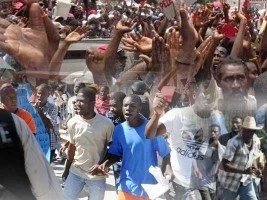
The opposition announces 3 days of national demonstrations
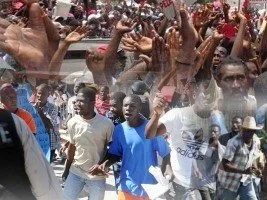
Monday, the coalition of opposition democratic organizations, including Pont, VERITE, "Pitit Dessain", "INITE démocratique", "PALMIS", "Kore N", Rally of Arcahaie, Lavalas and the opposition senators, announced 3 days of demonstration, on 28, 29 and 30 September, against the controversial budget 2017-2018 in order to force the Head of State to reverse his budgetary decisions.Me André Michel, one of the spokespersons for the Rally of Arcahaie, announces that the "battle is underway" and a vast mobilization movement in Port-au-Prince, in the Central Plateau, in Jacmel, Petit-Goâve, in Cap-Haitien, Saint marc and Léogâne, "the whole population will stand to denounce this budget which will further impoverish the Haitian population."For his part, the former President of the Senate and former Minister of the Environment, Dieuseul Simon Desras, urges the population not to be manipulated by speeches suggesting that the government will revise the budget, referring to Article 35 of the a universal declaration of human rights which states that "when a government violates the laws of its country, the only way out of the people is insurrection." He also denounced a plan aimed at assassinating opposition leaders, reminding members of the Government who would act "that they will be liable to the International Criminal Court."By: TB/ HaitiLibre - 26/09/2017

Haiti - DR : Strong tension at the border of Malpasse-Jimani

On Monday, Haitian carriers blocked the entrance to the Malpasse border crossing with their trailers and trucks, causing the access door to and from Haiti to be closed, causing long lines of more than 300 m on both sides of the border...Haitian transporters and merchants demanded the lifting of the ban on the importation of 23 products of Dominican origin, imposed under the Martelly government in September 2015.The binational market that takes place every Monday and Thursday in this sector of Mal Paso, had started early but trade was affected by seizures of goods on the Haitian side. Several Haitian traders who had already bought products nevertheless succeeded in transporting them on the Haitian territory by alternative routes...Trade unionist Jerald Desi, the Vice-President of the Carrier Association of Fond Parisien, said the Moïse to remove the ban on products of Dominican origin, qualifies as a joke. He pointed out that this ban was detrimental to the poorest Haitians living in the utmost poverty along the border, while the richest in Haiti import goods from the Dominican Republic without any concern.Jerald Desi warned that if Haitian merchants and haitian transporters do not meet their demands, they were able to close the entire border as long they did not win.In addition, Jerald Desi protested against the Land Border Security Corps (CESDRONT), which he accuses of seizing 24 Haitian taxi motorbikes Saturday and Sunday, on the pretext that they had no papers in order to make transportation in the city of Jimani.On Monday, following a meeting between Mrs. Thérèse Longchamp, Minister Counselor and Cheffe of post at the Haitian Consulate in Barahona and Dominican authorities, 16 motorcycles were returned to their Haitian owner in the afternoon.By: SL/ HaitiLibre 26/09/2017
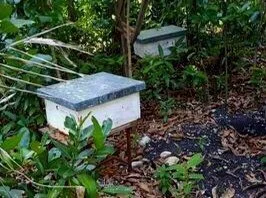
Beekeeping an alternative activity for fishermen in St-Jean du Sud
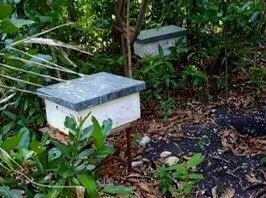
In order to allow fishermen living in the buffer zones of the mangrove ecosystems of St-Jean du Sud to have an alternative economic activity, the organization "Artisanal Fisheries and Integrated Development" (PADI) develops apiculture to Pointe Abacacou.Beekeeping is one of the sectors chosen within the framework of the green economy concept because of its transversal importance for increasing the yield of agricultural exploitations and a better management of biodiversity.PADI has organized two training sessions for the benefit of their members and other sectors in the area, with a view to an effective implementation of this sector within the fishermen's association of Point Abacou. Following these sessions, a multiplication apiary was set up with 10 colonies installed in the hives fabricated by the learners in the area.This activity also resulted in the strengthening of the cabinetmaking in Pointe Abacou. Managed by 5 learners under the supervision of the administration of the Fishermen's Association of Pointe Abacou, a workshop for the manufacture of hives with movable frame has been established.This initiative was carried out in collaboration with the International Labor Office (ILO), UN Environment Haiti and the Fishermen's Associations of the commune of Saint-Jean du sud and Port Salut.By: HaitiLibre | September 25,2017
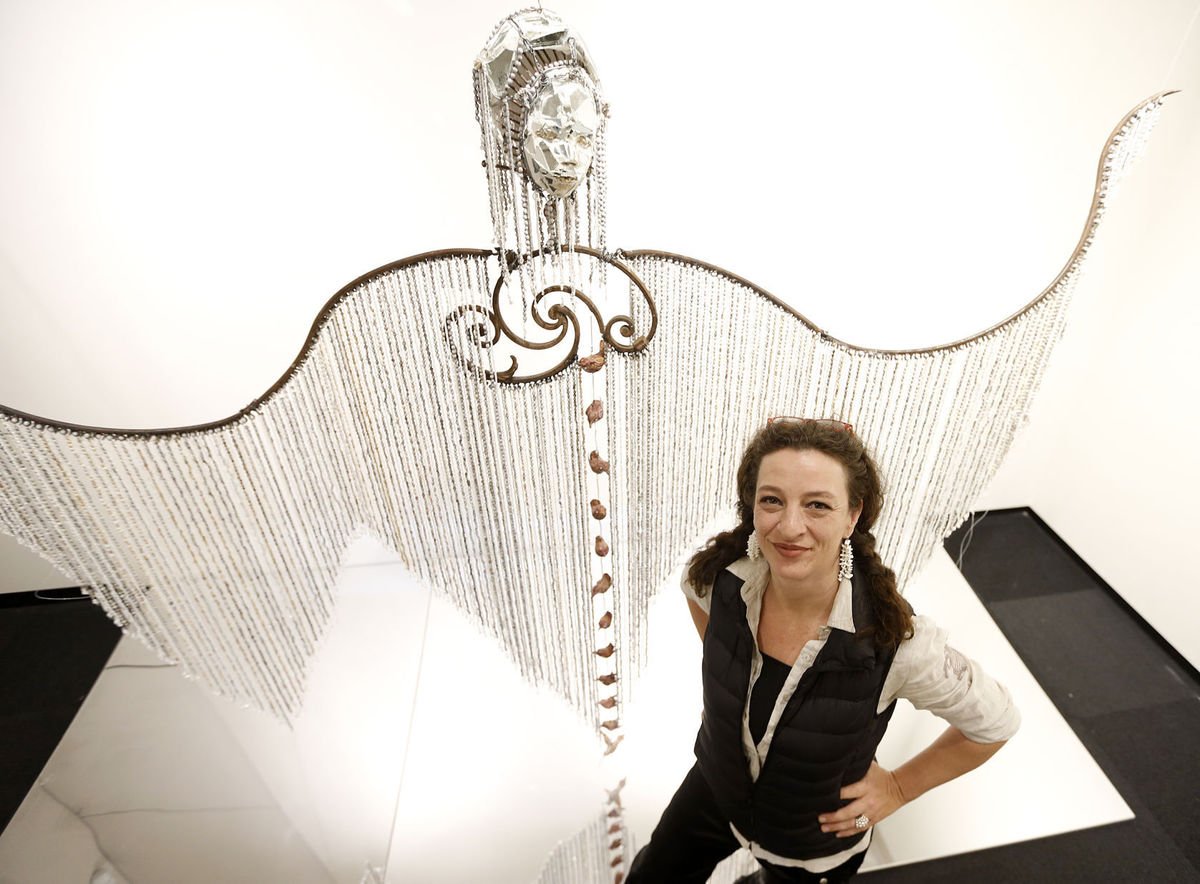
Pièce De Résistance: Haitian Artist’s Work Explores Life
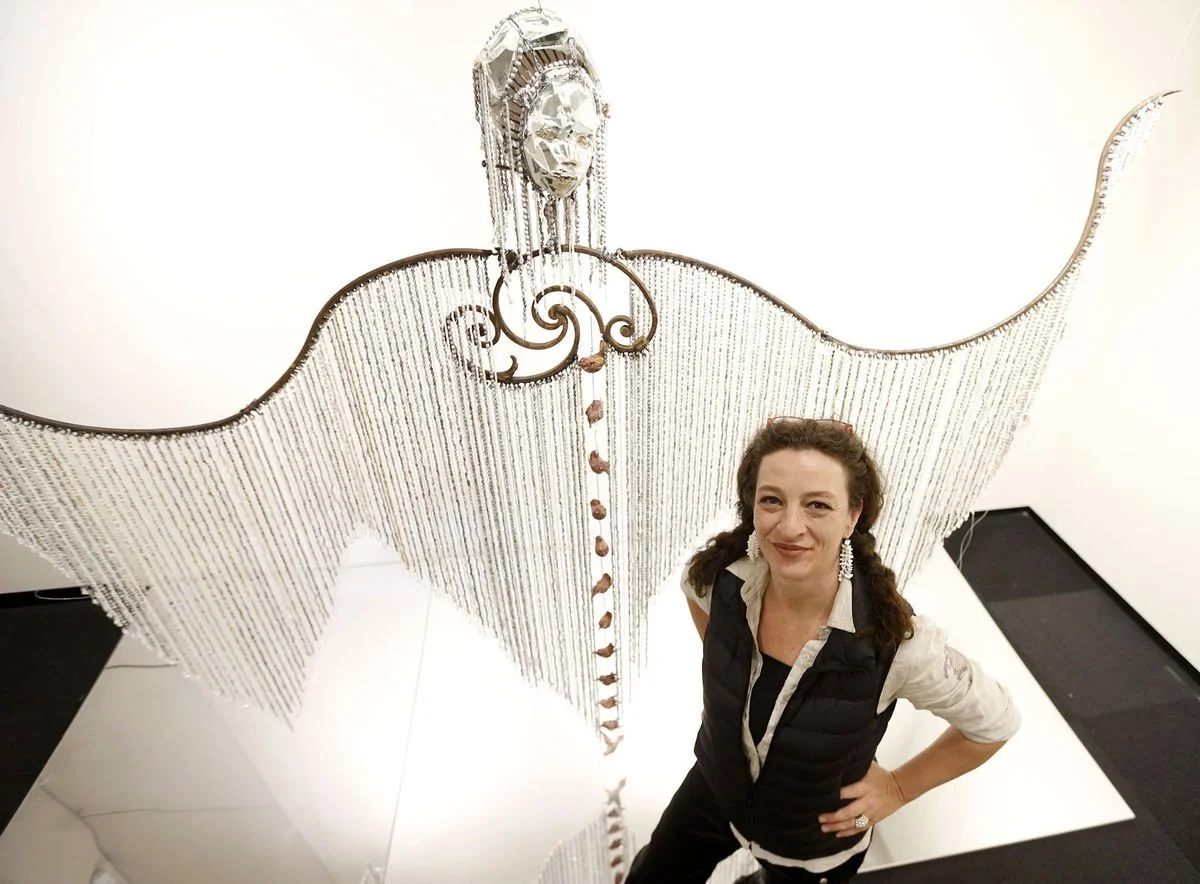
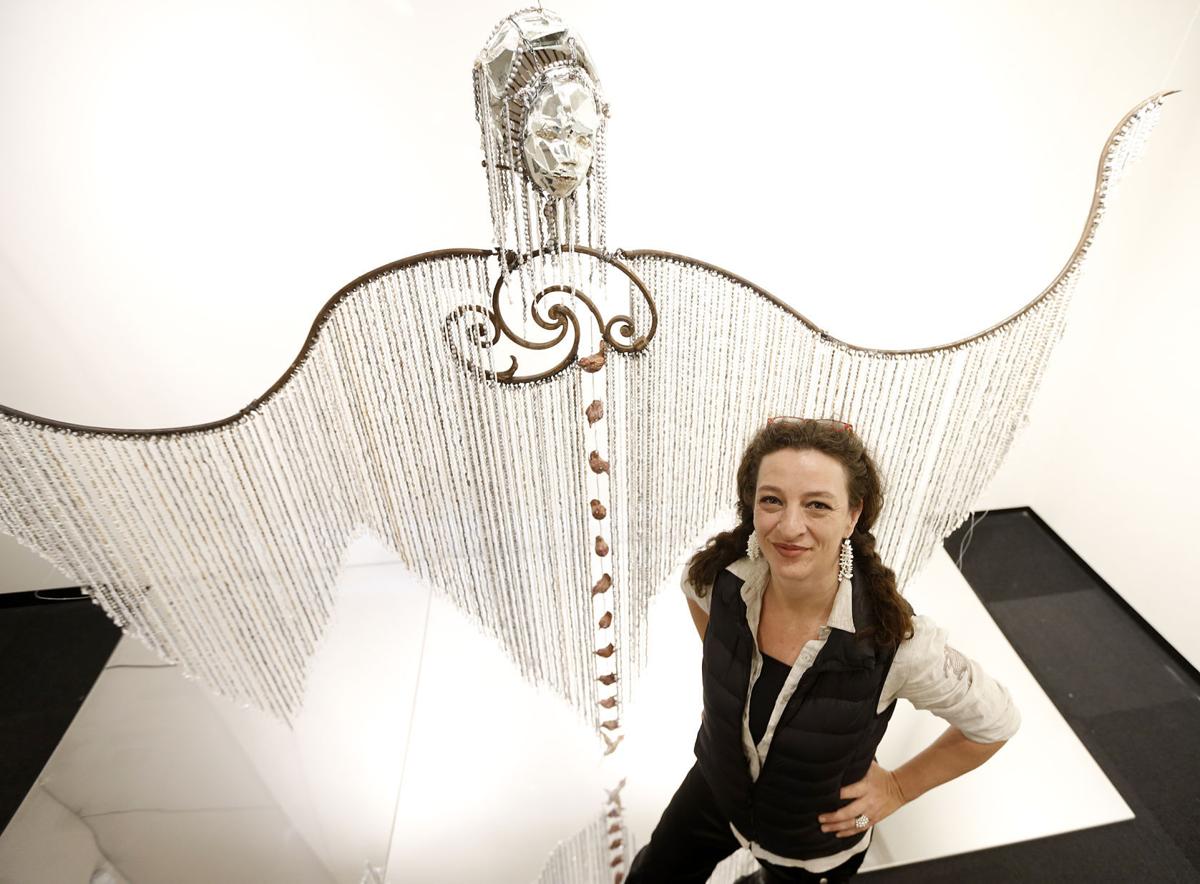
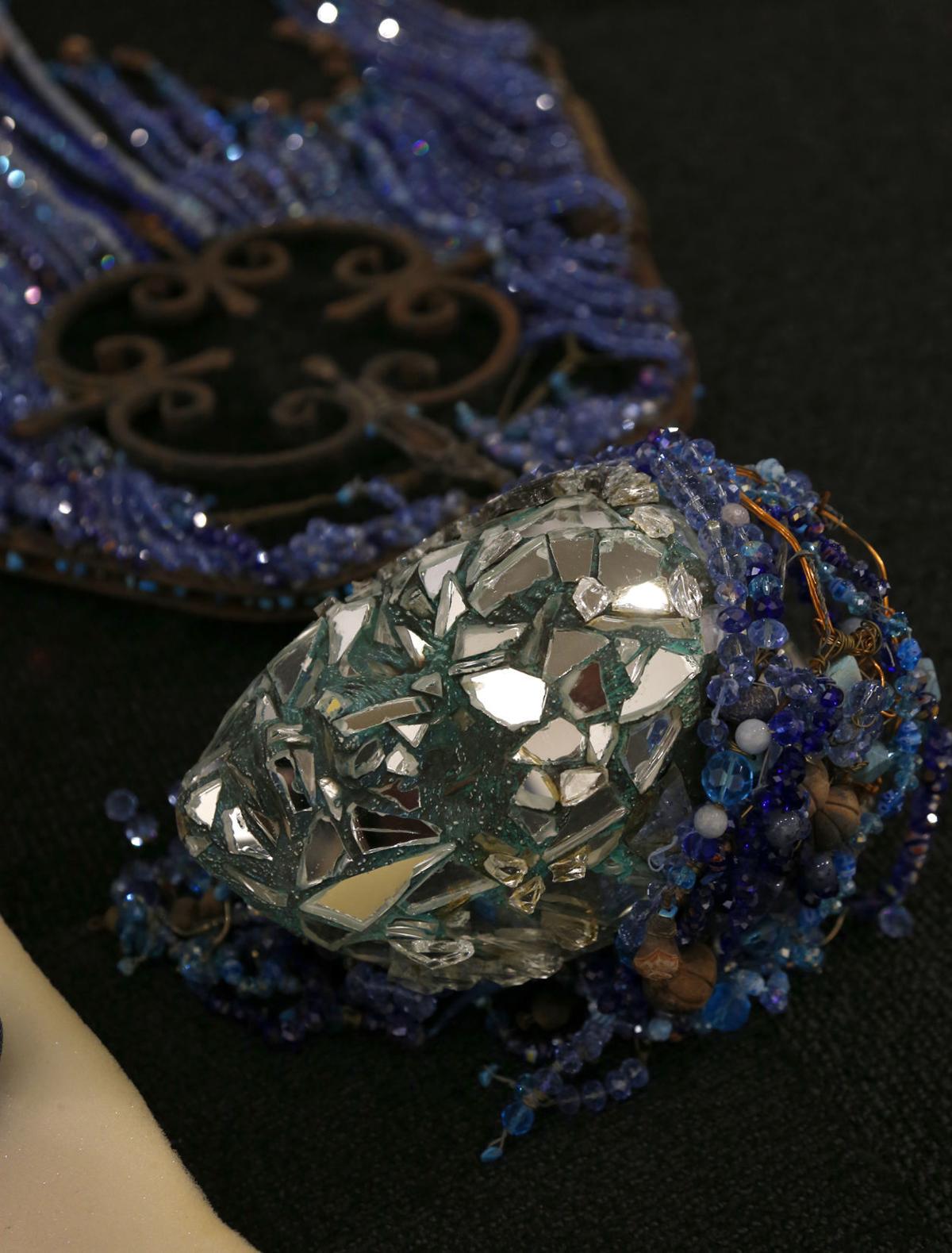
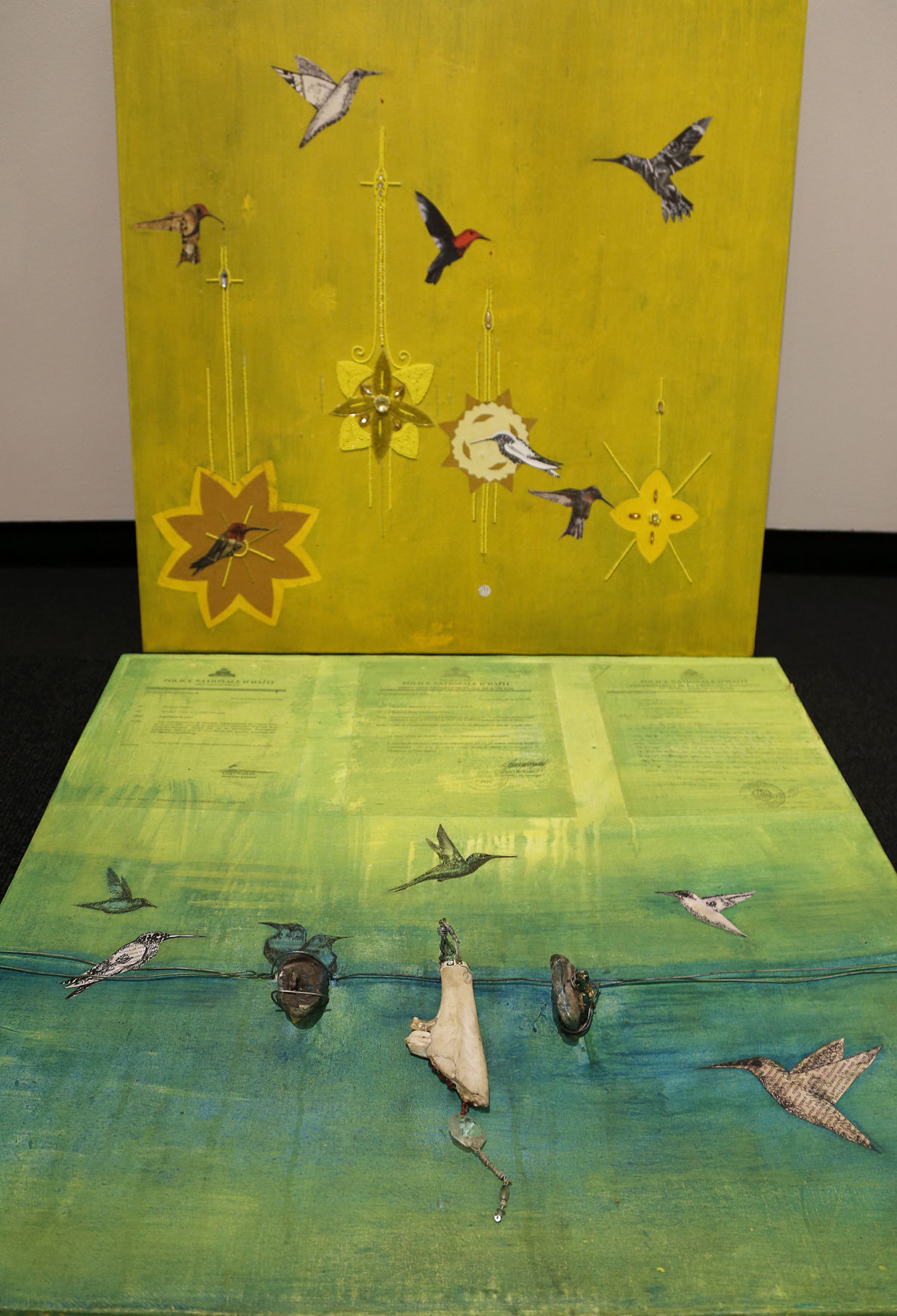 Monnin is one of the best-known contemporary female artists in Haiti, and her artwork has been exhibited in one-woman shows and exhibitions at art centers, museums and galleries around the world.
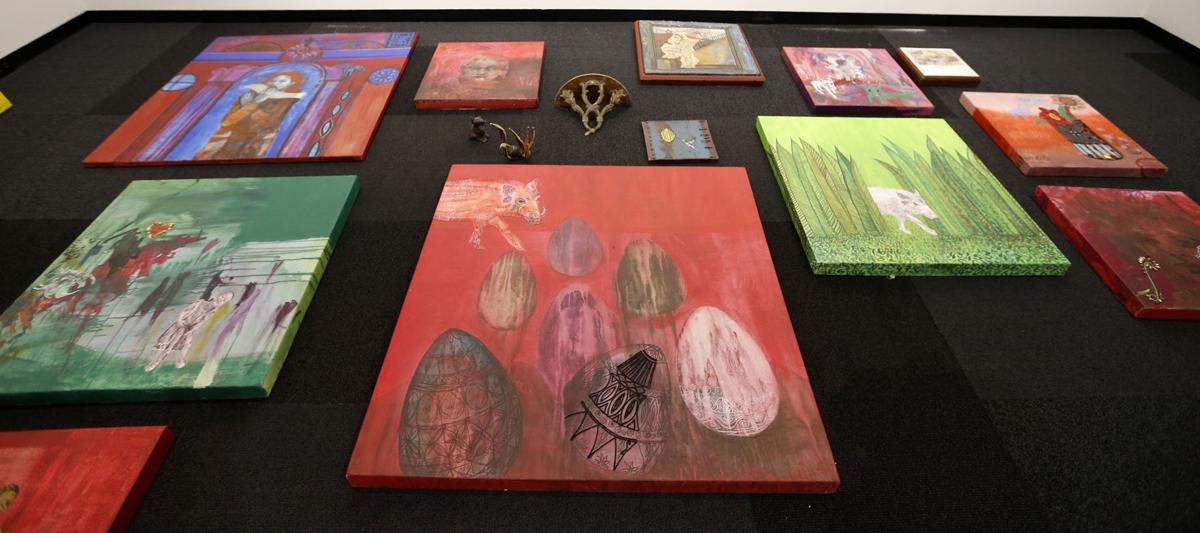 She studied art education, including painting, printmaking and sculpture in Geneva, and returned to Haiti to live in the 1990s. Recently, she moved to Paris.
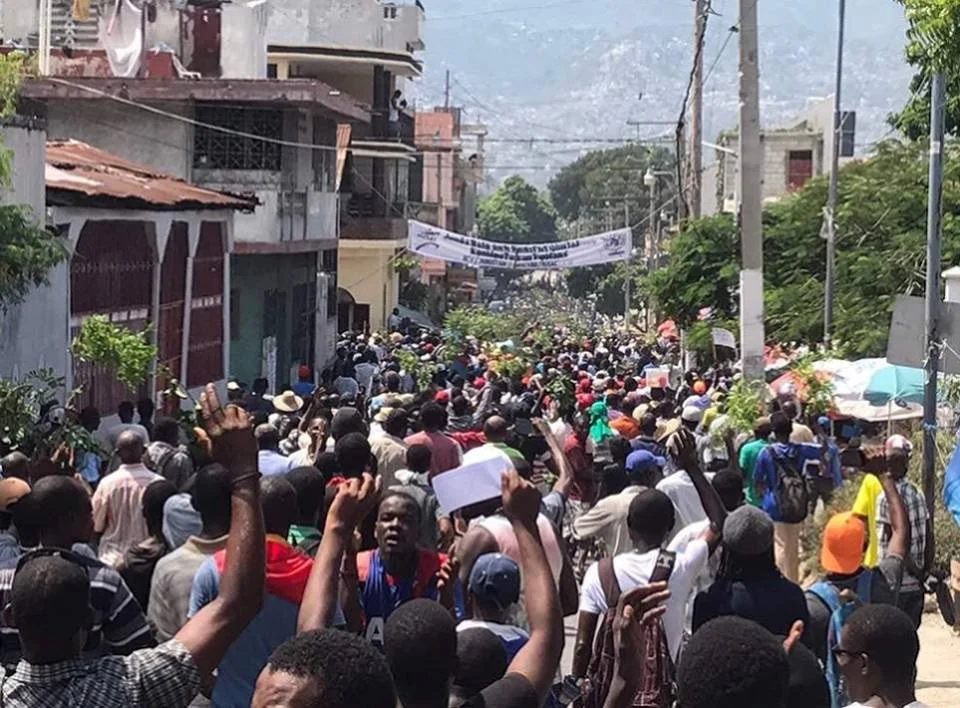
Haiti: Thousands March Against New Budget
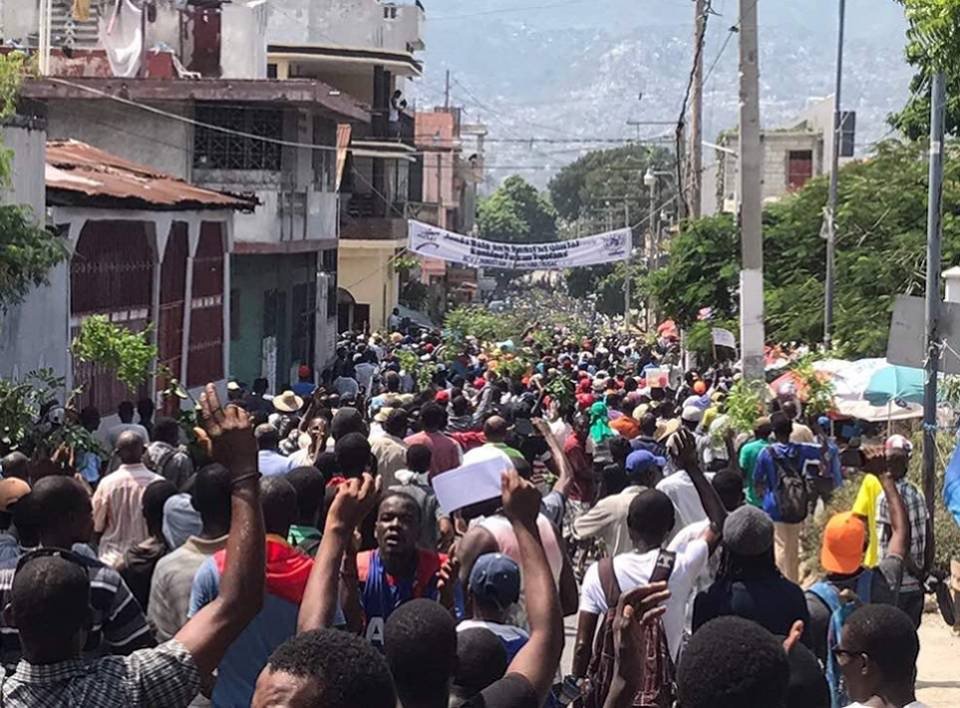
 Thousands of Haitians marched through Port-au-Prince on Sept. 12 chanting “Down with Jovenel!” “Down with the bourgeoisie!” and “Liberty or death! The revolution is beginning!” (Haïti-Liberté, Sept. 13) Moïse Jovenel is the current president of Haiti.A leaflet passed out during the marches raised the issue of the “tuberculosis wages” resulting from the Parliament’s refusal to raise the minimum wage of $4.77 a day. There is growing anger over Parliament passing a budget that requires drivers to pay $158 for an income tax report, which is waived if their income is less than $958 a year. (AFP, Sept. 13)The day before, protesters had been in a single large group led by Fanmi Lavalas, the party started by Jean-Bertrand Aristide, who was elected President of Haiti in 1990 and 2000. The cops, using water cannon and tear gas, were able to keep them contained and away from downtown. The next day, they broke into smaller groups and the cops had much more trouble.The protesters set up barricades of burning tires and rocks, blocking key intersections. Behind the presidential palace, the people threw rocks at the cops, who had unleashed stinging, high-pressure water and tear gas at protesters.Two cars in front of the law offices of Planning Minister Aviol Fleurant were set on fire, and the windows of other cars in the parking lot were busted. Shop windows throughout the city were also damaged.Also in the new budget is a tax on all Haitians — even those living abroad — who want to use government services of 10,000 gourdes, or $159, annually (depending on the exchange rate).Another shocker in the budget, reported by Le Nouvelliste, is that it allocates 7.2 billion gourdes for 146 elected officials and only 6.14 billion gourdes for the health needs of 12 million Haitians.More demonstrations have been called for Sept. 20-23 by Dessalines Family, headed by Jean-Charles Moïse, a former presidential candidate. According to Van Bref Info, Haiti’s National Police attempted to arrest him on Sept. 12.The struggle in Haiti is nowhere over — no matter how firmly the U.S. supports the new government of Moïse Jovenel.By: G. Dunkel | September 24, 2017
Waterborne diseases a concern in Haiti following Hurricane Irma
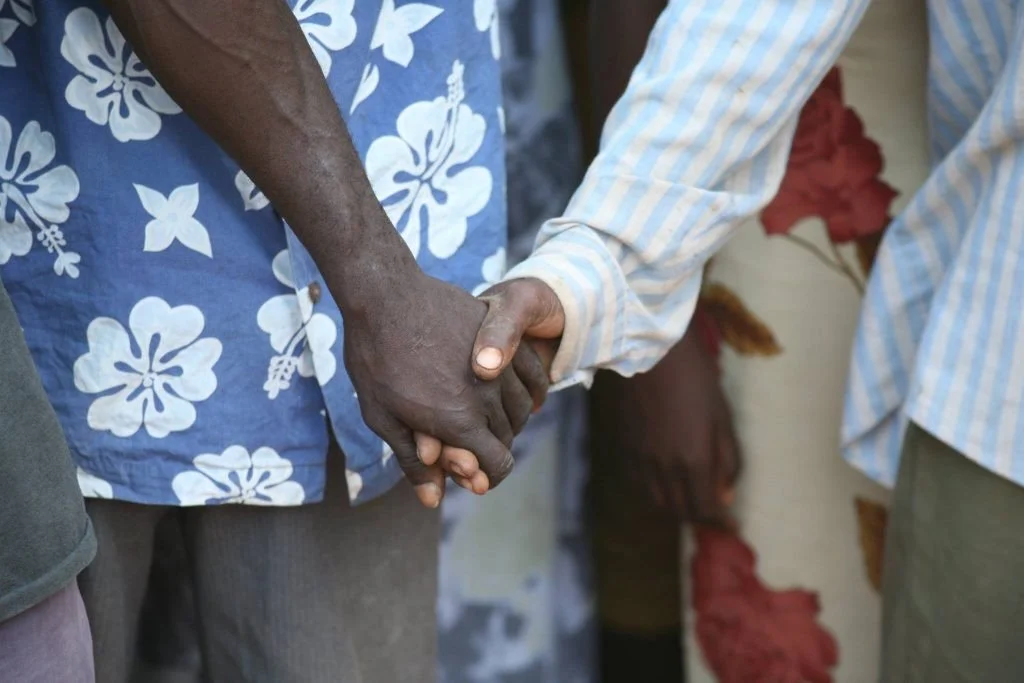
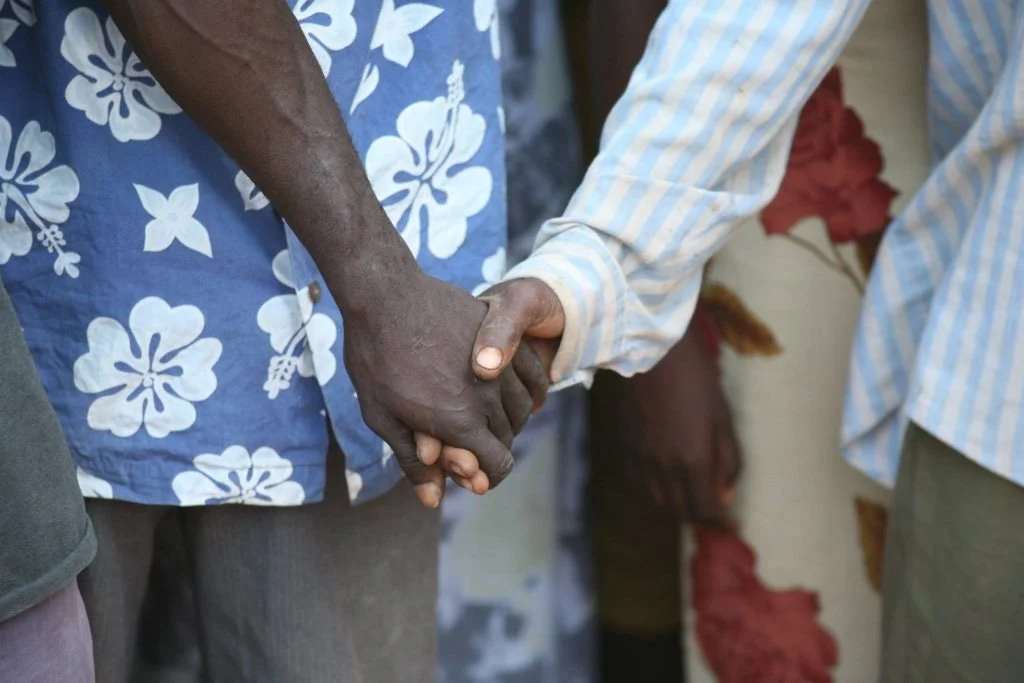
Haiti (MNN) — When Hurricane Irma was barreling towards the Caribbean as the Atlantic’s strongest Category 5 storm ever recorded, many feared the worst for Haiti — the poorest nation among in the Caribbean Islands.Thankfully, Haiti did not take a direct hit from Irma, but as Josh Ayers with Food for the Hungry explains, “Because of the sheer size of Irma, she dropped quite a bit of rain…along [Haiti’s] northern coast there. There was some localized flooding, particularly along rivers and with storm surge along the coast. We did see quite a bit of flooding.”Nearly 40 percent of the Haitian population faces moderate to severe food insecurity. And now according to Haiti’s agriculture ministry, around 18,000 farming families have lost all their food crops to Hurricane Irma.Additionally, one of the biggest fears now is a resurgence of cholera in the nation. Ayers says, “You may recall after the 2010 earthquake that cholera was introduced to Haiti for the first time. So anytime you have large amounts of water flowing in a country that doesn’t enjoy the same level of infrastructure development that countries like the United States enjoys, you often see waterborne illnesses spike. So with the introduction of cholera in the last ten years there, that has become a key concern going forward in the future.”Cholera is contracted when a person consumes human feces, typically through accidental water contamination. It leads to a severe form of diarrhea and can cause death if not treated. And Haiti is extremely vulnerable to cholera outbreaks in natural disasters.“Our response effort at Food for the Hungry has been focused on those waterborne illnesses; particularly around hygiene promotion and hygiene kits, and so those kits consist of things like soap and basic hygiene materials. We dispatched a shipment from one of our partners in Georgia and those materials are on their way. They may have already arrived and we’ll be distributing those shortly.”FH works through the local church whenever possible, enabling them to be the hands and feet of Christ to their own communities. “Because the local church [in Haiti] is under-resourced, as you might imagine, Food for the Hungry can provide much-needed goods and finances to empower that local church to reach out to its neighbors.”As FH strives to stem an outbreak of waterborne diseases in Haiti following Irma, they’re asking for the Body of Christ to come alongside them in a few ways.First, Ayers says, “Your prayers would be welcomed for the local church as well as the local organizations who are responding, Food for the Hungry being one of those. We’ve been working in Haiti for decades. Most of our staff are local Haitians and so sometimes they’re families are impacted by these things. You can pray for our staff.”And finally, you can be a tangible support through generous giving, and know that your gift is going to resource the Haitian Church acting as the hands and feet of Christ to their neighbors in disaster recovery.By Lyndsey Koh | September 25, 2017
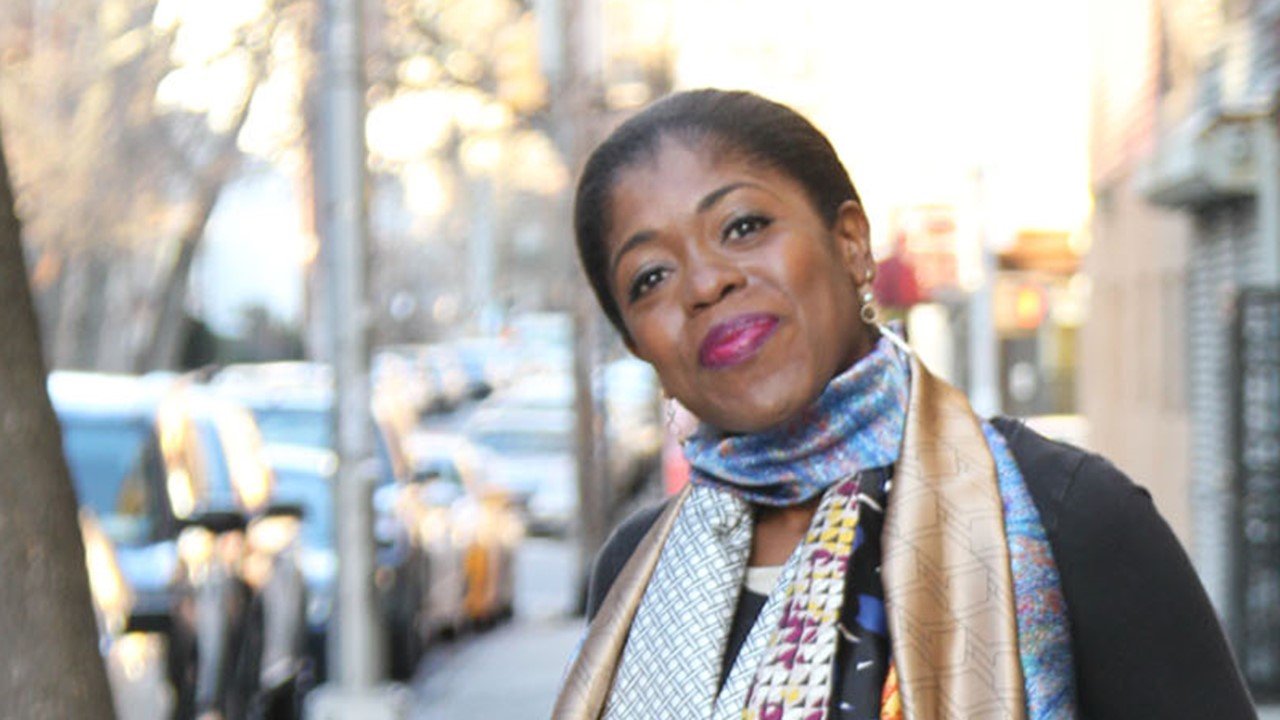
Dayanne Danier: Designer and Philanthropist using her love for clothing to give back to Haiti
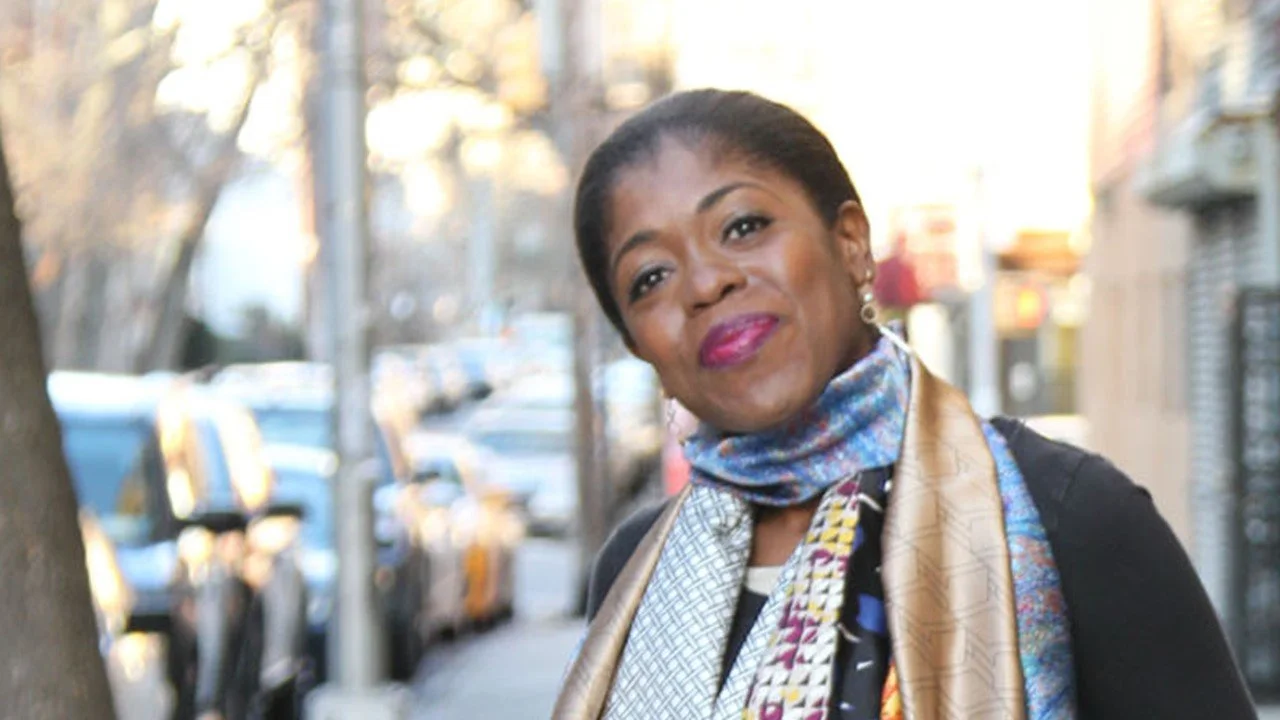
This Boston Born-New York bred Designer and philanthropist is making waves in the fashion industry as she continues to cement her legacy while giving back to her beloved Ayiti. After twenty years spent working in fashion, from designer to retailer, she left one of the top design companies to branch out on her own. Ms. Dayanne Danier is the CEO of Bien Abye (french for Well Dressed), the ready- to- wear women’s brand. Ms. Danier is also the Co-Founder of Fleur de Vie, the non-profit helping to educate young Haitian students in various parts of the country.The Bien Abye brand personifies a simple philosophy: to make women look fabulous at all times effortlessly in S7VEN. Most recently, Ms. Danier hosted a pop-up shop for her brand in New York and Washington D.C. titled, “Les Jardins de la Mode” where she featured her pieces for the world and allowed people to experience the creole essence of the brand. The pop up shop also featured other emerging Haitian brands. The Bien Abye line has been showcased in fashion shows in Boston, New York, Washington D.C., Atlanta, Miami, and Haiti. It is distributed nationwide in retail stores in New York, Boston, Pittsburgh, and Dallas. Items can also be purchased online through the company website.On September 23, 2017, to consistently fulfill the mission of her non-profit, Ms. Danier journeyed to Haiti to host the Fleur de Vie Back to School Recreational Program; the organization’s flagship event. There, she will be distributing school supplies to students while also building health awareness and hosting team building activities. The vision is to support schools through funding school-wide programs like the flagship event, training teachers, and focusing raising the literacy of the population. This partnership has now expanded to four institutions in Haiti. The organization has touched the lives of 1,000 students to date. Ms. Dayanne Danier is a Haitian-American woman on a mission to build an empire while keeping Haiti in her mind and on her heart. Her love for Haiti is evident in all her endeavors. Haitiville: What motivates you?Dayanne Danier: What motivates me is the concept of legacy and having a positive and strong legacy. A spinoff of the concept was engrained in me since I was young whenever my father would tell me, “don’t let people talk [bad] about you”. It reminds me to think about what people would say about me if I were to die tomorrow. I strive to be a unique individual who creates amazing things and brings change. I am a Virgo with a Gemini blood stream because I want to wear two different hats. I love design and I also love to give back to effect positive change.Haitiville: How has the Haitian culture influenced your work?Dayanne Danier: As a designer, the whole essence of Bien Abye is Haitian and Creole centered. I always think about how I look, how my clients look, which is such a Haitian thought. How you present yourself is such a universal concept, but it is also a very Haitian concept.As an artist, the gingerbread architecture is what inspires the motifs and prints I use on my line. The Haitian Gingerbread home, a style of architecture predominant in old Haiti, is a sign of strength and prominence. Gingerbread homes are designed with natural elements yet are decorated in such an ornate way. I take that, and whenever I am designing something, I think, “what element of this piece is like a Gingerbread home”. Haitian culture influences Bien Abye a lot.My culture also influences my philanthropy. Growing up, my family was constantly giving back. My parents were very influential in helping complete cities in Haiti move to America. I always heard the term “commission” which was always about sending things to Haiti. I kept hearing the term so much ever since I was a child that I knew I wanted to give back. In a way, Fleur de Vie is an ode to my parents, my family and an ode to my culture. Fleur de Vie is my commission to Haiti.Haitiville: You use such bright color schemes and palettes. Would you say that’s a Haitian influence?Dayanne Danier: Something that I have been drawn to even in high school was colors. That sense of color is so strong in me. I would say yes, that the color I use stems from my Caribbean roots. The colors that you find on Bien Abye clothes are colors that you find on the islands. Now, I have made it that Bien Abye is so inspired by my creole and Haitian roots that I can be in any place in Haiti and it will influence my line. It does not have to be the typical bright tropical colors, but it can even be just the colors of the landscape. For example, my journey to Hinche one time involved a drive through Mon Cabrit. I loved going there because even the color of the ground was a very gorgeous edible terracotta orange/red. That experience led me to create a collection called “The Earth” where all the shades were very earthy greens, browns, burnt orange, and reds. I really try to bring people into Haiti. Bien Abye ultimately is my culture. I am presenting it to Haitians and non-Haitians and I want people to know that you don’t have to be Haitian to appreciate the concept of Bien Abye, to love the concept of Bien Abye, or to want to buy into the concept of Bien Abye because it is just really rich and captivating.
 Haitiville: Speaking of Fleur De Vie, what is the goal of your non-profit organization?Dayanne Danier: Giving back was important to me, I just didn’t know how or in what capacity.Growing up Oprah was my role model. Fast forward to 2002, when Oprah went to Africa for Christmas where she aired the Oprah show of bringing gifts to African children. Seeing what she did made me feel like that was something that Haiti needed, and I wanted to do that for Haiti. What started off as adopting kids in Haiti, sponsoring children for $120 a month, seemed insufficient once the earthquake of 2010 struck. I did not have Oprah money, but I began by organizing a few activities with Jenny Batista, the co-founder of Fleur de Vie when I took a trip to Haiti after the earthquake. That was the jumping point because on the last day, I asked the kids what they wanted to be when they grow up and these 9 to 14-year-old kids stared at me blankly with no answer. They needed role models. I felt that reaching the children through education and schools had the potential to make a lasting impact. I want the children of the schools to feel like someone is constantly there, and that someone outside of their parents or family members constantly cares.Haitiville: What does growing up Haitian mean to you?Dayanne Danier: I appreciate it more now as an adult than I did as a kid. I always remember that I come from the two best countries in the world. Being Haitian means that I come from the blood of slave liberators. I come from not the 2nd, nor the 3rd independent free black nation, not even 1960, but 1804, you know! That’s my culture and that means so much to me! That is a feeling I have always had. And I don’t care what Haiti looks like. I will always be so proud.
 Haitiville: You have quoted “Fashion is an art, and you are the canvas” As a designer, does this feed the need to the create?Dayanne Danier: Well I am grateful for this question because I do believe that. Fashion is my art, the human body is the canvas, and my medium is fabric, beading, and thread. For Bien Abye, when I think about my garments, I think, “what can you do to a garment that makes it so striking that when she walks into a room, the best way to describe her is captivating.” I recognize that fashion enters the room before you open your lips, so you got ‘a look good! Most of the time, it isn’t the hair or makeup, but rather the clothing that makes someone look captivating- and that is an art. Beyond being captivating, I want it to last. I want my clothes to be timeless, endless, and season-less. That is where architecture comes into play. I design them based on architecture that is timeless, and when you pull out that skirt years after it hit my line, it will still be viewed as captivating. I want a woman wearing one of my pieces to walk into a room, and people look at her and say, “Wow! femme sa Bien Abye [emphasis added] (meaning Wow! That lady is well dressed)”.Haitiville: What is the inspiration behind the Reassemble motif?Dayanne Danier: I had just left my last job at PVH and I wanted to start creating a more positive image of Haiti after the earthquake. To support this project, I knew I wanted to work with a Haitian artist and create a print. I met Patricia Brintle, who I thought was an artist agent. I stated my hopes to her about collaborating with a Haitian artist and she remarked, “I am one”. Then I asked if she had a signature motif, and Ms. Brintle replied that she had a collection called “seasons” that featured Haitian women with their heads wrapped with different fruits and vegetables. I told her to make something that resembled her signature piece because I wanted people to know it was a Patricia Brintle. She brought three sketches and the one I fell in love with was the one that is now a key piece on my line.
 Haitiville: Where do you see yourself in five years?Dayanne Danier: Well, in five years I want there to be the beginning pillars to the Dayanne Danier empire. I want there to be a showroom in New York City that has employees and is functioning consistently and offering amazing clothing. I want there to be an Atelier in Haiti that is making these amazingly constructed clothes. I want to create a pyramid where it gives back, creates jobs, and does good. I want Bien Abye to give back to the community by giving back to Fleur de Vie. I want the kids of Fleur de Vie to be flourishing because their parents are working for Bien Abye. I want to be able to know that tomorrow if I die, that these kids of Fleur de Vie will receive an education because their parents work for Bien Abye.Currently Haiti is the t-shirt capital of the Caribbean. But I want there to be more to Haiti and Haitian stitchers then t-shirts. I want to bring back les petite main (master sewers in a work room who hand craft high end items), and have Ateliers (fashion work rooms). I want to bring back the notion of seamstresses and making fine garments. I like to work with Haitian artisans. While factories are good because they put the masses to work, I envision better for Haitians; a large portion of whom are employed in clothing factories. Bien Abye will be at the center of bringing that vision of mine to life.Haitiville was so glad to have this conversation with a true visionary. Ms. Dayanne Danier’s legacy will undoubtedly be one of making beautiful elegant art and also of selflessly giving to our home country. We know we will see this spotlight again. Stay tuned to Haitiville to see follow up pictures from the Fleur de Vie Back to School Recreational Program.


CODEVI: Unwavering Vision

Haiti-based CODEVI industrial park has moved from a vision to the largest employer in the country’s northern region. Fernando Capellan had a vision that he might be able to build a unique industrial park in Haiti. His vision became a reality and the Compagnie de Développement Industriel S.A. (CODEVI) industrial park in Ouanaminthe, Haiti, on the Dominican Republic border now encompasses 17 buildings, with more in the works.CODEVI is owned by Capellan’s Grupo M, a private apparel manufacturer founded in 1986. The Dominican Republic-based company is vertically integrated and produces knits and woven products for the U.S. market. Capellan opened CODEVI in August 2003. It remains the biggest socioeconomic project in the area and the largest employer in the country’s northern region.But it wasn’t easy for Capellan to realize his vision. Haiti and the Dominican Republic are different countries and cultures with almost no history of industrial collaboration. Each nation has a population of approximately 10 million people. Haiti itself is among the low cost countries of the world. The industry added to that competitive advantage with trade laws and Free Trade Agreement’s such as the Haiti Economic Lift Program (HELP) Act and the Haitian Hemispheric Opportunity through Partnership Encouragement (HOPE) Act that granted use of foreign fabric and duty-free access to the United States, Europe and Canada and of course proximity. Port-au-Prince became the epicenter of factories in Haiti until CODEVI.The construction project ran into standard issues encountered when starting a business in a foreign country including legal framework, identifying a location for the installation, financing, infrastructure, construction, training and much more. Still, what drove the project was Capellan’s unwavering vision — one of a park that consolidated cost-competitive Haitian labor in quantity, was on the border, met Haitian law, combined Dominican expertise and was supported by modern infrastructure. It could export from a more modern and closer Dominican port such as Manzanillo, which is only 20 minutes away, and help to further reduce lead-times and logistics.CODEVI started with 4-million-square-feet of land. In 2008, there were five buildings and 3,000 employees. As of 2017, the park has grown to feature 17 buildings and employs 10,000 people. Brands manufacturing at the park include Levi’s, GAP Inc., Under Armour, Hanes, Fruit of the Loom, Carhartt, and Jockey among other brands; and the owners of factories located in the park are global players based in the United States, Sri Lanka, and China, to name a few countries. These companies do not invest lightly. They commit for years by building a factory from scratch, from the ground up and for the long haul. That’s the vision part of this report.
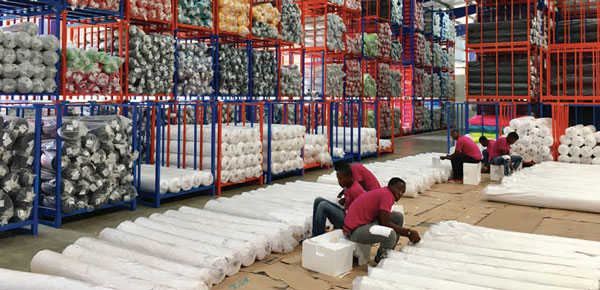
“The starting point of the park was high,” said Joseph Blumberg, partner and senior vice president, marketing and new business, Grupo M. “We applied the proven formula of Grupo M, which is that compliance is in the DNA of everything we do.” Every detail of energy, training, social responsibility, environment, basic health, cooking, child education, transportation, safety and financial responsibility was considered 10,000 times — for every employee.Take each employee. To be considered for hiring they must be able to read, write and perform basic math. In a country with more than 50 percent unemployment — and often much higher — competition for these jobs is high. When hired, each person receives three months of training at half pay and with full benefits. When hired, they can exceed 40-percent minimum wage with incentives.When ground broke on the park in 2003, the area was extremely basic — hand-to-mouth with no formal economy. Today, the community is served by CODEVI’s radio and TV station that shows entertainment, educates and alerts the community to disease outbreaks. Additionally, back in 2003 none of the employees saved money. Today, more than 90 percent of CODEVI’s 10,000 employees participate in the park’s Savings and Loan Club.Walking through the town of Ouanaminthe wearing a CODEVI badge is a sign of status. Capellan does not take full credit for the company’s success. “We believe that this success is due to the fact that the 10,000 employees identify with the work they do,” he said.“Everyone has the opportunity to receive training and to improve his family’s quality of life.”“We pick the companies who invest here carefully,” Blumberg said. However, it is clear the companies investing in the park see the potential. CODEVI is the only Dominican project in Haiti, and illustrates the value of the synergy each nation and its people bring to the table — motivated workers in a structured, highly efficient production center.Finally, make no mistake, this is not just Dominicans and Haitians either. There may be more than a dozen nationalities working in multiple levels of management throughout the park. As a result, there is a collocated campus of apartments and even a hotel to support the traffic into the park. As for the park itself, it may soon grow from its current 4 million square foot size to nearly 10 million square feet in the future.The expansion will include a MicroPark right across the bridge built to connect the park to the town. It will be a 600,000-square-foot town center featuring a vocational school, fully equipped clinic, food court, housing and recreational facilities. All of this is a part of a bigger picture being developed by the Quisqueya Economic Binational Council (CEBQ) with private sectors of both countries working side-by-side on a range of projects along the whole border to impact the economies and progress of both Haiti and the Dominican Republic.Vision? Visions are pictures from the ends of albums of photos of other visions that hit the wall. As they say, it’s a dream until its put into writing, then it’s a plan. CODEVI was put into writing and Grupo M never changed a word of the plan because the plan was to “do it right from the start.”
NCAA Connection Takes Irish Golfer to Haiti
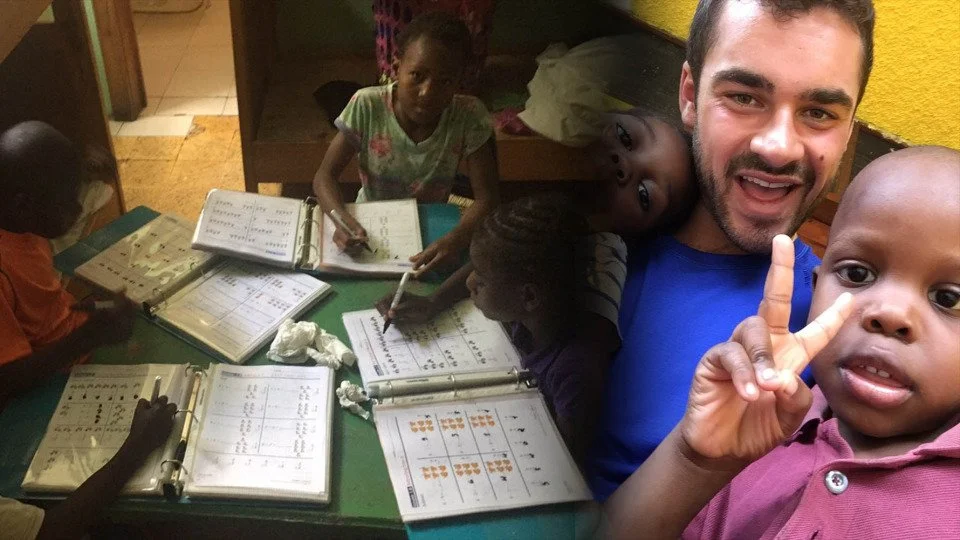
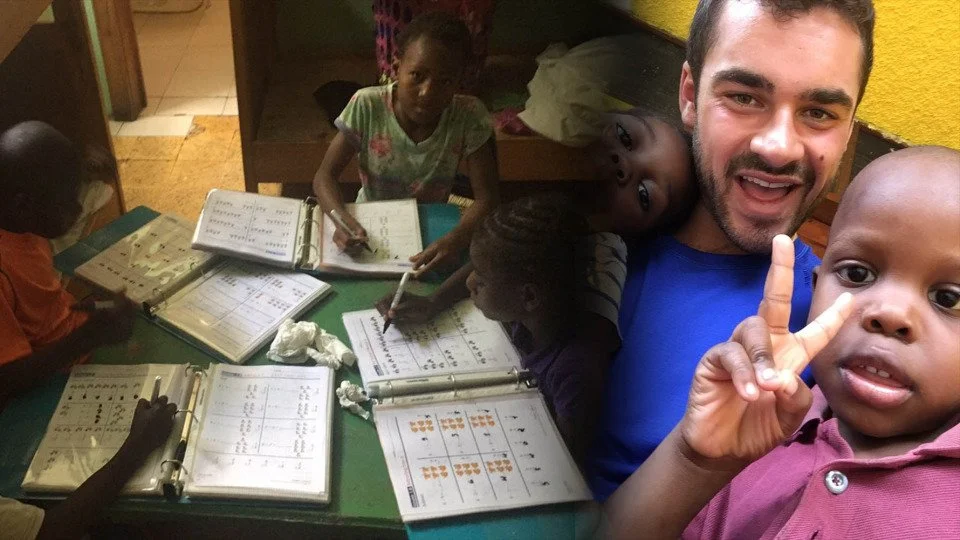
NOTRE DAME, Ind. – When Miguel Delgado decided to volunteer in a poverty-stricken area, he knew he wanted more than just a tourist trip. He wanted an opportunity to give his time to those who needed it, particularly children in a third-world country.That is exactly what the Notre Dame men’s golf junior got this summer when he spent 10 days volunteering at La Maison de nos Petite Enfants (The Home of Our Little Children), a Haitian orphanage that has provided shelter for children in Haiti since the 7.0 magnitude earthquake in 2010.After volunteering in the mentoring program at Darden Elementary School in South Bend during his sophomore year at the University of Notre Dame, Delgado became increasingly interested in the role poverty plays in education. His time working with the children in South Bend led Delgado to declare a poverty studies minor in addition to his finance major within the Mendoza College of Business.In the spring of 2017, the Novato, California, native began searching for a mission or service trip that would allow him to focus on providing help to those living in poverty. Delgado looked for opportunities outside of well-known organizations to ensure he would receive the experience he desired.“Those types of trips are more about having fun and sightseeing than they are about really delving into the community,” explained Delgado. “I didn’t want to waste my time on a socialization type of trip. I wanted to be out there making a difference and getting the full experience. If I do it, I want to go the full nine yards.”In spite of his efforts, Delgado had no leads on where he could take such a trip until he had the good fortune to be matched up with Utah golfer Nate Wunderli at the National Invitational Tournament in Tucson, Arizona, last February. The athletes were randomly paired together for the tournament, which gave their parents a chance to get to know each other. Unbeknownst to Delgado at the time, Wunderli’s parents, John and Deborah, advise and fund an orphanage in Haiti that would provide Delgado the opportunity he craved.“I was watching Nate, and Miguel’s mom was watching Miguel,” said John Wunderli, Nate’s father. “The two of us were really the only two people following, so over the course of four-and-a-half hours we talked about a lot, including how our family had adopted children from Haiti, and how there was still this orphanage there. Miguel’s mom then told me about how Miguel was interested in taking part in a more hands-on, intense service experience.”At the conclusion of the tournament, Delgado had the chance to speak with John Wunderli about the orphanage and his interest in traveling to Haiti to assist the children. In the brief conversation, the two exchanged contact information and, throughout the next three months, Delgado was in constant contact with the Wunderlis.“That’s what was the really impressive thing about Miguel. He was very persistent in wanting to go and do something, which was really surprising,” admired Wunderli “My expectation of kids that age is that they are a lot of talk, they want to do a lot of things, but you don’t see a lot of action. With Miguel, he was persistent until we did something and put a trip together.”After their months of preparations, Delgado, the eldest Wunderli daughter, Rachel and her adopted brother, Makendy, traveled to Haiti in late June to assist at the orphanage for 10 days. Deborah Wunderli had put together a pilot educational program for Delgado and her two children to follow for the duration of the trip.The group had a six-page list with 150 mathematical concepts to test the children on. After splitting into groups, Makendy, who speaks Creole, translated the English textbooks while Delgado and Rachel taught the assignments.Rachel and Delgado had only a short, one-page list of English to Creole translations, so much of their connection with the children was based on their presence in the orphanage and the affection they were able to give the kids during their time there. Even with Makendy translating and relaying instructions for the school day and for after-class activities, the best way to conquer the language barrier was to focus on physically showing the children that they were there to help them and love them.“From the instant we got there, there was never a second when you didn’t have five kids climbing on you,” said Rachel. “You are already really hot and dirty and trying to getting things down, and then there are five little ones wanting to play with you or touch your face or feel your hair.”While many of the children were orphans, a large subset of the Haitian children at the orphanage were dropped off by parents who no longer had the means to take care of them. These kids not only needed an education and the opportunity to find a new family or life in another country, but also the affection that they have been missing after being separated from their families.“Most of them came from rough backgrounds, so they never really had someone who cared or loved them. They just want affection and someone to hold their hand and play with them. It was really cool to be able to excite those kids and make them feel loved for the time I was there,” said Delgado.Since he was living in the orphanage, the only time Delgado wasn’t interacting with the kids was when he turned in for the night. He and the Wunderlis slept on thin pads that were drenched with sweat from the constant heat in Haiti. Every night they went under mosquito nets and hoped that the electricity would turn on so that they could use fans to cool down. They had little to no access to clean water, and there was no running water at all. All three volunteers were on the same meal schedule as the children in the orphanage, which meant they only had one meal per day.It was the grueling, intense, hands-on service experience that Delgado had asked for, and thanks to his skills and the opportunities he has had as a Division I athlete, Delgado was primed for success despite the difficulties of the experience.“You have two things that are relevant to NCAA athletics in play here,” John Wunderli said. “The most important one is the discipline that it takes to even be an NCAA-level athlete. It is reflected in Miguel, and he is able to put those skills to good use in an environment like this orphanage. It takes a lot of patience and a lot of discipline and practice. Those things were foundational and really helped him during the trip.The next thing it does is create opportunities to meet people all over the country when you travel. Especially golf, because it’s a unique sport in which you spend so much time on the course getting to meet people and talk. This obviously wouldn’t have happened if it weren’t for the NCAA event.”Being a Division I athlete is a full-time commitment. It both takes and teaches a strength and determination that is necessary for success outside the world of NCAA athletics. Delgado and his summer service in Haiti is a shining example of a student-athlete bringing these qualities into the real world where he can make a substantial difference and help those in need.By: University of Notre Dame | Sept. 19, 2017
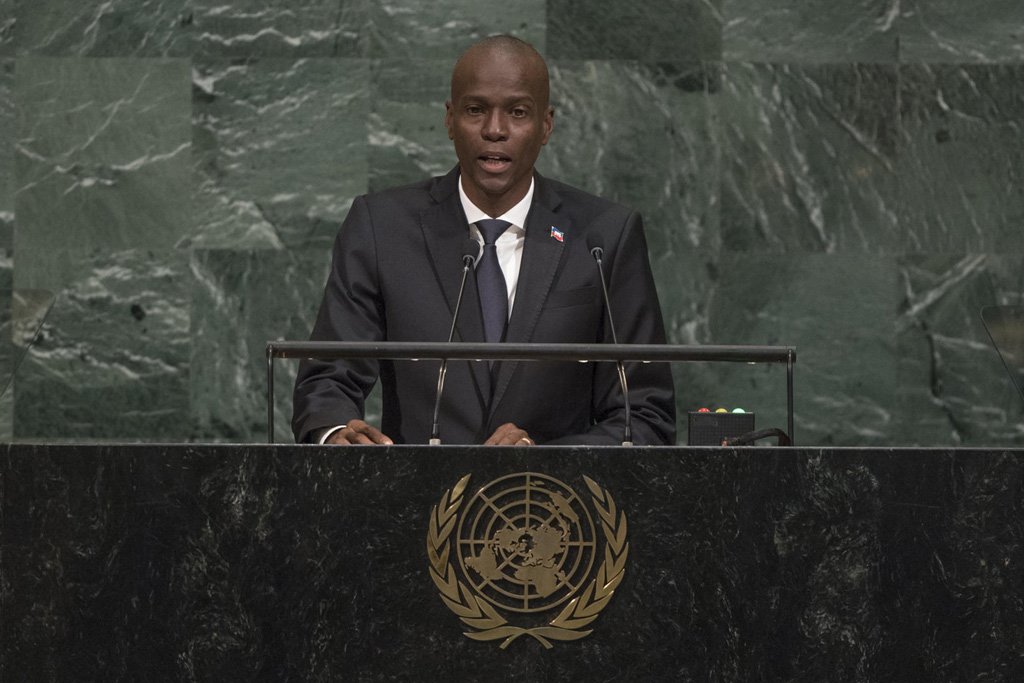
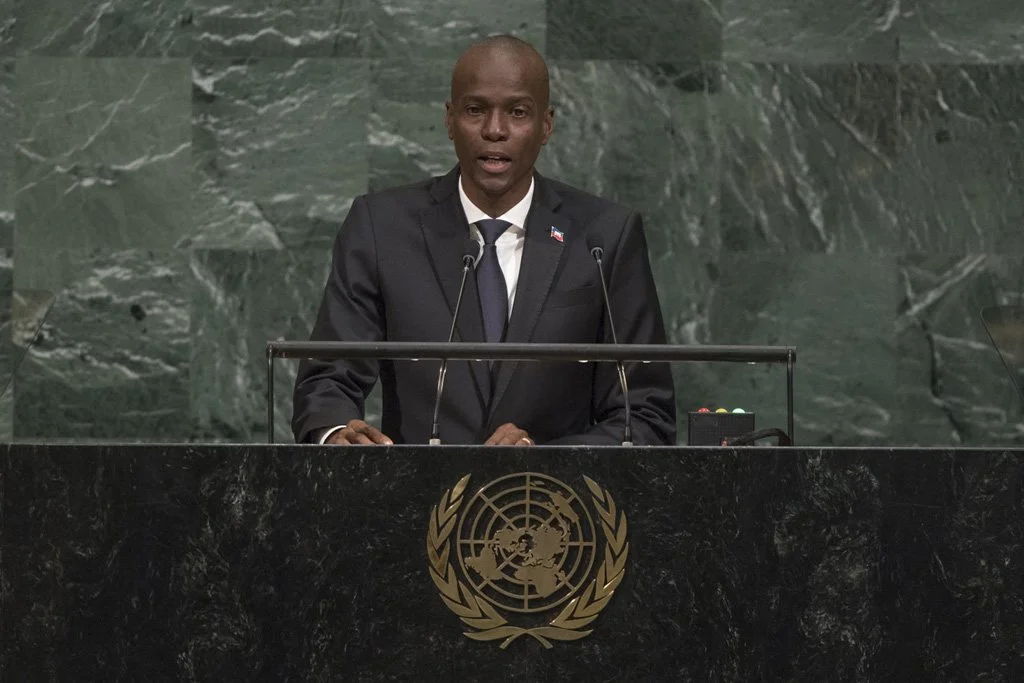
Video & Summary: President Jovenel Moise Addresses UN's General Debate, 72nd Session
By: UN News Centre | September 21, 2017
Restored Gala to help raise funds for sexual violence victims in Haiti
A charity event in Kokomo this weekend will help restore hope to victims of sexual violence in Haiti.Local nonprofit Nadege Inc. will be hosting its second annual Restored Gala Saturday.In 2012, Nadege co-founder Emily Hays and a group of others took a trip to Haiti with Project 117, founded by Kokomo native Curtis Stout. The nonprofit organization, of which Hays' husband Stuart Hays served as chairman, worked to help the left-behind children of Haiti by building schools.
“We were tasked with the responsibility of coming up with surveys and going out into the community to find out who was and wasn’t attending school. It was there that we met Nadege,” Hays said. “Through hearing her story, it became a little suspect that she may have been a victim of sexual violence.”After talking with Stout, Hays said they discovered that sexual violence was the most prevalent form of violence in Haiti. Other organizations that were on the ground in Haiti weren’t specifically coming up with a way to keep these women safe, so in late February of 2015, Hays, Stuart, Beth Waterman and Melissa Kidwell decided to start their own.“I woke up in the middle of the night and had Nadege’s name on my mind and just sensed that I should look up her name to see what it meant,” Hays said. “It said ‘Nadege – noun: hope’ and it was in that moment that we knew we had to form an organization and God would use it to restore hope to survivors of sexual violence in Haiti.”Nadege Inc. was officially founded in March 2015 and the organization set off on an ambitious mission: to build a safe house for Haitian women who are survivors of sexual violence and to educate men on the negative effects of violence against women. To achieve their goal, members of the organization worked to come up with fundraising ideas.During the holiday season in 2015, the nonprofit hosted their first annual breakfast with Santa at Oakbrook Church. The event has been really popular, but something was still missing.“A group of us were trying to figure out what is an event that will really connect the people of Kokomo to the women of Haiti, because most people that we talk to on a daily basis will never go to Haiti,” Hays said. “It was through a lot of prayer and brainstorming that this whole ‘Restored Gala’ idea came to be.”Kidwell was one of the big inspirations for the whole idea because her house is full of restored, decorative items that she created herself.
“Nothing captures the vision of what we want to see happen in the life of each woman we serve like seeing something broken and abandoned being restored,” Hays said.About 25 people restored items for the first year of the Restored Gala, which raised around $45,000. That money was used to build a security wall around Nadege’s property in Haiti where the safe house will soon be built.Twenty-five local artists have created items for this year’s event, ranging from a birdcage to a bed swing and dresser. While restoring the items, each artist has raised $1,000 in the process that will be matched by a generous donor by up to $25,000.One of the restorers, Kevin Sprinkle, has participated in the event since its inception. Last year he restored a 1960s kids’ pedal car. With the help of his friend Kenny Gingrich, Sprinkle worked to restore an antique tricycle for this year’s gala.“I have enjoyed combining some of the things that I like with being able to help such a great organization,” Sprinkle said. “The tricycle just fit my personality and who I am.”
The tricycle took about 25 hours to complete, Sprinkle said, and everything has remained original although they did custom make a few parts.“The concept of connecting hoped restored to take something abandoned or discarded and restoring it to something beautiful is really great,” he said.
A few of the restored items have even came from Haiti, including bags recycled from old tires and metal art that was handmade out of 55-gallon oil drums.“That’s kind of the heart behind this event. Haiti has a really creative culture, and we plant to use art therapy in the safe house,” Hays said.After Saturday’s event, Hays said they are hopeful that construction can begin on the safe house. It may be completed as early as November of next year.The Restored Gala will be held from 7 to 9 p.m. at Oakbrook Church, 3409 S. 200 W. Tickets at the door are $30 per person or $50 per couple.Last year the organization just did a paper bidding system during the gala, but this year it will also feature an online bidding option for people who can’t make it. For more information or to purchase tickets, visit www.nadegehaiti.org/restored.By: Haley Church Kokomo Tribune | September 21, 2017
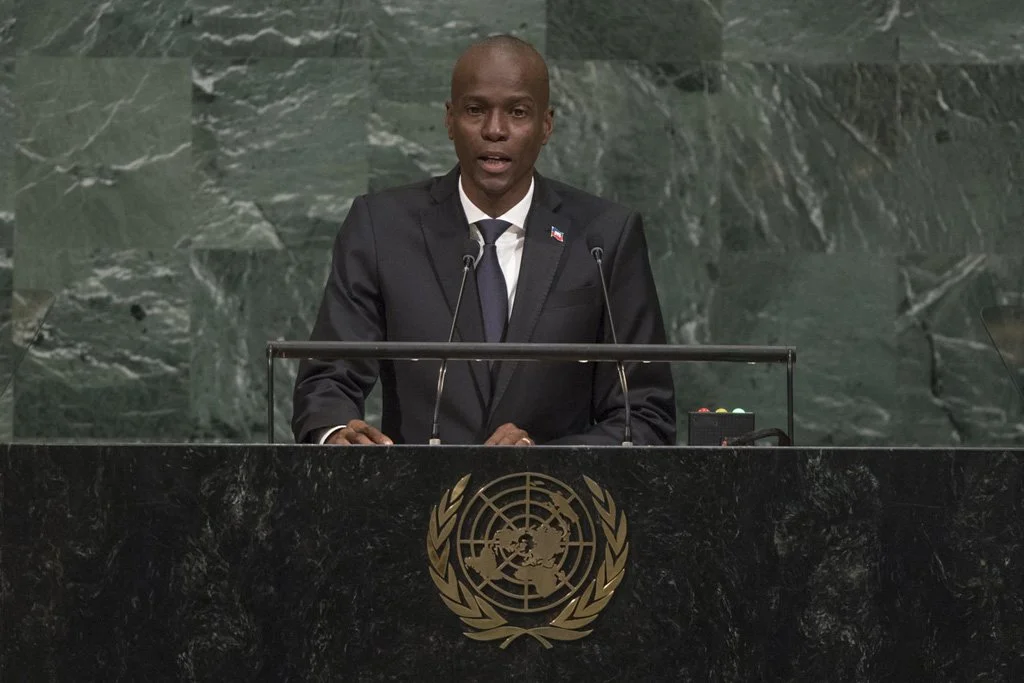
Haitian President Backs Paris Climate Accord, Calls On UN To Honor Commitments On Tackling Cholera
 21 September 2017 – Addressing the United Nations General Assembly today, Jovenel Moise, President of Haiti, expressed deep commitment to the environmental targets in the global goals on sustainable development and said his island nation is seeking to build its resilience against the natural disasters and extreme weather events that consistently beleaguer its people and other countries in the Caribbean.“My Government is committed to the Paris Agreement on climate change,” Mr. Moise told delegations gathered for the Assembly’s annual general debate, adding that he wished to see those countries most responsible for greenhouse gas production contribute the resources necessary for implementing that accord.In the Caribbean, recent back-to-back extreme weather events had drawn attention to the ways in which climate affects Haiti. “Such weather phenomena are due to the impact of humans on the environment,” he stressed, and noted that in January 2018, when Haiti assumed the presidency of the Caribbean Community (CARICOM), it would organize a regional conference aimed at establishing an inter-State commission that would devise a strategy for addressing climate issues, such as the availability of climate insurance.More broadly, he said Haiti has taken steps to consolidate democracy and the rule of law, having made significant efforts to promote development and political stability. Noting that corruption has “infected” and eroded Haiti’s economy, and compromised its political situation, he said it is time that official development assistance (ODA) and domestic resources upheld the interests of the Haitian nation. In the meantime, Haiti’s new leaders are waging an unwavering struggle against corruption.Addressing two phenomena stemming from the UN presence in Haiti – heinous sexual abuse and exploitation by peacekeepers and other personnel, and the cholera epidemic – he said the Organization is morally obliged to provide the recourses to ensure that cholera left the country.Improving Haiti’s health system, including by eradicating cholera, is a Government priority for his Despite some progress, the number of cholera victims stood at 10,000 people and continued to grow. Further, there were tens of thousands of cholera orphans. The United Nations must live by and give tangible form to its noble ideals, including the announced ‘new approach’ to dealing with cholera, he stressed, by shouldering all its responsibilities to remedy the situation, which had caused grave harm to the Haitian people.Full statement (in French) available hereBy: UN News Centre | September 21, 2017
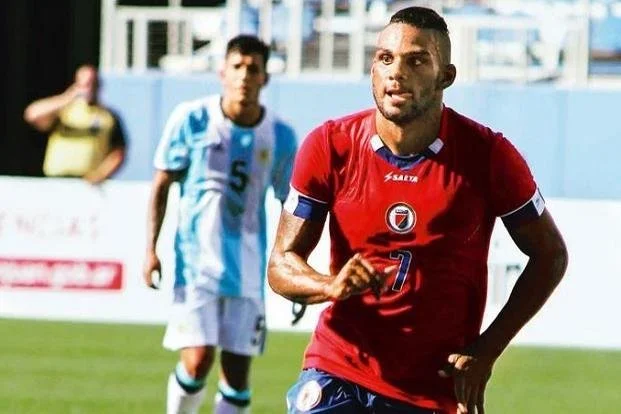
Under-17 World Cup: When Fabien Vorbe gave Haiti a reason to smile
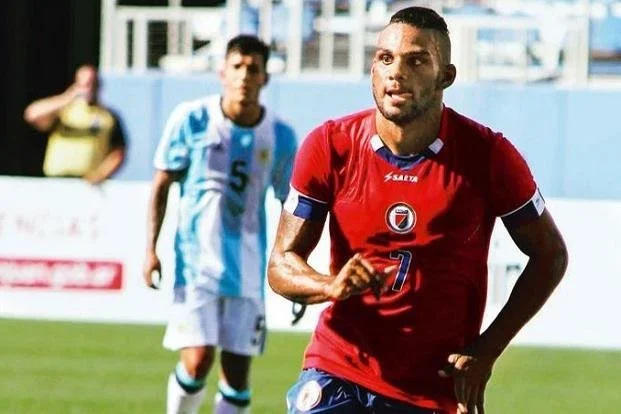
Turbulent times and Haiti have gone hand-in-hand over the years. From inclement weather to internal strife, it’s a way of life for the island nation, which just survived hurricane Irma.
Football then is a lifeline in these parts, giving Haitians a reason to celebrate each time the boys take to the field, whether in a local game or during competition. The distraction is both welcome and needed, bringing relief to a nation and its hopeful youngsters, who dream of alleviating their misery through the beautiful game. When it’s the World Cup, Haiti comes to a standstill.Fabien Vorbe, 27, who signed for I-League club Neroca FC this season, is all too familiar with it, given that he was instrumental in helping Haiti qualify for the Fifa Under-17 World Cup in 2007. While growing up in the capital, Port-au-Prince, it didn’t take him long to catch the football bug that had long infected the Vorbe family.
“In Haiti, if you say my last name, the first thing that comes to anyone’s mind is football. All my uncles and cousins play football, whether professionally or as a hobby. Even the women in our family are football addicts. My uncle (Philippe Vorbe) started it all when he played in Haiti’s only Fifa World Cup in 1974,” Vorbe says.Haiti had stunned competition in the region by clinching the CONCACAF Championship, an association football tournament, in 1973. It helped them qualify for the World Cup in (West) Germany the following year.
Philippe, was an integral part of the squad, which was drawn in a tough group alongside Italy, Argentina and Poland. The Haitians lost all three matches, but the tournament produced an epic moment in World Cup history when Emmanuel Sanon scored against the Italians in the opener. The assist was a perfect through ball in space from Philippe, as Sanon outran his marker, cut past a diving Dino Zoff and slotted the ball in an empty net.
It wasn’t like Haiti registered an upset win through that goal; Italy were 3-1 winners eventually. However, the striker had wrecked an Italian defence, which had not conceded in 12 games that stretched back to September 1972. In goal was the legendary Zoff, who had also been a part of a stubborn Juventus side that had gone without conceding a goal in the league for an incredible 903 minutes.The rest of the tournament was rather forgettable, but for Haiti and its people, just qualifying for a World Cup, clubbed with Sanon’s heroics, meant the world.“It is obvious why from such a young age I started playing the sport. In fact, my mother and godmother founded the team FC Shana just for the purpose of pushing my cousin and me into football and trying to make our dream a reality. It is today the biggest youth football academy in Haiti,” says Vorbe.Under the watchful eye of his mentors, Vorbe learnt the tricks of the trade. All that changed in 2004 when Haiti was rocked by a revolt that disrupted daily life in general, let alone football. One moment, 14-year-old Vorbe was at school studying, the next, they would hear of violence erupting in the streets and had to rush home as soon as possible.Even as the political situation improved, Haiti was constantly rocked by torrential rains, hurricanes and heavy flooding that brought devastation time and again between 2004 and 2007. At a time the nation needed relief, yet again, it was football that was the saviour, this time through the exploits of the Under-17 team.In Honduras in April 2007, Haiti got their qualifying campaign underway for the Under-17 World Cup that would be played in South Korea later that year. Haiti started with a draw against Honduras (1-1) and Mexico (0-0), followed by a win over El Salvador (3-0), with Vorbe scoring in both games. As Group A toppers, they booked their berth for the World Cup, sending Haiti, across the Caribbean Sea, into raptures.“We stunned the world by finishing toppers, even eliminating mighty Mexico. They were favourites, having lifted the trophy two years earlier in Peru,” Vorbe says.“We couldn’t really come to terms with what had happened until we landed in Haiti. There we realized the enormity of what we had just accomplished.”It was yet another moment in Haiti’s history that had given people hope, similar to what the 1974 team had done. The airport was packed with well-wishers when the team arrived, as well as when they left for Korea.
But there was more drama on hand even before the team flew out. Haiti had been drawn in a group featuring Japan, Nigeria and France.
This was about an old grudge that dated back to the 17th century, when France colonized Haiti and started an era of slavery and oppression in the nation’s history. St Dominique, as Haiti was called back then, eventually became one of their most profitable colonies. The Haitian Revolution began in 1791, and lasted for another 13 years after which the colonial rulers were defeated. Haiti earned its independence in 1804 and became the first independent black republic in the process.However, the French slave owners demanded compensation from independent Haiti. A huge sum was eventually paid, which remains a bone of contention to this day.“Ever since we saw the draw, we knew that if there was one game we had to make sure we played well, it was against France. Everyone in Haiti felt the same and made sure we knew it too. You can only imagine what the game represented for us,” Vorbe says.The 1-3 opening loss to Japan then didn’t matter, as all eyes were on the France fixture three days later. The French team comprised players such as Yann M’Vila and Mamadou Sakho, who went on to play for the senior team. As if to answer the prayers of an entire country, Haiti played a game to remember, holding the European giants to a 1-1 draw.“We actually should have won the game, having scored a late goal which was pulled back by the referee for no reason. It prompted Fifa officials to formally apologize to us at our hotel, after having reviewed the footage. We did our job though and left it all behind on the field. Our countrymen applauded it, so we were all happy at the end of the day,” he says.A 1-4 loss to Nigeria, who went on to win the tournament, brought an end to Haiti’s campaign.“But at the end of the day, we left with our heads held up high. I can never forget the moment we stepped out on the pitch against France, and sang our national anthem, soaking it all in,” he says.
The 2007 edition is the only time Haiti has appeared at the Under-17 World Cup. It gave Vorbe the experience of playing at the top level and boosted his confidence in the years to come.
After the tournament, he joined the reserve squad of French club Bordeaux, then coached by World Cup and Euro winner Laurent Blanc. He went on to ply his trade in the US, Haiti and last played in Peru.
On the advice of old buddy, Sony Norde, a Haitian who turns out for Mohun Bagan, Vorbe made his way to India and will play for Neroca this season, who qualified for the I-League after winning the second division last year.
Back home, Vorbe supports FC Shana in every way that he can, as they continue to churn out more Vorbes, who give the nation of Haiti a reason to smile every once in a while.By Bill Cooke |

Positive Meeting Between Moïse And The IDB
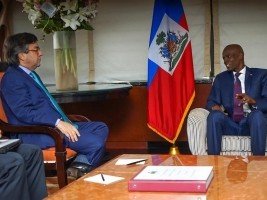
On Tuesday, on the sidelines of the 72nd Ordinary Session of the United Nations General Assembly, President Jovenel Moïse received in audience Luis Alberto Moreno, President of the Inter-American Development Bank (IDB) to discuss the priorities of the Government of Haiti.President Moïse insisted on the Caravan of Change as a strategy to bring the State closer to the population by providing basic services and giving it the tools it needs to develop its environment. A medium-term strategy aiming to attract investment in the region; to build road, energy and social infrastructures.For his part, the President of the IDB welcomed initiatives to deconcentrate public services, fight corruption and reform public administration.Moreno indicated that he intended to take steps to support the implementation of the priorities of the Moïse Administration and announced that he will visit Haiti on October to inquire about the progress of the Caravan of Change and assess its needs.This meeting is part of President Moïse' determination to find more opportunities for the country and to attract potential investors to Haiti.By: HL/ HaitiLibre | September 21, 2017
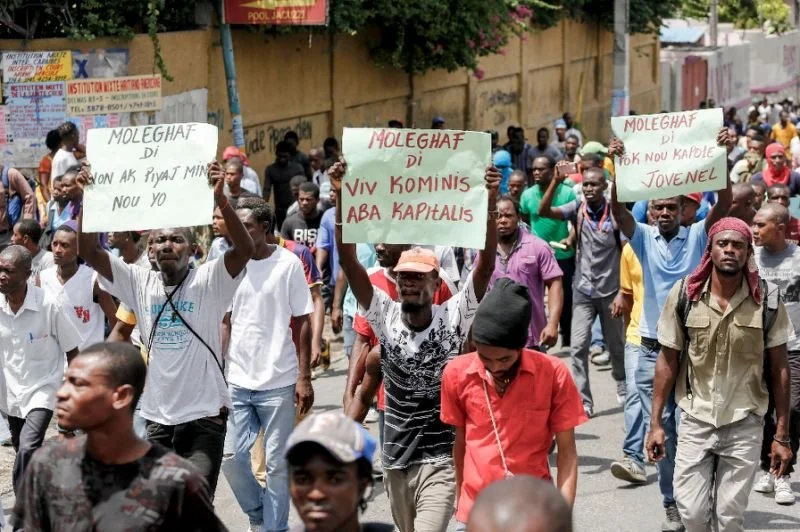
Marchers Demand Haiti's President Step Down
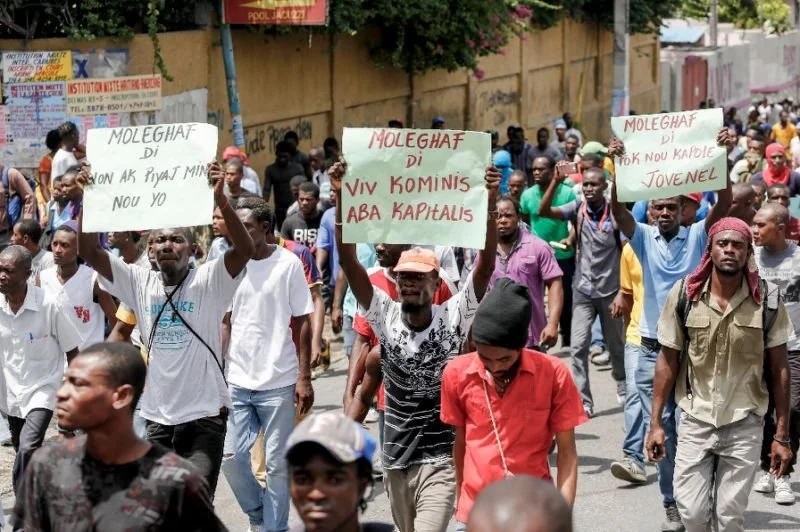
 PORT-AU-PRINCE, Haiti (AFP) — Thousands took to the streets of Haiti's capital Wednesday to demand President Jovenel Moise step down following the publication of a national budget viewed as unfavorable to the country's poor."We do not agree with what Jovenel does: he is crushing the country," said Jean-David Senat, among a throng of demonstrators stretching down a main avenue."He said he would put money in our pockets, he did not. He said he would put food on our plates; we do not even have dirt to eat. So he and this team of thieves must leave," the protester said, referring to the president's campaign slogans.Since it was released in July, opposition lawmakers have decried the budget for fiscal year 2017-2018, saying it would balloon the debt of the poorest country in the western hemisphere.On Tuesday, protesters brought parts of Port-au-Prince to a standstill, setting vehicles alight and damaging local businesses.Protesters directed their anger toward senators who voted for the 2017-2018 budget last week and the deputies who approved it Saturday.Despite popular opposition, the government published the document in the official gazette late Tuesday.The lack of dialog has infuriated demonstrators.That the president "published the budget is a provocation to the Haitian people and to us the political leaders," said Moise Jean-Charles, an opposition leader who spearheaded the demonstration."The people will decide his fate," he said."An alternative is being prepared," Jean-Charles said. "This time we take our fate in our hands.""No one will be able to divert our movement to satisfy the bourgeoisie."The Haitian leader left the country Sunday to attend the UN General Assembly in New York and was due to deliver his speech Thursday and return to Haiti the following day.New anti-government demonstrations are already planned for Thursday and Friday in the capital.By: Jamaica Observer | September 20, 2017
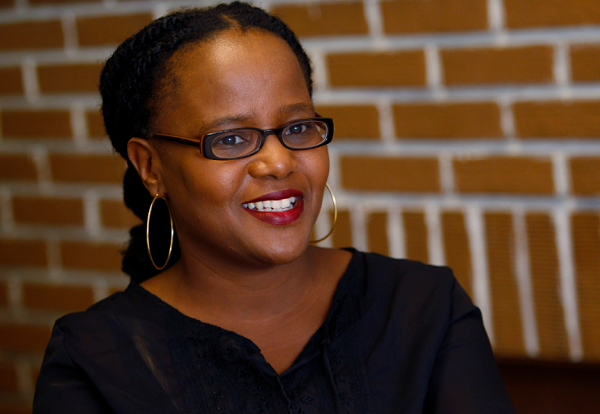
Meditations On Life, Death, And The Haitian Diaspora
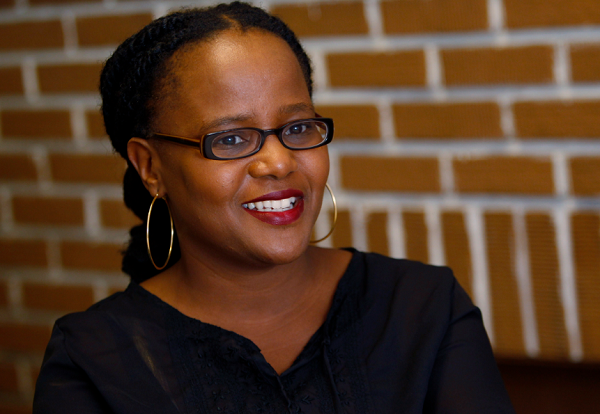
Edwidge Danticat is a renowned Haitian-American writer whose work is rooted in her native country.
 As a child in Haiti, she lived for many years in a state of waiting. By the time she was 4 years old both of her parents had left to work in the United States, but it took 8 more years for her own move to the U.S. to go through. Danticat now writes about Haiti from her home in Miami and thinks about how moving between countries colors the memories and histories that people pass on. Danticat presents the 25th Annual Stone Memorial Lecture on Wednesday, Sept. 20 at 7 p.m. in The Sonja Haynes Stone Center for Black Culture and History at University of North Carolina at Chapel Hill.Host Frank Stasio speaks with Danticat about her recent conversations with DACA recipients and how hurricanes and earthquakes have shaped how Haiti is perceived in the U.S.INTERVIEW HIGHLIGHTSOn the moment her father decided to emigrate from Haiti: He used to tell us the story of working in a shoe shop and the Duvalier's henchmen, the Tonton Macoutes, would come in, and they would want the best shoes from the shop. And then the shop owner – who otherwise would go out of business because, you know, they could not be denied anything – Started having my dad sort of fit them with these cheaper shoes. And my father was always afraid that if one of them caught on that he would shoot him. So he sort of tells that story of being at the foot of a Tonton Macoute trying to fit a shoe on his foot and realizing that he could – you know if anything were to go wrong – lose his life over that one moment. And there were very many moments like that for people living under the dictatorship.On finding a sense of belonging after immigration: Really they are doing it on faith and on their ability to work. And just really they are taking a big gamble, not just with their own lives but with the future of their children at times. So those questions dominate my life – my thoughts – quite a bit because they've been at the center of my life. I've seen them in action. I've seen also the kind of resistance and scapegoating – especially in the time that we live in now – that immigrants get at the same time that they're here. And they're trying to contribute – trying to work – and trying to make better lives for themselves in a way that also intersects with being productive members of this society.On the union between immigrant groups and African-Americans: Toni Morrison wrote a wonderful essay some years ago where she talks about – for a lot of new immigrant groups – the way that they become assimilated is by sort of taking on the [mentality] of racism and superiority. And so this is not part of my purview per se, but I think it's something that as immigrants – newly arrived immigrants – to keep an eye on … There is so much to learn from the African-American experience in this country.On the arrest and death of Danticat's uncle in the U.S.:A couple of years ago my uncle – who had been coming back and forth to visit the U.S. for over 30 years – was 81 years old, and there had been some trouble in Haiti at that time. And when he arrived at the airport in Miami, he was asked how long he would be staying. He tried to explain that he would be longer than the 30-day visa allowed. And so he asked what he [called] temporary asylum, and so he was arrested. He was detained. His medication was taken away, and he died five days later chained to a hospital bed in the prison ward of Jackson Memorial Hospital here. By Laura Pellicer & Frank Stasio | September 19, 2017

Solar Energy Storage Resilience: On the Ground in Haiti

Online, television, radio and print news services are awash with reports of Hurricane Harvey and Irma’s devastating effects in Texas, Florida and neighboring southeastern U.S. states, and justifiably so. Attaining record-setting proportions and sustained wind speeds, Hurricane Irma swept across the Caribbean’s Greater and Lesser Antilles from the Leeward Islands of Antigua and Barbuda to Cuba this past week, leaving a path of destruction in its wake before proceeding to batter and inundate Florida and parts of neighboring Georgia and Alabama.An executive from NextEra Energy-owned Florida Power & Light, the third largest rate-regulated utility in the U.S., said that more than half the state had lost grid power during the hurricane. That would amount to more than 10 million people. Furthermore, he added that the subsequent rebuilding effort may amount to the largest, most complex undertaking of its kind in U.S. power industry history.Hope springs eternal, however; and the devastation left in Harvey and Irma’s wake also presents golden opportunities to design and build more resilient, reliable, efficient and environmentally ways to produce, store and distribute energy and power. Rather than pitting strength against strength and using force against force, distributed solar and renewable energy services providers and their customers are designing, engineering, rolling out, operating and maintaining on-site and local power and energy systems and microgrids that promise to be more sustainable – economically and in terms of reliability, as well as when it comes to human and environmental health and integrity.That includes pioneering climate-smart solar PV-energy storage and distributed energy services providers in the Caribbean, as well as in the U.S. and worldwide. Micro-utility Sigora Haiti, for example, went to great lengths to ensure that its solar PV-battery energy storage microgrids withstood Irma’s onslaught, as well as re-energized and soon after began delivering emissions-free electricity services to some 8,000 customers in rural towns in northwestern Haiti. Their efforts have paid off.
Following a Path of Destruction

Hurricanes Harvey and Irma were the latest of nature’s extreme weather phenomena to reveal the weaknesses and faults in even the most modern, high-tech and disaster-hardened communications, water, power and energy grids and infrastructure. Whether living in a small Caribbean island nation or overseas territory, such as the Dominican Republic, Haiti or Puerto Rico, or in a modern city in a thoroughly industrialized country, such as Houston or Miami Beach, power grids, as well as water distribution systems and telecommunications networks, were shut down or knocked out if not completely leveled, leaving residents without critical public services.
Harvey and Irma should lend yet more urgency to current U.S. and international initiatives aimed at developing and deploying a new generation of more resilient, more efficient, socioeconomically equitable and environmentally friendly emissions-free power and energy technologies and network systems.
Occupying the western one-third or so of the Caribbean island of Hispaniola just east of Cuba, Haiti has borne more than its fair share of natural disasters and strife. Hurricane Irma strafed the Caribbean island nation, knocking down and flooding buildings, homes and roads and leaving residents along the north coast largely in the dark.Non-profit, public and private sector organizations flocked to Haiti to lend assistance in the wake of the 2010 earthquake that left large portions of the population homeless and devastated much of what existed in the way of public infrastructure. Keen to make a lasting, positive difference, some have stayed on while others have arrived and are pitching in to help Haitians with ongoing recovery efforts, as well as take on a host of persistent issues and challenges, such as population growth, unemployment, lack of education and training, deforestation, freshwater, land and natural resources degradation, agricultural production and access to safe, reliable and affordable electricity.Sigora Haiti numbers among a small but fast growing crop of sustainable energy development-minded social enterprises that have taken root in developing countries worldwide. They have found fertile ground for growth amid global efforts to reduce carbon and greenhouse gas (GHG) emissions and address longstanding issues that have been serving as barriers to sustainable socioeconomic development.
From Electrifying a Single Health Clinic to Becoming a Pioneering Sustainable Micro-Utility
Founded with the intention of bringing safe, sustainable electricity to a single health clinic, Sigora Haiti now finds itself managing just over 1-MW of solar power generation capacity and having earned a place at the leading edge of the shift to building out sustainable power and energy infrastructure and fostering equitable socioeconomic development.Sigora Haiti connected its first solar-storage microgrid customer, the Môle-St. Nicolas Public Health Clinic in the rural northwest Haitian town it was named after, in December 2015. The ambitious founders then went on to build and commission their first community solar-storage microgrid less than a year later, and then gained a concession from the Haitian government to build out microgrid infrastructure and connections to some 100,000 residents, VP of Operations Drew Lebowitz explained in an interview.Sigora is making use of solar PV, supplementing that with diesel-based power generation as needed, and integrating that with intelligent battery energy storage and smart metering communications technology. The microgrids are managed via its own micro-utility management systems platform.

The sustainable energy and development start-up is in the midst of expanding from a current level of around 8,000 microgrid connections, an estimated 40,000 people. That encompasses three community microgrids – Sigora’s first in Môle-St. Nicolas, a larger system in the larger, nearby town of Jean Rabel, and a smaller, recently commissioned hybrid solar-diesel and battery energy storage “pico-grid” in the neighboring, yet remote, fishing village of Presqu’île.Management aims to increase the number of microgrid connections and residents served substantially over the course of the next six months, to around 1,500 (4,500 people) in Môle-St. Nicolas and from about 450 in Jean Rabel to around 3,000 (an estimated 15,000 people). Sigora also intends to build a new community microgrid and connect its first customers in the town of Bombardopolis over the next six months.
Building a Green, Hurricane-Proof Micro-Utility for Sustainable Development
All told, Sigora is well on its way towards achieving its phase one goal of increasing microgrid connections from 1,500 to 5,000, an estimated 15,000 people. Part B of its phase one plan entails boosting that all the way up to 27,000, or an estimated 135,000 individuals across Haiti’s northwest coastal area, Lebowitz told Solar Magazine.Sigora management is looking out over an even longer term horizon. “Our 10-year plan is to electrify 2 million people by 2025,” the company states on its website.Sigora Haiti on Sept. 6 announced that it was “taking pre-emptive action to minimize potential damage to its microgrids and protect the health and safety of its people and the wider community ahead of the anticipated landfall of Hurricane Irma.” With wind speeds exceeding 75 miles (121 kms) per hour, Irma was a rated a Category 5 hurricane at the time, the maximum on the Saffir-Simpson index scale.Forecasts called for Irma to land and make its way across Haiti’s northern coast, some 65 miles (105 kms) north of the three solar-storage microgrids the company built and operates in Môle-St. Nicolas, Jean Rabel and Presqu’île over the course of the succeeding two days.“We are expecting severe winds, flying debris, storm surge, and flooding. Any waterway, including those that are normally dry, may jump their banks and become dangerous” Lebowitz explained. “The most dangerous aspect of the storm in these towns is debris. In a high-wind scenario, everything that’s not bolted down becomes a missile.”“Our priority is providing reliable electricity to our customers and if a temporary interruption in service is necessary, we want to ensure that it is as short as possible” added Sigora Haiti’s Deputy Director of Operations Tyler Welsh.
Taking Preemptive Measures
The preventive measures Sigora Haiti enacted included pruning trees at risk of falling on power line, and reinforcing potentially unstable structures in both towns. Employees in Môle-St. Nicolas removed all the solar panels from the company’s recently completed 200-kW (kilowatt) solar array so as to prevent flying debris from damaging them, which could have caused problems bringing PV electricity production back online once the hurricane passed.Sigora Haiti management stood ready to shut down power generation and distribution preemptively when wind speeds and rainfall were at their highest, and then restore it once repairs had been made and safety and security had been assured. They also advised customers of planned grid shutdowns in advance via radio and via megaphone announcements as employees made their way through the towns, a common means of doing business and delivering products and services to customers’ homes through the Caribbean and Latin America.The company was also stockpiling water purification materials, medical kits and food at its offices in Jean Rabel and Môle-St. Nicolas. The latter is a nine-hour drive from Haiti’s capital Port au Prince and road conditions aren’t really all that good even at the best of times, management pointed out. Furthermore, In preparation for post-hurricane operations, Sigora pledged to the mayors of both towns that its work crews and equipment could be called upon to support any relief and reconstruction efforts that might have been required in the wake of Irma’s passing.Commenting on the progress Sigora Haiti was making as it carried out its hurricane preparedness plans, Lebowitz said: “It’s the community and capacity we have built locally that makes the difference. We have an incredibly capable team that is trained in technical matters and safety concerns for preparing the population, taking precautions, and being ready to put things back together whatever happens.”
Well Trained, Well Prepared, On Location and On Call
Last October, Hurricane Matthew, a Category 4 hurricane, left parts of Haiti without power for more than three weeks. Sigora Haiti was able to restore power to its Môle-St-Nicolas grid in just 55 hours, management noted. The company bested that mark, and by a wide margin, in responding to Category 5 Hurricane Irma.“Sigora Haiti has restored power to all of its 8,000 customers in Môle-St-Nicolas and Jean Rabel, in northwest Haiti following Hurricane Irma, which traversed Haiti’s northern coast in the early hours of Friday, September 8th. Sigora customers experienced less than 10 hours of down time as the Category 5 Hurricane raged offshore and tropical storm winds pummeled the coast,” management announced in a Sept. 8 press release.Management shut down all power generation around 2:30 AM local time on Friday, Sept. 8. Work crews began carrying out field inspections and grid walks to verify that grid infrastructure had not sustained any damages as soon as the hurricane passed and it was deemed safe to do so. The micro-utility’s grid systems were cleared to re-energize at around 7:40 AM and full power was restored to both towns by 11:55 that morning, local time, according to Sigora.Irma made a slight, but somewhat fortuitous change in course as it passed across Puerto Rico, sparing the towns and communities dotting the north coasts of the Dominican Republic and Haiti from taking direct hits from the hurricane’s core “eyewall,” where wind speeds are updrafts of water and water vapor are highest.That said, one Môle-St. Nicolas resident described the thoughts and feelings that ensued: “We were scared. We didn’t know if today was going to come.”
Setting a New Mark for Power Restoration
The 2.7-kWh sustainable energy system provides each of 51 households with 120-volt electricity, which enables families to light their dwellings and charge their mobile phones. Family members previously had to trek three hours to the closest town, some 5 miles (8 kms) away, and pay much more to charge their phones, Sigora pointed out.“We take hurricane preparedness very seriously – given where we are located, we have to,” Lebowitz commented. “There is a lot of talk about resilience, but this is what it looks like in practice.“It’s thanks to the preemptive action of our local teams that the grid didn’t sustain more extensive damage, and that’s what enabled us to get power back to our customers so quickly today.”By: Andrew Burger | September 20, 2017

Champaign rolls out red carpet for Haitian delegation

CHAMPAIGN — In Mayor Nadal Estime's city of Kenskoff, Haiti, the needs are great.He speaks of a school system most kids can't afford to use, farm crops failing, and of building and infrastructure challenges.He's grateful to be here, talking about the struggles of his city, he said through a translator Tuesday. And he wants to say thanks for the invitation to him and a small delegation from Kenskoff to spend a week in Champaign."To be honest, there is no comparison with Haiti," he said of his first impression of Champaign. "We do not have what you have here."Estime, his wife, his chief of staff and a translator will be spending the week ahead touring and speaking to city officials and local experts.They'll be visiting the University of Illinois and Parkland College campuses, local sports facilities, city of Champaign police, fire and public works departments, and Curtis Orchard, as well as going to a city council meeting, a Champaign Central High School football game and a Sunday service at Trinity Lutheran Church in Urbana.Champaign Mayor Deb Feinen and company have packed activities into every day of this visit, which is being hosted (but not funded) by the city along with the local She Said Project.It isn't the first time some of the Haitian visitors and their hosts have met.When Feinen was on a She Said Project "Soul Journey" mission trip last summer in the Kenskoff region, she called on the mayor, and she and some others in the She Said group were given a tour of Kenskoff by the mayor and officials of that city, Feinen said. She got back in touch later and invited them all here.More than two decades before that, a link had already been established between East Central Illinois and Kenskoff through God's Littlest Angels orphanage, which was founded there by Monticello natives John and Dixie Bickel, Feinen said. Women on the She Said mission trips have been going to the orphanage to help with the children and work on projects.Feinen said it's hard to describe the poverty in Haiti to anyone who hasn't seen it. She has some hopes for this visit, herself."I guess I see it as a long-term vision," she said. "This is just the beginning of this relationship, but it's pretty exciting that they are able and willing to come, and hopefully they benefit from the experience of being here, and we learn more about them and have an opportunity to expose the community to a different culture."The 77-year-old Estime isn't on his first visit to the United States.Once part of a club considered a threat to the government of his country and thrown into jail, he came to Philadelphia with his wife, Lucienne, in 1968 to escape political struggles. He worked in Philadelphia as a carpet cleaner for nine months, and then the couple moved to New York, where he worked in construction for two years before they went home to Haiti. He's on his second stint as mayor of Kenskoff, first chosen in 2004 and elected in 2015, he said.He and his wife have also been commuting between Haiti and Miami, Fla., where Lucienne Estime is going to Bible school. She is learning to become a missionary to help the people of her country, she said.Nadal Estime said he hopes to bring change to his community and make a difference.He and others visiting Champaign want to observe city government in action, learn about development, talk to agricultural and building experts about their city's challenges and hopefully get some help, he said.A topic dear to him and his fellow visitors is getting children of Kenskoff educated. While there are public schools, tuition is charged, and uniforms and books must be purchased by the families, and that's all unaffordable to many, he said."We want to do something for the generation that is coming," he said.Almathe Jean, the translator in the group, said she was able to go to school and learn English with the help of missionaries who took her in when she was 9. Now she's paying for her nieces to go to school.Back in Kenskoff, there is land the city wishes to buy to expand its city building. Another desire is to build a sports center, Nadal Estime said.
Karyl Wackerlin, She Said Soul Journey leader, said she hopes a seed is being planted with this trip."Maybe God will open someone's heart, and when they hear the struggle the children are having, they will help," she said.The Kenskoff visitors are staying at the I Hotel for the first few days of the week. Then they'll be staying at private homes in the community, with the Feinens hosting the mayor and his wife.She Said Project founder Kerry Rossow and her family will be hosting Jean at their home. Rossow's husband, Jim, is vice president of news for News-Gazette Media.Rossow said with each She Said visit, the cities have become increasingly connected, and this visit in Champaign is all about relationship building.Feinen, who has a dual connection with the She Said group and the city, has done most of the work for this visit, Rossow said."I think we learned a lot when we were there, seeing their governmental systems, and hopefully they will, too," Feinen said.By: Debra Pressey | September 20, 2017

ALUMNI PROFILE: FROM WOMEN IN HAITI TO JUVENILES IN THE JUSTICE SYSTEM, SORAYA DENIS IS COMMITTED TO SERVICE

In her professional life, Soraya Denis serves as a senior program coordinator with the NYC Department of Correction (DOC), focusing on juvenile re-entry issues in the Youthful Offender Programming Division. It’s rewarding work, she said, but like many ambitious John Jay alumni, it’s only one part of her commitment to giving back to those groups that helped put her where she is today. Denis is also the founder of Dlo Pou Viv, a non-profit that advocates for clean water and personal hygiene for school-aged children and women in Haiti, and co-founder of Women Who Inspire Women (WWIW), a collective of professional women that promotes sisterhood and mentoring.Those commitments earned her a spot on the Star Network’s “40 Brooklyn Stars Under 40” ranking this year, an award that honors those who exemplify leadership skills not only in their chosen fields, but in their communities as well.“During my high school graduation, Marty Markowitz, then Brooklyn Borough President, said that ‘Brooklyn was the real capital of New York City,’” Denis recalled. “It's the county of Kings and, of course, Queens. I am a Brooklynite in every sense of the word.”That includes having a multi-cultural background. Born in Brooklyn to Haitian parents, Denis lived in her ancestral country for several years before returning at the age of 6. She developed an interest in law early on, and attended both The High School for Legal Studies and Sheepshead Bay High School. As an undergrad at John Jay, Denis majored in legal studies and took courses in the Thematic Studies Program, but eventually found herself torn between pursuing law school or going into law enforcement, for which she had begun preparing by participating in a co-op program with the U.S. Marshall Service.She ultimately followed a path somewhere between the two, graduating in 2006 and obtaining her master’s degree in Criminal Justice Leadership from St. John’s in 2010. John Jay, naturally, played a big role in her decision: “It was social justice hub, we had professors from law enforcement and social justice fields as well as corrections,” she said. “I realized then that I wasn’t tied to just becoming a lawyer and that I had options.”Today, Denis works in the DOC, opening up pathways to employment for young adults between 18 and 21 as they try and return to society after being incarcerated. This involves teaching them the soft and hard skills needed to get decent jobs upon release, as well as providing individualized support services and links to community-based organizations. “What’s rewarding about this work is that I am able to follow up on the young adults who leave DOC custody through our partnerships,” she said.Still, the 34 year old has never forgotten her roots. A visit to Haiti in 2008 convinced her to launch Dlo Pou Viv, Haitian Creole for “water to live”, which has held fundraising drives and conducted on-the-ground field work in an effort to bring international relief to the country’s water crisis. At the same time, she’s played a leading role in WWIW, which hosts an annual women’s history month event to highlight everyday women making strides in their communities.Both of these positions resulted her inclusion on the 40 under 40 list, a distinction she’s not taking lightly. “It serves to remind me that the little girl who moved back to Brooklyn from Haiti at 6 years old lived up to her childhood dreams,” she said.John Jay College of Criminal Justice

Cliff Avril's annual party for Haiti draws a crowd

It's called "Dining to Make a Difference," and Seahawk Cliff Avril's annual event does just that for thousands a world away in Haiti.Cliff and teammates Richard Sherman, Kam Chancellor, K.J. Wright, Earl Thomas, Jimmy Graham, and others gathered at Palisade in Magnolia to serve dinner to a restaurant full of guests.The benefit for the Cliff Avril Family Foundation raisef funds for Cliff's homeland, Haiti. His parents are from the island nation."I'm fortunate that I'm in a situation that I can give back," Cliff said. "And I'm trying to use my platform to do that."Dominican Nelson Cruz was also in attendance. The Mariner superstar says he and Cliff are "island brothers.""We know where we're coming from," Nelson said. "We know the needs. And we appreciate everything we have so far. And we can help."Like last year, Cliff also pledges to build a home for each sack he bags this season."And then there's people around the city of Seattle who pledged to do the same thing," Cliff said. "So last year we actually got to build 25 homes."By: Michael King | September 19, 2017