

How HP is funneling plastic from Haiti into laptops and printer supplies

The company is one of several working together to reduce plastic waste.
- Every year, some 8 million tons of plastic end up in the world’s oceans.
- HP is working to help collect some of that plastic and use it to make a range of products, from ink cartridges to laptops.
- HP is part of a consortium of companies working with the nonprofit Lonely Whale to reduce and recycle plastic.
The next ink cartridge or computer gear you buy might have an invisible but noteworthy history: Some part of it may once have been an empty soda bottle plucked from a distant shoreline.
Last fall, HP unveiled a laptop line made partly from recycled plastic, and at this year's CES technology show, it introduced all-recycled accessories such as totes and backpacks. Most of the Palo Alto, Calif.-based company's ink cartridges are already 45 percent or more recycled plastic, and it aims to use 30 percent recycled plastic in all of its printing and personal computing products within the next five years. Such initiatives contributed to the company's No. 1 spot on the America's Most Responsible Companies ranking Newsweek recently published.
Every year, some 8 million tons of plastic end up in the world's oceans, harming marine life and contaminating food supplies. As the problem becomes painfully visible in pictures of floating debris and ensnared animals, some companies are recognizing the imperative to act. In 2016, HP announced it would use plastic collected in Haiti to make ink cartridges, and since then it has diverted more than 35 million polyethylene terephthalate (PET) bottles — the kind often used for water and sodas — into its products.
Ellen Jackowski, HP's head of sustainability strategy and innovation, says she often gets asked about whether the company is using renewable energy. The answer is yes, but only 1 percent of the company's carbon footprint is its own operations. The majority, she says, is in the energy people use when they plug in the products and in the materials used to make those products.
A multi-tiered approach
The company takes a multi-pronged approach to managing plastic. First, it tries to reduce its plastic use by making products lighter and slimmer or by using alternative materials such as molded pulp for protective packaging. But sometimes plastic is unavoidable, and that's where recycling comes in.
Some of the recycled material comes from its own devices and ink cartridges, which customers can bring to stores or, in some cases, ship directly to the company. But HP is trying to build a bigger supply chain that begins with waste plastic processed in Haiti and elsewhere.
As an island nation with no municipal garbage collection and uneven access to clean water, leading to reliance on bottles, Haiti has abundant waste plastic.
"If we don't create a collection community for that plastic, the plastic ends up on the beaches and flowing into the ocean," Jackowski says. "Instead of those plastic bottles being waste, they can be a job or an income opportunity."
Individual collectors harvest plastic and sell it to HP's recycling partner in Haiti. Currently, the plastic is shipped to a washing facility in South Carolina then processed further in Montreal. A new $2 million washing line is in the works.
"By investing in that recycling infrastructure in Haiti, it takes costs out of the supply chain, Jackowski says, "but it also elevates the capabilities of what we're building."
Working together
Other companies are moving in a similar direction. A consortium called NextWave, which includes HP, Dell, IKEA, GM, Herman Miller and five other companies, fosters collaboration on how to integrate more recycled plastic in supply chains. Dune Ives, executive director of the environmental campaign group Lonely Whale, launched NextWave to engage corporations on the issue.
"There are a lot of recycled plastics for which there are no buyers. We can send them to recycling centers, but it doesn't mean they're going to get recycled," Ives says.
NextWave members share ideas and lessons learned on sourcing and reusing plastic. Ives shares the story of one unnamed company, for example, that had to shut down a processing plant because the plastic it was recycling smelled bad. The material wasn't being dried properly, they learned from another NextWave member that was already using the same type. The group helped the company solve the problem, and now its recycling facility is back online with plans to scale up.
NextWave began with HP rival Dell's effort to integrate plastic material into packaging. But a driving idea behind the consortium is to have even competitors working together.
"Having HP join was really important to us, because they have so much experience in this area and we all really needed to benefit from that," Ives says. The company's progress in rolling out new products featuring recycled plastic, she adds, "absolutely exceeds all expectations that we had for them at this stage."
Other examples of recycled products from NextWave members include bike company Trek's mountable water bottle cage made from fishing nets recovered off the coast of Chile and carpet tiles from Interface made out of dumped fishing gear. Of course, these efforts are capturing only a tiny fraction of the waste plastic heading into the world's waters, but the hope is that they can provide a model for others to follow.
"These companies, by themselves, might not have continued to move forward if they didn't have their peers supporting them," Ives says. "They push and drive each other to go further than they thought they could."
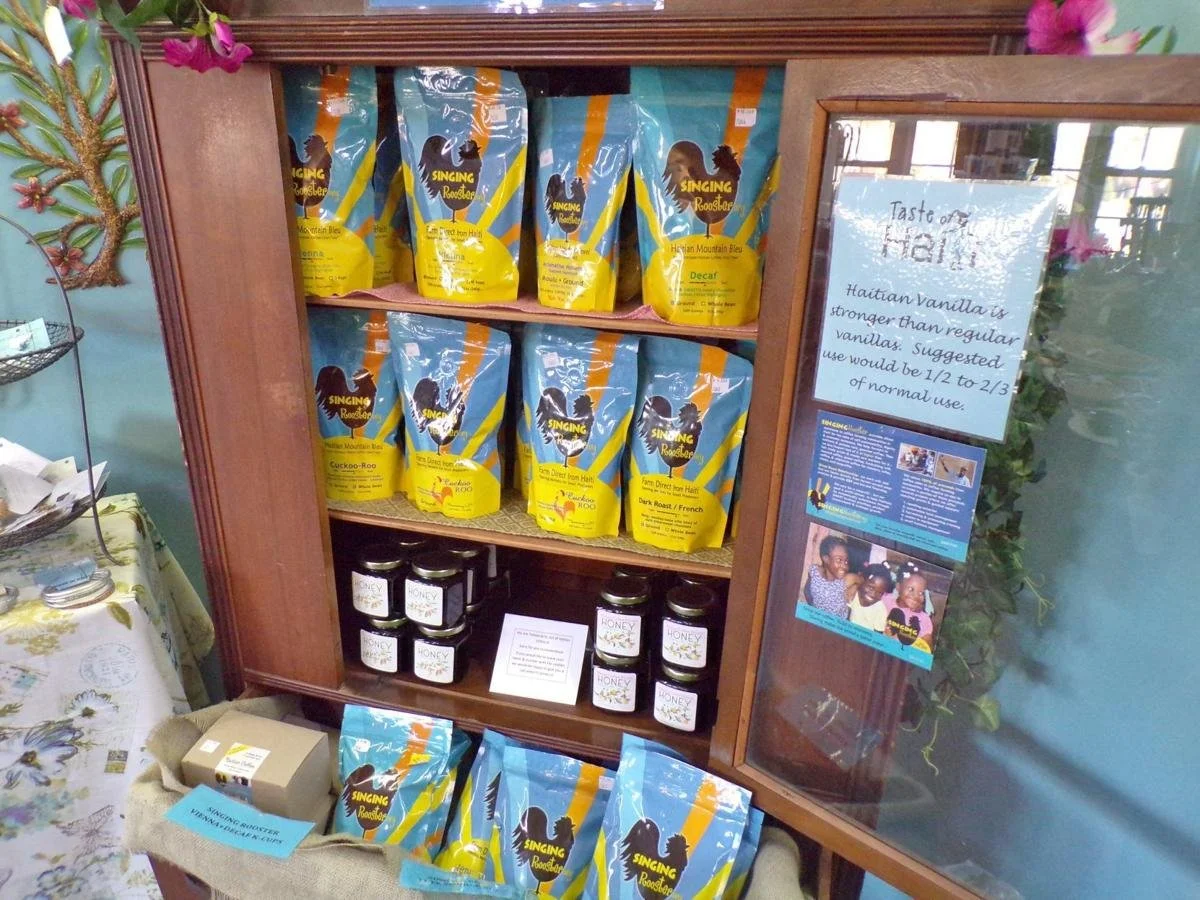
Taste of Haiti brings hand-crafted items to Harleysville shop; helps provide sustainable jobs in Haiti
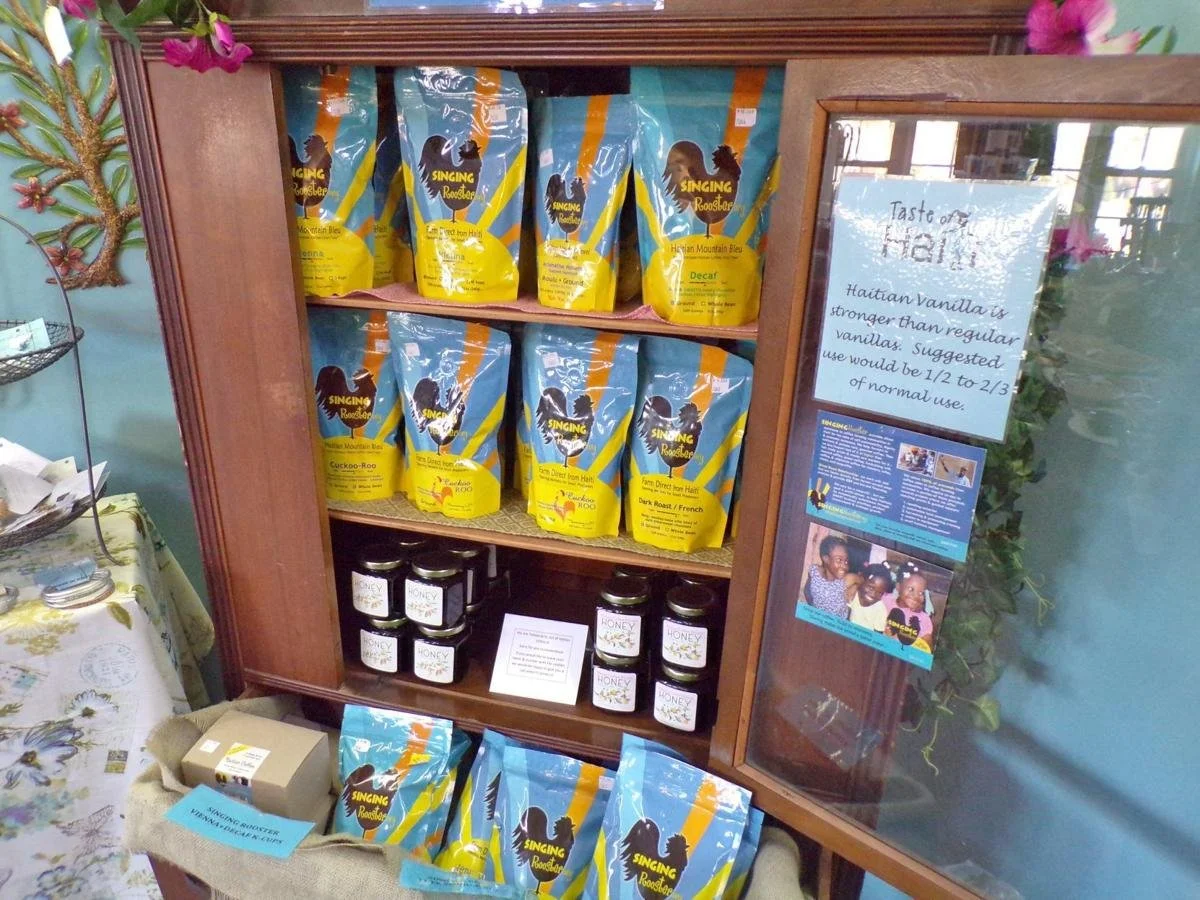
"We work a fair price and we bring it up here and we sell it and then we take the money and go buy more." — Taste of Haiti owner Dan Ziegler

Haiti defeats Panama 6-0 in final qualifying match

HOUSTON — Nerilia Mondesir and Mikerline Saint-Felix each scored twice and Haiti beat Panama 6-0 Monday in the group stage of the CONCACAF Women’s Olympic Qualifying tournament.
It was the final match of the tournament for both teams. The United States and Costa Rica already secured the group’s two spots in the semifinals. Eight teams are playing in the tournament which determines the region’s two spots in the Tokyo Games this summer.
The top-ranked U.S. national team plays Costa Rica in the late match Monday at BBVA Compass Stadium.
Mondesir scored on a penalty kick in the fifth minute, and Saint-Feliz added goals in the 11th and 29th to give Haiti a 3-0 first-half lead. Melchie Daelle Dumonay and Batcheba Louis scored in the second half before Mondesir capped scoring with a goal in the 84th minute.
Panama goalkeeper and captain Yenith Bailey did not play after she was injured in the team’s 8-0 loss to the United States on Friday. Sasha Fabregas replaced her in goal for the final match.

Montreal Impact sign Haiti international Steeven Saba

TRANSFER TRACKER: Signing
The Montreal Impact roster build ahead of the 2020 MLS season continues, as they announced Tuesday the signing of Haitian international midfielder Steeven Saba on a one-year contract. The deal includes options for 2021 and 2022, and will be official upon receipt of his international transfer certificate.
Saba, who holds an American passport and won’t count as an international player, had been in preseason camp with Montreal as a trialist.
“Steven confirmed the qualities we saw before inviting him to camp,” said Montreal Impact sporting director Olivier Renard. “We are very happy to see him join the Impact and start the second phase of training camp as a full-time player.”
Saba, 26, spent the last two seasons with Violette Athletic Club, in Port-au-Prince, Haiti, in the Championnat national. He made his senior international debut for Haiti on May 30, 2018, and has since appeared in 12 matches. Saba was named to the Best XI of the 2019 Concacaf Gold Cup group stage as Les Grenadiers made the tournament's semifinal round.
Saba was previously part of the US U-18 national team and featured for Weston FC, a US Soccer Development Academy program based in Florida.
Montreal are busy preparing for their Concacaf Champions League opener Feb. 19 against Saprissa. It’ll be the club’s first season under head coach Thierry Henry, with their MLS opener set for Feb. 29 at home against the New England Revolution.

CARIBBEAT: Wide range of unique, affordable products from Haitian artisans are now available from the Belmachann.com eCommerce site

The exciting and important Belmachann.com eCommerce site — selling unique, sought-after Haitian artisanal products made by Haitians in the Caribbean nation and the disapora — is coming from the HaitiNexMedia, parent company of The Haitian Times newspaper.
The products are wide-ranging — from clothes to health and wellness items, artworks, jewelry, food products and more. The concept of the site is to bring consumers and producers together, said Garry Pierre-Pierre, The Haitian Times’ founder and CEO of Belmachann.

The Belmachann Twitter page calls the business “an online boutique,” adding, “Your support helps Haiti develop with dignity.”
“The time is propitious for Belmachann,” said Pierre-Pierre, whose The Haitian Times just celebrated its 20th anniversary. “You have talented artisans in Haiti and the United States who are looking for distribution and marketing networks. With Belmachann, they can create and leave the rest to us.”
Pierre-Pierre said Haitian-Americans and others would buy handmade and artisanal crafts and goods, but too often the products are hard to find here at affordable prices.
He explained that Belmachann also works for Haitian entrepreneurs looking for markets and promotional opportunities for their many products. And Belmachann plans to branch out to other markets and sell goods from Africa and other Caribbean nations.
“In today’s media landscape, it’s not enough simply to provide information, you have to interact with the audience in a more granular way,” said Vania Andre, The Haitian Times’ editor and publisher, who also serves as Belmachann’s chief operating officer. “That means finding out what they need and offer it to them.”

Teacher's helper at Lexington Middle told students to 'go back to Haiti'

One of the girl's mothers said her daughter isn't even Haitian.
FORT MYERS, Fla. — A teacher's helper at a Fort Myers middle school allegedly told students to "go back to Haiti."
After the Pledge of Allegiance at Lexington Middle School, students are supposed to stay standing for a moment of silence. When two girls sat down, the paraprofessional in their classroom said they should go back to Haiti.
One of the girl's mothers said her daughter isn't even Haitian. The other girl has Haitian descent but was born in the United States. She said it was super embarrassing.
The Lee County School District said, "We are aware of the incident at Lexington Middle School and the employee has been removed from the classroom pending the outcome of a District investigation."

11th annual ‘Hope for Haiti’ reception in Boca Grande

The Boca Grande Hope For Haitians Committee agreed to fund 150 homes in the remote area of Savann Kabrit, Haiti, over a three-year period. Thanks to the generosity of Ben and Louise Scott and the committee, 100 homes have been funded for families through Food For The Poor.
Fundraising for the remaining 50 homes in Phase III of Savann Kabrit will continue with the Boca Grande Hope For Haitians annual cocktail and hors d’oeuvres reception at The Gasparilla Inn Beach Club in Boca Grande on Tuesday, Feb. 4, 2020. The event will feature a silent auction.
Guests attending the reception will have the opportunity to meet Food For The Poor’s new president and CEO, Ed Raine, who also is this year’s keynote speaker. He will share how lives are being transformed in Haiti, thanks to the generosity of Boca Grande residents.
For additional information about the Boca Grande Hope For Haitians reception, please call (954) 427-2222 ext. 4020, or visit FoodForThePoor.org/bocagrande.

What Kobe Bryant’s death has taught me about how Black men mourn

Sunday afternoon I was at the Sundance Film Festival when I looked down at my phone and realized I had about a dozen unread messages from friends and colleagues all with the same message: “KOBE IS DEAD.”
Fortunately, my friend — an avid basketball fan who I often catch watching NBA games on his phone or laptop whenever we have the audacity to invite him out during basketball season — had just stepped out of the theater to make a phone call right before I saw those texts. Which gave me time to figure out how I was going to break the news to him that his hero, Kobe Bean Bryant, was gone.
But when he walked back in two minutes later, the stunned expression on his face let me know someone else had beaten me to the punch. He looked gutted; his eyes wet with unshed tears and his usual smile replaced by a tight grimace of disbelief.
The next few hours of film festival activities were a blur. We went to a swank brunch we’d been excited to attend just that morning, but now the chatter of shiny industry folks milling about us felt meaningless, and the carefully prepared gourmet food plated before us tasted dull and almost too heavy to swallow.
I tried to distract myself by making small talk with the folks seated at our table. But every time I looked at my phone, a new detail would come out: Kobe was on the flight with his daughter Gianna when he died. They were headed to her game to speak to a crowd of excited kids. There were seven other fatalities on that flight. Making it worse, TMZ broke the news before the family was even notified.
It began to feel like a constant barrage of bad news, with each update digging the knife even deeper into our chests. Until finally, while we stood backstage waiting for a film panel to begin, my dear friend, who I always tease about not showing enough emotion, threw down his phone, and let himself cry.
As I leaned over to rub his back and console him, in my periphery I noticed three other Black men in our vicinity staring off into the distance and holding back tears of their own. That’s when it hit me that even though we were all mourning the loss of Kobe Bryant, for brothers in particular, this one hit differently.
When death is swift and cruel
As someone who has had to deal with the mourning process a lot over the last two years, it has been my lived experience that there is death… and then there is sudden death.
Both are painful, but the latter has an extra bite to it that leaves you feeling as if you’ve been betrayed by time, and also wishing you could go back and savor moments you previously took for granted.
That’s why the swift and cruel timing of Kobe Bryant’s passing, just hours after Lebron James passed him on the NBA’s all-time scoring list, felt like a sick joke. Most of us — myself included — expected Kobe to grow old in the public consciousness. For people in my age group specifically, he was the first NBA player we watched play out his entire career from start to finish and then segue into an exciting new chapter after retirement.
He was a North Star of sorts. We grew up with him and therefore, whether we realized it or not, his mortality was tied to our own, with his death feeling just as abstract and distant as we would all hope ours to be.

The Black Mamba was equal parts man and myth. As accessible as he was to several generations of sports fans, to Black men in particular, he was a flesh and blood reminder of what they could achieve and evolve into, even after making potentially life-damaging mistakes.
Let’s be real, this world and particularly this country isn’t known for giving Black men second chances, or even first ones. Since enslavement, our men have been seen as property; sexually deviant brutes with no humanity or tenderness to speak of. They’ve been portrayed as unfeeling caricatures and dismissed as emotionally unintelligent aggressors who only seek to pound their chests and assert their dominance while instilling fear in the hearts of their women and white counterparts.
And the saddest part is many of them have bought into this image of themselves. Black men are supposed to be things not people, with the only exception being made for the Ivy League, super articulate, Obama archetypes who are so perfect in their presentation that even the mainstream has to begrudgingly acknowledge their “Black Excellence.”
But then there was Kobe; flawed, focused, unrelenting Kobe.
A misstep and subsequent assault charge early in his career made the sheen of perfection an impossible distinction for him. To many, that should have been the end of his story, leaving him dismissed as yet another bad boy Black male athlete with an asterisk next to his name.
But true to that “Mamba mentality” he refused to let the biggest mistake of his life define him, and instead spent 20 years grabbing life by the neck and shaking every bit of goodness out of it he could.
Right before our eyes, we watched a tall lanky kid become a good man, in the most breathtaking sense of the word. A devoted husband, a proud “girl dad” and a tenacious and formidable athlete whose prowess on the court was only outshined by his generosity towards his teammates and fans.
For Black men, Kobe Bryant was their redemption song, their constant reminder that they could be more than whatever box society chose to put them in. He was the brother, childhood friend, and superhero they all needed to tap into when everything else on the planet conspired to tell them they weren’t good enough.
Because of this, they let themselves love him deeply, and attach themselves to him as if he was family. But that’s the tricky thing about love. Whenever you give anything (or anyone) the power to make you that happy, you’re also giving them the ability to break your heart into a million little pieces.
It’s ok to cry
Black people are probably some of the proudest and most unflinching humans on the planet, and our men in particular excel at this. As a result many of us women, can go years or perhaps even a whole lifetime never seeing the brothers around us shed a tear. The side effect of this is we often end up forgetting how vulnerable — and human — they are.
But since Sunday I’ve seen men who I honestly didn’t even think had tear ducts, sobbing like little children, both in real life and on my television screens. And it’s been a bittersweet reminder about just how much “stuff” they hold in every day and teach themselves to push aside.

The last few days have revealed that Black men don’t feel any less than the rest of us, or hurt any less than we do either, they just have much less freedom to show it. So when I knew I was going to be writing this piece today, I asked many of them, flat out, “Why does THIS loss hurt so much?”
In summation they said they felt “blindsided” and “deeply wounded” to lose someone they identified with so intimately. One went so far as to explain that he felt society needed to “let us have this wake for Kobe. Let us play our pick-up games in his honor. Let us hug our children, kiss our wives and dap our friends. Let us cry together and surprise everyone who doesn’t think that we’re people.”
So out of respect, that’s exactly what I plan to do.
I’m going to let the Black men around me mourn, hold space for them to put down their armor and remind them it’s ok to weep for as long and as hard as they need to. Because the unexpected, but incredibly soul-stirring silver lining of this tragedy is that the men in my life are finally allowing themselves to feel and show vulnerability in ways I’m not sure even they knew they were capable of.
I’d like to think that Kobe — the older and wiser family man who planned to dedicate the rest of his life to uplifting his community, would be proud to know that this too gets to be part of his amazing and complicated legacy.

Temple alumnus’ brand ‘shows the beauty of Haiti’ on Shark Tank

Two Haitian-Americans started a sustainable business to help provide jobs to Haitians.
On Jan. 12, Stéphane Jean-Baptiste and Yve-Car Momperousse appeared on Shark Tank, exactly 10 years after a 7.0 magnitude earthquake hit Haiti in 2010.
The three million lives that were threatened in the 2010 earthquake was one of the things on their mind as they pitched their brand.
Jean-Baptiste, a 2006 communications alumnus, and Momperousse went on ABC’s Shark Tank, a show that gives beginning entrepreneurs the chance to earn investors, last month to pitch their beauty brand Kreyol Essence.
The brand’s inspiration comes from Haiti, as it employs female workers in the country and sources products for its shampoos, oils and pomades from it. Their products include Haitian black castor oil, Kreyol Essence’s signature ingredient.
The brand was not offered investment from any of the Sharks, but announced that their products will be sold at Ulta Beauty, a beauty chain store, across the United States in April, in addition to their products being sold at Whole Foods Market and on Kreyol Essence’s website.
While on the show, Jean-Baptiste and Momperousse felt a responsibility to authentically represent their Haitian-American community, they said.
“What better way to show the beauty of Haiti,” Jean-Baptise said. “We can change people’s perspectives of what they think about Haiti by focusing on the natural and amazing botanical ingredients we have coming out of the country.”
The idea for Kreyol Essence started in 2010, a few months before the earthquake, when Momperousse’s hair started falling out after it was burned from a straightening treatment in a hair salon. The Haitian castor oil she used as a child in Haiti was unavailable on American markets, so she and her partner Jean-Baptiste decided to fill the gap by creating their own products.
In the aftermath of the earthquake, however, they initially wanted to put their business idea on hold and focus on providing relief to victims. They worked with other Philadelphia residents to raise $100,000 for the Haiti Earthquake Relief and Rebuilding Fund.
But the two learned Haitian castor oil had the potential for social impact if they worked with local farmers and women, and could create jobs and alleviate poverty.
“We went back to what we know in our Haitian community, which is the Haitian castor oil,” Jean-Baptiste said.
Kreyol Essence uses quality ingredients and has a name and design packaging that helps “tell the story of Haiti,” he added.
“I’m about buying natural and ethically made products and as a physician, I am very mindful about how products and things can affect us,” said Josya-Goya Charles Laurent, a physician and customer. “I’ve used other natural products but the difference is that is they are personable, they are very much in tune with their customers.”
Soroya Pognan, patient safety analyst and Kreyol Essence customer said they like supporting the business because they can trace the products back to Haitian workers.
“I know that somewhere a woman’s life is being made better when I buy it, not only do I enjoy and Stephane and Yve-Car enjoy benefits, but so does that person,” Pognan said.
The hardest part of their business process has been raising funds because as entrepreneurs of color they don’t have access to capital and connections, Jean-Baptiste said.
In 2017, credit approval for small Black-owned businesses was 19 percent lower than white-owned firms, and of those approved, only 40 percent of minority-owned businesses received full funding, compared to 68 percent of white-owned firms, according to the Washington Post.
“We found ourselves really having to turn every stone, knock on every door and make our case from buyers all the way down to investors where they don’t necessarily understand our demographic or our business model or what we’re really trying to do here,” Jean-Baptiste said.
Going forward, Jean-Baptiste said he and Momperousse hope to build their team and continue to maintain their vision of a beauty brand that serves Haiti by always focusing on going back to the consumer and improving their experience.
“For me, its a best-kept secret, a lot of us grew up with [Haitian castor oil],” Laurent said. “When I saw it displayed on the shelf at Whole Foods, it brought a tear to my eye, to see the beauty of Haiti being shown in this way.”

Olympic qualifying match preview and how to watch: USA vs Haiti
The United States takes on a very young Haiti WNT.
Olympic qualifying is an odd beast. The US women’s national team is the unquestioned juggernaut of Concacaf, and there are going to be some uncomfortably lopsided scores over the next few games. There’s room to both celebrate the excellence of the USWNT and remember that it’s not a level playing field across the region. With that in mind, here’s a preview and how to watch for the first US game of qualifying against Haiti.
The opponent
Haiti recently tied Texas A&M 1-1 in a friendly as part of their Olympic prep. They also tied Canada 1-1 in an earlier friendly through this nicely direct goal (with an assist from a literal defensive slip).
h

There’s not as high a chance that they’ll be able to split US defenders like this, but you never know. Haiti has several players coming from D1F in France as well as a lot of youth players stepping up together from the U-20 level and together, they may be able to exploit a high line or a defensive lapse. Forward Nerilia Mondesir certainly taught the United States U-20s something about keeping an eye on clever balls over and runs behind.
That doesn’t necessarily mean they can hang with the senior US team for all 90, though. The oldest players on their roster were born in 1996, making their veteran players all of 23 and 24 years old. Their youngest player is goalkeeper Madelina Fleuriot at just 16.
Haiti roster
GOALKEEPERS (3): 1-Jonie Gabriel (As Tigresses), 12-Kerly Theus (Aigle Brillant), 18-Madelina Fleuriot (Exafoot)
DEFENDERS (7): 2-Soveline Beaubrun (As Tigresses), 3-Chelsea Surpris (Unattached), 4-Ruthny Mathurin (As Tigresses), 5-Tabita Joseph (As Tigresses), 13-Emeline Charles (Aigle Brillant), 15-Johane Laforte (Anacaona SC), 20-Kethna Louis (Le Havre AC, FRA)
MIDFIELDERS (5): 6-Melchie Dumonay (As Tigresses), 8-Dany Etienne (Fordham University, USA), 9-Sherly Jeudy (Anacaona SC), 14-Phiseline Michel (As Tigresses), 19-Angeline Gustave (As Tigresses)
FORWARDS (5): 7-Batcheba Louis (FF Issy Les Moulineaux, FRA), 10-Nerilia Mondesir (Montpellier HS, FRA), 11-Roseline Eloissaint (As Tigresses), 16-Abaina Louis (As Tigresses SC), 17-Mikerline Saint Felix (Montauban FC, FRA)
Time and TV schedule
USA vs Haiti
Tuesday, January 28
8:30 PM ET / 5:30 PM PT
FS2/TUDN

Voodoo Ceremonies and Cross-Cultural Jams: Inside Jackson Browne’s All-Star Haiti Benefit LP

With help from Jenny Lewis, a member of the Head and the Heart, and others, the singer-songwriter forged new musical alliances, documented on ‘Let the Rhythm Lead’
Over the decades, Browne has found himself in some unusual situations linked to his music: singing in a jail cell after being arrested while protesting the opening of a nuclear power plant, or recording an album (Running on Empty) on tour buses and in hotel rooms. To that list, Browne can now add witnessing a voodoo ceremony in Haiti.
“People would go into this kind of trance,” the singer-songwriter recalls of one evening in that country, during the making of his latest project. “Then they began to hurl themselves backwards into the crowd, and the crowd helped them up and then pushed them back into the center, and they kept dancing. It’s this rhythm- and music-induced state, a high.”
That memorable night stemmed from one of the most ambitious projects of Browne’s career. During two separate trips to Haiti in 2016, he gathered together a musically and ethnically diverse group of collaborators: American musicians (Jenny Lewis, singer and multi-instrumentalist Jonathan Wilson, Head and the Heart singer-songwriter Jonathan Russell), members of the Haitian roots band Lakou Mizik, Haitian singer-songwriter Paul Beaubrun, and international talents like Mali-based singer and musician Habib Koité and Spanish flamenco guitarist Raúl Rodríguez. In various combinations, the artists wrote and recorded songs that blended all their musical backgrounds, swapping lead vocals and sometimes instruments, and singing in English, Creole, Khassonké (the language of western Mali), Manding (of West Africa), and Spanish.
Next week, the results of those sessions — a sort of multi-culti version of the Traveling Wilburys — will finally be released on a new benefit album, Let the Rhythm Lead: Haiti Song Summit Vol. 1.
“It was the most excited I’d seen Jackson in the six or seven years I’ve known him,” says Wilson, who sang and played various instruments and also co-produced the record with Browne. “Every aspect of the project was important to him, from the person singing the song to the person who played the shaker. He would go through songs with folks and scribble down the words and go through it. He was extremely focused.”
Browne’s earlier visits to the country paved the way for Let the Rhythm Lead. He’d found himself in Haiti in 2014, when he visited the Artists Institute, a recording school and studio set up by the non-profit group Artists for Peace and Justice in the wake of the devastating 2010 earthquake in that country. (APJ also established the Academy for Peace and Justice, a new middle and high school in Haiti.) The title track of Browne’s subsequent album, Standing in the Breach, was inspired by that visit and the ravaged country in general. In 2015, Browne ended up in Haiti again; there he met Russell, who happened to be visiting the country for the first time during a work break. Both were asked to pop into a class and sing songs for the students. “They were like, ‘This is Jackson — you’re going to be in a classroom with him,’” says Russell, who’d never met Browne before. “I’m like ‘OK!’”(Proceeds from the upcoming album will go toward both the Academy for Peace and Justice and the Artists Institute of Jacmel.)
One night, the two men were dining with locals — Browne talking about Bernie Sanders at one end of a table, Russell listening along to percussionists who’d gathered at the other end. Russell began singing impromptu lyrics to accompany the rhythm patterns. “At some point, Jackson leaned in and said, ‘What is happening over there?’” recalls Russell, who told Browne he’d made up the words on the spot. The spontaneity of that moment made Browne think about recording the song at the studio, in the town of Jacmel on the island’s out-of-the-way southern coast. “The goal was quite modest,” says Browne. “It was just to show these students how we work and maybe make up some songs. I thought this could result in some really great music. The idea was to come with a song, or come down there and make up a song.”
But it didn’t end there; soon, Browne corralled Russell and Wilson for the first of two creative expeditions to Haiti, and an album began taking shape. Together with the other players, they started writing and shaping material that built on all their influences. “Love Is Love,” a song Browne had started before the expedition, embodied the musical mind meld that eventually took place. “I thought I wanted essentially a Bo Diddley beat,” he says. “I didn’t imagine playing it with two hand drummers. It took some getting used to and we played it it too fast for a while, but eventually we settled into it.”
In what sounds like a homage to the Laurel Canyon neighborhood where he lives, Wilson wrote and sang “Goddess at the Wheel,” inspired by recording engineer Vira Byramji, who worked on the album. A version of the traditional Malian Griot song “Koulandian” combines Koité’s graceful electric nylon-string guitar and singing with Browne’s harmony. “I thought it would be harder to blend,” says Lakou Mizik’s Steeve Valcourt. ”But when we talk music we’re in the same vibration, we all understand. Everyone speaks the same language.”
The song Russell began singing over that meal became “I Found Out,” which would also appear, in a different recording, on the latest Head and the Heart album, Living Mirage. As Russell recalls with a bemused laugh, that moment was almost lost to history thanks to local alcohol. “We enjoyed our rum to the point of waking up the next morning and saying, ‘Did anyone record that? Because I have no idea what we did.’” Thankfully, filmmaker and APJ board member David Belle was filming the proceedings, so everyone was able to remember the nascent tune. (“Rum is no drink to work with,” Browne chuckles. “I get so drunk on rum. You’d be a mess if you were drinking that. We needed to bring tequila. That’s another secret ingredient to this music.”)
For the second expedition, the band of players was joined by Lewis, who was invited down by her friend Wilson. (Browne found out she was participating when the two ran into each other backstage at a Bon Iver concert and she broke the news to him.) Lewis flew to Haiti with Browne, and when she popped into the school, the singer-songwriter was met with a reception she’d never quite experienced before. “I walked in and kids immediately grabbed me and hugged me,” she recalls. “I had three kids on my right leg and they’re stroking my hair and holding my hand. It was just such a beautiful and really intense experience.”
Lewis had brought along fragments of several songs she hoped to contribute but soon realized none were quite right. “So I found a little classroom off the studio while they were recording Jonathan Wilson’s song and just sat and had some weed,” she says with a laugh. She wound up with the gently lulling “Under the Supermoon,” which details her reaction to Trump’s election (“I never had such a fright /I gasped on election night/ The whole world thinks we’re insane/ I didn’t sleep a wink that night”) and her arrival in the country with Browne.
“That’s another case of me just being so knocked out by someone’s ability to sing about what’s happening in the moment,” Browne says.
Lewis also arrived in time for the voodoo service that all the musicians were invited to attend. Coincidentally, Lewis wore clothes with the same colors (red and white) as the participants and was briefly pulled into the ceremony, where one of the male participants looked at her and said, solemnly, “You will come back to Haiti.” Then, as part of the ceremony, he spit rum into her eyes. “It burnt like hell!” she says. “I was like, ‘Oh, my God!’” But Lewis says the voodoo ceremony overall wasn’t as strange or frightening as pop culture has made them out to be. “There were a couple of Hollywood movies that portrayed it as this really scary thing,” she says, “but you learn it’s incredibly spiritual, just a way to communicate what was going on with the different tribes.”
“Now I feel I can take my guitar anywhere and play music with people all over the world.” — Jenny Lewis on ‘Let the Rhythm Lead’
Once the work on the album was done, each of the musicians took different lessons from it. “The goal was to help out down there, but a lot of what ended up happening was inward,” admits Russell. “It was culture shock going in, and it was even more culture shock coming home to see how much apathy exists here. The amount of things we complain about is pretty mind-boggling. Then you come back from a country that’s gone through what it’s been through, and everyone is spirited and proud.”
For her part, Lewis left Haiti with a newfound sense of collaboration. “I feel like it really opened a little piece of my brain,” she says. “Now I feel I can take my guitar anywhere and play music with people all over the world.”
The recordings sat in the can for more than two years as Browne attempted to find a home for them. At least one major label passed, he says, but he finally reached a deal with Arts Music, a Warners subsidiary. Ideally, Browne would love to reunite many or most of the players for at least one live performance, but logistics may rule it out, at least for a while. (He’s also envisioning a dream second volume, where he’d invite down the French-speaking likes of Daft Punk, artist and producer Daniel Lanois, and Canadian singer-songwriter Bruce Cockburn.)
In the meantime, Browne is hoping that the album will at least help call attention to Haiti — which, thanks to civil unrest and claims of election fraud, is enduring an even more turbulent period, marked by school and hospital closings, gas shortages, and deadly riots. The country is currently operating without a parliament, under the one-man rule of controversial president Jovenel Moïse.
“I don’t kid myself that we’re going to create like a huge change with this record,” Browne says, “but it’s a window into Haiti.”

Haitian and Jamaican Patties, Traditional and Not, in Brooklyn

If you took a slow-motion video of yourself biting into a Haitian patty at Kafe Louverture in Bedford-Stuyvesant, Brooklyn, it would look like this: The outer layer of pastry would shatter dramatically, like powdery snow blasting off a pair of skis. Then your teeth would sink into the gently simmered filling — beef or lamb, maybe, punctuated with sprightly flecks of pepper.
For the dough, thank Joanne Saget’s grandmother Andrea Remy. When a 7-year-old Ms. Saget moved to Brooklyn from Haiti with half of her family, they lived with her grandmother in Midwood. The matriarch made patties daily, and eventually taught Ms. Saget her technique.

Ms. Saget updated the recipe, swapping in butter for shortening, and adding a dash of whole-wheat flour for a whisper of nuttiness. At Kafe Louverture, which she opened in 2015 with her husband, Anthony Cunningham, she is carrying on a larger family tradition than she originally thought.
“Two years ago my aunt told me that my grandmother owned the biggest bakery back in Haiti,” Ms. Saget said. “I thought she just owned a market — but my aunt said no, she made patties and she made bread.”
Patties and excellent Haitian coffee are the main draw here, and you’ll often see neighbors popping a head in to ask which fillings are currently available. The chicken and beef are prepared identically, marinated in what Ms. Saget calls “green seasoning” before their eventual sauté. The seasoning’s green and Scotch bonnet peppers are the loudest ingredients, punctuating an otherwise sultry filling with bitter, fruity and spicy outbursts.
Under Ms. Saget’s watch, dried fish are resurrected into softness, then packed into her handmade puff pastry. Dried herring soaks overnight before its time in the pan with green seasoning; in patty form, it’s smoky and salty, its toughness turned into something sturdy but delicate.
Kafe Louverture has the look of an artsy-industrial coffee shop, with exposed brick and a warm wooden counter that overlooks the street. Haitian art — portraits, woodwork — hangs on one wall, opposite a row of shelves offering hot sauce, handicrafts and coffee from Haiti.
The couple have pledged to import $250,000 worth of products this year. “We want to keep the Haitians working,” Mr. Cunningham said, considering the political turmoil that has disrupted the economy since 2018. “We want to make sure that when the country slows down, the money is still funneling to the people — the farmers, the artists.”Jamaican Patties With a Twist8 PhotosView Slide Show›John Kernick for The New York Times
Just across the borough, another husband-and-wife team is reimagining traditional Caribbean patties. At Branch Patty, which pops up each weekend at Artists & Fleas Williamsburg, Sam Branch and Lisa Lloyd-Branch serve Jamaican patties with crusts that skew more colorful than their Haitian counterparts, shaped into half-moons rather than rectangles.
When the couple were first dating, they would visit Christie’s Jamaican Patties on Flatbush Avenue. The restaurant, which has since closed, had been a childhood favorite of Mr. Branch, who grew up in New York and whose family is from Barbados. Its patties were the ideal on which he modeled his own.

Christie’s and its competitors often used food coloring for their crusts’ signature ocher hue, but Mr. Branch wanted to go all natural. His chicken curry and squash curry patties — two of his best — glow with a crust made yellow from turmeric; the beef patty’s red exterior comes from paprika. He is careful about his meat, and eager to note that the beef is pasture-raised, the chicken freshly ground by a local butcher.
And while Jamaican patties are Mr. Branch’s favorite style, he is not too beholden to tradition. He uses Guyanese curry powder instead of Jamaican, for its stronger punch. And his fillings are generous, each patty a full meal, almost all of them electrified by Scotch bonnets.
People have teased the couple for their flavor combinations, Mr. Branch said. “People say, ‘Oh, that’s so … different.’ But you have to push boundaries.”
He fills one of his vegan patties with jerk-flavored mushrooms, less a meat replacement than a replacement for boring veggie patties. (The only downside of Branch Patty’s thoughtful vegan offerings is a crust that can at times be dry and chewy.)
But the Branches don’t want to stray too far from where they began. “Now, when people come to Artists & Fleas, they’ll say, ‘Do you know a spot called Christie’s?’” Mr. Branch said proudly. “They say, ‘This reminds me of a patty that used to be around.’”

Haiti reaches one-year free of Cholera

Washington D.C. / Port au Prince. 23 January 2020 (PAHO/WHO) – The cholera outbreak in Haiti that began in October 2010, affecting over 820,000 people and killing 9,792, has been stopped in its tracks, with the country reaching 1-year free of confirmed cases this week.
The achievement follows concerted efforts from Haiti, the Pan American Health Organization (PAHO) and other partner agencies to address the root causes of cholera, including through increased surveillance to detect and respond to possible-flare-ups; the implementation of rapid diagnosis initiatives; and the treatment of cases with adequate rehydration and care.
“Cholera is a disease of inequity that unduly sickens and kills the poorest and most vulnerable people – those without access to clean water and sanitation,” said PAHO Director, Carissa F. Etienne. “Death from cholera is preventable with tools that we have today but to ensure that cholera remains a distant memory, we must also accelerate investments in clean water and adequate sanitation in Haiti,” she added.
The last confirmed case of cholera was reported in I’Estère in the Artibonite department of Haiti during the last week of January 2019. It concerned a boy under the age of 5, who was admitted to hospital on the 24th of January 2019 but who recovered shortly thereafter.
Rapid detection and testing are key to controlling outbreaks. PAHO and the Haitian Ministry of Health’s Labo Moto project, which works on the ground to enable field nurses to rapidly transport samples from treatment centers to laboratories on motorcycles, has enabled testing of suspected cases to increase from 21% in 2017 to 95% in 2019.
LaboMoto is part of a three-step strategy to ensure that all suspected cases from high-risk areas are tested; that random sampling of patients with diarrhea is implemented in all areas of the country; and that event-based (rumor) surveillance is also carried out by epidemiologists.
PAHO has also supported Haiti in equipping primary health clinics with trained personnel that are able to respond quickly and manage cases; and in the implementation of cholera vaccination programs. For example, over 900,000 people were vaccinated following Hurricane Matthew in 2016.
Towards cholera elimination
Despite progress, Haiti remains behind the rest of Latin America and the Caribbean in terms of access to potable water and sanitation. Over a third of the population (35%) lack basic drinking water services and two-thirds (65%) have limited or no sanitation services. This is far below the regional average of 3% and 13% respectively.
“While cholera is under control for now, we must collectively remain alert and ready to maintain this status and verify elimination. Only when we ensure all Haitians enjoy access to clean water and sanitation can we breathe more freely.” - Dr. Etienne
In order to end cholera in Haiti and receive validation from the World Health Organization (WHO) for eliminating the disease, the country must maintain effective surveillance systems and remain cholera-free for two more years (three years in total).
Early detection and response to possible flare-ups must also continue and addressing the issue of clean water and sanitation for all Haitian people is key to preventing the transmission of cholera, and other water-borne diseases, in the long-term.
Haiti pushes foster homes to counter problems in orphanages
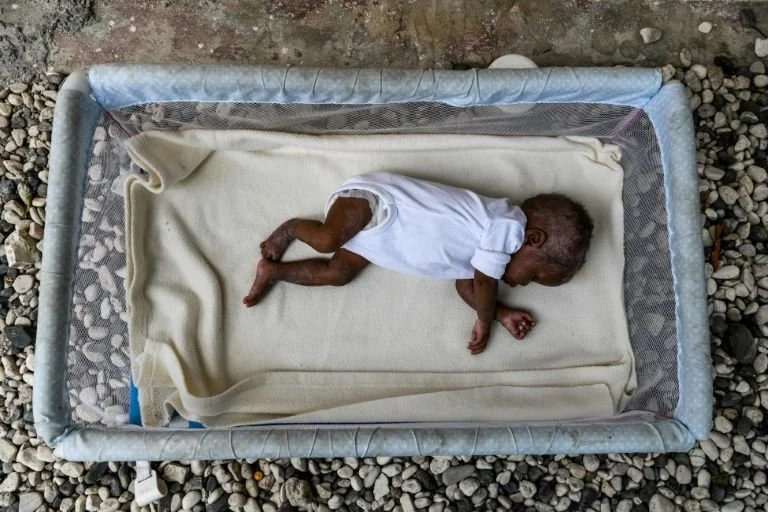
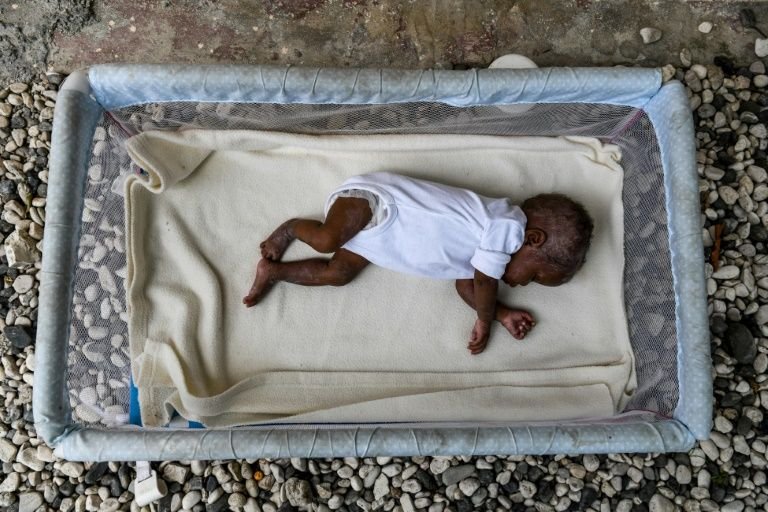
Port-au-Prince (AFP) - Rose Boncoeur brought two emaciated little girls to live in her modest home in Haiti as part of a reform drive aimed at keeping children out of orphanages.
"People often asked me if I am crazy," said Boncoeur, whose name means "good heart."
The government of the Americas' poorest country is pushing to deinstitutionalize children so as to avoid the darkest sides of orphanage life -- trafficking of kids or even worse abuse.
So far, 120 homes in Haiti have opened their doors to children with nowhere else to go.
Boncoeur gets no financial help to feed or clothe her two charges, and is forced to ask people for used clothing for her foster children -- sisters, aged eight months and three years.
"Some people do not understand that I spend money on children who are not mine," said Boncoeur, who is proud that her biological daughter treats those girls like siblings.
Much of the problem goes back to the devastating earthquake that hit Haiti in 2010, which left more than 250,000 people dead and largely demolished the capital city, Port-au-Prince.
The number of orphanages and other care facilities for children more than doubled.
Of the 754 that now exist in Haiti, only around 50 are licensed or in the process of getting a license from IBESR, the government's child social welfare agency.
The government has now barred any more such institutions from opening.
-Pedophilia, organ trafficking -
The government has also finally signed an international convention designed to safeguard inter-country adoptions.
Before, a foreigner could just go to an orphanage in Haiti, strike a deal with the director, and adopt a child, with IBESR only involved at the end of the process to act as a type of registrar of the match, said its director, Arielle Jeanty Villedrouin.
IBESR now heads the process, deciding who the children will go with, "which averts some excesses because there has been talk of pedophilia and organ trafficking," she said.
State intervention in matching children with people who want to adopt is also seen as a critical to avoiding heartbreak for parents who give up their kids to orphanages.
"People would entrust their children to an orphanage and maybe sign a document without even knowing how to read," said Villedrouin.
She said the child welfare agency often had to deal with weeping mothers who came looking for children who had been adopted and taken out of the country.
Eighty percent of the estimated 27,000 children living in orphanages in Haiti have at least one parent alive.
- Orphanages with money -
Child welfare advocates here say it is a shame that abject poverty can destroy families and strip children from their parents when some orphanages actually have a lot of money.
In 2017, Lumos, an NGO founded by the writer JK Rowling of Harry Potter fame to reunite orphanage kids with their parents, reported that at least 70 million dollars are received yearly by just a third of the orphanages in Haiti.
"Seventy million dollars: imagine how this money could have helped children stay with their parents," said Villedrouin, whose agency has an annual budget of just $1 million.
UNICEF is also pushing for governments to change their way of thinking and spend money to keep families together.
"Studies have shown that for each year that a child spends in an orphanage, he or she loses three to four months of psycho-cognitive development," said Maria Luisa Fornara, director of the UNICEF office in Haiti.
While the killer 2010 earthquake caused international aid to be channeled toward orphanages, it prompted the Cledion family in Haiti to become foster parents.
They had already become empty-nesters.
Now, they are raising two girls -- Jesly, 10, and Fedjiana, 11.
"After making it through that terrible experience alive, you understand that you owe other people," said Solon Cledion.
"They are little. It is not their fault that they are poor," said Cledion, who considers these girls to be his daughters.
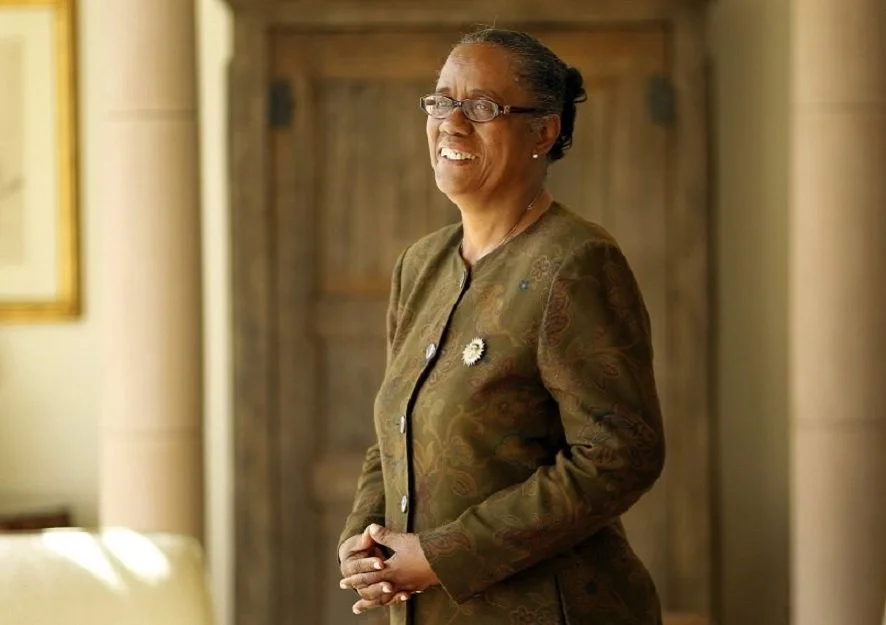
The little-known first female prime minister of Haiti sworn in for 100 days
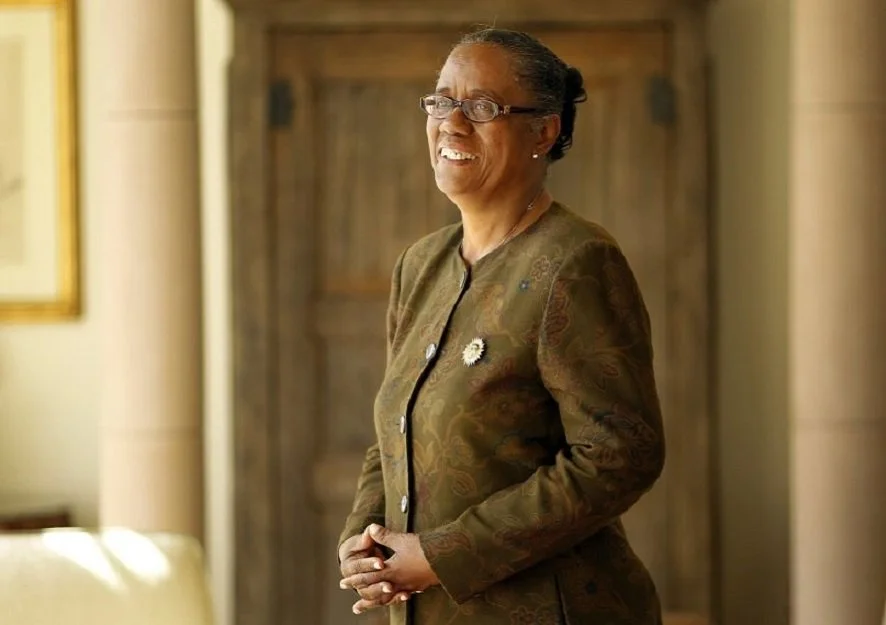
Claudette Werleigh has served in various capacities in Haiti and across the world.
She has been a politician, development and peace campaigner but what she became widely known for were her achievements within just 100 days of being Haiti’s first female prime minister.
Then a foreign minister, a 49-year-old Werleigh was picked by President Jean-Bertrand Aristide in 1995 to be the prime minister.
She replaced Smarck Michel, who resigned in October that year over widespread opposition to his economic reforms.

Werleigh, not facing any opposition from lawmakers of both houses of parliament in Haiti, served as prime minister from November 7, 1995, to March 6, 1996.
Though she served for a short period, she did not fail in what was expected of her – to strengthen the leadership of the country and organize democratic presidential elections.
In what is the African diaspora’s oldest country, instability has been rearing its head in Haiti, with street protests recently reported in the capital Port-au-Prince.
For about half a century, the Caribbean nation has struggled to overcome the problems of poverty and inequality. It is a country that has also seen the worst of brutal dictatorships in the hands of the Duvalier family.
Though born in a well-to-do family in Cap-Haitien in 1946, Werleigh was able to witness the disparities in the system while growing up in Haiti.
The widening gap between classes in the country and later conflicts would directly influence her life’s work as a development campaigner, a peacemaker and an advocate for people at the grassroots level.
Later becoming active in politics and public administration, Werleigh trained and studied medicine in the U.S. and Switzerland before coming back to Haiti to take a degree course in law and economics at the State University in Port-au-Prince.
She subsequently worked for various non-governmental organizations focusing on humanitarian relief and adult literacy.
With her passion for education, particularly adult literacy, Werleigh started a school for adults and farmers in rural Haiti. Despite pockets of violence, natural and Western-ensured tragedies, the school remained open and was community-owned.

Werleigh subsequently served as secretary general of Caritas Haiti for 10 years, “coordinating relief assistance, civic education and respect for human rights” under the dictatorial rule of Jean-Claude Duvalier.
She would help found the League for Women’s Empowerment, an organization to promote the participation of women in politics in the 1990s.
This was after the fall of the brutal dictatorship of Doc Duvalier, and Jean Bertrand Aristide was now president.
Werleigh, having entered into full-time politics and public administration, would serve as Aristide’s Foreign Minister and Social Affairs Minister from 1990 to 1995, before briefly becoming Prime Minister in 1995 to 1996 – the first female to do so.
Picked by Aristide who was ousted in a September 1991 coup but later restored to power, Werleigh knew that her role was to keep the country’s leadership intact ahead of the democratic presidential elections.
As prime minister, she appointed a cabinet with 17 ministers, including four women. In agriculture, energy and road construction, she received a lot of financial support even though she later tried to reduce Haiti’s economic dependence, among other policies that compelled the IMF to hold back loans.
Nevertheless, it was during Werleigh’s period as prime minister that Haiti witnessed its first peaceful change of government since it became independent.
When the 1995 democratic elections were held, Rene Preval, an ally of Aristide and a former prime minister, won, making him the first elected head of state in Haitian history to peacefully receive power from a predecessor in office.
Preval would eventually become the first since independence to serve a full term in office, the first to be elected to non-successive full terms in office, and the first to peacefully hand over power.
Having worked with Aristide, he would have loved to have Werleigh continue as prime minister but reports say the majority in parliament, which needed to approve her as prime minister, had changed. Werleigh, therefore, withdrew and left the country.
Outside of Haiti, she ventured into issues of international peace and conflict, working as the director of conflict transformation programs at the Life and Peace Institute in Sweden until 2007, according to writer Bijoyeta Das.
She later worked with Pax Christi, a nongovernmental catholic peace movement with a mission “to transform a world shaken by violence, terrorism, deepening inequalities, and global insecurity.” There, Werleigh served as secretary general until the end of 2010.
She now remains a peacemaker who continues to advocate for policies that will cater to the needs of people of the grassroots.

Somerville artist invites community to celebrate Haitian culture

Somerville’s notable artist Judelande Antoine has dedicated her life to Haitian dance and cultural celebration.
Want the news delivered to your inbox? Sign up for our newsletter here!
Judelande Antoine loves to dance, but her real passion is sharing her dancing and cultural celebration with others.
On Jan. 25, Somerville Haitians United, which Antoine founded, will host their sixth annual Haitian Cultural celebration at Unity Church in Davis Square, featuring Haitian dance, poetry, clothing, art, sculpture, and food.
Originally from Haiti, Antoine now lives in Somerville’s Union Square. She is a dancer specializing in Haitian folklore, and dances several of Haiti’s 21 distinct rhythms.
“I cannot really explain why I love dancing — it is a feeling,” she said. “Dance makes me sad, happy and excited. It doesn’t matter how I feel. There is always something that makes me enjoy dancing.”
In Haiti, Antoine began dancing in church at 7 years old, teaching in high school, and at 15, was taken aside to receive more training. Now she volunteers teaching dance to children in Somerville and Cambridge, but when she was younger she was not allowed to dance outside of church.
“In our village, there was a cultural group that performed every Friday evening,” she said. “I thought it was so fun to watch and dance, but my parents would have us go inside. Even though they did not let me, I would open the door and watch them in the roads and dance anyway inside the doorway. I would feel good watching them.”
Antoine has also received a New England Foundation for the Arts grant to study more dance forms, and in 2019 she was a Somerville Artist of the Month award recipient.
“I feel like dancing allows me to tell my story and have my story be heard,” she said. “Receiving this award makes me feel like my story has been heard.”
Celebrating Haitian culture through community work
A few years after Antoine moved to the U.S., she began volunteering for Haitian adult daycare programs such as Cay Pam, Village LA Joie, and Sante belle Vie, in Mattapan, West Roxbury, and Dorchester. In 2018, she received a citation from Gov. Charlie Baker for her “contributions in the advancement and promotion of the Haitian culture.”
“Doing community work is one of my strengths; I help anywhere and everywhere I am,” she said. “Doing community work is not something that I started in America — I began in Haiti. On May 18, 2018, I organized a Haitian Flag Day Celebration [and] I was so surprised and happy to receive the governor’s citation after the celebration.”
On Jan. 1, 1804, Haiti became the first black nation to declare independence, so Antoine founded this cultural event in January 2015 to celebrate that freedom and cultivate community love and support.
“I love many things about this event,” she said. “First, we see many people we have not seen for so long [and] the community gets together. Second, we revive the Haitian culture together. Third, we have chance to promote our culture and share it.”
Her work centers on youth, and Haitians United has multiple groups to foster community among children and teens.
“It is important to me to work in the Haitian community to help younger generation to embrace their culture,” she said. “Our mission is to revive and promote Haitian culture while coaching youth to build their leadership through arts. Youth are the future of a society and the development of a country. The youth will replace us.”
The Haitian Cultural Celebration, supported by a Somerville Arts Council grant, is from 5-9 p.m. at Unity Church on Jan. 25. The program of dance and poetry reading begins at 6:30 p.m.

Celebrating Game-Changing Accomplishments at University Hospital in Haiti

Nearly seven years have passed since University Hospital in Mirebalais opened its doors and began transforming health care for more than one million people across Haiti's Central Plateau. Since March 2013, thousands of patients have had access to specialized care provided by clinicians working with Zanmi Lasante, as Partners In Health is known locally.
University Hospital has also been home to a growing medical education program, which has graduated 123 residents from a variety of specialties, including emergency medicine, surgery, and pediatrics, to add to the growing health care workforce in Haiti.
For a deeper dive into University Hospital's many accomplishments, check out the below image, a bird’s eye view of the campus. Hover over various sections to learn more about how hospital staff save lives every day by providing high-quality care to all patients, regardless of their income.

A Safe Haven for Mothers and Babies
When University Hospital opened in 2013, staff frequently saw full-term pregnant women sleeping overnight on cement sidewalks waiting for labor to begin. Many of them lived far from care and wanted to be near the hospital as their due date approached. Mothers of babies in the neonatal intensive care unit also slept outside to be available for feedings. These everyday scenes were a testament to the mothers’ determination to receive high-quality care for themselves and their newborns. They also were the inspiration for Kay Manmito, the maternal waiting home PIH built on the grounds of University Hospital.
Kay Manmito, or “Mother’s Home” in Haitian Creole, hosts women with complicated pregnancies and mothers of premature and NICU infants, guaranteeing them a facility-based birth and providing them with free prenatal care, meals, psychosocial support, and health education. In 2019, Kay Manmito housed 378 women so that they could receive the lifesaving, dignified care they needed, from blood pressure monitoring to C-sections. These patients were among the 15 women, on average, who delivered each day in the neighboring hospital’s maternity ward. For expectant mothers like Natacha Jean Paul, whose risky pregnancy brought her to the facility, “the care found here is priceless.”
Training Haiti’s Next Generation of Clinicians
Brain drain has long stymied Haiti’s health care system. Doctors and nurses have historically had few options for specialized training within the country, and 80 percent of those who do train in Haiti leave within five years of graduation to practice abroad. The few clinicians with specialized training who remain in Haiti typically work in the capital of Port-au-Prince, far from where most patients—particularly the rural poor—can access care.
Medical education is integral to University Hospital, which was built as a teaching facility where Haitian clinicians could train in advanced specialties. Since opening, the hospital has begun offering residency programs in pediatrics, surgery, obstetrics and gynecology, neurology, nurse anesthesiology, and family, internal, and emergency medicine. To date, 123 clinicians have graduated from these programs, including the family medicine residency at PIH-supported St. Nicholas Hospital in St. Marc. Nearly 98 percent have chosen to work in Haiti and 60 percent with PIH-supported facilities, strengthening local health systems and caring for the most vulnerable patients.
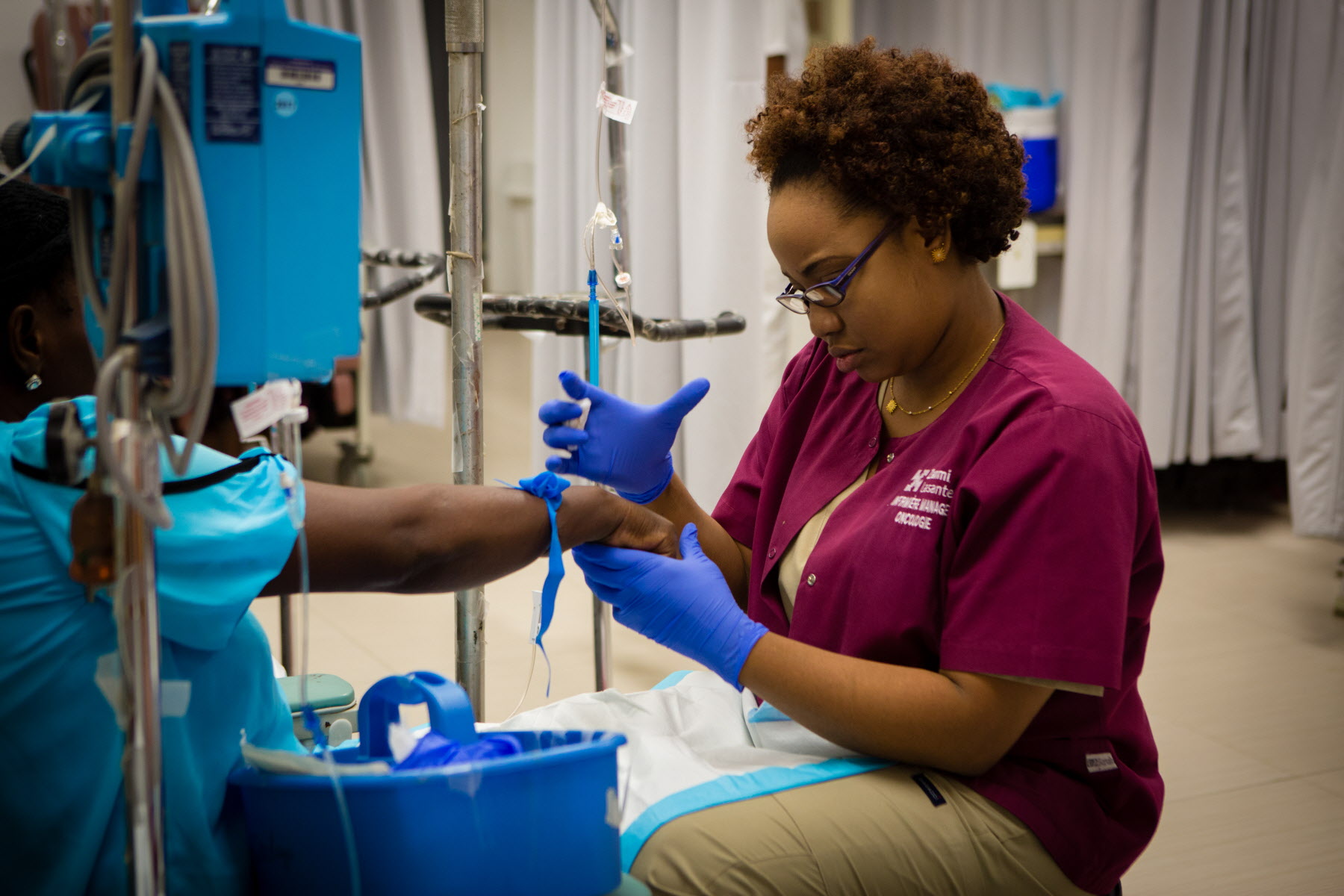
Cancer Care for All
Cancer affects people around the world proportionately, yet access to treatment is disproportionate, as lifesaving chemotherapy and surgeries are often unavailable or inaccessible in poor countries. University Hospital’s oncology department is changing this reality. There, patients from across Haiti receive the diagnoses, specialized care, and psychosocial support they need to survive.
Last year, University Hospital provided cancer treatment to 652 patients, the majority of them women with breast cancer. Cita Cherie* is one such patient: She has been receiving palliative chemotherapy for an advanced stage of breast cancer since the hospital opened. “If it were not for the Mirebalais hospital, I would not be alive today,” Cherie says. “I get all my medication for free, and when I come to the hospital, the doctors take really good care of me. They welcome me and they really value me.”
*Name has been changed at patient’s request.
A Lifesaving Laboratory
The Stephen Robert and Pilar Crespi Robert Regional Reference Laboratory, which PIH opened in 2016 across from University Hospital, has transformed health care for more than 1 million people. The 15,800-square-foot facility contains a clinical lab, a pathology lab, and Biosafety Level 2 and 3 laboratories, allowing staff to quickly and confidently diagnose and monitor infectious diseases and noncommunicable diseases like cancer. Highly trained technicians use advanced tools to improve the quality and timeliness of diagnostic services, meaning more patients receive better care in less time.

Rehab for the Body, Mind, and Spirit
The Center of Excellence in Rehab and Education is the first public facility of its kind in Haiti. Here, patients from all walks of life come for outpatient physical therapy sessions, and a select few remain for extended stays to recover from trauma. They are stroke survivors and amputees, accident victims and people living with various forms of disability. They come for physical transformation, and often leave with a mental and emotional lift as well.
Staff and patients interact in one of the most pleasant spaces on the University Hospital campus. The L-shaped facility fills with natural light and bright tile mosaics decorate the walls, some with Haitian proverbs worked into the design. One, appropriately, says: “Piti pitizwazo fè nich li,” or “Little by little the bird builds its nest.”

A Hub of Activity
University Hospital’s emergency department buzzes with activity. The suite of rooms rarely has an opening in its 16 beds, and two rows of chairs regularly fill with awaiting patients. Renovations are currently underway to expand the space to 36 beds and add on bathroom and shower facilities for patients on longer stays.
There are the typical emergencies, from broken bones and lacerations to heart attacks and motorcycle accidents. But there are just as many patients who come following acute episodes spurred from chronic illnesses, such as diabetes and heart failure.
The emergency department is often the first stop for University Hospital patients, who come from across the country at all times of day. They are greeted by seasoned clinicians and medical residents on rotation through the ward. So far, 16 emergency medicine residents have graduated from the program since its launch in 2013.

A Cut Above the Rest
University Hospital is home to six state-of-the-art operating rooms, tucked away in the heart of the facility. In 2018 alone, surgeons performed 1,666 lifesaving cesarean sections and more than 600 other women's health-related procedures, such as hysterectomies.
The operating theater hosts routine surgeries, such as appendectomies and the removal of tumors. It has also hosted teams of international surgeons who, in collaboration with PIH clinicians, have conducted cleft palate repairs and—most impressive of all—the separation of conjoined twins.
So far, 19 surgical residents have entered University Hospital’s medical education program, six of whom have graduated so far.
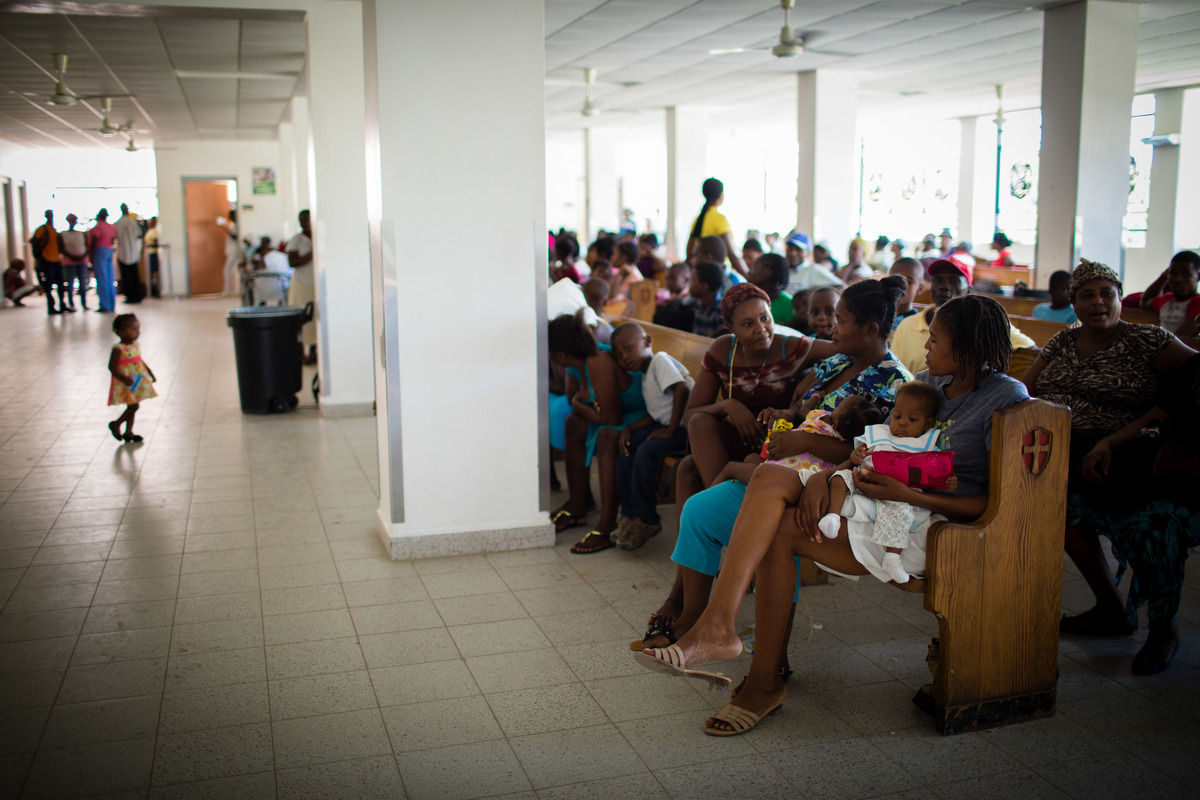
Always a Full House
In the pre-dawn hours, dozens of patients begin arriving at University Hospital’s main entrance to await their turn for high-quality care, at little or no cost. Last year, clinicians conducted nearly 182,290 outpatient visits and admitted close to 4,320 patients, many of whom had traveled hours to be seen by the facility’s top-notch doctors and nurses.
Once patients have registered and had their vitals taken, they sit in one of several waiting rooms for their name to be called. They come for consultations with maternal and mental health, dental services and radiology, oncology and chronic diseases. Those who are admitted may end up in a number of departments, such as labor and delivery, pediatrics, or isolation—should they be diagnosed with an infectious disease, such as multidrug-resistant tuberculosis.
Regardless of why they come, they will receive care within specialties that would otherwise be out of reach for the rural poor across Haiti.

5 things to know about Rodneyse Bichotte

Meet Brooklyn’s new boss.
Assemblywoman Rodneyse Bichotte seems poised to become Brooklyn’s next Democratic county leader – aka party boss – after the current boss, Frank Seddio, who has led the state’s largest local Democratic organization since 2012, announced his abrupt retirement on Monday. The party’s executive committee, made up of the borough’s 42 district leaders, plans to vote to approve Bichotte on Monday.
Here are five things to know about the city’s newest boss.
She’s the establishment pick
Seddio endorsed Bichotte at the same time he announced his retirement, calling her “the one that I believe best serves the party.” She’s on the Brooklyn Dems’ executive committee, and chairs the party’s finance committee. Seddio told City & State that she never asked to be the next leader, but rather he asked her. Seddio’s term wasn’t up until September, so it looks like his early retirement was a way for him to handpick a successor who would be less likely to face a challenge, given the short timeline.
Other Democratic district leaders like Assemblyman and City Councilwoman Charles and Inez Barron have criticized the process and Assemblyman Walter Mosley even considered mounting a challenge, but as of Wednesday, it looked like Bichotte would stand alone for election on Monday.
A history-making choice
If elected, it’s believed that Bichotte, a native Brooklynite of Haitian descent, would be the first black woman to lead a county committee in New York City, and the first woman to lead the Brooklyn Democrats. At 47, Bichotte’s election would represent generational change from the 73-year-old Seddio. It would also represent a shift in political power in the borough, away from so-called white ethics like the Italian-American Seddio and toward the growing Caribbean-American population. The West Indian Day Parade, which fills Eastern Parkway in Crown Heights every Labor Day, is likely Brooklyn’s biggest political event.
She has five college degrees
Growing up in Flatbush, Bichotte studied music at the prestigious Fiorello H. LaGuardia High School of Music & Art and Performing Arts in Manhattan, but she veered away from the arts for her higher education. According to Bichotte’s official biography, she has bachelor’s degrees in electrical engineering and mathematics in secondary education from Buffalo State, a bachelor’s in electrical engineering from University at Buffalo, a master’s in electrical engineering from Illinois Tech and an MBA from Northwestern’s Kellogg School of Management.
Before entering politics, the assemblywoman worked as a math teacher in New York City public schools, an engineer in the telecommunications industry, and an investment banker at Bank of America and JP Morgan. Bichotte challenged the long-serving Assemblywoman Rhoda Jacobs in the 2012 Democratic primary and lost. Jacobs declined to seek re-election for the next term, and Bichotte won the open seat in 2014. She now chairs the Assembly Subcommittee on Oversight of Minority and Women-Owned Business Enterprises.
She’s been wheeling and dealing
Bichotte hasn’t been shy about her political ambitions, running candidates and gaining power in her Flatbush district since soon after she took office. Most recently, Bichotte was a chairwoman of Jumaane Williams’ successful 2019 public advocate campaign, and helped lead City Councilwoman Farah Louis to victory in filling Williams' open seat. While she had to apologize for flippant remarks about the Jewish community in 2015, Bichotte has nurtured a deep political alliance with Orthodox Jewish leaders in Central Brooklyn in recent years, most recently with Louis’ win.
Bichotte is also a close ally of New York City Mayor Bill de Blasio, often writing op-eds in support of him, and was one of the (very) few leaders to endorse him for president last year.
She wields a mean pair of nunchucks
Bichotte has a junior black belt in taekwondo – something she was proud to advertise while pushing to legalize professional mixed martial arts matches in the state in 2016. She studied for six years, she told the New York Post, so “people know not to mess with me.

FLORINDO COMPLETES IMPROBABLE JOURNEY FROM HAITI TO WINTER YOUTH OLYMPICS

BORN IN HAITI, ADOPTED AT AGE THREE AND RAISED IN FRANCE, MACKENSON FLORINDO IS NOT YOUR TYPICAL ALPINE SKI RACER.
Now 17, Florindo has become Haiti’s first winter Olympian at a moment that coincides with the 10-year anniversary of the earthquake that devastated his Caribbean island homeland.
Haiti’s sole competitor at the Lausanne 2020 Winter Youth Olympic Games, Florindo finished 51st out of a 77-man field in Monday’s giant slalom at Les Diablerets and did not finish in Tuesday’s slalom.
But just being able to compete and represent Haiti in Olympic competition was all that mattered for him.
“This is a very good moment, incredible,” he said. “I made some friends. The performance was difficult but I am happy with that. This has been a very exciting and important time for me because I didn’t think I would be here.
“When I came here I knew the competition would be hard and I tried my best,” Florindo added. “I know what I have to do to improve and I will work on it.”

The skier’s adoptive mother, Valerie Florindo, was especially proud.
“He has done well,” she said. “This is very pleasing because I try to always support him as best I can.”
Florindo was born into a Haitian family in the village of Verrettes, about 60km north of the capital, Port-au-Prince, in 2002. Because his family could not afford to feed and raise him properly, his biological mother dropped the boy off at an orphanage in 2005 when he was three years old.
Six months later, he was sent to an orphanage in France. From there he was adopted by the Florindo family and raised in the mountain region near Grenoble.
Florindo has both Haitian and French citizenship, which he only received in June 2019. Hehas yet to return to Haiti since leaving as an orphan.

OIS
“I know I was raised in France but I am Haitian and I am happy to be like that,” he said.
“I have a great family right now so I don’t feel bad really about the whole adoption.”
Florindo, who is coached by his brother Gregory, who is also adopted, works as a mechanic and dedicates most of his monthly salary towards his skiing career.
“My revenue goes mainly to me being in competition and to help buy anything I need for skiing,” he said. “I’m not rich and I get support from people and that is why I can be here right now.’’

OIS
Ahead of his races, Florindo and the Haitian delegation took part in a ceremony marking the 10th anniversary of the massive earthquake that hit Haiti in January 2010.
The quake killed more than 300,000 people, according to the Haitian government, and left many more homeless.
“It was a very sad situation,” Florindo said. “I wish it did not happen but now the country is a little bit better than how it was.”
The Haiti ski federation, which was also formed 10 years ago, said: “Years after the beginning of the incredible story, it will be the second breath of a fabulous human adventure for Haiti following the terrible earthquake of January 12, 2010.”
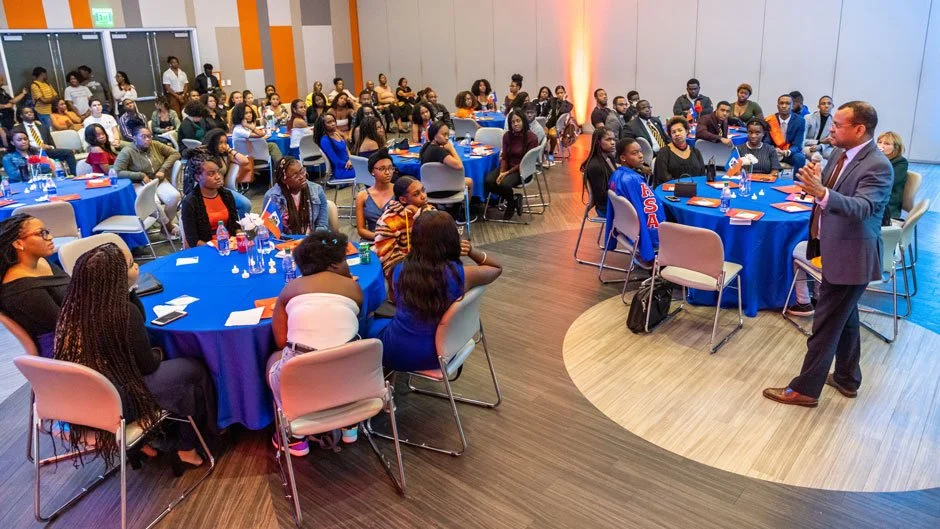
Students honor Haiti earthquake victims
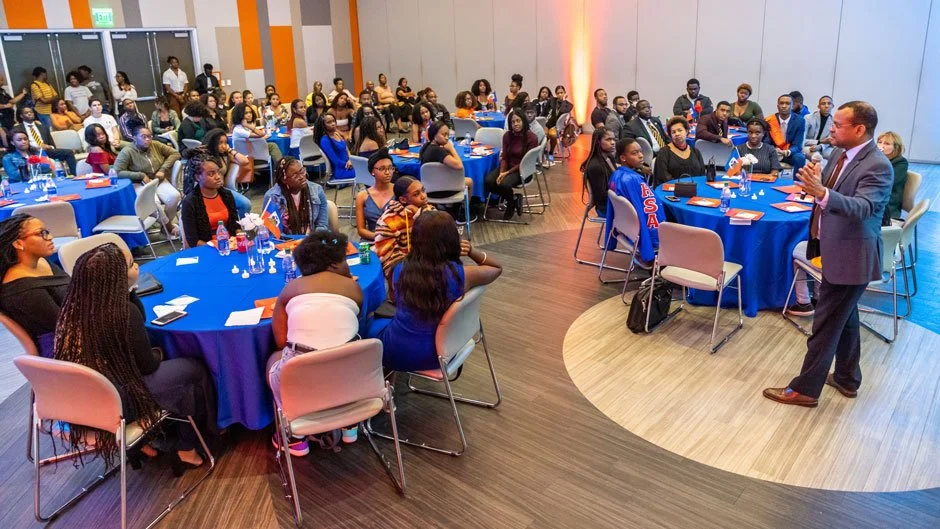
Planet Kreyol and the Office of Multicultural Student Affairs host a remembrance ceremony to salute victims of the 2010 earthquake with songs, poetry, dance, and more.
Ten years ago, a massive earthquake struck Port-au-Prince, Haiti, forever changing the lives of many, including Jordi Polycarpe, a junior at the University of Miami. Her cousin was one of the hundreds of thousands of lives lost in the catastrophic disaster.
“My cousin was just five-years-old,” said Polycarpe, a musicianship, artistry development, and entrepreneurship major. “This time of the year is difficult for my family and I, and it’s just really important to come together and remember the good things.”
On Wednesday, the Haitian student group on campus, Planet Kreyol, hosted 10 Years of Growth, a ceremony commemorating the earthquake and celebrating Haiti’s growth. Students, faculty, staff, and members of the community gathered in the Shalala Student Center ballroom for a program that featured poetic performances, dance selections, and remarks by Patricia A. Whitely, vice president for student affairs, and Louis Herns Marcelin, associate professor in the departments of international studies, anthropology, and public health sciences.
“It kind of feels like an out-of-body experience to be in charge of planning something like this, alongside Sara,” said nursing and psychology major Herveline Saintil, referring to her Planet Kreyol co-president Sara Stjuste. “This is a big deal and it’s an honor to be able to host such an event. It’s something that we do in commemoration and out of respect for those who have fallen.”
Two days before the earthquake destroyed Haiti, Marcelin and three University of Miami students, who called themselves Soley Ini—creole for united suns—were in Haiti for meetings as they prepared to open a youth-to-youth project in Cité Soleil that would provide education programs, cultural activities, and mentoring.
Now a decade later, Haitians are still in turmoil as the country is currently crippled by fuel shortages, scarcity of food, and rising inflation. Marcelin said the island is searching for ways to balance two dynamics that are working against each other.
“Ten years later, the fragility has been compounded, the poverty has been compounded by governance and political issues, an international community has created dependency, and several other disasters have happened in between,” said Marcelin, founder of the Interuniversity Institute for Research and Development. “While at the same time, young people are trying to do what they can and create an environment for their future. Through community-based organizations and social media, they are trying to create hope for the future.”
Despite the country’s history Marcelin still has hope that things will get better. As he wrapped up his keynote speech, he encouraged the youth in the audience to continue supporting research and leadership and to civically engage to help rebuild Haiti.
“You are in a position of power,” he declared. “There are a lot of things that you can do. Think about the leadership you want to see. Your vitality and your knowledge are critical for the future.”