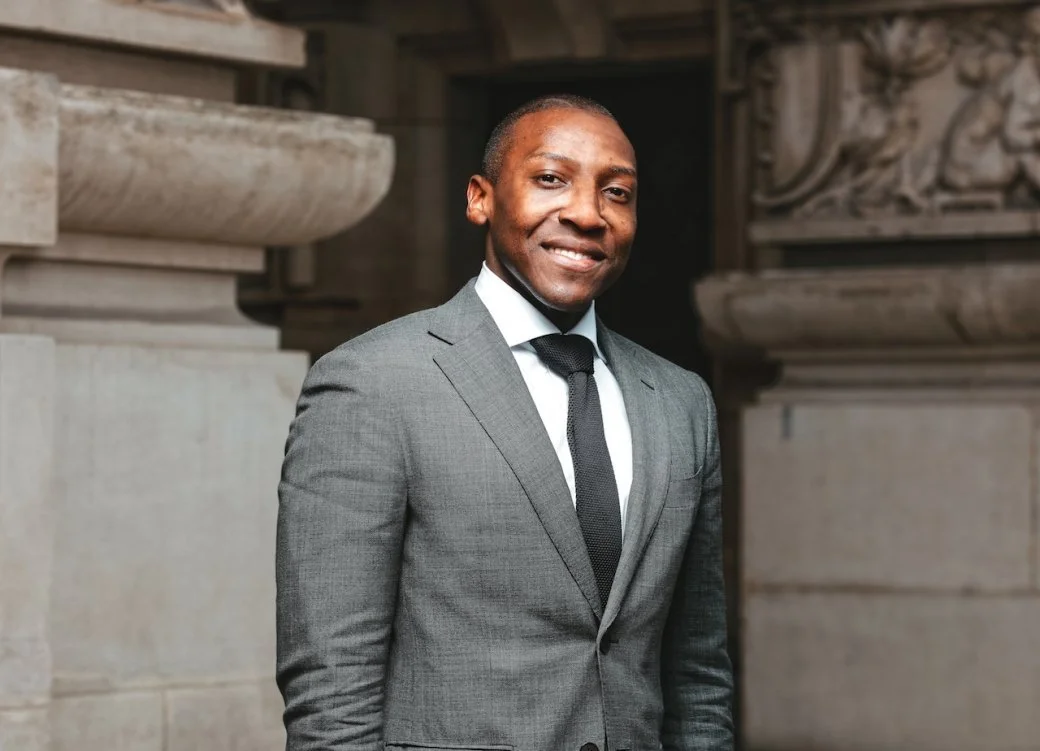
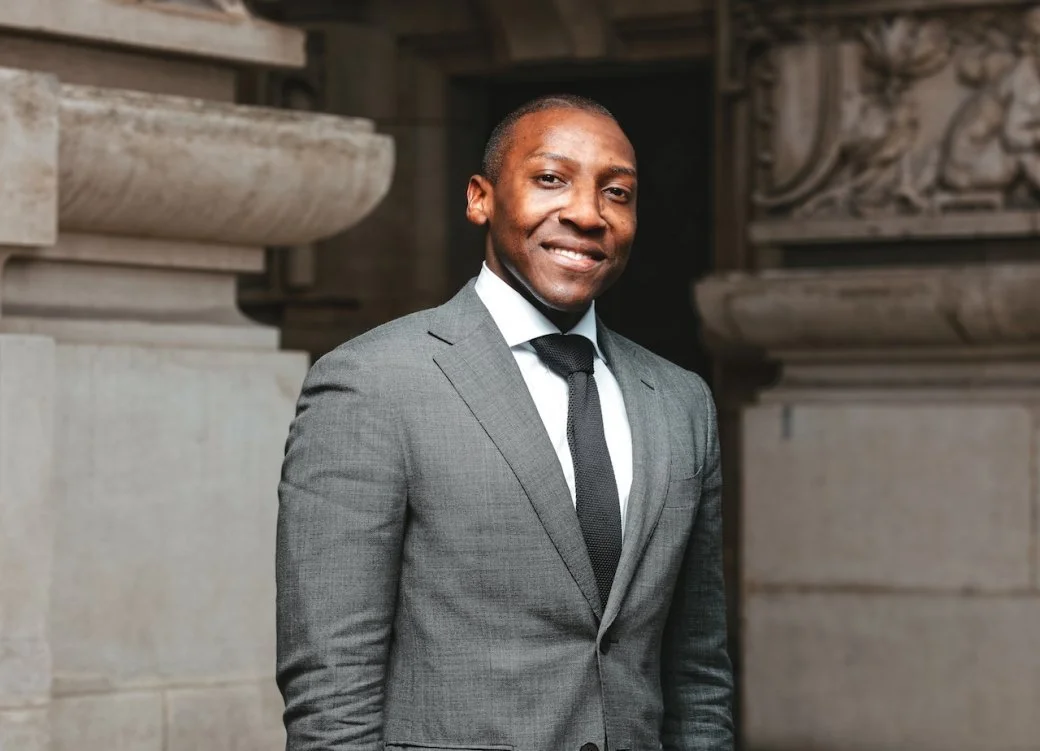
Wesley Laîné MAIPS ’14 has spoken at the Clinton Global Initiative, delivered the graduation speech at the Sciences Po Law School in Paris, and appeared on the front page of the New York Times with his classmates when he participated in Harvard’s first commencement for black graduate students. But if you are to ask him what place or moment in his life matters most, he will always return to his native Haiti.
In the fall of 2012, a student turned a class exercise about a love triangle and alligators into a passionate but playful debate on the morals of intervention and neutrality. The student was Wesley Laîné, and it was his very first day at the Institute; the exercise was a part of new student orientation. Despite the weighty direction of the conversation, the debate never got hostile or contentious, but felt meaningful and open.Laîné lived in Port-au-Prince, Haiti, until he was 12 years old and his family moved to Oklahoma City. His father, a minister who had put himself through law school in the evenings, had deep ties in the community, and the family decision to leave was not an easy one. “He bet on us,” Laîné says. “Like most parents in Haiti, my parents dreamed their kids would have it better than they did.” He says that his family had “crawled” its way to the middle class by the time they left, but violence was increasing, and going to school was a daily struggle, if there was school at all, because of frequent strikes. In many ways, he says, it was the typical immigrant story once they got to the United States: his dad worked lots of odd jobs to make ends meet and made ambitious plans for the children to get quality educations and make better lives for themselves. “My dad worked so much I used to hide his shoes so he wouldn’t have to go.”
Like most parents in Haiti, my parents dreamed their kids would have it better than they did.
Returning to Haiti after the devastating earthquake in 2010, Laîné worked there for two years before enrolling at the Institute. His foundation, Haiti Philanthropy, became heavily involved with clean water projects in the Southeast Department of Haiti as a response to the outbreak of cholera brought by UN peacekeepers from Nepal. The foundation has expanded to include a rainwater harvesting reservoir and projects to help women and children. Last summer he visited many villages where the foundation serves beneficiaries and spent time “bearing witness to the daily struggles.” He adds: “Anyone who aspires to political work has to be aware of what life is really like. It is so easy to get out of touch with what is happening on the ground.”He credits his love of history, politics, and historical figures such as James Baldwin for inspiring him to go to Paris through Middlebury Schools Abroad while he was a student at the Institute. Like the author, he felt the City of Light offered him the chance to “just be a person, anonymous. There is a degree of liberation in anonymity that I craved during this part of my journey.” In the U.S. most of the time, he says, the daily injustices that American society levies on black citizens does not allow for that. “The U.S. is also my home, and I love it, which is why I have strong feelings about the current state of American society. The sad fact is that many of the things Baldwin talked about are still true today.” He particularly hates when people use him as an example in order to turn a blind eye to the systemic injustice that exists today. “In many ways, I am the exception. I feel very fortunate. America’s promises are not available to everyone. If two or three things had gone differently, I would not be here. Many of my friends are stalked by the justice system.”
The U.S. is also my home, and I love it, which is why I have strong feelings about the current state of American society.
Laine lives in Paris now, where he is a lawyer with a top firm. The distance between his home and Oklahoma City, where his family still lives, can seem great, both literally (4,820 miles) and figuratively, the distance traveled reflected in his achievements. Laîné earned two law degrees; his classmates at Sciences Po elected him to give the commencement address, and he was part of the inaugural black commencement at Harvard.“It was truly an affirmation of everything we and our families had gone through to help us get there.” He feels strongly that the only way forward is to face the past.He says that every action, degree, career choice he takes is to lay the groundwork for a political career in Haiti, where he wants to shepherd transformative change for the impoverished country. All of the character traits that served him well that first day at the Institute—a quick wit, nimble intellect, and warm demeanor—are sure to be an asset to him as a politician promoting progress. “Like all Haitian parents, mine are strict and hard to please,” Laîné says with a chuckle, “but this visit my dad told me that I would probably accomplish what I want to do in Haiti.”
Two physicians who practice at Community Hospital in Grand Junction expect to join in a medical mission to Haiti.
Drs. Adam Baker and Katie McKee-Cole plan to travel to Haiti April 28 to May 5 to join a team from Thomas Jefferson University in performing free surgeries. The program is sponsored and coordinated by Chance, a not-for-profit organization that works to improve lives.
“We are incredibly honored to participate in this important mission trip to Haiti,” Baker said. “My first mission to Haiti was at St. Luc hospital in Port Au Prince in 2015. We traveled to Haiti as part of a pilot mission, and the Chance program has been very busy since then. I am very much looking forward to returning to help those in need.”
Drs. Baker and McKee-Cole both provide ears, nose and throat services. Baker specializes in facial plastic surgery and reconstruction, while McKee-Cole specializes in pediatric otolaryngology. For more information, call 644-3800 or log on to www.yourcommunityhospital.com/ENT.
Charitable aid solves immediate problems, but long-term recovery needs to address root problems, too.
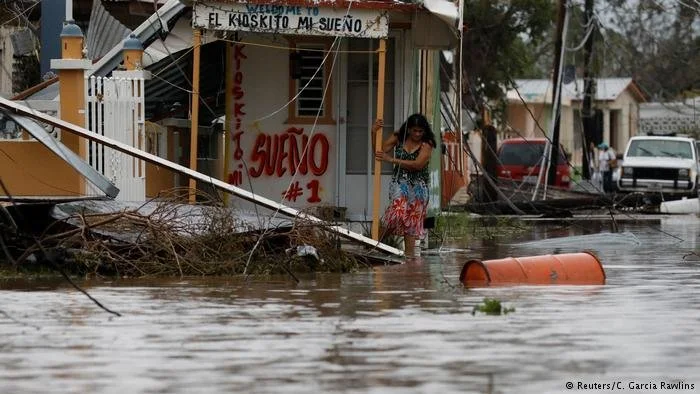
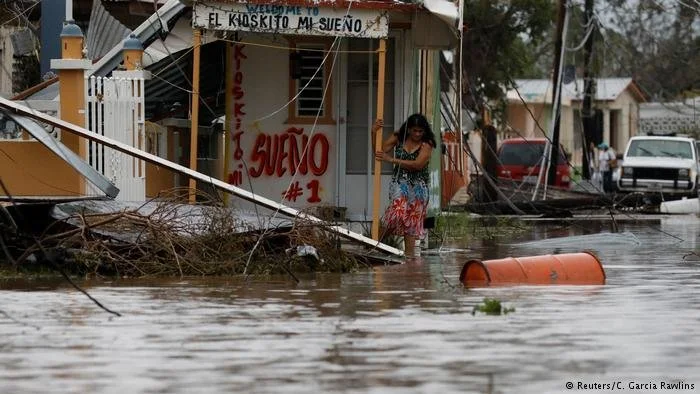
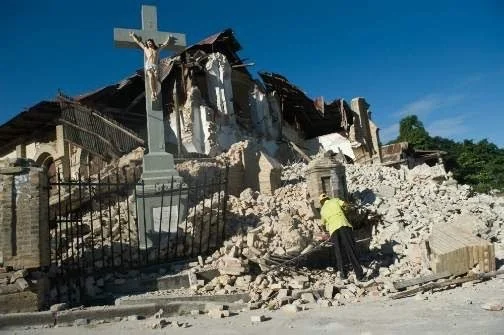
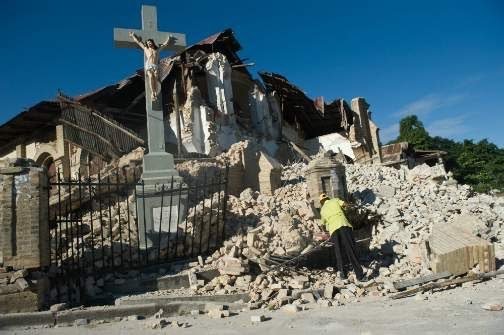
When an earthquake shattered the capital of Haiti in 2010, they learned the hard way that charity is a great tool for disaster relief but an often very poor one for rebuilding countries. After seven years and over $3 billion dollars in charitable aid deployed, post-earthquake Haiti has come to serve as the standard for what not to do in disaster relief. In the wake of the hurricanes that devastated Puerto Rico, St. Thomas and other islands, Haiti offers critical lessons about how to rebuild the region in a sustainable way.
Finance has largely been a destructive force in the Caribbean — especially in the case of Puerto Rico. But ironically, finance may also have just the right elements that can enable the island to rebuild in a way that doesn’t just recreate the same level of inequality and fossil fuel dependency present before the hurricane.
When it comes to rebuilding a country, not all resources are created equal. Charity and donations can help in the short-term, but harm the economy over the long-term. Private capital can help local businesses get back on their feet, but also perpetuate entrenched inequality. Rebuilding efforts can seem beneficial, but end up going to waste when they don’t account for the needs of communities. Finance and private capital can play a huge role in rebuilding Puerto Rico, but we must draw key lessons from what went wrong in Haiti to ensure that this time, we get it right.
Charity solves immediate problems, but not root problems. In the case of Puerto Rico, it’s easy to point to the hurricane as an “act of God” and look to aid to try to return to “business as usual.” But business as usual was not working so well in Puerto Rico long before the storm hit. As The Atlantic reported, 65 percent of Puerto Rico’s electricity grid was down this summer, with hundreds of millions in deferred maintenance, far before Hurricane Maria accelerated its permanent demise. The main problem here isn’t natural disasters, it’s that extractive finance has become the norm, and communities get left behind. Rather than making investments that build community wealth and renewable infrastructure, finance favors the quick and easy options that provide quick money but don’t fuel long-term development. Charity can rebuild torn-down bridges, but it’s not enough to rebuild a full economy — especially one that is based on an extractive financial model.
Aid is external, but recovery is local. After the disaster settled and Haiti started to find a new normal, the prevalence of imported food items sustained the decline of the local economy. Donated clothes, materials, food and medical supplies — all sent with good intentions by charitable organizations — inundated the country, and local vendors, both micro and commercial, could not compete. Even donated services, such as volunteer doctors, shifted the balance and eventually made it very hard for local doctors to get jobs in hospitals. Why hire the local doctor when the foreign doctors work for free?
If Puerto Rico can learn anything from Haiti, it would be to take ownership of their own recovery and get local businesses back on their feet. So far, some communities have mobilized to support each other and are leading relief efforts by coordinating efforts and mapping needs. Now businesses need help re-opening their doors and finance can help fill this gap in more ways than one. Small local businesses need some small working capital to get moving again, and private investment can play a critical role here. Larger businesses with track records and histories can be supported in rational, non-extractive ways.
Let’s get the charitable dollars flowing to address immediate needs in Puerto Rico — and then invest in a more sustainable future. Just as private citizens are stepping in to address the lack of charitable action from the U.S. government to its own people, private capital can do the same. But rather than cementing the extractive practices of the past, we can invest in the creation of a more sustainable future. Puerto Rico’s power grid was in shambles before the storm; while short-term repairs are crucial in order to restore power to citizens, this is an opportunity to invest in the creation of a renewable energy infrastructure similar to states like Hawaii. Rather than further the expansion of U.S. mainland chains that pay low wages with minimum benefits, investors can support local businesses that focus on quality job creation and expanding local ownership. Let’s not rebuild the old economy — let’s start investing in the new economy; one that is sustainable, generative and just.
Finally, the guiding principle of any effort to rebuild Puerto Rico must acknowledge that even in a disaster, communities know what’s best for them. In the case of Haiti, the level of disaster relief was truly phenomenal, but disaster relief is not meant to be long term. Billions of dollars were pledged for projects that were designed in the top-down fashion that excluded the voices of affected communities. For instance, close to $100 million was spent in Haiti on the construction of ghost-like towns in the middle of nowhere, filled with charming little houses, on charming little streets without schools, marketplaces, hospitals, or a police station. If donors had asked the communities what they wanted, they might have focused on much more comprehensive community development and spent these dollars more wisely. As the saying goes, “nothing about us without us.”
We missed this opportunity in Haiti — let’s not miss it in Puerto Rico.
LOS ANGELES, United States (AFP) — Haiti is still reeling from the 2010 earthquake that killed more than 220,000 people, but from the debris of its devastated towns, a nascent film industry has begun to emerge.
At its forefront is Guetty Felin, whose "Ayiti Mon Amour," a portrait of a post-quake nation mourning its dead, was recently announced as the Caribbean country's first ever entry for the foreign film category at the Oscars.Haitian-born Felin, who journeyed to Port-au-Prince on a relief airplane 10 days after the disaster, recalls the scenes that met her as she landed, images that have stayed with her as she has pursued a career in filmmaking."I had never smelled death before, corpses everywhere. I was just like, 'What is this stench?' All throughout the city, it was just devastating," she told AFP.Laying waste to most of the Caribbean nation's schools, hospitals and infrastructure, the magnitude 7.0 quake injured some 300,000 people and left another 1.5 million homeless in what was already the poorest nation in the Americas.Seven years on, "Ayiti Mon Amour" marks not only the emergence of a distinct new voice in Haitian filmmaking but a milestone in the country's cultural recovery, as the first ever locally-shot narrative feature directed by a woman.Tapping into her past work in documentary, Felin infuses the realities of modern-day Haiti — the power and water shortages, the looming threat of climate change — with a lyricism that plays up its mystical side.
Set in Kabic, a small southeast fishing village where the sea is gaining ground thanks to climate change, Felin's camera shows life moving on, five years after the earthquake.A teenager grieving his father discovers he has developed a literally electrifying superpower while an old fisherman who talks to his cow thinks the cure for his ailing wife can be found only in the sea.Elsewhere, the beautiful, mysterious muse of a struggling novelist and the main character in his book, becomes restless and decides to leave him and pursue her own life.Born in Port-au-Prince, Felin divided her childhood and adolescence between New York and Haiti, although she came of age artistically in Paris, where she studied for a graduate degree in film and ended up staying 20 years.Felin fell in love with cinema at the drive-ins of Port-au-Prince, her escape during the brutal dictatorship of Francois "Papa Doc" Duvalier, who was followed by his despotic son Jean-Claude, or "Baby Doc.""I grew up in this space knowing that the dictatorship existed, but at the time it was a space of joy," she said, recalling her childhood home as a place of music and parties."There were moments where you were totally afraid someone might get taken away. So the fragility of life — that dance that my parents had to do all the time — totally inspired me.""Ayiti Mon Amour" — which is looking for a US distributor — stars just one professional actor, while the rest of the cast and much of the crew were culled from the local community and Felin's own family.Her French husband, veteran cinematographer Herve Cohen, was in charge of filming and her oldest son Yeelen acted as her assistant, while his girlfriend performed second camera duties.The real star of the movie, though, is Felin's youngest son, Joakim Ethan Cohen, a 17-year-old beginner at the time of the shoot who has won acclaim for an accomplished debut performance."He knew that what he was doing meant a lot to me. It was like his gift to me," said Felin."I directed him but it was so easy — every take was really good — and I think he knew the story inside out."Haiti's film industry was already struggling before the earthquake. Its last picture house closed the year before amid rampant film piracy, and no movies were publicly screened anywhere for five years after that."It's hard to make films in a place like Haiti because there's always something that happens that's prioritized, whether its political instability or there's a disaster or something like that," Felin said."Filmmaking is really not a priority for the Haitian people.""Ayiti Mon Amour" was born out of the rubble of buildings levelled by the quake but Felin, who lost a close friend and says she feels "survivor's guilt," didn't want her movie to be just about grief."I kind of like to say that it's a love letter to this place, because it's a place at the same time that frustrates me, haunts me and angers me," the director said."But I'm deeply, deeply passionate about it."By: JamaicaObserver.com | November 1, 2017
ATLANTA, Georgia, USA (sentinel.ht) – On Tuesday, Major League Soccor club, Atlanta United, brought in the Haitian Orphan Choir to sing the national anthem. They are a group that was born out of the tragedy that was the 2010 7.3 magnitude earthquake that rocked Port-au-Prince, Haiti. Every member of the choir lost their parents in that disaster.Atlanta United writes in a post:
One by one, they showed up to the Paul family household, and they were taken in. Their orphanage possessed next to nothing: several kids to every bed, limited room and supplies and intermittent power and water. But they loved to sing together, and soon it became a hobby and a talent. Now they’ve used that talent to make a difference.With Atlanta-based nonprofit “Love Him Love Them” as their hub in the United States, they’ve also taken their talents on the road. Last summer, the Haitian Orphan Choir raised enough money through singing appearances and performances to completely revamp the local orphanage. They’ve installed solar panels to guarantee electricity and now have running water. Every kid has their own bunkbed and storage locker for clothes. They’ve learnd trades – like how to become bakers and sewers and have learned how to make concrete blocks. They use those blocks for construction of their own but also to sell and boost the local Haitian economy.After returning to Haiti for the school year, they went back on tour this summer, with gospel star Kirk Franklin in front of 85,000 people in Haiti. Their performance at Tuesday’s Atlanta United game was their final appearance of the summer, as they try to raise money to build a small medical facility in their town. Meanwhile five of the students will stay in Georgia to attend Barnes Academy in Hartwell, learning as much as they can to go back and help their hometown.
Ryan Catanese who wrote about the choir’s performance provided a link for information to support the Haitian Orphan Choir. He writes, “there are many different levels in which you can contribute. From clothes to plane tickets, giving a little or a lot will go a long way.”—By: Haiti Sentinel | October 6, 2017
North Shore Medical Center donated 30 hospital beds to Project St. Anne, part of a Clinic of Camp-Perrin located in Haiti. Project St. Anne is a non-profit that was founded by a group of women in 2008. The goal of the organization is to help the less fortunate. The 30 beds are going to be used by patients at the local hospital. “Receiving medical care in a comfortable environment can help speed up the healing process,” said Manny Linares, Chief Executive Officer of North Shore Medical Center. “The donation of these beds is part of our commitment to helping those who have been affected by hurricanes and other natural disasters and are in need of medical supplies.”By: Community News | October 4, 2017
Each week in southern Haiti, Lucamène Chéry puts on her uniform and stocks her market stall with local vegetables. Shoppers filter past, selecting products for their families. In exchange for the produce, Chéry accepts a unique form for payment—food vouchers—which allows the most vulnerable members of the community to access nutritious foods that they would otherwise be unable to afford.Haiti is the poorest country in the Western Hemisphere and half the country’s population lives on less than $1.25 per day. Heavily dependent on food imports, Haiti remains extremely vulnerable to price spikes in the global food market.The country also remains particularly susceptible to natural disasters, including Hurricane Matthew, which hit in October 2016 and continues to drive elevated levels of food insecurity in the worst-affected communities.Since 2013, USAID has collaborated with the Government of Haiti and CARE to establish a safety net system that boosts household food security, reduces child malnutrition and fosters greater household resilience to shocks. The most vulnerable families in five of Haiti’s 10 departments receive food vouchers, which are redeemable for local foods from vendors like Chéry. The vendors then trade in the vouchers for cash.Chéry is part of a network of nearly 1000 Haitian food vendors who supply local agricultural products—such as fruits, vegetables and tubers—to chronically food-insecure families participating in a USAID-supported program.A mother of five, Chéry previously struggled to afford enough food for her family. Now, with a dedicated customer base in the program, Chéry earns a significantly higher income that allows her to support her family while also investing in her children’s future and expanding her business."I’m able to pay the school enrollment fees for my children without difficulty, and I also raise chickens, turkeys, goats and cows," she says.Chéry also belongs to one of the program’s 1,200 community-led village savings groups. These groups provide more than 35,800 program participants—including more than 26,300 women—financial training as well as access to small loans that can be used to improve their businesses.The increase in business has encouraged Chéry’s husband to become more involved in their food vending business. "Now, he accompanies me when I go buy merchandise and he helps me sell it at the market," says Chéry.Each month, the voucher program provides more than 18,150 food-insecure households with access to healthy foods that they might otherwise be unable to afford. Community-managed programs that distribute information on health, hygiene and nutrition complement the vouchers for food.By relying on local vendors selling local products, the program strengthens markets, encourages the development of the country’s private agricultural sector and fortifies community resilience to shocks.By: USAID | September 26, 2017
Ten campuses in New York's public university system are part of a project to establish a sustainable village and learning community in Haiti.The State University of New York said Monday the campuses will work with five not-for-profit organizations under an $800,000 grant from the W.K. Kellogg Foundation.SUNY says the goal is to develop educational, economic and social programs, resources and other needed services on 40 acres (16 hectares) of land donated by a Nassau Community College professor emeritus. Each campus will bring a specific expertise, such as public administration, public health and performing arts.The University at Buffalo, which will contribute social work expertise, says the project also will provide hands-on training and education for SUNY students.By: Associated Press| September 26, 2017
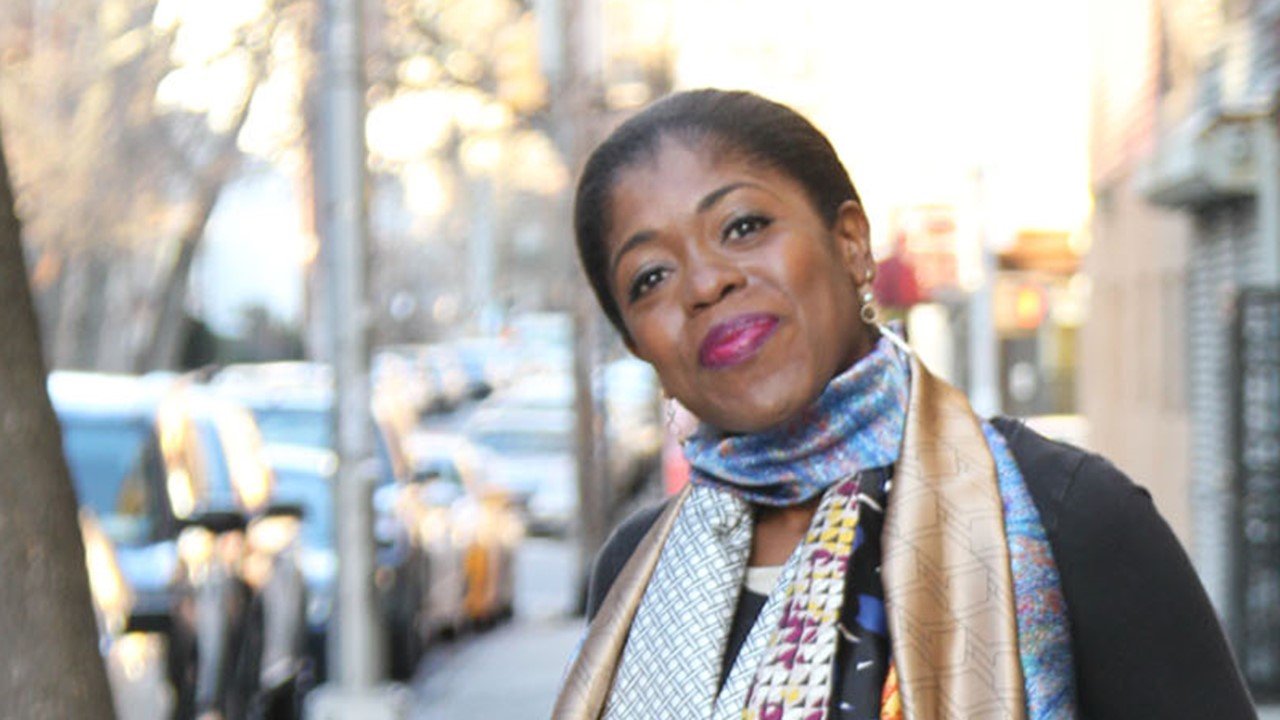
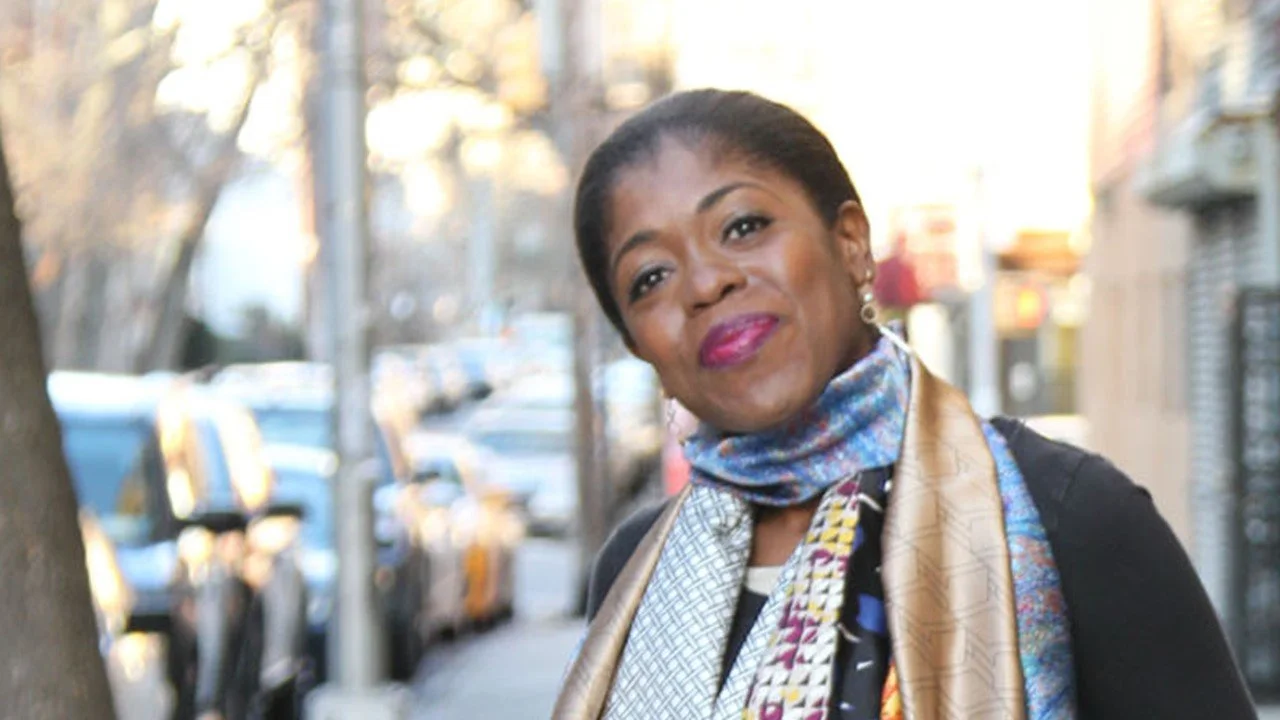
This Boston Born-New York bred Designer and philanthropist is making waves in the fashion industry as she continues to cement her legacy while giving back to her beloved Ayiti. After twenty years spent working in fashion, from designer to retailer, she left one of the top design companies to branch out on her own. Ms. Dayanne Danier is the CEO of Bien Abye (french for Well Dressed), the ready- to- wear women’s brand. Ms. Danier is also the Co-Founder of Fleur de Vie, the non-profit helping to educate young Haitian students in various parts of the country.The Bien Abye brand personifies a simple philosophy: to make women look fabulous at all times effortlessly in S7VEN. Most recently, Ms. Danier hosted a pop-up shop for her brand in New York and Washington D.C. titled, “Les Jardins de la Mode” where she featured her pieces for the world and allowed people to experience the creole essence of the brand. The pop up shop also featured other emerging Haitian brands. The Bien Abye line has been showcased in fashion shows in Boston, New York, Washington D.C., Atlanta, Miami, and Haiti. It is distributed nationwide in retail stores in New York, Boston, Pittsburgh, and Dallas. Items can also be purchased online through the company website.On September 23, 2017, to consistently fulfill the mission of her non-profit, Ms. Danier journeyed to Haiti to host the Fleur de Vie Back to School Recreational Program; the organization’s flagship event. There, she will be distributing school supplies to students while also building health awareness and hosting team building activities. The vision is to support schools through funding school-wide programs like the flagship event, training teachers, and focusing raising the literacy of the population. This partnership has now expanded to four institutions in Haiti. The organization has touched the lives of 1,000 students to date. Ms. Dayanne Danier is a Haitian-American woman on a mission to build an empire while keeping Haiti in her mind and on her heart. Her love for Haiti is evident in all her endeavors.Haitiville: What motivates you?Dayanne Danier: What motivates me is the concept of legacy and having a positive and strong legacy. A spinoff of the concept was engrained in me since I was young whenever my father would tell me, “don’t let people talk [bad] about you”. It reminds me to think about what people would say about me if I were to die tomorrow. I strive to be a unique individual who creates amazing things and brings change. I am a Virgo with a Gemini blood stream because I want to wear two different hats. I love design and I also love to give back to effect positive change.Haitiville: How has the Haitian culture influenced your work?Dayanne Danier: As a designer, the whole essence of Bien Abye is Haitian and Creole centered. I always think about how I look, how my clients look, which is such a Haitian thought. How you present yourself is such a universal concept, but it is also a very Haitian concept.As an artist, the gingerbread architecture is what inspires the motifs and prints I use on my line. The Haitian Gingerbread home, a style of architecture predominant in old Haiti, is a sign of strength and prominence. Gingerbread homes are designed with natural elements yet are decorated in such an ornate way. I take that, and whenever I am designing something, I think, “what element of this piece is like a Gingerbread home”. Haitian culture influences Bien Abye a lot.My culture also influences my philanthropy. Growing up, my family was constantly giving back. My parents were very influential in helping complete cities in Haiti move to America. I always heard the term “commission” which was always about sending things to Haiti. I kept hearing the term so much ever since I was a child that I knew I wanted to give back. In a way, Fleur de Vie is an ode to my parents, my family and an ode to my culture. Fleur de Vie is my commission to Haiti.Haitiville: You use such bright color schemes and palettes. Would you say that’s a Haitian influence?Dayanne Danier: Something that I have been drawn to even in high school was colors. That sense of color is so strong in me. I would say yes, that the color I use stems from my Caribbean roots. The colors that you find on Bien Abye clothes are colors that you find on the islands. Now, I have made it that Bien Abye is so inspired by my creole and Haitian roots that I can be in any place in Haiti and it will influence my line. It does not have to be the typical bright tropical colors, but it can even be just the colors of the landscape. For example, my journey to Hinche one time involved a drive through Mon Cabrit. I loved going there because even the color of the ground was a very gorgeous edible terracotta orange/red. That experience led me to create a collection called “The Earth” where all the shades were very earthy greens, browns, burnt orange, and reds. I really try to bring people into Haiti. Bien Abye ultimately is my culture. I am presenting it to Haitians and non-Haitians and I want people to know that you don’t have to be Haitian to appreciate the concept of Bien Abye, to love the concept of Bien Abye, or to want to buy into the concept of Bien Abye because it is just really rich and captivating.Haitiville: Speaking of Fleur De Vie, what is the goal of your non-profit organization?Dayanne Danier: Giving back was important to me, I just didn’t know how or in what capacity.Growing up Oprah was my role model. Fast forward to 2002, when Oprah went to Africa for Christmas where she aired the Oprah show of bringing gifts to African children. Seeing what she did made me feel like that was something that Haiti needed, and I wanted to do that for Haiti. What started off as adopting kids in Haiti, sponsoring children for $120 a month, seemed insufficient once the earthquake of 2010 struck. I did not have Oprah money, but I began by organizing a few activities with Jenny Batista, the co-founder of Fleur de Vie when I took a trip to Haiti after the earthquake. That was the jumping point because on the last day, I asked the kids what they wanted to be when they grow up and these 9 to 14-year-old kids stared at me blankly with no answer. They needed role models. I felt that reaching the children through education and schools had the potential to make a lasting impact. I want the children of the schools to feel like someone is constantly there, and that someone outside of their parents or family members constantly cares.Haitiville: What does growing up Haitian mean to you?Dayanne Danier: I appreciate it more now as an adult than I did as a kid. I always remember that I come from the two best countries in the world. Being Haitian means that I come from the blood of slave liberators. I come from not the 2nd, nor the 3rd independent free black nation, not even 1960, but 1804, you know! That’s my culture and that means so much to me! That is a feeling I have always had. And I don’t care what Haiti looks like. I will always be so proud.Haitiville: You have quoted “Fashion is an art, and you are the canvas” As a designer, does this feed the need to the create?Dayanne Danier: Well I am grateful for this question because I do believe that. Fashion is my art, the human body is the canvas, and my medium is fabric, beading, and thread. For Bien Abye, when I think about my garments, I think, “what can you do to a garment that makes it so striking that when she walks into a room, the best way to describe her is captivating.” I recognize that fashion enters the room before you open your lips, so you got ‘a look good! Most of the time, it isn’t the hair or makeup, but rather the clothing that makes someone look captivating- and that is an art. Beyond being captivating, I want it to last. I want my clothes to be timeless, endless, and season-less. That is where architecture comes into play. I design them based on architecture that is timeless, and when you pull out that skirt years after it hit my line, it will still be viewed as captivating. I want a woman wearing one of my pieces to walk into a room, and people look at her and say, “Wow! femme sa Bien Abye [emphasis added] (meaning Wow! That lady is well dressed)”.Haitiville: What is the inspiration behind the Reassemble motif?Dayanne Danier: I had just left my last job at PVH and I wanted to start creating a more positive image of Haiti after the earthquake. To support this project, I knew I wanted to work with a Haitian artist and create a print. I met Patricia Brintle, who I thought was an artist agent. I stated my hopes to her about collaborating with a Haitian artist and she remarked, “I am one”. Then I asked if she had a signature motif, and Ms. Brintle replied that she had a collection called “seasons” that featured Haitian women with their heads wrapped with different fruits and vegetables. I told her to make something that resembled her signature piece because I wanted people to know it was a Patricia Brintle. She brought three sketches and the one I fell in love with was the one that is now a key piece on my line.Haitiville: Where do you see yourself in five years?Dayanne Danier: Well, in five years I want there to be the beginning pillars to the Dayanne Danier empire. I want there to be a showroom in New York City that has employees and is functioning consistently and offering amazing clothing. I want there to be an Atelier in Haiti that is making these amazingly constructed clothes. I want to create a pyramid where it gives back, creates jobs, and does good. I want Bien Abye to give back to the community by giving back to Fleur de Vie. I want the kids of Fleur de Vie to be flourishing because their parents are working for Bien Abye. I want to be able to know that tomorrow if I die, that these kids of Fleur de Vie will receive an education because their parents work for Bien Abye.Currently Haiti is the t-shirt capital of the Caribbean. But I want there to be more to Haiti and Haitian stitchers then t-shirts. I want to bring back les petite main (master sewers in a work room who hand craft high end items), and have Ateliers (fashion work rooms). I want to bring back the notion of seamstresses and making fine garments. I like to work with Haitian artisans. While factories are good because they put the masses to work, I envision better for Haitians; a large portion of whom are employed in clothing factories. Bien Abye will be at the center of bringing that vision of mine to life.Haitiville was so glad to have this conversation with a true visionary. Ms. Dayanne Danier’s legacy will undoubtedly be one of making beautiful elegant art and also of selflessly giving to our home country. We know we will see this spotlight again. Stay tuned to Haitiville to see follow up pictures from the Fleur de Vie Back to School Recreational Program.
Canadian couple has been caring for girl since shortly after mother’s death in 2009
Vaden Earle first met Mari-Thérèse Pierre, a Haitian refugee, in the Dominican Republic in 2005 when he was on a humanitarian mission with a youth group he founded in Canada.The Hamilton man would see the woman with her newborn child, Widlene, scavenging for food around a giant dump site near Puerto Plata and would often chat with her.One day in 2009, the mother and girl disappeared, and he learned that Pierre had died and the child was sent back to Haiti to live with a relative. Worried about the well-being of the girl, Earle and his wife set out to find her. They eventually tracked her down in Haiti and have been her primary care providers ever since.Eight years after Earle and his wife initiated Widlene's adoption — and after a series of mishaps — the now 12-year-old is stranded and stateless in the Dominican Republic, waiting to come to Canada with her adoptive parents. To do that, the couple is asking for co-operation from immigration officials."It has been a nightmare in a perfect storm. It's just unbelievable," said Earle, 42, who moved to the Caribbean country in 2009 to look after Widlene full-time, while his wife, Christl, travels monthly from Toronto to see her family.Earle, who quit his position as CEO of the youth group Live Different and now runs a car rental business and café in Puerto Plata, said he and his wife were drawn to Widlene partly by their belief in empowering youth for social change."Widlene just finished Grade 6 (at a private school). She is an avid soccer player and loves watching hockey. She is a big Edmonton Oilers fan," said Earle. "She wants to become a pediatrician and work in developing countries."It's a future that would not have been imaginable when Earle first found Widlene in Gonaïves, in northern Haiti, where she was on the verge of being sold as a child domestic worker in 2009.He and his wife, who have no children of their own, applied to Haitian authorities for Widlene's guardianship in order to bring the girl home to formalize the adoption in Canada. They completed a government assessment in Ontario of their skills and talents as potential parents.Then the 7.0-magnitude earthquake struck Port-au-Prince in January 2010, causing widespread devastation — and destroying all the documents necessary for Widlene's adoption, including proof of her mother's death and the signed consent of her biological father, whose whereabouts are still unknown.The couple then attempted to carry out the adoption in Haiti, but in 2013, the Haitian government suddenly put a moratorium on international adoptions.In 2015 the family encountered yet another hurdle when a new law was enacted that revoked Haitian citizenship for anyone born outside Haiti, even to Haitian parents.Earle said Widlene subsequently had her Haitian passport and citizenship stripped, and became stateless in the Dominican Republic, because that country does not grant citizenship by birth on its soil."As a Haitian, she is living in a country where Haitians are not welcomed and are targets for exploitation, racism and deportation," said Earle. "As a Dominican-born child, Haiti refuses to recognize her as a citizen. Today, we, as Canadian citizens, are effectively exiled from Canada by virtue of our decision to save the life of a child."Being stateless, Widlene does not have a valid travel document.The family's Toronto lawyer, Chantal Desloges, has asked immigration officials to issue a temporary resident permit to let Widlene into Canada so the couple can complete the adoption — and the immigration process — in this country.Immigration officials have yet to decide on the matter. They say they've been responding to correspondence from Earle since September 2016."We understand the rules are there, but this is a humanitarian case. We need the exceptional discretion applied in this case," said Desloges, adding that the permit, unlike a tourist visa, is designed for the entry of an otherwise inadmissible foreigner because of "compelling needs."Toronto StarBy Nicholas Keung | August 21, 2017
WASHINGTON—The U.S. Conference of Catholic Bishops' (USCCB) Subcommittee on the Church in Latin America awarded nearly $4 million in funding in the form of 244 grants to support the pastoral work of the Church in Latin America and the Caribbean, and nearly $2 million in funding for continued reconstruction in Haiti after the 2010 earthquake. The grants were approved at the Subcommittee's meeting on June 12 in Indianapolis, Indiana.Projects that received funding include:Argentina, GRAVIDA—Centro de Asistencia a la Vida Naciente: This network of diocesan centers in Argentina works to promote, care for, and defend life from the moment of conception and promotes the dignity of parenting. These centers are located in 21 dioceses across the country and care for pregnant women at risk of having an abortion as well as with men to help them understand the value of fatherhood. The centers provide education and formation about the dignity of human life and conduct solidarity and awareness campaigns.Haiti, Catechetical Formation: This project will provide formation for 400 pastoral agents from four parishes that were impacted by Hurricane Matthew. The formation will be centered around the theme of the Christian family, and will take place over the course of three days. Seminars, workshops and group discussions will be facilitated, along with opportunities for prayer and daily Mass.In addition, the first grant to help rebuild churches on the western part of Haiti after Hurricane Matthew was approved. More of these requests will be considered at future meetings of the Subcommittee."I am continually inspired by all of those who support the Collection for the Church in Latin America," said Bishop Eusebio Elizondo, auxiliary bishop of Seattle and chairman of the Subcommittee on the Church in Latin America. "The generosity of Catholics across the United States makes a difference in the lives of countless people in Latin America and the Caribbean. This generosity reflects the love and compassion of God. I can see this especially in the response we received to help the victims of Hurricane Matthew. With that help, we not only fund pastoral projects, but help rebuild churches in some dioceses of Haiti."Other areas of funding include lay leadership training, seminarian and religious formation, prison ministry, and youth ministry. Grants are funded by the annual Collection for the Church in Latin America, taken in many dioceses across the U.S. on the fourth Sunday in January. The grants to Haiti are funded by the Special Collection for Haiti, which occurred after the 2010 earthquake. These reconstruction efforts are managed through the Partnership for Church Reconstruction in Haiti (PROCHE).The Subcommittee on the Church in Latin America oversees the collection and an annual grant program as part of the USCCB Committee on National Collections. It allocates revenue received from the Collection for the Church in Latin America as grants across Latin America and the Caribbean. More information about the Collection for the Church in Latin America and the many grants it funds, as well as resources to promote it across the country, can be found at http://www.usccb.org/catholic-giving/opportunities-for-giving/latin-america/index.cfm.By: United States Conference of Catholic Bishops | July 31, 2017
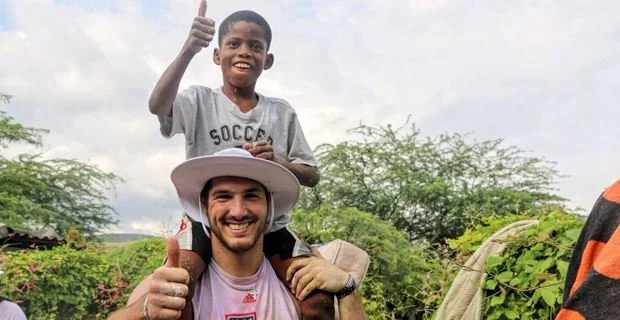
A year ago, at the suggestion of graduate transfer quarterback Trevor Knight, who had made the trip multiple times before, several Texas A&M athletes went on a mission trip to Haiti over the summer.A year ago, Director of Player Development Mikado Henson talked about how the trip came to be.“When Trevor Knight transferred from Oklahoma, I told him about the trip and it is the same organization that takes OU. He’s been there three times and he told me, ‘Mikado, I’m an Aggie, but I’m going back to Haiti whether it is with A&M or OU. I’m going back.’ Jake Hubenak is going back and I don’t care whether you are scholarship or not, offense or defense, black or white. We’ve got 15 football players signed up and we’ve all had to raise money."Fifteen football players, 12 volleyball players and one soccer player made the trip. The football players included the likes of Knight, Hubenak, Myles Garrett, Daeshon Hall, Josh Reynolds, Otaro Alaka and Koda Martin.Now, a year later, there will be 67 athletes from A&M making the same trip."About ten percent of our student athlete population is going with us this year," Hinson recently told KBTX. "We'll do a lot of painting of homes, delivering goats as a form of income and stewardship. Building, painting, planting... We told them we'll bring plenty of manpower."It's amazing to see what we get to do there, but it's even more amazing to see what happens in us," Hinson said. He remarked that students returned last year with a renewed since of humility and brotherhood. "It's an eye opener."The group will be leaving on Sat., May 13 and will return a week later on May 20. With most athletes having to take summer school in order to work out with their sports over the summer, the group going on the Haiti trip will be giving up almost all of their summer vacation.Brian Perroni - May 10, 2017
Rihanna’s impact on the fashion world is indisputable. Now the singer has revealed that she will further strengthen her ties to the industry by collaborating with The New School’s Parsons School of Design, Donna Karan’s Urban Zen Foundation and Haitian artists to develop a line of merchandise.Sales of the product will help support the Grammy winner’s Clara Lionel Foundation, which was founded in 2012 to benefit impoverished communities worldwide in areas like health care and education.Select students of the art and design school will have the opportunity this summer to work with local Haitian artists at the Design, Organization, Training Center in Port-au-Prince. Karan, Parsons and designer Paula Coles founded the center as a creative meeting place offering vocational training and materials to the Haitian artist community.“We are ecstatic that our students will have the opportunity to work with and develop a merchandise line for Rihanna’s Clara Lionel Foundation, that, like Parsons, shares a strong commitment to creating positive social change,” explained Alison Mears, director of the Healthy Materials Lab at Parsons who was instrumental in launching D.O.T.On May 22, Rihanna will be honored at the Parsons Benefit in New York City and will reveal the winners of the Design Fellowship program, which sends three Parsons students to Haiti for six to eight weeks beginning in early June.By Andrew Nodell | May 5, 2017




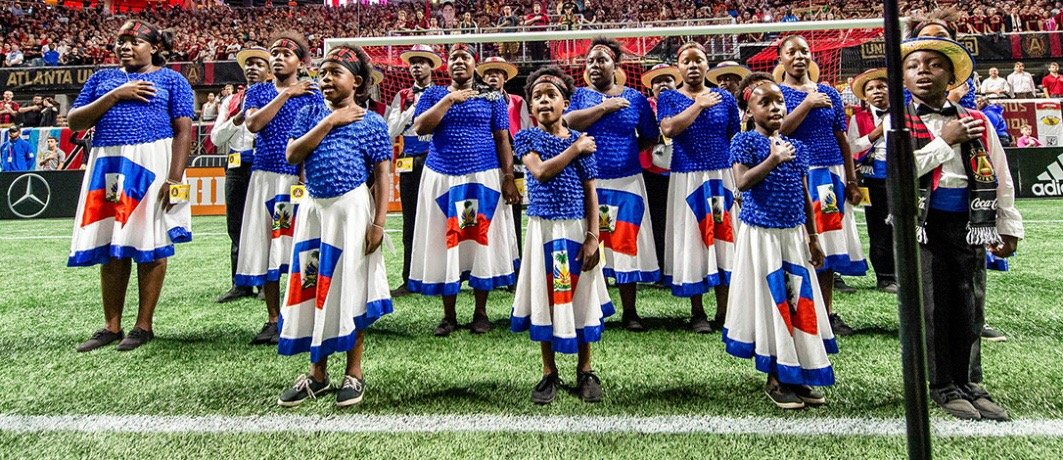
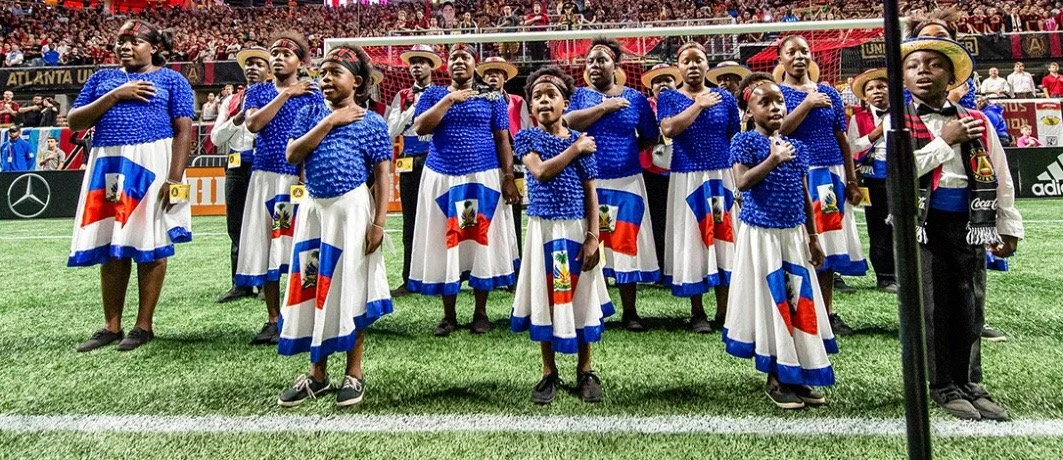
 Atlanta United writes in a post:
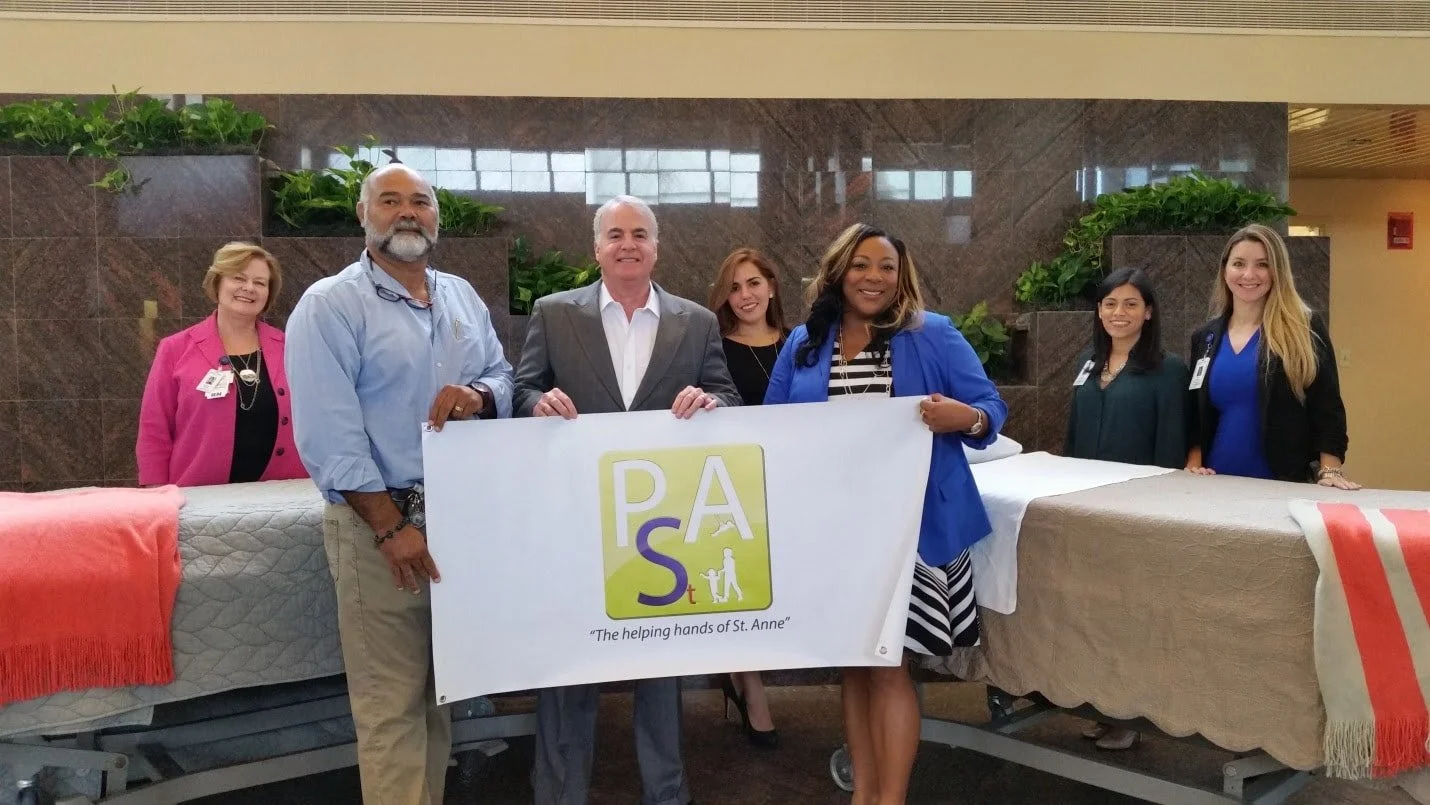
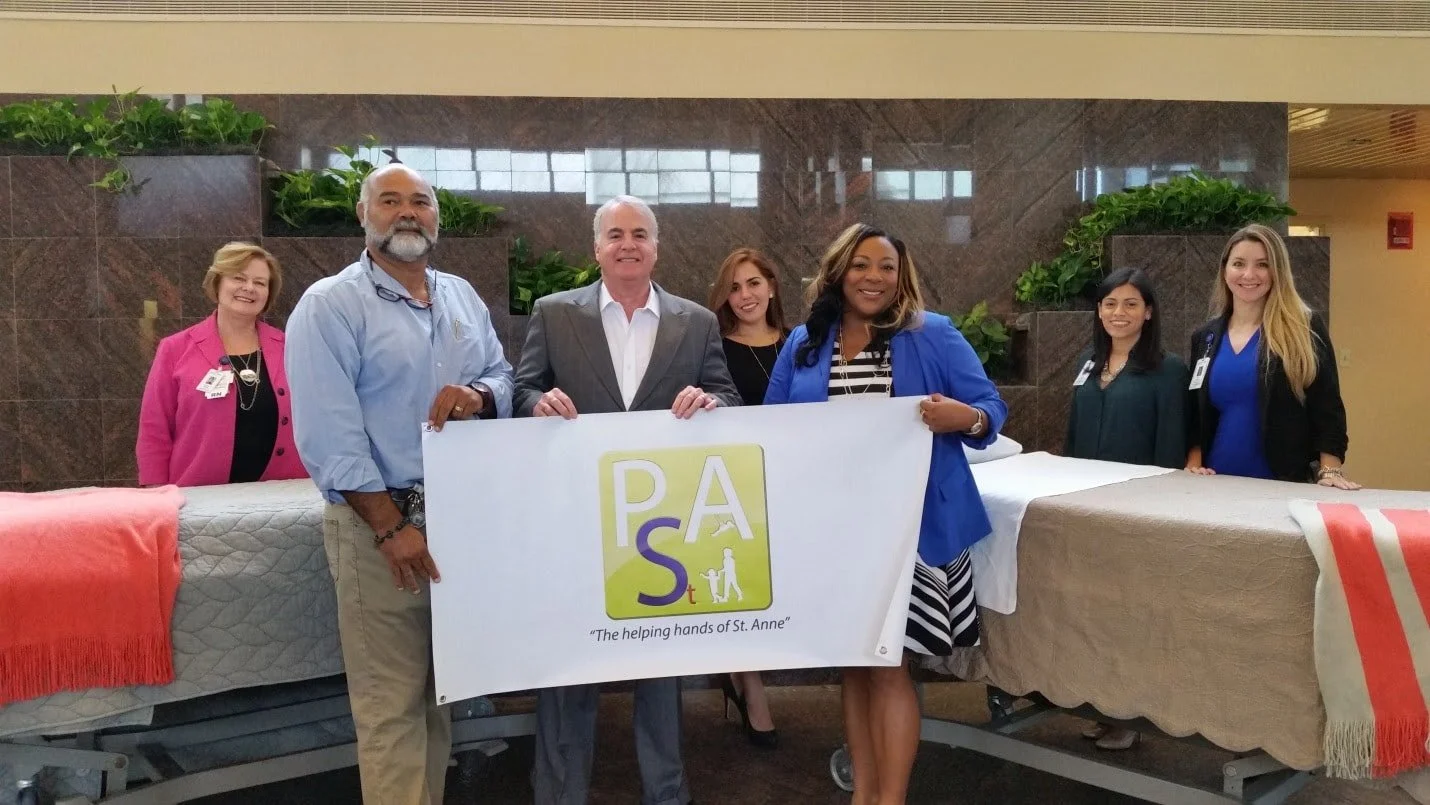
 North Shore Medical Center donated 30 hospital beds to Project St. Anne, part of a Clinic of Camp-Perrin located in Haiti. Project St. Anne is a non-profit that was founded by a group of women in 2008. The goal of the organization is to help the less fortunate. The 30 beds are going to be used by patients at the local hospital. “Receiving medical care in a comfortable environment can help speed up the healing process,” said Manny Linares, Chief Executive Officer of North Shore Medical Center. “The donation of these beds is part of our commitment to helping those who have been affected by hurricanes and other natural disasters and are in need of medical supplies.”By: Community News | October 4, 2017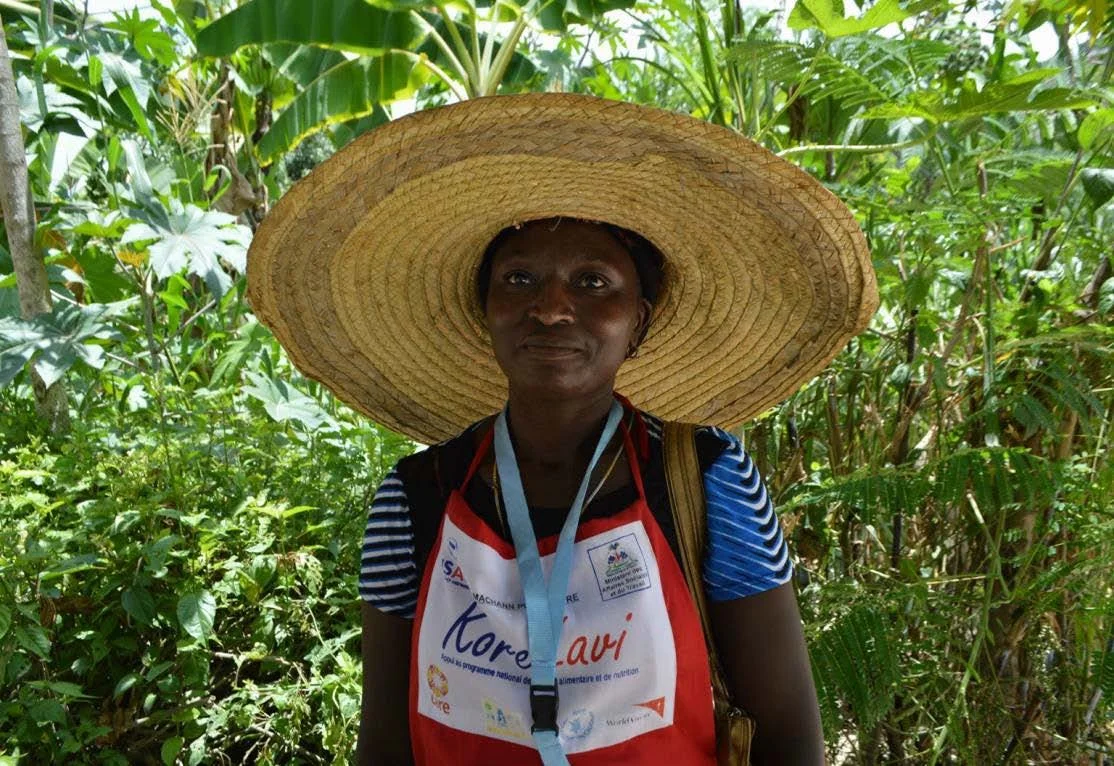
 Haitiville: What motivates you?Dayanne Danier: What motivates me is the concept of legacy and having a positive and strong legacy. A spinoff of the concept was engrained in me since I was young whenever my father would tell me, “don’t let people talk [bad] about you”. It reminds me to think about what people would say about me if I were to die tomorrow. I strive to be a unique individual who creates amazing things and brings change. I am a Virgo with a Gemini blood stream because I want to wear two different hats. I love design and I also love to give back to effect positive change.Haitiville: How has the Haitian culture influenced your work?Dayanne Danier: As a designer, the whole essence of Bien Abye is Haitian and Creole centered. I always think about how I look, how my clients look, which is such a Haitian thought. How you present yourself is such a universal concept, but it is also a very Haitian concept.As an artist, the gingerbread architecture is what inspires the motifs and prints I use on my line. The Haitian Gingerbread home, a style of architecture predominant in old Haiti, is a sign of strength and prominence. Gingerbread homes are designed with natural elements yet are decorated in such an ornate way. I take that, and whenever I am designing something, I think, “what element of this piece is like a Gingerbread home”. Haitian culture influences Bien Abye a lot.My culture also influences my philanthropy. Growing up, my family was constantly giving back. My parents were very influential in helping complete cities in Haiti move to America. I always heard the term “commission” which was always about sending things to Haiti. I kept hearing the term so much ever since I was a child that I knew I wanted to give back. In a way, Fleur de Vie is an ode to my parents, my family and an ode to my culture. Fleur de Vie is my commission to Haiti.Haitiville: You use such bright color schemes and palettes. Would you say that’s a Haitian influence?Dayanne Danier: Something that I have been drawn to even in high school was colors. That sense of color is so strong in me. I would say yes, that the color I use stems from my Caribbean roots. The colors that you find on Bien Abye clothes are colors that you find on the islands. Now, I have made it that Bien Abye is so inspired by my creole and Haitian roots that I can be in any place in Haiti and it will influence my line. It does not have to be the typical bright tropical colors, but it can even be just the colors of the landscape. For example, my journey to Hinche one time involved a drive through Mon Cabrit. I loved going there because even the color of the ground was a very gorgeous edible terracotta orange/red. That experience led me to create a collection called “The Earth” where all the shades were very earthy greens, browns, burnt orange, and reds. I really try to bring people into Haiti. Bien Abye ultimately is my culture. I am presenting it to Haitians and non-Haitians and I want people to know that you don’t have to be Haitian to appreciate the concept of Bien Abye, to love the concept of Bien Abye, or to want to buy into the concept of Bien Abye because it is just really rich and captivating.
 Haitiville: Speaking of Fleur De Vie, what is the goal of your non-profit organization?Dayanne Danier: Giving back was important to me, I just didn’t know how or in what capacity.Growing up Oprah was my role model. Fast forward to 2002, when Oprah went to Africa for Christmas where she aired the Oprah show of bringing gifts to African children. Seeing what she did made me feel like that was something that Haiti needed, and I wanted to do that for Haiti. What started off as adopting kids in Haiti, sponsoring children for $120 a month, seemed insufficient once the earthquake of 2010 struck. I did not have Oprah money, but I began by organizing a few activities with Jenny Batista, the co-founder of Fleur de Vie when I took a trip to Haiti after the earthquake. That was the jumping point because on the last day, I asked the kids what they wanted to be when they grow up and these 9 to 14-year-old kids stared at me blankly with no answer. They needed role models. I felt that reaching the children through education and schools had the potential to make a lasting impact. I want the children of the schools to feel like someone is constantly there, and that someone outside of their parents or family members constantly cares.Haitiville: What does growing up Haitian mean to you?Dayanne Danier: I appreciate it more now as an adult than I did as a kid. I always remember that I come from the two best countries in the world. Being Haitian means that I come from the blood of slave liberators. I come from not the 2nd, nor the 3rd independent free black nation, not even 1960, but 1804, you know! That’s my culture and that means so much to me! That is a feeling I have always had. And I don’t care what Haiti looks like. I will always be so proud.
 Haitiville: You have quoted “Fashion is an art, and you are the canvas” As a designer, does this feed the need to the create?Dayanne Danier: Well I am grateful for this question because I do believe that. Fashion is my art, the human body is the canvas, and my medium is fabric, beading, and thread. For Bien Abye, when I think about my garments, I think, “what can you do to a garment that makes it so striking that when she walks into a room, the best way to describe her is captivating.” I recognize that fashion enters the room before you open your lips, so you got ‘a look good! Most of the time, it isn’t the hair or makeup, but rather the clothing that makes someone look captivating- and that is an art. Beyond being captivating, I want it to last. I want my clothes to be timeless, endless, and season-less. That is where architecture comes into play. I design them based on architecture that is timeless, and when you pull out that skirt years after it hit my line, it will still be viewed as captivating. I want a woman wearing one of my pieces to walk into a room, and people look at her and say, “Wow! femme sa Bien Abye [emphasis added] (meaning Wow! That lady is well dressed)”.Haitiville: What is the inspiration behind the Reassemble motif?Dayanne Danier: I had just left my last job at PVH and I wanted to start creating a more positive image of Haiti after the earthquake. To support this project, I knew I wanted to work with a Haitian artist and create a print. I met Patricia Brintle, who I thought was an artist agent. I stated my hopes to her about collaborating with a Haitian artist and she remarked, “I am one”. Then I asked if she had a signature motif, and Ms. Brintle replied that she had a collection called “seasons” that featured Haitian women with their heads wrapped with different fruits and vegetables. I told her to make something that resembled her signature piece because I wanted people to know it was a Patricia Brintle. She brought three sketches and the one I fell in love with was the one that is now a key piece on my line.
 Haitiville: Where do you see yourself in five years?Dayanne Danier: Well, in five years I want there to be the beginning pillars to the Dayanne Danier empire. I want there to be a showroom in New York City that has employees and is functioning consistently and offering amazing clothing. I want there to be an Atelier in Haiti that is making these amazingly constructed clothes. I want to create a pyramid where it gives back, creates jobs, and does good. I want Bien Abye to give back to the community by giving back to Fleur de Vie. I want the kids of Fleur de Vie to be flourishing because their parents are working for Bien Abye. I want to be able to know that tomorrow if I die, that these kids of Fleur de Vie will receive an education because their parents work for Bien Abye.Currently Haiti is the t-shirt capital of the Caribbean. But I want there to be more to Haiti and Haitian stitchers then t-shirts. I want to bring back les petite main (master sewers in a work room who hand craft high end items), and have Ateliers (fashion work rooms). I want to bring back the notion of seamstresses and making fine garments. I like to work with Haitian artisans. While factories are good because they put the masses to work, I envision better for Haitians; a large portion of whom are employed in clothing factories. Bien Abye will be at the center of bringing that vision of mine to life.Haitiville was so glad to have this conversation with a true visionary. Ms. Dayanne Danier’s legacy will undoubtedly be one of making beautiful elegant art and also of selflessly giving to our home country. We know we will see this spotlight again. Stay tuned to Haitiville to see follow up pictures from the Fleur de Vie Back to School Recreational Program.
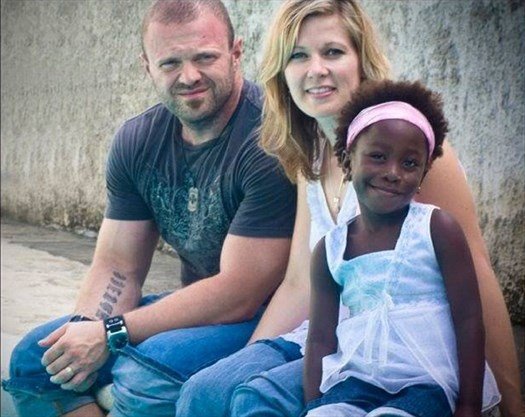
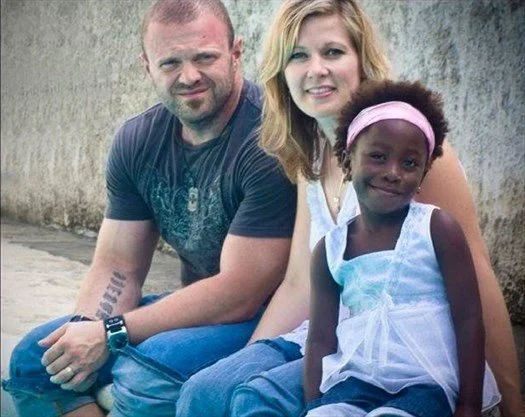
 The Hamilton man would see the woman with her newborn child, Widlene, scavenging for food around a giant dump site near Puerto Plata and would often chat with her.One day in 2009, the mother and girl disappeared, and he learned that Pierre had died and the child was sent back to Haiti to live with a relative. Worried about the well-being of the girl, Earle and his wife set out to find her. They eventually tracked her down in Haiti and have been her primary care providers ever since.Eight years after Earle and his wife initiated Widlene's adoption — and after a series of mishaps — the now 12-year-old is stranded and stateless in the Dominican Republic, waiting to come to Canada with her adoptive parents. To do that, the couple is asking for co-operation from immigration officials."It has been a nightmare in a perfect storm. It's just unbelievable," said Earle, 42, who moved to the Caribbean country in 2009 to look after Widlene full-time, while his wife, Christl, travels monthly from Toronto to see her family.Earle, who quit his position as CEO of the youth group Live Different and now runs a car rental business and café in Puerto Plata, said he and his wife were drawn to Widlene partly by their belief in empowering youth for social change."Widlene just finished Grade 6 (at a private school). She is an avid soccer player and loves watching hockey. She is a big Edmonton Oilers fan," said Earle. "She wants to become a pediatrician and work in developing countries."It's a future that would not have been imaginable when Earle first found Widlene in Gonaïves, in northern Haiti, where she was on the verge of being sold as a child domestic worker in 2009.He and his wife, who have no children of their own, applied to Haitian authorities for Widlene's guardianship in order to bring the girl home to formalize the adoption in Canada. They completed a government assessment in Ontario of their skills and talents as potential parents.Then the 7.0-magnitude earthquake struck Port-au-Prince in January 2010, causing widespread devastation — and destroying all the documents necessary for Widlene's adoption, including proof of her mother's death and the signed consent of her biological father, whose whereabouts are still unknown.The couple then attempted to carry out the adoption in Haiti, but in 2013, the Haitian government suddenly put a moratorium on international adoptions.In 2015 the family encountered yet another hurdle when a new law was enacted that revoked Haitian citizenship for anyone born outside Haiti, even to Haitian parents.Earle said Widlene subsequently had her Haitian passport and citizenship stripped, and became stateless in the Dominican Republic, because that country does not grant citizenship by birth on its soil."As a Haitian, she is living in a country where Haitians are not welcomed and are targets for exploitation, racism and deportation," said Earle. "As a Dominican-born child, Haiti refuses to recognize her as a citizen. Today, we, as Canadian citizens, are effectively exiled from Canada by virtue of our decision to save the life of a child."Being stateless, Widlene does not have a valid travel document.The family's Toronto lawyer, Chantal Desloges, has asked immigration officials to issue a temporary resident permit to let Widlene into Canada so the couple can complete the adoption — and the immigration process — in this country.Immigration officials have yet to decide on the matter. They say they've been responding to correspondence from Earle since September 2016."We understand the rules are there, but this is a humanitarian case. We need the exceptional discretion applied in this case," said Desloges, adding that the permit, unlike a tourist visa, is designed for the entry of an otherwise inadmissible foreigner because of "compelling needs."Toronto StarBy Nicholas Keung | August 21, 2017
 WASHINGTON—The U.S. Conference of Catholic Bishops' (USCCB) Subcommittee on the Church in Latin America awarded nearly $4 million in funding in the form of 244 grants to support the pastoral work of the Church in Latin America and the Caribbean, and nearly $2 million in funding for continued reconstruction in Haiti after the 2010 earthquake. The grants were approved at the Subcommittee's meeting on June 12 in Indianapolis, Indiana.Projects that received funding include:Argentina, GRAVIDA—Centro de Asistencia a la Vida Naciente: This network of diocesan centers in Argentina works to promote, care for, and defend life from the moment of conception and promotes the dignity of parenting. These centers are located in 21 dioceses across the country and care for pregnant women at risk of having an abortion as well as with men to help them understand the value of fatherhood. The centers provide education and formation about the dignity of human life and conduct solidarity and awareness campaigns.Haiti, Catechetical Formation: This project will provide formation for 400 pastoral agents from four parishes that were impacted by Hurricane Matthew. The formation will be centered around the theme of the Christian family, and will take place over the course of three days. Seminars, workshops and group discussions will be facilitated, along with opportunities for prayer and daily Mass.In addition, the first grant to help rebuild churches on the western part of Haiti after Hurricane Matthew was approved. More of these requests will be considered at future meetings of the Subcommittee."I am continually inspired by all of those who support the Collection for the Church in Latin America," said Bishop Eusebio Elizondo, auxiliary bishop of Seattle and chairman of the Subcommittee on the Church in Latin America. "The generosity of Catholics across the United States makes a difference in the lives of countless people in Latin America and the Caribbean. This generosity reflects the love and compassion of God. I can see this especially in the response we received to help the victims of Hurricane Matthew. With that help, we not only fund pastoral projects, but help rebuild churches in some dioceses of Haiti."Other areas of funding include lay leadership training, seminarian and religious formation, prison ministry, and youth ministry. Grants are funded by the annual Collection for the Church in Latin America, taken in many dioceses across the U.S. on the fourth Sunday in January. The grants to Haiti are funded by the Special Collection for Haiti, which occurred after the 2010 earthquake. These reconstruction efforts are managed through the Partnership for Church Reconstruction in Haiti (PROCHE).The Subcommittee on the Church in Latin America oversees the collection and an annual grant program as part of the USCCB Committee on National Collections. It allocates revenue received from the Collection for the Church in Latin America as grants across Latin America and the Caribbean. More information about the Collection for the Church in Latin America and the many grants it funds, as well as resources to promote it across the country, can be found at http://www.usccb.org/catholic-giving/opportunities-for-giving/latin-america/index.cfm.By: United States Conference of Catholic Bishops | July 31, 2017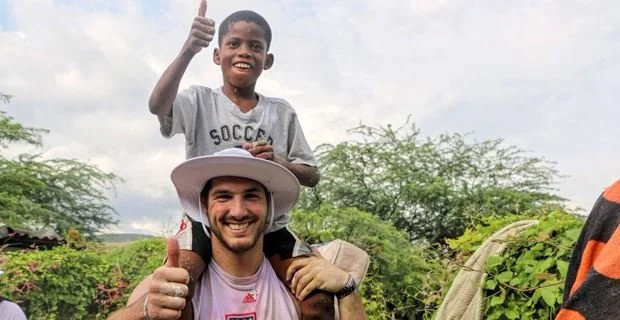


 Rihanna’s impact on the fashion world is indisputable. Now the singer has revealed that she will further strengthen her ties to the industry by collaborating with The New School’s Parsons School of Design, Donna Karan’s Urban Zen Foundation and Haitian artists to develop a line of merchandise.Sales of the product will help support the Grammy winner’s Clara Lionel Foundation, which was founded in 2012 to benefit impoverished communities worldwide in areas like health care and education.Select students of the art and design school will have the opportunity this summer to work with local Haitian artists at the Design, Organization, Training Center in Port-au-Prince. Karan, Parsons and designer Paula Coles founded the center as a creative meeting place offering vocational training and materials to the Haitian artist community.“We are ecstatic that our students will have the opportunity to work with and develop a merchandise line for Rihanna’s Clara Lionel Foundation, that, like Parsons, shares a strong commitment to creating positive social change,” explained Alison Mears, director of the Healthy Materials Lab at Parsons who was instrumental in launching D.O.T.On May 22, Rihanna will be honored at the Parsons Benefit in New York City and will reveal the winners of the Design Fellowship program, which sends three Parsons students to Haiti for six to eight weeks beginning in early June.By Andrew Nodell | May 5, 2017