
Haitian Immigrants With Temporary Status Await Trump’s Next Move
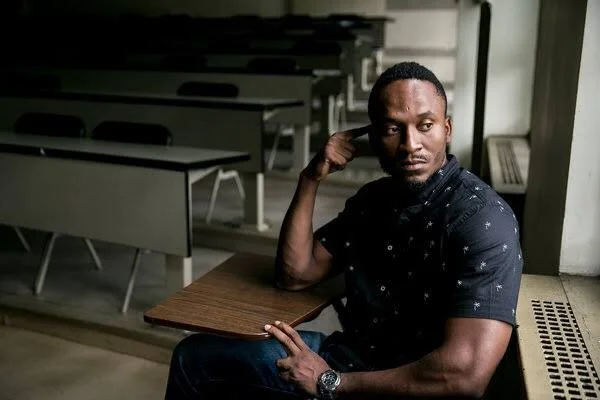
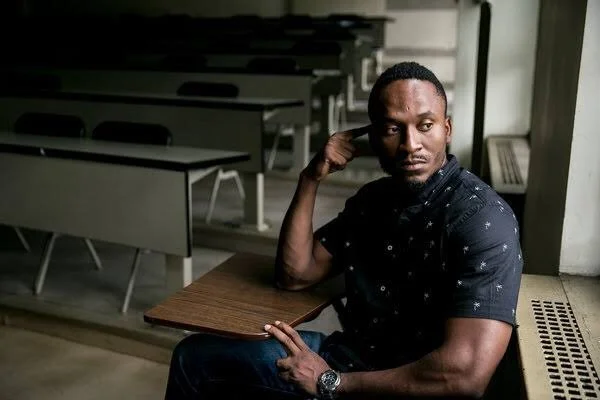
Jean Jubens Jeanty, a Haitian Uber driver who lives in Brooklyn, has his future mapped out. After completing a high school diploma program at Brooklyn College next month, he plans to start college next year. He would then seek further schooling to become a nurse or pediatrician. But the clock is ticking on his plans.Mr. Jeanty, 29, came to the United States from Port-au-Prince in September 2006 with his eldest brother and stayed after his tourist visa expired. He has what is known as temporary protected status, or T.P.S., which was granted to Haitians who were visiting the United States or living here illegally when a devastating earthquake struck their homeland in 2010. T.P.S. allows him and other Haitians to live and work legally in this country, until conditions in Haiti have improved enough to return home safely.Now, the Trump administration is monitoring earthquake recovery efforts to determine whether temporary protected status for Haitians should be terminated in January when its recent six-month extension ends. The Homeland Security secretary, John F. Kelly, said in a news release in May that Haiti has been making significant progress, advising T.P.S. holders to begin to “prepare for and arrange their departure” should the special designation end in January.That advice has left Haitian T.P.S. holders — as many as 58,000 in the United States, with 20,000 in New York — mired in fear. Some who have established lives here said they feared losing their dreams. Others who have lived in the United States for many years may find it difficult to adjust to life in Haiti, the Western Hemisphere’s poorest country. And those with American-born children could be parted from them.“I basically grew up here,” said Bianca, 22, a senior at Queens College, part of the City University of New York, who asked to be identified by her middle name because of her uncertain immigration status. “It’s very nerve-racking in a way. It’s very unsettling to know that you’re here and you don’t know what tomorrow is going to bring, or what is going to happen in the next couple of months.”Bianca came to the country in 1998 with her mother and brother on a tourist visa, and they overstayed their time. Her father, who also has T.P.S., later joined them. She has two siblings, 14 and 18, who are United States citizens. Bianca, an aspiring educator, studies English literature and expects to graduate in December. At CUNY, the country’s largest urban public university system, there were 60 students with T.P.S. last school year, the university said.Congress created the T.P.S. program in 1990 to aid countries ravaged by war, natural disasters or catastrophic events that make it too dangerous for citizens to return. Their status is renewed periodically, and recipients have to keep their permits updated to avoid deportation, at a cost of $495. Under the Obama administration, Haiti’s T.P.S. permits were reviewed every 18 months, with the current extension ending today. In May, the Trump administration said the next extension would be for six months, ending on Jan. 22, 2018.The program was created to provide temporary aid, but some designations have stretched as long as two decades. Immigrants from Honduras and Nicaragua have been allowed to stay in the United States since 1999, when Hurricane Mitch devastated their countries. The United States currently provides T.P.S. to more than 300,000 foreign nationals from 10 countries.Emmanuel Depas, a lawyer who is Haitain-American and assists T.P.S. recipients, said Haiti is far from ready to take its citizens back. Mr. Depas said the country’s dire condition had been exacerbated by a cholera outbreak caused by a United Nations peacekeeping force, which killed 10,000 and sickened nearly a million, and by Hurricane Matthew last year, the biggest storm to hit Haiti in 50 years.“Haiti just got a president in 2017,” Mr. Depas said, noting that the country had had months of political instability. “To say that the country is ready to take its people back is asinine.”Mr. Depas said some T.P.S. recipients have decided not to renew their status for fear of giving immigration authorities information that could locate them should the program end.But Ira Mehlman, a spokesman of the Federation for American Immigration Reform, which supports stricter immigration controls, said the decision on whether to extend the program should not center on subsequent misfortunes. Mr. Mehlman argued that T.P.S. was intended only to “give some people a ride out of the circumstances in their countries” temporarily.“At some point, we expect you to go home,” Mr. Mehlman added. “To simply say we are going to keep expanding it, then it’s no longer temporary. It’s a backdoor immigration system. There seem to be some expectations that the countries have to be a paradise before we send people back home.”Though the Trump administration has taken a hard line on illegal immigration, Nisha Agarwal, commissioner of the New York City Mayor’s Office of Immigrant Affairs, said “there’s still time and ability to influence” Mr. Trump’s decision. But the “pack your bag type of messaging immigrants are hearing from the federal government” is discouraging, she added. Ms. Agarwal said her office was assisting T.P.S. holders with legal support and urged them to prepare regardless of their expectations.Support for extending the program for Haitians crosses party lines: Gov. Rick Scott of Florida, a Republican and Trump ally, also wants to see their T.P.S. eligibility extended. Florida has a large Haitian population.Ending the program would deal a significant blow to a lifeline of Haiti’s economy: remittances. Haitians in the United States sent $1.3 billion back to the island in 2015, according to the Pew Research Center.As for Mr. Jeanty, he is hoping that immigration authorities will grant a longer extension in January. “A person like me who is working and paying taxes, going to school and have nothing on my record — why not keep me here?” he said. “I have nothing to go back to.”By Khorri Atkinson | July 21, 2017
U.S. Embassy Hosts Pop-up Shop for Haitian-American Entrepreneurs
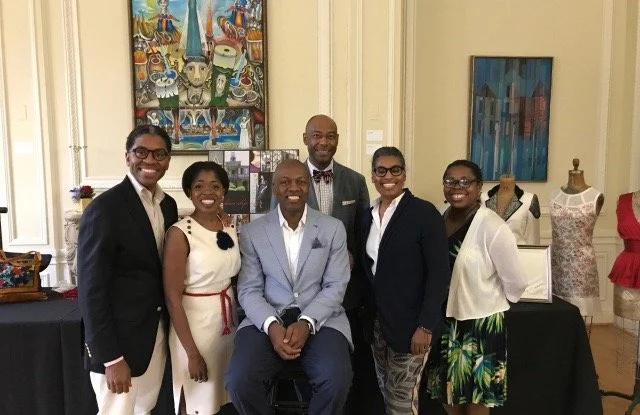
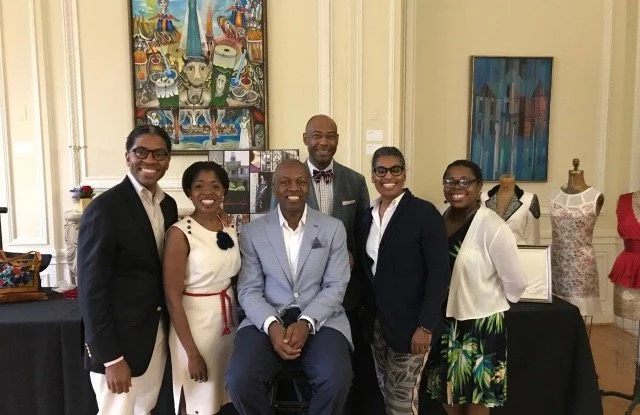
Embassies are all about helping the homeland, but the U.S. Embassy of Haiti went above and beyond presenting the Bien Abyé “Les Jardins de la Mode” pop-up shop.More than 400 people turned up for the event, the finale to D.C.’s first “Haiti Week,” hosted by Ambassador Paul Altidor, and it featured an assortment of products from Haitian-American entrepreneurs. All of the apparel, accessories, home goods and gourmet products that were featured are sourced or inspired by Haiti. Bien Abyé’s founder and designer Dayanne Danier orchestrated the event, which included “Artisan du Monde” by Nathalie Tancrede, “Deux Noirs” by Eddy Albertini, “Vetiver Les Cayes” by Reginald Boisrond Canal and “Zesa Raw” by Michelle Jean. Art fans, diplomats and tastemakers checked out the collection and shopped in the embassy’s newly renovated courtyard. They also listened in when former White House liaison Karen Andre quizzed participants about their careers.“The recent event was the first in a series and “is in line with the mission of the Embassy to be a platform for Haitian-owned businesses to showcase their products,” Altidor said.Bien Abyé is currently offered in five U.S. boutiques and via e-commerce. “Doing pop-up allows me to give a unique experience to clients that they might not find in a retailer. It also gives me the opportunity to have direct interaction to clients and hear about their needs.In New York earlier this month, the Consul General of Sweden Leif Pagrotsky also provided a forum for one of its own. Swedish designer Gudrun Sjödén returned to the U.S. for a fashion show at the official Swedish Residence. Guests like Liliana Cavendish, Nancy Donahue, Katie Ford, Christine Mack, Kelly Rutherford and Audrey Smaltz previewed Sjödén’s fall and spring collections. Former Miss Africa and water activist Georgie Badiel helped model the eco-friendly label, as did Angel Pai. But anyone who wanted to actually buy one of the colorful designs had to go downtown to the SoHo store or shop online.By Rosemary Feitelberg | May 26, 2017
From Haiti to Philly, From Nurse to Bridal Designer
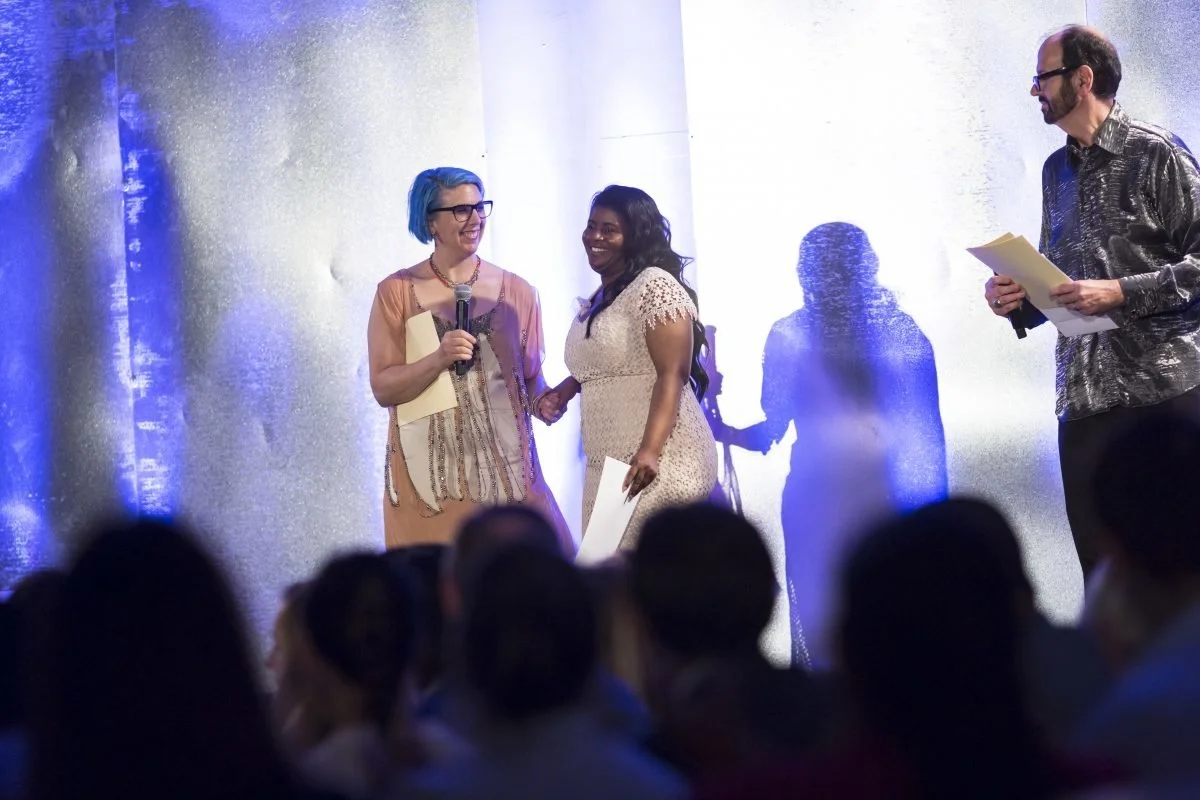
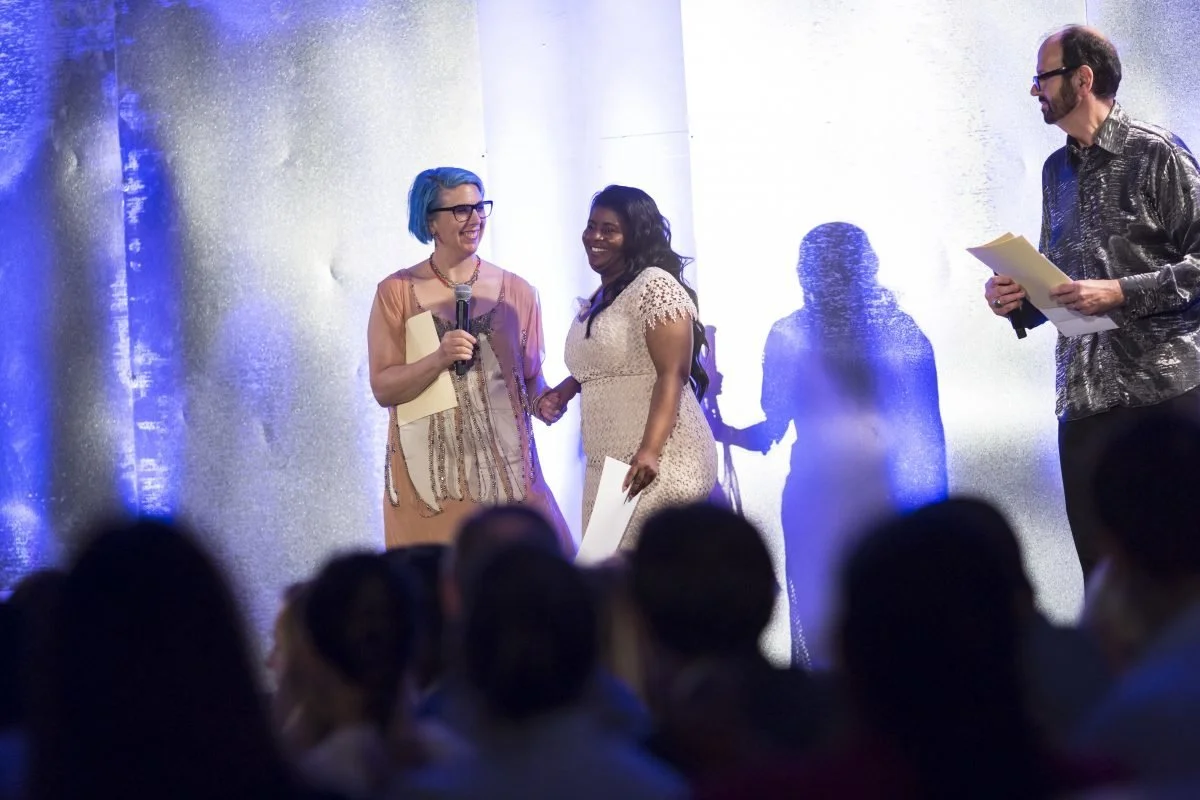
As a child in Haiti, Madelange Laroche dressed her dolls in fashions she’d made herself. As a teenager, she made school uniforms for herself and seven relatives. She dreamed of a career in fashion, designing formal wear and wedding dresses.Then life derailed her. Emigrating to the United States and learning a new language was challenging. To support herself and her brother, she took up nursing, working her way up from home health aide to certified nursing assistant to licensed practical nurse.“I thought, ‘Well, I can do fashion on the side and be a nurse full-time,’ ” Laroche said.That didn’t quite happen. Four years ago, she began studying for a bachelor’s degree at Moore College of Art and Design. She dazzled in the classroom while working more than 40 hours a week at two nursing jobs. Her work won designer Frank Agostino’s critic’s choice award at a student showcase. Last week, a dozen friends and family members — many of whom had traveled from Haiti and Florida — came out to support her at her senior fashion show at the Barnes Foundation.At 36, the new Moore graduate is finally finding her way into fashion. She’s not deterred by her age or her responsibilities. Those who know her say they have a difficult time imagining anything can hold her back now.“She’s absolutely driven, and I think she can make a go of it,” said award-winning fashion designer Danny Noble, who worked with Laroche at Moore. “I’m sure she makes a decent income as a nurse and it’s incredibly admirable that she has such courage and drive.” Agostino, who has been judging Moore student contests for about 12 years, said Laroche was definitely in his top 10, maybe even the top five. “I have great respect for her. If anyone could make a living at it, she’s the one.”Laroche’s unique background and life experiences infuse her design aesthetic. She paints or weaves fabrics as she learned to do as a child. Classic silhouettes are embellished with details and embroidery, and extremely complex designs are superbly constructed, Noble said.Her dream is to create formal wear, specifically wedding gowns. When her bridal wear first appeared on the runway last week, there was a collective gasp from the audience.“It’s just a matter of time,” said Le Tran, who teaches technical design to Moore seniors. “She can do anything.”Laroche was largely raised by her grandmother while her mother worked as a dry cleaner and seamstress in the U.S. She remembers picking up scrap fabric and making her first doll dress at 7. She showed it to her sister.“She said, ‘That’s very nice,’ but I didn’t know if she was telling the truth or not, but since that day, I started making doll dresses,” Laroche said. When Laroche was 12, her mother returned to Haiti after five years away. To reconnect with the family, Laroche’s mother asked whether any of the children would like to learn how to sew.“Nobody said anything,” Laroche recalled, “and I felt so bad for her, so I raised my hand and said OK.”Laroche and one of her brothers sat down and learned how to take measurements and cut fabric and made a pencil skirt. It was Laroche’s true start as a designer.“I never stopped. I never stopped looking for fabric,” Laroche said, describing how she’d hide in her grandmother’s closet and hand-sew the older woman’s garments into new shapes and styles that would fit her.Then, she said, she’d wait until the rest of the family had gone to church to emerge wearing her grandmother’s now-altered clothes.When she was 16, Laroche persuaded her grandmother to let her make the school uniforms — a white blouse and an olive green skirt or pants — for the family. She changed the design, adding olive green accents to the shirts. School officials protested and demanded the uniforms be, well, uniform. But within weeks, about half of the school’s students had altered their shirts accordingly. Administrators gave in. “They said, ‘Well, it’s a lost game’ and it became our school uniform and it made us stand out,” Laroche said. “I don’t know but I think they were proud that a 16-year-old could do that.”In 2001, with high school completed, Laroche moved to Florida to live with her mother. After two aborted attempts at attending a fashion school — cost and the language barrier held her back — Laroche took a friend’s advice and tried nursing.It was steady work, just what she needed after she settled in Philadelphia and took in her 33-year-old brother, who has mental handicaps that weren’t fully understood in Haiti. She decided to get her bachelor’s degree in nursing and began taking classes at Manor College. She still designed and made clothing — dressing the entire bridal party for a relative’s wedding, designing both a ceremony and a reception dress for a teacher — but fashion design became a hobby, not a destiny.And then, during a meeting with her college adviser, the truth burst out: She wanted to go to fashion school. She would love to open a made-to-order wedding dress business. The adviser was surprised. Another student who’d overheard the conversation told Laroche to look into Moore, where Project Runway Season 10 winner and Philly native Dom Streater had studied.Four years later, her senior show was about to begin and Laroche was nervous and excited. She wore an off-white lace appliqué formfitting dress that she had started making at 11 p.m. the evening before.It fit perfectly.by Natalie Pompilio | May 16, 2017
Award-Winning Filmmaker Daphne Valerius Digs Deep Into Culture, Beauty, and Identity in ‘The Souls of Black Girls’
Daphne Valerius’ shares, for the first time publicly, her personal and courageous journey of facial paralysis, insecurities as a young black girl, acceptance, and healing
How we choose to define ourselves, inside out, sets the tone for how we navigate through life—and how life intrinsically navigates through us. As black women, our need for a sense of identity and self-worth—and the importance attached to it—brings to the light the values we often accept placed by society, and the manner in which we treat and regard ourselves. We recognize, too, that there is a danger in allowing others to define who and what we are.In her 2008 award-winning news documentary The Souls of Black Girls, filmmaker Daphne Valerius took us on a riveting examination of the truth about self-image disorders, beauty standards, and the degrees by which black women view themselves, in and out of the media. The Souls of Black Girls was a blueprint that originated as part of Valerius’ journalism program while at Emerson College, and has received national recognition and numerous awards. Included in the film’s assessment on the historical and modern representations of women of color [and beauty standards] were prominent African Americans such as PBS Washington Week moderator Gwen Ifill, actress Regina King, actress Jada Pinkett-Smith, rapper and cultural activist Chuck D., cultural critic Michaela Angela Davis, Juanita Jennings, and more.When I asked Daphne Valerius how she personally defines culture, beauty, and image, this was her response:
“It’s an individualistic definition. Ultimately, culture and beauty is something that we have to define for ourselves. It starts with identity. Your beauty and identity come from your culture first, because culture has a way of influencing identity. For me, being a woman and growing up Haitian-American, one of the first things I recognized was that my parents immigrated to the United States from Haiti, and that was a part of my identity. I found beauty in that. I find beauty in the shunt of my history. I was 10-years-old and I knew who Toussaint Louverture was; I felt that I could identify with that. I could identify with the fact that I was part of a great culture that had power and beautiful language. Those things, alone, reared me to have a clear awareness of who I was, which was very different from the African American experience. In my culture, there is beauty in the family unit, in the language we speak, the food we eat, and the music we listen to. Although, I was born in the United States, the Haitian-Creole language was my first language; that’s what my mother knew until she learned how to speak English, which I learned as I was going to school.Culture, beauty, and image are really about how you self-identify as a human being on the earth. That’s how I’ve been able to arrive at that place. Yet ,that beauty that I experienced through my culture and language, and all of the things that connected me to being Haitian-American, also tainted what I saw around me. So, there’s a tainting that happens being in a culture and in a society that celebrates specific images, which don’t necessarily reflect what your beauty and truth are. The challenge is in defining what your beauty is for yourself. That’s where the real question is. How do you identify beauty for yourself? If you’re looking on the outside, everything else is going to contradict what you know for sure, based on your culture, the people you know, the language that you speak, and things of that nature. I come from a people who have a beautiful culture and historical background, but it’s also tainted by the American experience, which sort of washes away that beauty and tells you that something else is beautiful. That’s where much of the contradiction lies. It took a very, very long time for me to even arrive at that place—that was my ultimate struggle.”
 During the rest of our interview, Valerius elaborated further on the impact of her impeccable film, The Souls of Black Girls. Check it out below:BLACK ENTERPRISE: Your award-winning documentary The Souls of Black Girls was a necessary and poignant on-screen conversation piece. Given your intercultural experience, do you feel that African women view themselves, their image, and their beauty much differently than African American women?Valerius: Yes—I believe that it may come from a few different things. On one hand, you’re exposed to American culture, so you see beauty all around you. You see beauty in your mother, your grandmother, how she raised you, family morals, and the food you eat, whether you’re Nigerian, Liberian, and so on. But, it isn’t until you are a young black girl going to school, when, for the first time, someone calls you ugly or says your hair is nappy. You figure, “Oh, I never knew there was anything wrong with what I look like, my hair, the language I speak, or the clothes I wear.”I think for the African, in many ways, we embrace this culture, because that’s who we are; that’s what we are innately born into. It’s within the American culture and society that we are told otherwise. The African American woman and the African woman identify very differently. The African American experience in this country has been accompanied by such brutality and slavery, and there is no innate connection to anything of beauty. When African Americans speak of their experience, they are speaking from a place of pain—from the slave ships, to the cotton fields, to this–and there is no beauty in that. There is no other language; there is only soul food. There is no beauty in the imagery of what you know about your history–being black and American in this country. It may be harder for the African American woman to identify feeling beautiful versus the African, because the African has somewhere to turn to. It may be that they know they have a tribe in Ghana, even though it’s complex and contradicts it in many ways, there is still beauty in that connection.BE: The Souls of Black Girls is such a confirmatory title that addresses the totality of the black girls experience with image–skin color, mentality, weight, hair, and so on–particularly as it relates to the media. What most compelled you to make this film?Valerius: The title, itself, was inspired by the book The Souls of Black Folks by W.E.B. DuBois. I read that book as an undergraduate student at St. John’s University, and I just loved the book. He talked about the duality of having to be an American and black in this country, and the contradictions that exist within the identity of a black person in the United States. But then, within that, I found a void because he didn’t speak to being a woman, [because] he could not.As a woman, there are so many other elements. Not only do we have to be black, not only do we have to be American, but we also have to be female. That’s an identity within itself. The inspiration for the title came from that place and from my own lack of self-esteem and self-confidence. For years, I spoke about the beauty of being Haitian-American, but to be honest, I grew up feeling like the ugly duckling.For many years, I was teased and called “Daffy Duck.”I had dark circles around my eyes; I suffered from hyperpigmentation and allergies at a very young age. I was always taunted, teased, and placed in an environment with schools where I was the one black girl in my class. I was very aware of my surroundings, and of the fact that I was different. To add insult to injury, I once had a crush on a white boy, who told me–first– he would never like me because I was black, and second, [he would never like me] because I was ugly. That takes a tremendous toll on your self-esteem. I carried much of the burden of not feeling good about myself for years. The one thing I knew for sure was that I was smart; I soared with my academics. I always placed high on testing, and at one of the top high schools in Rhode Island. So, I knew that I had my academics going for me, if nothing else.BE: Was it this experience, also, that catapulted you into researching the effects of culture, beauty, and image in the media?Valerius: Absolutely. I was given an opportunity to do research as a Ronald McNair Scholar, while being an undergraduate student at St. Johns University. By the time I reached college, I had arrived at a place where I was completely aware of who I was and confident in certain areas, but there was still a residue of low self-esteem and self-confidence that lingered. While I wasn’t sure as to why it was still there, I was sure that it couldn’t be just me.I decided to apply my research on the topic of identity, just to explore what was going on. One of the images of the woman that really impacted me was rapper Lil’ Kim. I grew up with the music of Lauryn Hill and Lil’ Kim, and they looked like me. I loved Lil Kim’s music, but by the time I reached college, Lil’ Kim had begun to transform into someone nearly unrecognizable. No one was having that conversation, not even from a place of love. That’s when the light went off. I had to question, “Where does that come from and why?” And no one was talking about it.Much of the film’s inspiration came from that research. The Ronald McNair Scholar Program prepares minority students and students from disadvantaged backgrounds to pursue a higher level of education–at the doctoral level. My research fulfilled the requirements of the program, and I knew that I was going to graduate school. In my final thesis project, I naturally reverted to all of the research I’d done. That’s how The Souls of Black Girls came to be–then, it became its own entity.BE: As black women, what responsibilities do we hold to ourselves and others, when it comes to encouraging positive images in the media?Valerius: It’s completely our responsibility. People ask me all the time, ‘Why are we still having this conversation after so many years?’ The hardcore truth is that we still need to have this conversation. We’re doing it each other. White people weren’t the ones bashing Gabby Douglas’ hair at the Olympics. We do it to one another, and then we do it to ourselves.A philosopher and scholar that I so admire is the theorist Antonio Francesco Gramsci, talks about the theory of hegemony, and how the concept of what we see around us reflects back to us. When we put out the energy and feed into it, the energy of those images come back to us.For example, you have a black female executive at a television network, and she’s aware of the culture, the struggle, and so on. Discussed in her meeting are the ratings from her program, which are skyrocketing because people are watching. How can she then justify to her network that people are not watching, when the ratings are so high? In the final analysis, media is going to push out what generates money and sales. So, as women of color, we have that responsibility, and–unfortunately–we’re all guilty of it. We’re all contributing to it. As black women, we need to have these conversations and be on the frontlines doing something, because we’re the ones doing the damage to one another.BE: What are some actions that we, as black women, can internally employ to reaffirm who we are, how we see ourselves and our sisters?Valerius: One of the things we can do is to really begin to speak our truth, honestly, and to one another, especially when we’re hurting. That’s the only way we can begin to heal. It needs to be less about having a conversation about your shoes, or your Louis Vuitton, or what’s in your bank account. Instead, we should be talking about how we’re hurting. We are so amazing, yet, we tend to give our power and energy to so many things that have no meaning or value. Nowadays, we have so many reality television programs and shows, but these are all women who are hurting on the inside. They’re hurting because of the relationships they got into. They’re hurting because of their marriages that are failing. They’re hurting from a lack of self-esteem and identity, and no one is doing the work to heal.Most times, I love to see women just speak honestly about their truth. One of the things I encourage women to do is pick up a copy of the film, invite your young ones and young girls who love you and are looking up to you. This is an opportunity to have many of these honest conversations about what they are struggling with. I used to have those conversations, here and again, with my own sister, or with my cousin. I would ask, “Do you think I’m ugly? Do you think I’m pretty?” And that kind of dialogue opens the door on a very real level, because so many of our girls do feel that way. They wake up in the morning feeling inadequate. If we spoke to one another more vulnerably, about our truth, I believe that would be a huge step in the right direction.
What is Daphne Valerius Working on Now?
Nearly 10 years after the making of The Souls of Black Girls and being among the hundreds of private screenings held at institutions, organizations, colleges, and universities across the U.S., our conversations on culture, beauty, and identity continue to permeate, inside and outside, of those walls.Valerius says, “We need to restart the conversation, because the issues are even more complex now. With the younger girls of this generation, the complexities lay in much of social media, and its rating system(s). Now, young girls are basing their validation on Facebook likes, retweets on Twitter, likes on Instagram, and who’s watching their YouTube channels. The dialogue now needs to shift, because we need to talk about what’s affecting these girls today, versus 10 years ago. Where are we now and what is happening with our girls?” Inspired to empower girls beyond her documentary, Valerius launched I AM HER Apparel line, an unapologetic fashion brand empowering women and girls to leave their mark. To date, I AM HER Apparel collections have been seen on Showbiz Tonight, VH1, TVOne, ASPIRE-TV, and in Ebony magazine.After overcoming a private battle with a severe form of facial paralysis, Valerius aspires to influence, encourage, uplift and serve women and girls from her battle scars along her journey to recovery. Based on her transparency and vulnerability, Valerius coaches one-on-one, by sharing her deeply personal journey of healing through a series of online master classes called “Being Her Best Self with Daphne”. In doing so, she helps women and girls shift their thinking of themselves in two distinct areas: conquering fear and conquering insecurities from false self-perception.Her documentary-in-progress, The Souls of Black Girls, Too , will continue the awareness and examination of the global struggles of black women and girls, as it relates to self-esteem, self-love, identity, and questioning of their standards of beauty and self-acceptance.For more information regarding the film please visit www.soulsofblackgirls.com.By: Rochelle Soetan | April 11, 2017
Haiti's new president taps medical doctor to be the country's new prime minister!
 PORT-AU-PRINCE - A relatively unknown medical doctor was tapped to be Haiti’s new prime minister, tasked with steering the government’s legislative agenda through parliament, President Jovenel Moise said late Wednesday.The choice of Jack Guy Lafontant as prime minister of the impoverished Caribbean country came two weeks after Moise took power as president.If parliament confirms Lafontant, perhaps best known as the president of the Rotary Club in the upscale district of Petionville, and allows him to choose other ministers, it would mark the country’s first elected government in a year.Moise announced the surprise pick on Twitter and noted that he consulted with the heads of both chambers of parliament on the selection. Moise did not indicate why he had chosen Lafontant. The two men are believed to be friends, according to local media.Haiti has been headed by a caretaker government since Michel Martelly, the last elected president and Moise’s political benefactor, stepped down early last year without a designated successor.Source: http://www.nydailynews.com/news/world
PAOLA MATHE: CHANGING THE GAME
 Paola Mathé is a lover of epic adventures, African headwraps, and all things colorful. Born a dreamer from a small town in Haiti, Paola moved to the United States right around her teenage years. She obtained her dual bachelor's degree in Economics and French Literature at Drew University. Lost between her artistic desires and thirst for adventure, Paola moved New York City after her studies to live her dreams. She started her career in hospitality where she went to manage, operate and open trendy hotels and restaurants in Manhattan. In her spare time, she shared her dreams, colorful personality, and style on Finding Paola, her lifestyle blog.In 2014, Paola launched Fanm Djanm, a head wrap collection and popular lifestyle brand that celebrates the strength of women while also empowering to live boldly. Known for her bold style and creative visions, Paola has been featured in many established online and print publications such as The New York Times, Teen Vogue, NY Magazine/The Cut, Oxygen, Cup of Jo, Harper's Bazaar, Buzzfeed, Huffington Post, Design Sponge, and Essence.com.

Word on the streets ... O.T GENASIS and FABOLOUS in Haiti soon!

 Lets wait and see! #Summer2017 Source: partyinginhaiti IGWhat do you think these 2 mainstream artists have planned? Either way, seems like a good look for Haiti!!! #staytuned
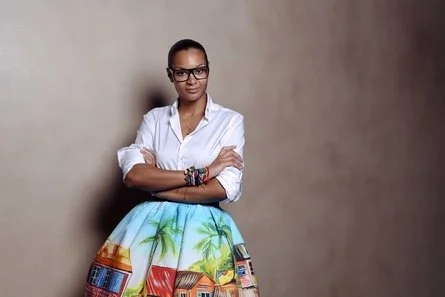
Why This Italian-Haitian Designer Loved by Beyonce, Rihanna and More Should be On Your Radar
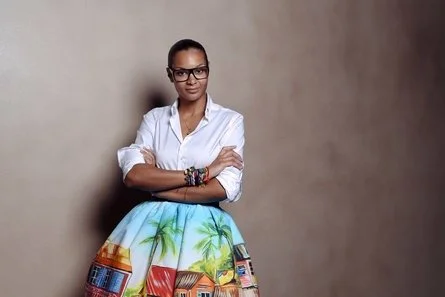
 This Rome-based fashion star opens up about her Haitian roots and how clothes can be a cultural connector.ESSENCE: What inspires your creations?STELLA JEAN: My own story—my roots and background have always inspired my work. I'm half-Haitian and half-Italian. Haiti influences my creativity. The sociocultural fusion I bring in my collections is perfectly represented by a country like Haiti and in line with my fundamental need to convey a new concept of multiculturalism. Fashion can be a cultural translator; we can reestablish the proportion among symbols, stories and different worlds through style.ESSENCE: How would you describe the Stella Jean woman?S.J.: Women who are confident, curious, audacious, not afraid to experiment and who cherish family memories, plus have a pinch of irony—all of which makes every look personal and unique.ESSENCE: Who are your favorite designers?S.J.: Dries Van Noten, who mixes different cultures in a tasteful and respectful way. And Etro, who sums up a blend of tradition and innovation.ESSENCE: What are your go-to beauty products?S.J.: Kreyòl Essence 100% natural Haitian black castor oil, pure organic moringa oil (from the southern coast of Haiti) by Ayiti Natives and MAC's In Extreme Dimension mascara.By Bridgette Bartlett Royall (for Essence.com) | Apr, 26, 2017