
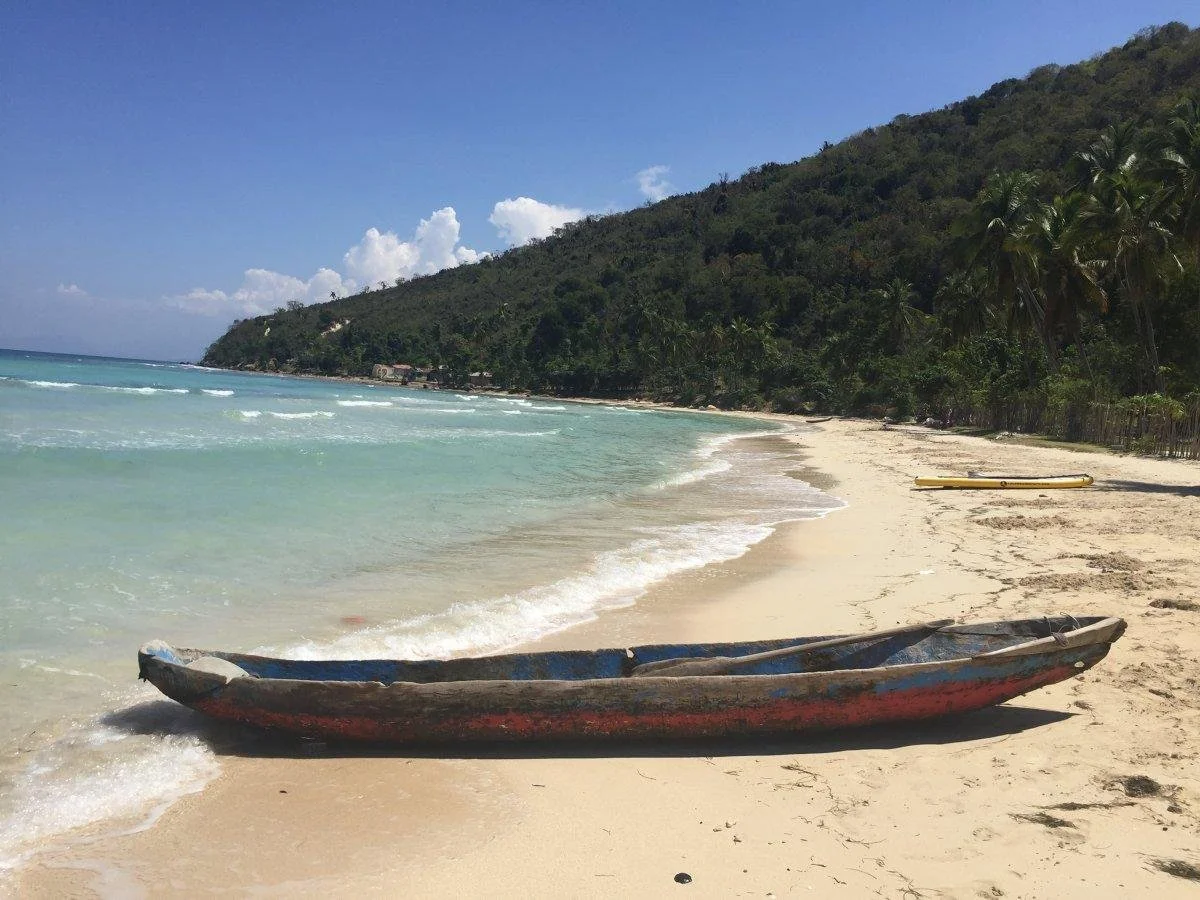
Despite what President Trump says, Haiti's a budding tourism destination
President Trump may have given Haiti an unlikely boost when he labeled the Caribbean country a “sh--hole” last month.The comment — made during an immigration meeting in the Oval Office — has prompted a spike in Google searches and general curiosity about this much misunderstood country, spurring visits like the one filmed by late night host Conan O’Brien for a recent TBS special.Pristine beaches, mountaintop fortresses and eclectic artist enclaves are not what spring to mind when most Americans consider Haiti. Poverty, political strife and natural disasters have long shaped the narrative around this Caribbean nation, which shares the island of Hispaniola with the Dominican Republic.

A typical daytime street scene in Port-au-Prince, a city still recovering from the effects of Haiti’s 2010 earthquake.(JESSE SERWER)
But, as Haiti continues to recover from the devastating earthquake of 2010, its natural assets and cultural treasures are returning into focus, and growing increasingly accessible.Tourists have actually flocked to Haiti for centuries. The first, Christopher Columbus, landed in the port city of Cap-Haïtien in 1492. In the 1960s and ‘70s, Mick Jagger and Jacqueline Kennedy Onassis leisured in the capital, Port-au-Prince. Today, aid workers and NGO contractors outnumber vacationers. But with a growing corps of grassroots travel operators highlighting Haiti’s heritage sites and the emergence of new festivals celebrating local culture, the seeds of a tourism revival are taking shape.

Diners at L’Observatoire, a restaurant atop Mount Boutilliers near Port-au-Prince.(JESSE SERWER)
Orient yourself on arrival with a visit to Musée du Panthéon National Haïtien, or MUPANAH. This compact museum, set underground in the heart of Port-au-Prince, illuminates Haiti’s complex legacy as the first republic founded by free black slaves. Among the remarkable artifacts here is the actual anchor from Columbus’ Santa Maria ship, and the pistol with which Henri Christophe, a leader of Haiti’s revolution and briefly its king, took his life in 1820.For an intro to Haiti’s natural beauty, head beyond the Port-au-Prince suburb of Petion-Ville, past the pastel shanty houses of Jalousie, to Mount Boutilliers, home of the aptly-named L’Observatoire. The panorama that unfolds from this stylish alpine bar and restaurant is awesome. Come before sunset, and let your preconceptions about Haiti wash away with a round of Rhum Barbancourt or Prestige beer.

Musicians playing vaksin— traditional horn instruments made from bamboo — offer sounds of encouragement on the path to Citadelle Laferrière. (JESSE SERWER)
Port-au-Prince boasts two of the Caribbean’s most intriguing hotels, each of which are attractions in their own right.Insulated from the capital’s hectic downtown by lush gardens, Hotel Oloffson (hoteloloffson.com) i s one of Haiti’s great icons. This gingerbread mansion was built in the 1890s by the Sams, a prominent family that produced two Haitian presidents. Today the Oloffson is operated by Richard Auguste Morse, leader of the band RAM, which holds court in the hotel’s enchanting lobby every Thursday night. This weekly ritual, combining traditional vodou incantations and folkloric sounds with rock, has persevered uninterrupted for 28 years.

Citadelle Laferrière boasts one of the world’s largest collections of 19th century weapons and artillery. (JESSE SERWER)
The Marriott Port-au-Prince (marriott.com) shatters chain-hotel stereotypes. Philippe Dodard, the “Picasso of Haiti,” curated the décor, and local folk art is woven into every corner, from the bull-horn lampshades that hang above its main staircase, to the papier-mâché masks in the guestrooms. A poolside patio hosts live jazz, while the La Sirene restaurant offers delicious takes on Haitian staples griot (fried pork) and lambi creole (conch in a spicy red sauce).The intricate iron installation behind La Sirene’s bar comes from Noailles, an enclave in Port-au-Prince's northwest renowned for its metalwork. Here, you’ll find the workshops of some 60 artisans, chiseling brilliant crafts from post-industrial waste.

Citadelle Laferrière is situated in Haiti’s northern mountain range, near the city of Cap-Haïtien. (JESSE SERWER)
To visit Haiti’s premier attraction, Citadelle Laferrière, depart Port-au-Prince for the port city of Cap-Haïtien, in the north. The country’s largest cities are under 100 miles apart, but driving through the mountainous interior can take over seven hours. For $85 each way, Sunrise Airways (sunriseairways.net) will shuttle you between them in minutes. From Cap-Haïtien’s Hugo Chávez International Airport, it’s a short drive past distilleries producing clairin, a spirit made from cane sugar, to the village of Milot. There, you’ll find eager guides with horses ready to direct you up Bonnet a L’Eveque mountain to the Citadelle.A UNESCO World Heritage site, this vast fort complex was built by Henri Christophe immediately following independence from France. Remarkably well preserved, it’s now a museum boasting one of the world’s largest collections of 19th century artillery. Below the Citadelle, in Milot, lie the ruins of Sans-Souci Palace, Christophe’s royal residence. Sans-Souci hasn’t weathered the elements as well as the Citadelle, but its wear gives it a haunted, magical beauty.

The ruins of Sans-Souci Palace, once the royal residence of Haiti’s King Henri Christophe I, near Cap-Haïtien. (JESSE SERWER)
South of Port-au-Prince is Jacmel, Haiti’s “Ville créative.” This port city, with Creole architecture resembling New Orleans’ French Quarter, is liveliest during Carnaval in February, when residents flood the streets in elaborate costumes made of papier-mâché. Art permeates Jacmel’s rustic downtown. Mosaic murals color alleyways, stairwells and public spaces like Lakou New York, as the city’s newly spiffed-up waterfront promenade is known. Tours of artist workshops are available through the Jacmel tourism office.Jacmel is a convenient launchpad for other attractions in Haiti’s south. Fortunately, it has Hotel Florita (HotelFlorita.com), a converted 19th century residence that’s resisted all modernization save electricity. Florita’s bar, renowned for its rum sours, hosts occasional events like the Clairin World Championship (TheSpiritofHaiti.com), a cocktail competition scheduled for early May.

Jacmel’s Old Town, home to rustic Hotel Florita, is said to have inspired the architecture of New Orleans’ French Quarter. (JESSE SERWER)
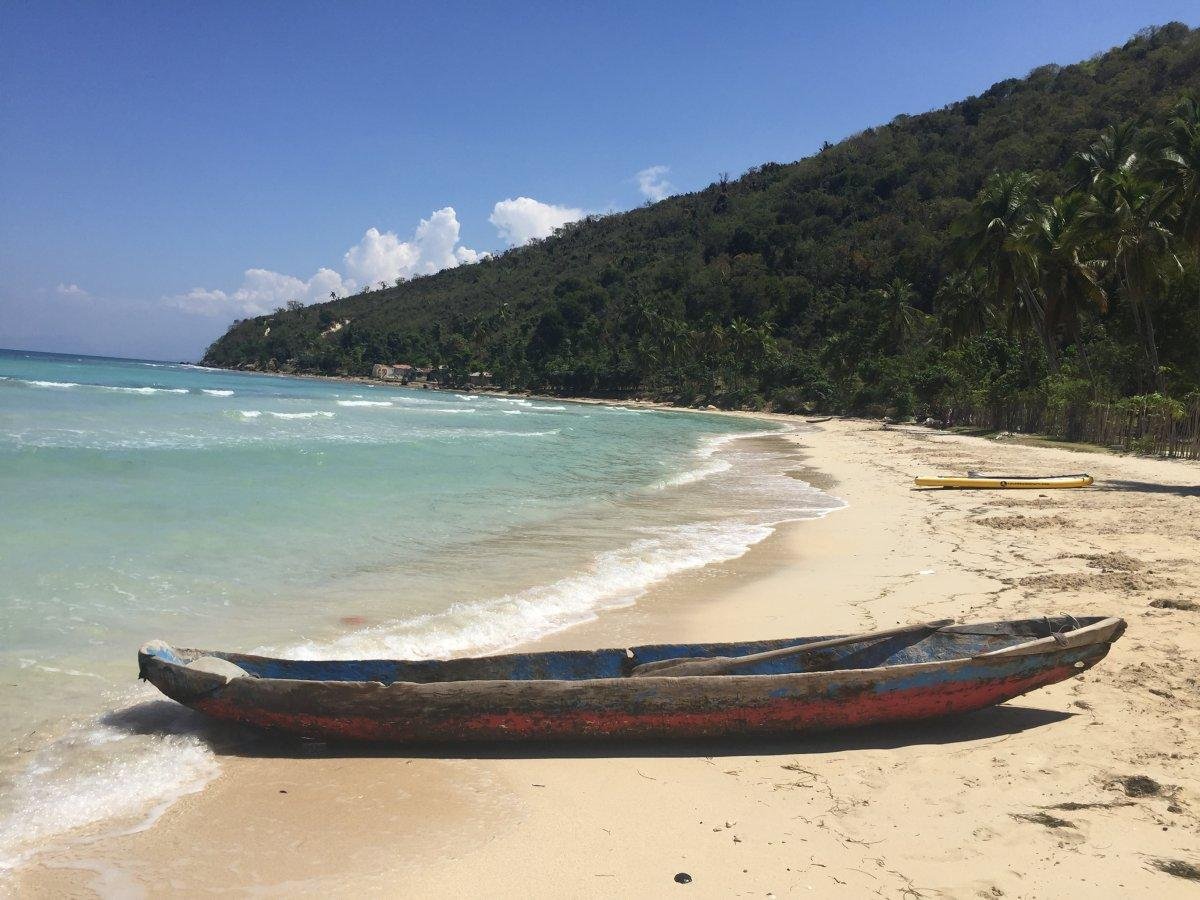
Just outside Jacmel is Bassin Bleu, a cluster of emerald pools fed by waterfalls. Note the weather before making this trek: rains turn the water a chalky color that won’t make the swim any less refreshing, but will spoil your photo op.Haiti’s best-kept secret is its beaches. Bananier Beach (BananierBeach.com), accessible only by boat, is available for private rental through the operators of Port-au-Prince’s La Lorraine Hotel (lalorrainehaiti.net). For $300 (covers up to four adults), they’ll set you up with transportation, food, drinks and a weekend’s accommodation in a spartan two-bedroom villa along this palm-lined paradise. You’ll have your own private beach area, with other people using nearby areas down the beach during the day.

Bananier, an idyllic southern Haiti beach accessible only by boat, is available for private rental at an affordable price. (JESSE SERWER)
Kabic, about a 15-minute drive from Jacmel, is the only beach in Haiti where you can rent a surfboard. The sport arrived here in 2010, when an American doctor volunteering in Jacmel raised funds to import boards for local youth. Now young men, those same kids run the Surf Haiti (Surfhaiti.org) concession across from La Reference restaurant, where they can also be hired for lessons. The organization hosts July’s Surf Haiti Festival, which last year played out side by side with Kabic Fest, a Kreyol music festival. The dual events drew a mix of local music fans and international surfers, offering a glimpse into Haiti’s promising future as a niche tourism destination.
If you go...
Getting there:Jetblue and American Airlines offer daily direct flights between JFK and Port-au-Prince, starting at around $400 round-trip. Spirit Airlines flies from LaGuardia, with a connection at Fort Lauderdale, with prices starting at around $350.Stay:Standard rooms at the Marriott Port-au-Prince start at $144 a night; discounts are available on reservations booked 14 days or more in advance. Standard rooms at the Hotel Oloffson are $100 a night; bungalows are $125-150; suites are $200. Rooms at Hotel Florita range between $58 and $188 a night.Getting around:First-time visitors to Haiti should hire a reputable guide, or travel with a tour group. Safety remains a concern in Haitian cities, while weathered infrastructure presents challenges for drivers. Jean Cyrille Pressoir, a knowledgeable former journalist, offers custom packages through Tour Haiti (facebook.com/tourhaiti). Agence Citadelle (agencecitadelle.com), a concierge service operating in Haiti since 1946, boasts a stellar reputation.BY: JESSE SERWER | NEW YORK DAILY NEWS | Thursday, February 1, 2018
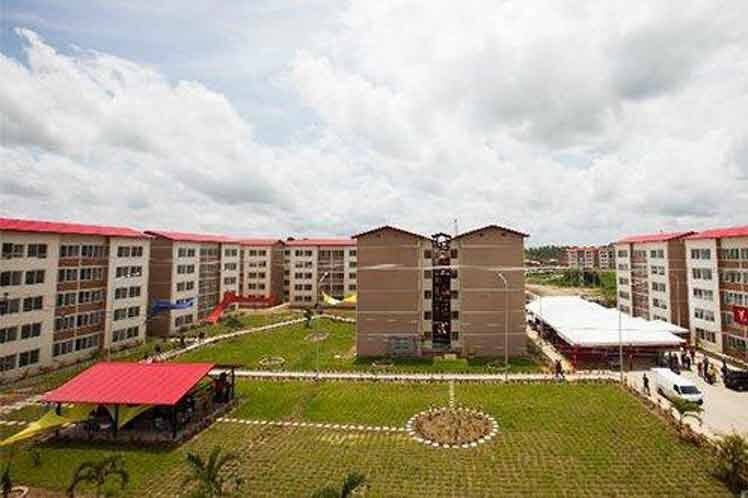
Haitian Government Will Build About 2,000 Houses
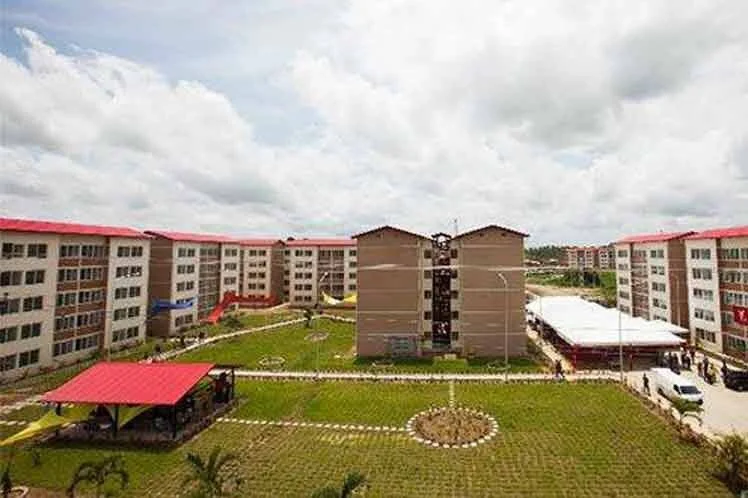
Port-au-Prince, Nov 8 (Prensa Latina) The Haitian government is implementing today a program to build social housing for the victims of Hurricane Matthew, which hit the country in 2016.Over 2,000 houses will be built in the departments of Nippes and Grand'Anse, as part of the Caravan of Change project promoted by the President Juvenel Moise, thus fulfilling one of his campaign promises.According to a government statement, the construction work has already begun Fond Rouge (department Grand'Anse) in which 600 houses will be built, while another 600 will be built in Nippes and 800 in the south of the country.Hurricane Matthew left in Haiti a material loss valued at over two thousand 700 million dollars, and some 175,000 people lost their homes.By PLEnglish | November 8, 2017
Haitian Gov’t Donates Relief Items To TCI
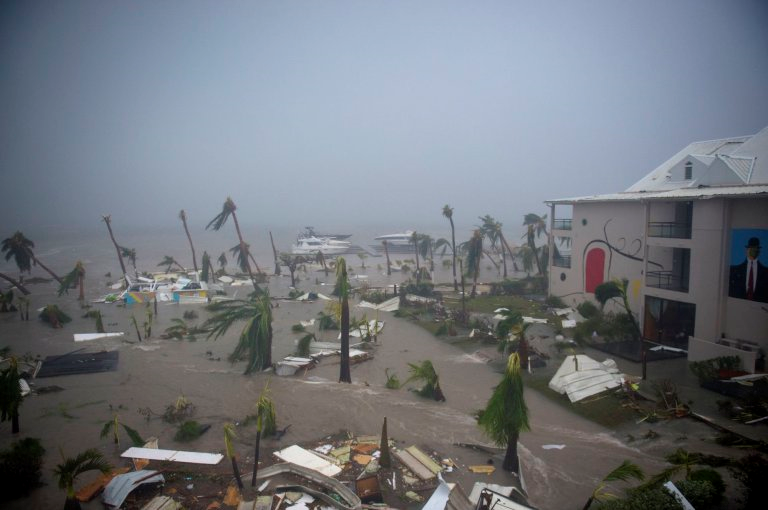
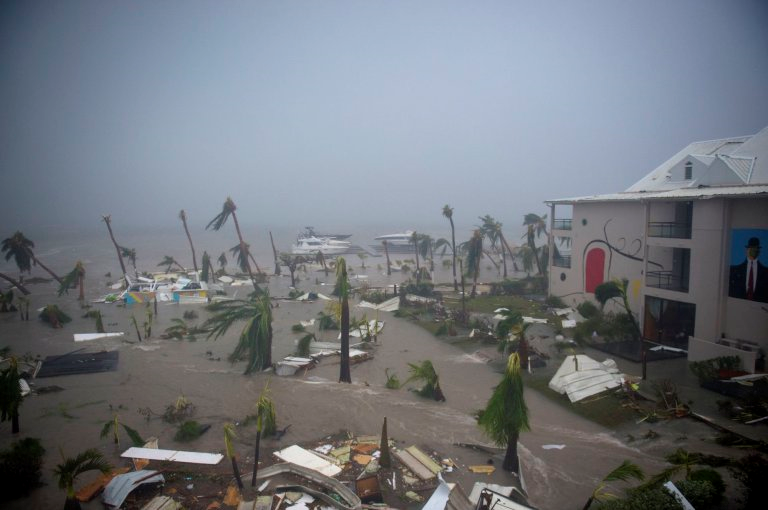
A LARGE number of generators and building supplies were the latest aid donations received by the Turks and Caicos Islands Government this week.The Haitian government donated 630 generators, 1,000 sheets of plywood, 4,500 tarps, 2,000 sheet rocks and 4,000 metal roof sheets.The donation arrived in Providenciales on October 30, direct from Port au Prince, Haiti.Haitian consulate Adolphe Jacques commented on the donation, stating that the Haitian government was committed to providing assistance to neighbouring Caribbean countries."After the passage of hurricanes Irma and Maria that caused a lot of damage to the TCI, in the spirit of solidarity and fraternity, the Haitian government on behalf of the people of Haiti decided to grant an aid relief consisting of building materials,” he said."It is a simple gesture of support to our neighbour, the TCI, where so many of our compatriots reside and even consider this ‘beautiful by nature’ as their second home.”Coordinator of the initiative Stan Wojewodzki said that his vision was to see Caribbean countries unite and help each other in their times of need.He explained how the donation was made possible."I am currently an advisor to the Haitian presidency, but first and foremost, I am a resident of the Turks and Caicos and I have invested interest in seeing that the Turks and Caicos gets back on its feet immediately after the hurricanes."After both hurricanes, I contacted senior authorities in the Turks and Caicos Islands to ask exactly what was needed in immediate relief aid."The Department of Disaster Management and Emergency Services submitted a list of essentials which I then submitted to the Haitian presidency and suggested that Haiti show a gesture of good will and fraternity to the Turks and Caicos Islands.”He added that time for relief was soon closing, so all that can be done should be done, at a Government level, for those communities that are most in need.But at some point leaders need to sit down and think about what those 21 century policies are going to be, in terms of construction and interregional trade, he said.By Daisy Handfield for Turks and Caicos Weekly News | November 6, 2017
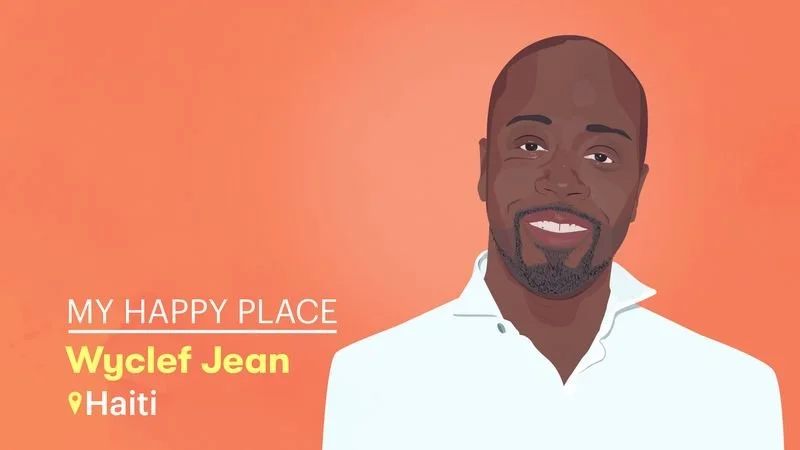
My Happy Place: Wyclef Jean Reveals His Hidden Paradise In Haiti
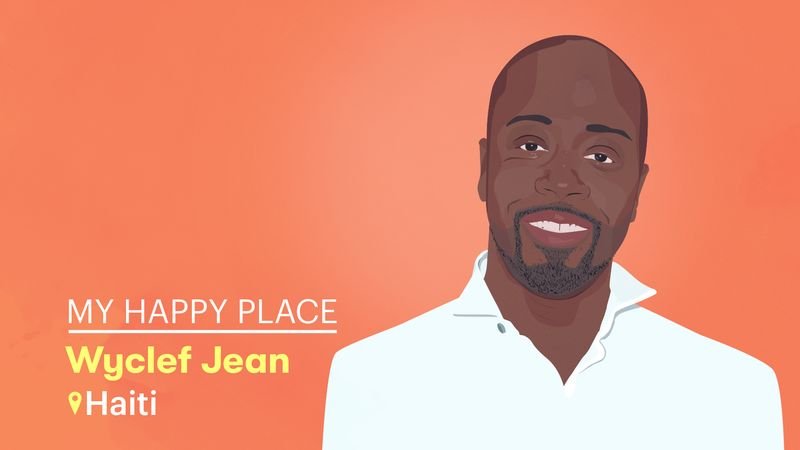
In My Happy Place, we talk to some of our favorite people about their emotional connection with an unforgettable destination.
Wyclef Jean is one the biggest musical names to ever come out of the island nation of Haiti. His star first rose as a member of the famed hip-hop group the Fugees and continued to climb as Jean pursued a career as a solo artist, collaborating with everyone from Shakira to Young Thug. A three-time Grammy award recipient, Jean has never forgotten his home country of Haiti and regularly extols his love for the country through his music. Mic caught up with Jean at an October benefit for VH1’s Save the Music Foundation, which is dedicated to bringing instrumental education to U.S. public schools.For Jean, there’s one place in Haiti that he can’t forget. "It’s like a magical river. It’s called Saut d’Eau," he said. Saut d’Eau is the name of a town and 100-foot waterfall about 60 miles north of Haiti’s capital, Port-au-Prince.

Saut d’Eau -- or Sodo in Creole -- is a place where natural beauty and Haiti’s rich history meet. The towering waterfall was created by an earthquake in the mid-1800s. According to local lore, shortly after a man saw the Virgin Mary appear near the waterfall. Saut d’Eau became a sacred site, and now, as Jean explains, "they have great ceremonies" every year.

The annual festival at Saut d’Eau occurs in mid-July, when Haitians, tourists and members of the diaspora travel to the waterfall to take part in the festivities. Attendees bathe in the water, hoping it will rid them of sicknesses or bring them good fortune. Both the Virgin Mary and her Vodou analog, the Haitian spirit Erzulie Dantor, are associated with the waterfall.Vodou -- more commonly spelled as "voodoo"-- is a key part of Haitian culture, and stems from its colonial history. When French colonizers made African slaves in plantation colonies like Haiti practice Catholicism, many combined the religion with indigenous African gods, giving birth to Vodou. That’s why Vodou spirits, like Erzulie are often so similar to Catholic religious figures like the Virgin Mary.

Music is woven into the yearly Saut d’Eau festivities. "You go out there, a lot of music is played," Jean said. "The style of the music is called rara. Rara is the roots." During the festival, rara musicians lead a procession from a church in Saut d’Eau to the waterfall. The main instrument used in rara is a bamboo or metal cylinder called a vaksen, which is accompanied by drums and other percussion instruments.
Rara is also played during Easter and Haiti’s equivalent of Mardi Gras, Carnival, which happens every year in the weeks leading up to Lent.

Jean hasn’t always had such a rosy relationship with his home country. After a catastrophic earthquake upended Haiti in 2010, his charity Yéle was accused of overspending on travel and luxury office expenses, as well as not fully paying its contractors. Jean responded to criticism in 2010 saying, "I never would ever take money for my personal pocket when it comes to Yéle," and that he has "always been committed to the people of Haiti." Despite being roiled by the Yéle controversy, Jean remains dedicated to uplifting his country, and he released a song named "Lady Haiti" in February 2017. For Jean, the synesthetic combination of music, nature and religious ceremonies make the Saut d’Eau waterfall and festivities one of the most treasured pieces of Haiti. And at the end of the day, it sums up what Jean loves so much about his native home: "You chill. You meditate. You enjoy nature."By: Benjamin Moe for Mic.com | November 6, 2017
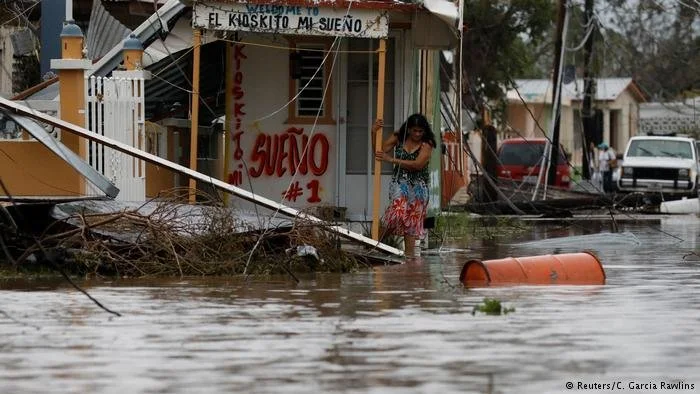
Lessons from Haiti for Puerto Rico: Charity Is A Poor Tool For Rebuilding A Country
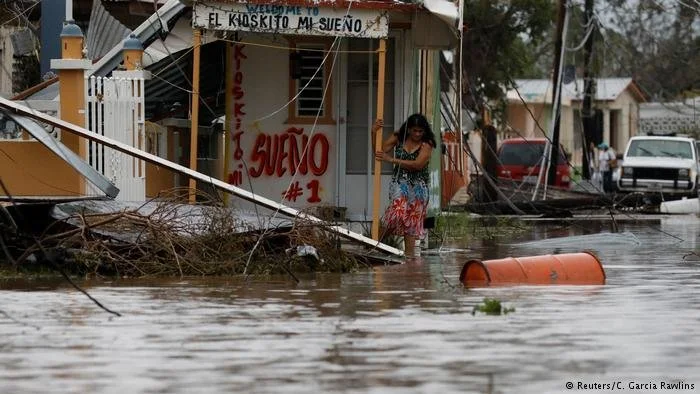
Charitable aid solves immediate problems, but long-term recovery needs to address root problems, too.
When an earthquake shattered the capital of Haiti in 2010, they learned the hard way that charity is a great tool for disaster relief but an often very poor one for rebuilding countries. After seven years and over $3 billion dollars in charitable aid deployed, post-earthquake Haiti has come to serve as the standard for what not to do in disaster relief. In the wake of the hurricanes that devastated Puerto Rico, St. Thomas and other islands, Haiti offers critical lessons about how to rebuild the region in a sustainable way.
Finance has largely been a destructive force in the Caribbean — especially in the case of Puerto Rico. But ironically, finance may also have just the right elements that can enable the island to rebuild in a way that doesn’t just recreate the same level of inequality and fossil fuel dependency present before the hurricane.
When it comes to rebuilding a country, not all resources are created equal. Charity and donations can help in the short-term, but harm the economy over the long-term. Private capital can help local businesses get back on their feet, but also perpetuate entrenched inequality. Rebuilding efforts can seem beneficial, but end up going to waste when they don’t account for the needs of communities. Finance and private capital can play a huge role in rebuilding Puerto Rico, but we must draw key lessons from what went wrong in Haiti to ensure that this time, we get it right.
Charity solves immediate problems, but not root problems. In the case of Puerto Rico, it’s easy to point to the hurricane as an “act of God” and look to aid to try to return to “business as usual.” But business as usual was not working so well in Puerto Rico long before the storm hit. As The Atlantic reported, 65 percent of Puerto Rico’s electricity grid was down this summer, with hundreds of millions in deferred maintenance, far before Hurricane Maria accelerated its permanent demise. The main problem here isn’t natural disasters, it’s that extractive finance has become the norm, and communities get left behind. Rather than making investments that build community wealth and renewable infrastructure, finance favors the quick and easy options that provide quick money but don’t fuel long-term development. Charity can rebuild torn-down bridges, but it’s not enough to rebuild a full economy — especially one that is based on an extractive financial model.
Aid is external, but recovery is local. After the disaster settled and Haiti started to find a new normal, the prevalence of imported food items sustained the decline of the local economy. Donated clothes, materials, food and medical supplies — all sent with good intentions by charitable organizations — inundated the country, and local vendors, both micro and commercial, could not compete. Even donated services, such as volunteer doctors, shifted the balance and eventually made it very hard for local doctors to get jobs in hospitals. Why hire the local doctor when the foreign doctors work for free?
If Puerto Rico can learn anything from Haiti, it would be to take ownership of their own recovery and get local businesses back on their feet. So far, some communities have mobilized to support each other and are leading relief efforts by coordinating efforts and mapping needs. Now businesses need help re-opening their doors and finance can help fill this gap in more ways than one. Small local businesses need some small working capital to get moving again, and private investment can play a critical role here. Larger businesses with track records and histories can be supported in rational, non-extractive ways.
Let’s get the charitable dollars flowing to address immediate needs in Puerto Rico — and then invest in a more sustainable future. Just as private citizens are stepping in to address the lack of charitable action from the U.S. government to its own people, private capital can do the same. But rather than cementing the extractive practices of the past, we can invest in the creation of a more sustainable future. Puerto Rico’s power grid was in shambles before the storm; while short-term repairs are crucial in order to restore power to citizens, this is an opportunity to invest in the creation of a renewable energy infrastructure similar to states like Hawaii. Rather than further the expansion of U.S. mainland chains that pay low wages with minimum benefits, investors can support local businesses that focus on quality job creation and expanding local ownership. Let’s not rebuild the old economy — let’s start investing in the new economy; one that is sustainable, generative and just.
We missed this opportunity in Haiti — let’s not miss it in Puerto Rico.
By:Morgan Simon, Isabelle Clerie for Salon.com| November 6,2017

Cafe Erzulie’s Haitian Spirit of Love

On any given night at this bar, named after the vodou goddess, there might be events like Afrofuturist lecturers, lobster festivals, or live jazz.Erzulie, the Haitian spirit of love and beauty, holds Thursdays sacred. After reading a longer list of her preferences, it may seem that the vodou goddess had a hand in more than just the name of this new café-cum-cocktail-lounge in Bushwick. Erzulie likes pink and light blue (the color of the floor tiles), sweet-smelling flowers and sparkling wine (provided in the form of the bubbly Kir de Jacmel), and small cakes (sticky buns are sold at the counter). The storefront is also home to Flowers by Leslie, a fifteen-year-old plant shop that was struggling to make rent. Instead of displacing it, the Erzulie owners preserved it as a business, and as a drink. Now patrons can browse the lilies and the basil for sale near the front on their way to grab a Flowers by Leslie cocktail, a pleasantly sour medley of vodka, mint, and St. Germain with crescents of cucumber. If they move farther along, to the back patio, they may chance on an event that would make Erzulie smile: on any given night, there might be Afrofuturist lecturers, a Jamaican lobster festival described as “Kingston meets Kennebunkport,” or live jazz. One evening, a steel-drum player, backed by a snare and an electric bass, performed an instrumental cover of Sam Cooke’s “Bring It on Home to Me.” Around eleven, as the musicians started tapping out the notes to “Signed, Sealed, Delivered,” a listener in red jeans and a blue button-down leapt up to become their vocalist, singing through the chorus about a dozen times. When the song finished, she twirled over to the band and asked if they knew her. They did not. “It’s all good!” the mysterious singer said. “I’ll see you next Thursday!” Was it the goddess herself? Perhaps. Thursday, after all, is her holy day. By Neima Jahromi | October 30, 2017
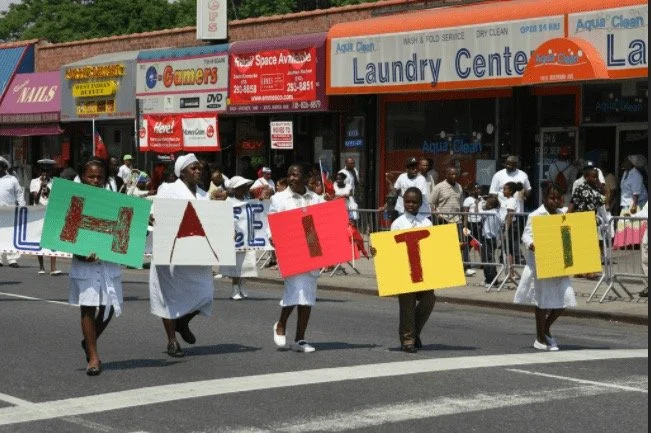
Brooklyn Official Calls For Designation Of “Little Haiti” In Flatbush
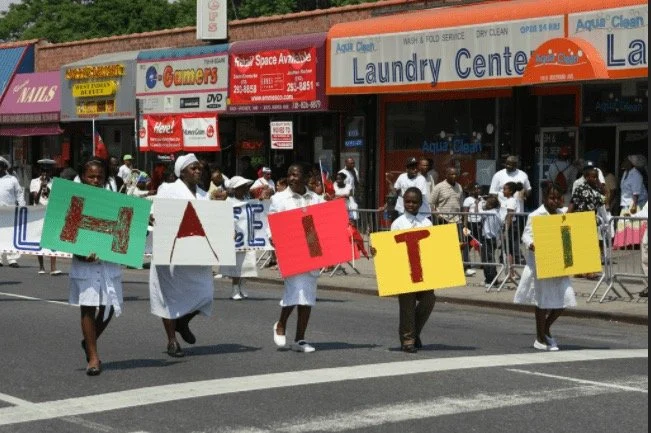
 BROOKLYN, NY — An effort to name parts of the Flatbush section of Brooklyn “Little Haiti” plunged into controversy last week when a local political operative blasted the idea as divisive and misguided.Haitian community members and leaders called on support from the mayor for the establishment of “Little Haiti” in the same area that was designated “Little Caribbean” last week.Little Caribbean would begin at Brooklyn College and run along Flatbush Avenue to Empire Boulevard.“The Haitian community supports the designation of both ‘Little Haiti’ and ‘Little Caribbean,'” said Assemblymember Rodneyse Bichotte, the first Haitian-American to be elected to the State Legislature from New York City. Bichotte represents the 42nd Assembly District which encompasses the communities of Ditmas Park, Flatbush, East Flatbush and Midwood.
 While the proposal has garnered support from some in the community including the Haitian American Caucus, Haitian American Business Network Chamber of Commerce and Haiti Cultural Exchange, the proposed “Little Haiti” has also been met with criticism.In an email to Bichotte and a host of other elected officials, including Council Member Mathieu Eugene and Rep. Yvette D. Clark, Ernest Skinner, a local community organizer and activist, condemned Bichotte’s efforts to co-name the Flatbush area “Little Haiti.” He called the move “misguided” and one of “division.”“When did Haiti stop being part of the Caribbean? This is the same insularity which sunk the fledgling Caribbean Federation,” he said in the email. “Sowing division may be why Haiti has never been able to reach its full potential and why it is considered a Fourth World country despite the noble start it gave to the Independence movement among people of color.”Bichotte has since sent a letter to Skinner calling for a public apology.“We support the Caribbean community. We are part of the Caribbean community,” the letter reads. “Although you have supported Haitian Americans and Haitian initiatives in the past, your statement clearly shows that your heart was not in it and thus erases any and all efforts.”The letter, which was signed by 11 Haitian community leaders and groups, including the Haitian Roundtable and Assemblymembers Michaelle Solages and Kimberly Jean-Pierre, emphasizes the various Haitian-related initiatives that highlight the history and culture of Haiti. She lists the street co-naming of Nostrand Avenue with Toussaint L’Ouverture Boulevard, the annual Haitian parades on Nostrand Avenue and the establishment of the Haitian Studies Institute (HSI) housed at Brooklyn College.“We were taken aback by the lack of engagement that has been shown to many of the elected officials and key stakeholders within the Haitian community throughout the overall process,” Bichotte said.The designation for “Little Caribbean” was initiated by Flatbush native Shelley Worrell, founder of CaribBEING, a Brooklyn-based organization dedicated to showcasing Caribbean culture. She has been working on the designation for roughly two years and saw it as an opportunity to support the existing businesses in the area, as well as, position the area as a tourist attraction.Councilman Jumaane D. Williams is the designating councilman for the initiative and is encouraging “more fruitful dialogue” to mitigate tensions.“My office is looking forward on working to pursue both an official ‘Little Caribbean’ and a ‘Little Haiti,'” said Williams. “The words in the letter were hurtful; I understand the community’s concern and I certainly hope an apology is forthcoming, and deservedly so.”There were conversations about a “Little Haiti” long before there was one for a “Little Caribbean,” Bichotte said in a letter to Mayor Bill de Blasio.The idea for a “Little Haiti” emerged several years ago. Bichotte and Williams, whose districts encompasses one of the largest Haitian constituencies in New York, discussed the matter but temporarily tabled talks on the designation to focus on advocacy for HSI.The plan was to revisit the idea after HSI was off the ground.According to Bichotte, the decision to name Flatbush Avenue “Little Caribbean” was done without community support or involvement.“Haiti has had a unique position within the Caribbean — it is in the Caribbean, but not of the Caribbean,” said Bichotte. “Although Haiti is geographically part of the Caribbean, the Haitian community has historically been singled out and excluded as a member of the greater Caribbean community, which is why Haitians have had to build separate communities and organizations in order to survive.”When Haitians migrated to Brooklyn in the 1970s and 1980s, many faced discrimination from Black and Caribbean Americans who lived in the area. Cultural tensions between the French-Creole speaking immigrants and their English-speaking counterparts spurred division within the greater West Indian community.Old wounds have been opened as the voices of the community and elected officials have not been engaged throughout the designation process,” Bichotte said. “Although, the journey to unity has come a long way between island politics and differences, having both designations would be ideal to acknowledge the Haitian people’s struggle. If all goes well, the designation of ‘Little Haiti’ would be established first in order to be encapsulated within the designated area of the ‘Little Caribbean.'”For Samuel Pierre, co-founder of Haitian American Caucus, the idea of a “Little Haiti” is welcomed but should also help put a light on other issues in the community. The nonprofit provides personal and professional development opportunities for the Haitian community and operates out of Flatbush.“Designating the Flatbush area as ‘Little Haiti’ speaks to the vibrancy that the Haitian community has added to Brooklyn. At the same time, we must use this renewed attention to raise awareness on socioeconomic issues that are barriers to success for many of our people.”By Vania Andre | October 2017
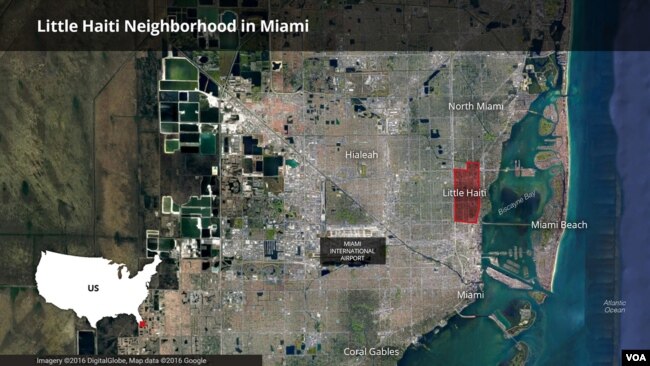
Post-Irma, Miami's 'Little Haiti' Continues to Struggle
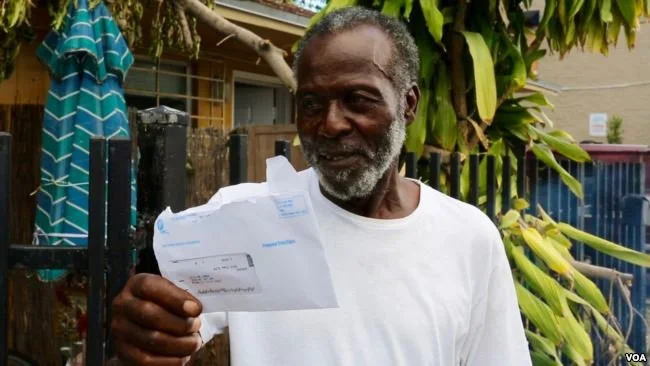
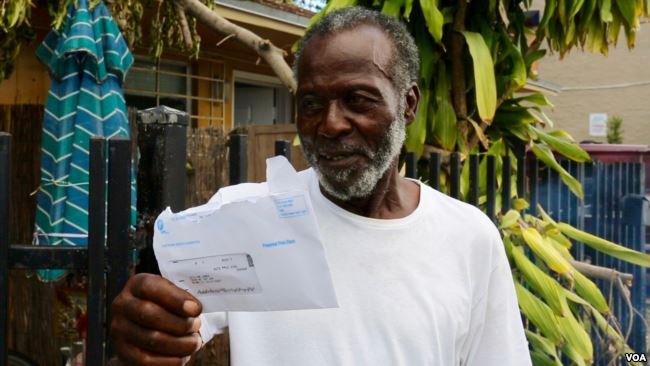
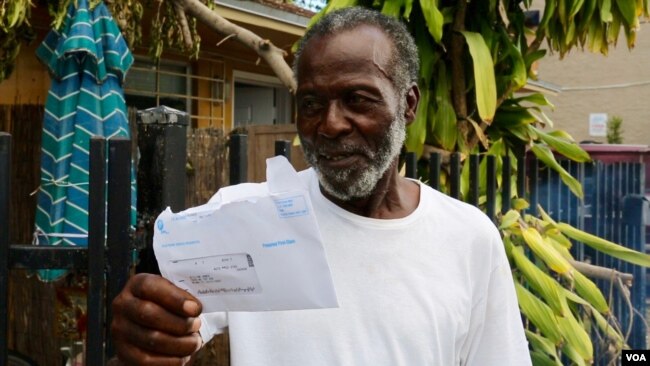 For the diverse neighborhood — strong in resemblance to its namesake country, and now plush in scattered palms — a humid 32-degree celsius weekday afternoon with no electricity, and no back-up generators is wearing on an already wary community.With their stocked coolers quickly diminishing, along with all their perishables, the family barbecues can only last so long.‘We really need help’
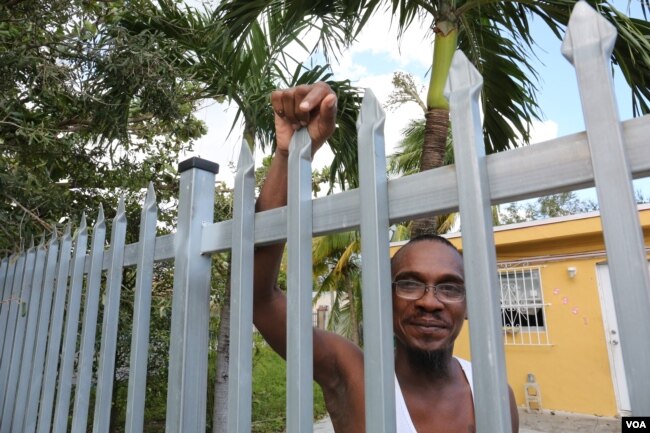
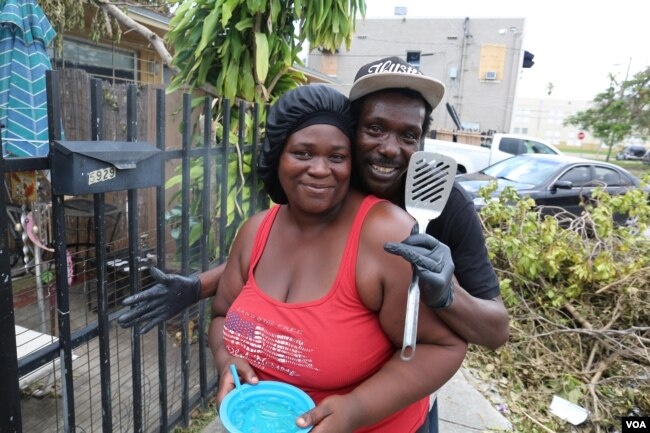 Anthony Bennett, like others in his community, is frustrated that wealthier neighborhoods have begun to see their lights turn on, and not theirs.“We all bleed the same, so we feel like if they got lights, we should have lights too,” Bennett said. “We shouldn't be over here suffering waiting till next week or the week after.”
 Passing by Bennett’s home, neighbor Haitian-native Sylvie Lucien borrowed a purple crayola marker, and penned a cardboard sign asking for assistance.“We have newborn babies and disabled elderly...we desperate,” Lucien read aloud. “We need help. We really need help.”For Lucien, the personal financial struggles she endures began long before Irma. But the passing of a hurricane, she says, reveals a devastating reality: if it were worse, she might not have survived.“You can't go nowhere,” Lucien said, frustrated. “We were going to stay here and die because where can you go with no car, and nobody picking you up?”
 Ortiz, on the other hand, says she and her husband had a choice, but decided to stay and not risk separating from their pet dog. Next time, she admits, the decision will be easier.“I couldn’t handle it again,” Ortiz said.By: Ramon Taylor | September 13, 2017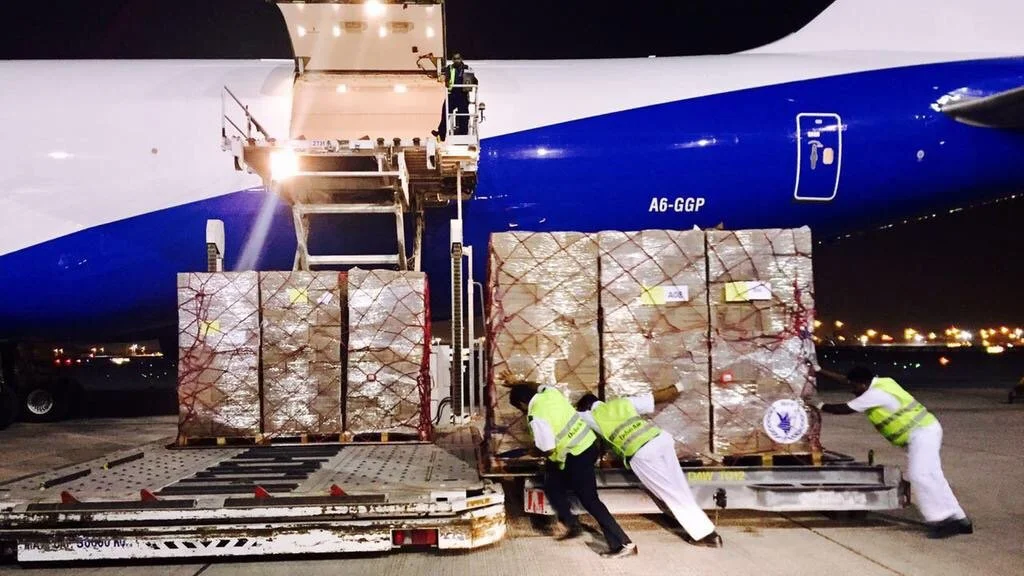
Dubai sends Dh712,500 emergency airlift to Haiti
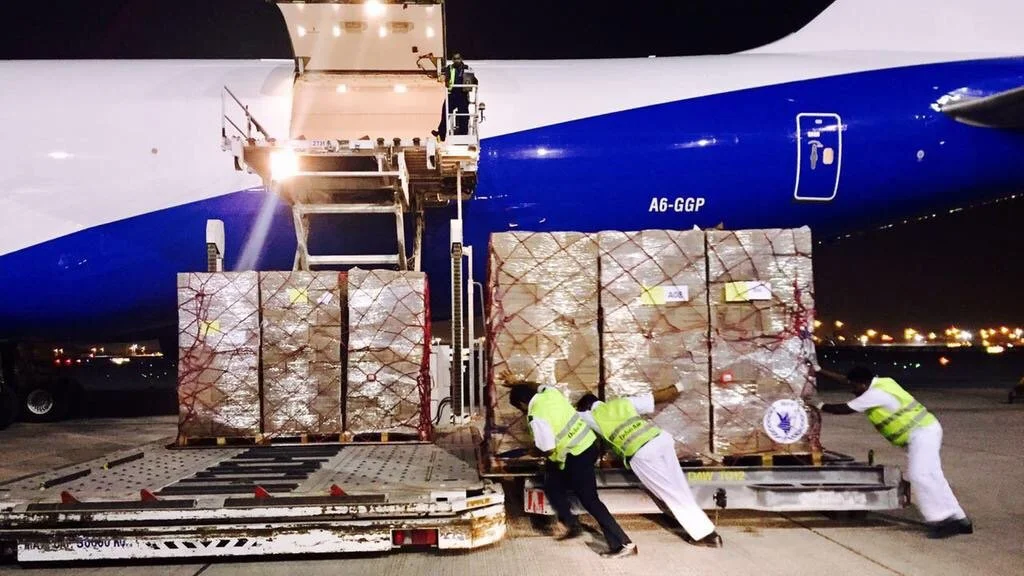
His Highness Sheikh Mohammed Bin Rashid Al Maktoum, Vice-President and Prime Minister of the UAE and Ruler of Dubai, has provided, upon request from the United Nations World Food Programme and UNHRD partners, the B747-400 aircraft which flew out of Dubai International Airport at 4:30 am, September 7, to Port-au-Prince, Haiti airport. The plane is expected to land in Haiti tomorrow, the 8th of September 2017, at 8:00 pm UAE time.The Dubai Air Wings aircraft to Haiti carried more than 90 metric tonnes of key relief items, valued at more than $194,000 (Dh712,500), made available by the International Humanitarian City members.The air cargo transporting aid on behalf of the World Food Programme, Catholic Relief Services, and CARE came in response to the forecast of a monster storm, Hurricane Irma, as it bears down South America, and is expected to hit the Dominican Republic, Puerto Rico, Haiti, and Cuba in the coming days.Upon hearing about Irma, believed to be one of the most powerful Atlantic storms ever recorded, a quick mobilization was crucial to be able to reach the destination before any potential closure of airports. It was made possible thanks to the coordinated efforts of IHC and its members, under the chairmanship of Her Royal Highness Princess Haya Bint Al Hussein.HRH Princess Haya hailed the emergency airlift as a symbol of the UAE commitment to humanitarian assistance. "This rapid response is the fruit of an unprecedented cooperation and a proof of our robust support to vulnerable populations all over the world," she said.Among the relief and survival items, on board are food and non-food supplies: 2000 tarpaulins, enough high-energy biscuits to feed 47100 people over 3 days, mobile storage units, lighting equipment, water purification kits, and pool testers.This is the fifth relief plane sent in 2017 by IHC with the support of HH Sheikh Mohammed Bin Rashid Al Maktoum to crisis and disaster-stricken areas; earlier this year, aid was air dispatched to Madagascar, South Sudan, Uganda and Iraq.Similarly, HRH Princess Haya flew last year in October 2016 to Haiti and personally oversaw the delivery and distribution of relief supplies after hurricane Matthew had demolished the island.By: Khaleej Times |September 7, 2017
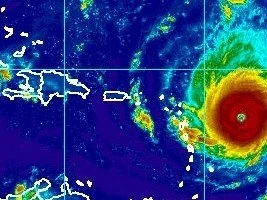
Haiti - FLASH : IRMA in category 4, Haiti in yellow pre-alert
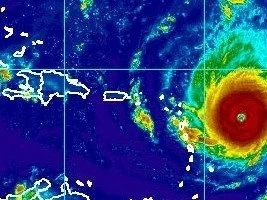
This Tuesday morning Hurricane IRMA with maximum sustained winds at close to 150 mph (240 km/h) and higher gusts went into Category 4 on the Saffir-Simpson hurricane wind scale. IRMA was located this morning at 16.6N 57.0W, 424km east of Guadeloupe and 1.220km southeast of the island of Hispaniola according to the National Oceanic and Atmospheric Administration (NOAA).IRMA is moving westward at nearly 14 km/h and this general trajectory is expected to continue today, followed by a shift towards the northwest this evening. A NOAA Hurricane Hunterplane is scheduled to be in the eye of Irma within the hour.Hurricane force winds extend outwardly up to 45 miles (75 km) from the center and tropical storms force up to 140 miles (220 km).IRMA could reach Haiti's north coast by Thursday to FridayOn Monday in Haiti, the Permanent Secretariat of Risk Management (SPGRD) triggered at midday, the pre-alert phase 1 to the level of yellow vigilance."The IRMA Center could cross the Lesser Antilles on Tuesday," said the Hydrometeorological Unit of Haiti (UHM) in its first bulletin of vigilance "The system should then continue to approach Haiti, retaining its characteristics of major hurricane adding "IRMA hurricane should place the country under the threat of storm winds in about three days. Heavy storms are expected to fall on the northern part of the country before gradually becoming widespread. A stormy sea could overwhelm much of the northern coast of the country."The SPGRD, together with the Directorate of Civil Protection (DPC) and the UHM, "demands that the Haitian population, particularly the inhabitants of areas at risk of flooding and land movements, to prepare and stay tuned to weather reports and safety guidelines that will be broadcast throughout the passage of this dangerous system."By: HL/ HaitiLibre | September 5, 2017
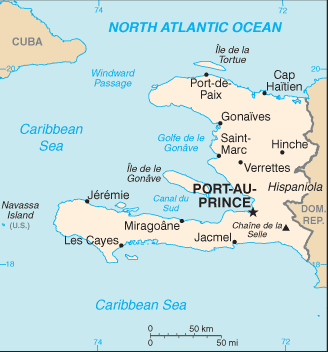
Police say US man shot multiple times and killed in Haiti
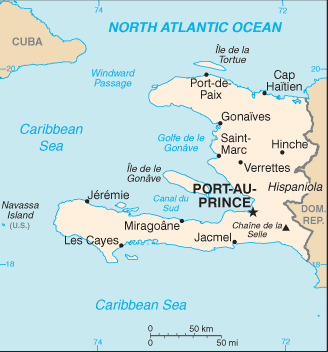
PORT-AU-PRINCE, Haiti — A Haitian National Police spokesman says a U.S. citizen was shot multiple times and killed by an attacker in the capital.Spokesman Garry Desrosier described the killing as an apparent “execution.” Desrosier said Sunday that the gunman was waiting for the 34-year-old victim as he left an upscale restaurant in the Petionville area of the capital.The victim was shot about 20 times and died at the scene Saturday night. A security guard was also wounded. There were no arrests and the motive was unknown.Desrosier identified the man as Benjamin R. Craft and said he was apparently Haitian-American. His hometown in the U.S. was not available.Copyright 2017 The Associated Press. All rights reserved. This material may not be published, broadcast, rewritten or redistributed.By: Associated Press August 27, 2017
Boat overturns off Haiti; 6 dead and at least 10 missing
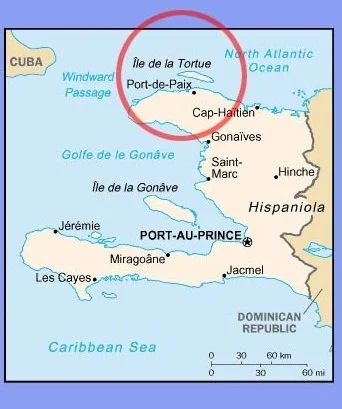
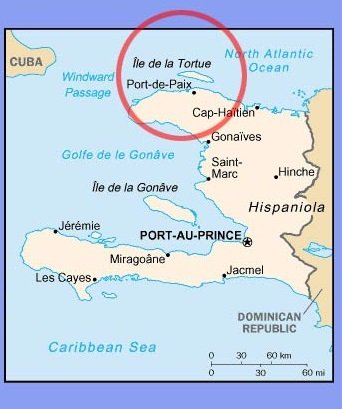
PORT-AU-PRINCE, Haiti — Authorities in Haiti say at least six people drowned and about 10 are missing after a boat overturned off the northern coast.Local Civil Protection agency representative Jose Rethone says 23 people have been rescued and a search is continuing for more survivors near the city of Port-de-Paix.Rethone says the boat overturned Thursday in rough seas as it was carrying people on a regular route between the island of La Tortue and Port-de-Paix. He says officials believe about 40 people were on board but there was no manifest.The vessels used as ferries in that area are frequently overloaded and poorly maintained.Copyright 2017 The Associated Press. All rights reserved. This material may not be published, broadcast, rewritten or redistributed.
China Extends Her Silk Road To Haiti
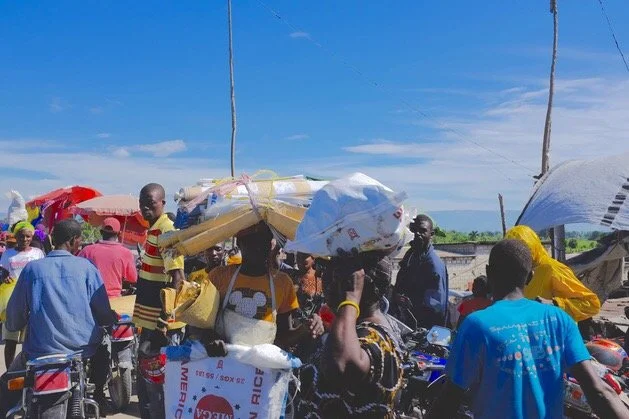
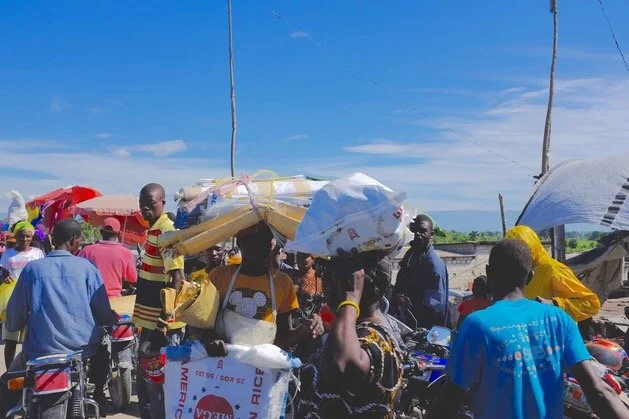
China plans to invest $30 billion in Haiti’s infrastructure according to the Haitian Press Agency (AHP). This week the Mayor of Port-au-Prince, Youri Chevry, hosted the signing of an agreement between the Haitian company Bati Ayiti (Build Haiti), headed by former Senator Amos André, and the Southwest Municipal Engineering and Design Research Institute of China.The agreement includes the construction of a 600 megawatt power plant to electrify Port-au-Prince, the construction of a new City Hall, markets, thousands of apartments, and eventually a railway from Port-au-Prince to the countryside. The center of the discussion was “the reconstruction of the main building of the Town Hall and the construction of several public contracts on the territory of the commune of Port-au-Prince,” according to LoopHaiti.20,000 workers will begin work before the end of 2017, backed by an initial infusion of $5 billion. The Chinese Government has a deadline of September 30, 2017 to unblock the funds. In the meantime, Bati Ayiti, the City of Port-au-Prince and their partners continue to work on the recruitment of staff.Last May, China’s president Xi Jinping hosted the first Belt and Road Forum (“One Belt, One Road”) in Beijing, offering hundreds of billions of dollars to over 100 interested countries for infrastructure projects. Haiti stands to be a beneficiary of the ambitious Chinese initiative, which is modeled on the ancient “Silk Road.” 2,000 years ago China opened up routes of trade that linked the civilizations of Asia, Europe and Africa.China now stands to have influence in the Caribbean corridor stretching from Cuba to Venezuela.Some analysts have compared the One Belt One Road enterprise to the Marshall Plan. After World War II, the United States was such a strong manufacturing entity that it was forced to seek markets for its industrial products. The Marshall Plan required that aid to Europe involve a quid pro quo of U.S. investment and imports.Today, China has an excess amount of industrial capacity. China is exceptionally skilled at infrastructure. Foreign investment provides an outlet for exports of labor and resources.“This accord may finally break the grip that the eternal exploiters of Haiti had for decades on the poor people of Haiti while they greatly benefited from favors and monopolies from corrupt governments,” says Bernard Sansaricq, the former Senate President of Haiti, in an email.Is it also possible that the Chinese initiative is less about altruistic globalization and more about finding markets for its industrial over capacity? Is China trying to lure Haiti into its geo-political orbit? Both motives may work together for the benefit of Haiti.It worked in Rwanda. Figures from the Rwanda Development Board indicate that Rwanda registered 45 Chinese investments from 2010 – 2016.The change in Kigali is stunning over the past 15 years. I have witnessed this transformation myself in multiple visits since 2004. The streets are clean and not a plastic bag in sight. A woman can walk the streets alone at midnight and feel as safe as on a moonlight stroll on Sanibel Island’s beaches.Chinese engineers built the country’s tallest building, Kigali City Tower, “a gleaming 20-story glass skyscraper; the building that houses Rwanda’s foreign ministry; various hotels, schools, and hospitals; and 80% of the country’s roads,” according to an article in Quartz Africa.There are still problems, of course, and outside development offers no guarantee of utopia. Competition for jobs remains fierce.As Ezili Danto of the Haitian Lawyers Leadership network suggests, China can capitalize on the failures of the Clinton Foundation failures in Haiti.“If Trump is too tied up with the Deep State and China leaves a bit of clean water, electricity, and road infrastructure- so be it. But anything done under the illegitimate (left-over Clinton/Bush establishment) government is worrisome. They put Jovenel (the current President) in to keep the status as is — the people too hungry, sick, and weak to fight back,” Danto says.See also this article on the Haiti Mafioso.A power plant to light up the roads certainly won’t be welcomed by the dark forces of the criminal mafias.“I’d have preferred to champion a U.S. government initiative, but it (the China investment) is what it is,” says Danto.HuffPost | August 4, 2017
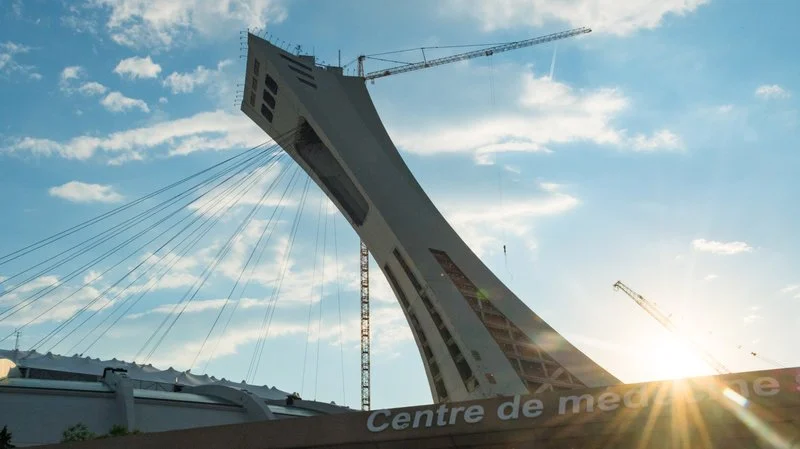
Olympic Stadium In Montreal Turned Into Welcome Center For Refugees From U.S.
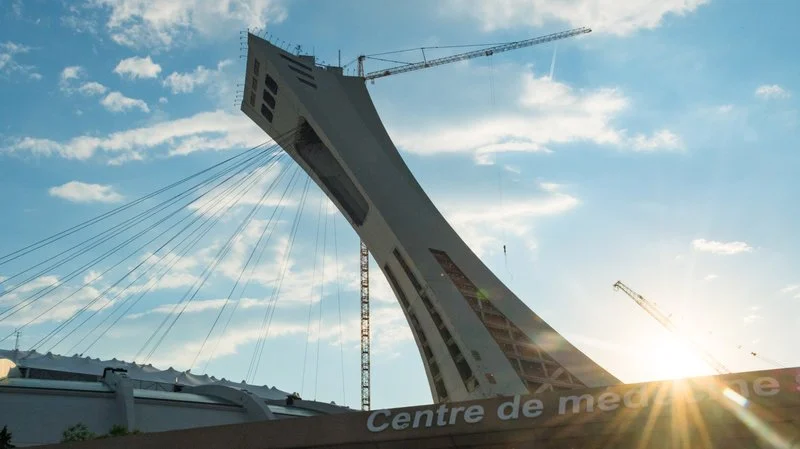
Faced with a flood of asylum seekers traveling from the United States into Quebec, Canada, local authorities have repurposed Montreal's Olympic Stadium and turned it into a refugee welcome center.A spokesperson for PRAIDA, the local government agency that helps refugees, tells the CBC more than 1,000 asylum seekers crossed the border into Quebec last month. "In comparison, PRAIDA helped 180 people in July 2016," the CBC writes.The vast majority of the asylum seekers are Haitians who initially fled the devastating earthquake in 2010, and whose future status in the U.S. is unclear under the Trump administration.The surge of refugees overwhelmed the YMCA facilities that are normally used to temporarily house new arrivals.So the agency turned to the Olympic Stadium — specifically, to the area by the concession stands, the CBC says.The first refugees to stay at the stadium were bused in on Wednesday, The Associated Press reports."Volunteers from the Quebec Red Cross helped set up the cavernous, concrete stadium for a temporary stay with cots and food in the rotunda," the wire service writes. "The stadium was the main venue of the 1976 Olympics. It has not had a main tenant since the Montreal Expos left in 2004."The stadium will be hosting up to 450 people for several months, but cannot provide shelter permanently, given the event schedule, the AP says.The Guardian reports on the transformation:
"It took just 24 hours for the stadium – built in the 1970s as a venue for the city's 1976 Olympics – to be converted into a welcome centre where the asylum seekers will be sheltered and receive help in finding housing and completing paperwork related to their asylum claims."So far, 150 cots – arranged neatly into rows among the concrete walls of a windowless area ... of the stadium – have been set up, along with access to showers and a cooking area."
The Haitians who make up the majority of the new arrivals are in a precarious legal situation in the U.S. Tens of thousands of people fleeing the disastrous earthquake were given temporary protected status in the U.S. under the Obama administration; that's not the same as asylum or refugee status, but it acknowledges a person can't return to their home country safely.The Trump administration extended that status for just six months — and urged Haitian refugees to "prepare for and arrange their departure from the United States." The administration cited "Haiti's success in recovering from the earthquake," although Haiti continues to struggle with a number of crises, including an ongoing cholera epidemic, a nightmarish sewage problem and a catastrophic hurricane.That helps explain why a sudden surge of refugees are leaving the U.S. As to why they're entering Quebec, the CBC cites the large Haitian community in Montreal."Obviously, there is a stronger attraction to coming to Quebec for Haitians than in other provinces," PRAIDA spokeswoman Francine Dupuis told the CBC. "They have the help of their community to get settled."But it's not clear if the Haitian refugees arriving in Canada will be permitted to stay, the CBC reports. The challenge is fundamentally the same as in America: A government evaluation of just how bad life is in Haiti."Asylum seekers originally from Haiti who have crossed the Canada-U.S. border could be deported back to Haiti if their application is refused because Canadian authorities deem Haiti as a sufficiently safe country," the CBC writes.NPR International August 2, 2017

First international medical training center in Haiti!

 Chargé d'Affaires Brian Shukan joined St. Luke's Foundation, the Haitian Ministry of Health, and the United States Agency for International Development (USAID) to inaugurate the first international medical training center in Haiti.The training center consists of two training and simulation rooms, a conference room, and an administrative meeting room. "This state-of-the-art medical training center will ensure that St. Luke staff and the greater Haitian medical community have a base to build and hone the most current skills they need to continue their vital work," said Shukan.The construction was supported by a $500,000 grant from USAID's Office of American Schools and Hospitals Abroad (ASHA), and the facility will host its first international conference, "The Haitian Acute Care and Emergency Care Conference" on April 28 and 29."Continuing Medical Education (CME) is a guarantee of quality in healthcare," said St. Luke Mission medical director, Dr. Marc Edson Augustin. "The conference will be the first of many such experiences at St. Luke's new training center, furthering our primary goal of bringing quality and dignified care to the most vulnerable."USAID/ASHA grants support the construction and purchase of equipment for medical institutions in Haiti. Additional recipients of ASHA grants include St. Boniface Haiti Foundation; Catholic Relief Services for equipment at Hospital St. Francois de Sales; Albert Schweitzer Hospital; and the International Child Care's training center and inpatient child care unit. Since 1979, ASHA grants have provided over $21 million in support to projects in Haiti.HL/ HaitiLibre HaitiVille
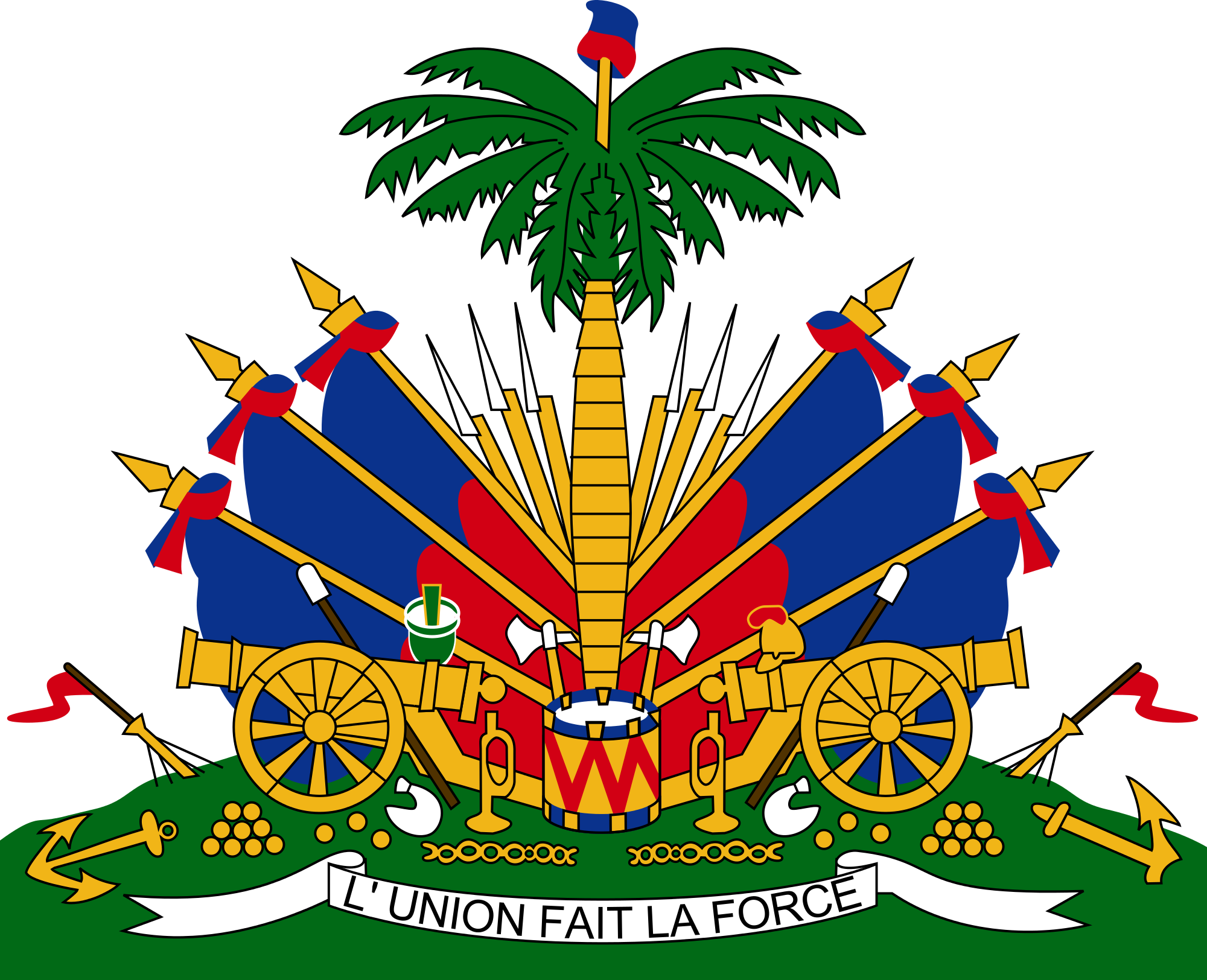
Haiti's new president taps medical doctor to be the country's new prime minister!
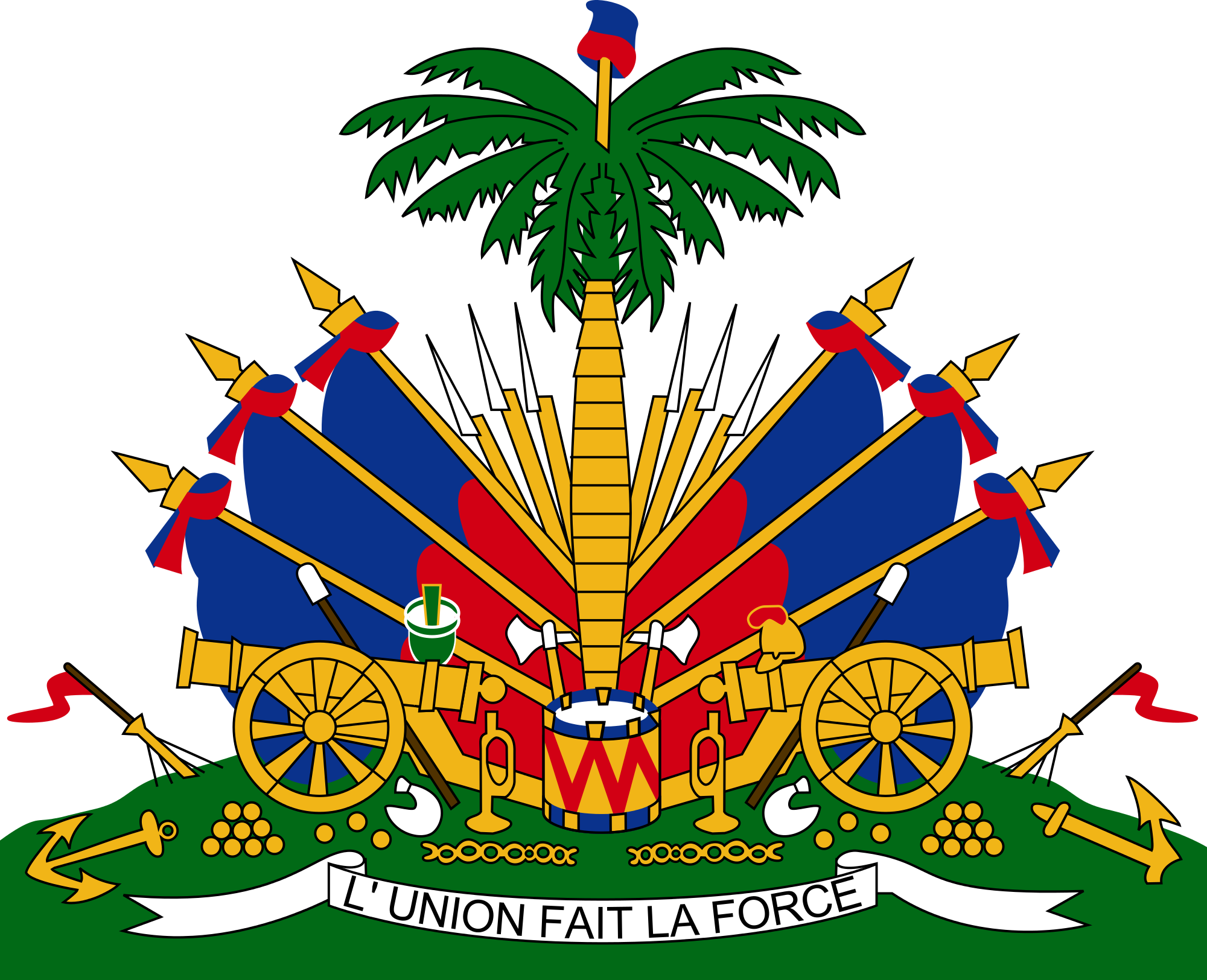
 PORT-AU-PRINCE - A relatively unknown medical doctor was tapped to be Haiti’s new prime minister, tasked with steering the government’s legislative agenda through parliament, President Jovenel Moise said late Wednesday.The choice of Jack Guy Lafontant as prime minister of the impoverished Caribbean country came two weeks after Moise took power as president.If parliament confirms Lafontant, perhaps best known as the president of the Rotary Club in the upscale district of Petionville, and allows him to choose other ministers, it would mark the country’s first elected government in a year.Moise announced the surprise pick on Twitter and noted that he consulted with the heads of both chambers of parliament on the selection. Moise did not indicate why he had chosen Lafontant. The two men are believed to be friends, according to local media.Haiti has been headed by a caretaker government since Michel Martelly, the last elected president and Moise’s political benefactor, stepped down early last year without a designated successor.Source: http://www.nydailynews.com/news/world
Wahoo Bay Beach with an exotic selection of three beaches and tropical surrounding
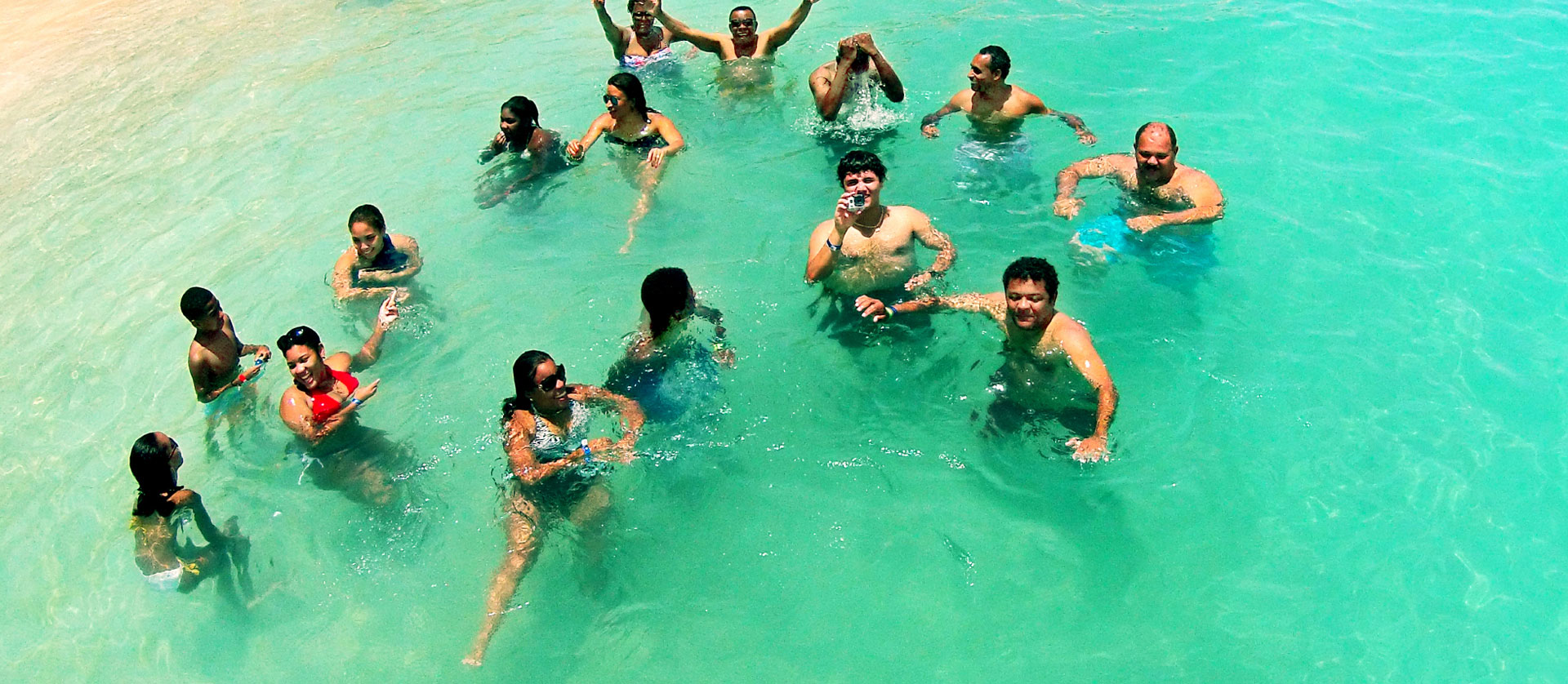 Wahoo Bay, an oceanfront paradise just forty-five minutes north of Port-au-Prince, pleasantly nestled between the majestic Matheux Mountains and the Gonave Bay, Wahoo Bay Beach will be your home-away-from-home during your voyage to the Caribbean. Wahoo provides the perfect backdrop for relaxing romantic escapes, productive business trips, adventurous family gateways and unforgettable events. While staying at our beachfront resort, enjoy picnics on the beach, snorkeling, floats and Kayaks, tennis with lighted courts, and mountain climbing.
