Places Places

Street Is Renamed in Flatbush, to Joy and Controversy

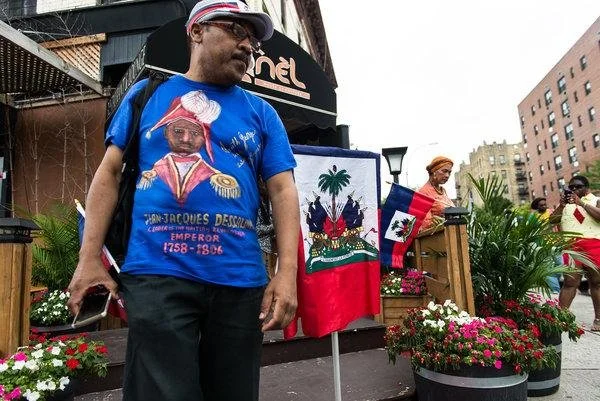
Stephania Casimir, a first-generation Haitian-American, remembers her parents talking about Jean-Jacques Dessalines, a former slave who became one of Haiti’s founding fathers, but not all of the details.

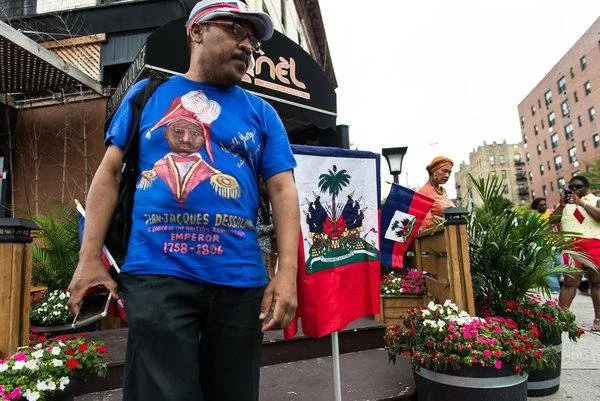
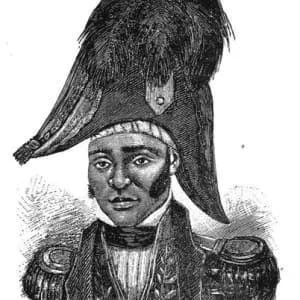
They came flooding back on Saturday on a street corner in the Flatbush neighborhood of Brooklyn as speakers explained why a stretch of Rogers Avenue was being co-named in honor of Dessalines, who declared Haiti’s independence after helping lead the revolt against France.

“This moment means so much to the Haitian community,” said Ms. Casimir, 26, a social worker. “It shows we are strong and powerful.”

As the paper bag covering the new street sign was removed by Assemblywoman Rodneyse Bichotte, the crowd began singing the Haitian national anthem. Those gathered said the decision, along with the recent ceremonial City Council resolution that designated Flatbush Little Haiti, meant that Haitians’ contributions to New York will not be forgotten.

“These street co-namings are the equivalent of placing your flag in the neighborhood,” said Laurie Cumbo, the City Council majority leader. “We have placed a Haitian flag in this neighborhood today for people here and the future to always know that this is a Haitian community.”

But the naming of Jean-Jacques Dessalines Boulevard — along Rogers Avenue between Farragut Road and Eastern Parkway — and the neighborhood designation were not without complications.

Some felt Little Haiti was redundant because the area had previously been christened Little Caribbean by another group. And the street co-naming was delayed because of Dessalines’s controversial history.

After Haiti’s victory against France, Dessalines became Haiti’s first emperor in 1804. Aware that the French wanted to re-enslave the country, Dessalines called for the slaughter of all remaining white Frenchmen. Thousands of white people were killed in the massacre, historians believe.

Historical figures are being re-evaluated across the United States, with several Southern cities removing Confederate monuments in recent years, and Mayor Bill de Blasio establishing a commission to examine statues in New York. In that climate, the City Council committee that vets street co-namings flagged the Dessalines name as possibly offensive.

“Everything is political,” Councilwoman Inez Barron of Brooklyn said. “This was not something that was done in the usual manner and passed with ease. This was a fight and a struggle.”

After a hearing, more research and behind-the-scenes pressure, the City Council approved the co-naming.

Laurie Cumbo, center, the City Council majority leader, and Assemblywoman Rodneyse Bichotte, left, passed out Haitian flags.Credit Idris Solomon for The New York Times

“The Council leadership team moved forward with the street renaming after a review of the issue and engaging with the community,” said Jennifer Fermino, a spokeswoman for Corey Johnson, the City Council speaker.

Ms. Bichotte, the assemblywoman, noted Dessalines’s contributions to world history: He helped Haiti become the second country in the Western Hemisphere to free itself from colonial rule and inspired other nations to pursue freedom. The Constitution that Dessalines created advocated equality and more equal distribution of wealth.

The massacre, supporters say, must be viewed in the context of war and is no different than historical acts that the leaders of other countries committed that would now be considered differently.

“As narrators, we get to define the narrative,” said Ms. Bichotte, the first Haitian-American woman elected to office in New York City. “No longer will the Haitian Revolution be a fluke, a historical accident or a nonevent. No longer will Jean-Jacques Dessalines be disregarded or portrayed merely as a tyrant.”

Not everyone supported honoring Dessalines. Street co-namings should be limited to local people who affected life in New York City, said Seth Barron, associate editor of City Journal and project director of the NYC Initiative at the Manhattan Institute.

“It seems like at a time when we are being careful about who we celebrate and commemorate, the question remains of why him?” Mr. Barron said. “I don’t know why New York City has to name a street for someone who is obscure to most Americans.”

Organizers say they hope the street will help educate the public. Flatbush is a center for Haitian culture in the United States, and Brooklyn has 90,000 Haitians, the third-highest concentration in the country, only after two counties in South Florida, according to an analysis by the Migration Policy Institute, a Washington-based think tank.

But gentrification is changing Little Haiti, which is bounded by Avenue H, Brooklyn Avenue, Parkside Avenue and East 16th Street. It is still full of restaurants and retailers that cater to Haitians, but many Haitian business owners and residents are facing the pressures of rising rent.

In 2000, 30 percent of the country’s Haitian population lived in New York State, many of them in Flatbush. That number fell to 20 percent in 2016.

Little Haiti BK, the group that organized Little Haiti, wants to use the designation to help small businesses remain in the neighborhood, erect a monument and build a cultural center.

The designation means more than ever, speakers said on Saturday, given recent slights by President Trump against Haitians and his decision to end a temporary program that allowed Haitians to live and work in the United States following the devastating 2010 earthquake.

“Our human dignity is under assault,” Representative Yvette Clarke said.

Marie Prosper, 35, a security analyst, saw the street co-naming as a chance to come together in spite of recent political developments.

“This corner is where the history of Haiti and the history of the United States meet,” Ms. Prosper said. “It represents the power of our ancestors and their strength.”

By: Jeffery C. Mays for nytimes.com| August 18, 2018

Read More
Places Places

New York City Council Approves Co-Naming Street In Honor Of Former Haitian Leader

NEW YORK, Aug. 9, CMC – New York City Council on Wednesday approved a proposal from Caribbean American Council Member Jumaane D. Williams for the co-naming of a street in Brooklyn in honor of Jean-Jacques Dessalines, the first leader of independent Haiti.Williams – the son of Grenadian immigrants, who represents the 45th Council District in Brooklyn, said a section of Rogers Avenue in Brooklyn will be co-named Jean-Jacques Dessalines Boulevard.He said Jean-Jacques Dessalines Boulevard will span along Rogers Avenue, from Farragut Road to Eastern Parkway, within the Little Haiti Business and Cultural District.Last month, the New York City Council ceremonially designated a section of Flatbush, Brooklyn as “Little Haiti” “in recognition of the profound impact and continued presence of Haitian culture in the area,” said Williams, who is also a candidate for New York State Lieutenant Governor.He said “Jean-Jacques Dessalines Boulevard will be set just a few blocks from Toussaint L’Overture Boulevard,” which is located on Nostrand Avenue between Glenwood Road and Flatbush Avenue in Brooklyn.“The two Haitian leaders are celebrated in Haitian-American culture for their roles in establishing a free and independent Haiti,” Williams said.On May 18, Haitian Flag Day, Williams joined New York State Assembly Member Rodneyse Bichotte, the daughter of Haitian immigrants, and other elected officials and advocates in unveiling a new sign for Toussaint L’Overture Boulevard. They also announced the proposed co-naming for Dessalines.L’Overture and Dessalines are two celebrated leaders of the Haitian Revolution.“Jean-Jacques Dessalines is one of the founding fathers of Haiti, having taken charge of the Haitian Revolution and leading them to victory in defeating the French Napoleon Army in 1804,” the legislation states. “The Haitian Revolution became the first slave revolt in modern history to result in an independent nation.”Williams said Dessalines was declared “Emperor of Haiti” in 1804 and “advocated many progressive policies during his time leading Haiti.”He said Dessalines today “remains a very popular symbol of Haitian nationalism.”Brooklyn is home to the largest percentage of foreign-born Haitian residents in New York State, with more than 40 percent of the foreign-born population residing in Flatbush, Williams said.According to 2015 data by the Migration Policy Institute, Brooklyn had the second highest concentration of Haitians in the United States, with an estimated 156,000 Haitian Americans residing in New York City.“Jean-Jacques Dessalines was a revolutionary who fought for his people and overthrew an oppressive regime who brutally enslaved and persecuted the Haitian people.” Williams said. “This revolutionary spirit, to fight for independence and against oppression, burns bright in Haitian Culture today.“Haiti and its proud people are an intrinsic part of my district, and it is only right to honor that spirit with this co-naming,” he added. “I thank Assembly Member Bichotte for her fierce advocacy on this issue, as well as Little Haiti BK [Brooklyn] and the Haitian community I am proud to represent.”“Jean-Jacques Dessalines is one of the greatest heroes of the modern world,” said Bichotte, who represents the 42nd Assembly District in Brooklyn.“As one of the leaders of the first successful slave rebellion to result in the first Black republic and second country after the United States in the Western Hemisphere, Jean-Jacques Dessalines’ remarkable leadership impacted countries around the world in gaining their independence, and strengthened the United States by leading to the Louisiana Purchase, which doubled its size,” she added.“We are grateful that the City Council has recognized Dessalines’ contributions not only to the Haitian community but to all of New York City and the United States,” Bichotte continued.She said the City Council’s passage of the Jean-Jacques Dessalines Boulevard “will allow the community to proudly acknowledge and remember Jean-Jacques Dessalines’ contributions to Haitian and American history, as well as spark interest in learning about his influence as a leader."By: trinidadexpress.com | August 9, 2018

Read More
Places Places

Tijuana's 'Little Haiti' Stalled But Migrants Planting Roots

Brightly colored clothes air from lines strung between rudimentary plywood-sided homes. Cinderblocks stacked chest-high form the skeletons of unfinished houses, anda pile of unused rebar lies in the dirt patio.A billboard puts a name to what has become something of a neighborhood interrupted: "Little Haiti. City of God."The arid hillside barrio, on property belonging to the Ambassadors of Jesus evangelical church, made headlines last year when nearly 3,000 Haitians ended up in this city bordering San Diego on a failed bid to get to the United States. About 200 were taken in by the church.But the church's plans to build a community for Haitians hit a roadblock when civil defense officials said there was a flood risk and barred further construction. A year later, just eight of the 100 homes envisioned are in place, with another 50 people or so living in similar conditions in nearby Scorpion Canyon."The neighborhood was not built, and the Haitians who were here went to rent elsewhere and became part of the work life," Tijuana Mayor Juan Manuel Gastelum Buenrostro said.Indeed, the denizens of Little Haiti represent a small portion of the local migrants from the impoverished Caribbean nation, many of whom are putting down roots just across the border from what was once their destination.Most of the Haitians had gone to Brazil after a 2010 earthquake devastated their own country and found jobs during the Olympics and World Cup. When Brazil's economy slumped and work dried up, they headed north. Some decided to stay in Tijuana because they had found decent work and were eager to settle down. Others said they feared the U.S. would be unwelcoming.Across the city, Haitians have found employment as welders and factory workers, and have become part of the urban landscape, seen boarding buses, pumping gas or wading into traffic selling flavored waters to motorists."With this job plus what my wife earns selling tamales ... it gives us enough to pay the rent and the monthly expenses," said Thony Mersion, a 34-year-old working as a security guard at the Tijuana airport.On Sundays, many attend a special service at Ambassadors of Jesus. Recently the Haitian ambassador flew up from Mexico City to officiate at a mass wedding of his compatriots. Some have now had Mexican-born children, which makes it easier to qualify for residency.One of the most successful, commercially, is Marie Toussaint, 30, who this year opened a beauty salon with money loaned from an uncle in Los Angeles."With how well it's going, I can hire Mexican employees to attend to my clients who come from San Diego," Toussaint said.The Haitians also got a high-profile shout-out last week when, during a presidential debate, candidate Ricardo Anaya praised Tijuana for taking them in."I get goose bumps. ... That is the Mexico I want, a generous Mexico, a Mexico with arms open," Anaya said.However, an estimated 500 to 800 arrived after authorities stopped issuing humanitarian visas for Haitians in April 2017, and they are living on society's fringes, unable to work legally.Pierre Franzzy, 26, said he goes almost every week to the migration office, trying to legalize his status. But when a high-profile caravan of Central American migrants that had attracted the ire of U.S. President Donald Trump arrived in the city recently, he was told his case was no longer a priority."For that reason I have made the decision to return to Haiti voluntarily before they file a complaint or deport me," Franzzy said.Back in Little Haiti, pastor Gustavo Banda said about $20,000 has been spent on the existing homes and he's hopeful — optimistic, even — that he'll be able to put up more, despite the opposition from civil defense officials."Here the property tax is paid and the government does not do anything for the improvement of the homes ... or even basic services such as trash collection, paving and drainage," Banda said. "We have been dealing with this problem for 12 years, and this will not stop us.""The Haitians wish to stay here, and with the government authorizing them in two years to bring close relatives who currently live in Haiti, I am sure that Little Haiti is going to become a community with Creole as its main language," he added.Not all envision a permanent stay in the neighborhood, which is next to a pungent wastewater channel at the bottom of Scorpion Canyon.Saintanier Jeune, 40, has a stable factory job and said he is comfortable in Little Haiti. But he hasn't lost sight of the U.S., visible from a nearby high point in the form of San Diego's bay and gleaming office towers."I have the possibility to become a permanent Mexican resident since my daughter was born in this country," Jeune said. "Still, I want to leave ... because I do think I could have a better quality of life on the other side."

By: Nancy Moya, Associated Press | June 11, 2018
Read More
News, Places News, Places

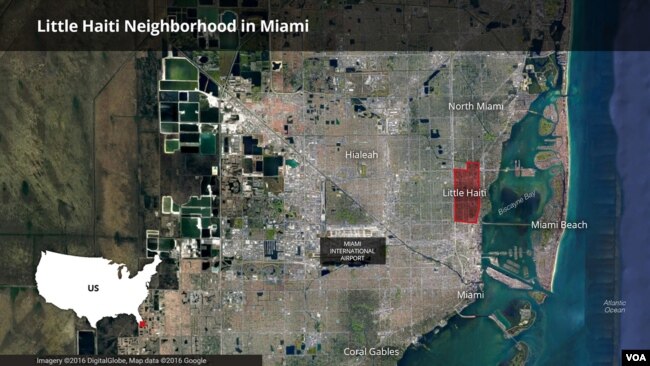
In Miami's Little Haiti, one of the largest waves of evictions is currently underway

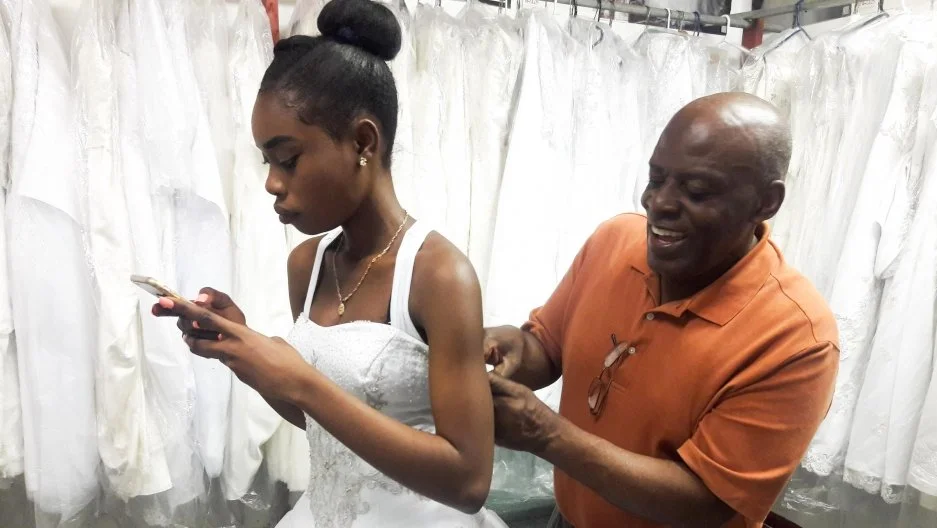
Rollin Virgile adjusts a dress for a young woman who drove from Key West to visit his store. Photo Credit: Nadege Green
Rollin Virgile walks through his store amid dozens of weddings dresses, white floral crowns, men’s tuxedo vests and baptism gowns. He greets customers in Creole: "Bonswa, koman nou ye?" (Good afternoon, how are you all?) Virgile has been in the same location, at Northeast 82nd street and Second Avenue — the heart of Miami's Little Haiti neighborhood — for 32 years. His store, Virgile's Tuxedo & Formal Wear, is a go-to for Miami's Haitian community, where customers can rent a tuxedo, robe bridesmaids or find first communion accoutrements.

But now the store must move. The commercial building and another across the street were recently sold to developer Thomas Conway, who also owns a nearby food hall and a co-working space. Conway has asked most of the businesses, nearly a dozen, to move so that he can transform the two strip malls. The business owners said Conway has given them about 30 days to leave.On a recent afternoon, Virgile shared the news with customer Daniella Eugene, who drove up from Key West to show here.“There’s a new owner,” he said. “And they want us out. It’s a shock to us all.”Little Haiti, a once predominantly Haitian enclave, has seen a burst of new development and interest from real estate investors and developers because of its central location in Miami. New projects are underway in the neighborhood, rent prices are soaring and Haitian business owners, such as those in the two buildings Conway plans to rehab, said that they are being pushed out. Some residents also believe that the threat of climate change is a factor as well.Conway did not respond to several requests for comment.Many of the businesses were operating with month-to-month leases and, in Florida, a landlord is allowed to give a 15-day notice to terminate a lease.

Pierre-Richard Maximilien, who runs a travel agency in one of the complexes, said he wrote Conway a rent check, only to have it returned a few days later with no explanation. Then he got court papers saying he was facing eviction for not paying rent. “He’s just killing the Haitian businesses and what we’re doing for the community because we’re serving the community,” said Maximilien, who has been renting his space for nine years.Maximilien said he asked Conway about returning after the mall rehab is complete and was told his rent would increase significantly. "I said, 'How much higher?' He couldn't tell me exactly."Jorge Isaac, an attorney representing Conway, said his client denies claims that he did not accept rent payments from the tenants.Several other business owners at the complex raised the same issue at a press conference in April, where they denounced one of the largest evictions of Haitian-owned businesses in Little Haiti.One of the signs in Creole read: "We want to pay. Thomas Conway doesn't want to collect."“To me, this is gentrification at its worst right now,” said Cartine Vilson, a community organizer with Family Action Network Movement, a nonprofit that works with Haitian businesses and homeowners in the area.Vilson said Miami must decide how to save small businesses from commercial gentrification to preserve neighborhood identity and the financial livelihood of business owners who invested in communities before they became trendy. “Do we count or do we not count?” she asked at the press conference. “We count and we need to be heard. We matter.”A few blocks south, a Little Haiti thrift store also called a press conference when it shuttered its doors late last year. Schiller Sanon owned the Little Haiti Thrift and Gift Store at Northeast 59th Street and Second Avenue for six years. He blamed a lack of foot traffic in the area coupled with ballooning rent costs for bringing down his business. “We wanted to be part of the well-being of the Haitian community, and it didn’t happen," Sanon-Jules said.At the strip mall on 82nd street that was recently purchased, Jean Luca is sweeping in front of the storefronts. He does odd jobs for several of the Haitian businesses. Sometimes he gets picked up as a dishwasher in one of the restaurants. He said he knows in a month or two the Haitian businesses he relies on to eke out a day-to-day living will be gone. “I don’t think the new businesses will hire me,” he said. “A person like me won’t get any work here anymore.”Some of the business owners said that they are struggling to find new commercial space to relocate.Marie-Janine Desir owns a variety store that sells clothes, lotion, pots and produce. "I can't find anything in this area," said Desir, who lives in Little Haiti and doesn't have a car. She said that she walks to work; at lunch she leaves to check on her disabled daughter, who is in the care of an in-home nurse. She said if she doesn't find a place to rent she'll have to put her inventory in storage. "That will kill my business," she said. "I won't be making any money. How am I supposed to live?"Virgile, the tuxedo and formal wear store owner, said it is heartbreaking to leave Little Haiti, the only place he has worked for 32 years. The most affordable space he could find was in North Miami, about 15 minutes away. He expects to lose some of his customer base in the move, he said.“It’s a lot to deal with as a business owner, but I have to pack up and go,” said Virgile. “I won’t be in Little Haiti anymore.”This piece originally appeared on WLRN

By Nadege Green for PRI.org | May 23, 2018

Read More
Entertainment Entertainment

Wyclef Jean Blasts Trump's Plan to Deport Haitians: 'You're Sending Them Back to Die' (Exclusive)

Earlier this month, President Trump sparked outrage when he announced his decision to end provisional residency protection for 60,000 Haitians by 2019 for those who were affected by the devastating 2010 earthquake. Trump's decision to curtail their stay comes after his administration stated that the "extraordinary conditions" that plagued Haiti "no longer exist."In a new interview with Billboard, Wyclef Jean blasted the president's decision to oust his fellow Haitians from the United States and not renew their temporary protected status."I've been talking about that TPS for a minute now. I saw it coming. I saw the policies, but what I'm gonna do, I'm definitely gonna say one thing, which I stand by: The country of Haiti right now, we cannot afford to take 50,000 Haitians to go back home right now," Jean tells Billboard. "It's almost like you're sending them back like, 'Oh, OK, the earthquake is gone.' You're sending people back like, 'OK, let me them send back on a starve mission.' It's like you're sending them back to die. We don't support that."After being pummeled by the brutal effects of the earthquake, thousands of Haitians sought refuge in the United States. Under the temporary protected status, they were shielded from deportations due to natural disasters or armed conflict within their country. In a statement to the Washington Post, Homeland Security secretary Elaine Duke said the 18-month deadline will allow Haitians to "arrange their departure" since "significant steps have been taken to improve the stability and quality of life."According to Jean, Trump bamboozled Haitians during his presidency run, vowing to protect them and now doing the total opposite."I think we all need to acknowledge the TPS thing and the promise that Donald Trump made," Jean says. "If you remember, he was like, 'I'm going to look out for Haiti. I'm going to look out for [Miami's] Little Haiti [neighborhood].' He did the whole movie. So the lookout that we need right now, we need to make sure our people do not get deported back. It's not going to look good for the island at all."By: Carl Lamarre/Billboard/11/30/2017

Read More
Featured, Places Featured, Places

Brooklyn Official Calls For Designation Of “Little Haiti” In Flatbush

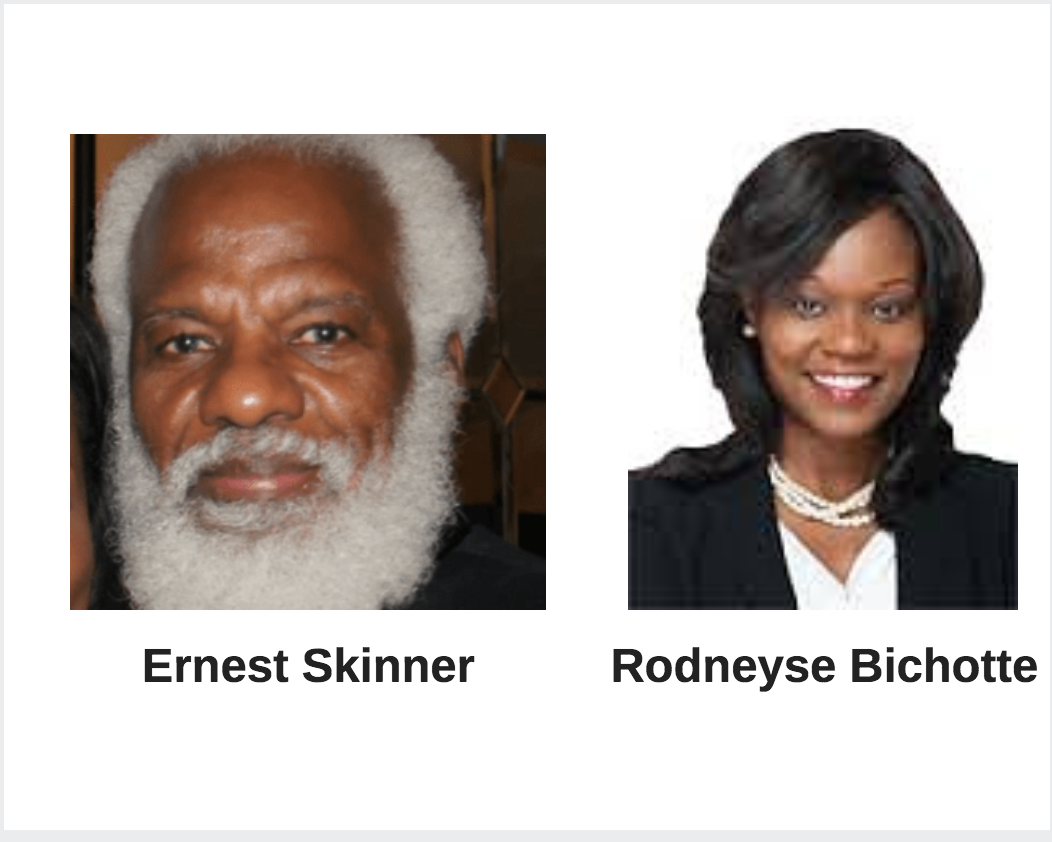
BROOKLYN, NY — An effort to name parts of the Flatbush section of Brooklyn “Little Haiti” plunged into controversy last week when a local political operative blasted the idea as divisive and misguided.Haitian community members and leaders called on support from the mayor for the establishment of “Little Haiti” in the same area that was designated “Little Caribbean” last week.Little Caribbean would begin at Brooklyn College and run along Flatbush Avenue to Empire Boulevard.“The Haitian community supports the designation of both ‘Little Haiti’ and ‘Little Caribbean,'” said Assemblymember Rodneyse Bichotte, the first Haitian-American to be elected to the State Legislature from New York City. Bichotte represents the 42nd Assembly District which encompasses the communities of Ditmas Park, Flatbush, East Flatbush and Midwood.While the proposal has garnered support from some in the community including the Haitian American Caucus, Haitian American Business Network Chamber of Commerce and Haiti Cultural Exchange, the proposed “Little Haiti” has also been met with criticism.In an email to Bichotte and a host of other elected officials, including Council Member Mathieu Eugene and Rep. Yvette D. Clark, Ernest Skinner, a local community organizer and activist, condemned Bichotte’s efforts to co-name the Flatbush area “Little Haiti.” He called the move “misguided” and one of “division.”“When did Haiti stop being part of the Caribbean? This is the same insularity which sunk the fledgling Caribbean Federation,” he said in the email. “Sowing division may be why Haiti has never been able to reach its full potential and why it is considered a Fourth World country despite the noble start it gave to the Independence movement among people of color.”Bichotte has since sent a letter to Skinner calling for a public apology.“We support the Caribbean community. We are part of the Caribbean community,” the letter reads. “Although you have supported Haitian Americans and Haitian initiatives in the past, your statement clearly shows that your heart was not in it and thus erases any and all efforts.”The letter, which was signed by 11 Haitian community leaders and groups, including the Haitian Roundtable and Assemblymembers Michaelle Solages and Kimberly Jean-Pierre, emphasizes the various Haitian-related initiatives that highlight the history and culture of Haiti. She lists the street co-naming of Nostrand Avenue with Toussaint L’Ouverture Boulevard, the annual Haitian parades on Nostrand Avenue and the establishment of the Haitian Studies Institute (HSI) housed at Brooklyn College.“We were taken aback by the lack of engagement that has been shown to many of the elected officials and key stakeholders within the Haitian community throughout the overall process,” Bichotte said.The designation for “Little Caribbean” was initiated by Flatbush native Shelley Worrell, founder of CaribBEING, a Brooklyn-based organization dedicated to showcasing Caribbean culture. She has been working on the designation for roughly two years and saw it as an opportunity to support the existing businesses in the area, as well as, position the area as a tourist attraction.Councilman Jumaane D. Williams is the designating councilman for the initiative and is encouraging “more fruitful dialogue” to mitigate tensions.“My office is looking forward on working to pursue both an official ‘Little Caribbean’ and a ‘Little Haiti,'” said Williams. “The words in the letter were hurtful; I understand the community’s concern and I certainly hope an apology is forthcoming, and deservedly so.”There were conversations about a “Little Haiti” long before there was one for a “Little Caribbean,” Bichotte said in a letter to Mayor Bill de Blasio.The idea for a “Little Haiti” emerged several years ago. Bichotte and Williams, whose districts encompasses one of the largest Haitian constituencies in New York, discussed the matter but temporarily tabled talks on the designation to focus on advocacy for HSI.The plan was to revisit the idea after HSI was off the ground.According to Bichotte, the decision to name Flatbush Avenue “Little Caribbean” was done without community support or involvement.“Haiti has had a unique position within the Caribbean — it is in the Caribbean, but not of the Caribbean,” said Bichotte. “Although Haiti is geographically part of the Caribbean, the Haitian community has historically been singled out and excluded as a member of the greater Caribbean community, which is why Haitians have had to build separate communities and organizations in order to survive.”When Haitians migrated to Brooklyn in the 1970s and 1980s, many faced discrimination from Black and Caribbean Americans who lived in the area. Cultural tensions between the French-Creole speaking immigrants and their English-speaking counterparts spurred division within the greater West Indian community.Old wounds have been opened as the voices of the community and elected officials have not been engaged throughout the designation process,” Bichotte said. “Although, the journey to unity has come a long way between island politics and differences, having both designations would be ideal to acknowledge the Haitian people’s struggle. If all goes well, the designation of ‘Little Haiti’ would be established first in order to be encapsulated within the designated area of the ‘Little Caribbean.'”For Samuel Pierre, co-founder of Haitian American Caucus, the idea of a “Little Haiti” is welcomed but should also help put a light on other issues in the community. The nonprofit provides personal and professional development opportunities for the Haitian community and operates out of Flatbush.“Designating the Flatbush area as ‘Little Haiti’ speaks to the vibrancy that the Haitian community has added to Brooklyn. At the same time, we must use this renewed attention to raise awareness on socioeconomic issues that are barriers to success for many of our people.”By Vania Andre | October 2017
Read More
News, Politics News, Politics

Bichotte Blasts Caribbean Activist For Disparaging Remarks Against Haitians

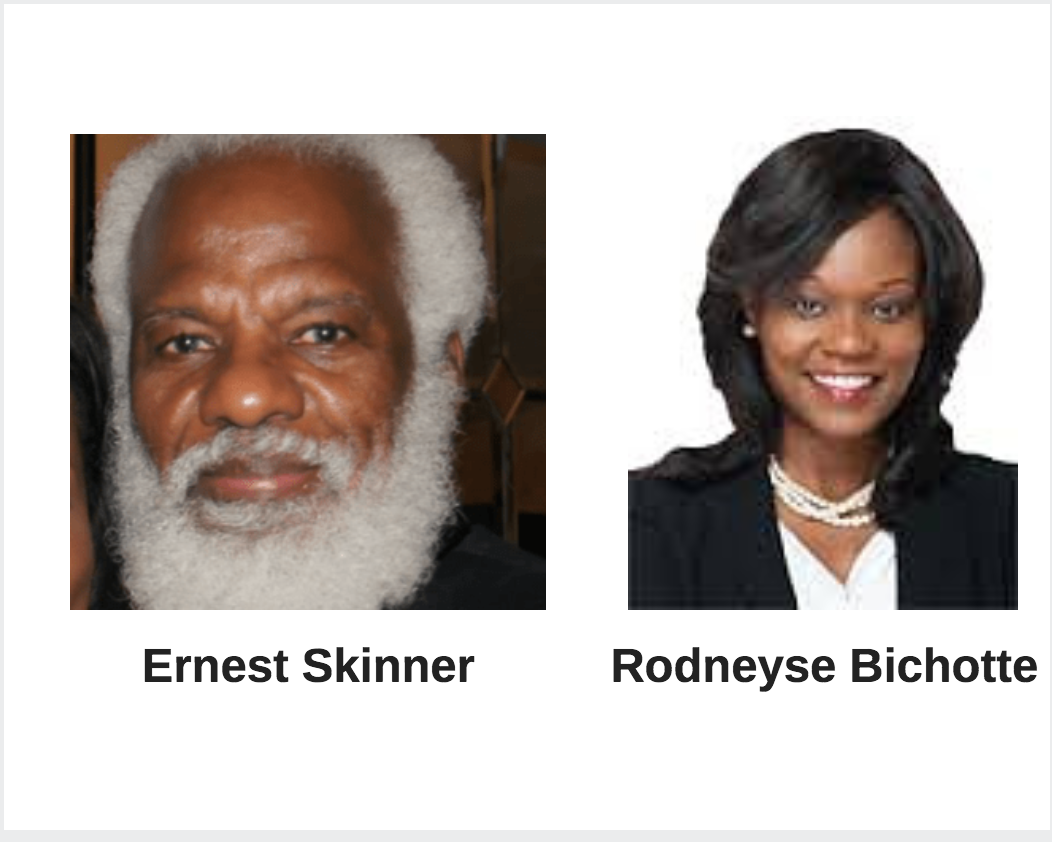
Assemblymember Rodneyse Bichotte (D-Flatbush, Ditmas Park) today demanded an apology from a noted Caribbean activist/political operative and close associate to City Councilmember Jumaane Williams for emailing her and her staff a note containing disparaging remarks against the Haitian community.

Assembly Member Rodneyse Bichotte

The brouhaha comes over the escalating controversy surrounding the recent designation of the Flatbush/Prospect Park-Lefferts Gardens/East Flatuch corridor as the “Little Caribbean.” Bichotte, who is Haitian-American and a number of other notable Haitian-Americans feel there should be a double designation and part of the corridor should be dubbed “Little Haiti.In a follow-up to the controversy, Ernest Skinner, who heads the Earnest Skinner Political Association Democratic Club, and is the staff photographer for Williams office and a longtime family friend, fired off an email to Bichotte asking when did Haiti stop being part of the Caribbean?

“This is the same insularity which sunk the fledgling Caribbean Federation. Sowing division may be why Haiti has never been able to reach its full potential and why it is considered a Fourth World country despite the noble start it gave to the Independence movement among people of color,” wrote Skinner.

Longtime Civic and Political Activist Ernest Skinner

“In Brooklyn, for many years now there has been TALK of a Little Haiti along lower Nostrand Avenue. What have you Haitians done to advance THAT?” he added.Bichotte replied in a letter back to Skinner yesterday saying she found Skinner’s comments not only highly disrespectful, but ill-informed and she demanded an apology.Bichotte penned back, “The fact of the matter is that there is a “Little Haiti” that has been in the making for decades that covers a wide geographical area including Nostrand Avenue. The Haitian community has accomplished a number of things leading up to the designation of “Little Haiti” such as the:

  • street naming of Toussaint L’Ouverture Boulevard on Nostrand Avenue
  • annual Toussaint L’Ouverture Symposium and Business Expo (2005)
  • Haitian parades down all of Nostrand Avenue (10 years)
  • Haitian Flag Day
  • Haitian Unity Day (Albany)
  • Haitian Selebrayson Week
  •                                                                     Haitian street fairs
  •                                                                   establishment of the Haitian Studies Institute (HSI) (Spring 2015)
  •                                                                       designation of Haitian Day (October 7, 2016)
  •                                                                passage of a civil rights resolution (New York State)
  • introduction of legislation for Haitian Creole-speaking poll workers and translators and for the translation of voting materials into Haitian-Creole
  • certification of a number of Haitian-owned businesses as Minority and Women-Owned Business Enterprises
Bichotte wrote that many in the area already refer to the neighborhood around Nostrand Avenue, Clarendon Road, Flatbush Avenue, Church Avenue, and Ocean Avenue in East Flatbush/Flatbush, as “Little Haiti.” East Flatbush/Flatbush has one of, if not the largest, Haitian populations in the country.

“As previously stated we acknowledge that Brooklyn is diverse and we do not advocate for “Little Haiti” in opposition to a Little Caribbean designation,” she wrote.

“We support the Caribbean community. We are part of the Caribbean community. In recognition and in support of our heritage we advocated for placing the Haitian Studies Institute at Brooklyn College; not instead of “Little Haiti,” but in continuance of cultivating “Little Haiti’s” foundation.”
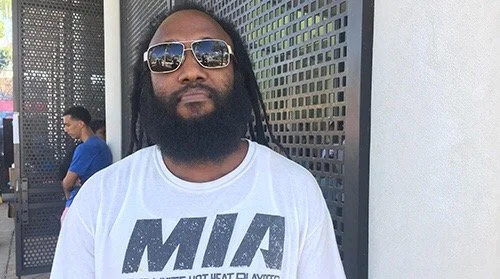
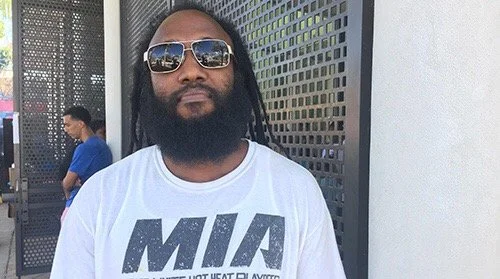
Williams, who has Caribbean roots  – as does Skinner, clearly sided with Bichotte in the dispute.

“My office is looking forward on working to pursue both an official “Little Caribbean and a “Little Haiti. The words in the letter were hurtful; I understand the community’s concern and I certainly hope an apology is forthcoming, and deservedly so,” said Williams. 

Sources in the greater Flatbush community were split with one saying Bichotte often is unduly divisive, and it hurts her as an elected official and the community at large.

“Rodneyse has had a long history of being combative for no reason, beginning after she was first elected when went on Talkline Communications [a Jewish radio show] and said these Jews didn’t vote for me,” said a prominent Flatbush activist.

But another political source said is doesn’t make sense for Skinner insulting the Haitian community considering the viscous discrimination against Haitians in the area dating back to the 1980s and 1990s, when many alleged openly that it was Haitian-American spreading AIDS.

The source said there are much bigger issues to confront such as affordable housing and the increase of gentrification along the corridor.

“It doesn’t make sense for people to be insulting each other’s culture. Let’s just have both designations and move on,” said the source.

By: Stephen Witt | October 5, 2017

Read More
People People

In Little Haiti, 'Everyone Has Opened Their Hearts' Since Irma

MIAMI, Fla. – In the days since Hurricane Irma knocked out his family’s electricity, Adrian Knowles (pictured above) learned that the floor is a cooler place to sleep than a bed when it’s 90 degrees and there’s no air conditioning.“You feel kind of helpless,” he said as he ate a meal of chicken and rice on Friday afternoon - a break from the cookies and chips on which he had been subsisting during the preceding 3 days. “This is very comforting.”Knowles and more than 500 other people had gathered in the courtyard of Miami’s Little Haiti Cultural Center on Friday afternoon for a free cookout in conjunction with the Sounds of Little Haiti, a monthly concert series.“It’s been a week and most people have no electricity still,” said Sandy DorSainvil, executive producer of Sounds of Little Haiti. “Something like (the hurricane) can totally put people’s world upside down.”Hurricane Irma made landfall in Florida on September 10 after breaking records as the most powerful Category 5 storm ever recorded in the Atlantic, with sustained winds of 185 mph. By the time Irma reached Florida on Sept. 10, it had been downgraded to a Category 4 storm, packing winds of around 130 mph.While Miami was spared the brunt of the storm, widespread damage and other disruptions have been reported, including some 2.6 million people who were left without power in the immediate aftermath of the storm. One woman in Little Haiti reportedly delivered a baby in her home the day of the storm, as rescue crews were unable to reach her.Damage estimates in Florida are in the billions, while the death toll stands at 34.Friday’s event was one of several organized by local groups in the Little Haiti community since the storm. Nearly one week after the hurricane, most of Little Haiti still did not have electricity, and residents were struggling with downed trees, damage to their homes and spoiled food in the midst of Miami’s unrelenting heat.Food is in fact one of the biggest challenges for storm victims. With power out and no refrigeration, most people are forced to eat out if they can afford it or rely on local charities.In addition to the cookouts, community groups that included The Haitian American Relief Effort and Make the Homeless Smile had delivered hundreds of meals to elderly residents in their homes in Little Haiti and other nearby neighborhoods. DorSainvil estimated that the groups had fed 1500 people on Friday alone, with private donations.“We started being proactive before Irma,” said Francois Alexandre, a community organizer with New Florida Majority, who together with other volunteers has been going door to door in Little Haiti, installing and then removing plywood over windows and clearing branches and fallen trees off of houses and cars. “People don’t want to go to the authorities. Everybody has opened up their hearts but our community has not recovered as much as the state says.”President Trump approved disaster relief funds for Florida soon after Irma, though reports note more will be needed in the weeks and months to come.NPR reported that residents of Little Haiti say relief efforts there are proceeding slower than other parts of the city. Francesca Menes with the Florida Immigrant Coalition says even before the storm parts of the neighborhood were already food deserts without options for fresh food. “That's why there are organizations like ours who stepped up. Because if we're not doing it, we don't know who else is going to do it for them,” she told reporters.Alexandre echoed that sentiment. “We’re going to have these events until the lights come on,” he said, but added, “How can we sustain people for the next two or three months so that we can get our community back?”Despite the hardship, DorSainvil said that many in the neighborhood were relieved that the storm hadn’t been worse. “This is almost celebratory,” she said of the cookout. “People are uncomfortable, but no one’s grieving.”By Erin Marcus | Sep 19, 2017

Read More
News, Places News, Places

Post-Irma, Miami's 'Little Haiti' Continues to Struggle

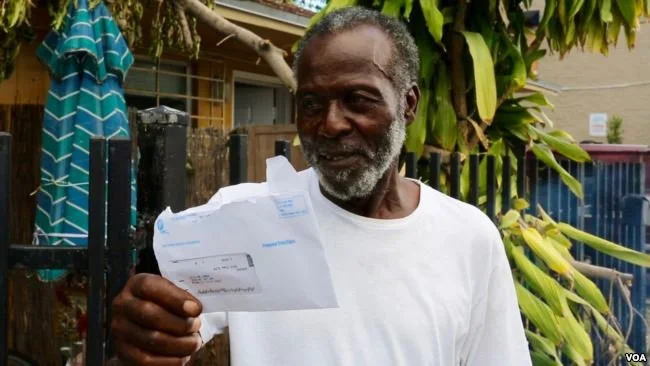
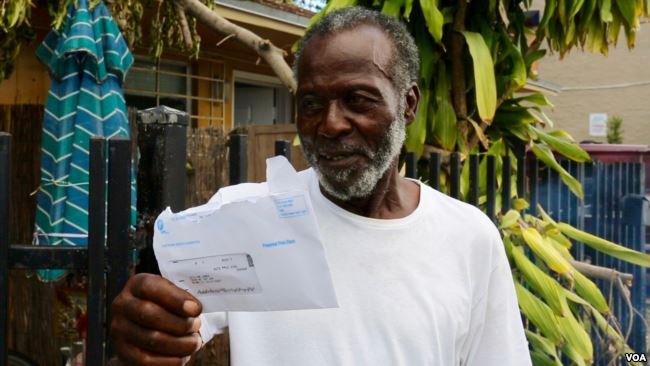
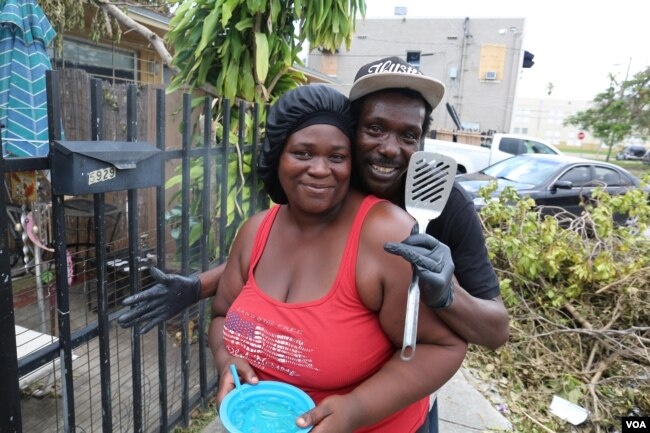
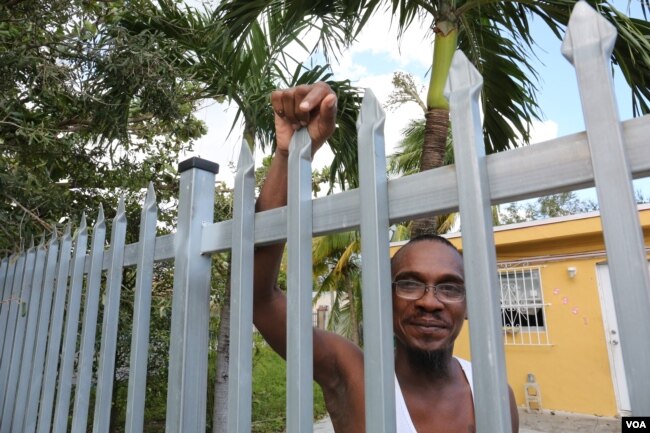
It’s been several days since Hurricane Irma’s winds battered Miami’s ‘Little Haiti,’ but Magdalena Ortiz still finds herself crying and shaking in the middle of the night.“I felt panic, the biggest terror in the world,” says Magdalena, a Honduran-native. “I felt in my heart that I would explode … the pain of a heart attack.”Miami, Florida escaped the worst of Hurricane Irma, but in ‘Little Haiti’ — home to a low-income African-American and diaspora community from across Haiti, the Caribbean, and Latin America — residents felt the damaging, costly wrath of winds, and still lack electricity days later, amid Florida’s sweltering heat.William Jones, upset with the unresponsiveness of his electric company, displays his monthly bill. “Answer the phone when you call them,” he complains. “Answer the phone.” (Photo: R. Taylor / VOA)For the diverse neighborhood — strong in resemblance to its namesake country, and now plush in scattered palms — a humid 32-degree celsius weekday afternoon with no electricity, and no back-up generators is wearing on an already wary community.With their stocked coolers quickly diminishing, along with all their perishables, the family barbecues can only last so long.‘We really need help’Anthony Bennett and his wife Val Williams, both residents of Miami’s Little Haiti, barbecue what remains in their stocked cooler. (Photo: R. Taylor / VOA)Anthony Bennett, like others in his community, is frustrated that wealthier neighborhoods have begun to see their lights turn on, and not theirs.“We all bleed the same, so we feel like if they got lights, we should have lights too,” Bennett said. “We shouldn't be over here suffering waiting till next week or the week after.” Passing by Bennett’s home, neighbor Haitian-native Sylvie Lucien borrowed a purple crayola marker, and penned a cardboard sign asking for assistance.“We have newborn babies and disabled elderly...we desperate,” Lucien read aloud. “We need help. We really need help.”For Lucien, the personal financial struggles she endures began long before Irma. But the passing of a hurricane, she says, reveals a devastating reality: if it were worse, she might not have survived.“You can't go nowhere,” Lucien said, frustrated. “We were going to stay here and die because where can you go with no car, and nobody picking you up?”Kenneth Graham can’t grasp the costs he will face to repair water leaks and the broken fence around his property. His biggest concern, however, is lack of electricity in the neighborhood, for the sake of his newborn daughter. (Photo: R. Taylor / VOA)Ortiz, on the other hand, says she and her husband had a choice, but decided to stay and not risk separating from their pet dog. Next time, she admits, the decision will be easier.“I couldn’t handle it again,” Ortiz said.By: Ramon Taylor | September 13, 2017
Read More