
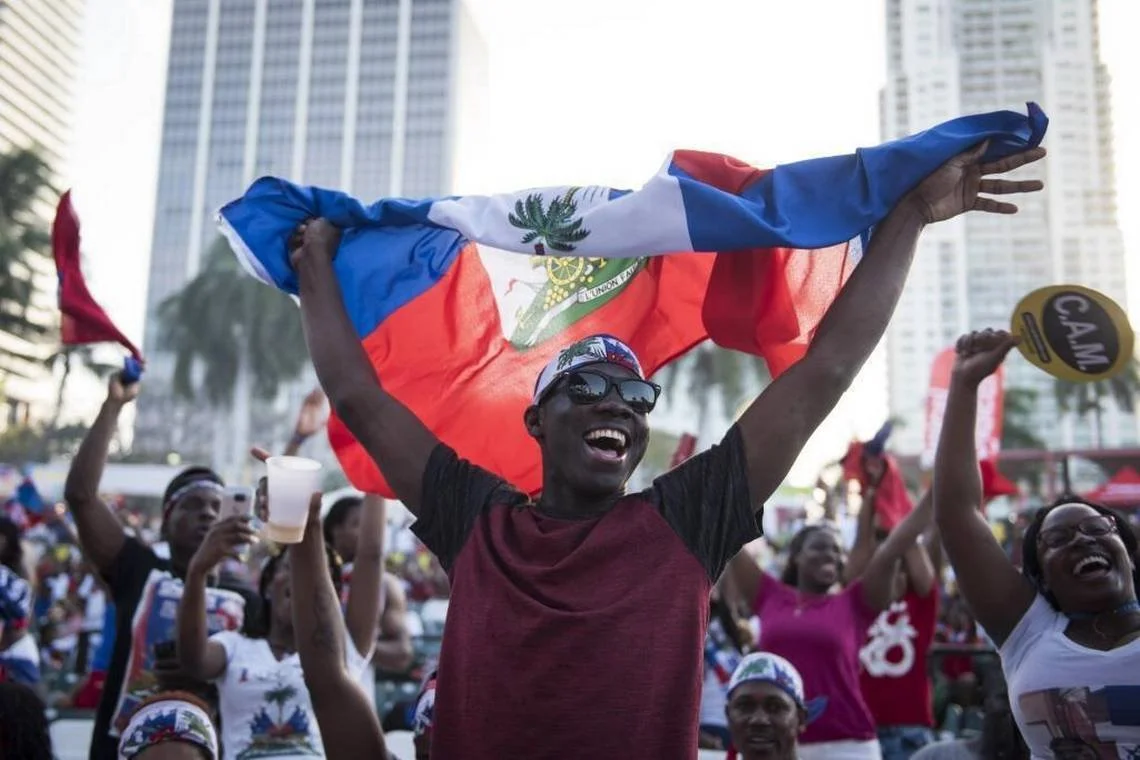
Without Haiti, the United States Would, in Fact, Be a Shithole - And some other things about the country that Donald Trump doesn’t know and doesn’t care to know.
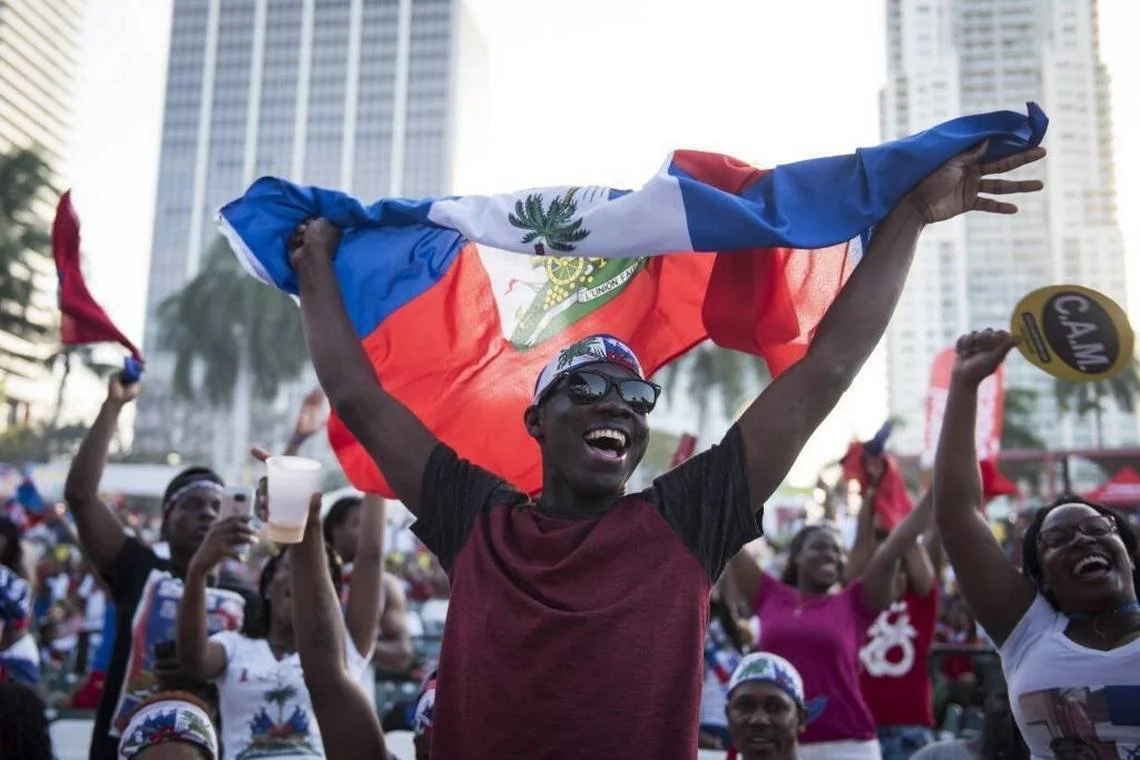
It feels strange to me after so many years of thinking and writing about Haiti, to say nothing of simply being there, to have to rise to the country’s defense against a fool. But that fool is the president of the United States, so let’s start with first things first.It goes without saying that Donald Trump knows nothing about history. But those who do have heard of the Louisiana Purchase, the incredible deal President Jefferson struck with France to buy the giant piece of land, 828,000 square miles of river and breadbasket, that stretches from what is now the Canadian border down to New Orleans and the delta. Without this territory, the United States would never have become a continental power nor, subsequently, a great global power. Jefferson got it at a bargain-basement price: $250 million, in current dollars, doubling the size of the country for less than 3 cents per acre.You may ask what this has to do with Haiti (although any president with a competent staff would have this information at his fingertips). Here’s the answer, White House staff: Napoleon wanted to sell this fabulously valuable piece of New World real estate because for more than a decade he had failed to put down the startling slave revolution in the French colony of Haiti, losing two-thirds of French forces there in the process.The First Consul (that’s Napoleon, Mr. President) could see the writing on the wall. France was pushed to the limit of its military and financial means by the Haitian uprising, and the future emperor (NB: also Napoleon) had lost his taste for further involvement in the Americas. He sold us Louisiana. Then on January 1, 1804, Haiti declared its independence from France, and by extension, from white men like Donald Trump.So it is the courage and tenacity of the rebellious slaves of Haiti that created the United States as we know it. Score one for the shithole.Haitian history is full of many other amazing facts, not least that it can claim to have spawned the Americas’ first successful freedom fighters, the Cacos, who waged a sporadic but unstoppable guerilla war against the US Marine Occupation that began in 1915. Along with popular opinion in the US, they finally forced the Americans out in 1934.Nonetheless, the Marines had done their damage. While improving Haiti’s infrastructure, the occupation opened the country up for “foreign investment,” which meant, essentially, the severe exploitation (including chain gangs) of Haitian labor, the appropriation of lands by US groups, the manipulation (which continues) of Haitian elections, the takeover of the lucrative Haitian sugar industry and of Haitian banks, and a national move away from self-sufficient subsistence agriculture into a cash economy that continues to be responsible for repeated food shortages and economic decline. How to become a shithole: the Americans will help.I could go on in this vein, but I won’t. I’m pointing a finger at the United States because I’m responding to the US president. France, after Napoleon, also had a hand in Haiti’s decline. Emmanuel Macron, however, has yet to call the country un trou de merde—and I doubt he ever will.Finally, I want to write personally about Haiti, the experience of Haiti as a place to visit, to see, be in, live in.Haiti is what Ronald Reagan was dreaming of when he suggested that shrinking the state would allow the business sector to move in and replace government functions in a market economy. Haiti has a vestigial state. There is no national health care, no social security, no pensions, very little taxation, very few labor regulations, a tiny national coffer. This is the direction in which Reagan pushed us and which Trump and his people continue to move us. There is very little organized sanitation, unemployment is the norm, housing is less than substandard, and electricity is delivered in a capricious and severely limited fashion. Poverty means that people have to live day by day, earning a goud here and a goud there. It means that individual and family plans for the future are nearly impossible to make. Many of the ablest Haitians have immigrated to the United States and Canada, though Trump apparently does not appreciate their many contributions to our economy as doctors, engineers, attorneys, academics, dentists, accountants, etc.Haitians feel the lack of a state every day and night, but they still rise indomitably to the task of living full lives. It’s rare to see a Haitian hanging around, at least in Port-au-Prince. Everyone is constantly on the move, trying to find work and make a buck. There is poetry being written and music being played. At night, students go out and sit under the light of street lamps to study for tests. Haitians are huge into basketball and ecstatic when one of their players makes it to the NBA, as several have. Haitian literature over the centuries is full of masterpieces. Dany Laferrière, a novelist of Haitian descent, was recently admitted to the elite Académie Française. Alexandre Dumas, author of The Three Musketeers, was Haitian, as was the naturalist John James Audubon.In the camps set up by Haitians after the earthquake that struck exactly eight years ago today, I sat around with teenage boys eager to play tapes for me of the music they’d recorded. During a tropical storm, I had a camp dinner of sardines and tomatoes cooked outside a tent over a charcoal fire. I’ve watched cockfights in small stadiums, and Vodou ceremonies in the earthquake rubble. I’ve seen the dazzling paintings by Haitian masters on the walls of museums (now crumbled) and churches (also now crumbled). I’ve seen a young boy who lost both his hands and both his forearms in the earthquake learn to use prostheses and also learn to accept the care of his extended family in the countryside. I’ve seen countless examples of Haitian solidarity and community, and of course of the human hunger to learn and grow and better one’s fortunes.The island itself is physically beautiful, with pure white beaches and majestic mountains, and a capital city and provincial metropolis that are both captivating, each in its own way. Trump might not think so, because in every way, Haiti does not resemble his universe of Trump Tower and Mar-a-Lago. The country is almost entirely lacking in gilt and gold-plate.But it still shines.By: Amy Wilentz | The Nation | JANUARY 12, 2018
DAYS AFTER 'SHITHOLE' CONTROVERSY, TRUMP ADMINISTRATION BANS HAITI FROM APPLYING FOR LOW-SKILLED WORK VISA
Following reports that President Donald Trump referred to several countries, including Haiti, as "shitholes" (reports the president partially denied), on Wednesday, the Department of Homeland Security (DHS) has now barred people from the Caribbean country from applying for low-skilled working visas.DHS said in a regulatory filing that it was removing Haiti from a list of more than 80 countries whose citizens can be granted H-2A and H-2B visas, given to seasonal workers in agriculture and other industries.It justified the decision by citing the “high levels of fraud and abuse” from Haitians on the program, and “a high rate of overstaying the terms” of their visas. Approximately 40 percent of Haitians overstayed on a variety of non-immigrant U.S. visas, including H-2As and H-2Bs, in the 2016 fiscal year, according to a DHS report.Just a few dozen Haitians entered the United States on the visas each year since they were given permission to do so in 2012 by the Obama administration, according to DHS data.Sixty-five Haitians entered the United States on H-2A visas, given for agricultural work, in the 2016 fiscal year, and 54 Haitians were granted H-2A visas by the State Department between March and November 2017. The number of Haitians entering in 2016 on H-2B visas, which are for non-agricultural seasonal work, was more than zero but too low to report, according to DHS.Belize and Samoa were also removed from the lists, for risks stemming from human trafficking and not taking back nationals ordered removed from the United States, respectively.Supporters of the visas say they gave Haitians a rare opportunity to work legally in the United States, contribute to the U.S. economy and help fund the recovery of Haiti after a major earthquake in 2010, which killed more than 200,000 people.The announcement was made less than a week after President Donald Trump reportedly asked lawmakers “why are we having all these people from shithole countries come here?”—referring to El Salvador, Haiti and several African nations.The controversial comment came during a heated discussion on the future of immigration policy between Republican and Democrat lawmakers in the Oval Office, where Trump questioned why the U.S. would continue to take in immigrants from poor countries. The president also reportedly wondered why the U.S. didn't have more immigrants from predominantly white and economically stable countries like Norway.However, though Democratic Senator Dick Durbin said Trump used the slur, Republican lawmakers, including Homeland Security Secretary Kirstjen Nielsen, said they could not recall the word being used. Trump defended his harsh language, but later denied using the language reported. He defended and his relationship with Haiti in an interview with Reuters on Wednesday.“I love the people. There’s a tremendous warmth. And they’re very hard-working people,” he said.By: CHRISTINA ZHAO AND REUTERS | 1/18/18
Haiti's Michael Brun Responds to Trump's 'Shithole' Comments: Exclusive
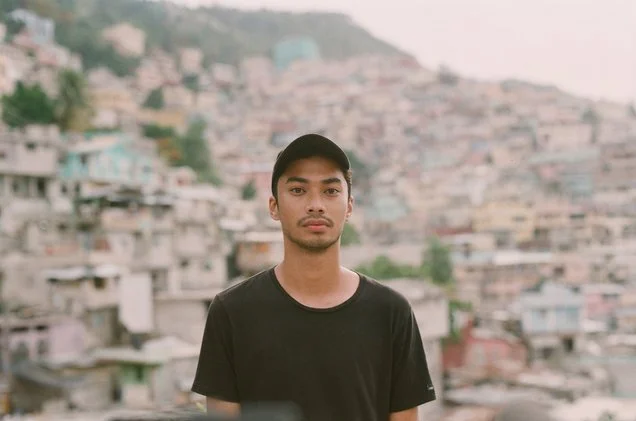
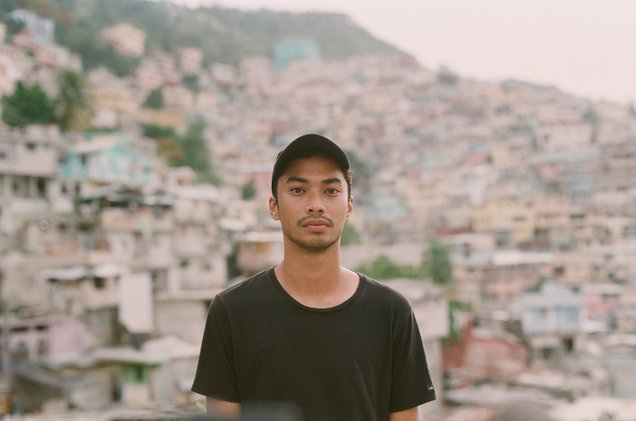
Today's United States is a land rife with cultural divide, but Haitian DJ/producer Michael Brun comes bearing a message of love and unity.Hailing from Port-au-Prince, the 25-year-old knows the prevalent narrative of his homeland. Haiti is often seen as a poverty-stricken, disaster-prone afterthought, but it has always been much more. As a musician, Brun has worked tirelessly to share the beautiful resilience and importance of his culture while giving back to his country through charitable initiatives.Following reports that President Donald Trump referred to Haiti as a "shithole" in a White House meeting last week, Brun was understandably upset but tried to channel his frustration into inspiration to share the truth about his homeland.Provided exclusively to Billboard Dance, read Brun's thoughtful and powerful response to Trump's comments below.I grew up hearing that Haiti was a shithole my whole life. The narrative of Haiti didn't change last week, it's a narrative that has been forced upon our country for decades, by outsiders, by the media, by the world at large and by a bigoted president. Negativity reinforces negativity, and to impressionable youth who don’t know their true worth, these words became reality.But instead of feeling pity or remorse, myself and a new generation of Haitians saw it as a call to action. A call to reconnect with the principles in which our country was founded, principles based in unity, bravery and respect. A call to elevate our standards in education and cultural preservation, and to create a new paradigm for our nation and our youth. A call to take the narrative of our country into our own hands.We will determine how people perceive our country. A country that served as The Mother of the Americas, who’s people liberated themselves from colonial rule in 1804 and aided both the United States and the rest of the Caribbean in their battles for freedom.A narrative of failure is not Haiti's national anthem, it is 'La Dessalinienne', an anthem retelling the Haitian Revolution and the mantra that unity and strength of mind can overcome insurmountable odds. These are the stories that must be heard by the youth of Haiti. The stories of perseverance, ambition and responsibility for one’s country.Today a new generation of artists, empowered by technology, is taking control of the languages of hip-hop and electronic music, infusing them with Haitian culture and traditional rhythms, and speaking to millions of people in Haiti and around the globe. We are writing our own Haitian anthems. These are the voices that will be heard by the next generation of Haitians and these sounds will define Haiti to the rest of the world in the years to come.By: Kat Bein | 1/17/2018
If You Think Haiti Is a Shithole, Then Blame America for Helping to Make It That Way
Centuries of mistreatment by the U.S. is a primary cause of Haiti's plight.
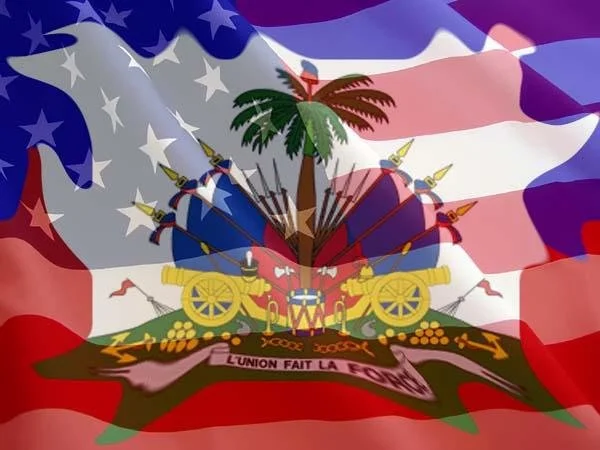
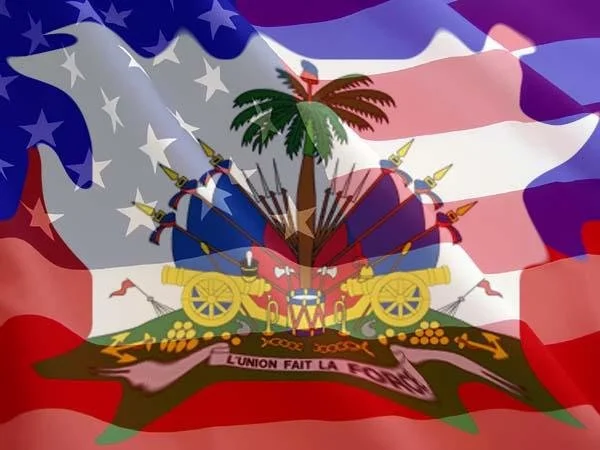
President Donald Trump reportedly described Haiti and a slew of other nations as "shithole countries" while meeting with lawmakers about immigration policy yesterday. If you expected more from from him, then you probably expect too much.But eight years to the day after an earthquake brought Haiti to its knees, most Americans view the country closer to the way Trump describes the place than they'd like to admit. The typical American's understanding of Haiti doesn't go much further than the global press's tagline: the "poorest country in the Western Hemisphere." And there is undeniably poverty in Haiti. The average economic output for a Haitian is $820 per year, compared with their neighbors in the Dominican Republic, who average $6,000.I spent nearly four years working in Haiti, first as an economics journalist and then as the manager of a coffee-farming venture. As I wrote in Haitian Coffee Grows on Trees, my book about my time there: "Over half of all Haitians are undernourished, compared to just 15 percent of Dominicans. Just one in four Haitians has access to a toilet. More than half of all adults cannot read. Money sent home by friends and family who live abroad powers almost a quarter of the economy. That's not too surprising once you know a figure that development economist Michael Clemens often cites: 80 percent of Haitians who have escaped poverty have done so not by staying in their own country but by leaving for the United States." Only about one in five Haitians have a job that pays a steady wage. The rest work informally, or not at all.
Today, if you look at a list of coffee-growing countries, you might not even find Haiti on it. Which is shocking, given that just over 200 years ago, the colony that predated Haiti was the world's biggest coffee producer. The story of how the tiny place that once sold half the world's coffee fell off those lists takes many pages to tell. But the country's current predicament has far more to do with the U.S. government than everyday Haitians.To be clear, the Haitian state and its leaders have perpetually hamstrung their own people, when not outright decimating them. But Haiti's history also includes a United States that initially refused to acknowledge or trade with the second free republic in the New World—the first free black republic, borne of a successful slave revolution. It includes two decades of occupation by U.S. Marines, a time when free Haitians were conscripted into chain gangs and shot dead for attempting to escape. It includes hundreds of millions of dollars in aid to a father-son dictatorship whose three-decade reign ruined the country's economy and murdered thousands of citizens. And it includes a foreign aid faucet that continues to flow today, despite the ill incentives it creates. Tweaks to immigration policy would do orders of magnitude more to help ordinary Haitians than that aid—as if helping Haitians were a concern of the present administration.For everyday Haitians, life working as in the United States as a manual laborer, hotel housekeeper, or fruit picker is often much better and more lucrative than doing much of anything in Haiti. Roughly 80 percent of the half-a-million-plus Haitians who live in the U.S. are working age. Eight in 10 of them who are over 25 have high school degrees, which means they're slightly more educated than the average immigrant and only slightly less than native-born Americans.Clemens has called immigration Haiti's "most successful poverty reduction program." He and fellow economist Lant Pritchett have estimated that a low-skilled worker from Haiti can increase his or her earnings by sixfold by immigrating to the United States. A coherent immigration system would allow employers to hire willing foreigners from Haiti and any other country on the president's shit list to fill niches in the service sector, on construction sites, and wherever else they're needed. It would also make it much easier for highly skilled or entrepreneurial foreign nationals to invest in the U.S. regardless of where they come from.Frantz Duval, editor in chief of Haiti's largest daily, responded to yesterday's reports with a column that called his home "a country that deserves better from us." After 200-plus years of policy forged with a mixture of racism and condescension, Haiti surely deserves better from Washington too.By: Tate Watkins | January 12, 2018
5 Key Things to Know About Haiti After Donald Trump's Insult
President Donald Trump referred to Haiti and other nations as “shithole countries” during immigration talks with lawmakers on Thursday, according to the Washington Post.“Why are we having all these people from shithole countries come here?” Trump reportedly said about Haiti in addition to El Salvador and African nations. He reportedly singled out Haiti further in his remarks, asking “Why do we need more Haitians? Take them out.”Trump’s slur was widely condemned by Democratic lawmakers, along with some Republican lawmakers. Many called the remarks racist including a United Nations human rights official.On Friday, Trump denied the comments, tweeting that his language was “tough” but that he did not use the words attributed to him in news reports. “I never said anything derogatory about Haitians other than Haiti is, obviously, a very poor and troubled country,” Trump added.Here’s what you need to know about Haiti, which is indeed impoverished, rocked by natural disasters, and a frequently beset by political upheaval. But it also has a rich culture and has played an important role in American history.
Haiti’s history
Christopher Columbus landed on the island (now called Hispaniola) in 1492, and during colonization, most of the native population was wiped out. In 1697, the western third of the island was given to the French, who prospered from the export of sugar, coffee, cacao and more. Most of the agricultural work was done by slaves brought from Western Africa, who made up the majority of the population.The Haitian Revolution, a series uprisings occurring between 1791 and 1804 by both freed men and slaves, ended French colonial rule. However the legacy of poverty from slavery shapes the island even to this day.In 1825 Haiti was forced to pay France an “independence debt” of 150 million gold francs, under the threat of invasion, which The Guardian notes was “ten times the fledgling black nation’s total annual revenues.”
Haiti helped with the American Revolution
Nearly 500 free black men from Haiti recruited by a French admiral participated in the 1779 Siege of Savannah, fighting with colonists against British. They were known as the Chasseurs Volontaires, and they were recruited with the hope that by serving in the military they’d be recognized as citizens of the French empire, according to Ozy. The siege failed and the Chasseurs were ultimately exiled.
Haiti’s troubled economy
Haiti’s economy has lagged due to the legacy of slavery, poverty, natural disasters, corruption, U.S. occupation, and political turmoil. In 2016 Haiti’s GPD per capita was $1,800. It is the poorest nation in the Western Hemisphere, according to the CIA’s World Factbook, with 60% of the population living below the poverty line.
Haitian immigration to the U.S.
There were 676,000 Haitian immigrants living in the U.S. in 2015—up from 587,000 in 2010. Around 58,000 Haitians remained in the U.S. after the 2010 earthquake through temporary protected status (TPS), a policy rescinded by the Trump administration in 2017 that required them to leave the U.S. by July 2019.U.S. Department of Homeland Security established the Haitian Family Reunification Parole (HFRP) in 2014. The program “will allow certain eligible Haitians with already approved family-based immigrant visa petitions an opportunity to enter the United States up to two years in advance of their visa eligibility dates,” according to the State Department. Through this, approximately 5,000 Haitians are eligible to legally immigrate to the U.S. annually.
Haiti’s response to Trump’s remarks
Haiti denounced Trump’s remarks in a statement from President Jovenel Moise’s administration. “The Haitian government condemns in the strongest terms these abhorrent and obnoxious remarks which, if proven, reflect a totally erroneous and racist view of the Haitian community and its contribution to the United States,” the statement read.
Haiti’s 2010 earthquake
Trump’s comments came just a day before the Jan. 12 anniversary of the calamitous 7.0 earthquake that struck Haiti in 2010, killing hundreds of thousands of people.By: SARAH GRAY | January 12, 2018
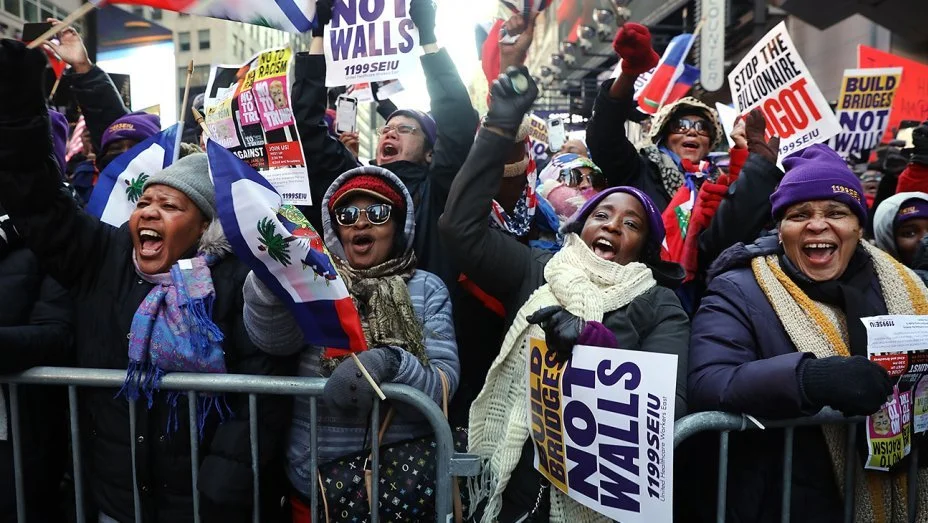
Times Square Protestors Denounce Alleged Trump Remarks on Haiti
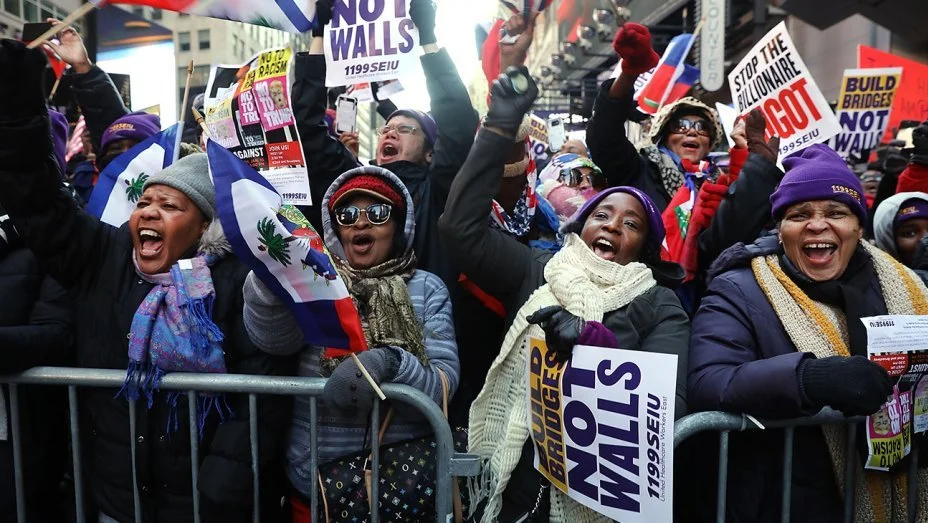
The president is accused of using a vulgarity to describe African nations and questioning why to allow more immigrants from Haiti, rather than countries like Norway.
Hundreds of Haitian-Americans and others have rallied in Times Square in New York City to denounce racism and remarks that President Donald Trump is said to have made disparaging African countries and questioning further U.S. acceptance of Haitian immigrants.Politicians including Democratic New York City Mayor Bill de Blasio joined the demonstration Monday.Protesters carried Haitian flags and signs with messages including "peace, love, power, dream."Police at one point ushered demonstrators out of space designated for walking, but there were no immediate reports of any arrests.Trump is accused of using a vulgarity to describe African nations and questioning why to allow more immigrants from Haiti, rather than countries like Norway.The Republican has said the comments "weren't made" and that he's not a racist. Trump has said he has "a wonderful relationship with Haitians."By: The Hollywood Reporter | 1/15/2018
Since Haiti earthquake, rent has been too high for middle class
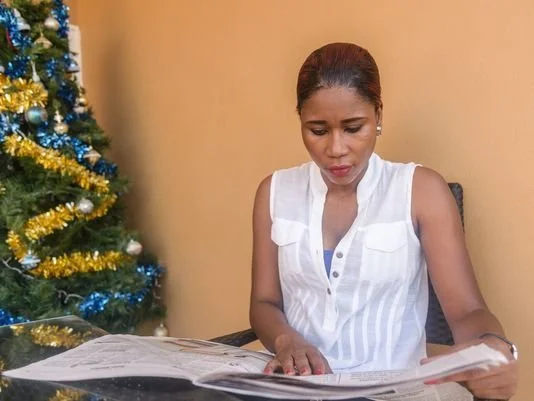
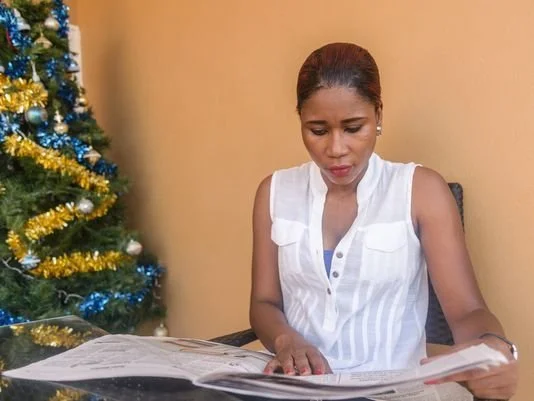
PORT-AU-PRINCE, Haiti — She's a sports journalist at one of Haiti’s most respected radio stations, university educated and middle class. But ever since an earthquake destroyed much of her city in 2010, she's been unable to secure a decent place to live.
Like many living here, Shelove Perrin’s family had to move out of their home because of quake damage. Then they had to move again, and again, and again. Landlords kept jacking up the rent or failing to provide even tap water.
Any country, much less the poorest in the Americas, would have struggled to cope with the massive quake damage. More than a million Haitians moved into squalid camps, and more than 2 million received food aid. But Perrin thinks the biggest reason for her persistent housing problem was the flood of international organizations that rushed in to help Haiti recover.
Aid groups saved lives and brought essential assistance. They provided good jobs to many Haitians. But foreign staff needed housing, and their presence exacerbated a severe shortage, pushing already high rents into the stratosphere and reducing incentives for landlords to keep local tenants happy.
Their presence may have inadvertently helped reinforce Haiti’s class structure, already rated by the United Nations as one of the most unequal in the world. Observers said most of those who benefited from the real estate boom were members of Haiti’s upper class, estimated at roughly 3% to 5% of the population, including many people living overseas.
Among those who suffered were professionals and other members of Haiti’s struggling middle class, believed to make up no more than 15% of the population. As small as it is, a former economy minister said their numbers seem to be falling because of problems that include high rents, debt, lack of opportunity and emigration.
Well before the earthquake, Haiti was often snidely referred to as "the Republic of NGOs" for the number of non-governmental organizations active here. Former president Bill Clinton famously put the figure at 10,000. The number exploded after the earthquake and then diminished over the years.
Now, almost eight years later, conditions should be in place for rents to fall dramatically. Most post-earthquake contracts are finished, and many humanitarian groups have cleared out. The U.N. peacekeeping mission put in place years before the quake has left, as well, to be replaced by a much smaller one.
Perrin, who said she moved seven times in the past eight years, is eager to put her housing woes behind her.
In one case, rent went up 14% for a house she was already stretching to afford by supplementing her day job with marketing gigs and public appearances. She couldn’t pay the extra amount. She considered legal action when a landlord violated her lease, but realized the legal fees would be more than the increase in rent.
Vanel Sylvestre, a real estate agent operating in an upscale suburb of Port-au-Prince, said rental prices, and his commissions, are lower now than any time since he started real estate work five years ago.
Movement is grudging and uneven. Some furnished two-bedroom apartments with 24-hour electricity have fallen from $1,400 to $900 a month. Others won’t budge, like $2,000 two-bedrooms sitting vacant for months. The Facebook page of Sylvestre’s company, Vally Realstate Agency, still features a house for rent for $4,500 a month and one for sale for more than $1 million.
Sylvestre said he made most of his money off foreigners, especially staff for the U.N. peacekeeping mission. The force, which peaked at more than 12,000 after the quake, operated in Haiti from 2004 until last October. The new mission will have about 1,600 people, mostly police.
Although most of the old mission’s military and police lived on bases, some rented homes, as did the more than 1,000 civilian staffers. Sylvestre said that’s why a four-bedroom house that once rented for $5,000 rose to $8,000.
Landlords would ask the same price of Haitians, even if they didn’t want the same amenities. “If you are a local guy, you say, ‘What? Why do you ask so much money?” Sylvestre said. “And the landlord will say, ‘Sir, if you can’t take it, just leave.’”
Landlords have been spoiled, said Yves Francois, a Haitian-American who moved back to Haiti in 2009 and started a construction firm.
For the four years after the earthquake, he was stunned at having to pay more in rent for office space in Haiti than he’d paid the previous decade on Park Avenue in Manhattan. He said he knows many people who built high-end apartments for foreigners after the earthquake, “and most of those apartments are vacant now.” The prices should be falling, he said, but the owners are holding off.
“Some owners are still waiting for a miracle,” Sylvestre said. “They think, ‘I can wait. They will come back.’” Unfortunately, that "miracle" would probably be another natural disaster or more political upheaval — occurrences all too common in Haiti throughout its 214-year history.
Sylvestre said the foreign presence on balance did not make Haiti’s class divisions worse. Besides the rich landlords, some middle-class people moved into more modest homes so they could rent to the foreigners, and Haitians who found jobs working for the international organizations were able to afford better places to live.
Jeremie Dalusma, a civil engineer, is an example of someone who benefited. He has headed logistics operations for State Department programs and several non-governmental organizations since the earthquake. Without that work, he said, he probably would have left Haiti by now.
While the presence of foreign organizations has hurt middle-class renters, it’s not the primary reason the country is so impossibly expensive, said Daniel Dorsainvil, Haiti’s former minister of economy and finance. Haiti needs to improve productivity with better infrastructure and increased domestic production, he said. That will improve the entire economy.
Perrin recently moved again, into a new place she is sharing with her sister. She said the rent is cheaper but still takes most of her income.
Overall, she still regards the foreign presence as a negative for the middle class, but she is pleased with one aspect. There is a lot more housing on the market with amenities like generators and air conditioning. For some in the middle class, these units just might be coming within reach.
By: Amy Bracken, Round Earth Media Published 6:05 a.m. ET Jan. 11, 2018 /Contributing: Michel Joseph

Monthly allowance for disadvantaged people

As Christmas and the New Year approach, some fifty disadvantaged people, including seniors and people with reduced mobility, will benefit from a monthly allowance of 1,500 Gourdes from the Caisse Assistance Sociale (CAS) through its Regional Office in the department, the beneficiaries will no longer have to go to the Haitian capital to recover this aid from the State.At a press conference, Pierre Jean Michelet, the Head of the Regional Office of the CAS, said that this grant currently affects three communes in the Southeast out of 10, namely Jacmel, Cayes-Jacmel and Belle-Anse.Pierre Jean Michelet, while reiterating his commitment and that of the Administration Moïse-Lafontant to continue to work for the improvement of the living conditions of the population, informed that a registration register is open to the Regional Office of the CAS located in the offices of Social Affairs and Labor (MAST) of Jacmel, to integrate about a hundred new beneficiaries under this social assistance program.By: HaitiLibre / Pierre Myrthel Esther (Correspondante Jacmel) / December 19, 2017
Gay family defies odds in Haiti
The majority of the western hemisphere sanctions same-sex marriage and adoption for LGBT parents, but outliers remain, as Haitian same-sex couple Maksens Denis, 49 years of age, and Loubentz Raphael 30, know firsthand about their country.Without enjoying any legal recognition, the gay couple lives in Port-au-Prince with a son.“We live as a couple. Ever since the first day we found each other, we haven’t been separated. And things have gone pretty fast since the beginning. We felt a very strong connection, so much so we were sure we were created for each other. And so we wanted to live together,” Denis told Reuters.This modern family, however, is the exception in Haiti.“I suffer a great deal because we can’t live freely. We can’t live how we want to. We have had a lot of problems and additionally, there are a lot of protesters; the Christians, those from other foreign religions according to whom, homosexuality is an import, even though it’s intrinsic to humans at birth. Homosexuality exists in every society on the planet,” Denis went on.There is no recognition of gay marriage or adoption in Haiti. In fact, Haiti’s senate passed a law this past summer that would make same-sex marriage an act that can result in a prison term of three years and an $8,000 fine.Human rights organisations say physical and verbal attacks against members of the lesbian, gay, bisexual, transgender and intersexual community regularly go unpunished and that politicians make homophobic comments during electoral campaigns.Living as a sexual minority is so taboo in Haiti the country was forced to cancel last year its first-ever LGBT film festival after the building it was to be held in was targeted with threats saying it would be burned down.One of the few advocates in the country is the non-profit HIV and Support Prevention Organisation, SEROvie, which was founded in 1999 to advocate for the rights of the LGBT community. In speaking to Reuters, SEROvie’s director, Reginald Dupont, explained how gay rights are a marginal issue in Haiti.“Human rights organisations defend human rights, but not for gay people. They exist to defend the rights for everyone, but when a situation arises involving gay people, they are not there. But they say they are Christian, come what may,” he said.Indeed, Denis and Raphael’s drive to establish a life for their family has not been without struggles. During the interview with Reuters, they said they’ve been physically targeted in a homophobic attack when stones were thrown at them during a ceremony celebrating their union.“Certain organisations, like ‘SEROvie’ support us when we suffer from acts of violence, as I did. But the national police provides no such protective guarantee. On the contrary, for them, it’s all our fault. We have no rights. We have no place to express ourselves. If you come forward as gay, you get thrown out, without any help,” Raphael said.Another activist, Shirley Moreau, who works for the Haitian Women Against Sexual Discrimination and Stigmatisation, told Reuters the struggle for LGBT Haitians extends to basic everyday survival.When a gay person looks for a job, they won’t find it. That’s because, as they say, gay people are to be rejected by society. They don’t receive any education. They are also discriminated against in the health sector. For example when a gay person, or a transgender person is sick and goes to a hospital, they don’t receive any care for their ailment, but are rather encouraged to change their lifestyle.”Many journalists in the nation shy away from even discussing the issue. And so with few activists advocating for them, most LGBT Haitians are forced to remain underground.By: Global News/WORLD December 6, 2017

In 1825, Haiti Gained Independence From France For $21 Billion -- It's Time For France To Pay It Back

The devastation wreaked on Haiti by Hurricane Matthew last fall was just the latest in a seemingly endless string of misfortunes that have befallen that country, which in March concluded a year-long interlude of caretaker governance by installing banana exporter Jovenel Moïse as its 58thpresident. Moïse faces a daunting task; Haiti’s chronic status as the Western hemisphere’s poorest nation is due to a litany of afflictions that range from widespread illiteracy, to endemic corruption, to woefully inadequate infrastructure. But while these would be hard enough for any country to overcome, for more than a century of its existence Haiti carried an additional but little-known millstone, the effects of which are still being felt.In 1825, barely two decades after winning its independence against all odds, Haiti was forced to begin paying enormous “reparations” to the French slaveholders it had overthrown. Those payments would have been a staggering burden for any fledgling nation, but Haiti wasn’t just any fledgling nation; it was a republic formed and led by blacks who’d risen up against the institution of slavery. As such, Haiti’s independence was viewed as a threat by all slave-owning countries – the United States included – and its very existence rankled racist sensibilities globally. Thus Haiti – tiny, impoverished and all alone in a hostile world – had little choice but to accede to France’s reparation demands, which were delivered to Port-au-Prince by a fleet of heavily armed warships in 1825.By complying with an ultimatum that amounted to extortion, Haiti gained immunity from French military invasion, relief from political and economic isolation – and a crippling debt that took 122 years to pay off. My father-in-law still recalls the patriotic song he was taught as a Haitian schoolboy, its poignant lyrics urging all Haitians to reach into their own pockets to help their government raise the amount that was still “owed” to France. Thanks to voluntary contributions from Haiti’s citizens, most of whom were desperately poor, that debt was finally settled in 1947. But decades of making regular payments had rendered the Haitian government chronically insolvent, helping to create a pervasive climate of instability from which the country still hasn’t recovered.France’s demand for reparations from Haiti seems comically outrageous today – equivalent to a kidnapper suing his escaped hostage for the cost of fixing a window that had been broken during the escape. And though the present French government can’t be blamed for the gall of King Charles X (France’s ruler in 1825), a modicum of historical accountability sure would be nice. While France still ranks among the world’s wealthiest nations, Haiti – with a per-capita annual income of $350, a power grid that fails on a regular basis and a network of roads that’s more than 50-percent unpaved – is plagued by drought, food shortages and a struggling economy. For the “crime” of shaking off the yoke of involuntary servitude, Haiti dutifully paid France reparations over the course of nearly six generations – with interest. France should now do the right thing and return those payments, estimated to total $21 billion in today’s dollars. What would be a relative pittance in the French national budget is desperately needed by Haiti and could help it begin a broad-based recovery that would seem like manna from heaven to its long-suffering people.By: Dan Sperling/Forbes/December 6, 2017
As the 2017 hurricane season ends, preparing for storms in years to come
 The power of Mother Nature and the fragility of our relationship with her becomes undeniable each hurricane season, particularly for those with loved ones in affected areas. As this year’s tragic hurricane season draws to a close, we reflect on the destruction that has passed and on the ways we can prepare for hurricane seasons to come.Clearly there is no simple solution for communities that lie in the path of hurricanes and we rightly focus on providing urgent humanitarian assistance for those most dramatically impacted by these devastating storms. We are also wise to consider what measures we can take to help the most vulnerable populations strengthen their defenses. Knowing that these storms will continue to threaten the region, what can be done to protect those communities with the most to lose and the least access to large scale investment as they prepare for next year and beyond?The Colorado Haiti Project is a locally based non-profit organization that has been supporting community leaders in rural Haiti for over 28 years. This year Haiti has been spared, comparatively speaking, but we know from experience how destructive these events can be. As we watch the response unfold in Puerto Rico and beyond, we reflect on our experience in Haiti.Last year, after the devastation of Hurricane Matthew, the Colorado Haiti Project invested in agriculture: planting trees, opening a seed bank, and strengthening agricultural education programs for students. By investing directly in local community agricultural structures, soil was conserved, local food systems were reinforced, and yields increased for farmers, thus putting working capital in the hands of local people as they recovered.Haiti is often portrayed as a troubled and distant land, a world away and rife with intractable problems, a daunting place to invest resources. As someone who has worked there for the past seven years, I can promise you that the short-term hopes and long-term dreams of parents and children in Haiti are not so different than those you’d find in Colorado.The Colorado Haiti Project recently hosted a dinner in Longmont, wherein Brian Coppom, director of Boulder County Farmers Markets, along with a sizeable group of Colorado-based farmers, came together to show their support for small farms in Haiti. Over plates of locally produced food, we saw clearly that while miles apart geographically, there is a great commonality between the priorities of the farmers markets and the Haiti project.The Boulder County Farmers Markets’ website reads: “Our farmers and ranchers grow what they sell. Today, the markets serve as community gathering events, provide nourishment to neighbors, boost sustainable agriculture and support the local economy.”These same values are shared by our local leadership in Haiti. The most significant and most troubling difference is that for most Boulder/Denver residents, the alternative to healthy food is unhealthy food. In rural Haiti, oftentimes the alternative to healthy food is no food.The hopeful reality is that there exists in Haiti a long history of community-based structures, families lending each other labor and resources — a community gardening and co-op system. This type of organizing is what the local food movement we see flourishing here in Colorado is all about. Community gardens, farm-to-table initiatives, the sharing of seeds, and the slow food movement are all working to reinforce our connection to food, to our land, and to each other. I find that the same people who are passionate about local food systems here in the U.S. are also committed to the idea that we are not just a local community but a global one.In the face of Mother Nature and her overwhelming power, it’s promising to realize that her beauty and bounty are part of the solution as well. Sifting through the news stories of today, it can be daunting to consider where to place limited resources. I suggest, quite simply, that we invest in the land and its farmers. Investment in rural Haitian communities is strengthening local defenses against climate events, placing capital in the hands of local families, and putting healthy food on tables. By investing in these strategies, we stand for some of our most important values, creating connection to our food, to our land, and to each other, while also building resilience for when the storms roll in.By Wynn Walent | November 6, 2017
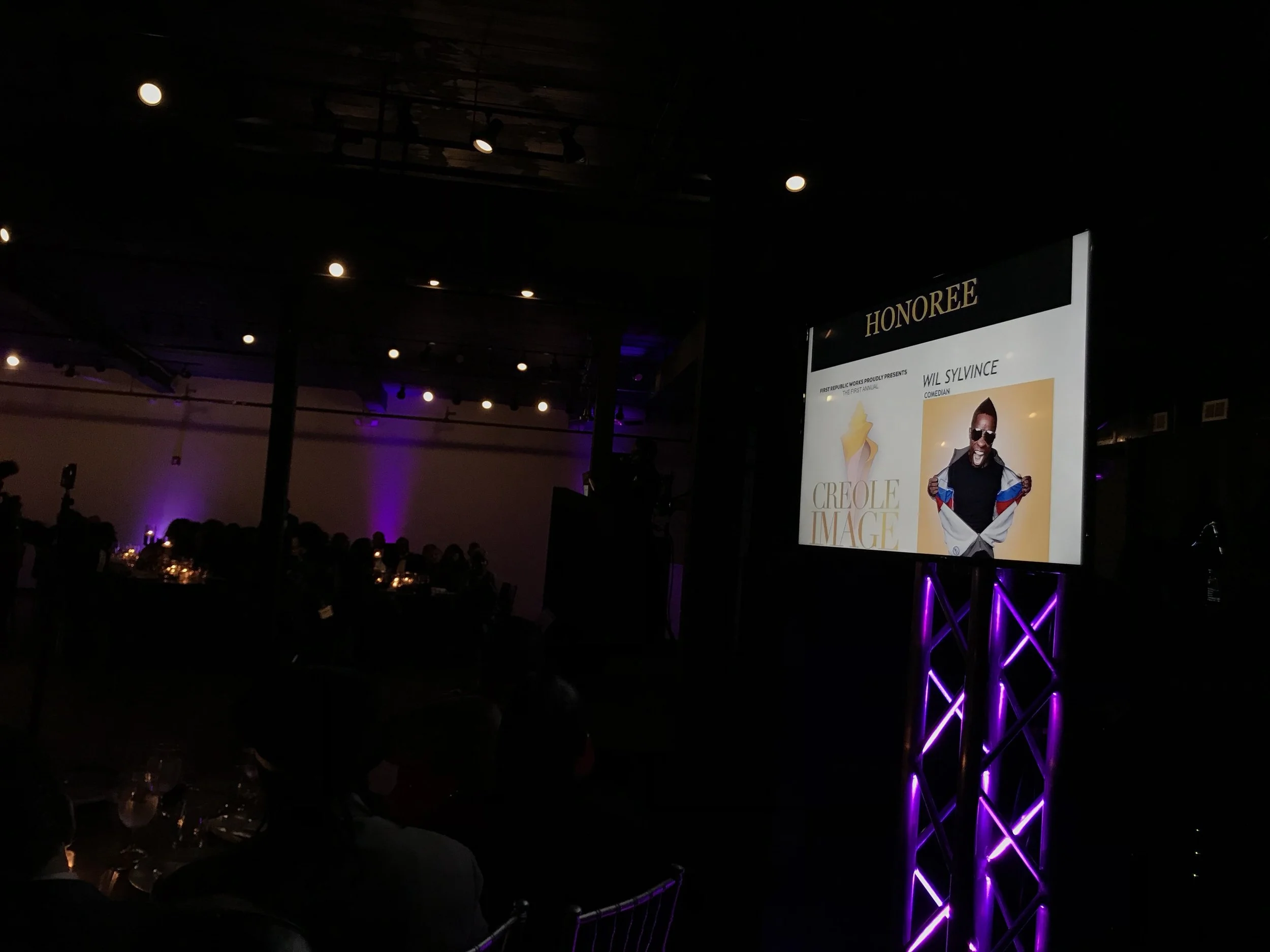
The First Annual Creole Image Honors
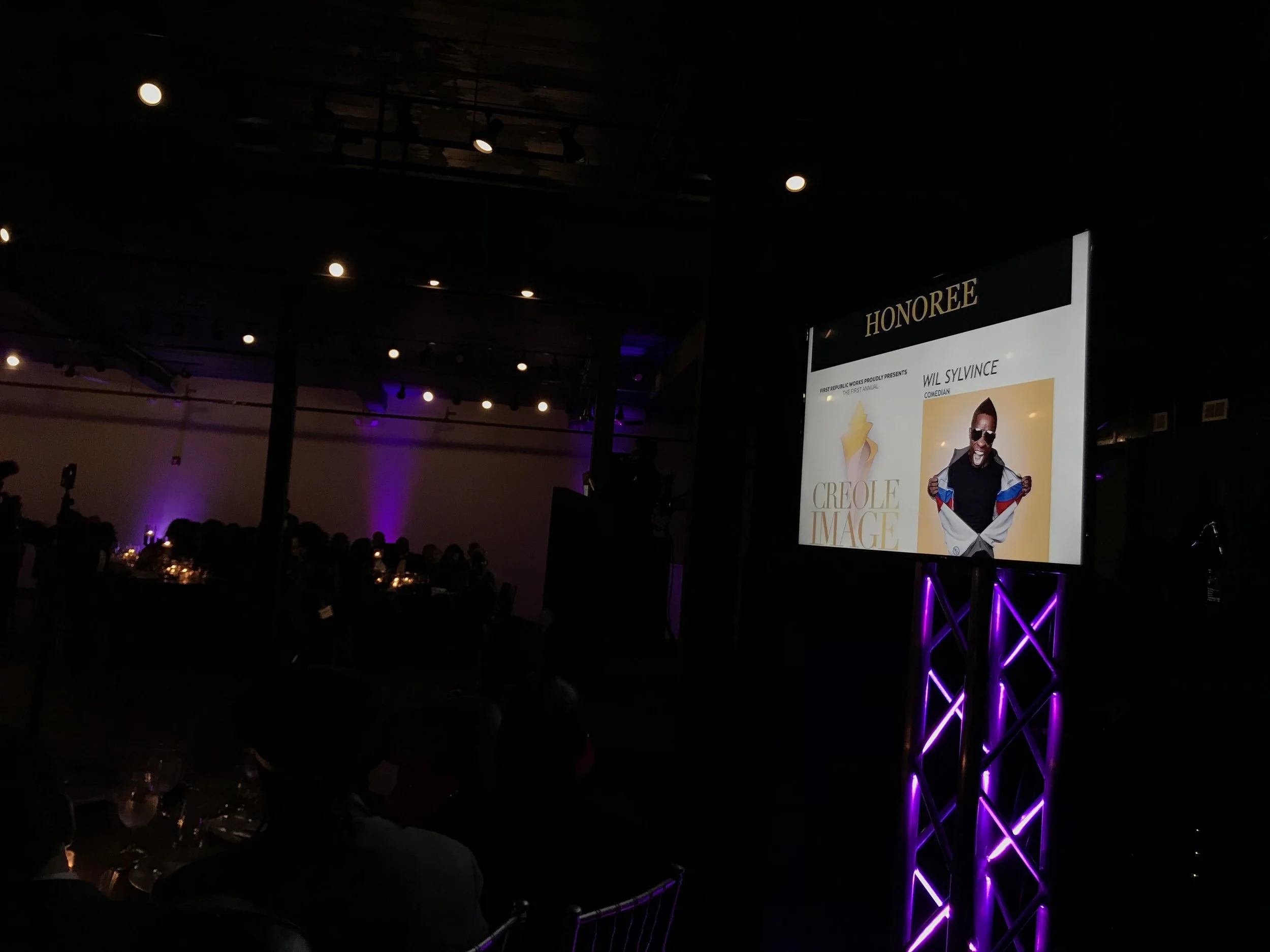
“Honneur… Respect...”
The Red Carpet was a buzz as Honorees and known personalities within the Haitian community came together to recognize and celebrate the noteworthy achievement of ten distinguished members of our community.
On Sunday October 8, 2017, Creole Image held its First Annual Honors ceremony. The event took place in Passaic, NJ and celebrated the achievements of Haitians/Haitian-Americans in Film, Art, Music, the Sciences and Public Service. The event was founded by, Nafeeza Holder and Fred Raphael, was presented by First Republic Works to honor pathfinding Haitians dedicated to uplifting the Haitian culture and shedding a positive light on the country and its people.
 Inspirational speaker and social service advocate, Stanley Neron hosted the ceremony with Haitian-American singer/songwriter Sybelle. Highlights from the evening included a moving and inspirational speech by Betty Jean. Ms. Jean, a breast cancer survivor, spoke of her journey and how it led to the work she currently focuses on to empower women and children. Honorees, Judge Sibyl M. Elias and Kangol Kid, referenced the trials of growing up Haitian in America during the 1980s, moving past the stereotypes and achieving their dreams. Each speech echoed the strength of the Haitian people and the sense of responsibility each felt to pay homage to the legacy of our forefathers.

 The Honorees:* Kervin Andre (@akomicsart) a gifted visual artist is recognized for his brand, AkomicsArt. He is known for showcasing Haiti’s rich history and culture through his work.* Doctor Ruth Celestin is a certified and nationally recognized plastic surgeon located in the Cobb County, GA area. She was born in New York and earned her medical degree at New Jersey Medical School.* Joseph M. Champagne is a Haitian attorney and former Mayor of Toms River, NJ. Mr. Champagne (@chamoagnehjoseph) focuses on immigration and family law.* Chef Stephan Durand (@haitianchef) is an award winning and highly acclaimed Chef and Culinary Ambassador. He is dedicated to bringing attention to the riches of Haiti’s gastronomy.* Honorable Judge Sibyl M. Elias is a Haitian Judge, presently serving as a judge on the East Orange Municipal Court. She became the first ever Haitian-American Jurist to sit on the Municipal Court in NJ.* Grammy nominated singer, songwriter and composer Melky Jean (@therealmelkyjean). Ms. Jean is the founder of Carma Foundation, an organization focused on helping women and children in Haiti.* Hip-Hop artist Kangol Kid (@yokangol). Kangol and his group U.T.F.O are best known for their Top 10 hit “Roxanne, Roxanne.”* Bergson Leneus (@haitianking80) is a Haitian-American property manager and community leader in the City of East Orange, NJ.* Carel Pedre (@carelperde) is a Haitian radio and tv personality. He is well known for his work as host of Radio One’s @chokarella.* Haitian comedian Wil Sylvince (@wilsylvince) is known around the world from his appearances on SHOWTIME, HBO’s DEF COMEDY JAM and COMEDY CENTRAL.Honorable Mentions:* Betty Jean is a NJ Licensed Counselor focused on helping women and children move from broken to healed.* The Federation Haitienne de Basketball (FHB)/Haitian Basketball Federation founded in 1951 is a non-governmental, non-profit organization with a goal to developing the game of Basketball in Haiti.
 Honorees enjoyed a big evening as they were entertained by singer (and host) Sybelle, singer Mickaelle Cartright and violinist Bri Blvck. Accompanied by IETBand, singer Anie Alerte had the guests on their feet as she opened the Creole Image after party.
 The event was planned and beautifully curated by Mimi Planned Events, Weddings by Natasha and Points of Creation Events. Public Relations was handled by SK Public Relations and the media sponsor for the First Annual Creole Image Honors was YAC Radio, Inc.It was an amazing evening filled with beautiful speeches and wonderful accolades. It’s genius that Creole Image was established to honor distinction in a sometimes unrecognized but overly deserving community. The talents of Haitians, in a host of industries, can now be applauded in an annual celebration. Without a doubt, we look forward to next year’s ceremony and a new class of Honorees.********Event Sponsors: Aella Gold Kremas, Dnalsi, Vodkila, McKayla Studios, Lori Diamond, Who's Styling Who, Music Speaks Power, and Gil Rios Productions.
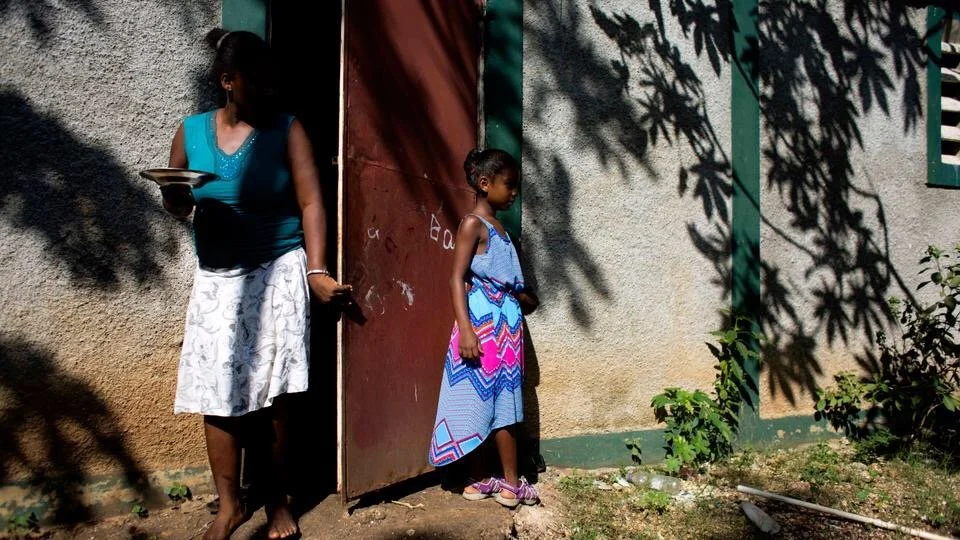
Poverty Prevails on Dominican-Haitian Border
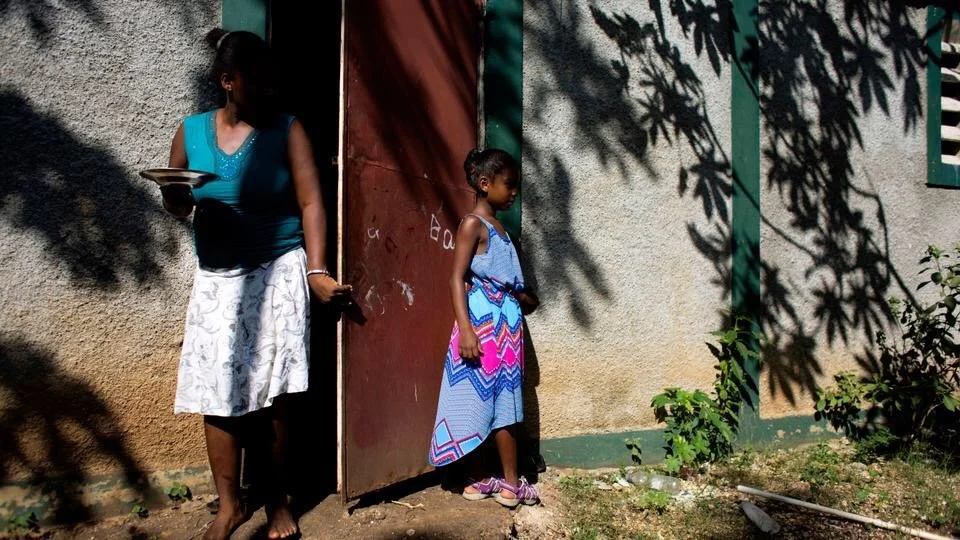
Santo Domingo, Oct 10 (Prensa Latina)On the Dominican-Haitian border, there is great poverty and the lives of its inhabitants are in the midst of precariousness and shortages.During a tour carried out by the press along with authorities of the Ministry of Defense through the border area of the provinces of Pedernales, Independencia and Elias Piña, visitors appreciated how the usual children's joy contrasted with the shy and astonished look of their parents.According to the information, these areas reflect the great geographical contrast between the Dominican Republic and Haiti, on the Dominican side there is vegetation and on the other side, a completely deserted panorama.However, what stands out the most is the desolation and in the distance, in Haitian territory, the presence of small houses built with rustic materials with their latrines and kitchens on the outside where large families make their lives.In the Elías Piña territory, Dominicans live on small conucos, while Haitians survive on informal commerce, selling artisan breads and fruits.Haiti and the Dominican Republic share a border of almost 400km on the Hispaniola island and from time to time the frictions usually aggravated by the presence of undocumented Haitians in Dominican territory.By: Prensa Latina | October 2017
Haiti Seeks TPS Extension for Its Nationals in US
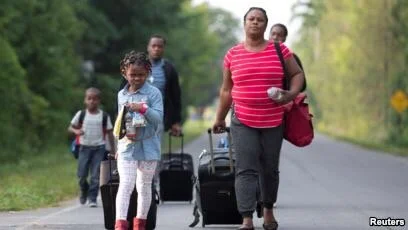
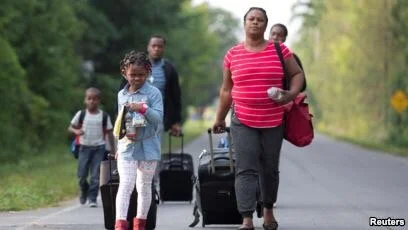
Haiti has formally requested that U.S. immigration authorities grant an 18-month extension to a program of humanitarian aid for Haitian nationals living in the United States.More than 50,000 Haitian immigrants are registered for Temporary Protected Status (TPS), set to expire January 22. TPS, offered after a massive 2010 earthquak struck near the capital city of Port-au-Prince, permits them to temporarily stay in the United States, with work privileges, until conditions improve in their homeland.In May, the U.S. Department of Homeland Security announced it would extend TPS by six months, not the one-year minimum sought by Haiti’s government and some advocates. Fear of deportation sparked an exodus of at least several thousand Haitian immigrants this summer, who illegally crossed the Canadian border seeking asylum in the French-speaking province of Quebec.The Haitian government’s letter requesting the longer TPS extension was submitted to the U.S. Department of Homeland Security on Friday, according to the Miami Herald.Written by Haiti’s ambassador to the United States, Paul Altidor, the letter included an invitation for Homeland Security’s acting director, Elaine Duke, to visit the country before the Trump administration makes its final decision on extending TPS. That’s expected as early as November.During a June visit to Haiti, then-Homeland Security Secretary John Kelly said he thought Haitians’ protection from deportation would end in January."I’d have to look for indicators as to why we might extend it a short period into the future past January," he told a Haitian radio journalist who shared the interview with VOA. The TPS program, Kelly said, "is designed to end and not go on forever."Kelly became chief of staff to President Donald Trump in late July.By VOA Creole Service | October 10, 2017
Brooklyn Official Calls For Designation Of “Little Haiti” In Flatbush
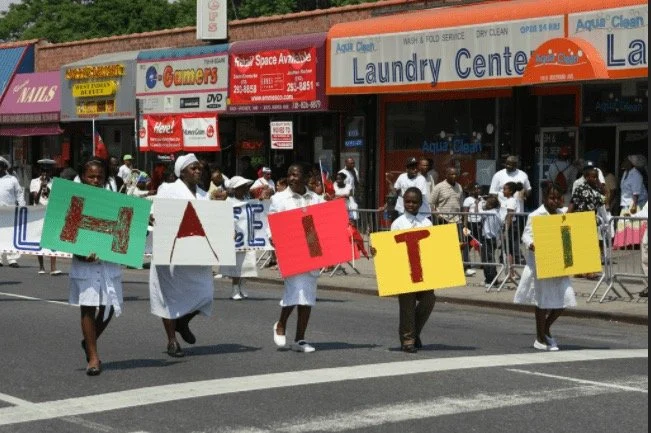
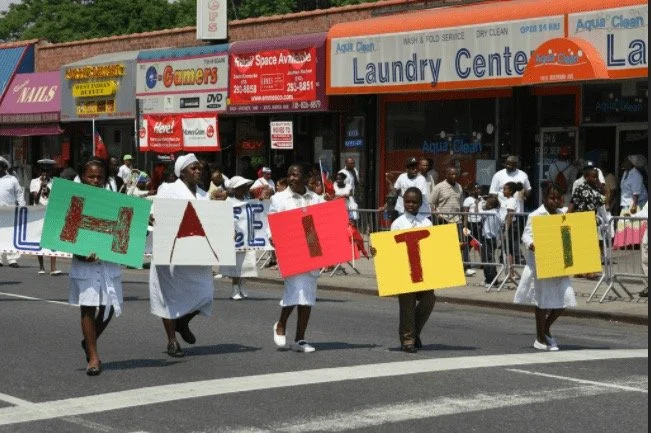
 BROOKLYN, NY — An effort to name parts of the Flatbush section of Brooklyn “Little Haiti” plunged into controversy last week when a local political operative blasted the idea as divisive and misguided.Haitian community members and leaders called on support from the mayor for the establishment of “Little Haiti” in the same area that was designated “Little Caribbean” last week.Little Caribbean would begin at Brooklyn College and run along Flatbush Avenue to Empire Boulevard.“The Haitian community supports the designation of both ‘Little Haiti’ and ‘Little Caribbean,'” said Assemblymember Rodneyse Bichotte, the first Haitian-American to be elected to the State Legislature from New York City. Bichotte represents the 42nd Assembly District which encompasses the communities of Ditmas Park, Flatbush, East Flatbush and Midwood.
 While the proposal has garnered support from some in the community including the Haitian American Caucus, Haitian American Business Network Chamber of Commerce and Haiti Cultural Exchange, the proposed “Little Haiti” has also been met with criticism.In an email to Bichotte and a host of other elected officials, including Council Member Mathieu Eugene and Rep. Yvette D. Clark, Ernest Skinner, a local community organizer and activist, condemned Bichotte’s efforts to co-name the Flatbush area “Little Haiti.” He called the move “misguided” and one of “division.”“When did Haiti stop being part of the Caribbean? This is the same insularity which sunk the fledgling Caribbean Federation,” he said in the email. “Sowing division may be why Haiti has never been able to reach its full potential and why it is considered a Fourth World country despite the noble start it gave to the Independence movement among people of color.”Bichotte has since sent a letter to Skinner calling for a public apology.“We support the Caribbean community. We are part of the Caribbean community,” the letter reads. “Although you have supported Haitian Americans and Haitian initiatives in the past, your statement clearly shows that your heart was not in it and thus erases any and all efforts.”The letter, which was signed by 11 Haitian community leaders and groups, including the Haitian Roundtable and Assemblymembers Michaelle Solages and Kimberly Jean-Pierre, emphasizes the various Haitian-related initiatives that highlight the history and culture of Haiti. She lists the street co-naming of Nostrand Avenue with Toussaint L’Ouverture Boulevard, the annual Haitian parades on Nostrand Avenue and the establishment of the Haitian Studies Institute (HSI) housed at Brooklyn College.“We were taken aback by the lack of engagement that has been shown to many of the elected officials and key stakeholders within the Haitian community throughout the overall process,” Bichotte said.The designation for “Little Caribbean” was initiated by Flatbush native Shelley Worrell, founder of CaribBEING, a Brooklyn-based organization dedicated to showcasing Caribbean culture. She has been working on the designation for roughly two years and saw it as an opportunity to support the existing businesses in the area, as well as, position the area as a tourist attraction.Councilman Jumaane D. Williams is the designating councilman for the initiative and is encouraging “more fruitful dialogue” to mitigate tensions.“My office is looking forward on working to pursue both an official ‘Little Caribbean’ and a ‘Little Haiti,'” said Williams. “The words in the letter were hurtful; I understand the community’s concern and I certainly hope an apology is forthcoming, and deservedly so.”There were conversations about a “Little Haiti” long before there was one for a “Little Caribbean,” Bichotte said in a letter to Mayor Bill de Blasio.The idea for a “Little Haiti” emerged several years ago. Bichotte and Williams, whose districts encompasses one of the largest Haitian constituencies in New York, discussed the matter but temporarily tabled talks on the designation to focus on advocacy for HSI.The plan was to revisit the idea after HSI was off the ground.According to Bichotte, the decision to name Flatbush Avenue “Little Caribbean” was done without community support or involvement.“Haiti has had a unique position within the Caribbean — it is in the Caribbean, but not of the Caribbean,” said Bichotte. “Although Haiti is geographically part of the Caribbean, the Haitian community has historically been singled out and excluded as a member of the greater Caribbean community, which is why Haitians have had to build separate communities and organizations in order to survive.”When Haitians migrated to Brooklyn in the 1970s and 1980s, many faced discrimination from Black and Caribbean Americans who lived in the area. Cultural tensions between the French-Creole speaking immigrants and their English-speaking counterparts spurred division within the greater West Indian community.Old wounds have been opened as the voices of the community and elected officials have not been engaged throughout the designation process,” Bichotte said. “Although, the journey to unity has come a long way between island politics and differences, having both designations would be ideal to acknowledge the Haitian people’s struggle. If all goes well, the designation of ‘Little Haiti’ would be established first in order to be encapsulated within the designated area of the ‘Little Caribbean.'”For Samuel Pierre, co-founder of Haitian American Caucus, the idea of a “Little Haiti” is welcomed but should also help put a light on other issues in the community. The nonprofit provides personal and professional development opportunities for the Haitian community and operates out of Flatbush.“Designating the Flatbush area as ‘Little Haiti’ speaks to the vibrancy that the Haitian community has added to Brooklyn. At the same time, we must use this renewed attention to raise awareness on socioeconomic issues that are barriers to success for many of our people.”By Vania Andre | October 2017
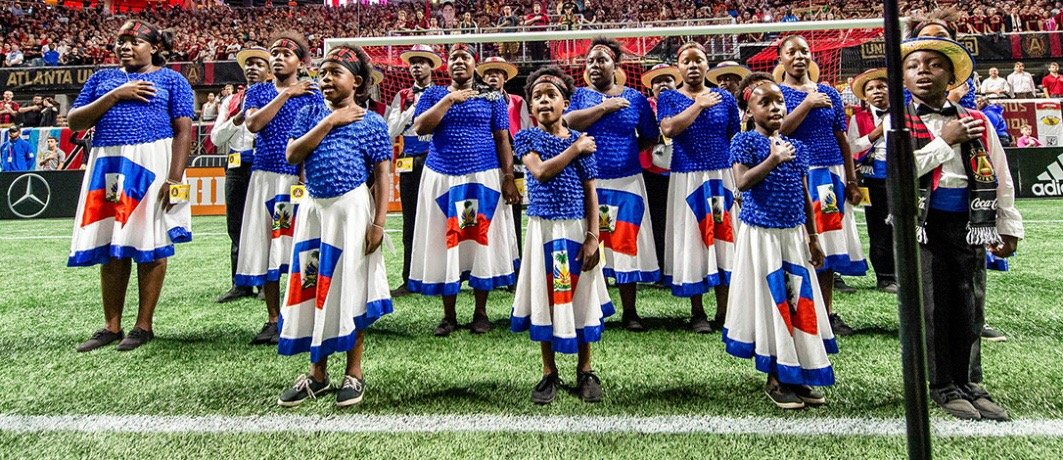
Haitian Orphan Choir leads national anthem at Atlanta United match
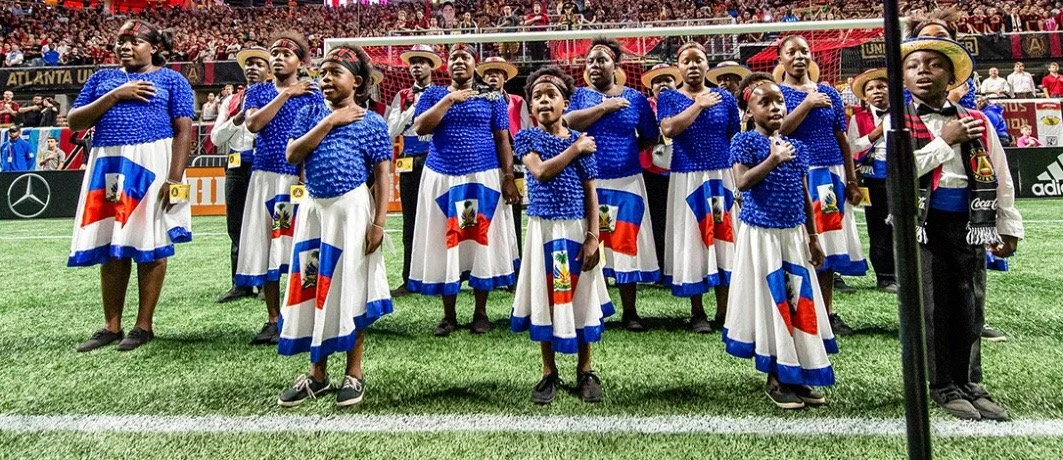
ATLANTA, Georgia, USA (sentinel.ht) – On Tuesday, Major League Soccor club, Atlanta United, brought in the Haitian Orphan Choir to sing the national anthem. They are a group that was born out of the tragedy that was the 2010 7.3 magnitude earthquake that rocked Port-au-Prince, Haiti. Every member of the choir lost their parents in that disaster. Atlanta United writes in a post:
One by one, they showed up to the Paul family household, and they were taken in. Their orphanage possessed next to nothing: several kids to every bed, limited room and supplies and intermittent power and water. But they loved to sing together, and soon it became a hobby and a talent. Now they’ve used that talent to make a difference.With Atlanta-based nonprofit “Love Him Love Them” as their hub in the United States, they’ve also taken their talents on the road. Last summer, the Haitian Orphan Choir raised enough money through singing appearances and performances to completely revamp the local orphanage. They’ve installed solar panels to guarantee electricity and now have running water. Every kid has their own bunkbed and storage locker for clothes. They’ve learnd trades – like how to become bakers and sewers and have learned how to make concrete blocks. They use those blocks for construction of their own but also to sell and boost the local Haitian economy.After returning to Haiti for the school year, they went back on tour this summer, with gospel star Kirk Franklin in front of 85,000 people in Haiti. Their performance at Tuesday’s Atlanta United game was their final appearance of the summer, as they try to raise money to build a small medical facility in their town. Meanwhile five of the students will stay in Georgia to attend Barnes Academy in Hartwell, learning as much as they can to go back and help their hometown.
Ryan Catanese who wrote about the choir’s performance provided a link for information to support the Haitian Orphan Choir. He writes, “there are many different levels in which you can contribute. From clothes to plane tickets, giving a little or a lot will go a long way.”—By: Haiti Sentinel | October 6, 2017

Haitian Revolution To Black Lives Matter: A History Of Suppressing The Black Voice

The call for protest and rebellion against French slave owners, which subsequently ended French tyranny over Haitians, challenged the status quo and became the first iconic symbol of a successful black protest and revolution. Nonetheless, this great feat by Haitian slaves was not welcomed and accepted by most whites at the time, mainly the United States government and its president, Thomas Jefferson, an ambivalent slave owner himself. Jefferson realized the Haitian Revolution had the potential to cause an upheaval against slavery in the U.S. not only by the slaves themselves, but by white abolitionists as well. Southern slaveholders feared the revolt might spread from the island of Hispaniola to the slave plantations of the South, which it briefly did in 1831 with the rebellion by Nat Turner that was inspired by the Haitian Revolution. The primary goal of the U.S. was to maintain social order in the country, so the U.S. suppressed Haiti’s revolution.The fear of oppressed people learning or talking about freedom is present today. Take for example the blackballing of Colin Kaepernick in the National Football League (NFL).There are suspicions that the NFL is blackballing Kaepernick out of fear of inciting the Black Lives Matter movement and the protest spreading to other players.According to John Mora, owner of the New York Giants, “I think there are certain issues obviously that go along with Colin Kaepernick and that may have scared some teams’ [owners] away.”Unfortunately, the lowest class of society in the U.S. and globally is still occupied by the disenfranchised and marginalized blacks. Though most black NFL players and other professional athletes are well off financially and generate yearly income exorbitantly more than most working citizens they represent an extremely small percentage of the overall population. According to Forbes, the wage gap between blacks and whites from 1979 to 2015 grew from 18 percent to 26 percent. The Economic Policy Institute contributes the growing earnings inequality primarily to discrimination of blacks in communities that most of the NFL players come from. In other words, the post-racial period we are supposedly living in has only gotten worse for blacks in terms of financial inequity.
 Adding to the racially disproportional margin that exists in income, is the staggering discrepancy in the incarceration rate between blacks and whites in the U.S. Many studies like the one published by The Sentencing Project in 2016 have argued that this discrepancy exists because of racial profiling by police and implicit racial bias in court against blacks and Latinos.Yet, when Kaepernick uses his platform and prominence to peacefully voice concerns and highlight the discrimination that the black community is facing, he gets ostracized by the rich NFL owners because supposedly his protest will affect their teams’ financial bottom line. The argument and pretext of the NFL owners, like the one by New York Giants’ John Mara, is that Kaepernick’s nationalanthem protest might lead to a white fan backlash resulting in a decrease in viewership and merchandise purchase.Although there might be some validity to his argument, most black people are suspicious of the motive, partly due to the slavery association they make between the NFL and the black players, but mainly because they believe there is a clear historical pattern of crackdown of black protests that dates back to slavery in the 18th and 19th centuries to the current BLM movement.It is probably unfair to compare slaves with NFL players, owever, lately there have been a lot of parallels between slavery and the relationships between the players and NFL owners.The comparison has been made in different sectors in our society, whether explicitly mentioned in the book Forty Million Dollar Slaves, uttered by some NFL players during interviews, or implicitly expressed in the popular movie Get Out, a fictional story of black bodies being used for either personal or financial gain.Ironically, the subtle correlation between the NFL and slavery was recently displayed by ESPN, NFL’s most popular media outlet, during a skit for a Fantasy Football auction that showed a white man standing on a podium holding a picture pretending to auction New York Giants wide receiver, Odell Beckham Jr. to a mainly white audience.This unintentional tone-deaf skit was not well received by Beckham and many other black athletes. The incident sparked more discussions about the racial dynamic between the NFL and the majority of its black players.It seems like whether it’s the violent Haitian revolution, the most violent attack ever of blacks on whites in the Caribbean, or the recent Kaepernick peaceful protest, arguably one of the least aggressive civil rights protests ever, in the U.S., the responses from whites in positions of power is always blatantly the same.By: Francois Thermitus | September 27, 2017
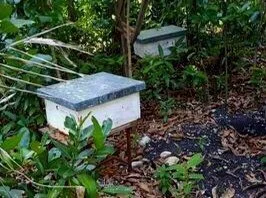
Beekeeping an alternative activity for fishermen in St-Jean du Sud
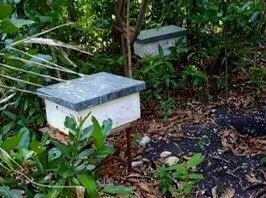
In order to allow fishermen living in the buffer zones of the mangrove ecosystems of St-Jean du Sud to have an alternative economic activity, the organization "Artisanal Fisheries and Integrated Development" (PADI) develops apiculture to Pointe Abacacou.Beekeeping is one of the sectors chosen within the framework of the green economy concept because of its transversal importance for increasing the yield of agricultural exploitations and a better management of biodiversity.PADI has organized two training sessions for the benefit of their members and other sectors in the area, with a view to an effective implementation of this sector within the fishermen's association of Point Abacou. Following these sessions, a multiplication apiary was set up with 10 colonies installed in the hives fabricated by the learners in the area.This activity also resulted in the strengthening of the cabinetmaking in Pointe Abacou. Managed by 5 learners under the supervision of the administration of the Fishermen's Association of Pointe Abacou, a workshop for the manufacture of hives with movable frame has been established.This initiative was carried out in collaboration with the International Labor Office (ILO), UN Environment Haiti and the Fishermen's Associations of the commune of Saint-Jean du sud and Port Salut.By: HaitiLibre | September 25,2017
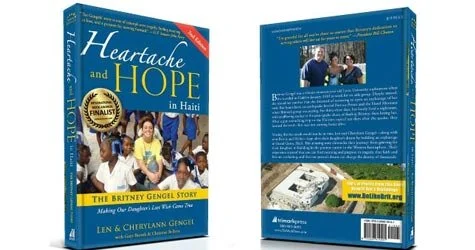
Heartache and Hope in Haiti
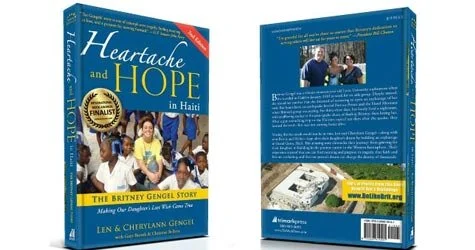

An Inspiring True Story...
When Len and Cherylann Gengel awoke on the morning of January 12, 2010, they had no idea that their lives and the lives of their family would be changed forever. Their daughter Britney, a student at Lynn University in Boca Raton, Florida, was on a a college mission trip to Haiti when she and 316,000 others perished in the massive 7.0 earthquake that decimated Haiti. Hours before she died, she had visited a local orphanage and texted this message to her mother:“They love us so much and everyone is so happy. They love what they have and they work so hard to get nowhere, yet they are all so appreciative. I want to move here and start an orphanage myself.”Hours later, Britney was buried in the wreckage of the Hotel Montana, which collapsed during the quake, The ensuing chaos was unimaginable and every parents’ worst nightmare. For days, Len and Cherylann agonized and worried as they waited for news and information about Britney.The most heartbreaking news of all? They were led to believe that she had survived and was on her way home to them. This information proved false and finally 33 agonizing days after the earthquake, Britney’s body, and that of three students and two Lynn professors, was pulled from the ruins of the hotel.There are many scenarios that could have played out for the Gengels after they lost Britney and while the Gengel’s could have understandably sought private refuge to recover from their grief, they instead chose to dedicate themselves in a selfless act of service. They chose to honor their daughter and build an orphanage in Haiti. According to Len Gengel, Britney’s father, “We had an obligation as parents to honor our daughter’s last wish.”Soon after the tragedy, they established the Be Like Brit Foundation, whose current goal was accomplished by building a sustainable, earthquake proof orphanage in Grand Goâve, Haiti. The orphanage is complete and the Gengels have chosen to share their inspirational and amazing story in Heartache and Hope in Haiti: The Britney Gengel Story (January 12, 2013, TriMark Press). Heartache and Hope in Haiti: The Britney Gengel Story is a book that begins with devastating loss then transcends that loss and in turn becomes a powerfully affecting story of love and resilience. The book, whose publishing date coincides with the anniversary of the earthquake, allows readers a rare window into the inner circle of the heartache and pain of parents who have lost their child.The book begins on the day Britney was killed and brings readers full circle as Len and Cherylann navigate their way through bureaucratic red tape on their often frustrating and always painful journey to recover their daughter’s body and fulfill her last wish.Heartache and Hope in Haiti is an eye-opening lesson in the ability of sheer determination and never losing hope. By the end of the book, readers share the Gengels bittersweet triumph as they realize their daughter’s legacy of building an orphanage in Haiti. Heartache and Hope in Haiti: The Britney Gengel Story is a simple, yet profound story told with the raw emotion of parents who are grieving, but choose to let the world know they will not let anything or anyone defeat them!

 BeLikeBrit
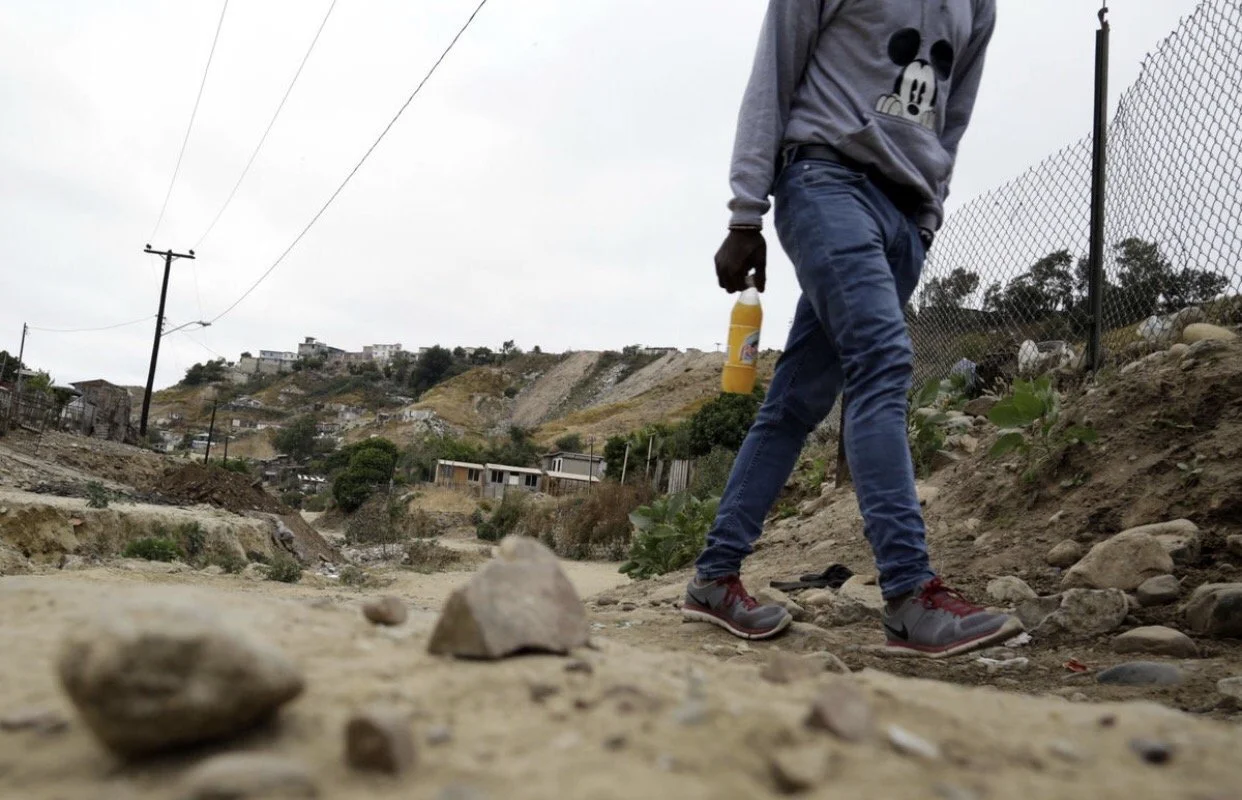
Haitians blocked at US border find 'Mexican dream'
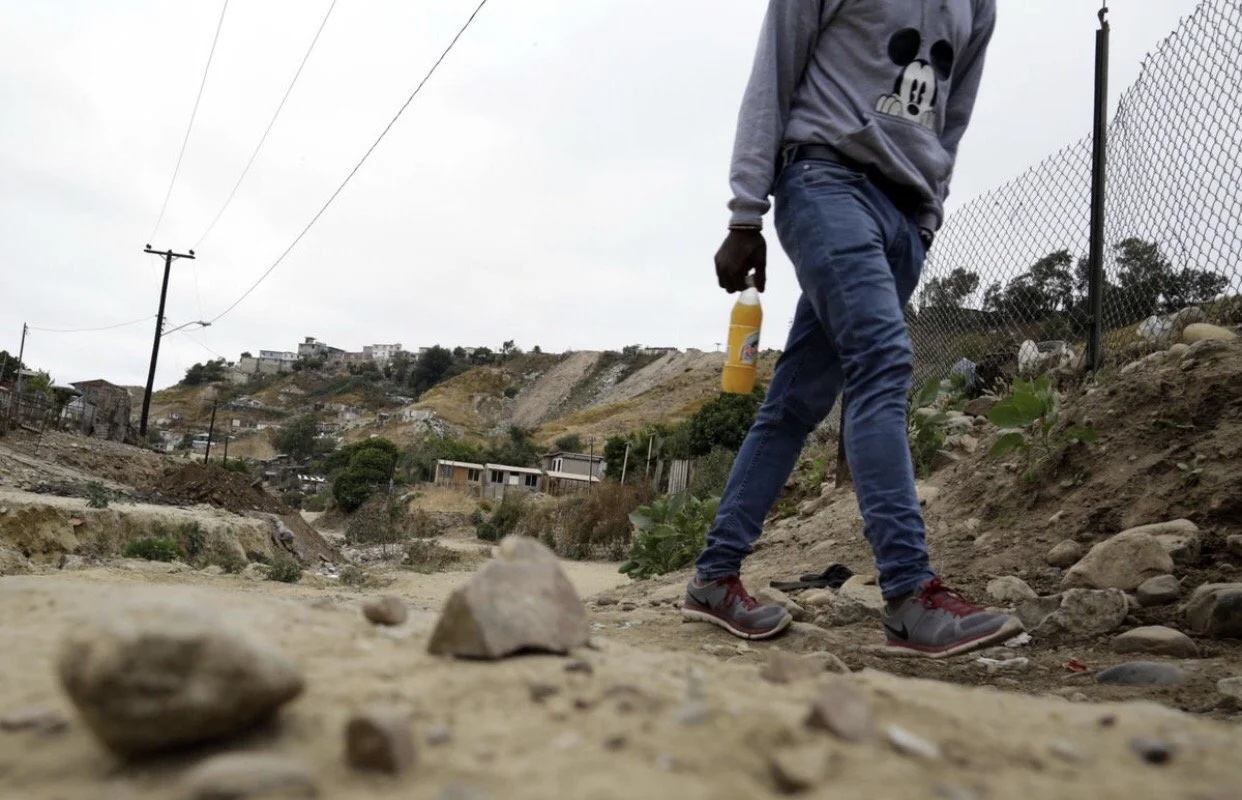
TIJUANA, Mexico (AP) — Jose Luis Millan found a new crop of star employees at an upscale Tijuana car wash where customers cross the border from the U.S. to pay up to $950 to have their prized possessions steamed and scrubbed for hours. They're never late, always hustle and come in on days off to learn new skills, traits that he says make them a model for their Mexican counterparts.They are among several thousand Haitians who came to Mexico's northwest corner hoping to cross the border before the U.S. abruptly closed its doors last year. The Mexican government has welcomed them, with a visa program that helps them fill the need for labor in Tijuana's growing economy.In a country whose population is 1 percent black, Tijuana's Haitians stand out. They share tight living quarters, sending much of their meager wages to support family in Haiti. Haitians earn far less than they would in the United States but enough to forsake the risk of getting deported by heading north.Two new Haitian restaurants downtown serve dishes with mangoes and mashed plantains. Dozens of Haitian children attend public schools. Factories that export to the U.S. recruit Haitians, who can also be found waiting tables and worshipping at congregations that added services in Creole."It's the Mexican dream for many of them, a sense that they belong," Millan said. "Mexico has given them opportunity. Mexico has opened up and let them achieve their dreams."Millan, who lived in the Los Angeles area for two decades until he was forced to leave last year for employing dozens of people illegally at his party planning company, sees parallels to Mexicans in the U.S. Their teamwork sets an example. Some customers ask for them.Haitians, he says, "fight hard, fight strong, and they don't stop." The Haitians took an accidental route from their impoverished Caribbean homeland to Tijuana, a city of about 2 million that borders San Diego and also has large pockets of Chinese and Korean immigrants.Brazil and its neighbors took in the Haitians after that country's 2010 earthquake. As construction jobs for the 2016 Summer Olympics ended and Brazil descended into political turmoil, they crossed 10 countries by plane, boat, bus and on foot to San Diego, where U.S. authorities let them in on humanitarian grounds.Then President Barack Obama shifted course in September and started deporting Haitian arrivals. Many decided to call Mexico home.After struggling as a schoolteacher in Haiti, Abelson Etienne moved to Brazil in 2014 to work at a factory that made cable for lighting products. He arrived in Tijuana in December after a harrowing journey with his wife who, despite the U.S. policy shift, was allowed in on humanitarian grounds, presumably because she was seven months' pregnant.Etienne, a 27-year-old who studied chemistry in college in Haiti, settled into a routine of six-day weeks and three double shifts, earning him 1,900 pesos (a little over $100), mostly for his wife in New York City and the infant son he hasn't seen. On Sundays, he sleeps until the afternoon and goes to church.
 "There's so much work in Tijuana," he said while a pot of fish stew with mangoes and tomatoes simmered on an electric burner in the two-room apartment that he rents with three other Haitians. "I've been treated very well in Mexico."The Mexican government is giving Haitians one-year, renewable visas that allow them to work but not bring family. Rodulfo Figueroa, the region's top immigration official, says Mexico is practicing what it asks of the U.S. and other countries."We believe that there's a humanitarian case to be made for these people to find better lives in Mexico," said Figueroa, the National Migration Institute's delegate in Baja California state, which includes Tijuana. "Our policy is to have the Haitian population do what they need to do to have status in Mexico."The new arrivals, currently numbering around 3,000, are manageable in a country of 122 million. Central Americans, who come illegally in much larger numbers, are typically deported, although Mexico is granting asylum more often.Rodin St. Surin, 36, is among hundreds of Haitians who found work at Tijuana's export-oriented factories. CCL Industries Inc., a Toronto-based company that makes Avery office products for retailers including Staples, Wal-Mart, Target and others, needed help after moving manufacturing from Meridian, Mississippi, last year.The plant hired St. Surin and 15 other Haitians in May for its workforce of 1,700 during peak back-to-school season. They inspected and packaged binders at the back of a giant, spotless floor where machines also churn out labels, folders and markers around-the-clock."I'm very comfortable with these people," said Mario Aguirre, the plant's operations director and a 43-year industry veteran. "They have given us very good results. They don't miss work, they always arrive on time. We'd like to see the same attitude in everyone."The factory offered 1,500 pesos (about $85) for a six-day week, with health coverage, paid vacation and a free shuttle to work. St. Surin, who left Brazil with hopes of joining a cousin in Miami, sends earnings to a caretaker for his three children in Haiti, whom he hopes to bring to Tijuana."Mexico could become my home," he said outside a crowded, graffiti-covered building where a nun allows about 50 Haitians to live rent-free on a street shared by cars and stray dogs. They tap a neighbor's hose for water to bathe, and cook meals on a campfire under a large canopy.The Ambassadors of Jesus Church, which sits on a rugged dirt road lined by agave and used tires, housed up to 500 Haitians last year on floors strewn with mattresses, making it perhaps the largest religious or civic aid group. Its pastor, Jeccene Thimote, wants to build a "Little Haiti" of 100 houses nearby at the bottom of a canyon where the sound of peacocks and roosters and smell of pigs permeate the air. He built three houses before the city halted construction for lack of flood controls.Thimote, 32, survives on two hours' sleep, rising to pray at 5 a.m., serving as foreman for a crew of 10 Haitians building a house in one of Tijuana's wealthiest neighborhoods, and working the night shift at RSI Home Products Inc., a California-based company that makes cabinetry for The Home Depot and Lowe's.Thimote, who was among 160 Haitians still living rent-free at the church this summer, sends his earnings to Haiti to settle family debts and support a 3-year-old daughter. He hoped to join a cousin in New York when he left Ecuador last year, but considers Mexico better than Haiti, saying, "There's more poverty there than here."The church has adapted. Every Wednesday night, Haitians gather for a rousing sermon in Creole. Mexicans attend a Sunday service in Spanish. A Haitian and Mexican recently announced plans to marry at the church.By Elliot Spagat, Associated Press | Sep 19, 2017