
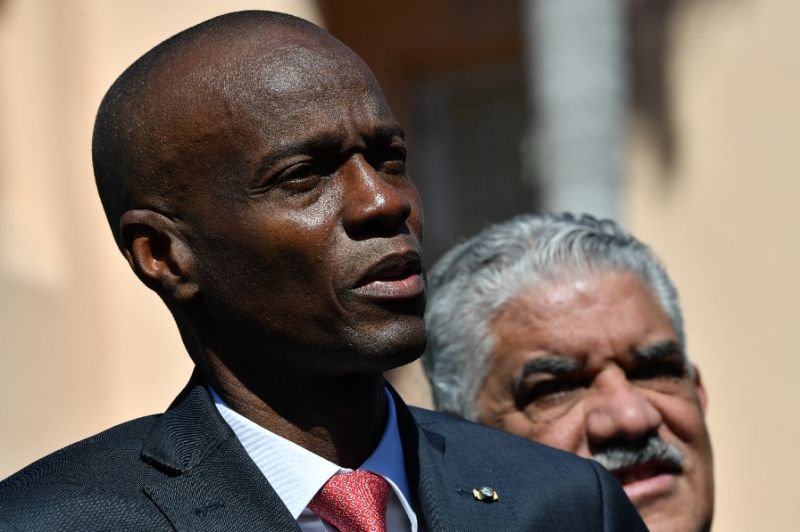
Haiti's president warns of humanitarian crisis, calls for support
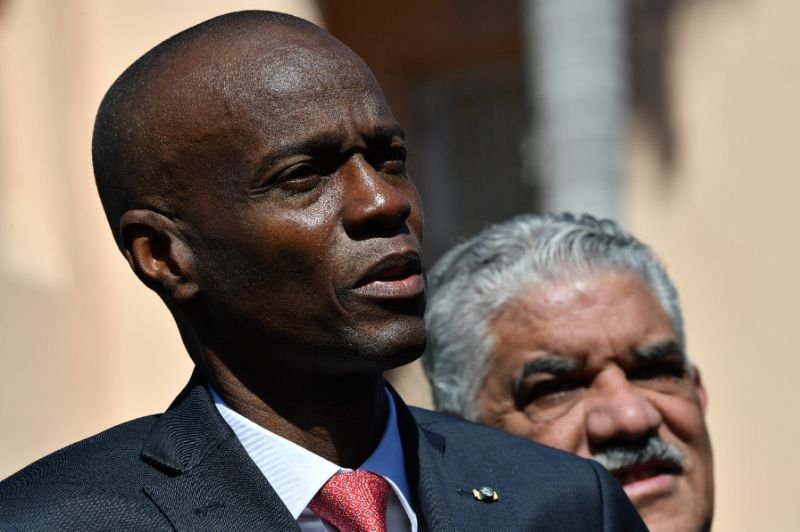
PORT-AU-PRINCE (Reuters) - Haiti needs international support to tackle an unfolding humanitarian crisis, President Jovenel Moise said in an interview, two months into anti-government protests that have exacerbated food insecurity in the Americas’ poorest nation.
Moise also told Reuters he was holding closed-door talks with civil society groups and the private sector, as well as radical and moderate members of the opposition in a bid to break political gridlock by creating a government of unity.
However the 51-year-old president - who faces widespread anger over galloping inflation, rampant insecurity and allegations of corruption - would not say with whom he was talking. Haiti’s leading opposition parties have for months said the time for dialogue is over.
“We are in the midst of a humanitarian crisis,” Moise said in the interview on Friday in the garden of his home in the hillside suburb of Petionville, overlooking Port-au-Prince and the Caribbean sea. “We need international support to get through this crisis.”
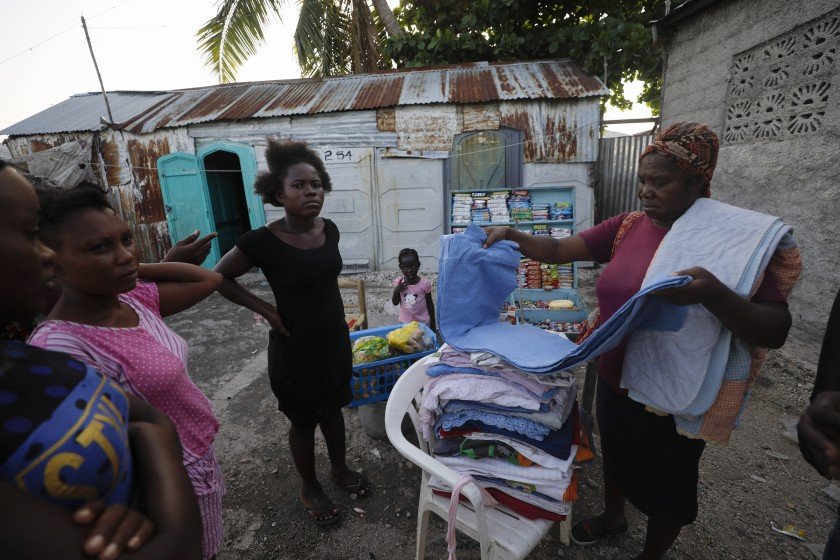
More than one-in-three Haitians need urgent assistance to meet their daily food requirements, meaning nearly 3.7 million people, the U.N. World Food Program (WFP) said earlier this month.
But aid organizations are struggling to provide relief due to protester barricades blocking roads, as well as gang violence and other crime. The WFP has said it is ready to launch air and maritime transport operations but needs to raise $2.9 million to do so.
Moise said his acting government had written to the Trump administration requesting aid last month and the U.S. Agency for International Development agreed to provide 2,000 tonnes of food aid to address urgent needs.
The opposition accuses the United States, which has frequently determined the fate of Haitian politics, of propping up Moise and ignoring the people.
The U.S. government has urged all stakeholders to work toward an inclusive dialogue without pre-conditions.
Fuel shortages in August sparked protests that have morphed into a fierce campaign against Moise that has shuttered businesses and schools and galvanized the political opposition.
While turnout in what has become Haiti’s longest wave of demonstrations for years has weakened somewhat over the last two weeks, the opposition is calling for a nationwide protest on Monday, a bank holiday that commemorates a major battle of Haiti’s independence war. [L5N26V5CF]
Moise said he started meeting “lots of people” behind closed doors a week and a half ago, rather than continuing to meet in public.
Two of the most prominent opposition leaders, Andre Michel and Moise Jean Charles, as well as the spokesman of the Episcopal Conference Father Loudeger Mazile, told Reuters they were not participating in the conversations and did not know of any significant figure or group that was.
DEMOCRATIC VOID
Haiti has not had a government since March as parliament is required to ratify the president’s choice of prime minister and the minority opposition has blocked such a vote from taking place.
The opposition accuses Moise’s ruling alliance of seeking to replace the previous prime minister because he was too keen on investigating the embezzlement of Venezuelan aid funds that could have sullied its members, including the president himself. Moise denies any wrongdoing.Slideshow (4 Images)
The lack of a government in turn is preventing Haiti from accessing hundreds of millions of dollars in international aid funds as well as loans from the World Bank, Inter-American Bank and others earmarked for it.
From next year, it will no longer have a parliament either. The mandates of deputies and most senators ends in January and Haiti failed to hold legislative elections in October as required by the constitution.
“We don’t want to govern the country without democratic institutions,” said Moise. “But unfortunately it looks like we are headed in that direction and that’s why today we are working on finding a political accord.”
He reiterated that he had no intention of resigning or holding early elections.
Instead, he said, he wanted to carry out reforms including changing the constitution to strengthen the president’s powers so he is not held hostage by parliament.
The presidency is weak under Haiti’s current constitution as it was written in the wake of the dynastic dictatorships of Francois “Papa Doc” Duvalier and his son Jean-Claude “Baby Doc” Duvalier.
On the economic front, Moise said he hopes to implement stronger mechanisms to avoid tax and customs evasion to help reduce the ballooning budgetary deficit. This could in turn help bring down inflation of around 20 percent.
On the investigation into the alleged embezzlement of Venezuelan aid funds, the president said his acting government was pressing for an update.
Moise’s opponents, who say he disappeared from public sight at the start of the current crisis, criticize it as too little too late, nearly three years into his five-year mandate.

Delta to end a decade of service to Haiti

Delta Air Lines will end a decade of service to Haiti citing weak demand.
The SkyTeam Alliance carrier will operate its last flight between Atlanta (ATL) and Port-au-Prince (PAP) on Jan. 9, Delta confirmed and Cirium schedules show. The last flights will be operated with a Boeing 737-700.
Delta spokeswoman Susannah Thurston said the move is in response to a “soft demand environment.”
The airline has served Port-au-Prince since 2009 when it began flights between the Haitian capital and New York John F. Kennedy (JFK), according to Cirium. Flights between Atlanta and Port-au-Prince began in 2012.
Delta last offered seasonal service between JFK and Port-au-Prince last winter, with those flights ending in April.
Four airlines — Air France, American Airlines, JetBlue Airways and Spirit Airlines — will serve Haiti from the U.S. after Delta’s exit. American serves Port-au-Prince from Miami (MIA); JetBlue from Boston (BOS), Fort Lauderdale (FLL), JFK and Orlando (MCO); and Spirit from Fort Lauderdale.
Air France offers a unique “fifth-freedom” flight — a route between two countries where an airline is not based — between Miami and Port-au-Prince.
Delta plans to grow system capacity by 3-4% year-over-year in 2020, executives said in October. Highlights of the growth will be the beginnings of its new strategic partnership with LATAM Airlines, as well as new markets like Mumbai (BOM) that launch in December.
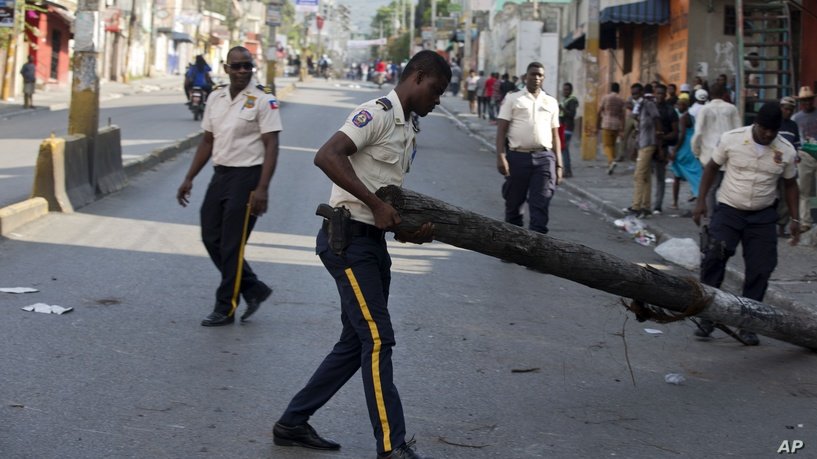
Haiti Anti-Government Protests Lose Momentum
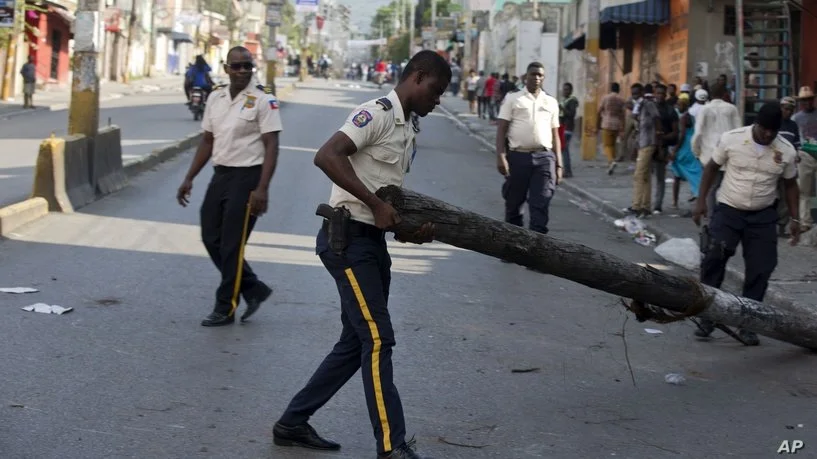
WASHINGTON/PORT AU PRINCE, HAITI - Only a few hundred people responded to the opposition's call Sunday to protest in the streets of Haiti's capital to continue pressuring President Jovenel Moise to step down.
On previous Sundays, tens of thousands have filled Port-au-Prince streets from morning to sundown.
Have the protests lost momentum? VOA Creole put the question to opposition leaders marching on Sunday.
Sen. Ricard Pierre said he thinks bribes and fear were partly to blame for the small crowd.
"A significant number of Bel Air residents have died — an area that heavily supports the efforts of the Alternative (opposition group). We have people hiding out in the poor neighborhoods because the government has threatened to kill them," the senator told VOA Creole. "There have been efforts to distribute weapons to residents of the slums. They've been offered money, offered food. But despite the massacres endured by the poor people, there are some of them in the streets today fighting (for a better life)."
VOA could not confirm the senator's allegations.
Downtown, evangelical pastor Prophete Mackenson Dorilas, who, perched atop a carnival-style truck had been surrounded by thousands of followers during October protests, was seen marching in the street with only a handful of protesters. He blamed fear and the absence of his truck for the low turnout.
"The first truck we were offered, I turned down because it wasn't what I requested. So, they said they would bring me another truck, and I'm still waiting. Some members of my church had intended to join the protest, but they heard the police was targeting protesters, so they ran away," Dorilas told VOA Creole, adding that the people also need motivation.
"The churchgoers don't like to see me walking on the street. They like to see me up high," he said.
Also marching with about a dozen protesters was former Haitian Army Col. Himmler Rebu, who described his participation as the right thing to do.
"There are two efforts happening simultaneously. There are those (members of the opposition) who are in offices working on plans and strategy, and there are those who are accompanying the people marching in the streets. So today, that's my job, " he said.
Up north
Early Sunday, tires were seen burning in the middle of a main road in the northern city of Cape Haitian. There were also roadblocks made of tree branches, rocks, metal and debris.
"These roadblocks are here because President Jovenel still refuses to resign. We will keep blocking the streets, and we will keep protesting until the president leaves," a protester told VOA Creole.
Opposition summit
Back in the capital, members of the opposition spent the weekend meeting at the Marriott Hotel to discuss the transition process that would be activated if Moise were to resign.
"We are in agreement on four aspects of the transition: governance, control, steps forward and duration," announced opposition Sen. Youri Latortue, who heads the Haitian Senate's Ethics and Anti-Corruption Committee. No further details were given.

On the subject of who would replace Moise, the group decided that the choice would be made by a five-member committee comprised of a representative of each opposition group. The transitional president would be chosen among the Supreme Court judges. The committee would also choose a prime minister.
"This is a historic event," prominent businessman Gregory Brandt, who represented the private sector at the meeting, told VOA Creole. "The country has been suffering through a complicated situation for two months now. We aren't selling merchandise, we aren't receiving merchandise. Port-au-Prince is beginning to face a scarcity of basic goods. We're facing an unprecedented humanitarian crisis, so we must sit down in all seriousness to discuss how we can resolve this crisis."
US aid
Last week, Rob Thayer, director of USAID's “Food for Peace” program, told VOA Creole the agency has earmarked 3,500 metric tons of emergency food aid for Haiti, which will be distributed to those in need.
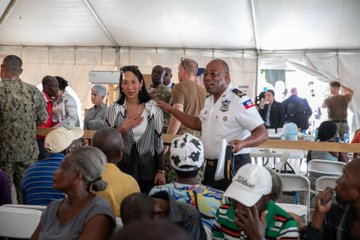
In addition to the food aid, the U.S. Navy hospital ship USNS Comfort has been docked off Haiti's shores since Nov. 6 for a seven-day medical and humanitarian mission. According to the U.S. Embassy in Haiti, the ship's staff has seen more patients per day in Haiti than on any other stop of their five-nation tour.

U.S. Embassy Haiti✔@USEmbassyHaiti
What a week-end! We’re proud of the Comfort crew & their HAITIAN partners’ effort as they are seeing more patients at the clinic per day than they have on any other stop of the 5 months #EnduringPromise mission. - #AmbSison


625:40 PM - Nov 9, 2019Twitter Ads info and privacy16 people are talking about this
U.S. Secretary of State Mike Pompeo expressed concern about the situation in Haiti last week on Twitter.

The #USNSComfort has arrived to provide much-needed medical services in Haiti. We call on all of Haiti's leaders to come together to solve the ongoing political & economic gridlock through dialogue & institutions. We stand with all Haitians who peacefully call for accountability.

1,5882:16 PM - Nov 7, 2019Twitter Ads info and privacy658 people are talking about this
"The #USNSComfort has arrived to provide much needed medical services in Haiti. We call on all of Haiti's leaders to come together to solve the ongoing political & economic gridlock through dialogue & institutions. We stand with all Haitians who peacefully call for accountability," Pompeo tweeted.
President Moise
Meanwhile, Moise has been busy naming new cabinet ministers, meeting with members of the diplomatic corps, and giving interviews to the foreign press. He has also increased his visibility on the streets, in the national press and on social media.
"Since my first day in office, I have always preached the same thing — togetherness, unity — because the country is tired," Moise said during a Nov. 7 speech. "Our (nation's) motto is Unity is Power. But unfortunately, this system (of government), the system that uses people, gives us a different motto which is, Divide and Conquer. Whenever a person wants to enrich himself, he pits us against each other. And when we've taken the bait and died in battle, who benefits? Not us."

Early Sunday morning, before the anti-government protest began, Moise visited police stations in Carrefour and Petionville, his press secretary announced. According to a press statement received by VOA Creole early Monday morning, Moise sought to see the working conditions for the policemen and asked for a detailed report on the current status of affairs that will be used to "better address the needs of the agents of the PNH (National Police of Haiti)."
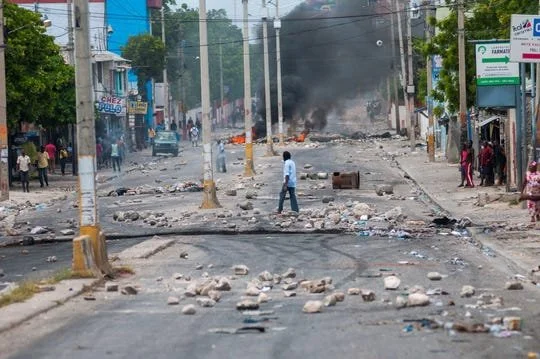
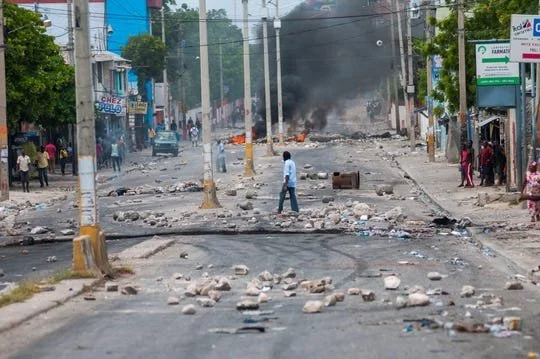
Haiti: The world is closing its eyes to the humanitarian calamity developing there
Proverbs 31:8-9 says, "Speak up for those who cannot speak for themselves, for the rights of all who are destitute. Speak up and judge fairly; defend the rights of the poor and needy.”
If I had the opportunity to present two questions to humanity, they would be: "Why has the whole world turned their backs on the Haitian people at their greatest time of need?" and "Has even the media around the world turned their backs on Haiti?" It does not seem that anyone is bothering to ask questions about so many lives being lost.
A crisis began in Haiti in July 2018, but it has been quickly becoming a Humanitarian Crisis over the past seven weeks. It breaks my heart to see backs being turned toward the Haitian people. I ask myself, “how many lives need to be lost either by bullets from the gangs or police or starvation before the media will report the grave situation?" For the last seven weeks, the following things have NOT been available in Haiti: gas, water, food, electricity, security, and hospitals. And if basic needs are not available to people, please don’t even think about justice.
Haiti has become a lawless land. Currently gangs are in charge; they control the entire country from north to south, from east to west. Basically nobody can walk two blocks from their home without getting robbed or killed. Dead bodies have been in the streets with no service to pick them up after they've been shot by gangs or police. About two weeks ago, a 16 year old was hit by four police bullets but did not die immediately. The police picked him up, put a chain on his leg, drove him to what you would call the “General Hospital,” and a few hours later, he died there with the chain still on his leg. Can you imagine what his mother is going through?
There have been atrocities occurring in Haiti, yet the international media continues to not report it. Crimes have been committed against women and children. An example is the La Saline Massacre that took place last November. Women and children are now dying from all kinds of disease in the La Saline area. Many had to leave their homes almost a year ago after gangs swept into their community, raped, cut off women's and children's heads and burned their husbands. Why were there no news reports on these crimes? Months afterward, the UN finally acknowledged the massacre, yet it was still not reported by the media. Is it okay to kill Haitians? Do they not count as human beings?
I would like to warn the world about a Humanitarian Disaster which will happen in Haiti very soon while the eyes of humankind are closed. I don’t believe the conditions of any other country have been ignored like those of Haiti right now. Even social media is not showing what is happening in Haiti. We are on the brink of a food and health crisis in Haiti; it is already rare to find supplies or a functioning hospital where a loved one can be taken. For instance, in the area of my Children's Home, we experienced a 26% increase in the costs of food from September 1st to October 1st.
For over seven weeks, there have been riots seven days a week in the entire country. More than a million people have been in the streets every day asking for better living conditions. That is completely understandable considering Haiti is a nation of 12 million people who are living under inhumane conditions. Dead bodies lie in the streets being eaten by pigs and dogs with sanitation barely existent. For seven weeks, neither government nor schools have functioned. The food supply has been virtually shut off throughout the country.
My plea is for the world to please take a look at the situation in Haiti before it becomes a full-fledged humanitarian catastrophe! Haitians are human beings just like any other nation. It's time to save men, women, and children from dying.
It is time to "Speak up for those who cannot speak for themselves, for the rights of all who are destitute. Speak up and judge fairly; defend the rights of the poor and needy."
Thank-you for allowing me to be a voice for the nation of Haiti and for taking the time to read my plea!
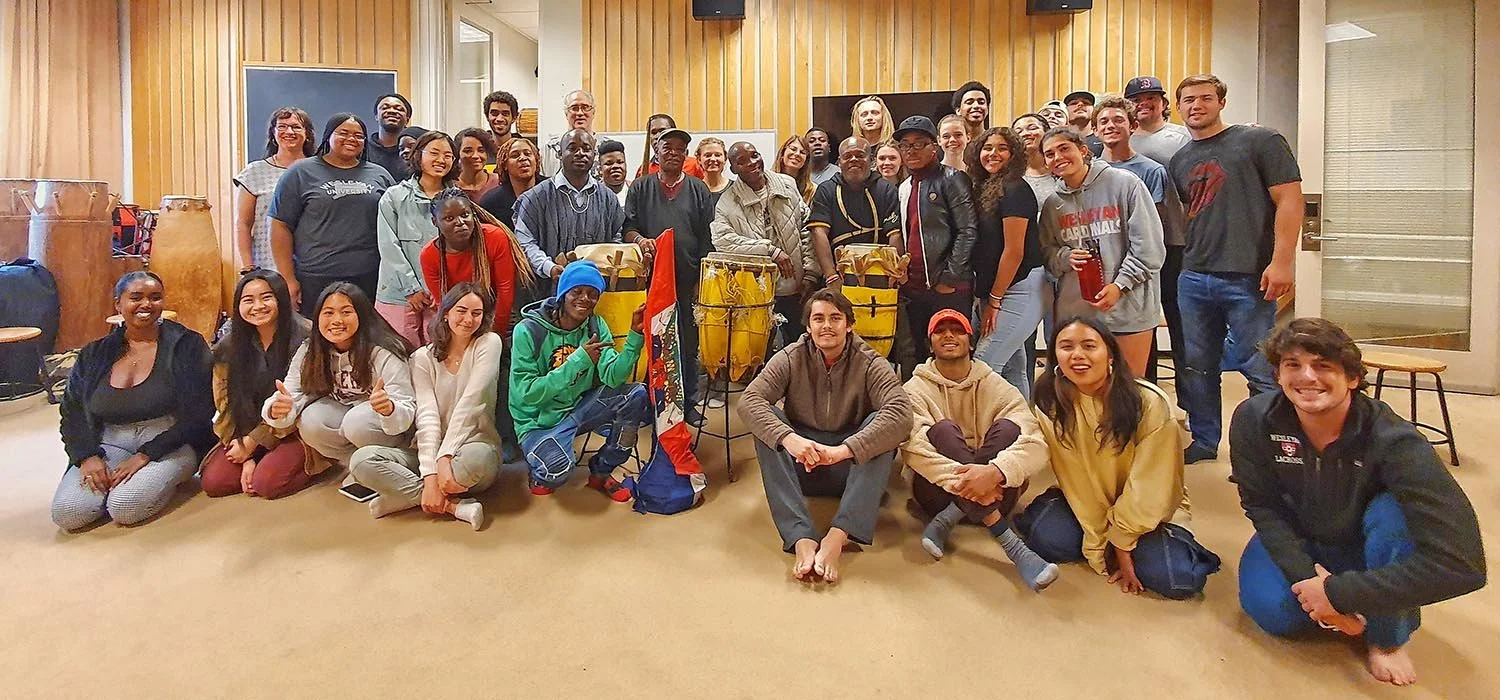
Haitian Band Performs, Teaches Dance and African Drumming Students
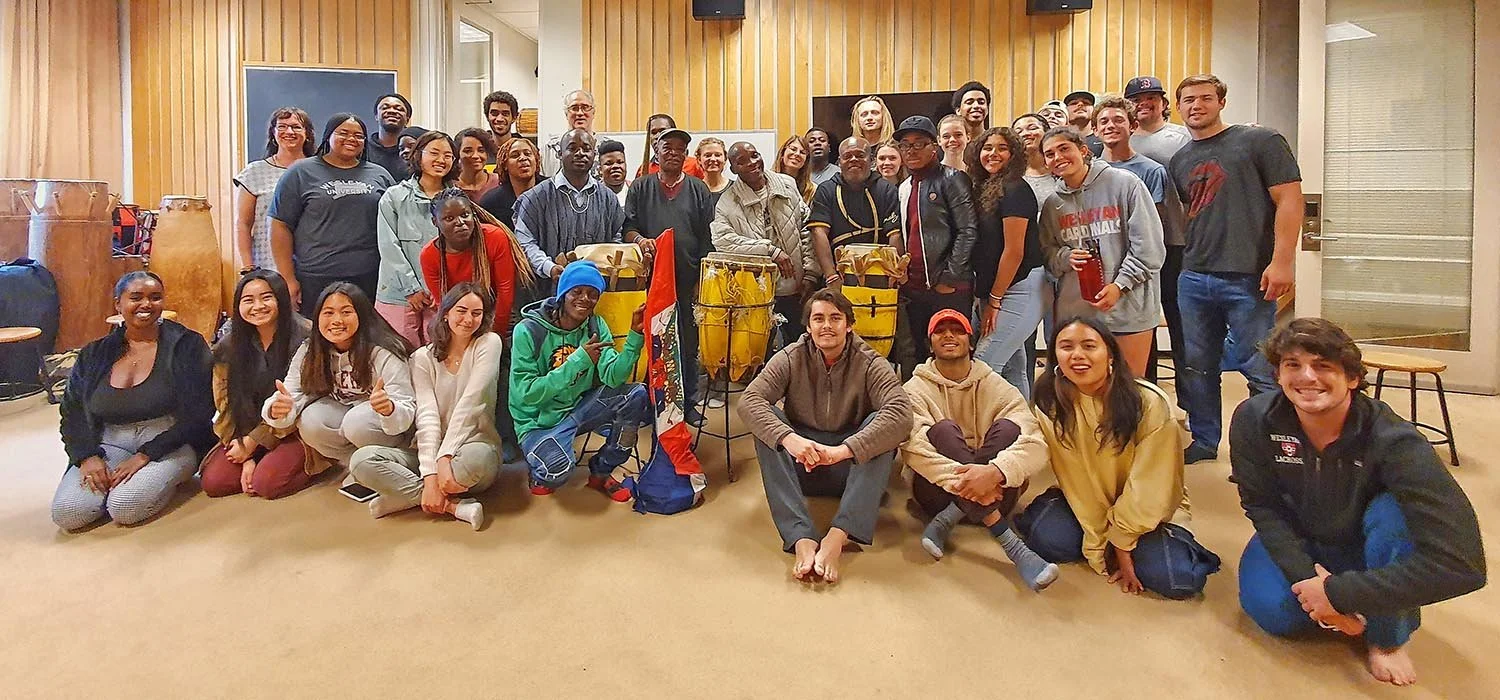
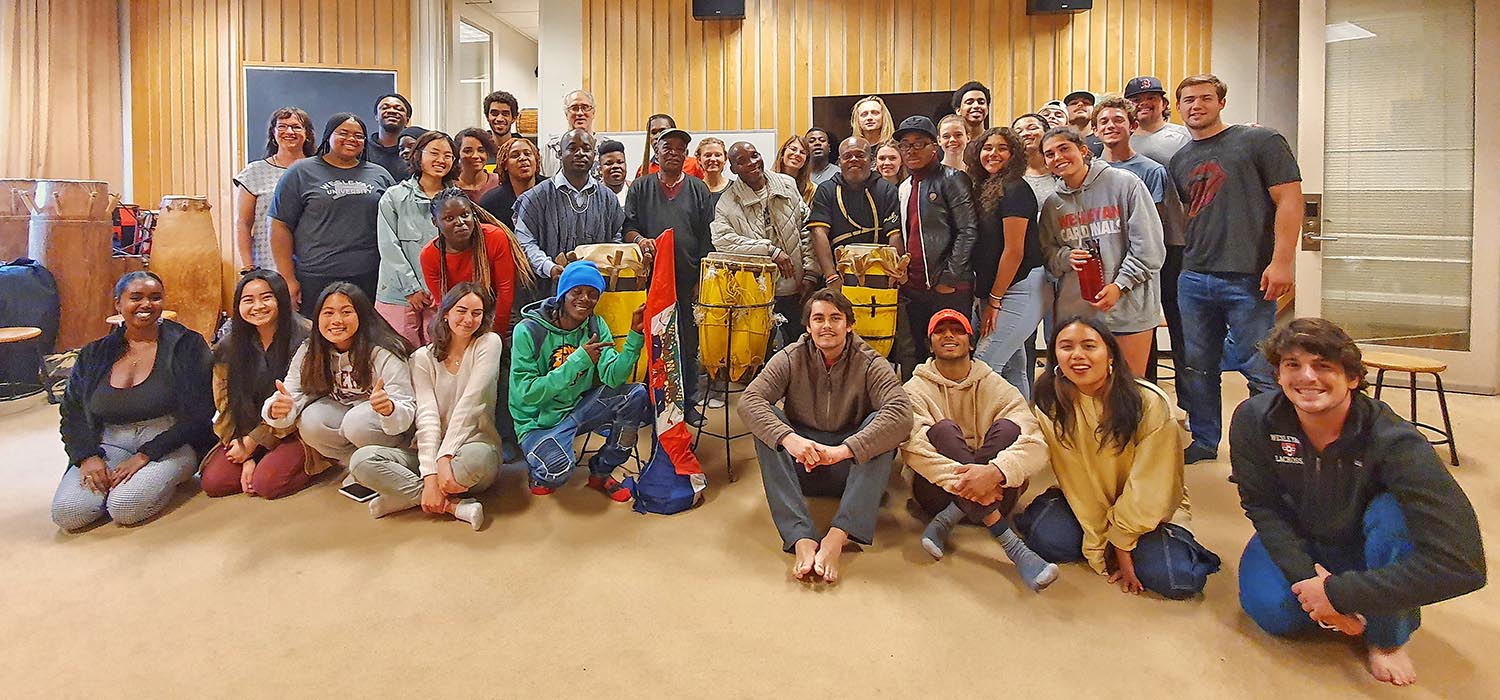
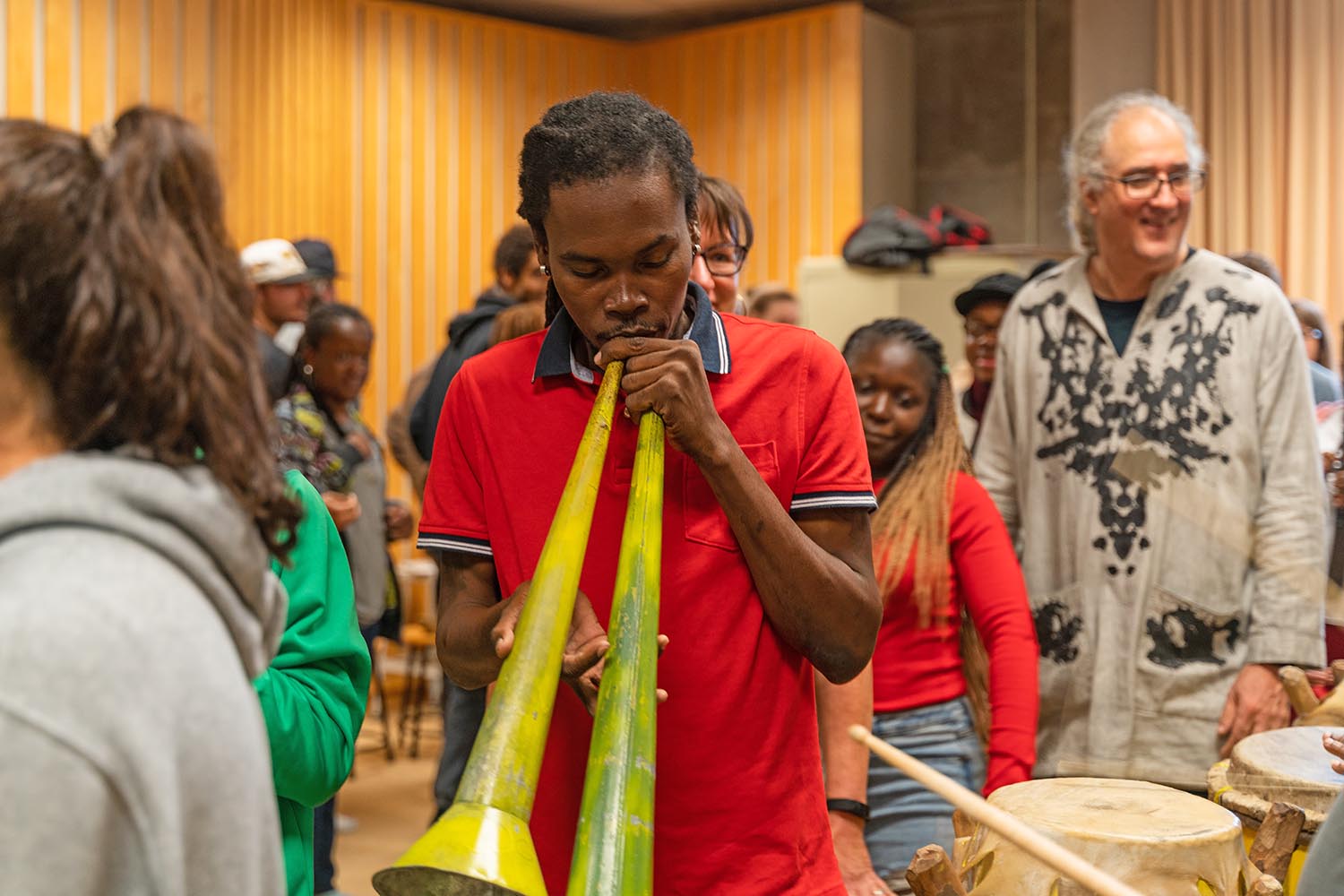
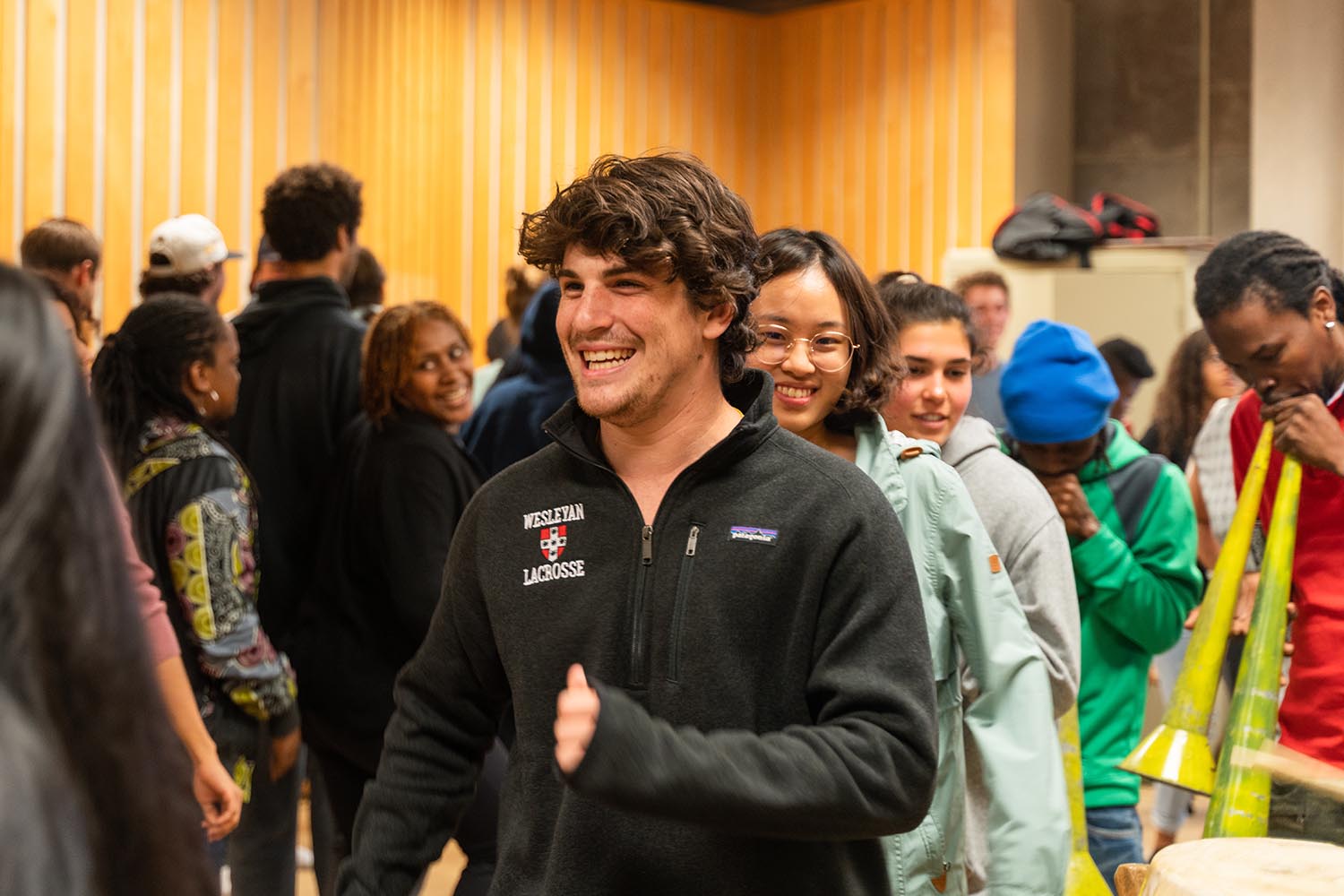
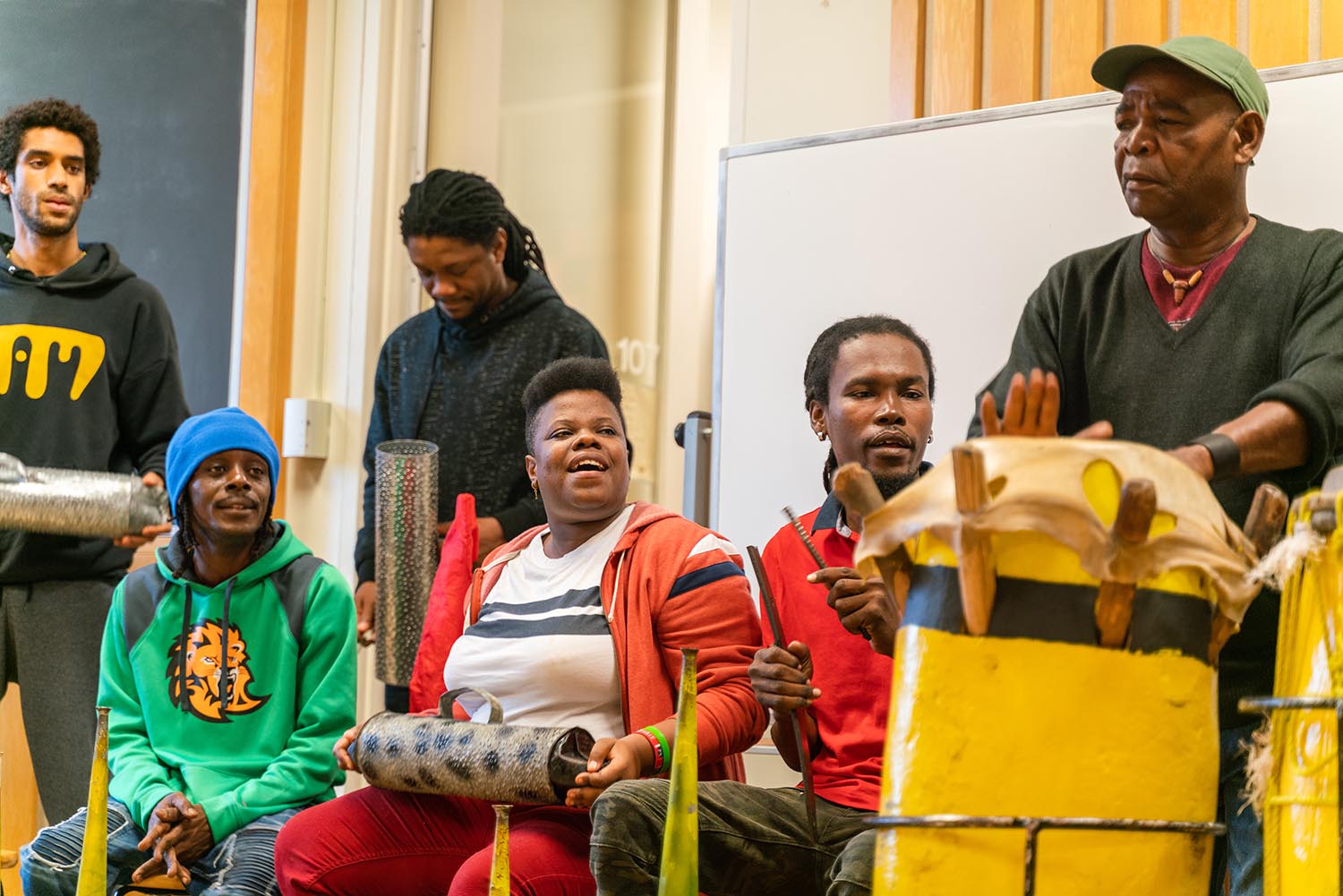
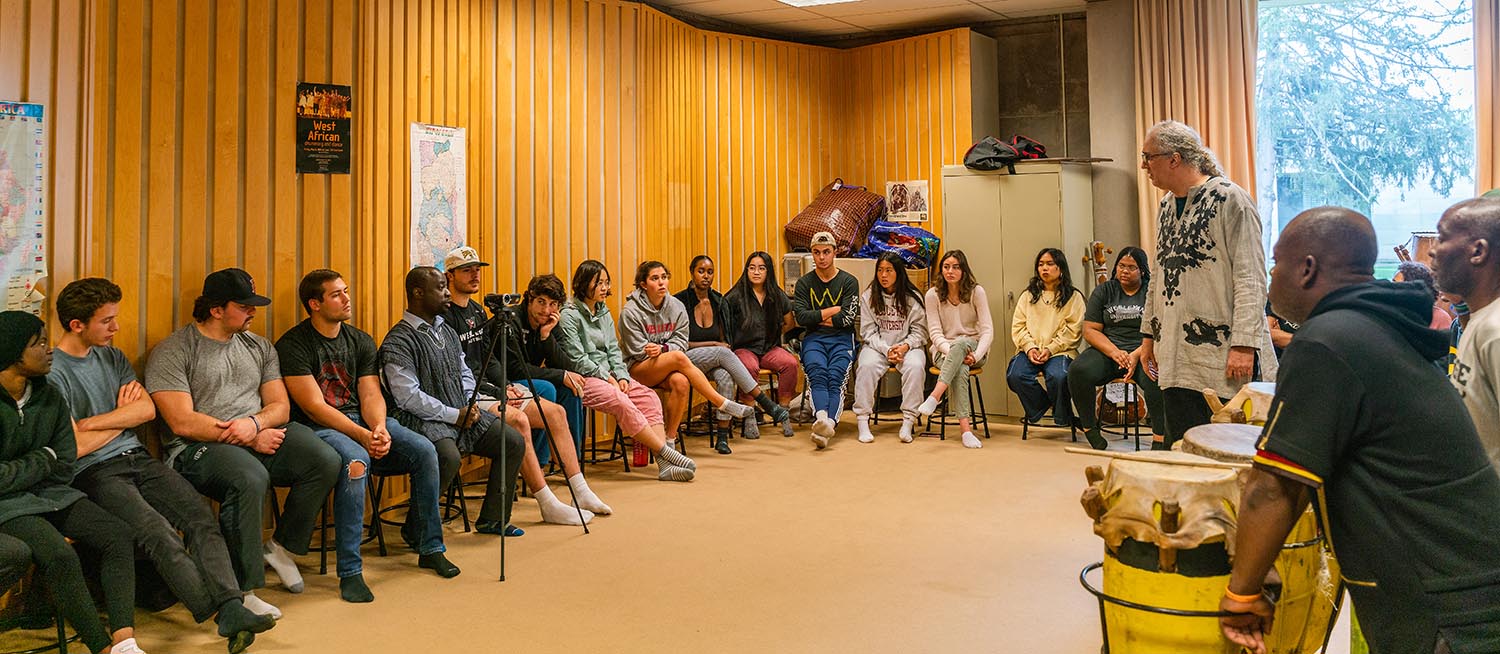
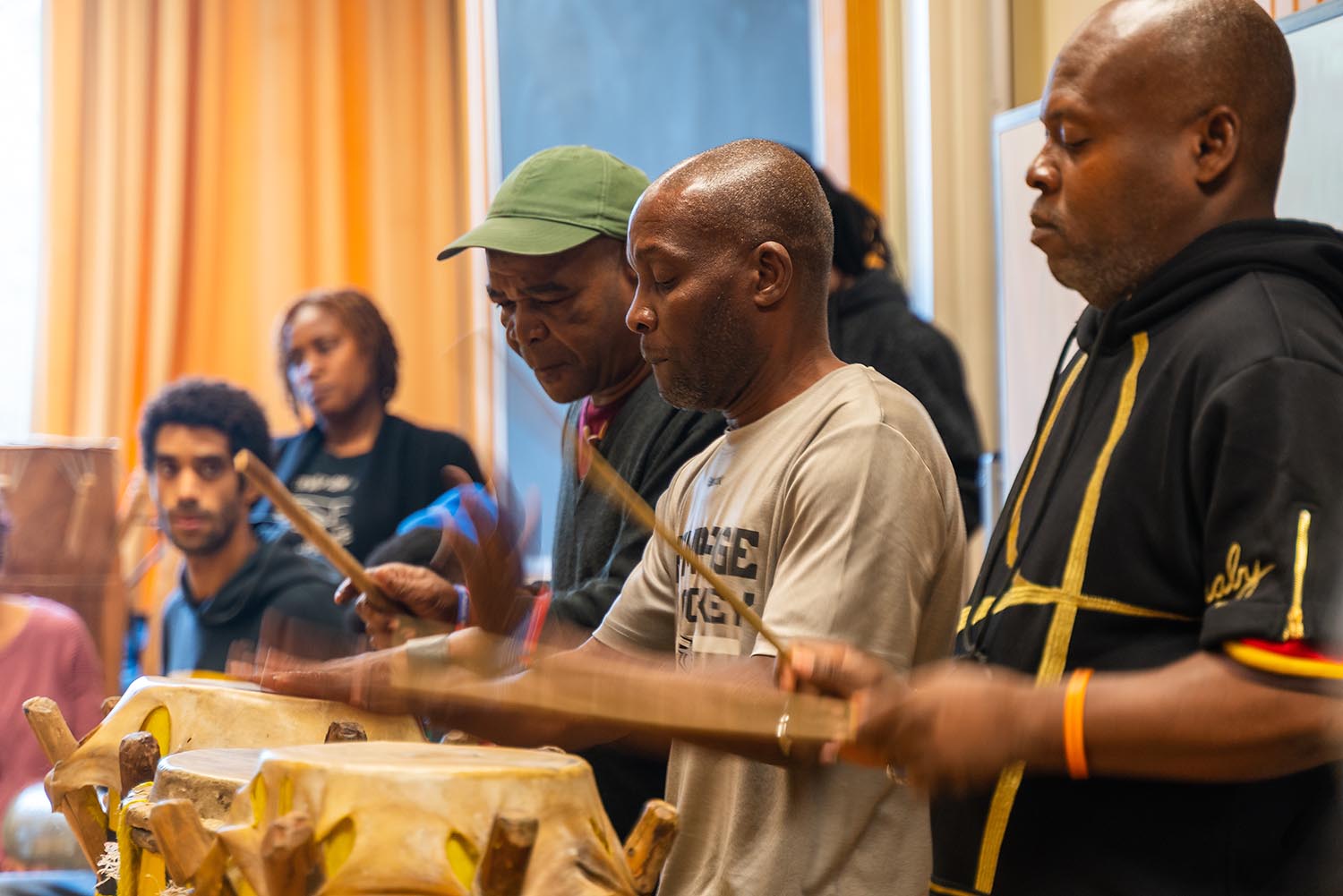
Haiti’s “Roots” band RAM came to campus for a one-day artists’ residency and led drumming and dance workshops for Wesleyan students. They met with students in two classes on Oct. 8.
The group, led by Richard Morse, has produced music for more than 25 years. They recently released their seventh album, August 1791.
In the morning, RAM led a dance workshop for two combined classes: Afro-Brazilian Dance taught by Joya Powell, visiting assistant professor of dance, and Contemporary Dance Technique II/III taught by Katja Kolcio, chair and associate professor of dance. And in the afternoon, they led a workshop for the West African Music and Culture class, taught by John Wesley Dankwa, assistant professor of music.
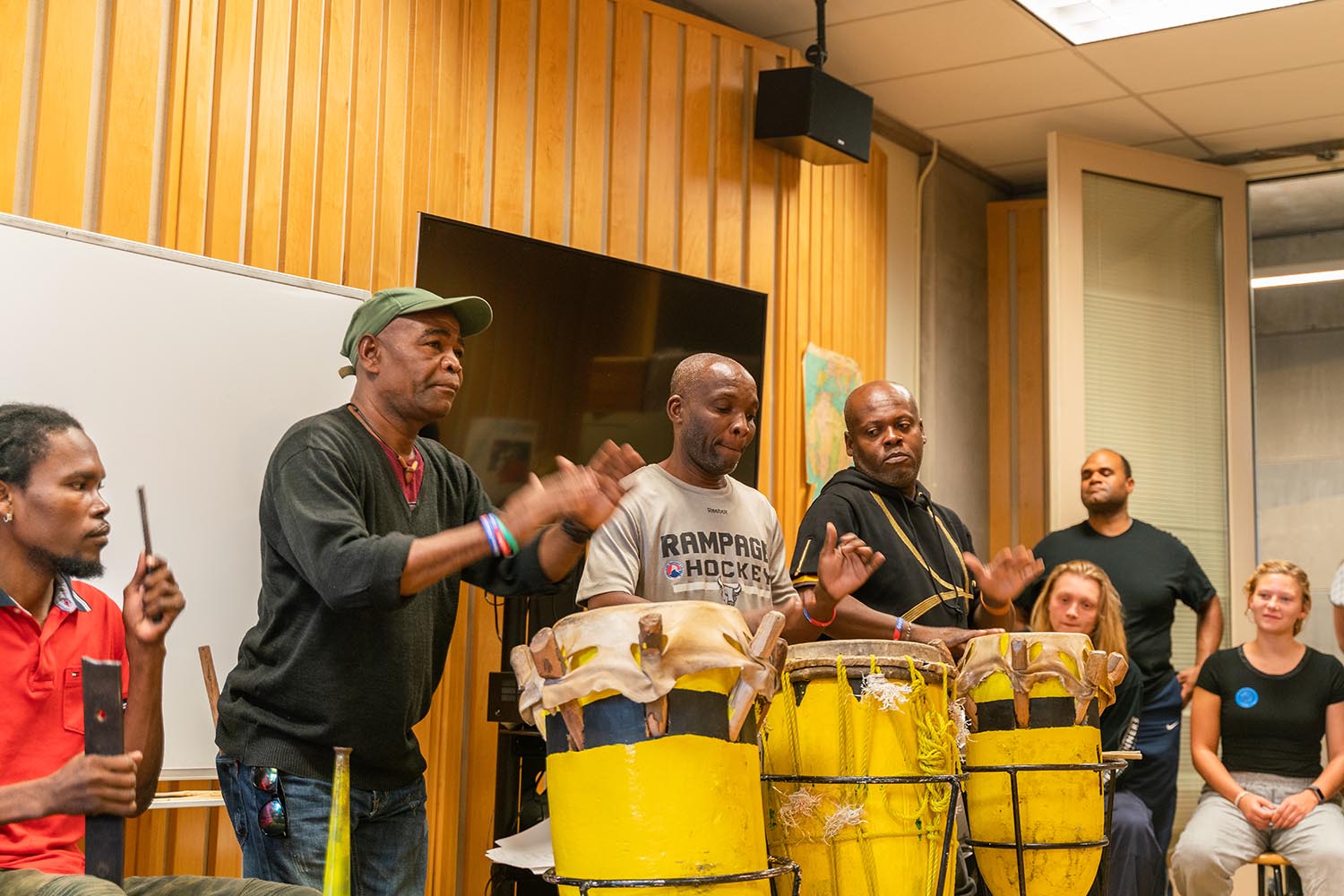
RAM led students in the traditional Afro-Haitian dance and rhythms, and spoke to students about how these art forms had their source in West Africa, were brought with enslaved Africans to Haiti, were part of the 1791 slave uprising, and have been passed on through the generations since Haiti won its freedom and abolished slavery in 1804.
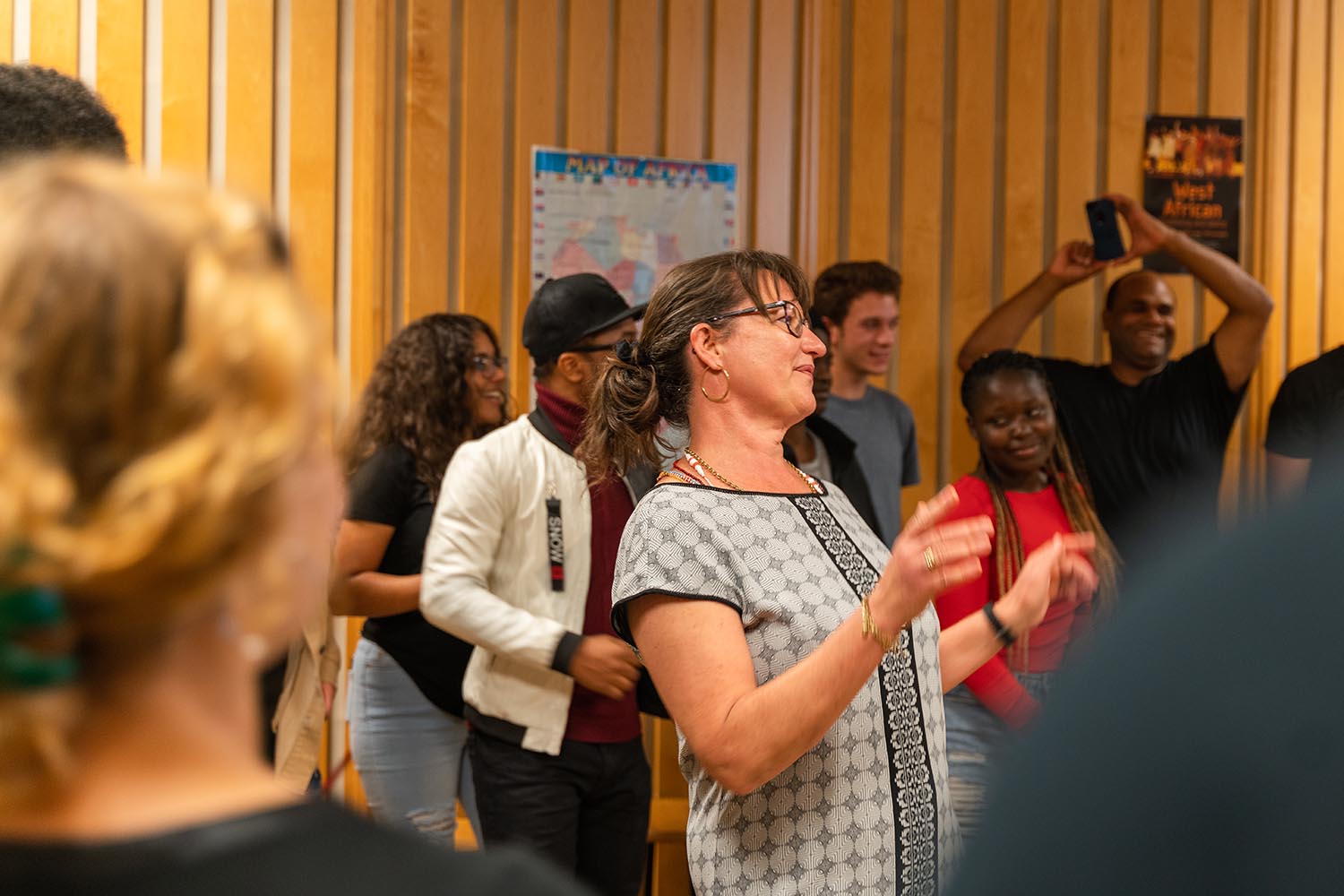
Photos of the workshop with the West African Music and Culture class are below: (Photos by Nick Sng ’23)



EXPERT SAYS TECHNOLOGY HELPS FUEL ANTI-GOVERNMENT PROTESTS IN HAITI
LAWRENCE – Inspired in part by global uprisings and empowered by technology, the youth-led protesters who have taken to Haiti’s streets in the past month to demand change from a corrupt and entrenched system seem like the troubled island nation’s only hope.
This is the analysis of the current situation by Cécile Accilien, associate professor and interim chair of the University of Kansas’ Department of African & African-American Studies and director of KU’s Institute of Haitian Studies. A Haitian native, she is available to the press to comment on the ongoing unrest in her native land.
Haitians in their 30s and younger have not known any type of stability, Accilien said. Corruption, injustice and impunity have been institutionalized, and people are fed up, she added.
The social movement touched off by the hashtag campaign #Petrocaribechallenge is filled with youths inspired by other movements such as the French yellow vests, Y’en a Marre in Senegal, Occupy Wall Street and the Arab Spring, Accilien said. The fact that these nonpartisan groups and other subgroups, such as #KotKòbPetwoKaribea” (Haitian Creole for “Where is the Petro Caribe money?”) remain active in the fight for transparency and accountability regarding the embezzlement scandal is crucial.
While this is not the first time public funds have “disappeared” in Haitian history, this is the first time that technology has made it difficult, if not impossible, for the government to hide information about money laundering and corruption.
Even as she endorses the anti-corruption protesters, Accilien urges observers to look behind the headlines and be aware that Haiti’s elites have probably played an important role behind the scenes in fomenting this latest outburst, as they have Haiti’s ongoing instability.
To explain, Accilien read from a sardonic text a relative recently sent to her via social media:
“It says when a Haitian becomes rich, his bank accounts are in Switzerland. He goes to France to get medical treatment. He invests in the Dominican Republic. He buys things from the United States and China. He goes to Rome or to Mecca. His children study in Europe. He goes to Canada, the U.S. and France on vacation. And when he dies, he wants to be buried in his native country, in Haiti.”
It’s a bitter joke, Accilien said, about the “1 or 2 percent” of the nation’s most wealthy and powerful who are often the silent power behind the throne of Haiti’s democratic government.
Accilien said Haitians have a term for these hidden string-pullers.
“In French, it is 'politique de doublure,' which literally means a politics of the double, whereby the elite usually controls the country’s economy and yet ... won’t appear openly to be meddling in its governance. But behind the scenes, they do want (to control) who's controlling the country,” Accilien said. “I'm not saying people shouldn't protest, but the protests are not as simple as they often seem. That's what people have to keep in mind.”
Accilien said there was a moment of hope for the world’s first black republic after protesters brought down the 29-year-old Duvalier family regime in 1986 and a few years later democratically elected their first president, Jean-Bertrand Aristide.
“The average person wanted things to change,” Accilien said. “But now, more and more, a lot of what is happening, I'm skeptical. How much of it is generated by the people, and how much of it comes from the powers that try to keep their political, social and economic power? This is by no means to say that the government itself is not corrupted. In fact, even before President Jovenel Moïse was elected, the elections were contested, and there were rumors of money laundering. Since the Duvaliers, there are probably two presidents who have finished their term. This is ridiculous. It's absurd.”
By constantly supporting the political opposition to whoever holds power in Haiti, Accilien said, the country’s elites foment chaos and maintain their own behind-the-scenes control.
Today’s protesters are asking for a more equitable and socially just society. But in order to achieve that, Accilien said, the elites must share that sense of justice, seeing Haiti not just as a country from which they can take, but one to which they should also give. Haitians need government and elite leadership to build sorely needed infrastructure — health care, education and roads — leading to greater economic and social stability, Accilien said. And to be sustainable, this progress must be shared by all, no matter their economic class, language or whether they live in urban or rural areas.
Accilien called for a new order based on the Haitian proverb “Tout moun se moun, tout moun pa menm" — "Everyone is an individual, but everyone is not the same.”
The University of Kansas is a major comprehensive research and teaching university. The university's mission is to lift students and society by educating leaders, building healthy communities and making discoveries that change the world. The KU News Service is the central public relations office for the Lawrence campus.
Journalist killed as anti-government protests rattle Haiti
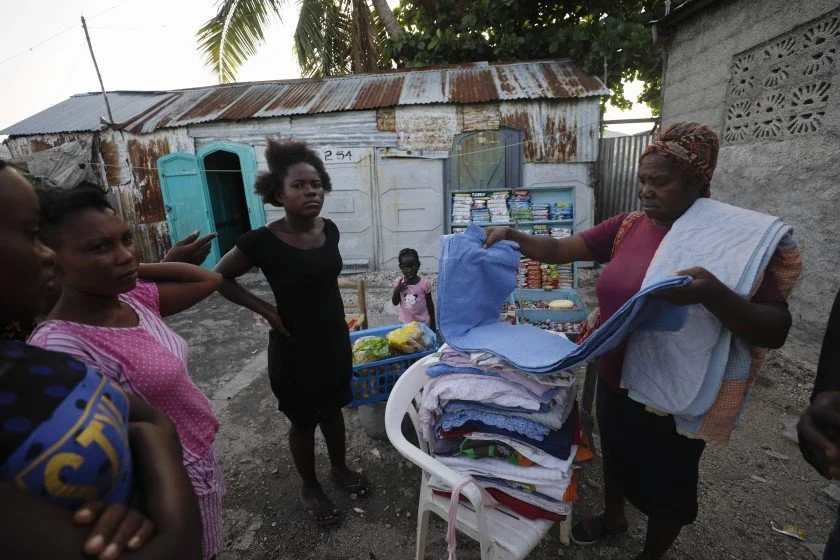
PORT-AU-PRINCE, Haiti —
Protesters burned tires and spilled oil on streets in parts of Haiti’s capital on Friday as they renewed their call for the resignation of President Jovenel Moïse just hours after a journalist was shot to death.
No one has been arrested in the death of reporter Néhémie Joseph of Radio Méga, who had been covering the protests and was found dead in his car late Thursday in the town of Mirebalais, northeast of Port-au-Prince, according to Radio Vision 2000.
In a Facebook post in late September, Joseph said that a couple of politicians had threatened him after one of his shows and accused him of inciting protests. It was unclear, however, if this was the motive for his killing.
“The press should not have to claim victims and bodies as their own,” the Association of Professional Journalists of Artibonite said, calling on justice officials to investigate the killing.
Joseph is the third Haitian journalist killed in less than two years. Radio Sans Fin reporter Pétion Rospide was fatally shot in June as he drove home, while freelance journalist Vladjimir Legagneur disappeared in March 2018 while working on a story.
The most recent killing comes amid a spike in violence in Haiti’s capital and surrounding communities as protests that have caused nearly 20 deaths and almost 200 injuries paralyze the country for nearly a month. Businesses remain shuttered and an estimated 2 million children have not been able to go to school, according to the United Nations.
“It’s a very, very serious situation,” said Michèle Pierre-Louis, a former prime minister with the non-governmental organization FOKAL. “No one is really talking about the suffering of the people. The consequences are terrible.”
On Friday, the normally clogged streets of Port-au-Prince were nearly empty as people stayed indoors out of fear.
A small crowd gathered in Pétionville yelled and pushed on the occasional car that tried to drive through.
Reynald Brutus, a 28-year-old unemployed protester, said opposition supporters won’t accept anything other than Moïse’s resignation. If that doesn’t happen, Brutus said demonstrations will grow even more violent.
“We’re going to break and destroy everything,” he said.
One man took a large rock and beat it against a metal post as the sound echoed across the area.
“I’m ringing the alarm!” he said as protesters arrived.
As the crowd grew, among those watching it was 33-year-old Naomi Pierre, who works at the police academy.
“I like what’s going on,” she said. “It’s for the best of the country.”
Pierre has two children who haven’t been able to go to school for a month, and she lamented the lack of food, medical care, electricity and security.
“Everyone’s walking up and down with their heart beating scared,” she said.
Earlier this week, Moïse announced the creation of a commission charged with finding a solution to end the worsening crisis, but opposition leaders have rejected his call for dialogue and unity. The opposition says it wants Moïse to step down as anger over corruption, rising inflation and lack of basic goods including fuel continue to roil Haiti.
Many also are calling for a more in-depth investigation following a report by Haiti’s Senate that accuses former top government officials from the administration of former president Michel Martelly of misusing at least $2 billion in funds tied to a Venezuelan subsidized oil program that were meant for social programs.
The report also names a company that Moïse once owned. Moïse, who was Martelly’s hand-picked successor, has denied the allegations.
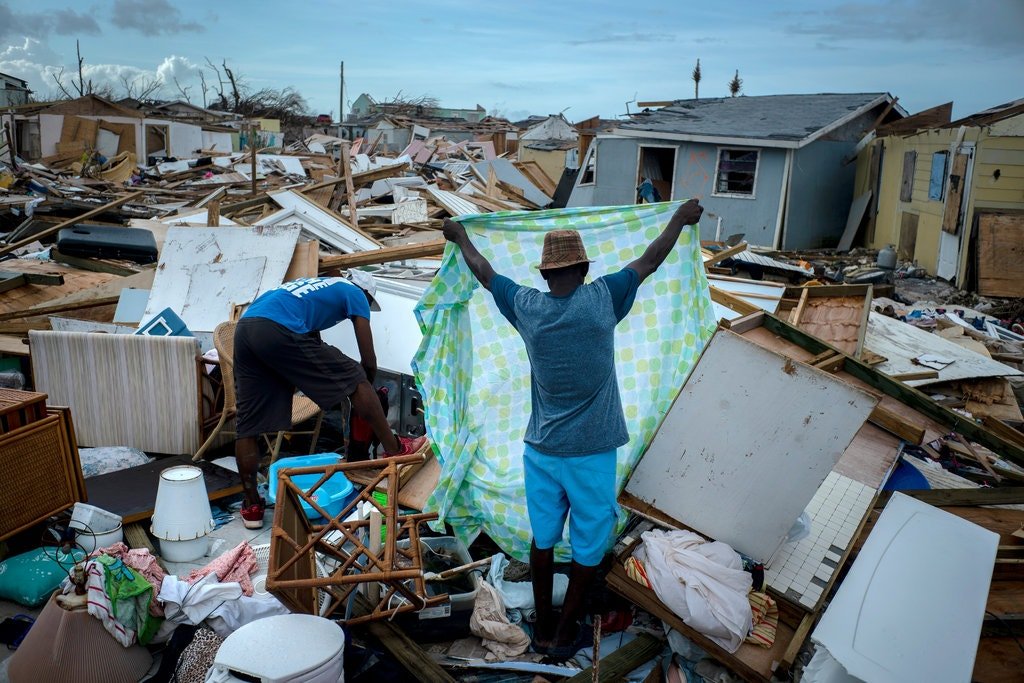
Haitian Migrants, Devastated by Dorian, Face Deportation From Bahamas
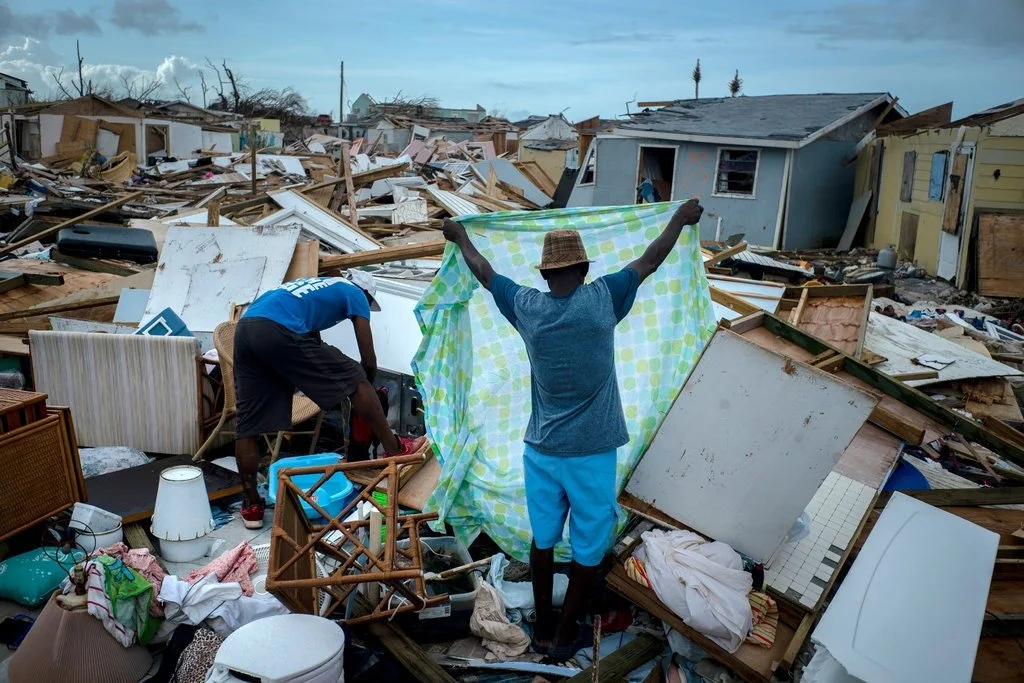
NASSAU, Bahamas — More than 100 Haitian migrants were deported on Thursday, six weeks after Hurricane Dorian leveled Abaco and Grand Bahama in the northern Bahamas with a devastating wallop that struck the Haitian community especially hard.
It was unclear how manystorm survivors were among 112 Haitians deported. While the deportation of Haitians is not uncommon, the matter has been contentious in the aftermath of the monster hurricane.
The issue of illegal immigration from Haiti to the Bahamas has spanned decades, with Haitian nationals long stigmatized in the country.
Outside the island of New Providence, Abacowas believed to have had the largest population of Haitians, many residing in informal shantytowns. The largest two, The Mudd and Pigeon Pea, in Abaco’s capital, Marsh Harbour, suffered severe wind and flood damage.
Dorian’s official death toll is 61, but officials believe that many bodies remain among the rubble in Abaco’s shantytowns.
Marsh Harbour residents who survived the storm were urged to evacuate to shelters on the island of New Providence. The shelters, which housed more than 2,000 people at one point, were largely filled with Haitians and people of Haitian descent.
In the immediate aftermath of Dorian, the immigration minister, Elsworth Johnson, said the government would suspend deportations in parts of the country that were affected by the storm. The shelters, he said, qualified as affected areas.
But the moratorium appeared to have expired last week, when Mr. Johnson said undocumented migrants still in shelters would be deported.
Several organizations have raised concerns over the treatment of migrants. The International Organization for Migration said this month that fear of the authorities was “widespread, even among documented migrants and Bahamian nationals of Haitian descent, some of whom have lost their documents in the hurricane.”
Other rights groups have condemned the government’s plans to deport survivors, citing the trauma of the storm and the social turmoil in Haiti.
But in an interview with The Nassau Guardian, Mr. Johnson said that “at the end of the day, we must do what is in the best interest of the Bahamas while still protecting the dignity of the human person.”
Prime Minister Hubert Minnis has warned that undocumented migrants affected by Hurricane Dorian would not receive asylum or special treatment. He also warned Bahamian businesses not to hire migrants without work permits. Even those Haitians who were working legally but lost their jobs as a result of the storm were told that applications for new work permits must be filed from outside the Bahamas.
Many who face deportation were born in the Bahamas and have never known another home. Alicia Reckley, 37, a mother of five, was born in Haiti but is married to a Bahamian, and thus is exempt from deportation.
But Mrs. Reckley is worried about her 11-year-old niece, who was born in the Bahamas to Haitian parents and has neither Haitian nor Bahamian documents. The child’s mother was deported last year.
“She’s crying nonstop,” Mrs. Reckley said of her niece. “At night, all she does is cry.”
The shantytowns where many migrants lived have long been a lightning rod. Now, more than a year after the government embarked on a plan to eradicate shantytowns on Abaco, Dorian appears to have helped finish the job.
The Minnis administration announced its plan last year, but a local human rights group obtained an injunction from the Supreme Court blocking demolition. Thousands of people were still residing in the communities when Dorian made landfall.
The government’s eradication efforts have come to the forefront again as Mr. Minnis has highlighted the safety risks associated with the remaining structures. Last month, the government banned new construction in Abaco’s shantytowns.
Contracts were awarded to several companies for the cleanup and days later, images emerged of one shantytown being bulldozed.
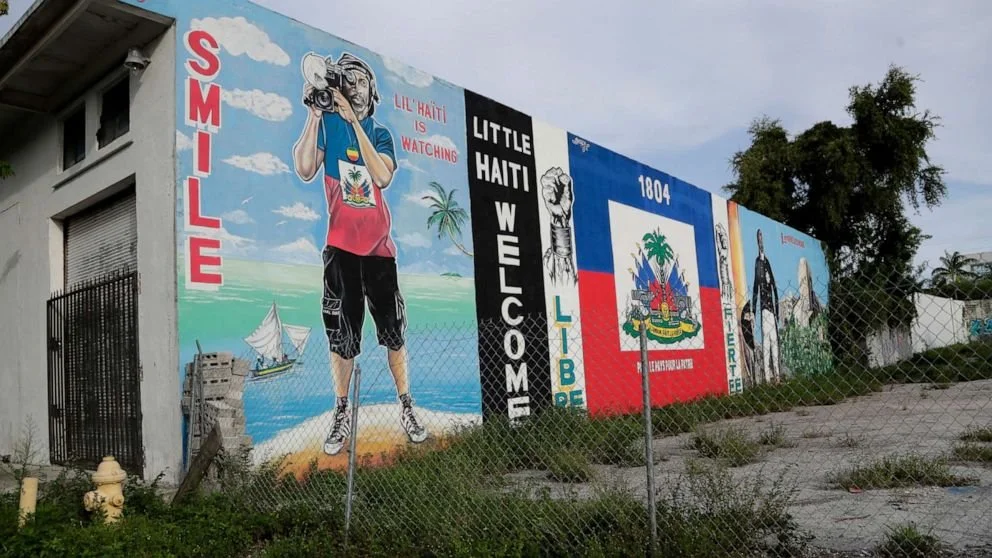
Disillusioned Haitian American voters not sure about Trump
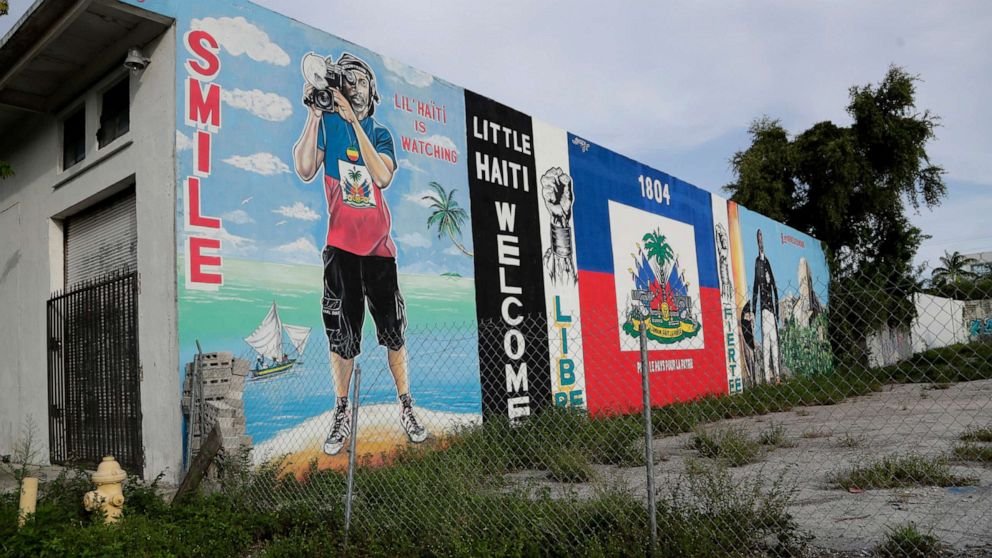
For Bernard Sansaricq, voting for Donald Trump in the 2016 presidential election was a clear choice.
The Haitian-born Republican activist was president of the Haitian Senate in 1994. Officially obtaining U.S. citizenship in 2006, Sansaricq was dedicated to establishing democracy in his native country. He said he was hopeful in 2016 when Trump, as a Republican nominee, visited Miami's Little Haiti. Trump claimed then that he would be their "greatest champion" and hold former Secretary of State Hillary Clinton accountable for what he saw as her failures in the aftermath of a deadly earthquake impacting at least 3 million people in the island nation.
Sansaricq had taken Trump at his word when the promise was made, but now he feels that it has fallen short.
"My understanding was that Trump would be a better man; he would do something for Haiti," he told ABC News. "We all put our chances on Trump. But my heart can no longer tell me to support him. He has done absolutely nothing for Haiti," he says. "I might just sit this election out."
Fort Lauderdale Vice Mayor Samson Borgelin echoed those worries. He said Haitian American support of President Trump in South Florida is spotty when it comes to the upcoming 2020 election. Borgelin said Trump could even be at risk of losing these voters due to a growing divide within the minority group.
"In Palm Beach County, they [Haitians] are one of the largest ethnic minorities in the area. We want to make sure they have equal representation; we want to increase our voter base, and Haitian Americans are a strong, growing and influential part of the larger Palm Beach County community," said Michael Barnett, chairman of the Republican Party of the county.
A University of Florida study by Daniel Smith, chairman of the political science department, showed out of the 50,000 Haitian Americans who cast ballots in South Florida in 2016, the majority of that group's votes actually went to Clinton. In select Palm Beach and Broward County precincts, almost 20% went to Trump, according to Smith's research.
Barnett said the percentage of support from black voters for Trump in 2016 was higher than what 2012 presidential Republican nominee Mitt Romney was able to pull in from the state. Trump received at least 8% of the black vote in 2016, according to an NBC News exit poll. In 2012, Romney only received 4%, according to the Washington Post.
"Twenty percent seems like a small number, but it's really strong," he said. "Donald Trump worked really hard to make his presence known in the Haitian and black community."
Borgelin told ABC News that many Haitian Americans in his community feel alienated by Trump's immigration stance and even regret voting for him. The main concern centered on the end to the minority group's top priority: Temporary Protected Status, a program that offers temporary relief to people within the United States when conditions in their home country prevent them from returning safely.
Temporary Protected Status "is a big concern here," Borgelin said. "People are worried about their families being divided."
The program was opened up to Haitians in 2010 under the Obama administration following a massive earthquake. The Trump administration has indicated that the conditions in the country had improved, and the program could have been terminated on July 22, ending the protection of at least 58,600 Haitians. However, the Department of Homeland Security, extended it until Jan. 2, 2020.
Maria Landry, a local activist, said those under Temporary Protected Status are more anxious about what to do when protections run out than anything else. Their angst is only exacerbated by the president's comments last year during a bipartisan meeting in the Oval Office. Trump asked the group why anyone would want people from Haiti, Africa or other "s---hole countries" coming into the United States, according to multiple sources either briefed on or familiar with the discussion.
"I don't think he's going to have the same support as he did before," Borgelin said.
The earthquake in 2010, which left over 310,000 Haitians dead, prompted the creation of the Clinton-Bush Haiti Fund, a nonprofit organization that sought to reconstruct and improve economic conditions within the island.
In combination with non-governmental organizations, U.S. tax dollars and charities around the world, the United Nations reported over $13 billion dollars were raised for relief efforts. Yet, for many Haitian Americans such as activist zili Dant, the allocation of this fund to the poverty ridden country still remains to be seen.
"He [Trump] was the lesser evil. We didn't want a third Obama or a third Clinton," Borgelin said.
As founder of the FreeHaiti Movement, Dant welcomed Trump's presidency and hoped to use it to tell a new story about Haiti, one shifted away from the "disaster narrative."
But she now feels that "just like he continued [Temporary Protected Status] elimination, Trump continued the imperialistic and geopolitical policies of the United States in Haiti."
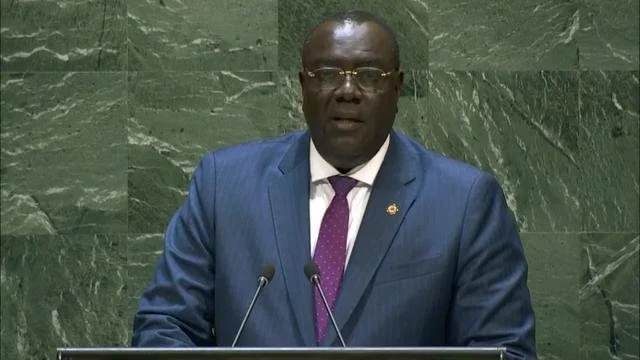
Haitian Foreign Minister calls for development reboot to close ‘striking gap’ between promises and action on ending poverty
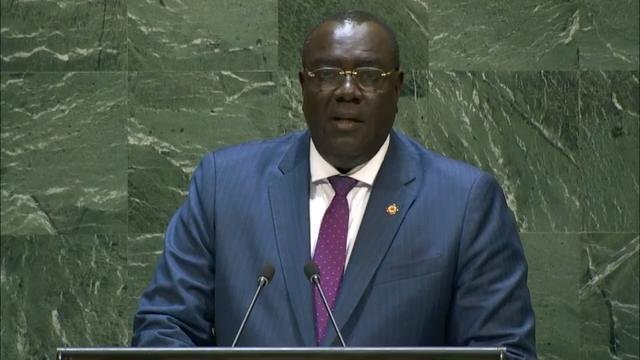
The future of humanity hinges on full implementation of the 2030 Agenda, if we don't get there, “we may never see the world that ‘we the peoples of the United Nations’ have long been calling for,” Bocchit Edmond, the Minister for Foreign Affairs of Haiti, told the General Assembly, the Organization’s top deliberative body.
“It is absolutely essential to reboot out collective responsibility… and remain mobilized around the Sustainable Development Agenda, as well as the objectives of the UN Charter, Mr. Edmond said on Saturday, welcoming the fact that the Assembly’s current session would be focused on multilateralism, thus pointing to the way forward for achieving sustainable development and peace.
“I hope we all understand the need to move from solemn declarations to concrete actions and initiatives that are commensurate to the level of present and future challenges,” he added, referring to the UN-drafted blueprint to tackle climate change and reduce global poverty and hunger by 2030.
After expressing concern over the number and magnitude of forest fires in recent years and recalling the recent damage “closer to home” caused by Hurricane Dorian in the Bahamas, Mr. Edmond also mentioned the floods that hit his country and asked that special attention be paid to small island developing States that lack adequate means to combat natural disasters and preserve the environment.
The Minister expressed concern over the delays in the combat to end poverty, saying that efforts made thus far were not up to the real needs and that there is "striking gap" between the commitments made, particularly in the context in the 2030 Agenda and other global accords, and what had been achieved.
He also emphasized the importance of quality education as the only way to concretely guarantee respect for human rights, and economic and social progress. Mr. Edmond then cited Haiti’s “immense" needs, saying the pursuit of sustainable development objectives remains “a major challenge”.
The Haitian Government is fully aware of its responsibility to ensure the security, stability and long-term development of the country, said Mr. Edmond, recalling that Haiti had for several months been confronted with “complex political crisis,” compounded by decades-old economic precariousness.
He noted the efforts of President, Jovenel Moïse, to pursue a Haitian national dialogue towards resolving the crisis. However, he cautioned that “Haiti will not be able to recover without substantial, sustained, sustainable, coherent, well-coordinated and effective support from the international community.”
The UN and Haiti
To that end, Mr. Edmond noted the mandate of the UN Integrated Office in Haiti, which will succeed October 16 to the UN Mission in support of justice in Haiti (MINUJUSTH). Recalling that this mandate will be "essentially to advise the Government on the means to promote and strengthen political stability and good governance", the Minister hoped that the Office will be given the necessary resources.
He called for “Better coordination of the UN presence” in the country, and asked that all its actions “fit well" within the framework of the priorities established by the Government.
Mr. Edmond also advocated for a “new paradigm of international cooperation,” believing that it necessarily entailed an in-depth reform of UN structures and their functioning.
The United Nations must be more flexible, more open and more pragmatic, he said, explaining that “responsible and timely action by the United Nations could have helped to limit the damage and avoid suffering for the affected population by the cholera epidemic.”
He acknowledged “encouraging progress” in the fight against the disease through the efforts of the Special Envoy of the Secretary-General and all relevant actors, but nevertheless urged t United Nations to redouble its efforts to secure funding for the cholera control strategy in the country.
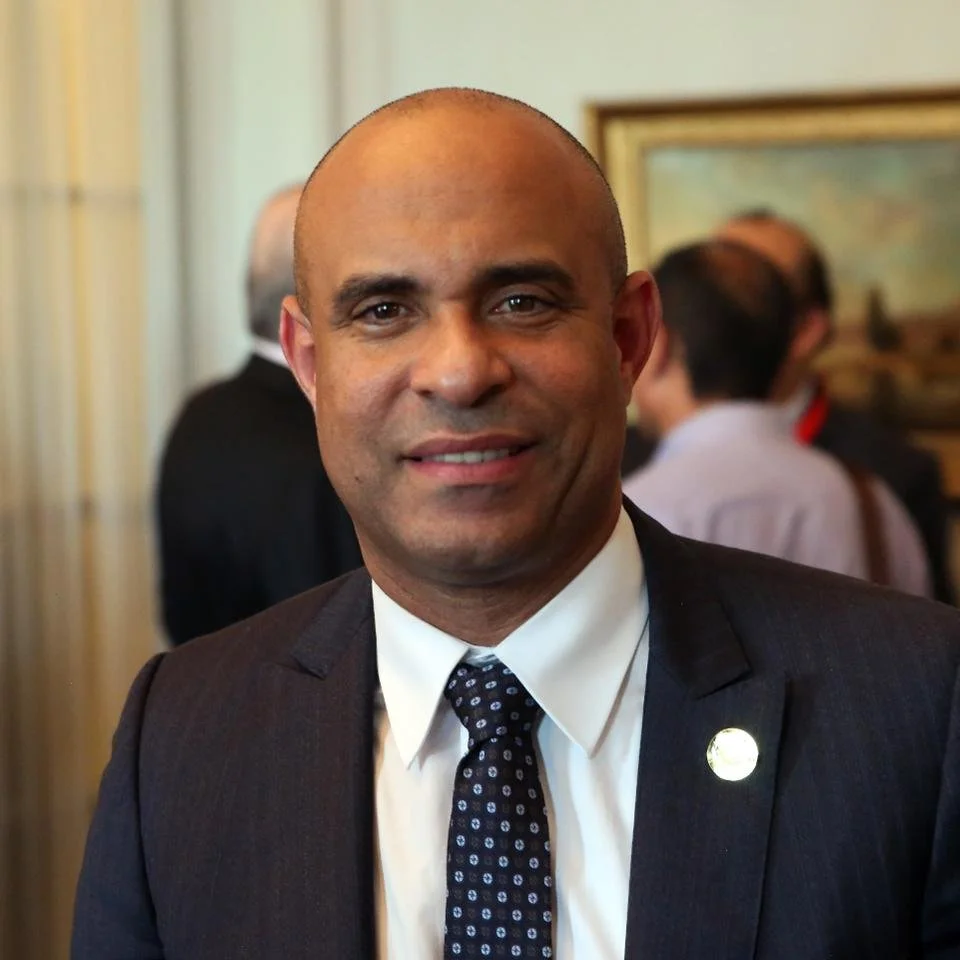
Is It Possible For Haiti To Thrive? Former PM Lamothe Says Yes
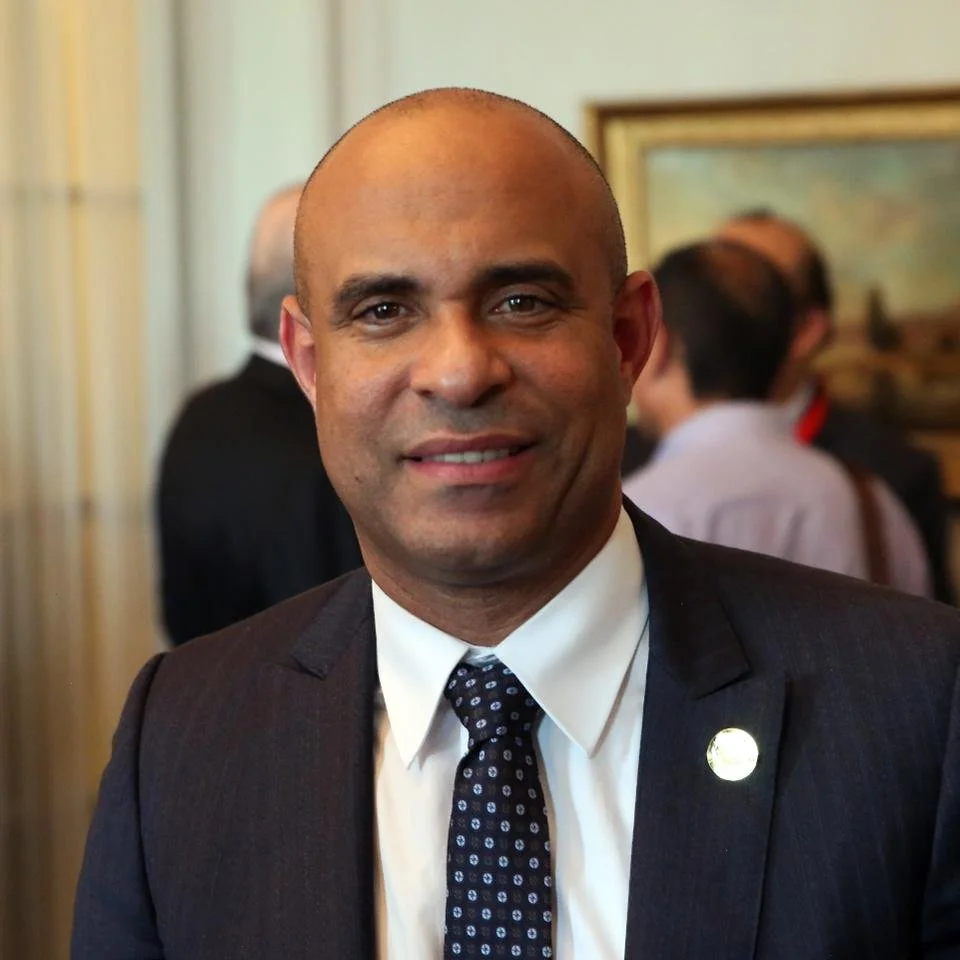
Laurent Lamothe, 47, former Prime Minister of Haiti, says Haiti—and other low-income countries—can thrive by implementing new taxes on telecom and banking transactions.
Lamothe, who resigned as the PM in December of 2014 after serving two and a half years—longer than any PM since the Haiti earthquake in 2010—says micro levies on small transactions provide an opportunity for countries like Haiti to begin collecting revenues and investing them in infrastructure and projects that will help their people lift themselves from poverty.
Today, Lamothe operates LSL Worldwide Initiative, advising low- and moderate-income countries. He points to Singapore and Estonia as countries that have successfully accelerated their economies through digitization.
“Emerging countries especially have very little means to finance their development,” Lamothe says. “With a solution called Innovative Financing for Development—applied within not only the telecoms industry, but also the financial services industry—governments are able to leverage millions of transactions, apply a micro-levy onto those transactions, and bring in millions of additional dollars for development.”
One entrepreneur in Haiti, who agreed to share some thoughts with me on condition of anonymity, says, “Haiti has a lot of challenges but the top three are:”
1. Job creation to break the circle of poverty and inequality.
2. Access to basic infrastructure like roads, water, sanitation, decent home, and internet connectivity to improve conditions of living nationwide.
3. Access to quality health and education systems to build a more competitive population better prepared for the challenges of the 21st century and to create a its own prosperous future.
He adds, “For this LSL program to succeed it should first and for most empower the government to truly own public policy, create a real vision, promote sustainable government investment planning and not encourage corruption. Those innovative financing solutions should not tax poor people or endebt future generations.”
He also notes that solutions require innovation and a participatory process that is lacking in Haiti.
Lamothe observes that in Haiti, about 70% of the economy is informal. He says, it takes six months to start a formal business, effectively forcing people to operate informally, without business registration and without paying taxes.
“The private sector, merchants, entrepreneurs, small shops, they all digitized because they're all using their phones to do business,” he says. This reality creates an opportunity for the country to begin collecting revenue from the informal sector of the economy, allowing the government to function better and deliver on its obligations to the people.
Lamothe’s hope is to see new government revenues deployed to help the people. “You want to do it in a way that helps, you know, basically the poor to graduate them out of poverty by being able to leverage the innovative development in order to give back to them, whether it whether it's to provide better schools in order to provide scholarships or children, whether it's providing opportunities in healthcare to have a broad coverage in health.”
Lamothe is frequently asked about a return to politics but has no plans to return to public life. Still, he brings the optimism of a stump speech to his work.
“Haiti share something very deep with the US that Haiti and the US are the first two independent nations out there,” Lamothe says. “So, imagine the culture that brings to us. But now it's a question of taking it forward. We cannot be stuck in the past. We need to be focusing on the future. And the future has to start today.”
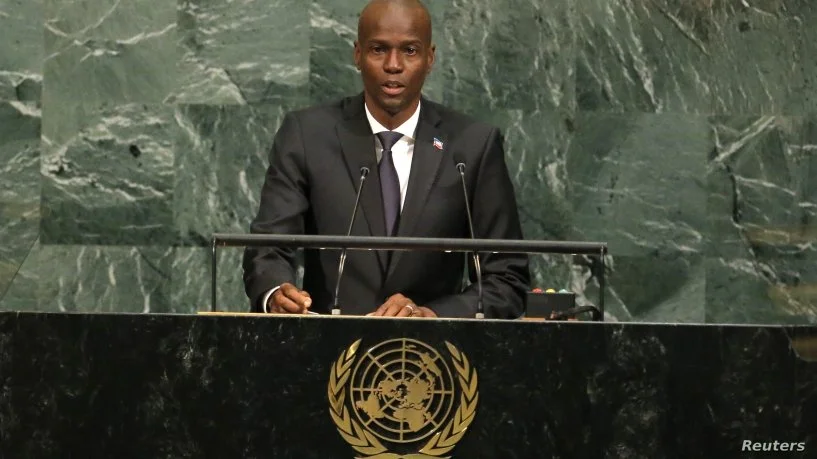
Haiti's President Cancels UN Speech
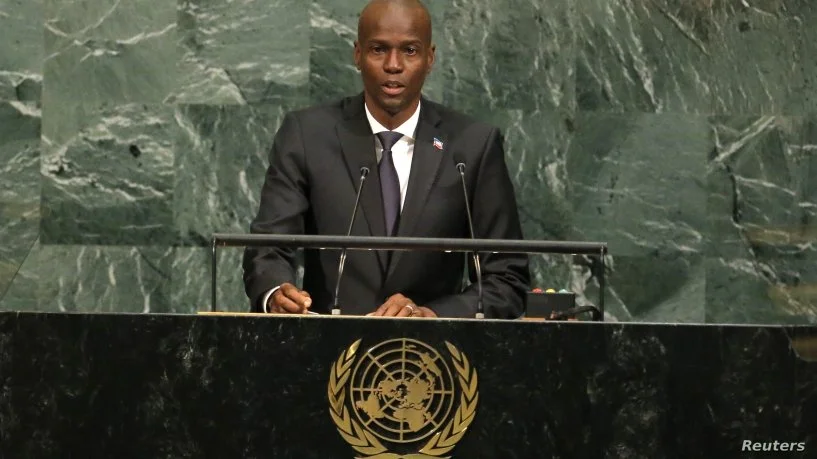
WASHINGTON / NEW YORK / PORT-AU-PRINCE - Haiti's President, Jovenel Moise, will not travel to the United States as planned Tuesday, to speak before the United Nations General Assembly. The president issued a statement late Monday announcing that Foreign Minister Bocchit Edmond would lead Haiti's delegation to the U.N. and speak before the general assembly on behalf of the nation.
The cancellation comes after news of a postponement of his departure for New York, and on the heels of a chaotic, violent day at the Haitian Senate that saw two people wounded when a Senator fired his gun ahead of a vote to confirm the prime minister designate. An AP photojournalist and a parliament security guard were wounded during the incident.

Corruption allegations
President Moise and some members of his government are mired in controversy and corruption allegations.
On Sunday, opposition Senator Youri Latortue accused him of "misappropriating" Haitian passport revenue collected by the Embassy in Washington to finance his trip to the U.N.
"Minister Bocchit withdrew $298,000 US dollars from a government bank account for President Jovenel's trip. He took an additional $60,000 from the New York Consulate account. That's a total of $348,000 U.S. dollars. Plus the Haitian money they withdrew," the senator alleged.
Senator Latortue said that money should have been used instead to help the victims of a mass flood in the southern town of Petit Goave on Saturday, which killed several people including children and damaged homes.
He also alleged that the large sum of money was not needed because the U.N. finances the trips of the leaders of member countries and their hotel stays for U.N. General Assembly.
But Foreign Minister Bocchit Edmond refuted the allegation in an exclusive interview with VOA Creole at the United Nations.
"If Senator Latortue felt there were irregularities, he knows there are institutions in place which can deal with such matters. In addition, Senator Latortue was an advisor to a president of the republic, he is well aware of the rules and regulations the chief of state must abide by. So he therefor knows that the Haitian Embassy in Washington is in charge of planning the President's visit to speak at the UNGA. And since he was also adviser to the former prime minister of Haiti - he knows these rules well," Edmond said.
Responding to the assertion that the U.N. finances leaders' trips to speak at the UNGA, the foreign minister said " This is false. There are 193 member nations, each delegation is responsible for the expenses of its members."
Edmond quipped that the senator should verify his information before making such accusations.

Mass protests
During mass protests on September 20, where thousands took to the streets of Port-au-Prince to demand the president's resignation, several protesters told VOA Creole that President Jovenel Moise shouldn't be making any speeches at the U.N.
"Jovenel will not represent us at the United Nations!" a protester from the Cite Soleil slum of the capital who was in the streets after the shooting incident at the parliament said. "International community, United States, please take him off our hands."
That sentiment has been echoed by members of the opostion as well.
A group of protesters blocked a road near the national palace Monday with a white box truck, then painted red graffiti saying "Jovenel we're waiting for the keys".
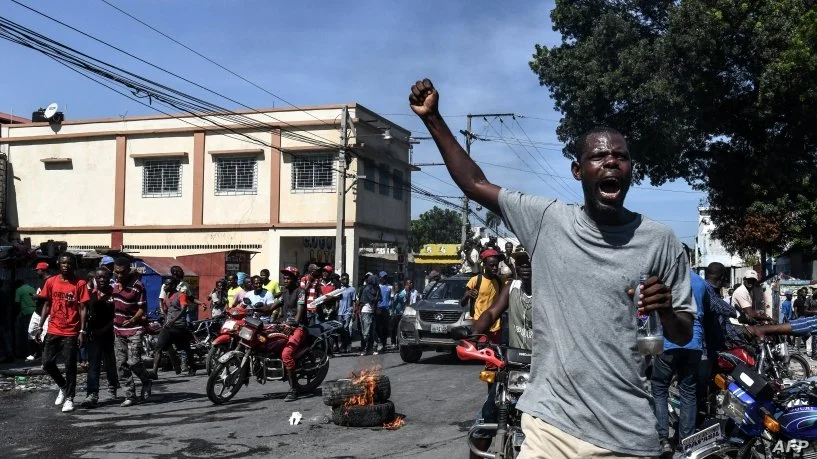
Businesses, Schools Closed as Haiti's Capital Reels from Political Chaos
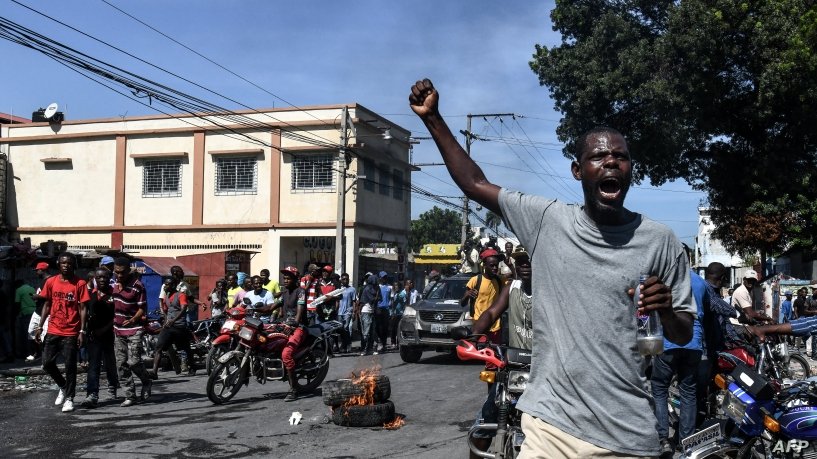
WASHINGTON / PORT-AU-PRINCE - Businesses and schools were closed Tuesday in Port-au-Prince as Haiti's private sector protests the insecurity and chaos that has overwhelmed the nation.
Meanwhile, AP photojournalist Dieu Nalio Chery is recovering from a bullet wound in his jaw that he sustained when a Haitian ruling party senator fired his gun in the parliament yard. A parliament security guard also sustained a bullet wound in the stomach. He is recovering after being treated at a nearby hospital.
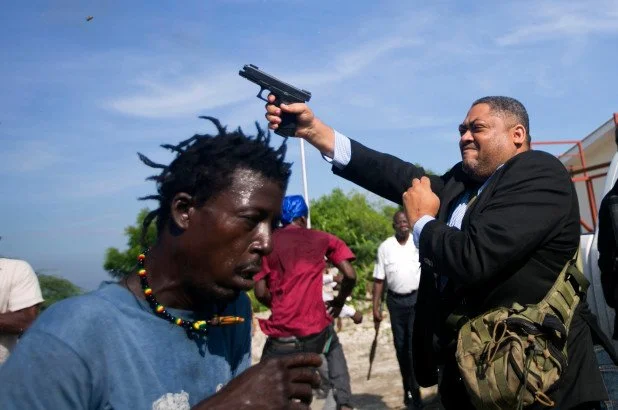
Senator Ralph Fethiere pulled out his gun and fired when opposition supporters began yelling at him and approached him aggressively as he was getting into his vehicle.

The senator, one of two ruling party lawmakers who were photographed with guns in hand Monday as members of the Senate gathered for a confirmation vote on Prime Minister designate Fritz William Michel, was not arrested. He issued a statement condemning the incident and defended his actions, claiming he was the victim.
"(I) vehemently blame certain ill-intentioned armed individuals who did not hesitate to open the door of (my) vehicle to physically aggress (me). The impact of the bullets on (my) car were duly noted by an officer of justice," the statement said.
In an interview with local radio station Scoop FM, Senate Leader Carl Murat Cantave said he too was hit by supporters of opposition lawmakers at the parliament.
"Violence has no place in Haiti's political process," a spokesperson with the State Department Bureau of Western Hemisphere Affairs told VOA, "even as we recognize the importance of forming a government to address Haiti's urgent priorities."
Looting, attacks
The condemnation follows a day of looting and attacks after angry protesters took to the streets, reacting to news of the Senate shooting. The Banque de L'Union Haitienne (BUH) in the upscale suburb of Juvena was looted of rice, corn meal and other items stored on its upper level floors, then later set on fire.
Haiti's sports minister-designate told reporters she was carjacked as she left the Karibe hotel, also in Juvena, where Michel and members of his cabinet gathered to await news about the Senate vote. She was unharmed after leaving her car to the assailants and returning to the hotel.
Haiti has struggled to end chaos since March of this year, when Prime Minister Jean Henry Ceant was forced to resign in a no-confidence vote.
President Jovenel Moise's current choice for the prime minister position is accused of corruption, prompting attempts by the opposition to block his confirmation vote by vandalizing parliament. While the lower chamber of deputies approved Michel's nomination on Sept. 3, the Senate has tried and failed five times to approve him.
UNGA
Some observers question if the country's current leaders are fit to lead.
Moise, who at first delayed a trip to New York to speak at the United Nations General Assembly, canceled his visit late Monday. He said Foreign Minister Bocchit Edmond would represent Haiti at the UNGA and deliver the speech in his stead.
The president has remained silent about protester demands and criticism, as well as the chaos and violence at the parliament.
Haitian senator shoots two people, including journalist, outside parliament
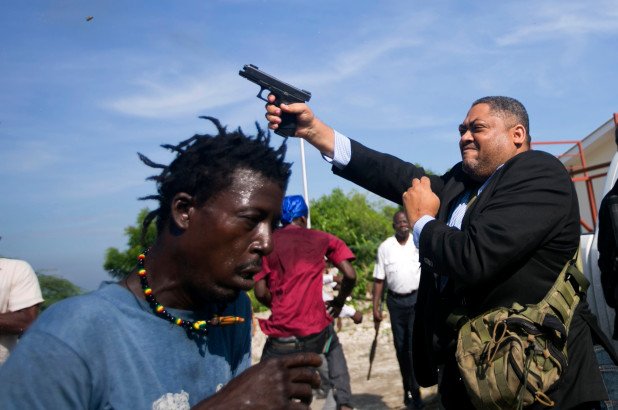
A Haitian senator reportedly shot two men, including a photojournalist, outside the country’s parliament Monday amid unrest in the nation.
Sen. Jean Marie Ralph Féthière (above) opened fire while facing a throng of unruly protesters on the second day of failed attempts by the government to confirm the nomination of Fritz William Michel as the new prime minister, according to The Guardian.
The senators had left parliament without a vote.
Féthière allegedly had his gun drawn outside of the Port-au-Prince building and warned the crowd he would shoot if they didn’t let him leave, according to Senator Patrice Dumont.
The gunfire struck Associated Press photographer Chery Dieu-Nalio, who managed to snap a photo of the senator with his handgun drawn as he stood next to a vehicle.
Dieu-Nalio, who was wounded in the face by bullet fragments, was hospitalized and is expected to survive.
Another man, Leon Leblanc, a security guard and driver, also suffered non-life threatening injuries, the report said.
Protesters reportedly swarmed Haiti’s parliament Monday as part of a larger movement against Haitian President Jovenel Moïse and the government for a diminishing quality of life aided by a serious fuel shortage and the rising cost of living, The Guardian said.
Féthière later explained his actions to Radio Mega, saying, “I was attacked by groups of violent militants. They tried to get me out of my vehicle. And so I defended myself. Self-defense is a sacred right.
“Armed individuals threatened me. It was proportional. Equal force, equal response.”

He also claimed he was unaware there was a journalist around, despite Dieu-Nalio wearing a jacket with the word “Press” and a helmet, the Guardian said.
Moïse has reportedly tried to force through Michel’s appointment in order to leave the country and speak at this week’s UN meetings.
As senators left Monday without the appointment, they were greeted by protester shouts of “thief, thief, thief.”
The senate president, Carl Murat Cantave, who was critical of the police handling of the chaotic crowds, had rocks thrown at him.
Senator Jean Rigaud Belizaire also said the Senate’s rooms had been smeared with a liquid resembling feces, the report said.

From Haiti to Southern Indiana: The journey of Floyd Central running back Wenkers Wright

Wenkers Wright only has vague childhood memories of growing up in a Haitian orphanage. But he does vividly remember playing soccer.
“I remember always playing soccer barefooted on the gravel,” he said. “Kicked the concrete by accident, go back and go for the ball.”
It was the genesis of Wright’s athletic career. He raced on the grounds of the orphanage in Petionville, Haiti. Wright said the one-floor building and its bordering field was about the size of a football field.
“Anybody that wanted to play, played,” he said. “We didn’t have anything to do after school. You couldn’t go outside the orphanage, so I played soccer and had some fun.”
About a decade later, now a junior at Floyd Central, the running back is roaming all over an actual football field and headlining the Highlanders’ offense. Wright has 1,001 rushing yards in four games, which according to coach James Bragg, ranked No. 1 in the state of Indiana as of Week 4. He has also scored 12 touchdowns.
Emerging from a backup last year to a starter this season, Wright has been on every opponent's scouting report. But what cannot be overlooked is the winding path of his upbringing.
Related: Wenkers Wright rushes for 350 yards in Floyd Central's win over New Albany

Betsy and Shawn Wright saw this picture of Wenkers and Gregory and decided to adopt them from Haiti (Photo: Courtesy of Shawn Wright)
Wright for years didn't know exactly know how many siblings he had. Not long after he was born, he and one of his older brothers, Gregory, were put into an orphanage. Wright knows he has a younger sister, and believes he has three more brothers besides Gregory, who also played football at Floyd Central.
Betsy Wright, Wenkers’ adopted mother, said that Wenkers has six older brothers and one younger sister. His family is originally from Cité Soleil, one of the poorest areas in the Western Hemisphere.
His memories of the orphanage consist of playing soccer, attending school and eating butter noodles with ketchup.
“That was the meal. I had that all the time,” Wright recalled. “It was just the certain way they made it because nowadays, I would not eat that. There is no way you can create it in America and have it taste good like it did back then because that does not sound appealing to me right now.”
On December 15, 2007, after going through two years and seven months of the adoption process, Betsy and her husband Shawn Wright drove a pickup truck to the orphanage to meet and bring Wenkers and Gregory to their newest home in Southern Indiana.
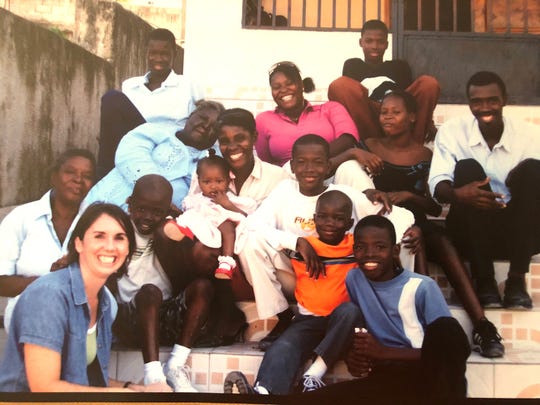
Wenkers Wright's Haitian family (Photo: Courtesy of Shawn Wright)
“Gregory just walked right up to me. Your mama heart just fills up and I was trying not to overwhelm him by grabbing him and squeezing him and crying,” Betsy said. “Wenkers held back just a little bit. That day is soaked in my mind.”
Also: Wenkers Wright and Marion Lukes couldn't be stopped in Week 4
Betsy and Shawn, wearing blue T-shirts with the words “Wright Family,” brought Domino’s Pizza for everyone at the orphanage, but Wenkers remembers not liking the pizza at all.
“Everybody likes pizza right? I did not like it,” he said. “I filled up on M&Ms that day.”
The first memory Wenkers has of America is of a group of people wearing the same shirts Betsy and Shawn were wearing, waiting for them at the airport with balloons.
“My parents walked me and my brother to the big group of people and everyone hugged us,” he said. “They gave us a stuffed animal. I didn’t know who these people were, but they come to be my whole family.”

The Wright family (Photo: Courtesy of Shawn Wright)
While the families welcomed the two siblings, the assimilation to American culture was not easy for Wenkers. He didn’t speak English fluently and repeated a year in kindergarten as a result. He didn’t like school because he had no way of communicating and just shrugged whenever his classmates approached him.
“And I had to stay there for six hours,” he said. “It was just me sitting there and watching foreigners do what they do.”
But after making his first friend — McKenna Robertson in Mrs. Smith’s kindergarten class—he grew comfortable with the language and began to make more friends. Eventually, he began playing soccer as he had in Haiti. It was the first time Wright played in an organized team activity with rules.
“No referees in Haiti,” Wright said. “I was just aggressive in soccer. In the orphanage, I played with what you could call the street rules.”
Shawn suggested his son try football in fourth grade and his talent was immediately evident.
“The very first time I ever touched a football in a real game, I had a 72-yard touchdown,” Wright said. “And after that my dad said I came off the field, took off my helmet and I had the biggest smile on my face.”
More preps: Jeffersonville hires Chris Moore as its new boys basketball coach
Wright grew up playing with the same group of friends from his days from Floyd Knobs Elementary to Highland Hills Middle School to now Floyd Central. The “insane” familiarity allowed him to adapt to the sport more easily, Wright said.
From the first career carry in a game to his latest one, a 60-yard touchdown in 50-14 win against New Albany last Friday, he’s reached the end zone countless times. But the one he can’t ever forget was his first varsity touchdown against Providence last year.
“I bust through the line and I was running,” Wright said. “I was thinking, 'this is going to be my first varsity touchdown.' Everybody was crazy. Stands were full. Oh my gosh, let’s keep doing this.”
He’s been steamrolling ever since. The junior, who incredibly rushed for 350 yards and five touchdowns last week, said his goal is to rush for 2,000 yards this year, and he is already halfway there in four games. Wright has to average 200 yards per game for the remaining regular season games to achieve that feat.

Buy Photo
Floyd Central's Wenkers Wright ran down the field for another score as he had 350 yards with five TDs as the Highlanders romped over 50-14 visiting New Albany Friday, Sept. 13, 2019. (Photo: Matt Stone/Courier Journal)
“He has the ability to break tackles,” Bragg said. “And the speed to break away to the end zone. No one in the coaches' office is surprised by what he's been able to do.”
Wright now enjoys eating pizza. In fact, he works at Rapid Fired Pizza and said his favorite topping is chicken and bacon with Alfredo sauce. He occasionally keeps in touch with his family in Haiti. And most importantly, he loves football — a sport he didn’t even know for more than half of his life, but is now thriving in it.
“I get reality checks now and then,” Wright said. “Look at where I am. This is great. It’s just a great feeling.”

Haiti Braces for Mass Protests Friday

WASHINGTON / PORT-AU-PRINCE — Haiti is preparing for mass protests Friday after opposition groups published a statement asking citizens to take to the streets that day to demand the ouster of President Jovenel Moise.
The protests are meant to coincide with national hero Jean Jacques Dessalines' birthday. Dessalines, a former slave and revered revolutionary war general, announced the country's independence from France in 1804. For many Haitians, he symbolizes the pinnacle of good leadership.
Among the opposition’s demands are the establishment of a transitional government, trials for all those implicated in the PetroCaribe corruption scandal, prosecution of public officials accused of corruption, and organization of a National Sovereignty Conference to discuss the framework for a new government.
"Our objective is to establish a good foundation to build a new structure that will benefit every level of Haitian society," said Andre Michel, spokesman for the Democratic and Popular Sector (Secteur Democratique et Populaire).

Gas shortage
A severe gas shortage has had a crippling effect nationwide. Residents who rely on gas for transportation, electricity, commerce and other essential daily activities have been lining up and waiting for hours to buy limited quantities of gas. Mobile video recorded by a VOA Creole freelancer showed a large group of people, each holding plastic yellow containers for gas, fighting after someone cut into a long line in Port-au-Prince.
The shortage has also created high demand for gas on the black market, where gallons of gasoline are sold for exorbitant prices. The criminal activity sparked so much concern among law enforcement that officers rounded up journalists to witness a crackdown on contraband. Officials said they would arrest and prosecute anyone found selling gas on the black market.

To try to soothe national ire over the gas situation, acting Prime Minister Jean Michel Lapin announced that the country had received and paid for 140,000 barrels of gas that would be distributed to local stations starting Thursday. He also announced that the government, which subsidizes the price of gasoline to keep it affordable for the underprivileged, planned a price hike.
"The government can no longer afford to subsidize [the price of] gasoline," Lapin said. "So, the government is thinking about how it can keep regular gas prices affordable for the underprivileged while hiking the price of diesel." He did not say when the price increase would go into effect.
But a gas price hike announced by the government during the late-night hours of July 6, 2018, sparked outrage that triggered several days of violent protests nationwide that led to at least seven deaths, lootings and burnings of businesses, and destruction of hotels and private property.
'Sick and tired'
On Monday, protesters used rocks, flaming tires and their cars to block streets in some neighborhoods of the capital, Port-au-Prince, Jacmel and Cape Haitian in a show of anger over the gasoline situation and their disgust with the country's political and economic crisis.
"The president has not said a word! Let's be serious, poor people can't even find a gallon of gas to buy so they can get to work. The way the country is going is not good. The president must go," a man selling water on the street told VOA Creole.
"I have never experienced bad times such as these," a cigarette vendor told VOA Creole. "Even under the [U.S.] embargo things weren't this bad. I call this embargo death."
Other protesters complained about the cost of living, lack of jobs and not being able to send their children to school.
Political activity is also in crisis mode after an opposition senator, Saurel Jacinthe, publicly accused several colleagues and a potential officeholder of exchanging cash for votes in parliament.

Ruling party PHTK (Pati Ayisyen Tet Kale) leader Line Balthazar issued a statement about the current crisis on Tuesday.
"We recommended that the president make some decisions — and start by signing a political agreement with the opposition," Balthazar told VOA Creole. "The political accord will also include members of civil society, the private sector, citizens associations — so we're looking for a consensus to resolve the country's problems." He also recommended the president withdraw the nomination of Fritz William Michel as the next prime minister.
Balthazar met with Moise before his interview with VOA Creole Wednesday, but did not divulge what was discussed or decided.
UNGA speech
Meanwhile, Moise is preparing to head to New York, where he is scheduled to deliver a speech before the U.N. General Assembly on Sept. 27.
"We want the world to know that Jovenel Moise has no mandate to speak on behalf of the Haitian people at the United Nations or any other location," Marjorie Michel, a member of the Democratic and Popular sector opposition party, announced during a press conference Thursday.
Michel also reiterated the opposition's demand that the president resign as soon as possible and said the opposition was ready to hit the streets Friday.
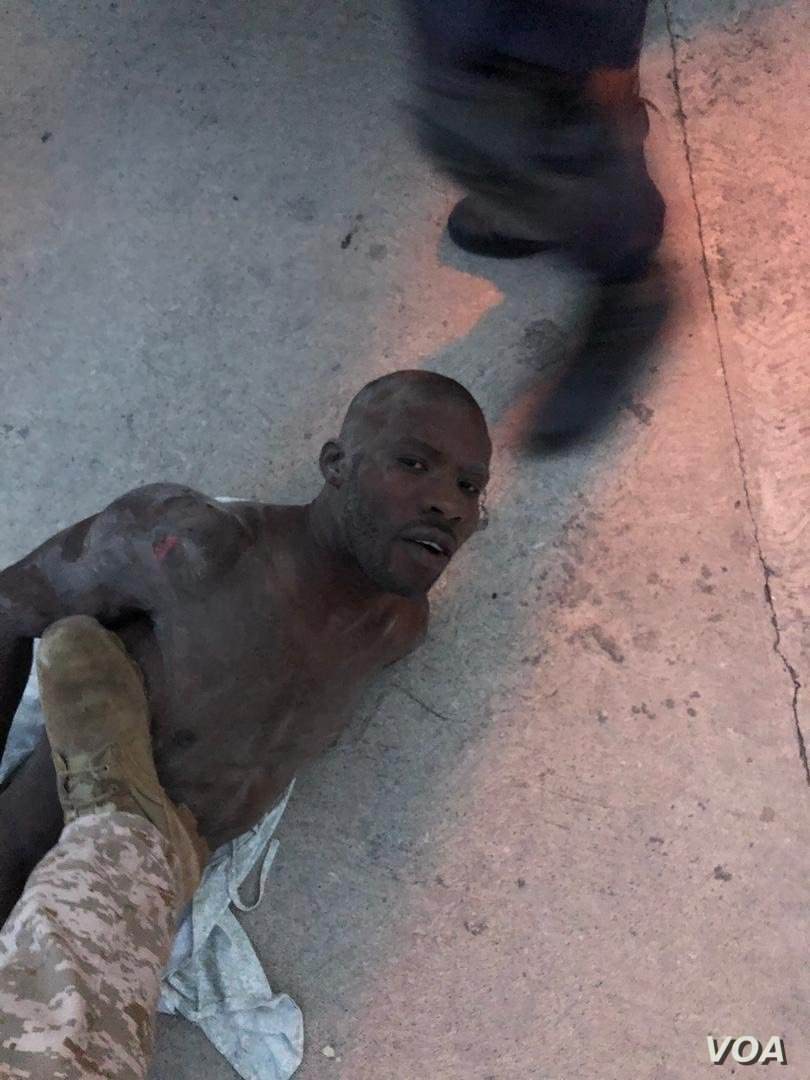
Haiti's Notorious Gang Leader Arnel Joseph Arrested

WASHINGTON/PORT-AU-PRINCE - A wounded Arnel Joseph was lying on a stretcher, ready to be wheeled into an operating room at the Bonne Fin hospital of Les Cayes, a Caribbean seaport located in Haiti's southern region, when members of a special unit of the National Police Force's (PNH) swooped in to arrest him.
"We've captured Arnel!" the officers shouted angrily, then they fired their weapons into the air, in a video seen by VOA Creole.
The alleged gang leader, considered to be one of the country's most dangerous and wanted fugitives, was awaiting surgery on his wounded leg, when he was found and captured, according to National Police Chief Michel Ange Gedeon. The leg was wounded during a fire fight with rival gang leader Ti Sourit, Arnel told reporters as they snapped photos and recorded video of him after his arrest.
Police Chief Gédeon tweeted the news to a stunned nation.


Le chef de gang Arnel Joseph très recherché depuis des mois par la @pnh_officiel a été appréhendé ce lundi à l’Hôpital Bonne Fin (Cayes). Remerciements à nos policiers et à la population haïtienne.#PNH #ArnelJoseph

6568:42 PM - Jul 22, 2019Twitter Ads info and privacy317 people are talking about this
"The gang leader Arnel Joseph (who) the national police force spent months trying to locate has been apprehended Monday at the Hopital Bonne Fin (Cayes). Thank you to our police officers and to the people of Haiti."
The police had been tracking him for months and suspected he was hiding out in the lush seaside of Artibonite in the agricultural region of the country.
Gedeon said the arrest "had been an obsession for the 15,000 police officers of the institution," during an interview with radio station Magik9 Tuesday morning.
In 2018, PNH had offered a $27,000 reward (2 million gourdes) for any information leading to Arnel's arrest.
Post arrest photos go viral
Photos of the tall, thin young man in his 20s, lying naked on a dirt surface as people shouted questions at him quickly went viral on Haitian social media Monday night. In one photo obtained by VOA Creole, the tan Timberland-style boot of a police officer wearing camouflage pants can be seen pressing down on his chest. Arnel looks up in bewilderment.
The image sparked questions about whether human rights activists and MINUJUSTH, The United Nations Mission for Justice Support in Haiti would investigate the circumstances of Arnel's arrest and his treatment by police afterward. The special unit had decided to move in on Arnel before the surgical procedure, rather than waiting until after it was over to swoop in.
MINUJUSTH's stated mission is "strengthening Haiti's rule of law institutions, developing the Haitian National Police, and promoting and protecting human rights."
Who is Arnel Joseph?
The 20-something Arnel had been arrested and sentenced to six years in jail in 2011 for the murder of several policemen. He was released in May of 2017. Haiti's penal code is based on the French judicial system. It is unclear how his sentence was determined.
Arnel is accused of terrorizing residents of the Village de Dieu slum of the capital, and more recently of robbing trucks loaded with merchandise, raping, kidnapping and attacking motorists on National Highway #1, which links the capital and cities to the north.
In a conversation with journalists posted on YouTube, he said he considers himself to be a "representative" of the Village de Dieu slum of the capital, Port-au-Prince. "Our revolution is the Haitian people's revolution," he said.
Links to lawmakers
In April, the discovery of of 24 mobile calls between Arnel and Senator Garcia Delva roiled the nation. Senator Delva, who represents the Artibonite agricultural department of the country where the alleged gang leader had been hiding out, denied any wrongdoing.
"I only have one position on this," he told reporters. "If the commission finds that I, in my conversations with Arnel, ever agreed to associate myself with his (illegal) activities then I agree and accept to pay the consequences. For once, this country needs justice."
When journalists pressed him about why he was in contact with the gang leader in the first place, Delva responded that he "talks to everyone."
"Everyone knows my number, I've never changed it - so everyone calls me - anyone can call me. Anyway, I don't think I'm the only one who converses with him," Delva said. The senator refused to divulge what they discussed and alleged that prominent Haitian businessman and opposition leader Reginald Boulos recognizes Arnel as a community leader. He said Boulos confirmed that in a conversation with a local radio station.
How the phone calls were tracked remains unclear.
Senator Senatus told reporters the commission (Senate Commission for Justice, Security and Defense) had received information that led to them asking the National Telecommunications Council (CONATEL) to provide information about the calls made to and from Senator Delva's phone. But Jean David Rodney, the institution's executive director, denied ever receiving such a request in an interview with Haiti Libre newspaper. He said CONATEL has "no direct relationship with the Senate."
Former Senate leader Youri Latortue, who also represents the Artibonite region in the Senate, echoed his colleague Delva's claims about other prominent politicians being linked to the gang leader.
"I think there are a lot of other names on the list of connections to Arnel," Latortue told VOA Creole. "For example there's Vladimir Jean-Louis "Ti Vlad" who does security work for (former president Michel) Martelly - he's on the list too. We have to investigate the links between what they said exists (between) - the president and the thugs - because some people say it was the president who brought Arnel to Port au Prince.
Those allegations remain unsubstantiated.

Conditions to turn himself in to law enforcement
Prior to his arrest on Monday, Arnel expressed a willingness to turn himself in if the government met certain conditions.
His conditions were: finishing potable water projects, building roads, boosting agriculture and providing electricity to the population.
What's next?
Arnel's capture put an end to years of living on the lam, but the police investigation into his criminal activities continues, according to Carl-Henry Boucher, the administrative director of the national police force.
On social media, reaction to the arrest was mixed.
"Good Job" @michaljoseph9341 commented on VOA Creole's Instagram page.
User @albandywedson questioned why the police waited until he sought treatment to arrest him.
And @benaldo_paul was skeptical of justice really being served, commenting "jomo (President Jovenel Moise) and the honorable garcia delva will have him released."

NEWSHaiti rallies to beat Costa Rica, finishes atop Group B in Gold Cup

HARRISON, N.J. — Haiti made history Monday night, topping a group for the first time in seven Concacaf Gold Cup appearances when it rallied to defeat Costa Rica in front of 17,554 fans at Red Bull Arena.
Les Grenadiers leapfrogged the Ticos on the final day of Group B and will face Canada in the quarterfinals Saturday in Houston. Costa Rica, which would have won the group with a draw, will meet Mexico, also at NRG Stadium.
“I think it’s a confidence boost,” New York Red Bulls winger Derrick Etienne Jr. said. “Costa Rica is a very good team, they showed that. We were able to get a win, a good team performance and we just showed that we’re willing to fight.”
The match was a thrilling display of attacking soccer from both sides, leading to a multitude of chances on either end of the stadium. Costa Rica jumped ahead in the 13th minute courtesy of an own goal by Haitian defender Djimy Bend Alexis.
But the 21-year-old who plays for Capoise in the Haitian league went from unlucky goat to hero late in the second half when he scored what proved to be the winner.
“I’m pretty sure this is one of those days he’ll remember forever,” Haiti coach Marc Collat said through a translator.
Disappointed in the effort in the opening 45 minutes, Haiti regrouped in the locker room at halftime and the second half belonged to them. Duckens Nazon leveled from the penalty spot in the 56th minute after he was knocked over in the top-right edge of the box by Chicago Fire defender Francisco Calvo.
With Costa Rican goalkeeper Leonel Moreira diving the other way, Nazon buried his attempt in the opposite corner.
Haiti continued to probe for the winner as their fans drowned out the Ticos support. Les Grenadiers constant pressure in the second half finally paid off in the 81st minute. Etienne, who had 40-50 family members in attendance, played to Alex Christian.
The defender sent a low ball across the six-yard box where New York City FC fullback Ronald Matarrita tried to stop it. But the ball deflected off his foot and into the path of Alexis, who blasted the ball under the crossbar.
“There were obviously two different halves,” Collat said. “The first half was more of a half for Costa Rica, they were a bit more involved and the second half belonged to Haiti.”
Now Haiti goes from celebrating a first-ever Gold Cup win over Costa Rica to preparing to meet a Canadian team that also has high aspirations in the competition. Canada finished second in Group A behind Mexico.
“Canada is a very good team. We’re going to celebrate tonight, but tomorrow it’s back to preparation and back to grinding,” Etienne said. “We’re going to watch some film, see what their weakness is and what we can attack and see what their strengths are and make sure we’re able to stop that. I think it’s going to be a very good matchup and we’re looking forward to it.”
Costa Rica need to regroup to take on a Mexican team that convincingly won Group A with three wins. The Ticos have never beaten El Tri in seven all-time Gold Cup meetings, losing six times.
“The confidence is still there,” FC Cincinnati defender Kendall Waston said. “Disappointment happens and it’s the way we respond from it is what matters. This is going to help us a lot to wake up.”

Michael Brun Is Taking Haitian Rhythms Global

Brun became famous on the EDM circuit, but his upcoming album ‘Lokal’ channels traditional forms like konpa and rara
In the early 2010s, during the heady days when EDM was clobbering its way into the global pop mainstream, you could have found Michael Brun holding down a set at any number of rave-centric festivals. But when he toured the U.S. in 2017, he was pedaling a very different kind of propulsion: Brun’s Bayo tour brought block-party flair and homegrown talent from his native Haiti to American listeners.
These shows were a creative reintroduction of sorts — the stony dance music that fills Anglo arenas receded, giving way to the more complicated, syncopated rhythms that can be found in the musical traditions of Haiti. These shows also served as the root of Brun’s debut album, Lokal. “[During the initial dates of the Bayo tour] I was playing a lot of afrobeats [from Nigeria], and I was also playing a lot of Haitian music,” the producer recalls. “I was like, what will bridge the gap in my set? I’m gonna make that track.”
The first of these transatlantic bridge songs is “Akwaaba Ayiti,” a motoring rework of a song by the Nigerian star Mr. Eazi, out today; Lokal will follow on the 28th. The album’s arrival coincides with a wave of new attention for Brun: He has been working with the Colombian reggaeton superstar J Balvin and also gained the support of YouTube, which picked him for its Foundry program, an initiative dedicated to elevating international independent artists. Taken together, this marks an emphatic transformation for Brun, from one-time four-on-the-floor maven to transatlantic polymath aiding the spread of Caribbean hybrids throughout the U.S. and Africa.
Brun’s metamorphosis began when he started returning to Haiti regularly to work at the Audio Institute, a non-profit that offers two years of audio education. Brun is on the board — as are Arcade Fire and Paul Oakenfold — but he found himself absorbing new musical language as if he were a student. “Working with rara bands, traditional voodoo rhythms that people would play in big street processions, and a lot of different types of Haitian artists, learning the history of the sounds, it started making a lot more sense,” he says. With familiarity came a new interest.
Between 2016 and 2018, Brun released three songs that captured his gradual immersion in the sounds of his homeland: “Wherever I Go,” “Gaya” and “Bayo.” “After three years in a row trying to mix Haitian music and international music, I was like, ‘I’ve gotta run with this,'” the producer adds. He was encouraged by the enthusiastic responses of artists from both camps — not only the Haitian singer Lakou Muzik but also the international dabbler Diplo.
Brun’s re-immersion in the styles of Haiti came against a backdrop of shifting tastes in the market for pop around the world. “What you considered for years the dominant American pop music style suddenly is not that cool anymore,” the Lisbon-based producer Branko explained last year. “People are looking for other perspectives on pop music that are more interesting, more vibrant, less of a creation of a bunch of A&Rs in a room talking about very abstract concepts. They want something that actually happened in the street and gathered a proper following and then developed into a YouTube hit.” As a result, styles like Brazilian baile funk and Nigerian afrobeats have enjoyed new recognition far from their countries of origin.
That could bode well for Lokal, which achieves moments of poised synthesis. There are traces of house music in “Ede’m Chante” — it samples the Chicago legend Mr. Fingers — and “Peze Kafe,” where keyboards pulse with the comforting tones of Nineties pop-dance cuts. These threads sit easily next to rara horns, which add a thick, blurting energy but require a particular sort of precision. “You play a single tone, and you can only go up and down an octave,” Brun explains. “If you want to play a melody, you have to play it in unison with the person next to you. It’s like trying to play piano with different people on each key.”
Brun also leans on the sound of konpa, a Caribbean hybrid that became popular in the 1950s. “It was really musically advanced, merging jazz, big band and Calypso all into a Haitian sound,” he says. The distinctive metallic guitar sound in “Kale” is sampled from Les Difficiles de Petion-Ville, one of Brun’s favorite konpa acts. “Those guitars are very iconic for Haiti,” he notes.
But the riffs point in other directions as well. “Sometimes when I hear his guitars, it feels like something I might have heard my dad or grandfather play — some traditional Nigerian music,” Mr. Eazi says. And the lean, drubbing beat in “Kale” points in many directions: “It has elements of baile funk; it has elements of dancehall [from Jamaica],” Brun adds.
That’s part of the pleasure of this music: While Brun’s early big-tent tracks had the single-minded appeal that grabs young ravers, Lokal is furthering multiple traditions simultaneously. To hear Mr. Eazi tell it, there’s more of this on the way. “He’s got me singing in French, got me singing in Spanish, got me singing with some creole, got me on soca riddims,” Mr. Eazi says of Brun. “I thought I had good knowledge of music from across the world, but Michael blew that out of the park.”
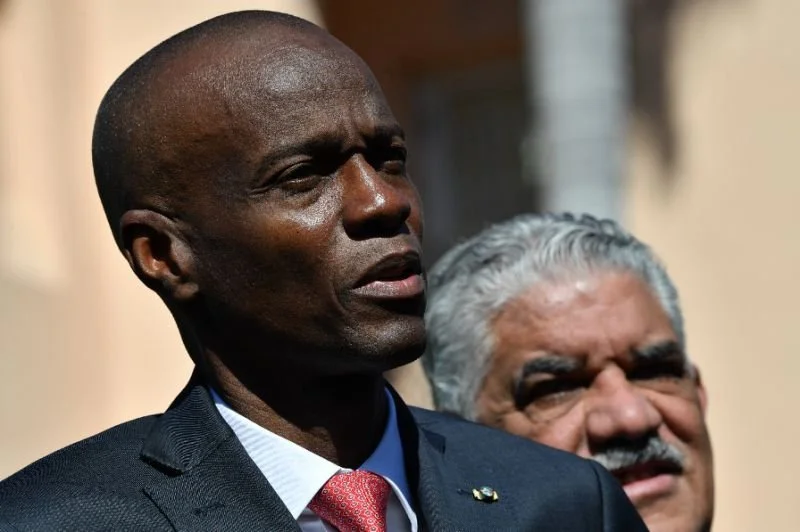
Accused by judges, Haitian president denies corruption allegations
Port-au-Prince (AFP) - Haitian President Jovenel Moise on Wednesday denied allegations that he was at the center of an embezzlement scheme spanning the last decade.
"I'm looking you in the eye today to say: your president, whom you voted for, is not guilty of corruption," Moise told a press conference.
"The people who mishandled and misused state funds will be brought to justice in a fair, equitable trial without political persecution," he added.
The judges of Haiti's High Court of Auditors said in a voluminous report at the end of May that Moise was at the center of an embezzlement scheme that siphoned off Venezuelan aid money intended for road repairs, laying out what they said was a litany of examples of corruption and mismanagement.
The magistrates said they discovered, for example, that in 2014 Haitian authorities signed contracts with two different companies -- Agritrans and Betexs -- for the same road-repair project. The two turned out to have the same tax registration number and the same personnel.
Before he came to power in 2017, Moise headed Agritrans, which received more than 33 million gourdes ($700,000 at the time) to do the road work, though the company in principle did nothing but grow bananas.
Agritrans received an advance two months before the road-repair contract was signed, leading the magistrates to believe "there was collusion, favoritism and embezzlement."
"To those who think it's alright to criticize the company I led before being president, before being a candidate, I say that justice is doing its work. The business is there and all the paperwork exists," Moise responded Wednesday.
Several thousand demonstrators marched through Port-au-Prince on Sunday to demand Moise's resignation.
Two people were killed by gunfire on the sidelines of the rally, which ended with significant violence and property damage.