
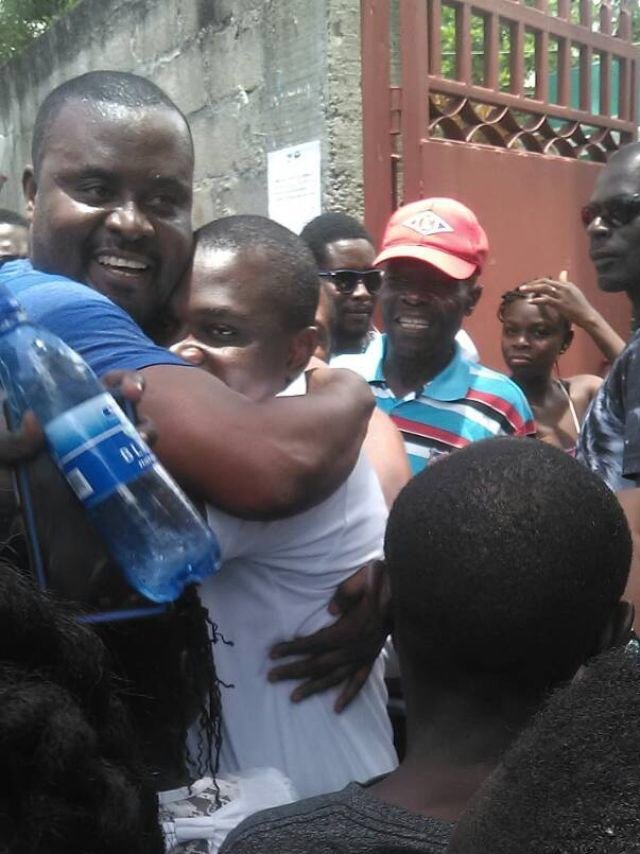
A year in a Haitian jail won't deter this leader from his humanitarian work in Borgne, Haiti
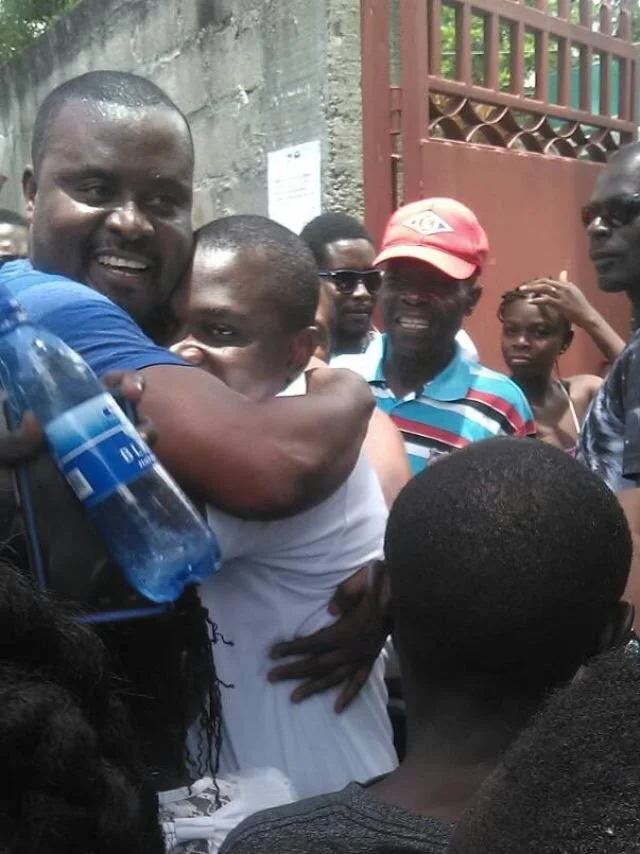
Forty five people were held in the jail cell, which had one window and one row of bunk beds. Men without a bed would sleep under the bottom bunks on the floor, says Estimable Francius Dauphin. He spent almost one year in this jail cell in Cap Hatien, Haiti, despite having never been convicted of a crime.During his ordeal, many Rochestarians tried to get him released, believing his detention was politically motivated. They consider him a close friend and partner. They wrote letters to their congressional representatives, human rights groups and emissaries of the Vatican. They paid for lawyers, visited the prison and prayed.When he was freed on June, 20, they rejoiced. On Aug. 20 they will host an event in Rochester so that he can share his story.Estimable's connections to Rochester stretch back more than a decade, to days when he worked as a teacher and spearheaded many community projects in Borgne, a pretty little town on the coast of northern Haiti. He was eventually elected assistant mayor of Borgne and took office in 2006.His efforts were admired by Rochesterians like Sarah Brownell, a Rochester Institute of Technology lecturer who lived in Haiti and worked on water and sanitation projects. They began to work together and connections between Borgne and the Rochester area flourished. There is now a Sister Cities relationship between Borgne and Honeoye Falls. A local nonprofit organization Friends of Borgne was founded to support schools, food programs, a traveling library and a marching band. St. Joseph's House of Hospitality took on a soup kitchen program for the elderly of Borgne called Pan Ak Pwason.After the devastating earthquake of 2010, regular elections were canceled and the government of Haitian President Michel Martelly installed local leaders of its choosing. Estimable stepped aside until elections were held again in 2015, when he decided to run for mayor.Several Rochesterians supported his candidacy, including James Murphy, a St. Joseph's House of Hospitality Catholic Worker who went down to Borgne to serve as a driver for Estimable's campaign. After the election, he was hopeful. "There was a lot of joy," Murphy said. "The people who tallied the votes locally were talking about a landside for Johnny."The paper ballots were kept at the police station. Concerned citizens stayed up all night, keeping a vigil outside the station to try to ensure that no one entered to tamper with the votes. U.N. Peacekeepers were all over the country due to concerns about voter fraud, corruption and unrest.Corruption seems to have struck Borgne's election, say Brownell and Estimable. When votes were counted, many polling stations that had been won by Estimable in unofficial counts had their results annulled. Estimable spent a month and a half contesting the results in Port au Prince. After he had exhausted all avenues, he returned home to Borgne. Not long after, police came to his house and told him to appear before a judge, who accused him of burning down houses and threw him in jail.Estimable said he provided the judge proof that he was in Port au Prince when the alleged crimes took place, in the form of hotel receipts, bank statements and hotel video. The hotel owner testified that Estimable had indeed been staying at his establishment during the time he was accused of burning down houses.Justice moved slowly and Estimable was forced to wait for a trial. He was allowed out of the jail cell, twice a day, for about 10 minutes. He was never allowed outside. Friends at home and in Rochester tried to help, contacting anyone they thought might be able to intervene."We believe his arrest, extended imprisonment, and failure to be given a court date arepolitically motivated retributions for his successful community development work on behalf of youth, farmers and the elderly," Sarah Brownell and James Murphy wrote to the Apostolic nuncio to Haiti, a representative of the Vatican. "We also suspect his run for mayor of Borgne, and his court contestation of seemingly fraudulent election results are other contributing factors to his imprisonment."Eventually, Estimable got his day in court and the charges against him were dismissed. Just as he was supposed to be released, another person from the opposing political party accused him of having burned a house and car in 2015. He had to stay in jail longer until inconsistencies in the accuser's testimony led to the new charges being dismissed as well.He was finally released on June 20, having spent almost a year in prison. Huge crowds gathered to meet him when he returned to Borgne, including a youth band that plays with instruments shipped from Rochester. This month Estimable is visiting his friends in Rochester. He could apply for political asylum in the United States but he wants to return to Borgne to continue his humanitarian work. "He still is going to work for his community," said Murphy. "That is a message of courage."Estimable said he remains committed to the motto to "leave the world better than you found it." He is sad for the state of the justice system and the electoral system in Haiti but says that his experience will not force him to abandon his home or deter him from his work in Borgne. "I am not going to leave the community I was born in," he said. "That is where Jesus put me and I am there to help it advance."Estimable will speak about his experience and Rochester-Haiti connections at an event titled "Haiti, Ice Cream and Sloppy Joes at St. Joseph’s House of Hospitality, 402 South Ave., on Sunday, Aug. 20 from 5 to 7 p.m. There is a $5 suggested donation.Erica Bryant | August 13, 2017
China Extends Her Silk Road To Haiti
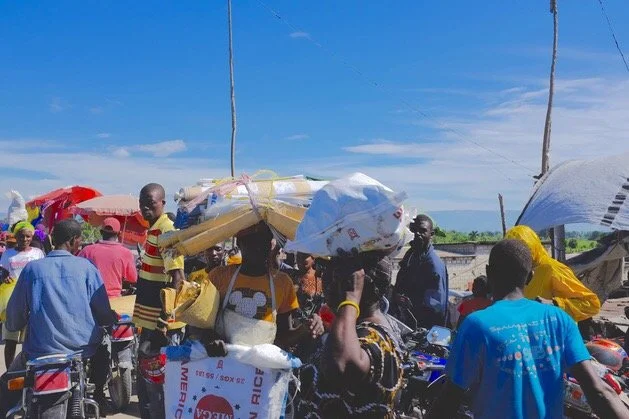
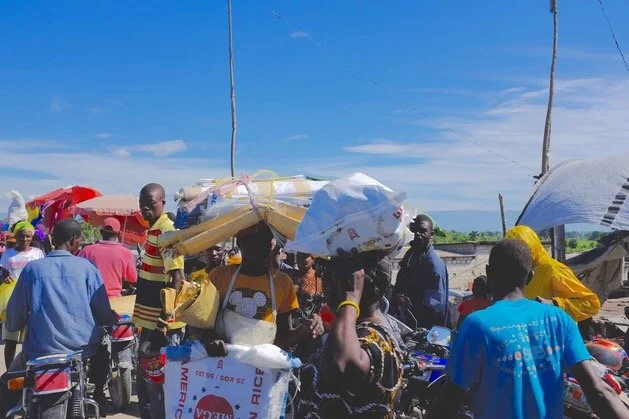
China plans to invest $30 billion in Haiti’s infrastructure according to the Haitian Press Agency (AHP). This week the Mayor of Port-au-Prince, Youri Chevry, hosted the signing of an agreement between the Haitian company Bati Ayiti (Build Haiti), headed by former Senator Amos André, and the Southwest Municipal Engineering and Design Research Institute of China.The agreement includes the construction of a 600 megawatt power plant to electrify Port-au-Prince, the construction of a new City Hall, markets, thousands of apartments, and eventually a railway from Port-au-Prince to the countryside. The center of the discussion was “the reconstruction of the main building of the Town Hall and the construction of several public contracts on the territory of the commune of Port-au-Prince,” according to LoopHaiti.20,000 workers will begin work before the end of 2017, backed by an initial infusion of $5 billion. The Chinese Government has a deadline of September 30, 2017 to unblock the funds. In the meantime, Bati Ayiti, the City of Port-au-Prince and their partners continue to work on the recruitment of staff.Last May, China’s president Xi Jinping hosted the first Belt and Road Forum (“One Belt, One Road”) in Beijing, offering hundreds of billions of dollars to over 100 interested countries for infrastructure projects. Haiti stands to be a beneficiary of the ambitious Chinese initiative, which is modeled on the ancient “Silk Road.” 2,000 years ago China opened up routes of trade that linked the civilizations of Asia, Europe and Africa.China now stands to have influence in the Caribbean corridor stretching from Cuba to Venezuela.Some analysts have compared the One Belt One Road enterprise to the Marshall Plan. After World War II, the United States was such a strong manufacturing entity that it was forced to seek markets for its industrial products. The Marshall Plan required that aid to Europe involve a quid pro quo of U.S. investment and imports.Today, China has an excess amount of industrial capacity. China is exceptionally skilled at infrastructure. Foreign investment provides an outlet for exports of labor and resources.“This accord may finally break the grip that the eternal exploiters of Haiti had for decades on the poor people of Haiti while they greatly benefited from favors and monopolies from corrupt governments,” says Bernard Sansaricq, the former Senate President of Haiti, in an email.Is it also possible that the Chinese initiative is less about altruistic globalization and more about finding markets for its industrial over capacity? Is China trying to lure Haiti into its geo-political orbit? Both motives may work together for the benefit of Haiti.It worked in Rwanda. Figures from the Rwanda Development Board indicate that Rwanda registered 45 Chinese investments from 2010 – 2016.The change in Kigali is stunning over the past 15 years. I have witnessed this transformation myself in multiple visits since 2004. The streets are clean and not a plastic bag in sight. A woman can walk the streets alone at midnight and feel as safe as on a moonlight stroll on Sanibel Island’s beaches.Chinese engineers built the country’s tallest building, Kigali City Tower, “a gleaming 20-story glass skyscraper; the building that houses Rwanda’s foreign ministry; various hotels, schools, and hospitals; and 80% of the country’s roads,” according to an article in Quartz Africa.There are still problems, of course, and outside development offers no guarantee of utopia. Competition for jobs remains fierce.As Ezili Danto of the Haitian Lawyers Leadership network suggests, China can capitalize on the failures of the Clinton Foundation failures in Haiti.“If Trump is too tied up with the Deep State and China leaves a bit of clean water, electricity, and road infrastructure- so be it. But anything done under the illegitimate (left-over Clinton/Bush establishment) government is worrisome. They put Jovenel (the current President) in to keep the status as is — the people too hungry, sick, and weak to fight back,” Danto says.See also this article on the Haiti Mafioso.A power plant to light up the roads certainly won’t be welcomed by the dark forces of the criminal mafias.“I’d have preferred to champion a U.S. government initiative, but it (the China investment) is what it is,” says Danto.HuffPost | August 4, 2017

After 12 years in U.S., Stamford student may be ordered back to Haiti

STAMFORD — Mary was 8 years old when she stepped off a plane from Haiti with her older sister to visit their ailing grandmother in Stamford.
What was meant to be a short trip with their mother was unexpectedly extended after Mary’s 10-year-old sister wound up hospitalized for four months with a bacterial infection. After the girl’s recovery, doctors advised the family that she not return to Haiti.
That was the summer of 2005, six years before a magnitude 7.0 earthquake would devastate the island nation, killing 220,000 people and displacing 1.5 million.
The disaster prompted the U.S. government to extend what’s known as Temporary Protected Status (TPS) to Haitians without permanent legal residency. The designation is afforded to immigrants who are unable to return to their home countries because of humanitarian emergencies.
Along with her family, Mary, who did not want her real name used because of her immigration status, ended up staying in Stamford while her mother petitioned for legal status. They were ultimately denied, but then came TPS, which has enabled them to remain in the U.S. for the past six years.
This may change under new orders from the Trump administration that could put an end to TPS for Haitians and send 58,000 immigrants — including up to 150 in Stamford and 750 statewide, according to one attorney’s estimate — back to an impoverished country still reeling from one of the worst natural disasters in recent memory. The move is yet another example of the immigration upheaval set into motion under President Donald Trump.
For someone like Mary, a lot has changed since leaving Haiti, a country the 21-year-old can now barely recall. She went on to enroll in Stamford public schools and excelled academically, landing a scholarship to study civil engineering at a Manhattan college. Her sister became a registered nurse.
With a year left in school, Mary worries about being ordered back to Haiti before she can graduate. At this point, she has no family there — her father disappeared after they left for the U.S. — and says she wouldn’t know where to stay or how to navigate life there.
“All I remember is that it wasn’t particularly safe,” said Mary, who lived an hour outside the Haitian capital of Port-au-Prince. “We stayed inside our house and went to school and came back.”
Mary and her family could be ordered to leave the country as soon as Jan. 22, when the most recent extension of Haitian TPS expires. TPS for Haiti and 12 other nations, including El Salvador, Honduras, Syria, Somalia, Yemen and Nepal, is re-evaluated for continuation every 18 months.
In May, U.S. Citizenship and Immigration Services announced it would extend Haitian TPS for just six months, and encouraged recipients like Mary to prepare for their return. At the time, then-Secretary of Homeland Security John Kelly said the agency would announce 60 days before the January deadline whether it may extend Haitian TPS again. Thousands of Haitians are anxiously awaiting the decision.
Activists like Angelucci Manigat, editor and publisher of The Haitian Voice, a monthly newspaper once based in Stamford, have called for TPS to be extended for the standard 18-month period. Meanwhile, he said, Haitians have begun fleeing over the Canadian border to seek asylum in anticipation of a canceled TPS.
Manigat said Haitians, who make up at least 4 percent of Stamford’s population, are frightened of attracting attention. They are avoiding churches and community centers that were once well attended, and fear doing everyday things like picking up their children from day care or paying a parking fine, he said.
“People are really, really scared,” said Manigat, who now runs his publication out of Bridgeport. “Community leaders are trying to prepare them for the worst. It doesn’t look good, but we’re waiting to see what happens. A lot of people are in denial.”
Mayor David Martin in May joined a coalition of city leaders from across the country who signed a letter to Kelly and Secretary of State Rex Tillerson urging a longer extension of Haitian TPS, which would have ended on July 22 without the six-month continuation.
Philip Berns, a Stamford immigration attorney who has about 30 clients with Haitian TPS — and estimates there could be up to 150 impacted citywide — said he is preparing clients for what comes next.
For many TPS Haitians who have lived peaceful and productive lives in the U.S., “what it will feel like is not deportation, but exile,” said Berns, who added that Haiti has still not recovered from the 2010 earthquake. Many say Hurricane Matthew last year undid much of the progress made since the earthquake.
“Things have not seriously changed in Haiti,” Manigat said. “The government still doesn’t do much for the people.”
People like Mary have been in the U.S. for so long they don’t know a life back in Haiti, Berns said.
“This young lady is basically, in her heart and soul, an American,” he said. “She would be sent a to a country where she’s barely familiar with the culture and language, and completely out of her element.”
Mary said she understands the challenge the U.S. government faces managing a program like TPS, and deciding which undocumented immigrants out of many get a reprieve from deportation.
“It’s a temporary solution,” she said. “It’s not a status that’s made for assimilation.”
In the meantime, life for people like Mary is a high-stakes game of wait-and-see.
“The thing that makes me worry is that I don’t know will happen,” she said. “But it’s also my calming factor — that I don’t know what will happen.”
By Liz Skalka | August 5, 2017

Haiti Senate Votes to Ban Gay Marriage

Haiti's constitution established a secular republic but the country is marked by deep religious beliefs. "Although the state is secular, it is people of faith who are the majority," Latortue said, stressing the commonly held belief in Haiti that homosexuality is a Western practice only.A vote by the Haitian Senate to ban gay marriage as well as “public demonstration of support” for homosexuality reflects the will of the people, the chamber’s president has said. The Senate approved a bill late Tuesday that said “the parties, co-parties and accomplices” of a homosexual marriage can be punished by three years in prison and a fine of about USD 8,000.“All senators are opposed to same-sex marriage, so this simply reflects the commitments the senators made during their campaigns,” Senate President Youri Latortue told AFP. Haiti’s constitution established a secular republic but the country is marked by deep religious beliefs. “Although the state is secular, it is people of faith who are the majority,” Latortue said, stressing the commonly held belief in Haiti that homosexuality is a Western practice only.“A country has to focus on its values and traditions. Some people in other countries see it differently, but in Haiti, that’s how it’s seen.” Haitian law already defines marriage as a union between a man and a woman, making it unclear what consequences the bill, if passed, would have in practice.However, it also called for banning “any public demonstration of support for homosexuality and proselytizing in favour of such acts.” It is this ambiguous wording that raises concern among Haitian homosexuals and their advocates.“We see this as an attack on the LGBT community in this country,” said Charlot Jeudy, president of the Kouraj group, which defends the rights of homosexuals and transgender people.“This text divides our society, it reinforces prejudices and discrimination. It’s really a shame.” The two gay rights organisations still officially recognised by the state record daily instances of insults, threats and violence. Politicians “know very well that this will bring much more violence and prejudice against the LGBTI community,” Jeudy said.Only police and the judicial system can intervene in response to reported violations under the measure. The bill now goes to the Chamber of Deputies for debate, though its passage into law is all but certain.By AFP | August 3, 2017

Haitian children, Andrea Bocelli sing for Pope Francis

A choir of children from Haiti led by world-renown opera singer Andrea Bocelli sang for Pope Francis after his weekly general audience on Wednesday. The choir, called “Voices of Haiti,” is made up of youth ages 9-15 from the poorest areas of Haiti and are in Rome for their two-week-long European tour.
ROME - There was a special surprise at the end of Pope Francis’s general audience on Wednesday - a performance by acclaimed Italian tenor Andrea Bocelli and a choir of 60 children from the poorest areas of Haiti.The choir, called “Voices of Haiti,” sang three songs with Bocelli, including ‘Amazing Grace’ and ‘Ave Maria,’ following the general audience in the Vatican’s Pope Paul VI hall Aug. 2. After the performance the children and world-renowned singer were greeted by Pope Francis.The performance was part of a nearly two-week-long European tour of the children’s choir, made up of youth ages 9-15, coming from some of the poorest areas of Port-au-Prince Haiti. Besides Rome, the tour included stops in Pisa, Florence and Lajatico, Italy, Bocelli’s birthplace.In Lajatico they will perform with Bocelli in front of 15,000 people for the 12th edition of his annual concert at the famous Teatro del Silenzio. In Florence they sang for the inauguration of a foundation dedicated to the Italian director Franco Zeffirelli.According to a press release, the project, “offers the opportunity to children and young Haitians coming from extremely disadvantaged situations to enhance their talent thanks to a highly specialized training, benefitting also of a wealth of opportunities, precious for their future.“Grown up in a context of extreme poverty, thirsty for beauty, eager to learn, through a highly professional educational path, the young singers have reached a great understanding, have become aware of discipline, passion, love for music and of the joy of sharing. Therefore, what they can convey through their singing is pure joy.”The children of the choir and related projects come from the Citè Soleil slums where over 300,000 people live in tin shack houses, without access to water and sanitation.The project has been ongoing since January 2016. The children participate in weekly rehearsals on Saturdays, which include breakfast, lunch and game time in addition to vocal exercises, music therapy and song rehearsal. Buses pick them up and bring them home after.They learn both folk Haitian and international music and perform throughout the year in local celebrations in their community, such as Easter and the end of the school year. In September 2016 they traveled internationally for the first time, performing in New York City.“Voices of Haiti” is a project of the Andrea Bocelli Foundation. In addition to the choir, the foundation also introduces music into the 30 schools supported by the local St. Luc Foundation in Haiti.They also help to provide education, food, and health assistance to thousands of children, water and electricity to remote and poor communities, solar panels and libraries.According to their website, “because all the students come from poor economic and social backgrounds, through music they have been able to find a way to consolidate discipline, cooperation, and have moved away from the misery brought on by the grip of poverty.“Music becomes an additional means for social and intellectual development, not only personal, but for entire communities.”“Voices of Haiti” is directed by Malcolm J. Merriweather, a professor at Brooklyn College Conservatory in New York, and is run by a team of Haitian collaborators made up of musicians, teachers, and administrators.Why a choir? Because “music is the soul’s voice, its strength and beauty open minds, and develop thoughts…” the website continues.“From the secret melodies of celestial bodies to the beat of the fruit fly wings, creation is a sound metaphor of its Creator, and every element contributes, imperceptibly, but effectively to universal harmony, that with immeasurable perfection rules life and expresses a poetic, amazing synonym of God.”By: Hannah Brockhaus | August 2, 2017

Haiti's Revived Military Could Pose More Security Risks Than Solutions

Haiti is reconstituing its previously disbanded army after more than two decades, amid concerns about growing insecurity as a United Nations peacekeeping force is set to withdraw later this year. And while politicians have justified the move as a step toward combating contraband trafficking, the real motivations behind the decision may be political.The recruitment effort for the new army was announced by the Defense Ministry in early July and has seen more than 2,200 candidates sign up in the first round, reported Haiti Libre. Due to budget constraints, the force will have fewer than 500 members.Defense Minister Hervé Denis said the army's mission would be to fight against contraband smuggling and provide relief in case of natural disasters, according to the Miami Herald. The minister argued that the cost of the force will be outweighed by its impact on smuggling from the Dominican Republic, which he estimated causes lost tax revenues for Haiti of between $200 million and $500 million per year.However, critics have said that the recruitment process has lacked transparency and has been conducted in the absence of a command structure for the force, reported AlterPresse.Others have questioned the logic of investing in an army instead of dedicating increased resources to Haiti's 15,000-strong National Police. An August 2016 report by the UN Secretary General noted significant shortcomings in planned improvements to the force, including ramping up its border control capabilities.
InSight Crime Analysis
 Several experts consulted by InSight Crime raised concerns about the potential efficacy of the army in terms of the proposed anti-contraband efforts, while pointing to possible political motivations for re-establishing the force. And all warned of the risk that the violent and abusive history of Haiti's military repeat itself."Sending a poorly-trained, underpaid military to the border to confront a massive corruption scheme appears destined for failure," said Jake Johnston, a research associate at the Center for Economic and Policy Research (CEPR) who has done extensive research and reporting on Haiti.Indeed, an inadequate fiscal framework and corruption within an inefficient customs agency are the two primary drivers of contraband along the border -- not the lack of a military presence."The push to restore the military is not a rational one based on Haiti's needs, but an ideological one," he told InSight Crime."This is a party with close connections to the old Duvalierist and militarist clique that had ruled Haiti for decades and whose power and influence was threatened by previous governments. It would be difficult for the government to turn its back on its source of power now that it is in office," the CEPR researcher said, referring to the governments of François "Papa Doc" Duvalier and his son Jean-Claude, also known as "Baby Doc." The authoritarian political dynasty, which lasted from the 1950s to the 1980s, was associated with the use of armed forces as a tool of political repression -- a fact that contributed to the decision of then-President Jean-Bertrand Aristide to disband the army in 1995.Johnston's comments echoed those of Brian Concannon, the executive director of the Institute for Justice and Democracy in Haiti advocacy organization."I have seen nothing that would indicate that the army would do a better job of policing the borders or responding to natural disasters than civilian police," Concannon said.He added that other examples of militarized security initiatives across the Americas suggest a better course of action may be to strengthen the civilian police rather than create a new, military institution."That is especially true considering the Haitian army's history of corruption and professional misconduct," the human rights advocate told InSight Crime.Concannon also pointed to political motives at play, arguing the army would help the government "exert control over its political opponents," evidenced by "the initial army proposal of [former] President [Michel] Martelly that specifically included spying on journalists and others, to the current efforts to recruit soldiers before there is even much structure."Interestingly, both Concannon and Johnston noted underlying socioeconomic factors behind the public's support for the army and the seemingly widespread interest in the recruitment effort."This has gained some additional traction because of the high level of youth unemployment, where any opportunity for steady pay is welcome. Also, given the high proportion of Haiti's population which is quite young, many lack the historical experience that others have of the Haitian military and its repressive actions," Johnston explained."People are signing up because they are desperate for jobs and meaning," Concannon added, and warned that "once [members of the new army] have the position, they will do what they need to do to preserve that status."By Tristan Clavel

Dsquared2 Dresses Andrea Bocelli’s ‘Voice of Haiti’ Chorus

The Haitian kids will perform in Bocelli's Tuscan hometown on Thursday.
MILAN — Dsquared2 founders and creative directors Dean and Dan Caten are supporting Haitian kids.In particular, the twins designed customized dresses and tuxedos for the children’s chorus of Andrea Bocelli’s “Voice of Haiti,” which will perform at the 12th edition of the “Theater of Silence” event taking place at the Italian tenor’s native town close to Pisa on Thursday.Bocelli and the Andrea Bocelli Foundation, focused on finding opportunities for talented young Haitians in need, launched the “Voice of Haiti” project last September in New York with an event hosted at the Lincoln Center.“We met these talented and passionate children for the first time last year in New York. It is such a blessing and a great pleasure to be part of this special journey again,” said Dean Caten. “We created something that could emphasize the strength and the beauty of the Haitian singers. Through their amazing singing, the young choristers spread pure love and joy.”By Alessandra Turra | August 1, 2017
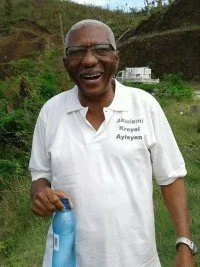
The literary world loses a major poet
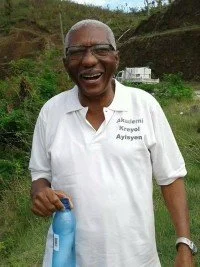
President Jovenel Moïse, is profoundly saddened by the death Saturday in Canada, of the poet and Haitian of talent Claude C. Pierre (born in Corail) author of numerous collections of poetry and texts in magazines and collectives."By saluting his memory the Head of State recalled of Claude Pierre as a man who has helped advance the linguistic and literary work on Creole languages and cultures, thus enabling the sharing of solidarity and respect values.In these painful circumstances the Head of State presents his sincere condolences to his family and the great literary community of Haiti and the Diaspora.The memory and the work of the poet Claude Pierre, will live long in the heart of all"Prime Minister Jack Guy Lafontant :The Prime Minister learned with emotion the death this morning of Claude C. Pierre, poet, linguist, teacher and academician [the Haitian Creole Academy]"The poetic work of Claude C. Pierre is characterized by a real work on language and bias for social and existential problems. He is both a major poet of Haitian literature, a literary critic, a linguist specializing in semiotics, a discipline he has taught for more than 30 years at the State University of Haiti.He was one of the strong advocates of the Creole language and will have been a coordinator of the Office of the Secretary of State for Literacy from 2004 to 2006 and a member of the Haitian Creole Academy.The Head of Government salutes the memory of this important figure of Haitian culture. He takes this opportunity to express his condolences to his family, his relatives, the literary and academic worlds and the members of the Haitian Creole Academy saddened by this departure."HL

Brattleboro Business Supplies Diapers to Children in Haiti

BRATTLEBORO — Cloth diapers are better for babies. That's what Karen Amidon believes, and she's built a business around it.Green Mountain Diapers is a small family-owned business based in Brattleboro. It sells all sorts of cloth diapers and accessories, and while it can't afford to run its own subsidized cloth diaper program, it donates to nonprofits dedicated to giving cloth diapers to families in need.One of those organizations is Jake's Diapers based out of Fox Valley, Wis.Six years ago, Stephanie Bowers, Jake's Diapers' founder, went on a women's mission trip to an orphanage in Peru where she said adults were reusing disposable diapers on the orphans.Diapers, Bowers said, are a precious resource in developing and remote countries. In Haiti, after the 2010 earthquake, things were especially bad. Bowers said worms and chronic diarrhea were a big problem for babies, who often times sit on the ground without diapers. Many homes don't have floors."They were praying for diapers," Bowers said.So Bowers started Jake's Diapers, a nonprofit dedicated to providing cloth diapers to children and families living in extreme poverty.The goal of this project is "to help the babies and their families not only survive but thrive."Bowers hopes that providing babies with diapers will allow families to spend money on other crucial items like food.In the areas Jake's Diapers serves — Haiti, Guatemala, Ecuador, Peru, Democratic Republic Congo, Ethiopia, Tanzania, Wisconsin and Papua New Guinea — healthcare is not always available to families."Maternal health care, or any health care, in Haiti is pretty much nonexistent," Bowers said.Walking to clinics can take days, she said. Baby mortality rates are under-reported but, Bowers said, 30 to 40 percent of babies are reported to die. She said Haiti has the highest infant mortality rate in the world. The maternal mortality is also high, she said."It takes only $115 in the U.S. to provide babies with cloth diapers for life," she said.Providing babies with diapers is a mission that Bowers is passionate about."This is a calling for me," she said, adding that she was deeply affected visiting developing nations. "It's a level of poverty that we cannot even comprehend," she said. "I start to lose words because the concept is challenging but real. They're just like you and me. I was born in Albany, N.Y. These babies were born in Haiti."Jake's Diapers only uses cloth diapers, which Bowers said are more economical and practical for families living in extreme poverty. Many areas don't have trash service and cloth diapers are reuseable, so tend to be cheaper for some families.Green Mountain Diapers donates diapers the company doesn't think it can sell, but that are still usable. The company doesn't sell in-store, but products are available for pick up. Amidon has a similar passion for diapers. Rather than discovering her passion while abroad, Amidon's interest in cloth diapers came from necessity, while at home taking care of her two children.Amidon believes cloth diapering is what's best for children because cloth diapers are softer and more natural for babies. She tried cloth diapering with her first child, but it proved disastrous. Eventually, Amidon solved her cloth diapering woes. She and her husband, Doug Amidon, opened Green Mountain Diapers to offer more products to the cloth diapering industry.Elizabeth Ellis, the customer support handler, started working for Green Mountain Diapers when Amidon asked her for help. Ellis was a stay-at-home mom who knew Amidon from church.Along with handling customer relations and support, Ellis is in charge of coordinating the company's donations.Green Mountain diapers also donates to The Rebecca Foundation, Giving Diapers Giving Hope, Share the Love, Cover Your Bum and Cloth for Everybum."We want to see babies who need cloth diapers to be in cloth diapers," Ellis said. "We know not everyone can afford it."When Ellis started cloth diapering she assumed it would be more economical. Not all cloth diapers are cheap, though. Many new parents are attracted to the all-in-one diapers that have the diaper and diaper cover attached, but they're the most expensive diapers the company sells.The diapers donated to places like Jake's Diapers are foldable. They're the sort of diapers used about 50 years ago, Ellis said. She showcased the Cloth-eez Flat Birdseye diapers, which come in one large size and can be folded multiple times. "They're easy to wash, so they're good for orphanages," Ellis said. She said they could be intimidating to newer parents, who are scared of the folding process, but for many moms they are therapeutic.Cloth-eez is a brand designed by Amidon. Prefoldable diapers used to just come in infant and large, but Amidon designed newborn, small, medium, large and extra large. "They're effective and easy to wash," Ellis said. "They're middle of the road on price."Green Mountain Diapers recommends that parents have about 36 diapers that fit their baby and about six to eight diaper covers.Jake's Diapers takes new or used cloth diapers and monetary donations. To donate to Jake's Diapers, go to www.jakesdiapers.org.Harmony Birch | August 1,2017
Subcommittee on the Church in Latin America Awards nearly $6 Million in Grants to Projects Including Pro-Life Centers, Hurricane Matthew Affected Areas
 WASHINGTON—The U.S. Conference of Catholic Bishops' (USCCB) Subcommittee on the Church in Latin America awarded nearly $4 million in funding in the form of 244 grants to support the pastoral work of the Church in Latin America and the Caribbean, and nearly $2 million in funding for continued reconstruction in Haiti after the 2010 earthquake. The grants were approved at the Subcommittee's meeting on June 12 in Indianapolis, Indiana.Projects that received funding include:Argentina, GRAVIDA—Centro de Asistencia a la Vida Naciente: This network of diocesan centers in Argentina works to promote, care for, and defend life from the moment of conception and promotes the dignity of parenting. These centers are located in 21 dioceses across the country and care for pregnant women at risk of having an abortion as well as with men to help them understand the value of fatherhood. The centers provide education and formation about the dignity of human life and conduct solidarity and awareness campaigns.Haiti, Catechetical Formation: This project will provide formation for 400 pastoral agents from four parishes that were impacted by Hurricane Matthew. The formation will be centered around the theme of the Christian family, and will take place over the course of three days. Seminars, workshops and group discussions will be facilitated, along with opportunities for prayer and daily Mass.In addition, the first grant to help rebuild churches on the western part of Haiti after Hurricane Matthew was approved. More of these requests will be considered at future meetings of the Subcommittee."I am continually inspired by all of those who support the Collection for the Church in Latin America," said Bishop Eusebio Elizondo, auxiliary bishop of Seattle and chairman of the Subcommittee on the Church in Latin America. "The generosity of Catholics across the United States makes a difference in the lives of countless people in Latin America and the Caribbean. This generosity reflects the love and compassion of God. I can see this especially in the response we received to help the victims of Hurricane Matthew. With that help, we not only fund pastoral projects, but help rebuild churches in some dioceses of Haiti."Other areas of funding include lay leadership training, seminarian and religious formation, prison ministry, and youth ministry. Grants are funded by the annual Collection for the Church in Latin America, taken in many dioceses across the U.S. on the fourth Sunday in January. The grants to Haiti are funded by the Special Collection for Haiti, which occurred after the 2010 earthquake. These reconstruction efforts are managed through the Partnership for Church Reconstruction in Haiti (PROCHE).The Subcommittee on the Church in Latin America oversees the collection and an annual grant program as part of the USCCB Committee on National Collections. It allocates revenue received from the Collection for the Church in Latin America as grants across Latin America and the Caribbean. More information about the Collection for the Church in Latin America and the many grants it funds, as well as resources to promote it across the country, can be found at http://www.usccb.org/catholic-giving/opportunities-for-giving/latin-america/index.cfm.By: United States Conference of Catholic Bishops | July 31, 2017
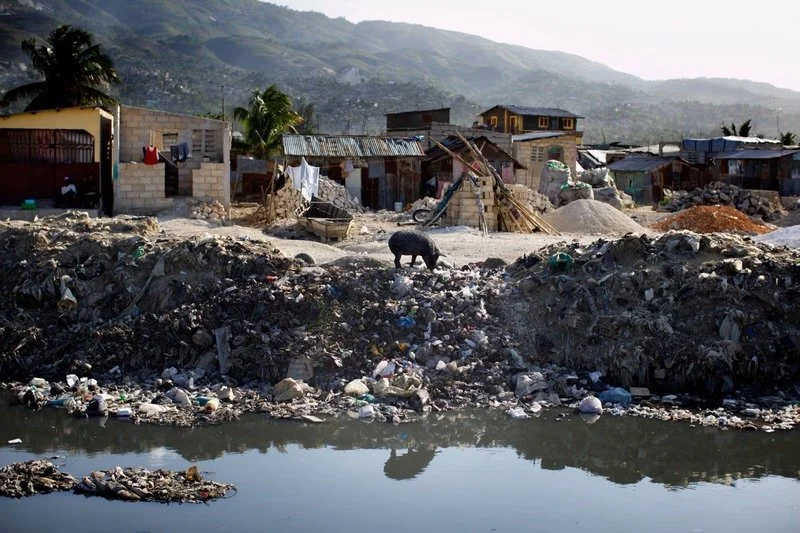
You Probably Don't Want To Know About Haiti's Sewage Problems
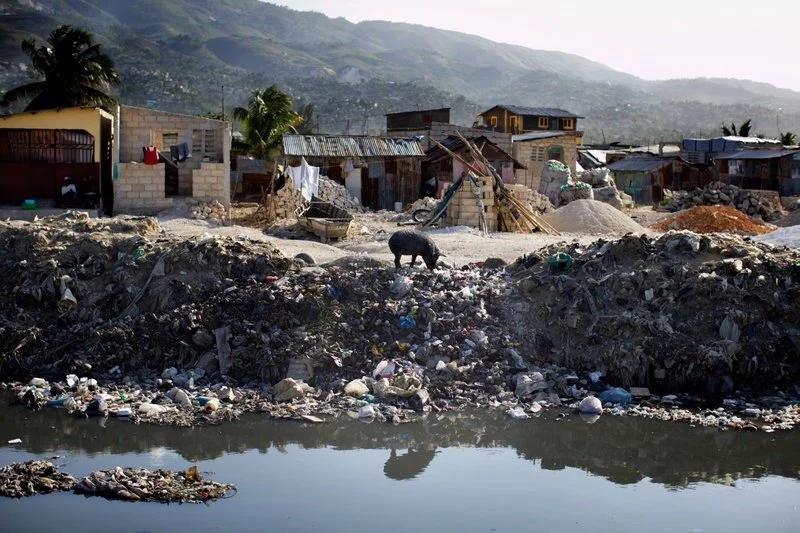
The rain began on Good Friday. It fell into the roofless ruins of Port-au-Prince's Catholic cathedral. It swirled through stalls in the market downtown. In the hills above Haiti's capital, the rain ran off the clay roof tiles of upscale homes.No matter where the rain fell, it was all destined for the same place: the system of concrete canals that cut through the city and down to the sea.At the edge of the city next to the shore, the rain pounded on the zinc roof of Jean Claude Derlia's single-story cinder block home. His neighborhood, Project Drouillard, is dense with families packed into homes like his. Most people who grew up in Project Drouillard have stayed, as he has. The community is close-knit, poor and socially isolated from downtown Port-au-Prince.It is also extremely vulnerable to flooding from the canal full of trash and raw sewage that bordered it on one side. After a rainstorm a few years ago, Derlia had been swept away by a wave of sludge and nearly died before neighbors fished him out. He was sick for weeks after it happened, but he survived.Now, over the sound of the rain, Derlia heard people shouting, "The water is coming!" There was nothing he could do but wait and pray that the water, or the things the water carried with it, wouldn't kill him this time.A city without a systemPort-au-Prince, Haiti, is one of the largest cities in the world without a central sewage system. There are no sewers connecting sinks, showers and toilets to hulking wastewater treatment plants. Most of the more than 3 million people in the metro area use outhouses, and much of that waste ends up in canals, ditches and other unsanitary dumping grounds where it can contaminate drinking water and spread disease.It's a problem that has attracted international donors, some of whom have acted to do what the Haitian government cannot afford to: build a sewage treatment system. Since 2010, international groups have spent millions of dollars on a plan to build open-air sewage treatment plants across Haiti. In 2012, the first facility opened at a site called Morne a Cabrit, about an hour from downtown Port-au-Prince. At the time, a government official told NPR that funds were in place for facilities in seven other cities.But five years later, that construction plan has stalled. Morne a Cabrit is still the only operational sewage treatment plant in the country, another $2.1 million facility is all but abandoned and the volume of sewage being disposed of safely in Port-au-Prince is actually decreasing.At its core, the floundering sewage treatment strategy is about money and power. Haitian economist Kesner Pharel, who has advised both the Haitian government and international nongovernmental organizations on investment and development in the country, says the stalled plan reflects a fundamental flaw with how infrastructure projects are funded and implemented in Haiti.Because the Haitian government is so dependent on outside money for infrastructure, "it is very easy for [international donors] to come in and say, 'I'm going to do this, I'm going to do that,' " he explains. The result is that the country's leaders become more responsive to funders than to Haitian voters. "Where is the accountability?" he says, "not to international donors, but to your people?"In the past five years, the story of one failed sewage treatment plant project offers the clearest example of the good intentions, poor governance and bad luck that contributed to Haiti's current sanitation crisis. It began with a young woman and a huge earthquake.How not to build a sewage treatment plantEdwige Petit has been called Haiti's "sanitation champion." Trained as a civil engineer, Petit, the current director of sanitation at the Haitian water and sanitation agency DINEPA, has also been called less laudatory names because of her expertise. "Sewage wife, trash wife, lots of names," she says, laughing.Her first experience with sewage treatment came a few months after the 2010 earthquake that destroyed much of Port-au-Prince. Aid groups provided clean water and toilets to hundreds of thousands of people in displaced-person camps. The groups needed somewhere to dump the more than 10,000 gallons of human waste the camps generated each day. Initially, the government directed them to an unlined pit at the edge of the landfill.Petit was an expert on the landfill and immediately knew dumping there was not a good solution. The pit was unlined and right next to the sea, so the sewage could easily contaminate fishing areas and sources of drinking water. But for months after the quake, with the economy in shambles and the city in ruins, large-scale sanitation projects were never a political priority."People don't have enough money. What can you say when people cannot even eat? You're talking about waste?" she says, channeling her detractors. "They cannot eat, they cannot s***! So that's the deal. Too much poverty."Then that fall, U.N. soldiers from Nepal brought cholera to Haiti. "Only the cholera could make us have [the first sewage treatment facility]," Petit says. "Only cholera. Because we were afraid, totally afraid of cholera. For this reason, everyone agreed."In October 2010, the government of then-President Rene Preval announced it had found a location for the country's first sewage treatment plant, on land formerly leased by the Haitian American Sugar Company and left empty for years. The site was named for the nearby area of Titanyen, where thousands of people had been buried in mass graves after the earthquake.The initial budget inscribed on a now-faded sign at the entrance was $1.9 million — it would later grow to $2.1 million — to be paid by the Spanish government, which would also fund a public education campaign about cholera prevention. Construction began immediately, but just three months later, it stopped.Powerful people had leveraged their connections to the president, alleging that they owned the land under the sewage plant and demanding compensation under eminent domain before construction could go forward."For each [piece of] land, we had not one, but two or three people who said they were owners!" Petit remembers, still fuming more than six years later. "They went directly to president."For nine months, nothing was built at the Titanyen sewage treatment plant. In that time, disease surveillance data suggests more than 2,500 people died of cholera in Haiti. Without a safe dumping site open, DINEPA data suggests more than 100,000 cubic meters of raw sewage was dumped elsewhere in and around the city.In the end, the Haitian government had little choice but to pay the alleged landowners, since the rest of the Spanish funds were unavailable as long as construction was stalled. In the meantime, funding the plant appeared to be a point of pride for the Spanish government. Queen Sofia of Spain even traveled to see it.When the sewage treatment plant finally opened in May 2012, after the cholera epidemic had peaked, a press release from the Spanish aid agency AECID said nothing about the construction delay. It pointed to the project as an example of "strengthening of Haitian institutions" and said it would "contribute significantly to the health of the population and halt outbreaks of diseases such as cholera."The facility operated for just 18 months before a technical problem — huge bubbles in the lining of the second waste treatment pool — forced it to close. Since then, it has remained closed. DINEPA says the aid agency plans to spend an additional $617,000 to repair it beginning this fall.A spokesperson for AECID declined to comment on its sewage treatment plant projects in Haiti, citing turnover in its staff in the region.Haiti's sewage champion, Petit, still believes that sewage treatment plants are a good investment for Haiti. She is using the agency's investment funds, 96 percent of which came from international sources last fiscal year, to build at least 30 waste treatment facilities across the country. Three, including the still-shuttered site at Titanyen, are under construction or repair."The government has a duty to build the plants we should need," she says. "I can say I am doing my part."Meanwhile, the one sewage treatment plant that is already open is below capacity and struggling to cover its operating costs. International money covered its construction, but domestic funding and customer fees are insufficient to cover long-term maintenance and payroll. Inadvertently or otherwise, the availability of international money for infrastructure appears to have motivated the construction of sewage treatment plants in Haiti, whether or not there is local demand for the facilities.The Easter floodWithout a sewage system to divert waste out of clogged canals, the Good Friday rainstorm filled the streets and alleys of Project Drouillard with 3 feet of raw sewage. Seven people drowned in the canal. Jean Claude Derlia got an infection that still hasn't gone away.Residents blamed the flood on poorly excavated canals and on the waste dumped by rich people who live on higher ground. Both are undoubtedly true, but the waste clogging the canal also came from right there in Project Drouillard. Scattered throughout the neighborhood are sets of cinder block pit latrines, most of which are filled to the top with waste."We can't use these," says 27-year-old Bernard Paulemon, gesturing to a set of six stalls near the headquarters of his neighborhood group, Foundation Alovie. "The people here, they can't pay."He is referring to the cost of maintenance. When a latrine fills up, residents see two options: They can padlock it and leave it, at which point some people resort to relieving themselves in an open field near the canal, or they can pool money to hire someone to clean out the pit.Magdala Simeone lives a few houses away from a block of six pit latrines, each with a padlock on the door. Four of the six stalls are too full to use. Kids come and go with the keys for the other two. A few weeks ago, Simeone and her neighbors raised money to hire someone to clean one of them out.The total cost: $75. Her share: about $8. She never saw who cleaned out the latrine and doesn't know where they dumped the contents. A trip across the waste-strewn field adjacent to the canal holds a hint — the canal is completely filled with muddy excrement.She would prefer to have a company clean out the latrine. "The company will clean it better" than the informal latrine cleaners known as bayakou, she says, but "a private company will ask you for a lot of money."Sanitation companies in Port-au-Prince see the potential for big profits in neighborhoods like this one. "There are lots more people who could pay us, but they haven't heard of the company. They don't know what we do or why they should give us money," says Marguerite Jean Louis, the CEO of the Port-au-Prince-based sanitation company Sanco.She is banking her new company's future growth on educating middle- and low-income Haitians about the importance of paying for sewage pickup and disposal.This is the "market first" model of sanitation reform in Port-au-Prince. Simply put, it's the belief that the limited cash available for sanitation should be invested in increasing the demand for sewage removal rather than in large-scale infrastructure projects like sewage treatment plants.Flaure Dubois, the financial director at Jedco, the largest sanitation company in the country, says the government's focus on sewage treatment plants is frustrating because there is so much public education work to be done around sanitation. She sees her company as more aligned with aid groups doing sanitation campaigns than with DINEPA and its construction plans."We need to change the culture," says Polyanna Domond, Jedco's marketing director, showing off a Jedco sign that explains in Creole how to use a portable toilet (Sit on it, don't hover above it!). "We are investing in public education, so people know that waste can make them sick. The government should ask us for help."The worst job in the worldEveryone in the neighborhood could smell it; a heavy, earthy stench, like rotten eggs and feces.In the back corner of a neat courtyard surrounded by single-story houses, four men were getting ready to empty out a pit latrine. The leader, a 35-year-old who said his name was Gabriel Toto, was standing over a 15-foot pit filled with human excrement, his pants rolled up to his knees, shirtless with yellow rubber gloves and a cigarette dangling from his lips.He explained that Toto is a nickname he used when he discusses his job, to minimize the stigma and ostracization he and his family face because of his occupation.For the same reason, he and his men work only at night."I am a working man," he said, just trying to make a living without getting caught up in the organized crime that dominates the economy in his neighborhood near Project Drouillard. "I don't want to do anything bad. So, whatever I need to do — whatever I have to do — I will do it. Anything."For the last decade, doing "anything" has meant working as a bayakou. The job is dangerous, disgusting and difficult. To watch Toto work is to see an expert perform his craft, moving confidently and carefully to remove about 400 gallons of human waste from an underground, candlelit hole in less than three hours, using only his gloved hands, a bucket and a rope.Even for a pro, the work is risky. "I have had stitches on my legs, my feet," Toto says. "I even lost one of my toenails one day when I was working." Another bayakou, Derisma Merisier, says an infection is responsible for his red and puss-filled eyes. He has been living with it for years.And the latrines are full of hidden dangers as well. People throw all sorts of things in the hole. Sticks, rocks, trash and razor blades are nightly hazards. On this night, an excrement-covered handgun shows up in one of the buckets.The owner of the outhouse paid Jedco about $170 for the cleaning service. As subcontractors, Toto and his men will each take home about $3.90 for the night's work. They make eight to ten times more working for themselves, but as the companies have moved into the market, many bayakou feel forced to work as contractors.Working for a company could theoretically offer perks. On this night, Jedco provides five pairs of coveralls (in plastic packaging), rubber gloves, boots, goggles and even blue Jedco baseball caps (new with the tags still on). The men laugh wryly when they see the protective gear."They usually don't give us these things," says Toto. The clear implication was that the protective gear is related to the presence of journalists. Usually, the men work in little or no clothing. By the end of the night, the goggles are fogged up and useless, gloves are ripped and most of the men have discarded some or all of the gear.As it is, Toto says he doesn't make enough to support himself and his three children. After a night's work, he spends the day looking for hourly labor jobs, although a lot of people won't work with him or even touch him."You've seen what I have done," he says, standing in the parking lot of the sewage treatment plant at 2:30 a.m., his hair still wet from a bucket bath. "Some people will never stand close to me, talking to me the way you are talking to me, as close as you are. They'll stay away from me because they see what I'm doing with my own hands."The Haitian government and private sanitation companies talk about public education campaigns and sanitation market development and infrastructure. But as the person who does the work of bringing human waste from the city to the dumping site, Toto feels ignored and abused."The first people in the community who should give value to the work we're doing are the companies," he says. "When they sit behind a desk in the air conditioning, they don't care. If they don't give value to what we're doing, who else will give value to that?"Rebecca Hersher | July 29, 2019
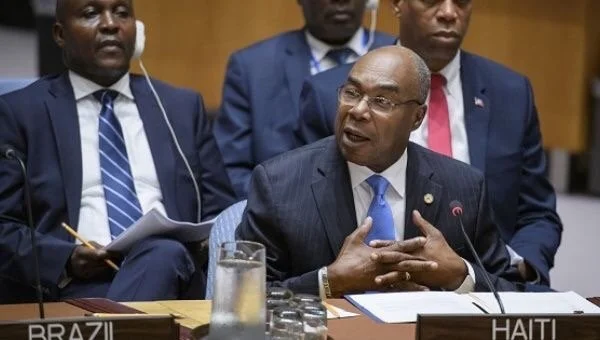
Haiti To Cut International Missions Due to Economic Crisis
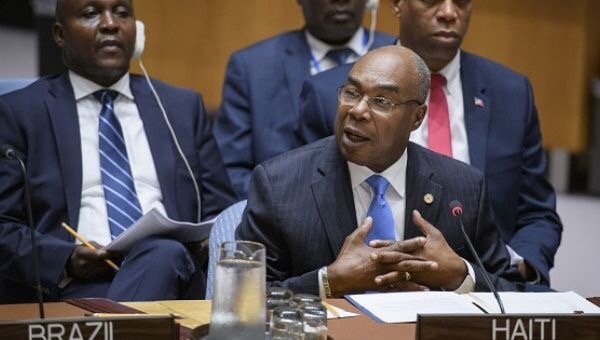
The Ministry of Foreign Affairs stated they will be closing and reducing approximately 66 percent of their missions around the world.In a series of cuts made by the Ministry of Foreign Affairs, Haiti announced its plans to reduce its diplomatic missions by 60 percent.Minister of Foreign Affairs Antonio Rodrigue confirmed the decision Tuesday, citing the country’s budgetary issues. The minister reported that the government’s contractual staff from around the world will be the first to be cut, with more than 40 missions closing due to the economic crisis."For now we spend US$4.2 million a month on missions and we want to reduce it to US$2.5 million," the minister said in a statement. "We are aware of the economic situation of the country and we have to act according to reality.”The administration’s plan is to reduce its diplomatic presence worldwide and concentrate on constructing missions only where large numbers of Haitians reside. Already government staff and officials have been recalled from Germany, Argentina, Bahamas, Belgium, Canada, Chile, Taiwan, France, Italy, Japan, the Dominican Republic, the Vatican, the OAS and UNESCO.Haitians have been protesting the devastating economic conditions in the country which have not been addressed by successive governments.TeleSUR | July 26, 2017
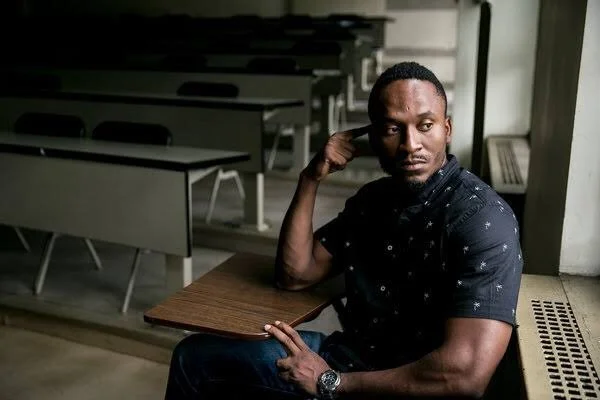
Haitian Immigrants With Temporary Status Await Trump’s Next Move
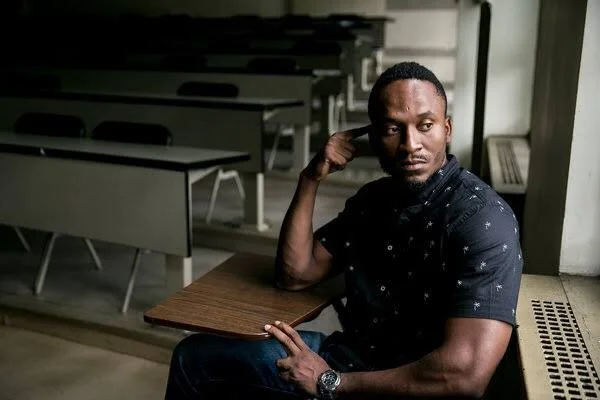
Jean Jubens Jeanty, a Haitian Uber driver who lives in Brooklyn, has his future mapped out. After completing a high school diploma program at Brooklyn College next month, he plans to start college next year. He would then seek further schooling to become a nurse or pediatrician. But the clock is ticking on his plans.Mr. Jeanty, 29, came to the United States from Port-au-Prince in September 2006 with his eldest brother and stayed after his tourist visa expired. He has what is known as temporary protected status, or T.P.S., which was granted to Haitians who were visiting the United States or living here illegally when a devastating earthquake struck their homeland in 2010. T.P.S. allows him and other Haitians to live and work legally in this country, until conditions in Haiti have improved enough to return home safely.Now, the Trump administration is monitoring earthquake recovery efforts to determine whether temporary protected status for Haitians should be terminated in January when its recent six-month extension ends. The Homeland Security secretary, John F. Kelly, said in a news release in May that Haiti has been making significant progress, advising T.P.S. holders to begin to “prepare for and arrange their departure” should the special designation end in January.That advice has left Haitian T.P.S. holders — as many as 58,000 in the United States, with 20,000 in New York — mired in fear. Some who have established lives here said they feared losing their dreams. Others who have lived in the United States for many years may find it difficult to adjust to life in Haiti, the Western Hemisphere’s poorest country. And those with American-born children could be parted from them.“I basically grew up here,” said Bianca, 22, a senior at Queens College, part of the City University of New York, who asked to be identified by her middle name because of her uncertain immigration status. “It’s very nerve-racking in a way. It’s very unsettling to know that you’re here and you don’t know what tomorrow is going to bring, or what is going to happen in the next couple of months.”Bianca came to the country in 1998 with her mother and brother on a tourist visa, and they overstayed their time. Her father, who also has T.P.S., later joined them. She has two siblings, 14 and 18, who are United States citizens. Bianca, an aspiring educator, studies English literature and expects to graduate in December. At CUNY, the country’s largest urban public university system, there were 60 students with T.P.S. last school year, the university said.Congress created the T.P.S. program in 1990 to aid countries ravaged by war, natural disasters or catastrophic events that make it too dangerous for citizens to return. Their status is renewed periodically, and recipients have to keep their permits updated to avoid deportation, at a cost of $495. Under the Obama administration, Haiti’s T.P.S. permits were reviewed every 18 months, with the current extension ending today. In May, the Trump administration said the next extension would be for six months, ending on Jan. 22, 2018.The program was created to provide temporary aid, but some designations have stretched as long as two decades. Immigrants from Honduras and Nicaragua have been allowed to stay in the United States since 1999, when Hurricane Mitch devastated their countries. The United States currently provides T.P.S. to more than 300,000 foreign nationals from 10 countries.Emmanuel Depas, a lawyer who is Haitain-American and assists T.P.S. recipients, said Haiti is far from ready to take its citizens back. Mr. Depas said the country’s dire condition had been exacerbated by a cholera outbreak caused by a United Nations peacekeeping force, which killed 10,000 and sickened nearly a million, and by Hurricane Matthew last year, the biggest storm to hit Haiti in 50 years.“Haiti just got a president in 2017,” Mr. Depas said, noting that the country had had months of political instability. “To say that the country is ready to take its people back is asinine.”Mr. Depas said some T.P.S. recipients have decided not to renew their status for fear of giving immigration authorities information that could locate them should the program end.But Ira Mehlman, a spokesman of the Federation for American Immigration Reform, which supports stricter immigration controls, said the decision on whether to extend the program should not center on subsequent misfortunes. Mr. Mehlman argued that T.P.S. was intended only to “give some people a ride out of the circumstances in their countries” temporarily.“At some point, we expect you to go home,” Mr. Mehlman added. “To simply say we are going to keep expanding it, then it’s no longer temporary. It’s a backdoor immigration system. There seem to be some expectations that the countries have to be a paradise before we send people back home.”Though the Trump administration has taken a hard line on illegal immigration, Nisha Agarwal, commissioner of the New York City Mayor’s Office of Immigrant Affairs, said “there’s still time and ability to influence” Mr. Trump’s decision. But the “pack your bag type of messaging immigrants are hearing from the federal government” is discouraging, she added. Ms. Agarwal said her office was assisting T.P.S. holders with legal support and urged them to prepare regardless of their expectations.Support for extending the program for Haitians crosses party lines: Gov. Rick Scott of Florida, a Republican and Trump ally, also wants to see their T.P.S. eligibility extended. Florida has a large Haitian population.Ending the program would deal a significant blow to a lifeline of Haiti’s economy: remittances. Haitians in the United States sent $1.3 billion back to the island in 2015, according to the Pew Research Center.As for Mr. Jeanty, he is hoping that immigration authorities will grant a longer extension in January. “A person like me who is working and paying taxes, going to school and have nothing on my record — why not keep me here?” he said. “I have nothing to go back to.”By Khorri Atkinson | July 21, 2017
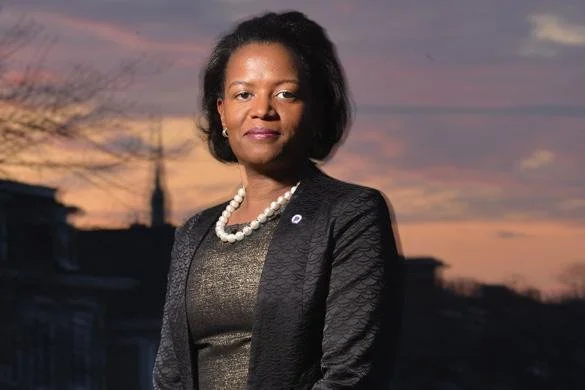
Haitian American Senator Linda Dorcena Forry speaks her mind over Donald Trump's ban
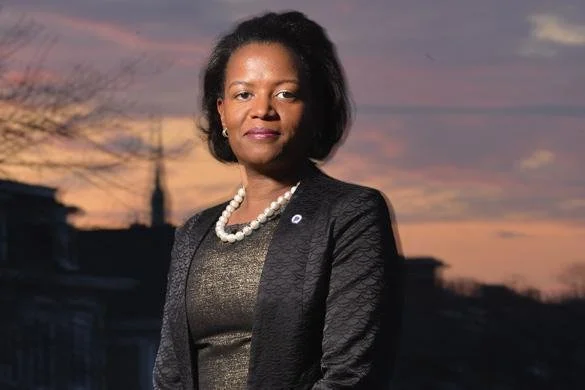
Great speech by Haitian American Senator, Linda Dorcena Forry. Senator Forry speaks her mind over Donald Trump's ban on Immigration. Forry is a Democratic member of the Massachusetts Senate, representing the 1st Suffolk district since June 2013. She previously represented the 12th Suffolk District in the Massachusetts House of Representatives after winning a special election in April 2005. Haitian-American, Forry, is the former House Chair of the Joint Committee on Community Development and Small Business. #haiti #haitianamerican #america

Adoption in Council of Ministers: Bill on Legal Assistance!

The bill on the creation and organization of a National Council of Legal Assistance (CNAL) was adopted in the Council of Ministers, confirmed on Tuesday July 4th by the Secretary General of the Council of Ministers.In order to make justice accessible to the economically disadvantaged and the vulnerable in our society, the Government has drafted this Bill in accordance with the requirements of the Universal Declaration of Human Rights and other international conventions and agreements signed by Haiti on the matter.This bill proposes to create a National Council of Legal Assistance, offering counseling and advocacy services to the poor, irrespective of gender, age and political opinion, with administrative and financial autonomy under the supervision of a Board of Directors chaired by the Minister of Justice.Recall that legal assistance is recognized throughout the world as a fundamental human right, without which one can not speak of a system of fair justice nor of respect for the rule of law. It should also be noted that this public service proposed in this draft law has been inspired on the basis of observations and experiences already made in Haiti.HL/ HaitiLibre

China Donates To Haiti

On Wednesday July 5th in the annex of the Ministry of Youth, Sports and Civic Action (MJSAC) to Frères, Mario Florvil the Director General of the Ministry of Youth, Sports and Civic Action, in the presence of the executives of the Directorate of Physical and Sports Activities (DAPS) of the Ministry, received from Ling Jun, the Permanent Representative of the China Trade Development Bureau in Haiti, a donation of sports equipments and materials as part of bilateral cooperation Haiti - People's Republic of China.The donation consisted of 18 lots of sports equipment, including balls, jerseys, football boots, basketball and volleyball, sports socks, nets, trophies.Mario Florvil welcomed China's initiative "This aid comes at a time when the Haitian government through the MJSAC wants to give another direction and a new breath to the sport sector," considering that Haiti greatly needs all the forms of support that can enable it to support sport, whose development represents a priority for the new government, ensuring that its Ministry will make good use of these materials.Ling Jun hopes that these materials will contribute to the improvement of the conditions of training and the physical constitution of the young Haitians. Reaffirming the importance that China attaches to physical and sports development before evoking the Haitian Ministry's desire to return sport to school.HL
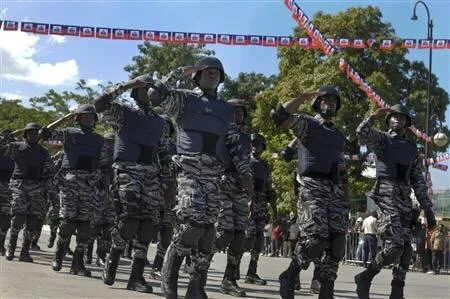
Haiti Plans Recruitment for Small Army
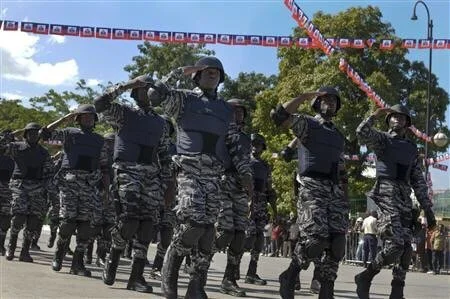
Haiti plans to start recruiting for a small, newly reformed army, the defense minister said on Tuesday, while critics questioned the need for such a force in a poor country with a history of military coups.The government expects to recruit fewer than 500 soldiers, whose duties will include rebuilding after natural disasters and monitoring borders for smuggled contraband, Defense Minister Herve Denis told Reuters in an interview."I was planning to recruit 500 in the first recruitment but now, because of budget problems, we have to reduce the numbers," he said. "We are waiting on the vote on the budget to determine how many we will eventually recruit."The vote is expected in the next few months.Former president Jean-Bertrand Aristide disbanded Haiti's army in 1995 following a military coup.Previous president Michel Martelly drafted a plan for a small military force in 2011. Calls from politicians for an expanded army have grown with the looming departure in October of a 13-year United Nations mission in Haiti intended to restore stability after a second coup against Aristide in 2004.However, Haiti's budget is tight and critics say the government should focus its resources on the two decade-old national police force, which has roughly 15,000 officers."Haiti does not need an army," said Mario Joseph, a human rights attorney and one of Aristide's lawyers. "We must use what little money Haiti has rationally. ... Haiti cannot even take care of the police with the national budget."By Joseph Guyler Delva | Reuters

Helping Haitian Children When It Matters the Most

When a child is born, a clock starts ticking. Scientists have shown that half of a child’s intelligence potential is developed by the age of four. Early development makes a huge difference to life-long wellbeing.
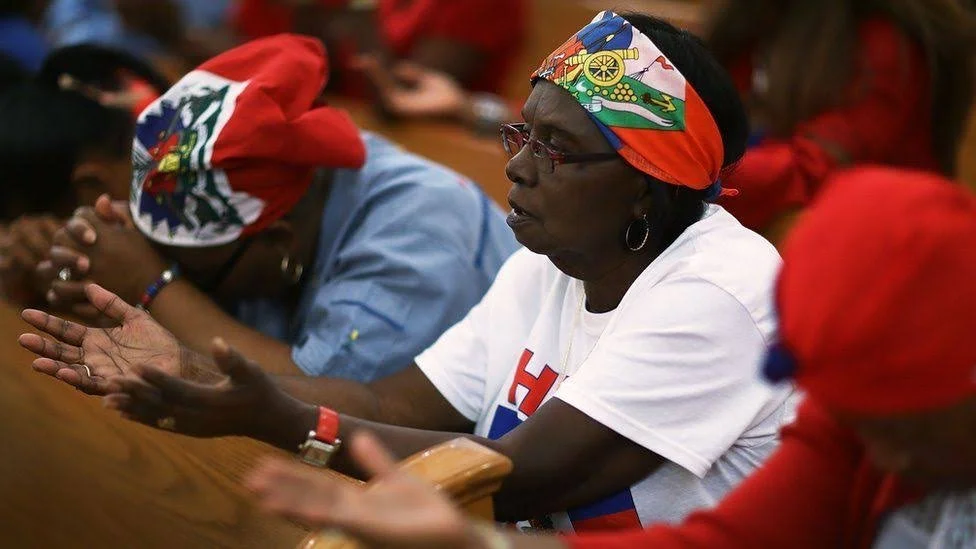
Haitians who came after earthquake granted six-month extension
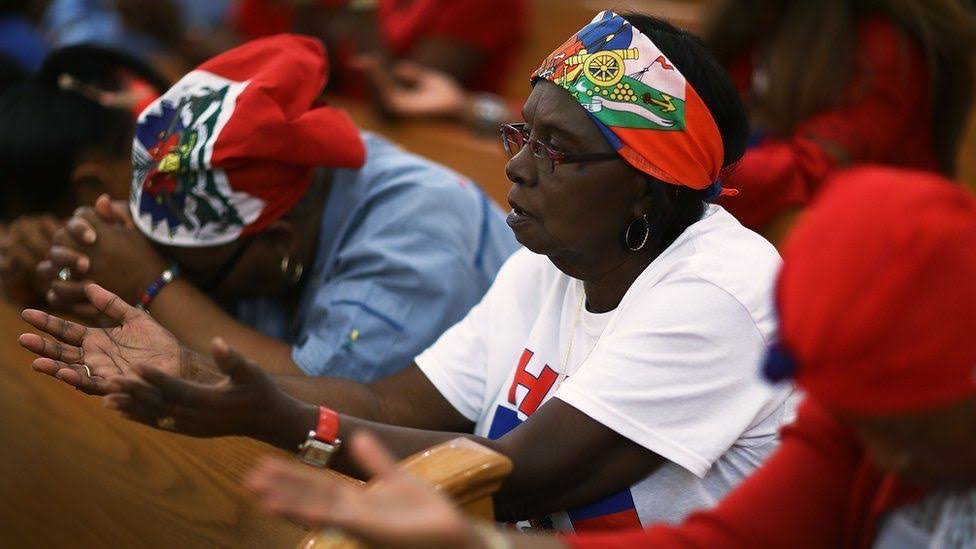
The Trump administration has granted a six-month extension to nearly 60,000 Haitians who were offered temporary protection in the US after a devastating earthquake in 2010.The extension will allow them to remain in the US until January 2018.But a DHS official said the agency was encouraging Haitians on the TPS scheme to "get their affairs in order".Immigration advocates have protested against deportations, saying conditions in Haiti remain too dangerous.The earthquake killed tens of thousands of Haitians and displaced more than one million, and the country has since been hit by a cholera epidemic.DHS officials who briefed reporters on the decision said only conditions seen as caused by the earthquake were taken into account in analysing Haiti's readiness to accept the TPS residents back.They said no decision had been made over whether the TPS status would be extended again in January 2018, but that the agency "highly encouraged all TPS recipients to handle their affairs as appropriate, including obtaining travel documents".There are roughly 58,700 Haitians living in the US on the TPS scheme, many in a large Haitian community in Florida, as well as New York and Massachusetts.They will be required to reapply for TPS status within 60 days of official notice from the DHS. No new Haitians will be allowed to join the scheme during the extension period."This is temporary status, it's not supposed to be permanent. It can't go on in perpetuity," an official said.Homeland Security Secretary John Kelly said in a statement: "This six-month extension should allow Haitian TPS recipients living in the United States time to attain travel documents and make other necessary arrangements for their ultimate departure from the United States, and should also provide the Haitian government with the time it needs to prepare for the future repatriation of all current TPS recipients."The government has already sought to deport some Haitians who don't have TPS status, in line with part of a wider crackdown on illegal immigration.According to internal emails passed to the Associated Press earlier this month, immigration officials sought crime data on Haitians on the TPS scheme, as well as information about whether they were seeking benefits.The TPS scheme currently grants protections to nationals of 10 countries, including Sudan, Somalia, Syria, El Salvador, Nepal and Yemen. Source: BBC News, May 22, 2017
For Haitians Who Came to U.S. After Earthquake, Another Deportation Reprieve
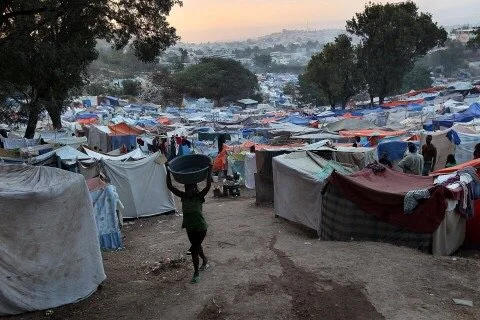
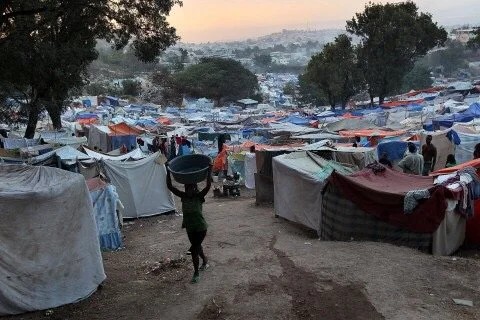
Homeland Security Secretary John F. Kelly granted a six-month extension Monday to 58,000 Haitian immigrants who have been spared from deportation since a devastating 2010 earthquake, saying the conditions in their struggling homeland are not stable enough to force them to return.Kelly said Haitians, whose permission to stay in the U.S. was to end in July, may now stay until Jan. 22. He said he would monitor conditions in the Caribbean nation, but added that Haitian immigrants should prepare to return home next year.“I believe there are indications that Haiti – if its recovery from the 2010 earthquake continues at pace - may not warrant further ... extension past January, 2018,” Kelly said in a statement.The announcement did not please advocates on either side of the immigration debate. It foreshadowed the battles to come next year, when the Trump administration will decide the fate of some 263,000 people from El Salvador, whose temporary protected status expires in March. Protection for about 86,000 Hondurans is set to end in January.Temporary Protected Status is a Homeland Security program that grants short-term work permits and reprieves from deportation to immigrants from nations upended by disaster, epidemics, or war. Haitians received the status after the earthquake killed hundreds of thousands of people; it was renewed as their homeland grappled with a cholera epidemic, food shortages and acute poverty.Many had hoped the administration would extend Haitians’ protection for 18 to 24 months. Now they face a potential deadline to pack up their lives and return to the poorest nation in the Western Hemisphere.“We have a lot of families that are in shock right now,” said Nancy Treviño, spokeswoman for Haitian Women of Miami, an organization also known by its initials in Creole, FANM. “It’s pretty devastating to them right now.”Temporary protection ended this week for a smaller group of people from Guinea, Liberia and Sierra Leone.Only Haitians who were in the United States by Jan. 12, 2011, the one-year anniversary of the earthquake, were eligible to apply for protected status. Opponents of the federal program complain that it is billed as “temporary,” but often drags on for years. They also note that the U.S. government has resumed deportations to Haiti of people who came after the deadline date for protected status and have since lost their cases in immigration courts.“If we’re deporting people to a country, then there’s no excuse for continuing TPS for a certain subgroup of illegal immigrants,” said Mark Krikorian, executive director of the Center for Immigration Studies, which favors tough controls on immigration.Republican and Democratic lawmakers, including Senator Marco Rubio (R-Florida), and hundreds of faith-based groups had urged Kelly to grant relief to Haitians, who reside in large numbers in Florida, New York, Massachusetts and New Jersey. Rubio and other lawmakers hailed Kelly’s decision.“Last week, I asked the White House to extend the TPS deadline for Haitians until at least January 18, and I’m glad to see that the administration agreed,” Rubio said in a statement.Steven Forester, immigration policy coordinator for the Institute for Justice & Democracy in Haiti, said six months is not enough time for Haiti to recover from “sledgehammer blows” it has suffered.The Jan. 12, 2010 earthquake killed thousands of people and destroyed much of the infrastructure. The cholera epidemic has sickened 800,000 people and killed over 9,000 Haitians. Last October, Hurricane Matthew wiped out crops and livestock and sparked a shortage of food and potable water.“It gives us a chance to fight another day,” Forester said. “Six months from now we’ll be facing the exact same situation. “Kelly noted that Haiti’s economy continues to recover and 98 percent of makeshift camps that sprung up after the earthquake have closed.Kelly made the announcement a day before the deadline to publish a 60-day notice in the Federal Register announcing its plans for the program.Source: Maria Sacchetti, May 22, 2017