
 Courtesy of PapJazz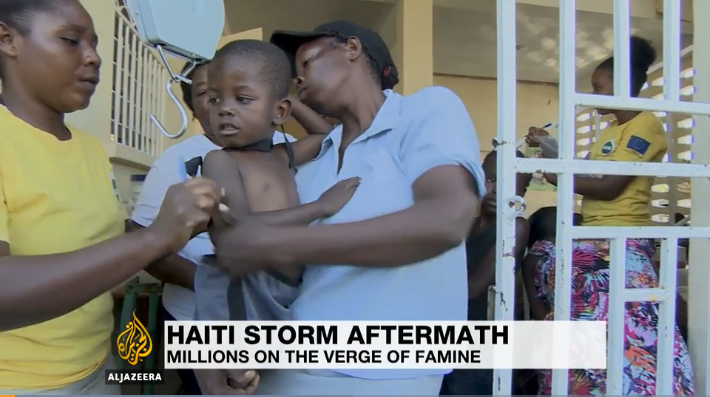
Millions at risk of famine in post-hurricane Haiti
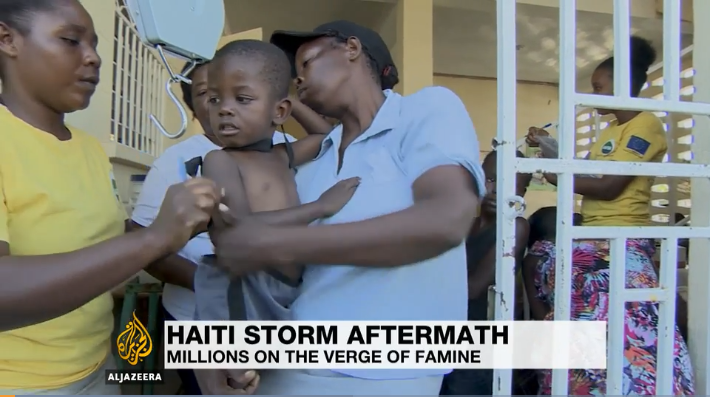
It's been almost a year since southern Haiti was devastated by Hurricane Matthew.It has also been almost eight years since an earthquake killed more than 300,000 people and left hundreds of thousands homeless.But a recent visit to a UNICEF treatment centre in the south shows everything continues to go wrong in the country.Dozens of malnourished children visit the centre daily, struggling against diseases and the endemic poverty that is so deeply entrenched in Haiti.Half of the country's population is malnourished. According to the World Food Programme, 1.32 million people are in Phase 3 Crisis, which means they are severely food insecure. Additionally, three million people are in Phase 2 Stress, which mean they are food insecure.Unfortunately, this is nothing new.Haiti has been struggling to feed its people for years. It is one of the poorest countries in the world.Natural disasters only deteriorate the situation. Hurricane Matthew had a devastating effect on food production. Agricultural plots, seeds and irrigation systems were destroyed.One year on, not much has changed.Everyone we spoke to repeated the same phrase over and over again: "I used to have … but now it's gone."It was very little, but at least some had a business, or seeds, or nets and other sources that would help them feed themselves. But they were destroyed by the hurricane.The UN has some small programmes assisting farmers, and is currently working on long-term development ones. But that's not enough to get people out of the current crisis.The UN appealed for more than $56m for food security. I have been told that less than 50 percent of that was provided by donor countries.
Political issues
But that's not the only problem. Nine months ago, Haiti's new President Jovenel Moise took office, with the promise to increase support to the country's agricultural sectors.Farmers denounce that only 6.9 percent of next year's budget has been assigned to assist communities in desperate need of help. Moise has also raised taxes and that's why demonstrations have been ongoing in the capital for months.The president was elected in an electoral process in which only 20 percent of the population voted."Moise has very little support. The only ones that are keeping him in power are the United States, France and the international community," a source told me in Port-au-Prince.And the budget?"It's been designed to benefit the elite and to continue strangling the poor," said economist Camille Charlemers."It is what keeps us dependent on foreign aid. Without food production, Haiti needs to import almost everything."And of course there is massive corruption. A recent investigation showed how politicians, including the presidents and prime ministers, allegedly embezzled around $2bn from a Petrocaribe deal with Venezuela.Haiti is currently paying off that debt while millions are going hungry.Some historians have said that the country has been condemned since it was born, adding that the first black republic was a bad example. They say that 'slaves' were not supposed to have a nation and that's why a brutal embargo was imposed by France, Spain, the US and the UK.Over 200 years later, Haiti continues to struggle, a victim of the ruling elites that profit from the enormous poverty rates in the country, and of an international community that, for whatever reason, continues to fail.By: Teresa Bo for Aljazeera.com | November 28, 2017
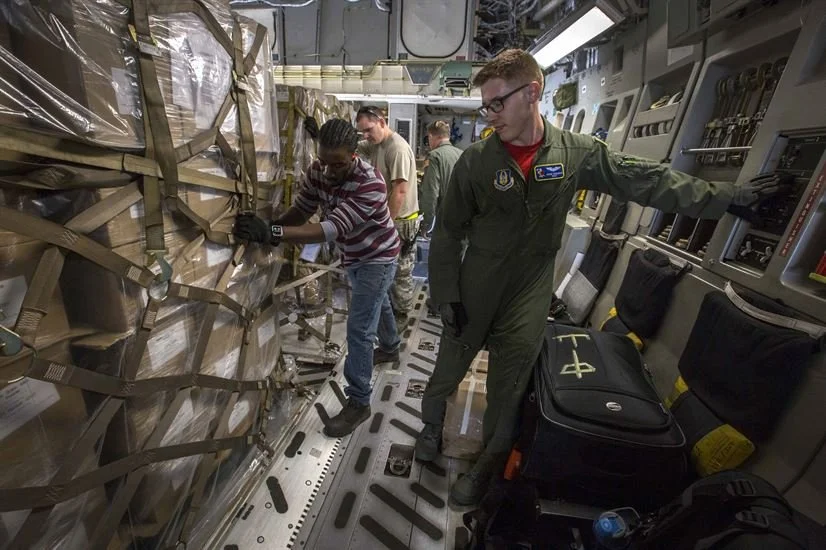
Air Force Reservists Deliver Humanitarian Aid to Haiti
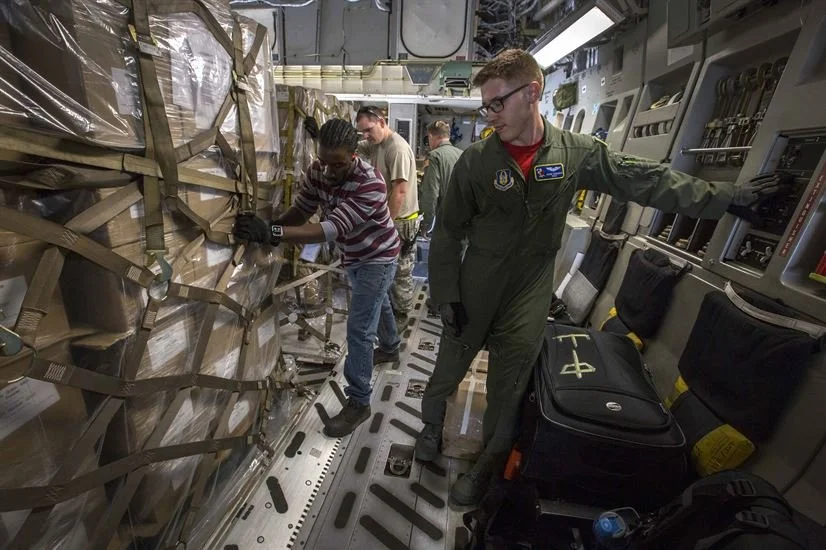
PORT-AU-PRINCE, Haiti, Nov. 27, 2017 — What can 15 airmen and a C-17 Globemaster III aircraft do on a Denton Program mission? A lot, if they're from the Air Force Reserve Command's 514th Air Mobility Wing.
On Nov. 18, four pilots and a loadmaster with the 732nd Airlift Squadron, a loadmaster and two crew chiefs with the 514th, three Phoenix Raven Team members, and four 514th Security Forces airmen delivered 15 pallets of food, weighing 76,410 pounds, to Haiti."It's a high priority to get food down there," said Air Force Senior Master Sgt. Shawn R. Reynolds, a C-17 loadmaster with the 514th Air Mobility Wing. "Just the sheer volume of food we moved was impressive."The humanitarian mission, accomplished through the Denton Program, delivered fortified rice and soy protein and barley grass juice powder to Haiti. This was Reynolds' fifth Denton mission."That food will be used for a nutrition program for orphans and school children," said Jean Lubin St. Marc, executive director of Mission of Hope. "We appreciate the U.S. military that bring Denton cargo to us."Deliveries Began after 2010 EarthquakeSince a 2010 earthquake in Haiti killed more than 100,000 people, the 514th has delivered supplies and equipment through the Denton Program to Haiti. The program was an amendment to the Foreign Assistance Act of 1987, and it is named in honor of U.S. Sen. Jeremiah Denton, a former Navy pilot and Vietnam prisoner of war."Delivering relief supplies is one of the more rewarding missions we do," said Air force Lt. Col. Samuel F. Irvin, a C-17 pilot and the commander of the 732nd Airlift Squadron.Irvin has been on more than a dozen Denton missions during the past 10 years.The program is jointly administered by the U.S. Agency for International Development, the State Department and the Defense Security Cooperation Agency. It enables Americans and U.S. based nongovernmental organizations to use available space on military cargo aircraft to transport humanitarian goods -- agricultural equipment, clothing, educational supplies, food, medical supplies and vehicles -- to countries in need."This is the first time it has been strictly food," said Air Force Maj. Lee C. Schmeer, a 732nd Airlift Squadron C-17 pilot. "Usually it has been a mixed bag -- tractors, forklifts, trailers, and flatbed trucks, along with food."To give some perspective on how much cargo a Globemaster can handle, it can carry an M1A2 Abrams tank, which weighs 130,000 pounds, and still have room for 40,000 pounds more cargo.Cargo HubThe crew received the cargo at Joint Base Charleston in South Carolina, which is the cargo hub for the Denton Program. In 2016, Joint Base Charleston supported 85 missions to 10 countries delivering 609 pallets of cargo and 22 vehicles."We're in a position to help and we're happy to help," Schmeer said.While the Denton Program helps countries and people in need, it also serves military personnel. Aircrews that need to get qualified or have their qualifications updated volunteer for a Denton mission, and additional training will be scheduled during the mission."We schedule training at the bases we visit for our aircrews," Irvin said.During this mission, which began Nov. 16 and ended Nov. 19, the 514th Security Forces Squadron's combat arms training and maintenance team trained four C-17 pilots and two loadmasters at the pistol range at Naval Air Station Pensacola in Florida."By using our training time, it's a win-win for everyone," Reynolds said.Delivering the supplies was a team effort. In this case, the security forces airmen pitched in, helping to unload cargo."Moving Denton cargo is satisfying for me," Reynolds said. "We are moving something that matters."By: Air Force Master Sgt. Mark C. Olsen 514th Air Mobility Wing for the US Department of Defense | November 27, 2017
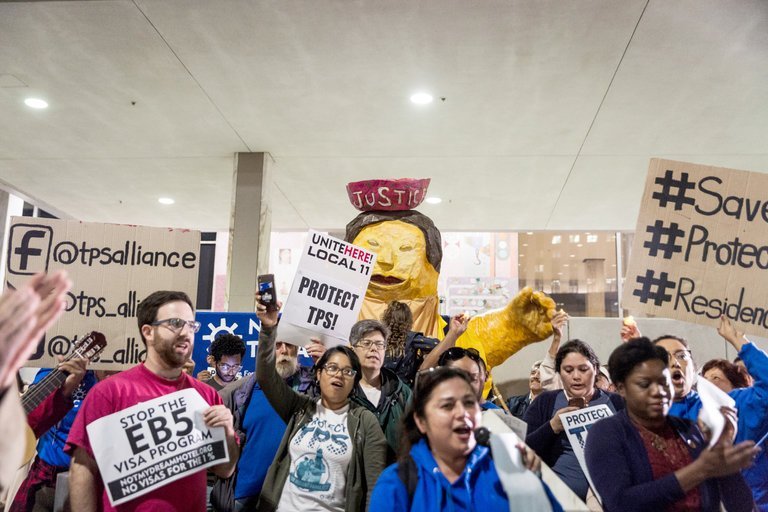
Trump Administration Ends Temporary Protection for Haitians

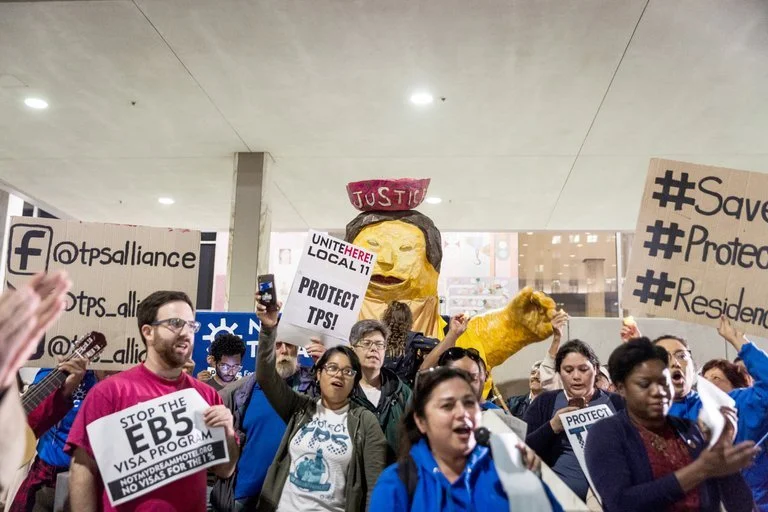
Haitians with what is known as Temporary Protected Status will be expected to leave the United States by July 2019 or face deportation.
The decision set off immediate dismay among Haitian communities in South Florida, New York and beyond, and was a signal to other foreigners with temporary protections that they, too, could soon be asked to leave.
About 320,000 people now benefit from the Temporary Protected Status program, which was signed into law by President George Bush in 1990, and the decision on Monday followed another one last month that ended protections for 2,500 Nicaraguans.
Haiti, the poorest country in the Western Hemisphere, is still struggling to recover from the earthquake and relies heavily on money its expatriates send to relatives back home. The Haitian government had asked the Trump administration to extend the protected status.
“I received a shock right now,” Gerald Michaud, 45, a Haitian who lives in Brooklyn, said when he heard the news. He has been working at La Guardia Airport as a wheelchair attendant, sending money to family and friends back home. He said he feared for his welfare and safety back in Haiti now that his permission to remain in the United States was ending.
“The situation is not good in my country,” he said. “I don’t know where I am able to go.”
Haitians are the second-largest group of foreigners with temporary status. The protection is extended to people already in the United States who have come from countries crippled by natural disasters or armed conflict that prevents their citizens from returning or prevents their country from adequately receiving them. The government periodically reviews each group’s status and decides whether to continue the protections.
The Obama administration renewed the protections for Haitians several times, after determining that conditions in Haiti remained precarious. But the Trump administration, which has sought greater controls on immigration, has said that the program, which was intended to provide only temporary relief, has turned into a permanent benefit for tens of thousands of people.
In a statement, the Department of Homeland Security said that after meeting with Haitian government officials and Haitian communities in the United States, it had decided to let the protections end.
“Since the 2010 earthquake, the number of displaced people in Haiti has decreased by 97 percent,” the statement said. “Significant steps have been taken to improve the stability and quality of life for Haitian citizens, and Haiti is able to safely receive traditional levels of returned citizens.”
The protection for Haitians was most recently extended in May, by John F. Kelly, the Homeland Security secretary at the time. He allowed only a six-month extension, a shorter one than is typical, saying that the Haitians “need to start thinking about returning.”
The decision on Monday by Elaine Duke, the acting secretary, set a termination date of July 2019 to give people time to make arrangements to leave.
The largest group of Temporary Protected Status beneficiaries, nearly 200,000 people, are from El Salvador. The Department of Homeland Security is scheduled to announce next month whether it will rescind or renew protection for that country, which is plagued with gang violence and high unemployment. The protection applies to Salvadorans who were in the United States without permission on Feb. 13, 2001, and was granted after deadly earthquakes in their home country.
Though Ms. Duke ended protections for Nicaraguans last month, she continued, at least for now, protections for Hondurans despite pressure from Mr. Kelly, now President Trump’s chief of staff, to end them.
Others who now benefit include people from Nepal, Somalia, Sudan, South Sudan, Syria and Yemen. In 2016, the Obama administration decided to end temporary protection for citizens from three West African countries that had been devastated by the Ebola virus several years ago.
The United States offered the protection to Haitians after the earthquake in January 2010 that killed hundreds of thousands of people, displaced more than a million and led to a cholera outbreak. Haitians who entered the United States within a year of the disaster qualified for the status.
A variety of American groups, including the Congressional Black Caucus, the United States Chamber of Commerce and immigrant advocacy organizations had urged the Trump administration to extend the protections again. On Monday, Senator Bill Nelson, Democrat of Florida, called the decision “unconscionable.”
“There is no reason to send 60,000 Haitians back to a country that cannot provide for them,” he wrote on Twitter. “I am strongly urging the administration to reconsider.”
There is no reason to send 60,000 Haitians back to a country that cannot provide for them. This decision today by DHS is unconscionable. And I am strongly urging the administration to reconsider. Ultimately, we need a permanent legislative solution. https://t.co/Ft0bE0itf6— Bill Nelson (@SenBillNelson) Nov. 21, 2017
Ileana Ros-Lehtinen, a Republican congresswoman from South Florida, said on Twitter that she had traveled to Haiti after the earthquake in 2010 and after Hurricane Matthew in 2015. “So I can personally attest that Haiti is not prepared to take back nearly 60,000 TPS recipients under these difficult and harsh conditions,” she said.
I travelled to #Haiti after the earthquake in 2010 and after hurricane Matthew in 2016. So I can personally attest that #Haiti is not prepared to take back nearly 60,000 #TPS recipients under these difficult and harsh conditions.— Ileana Ros-Lehtinen (@RosLehtinen) Nov. 21, 2017
Those with temporary protection constitute about half of the estimated 110,000 Haitians living in the United States without permanent permission, according to the Pew Research Center. Since Mr. Kelly signaled that Haiti might lose its special designation, thousands of Haitians have crossed the border between the United States and Canada to apply for asylum in Quebec.
Nearly 30,000 children have been born in the United States to Haitians with protected status. Those children are citizens and entitled to stay. Some of their parents may seek to avoid deportation by claiming it would cause extreme hardship to a United States-born child, but that option is limited.
Most will soon have to make a wrenching decision: take their children back to Haiti; leave them with relatives or guardians in the United States; or remain in the country illegally and risk arrest and deportation.
Mark Silverman, an attorney and director of policy at the Immigrant Legal Resource Center in San Francisco, said that if they are arrested, they would be entitled to deportation hearings. And contesting their cases “gives them at least seven to 10 years,” he said, because of the long backlogs in the immigration courts.
The decision is sure to be felt in Haiti, where remittances from the Haitian diaspora totaled $2.36 billion in 2016, an increase of 7 percent over the previous year, according to the World Bank. That money represented more than one-fourth of the country’s national income.
But Dan Stein, president of the Federation for American Immigration Reform, which lobbies for restrictions on immigration, said the cancellation of temporary protections for Haitians was “long overdue.”
“The notion that this would be reflexively renewed again and again is a corruption of the entire concept,” said Mr. Stein, adding, “it’s not a refugee program or an immigration program.”
“It’s supposed to be reviewed and it’s supposed to be temporary,” he said.
One of the younger beneficiaries of the program, Peterson Exais, barely survived the earthquake. He arrived in the United States when he was 9 years old to receive emergency medical care after surviving for days under the rubble. He endured more than a dozen surgeries and has become a promising dancer at a magnet school in Miami.
Now 17 years old, he dreams of pursuing studies at the Juilliard School.
“This is very devastating for me,” he said on Monday. “I might not be able to give all that I could give back if I went back to Haiti.”
By: Mariam Jordan for Nytimes.com | November 20,2017
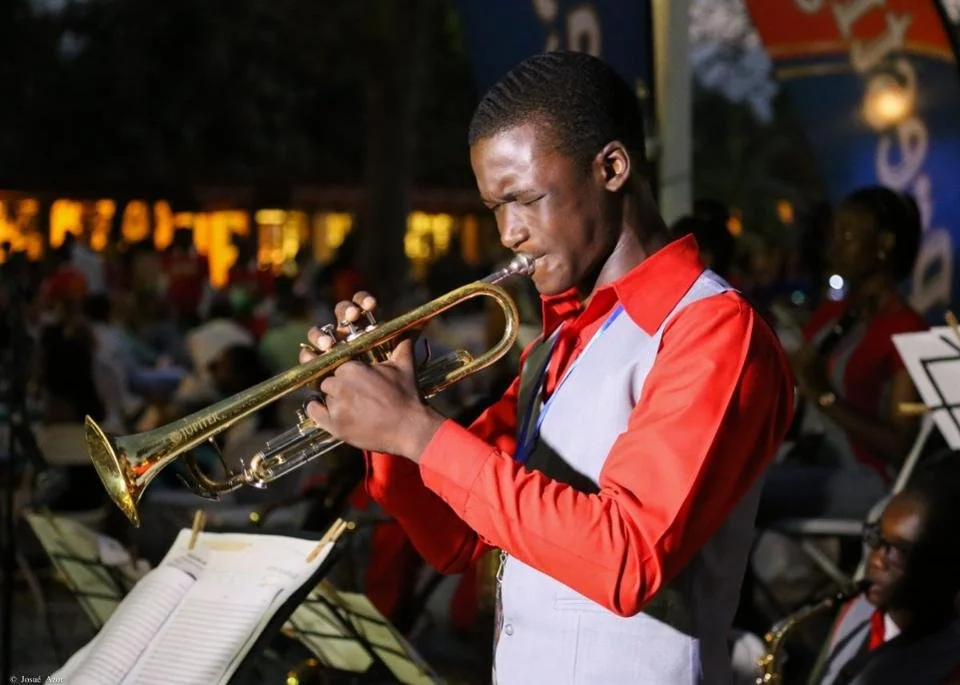
Why Jazz Lovers Should Travel To Haiti For This Unique Musical Experience

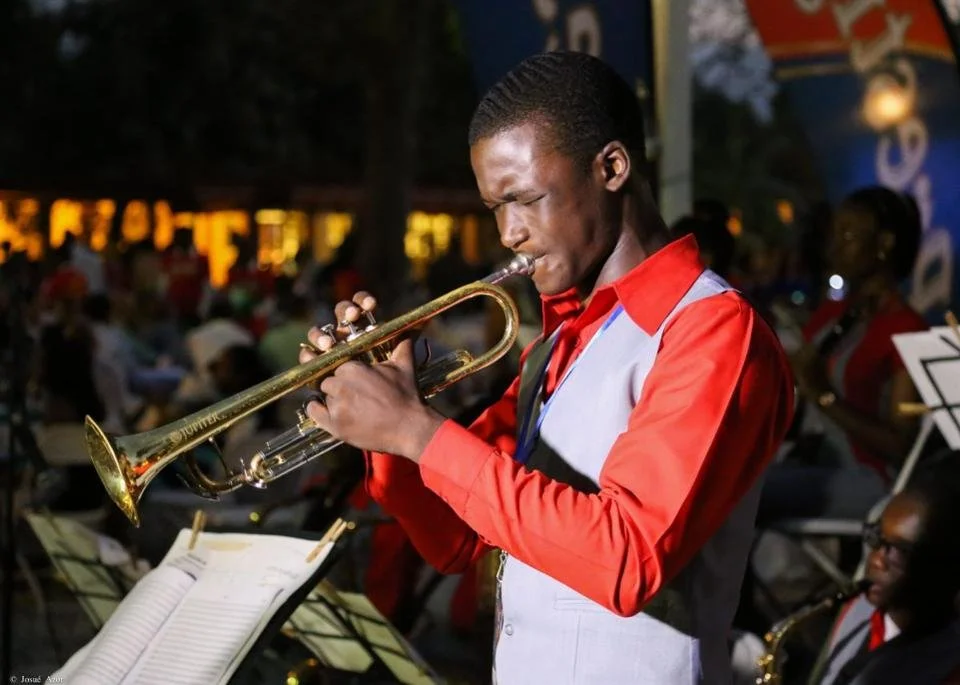
A trumpeter at the Catts Pressoir Music School during PapJazz.
Haiti might be off the beaten path, but it's home to one of the most unique music festival experiences around. Into its 12th edition, the annual Port-au-Prince International Jazz Festival, also known as PapJazz, is back and better than ever this January 2018.The event is opening the world to seeing the country's special culture and the genre of jazz music in a new light. From after hours jam sessions at some of the best local restaurants in the capital city to hit Haitian-born DJ, Michael Brun, dropping a dance influenced set, expect an unexpected combination of sounds to come together. Instead of planning for your usual festivals, dare to go somewhere different. To get a deeper understanding of what attendees can look forward to, I spoke with the foundation's manager, Milena Sandler, who made it clear why this is a can't miss adventure.Isis Briones: What was the inspiration behind the PapJazz? Milena Sandler: "It came naturally to musician and President of the Haiti Jazz Foundation, Joel Widmaier. From a jazz background through his dad, the late Herby Widmaeier — who has been a promoter of jazz in Haiti through his radio shows — he wanted to do something that would honor the legendary genre in his country. Joel has also taken part in many festivals around the world and knew what it took to put one together on an international level."IB: It's remarkable that the festival also includes a mentorship program for native artists. Can you elaborate on its mission and how it came about? MS: "Since the first edition back in 2007, artists have always been asked to offer workshops geared towards aspiring, young musicians — free of charge. There is no jazz education and very few music schools in Haiti, so this is an opportunity for them to learn from professionals from all over the world.Today we can pride ourselves in having participated in the creation of new generation jazz musicians. Moreover, we recently started a school program, where we will give free jazz, harmony, composition, and music appreciation classes. We also plan to obtain grants that will improve the students' equipment and provide seminars for them"IB: EDM was also incorporated in the lineup through Michael Brun and given the influence dance music has on the festival scene, do you foresee the different genres blending on a larger scale? MS: "Our challenge and objective since the start has been to attract a larger crowd to this jazz festival, including a public not familiar with it. Plus, the Haitian music is very diverse and the inclusion of all kinds of music is what's made us successful.However, we still plan to focus the majority of the lineup on jazz musicians and at the end of the day, Michael is a great illustration of this. We didn't pick just any DJ, Michael includes his Haitian jazz roots into his sound. He will be closing out the festival this year showcasing the perfect example of diversity."
Courtesy of PapJazzAn inside look into PapJazz.
IB: Beyond revolutionizing people's perspective on jazz, what are some stereotypical misconceptions about Haiti that you feel the festival is helping change? MS: "The first thing that comes to mind is that in Haiti great things can happen. We offer events that meets international standards in terms of organization logistics, sound quality, comfort, and of course, security. Yes, there's a lot of poverty, but at the same time, the Haitian people have a real 'Joie de Vivre' that you can feel through their smiles and faith for a better tomorrow. Attending PapJazz does something to you, anyone who goes come back with a new outlook on Haiti and a better understanding of what the country could become.IB: 12 years is also a long time to be hosting a worldwide event, what would you say about this year makes things even better than the last? Can you point out some highlights festival goers shouldn't miss? MS: "We strive to bring better lineups each year, which is no easy task. Jazz musician fees can be quite expensive and it's important to remember that the festival is a nonprofit with most shows being free. Luckily, this year, we are proud to include two Grammy Award winners and thanks to the participation of foreign embassies, we were able to have artists from 12 countries.In this edition, we also made a commitment to make the event a tourist destination, in which we created various packages that allow for the possibility to explore the country, the kindness of its people, its rich culture, and beautiful beaches on a higher level. We know it will be an unforgettable experience."By Isis Briones for Forbes.com| November 20, 2017
Haiti: Massive rallies call for Jovenel Moise to step down
Thousands of people have taken to the streets in Haiti calling for President Jovenel Moise to step down.It's the latest of ongoing protests against Moise that began two months ago.It comes on the day Moise officially reintroduced the national army, some 22 years after it was disbanded, and a week after an investigation revealed millions of dollars in earthquake relief had been stolen.By Teresa Bo for Aljazeera.com |November 19, 2017
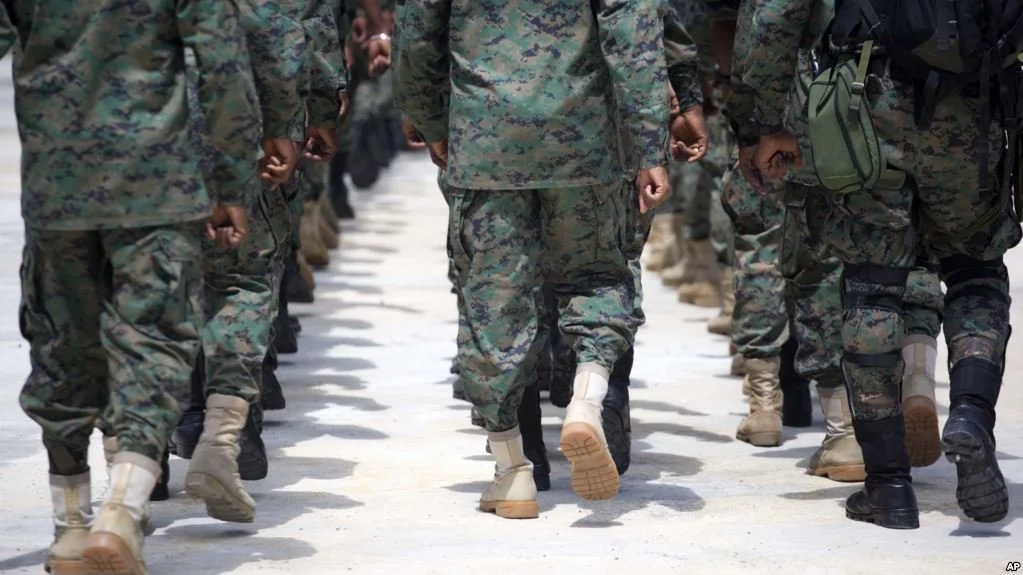
Haiti Prepares to Introduce Its Revived Military
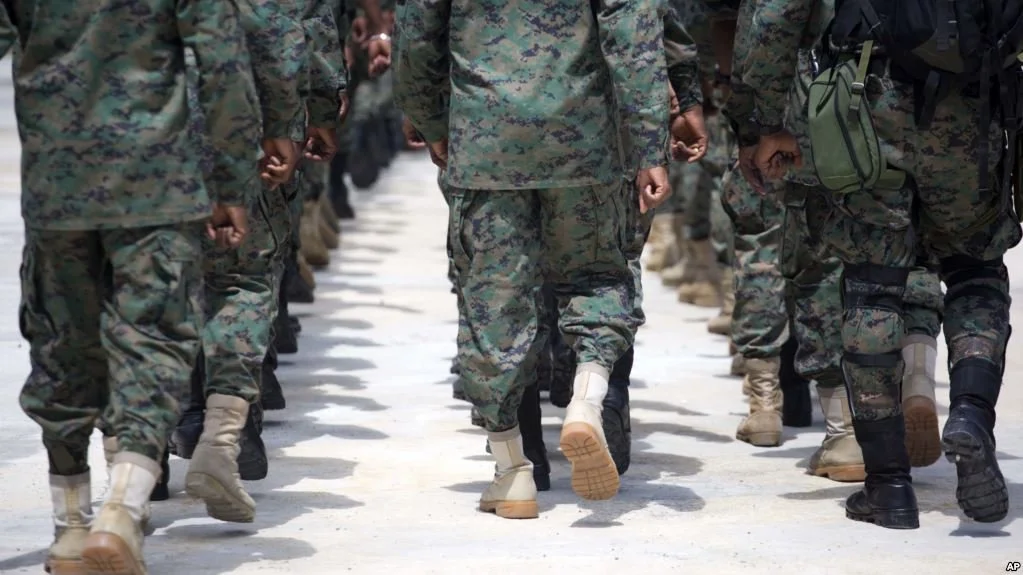
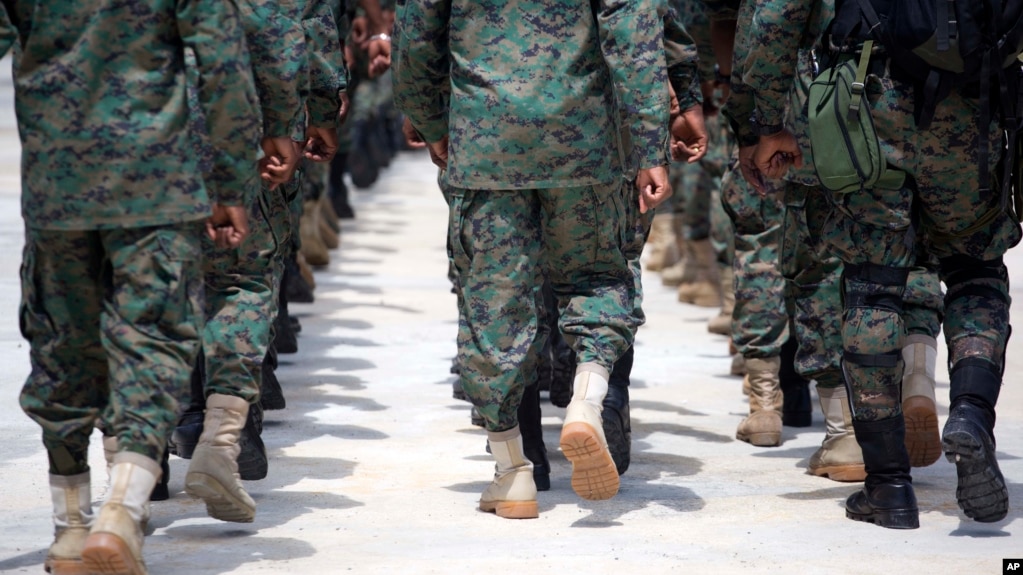 CAP-HAÏTIEN, HAITI — More than two decades after Haiti’s leader disbanded its army, with its history of violent coups, the Caribbean nation is about to unveil a reconstituted military.The Haitian National Army will be formally reintroduced with a parade in this northern port city on Saturday, the anniversary of a decisive 1803 battle [Battle of Vertières] nearby that secured Haiti’s independence from France.“The army I am reinstating for you is a professional one. It is a necessity for our country. It will not be an army of repression,” President Jovenel Moïse, who took office in February, said at a news conference last week. “It will be instead an army that will help out when a hurricane strikes our country. It will help repair roads. This is the army I have promised you.”
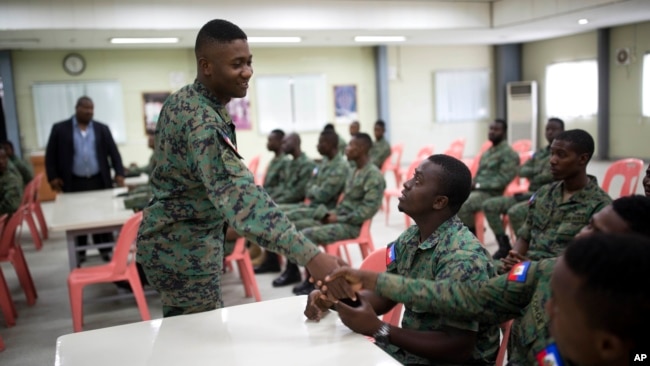
Civilian forceMoise aims to distinguish it from the military that overthrew Jean-Bertrand Aristide in 1991. When Aristide reclaimed the presidency in 1995, he dismantled the army and put security in the hands of the civilian Haitian National Police. That force now has roughly 15,000 officers.In contrast, the army has at least 150 recruits, young men and women mostly engaged in building up the impoverished country’s infrastructure, Defense Minister Hervé Denis said at news conference Monday. Since their selection in late summer, they have set up a medical clinic in central Haiti and begun fixing roads.Eventually, there could be 3,000 to 5,000 troops, Denis said.“But we know that we cannot have an army of that size the next day” because of budget constraints, he added.
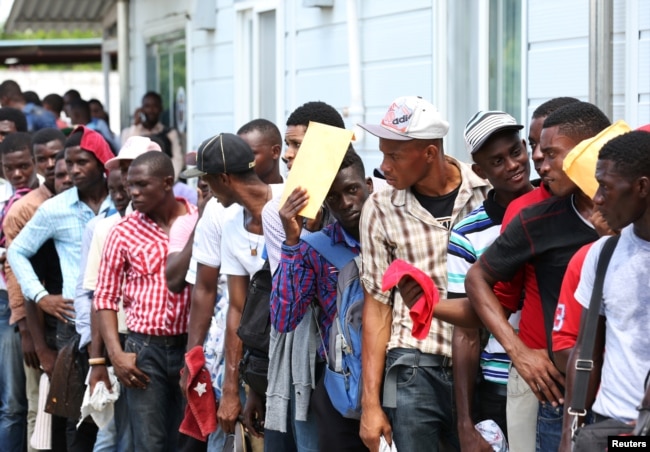
Haiti’s government has allocated $8.5 million for defense spending in the 2018 fiscal year. Denis acknowledged funding challenges but, according to the Miami Herald, said the armed forces’ patrols could stem annual losses of $200 million to $500 million in contraband coming from neighboring Dominican Republic.The army’s restoration draws mixed reactions at home and abroad.The army offers precious jobs in a poor country whose unemployment rate tops 40 percent.But Wednesday marked the third consecutive day of street demonstrations in Cap-Haïtien, the country’s second-largest city, with hundreds of public high school students protesting spending on a new military when their teachers have gone unpaid for months.Their rallying cry: “We don’t want an army, we want an education!”“The country has other priorities that are more important than the army,” Edouard Innocent, the city’s former mayor, told VOA in a phone interview. He said Moise should “prioritize economic development, education, health. … I think this army is [a means] for the president to secure his power.”Right to an armyCiné Aneus Daneus, a lawyer in Cap-Haïtien, pointed out that Haiti has the constitutional and sovereign right to an army. He called for “a professional army” to protect the country’s borders and provide aid in case of natural disasters. He added, “This force must not be involved in politics.”Nenel Cassy, a Haitian senator, told VOA he worried that the army would strain the national budget and could be used to suppress political dissent. He said its reinstatement created “a chaotic situation.”
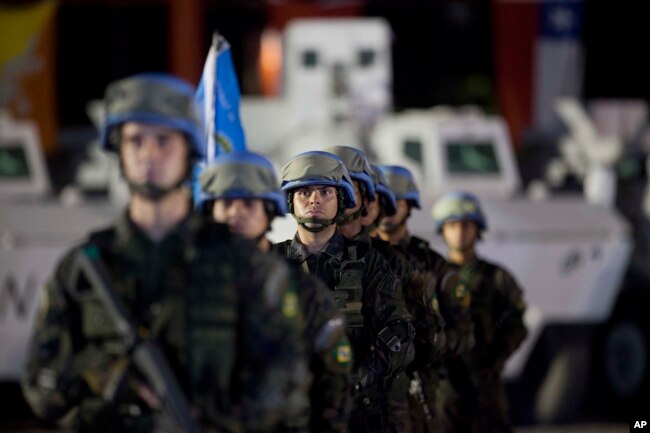
The army’s reinstatement comes a month after the end of the U.N. Stabilization Mission in Haiti (MINUSTAH), aimed at steadying the leadership after the 2004 military coup. That effort has given way to the U.N. Mission for Justice Support in Haiti (MINUJUSTH), meant to strengthen the justice system, policing and human rights protections.The United Nations and foreign governments, including the United States, discouraged Haiti from reviving its army. Instead, they supplied financial aid and training for the Haitian National Police.Kenneth Merten, the State Department’s special coordinator for Haiti, said the U.S. government disapproved of a reconstituted Haitian army because of that army’s history of coups d’etat. He told VOA’s Creole Service early this year that the U.S. has “spent a lot of money so Haiti could have a police force that is competent and transparent.”The United States, Haiti’s biggest benefactor, has disbursed at least $3.9 billion in post-2010 quake aid.‘Good reason to be nervous’Given the high degree of international involvement in Haiti, restoring the army brings “a sense of nationalistic pride with certain elements of the population,” Geoff Burt, executive director of the Canada-based Center for Security Governance, told VOA.But “there’s good reason to be nervous,” added Burt, who has explored the issue’s complexities in a report last year for the International Journal of Security & Development.One argument is that rebuilding the army could distract from the “more important priority of building a more effective, accountable police force.”“The big problem isn’t with the army per se, it’s the connection to the political process,” Burt said. “… Will the army become a player in Haitian politics? That’s what everyone would like to avoid.”By: Jacquelin Belizaire, Jean Philippe and Jean-Pierre Leroy for voanews.com | November 15, 2017.
PNRE : False cards, more than a hundred Haitians will be expelled
The Directorate General of Migration (DGM) of the Dominican Republic has seized more than a hundred counterfeit cards of the National Plan for the Regularization of Foreigners (PNRE), mainly cards belonging to Haitian citizens, in the possession of others, during operations in the northern provinces of the country.Among the documents confiscated as part of the immigration interdiction operations ordered by the Director General of Migration, Lieutenant General Máximo William Muñoz Delgado, included 152 false documents or with irregularities.The institution's report indicates that 116 of these modified documents of PNRE were confiscated in Dajabón, while in Santiago, 36 PNRE cards were seized, as well as 10 passports with irregularities and 2 student cards.The DGM informed that the documents were discovered and seized, thanks to the use of the readers and the consultation of the institution's database carried out by the migration inspectors.In accordance with the provisions of the Immigration Act and the regulations of the institution, in these cases, the cardholder is expelled because it is irregular in the country and it made an identity theft.Concerning the card owner, it is excluded from the National Plan for the Regularization of Foreigners (PNRE) and is therefore deported, if the existence of a complaint prior to the removal of the document before the corresponding authority is not demonstrated.Similarly, an investigation is still open with other state security agencies to identify those responsible for falsifying documents for subsequent submission to the courts.By: HaitiLibre - 11/15/2017
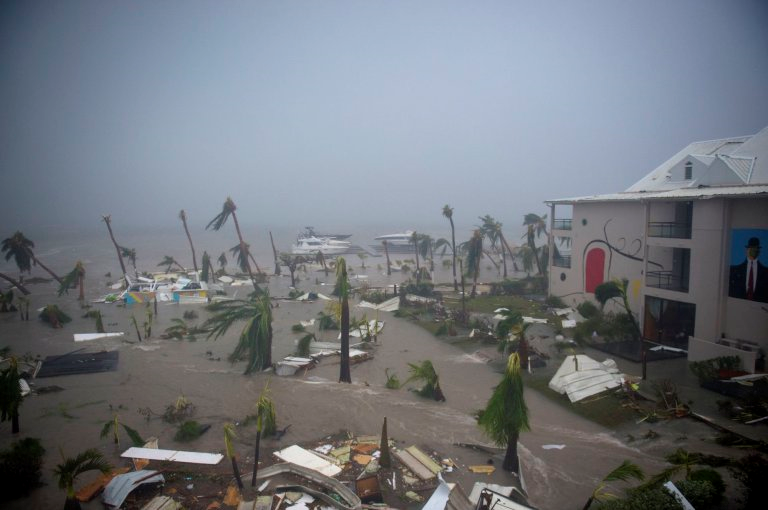
Haitian Gov’t Donates Relief Items To TCI
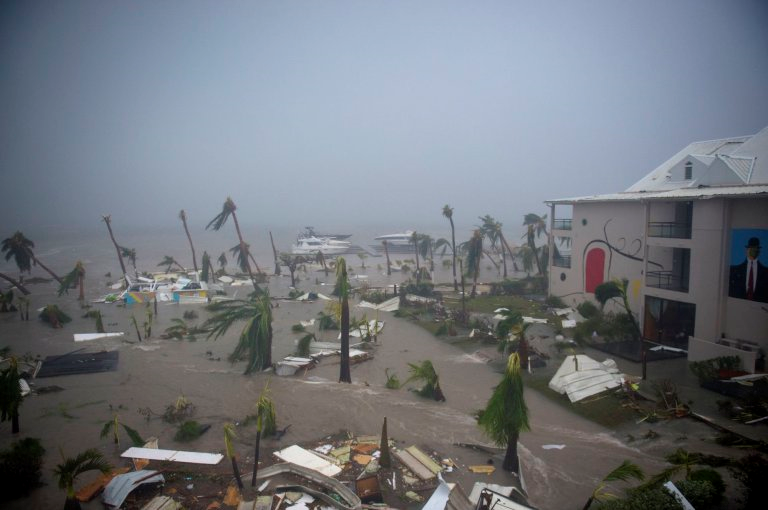
A LARGE number of generators and building supplies were the latest aid donations received by the Turks and Caicos Islands Government this week.The Haitian government donated 630 generators, 1,000 sheets of plywood, 4,500 tarps, 2,000 sheet rocks and 4,000 metal roof sheets.The donation arrived in Providenciales on October 30, direct from Port au Prince, Haiti.Haitian consulate Adolphe Jacques commented on the donation, stating that the Haitian government was committed to providing assistance to neighbouring Caribbean countries."After the passage of hurricanes Irma and Maria that caused a lot of damage to the TCI, in the spirit of solidarity and fraternity, the Haitian government on behalf of the people of Haiti decided to grant an aid relief consisting of building materials,” he said."It is a simple gesture of support to our neighbour, the TCI, where so many of our compatriots reside and even consider this ‘beautiful by nature’ as their second home.”Coordinator of the initiative Stan Wojewodzki said that his vision was to see Caribbean countries unite and help each other in their times of need.He explained how the donation was made possible."I am currently an advisor to the Haitian presidency, but first and foremost, I am a resident of the Turks and Caicos and I have invested interest in seeing that the Turks and Caicos gets back on its feet immediately after the hurricanes."After both hurricanes, I contacted senior authorities in the Turks and Caicos Islands to ask exactly what was needed in immediate relief aid."The Department of Disaster Management and Emergency Services submitted a list of essentials which I then submitted to the Haitian presidency and suggested that Haiti show a gesture of good will and fraternity to the Turks and Caicos Islands.”He added that time for relief was soon closing, so all that can be done should be done, at a Government level, for those communities that are most in need.But at some point leaders need to sit down and think about what those 21 century policies are going to be, in terms of construction and interregional trade, he said.By Daisy Handfield for Turks and Caicos Weekly News | November 6, 2017
Rally Supports Haitian Immigrants With Temporary Protected Status
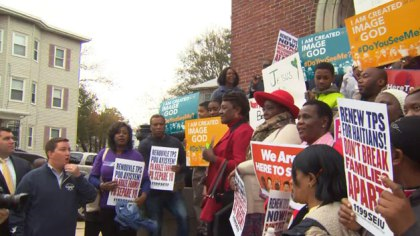
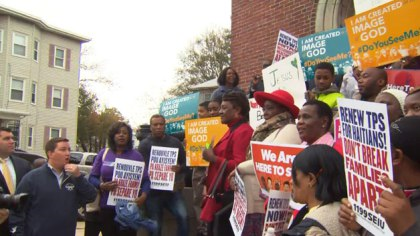
BOSTON (CBS) — A rally in Mattapan on Sunday demonstrated support for the local Haitian community as they wait for the Trump administration to decide if they will be deported.
The Temporary Protected Status (TPS) program that allows about 5,000 Haitian locally, and 58,000 nationwide to remain in the country. Overall, 320,000 people from ten different countries live in the United States because of TPS.


A rally in Mattahan to support Haitian who might lose their temporary protected status (WBZ-TV)
President Donald Trump has until November 6 to extend the status to citizens of Nicaragua and Honduras. The deadline for Haitians is November. 23.“I’m a student. I’m graduating in about six months. And getting deported would actually stop me from getting my Bachelor’s degree as an accountant so its a whole lot of things we would be deprived of after we’ve worked so hard to accomplish them,” said Marvens Leconte, who was at the rally.
Marvens Leconte (WBZ-TV)
The program was designed for immigrants from countries where natural disasters, war, or other factors make returning unsafe.Without the extension, those residents would have to leave by January.The State Department says conditions in their homeland has improved enough for them to return.Many at the rally said Haiti is still recovering from an earthquake, a hurricane, and a cholera epidemic.“It won’t be safe for us to send 58,000 people back to Haiti right now with everything that is going on so we want to make our voices heard to say that those people deserve an extension because it will take time for Haiti to rebuild,” explained Geralde Gabeau, a rally organizer.The Haitian community is hoping for an 18-month delay.By: CBS Boston | November 5, 2017
'Shameful': UK and US Under Fire Over Blocked Funds For Haiti Cholera Victims
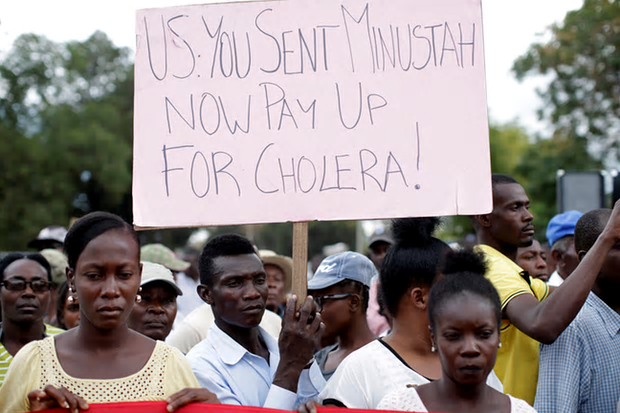
China, France and Russia also among major UN donors resisting appeal to spend $40m of UN money on victims of cholera epidemic, claim lawyers
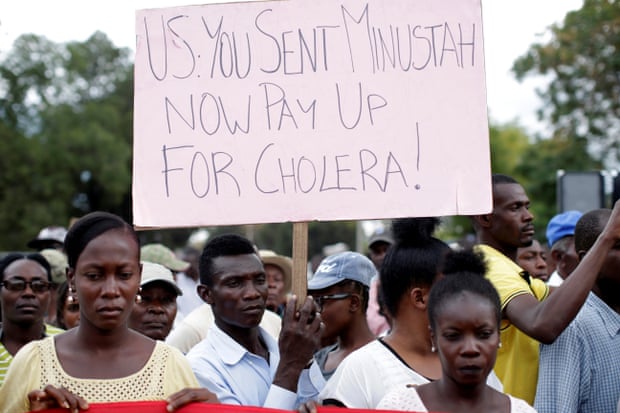
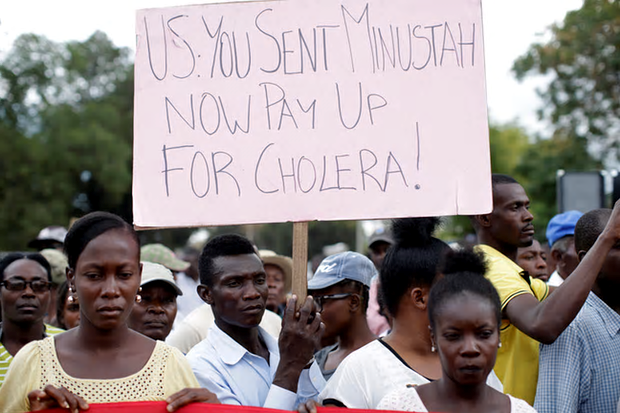
Human rights lawyers have accused the UK and other large donors of blocking the release of a multimillion-dollar UN fund to provide relief to victims of a cholera epidemic that has killed 10,000 people in Haiti.The outbreak, which affected hundreds of thousands of Haitians, was caused when infected UN peacekeepers from Nepal brought the disease to the country in 2010.
In June, the UN secretary general, António Guterres, asked member states to allow him to repurpose $40.5m (£30m) of leftover money to the Haiti cholera fund, which he said could have an “immediate impact in saving lives”.The appeal to reallocate unspent money designated for Haiti in 2015-16 has met with strong resistance from major donors. None of the five UN security council’s permanent members, which includes the US and the UK, approved the proposed funding reallocation. The UN Haiti cholera multi-partner trust fund, which gathered more than $2m, now lies almost empty.Brian Concannon, executive director of the Boston-based Institute for Justice and Democracy in Haiti (IJDH), said: “We have had conversations with the UK about cholera for years. They have been saying, ‘This is a matter of principle and we need to expect the rule of law.’”“Now that the money is on the table, the fact that the UK is not reallocating it is very concerning. No one else is going to step up.”Concannon, who was in the UK this week to meet the all-party parliamentary group on Haiti, said: “We’re asking the UK to take a leadership role in the UN security council. All the [permanent security council members] spend hundreds of millions of taxpayers dollars on the UN. But the UN is flouting its legal responsibilities towards the people of Haiti on cholera.”The UN only admitted its role in the outbreak last year. Former UN secretary general Ban Ki-Moon issued a carefully worded apology and said that the UN and member states had a “moral obligation” to relieve the Haitian suffering. The agency promised to raise $400m from member states to provide assistance to the Haitian victims. Since the fund was set up, however, only about $2.6m has been collected. The UK has donated $623,000 to this fund. Its share of the unspent $40.5m would be more than double that amount, at $2.3m.The IJDH works with thousands of cholera victims through the Bureau des Avocats Internationaux, a Port-au-Prince based human rights law firm. A lawsuit the groups filed on behalf of 5,000 cholera victims in a New York federal court in 2013 was dismissed by a judge, on the basis of UN immunity. After an appeal, the UN second circuit court of appeals in New York upheld the decision in 2016.Concannon is also working with the US Senate, to mobilise support for reallocating the funds. Democratic and Republican lawmakers have in the past criticised the Obama administration and the UN for failing to ensure Haiti’s victims were helped.Concannon said it was “shameful” the UN couldn’t come up with even a tenth of the amount originally promised. “The underspend idea wasn’t supposed to be the end result, but low-hanging fruit.“People in the UK or the US can forget about people in Haiti, but the people in Haiti cannot forget people in the UK or US.”Mario Joseph, a lawyer with BAI, said: “Imagine what would have happened if the Nepalese had brought the disease to the UK? What would be the reaction here – would there be the same disregard as people have shown the people of Haiti? For that reason alone, the UK should take a leadership role.”A Foreign and Commonwealth Office spokesperson said: “The UK recognises the devastating impact that cholera has had on the Haitian people, and we welcome the crucial role the UN is playing to eradicate it. The UK is the fourth largest donor to the UN trust fund, in addition to other contributions to tackling cholera in Haiti.“It is for each UN member state to decide how to use returned unspent peacekeeping funds. We call on all countries to volunteer contributions to the UN trust fund from whatever source is appropriate for them.”By: Karen McVeigh for TheGuardian.com | November 2, 2017
Haiti's First Female-Directed Movie Bids For Oscars
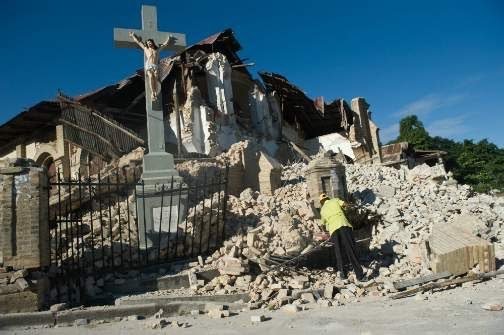

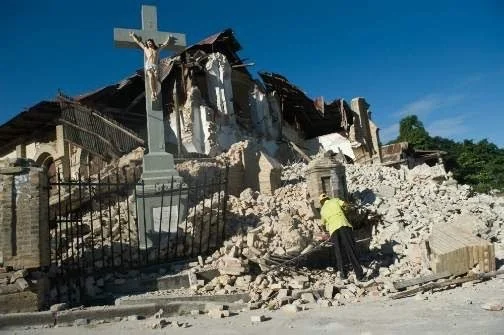
LOS ANGELES, United States (AFP) — Haiti is still reeling from the 2010 earthquake that killed more than 220,000 people, but from the debris of its devastated towns, a nascent film industry has begun to emerge.
At its forefront is Guetty Felin, whose "Ayiti Mon Amour," a portrait of a post-quake nation mourning its dead, was recently announced as the Caribbean country's first ever entry for the foreign film category at the Oscars.Haitian-born Felin, who journeyed to Port-au-Prince on a relief airplane 10 days after the disaster, recalls the scenes that met her as she landed, images that have stayed with her as she has pursued a career in filmmaking."I had never smelled death before, corpses everywhere. I was just like, 'What is this stench?' All throughout the city, it was just devastating," she told AFP.Laying waste to most of the Caribbean nation's schools, hospitals and infrastructure, the magnitude 7.0 quake injured some 300,000 people and left another 1.5 million homeless in what was already the poorest nation in the Americas.Seven years on, "Ayiti Mon Amour" marks not only the emergence of a distinct new voice in Haitian filmmaking but a milestone in the country's cultural recovery, as the first ever locally-shot narrative feature directed by a woman.Tapping into her past work in documentary, Felin infuses the realities of modern-day Haiti — the power and water shortages, the looming threat of climate change — with a lyricism that plays up its mystical side.
Set in Kabic, a small southeast fishing village where the sea is gaining ground thanks to climate change, Felin's camera shows life moving on, five years after the earthquake.A teenager grieving his father discovers he has developed a literally electrifying superpower while an old fisherman who talks to his cow thinks the cure for his ailing wife can be found only in the sea.Elsewhere, the beautiful, mysterious muse of a struggling novelist and the main character in his book, becomes restless and decides to leave him and pursue her own life.Born in Port-au-Prince, Felin divided her childhood and adolescence between New York and Haiti, although she came of age artistically in Paris, where she studied for a graduate degree in film and ended up staying 20 years.Felin fell in love with cinema at the drive-ins of Port-au-Prince, her escape during the brutal dictatorship of Francois "Papa Doc" Duvalier, who was followed by his despotic son Jean-Claude, or "Baby Doc.""I grew up in this space knowing that the dictatorship existed, but at the time it was a space of joy," she said, recalling her childhood home as a place of music and parties."There were moments where you were totally afraid someone might get taken away. So the fragility of life — that dance that my parents had to do all the time — totally inspired me.""Ayiti Mon Amour" — which is looking for a US distributor — stars just one professional actor, while the rest of the cast and much of the crew were culled from the local community and Felin's own family.Her French husband, veteran cinematographer Herve Cohen, was in charge of filming and her oldest son Yeelen acted as her assistant, while his girlfriend performed second camera duties.The real star of the movie, though, is Felin's youngest son, Joakim Ethan Cohen, a 17-year-old beginner at the time of the shoot who has won acclaim for an accomplished debut performance."He knew that what he was doing meant a lot to me. It was like his gift to me," said Felin."I directed him but it was so easy — every take was really good — and I think he knew the story inside out."Haiti's film industry was already struggling before the earthquake. Its last picture house closed the year before amid rampant film piracy, and no movies were publicly screened anywhere for five years after that."It's hard to make films in a place like Haiti because there's always something that happens that's prioritized, whether its political instability or there's a disaster or something like that," Felin said."Filmmaking is really not a priority for the Haitian people.""Ayiti Mon Amour" was born out of the rubble of buildings levelled by the quake but Felin, who lost a close friend and says she feels "survivor's guilt," didn't want her movie to be just about grief."I kind of like to say that it's a love letter to this place, because it's a place at the same time that frustrates me, haunts me and angers me," the director said."But I'm deeply, deeply passionate about it."By: JamaicaObserver.com | November 1, 2017

Fighters Make Weight for Gala in Haiti

Haitian lightweight Evens Pierre (28-1, 18 KOs) weighed in the limit of the division to defend his WBA Fedelatin title against Mexican Jesus Laguna (21-10-2, 18 KOs) who needed an extra hour to make 135 pounds at the official ceremony held at Royal Oasis Hotel. Pierre’s fourth defense of the regional belt heads the Gala Des Champions III event promoted by Jacques Deschamps Fils’ Boxe Internationale on Thursday Night at the Karibe Convention Center in Port Au Prince, Haiti which includes other two regional titles.
 Superwelter Wilky Campfort (23-3, 12 KOs), also a Haitian native, weighed at 154 pounds to risk his Fedelatin belt against Venezuelan Jean Carlos Prada (33-4-1, 23 KOs) who hit the scale half a pound under the limit.
 On a special attraction, two World ranked light flyweights, Panamanian Gilberto Pedroza (17-3-2, 8 KOs) and Mexican Saul Juarez (23-6-1, 12 KOs) fight for the vacant WBA Fedecaribe title.Pablo Vicente 132 vs Pedro Verdu 132.5Fernando Piña 153 vs Adrian Perez 152Roger Gutierrez 134 vs Brayner Vasquez 134Melissa Saint Vil 132 vs Diana Garcia 140Both camps agreed to fight if Garcia doesn’t exceed 145 pounds on Thursday 9:30 amBy: Héctor Villarreal for Fightnews.com | October 25, 2017
Pierre’s fourth defense of the regional belt heads the Gala Des Champions III event promoted by Jacques Deschamps Fils’ Boxe Internationale on Thursday Night at the Karibe Convention Center in Port Au Prince, Haiti which includes other two regional titles.Superwelter Wilky Campfort (23-3, 12 KOs), also a Haitian native, weighed at 154 pounds to risk his Fedelatin belt against Venezuelan Jean Carlos Prada (33-4-1, 23 KOs) who hit the scale half a pound under the limit.On a special attraction, two World ranked light flyweights, Panamanian Gilberto Pedroza (17-3-2, 8 KOs) and Mexican Saul Juarez (23-6-1, 12 KOs) fight for the vacant WBA Fedecaribe title.Pablo Vicente 132 vs Pedro Verdu 132.5Fernando Piña 153 vs Adrian Perez 152Roger Gutierrez 134 vs Brayner Vasquez 134Melissa Saint Vil 132 vs Diana Garcia 140Both camps agreed to fight if Garcia doesn’t exceed 145 pounds on Thursday 9:30 amBy: Héctor Villarreal for Fightnews.com | October 25, 2017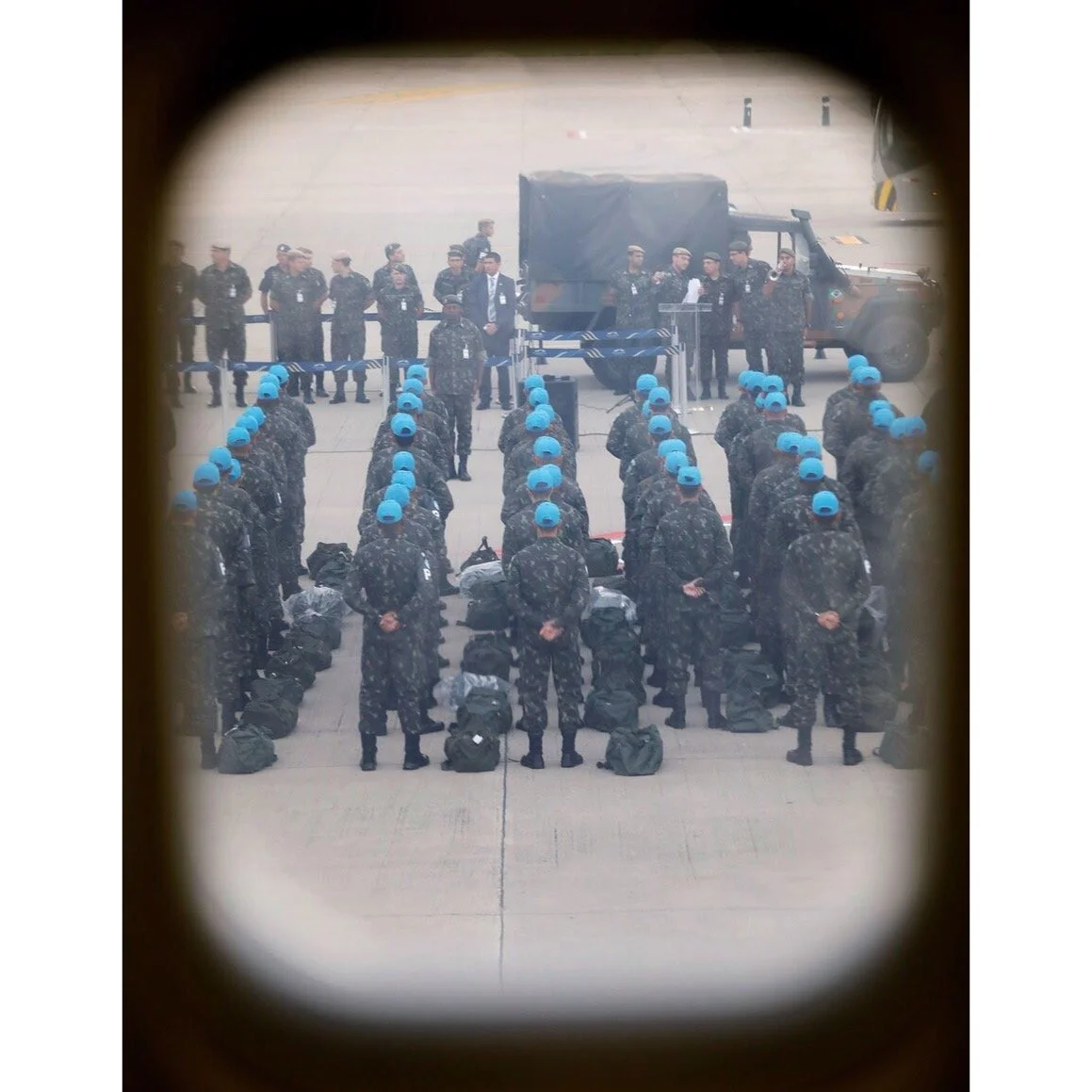
A New Chapter for the Disastrous United Nations Mission in Haiti?
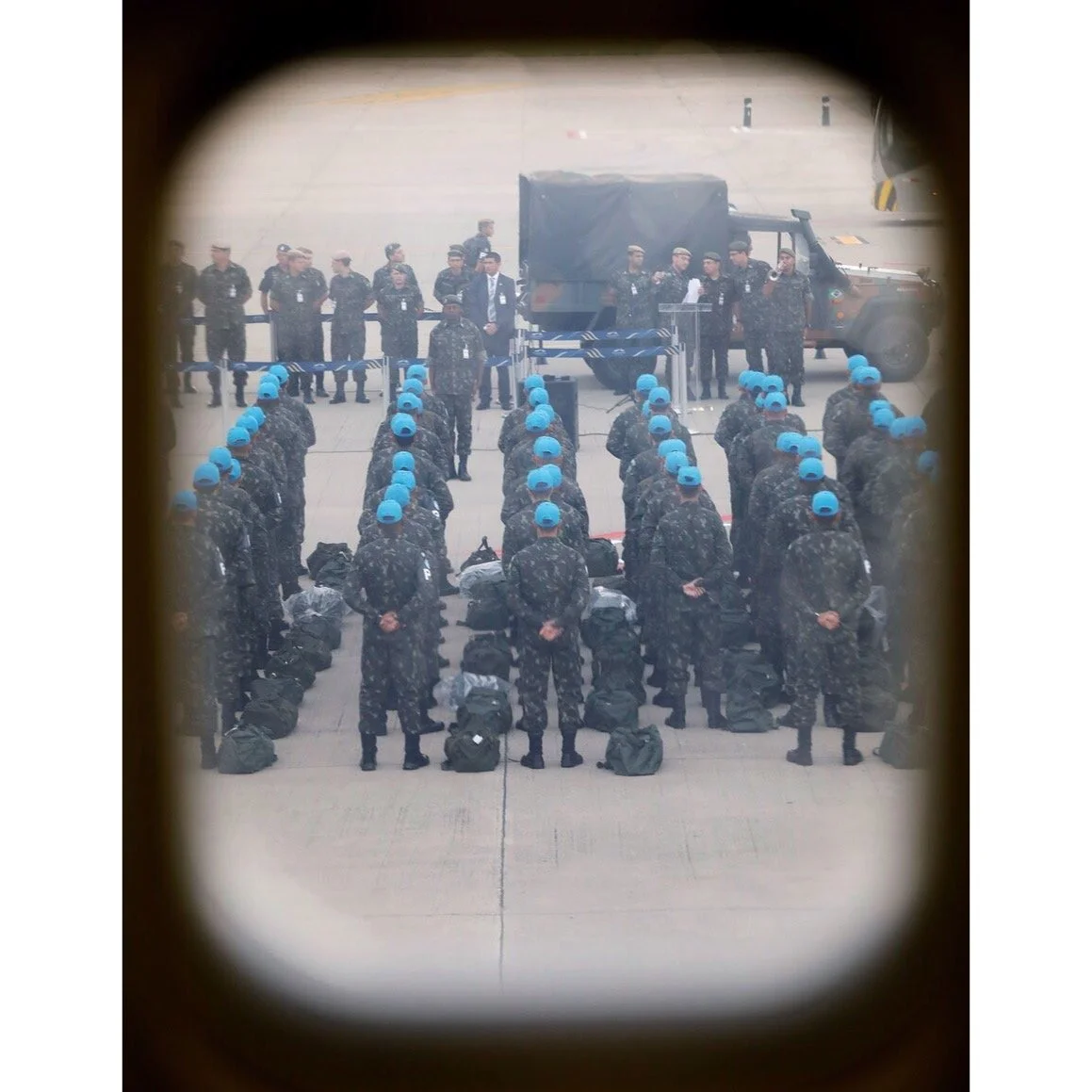
The year the United Nations Stabilization Mission in Haiti (MINUSTAH) came to the country was a deadly one for my family. In February of 2004, Haiti’s first democratically elected President, Jean-Bertrand Aristide, was forced out of office for a second time, having been reinstated, and then reëlected, after a 1991 military coup. This time, Aristide was replaced by Gérard Latortue, a former United Nations official, who called those who took up arms against Aristide “freedom fighters.” (Their leader, Guy Philippe, is serving a nine-year sentence in a U.S. prison after pleading guilty to receiving multimillion-dollar bribes from cocaine traffickers.)
That April, claiming that the situation in Haiti constituted “a threat to international peace and security in the region,” the U.N. Security Council passed Resolution 1542, establishing the Brazil-led MINUSTAH. The mission, which officially began in June, 2004, lasted thirteen years and five months, and cost more than seven billion dollars, before officially ending this past Sunday.
Part of MINUSTAH’s mandate was to assist the transitional government in insuring “a secure and stable environment.” This is where my loved ones and others came into the mission’s crosshairs.
I spent the first twelve years of my life in an impoverished neighborhood in Port-au-Prince called Bel Air, where many Aristide supporters live. My eighty-one-year-old uncle, a minister, had called this neighborhood home since the nineteen-fifties, and was there on September 30, 2004, when protests began on the thirteenth anniversary of the first coup d’état. In response, the Haitian national police and MINUSTAH soldiers conducted joint raids in Bel Air that led to dozens of mostly unreported injuries and deaths. The following month, U.N. soldiers and Haitian riot police climbed up to the roof of my uncle’s church and killed some of his neighbors below. My uncle was forced to flee to Miami, where he died in the custody of U.S. immigration officials after being denied asylum.
Bel Air was not the only area subjected to these raids. During one of their bloodiest operations in Cité Soleil, another poor and densely populated neighborhood in the capital, MINUSTAH used more than twenty-two thousand bullets and seventy-eight grenades, among other artillery, to kill seven alleged gang members. No other deaths were acknowledged despite further raids until early 2007, when the mission head at the time, Edmond Mulet, brushed off such killings as collateral damage. This combat terminology was not incidental. MINUSTAH was a continuous military operation in a country in which there was no war.
There would be more collateral damage. In October, 2010, nine months after an 7.0-magnitude earthquake nearly flattened Port-au-Prince and the surrounding areas and killed more than three hundred thousand people, and while more than a million people were still displaced or living in makeshift tent camps, Nepalese peacekeepers stationed in the north of Haiti allowed raw sewage from their base to leak into one of Haiti’s largest and most intensively used rivers, causing a cholera epidemic. The U.N. at first refused to investigate the source of the outbreak and instead blamed Haiti’s lack of sewerage and water-treatment facilities. More than ten thousand people have died from cholera since 2010, and more than eight hundred thousand have been infected.
It took the U.N. six years to acknowledge its role in the cholera epidemic, and even though the former Secretary-General, Ban Ki-moon, declared last December that the U.N. needed to “do the right thing”, the U.N. continues to reject victims’ legal claims by citing immunity. The U.N. has also failed to deliver on Ban’s promise of a four-hundred-million-dollar fund to halt the spread of cholera and compensate the “most affected” victims. The fund has only raised $2.7 million, and the current U.N. Secretary General, António Guterres, seems unwilling to provide direct payments to the cholera victims and their families, many of whom have lost their sole breadwinner.
Neither the U.N.’s impunity nor the lack of accountability would surprise the women and boys and girls, many as young as twelve, who have told of being raped—one boy says that he was gang-raped—by MINUSTAH peacekeepers, who, according to the Associated Press, have used sex rings, offers of food, and other methods to trap their victims. Unacknowledged “MINUSTAH babies” and their destitute mothers are treated as though they do not exist. Though MINUSTAH rapes remain underreported, those who have come forward have had to confront the same type of repudiation faced by the initial cholera victims. Their rapists were rarely punished. They were simply sent home.
MINUSTAH has now been replaced by MINUJUSTH, a smaller mission which began on Monday. MINUJUSTH , the United Nations Mission for Justice Support in Haiti, has a mandate to “help the Government of Haiti strengthen rule-of-law institutions, further develop and support the Haitian National Police and engage in human rights monitoring, reporting and analysis.” MINUJUSTH, which will will consist of twelve hundred and seventy-five officers and support personnel, seems like a rebranding effort, an attempt by the U.N. to give itself a clean slate and erase MINUSTAH’s past. But if the U.N. were serious about justice and human rights in Haiti, it would wind down its presence in the country by having MINUJUSTH also investigate the damage done to both individuals and entire communities by MINUSTAH. Or, better yet, assign an independent body to do so, then offer the warranted compensation for the extrajudicial and civilian killings, the sexual assaults, and the introduction of cholera.
Haiti’s current President, Jovenel Moïse, whose two heavily contested election cycles are often touted as a MINUSTAH success, told the Miami Herald in an interview this month that “the conversion of MINUSTAH to MINUJUSTH is the recognition of the progress made by our country in recent years. Today, Haiti is no threat to regional and global peace and security.” To fill in the gap being left by MINUSTAH, Moïse plans to revive the defunct Haitian Army, whose history of human-rights abuses, the coup d’état against Aristide, in 1991, and its subsequent reign of terror led to an earlier United Nations mission, UNMIH, in 1993.
Moïse’s proposed budget for 2017, which calls for new tariffs and increased taxes on goods and services, has been a subject of mounting protests in Haiti. MINUJUSTH, like its predecessors, will likely find itself facing angry Haitians, or training those who do. Why should Haitians trust another group of U.N. “peacekeepers” who claim to promote the same human rights, justice, and rule of law that have been so blatantly violated by their colleagues? The U.N. may want to leave MINUSTAH’s dark chapter behind, but Haitians will have to suffer the consequences of the group’s actions for generations to come. And no new mission, under whatever acronym, will change that.
Edwidge Danticat is the author of many books, including, most recently, “The Art of Death: Writing the Final Story.”
By: Edwidge Danticat, The New Yorker | October 19, 2017
Haiti Seeks TPS Extension for Its Nationals in US
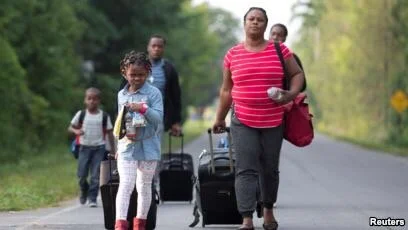
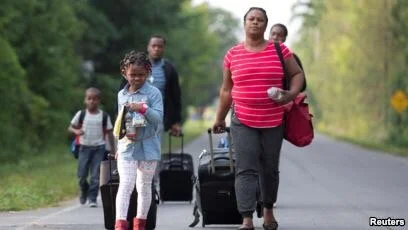
Haiti has formally requested that U.S. immigration authorities grant an 18-month extension to a program of humanitarian aid for Haitian nationals living in the United States.More than 50,000 Haitian immigrants are registered for Temporary Protected Status (TPS), set to expire January 22. TPS, offered after a massive 2010 earthquak struck near the capital city of Port-au-Prince, permits them to temporarily stay in the United States, with work privileges, until conditions improve in their homeland.In May, the U.S. Department of Homeland Security announced it would extend TPS by six months, not the one-year minimum sought by Haiti’s government and some advocates. Fear of deportation sparked an exodus of at least several thousand Haitian immigrants this summer, who illegally crossed the Canadian border seeking asylum in the French-speaking province of Quebec.The Haitian government’s letter requesting the longer TPS extension was submitted to the U.S. Department of Homeland Security on Friday, according to the Miami Herald.Written by Haiti’s ambassador to the United States, Paul Altidor, the letter included an invitation for Homeland Security’s acting director, Elaine Duke, to visit the country before the Trump administration makes its final decision on extending TPS. That’s expected as early as November.During a June visit to Haiti, then-Homeland Security Secretary John Kelly said he thought Haitians’ protection from deportation would end in January."I’d have to look for indicators as to why we might extend it a short period into the future past January," he told a Haitian radio journalist who shared the interview with VOA. The TPS program, Kelly said, "is designed to end and not go on forever."Kelly became chief of staff to President Donald Trump in late July.By VOA Creole Service | October 10, 2017
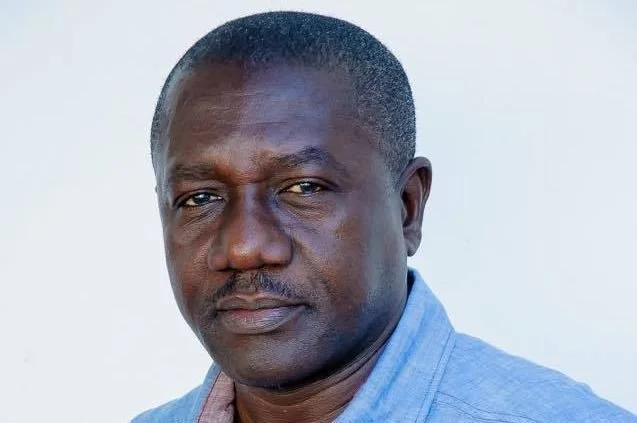
Haiti Mayor Calls For Civil War In City Of Les Cayes, Essentially
LES CAYES, Sud, HT (sentinel.ht) – The controversial Mayor of Aux Cayes, Jean Gabriel Fortuné, called on citizens of his city to arm themselves with guns, legal and illegal, machetes, sticks and/or rocks, to deal with those protesting the 2017-18 Finance Law that includes new and hiked taxes and less investment.Mayor Fortune, who earlier this year called for the murder of a journalist, said his call was so that citizens can protect their property, parents their children who are going to school, in the face of protests that have turned violent at times.“There are some who have a stick, others a machete or a gun, if they are to be used to defend the right of children to go to school, who are considered the first citizens of Cayes. All these calls for violence, in the name of the fact that education is the greatest good a parent can offer his child,” said Jean Gabriel Fortuné following an anti-Finance Law 17-18 protest that turned violent a week prior.At this demonstration, thousands, according to reports, of demonstrators threw stones at the police, after the police used tear gas against them, especially in the Savane district, where the smoke affected students in nearby schools.Asked about the virulence of his remarks, which are tantamount to an incitement or even to promote a civil war, the mayor replied to a journalist, “take it as you wish and add that it is your level n’import de quot.”It must be said that the Mayor Fortune is not at his first declarations of war. At the beginning of August, he reported that journalist Jean Nazaire Jeanty of Radio Lebon FM and correspondent of the Caribbean FM in Port-au-Prince deserved death for reporting in which he denounced the state of unhealthy beach of Gelée, a few days of the patronal festival of the 3rd city of the country.The mayor repeated several times that the journalist deserved to die for his words and that if there was a functional intelligence service in the city, he would not need to receive orders to make the journalist.The latter had filed a complaint against the Mayor Fortune, very close to President Jovenel Moise, for the death threats, but the case would take several weeks before being heard by the government commissioner.And since Mr Jeanty had not presented himself to a pseudo audience to which he claims not to have been formally invited, the case was closed without further action.Jean Gabriel Fortuné is not the only one close to the team in place to have held, in recent weeks, violent and inflammatory remarks, towards those whom they consider as ‘enemies’ of the power in place.Former Mayor of Jacmel and former South East Senator, Edwin Daniel Zenny, said that members of five families he accused of funding protests against the budget deserve to be shot.For Zenny, these “culprits” feel threatened by President Jovenel Moise’s desire to give electric power 24 hours a day in 24 months, while they receive 22 million US dollars a month to sell to the state of the “blackout”.Life has become more and more commonplace in recent times in Haiti, where individuals who believe themselves above any law, utter death threats or call to execute whomever they want with impunity.It would take much less, in other circumstances, for some organizations, some media, and power to see it as a threat to public safety.By: Haiti Sentinel | October 6, 2017
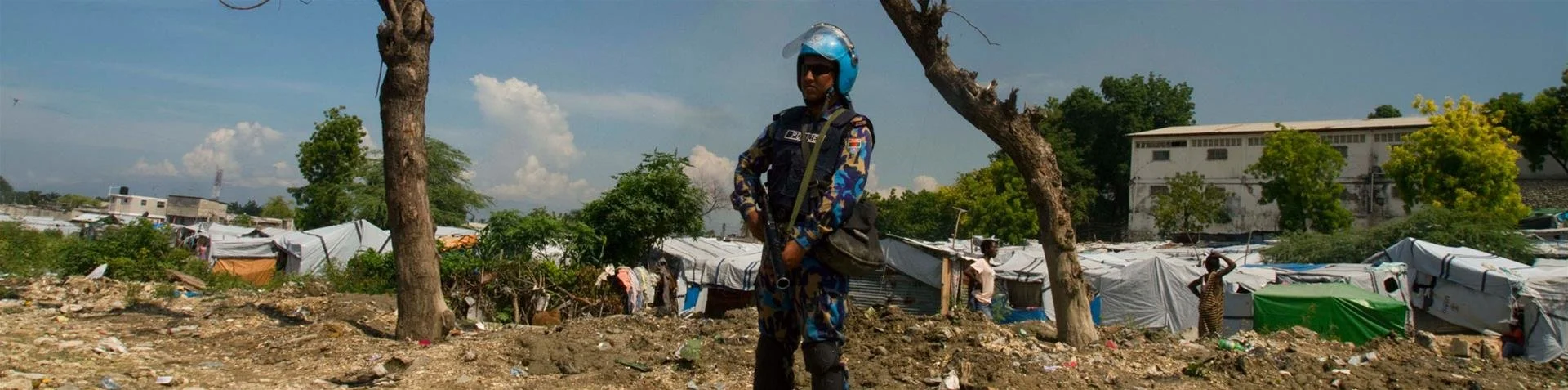
UN Peacekeepers Leave Haiti: What Is Their Legacy?
As the controversial 13 year peacekeeping mission in Haiti wraps up, Al Jazeera examines what the mission leaves behind.
![A UN peacekeeper argues with a supporters of 2010 presidential candidate Michel Martelly in Port-au-Prince [File: Gulliermo Arias/AP Photo]](http://www.aljazeera.com/mritems/imagecache/mbdxxlarge/mritems/Images/2017/10/5/93b587f0214543e6a5c044dc19ff741b_18.jpg "UN peacekeepers leave Haiti: What is their legacy?")
PEACEKEEPERS IN HAITI
- What will be their legacy?
- Why were they there?
- What has taken so long?
- Why are they leaving now?
- What have Haitians said about the mission?
The United Nations peacekeeping mission in Haiti lowered its blue flag on Thursday, 13 years after it began.While the mission has been credited with helping bring stability to the poorest country in the Western Hemisphere, it has also been mired in controversy.The mission is blamed for bringing cholera to the country, and at least 134 of its peacekeepers have been involved in sexual abuse scandals.As the last of the thousands of peacekeepers who were in the country leave, Al Jazeera answers some of the key questions about why the blue helmets were there and what they are leaving behind.
What will be their legacy?
The presence of UN troops in Haiti has been a point of controversy on the island since the UN Stabilization Mission in Haiti (MINUSTAH) mission first began in 2004.UN officials have praised the mission for helping to re-establish law-and-order in the country marred by political unrest and bolster Haiti's democratic institutions. MINUSTAH has also helped recruit and train a new civilian police force, something that was virtually nonexistent before their arrival.However, critics argue the mission's forces have done more harm than good, pointing to the peacekeepers' involvement in the country's 2010 cholera outbreak and sex abuse scandals as evidence.Cholera outbreakThe source of the waterborne disease, which killed more than 9,000 people, was traced to a UN base.Al Jazeera's Fault Lines investigated the outbreak in 2010. The film - Haiti in a Time of Cholera - helped further expose the source of the disease on the island, and put additional pressure on the UN to investigate the allegations, and eventually admit its role in the outbreak.In August 2016, the UN for the first time acknowledged that it played a role in the spread of the disease.The UN at the time promised to respond to the epidemic with a "significant new set of UN actions".
 |
| A demonstrator spray paints the message in Creole "We demand justice for all cholera victims" on a building outside the UN headquarters in Haiti [File: Dieu Nalio Chery/AP Photo] |
In a report, the then UN Secretary-General, Ban Ki-moon, said that "the preponderance of the evidence does lead to the conclusion that personnel associated with [a UN peacekeeping] facility were the most likely source".Ban said the way the UN handled the outbreak "leaves a blemish on the reputation of UN peacekeeping and the organisation worldwide".He added: "For the sake of the Haitian people, but also for the sake of the United Nations itself, we have a moral responsibility to act and a collective responsibility to deliver."Ban created a $400m voluntary trust fund for Haiti's fight against cholera. The fund was also supposed to partially compensate victims of the disease.But earlier this year, The New York Times revealed that the fund only received a few million dollars and was nearly empty.In a statement in June, the UN deputy secretary-general said that "without additional resources, the intensified cholera response and control efforts cannot be sustained through 2017 and 2018".
|
|
Rape and other forms of sex abuseUN troops have also been implicated in sexual abuse scandals in Haiti since the MINUSTAH first began.Most recently, a UN report obtained and revealed by The Associated Press in April documented the sexual exploitation of nine children on the island from 2004-2007 at the hands of at least 134 peacekeepers.Al Jazeera later spoke to Maria Kalichi*, who had been raped by a peacekeeper when she was 17 years old. She became pregnant as result of the rape."I want justice by finding the person who did this," she told Al Jazeera."I want to hear what he has to say to me … I am walking around the streets feeling destitute because of the UN."A leaked report in 2015, found that UN peacekeepers in Haiti engaged in "transactional sex". At least 229 women said they traded sex for money and goods likes food and medicine.In 2012, at least two peacekeepers from Pakistan were jailed and fired from the army after raping a 14-year-old boy.Other cases of rape and other instances of sexual abuse have been reported and documented by the UN during the mission's 13-year term.In September, a UN fund to help the survivors of sexual abuse by peacekeepers worldwide grew to $1.5m after more than 10 countries made contributions.
Why were they there in the first place?
MINUSTAH, running since 2004, was the latest installment in a series of UN peacekeeping missions in the country, which shares a landmass with the Dominican Republic.
|
|
Peacekeepers first arrived in Haiti, home to 10.8 million people, in September 1993 as part of The United Nations Mission in Haiti (UNMIH).The mission had a mandate to modernise the Haitian army and establish a new national police force two years after Haiti's elected president, Jean-Bertrand Aristide, had been removed from office during a coup d'etat.After Aristide was restored to office in October 1994 following the UN-sanctioned, and US-led, "Operation Uphold Democracy" launched the month before, the mission's mandate was expanded to include helping to stabilise the government.However, UNMIH, which concluded in June 1996, appeared to have failed to deliver long-term stability. A decade later, history repeated itself as Aristide was overthrown for a second time.
Following Aristide's removal, Justice Boniface Alexandre assumed office as acting president.Alexandre appealed to the UN for help in ending the violence that had gripped Haiti in the wake of the political revolt, causing crime and murder rates to spiral.MINUSTAH, launched on June 1, 2004, in response to the crisis, led to the deployment of 6,700 UN-sanctioned troops - and 1,622 UN police - in Haiti.
Why has it taken so long for them to leave?
MINUSTAH was originally set up to support Haiti’s transitional government for a period of six months, with the aim of establishing a stable and secure environment following Aristide's removal.The mission was extended with adjusted mandates in the months and years that followed in order to allow peacekeepers to "adapt to the changing circumstances … and evolving requirements as dictated by the political, security and socioeconomic situation prevailing in the country", according to the UN.By the beginning of 2010, it appeared the mission had achieved its goals as violence had largely been removed from Haiti's politics and the country was experiencing economic growth.However, a devastating 7.0 magnitude earthquake hit the island on January 12, 2010, killing more than 220,000 people.The natural disaster destroyed vast swathes of Haiti's capital city, Port-au-Prince, and decimated the fragile Haitian economy.In response, the UN added additional peacekeepers and police officers to its mission as it sought to support the country in its efforts to rebuild following the earthquake.Force numbers have been gradually reduced in the last seven years, by a series of resolutions.
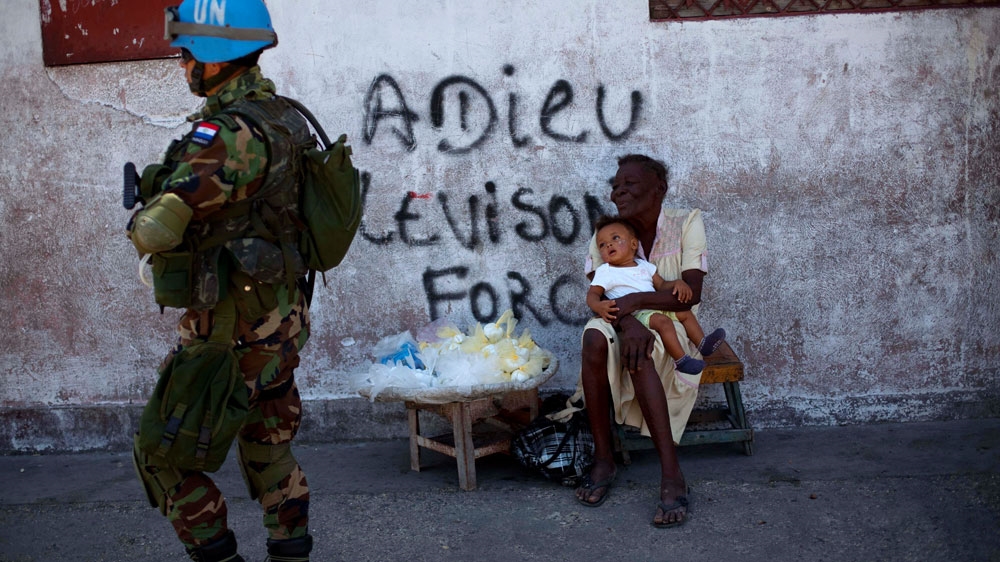 |
| A UN peacekeeper from Paraguay patrols the streets of Port-au-Prince, 2011. [File: Ramon Espinosa/AP Photo] |
Why are they leaving now?
The UN Security Council (UNSC) unanimously adopted a resolution in April of this year, ordering the removal of peacekeepers from Haiti by mid-October.The April 13 resolution sanctioned the gradual withdrawal of the 2,370 peacekeepers stationed in Haiti, according to The Los Angeles Times.The resolution was the result of a US-led review into the cost and effectiveness of the UN's current peacekeeping operations.Nikki Haley, the US representative to the UN, told the UNSC prior to the vote that the political context was right for the withdrawal of a military presence in Haiti.
The "peaceful transition of power" demonstrated by Haiti's November 2016 presidential election showed the country had made an "important step towards stability and democracy", she said.As such, developments warranted an amended approach focused on fostering "the independence and self-sufficiency of the Haitian people".The peacekeeping mission will officially end on October 15 when a new UN mission made up of nearly 1,300 international civilian police officers, and about 350 civilians will begin in an effort to help the country reform its political system.In a recent interview with Al Jazeera, Sandra Honore, head of MINUSTAH, said the UN is winding down the mission because it has achieved its aims."It is a vote of confidence in the Haitian people," she said."It is an indication of the recognition by the Security Council that the stabilisation work which was entrusted to the mission did in fact produce positive results."
What have Haitians said about the mission?
Though February's presidential election seems to demonstrate Haiti is more politically stable now than when MINUSTAH began, a number of Haitians recently told Al Jazeera the mission has done little to improve their lives.Mothers who say they have had children, fathered by peacekeepers, also say they feel abandoned.
"After years of running around and false promises from the UN, nothing has happened," Saintil Benite, a mother, told Al Jazeera."They make us do a lot of stuff but there's no results," she said.Another mother, Roselaine Duperval, added that the mission has failed those people it sought to serve."I am very angry that the UN is leaving as it's left us with nothing," she said."They should take responsibility. They know about the kids. They did DNA tests and they told us they're positive but never give us the results."
 |
| Children play in the street while UN peacekeepers from Brazil patrol in Port-au-Prince [File: Dieu Nalio Chery/AP Photo] |
As peacekeepers leave, Haiti continues to experience political turbulence.Protests last month over the government's new budget plans brought much of the country to a halt.The government has defended its plans, which include increased taxes on fuel and property, saying the money raised will be invested in improving public services and infrastructure.*Name changed to protect identity
|
|
By: Al Jazeera and news agencies | October 6,2017
Bichotte Blasts Caribbean Activist For Disparaging Remarks Against Haitians
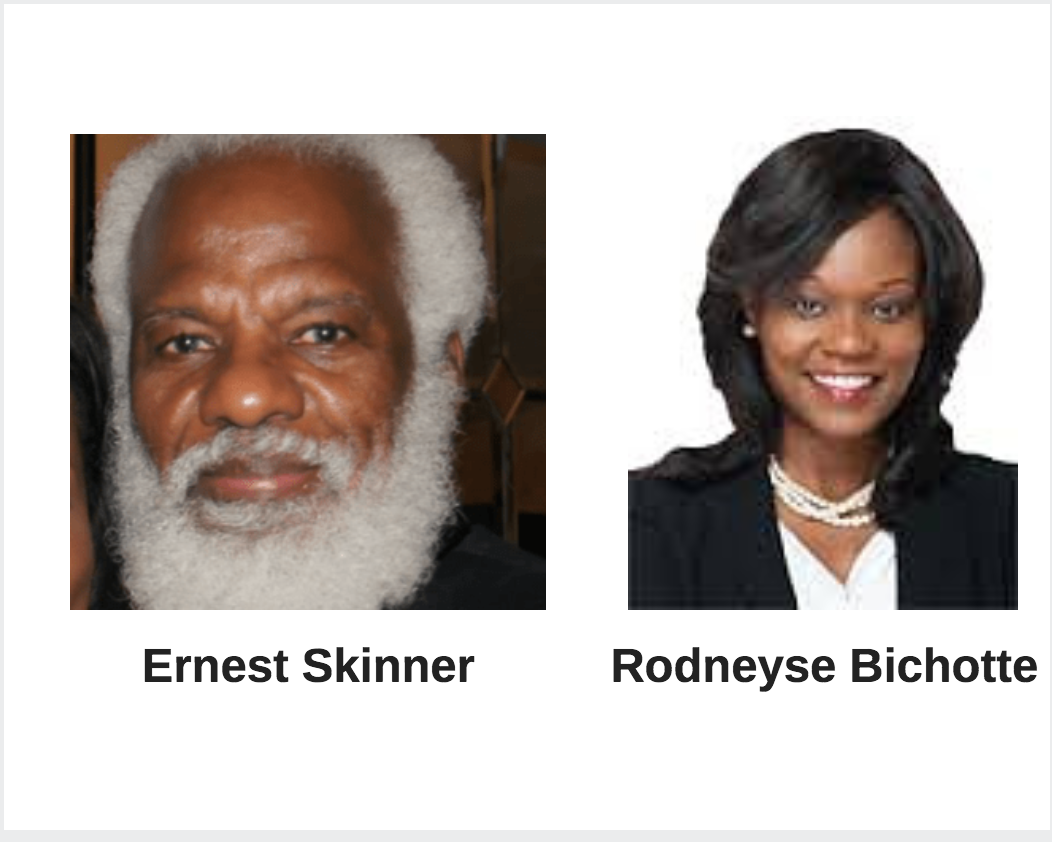
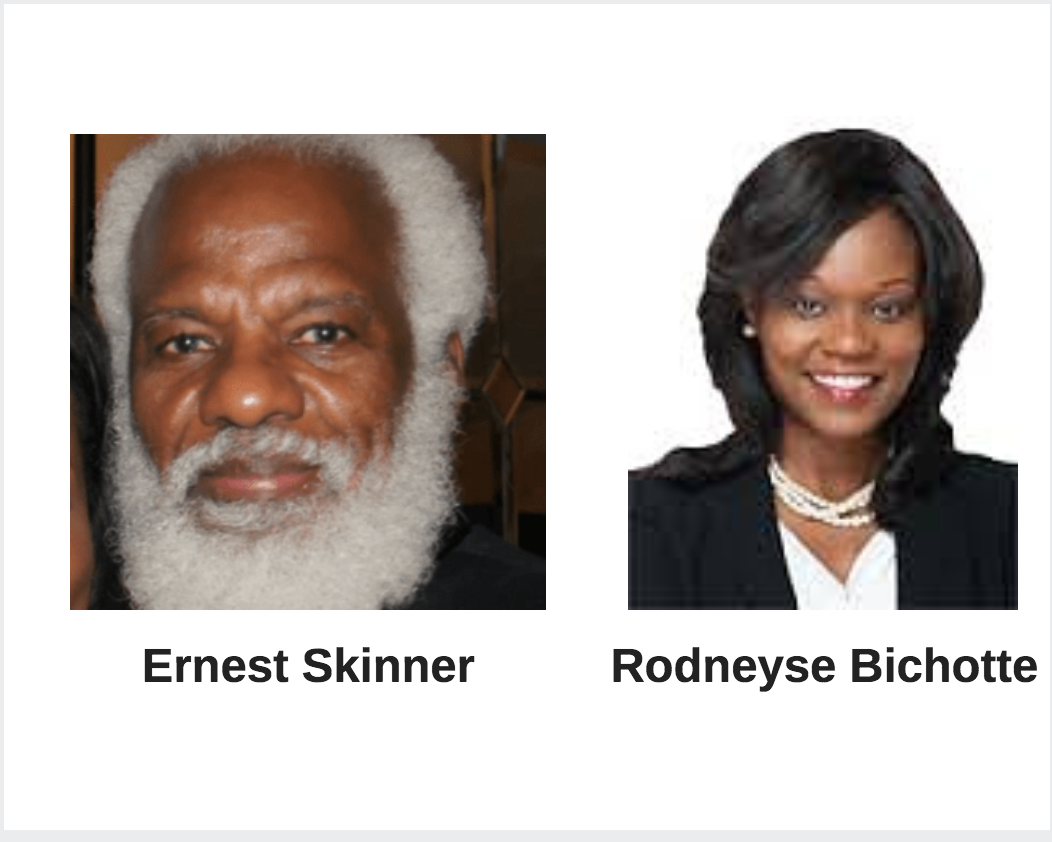
Assemblymember Rodneyse Bichotte (D-Flatbush, Ditmas Park) today demanded an apology from a noted Caribbean activist/political operative and close associate to City Councilmember Jumaane Williams for emailing her and her staff a note containing disparaging remarks against the Haitian community.

Assembly Member Rodneyse Bichotte
The brouhaha comes over the escalating controversy surrounding the recent designation of the Flatbush/Prospect Park-Lefferts Gardens/East Flatuch corridor as the “Little Caribbean.” Bichotte, who is Haitian-American and a number of other notable Haitian-Americans feel there should be a double designation and part of the corridor should be dubbed “Little Haiti.In a follow-up to the controversy, Ernest Skinner, who heads the Earnest Skinner Political Association Democratic Club, and is the staff photographer for Williams office and a longtime family friend, fired off an email to Bichotte asking when did Haiti stop being part of the Caribbean?
“This is the same insularity which sunk the fledgling Caribbean Federation. Sowing division may be why Haiti has never been able to reach its full potential and why it is considered a Fourth World country despite the noble start it gave to the Independence movement among people of color,” wrote Skinner.

Longtime Civic and Political Activist Ernest Skinner
“In Brooklyn, for many years now there has been TALK of a Little Haiti along lower Nostrand Avenue. What have you Haitians done to advance THAT?” he added.Bichotte replied in a letter back to Skinner yesterday saying she found Skinner’s comments not only highly disrespectful, but ill-informed and she demanded an apology.Bichotte penned back, “The fact of the matter is that there is a “Little Haiti” that has been in the making for decades that covers a wide geographical area including Nostrand Avenue. The Haitian community has accomplished a number of things leading up to the designation of “Little Haiti” such as the:
- street naming of Toussaint L’Ouverture Boulevard on Nostrand Avenue
- annual Toussaint L’Ouverture Symposium and Business Expo (2005)
- Haitian parades down all of Nostrand Avenue (10 years)
- Haitian Flag Day
- Haitian Unity Day (Albany)
- Haitian Selebrayson Week
- Haitian street fairs
- establishment of the Haitian Studies Institute (HSI) (Spring 2015)
- designation of Haitian Day (October 7, 2016)
- passage of a civil rights resolution (New York State)
- introduction of legislation for Haitian Creole-speaking poll workers and translators and for the translation of voting materials into Haitian-Creole
- certification of a number of Haitian-owned businesses as Minority and Women-Owned Business Enterprises
Bichotte wrote that many in the area already refer to the neighborhood around Nostrand Avenue, Clarendon Road, Flatbush Avenue, Church Avenue, and Ocean Avenue in East Flatbush/Flatbush, as “Little Haiti.” East Flatbush/Flatbush has one of, if not the largest, Haitian populations in the country.
“As previously stated we acknowledge that Brooklyn is diverse and we do not advocate for “Little Haiti” in opposition to a Little Caribbean designation,” she wrote.
 “We support the Caribbean community. We are part of the Caribbean community. In recognition and in support of our heritage we advocated for placing the Haitian Studies Institute at Brooklyn College; not instead of “Little Haiti,” but in continuance of cultivating “Little Haiti’s” foundation.”
Williams, who has Caribbean roots – as does Skinner, clearly sided with Bichotte in the dispute.
“My office is looking forward on working to pursue both an official “Little Caribbean and a “Little Haiti. The words in the letter were hurtful; I understand the community’s concern and I certainly hope an apology is forthcoming, and deservedly so,” said Williams.
Sources in the greater Flatbush community were split with one saying Bichotte often is unduly divisive, and it hurts her as an elected official and the community at large.
“Rodneyse has had a long history of being combative for no reason, beginning after she was first elected when went on Talkline Communications [a Jewish radio show] and said these Jews didn’t vote for me,” said a prominent Flatbush activist.
But another political source said is doesn’t make sense for Skinner insulting the Haitian community considering the viscous discrimination against Haitians in the area dating back to the 1980s and 1990s, when many alleged openly that it was Haitian-American spreading AIDS.
The source said there are much bigger issues to confront such as affordable housing and the increase of gentrification along the corridor.
“It doesn’t make sense for people to be insulting each other’s culture. Let’s just have both designations and move on,” said the source.
By: Stephen Witt | October 5, 2017
UN Ending 13-year Military Peacekeeping Mission In Haiti
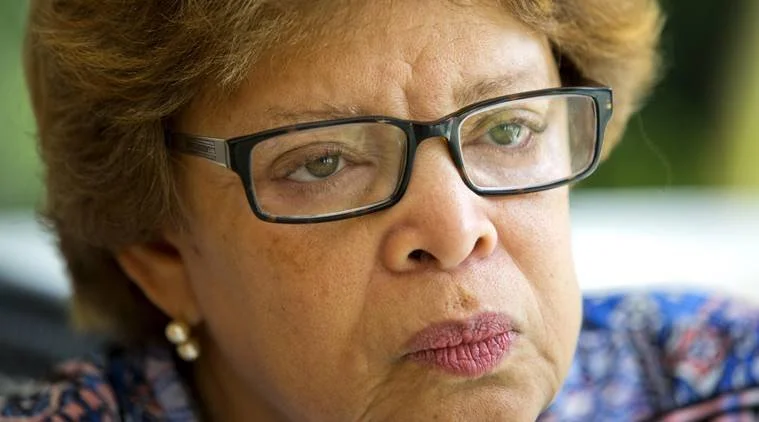
A U.N. peacekeeping mission in Haiti that has helped maintain order through 13 years of political turmoil and catastrophe is coming to an end as the last of the blue-helmeted soldiers from around the world leave despite concerns that the police and justice system are still not adequate to ensure security in the country.The U.N. lowered its flag at its headquarters in Port-au-Prince during a ceremony Thursday that was attended by President Jovenel Moise, who thanked the organization for helping to provide stability. After a gradual winding down, there are now about 100 international soldiers in the country and they will leave within days. The mission will officially end on Oct. 15.Immediately afterward, the U.N. will start a new mission made up of about 1,300 international civilian police officers, along with 350 civilians who will help the country reform a deeply troubled justice system. Various agencies and programs of the international body, such as the Food and Agricultural Organization, will also still be working in the country."It will be a much smaller peacekeeping mission," said Sandra Honore, a diplomat from Trinidad and Tobago who has served since July 2013 as the head of the U.N. mission in Haiti known as MINUSTAH, its French acronym. "The United Nations is not leaving."MINUSTAH began operations in Haiti in 2004, when a violent rebellion swept the country and forced then-President Jean-Bertrand Aristide out of power and into exile. Its goals included restoring security and rebuilding the shattered political institutions. In April, the Security Council deemed the country sufficiently stable and voted to wind down the international military presence, which then consisted of about 4,700 troops.Many Haitians have viewed the multinational peacekeepers as an affront to national sovereignty. U.N. troops are believed to have inadvertently introduced the deadly cholera bacteria to the country and have also been accused of causing civilian casualties in fierce battles with gangs in Port-au-Prince and of sexually abusing minors.But the mission, with additional help from the U.S. and other nations, is also credited with stabilizing the country, particularly after the January 2010 earthquake, and building up the national police force."The job may not be complete but they have essentially done much of what they were originally designed to do in terms of preventing any kind of armed takeover of the state, in terms of increasing the safety of civilians," said Mark Schneider, a senior adviser with the Center for Strategic and International Studies in Washington. "It takes work to maintain that and Haiti needs to maintain that."MINUSTAH, Schneider said, has been key in helping Haiti develop a credible civilian national police from "almost zero" to its current level of about 15,000 officers, which most experts believe is still too small for a country of nearly 11 million. The police force was intended to replace the army, which was disbanded by Aristide in 1995 because of its repeated role in a series of coups and that the Haitian government is now seeking to reconstitute over international objections."Haiti needs an atmosphere of peace so we can take responsibility for ourselves," said Haitian Sen. Jacques Suaveur Jean. "We don't need foreign soldiers."The new U.N. mission will consist of seven police units that can respond to major incidents, in addition to officers deployed throughout the country to advise and assist their Haitian counterparts. Civilians will also be working with the government to improve the country's justice system, which the State Department said in this year's annual human rights report has serious flaws, including severe prison overcrowding, prolonged pretrial detention and an inefficient judiciary.Honore, in an interview ahead of Thursday's ceremony, cited the training and hiring of police officers as one of the U.N. successes.MINUSTAH had already been scaling back before the Security Council voted to end the mission. In the aftermath of the earthquake, which killed 96 U.N. personnel, including former head of mission Hedi Annabi, the number of troops reached more than 10,000. But when Honore arrived there were about 6,200 soldiers from around 20 countries, a figure that dropped again by nearly a third within two years.The cholera outbreak, which started in October 2010 after peacekeepers from Nepal contaminated the country's largest river with waste from their base, killed an estimated 9,500 people and irrevocably damaged the reputation of the organization in Haiti. Many critics felt the U.N. did not adequately respond to the outbreak, something the organization sought to later remedy."It was a fundamental error because it undermined the image not just of MINUSTAH, but of the international community," Schneider said.By: Evens Sanon, Associated Press | October 5, 2017
'It's Not Fair': Haitian Teens In Everett Worry About U.S. Residency Decision
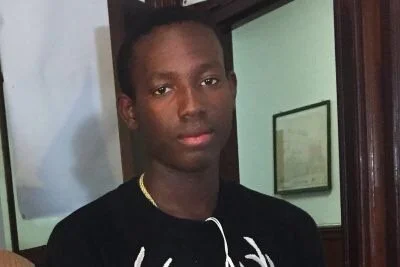
It's been a year since Hurricane Matthew slammed into Haiti, taking hundreds of lives and sending thousands fleeing to the United States.The anniversary comes as Haitians and Haitian-Americans in the Boston area look with apprehension at a decision by the Trump administration next month.That's when the administration has said it would decide whether to end Temporary Protected Status for 58,000 Haitians living and working in the U.S. The status provides legal residency for victims of natural disasters. Many first arrived after a devastating earthquake in 2010.Everett has become a home to a large number of Haitians and Haitian-Americans in recent years. Many are here on TPS. Others are here without the required documents. Many others are permanent residents and citizens, but know people whose legal status is precarious.Every week, high school students from the Haitian community in Everett gather to talk about what's on their minds. These days, the fear of having to leave, or seeing loved ones having to leave, is foremost."I feel sad, because I don't know where I'm going in the future," says one of the students.He is from Port au Prince. He came here when American missionaries got him a scholarship to play basketball in the U.S. He stayed and is now here without legal papers. Because of that, WBUR has agreed not to use his name. He is a senior at Everett High School."It hurts when I'm getting out of school where they're using me for the basketball, which I'm good at, and then I'm walking down the street, but I have fear that somebody might stop me, that I can be deported, not only myself, but a lot of my friends, a lot of youth, a lot of families," he says in Haitian Creole. "It's not fair."Tears come to his eyes."I have had people that have died in my family," he says. "I have never cried. This is the very first time tears have come out of my eyes."Another Everett High senior, Jean-Gandhy Medard, says in French, "Since the new administration, there is conflict, and we are beginning to worry, because not everyone has the right documents."Switching to English, he talks about how, increasingly, he feels judged by the color of his skin."You can't just stop someone because of the way he looks and then to tell: 'Where you come from?' The thing that really affects me is they said: 'Why don't you speak good English? If you don't speak good English, how come you have been here?' "Medard is also from Port au Prince. He came here in 2015 to live with his aunt, who sponsored him for a green card. He's not worried about himself, because he is here as a legal permanent resident, but he is worried about people he knows. He says friends of his have left because police have asked them for documents they don't have. Most, he says, have fled for Canada or the Antilles."For me, it's a catastrophe," he says in French. "It's a disarrangement. It's really something terrible compared to how we used to live, how we used to relate to one another, and how life was before, and now, all of a sudden, because of problems with papers or social pressures, all of that has disappeared. It's really sad."Medard says he knows people who have been here for a long time."And have fortune and they are about to lose everything," he says. "People who have been in this country 30, 40 years, and then they heard they have to leave. It's already their home."To be forced to leave now, he says, is to be forced to make a move you will regret for the rest of your life.By: Fred Thys | October 4, 2017
Government purchases $123M of heavy equipment
The Government signed discreetly, 3 contracts for the purchase of 490 heavy equipment for public works totaling more than 123 million US dollars (123,372,025), an average cost per equipment of about 250,000 dollars.3 companies will supply these equipments: Auto Plaza S.A, (295 equipments) Auto and Mechanical S.A. (100 equipments) and Haytian Tractor (95 equipments).These equipment payable on credit over 48 months (in Gourdes, rate fixed by the Central Bank) will be delivered in a little more than 10 monthsContracts after analysis received a favorable opinion from the National Commission for Public Contracts and the Superior Court of Auditors and Administrative Litigation, which found no irregularities.By: HaitiLibre | October 4, 2017