

Neocolonialism in Haiti, Water for Profit and the Cholera Epidemic

The notion of a colonist as cannibal in Haiti is widespread. This idea, called manje moun (eating people), could hardly qualify as superstition, given the experience of colonialism. It is daunting to find a better description for those who grab control of water and food, and then calculate the minimum caloric intake a population needs so that a maximum of labor may be extracted from its emaciated and zombified workers without killing them. The neo-colonists may call themselves humanitarians, but their victims know exactly what they are.A Haitian front for a consortium of foreign aid and finance agencies, founded in 2009 and called DINEPA (Direction Nationale de l’Eau Potable et de l’Assainissement, or National Water and Sanitation Authority), has wrested control of all of Haiti’s drinking water from city authorities and non-governmental organizations (NGO). To handle the country’s water rehabilitation and distribution, DINEPA now calls on companies from Haiti’s former colonial masters. These include Spain’s INCATEMA Consulting and Engineering and the world’s top water privatizers, the French corporations Veolia Environnement and Suez Environnement.Like other corporations, water-privatization companies make money for their investors by increasing their revenues, either by expanding their reach or seeking better prices for their products and services. Both Veolia and Suez reported growths of about 4.6 percent in the first quarter of 2017, compared to 2016; during the same period in 2017, their revenues were, respectively, a whopping $6.83 billion and $4.12 billion. Before you start to think that water-privatization companies might be a good investment, remember that you, personally, are 70 percent water and could not live without this liquid for more than three to four days. Consider also that the easiest way to profit from something as naturally plentiful as water is to create a shortage and sell it to the highest bidder. The logical outcomes are thirst, hunger, and water-borne diseases, all of which have already settled on places like Haiti. While you might be the kind of person who does not give a rat’s ass what happens in Haiti, you are probably not too keen on the idea of having your life ruled by water and paying through your nose for the taste or even the sight of it. What happens in Haiti doesn’t stay in Haiti.It is a little known fact that Haiti’s cholera epidemic of October 2010 started while the water network for the nearest city of Mirebalais was under repair. Both the water outage and the UN were responsible for the initial explosion of deadly disease, because the water cut-off forced people to collect their drinking water from the very stream that the Nepalese UN troops had contaminated with their untreated wastes. In other words, if Mirebalais’ potable-water system had been working as it should when the UN soldiers contaminated the stream, the casualties from the epidemic would probably have been low to negligible. The incentive to grant contracts to private companies to overhaul Haiti’s municipal water systems would have been trifling too, since there would probably not have been a humanitarian emergency for them to address.The work of water privatizers in Haiti did not really get the notice of the general public until the protests started in Ouanaminthe in summer 2011. The town had been without water for three months because the service to its center had been cut by INCATEMA. With funds from the Inter-American Development Bank (IDB) and Spain’s aid agency (Agencia Espanola de Cooperacion para el Desarrollo, AECID), in early 2011 DINEPA had contracted INCATEMA to extend Ouanaminthe’s water network by about 20 miles to a slum called Gaillard, where cholera was raging. DINEPA tried to placate the population with promises of a 300,000-gallon water tower and tap water in 6,400 homes in the immediate future, but there was no indication that the service would ever even be restored to its former status. Ouanaminthe had grown from a quiet border town that mostly cultivated peanuts and tobacco, to a so-called free-trade zone, because in the mid-2000s the IDB and Soros Economic Development Fund had financed the construction of an industrial park called CODEVI. In this consortium of sweatshops, six textile companies currently extract the labor of Dominicans and Haitians for about $0.45 per person hour. A network of slums surround the industrial park, which employs only 6,500 people, despite its presence swelling the city’s population more than three-fold, to about 100,000. There has hardly been any new infrastructure to keep up with the rapid rate of growth, and the nearby Massacre River has been polluted by the textile manufacturers: these two factors have created a perfect opportunity to squeeze a population of the poor for their drinking water.A taste of the money to be made from the sale of water might be all it took to decide that, for privatization to proceed, Haiti’s Constitution would have to go and the government become more centralized. Under cover of carnival, in February 2012, Haiti’s executive branch began, by decree, to dissolve all the local governments and dismiss the country’s elected mayors. The mayors held press conferences to alert the population of their removal and wrote open letters to inform the public about threats to their lives, but, with enforcement from the United Nation’s so-called peacekeeping force, the decree was shoved down Haitians’ throats. By July 2012, nearly all of the country’s departmental delegates (state governors) and 120 elected mayors had been replaced by presidentially appointed Interim Agents, some of whom where actively wanted by police for alleged crimes.Simultaneously with the decree to remove the mayors, and the continuing cholera epidemic, there began a rash of sabotage of the municipal-water systems. As a result, about 2.5 million residents of Gonaives and Cap Haitien, both large cities that were unaffected by the earthquake, lost their service of piped water. In Cap Haitien, some pipes under repair were cut and removed in December 2011. Around the same time in Gonaives, the control panels and electrical cables were yanked from three out of five pumping stations. In another section of Gonaives, the water pipes were accidentally damaged one year later by construction work. DINEPA, by then, had contracted Veolia to reconstruct the water supplies of cities outside of Port-au-Prince; it announced that it would study the networks of both cities and expand them. To date, there has been no report of the completion of either project.
Haiti’s smaller towns of about 30,000 to 40,000, untouched by the earthquake, were also not spared. In Hinche, the drinking water system was sabotaged at least three times in two years. In the border town of Anse-à-Pitres, several solar panels were removed from a system that had been installed by a local organization. In Belladère, all but two community faucets were damaged by road construction. These are but a few examples.Ouanaminthe endured three dry years. After that, the angry residents got their water from INCATEMA by confronting the UN troops and blocking, with walls of blazing tires, the streets to the CODEVI industrial park and a binational market. When the Haitian president finally came to inaugurate the supposed $9 million water project in August 2014, it was mainly to inform the townspeople that they would henceforth have to pay for their water. Two years after the inauguration, more than 85 percent of the homes still lacked water service, and DINEPA was requiring a $54 to $92 deposit, plus a monthly fee of $1.75 for water. People in the area, who earn slave wages in the sweatshops, now complain, not only about the impossibly high costs for them but also the quality of the water, which they say is often covered with yellow foam and reeks of chlorine.
Where did the money go? Given the state of affairs, it is impossible to account for the contributions to DINEPA of more than $75 million from the World Bank, $10-15 million from the UN International Children’s Emergency Fund (UNICEF) per year, $35 million from Spain, and $15 million from the IDB, all for water, sanitation, and the supposed fight against cholera. In my view, much of what has been achieved in Haiti is the dismantlement of the municipal potable-water networks and their replacement with a tanker-truck delivery system. DINEPA appears to have learned that desperately poor people will buy water from its trucks quite expensively, since they get it in smaller volumes. Between 2012 and 2014 alone, the price of a gallon of water, if it could be found, rose by 40 percent. All over Haiti, a country where water is plentiful, people travel for miles to rivers and water faucets. Some die in traffic accidents collecting their water. Others die from drinking it.
Water-privatization companies, having gorged themselves initially on reconstruction contracts from agencies like the World Bank and IDB in countries like Haiti, have become too strong to control without a Herculean effort. In a Spanish scandal nicknamed “pica en los pies,” which exploded in April 2017, INCATEMA is alleged to have paid bribes for public works contracts in Haiti. Veolia and Suez have both donated money to the Clinton Foundation. In an unprecedented move, a few days before the French second-round presidential elections, Veolia’s CEO endorsed Emmanuel Macron by attacking Marine Le Pen in a published statement. A donation from Suez to US President Donald Trump’s transition team was equally surprising for having a foreign origin. The long and short of it is that fights against water privatizers at the ballot box will probably be futile. In March 2017, Suez began to purchase the Philadelphia-based US utility, GE Water. In December 2016, Veolia took control of Europe’s longest beach, La Baule, in France, to the dismay of much of the population. Water privatizers are unlikely to have a shred of party loyalty or nationalism. They are modern-day vampires, and it is reckless to allow them to wander among us even as they lust after our lifeblood.
globalresearch/neocolonialism 22 May 2017
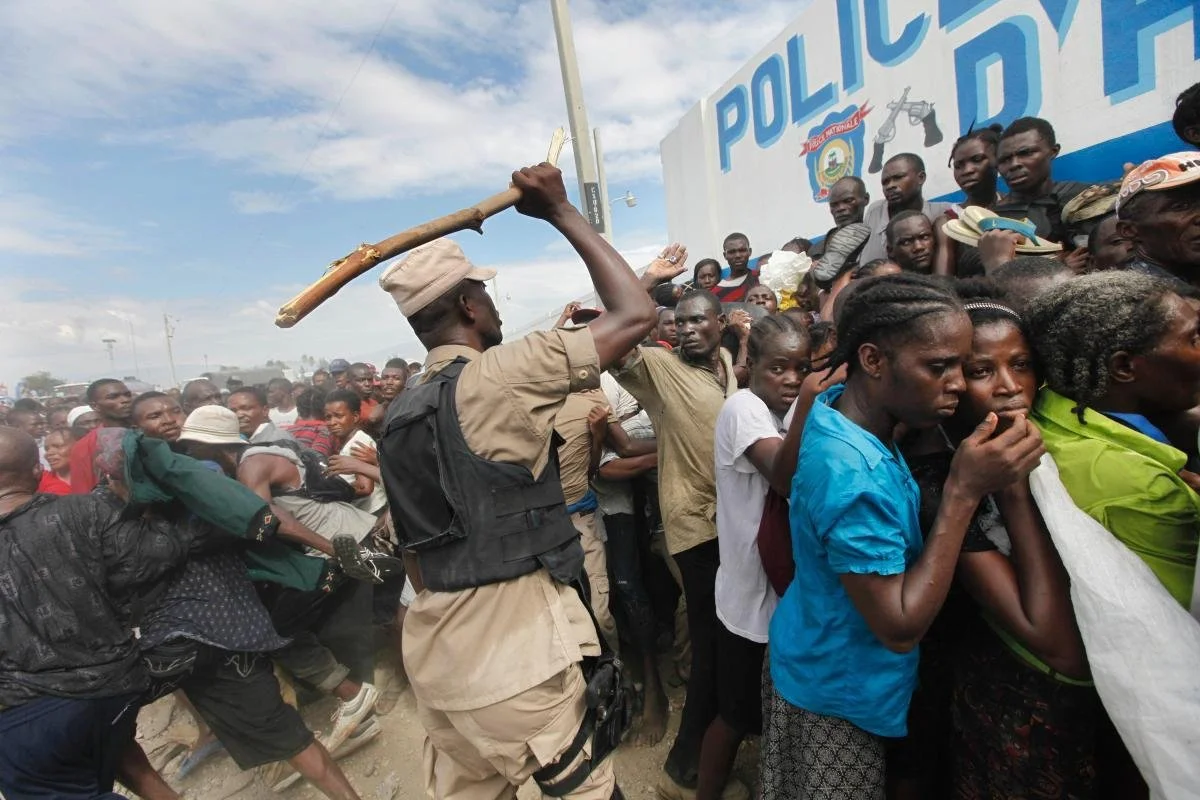
Trump administration wants evidence of Haitian immigrants' crimes as it considers humanitarian aid options...
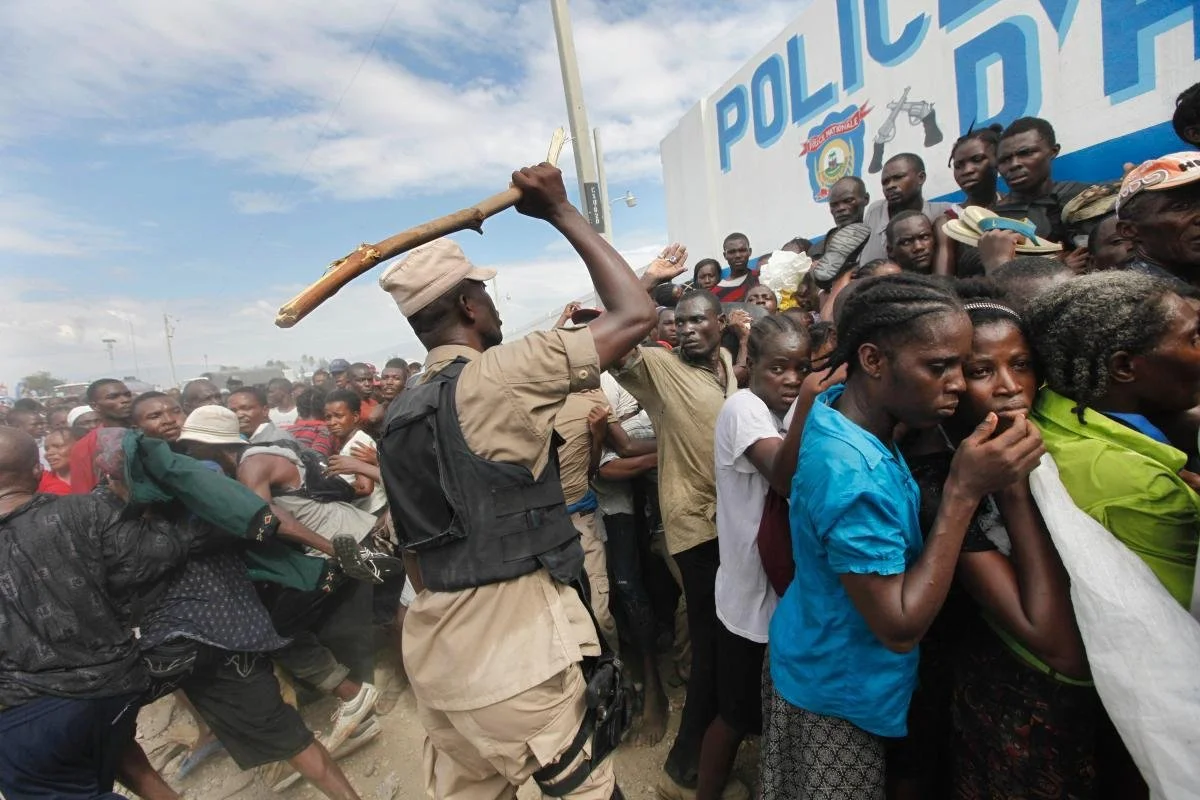
WASHINGTON — The Trump administration is taking the unusual step of hunting for evidence of crimes committed by Haitian immigrants as it decides whether to allow them to continue participating in a humanitarian program that has shielded tens of thousands from deportation since an earthquake destroyed much of their country.The inquiries into the community's criminal history were made in internal U.S. Citizenship and Immigration Services emails obtained by The Associated Press. They show the agency's newly appointed policy chief also wanted to know how many of the roughly 50,000 Haitians enrolled in the Temporary Protected Status program were taking advantage of public benefits, which they are not eligible to receive.The emails don't make clear if Haitian misdeeds will be used to determine whether they can remain in the United States. The program is intended to help people from places beset by war or disasters and, normally, the decision to extend it depends on whether conditions in the immigrants' home country have improved enough for them to return. But emails suggest Homeland Security Secretary John Kelly, who will make the decision, is looking at other criteria."I do want to alert you ... the secretary is going to be sending a request to us to be more responsive," Kathy Nuebel Kovarik, the USCIS head of policy and strategy, wrote on April 27. Addressing the inability of agency employees to gather the requested information about wrongdoing, she said: "I know some of it is not captured, but we'll have to figure out a way to squeeze more data out of our systems."The request for criminal data for an entire community is unorthodox. The law doesn't specify it should be a consideration for Temporary Protected Status and the government has never said it would use criminal rates in deciding if a country's citizens should be allowed to stay under this program. Introducing new criteria is likely to cause consternation among law-abiding Haitians who may feel they are being penalized for the wrongdoing of their compatriots.But the request fits in with President Donald Trump's broader, tough-on-immigration focus that is a core demand of his political supporters. He has enhanced efforts to arrest people living illegally in the United States and sought, unsuccessfully so far, to suspend refugee arrivals and temporarily block visitors from seven Muslim-majority countries. He has accused those in the U.S. illegally of fueling criminality in the U.S.It is unclear if the agency is asking such questions about other recipients of the temporary protection, including immigrants from Honduras and El Salvador.The Homeland Security Department said Kelly has not made a final decision about Temporary Protected Status for Haiti and declined to comment on the process.Temporary Protected Status is intended to be just that, temporary. The Obama administration included Haiti in the program shortly after the January 2010 earthquake that killed as many as 300,000 people and devastated schools, hospitals, homes and even entire neighborhoods. Since then, Haitians have been eligible to stay regardless of how they entered the United States — legally or illegally — as long as they were residing in the U.S. before Jan. 12, 2011.Eligibility for Haitians has been extended several times and is set to expire July 22. The Trump administration must decide by May 23 so that it can provide 60 days' notice about its plans.USCIS' acting director has recommended letting the program expire. In an April 10 memo first reported by USA Today, James McCament said Haiti is no longer in crisis despite its poverty and political instability. However, he wants to allow the Haitians to stay until January so they have time to make arrangements to voluntarily leave. If they don't depart the U.S. by then, the government could move to deport them.Still, Homeland Security's Kelly has the final word.The emails inquiring about misdeeds were sent from April 7 to May 1.In her first week on the job, Kovarik, the policy chief, asked officials how often Haitians with temporary status have been convicted of "crimes of any kind," and how many have taken advantage of public benefits. She asked for that information in four separate emails. She also asked how much money Haitians have sent home and how often they've traveled back to Haiti. Left unsaid is that frequent travel could suggest improved conditions."Please dig for any stories (successful or otherwise) that would show how things are in Haiti - i.e. rebuilding stories, work of nonprofits, how the U.S. is helping certain industries," Kovarik wrote on April 28. "We should also find any reports of criminal activity by any individual with TPS. Even though it's only a snapshot and not representative of the entire situation, we need more than 'Haiti is really poor' stories."The emails were largely directed to non-political employees. They responded by saying much of the data were not available or were difficult to find in government records systems.Criminal fingerprint records, for instance, don't generally indicate if a suspect has Temporary Protected Status. And the employees said the public benefits request was almost impossible to answer because TPS participants aren't eligible for most.About the only firm information Kovarik's queries turned up, according to the emails, is that Haiti benefited from about $1.3 billion in remittances from the United States in 2015. Officials said they could only guess how much came from the temporarily protected group, which comprise only a fraction of the estimated 954,000-strong Haitian diaspora in the United States.Maria Odom, a former Citizenship and Immigration Services ombudsman who served in the Obama administration, said she was puzzled by the inquiries about criminal activities. She said the government already checks criminal histories of applicants and denies protections to those who've broken U.S. laws."You should not craft a humanitarian policy based on the few," said Odom.NYdailyNews
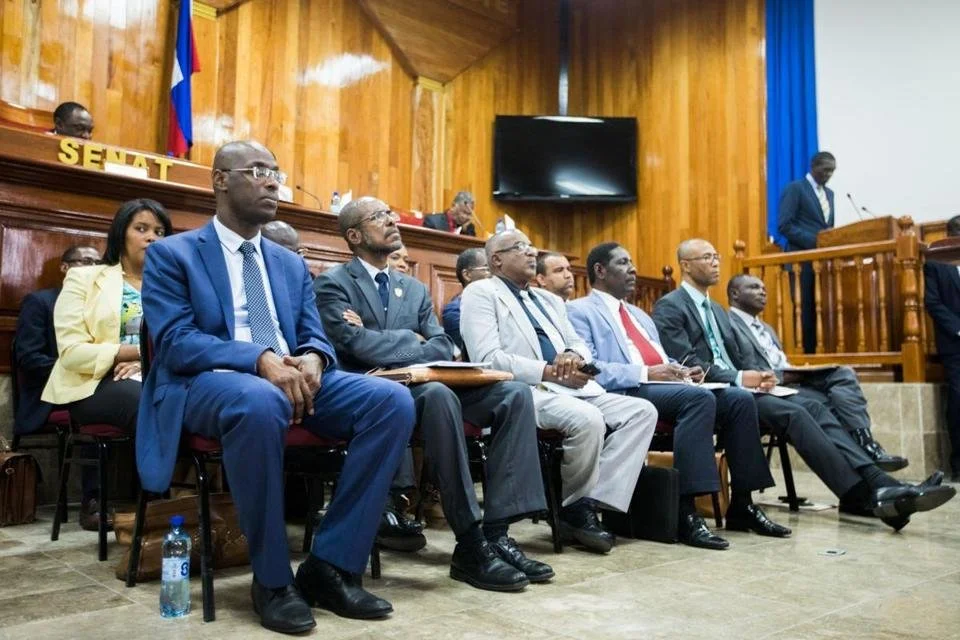
Haiti should relinquish its sovereignty
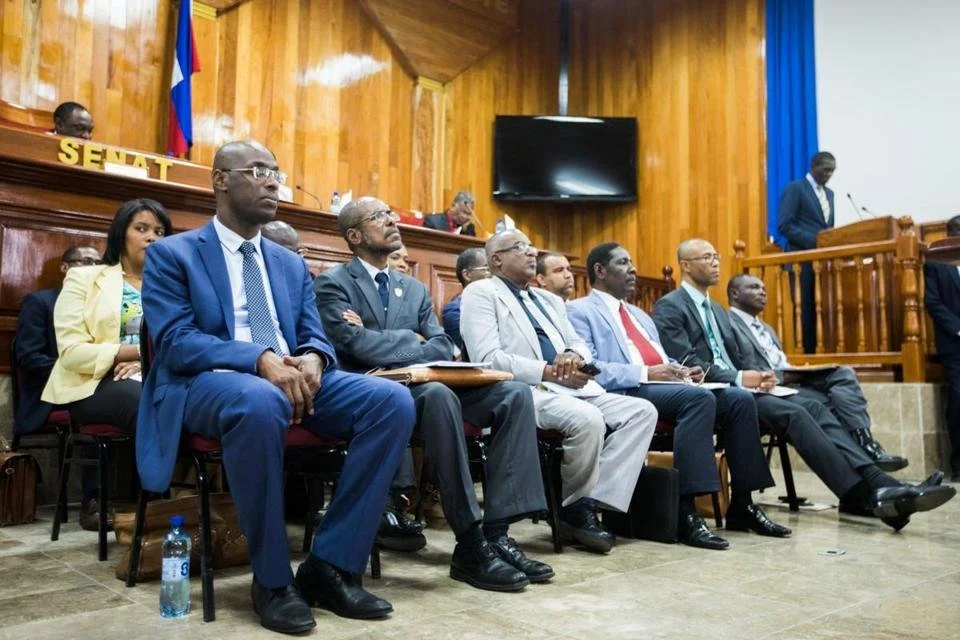
I moved back to my native Quebec from Port-au-Prince not long before Haiti adopted its constitution 30 years ago. Since then, Haitians have failed to build the democracy they envisioned for their new era of constitutionalism. Military rule, a legacy of colonial devastation, natural disasters and two coups — one engineered by the United States — certainly have not helped.The truth is that the constitution has not made much of a difference because the country needs a far more dramatic intervention. Nearly every part of everyday life is worse now than it was then. Conditions are so unspeakably awful that some find themselves recalling with misplaced affection the days of the Duvalier dictatorship.
The problem rests not with the Haitian people but with their leaders. This year on the occasion of the constitution’s 30th anniversary, the Chamber of Deputies launched nationwide public consultations on how to amend the Haitian Constitution to rebuild faith in the country’s corrupt public institutions.Yet there is little reason to believe that constitutional amendments will do anything to give Haiti and its long-suffering citizens what they need most: political leaders inspired by an ethic of public service, not driven by narrow self-interest. History has proven that the political class has neither incentive nor interest to put the country first.This moment nonetheless offers an opportunity to transform Haiti for the better. Instead of settling for mere tinkering with their constitution, Haitians should demand an altogether new one that can help to finally bring the peace and prosperity they have lacked for over 200 years of independence since driving away their French slavers in 1804.The new Haitian Constitution should do something virtually unprecedented: renounce the power of self-governance and assign it for a term of years, say 50, to a country that can be trusted to act in Haiti’s long-term interests.Why would a country accept this multigenerational commitment? The optics alone of a majority-white country running Haiti — even if in Haiti’s best interests — revive ghosts of the distant but never-forgotten past of slavery.
The choice of sponsor is delicate, and the list is short. Despite the hundreds of thousands of Haitians who live in New York City, Miami, and Boston, the United States has ruined nearly everything it has touched in the land once called the “pearl of the Antilles.” France and the United Kingdom are likewise nonstarters. Brazil and South Africa are possibilities, though both are now preoccupied with their own political crises. And the United Nations in Haiti? It has been a disaster.The answer may be Canada, for years one of Haiti’s most loyal friends and foreign aid donors — and today one of the most popular destinations for the diaspora. Canadians today yearn for real influence in the world, and there may be no better way than building Haiti anew drawing from Canada’s values of equality, diversity, and compassion, and its unique expertise in humanitarian assistance. Prime Minister Justin Trudeau is still looking for a major foreign policy achievement since his election in 2015, and this commitment could leave a legacy that would match his father’s own achievements as prime minister.Critics would be right to wonder whether Haiti would remain a country in the conventional sense of the term. We live in a post-Westphalian world, but the organizing logic of countries today remains rooted in traditional understandings of the nation-state. We hold sometimes too strongly to the idea that a country is sovereign — all-powerful within its jurisdiction and an independent actor beyond its borders — to fully appreciate that external pressures are not only a reality of our global order but often also a force for good.Haiti would not be alone in surrendering an important marker of national sovereignty in the pursuit of larger objectives, in this case the most basic ones of all: improving the quality of life of its people and building a modern infrastructure for the country. Other countries have on occasion willingly forfeited some measure of their sovereignty to a foreign power. For example, many countries of the Commonwealth Caribbean choose to retain the Judicial Committee of the Privy Council in London as their court of final appeal instead of acceding to the jurisdiction of the homegrown Caribbean Court of Justice. Similarly, roughly 25 countries choose to outsource their monetary policy to the United States. And until 35 years ago, Canada had voluntarily ceded to the United Kingdom the power to amend its own constitution.Difficult times often yield impossible choices, and this would be an extraordinarily difficult decision for Haiti’s political leaders. Yet the greatest gift Haiti’s political class can give their fellow citizens is to give up the power to govern. This ultimate sacrifice would be a triumph of national over individual interests, and it would forever memorialize Haiti’s current leaders as the country’s modern founders.By Richard Albert May 02, 2017
Haiti's new president taps medical doctor to be the country's new prime minister!
 PORT-AU-PRINCE - A relatively unknown medical doctor was tapped to be Haiti’s new prime minister, tasked with steering the government’s legislative agenda through parliament, President Jovenel Moise said late Wednesday.The choice of Jack Guy Lafontant as prime minister of the impoverished Caribbean country came two weeks after Moise took power as president.If parliament confirms Lafontant, perhaps best known as the president of the Rotary Club in the upscale district of Petionville, and allows him to choose other ministers, it would mark the country’s first elected government in a year.Moise announced the surprise pick on Twitter and noted that he consulted with the heads of both chambers of parliament on the selection. Moise did not indicate why he had chosen Lafontant. The two men are believed to be friends, according to local media.Haiti has been headed by a caretaker government since Michel Martelly, the last elected president and Moise’s political benefactor, stepped down early last year without a designated successor.Source: http://www.nydailynews.com/news/world
Haiti - Economy : 14,4% inflation forecast for January

| In the first month of fiscal year 2016-2017, annual inflation, measured by the change in the Consumer Price Index, was 13.3% after reaching 12.5% at the end of the fiscal year 2015-2016. In October 2016, monthly inflation increased by 1.8% http://www.haitilibre.com/en/news-19385-haiti-economy-inflation-continues-to-rise-at-double-digits.html against + 1.3% the previous month. |
The increase in inflation in monthly variation is mainly attributable to the decrease in the supply of food products, the increase in food prices on the international market and the continued depreciation of the gourde in October 2016.Following of passage of Hurricane Matthew, more than 90% of food crops and fruit trees in the South, Southeast and Grande Anse were devastated. This had the immediate consequence of reducing the available food supply. Indeed, in October, the item "Food, drink and tobacco" rose by 2.1%, up 1.4 percentage points from the previous month. Note that the contribution of this item to monthly inflation, which had reached 27.73% in September 2016, rose to 62.91% in October 2016. Given its strong weighting in the general price index, the "Food, Beverages and Tobacco" function strongly influenced price developments in October 2016.At the same time, on the international market, the FAO Food Price Index rose by 0.7% in October 2016, averaging 172.6 points compared to 171.4 points the previous month. The increase in the FAO index is mainly due to higher prices for cereal products, which rose by 1.4 percentage points compared with the month of September 2016. The evolution of food prices on the international market is likely to amplify inflationary pressures via the increase in the import bill of these goods in a context of weak local food availability.In addition, the month of October 2016 was characterized by a continuous evolution of the depreciation of the gourde. At the end of October the exchange rate was 66.3278 gourdes for one US dollar against 65.5368 gourdes for one dollar the previous month. Consequently, the gourde experienced a depreciation of 1.21% against 1% the previous month. This change in the exchange rate thus influenced the rate of increase in prices in the Haitian economy during the month of October 2016.Inflation forecasts :According to forecasts by the Bank of the Republic of Haiti (BRH), inflation will fluctuate over the next three months in monthly terms, while year-on-year inflationary pressures are expected to continue. Considered on an annual basis, the IPC will show a rate of 13.9%, 14% and 14.4% for the months of November 2016, December 2016 and January 2017. On a monthly basis, Rate of +1.3%, +1.1% and +1.4% respectively for the next three months.HaitiVille
Haiti - Results of elections 1/3 senate, complementary legislative...
 The Provisional Electoral Council, in accordance with Article 171.1 of the Electoral Decree of 2 March 2015, publishes the preliminary results of the first round of the third of the Senate, the complementary legislative and the municipal elections for the Commune of Cotes de Fer of 20 November 2016.It should be noted that the elections for the Constituency of Roseaux, in Grand'Anse, will be resumed for the election of the deputy.NOTE: Please note that these are preliminary results and may be subject to change at the end of the challenge period.Results third Senate (1st round) - Preliminary results :North EastWanique Pierre (PHTK) 58.74% is elected in the first roundSouth EastJoseph Lambert (KONA) 53.78% is elected in the first roundWestFednel Monchery (PHTK) 21.74%Pierre Paul Patrice Dumont 18.68%They will go to the second round because there is neither a majority nor an advance over their immediate pursuer equal to or greater than 25%.NorthJean Marie Ralphe Fethiere (PHTK) 35.68%Theodord Saintilus (Pitit Dessalines) 14.04%They will go to the second round because there is neither a majority nor an advance over their immediate pursuer equal to or greater than 25%.CentreRony Celestin (PHTK) 31.73%Abel Descollines (KID) 18.89%They will go to the second round because there is neither a majority nor an advance over their immediate pursuer equal to or greater than 25%.ArtiboniteGarcia Delva (AAA) 28.46%Marc Antoine Aldorphe (Bouclier) 15.63%They will go to the second round because there is neither a majority nor an advance over their immediate pursuer equal to or greater than 25%.SouthPierre François Sildor (PHTK) 25.51%Fritz Carlos Lebon (fanmi Lavalas) 25.33%They will go to the second round because there is neither a majority nor an advance over their immediate pursuer equal to or greater than 25%.NippesDenis Cadeau (Bouclier) 21.08%Louberson Vilson (Fanmi Lavalas) 21.03%They will go to the second round because there is neither a majority nor an advance over their immediate pursuer equal to or greater than 25%.Grand AnseRiche Andris (OPL) 30.77%Jean Rigaud Bélizaire (Consortium) 28.46%They will go to the second round because there is neither a majority nor an advance over their immediate pursuer equal to or greater than 25%.North WestKedlaire Augustin (PHTK) 33.62%Francois Lucas Sainvil (MOSANOH) 15.79%They will go to the second round because there is neither a majority nor an advance over their immediate pursuer equal to or greater than 25%.Senate Results complementary legislative(2nd turn) - Preliminary Results :CentreWillot Joseph (PHTK) 38.68% is electedWilfrid Gelin (PHTK) 23.77% is electedGrand'AnseGuy Philippe (Consortium) 35.46% is electedSorel Jacinthe (Inite Patriyotik) 29.64% is electedNorthDieudonne Etienne Luma (PHTK) 34.94% is electedNawoon Marcellus (BOUCLIER) 31.21% is electedResults Deputy complementary legislative (2nd turn) - Preliminary results :Saint Marc (Artibonite), Samuel d'Haiti (KONA) 61.47% is electedVerrettes (Artibonite), Gerard Paul Lormeus (PLATfÒM LEVE KANPE) 58.20% is electedCôte-de-Fer (Sud Est), Roudy Devil (OPL) 64.00% is electedCabaret (Ouest), Joseph Manes Louis (Fanmi Lavalas) is electedArchaie (Ouest), Pieere Fequiere Julien (CANAAN) 56.79% is electedCornillon (Ouest), Raymonde Rival (APLA) 55.10% is electedCité Soleil (Ouest), Lemaire Pierre 76.54% is electedGressier (Ouest), Joseph Antonio Vericain 56.41% is electedPort-au-Prince 1er (Ouest), Roger Millien (Fanmi Lavalas) 32.84% is electedPort-à-Piment (Sud), Daniel Letang (KID) 52.86% is electedCamp-Perrin/Maniche (Sud), Bertin Augustin (VERITE) 66.53% is electedJérémie (Grand Anse), St Jean Marie Gladice Lundy (BOUCLIER) is electedPlaisance (Nord), Audne Alcide (VERITE) 52.22% is electedMarigot (Sud), Dieudonne Lherisson (PHTK) is electedMôle Saint-Nicolas (Nord Ouest), Yves Dupras (VERITE) 58.52% is electedPort Margot (Nord), Philome Hilaire Fanfan (PHTK) 51.87% is electedDondon (Nord), Hermogene Daniel (FUSION) 54.58% is electedSaint Raphael (Nord), Jean-Wilfrid Borgella (PHTK) 59.09% is electedAcul du Nord (Nord), Rodney Charles (Pitiy Dessalines) 53.76% is electedGrande Rivière du Nord/Bahon, Jacques Julmioce (VERITE) 55.27% is electedBoucan Carre (Centre), Jude Jean (PHTK) 53.15% is electedSavanette/quartier Baptiste (Centre), Guerda Bellevue Benjamin Alexandre (APLA) 51.92% is electedDesdunes (Artibonite), Baudelaire Noelsaint (OPL) 57.68% is electedPetite Rivière de l'Artibonite (Artibonite), Prophane Victor (BOUCLIER) 54.20% is elected.Municipal elections Côtes-de-Fer (2nd turn) - Preliminary results :Côtes-de-Fer (South East), Francoeur Dalexis (OPL) 44.34% is elected HaitiVille

Breaking News: Politics In Haiti...

 New CIMO Commander On Friday, Commissioner Vladimir Cherubin was installed as the new Commander of the Corps of Intervention of the Preservation of the Order (CIMO). He replaces Commissioner Jean Louis Paul Ménard who has just been transferred to the Central Administration of the Administrative Police.Convocation to the SenateFor Sen. Jean Renel Sénatus, Chairman of the Senate Justice and Security Committee, the proliferation of demonstrations by those responsible and sympathizers of Famni Lavalas are only disorder and violence, stressing that these demonstrations are organized on the margins of the law without being notified to the Police and sow fear in the population."[...] I learned that there was a meeting in the metropolitan area of Port-au-Prince to plan attacks against private companies." He announced that his Commission convened the Minister of Justice and Public Security and the Director General of the National Police on Wednesday. "It is necessary that the Government Commissioner and the Director General of the PNH arrest these perpetrators [...] It is not normal for people to think about how to burn private property."Martelly was in CubaA delegation composed of former President Michel Martelly, accompanied by former First Lady Sophia Martelly and former Prime Minister Evans Paul left the country on Saturday, December 3, 2016, to participate in the funeral ceremonies of Commander Fidel Castro in Santiago de Cuba. This delegation returned in Haïti yesterday Sunday.Privert returned from CubaReturning to the country after his participation in the funeral of Cuban Revolutionary Leader Fidel Castro, de facto President of the Republic, Jocelerme Privert, accompanied by First Lady Ginette Michaud Privert and members of the government, gave a short Press briefing at the international airport of Toussaint Louverture International Airport on Sunday, December 4, 2016. The opportunity for the Head of State to renew his sympathies, on behalf of the Haitian government and people, the Cuban people and the family of this orld-wide genius who was nicknamed El Commandante. He took the opportunity to salute the frank collaboration between Haiti and Cuba.Training on International Human Rights LawThis Tuesday morning will open a Training Session in International Human Rights Law, to the School of Magistrature, in Frères, in the presence of Representatives of the European Union, the Embassy of France and the René Cassin Foundation; This training course for lawyers, magistrates and members of human rights organizations will be provided by professors from the René Cassin Foundation of Strasbourg. The Central Theme will be "International Law of Human Rights, with emphasis on the issue of Statelessness."HaitiVille
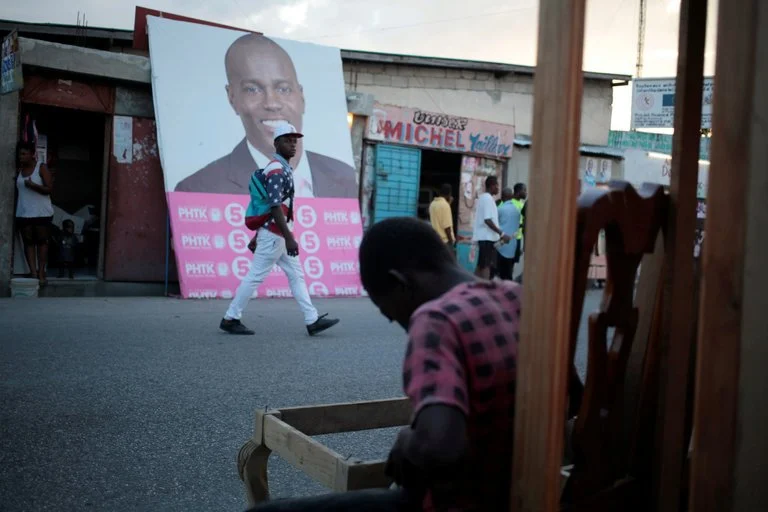
President-Elect Jovenel Moïse of Haiti Vows to Create Plan to Channel Aid
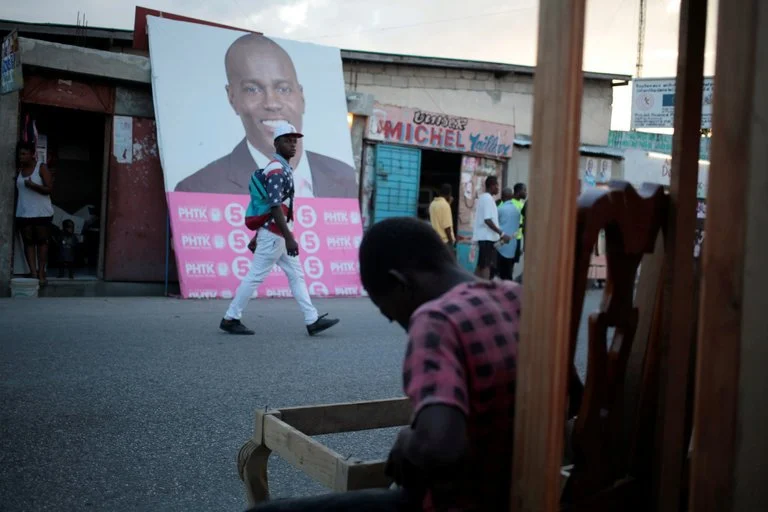

MIAMI — He’s often called the Banana Man, because he exports produce. Now, he will be known by another title: president of Haiti.
Jovenel Moïse, 48, rose from obscurity to win the country’s presidential elections this week, after a nearly two-year electoral process marred by allegations of fraud, delays, natural disasters and a staggeringly low voter turnout.
“I have had 20 months of campaigning,” Mr. Moïse said in a telephone interview on Wednesday. “I am really ready.”
He received 55 percent of the vote in a field of 27 candidates, Haiti’s electoral council said on Monday night. But three of his opponents are vowing to contest the results, which will not be verified until late December.
It will fall to Mr. Moïse to heal and govern a bitterly divided nation that is still struggling to rebuild after the 2010 earthquake, and that wasbattered again this year by a catastrophic hurricane.
At first, many Haitians viewed Mr. Moïse guardedly; he was formerPresident Michel Martelly’s handpicked successor, and few people had heard of him.
Mr. Moïse won the first round of the election in October 2015. Although international agencies said the elections were clean, the second round was delayed after losing candidates complained of widespread fraud, including large amounts of repeat voting by election monitors tied to various political parties.
The runoff was delayed several times, and a commission eventually decided that the election process should start over. With Mr. Moïse’s benefactor, Mr. Martelly, out of office and a provisional government in place for nearly a year, only about 21 percent of the electorate, in a country of 11 million, ended up casting ballots on Nov. 20.
Mr. Moïse insisted that he was ready for the challenges that lay ahead — and to dispel the notion that he was Mr. Martelly’s “puppet.”
“It is a good privilege for me to have a former president I can talk to about his success, and his problems also,” Mr. Moïse said. “For example, this morning I called him, because I needed some advice about something. But you know, I am 100 percent Jovenel Moïse.”
Mr. Moïse said that among his first priorities, in addition to addressing corruption and climate change, would be to modernize and revive agriculture, with the aim of establishing a viable organic food industry. If that can be accomplished, he argued, more Haitians may be able to find work in their own country, instead of immigrating to the Dominican Republic or the United States.
He added that he would create a master plan under which all aid groups and foreign governments would have to operate their development projects.
“We don’t just want the help. I want to see results,” Mr. Moïse said. “If they want to spend money, we are open to that, but we will show you exactly where to spend this.”
Many aid groups have been criticized for shutting the Haitian government out of decision-making. Haiti, Mr. Moïse said, needs to stop just receiving handouts. “We want to show the world Haiti can endure,” he said.
In an interview this year, Mr. Moïse shrugged off the notion that he was a virtual unknown before entering the presidential race, noting that he had been president of the chamber of commerce in the country’s northwestern region for eight years. He grew up on a large sugar plantation, he said, adding that he could relate to a vast majority of Haitians who live off the land.
A father of three, he was raised in a rural area in the north but attended school in the capital, Port-au-Prince. He said he had learned the keys to success by observing his father’s profitable farming business.
He runs a large produce cooperative that employs 3,000 farmers.
“Since I was a child, I was always wondering why people were living in such conditions while enormous lands were empty,” he said in January. “I believe agriculture is the key to change for this country.”
Mr. Moïse’s adviser, Damian Merlo, acknowledged that widespread voter apathy had led to the paltry turnout, but he said that Mr. Moïse’s margin of victory was so wide that it should be considered a mandate.
Jake Johnston, a research associate for the Center for Economic and Policy Research in Washington, observed the Nov. 20 elections and said that he had generally been impressed with how much the process had improved over the past year.
In 2000, nearly 70 percent of voters cast ballots; just over 20 percent did this time.
“What caused that break and how to fix it is a big question for all political leaders,” Mr. Johnston said.
Some of the electoral council members refused to sign the preliminary results, arguing that more clarification was needed regarding the complaints filed by losing candidates.
Jude Célestin, who came in second with 19 percent of the vote, lodged a complaint even before the results were announced, contending that unsigned votes had been accepted. Maryse Narcisse, who came in fourth with just under 9 percent, called it “an electoral coup.”
The Haiti Democracy Project, a Washington-based organization that monitored the elections, said its sample tally matched the electoral council’s results. It noted that the gap between the first- and second-place winners was so big that it would have taken enormous fraud to pull it off.
“They are obviously fishing for some issue on which to challenge the results,” said James Morrell, the group’s executive director.
The election delays helped Mr. Moïse, Mr. Johnston said, because he was able to establish name recognition by campaigning on his own, without being seen as Mr. Martelly’s surrogate.
Mr. Moïse agreed. “Jovenel is his own man,” he said.
Many challenges ahead for Haiti’s new president...
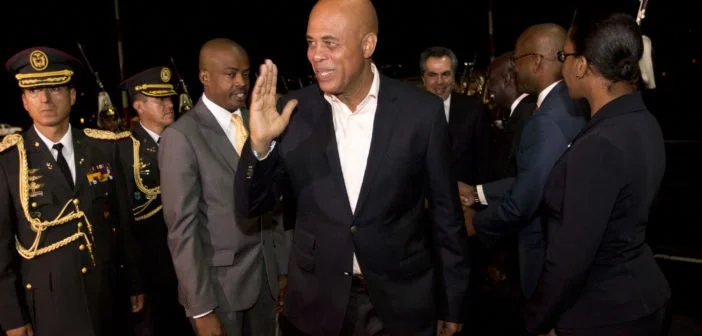
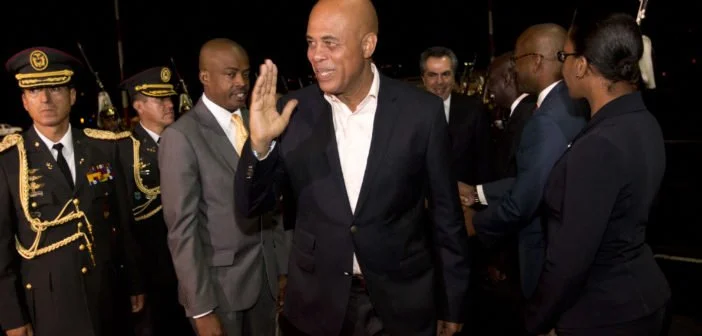
 Haiti's former President Michel Martelly, who hand-picked the winner of this week's election, Jovenel Moïse.Haiti’s newly elected president, Jovenel Moïse, faces enormous challenges in rebuilding a broken and deeply divided country, beginning with a legal challenge to the election results by his opponents.Moïse, a former banana exporter, also won the presidential election in October 2015, but that result was annulled amid allegations of fraud. This time around, he won 55.6 percent of the votes in the Nov. 20 election, beating 26 other rivals, according to provisional results released by the election council on Monday“The Haitian people have made their choice and elected me as early as the first round,” Moïsewrote on his Facebook page. “Now, in the spirit of gathering, I invite you, dear countrymen, to borrow with me the way of endogenous development for a Haiti at the height of its historical performance and its legitimate ambitions.”Under Haiti’s election rules, Moïse – who ran as the candidate of former President Michel Martelly’s Tet Kale party – won with a large enough margin to secure his victory without a second round. The final results will be handed over to the country’s electoral tribunal, where other parties say they will appeal the outcome, before a winner is certified on Dec. 29.Some experts say Moïse has already started his presidency – if the results stand – on the wrong foot. Political analyst Fritz Dorvilier, who teaches sociology at the State University of Haiti in Port-au-Prince, told the Miami Herald that the president-elect may have made a grave mistake in skipping the second round of elections. Doing so may have helped lower tensions, he said, or at least been the “politically correct” thing to do.
Instead, the elected president is now faced with an additional challenge: uniting an opposition deeply divided by anger and distrust. Violent protests have already erupted across the country among supporters of the opposition parties, many of whom called the vote an “electoral coup” and are demanding yet another redo of the election.Haiti faces enormous challenges, from its failed health and sanitation systems to its crumbling infrastructure. This year, months of doctor strikes paralyzed state hospitals, leading to countless deaths. Haiti is also ill prepared for natural catastrophes, an ongoing problem recently brought back into the spotlight in the grim aftermath of last month’s Category 4 Hurricane Matthew.Perpetuating these problems is the devastating poverty in Haiti, which has driven hundreds of thousands of Haitians on perilous journeys through Latin America and the U.S. in search of better, if not just decent, living conditions.Martelly, who hand-picked Moïse as a candidate, has been widely criticized for failing to adequately address these issues. Martelly, a former carnival singer, pledged to rebuild the western hemisphere’s poorest country from the ruins of its 2010 earthquake, but earned a reputation for indecision and populist authoritarianism. Martelly also did little, if anything, to uphold his promises for parliamentary elections and other basic democratic policies.Throughout his campaign, Moïse made promises to improve the quality of education, create jobs in the agricultural sector and make Haiti an exporting country after decades of absence.Still, some experts say it is not yet clear how Moïse intends to undertake the massive task of rebuilding Haiti, or where his priorities lie in distributing international aid. As of now, Moïse’s program still seems rather broadly defined, said Robert Maguire, a Haiti expert and international affairs professor at George Washington University, but international actors will likely have a lot to say in shaping it.“Certainly, in that regard, M. Moïse will continue to say that ‘Haiti is open for business’,” he said in an email to Humanosphere.
New President ALERT! Jovenel Moise "Neg Bannan'n nan"
 Businessman Moise wins Haiti election in first round!
Moise won 55.67 percent of the vote in the November 20th election.His closest rival, Jude Celestin, polled 19.52 percent.12 percent of the voting slips were set aside because of irregularities and were not included in the count, the council said.
Who is Moise Jovenel?
He was the chosen successor to former President Michel Martelly, a singer.A political unknown before last year, Moise also came first in the October 2015 vote.The result triggered protests and claims of fraud from opponents.The 48-year-old is a successful businessman, running a banana export company he sees as a model for rural development.As president, his task will be to revive Haiti’s economy and rebuild that country as it recovers from a devastating earthquake in 2010, as well as Hurricane Matthew.
Haiti & China sign 2 donation contracts for $150,000+
  |
On Thursday November 10th 2016, as a part of the Program "Assistance in the form of Donations to Local Micro-Projects Contributing to Human Security" (APL) two donation contracts were signed between Mr. Yoshiaki Hatta, the Ambassador of Japan to Haiti and representatives of two beneficiary local organizations : "Union of Peasants for the Development of Source Sable Santo and its Surroundings" (UPDSSE) and "Organization Youth and Peasants for the Advancement of the Center" (OJPSAC).UPDSSE received an amount of US $ 80,836 for its improvement project of the BERACA Community Health Center in Thomazeau, whose objective is to strengthen the capacity of this Center which provides health care to more than 10,000 inhabitants from neighboring areas.OJPSAC benefited from US $ 76,789 for its project to develop the VIAH Community School in Sarrazin, which will enable the construction of 6 classrooms, a sanitary block and the installation of School facilities (tables, chairs and blackboards) to enable more than 230 pupils to benefit from quality education in an appropriate environment.11/16/2016
Haiti corruption, drug trafficking: Former leader banned from leaving country
PORT-AU-PRINCE, Haiti — Former Haitian president Jean-Bertrand Aristide and several of his former allies have been banned from leaving the Haitian territory as part of a criminal inquiry into serious cases of corruption, misappropriation of public funds and drug trafficking from 2001 to 2004, as several dozen have been summoned to appear for questioning in the Caribbean country, HCNN has learned.Nearly 40 people, many of them linked to the Aristide Foundation for Democracy from 2001 and 2004, have been summoned to appear before investigating judge Lamarre Belizaire who banned the suspects and persons of interest from traveling abroad, according to officials familiar with the issue at the Immigration Office.The judge’s ruling, banning several dozen people from leaving the country, was issued on August 4, 2014 and would not personally include former president Aristide, even though he is considered the main suspect in the ongoing criminal investigation.The list includes former director of Aristide Foundation for Democracy, Mirlande Libérus Pavert, Marie Carmel Latouche, former Finance Minister Faubert Gustave, former Palace security Chief Jean Nesly Lucien, for Prime minister Yvon Neptune, former security Chief Oriel Jean, former Aristide’s close ally Ginette Céant.“It is at the same time sad and amazing to see how much money Aristide and his allies have stolen from the State treasury and the scheme they used to dilapidate the funds,” an independent administrative investigator, who worked on the case in 2005, told the Haitian-Caribbean News Network (HCNN).Several suspects and persons of interests in the case will be heard by judge Belizaire, on Thursday, while Oriel Jean was interrogated on Wednesday afternoon.Huge sums of money extracted from the State treasury have been embezzled through the Aristide Foundation for Democracy and figureheads and other bogus organizations allegedly set up by Aristide and his allies to misappropriate public funds, according to documents produced by the Financial and Economic intelligence Unit, known by its French acronym UCREF, and other reports.“We are talking about huge, but very huge sums of money transferred to fake commercial enterprises and other organizations for services that were delivered and also huge sums transferred to correspondents abroad,” stated the investigator who spoke to HCNN on condition of anonymity.He explained his shock and that of other colleagues of his when they first found out about the facts.“Of course, as professionals we did our work with all the serenity necessary, but as citizens we were so shocked to discover what we found out,” reported the investigator who said he once was sympathetic with Aristide for the inspiration and the hope the former leader created when he first came in power in 1991.Aristide, through his private secretariat at the presidential Palace, would have transferred most of the funds through bank accounts hosted at the Popular Bank of Haiti (Banque Populaire Haitienne, BPH), under the leadership of bank general manager, Rodnée Deschineau, who acknowledged many of the accusations during a hearing with Administrative investigators, according to documented testimonies.Then the money would have landed on the bank accounts of fake enterprises such as Se pa’n Provisions Alimentaires, Quiskeya store, a so-called VGLS company, Socol S.A., COCSOBFO, all linked to the Aristide Foundation which had also directly received significant amounts, according to an official administrative report“I was never involved with partisan politics, but when president Aristide first came in power, I was still a student and I saw my image in him when I consider where he came from to get where he was,” he stated. “Probably, that is why my shock was even greater,” he added.Several of the people targeted by the investigation and concerned by judge Belizaire’s conservatory measures are no longer living in Haiti. That is the case for Mirlande Libérus Pavert who is living in Florida.Judge Belizaire has refused to answer questions or to comment about the case for “legal and ethical reasons”, but HCNN has confirmed with judicial sources that accusations against Aristide have been very well documented and that administrative investigations conducted years ago show concrete evidence of misappropriation of public funds and money laundering.The investigation started in 2005, following the ouster, in Feb. 2004, of Aristide who was inaugurated in 2001 for a second five-year presidential term, after serving as president in 1991 before being toppled on September 30, which had marked his 7th month in office.A new anti-corruption law, pushed by Prime minister Laurent Lamothe and solemnly promulgated by president Michel Martelly, was passed earlier this year to toughen punitive measures against those in the public administration and others found guilty of corrupt practices.