
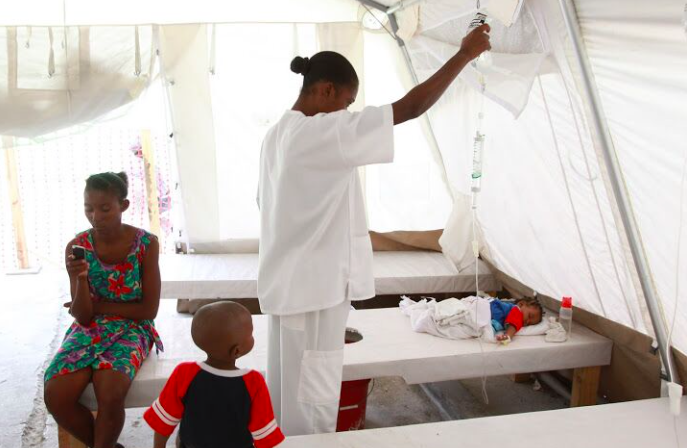
UN Secretary General Cholera Efforts Fall Short
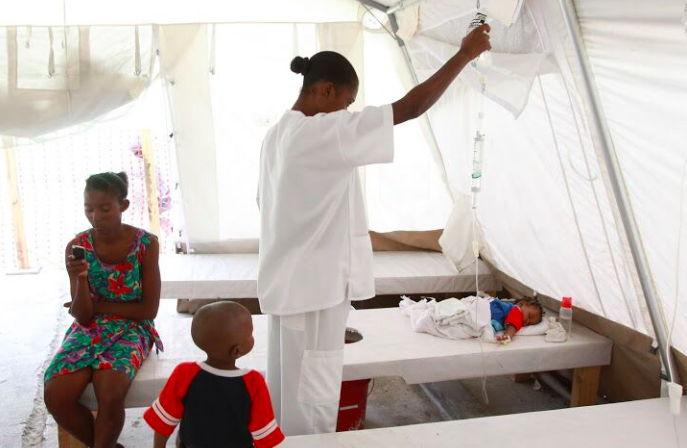
By David HendersonIn December, then United Nations Secretary General Ban Ki-moon delivered a carefully scripted speech on the UN’s role in Haiti’s cholera epidemic. As a young adult splitting my time between studying towards a degree in Global Health and working remotely for a medical clinic in Haiti, I spent the afternoon alone with my computer, gripped by a livestream of Ban’s address.After six years of denial, Ban admitting the UN’s guilt in introducing cholera to Haiti would have been a massive step towards justice for the patients I serve, and the Haitian friends my family holds dear (my parents have worked as missionaries in the country for over 25 years). But, Ban refused to do so. Instead, he offered up a $400 million plan to fight cholera and assist its victims in Haiti. To date, the UN has raised a meager $2 million to fund this plan.When the first outbreak of cholera appeared in October 2010, I, like many, could only watch from the United States in despair. Initially, I simply donated to anti-cholera vaccination efforts, but more recently I’ve worked for organizations striving to fight cholera in Haiti, interning at Partners in Health and eventually taking a job with IDADEE Health Center in Cap-Haitian.In the past 6 years, cholera has become a normal part of my life and work. Outbreaks have continued to resurface regularly. This can feel unremarkable, the natural order of things.But there is nothing natural about Haiti’s cholera epidemic. Immediately after the disease spread, journalists and local Haitians traced the outbreak to a Nepalese UN base, and their suspicions were confirmed when the strain running rampant in Haiti, which had never been seen in the country before, turned out to be a strain commonly found in Southeast Asia.Eventually, the UN commissioned an official report on the epidemic, which confirmed the overwhelming evidence that cholera had emanated from the base. Yet, the report blamed a “confluence of factors”, including Haitians’ bathing and farming practices, for the epidemic. Its authors concluded that the epidemic was “not the fault of… a group or individual”, an absurd assertion given that cholera had not even existed in Haiti until a group of Nepalese UN troops contaminated the Artibonite River with their fecal waste.The report was just the first of many UN efforts to save face without actually accepting responsibility for the outbreak. For six years, the UN has continued its scramble to deflect responsibility while the death toll in Haiti has continued to climb, reaching approximately 10,000 people.In August 2016, Ban Ki-moon publicly broached the topic of UN guilt for the first time, admitting that the UN had a “moral responsibility” to commit to fighting the disease. But, Ban did not admit UN troops were to blame for causing the epidemic.In his speech on Thursday, Ban continued to dance around a long-overdue mea culpa. Instead of admitting guilt for causing the epidemic, Ban lamented that the UN “simply did not do enough with regard to the cholera outbreak and its spread in Haiti.” Ban announced the UN was “profoundly sorry” for the suffering caused by the outbreak, and for the UN’s “role” in the tragedy. Never did Ban note precisely what the UN’s role was, namely, introducing the disease which killed 10,000 Haitians as a result of negligent waste disposal practices.While Ban’s remorse was evident, his speech was carefully crafted to avoid actually admitting guilt. By hinting that the UN regrets bringing cholera to Haiti, without admitting they did so, Ban acknowledged that everyone listening already knew the UN brought the disease to Haiti. Yet, he refused to say it; Doing so may have hurt the UN’s ability to insist that they are not legally responsible for the deaths cholera has caused.Being held legally responsible could prove costly–paying compensation to the families of victims would cost roughly $40 billion, per a confidential UN report. Accordingly, despite his talk of “moral responsibility,” Ban avoided saying anything that could force the UN to shoulder actual, legal responsibility.Instead, Ban sought to make up for the UN’s introduction of the disease by announcing a plan to spend $200 million fighting cholera and dedicate another $200 million to “material assistance” for communities and families affected by the epidemic. While the sums are substantial, these pity payments are essentially bribes: The UN hopes the international outcry and onslaught of lawsuits being brought against them will cease with a little money to a few communities and a half-hearted gesture towards regret.At first, this strategy worked–most media outlets framed Ban’s speech as an admission of guilt, and many took to social media to celebrate the UN’s strides towards “justice”.But the onlookers who welcomed Ban’s speech and the aid package as satisfactory sent a chilling message to Haitians, including my friends and coworkers: that their lives aren’t worth a compensation payment, or even an honest apology.After hiding behind a weak apology, the UN, now under the leadership of Secretary General Antonò Guterres, is beginning to show its true colors once again: The UN has raised a pathetic $2 million out of the $400 million it needs to carry out its cholera plan: a mere 1/200th of what Ban promised. Fortunately, news outlets, like The New York Times, are catching on.But even if the plan were fully financed, its execution wouldn’t represent justice. After all, criminals aren’t typically allowed to take stock of their level of “moral responsibility,” then determine an appropriate level of compensation to pay their victims.Justice will only be served when the UN, an organization that exists to promote human rights around the globe, admits responsibility for causing the epidemic, pleads guilty in a court of law, and compensates Haitians. If every person is a person, we should accept nothing less than court-mediated justice. Haitiantimes.com
Organization Pushes For Sustainable Solutions To Cholera, Typhoid
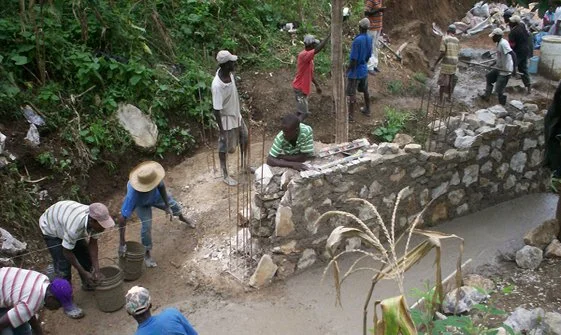
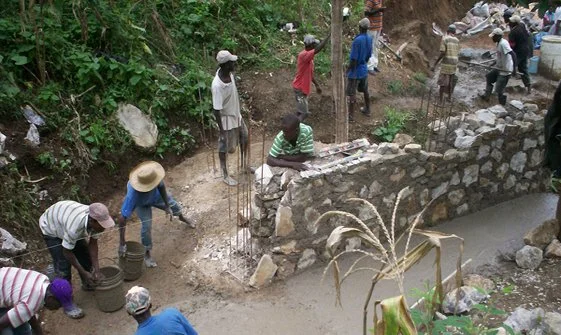
By Wyatt MasseyIn the wake of the damaged caused by Hurricane Matthew in Haiti, Marie-Yolaine Eusebe is taking the long view of aid work. Not that she is working with any less haste than other organizations, but the CEO and FireStarter of Community2Community (C2C) looks at the underlying causes of some of Haiti’s most pressing needs after the storm.“This isn’t an issue of a hurricane,” Eusebe said. “This is an issue of the lack of proper infrastructure.”The damage of Hurricane Matthew is still being calculated, with the Directorate of Civil Protection of Haiti confirming 546 deaths. Another 2.1 million people were affected by the hurricane, along with 36 destroyed health facilities. But the lack of proper infrastructures made the damage and resulting emergency need even worse, Eusebe said. For example, mudslides are less likely if structures are built to code.Also, “If there’s clean water, there’s sanitation,” Eusebe said. “These are the things that decrease the rate of typhoid and cholera.”Stopping the spread of disease is one of the most pressing issues in the country after the hurricane. As of Oct. 25, PANO/WHO estimated 3,423 suspected cholera cases. Cholera is a virus, spread by contaminated water, that severely dehydrates those with the disease. Haiti’s Ministry of Health announced a vaccination campaign starting Nov. 8 to bring 1 million oral vaccines to areas affected by cholera.Research tied the arrival of typhoid in Haiti to United Nations aid workers arriving from Nepal. The strain of the disease in Haiti originated in Southeast Asia and was first spread throughout Caribbean country from a UN camp in the upper Artibonite River valley after the 2010 earthquake. According to the United Nations, 9,145 people have died from cholera since 2010, with more than 779,000 suspected cases.Typhoid fever is also spread by contaminated water, as well as food, and severe cases can lead to death. The disease shares many risk factors with cholera, which is why organizations are concerned about its possible rise in Haiti.The damage caused by Hurricane Matthew allowed cholera, and possibly typhoid, to spread at a faster rate. Haitians were walking through the contaminated water in the street because they had no other choice. Bottled water was available, but some residents who could not afford the bottles were left trying to purify the water, Eusebe said.While this process that does not always kill off all diseases, often residents had no other choice in order to survive, Eusebe said. “Water is a non-negotiable item.”C2C, a nonprofit focused on Haitian development, has been working on access to clean water with two communities in Petit-Goâve–a mountainside community of around 16,000 people and a city neighborhood of about 70 families–since 2010. The group partnered with indigenous leadership to build a captage for collecting groundwater and reservoir.The group is focusing on repairing its water distribution system, as well as a destroyed school, in Petit-Goâve. A needs assessment from those two groups said the hurricane destroyed 40 homes and damaged 140, destroyed two schools and damaged two more, killed 1,621 animals and destroyed 74 acres of garden. None of the captages were destroyed, but 10 were damaged. C2C is raising $645,000 to address the most pressing needs, but maintain its sustainability goals, Eusebe said.C2C is partnering with the International Black Women’s Public Policy Institute to provide immediate relief for Haitians in the form of boots. The policy organization collected more than 200 pairs of work and rain boots in Los Angeles, Perkins said. C2C will deliver 100 of them to their partners in Haiti on November 13.Barbara Perkins, president and co-founder, became involved in Haiti after seeing C2C’s long-term impact on the country. IBWPPI was working on the boot collection before Hurricane Matthew because proper footwear allows men, women and children to work in a variety of conditions and seasons. The boots also protect people if they have to walk in contaminated water, which is now a pressing need in Haiti.IBWPPI will begin advocating policy changes to make boots part of the emergency relief checklist, Perkins said.“If our cities, our counties and our state are going to help in a disaster, let’s make sure boots are on that list,” she said. “It’s not just charity because it lets everyone work and help themselves, too.”Perkins said her organization will continue to help Haiti by focusing on economic security and education.Eusebe said her efforts this year focus on how to prepare Haitians for the next hurricane. International organizations cannot be doing relief every year, she said, because it is not a sustainable system.“The relief and charity narrative have not worked,” Eusebe said, which is why she advocates for investment in long-term infrastructure solutions and support for indigenous leadership.“These are the things that are going to help the community move out of this relief narrative,” she said “We need to move out of relief to relieved.” haitiantimes.com
Haiti - Economy : 14,4% inflation forecast for January

| In the first month of fiscal year 2016-2017, annual inflation, measured by the change in the Consumer Price Index, was 13.3% after reaching 12.5% at the end of the fiscal year 2015-2016. In October 2016, monthly inflation increased by 1.8% http://www.haitilibre.com/en/news-19385-haiti-economy-inflation-continues-to-rise-at-double-digits.html against + 1.3% the previous month. |
The increase in inflation in monthly variation is mainly attributable to the decrease in the supply of food products, the increase in food prices on the international market and the continued depreciation of the gourde in October 2016.Following of passage of Hurricane Matthew, more than 90% of food crops and fruit trees in the South, Southeast and Grande Anse were devastated. This had the immediate consequence of reducing the available food supply. Indeed, in October, the item "Food, drink and tobacco" rose by 2.1%, up 1.4 percentage points from the previous month. Note that the contribution of this item to monthly inflation, which had reached 27.73% in September 2016, rose to 62.91% in October 2016. Given its strong weighting in the general price index, the "Food, Beverages and Tobacco" function strongly influenced price developments in October 2016.At the same time, on the international market, the FAO Food Price Index rose by 0.7% in October 2016, averaging 172.6 points compared to 171.4 points the previous month. The increase in the FAO index is mainly due to higher prices for cereal products, which rose by 1.4 percentage points compared with the month of September 2016. The evolution of food prices on the international market is likely to amplify inflationary pressures via the increase in the import bill of these goods in a context of weak local food availability.In addition, the month of October 2016 was characterized by a continuous evolution of the depreciation of the gourde. At the end of October the exchange rate was 66.3278 gourdes for one US dollar against 65.5368 gourdes for one dollar the previous month. Consequently, the gourde experienced a depreciation of 1.21% against 1% the previous month. This change in the exchange rate thus influenced the rate of increase in prices in the Haitian economy during the month of October 2016.Inflation forecasts :According to forecasts by the Bank of the Republic of Haiti (BRH), inflation will fluctuate over the next three months in monthly terms, while year-on-year inflationary pressures are expected to continue. Considered on an annual basis, the IPC will show a rate of 13.9%, 14% and 14.4% for the months of November 2016, December 2016 and January 2017. On a monthly basis, Rate of +1.3%, +1.1% and +1.4% respectively for the next three months.HaitiVille
Haiti - Results of elections 1/3 senate, complementary legislative...
 The Provisional Electoral Council, in accordance with Article 171.1 of the Electoral Decree of 2 March 2015, publishes the preliminary results of the first round of the third of the Senate, the complementary legislative and the municipal elections for the Commune of Cotes de Fer of 20 November 2016.It should be noted that the elections for the Constituency of Roseaux, in Grand'Anse, will be resumed for the election of the deputy.NOTE: Please note that these are preliminary results and may be subject to change at the end of the challenge period.Results third Senate (1st round) - Preliminary results :North EastWanique Pierre (PHTK) 58.74% is elected in the first roundSouth EastJoseph Lambert (KONA) 53.78% is elected in the first roundWestFednel Monchery (PHTK) 21.74%Pierre Paul Patrice Dumont 18.68%They will go to the second round because there is neither a majority nor an advance over their immediate pursuer equal to or greater than 25%.NorthJean Marie Ralphe Fethiere (PHTK) 35.68%Theodord Saintilus (Pitit Dessalines) 14.04%They will go to the second round because there is neither a majority nor an advance over their immediate pursuer equal to or greater than 25%.CentreRony Celestin (PHTK) 31.73%Abel Descollines (KID) 18.89%They will go to the second round because there is neither a majority nor an advance over their immediate pursuer equal to or greater than 25%.ArtiboniteGarcia Delva (AAA) 28.46%Marc Antoine Aldorphe (Bouclier) 15.63%They will go to the second round because there is neither a majority nor an advance over their immediate pursuer equal to or greater than 25%.SouthPierre François Sildor (PHTK) 25.51%Fritz Carlos Lebon (fanmi Lavalas) 25.33%They will go to the second round because there is neither a majority nor an advance over their immediate pursuer equal to or greater than 25%.NippesDenis Cadeau (Bouclier) 21.08%Louberson Vilson (Fanmi Lavalas) 21.03%They will go to the second round because there is neither a majority nor an advance over their immediate pursuer equal to or greater than 25%.Grand AnseRiche Andris (OPL) 30.77%Jean Rigaud Bélizaire (Consortium) 28.46%They will go to the second round because there is neither a majority nor an advance over their immediate pursuer equal to or greater than 25%.North WestKedlaire Augustin (PHTK) 33.62%Francois Lucas Sainvil (MOSANOH) 15.79%They will go to the second round because there is neither a majority nor an advance over their immediate pursuer equal to or greater than 25%.Senate Results complementary legislative(2nd turn) - Preliminary Results :CentreWillot Joseph (PHTK) 38.68% is electedWilfrid Gelin (PHTK) 23.77% is electedGrand'AnseGuy Philippe (Consortium) 35.46% is electedSorel Jacinthe (Inite Patriyotik) 29.64% is electedNorthDieudonne Etienne Luma (PHTK) 34.94% is electedNawoon Marcellus (BOUCLIER) 31.21% is electedResults Deputy complementary legislative (2nd turn) - Preliminary results :Saint Marc (Artibonite), Samuel d'Haiti (KONA) 61.47% is electedVerrettes (Artibonite), Gerard Paul Lormeus (PLATfÒM LEVE KANPE) 58.20% is electedCôte-de-Fer (Sud Est), Roudy Devil (OPL) 64.00% is electedCabaret (Ouest), Joseph Manes Louis (Fanmi Lavalas) is electedArchaie (Ouest), Pieere Fequiere Julien (CANAAN) 56.79% is electedCornillon (Ouest), Raymonde Rival (APLA) 55.10% is electedCité Soleil (Ouest), Lemaire Pierre 76.54% is electedGressier (Ouest), Joseph Antonio Vericain 56.41% is electedPort-au-Prince 1er (Ouest), Roger Millien (Fanmi Lavalas) 32.84% is electedPort-à-Piment (Sud), Daniel Letang (KID) 52.86% is electedCamp-Perrin/Maniche (Sud), Bertin Augustin (VERITE) 66.53% is electedJérémie (Grand Anse), St Jean Marie Gladice Lundy (BOUCLIER) is electedPlaisance (Nord), Audne Alcide (VERITE) 52.22% is electedMarigot (Sud), Dieudonne Lherisson (PHTK) is electedMôle Saint-Nicolas (Nord Ouest), Yves Dupras (VERITE) 58.52% is electedPort Margot (Nord), Philome Hilaire Fanfan (PHTK) 51.87% is electedDondon (Nord), Hermogene Daniel (FUSION) 54.58% is electedSaint Raphael (Nord), Jean-Wilfrid Borgella (PHTK) 59.09% is electedAcul du Nord (Nord), Rodney Charles (Pitiy Dessalines) 53.76% is electedGrande Rivière du Nord/Bahon, Jacques Julmioce (VERITE) 55.27% is electedBoucan Carre (Centre), Jude Jean (PHTK) 53.15% is electedSavanette/quartier Baptiste (Centre), Guerda Bellevue Benjamin Alexandre (APLA) 51.92% is electedDesdunes (Artibonite), Baudelaire Noelsaint (OPL) 57.68% is electedPetite Rivière de l'Artibonite (Artibonite), Prophane Victor (BOUCLIER) 54.20% is elected.Municipal elections Côtes-de-Fer (2nd turn) - Preliminary results :Côtes-de-Fer (South East), Francoeur Dalexis (OPL) 44.34% is elected HaitiVille
Breaking News: Politics In Haiti...
 New CIMO Commander On Friday, Commissioner Vladimir Cherubin was installed as the new Commander of the Corps of Intervention of the Preservation of the Order (CIMO). He replaces Commissioner Jean Louis Paul Ménard who has just been transferred to the Central Administration of the Administrative Police.Convocation to the SenateFor Sen. Jean Renel Sénatus, Chairman of the Senate Justice and Security Committee, the proliferation of demonstrations by those responsible and sympathizers of Famni Lavalas are only disorder and violence, stressing that these demonstrations are organized on the margins of the law without being notified to the Police and sow fear in the population."[...] I learned that there was a meeting in the metropolitan area of Port-au-Prince to plan attacks against private companies." He announced that his Commission convened the Minister of Justice and Public Security and the Director General of the National Police on Wednesday. "It is necessary that the Government Commissioner and the Director General of the PNH arrest these perpetrators [...] It is not normal for people to think about how to burn private property."Martelly was in CubaA delegation composed of former President Michel Martelly, accompanied by former First Lady Sophia Martelly and former Prime Minister Evans Paul left the country on Saturday, December 3, 2016, to participate in the funeral ceremonies of Commander Fidel Castro in Santiago de Cuba. This delegation returned in Haïti yesterday Sunday.Privert returned from CubaReturning to the country after his participation in the funeral of Cuban Revolutionary Leader Fidel Castro, de facto President of the Republic, Jocelerme Privert, accompanied by First Lady Ginette Michaud Privert and members of the government, gave a short Press briefing at the international airport of Toussaint Louverture International Airport on Sunday, December 4, 2016. The opportunity for the Head of State to renew his sympathies, on behalf of the Haitian government and people, the Cuban people and the family of this orld-wide genius who was nicknamed El Commandante. He took the opportunity to salute the frank collaboration between Haiti and Cuba.Training on International Human Rights LawThis Tuesday morning will open a Training Session in International Human Rights Law, to the School of Magistrature, in Frères, in the presence of Representatives of the European Union, the Embassy of France and the René Cassin Foundation; This training course for lawyers, magistrates and members of human rights organizations will be provided by professors from the René Cassin Foundation of Strasbourg. The Central Theme will be "International Law of Human Rights, with emphasis on the issue of Statelessness."HaitiVille
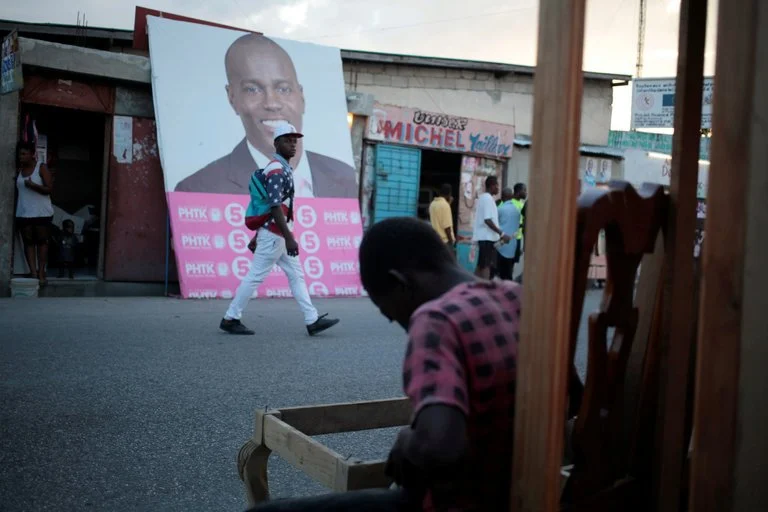
President-Elect Jovenel Moïse of Haiti Vows to Create Plan to Channel Aid
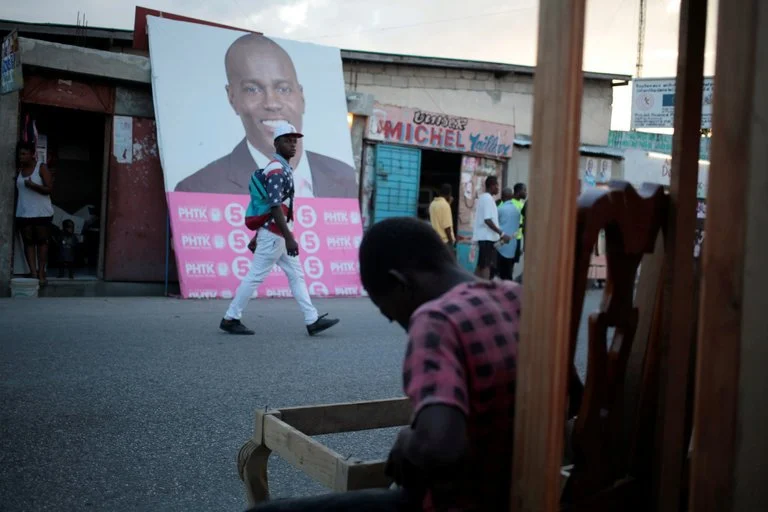

MIAMI — He’s often called the Banana Man, because he exports produce. Now, he will be known by another title: president of Haiti.
Jovenel Moïse, 48, rose from obscurity to win the country’s presidential elections this week, after a nearly two-year electoral process marred by allegations of fraud, delays, natural disasters and a staggeringly low voter turnout.
“I have had 20 months of campaigning,” Mr. Moïse said in a telephone interview on Wednesday. “I am really ready.”
He received 55 percent of the vote in a field of 27 candidates, Haiti’s electoral council said on Monday night. But three of his opponents are vowing to contest the results, which will not be verified until late December.
It will fall to Mr. Moïse to heal and govern a bitterly divided nation that is still struggling to rebuild after the 2010 earthquake, and that wasbattered again this year by a catastrophic hurricane.
At first, many Haitians viewed Mr. Moïse guardedly; he was formerPresident Michel Martelly’s handpicked successor, and few people had heard of him.
Mr. Moïse won the first round of the election in October 2015. Although international agencies said the elections were clean, the second round was delayed after losing candidates complained of widespread fraud, including large amounts of repeat voting by election monitors tied to various political parties.
The runoff was delayed several times, and a commission eventually decided that the election process should start over. With Mr. Moïse’s benefactor, Mr. Martelly, out of office and a provisional government in place for nearly a year, only about 21 percent of the electorate, in a country of 11 million, ended up casting ballots on Nov. 20.
Mr. Moïse insisted that he was ready for the challenges that lay ahead — and to dispel the notion that he was Mr. Martelly’s “puppet.”
“It is a good privilege for me to have a former president I can talk to about his success, and his problems also,” Mr. Moïse said. “For example, this morning I called him, because I needed some advice about something. But you know, I am 100 percent Jovenel Moïse.”
Mr. Moïse said that among his first priorities, in addition to addressing corruption and climate change, would be to modernize and revive agriculture, with the aim of establishing a viable organic food industry. If that can be accomplished, he argued, more Haitians may be able to find work in their own country, instead of immigrating to the Dominican Republic or the United States.
He added that he would create a master plan under which all aid groups and foreign governments would have to operate their development projects.
“We don’t just want the help. I want to see results,” Mr. Moïse said. “If they want to spend money, we are open to that, but we will show you exactly where to spend this.”
Many aid groups have been criticized for shutting the Haitian government out of decision-making. Haiti, Mr. Moïse said, needs to stop just receiving handouts. “We want to show the world Haiti can endure,” he said.
In an interview this year, Mr. Moïse shrugged off the notion that he was a virtual unknown before entering the presidential race, noting that he had been president of the chamber of commerce in the country’s northwestern region for eight years. He grew up on a large sugar plantation, he said, adding that he could relate to a vast majority of Haitians who live off the land.
A father of three, he was raised in a rural area in the north but attended school in the capital, Port-au-Prince. He said he had learned the keys to success by observing his father’s profitable farming business.
He runs a large produce cooperative that employs 3,000 farmers.
“Since I was a child, I was always wondering why people were living in such conditions while enormous lands were empty,” he said in January. “I believe agriculture is the key to change for this country.”
Mr. Moïse’s adviser, Damian Merlo, acknowledged that widespread voter apathy had led to the paltry turnout, but he said that Mr. Moïse’s margin of victory was so wide that it should be considered a mandate.
Jake Johnston, a research associate for the Center for Economic and Policy Research in Washington, observed the Nov. 20 elections and said that he had generally been impressed with how much the process had improved over the past year.
In 2000, nearly 70 percent of voters cast ballots; just over 20 percent did this time.
“What caused that break and how to fix it is a big question for all political leaders,” Mr. Johnston said.
Some of the electoral council members refused to sign the preliminary results, arguing that more clarification was needed regarding the complaints filed by losing candidates.
Jude Célestin, who came in second with 19 percent of the vote, lodged a complaint even before the results were announced, contending that unsigned votes had been accepted. Maryse Narcisse, who came in fourth with just under 9 percent, called it “an electoral coup.”
The Haiti Democracy Project, a Washington-based organization that monitored the elections, said its sample tally matched the electoral council’s results. It noted that the gap between the first- and second-place winners was so big that it would have taken enormous fraud to pull it off.
“They are obviously fishing for some issue on which to challenge the results,” said James Morrell, the group’s executive director.
The election delays helped Mr. Moïse, Mr. Johnston said, because he was able to establish name recognition by campaigning on his own, without being seen as Mr. Martelly’s surrogate.
Mr. Moïse agreed. “Jovenel is his own man,” he said.
Many challenges ahead for Haiti’s new president...
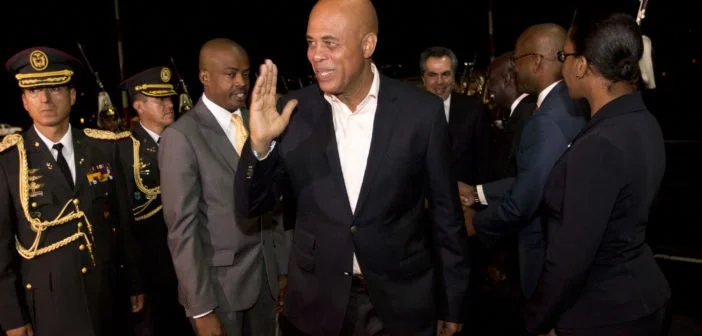
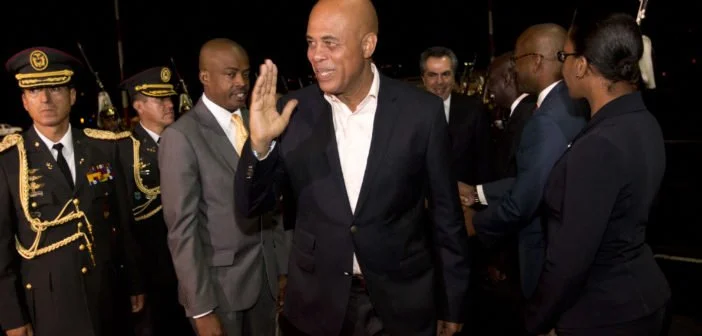
 Haiti's former President Michel Martelly, who hand-picked the winner of this week's election, Jovenel Moïse.Haiti’s newly elected president, Jovenel Moïse, faces enormous challenges in rebuilding a broken and deeply divided country, beginning with a legal challenge to the election results by his opponents.Moïse, a former banana exporter, also won the presidential election in October 2015, but that result was annulled amid allegations of fraud. This time around, he won 55.6 percent of the votes in the Nov. 20 election, beating 26 other rivals, according to provisional results released by the election council on Monday“The Haitian people have made their choice and elected me as early as the first round,” Moïsewrote on his Facebook page. “Now, in the spirit of gathering, I invite you, dear countrymen, to borrow with me the way of endogenous development for a Haiti at the height of its historical performance and its legitimate ambitions.”Under Haiti’s election rules, Moïse – who ran as the candidate of former President Michel Martelly’s Tet Kale party – won with a large enough margin to secure his victory without a second round. The final results will be handed over to the country’s electoral tribunal, where other parties say they will appeal the outcome, before a winner is certified on Dec. 29.Some experts say Moïse has already started his presidency – if the results stand – on the wrong foot. Political analyst Fritz Dorvilier, who teaches sociology at the State University of Haiti in Port-au-Prince, told the Miami Herald that the president-elect may have made a grave mistake in skipping the second round of elections. Doing so may have helped lower tensions, he said, or at least been the “politically correct” thing to do.
Instead, the elected president is now faced with an additional challenge: uniting an opposition deeply divided by anger and distrust. Violent protests have already erupted across the country among supporters of the opposition parties, many of whom called the vote an “electoral coup” and are demanding yet another redo of the election.Haiti faces enormous challenges, from its failed health and sanitation systems to its crumbling infrastructure. This year, months of doctor strikes paralyzed state hospitals, leading to countless deaths. Haiti is also ill prepared for natural catastrophes, an ongoing problem recently brought back into the spotlight in the grim aftermath of last month’s Category 4 Hurricane Matthew.Perpetuating these problems is the devastating poverty in Haiti, which has driven hundreds of thousands of Haitians on perilous journeys through Latin America and the U.S. in search of better, if not just decent, living conditions.Martelly, who hand-picked Moïse as a candidate, has been widely criticized for failing to adequately address these issues. Martelly, a former carnival singer, pledged to rebuild the western hemisphere’s poorest country from the ruins of its 2010 earthquake, but earned a reputation for indecision and populist authoritarianism. Martelly also did little, if anything, to uphold his promises for parliamentary elections and other basic democratic policies.Throughout his campaign, Moïse made promises to improve the quality of education, create jobs in the agricultural sector and make Haiti an exporting country after decades of absence.Still, some experts say it is not yet clear how Moïse intends to undertake the massive task of rebuilding Haiti, or where his priorities lie in distributing international aid. As of now, Moïse’s program still seems rather broadly defined, said Robert Maguire, a Haiti expert and international affairs professor at George Washington University, but international actors will likely have a lot to say in shaping it.“Certainly, in that regard, M. Moïse will continue to say that ‘Haiti is open for business’,” he said in an email to Humanosphere.
New President ALERT! Jovenel Moise "Neg Bannan'n nan"
 Businessman Moise wins Haiti election in first round!
Moise won 55.67 percent of the vote in the November 20th election.His closest rival, Jude Celestin, polled 19.52 percent.12 percent of the voting slips were set aside because of irregularities and were not included in the count, the council said.
Who is Moise Jovenel?
He was the chosen successor to former President Michel Martelly, a singer.A political unknown before last year, Moise also came first in the October 2015 vote.The result triggered protests and claims of fraud from opponents.The 48-year-old is a successful businessman, running a banana export company he sees as a model for rural development.As president, his task will be to revive Haiti’s economy and rebuild that country as it recovers from a devastating earthquake in 2010, as well as Hurricane Matthew.
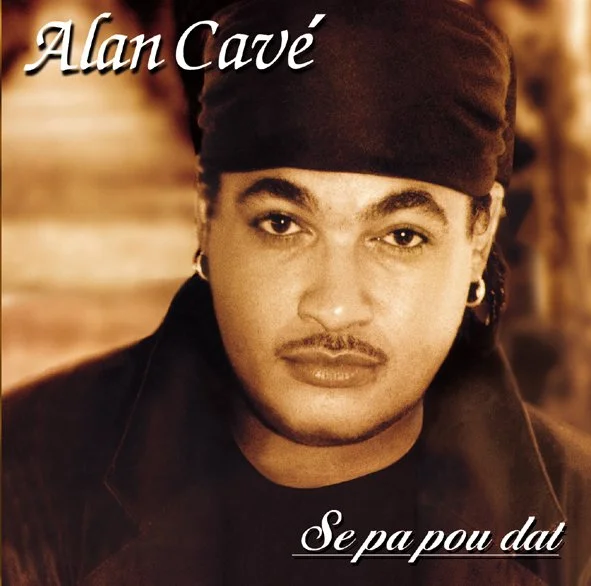
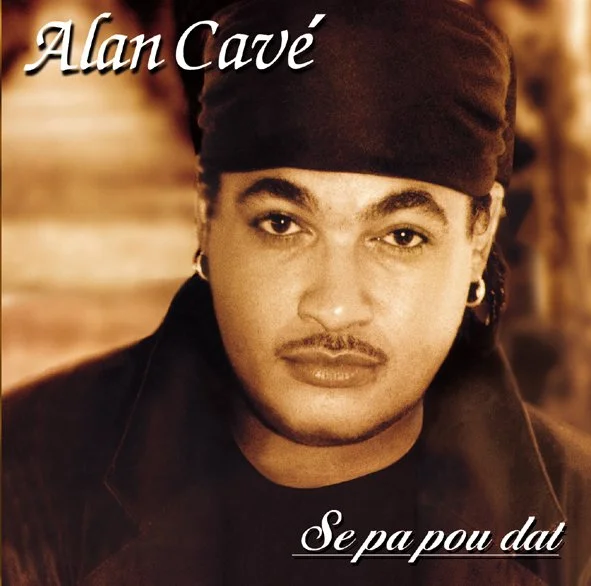
In light of throwback Thursday... Here's Alan Cave!
[embed]https://youtu.be/joso6k4Y-uI[/embed]
Wahoo Bay Beach with an exotic selection of three beaches and tropical surrounding
 Wahoo Bay, an oceanfront paradise just forty-five minutes north of Port-au-Prince, pleasantly nestled between the majestic Matheux Mountains and the Gonave Bay, Wahoo Bay Beach will be your home-away-from-home during your voyage to the Caribbean. Wahoo provides the perfect backdrop for relaxing romantic escapes, productive business trips, adventurous family gateways and unforgettable events. While staying at our beachfront resort, enjoy picnics on the beach, snorkeling, floats and Kayaks, tennis with lighted courts, and mountain climbing.

Haiti & China sign 2 donation contracts for $150,000+
  |
On Thursday November 10th 2016, as a part of the Program "Assistance in the form of Donations to Local Micro-Projects Contributing to Human Security" (APL) two donation contracts were signed between Mr. Yoshiaki Hatta, the Ambassador of Japan to Haiti and representatives of two beneficiary local organizations : "Union of Peasants for the Development of Source Sable Santo and its Surroundings" (UPDSSE) and "Organization Youth and Peasants for the Advancement of the Center" (OJPSAC).UPDSSE received an amount of US $ 80,836 for its improvement project of the BERACA Community Health Center in Thomazeau, whose objective is to strengthen the capacity of this Center which provides health care to more than 10,000 inhabitants from neighboring areas.OJPSAC benefited from US $ 76,789 for its project to develop the VIAH Community School in Sarrazin, which will enable the construction of 6 classrooms, a sanitary block and the installation of School facilities (tables, chairs and blackboards) to enable more than 230 pupils to benefit from quality education in an appropriate environment.11/16/2016
Watch: Did This Reporter Just Blame Haiti's Deforestation on Tree-Eating Starving Children?
“They take all the trees down, they burn the trees,” Delgado said. “Even the kids there, they’re so hungry they actually eat the trees.”Needless to say, it did not take long for many people to come forward and demand an apology for the insensitive comments.Haiti is known for being extremely impoverished, but that does not mean that generalizations about the people can be so confidently made (and on national television, no less). After all, there is only one Lorax, and Jennifer Delgado does not speak for the trees.http://https://youtu.be/JZbRIcYqL5o
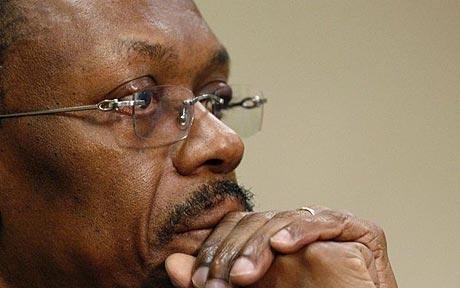
Haiti corruption, drug trafficking: Former leader banned from leaving country
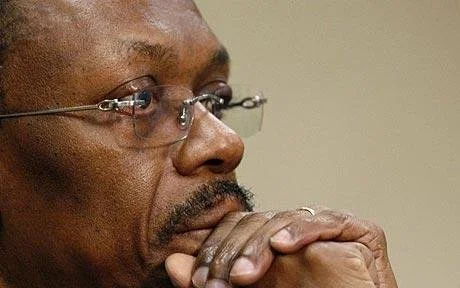
PORT-AU-PRINCE, Haiti — Former Haitian president Jean-Bertrand Aristide and several of his former allies have been banned from leaving the Haitian territory as part of a criminal inquiry into serious cases of corruption, misappropriation of public funds and drug trafficking from 2001 to 2004, as several dozen have been summoned to appear for questioning in the Caribbean country, HCNN has learned.Nearly 40 people, many of them linked to the Aristide Foundation for Democracy from 2001 and 2004, have been summoned to appear before investigating judge Lamarre Belizaire who banned the suspects and persons of interest from traveling abroad, according to officials familiar with the issue at the Immigration Office.The judge’s ruling, banning several dozen people from leaving the country, was issued on August 4, 2014 and would not personally include former president Aristide, even though he is considered the main suspect in the ongoing criminal investigation.The list includes former director of Aristide Foundation for Democracy, Mirlande Libérus Pavert, Marie Carmel Latouche, former Finance Minister Faubert Gustave, former Palace security Chief Jean Nesly Lucien, for Prime minister Yvon Neptune, former security Chief Oriel Jean, former Aristide’s close ally Ginette Céant.“It is at the same time sad and amazing to see how much money Aristide and his allies have stolen from the State treasury and the scheme they used to dilapidate the funds,” an independent administrative investigator, who worked on the case in 2005, told the Haitian-Caribbean News Network (HCNN).Several suspects and persons of interests in the case will be heard by judge Belizaire, on Thursday, while Oriel Jean was interrogated on Wednesday afternoon.Huge sums of money extracted from the State treasury have been embezzled through the Aristide Foundation for Democracy and figureheads and other bogus organizations allegedly set up by Aristide and his allies to misappropriate public funds, according to documents produced by the Financial and Economic intelligence Unit, known by its French acronym UCREF, and other reports.“We are talking about huge, but very huge sums of money transferred to fake commercial enterprises and other organizations for services that were delivered and also huge sums transferred to correspondents abroad,” stated the investigator who spoke to HCNN on condition of anonymity.He explained his shock and that of other colleagues of his when they first found out about the facts.“Of course, as professionals we did our work with all the serenity necessary, but as citizens we were so shocked to discover what we found out,” reported the investigator who said he once was sympathetic with Aristide for the inspiration and the hope the former leader created when he first came in power in 1991.Aristide, through his private secretariat at the presidential Palace, would have transferred most of the funds through bank accounts hosted at the Popular Bank of Haiti (Banque Populaire Haitienne, BPH), under the leadership of bank general manager, Rodnée Deschineau, who acknowledged many of the accusations during a hearing with Administrative investigators, according to documented testimonies.Then the money would have landed on the bank accounts of fake enterprises such as Se pa’n Provisions Alimentaires, Quiskeya store, a so-called VGLS company, Socol S.A., COCSOBFO, all linked to the Aristide Foundation which had also directly received significant amounts, according to an official administrative report“I was never involved with partisan politics, but when president Aristide first came in power, I was still a student and I saw my image in him when I consider where he came from to get where he was,” he stated. “Probably, that is why my shock was even greater,” he added.Several of the people targeted by the investigation and concerned by judge Belizaire’s conservatory measures are no longer living in Haiti. That is the case for Mirlande Libérus Pavert who is living in Florida.Judge Belizaire has refused to answer questions or to comment about the case for “legal and ethical reasons”, but HCNN has confirmed with judicial sources that accusations against Aristide have been very well documented and that administrative investigations conducted years ago show concrete evidence of misappropriation of public funds and money laundering.The investigation started in 2005, following the ouster, in Feb. 2004, of Aristide who was inaugurated in 2001 for a second five-year presidential term, after serving as president in 1991 before being toppled on September 30, which had marked his 7th month in office.A new anti-corruption law, pushed by Prime minister Laurent Lamothe and solemnly promulgated by president Michel Martelly, was passed earlier this year to toughen punitive measures against those in the public administration and others found guilty of corrupt practices.
![Phyllisia Ross - KONSA [Official Music Video]](https://images.squarespace-cdn.com/content/v1/68e70239ce60bd21b04f1e3f/1765740118911-LWPICD6SNOHYBCHZXDEP/image-asset.jpeg)
Phyllisia Ross - KONSA [Official Music Video]

Lux Media and Marketing & Phyllisia Ross Music Presents- KONSADirected by Abdias Laguerre
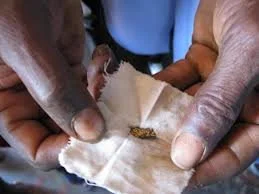
Haiti has Deposits of Gold and Copper and a whole lot MORE, experts say
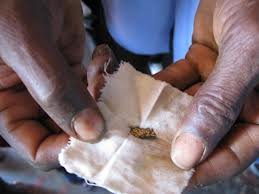
According to mining experts from South Africa, Haiti has significant deposits of gold, copper, manganese, nickel, silver, bauxite, platinum and more... A map of mineral deposits has been submitted to the Government of Haiti...
Experts from the South African public company, Council for Geoscience have, over the last 6 months, assessed Haiti's mineral potential. The first map of occurrences and metal deposits in Haiti was recently submitted to the Haitian authorities who plan to adopt new measures to modernize the Haitian mining sector.

Geologist Booz Walemba indicates that in the momentum of exploration Haiti should start producing gold and copper and other ores in the coming years. Gold ore, copper and manganese are the most important, he insists.
The most important deposits are listed in several departments. The North East contains gold and silver, some regions in the Plateau Central contain copper, gold and zinc. In the south are mainly nickel and bauxite.
He reveals that his company discovered spectral signatures that are conducive to mineralization in other parts of the country. These deposits are not visible but are buried deep, he said.
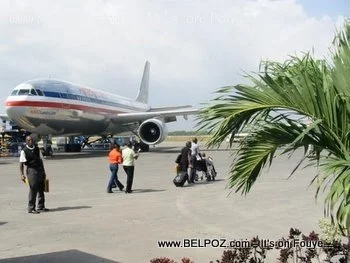
American Airlines Flights to Cap-Haitien Haiti begins October 2014
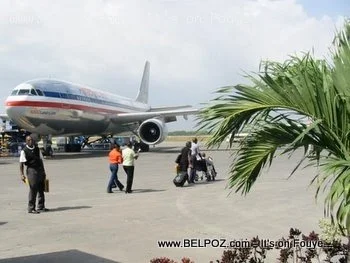
Haiti Tourism Minister announced last month during Gouvenman Lakay ou Miami that American Airlines would begin Flights to Cap Haitien Haiti in October... on 28 July 2014, American Airlines issued a Press release to confirm that AA Flights between Miami International Airport (MIA) and Cap-Haitien, Haiti (CAP) officially begins 02 Oct 2014...
This is wonderful news for all Haitians in Northern Haiti who had to travel all the way to Port-au-Prince in order to catch a flight to Miami...
In the press release, Art Torno, American Airlines senior vice president for Mexico, Caribbean and Latin America says...
"We have proudly served Haiti for more than 40 years and believe this new service is important not only for our customers, but also as an important catalyst to develop the north coast and open up this historically significant destination"
Haiti Prime Minister Laurent Lamothe says...
"We are thrilled that American Airlines has decided to launch the first nonstop service from the United States to Cap-Haitien. This new route represents a tremendous opportunity for significant economic impact for our country by connecting Miami directly to the second city of Haiti."
Here is the Daily MIA-CAP American Airline Flight Schedule (all times local):
AA 1632 Departs MIA at 9:50 a.m. ET, Arrives at CAP at 11:50 a.m. ET
AA 1659 Departs CAP at 2 p.m. ET, Arrives at MIA at 3:59 p.m. ET
New York Eye Doctors Bring Free Eye Care to Jacmel
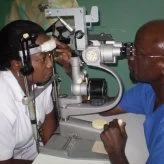
By Haitian Times  Sight Keepers International (SKI), a Long Island nonprofit that provides eye care services in developing countries, partnered with the Health Care Ministry to bring eye care services to residents of Jacmel.From June 29 to July 26, a team of ophthalmologists will travel to Majj Ecole Primaire Mixte de Grande Savanne in Jacmel to provide free examinations, glaucoma screenings, and dispense eye medications to local residents.“While many relief agencies provide medical care in Haiti, eye care is often overlooked,” Dr. Wisly G. Augustin a Brooklyn ophthalmologist and SKI’s president and founder, said. “SKI is excited to fill that void.”According to the Global Eye Project, a nonprofit that works to educate people about eye care and preventative measures, Haiti has roughly 50 ophthalmologists for a country of 10 million – that works out to about 1 eye doctor for every 200,000 people.“As an ophthalmologist and eye surgeon from Brooklyn, where so many of us Haitians live, I was among a group of early responders who travelled to Haiti immediately after the earthquake,” Augustin said. “I was alarmed that survivors who sustained eye injuries were receiving negligible attention because eye care services were not available.”The ophthalmologists will also distribute free eyeglasses, which they collected during a campaign earlier this year. The campaign, which launched on Haitian Flag Day, was held at Erasmus High School in Brooklyn.“We’re grateful to everyone who contributed to making this mission possible,” Augustin said. “We anticipate an even more productive humanitarian mission in Haiti.”