

School Games at the Horizon

School Games at the Horizon Thanks to the valuable assistance of the Ministry of Youth, Sports and Civic Action (MJSAC), thousands of young people from Thomassin and the surrounding area entertained during the summer holidays 2017 by participating as actors or spectators at the Football Championship organized at the Sport Park of Thomassin from July 16 to August 27, won by the team "Tèt Chaje" of Fermathe at the expense of FC Malik.After the organization of these summer activities, Minister Régine Lamur already has her head turned towards the School Games because, according to her, the return of sport to school is a convinced imperative that "It is the basis of any national selection competitive. None of the sporting disciplines practiced in Haiti can be excluded because a discipline with little or no media coverage can create a prestigious place among the major sports nations."In addition, she also emphasized the brain games that promote concentration and reflection, key factors in the process of creation and development."A better framing of our youth and the exploitation of our sports talents can be a new departure for our country in search of a new image on the international level. However, recognizing that resources are modest and needs unlimited, the Minister wants to build on cooperation and calls on all sectors of national life to unite with the Ministry of Youth, in order to build a new Haiti around of young people.HaitiLibre| September 1, 2017
Senator urges Trump to extend protections for Haitians
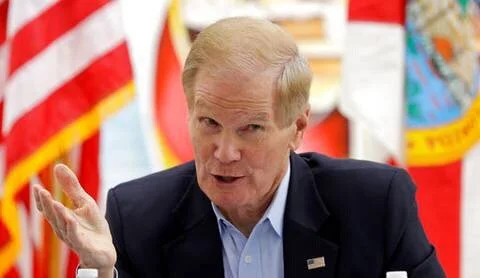
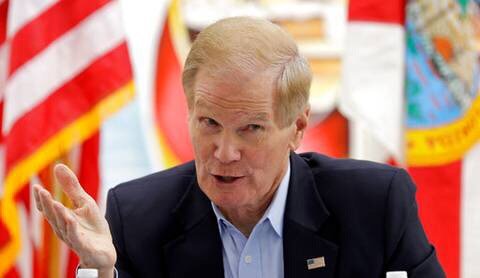
MIAMIA U.S. senator has called on President Donald Trump to extend humanitarian protections granted to Haiti after the country's devastating 2010 earthquake.Democratic Sen. Bill Nelson wants the Trump administration to renew Temporary Protected Status so that nearly 60,000 Haitians can continue to live and work in the U.S. without fear of deportation.The Florida senator, who met with a group of worried Haitians in Miami on Friday, hopes the Department of Homeland Security will extend the status beyond the Jan. 22 deadline, arguing that Hurricane Matthew in 2016 delayed Haiti's recovery efforts.Such extensions are typically renewed for 18-month intervals, but the latest announcement in May said it would expire in six months.Haiti has said more than 300,000 people died in the 2010 disaster. The exact toll is unknown.Sen. Bill Nelson, D-Fla., center, listens to Haitian-American Marlene Bastien, far right, Friday, Aug. 25, 2017, in the Little Haiti area in Miami, during a meeting with a group of Haitian community leaders. Sen. Nelson called on the administration to extend Temporary Protected Status for the nearly 60,000 Haitians living in the U.S. until at least July, 2019. Such extensions are typically renewed for 18-month intervals, but the latest announcement in May said it would expire in six months. Haitians granted the protection can live and work in the U.S. without fear of deportation.Associated Press | August 25, 2017
Manhattan's First French-Creole Restaurant Opening on 10th Ave., Owner Says
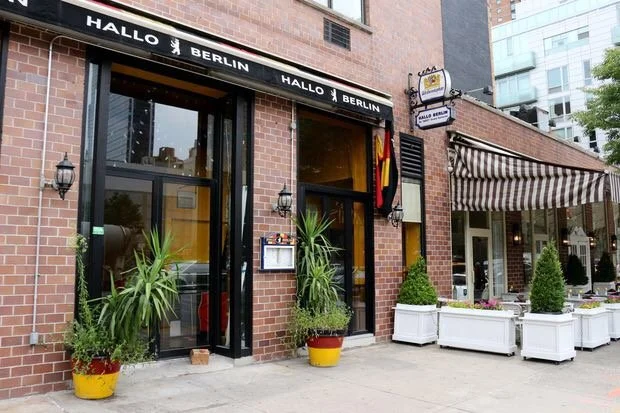
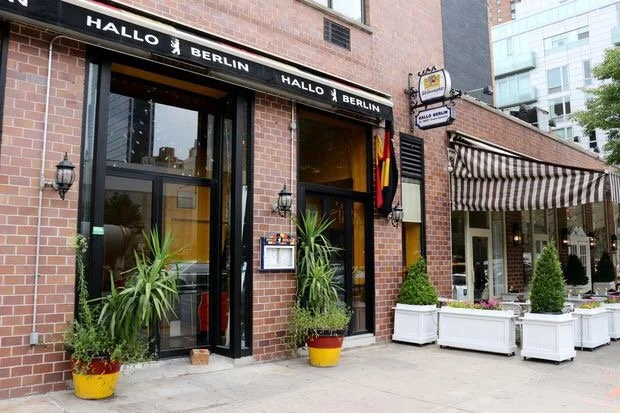
HELL'S KITCHEN — An upscale French-Creole restaurant being touted as the first of its kind in Manhattan is coming to 10th Avenue later this year.Le Privé will open its doors at 626 10th Ave., between West 44th and 45th streets, this fall, owner and operator Sanjay Laforest told DNAinfo New York.“We’re basically trying to do something that’s never been done,” said Laforest, whose father hails from Haiti and used to work as a chef. “There are Haitian restaurants, there are Guadeloupan restaurants… but they’re not offering food in the way I’m going to offer [it].”Laforest, who runs a marketing and consulting company called Privé Group, said he researched French and Creole-influenced restaurants in New York City and in France and discovered there was “no [French-Creole] concept” like the one he plans to open on 10th Avenue.“Le Privé honors the savory blends of Creole cuisine; it articulates its French colonial backdrop through reimagined dishes,” read a draft of a write-up he plans to circulate about his eatery.A tentative menu filed with Community Board 4 includes dishes like a conch stew with artichokes, sundried wild mushrooms and saffron basmati called Lambi à la Créole; slow-roasted pork shoulder with fava bean risotto and Bordelaise sauce called Conchon Rôti; and squid ink linguine with sauteed shrimp, mussels, clams, spicy salami calabrese and red chilies.Laforest flew in a chef from France to devise the menu, which is still in the works, he noted.The space was formerly home to the German restaurant Hallo Berlin, which announced in June that it had permanently closed.Its owners didn’t respond to requests for comment.Le Privé is expected to open in November, Laforest said.By Maya Rajamani | August 2017
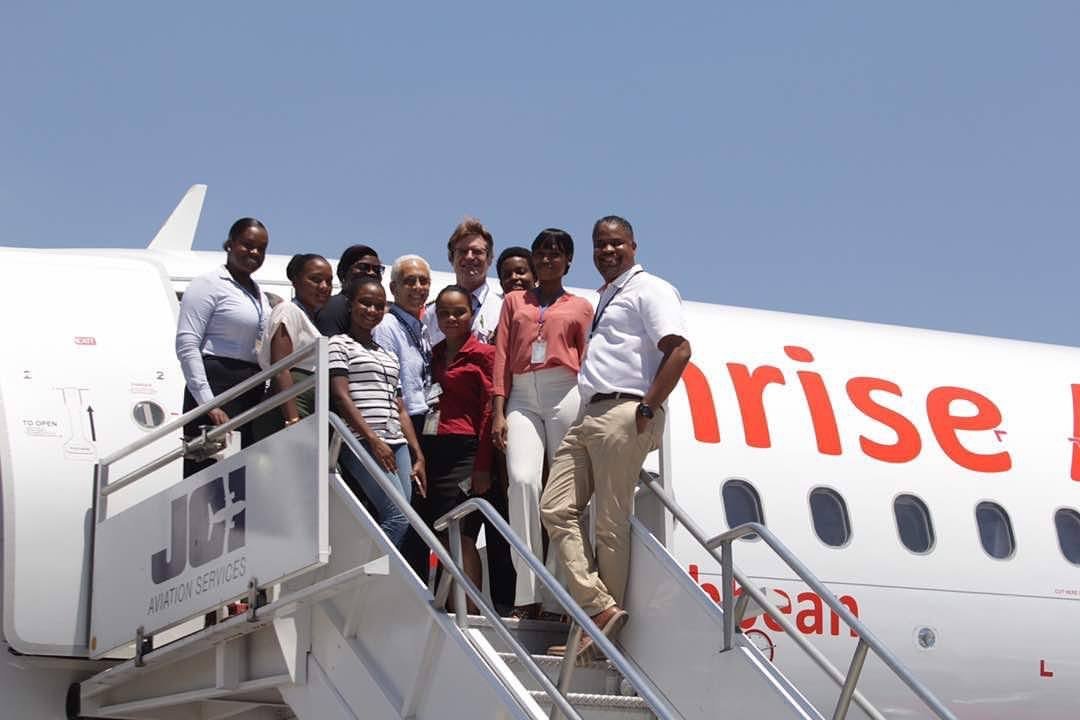
Haitian Airline Sunrise New Routes to Orlando and Miami

A community that works together and invests in each other grows togetherA few month ago I met Pascal and Samuel at Sunrise office to discuss collaborating on a few projects between our respective Company. It was the first time I heard about Sunrise initiative to explore new routes, but this time, it will be in the states; specifically in Orlando and Miami. The news was confirmed by their head of Marketing during an event at NH Haiti El Rancho hosted by Haitian-Benelux Chamber of Commerce.On August 25, 2017, the official Facebook page of the company announced the date of the inaugural flight, as well as the price of their round trips. A critical step and an amazing accomplishment for the Haitian Airline, which started with two small planes that are still serving Cap-Haitien and Port-au-Prince route. While this is a huge success for the Haitian company, we need to support them for them to stay in business.A community that works together and invests in each other grows together; and the company promises to remain competitive on the market. They make it their mission to continue to provide excellent customer service and competitive prices. This moment reminds me of the first AA flight in my hometown (Cap-Haitien), I was excited that I did not sleep in fear of missing out on history. History is once again happening, and we hope you will be part of it.According to the CEO, the mission of the company is to become the premier regional airline operator in the Caribbean by developing a cohesive route network in an efficient, cost-effective, and safe environment. They want to leverage success and profitability through a streamlined and innovative approach to growing the footprint of Sunrise Airways. On top of the Miami and Orlando routes, the company is looking forward to adding Turks and Caicos, Jamaica, Curacao and more.By Davidson Toussaint | August 25, 2017

Nearly 40% of Haitian doctors settle abroad

Nearly 40% of Haitian doctors settle abroad While in Haiti our hospitals are suffering from a shortage of doctors, nearly 40% of health care professionals, trained in Haiti at the Faculty of Medicine at the expense of taxpayers, are leaving the country.If 13% of US black doctors are Haitian origin US is not the only host country for our medical professionals Canada and the countries of South America are other countries privileged by our doctors in search of a decent life.Dr. Jean-Claude Cadet, Dean of the Faculty of Medicine and Pharmacy, acknowledges that with the inadequacy of the budget at the national level it is impossible to believe that a better life in Haiti can be offered to a doctor after 10 years studies...With an average of 6.5 doctors per 10,000 inhabitants (2009), Haiti ranks last among the countries with the lowest population of health personnel behind Guyana (11.2%), 4 times below the minimum standard of the World Health Organization (WHO) of 25 doctors per 10,000 population.HaitiLibre | August 2017
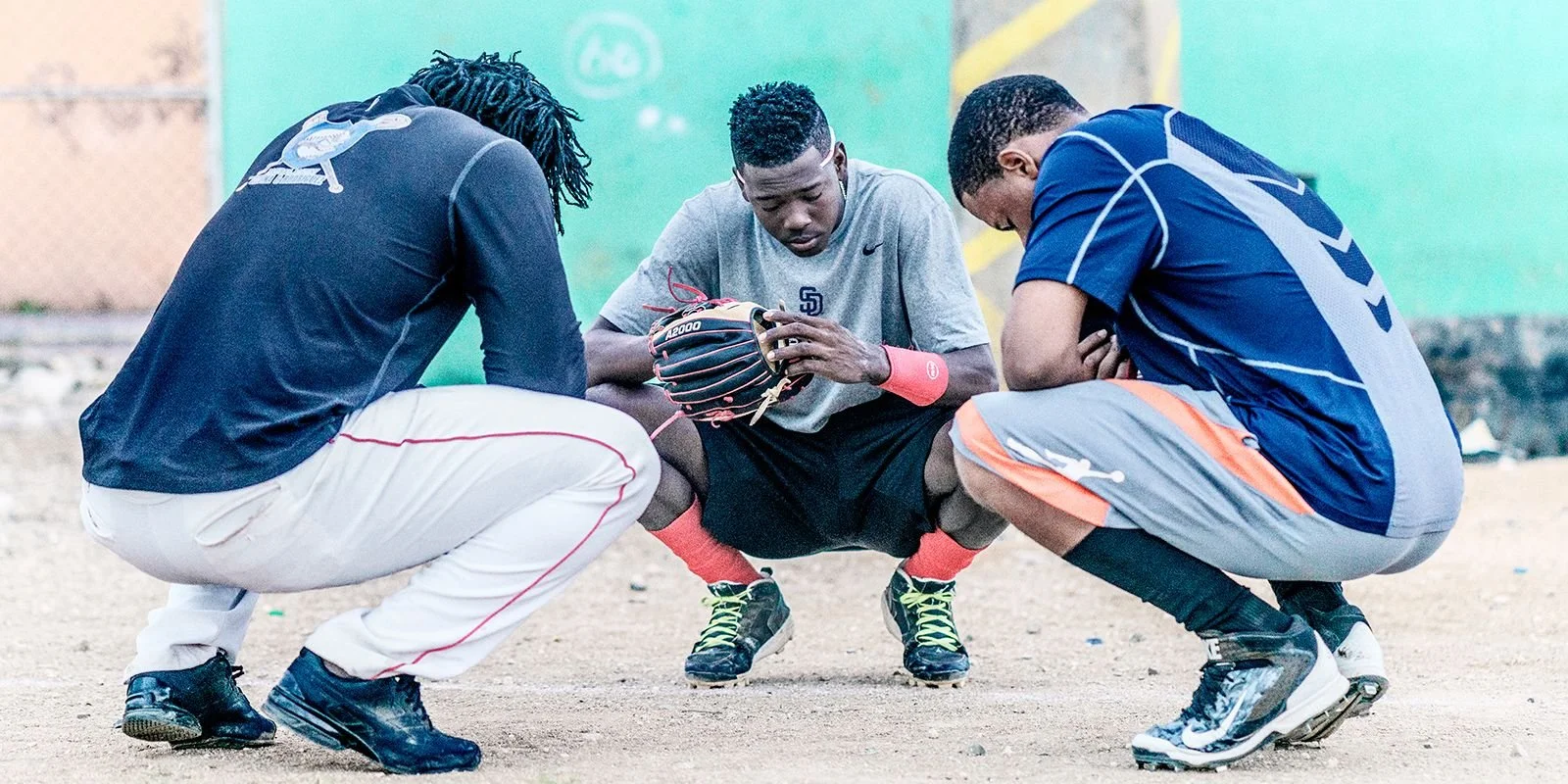
Out At Home As many as 1 in 10 Dominicans are of Haitian descent. So why do we know of virtually no Haitian Dominicans in the major leagues?
Arroz con pollo waits on the table at Miguel Sano's duplex condo, not far from Target Field. Sano's sister is visiting from the Dominican Republic, and her husband has made the Twins slugger's favorite dish -- mounds of it, enough to feed a baseball team. "Don't worry," Sano tells me. "I eat a lot." The aroma is seductive, an anamnesis of the Caribbean. It fills the top floor of the apartment where Sano spends the major league season, more than 2,000 miles from San Pedro de Macoris, where he was raised. The coastal city is renowned for turning out big league talent, an important source for the country's baseball pipeline -- 82 Dominicans made last year's Opening Day rosters from a population of 10.6 million.
Sano stands apart from the other 81 Dominicans in one significant way: He has publicly identified as an ethnic Haitian.Baseball is not popular in Haiti itself, but as many as a million ethnic Haitians live in the neighboring Dominican Republic, where the game is ubiquitous. As the chicken waits on the table, Sano and Franklin Johnson Mateo, who serves as Sano's adviser and facilitator, shout out examples of former and current MLB players who likely share their Haitian ancestry. They rattle off seven or eight names. The total number, Sano and Mateo agree, would shock most observers.Many big leaguers from the Dominican, including some who are being mentioned in Sano's living room, choose to keep their backgrounds a secret. Some ethnic Haitians go so far as to actually alter their identities on the way to the majors."I didn't have to change my name, but there are so many that do," Felix Pie, a former big league outfielder and Haitian Dominican, had told me.Players need birth certificates to sign with a major league team and obtain a visa. Haitians in the Dominican Republic often lack them, so a player might change his identity to get the necessary documentation. Others do it to make themselves appear younger, or simply to avoid the rampant prejudice against Haitians in the country. "Dominicans make fun of Haitians," Mateo says. "Some people feel ashamed about being Haitian."The Caribbean's second-largest island, Hispaniola, is divided in two: French- and Creole-speaking Haiti to the west, the Spanish-speaking Dominican Republic to the east. For generations, Haitians, mostly descended from African slaves, have been denigrated by lighter-skinned Dominicans descended from colonial Europeans. The Dominican dictator Rafael Trujillo, who used makeup to whiten his own face, murdered an estimated 20,000 émigrés during a 1937 massacre. Recent administrations have favored deportations.The situation has lately become a human rights crisis. In 2013, a court ruling retroactively stripped some 200,000 Haitian Dominicans of their citizenship, even if they were born in the country. Those born there today are considered aliens. Tens of thousands have been deported or driven from the country by fear. Generations of Dominicans with Haitian blood are at risk. "I have a lot of friends who are scared that the government is going to send them back to Haiti," shortstop Orlando Calixte told me in November. A Haitian Dominican, he signed with the Giants this winter after seven seasons in the Royals' minor league system.Until recently, changing an identity was easy enough to do. "If you were Haitian, you could go back and get papers from somebody," Mateo says. "'This is my mom and dad, I'm Dominican.' But really it's a fake mom and dad." Mateo himself used an assumed name to play for several years in the A's organization, though he won't say what it was. Somewhere on the island, there's a man with that name who has a minor league entry on the Baseball Reference website and probably a few thousand dollars for his trouble.And Sano? His birth certificate reads "Miguel Jean,'' as does his listing on MLB's official Twins roster. But he goes by Sano, and that's what it says on his jersey. When we finally sit down to lunch, Sano explains why his names don't match. The story is murky, and he tells it quickly, without much detail. His mother, Melania Jean, was born in San Pedro de Macoris to legally settled Haitian parents. His father, who had the name Aponte, would come and go. So Melania put her last name on her son's birth certificate.Later, a man named Sano started living with the family. As the young ballplayer's talent grew, that name became identified with him. "They'd call out to me in the street, 'Sano, Sano,'" he says. He shrugs. "So that's the name I started using." Now that he's famous, Sano takes pride in his ancestry, though he has never seen Haiti and can't speak more than a few words of Creole. He denies that he changed his name to help his career, but when he was a teenage prospect in the Dominican Republic, it certainly wouldn't have hurt.Sano was lucky. When he was born, his mother insisted that the hospital provide papers. He still had to spend months fighting with Major League Baseball over their legitimacy, but in the end, they were enough. In 2009, he signed with the Twins.But since then, a Haitian Dominican's journey from talented adolescent to big leaguer has become increasingly difficult. In fact, young Haitians these days have trouble even finding a place on competitive Dominican youth teams. "Long before you get to Major League Baseball, there's a selection process that discriminates against Haitians," says Sandy Alderson, who worked for MLB in the Dominican and now serves as GM of the Mets.Whatever he calls himself, the next Miguel Sano is far less likely to ever get off the island. Miguel Sano (right) is one of the few players to embrace his Haitian roots. JESSE JOHNSON/USA AFTER THE 2016 season, I flew to the Dominican Republic to try to understand why some of the most talented baseball players anywhere don't play in the majors. I'd heard that Onil Joseph, a Haitian Dominican who works as an instructor at the Royals' complex near Boca Chica, had a brother who was good enough. But nobody in baseball had seen him in years.On a November afternoon, Joseph and I rumble over the packed dirt in his SUV, headed for the village of Angelina. The one-lane road is framed by walls of sugarcane. Though it's only a 15-minute drive from the chaotic bustle of San Pedro de Macoris, it feels like a different country. It might as well be. The shantytown where Joseph was born and raised is half Haitian, he guesses.Life is hard in Haiti. Even before the damage done by a devastating earthquake in 2010 and last year's Hurricane Matthew, which killed more than 1,000 people and left cholera in its wake, mere subsistence was difficult for many to sustain. In North America, we perceive the Dominican Republic to be poor -- and indeed, 32 percent of Dominicans live in poverty. But in Haiti, the poorest country in the Americas, that number is near 60 percent. For decades, Haitians have crossed Hispaniola's porous border in search of fertile fields, decent employment, a better life. To them, the Dominican represents a promised land.Many Haitian Dominicans live in shantytowns like Angelina, called bateyes, near the cane fields. Rico Carty, a lifetime .299 hitter who signed with the Milwaukee Braves in 1959, emerged from a batey. Plenty more players, including George Bell, Mariano Duncan and Julio Franco, have followed. Many of them, it must be assumed, have Haitian lineage.Decades of oppression have pushed this Haitian subculture into the margins of society. Children are often born at home, with no government representative to record their existence. Hospitals can be far away -- and expensive. And for Haitians, there is risk in being exposed to an official system that already has deported thousands of longtime residents. Sometimes the church gets involved, jotting down rudimentary details of a childbirth or a baptism, usually in French. "It's just the way it happens here," Joseph explains.One MLB executive told me the story of a contract offer his team recently made to a young Haitian Dominican. The player had a birth certificate that seemed legitimate, except that it wasn't issued until he was 10 years old. "In the U.S., you can't leave a hospital without registering your child," the executive said. "That's not the case down there." It also happened that, for unexplained reasons, the 10-year-old had been registered as the son of his aunt. That left him unable to pass a DNA test, when matched against the genes of his alleged parents. "He's a talented player," the executive said. "We're trying to figure out what to do."Joseph's SUV bounces to a stop, and he jumps out to show me where he and plenty of others learned to play baseball. It's a rock-strewn dirt infield with a stretch of tall grass beyond. If you can field a grounder here, it seems to me, you can field one anywhere.
 Onil Joseph works as an instructor at the Royals' complex in the Dominican Republic. BENEDICT EVANS FOR ESPNAccording to MLB rules, Dominican prospects are free agents, not subject to an entry draft. They can sign with teams any time after their 16th birthday. Notoriously, many prospects lie about their age, as Mateo did: Younger players are more valuable, and an 18-year-old posing as 16 will look more impressive to scouts. Fraud is a legitimate problem. But fraudulent documents can also serve as the only lifeline to players born without a birth certificate.When Joseph signed with the Braves in 2000, he showed papers from somewhere. They were enough. He spent five years in the Atlanta farm system, then one with the Royals. Most of that was in Double-A or below, but it earned him enough to get food, clothes and medicine back to Angelina.Now he drives down the village's only street. It has rained, and pools of standing water glisten in the sunshine. The smell of something burning is in the air. People of all ages are sitting in front of the shacks on folding chairs. The idea that their birth certificates are filed away somewhere inside is a fantastical one.Onil was playing in Wichita in 2007 when his brother signed a contract with the Giants that included a $350,000 bonus. That wasn't close to the $3.15 million that Sano would get from the Twins two years later, but it was large enough to rank among the 20 biggest international signing bonuses of that season. When we arrive, Angel Joseph fills the doorway of his family's two-room shack. Now 27, he is 6-foot-2 and a muscular 170 pounds. Beside him on the bare wall is a carving of a mermaid. "I was a complete ballplayer," he says quietly. "I hit well. I ran well. I played center field."At the time, Angel was being compared with Alfonso Soriano. A switch-hitter, he had power from the right side and a graceful swing from the left. "Of all the outfielders we saw, he was one of the top three as far as having well-rounded tools," Rick Ragazzo, who then ran the Giants' international scouting division, said after the signing.But unlike his brother, Angel Joseph didn't have a birth certificate. There was no reason one brother had it and one didn't, other than happenstance -- who happened to be passing through that morning, perhaps, or how aggressive the parents had been in filling out a form. "I basically didn't have any documents," Angel says. "None. We looked and looked for a way to find them, but they weren't there. It isn't that they were missing, I never had them."Ultimately, his contract with the Giants was annulled. As he tells the story now, Angel grows silent. Onil picks up the thread. "He kept playing for the talent scouts," he says. "He waited for years to have another opportunity. He kept saying he believed it would work out. He could play."Several years later, an Indians scout offered a contract. Because Angel was older and hadn't improved as he might have with professional coaching and competition, the offer was $100,000. Again, he was asked to prove his identity. With the money Onil had earned, the family hired a lawyer. "It didn't help," Onil says.Angel was in his early 20s by then. "I kept playing, kept trying," he says. A Rays scout approached and said he believed he could solve the problem. They had a lawyer on retainer, he boasted, for exactly that circumstance. "He came down to see me, tried to get me a visa," Angel says. But that failed too.Angel lives in the shack with five other family members. He is the pastor of a local church and, as he approaches 30, resembles Lorenzo Cain. But he isn't a center fielder anymore. "I've stopped playing," he says. "I've lost the ambition. My life is different." He stares out at the dirt road. "Sure, I could have played in the majors," he says. "They compared me to Felix Pie."Both brothers are silent now as thunder rumbles overhead. A woman yells something in Creole to two kids playing in the street. Angel lowers his head to lean out from the undersized doorway and looks up at the sky. The rain is coming again.AT THE TIME that the Joseph brothers were trying to get off the island, each team had its own way of verifying the identities of the players it wanted to sign. The U.S. government had tightened visa restrictions after the 9/11 terrorist attacks in 2001, so some form of valid identification became more important. But players could still slide through, especially if they were good enough. "Something needed to be done," says Kim Ng, MLB's senior vice president who is responsible for international affairs.As Onil drives me back to San Pedro de Macoris, where I'm headed to see a Dominican winter league game that night, I can't help thinking that I could be going to watch his brother play. Instead, we're planning to meet another player Onil knows, Calixte. The former Royals farmhand joined the Estrellas Orientales winter league team earlier in the week. His story is similar to Angel's. But after a mysterious trip to Haiti made by his father, it turned in the other direction.We pull up to the stadium, which is painted a tidy green and white. The sky shows clouds pierced by shafts of light. The stadium is small, like something out of the Texas League, except with pork and rice at the concession stand. A steady thwack emanates from a batting cage down the first-base line. That's Calixte, trying to get up to speed with extra hitting.When Calixte signed a contract with Kansas City in 2010, the path to the major leagues was narrowing for Haitians. He made it out, but barely. Now 25, he played at Triple-A Omaha and Double-A Northwest Arkansas last season. On Nov. 7, he was granted his free agency. Four days later, he signed a minor league contract with the Giants. He is likely to spend this season in the major leagues, a Giants executive says. On this night, he looks the part, rapping out four hits.The next day, he pulls up to a shopping mall in his hometown of Santo Domingo. He's driving a white Toyota 4Runner, the only gift he bought for himself when he signed with the Royals. As we drive, he tells me what it means to be a Haitian in a country that is at once utterly familiar and entirely strange. He was born and raised in the heart of the city, yet he has a Haitian passport and a Dominican identity card that identifies him as a Haitian citizen. "Nobody says anything to me because I speak Spanish," he says. "But a lot of the Haitians here don't. There's prejudice against them. That's why players don't want to come out and say 'I'm Haitian,' even if they were born here and their parents were born here. They don't want to have to deal with all that."Calixte's father, Dieudonne, crossed legally into the Dominican Republic in 1977. Once there, he stayed and had several sons. At one point, one of them tried to play professional baseball. He was 18 but knew he'd have a better chance if he were younger. So he adopted the identity of his little brother, Orlando, who was 15.If that faux Orlando Calixte had been good enough, the ruse would have worked. He wasn't. But the little brother, the one who'd been born Orlando Pierre Paul Calixte on Feb. 3, 1992, was better: a line-drive hitter and dependable shortstop with a great arm. The Red Sox planned to offer him a contract when he turned 16 early in 2008. One principal involved remembers the figure as $3 million. Another says it was $2 million. "But I had a problem," Calixte says.Before the Red Sox would sign him, they wanted to investigate. "They have to make sure it's my real name, my real age," he says. "That everything I'm saying is correct." In Calixte's case, it wasn't. "I put my name as Wilson Calixte," he says, "because my brother had already used Orlando." The Red Sox didn't understand the reason behind the discrepancy or why a family might have two sons and name them both Orlando, but they sensed trouble. They withdrew the offer.Stunned, Calixte admitted to MLB that his brother had lied. He went to get his birth certificate as proof but discovered that the local government wouldn't provide it. "They told me, 'We can't give you one because both your mother and your father are from Haiti,'" he says. More than a year passed with Calixte in limbo.The Royals had scouted Calixte. They believed his story. More important, perhaps, they liked his bat and the way he handled himself at shortstop. They envisioned him playing in Kansas City. But he needed that piece of paper, that proof of his existence, to get him there.
 "I've stopped playing. I've lost the ambition," Angel Joseph says. "Sure, I could have played in the majors. They compared me to Felix Pie." BENEDICT EVANS FOR ESPNCalixte had just turned 18 when the Royals offered $1.3 million in early 2010, provided he could produce a birth certificate. Months passed. Eventually, he says, his father drove from Santo Domingo to Port-au-Prince, the Haitian capital. When I met Dieudonne Calixte, he told me a story that involved clerks and offices and meetings and research and left me understanding less than when he'd started. Somehow, though, he returned with a document. His son got his deal but at a lower price. "We'd agreed to a number," says Rene Francisco, who runs the Royals' international operations. "But we ended up giving him a little bit less because it went on for so long."That August, Calixte officially signed with the Royals for $1 million. Those few months of enforced idleness cost him $300,000. The two previous years had cost him as much as $2 million more. "My brother apologized," he says now.Any more delay might have been disastrous. Calixte's signing came just as MLB was starting to enact a new policy for verifying identities. Commissioner Bud Selig had appointed a committee to research solutions to the rampant age fraud, and one of its main recommendations was that the league establish a far stronger presence on the island. Sandy Alderson, who'd been running the Padres but left in 2009 when the franchise was sold, had chaired the committee. He agreed to lead the new effort.The Harvard Law grad and career baseball man arrived in the Dominican in early 2010 and stayed for about 10 months before becoming the Mets' GM. He set in motion practices that, though controversial for their invasiveness, have gone a long way toward eliminating fraud. Top prospects were forced to register with MLB and agree to an age and identity investigation. If the investigation came back inconclusive, the next step could be a DNA test to confirm parentage. "What was widespread fraud in 2010 has become far less," Alderson says.But that, he acknowledges, has come at a price for Haitian Dominicans. "I wouldn't say that intended consequences were to leave a specific group of people outside the benefits of that process," he says. "But in essence that's what has happened."Few of the buscones, coach/agents who prepare talented Dominican teenagers to be seen by scouts, will now take chances on kids with little hope of getting a contract validated, let alone a U.S. visa. "Everybody here has sympathy for the issue," says Ng, the MLB senior VP. "For the Haitians, it's just happening earlier than for anyone else because they're known as not being able to get documentation."MLB has no plans to address the problem.
 If Puason makes it, Ozuna will earn a percentage of his contract. BENEDICT EVANS FOR ESPNAFTER SPENDING ALMOST a week on the island, it is clear to me that MLB policy has combined with the Dominican government's recent suppression to create a nearly impossible situation.In 2013, the Constitutional Court of the Dominican Republic ruled that children born to undocumented parents in the country since 1929 -- the year Haiti and the Dominican Republic formalized their border -- never had been entitled to citizenship. The government set a deadline of June 17, 2015, for these newly categorized aliens to leave on their own or register with authorities. When that date passed, the government began mass deportations. Amnesty International has reported the existence of spot checks on city streets. There have been reports of violence, even lynchings. In addition to the tens of thousands who have been deported -- nobody knows exactly how many -- thousands have fled on their own.With so much upheaval, baseball might seem like an afterthought. Still, the game offers rare economic hope for Haitian Dominicans. Since the 2013 ruling, there is even more fear of registering with authorities. Documentation has also become harder to obtain.There is an irony to this: Baseball was introduced to the Dominican Republic in the late 19th century by Cuban laborers who had fled war at home to come harvest sugarcane, as Haitians do now. Gradually, baseball became part of the culture. Now it serves to define the country perhaps more than any other aspect of Dominican life.With a couple of days left in the country, I head into Boca Chica, about halfway between Santo Domingo and San Pedro de Macoris, to meet the buscon, JD Ozuna. He is one of the few still willing to take a chance on Haitians. I find him sitting inside his mother's law office, Guzman Peña & Asociados, shaking his head at the lousy weather. The two-story stucco building is located directly behind home plate of the baseball field where Ozuna runs his own academy. Out the open door of the office is a wire backstop, a dirt infield and grass gone to weeds in the outfield.Ozuna makes his living training players who have a chance to sign with a big league organization. The word "buscon" is a neologism, formed from the Spanish verb buscar, meaning "to look for." Ozuna will get a tip from a coach about a young player. Perhaps he'll offer a spot. If so, the coach will expect a payment.Ozuna will provide equipment, training and competition until the player is eligible to be signed. In return, he'll get a hefty cut of the first contract. Most buscones won't deal with Haitians anymore, but Ozuna has a strong sense of social justice. He believes talent is talent. "I remember Sano," he says.But he's careful. The stakes are high. If you don't have a birth certificate, there's nothing he can do. "The first questions are always, 'How old are you?' and 'Do you have documents?'" he says. "In many cases, a player will use a false name. So we open our own investigation to make sure that the name is real."Ozuna tells me that a little more than a year ago he became aware of "the next great Dominican superstar": a 12-year-old with unusual skills living in La Romana, down the coast from San Pedro de Macoris. A coach brought the young shortstop to him, Ozuna says, wanting a small percentage of his first contract. The player's name was Robert Puason, and he happened to have Haitian roots.Ozuna watched Puason play and couldn't believe what he was seeing. Before he let himself get excited, he hired an investigator. "It took 30 days," he says. "We learned that Puason is Puason. He has documents, gracias a dios. All perfect."La Romana is best known in the United States for the Casa de Campo resort. Puason's family's neighborhood was at the far end of the spectrum from such luxury. His house had no walls and an earthen floor. "It's called a casa de sin," Ozuna says, "sin" meaning "without" in Spanish. "Four, five brothers and sisters living together."Soon after he started with Ozuna, Puason became morose. He'd been a happy kid, with a goofy smile. Now he shuffled through workouts like a robot. When Ozuna inquired, Puason confessed that he was worried. "My family isn't eating," Puason told him. "My family went two days and only ate once." Ozuna considered the money he'd already paid for Puason, weighed it against his potential and decided to spend more. "He's a ballplayer who is very, very special," he says. He gave Puason's family money for food. Then he moved them into a better house. He brought Puason to live with him in Boca Chica.The following morning, my last in the country, I come back to meet Puason. At 14, he is 6-3 and wiry. He hits the ball with ferocity. When Puason was 10, Ozuna notes, he was already playing alongside former pro players in an open men's league in the Dominican countryside. "He was a boy, and they put him in right field, but OK, he played," he says. "And he wasn't scared. Pitchers throwing 95, 96. And he learned to hit that kind of pitching." Asked how much Puason has progressed since he started teaching him, Ozuna laughs. "We didn't teach him anything," he says.Ozuna believes Puason already has the size and skills of Sano at 16. "If the system allowed it, they'd sign him right now," Ozuna says. "There are three or four teams that would give him $4 million, $6 million. But the rules don't permit it. So you have to keep working to keep the value up."Ozuna leaves to pick up Puason at school. By the time they return, raindrops are drumming on the concrete. Pools of water have formed in the infield. Puason seems devastated. He's clearly still a child, with a high voice that cracks when he gets excited. Baseball is his passion, he tells me. His favorite player is Bryce Harper, so he likes the Nationals. But his dream is just to play in the majors. When I ask him which teams he has spoken to, he answers shyly, "Almost all of them."But no matter how good he is at 14, no matter how much the scouts like him, nothing about Puason's future is secure. "He has papers," Ozuna insists. But Sano had papers too, and getting his contract validated was still a drawn-out and precarious process. And that was before the MLB crackdown.Even when you think you're sure, Ozuna admits, you can never be sure. Not until organized baseball makes its ruling, after conducting its investigation. And during that process, the burden of proof is on the player to validate his existence. "You have to present a record," the Royals' Francisco explains. "Present a case that you are that person. And hope that baseball accepts it."Millions of dollars for the buscon and the teenager might depend on how assiduous some civic functionary was at recording Puason's birth. If this were almost anywhere else in the baseball-playing world, he would control his destiny. Not here. Not as a Haitian.Ozuna makes a gesture like tossing a ball in the air, as if to say that the situation is out of their hands. All they can do, he tells me, is wait.by Bruce Schoenfeld - ESPN 03/14/17
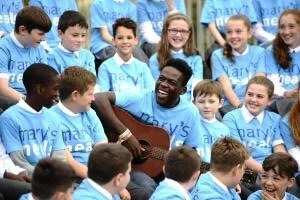
Haitian musician Jimmy Belabre tells Glasgow pupils how charity meals kept him from life of crime
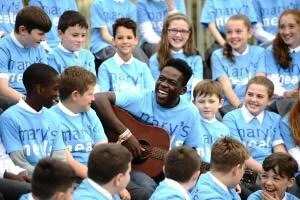
IT was a simple home-cooked daily meal but it encouraged him to stay on at school rather than join the lawless armed gangs that blighted his neighbourhood.Yesterday, Haitian musician Jimmy Belabre, 28, was in Glasgow to personally thank volunteers at global school feeding charity Mary’s Meals, which provided his daily food.He grew up in the violent slum of Cite Soleil and Mary’s Meals helped him to access the education that went on to change his life.Jimmy met school pupils at St Aloysius Junior School who have been fundraising for Mary’s Meals’ global school feeding programme for years.He was given the chance to share some of his music with the youngsters during a special assembly, where he also talked about his life and took questions from fascinated pupils.Jimmy’s home of Cite Soleil has around 500,000 people who live in houses made from rusting corrugated iron on a rubbish dump by the sea.He witnessed nightly gun battles there when lawlessness was at its peak, from 2004 to 2007, and remembers the night a bullet struck the wall just above his mother’s bed while she slept.But he resisted offers of money and guns from local gangs and stayed in school.His resolve was, he says, was fuelled by the daily meal he received in school and the kindness of the people from far away who made that possible. For many years, the daily school meal was all he had to eat.Jimmy is now the principal of the school he attended (St Francis De Sales Becky DeWine School) in Cite Soleil.During his three-week stay, Jimmy will meet supporter groups and volunteers in Glasgow, London, Manchester, Leeds and Edinburgh. Hewill also spend time in Dalmally, Argyll, where the work of Mary’s Meals began, in a small tin shed that still serves as the charity’s global HQ.He said: “When there is not enough food to eat, every morning you wake up asking: ‘What am I going to eat today?’ It makes it so hard to keep yourself positive, because you’re hungry and you need to feed your family. And you see people with extra food and money through negative activities. If I wasn’t being fed in school, it would have been very easy for me to become a gangster.”The Herald | August 2017
Revocation of the Minister of Social Affairs and Labor
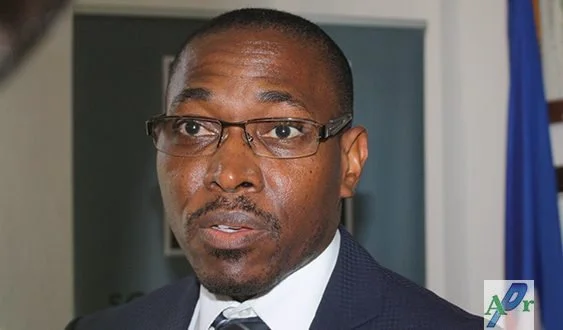
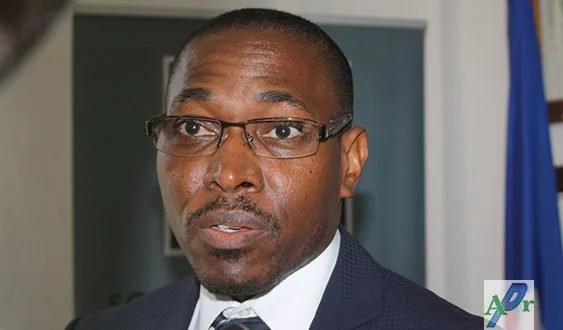
Roosevelt Bellevue, the Minister of Social Affairs and Labor, suspected of corruption, in a case of fraud in the acquisition of over-charged school kits, was revoked.In the official newspaper Le Moniteur N ° 139 dated Tuesday, August 29, 2017, a decree was issued appointing Prime Minister Jack Guy Lafontant, acting Minister of Social Affairs and Labor."Combating corruption and impunity is one of my commitments. I shall put all my strength into it. An act of corruption presupposes the presence of corrupters and corrupters. All are subject to the same penalties," declared President Jovenel Moïse.For his part, the former Minister denies his involvement in any corruption case. He considers these accusations to be "politicaillerie" and that this history of overcharging school kits is the work of a specific sector that wants to tarnish his image...For his part, Pierre Josué Agenor Cadet, the Minister of Education, denies any involvement of his Director of Cabinet, Jackson Pléteau, in cases of corruption related to a case of overcharging of school kits. Minister Cadet says he has not signed any contract to date.HaitiLibre - 30/08/2017
Timberland Will Get Cotton from a Nifty New Supply Chain – Haiti – if Experiment Soars
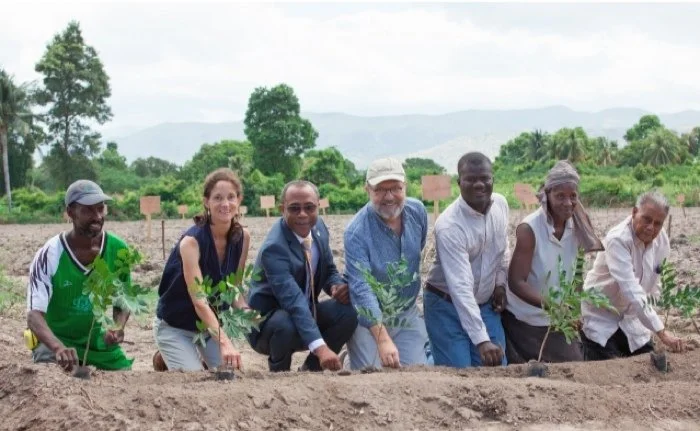
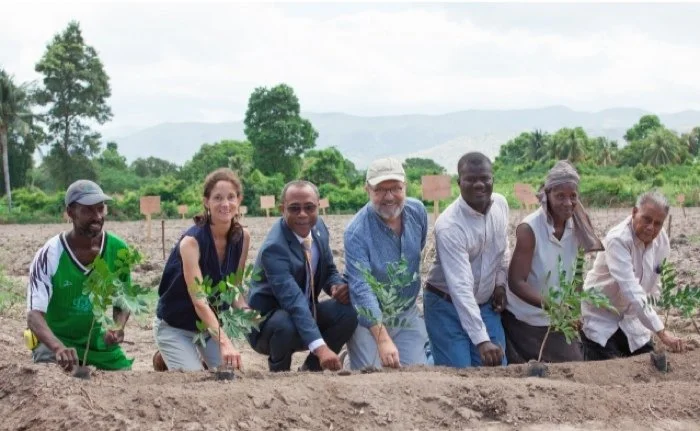
In a move that the company hopes will create a new cotton supply chain, outdoor clothing company Timberland is working with the Smallholder Farmers Alliance (SFA) on an effort to reintroduce cotton as a crop in Haiti, the company announced Tuesday. The company, along with SFA and Haiti’s Minister of Commerce and Industry, ceremoniously planted the first cotton seed to mark the start of the experiment. If the five-year initiative is successful, Timberland has committed to purchasing up to a third of the Haitian farmers’ annual global cotton supply (subject to price, quality and volume), the company says. Cotton, once the country’s fourth largest agricultural export, collapsed as a Haitian industry nearly 30 years ago due to a combination of politics and policies, Timberland says.
First, Is It Feasible?
Timberland and SFA’s cotton program was developed following a successful agroforestry model in Haiti that the two organizations had been working on in recent years. The program had Haitian farmers voluntarily tending a network of nurseries that produced up to a million trees each year. In return, farmers received training, crop seeds, seedlings and tools to help increase their own crop yields.With the success of that program, Timberland and the SFA engaged in a feasibility study to gage the potential of cotton’s return to Haiti. The groups studied ideal growing conditions, farmer interest and the availability of agricultural best practices gleaned from smallholder farmers in Africa and Asia. The study recommended that cotton be reintroduced – along with a comprehensive support system and a range of services that were not in place when cotton previously failed. By positioning cotton as a rotational crop in mixed farms that include vegetables, grain and livestock, the resulting agricultural benefits will extend far beyond a single crop, the study suggested.Next summer, the SFA will introduce cotton varieties that adapt best to local conditions and organic cultivation, and result in the highest quality cotton for cultivation in volume by smallholder farmers.With the reintroduction of cotton as an “anchor crop” in Haiti, Timberland says it also hopes to boost the economy and contribute to environmental restoration.
Wrangler Wants Sustainable Cotton, Too
In a related move – one which is also expected to help increase the supply of sustainable cotton – clothing manufacturer Wrangler recently joined a group called Field to Market: The Alliance for Sustainable Agriculture. Working with industry and academic partners, Wrangler is focusing on cotton-growing practices that will improve profitability for growers while reducing environmental impacts. Wrangler is also engaged in a pilot project for sustainable US cotton. The project involves a family of seventh-generation farmers from Alabama who will work with Wrangler and others to improve cotton yield, irrigation, energy inputs, greenhouse gas emissions and soil conservation. Forty thousand pounds of the family’s cotton will be used to make a special collection of Wrangler denim jeans that will be sold in 2018.

19-Year-Old Haitian/Japanese Tennis Player, Naomi Osaka, knocks out Angelique Kerber in straight sets

When the 2017 U.S. Open draw came out on Friday, defending champion Angelique Kerber's first round match was highlighted and circled on a lot of draw sheets. On Tuesday, Haitian/Japanese tennis player, Naomi Osaka, proved why.Under the roof on Arthur Ashe Stadium on a rainy day at Flushing Meadows, 19-year-old Osaka out-played the two-time Grand Slam finalist, winning 6-3, 6-1 in just over an hour to advance to the second round. The victory marked Osaka's first top 10 win of her career.After retiring with an abdominal injury in Toronto earlier this month, World No. 45 Osaka hoped to be healthy for the final major of 2017. A year ago at the U.S. Open, Osaka led Madison Keys in a third round match on Arthur Ashe but was unable to close. On Tuesday, Osaka simply out-hit Kerber, blasting winners all over the court and putting any memories of last year's disappointing U.S. Open exit behind her. Osaka finished with 22 winners and 17 unforced errors to Kerber's nine winners and 23 unforced errors.Kerber is only the second U.S. Open women's champion in the Open Era to lose in the first round the following year (Kuznetsova, 2005). After reaching No. 1 a year ago when she won her second Grand Slam of the year in New York, Kerber has not won a tournament since her victory at the 2016 U.S. Open. The German also lost in the first round at the French Open in May and bowed out in the Round of 16 at both the Australian Open and Wimbledon this year.With Tuesday's loss, Kerber, who was seeded sixth at the U.S. Open, will drop out of the top 10 in the WTA rankings.Jamie Lisanti, SI

Kagie 22 presents ‘Haiti Royalty’

Three sections will display “Haiti Royalty” in Kagie 22’s production this Labor Day Carnival.
Band leader Haitian American Karine Gilles told Caribbean Life that the all-female band will comprise 75 masqueraders altogether in the three sections: Haiti Queen, Princesses Azia and Haiti Princess Amor Toussaint.
She said besides Haitians, masqueraders are Trini-Haitian Americans and Martiniquans.
Gilles, who has been participating in the West Indian American Day Carnival Parade since 2003, said masqueraders can expect “more colorful designs and good music” this year.
She added that Kagie 22 will play “outstandingly” as well.

The production is assisted by Moise Desir, Guetary Roche, Rosena Destin, Pedine Nazaire, Yvener Leon, Michelle Bastien Archer, Kettelie Innocent, Kagie 22 TV staff, Radio Independence, Elegance, Planet Musical, Bebe Fritay, Yoyo Family, Tambour Universel.
Gilles said she founded Kagie 22 in 2002 as a TV show “to touch base with the community and [to] create linkage with organizations that can fulfill communities’ needs.
“Many times, our people need to know how to participate in mas camps,” she added, stating that some members are unaware of the expectations of WIADCA and the rules to be “an active camp” in the West Indian American Day Carnival Parade.


Gilles said playing in the parade is a “very productive, competitive and rewarding concept for children and adults.”
She said masqueraders will sway to the beat of Sweet Micky and DJazz New York.
Gilles can be reached at (917) 348-6488 or at Kagie22@aol.com.
By Nelson A. King | August 29, 2017

20 bullet impacts on the American shot down in Pétion-ville

Twenty bullet impacts on the American shot down in Pétion-ville Following the murder Saturday evening in Pétion-ville of a US citizen http://www.haitilibre.com/en/news-21934-haiti-flash-an-american-shot-dead-in-petion-ville.html , the Deputy Spokesperson of the National Police of Haiti (PNH), inspector Gary Desrosiers has brought some clarification. He revealed the identified victim who would be a certain Benjamin R. Craft, an American of Haitian origin, who was shot while leaving a high-end restaurant in Pétion-ville. According to Gary Desrosiers, this murder has all the appearances of an execution. He also indicated that the person who was injured was a security guard. He confirmed that so far no arrests had taken place and that the motive for the murder was unknown until now. HaitiLibre | August 2017

Security : New Special Border Police Unit

Haiti - Security : New Special Border Police Unit Michel-Ange Gédéon, Director General of the Haitian National Police (PNH) announced the creation of a new specialized police unit whose mission is to monitor and control the land border between Haiti and the Dominican Republic, in cooperation with the Customs and Immigration Department.
This new special border police unit that will have at term in 2018, 600 men to be deployed along the border, currently has a staff of 100 officers to be deployed in the Northeast. Their mission is to combat, inter alia, transnational crime, human trafficking and trafficking in arms and narcotics.
Another specialized unit will be exclusively responsible for combating smuggling between the two countries.
At the same time, the capacities of the Coast Guard, the Swat and the Drug Trafficking Brigade (BLTS) have been strengthened to combat trafficking in narcotics on national territory.
In addition to this unit, a coordination unit was set up to facilitate communication between departmental divisions and to plan joint interventiosn and operations.
HaitiLibre | August 2017
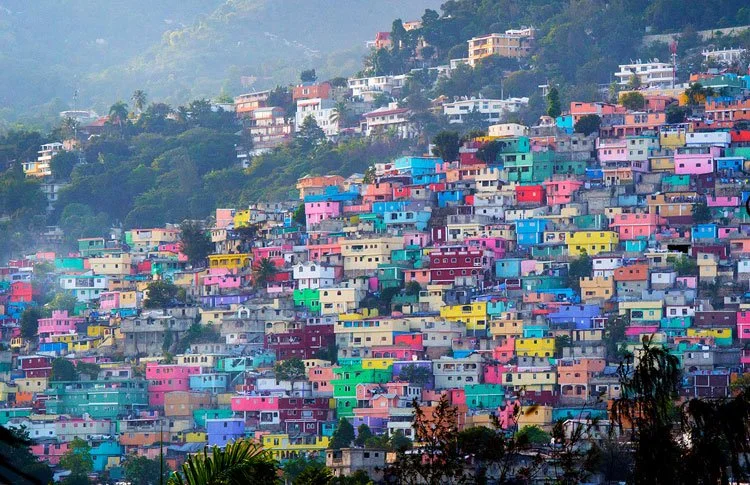
$4.7 Billion Chinese Development Project Advances in Haiti
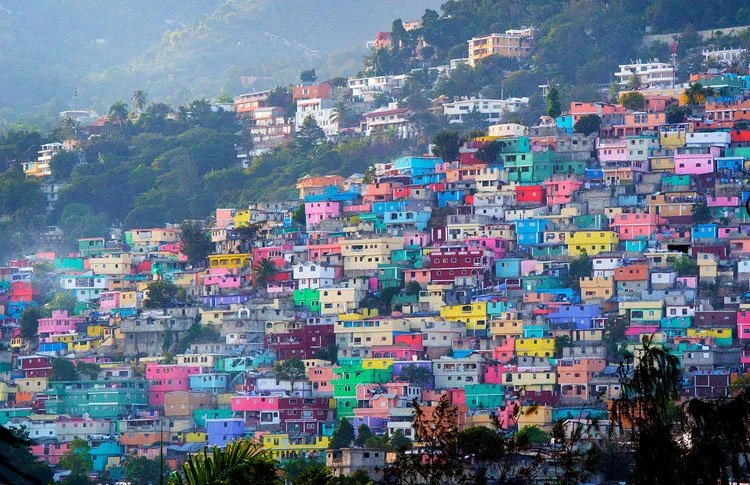
 The promised infrastructure seems almost too good to be true, but let’s hope that dreams can indeed come true for the Haitian people. China has made good on similar projects in its estimated Trillion dollar “Silk Road” initiative, not to mention 30 futuristic infrastructure projects in its own country. Perhaps the future has finally arrived for Haiti, and as a result the Caribbean corridor will be transformed.
 In late July and early August of this year The Haitian Press Agency (AHP) reported that China would invest $30 billion. Bati Ayiti and its Chinese partners signed an agreement for the renovation of Port-au-Prince with the Municipality of Port-au-Prince.
Police say US man shot multiple times and killed in Haiti
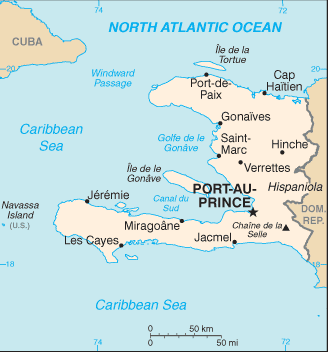
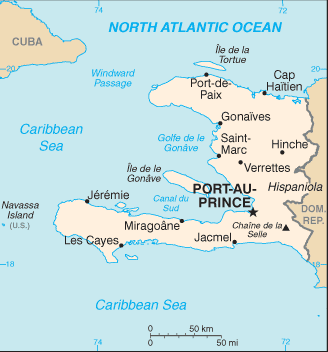
PORT-AU-PRINCE, Haiti — A Haitian National Police spokesman says a U.S. citizen was shot multiple times and killed by an attacker in the capital.Spokesman Garry Desrosier described the killing as an apparent “execution.” Desrosier said Sunday that the gunman was waiting for the 34-year-old victim as he left an upscale restaurant in the Petionville area of the capital.The victim was shot about 20 times and died at the scene Saturday night. A security guard was also wounded. There were no arrests and the motive was unknown.Desrosier identified the man as Benjamin R. Craft and said he was apparently Haitian-American. His hometown in the U.S. was not available.Copyright 2017 The Associated Press. All rights reserved. This material may not be published, broadcast, rewritten or redistributed.By: Associated Press August 27, 2017
Haitian Student in Taiwan Invents Solar-Powered Backpack for Reading
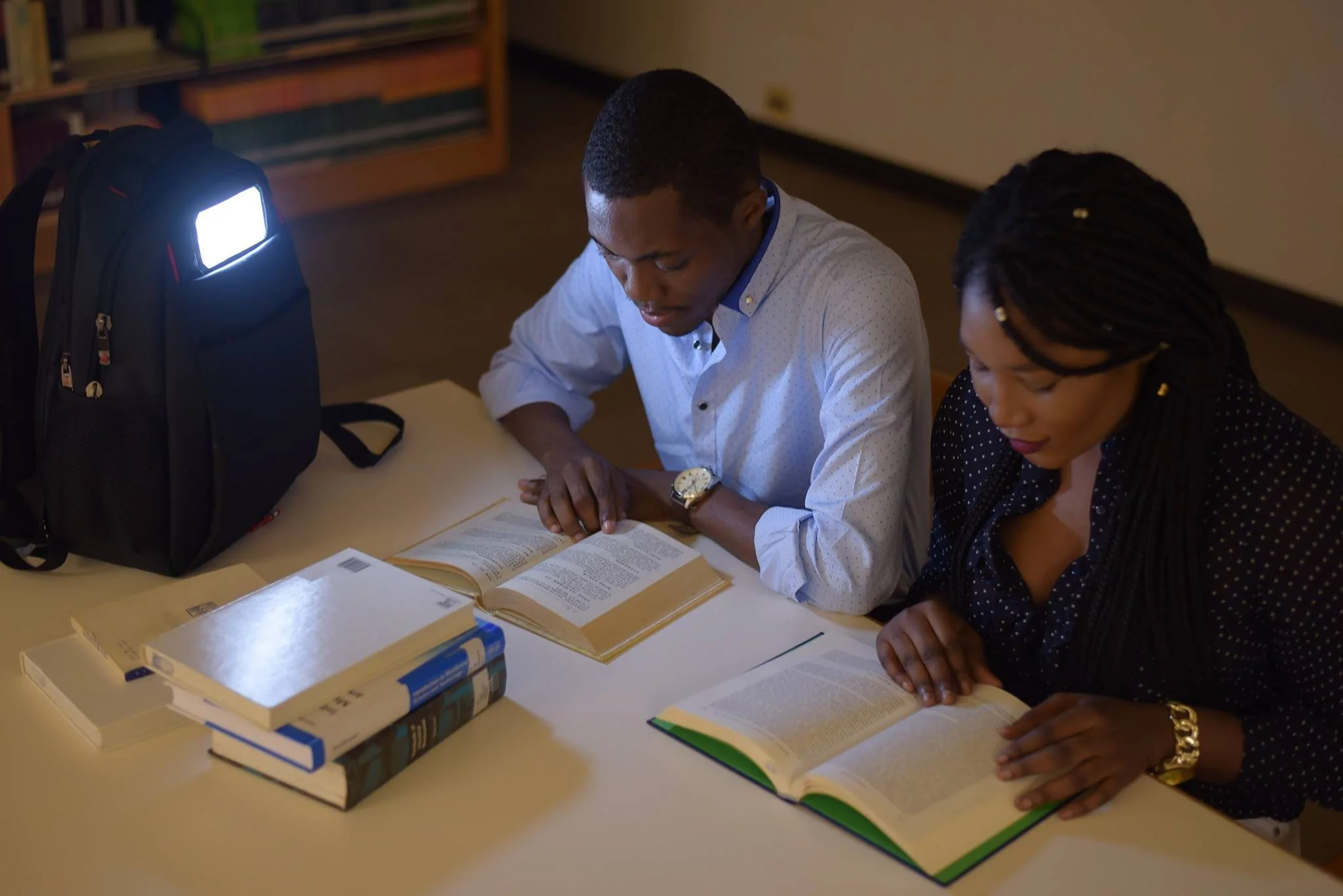
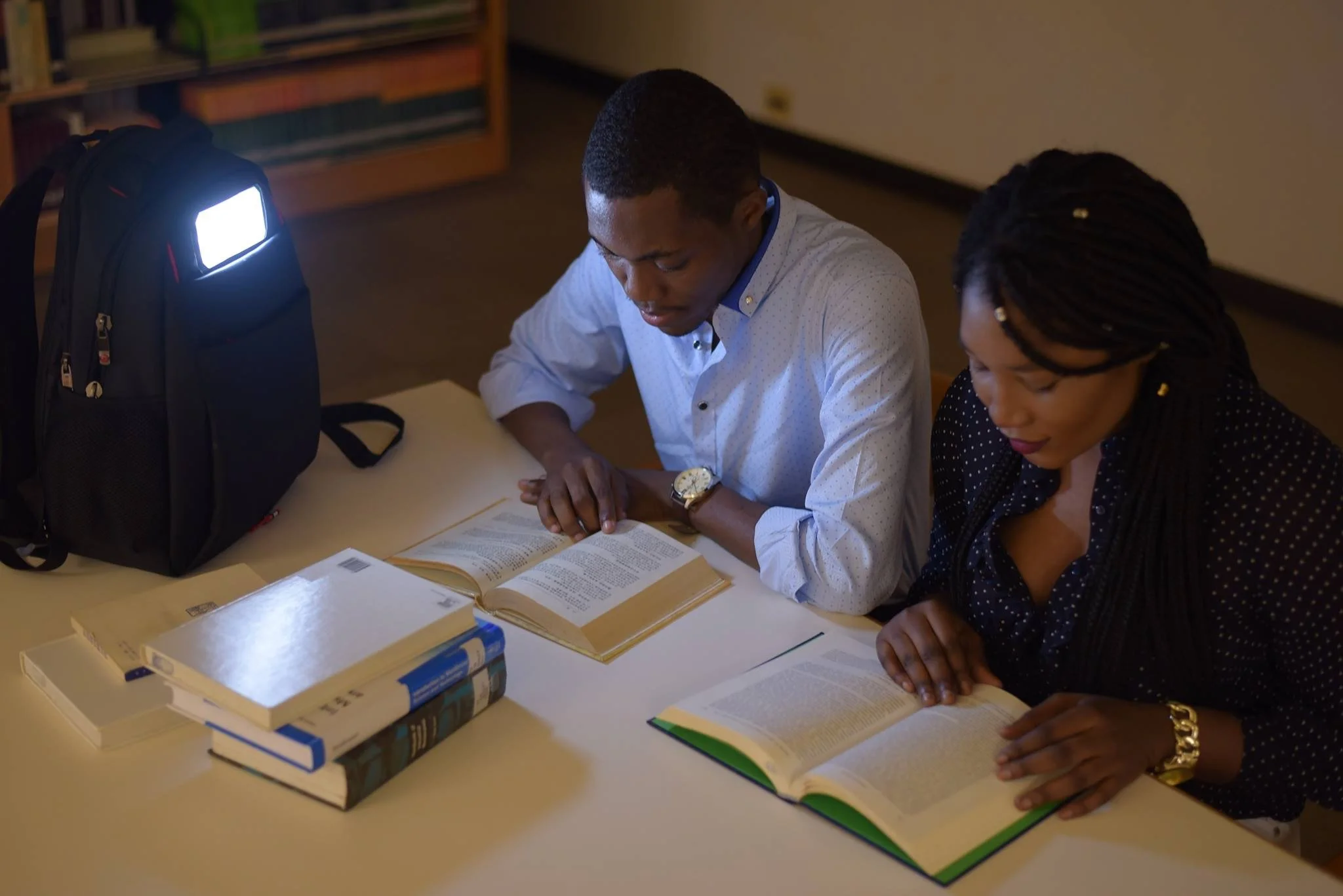
TAIPEI (Taiwan News) -- A Haitian man who is currently studying in Taiwan has invented a school bag which can provide light for reading and power to charge mobile phones generated from a built-in solar panel.
Mike Bellot, 26, who came to Taiwan four years ago to study global politics and international trade at Tamkang University, is set to launch what he calls "Solo Bag," a bag powered by solar energy that he believes will affect the lives and the future of 1.2 billion people who are living without access to electricity in developing countries.
Bellot and fellow Haitian Torcel Wendianne were inspired to invent the bag after the tragic death of his close cousin due to a fire caused by a candle used for light in his native Haiti. His cousin had been studying to be a doctor, but like 63 percent of the population in Haiti who lack regular access to electricity, he was forced to read by candle light, and after having nodded off during a late study session, the untended candle started a massive fire which consumed the home and killed his cousin in the process.
Because the tragedy hit so close to home, Bellot is very passionate about not only bringing this product to his native Haiti, but also to the 1.2 billion people or 16 percent of the world's population who do not have access to electricity, according to the International Energy Agency in 2016.

According to Bellot, Solo Bag comes with a solar panel, integrated battery, USB port, GPS tag for tracking, and an integrated LED lamp, enabling students who do not have access to electricity to safely and cost-effectively study and do homework during the night. The bag also provides enough energy for a family to charge mobile phones, tablets, and other electronic devices. The bag can store enough energy from one hour of exposure to the sun for six hours of light and charge two mobile phone
To launch the product, he plans to launch a startup company called Solo Haiti and display the Solo Bags in an independent showroom during an event in Haiti and get immediate feedback from the buyers and retailers. After showcasing it, he will begin to take pre-orders and make it available also online for buyers outside the country.
If you would like to help crowdfund this innovative product, please visit their gofundme page.
By Keoni Everington | June 2017
Have You Met Local Haitian American Artist Angie B.?
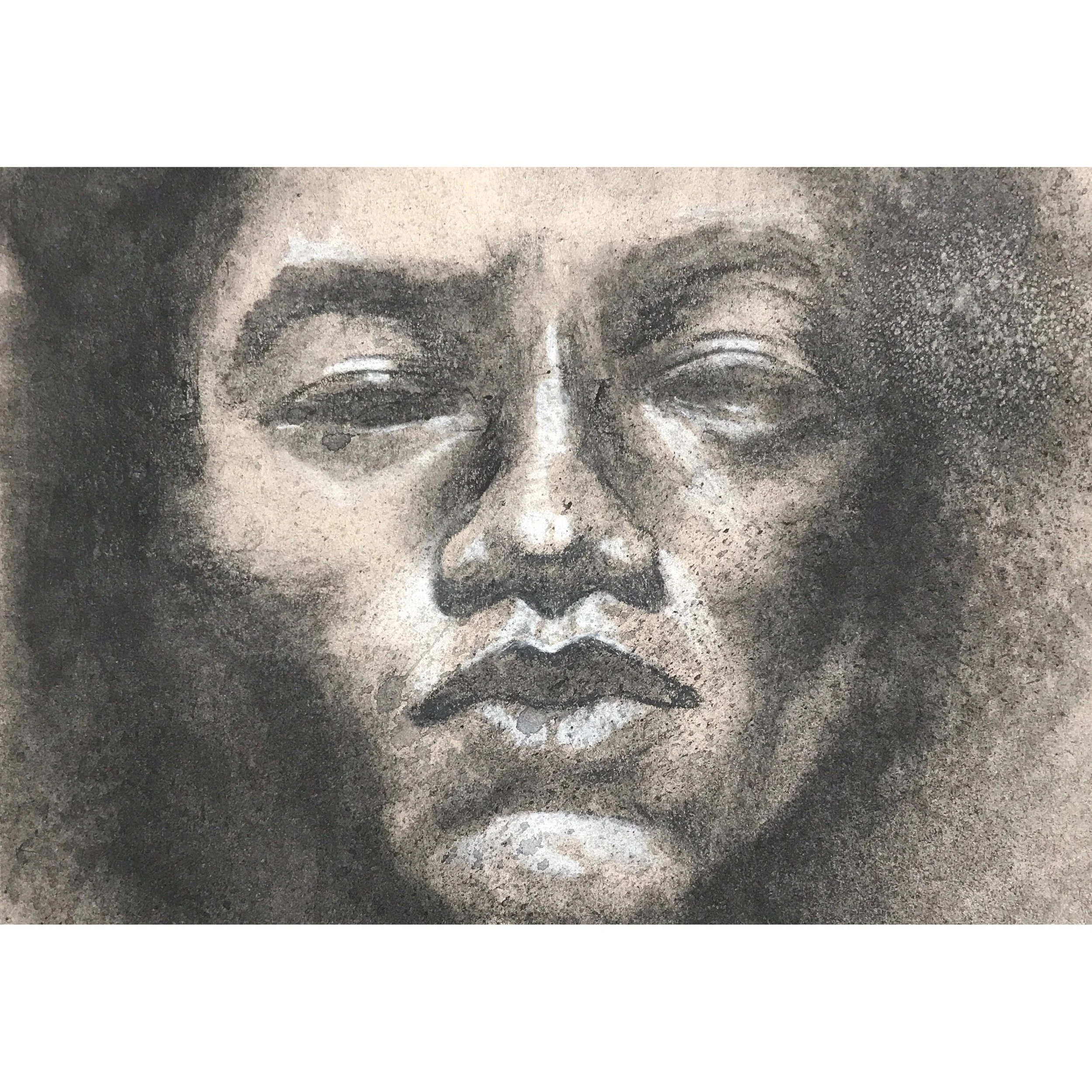
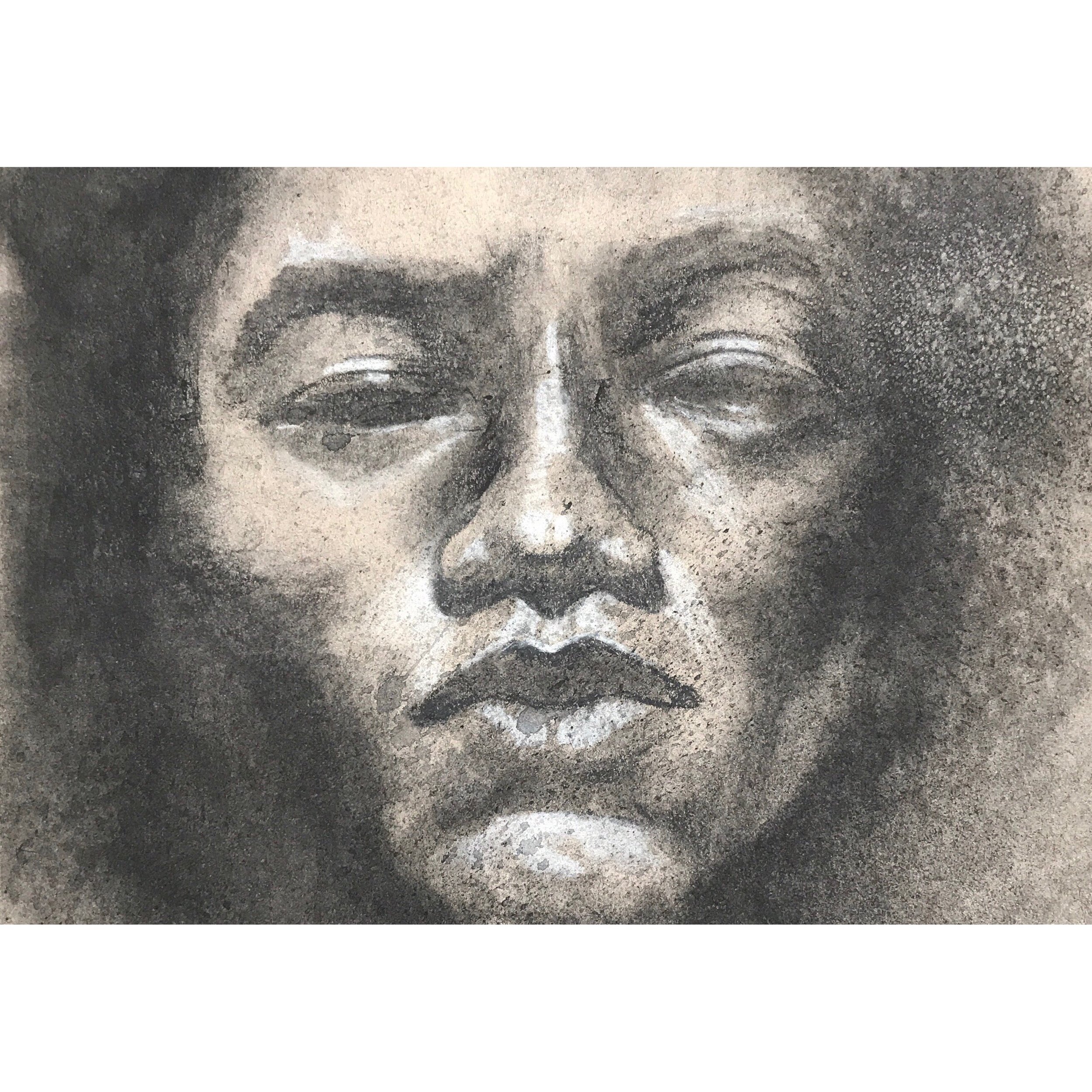
 “Let your passion be your guide,” was the biggest takeaway from an inspiring conversation with Haitian-American artist, Angie B. This amazing, multi talented artist has fearlessly combined her love of art and design into a multitude of mediums - paper, canvas and even t-shirts. She's an artistic force to be reckoned with.Angie B. is a Long Island native who grew up driven by creativity in all forms. From pencil to photography, there weren’t many forms of media that she hasn't explored. While earning her visual arts degree at Fordham University, she discovered her love for both the classical and abstract arts. She mused at how line and form had the power to create lasting connections and emotions.Currently, Angie continues to build her body of work and experiment with various mediums including ink, paint, wood, and various canvas. She also works as a graphic designer.
 Haitiville: What drives/motivates you?Angie B: My primary motivation is the drive to always be better than I was yesterday.Haitiville: How has your culture influenced your work?Angie B: One thing that always stands out to me about my culture is the vibrancy in the art, the nation, and the people. I try to reflect a colorful and vibrant feel to a lot of my pieces.
 Haitiville: What does growing up Haitian mean to you?Angie B: To me, growing up Haitian means pride, richness in culture, family, laughing, community, tradition, and resiliency.
 Haitiville: Who are your artistic idols? Who do you look up to?Angie B: I’m a fan of Da Vinci, Picasso, Gaugain, Jackson Pollock, Frida Kahlo, and many other figurative and abstract artists. There are so many amazing artists past and present that have effectively transferred their emotions onto canvas. It is easy to become inspired by them all.
 Haitiville: Where do you see yourself in 5 years?Angie B: Art wise, I actually have no real idea and I don’t mind that. [It] helps keep my mind free to create my art based on my current emotions. I’ll definitely continue to aggressively build up my portfolio and see where it takes me. The next few years are my blank canvas, creating as the days come. That’s the most exciting thing to me.Haitiville: Tell us about your upcoming November 4th event?Angie B: Oh, it's my first solo art show. Super excited.Angie B., we can't wait to see what the future holds for you. Wishing you the very best!!Interested in seeing more of Angie B.’s artistic talents and learning more about her art show? Visit her beautiful INSTAGRAM account. Her t-shirt designs can be found at hypd. Apparel.
Sickle-Cell Patients See Hope in CRISPR
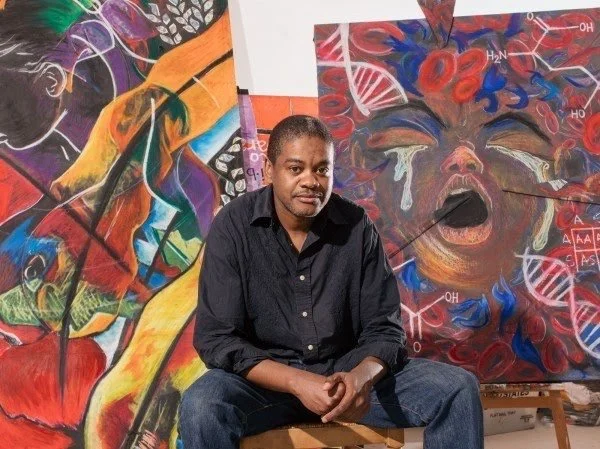
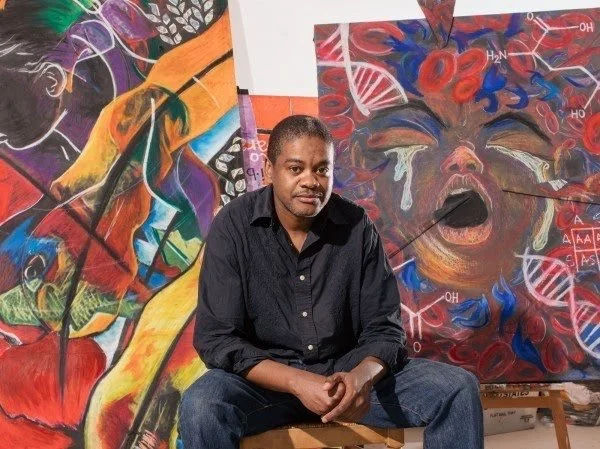
Hertz Nazaire is a soft-spoken artist who likes to paint in bright colors, with subjects like rainbow palm leaves and dancing women in twirling skirts. But one series of paintings he’s created is darker. Here, deep-red discs contrast with misshapen, bluish-purple ones against a black background. One canvas shows an African face drowning in the red and blue shapes, eyes streaming with tears, mouth agape in pain. The work reflects his lifelong struggle with sickle-cell disease.Nazaire, a 43-year-old Haitian-American, figures he’s been hospitalized more than 300 times since he was a child. He and other sickle-cell patients will tell you that the worst part of the disease is the debilitating pain. “It’s a horrifying thing to have, because it’s extremely painful. It’s a major fight all the time,” he says.Roughly 100,000 people in the U.S. have sickle-cell disease, most of them African-Americans and Latinos but also people of Middle Eastern, Asian, Indian, and Mediterranean descent. Compared with the average American, they live much shorter lives—about 40 to 60 years.The cause of sickle-cell has been known for a century, but the disease has long been underserved by the medical establishment and the pharmaceutical industry. That may be about to change. Its genetic origin—a single, well-studied mutation—makes it an attractive candidate for treatment with the gene-editing tool CRISPR. The idea is that CRISPR could correct the genetic mutation responsible for sickle-cell so that patients’ bodies could make normal red blood cells, alleviating the pain and other severe symptoms associated with the disease. Researchers have already tested the gene-editing tool on human sickle cells in the lab and are now working on getting the technique to clinical trials. Early results hint that sickle-cell could be among the first diseases that CRISPR essentially cures.Despite the lingering safety concerns about using CRISPR in people, some sickle-cell patients and their doctors are already embracing it. “I would be one of the first people to volunteer and say, ‘I want to take part in a study,’” Nazaire says. He first heard about CRISPR two years ago, when he came across a YouTube video featuring Jennifer Doudna and Emmanuelle Charpentier, two of the inventors of the technology. He’s been enthusiastic about the idea of using CRISPR to treat sickle-cell ever since.Sickle-cell disease is one of the most common genetic disorders, affecting millions of people around the world. It’s caused by a mutation in a gene known as HBB, which makes hemoglobin, a protein that transports oxygen throughout the body. Blood cells with healthy hemoglobin are red and disc-shaped. Cells with abnormal hemoglobin are shaped like sickles used to cut wheat, the characteristic that gives the disease its name.These misshapen cells are sticky and clump together. When too many of them build up, they create blockages in blood vessels and cut off oxygen to nearby parts of the body, causing severe episodes of pain. The disease can also cause frequent infections, eye problems, and organ damage.CRISPR Therapeutics is one of a handful of gene-editing startups pursuing new treatments for sickle-cell. The company's approach involves isolating stem cells from samples of patients’ blood. Scientists would use CRISPR to activate a genetic switch that would raise the levels of a fetal form of hemoglobin in red blood cells, turning them healthy. This fetal hemoglobin effectively counteracts the effects of the sickle mutation. The modified cells would then be infused back into the patients.Samarth Kulkarni, president of CRISPR Therapeutics, says this is safer than injecting the gene-editing mechanism directly into the patient. That’s risky because CRISPR can cause unintentional or off-target edits, meaning it may cut DNA it isn’t supposed to. Editing cells outside the body will allow scientists to make sure the technique works before reintroducing the cells, he says.Testing the method in lab experiments using stem cells taken from sickle-cell patients, researchers at CRISPR Therapeutics found that 85 percent of the cells were successfully edited, which means they were able to make healthy red blood cells. Kulkarni says when the stem cells are reintroduced back into the patient, they should be able to ameliorate all symptoms of sickle-cell. These stem cells are able to travel to the bone marrow, where they make more healthy blood cells for the rest of the body. The healthy cells will proliferate, and eventually, he says, they will outnumber the sickled ones. St. Jude Children’s Research Hospital, Editas Medicine, and Intellia Therapeutics are working on similar approaches.“Our hope is that it’s one-time and curative for life,” Kulkarni says. However, he wouldn’t say when the company plans to begin clinical trials of the technique.Meanwhile, researchers at Stanford University School of Medicine are working on a different method that aims to directly modify the mutated HBB gene itself using CRISPR. Researchers would do that outside the body as well. Matthew Porteus, an associate professor of pediatrics at Stanford, says his team is aiming to begin a clinical trial by the end of 2018 or the beginning of 2019.  One of Nazaire’s sickle-cell-inspired paintings Porteus says not all of a patient’s original sickle cells need to be replaced with edited ones to effectively cure the disease. He says if the proportion of sickle cells is below 30 percent, patients don’t have any symptoms. So far, his team has been able to achieve correction rates between 40 and 70 percent. He expects corrected blood cells to eventually surpass sickled ones in a patient’s body. Sickle cells live only 10 to 20 days, but normal red blood cells last from 90 to 120 days.The first clinical trials using CRISPR haven’t started in the U.S. yet, but researchers are already taking steps to educate patients about the technology. The National Institutes of Health is launching a story this month to examine opinions on the technology among up to 150 sickle-cell patients, parents of patients, and health-care providers.Vence Bonham, a researcher on genomics and health disparities at the National Human Genome Research Institute who is leading the study, says it’s important that scientists designing clinical trials consider patients' beliefs and concerns. Gauging the views of people who are most likely to be affected by a new scientific advance seems like a no-brainer, but it’s something that’s rarely been done in medical research. “This technology has been moving very quickly, but the disease and advocacy communities have not really been part of the conversation,” Bonham says.Participants in the NIH study will first be asked about their knowledge of CRISPR. Then they’ll watch an educational video about the technology and answer a second set of questions to see how the video may have influenced their knowledge or beliefs. After that, they’ll participate in focus groups with other patients, parents of patients, or health-care providers to talk about using CRISPR for sickle-cell disease. Bonham hopes the study will “inform the development of clinical trials to make them more appropriate and respectful of the concerns of the community.”Biree Andemariam, director of the New England Sickle Cell Institute at the University of Connecticut Health Center, has started talking to her adult patients within the past few months about CRISPR’s potential for treating sickle-cell disease. “Patients are very intrigued by it. They think it sounds wonderful,” she says.But Andemariam says there can also be trust issues between sickle-cell patients and their health-care providers. Black patients may be suspicious of signing up for clinical trials, particularly given historical examples of medical experimentation on African-Americans without their consent. The infamous Tuskegee study, for example, left African-American men with syphilis deliberately untreated in an experiment that ran from 1932 to 1972.“The Tuskegee experiment is fresh in lot of people’s minds even though that was decades ago,” says Andemariam, who is also chief medical officer for the Sickle Cell Disease Association of America.If a CRISPR cure for sickle-cell eventually reaches the market, one major question is who will have access to it. Isaac Odame, a Ghana-born physician at the Hospital for Sick Children in Toronto, who specializes in sickle-cell disease, says patients in Africa already have trouble paying for hydroxyurea, a common medication used to treat the disease. The drug costs one to two dollars per day, but even that is too expensive for many, he says. He worries the cost of CRISPR will put a cure out of reach for most of the world’s patients.“For 90 percent of people with sickle-cell disease who live in this world, this will still be something far too expensive for them to have access to,” he says.Until CRISPR is available, sickle-cell patients will have to cope with other treatments. To manage his disease, Nazaire recently underwent apheresis, a transfusion procedure that removed and replaced some of his red blood cells in an attempt to decrease the proportion of sickled ones. He’s in less pain than before, but the benefits could wear off over time.To Nazaire and others, CRISPR represents the promise for a better, longer life. That hope might not be far off, with both academic and commercial labs racing to develop CRISPR-based therapies. “When you’re faced with something that’s desperate and life-threatening, you want to see something done about it,” he says. “I think this is something that needs to be used. It could be beneficial for the world.” By Emily Mullin | August 23, 2017