
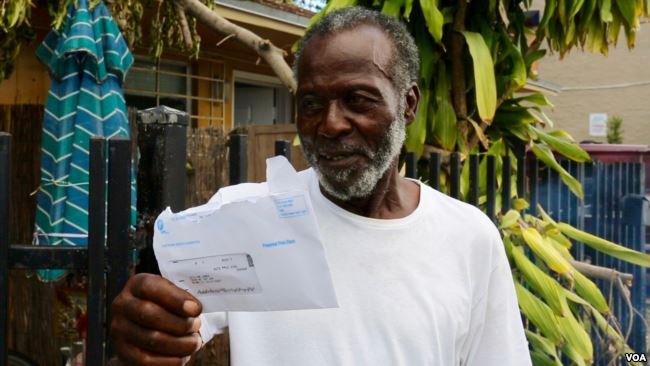
Post-Irma, Miami's 'Little Haiti' Continues to Struggle
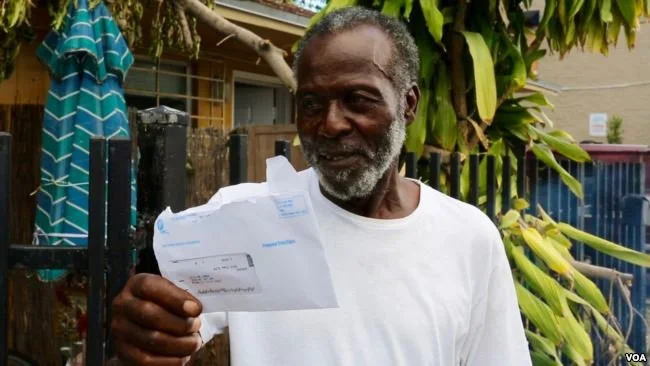
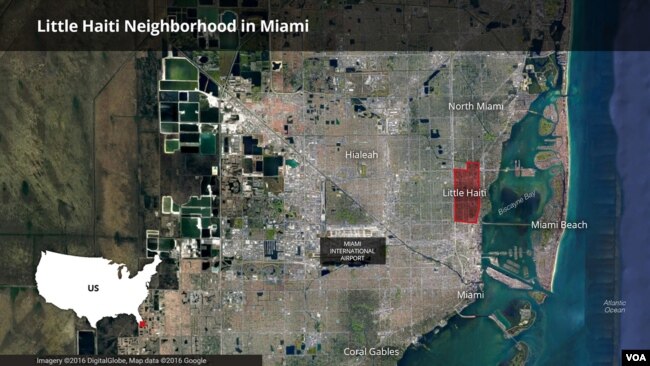
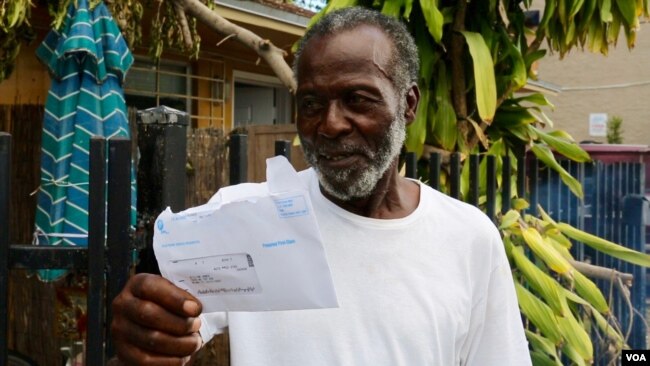 For the diverse neighborhood — strong in resemblance to its namesake country, and now plush in scattered palms — a humid 32-degree celsius weekday afternoon with no electricity, and no back-up generators is wearing on an already wary community.With their stocked coolers quickly diminishing, along with all their perishables, the family barbecues can only last so long.‘We really need help’
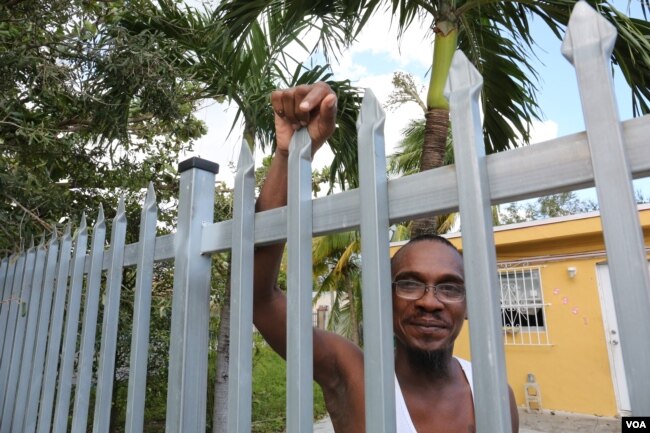
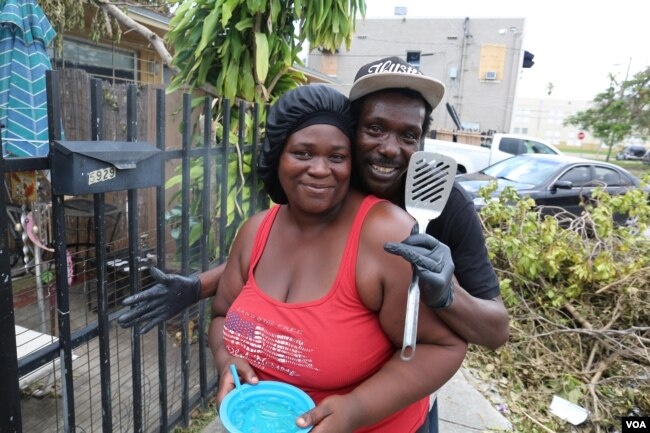 Anthony Bennett, like others in his community, is frustrated that wealthier neighborhoods have begun to see their lights turn on, and not theirs.“We all bleed the same, so we feel like if they got lights, we should have lights too,” Bennett said. “We shouldn't be over here suffering waiting till next week or the week after.”
 Passing by Bennett’s home, neighbor Haitian-native Sylvie Lucien borrowed a purple crayola marker, and penned a cardboard sign asking for assistance.“We have newborn babies and disabled elderly...we desperate,” Lucien read aloud. “We need help. We really need help.”For Lucien, the personal financial struggles she endures began long before Irma. But the passing of a hurricane, she says, reveals a devastating reality: if it were worse, she might not have survived.“You can't go nowhere,” Lucien said, frustrated. “We were going to stay here and die because where can you go with no car, and nobody picking you up?”
 Ortiz, on the other hand, says she and her husband had a choice, but decided to stay and not risk separating from their pet dog. Next time, she admits, the decision will be easier.“I couldn’t handle it again,” Ortiz said.By: Ramon Taylor | September 13, 2017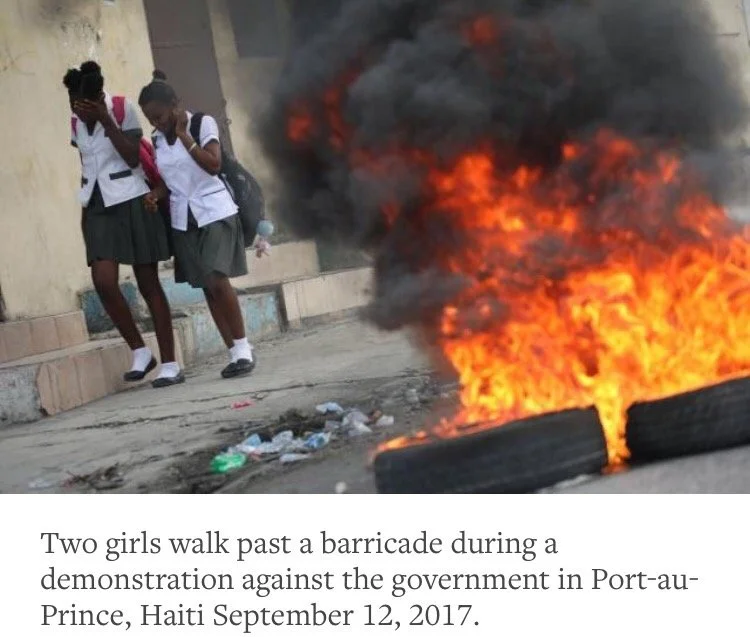
Violent Street Protests Break Out In Haiti Over Tax Hikes
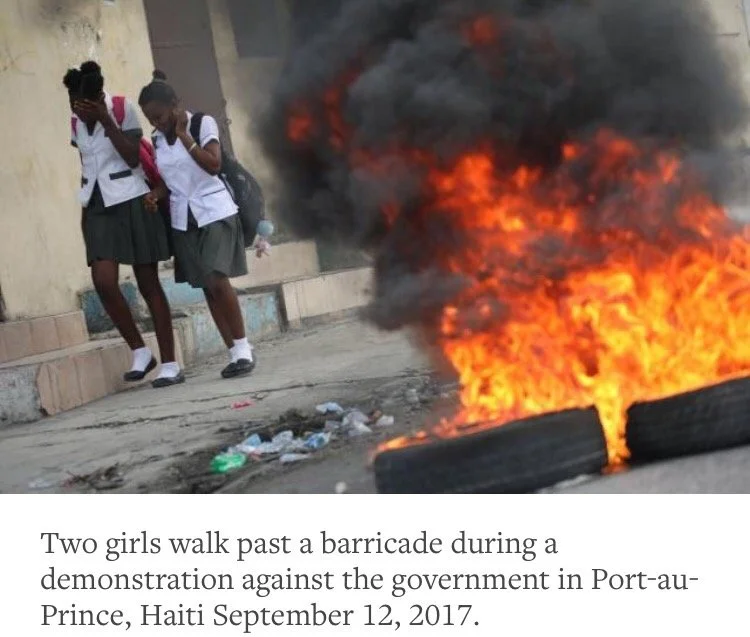
PORT-AU-PRINCE (Reuters) - Protesters in Haiti damaged commercial buildings in the capital city and set cars on fire on Tuesday, angered by government tax hikes that
The Port-au-Prince protest, called by former presidential candidate Jean-Charles Moise, took many by surprise and represents the biggest outcry against the administration of President Jovenel Moise since he took office earlier this year.
“The revolution has just started. Jovenel Moise will have to retract his taxes or he will have to leave immediately,” said Jacques Menard, a 31-year-old protester. “And this is a warning because the next phase can be very violent.”
Protesters took to the streets in separate groups in several districts in the metropolitan area of Port-au-Prince, erecting flaming barricades, blocking traffic, and confronting riot police, who fired tear gas and warning shots in the air.
Several people were arrested, the police said, but there were no reports of any deaths or serious injuries.
Lawmakers last weekend approved an unpopular budget that raises taxes on products including cigarettes, alcohol and passports.

At the same time, foreign aid to Haiti is slowing. The country is one of the poorest in the Americas and suffered a devastating earthquake in 2010 and the worst of hurricane Matthew last year.
“If Jovenel Moise is intelligent, he should refrain from publishing the budget, otherwise he will have to face a series of street demonstrations that will further complicate the situation,” Jean-Charles Moise said on local radio.Government officials were not immediately available for comment, but Economy and Finance Minister Jude Alix Patrick Salomon defended the budget over the weekend.
 “There are people who are blaming many things on the budget that are not true,” Salomon told reporters shortly after the spending plan was approved. “There are people manipulating the public opinion.”



Macaroni Au Gratin


INGREDIENTS:
DIRECTIONS:
Bring a large pot of water to boil over high heat. Add the macaroni and let it cook until soft yet firm. 1. Add the onions and Maggi chicken broth. 2. Reduce heat and keep stirring occasionally. 3. Stir in the Velveeta cheese, until melted. 4. Keep stirring constantly to avoid the cheese from sticking to the bottom. 5. Add butter and Parmesan cheese. 6. Pour in the carnation milk and stir. 7. Remove from heat and pour into a greased baking sheet. 8. Preheat oven to 300 degrees. 9. Place in oven and bake for an hour and 20mins
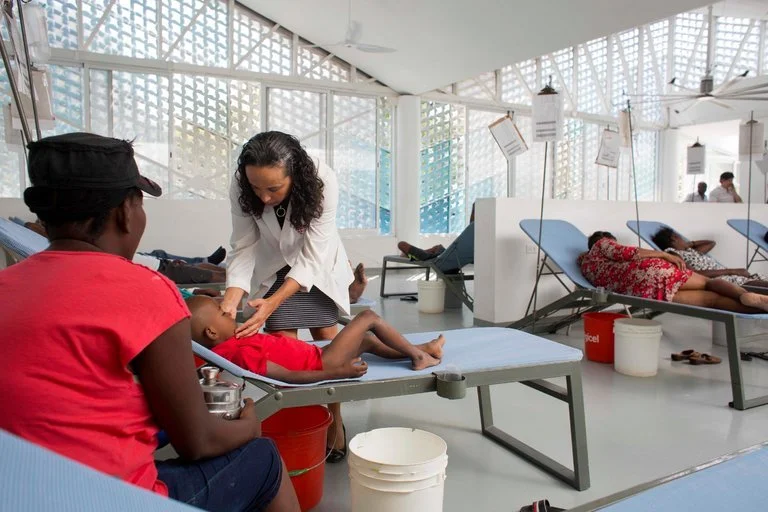
In Haiti, a Building Fights Cholera
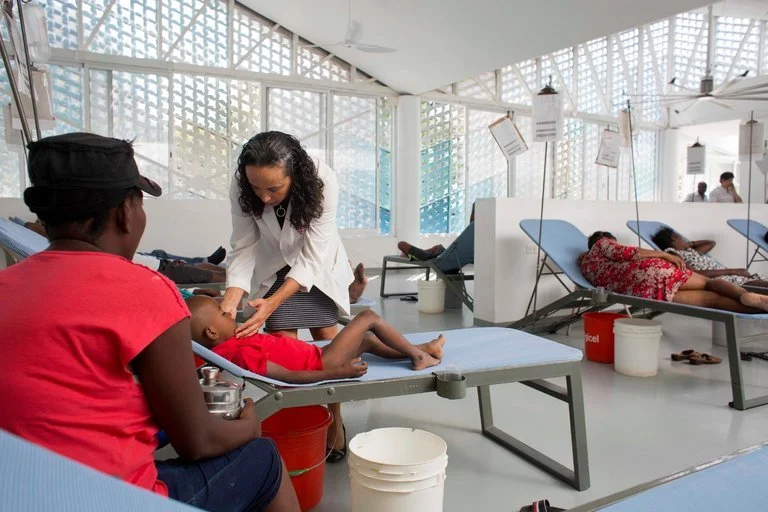

Next month marks the seventh anniversary of the cholera outbreak that ravaged Haiti. The disease, which can cause death within hours if left untreated, came less than a year after Haiti was rocked by an enormous earthquake that left hundreds of thousands dead and millions injured, displaced and destitute.
Haiti is prone to earthquakes and tropical storms — the island was spared the worst of Hurricane Irma last week — but the cholera outbreak was an anomaly; the disease had never before struck Haiti. It was brought in, it is widely believed, by United Nations peacekeepers from Nepal. One of the world’s most infectious waterborne diseases, cholera spreads quickly and has proved extremely difficult to contain in Haiti. Over 10,000 have died and nearly a million have been stricken to date.
But one organization has managed to nearly eradicate it in a large slum in Port-au-Prince that lacks clean water and sanitation.
One of the game changers that would surprise most people, including global health experts, was actually a building. It wasn’t just any building, but a very intelligently and beautifully designed one: the Cholera Treatment Center, operated by Les Centres Gheskio, an acronym that stands for the Haitian Group for the Study of Kaposi’s Sarcoma and Opportunistic Infections.
Gheskio, founded in 1982 in the early days of the AIDS epidemic, provides primary care services free of charge to people suffering from tuberculosis, malnutrition, and other life threatening conditions in an area of the Haitian capital that is home to 60,000 Haitians. (Gheskio is a less well-known sister organization of Partners in Health, which focuses on Haiti’s rural population.)
After the 2010 earthquake, Gheskio’s multi-acre campus was badly damaged. So the organization erected emergency tents to serve as a makeshift cholera treatment clinic. Once cholera reached Port-au-Prince, patients showed up on foot or were carried in wheelbarrows, around the clock.
Cholera manifests with extreme diarrhea and vomiting. Virtually all liquid is excreted from the body, causing victims to die of dehydration within hours of full manifestation if untreated. It is relatively easy to treat, but patients must be rehydrated immediately. To prevent it from spreading, infected human waste must be managed carefully.
Gheskio’s founder, Jean W. Pape, an infectious disease specialist and native of Haiti, knew that eradicating cholera would take years. So even as the organization struggled to keep up with the influx of patients during the first year of the epidemic, he embarked on a long-term solution: building a permanent treatment center.
Gheskio turned to MASS Design Group, a Boston-based nonprofit organization that specializes in architecture that promotes dignity and justice in resource-limited settings. It has built hospitals, health-worker housing, schools and civic spaces around the world, including a tuberculosis hospital for Gheskio. MASS Design began by studying the conditions inside the tents.
Tents provide relative shade and privacy but offer limited light and poor ventilation, trapping warm air and compounding the smell of bodily waste. The materials become worn by rain, wind and sun, and must be replaced routinely. Because of the nature of cholera, the makeshift beds, fashioned out of old fiberglass school chairs and costly army cots, also didn’t last long.
Most problematic, Gheskio was relying on manual removal of human waste by an outside vendor. This was both costly and risky: The organization couldn’t ensure its disposal would not recontaminate the water table, risking the infection of others.
“We did some back-of-envelope calculations and found that over a 10-year span of time, which was then considered optimistic for how long it would take to get rid of cholera, the tents and manual waste disposal system they were then using would cost Gheskio in excess of $500,000,” according to a co-founder of MASS Design, Alan Ricks.
Ricks estimated that MASS Design could build, for a comparable sum, a permanent structure that could be repurposed once the epidemic was fully contained. So MASS Design and Gheskio joined forces to raise philanthropic funding from the Deutsche Bank Foundation, Barr Foundation and individual donors, and began work.
One important innovation, developed with Fall Creek Engineers, based in Santa Cruz, Calif., was to bring a water-purification technology to Haiti called anaerobic baffled reactors. The reactors are a form of septic system that uses bacteria to treat sewage and contaminated water, turning it into clean water. Reactors, buried under the cholera center, force water through five chambers, each successively increasing the level of purification.
Each week, Pape receives a detailed report on the water quality. The system sanitizes and recycles 250,000 gallons of water annually, ensuring that the water is free enough of bacteria and other pathogens that it can be returned to the water table. This output is supplemented by separate, large cisterns to capture rainwater for drinking.
Many other details incorporated into the center also promote health, as well as comfort, beauty and pride. Above the reactors, for example, is a pavilion structure designed to maximize airflow. Rather than spending money on tents, furniture or waste disposal services — money that leaves the local economy — the organizations enlisted local artisans, whose metalwork is world renowned, to create perforated metal sheets, painted a chorus of blues, to wrap the building exterior. Waffle-like patterns of these sheets can be opened and closed to provide shade and privacy, or sealed completely during storms, as they were when Hurricane Irma neared Port-au-Prince last week.
The airflow is aided by large-diameter fans, like those in gyms and airports. The cement floor is smooth, free of crevices where bacteria can congregate, and sealed with epoxy. MASS Design interviewed many patients and staff members in an effort to design and create prototypes of beds that would be comfortable as well as easily sanitized and reused.
“What I love about MASS is their attention to detail,” Pape said. “They asked us everything that work and everything that doesn’t work. But most importantly, they are problem solvers.”
“The building looks absolutely extraordinary,” said Roger Glass, a cholera expert who is director of the Fogarty International Center for Advancing Science for Global Health at the National Institutes of Health and has visited the Gheskio campus. “For ventilation and coolness, it’s tremendous.”
Before encountering a hospital that MASS Design developed in Rwanda, Glass said, he had not seriously considered the relationship between health outcomes and building design. “If you had called me seven years ago to talk about buildings and health, I would have blown you off,” he said. Today, Glass is eager to see more collaborations with human-centered design firms, like MASS Design, in the field of global health.
Comparing the treatment center to the tents, Pape is blunt: “It was like going from hell to paradise.”
Amie Shao, who helped lead MASS Design’s work in Haiti, reflected: “When we started, our goal was simply to help Gheskio do their work better in treating their patients in a more dignified setting. We realized, however, that architecture could not only help treat these diseases after the fact, but prevent the spread of disease in the first place by controlling recontamination. In all of our work, we seek to proactively challenge many of the underlying risks and issues that global health faces.”
To be sure, the cholera treatment center is not solely responsible for halting the spread in Gheskio’s target area. Gheskio also developed a robust water chlorination program and maintains its own factory to produce chlorine. The organization also supports and participates in broad efforts by the Ministry of Health to raise public awareness about symptoms and the risk of contamination throughout the country.
And Gheskio joined forces with Partners in Health to get cholera vaccines approved in Haiti. Euvichol, a vaccine that can be administered orally and lasts up to 30 days without refrigeration, costs less than $2 per dose. “We would need a budget of less than $50 million for universal coverage for all of Haiti,” Pape estimates.
Gheskio’s Cholera Treatment Center was ultimately built for $750,000. Pape now predicts that the organization will have recouped that cost in just three years. Haiti needs a modern, countrywide water and sanitation system, but it’s unclear where the money will come from. In the meantime, Gheskio’s center has saved many lives.
By uniquely combining patient care with on-site water treatment, Gheskio’s center also holds lessons for other regions struggling to contain cholera or facing it in the future. Globally, the World Health Organization estimates there are between 1.3 million and four million cases of cholera annually in 42 countries, with 21,000 to 143,000 cholera-related deaths each year. This year, Somalia saw a major resurgence of the disease, with over 50,000 people infected. About 1,000 died.
In the three years since Gheskio’s Cholera Treatment Center opened, the facility has remained in constant use because those outside the organization’s target area continue to be exposed to contaminated water. It has admitted over 10,000 patients to date, including over 7,000 who were hospitalized. Eighty-three percent of those patients came from outside of Gheskio’s catchment area.
While cholera reports in Haiti were on the rise in 2015 and 2016 at upward of 25,000 cases annually, the country saw a decrease in 2017, which Pape attributes to higher-than-normal rainfall in the region. Of the 100 beds, no more than a third were occupied at any time this year, with as few as a handful of patients at times. The risk for outbreaks remains high, however, and the disease’s countrywide eradication is still years away.
“Haiti’s recently elected government, and the president particular, is focused on universal oral cholera vaccine as well as home chlorination,” Pape reports. “If we get the vaccines and if we pursue home chlorination, I truly believe we can rid of cholera within four to five years.”
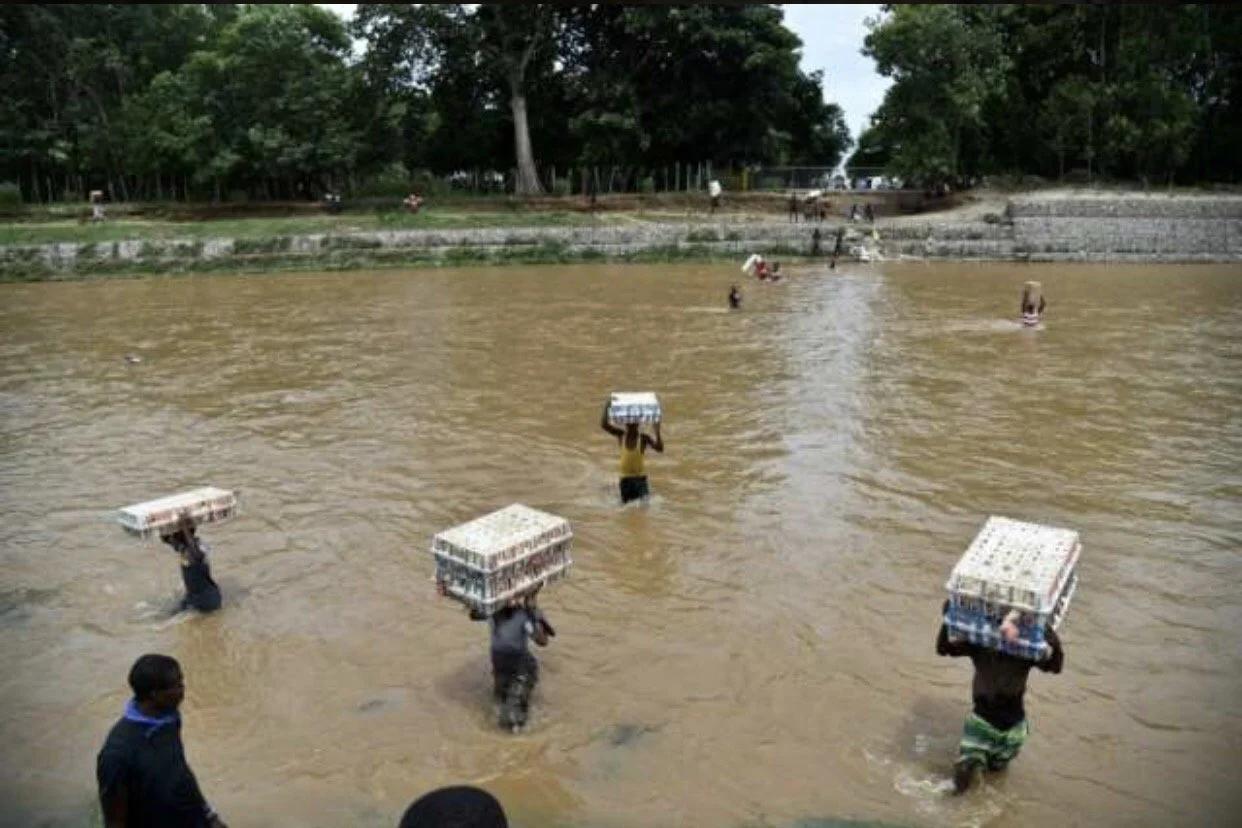
One dead and another missing in Haiti after hurricane hit
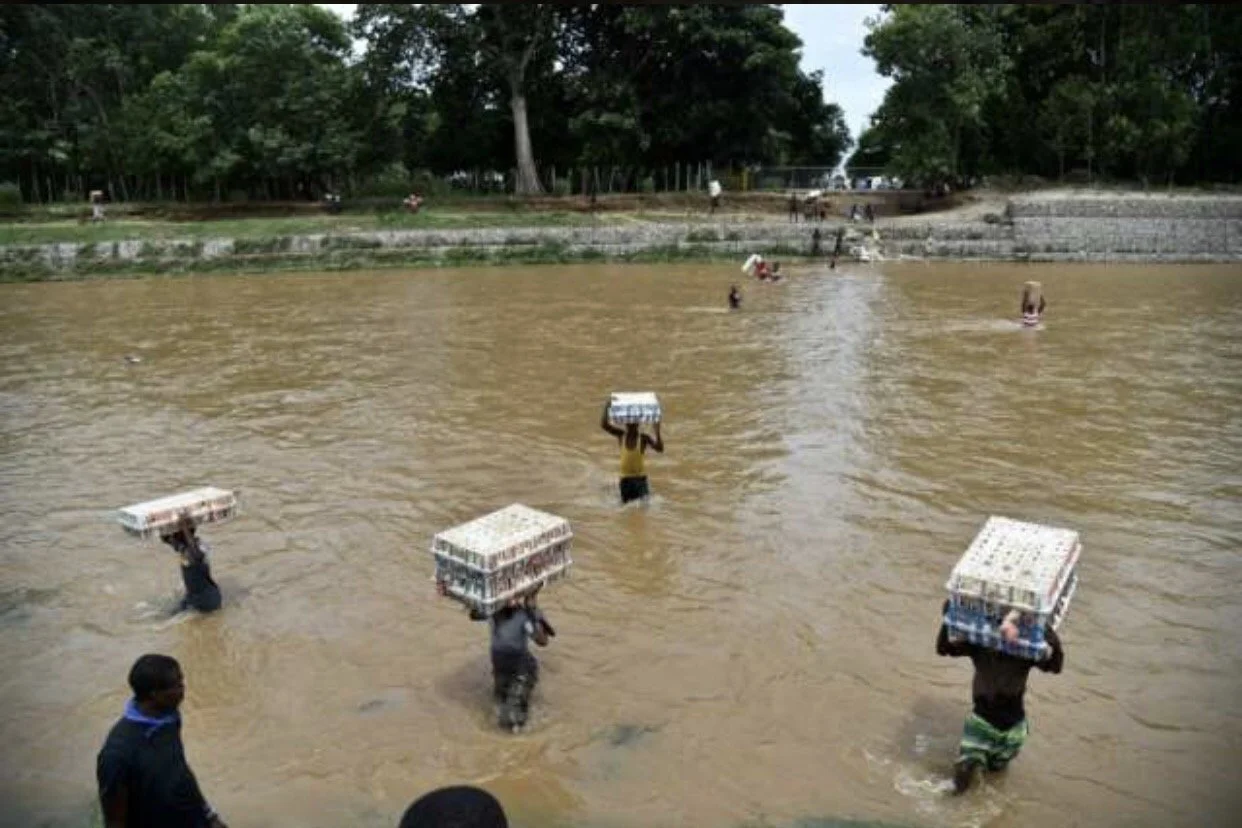
A man has died and another is missing in Haiti following flooding caused by Hurricane Irma, authorities said Monday.
An elderly man who tried to cross a river in the town of Mirebalais, central Haiti, Saturday was swept away by floodwaters. Four other people survived the crossing, according to the Haitian interior ministry.The body of a 35-year-old motorcyclist who was swept away in another river in the same region has not been found.Six of Haiti's 10 departments were affected by the severe weather, and emergency services reported only 17 people were injured there.Hurricane Irma's path moved slightly northward on Thursday, away from Haiti's coast, limiting the effects on the Caribbean's poorest island.But flooding and strong winds still hit the country, particularly in the impoverished northeast region.Authorities said 5,000 houses flooded, while 8,000 families were declared disaster victims after their homes were severely damaged or destroyed.Prime Minister Jack Guy Lafontant traveled to the hardest-hit areas Saturday, before announcing the creation of a commission to evaluate the extent of damage Monday.By AFP | September 12, 2017
Haiti in crisis: What next after the stolen election?
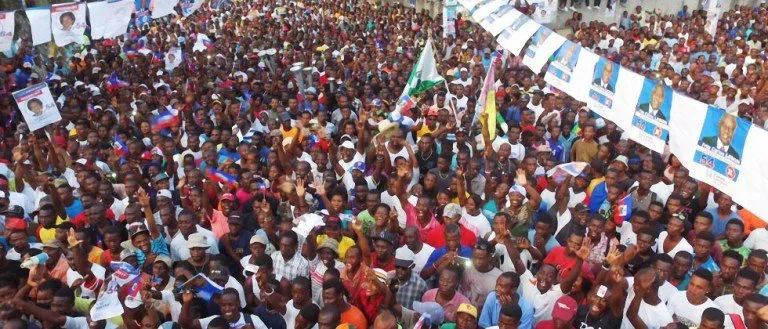
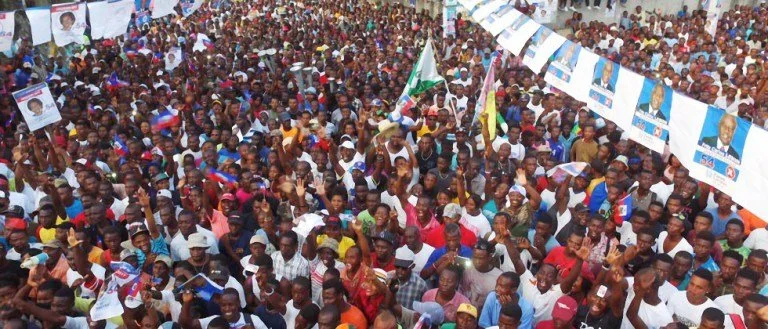
Addressing an overflow audience in Oakland in late April, Dr. Maryse Narcisse, presidential candidate of Fanmi Lavalas, the party of former president Jean-Bertrand Aristide, spoke about the necessity of reforming the justice system, investing in education and health, and the decisive role of women in the fight for democracy. Reflecting on the devastation wrought by both the 2010 earthquake and Hurricane Matthew, she focused on the growing threats posed by climate change to the island nation and the need for a vigorous environmental campaign to meet that threat. She emphasized that the Lavalas movement “places human beings at the center.”Dr. Narcisse spoke in the wake of the selection of Haiti’s new president, Jovenel Moise, a right-wing businessman and protégé of former president Michel Martelly, who took office via an electoral process so replete with fraud and voter suppression that opposition forces called it an “electoral coup.” She denounced the stolen elections and the corrupt electoral commission that validated the outcome.But she reiterated that the deteriorating economic and social conditions in Haiti would be the catalyst for renewed protest in the days and months ahead. “There is no choice,” she stated, “but for the people to resist. And Lavalas will be there to support them.”We can see the truth of this throughout Haiti. Market women – the very heart of Haiti’s economy and the foundation of so many Haitian families’ ability to survive – have been targeted by police trying to move them off the streets of Port-au-Prince, where they have been selling their goods for generations. When the women organized themselves and refused to move, police burned down their stalls.
She reiterated that the deteriorating economic and social conditions in Haiti would be the catalyst for renewed protest in the days and months ahead. “There is no choice,” she stated, “but for the people to resist. And Lavalas will be there to support them.”
On July 10-12, 2017, during three days of peaceful protest for an increase in the minimum wage, Haitian police attacked the workers from the industrial park in Port-au-Prince with tear gas, batons and cannons shooting a liquid skin irritant. They beat a woman who had recently returned to work from giving birth. A few days later, a young book vendor was shot to death in Petionville, on the outskirts of Port-au-Prince, by a police officer in front of horrified witnesses, who tried to prevent the police from quickly removing the body and covering up the crime. They were attacked with batons and tear gas.There has been a 35 cent increase in the price of gasoline – which was already higher than what we pay here in the United States. The government has also announced plans to reduce government subsidies for oil and gas, which will send the price even higher. The rise in the cost of transportation combined with a hike in the price of food has made already untenable living conditions even worse for the vast majority of Haitians.Former president Michel Martelly came to power in 2011 touting his plan to build new schools and make education free for all. Instead, investment in public education has remained stagnant while tuition for private schooling has skyrocketed. Teachers have been on strike for months, demanding that they be paid after not receiving their salaries for up to two years. This despite the fact the Haitian government adds a surcharge to every international phone call and money transfer, supposedly to fund education.Students have also protested, both in support of their teachers and to denounce the failure of the government to invest in their education. They too have been met with violent repression, exemplified by a recent incident when the rector of the National University of Haiti used his SUV to run over a student protester, landing the student in the hospital in critical condition. A video captured the gruesome sequence. No charges have been filed in the case.The Haitian government has a solution for the crisis in education – more prisons. There are now more than 10,000 Haitians locked up in prison, the majority of whom have never been charged or sentenced. Prisoners are frequently beaten, receive no health care, and live in overcrowded cells, where epidemics spread rapidly.

Cascading catastrophes since the 2004 coup forced Lavalas out of power have not entirely destroyed Haitians’ hope and confidence they can once again exercise the full power of the people. Their constant marching in the face of mortal danger – Haitian police are notorious for firing live ammunition into a marching crowd – demonstrates that power … and their trademark joie de vivre.
When United Nations soldiers from Nepal introduced cholera to Haiti in 2010, the disease swept through Haiti’s prisons, killing hundreds. At the recent opening of a new prison in Haiti’s central plateau, the head of Haiti’s national police, Michel-Ange Gedeon, boasted about the increase in prison construction, saying: “In every society, whenever schools fail in their mission, prisons are built in a cascade to try to right the ship. If offenders are to be neutralized, then prisons are needed to contain them.” This is Haiti’s version of mass incarceration, so well known to Black and Brown communities here in the U.S.Now there are new political prisoners – many of them associated with the Lavalas movement – who were arrested during the sustained wave of protests over the stolen elections. As living conditions worsen and protests sharpen, the prisons will fill even more.All of this, added to the impact of Hurricane Matthew – the biggest storm to hit Haiti in 50 years – has led more Haitians to flee the country. In early July, the Coast Guard intercepted and sent back to Haiti 107 Haitians in a small, dangerously overcrowded boat south of the Bahamas.There are over 4,000 Haitians right now in Tijuana, living in refugee camps. Recruited by occupying forces of Brazil to work in the Rio Olympics, they were pushed out after the games ended. Hoping for Temporary Protected Status (TPS) in the United States, which has been granted to Haitians since the 2010 earthquake, they instead have been deported or placed in detention camps if they cross the border.When Haitian president Moise traveled to the United States and met with Vice President Mike Pence in June, he refused to meet with Haitians worried about the changes in their TPS status, telling them to “calm down.” In their joint communiqué, Pence and Moise did not mention the migration crisis but did pledge to jointly pursue “an economic reform agenda to attract investment and generate growth.” Moise’s handshake with Pence symbolized just how much of a compliant partner his regime is with the U.S. government as it seeks even more control over Haiti’s economy and future.
When Haitian president Moise traveled to the United States and met with Vice President Mike Pence in June, he refused to meet with Haitians worried about the changes in their TPS status, telling them to “calm down.”
The United Nations Military Occupation Forces (MINUSTAH), which has functioned as a colonial overseer since the 2004 coup, is set to scale down its operation but will remain in Haiti under its new acronym MINUJUSTH (United Nations Mission For Justice Support). MINUJUSTH will consist of 1,185 police officers, and will continue to train and support the Haitian National Police – the same police who beat, tear-gassed and shot pro-democracy protesters during the last electoral cycle.Lt. Gen. Cesar Lopes Loureiro, the head of the Brazilian forces that have been in command of MINUSTAH since the beginning of the occupation, recently issued a glowing report on the accomplishments of MINUSTAH. But he was silent about U.N. responsibility for the cholera outbreak, and failed to mention the numerous cases of rape and other sexual assaults by U.N. soldiers.The U.N. has still not compensated the victims of the cholera epidemic, and it has given impunity to the many soldiers charged with raping Haitians during the long occupation. And there was not one word about the killings by U.N. soldiers of people in pro-Lavalas neighborhoods like Cite Soleil and Bel-Air or in the Port-au-Prince prison.Whether the U.N. calls its operations MINUSTAH or MINJUSTH, the continued presence of its forces, even in the guise of a reframed mission, is a clear assault on Haiti’s sovereignty.

The documentary film “Black in Latin America: Haiti & the Dominican Republic” will be shown on Sept. 14, 7 p.m., at La Pena Cultural Center, 3105 Shattuck Ave., Berkeley. The screening is co-hosted by La Pena and Haiti Action Committee. Pierre Labossiere, co-founder of Haiti Action Committee, will lead a community discussion after the film. For more information, visit https://lapena.org/event/black-latin-america-haiti-dominican-republic/.
What now looms on the horizon is the resurrection of the Haitian military. This has been a key goal of right-wing Haitian forces since President Aristide got rid of the army in 1995. Jovenel Moise has stated that he wants the army in place within two years. The beginnings of that new army have been in the works for years, training at military bases in Ecuador.In a statement to the Miami Herald, the president of the Haitian Senate, Yuri Latortue, who was a central organizer of the 2004 coup, said, “In Haiti we are used to having an army.” Referring to the U.S. occupation of Haiti from 1915-1934, which created the modern Haitian army, Latortue went on to say, and “the Americans understood that if we have the police but not an army, we will not get anywhere.”
What now looms on the horizon is the resurrection of the Haitian military. This has been a key goal of right-wing Haitian forces since President Aristide got rid of the army in 1995.
When Haitian activists speak of the Haitian Army, there is a chill in the air. Before Aristide disbanded it, 40 percent of Haiti’s budget went to the military. In a country with fewer than two doctors per 10,000 people, there was one soldier per 1,000 people.The Army has long been Haiti’s central institution of repression; the main organizer of coups against elected officials, helping to enforce the Duvalier dictatorships and those that followed before the rise of Lavalas. It was the Haitian Army that overthrew Aristide in 1991 and initiated a reign of terror that took over 5,000 lives before Aristide returned in 1994.The goal of the 2004 coup, like the 1991 coup that preceded it, was not only to topple the Aristide government, but also to rid the country of the powerful grassroots movement that has activated, energized and given voice to Haiti’s poor. That goal has not been accomplished. A stolen election cannot hide this reality.Throughout her campaign, Dr. Narcisse, often accompanied by former President Aristide, was greeted by tens of thousands of supporters in the poorest communities of Haiti. A vibrant Lavalas presence was evident across the country.In the face of decades of COINTELPRO-style counterinsurgency, including imprisonment, the killing and exile of thousands, attempts to buy off activists and encourage internal strife, Lavalas once again showed its significant base among Haiti’s majority population. In or out of government, this strength will serve as a bulwark against the harsh austerity program already being put into place by Moise and his U.S. sponsors.At the end of her speech in Oakland, Dr. Narcisse highlighted the grassroots work of the Aristide Foundation for Democracy. In the midst of the cholera epidemic, mobile health clinics from the Foundation treated patients who had nowhere else to go.After the devastation caused by Hurricane Matthew, President Aristide and Lavalas activists went to Les Cayes, Jeremie and other hard-hit areas to provide medical support, food and clothing. On Haitian Mother’s Day, hundreds of women filled the Foundation to get medical care for themselves and their children.Other clinics took place in mid-July, including on President Aristide’s birthday, July 15. And the University of the Aristide Foundation (UNIFA) continues to grow, providing higher education for over 1,200 students, most of whom could never afford other universities in Haiti.This is a movement that is not going away. As Lavalas digs in for the long haul, those in solidarity with Haiti have to do so as well.by Robert Roth/San Francisco Bay View - September 10, 2017

Natcom, 2017 fastest mobile network in the country

As part of its 6th anniversary of existence (11 September 2017) the National Telecommunications SA. (Natcom) is proud to announce that the company has won the "The Speedest Award" of the fastest mobile network in Haiti in 2017 with a speed score of 9.64, with average speeds of 10.51 Mbps for downloads and 4.24 Mbps for additions.This speed is calculated from the results of the world leader of tests and analyzes on Internet Ookla through its Internet analysis tool "speedtest". The speed score includes a measure of download and addition to classify the performance of the network speed (90% of the score is attributed to the download speed and the remaining 10% to the upload speed).Download and upload speeds are calculated using a modified "trimean". Ookla takes speeds of the 10th percentile, 50th percentile (also known as median) and 90th percentile and combines them on a weighted average using 1: 2: 1 reactively. The emphasis is put on the median because this is what most of the network provider's clients will experience on a day-to-day basis."This award is an honor," said Duong Ha The, Natcom's Chief Executive Officer. "By receiving this award, the company confirms one of its slogans 'Nou se data'"HL/ HaitiLibre - 11/09/2017
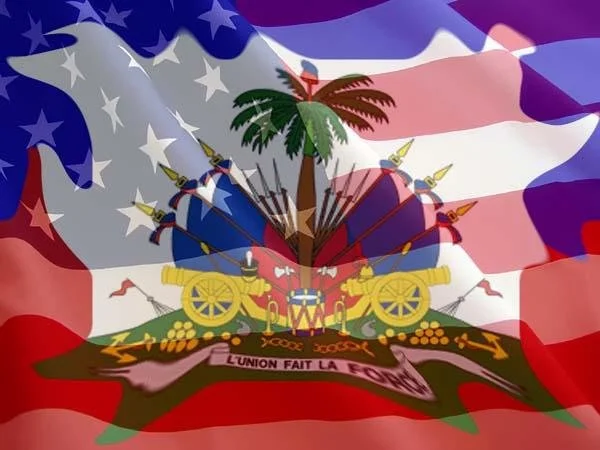
U.S. Department of State - Haiti Travel Warning
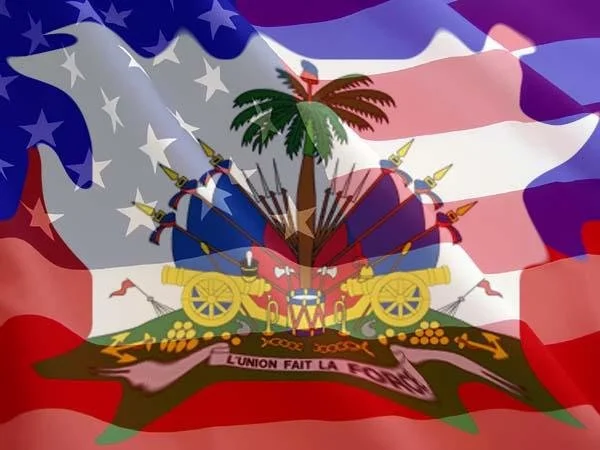
The Department of State warns U.S. citizens to carefully consider the risks of traveling to Haiti due to its current security environment and lack of adequate medical facilities and response. The Department of State also warns U.S. citizens to carefully reconsider travel to Haiti due to Hurricane Irma, a category 5 storm projected to impact Haiti. This storm may bring significant rainfall and wind that may result in life-threatening flooding, flash flooding, mudslides, and storm surge. Disruptions to travel and services are likely throughout the country. On September 5, the Department authorized the voluntary departure of U.S. government employees and their family members due to Hurricane Irma. This replaces the Travel Warning dated May 22, 2017.
- See the State Department's travel website for the Worldwide Caution, Travel Warnings, Travel Alerts, and Haiti’s Country Specific Information.
- Enroll in the Smart Traveler Enrollment Program (STEP) to receive security messages and make it easier to locate you in an emergency.
- Contact the U.S. Embassy in Port-au-Prince, located at Boulevard du October, Route de Tabarre telephone: 509-2229-8000; after hours emergency telephone: 509-2229-8000; fax: 509-2229-8027; e-mail: acspap@state.gov; web page: http://haiti.usembassy.gov.
- Anyone who missed a scheduled American Citizen Services appointment at the U.S. Embassy due to Hurricane Matthew is welcome to call 509-2229-8000, 509-2229-8900 or send us an email at the acspap@state.gov to reschedule your appointment. For Immigrant or nonimmigrant visa cases, please contact the call center at 509-2819-2929 or by email at support-Haiti@ustraveldocs.com.
- Call 1-888-407-4747 toll-free in the United States and Canada or 1-202-501-4444 from other countries from 8:00 a.m. to 8:00 p.m. Eastern Standard Time, Monday through Friday (except U.S. federal holidays).
By: US Department of State. | September 11, 2017
‘How Would I Survive Going Back There?’
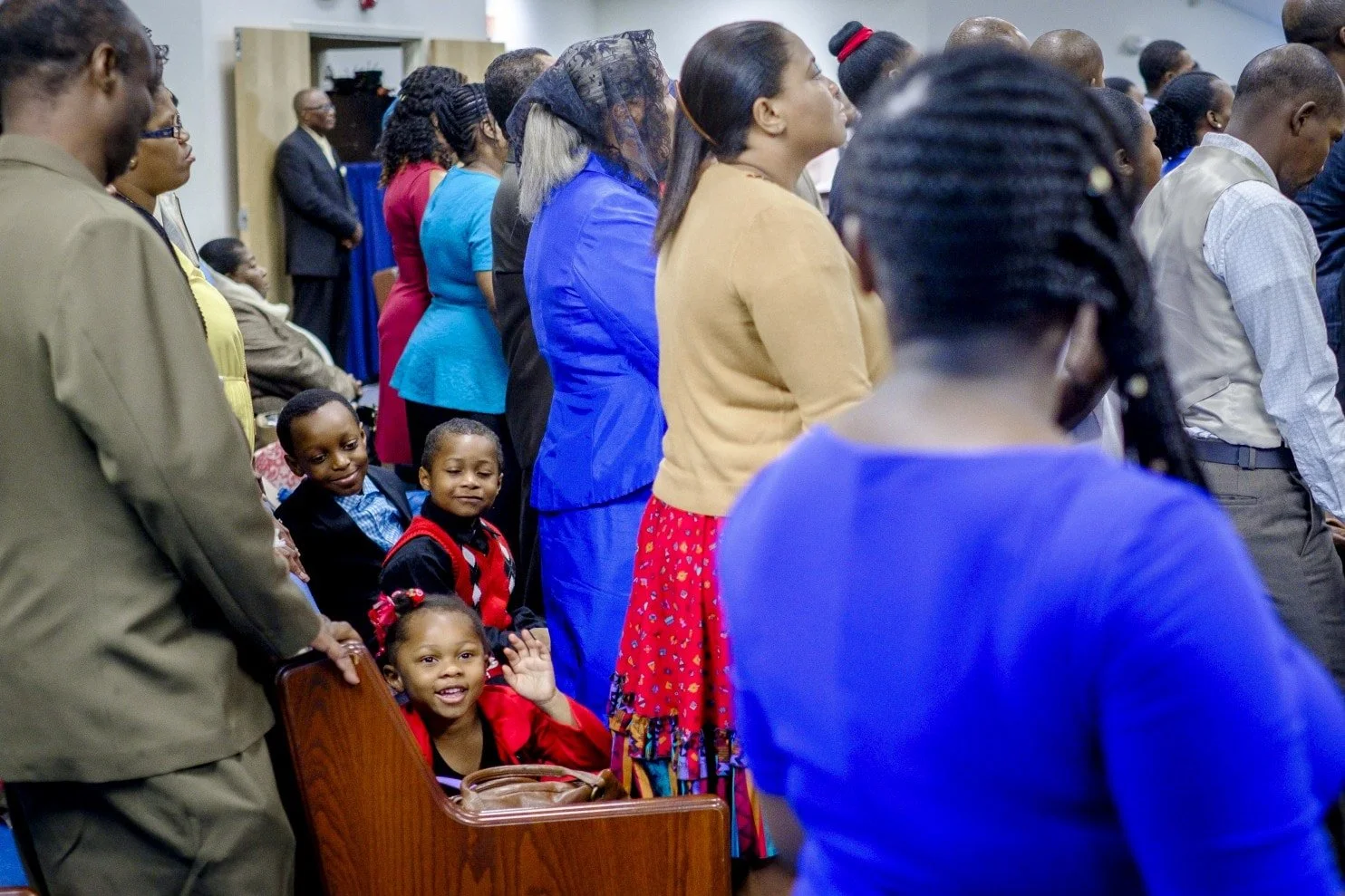
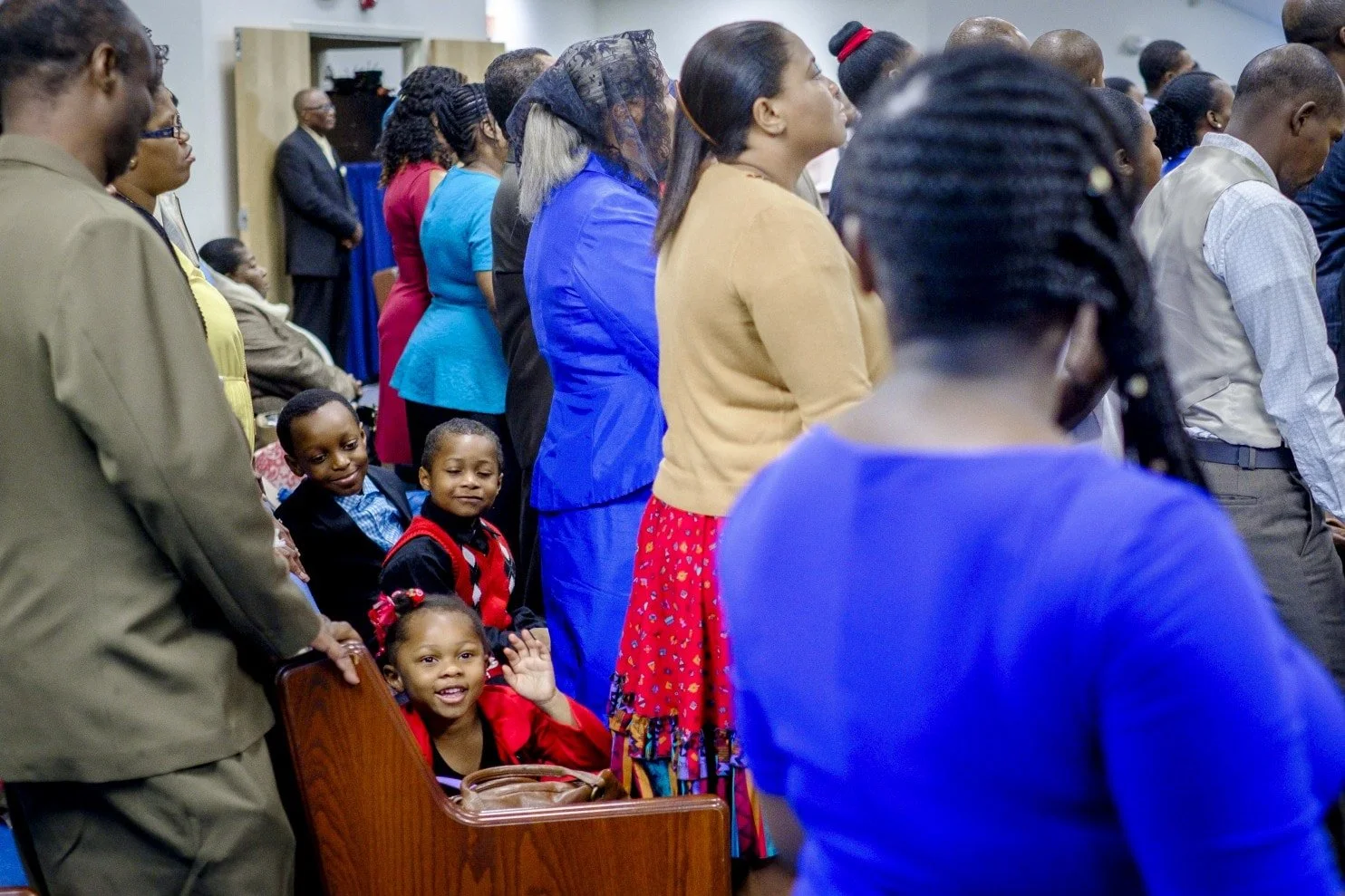
The woman wearing a mint-green dress with tiny pink flowers is trying not to cry.She is explaining that she has Temporary Protected Status, which was granted to 58,000 Haitians after the 2010 earthquake that devastated the country. She had been living in the United States for more than a decade when the quake struck, but found herself a beneficiary of the program that allowed Haitians to stay.So every 18 months, she renewed her status without much thought. Then came May, and an announcement from then-Homeland Security Secretary John F. Kelly. He told Haitian TPS holders that the program may soon come to an end. That they would be given a six-month extension, but they should prepare to leave the United States and return to Haiti by January 2018.His reasoning: Things were improving in Haiti since the quake killed more than 230,000 people and did an estimated $14 billion in damage to buildings and roads.Critics called the decision shortsighted. The effects of the earthquake are still visible. Many people still reside in tents and makeshift homes. A cholera outbreak followed in 2010, infecting at least 770,000 people and killing more than 9,200. And on Saturday, Hurricane Irma brought more heartache to the already devastated Caribbean island nation as reports of flooding began to surface.But for the woman in the mint-green dress, struggling not to cry, her reasons for wanting to stay are much more personal.The Washington area, where she has lived for more than two decades, is her home — and home to an estimated 800 Haitians with TPS. Her husband and 2-year-old daughter are there. Her job as a nurse is there. And her church, with its majority Haitian congregation, is there. So despite pleas from family and friends that she should follow the exodus of Haitians afraid of a return to Haiti and instead head to Canada, she will not.“I think it’s lack of faith for me to get up and leave,” said the woman, who spoke on the condition of anonymity because she feared she would become an easy target for deportation. “I have two sisters and a brother in Montreal. They ask me to come every time. ‘People are coming,’ they say. I say, ‘Is it easy to pack up and come?’ It is not. I don’t want to hear people tell me that kind of stuff.”
An estimated 11 million people live in Haiti, the poorest country in the western hemisphere. A Category 5 hurricane like Irma could cause flooded roads and mudslides, which could destroy houses built on hillsides — a repeat of the devastation caused by the earthquake in 2010 and when Hurricane Matthew hit the country in October 2016.It is for that reason that many Haitians with TPS in the United States say returning to Haiti is not an option. In August, Canadian officials reported a surge in Haitians crossing the border from the United States. According to the Quebec immigration ministry, as many as 150 Haitian asylum seekers are arriving in Canada each day after making border crossings from New York into Quebec. According to the Canadian Broadcasting Corp., about 700 Haitians were waiting to be processed for claims of asylum from the United States this year.Canadian soldiers are building tent villages near U.S. borders to house Haitian asylum seekers. Olympic Stadium in Montreal is being used to house refugees, the CBC reported.The growing panic can be seen across the country. Haitian radio stations and other media outlets talk about the issue almost nonstop. Marleine Bastien, executive director of the Haitian Women of Miami, said that more than 32,000 Haitians with temporary status live in Florida. Many have been living in the United States for up to 20 years.“We are talking about people who have deep roots in the community,” Bastien said. “These are people who own homes, who have reached the American Dream to own a home, and started business. Eighty-five percent of them are working.”“I receive calls every day,” Bastien added. “ ‘Marleine, what should I do? Should I put my house to sale? Do I take my children to a country still reeling under remnants of an earthquake, a country where the entire south peninsula has been destroyed? Where people are dealing with food scarcity because Hurricane Matthew destroyed crops?’ ”“The heart-wrenching questions the families are asking are difficult to answer,” she said. “How do you tell a parent what to do with U.S.-born children? How do you answer a mom sitting in front of you with tears in their eyes?”Jean St. Ulmé, senior pastor at Eglise Baptiste Du Calvaire in Adelphi, Md., said he is also dealing with similar questions.“It is a sad situation. They don’t know what will happen,” St. Ulmé said. “ They don’t have anything in Haiti. They come here for a better life. They are afraid to go back.”
The woman in the mint-green dress is a member of St. Ulmé’s congregation. She and her husband, who is also in the country on temporary status, pray every morning before the sun comes up and again at night before midnight. It is the same prayer: That the U.S. government will not return to Haiti the more than 58,000 Haitians living here.She was 18 when she left Haiti in 1995 on a visitor’s visa. “Since then, I’ve never been back. I have no house there,” said the woman, who is now 40. “I wouldn’t know how to live there. How would I survive going back there?”She rubs her swollen belly. Her second child is due in three weeks.Now she can no longer hold back her tears.“My child is a U.S. citizen,” she says. “Would you take my child from me? Would you send me back and take my child? What would she become? Would you break a family?”The health-care system in Haiti is terrible, she says. Patients wait on hospital beds with no sheets, clutching brown paper bags of medicine they brought with them, hoping doctors not stopped by strikes will see them. In Haiti, she said, “You call 911, the ambulance has no gas to come help you. There is no security. There is no place to render justice.”Rony Ponthieux doesn’t want to go to Canada either, but the prospect of returning to Haiti is not one he can see. He has lived in the United States since 1999, and he and his wife were granted TPS after the 2010 earthquake.
While here, he has gone to school and become a registered nurse. Since 2015, he has worked at Jackson Memorial Hospital in Miami.“I have two children born here,” Ponthieux said. “The eldest son is 16, going on 17. I have a girl who . . . spoke at Washington in Congress. She was giving some speeches. She is gifted. She just turned 10. She was champion spelling bee for her school.”Moving to Canada would be a last option. “I heard the news. I see the borders. I don’t think it’s a good idea.”On the other hand: “If I go to Haiti, I would struggle to live. To take care of children will be hard. If I leave children here, it will be family separation. It is not good to leave children here.”But, he added, “Imagine children born here and go to a place with no pure water. No shelter. No food. No house in Haiti. It would be a bad situation.”

Marinade (Fritters)

 INGREDIENTS: 1 shallot, minced 1/2 onion, chopped 1 garlic clove, crushed 1 scallion, chopped 2 cups of water 1 tbsp of Adobo 1 tsp of black pepper 2 tsp of hot sauce 1 tsp of parsley 2 eggs 2 tbsp of baking soda 1 cup of flour 1/2 cup of olive oil
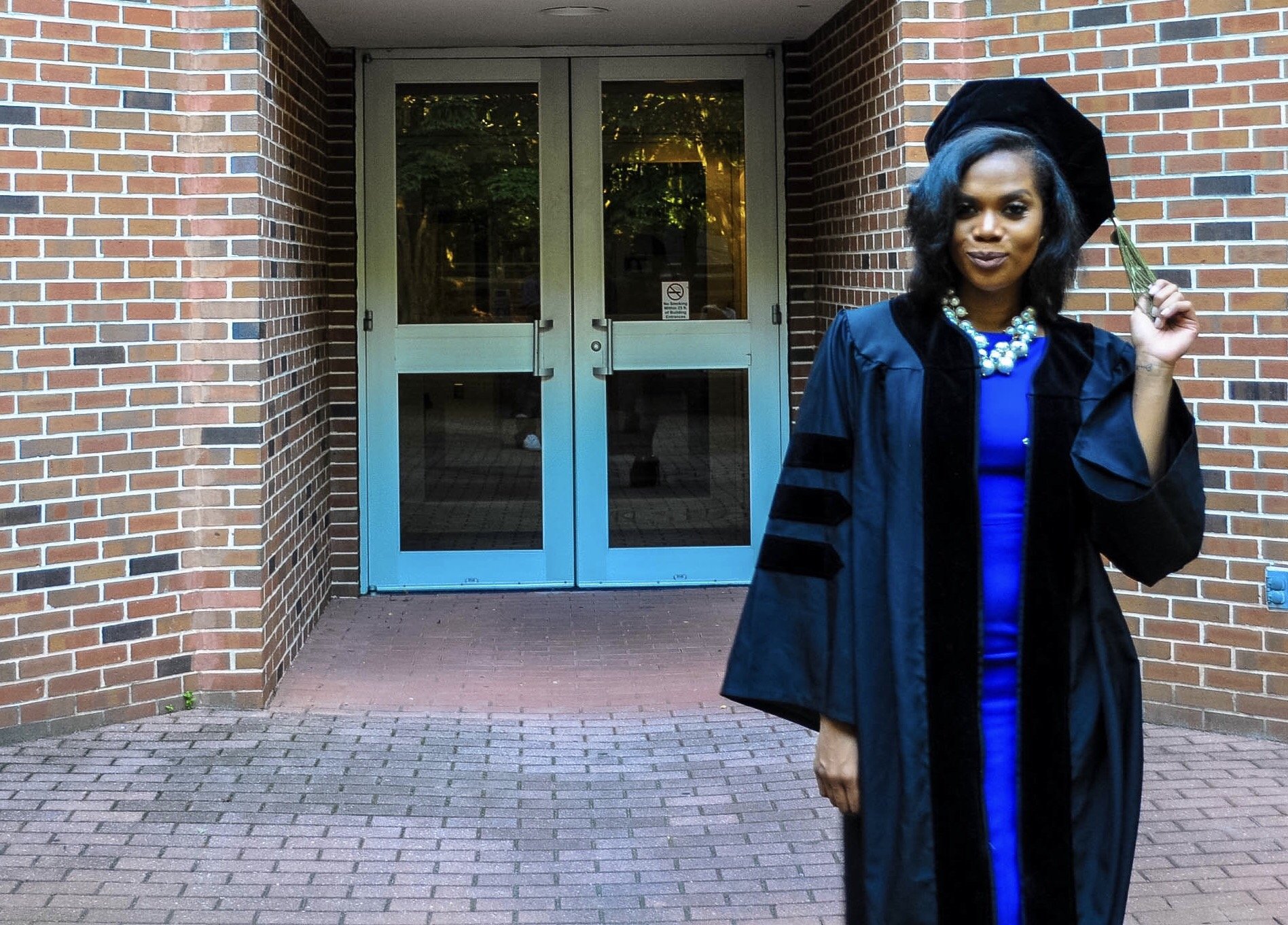
Dr. Lesly Samedy: Double Doctor
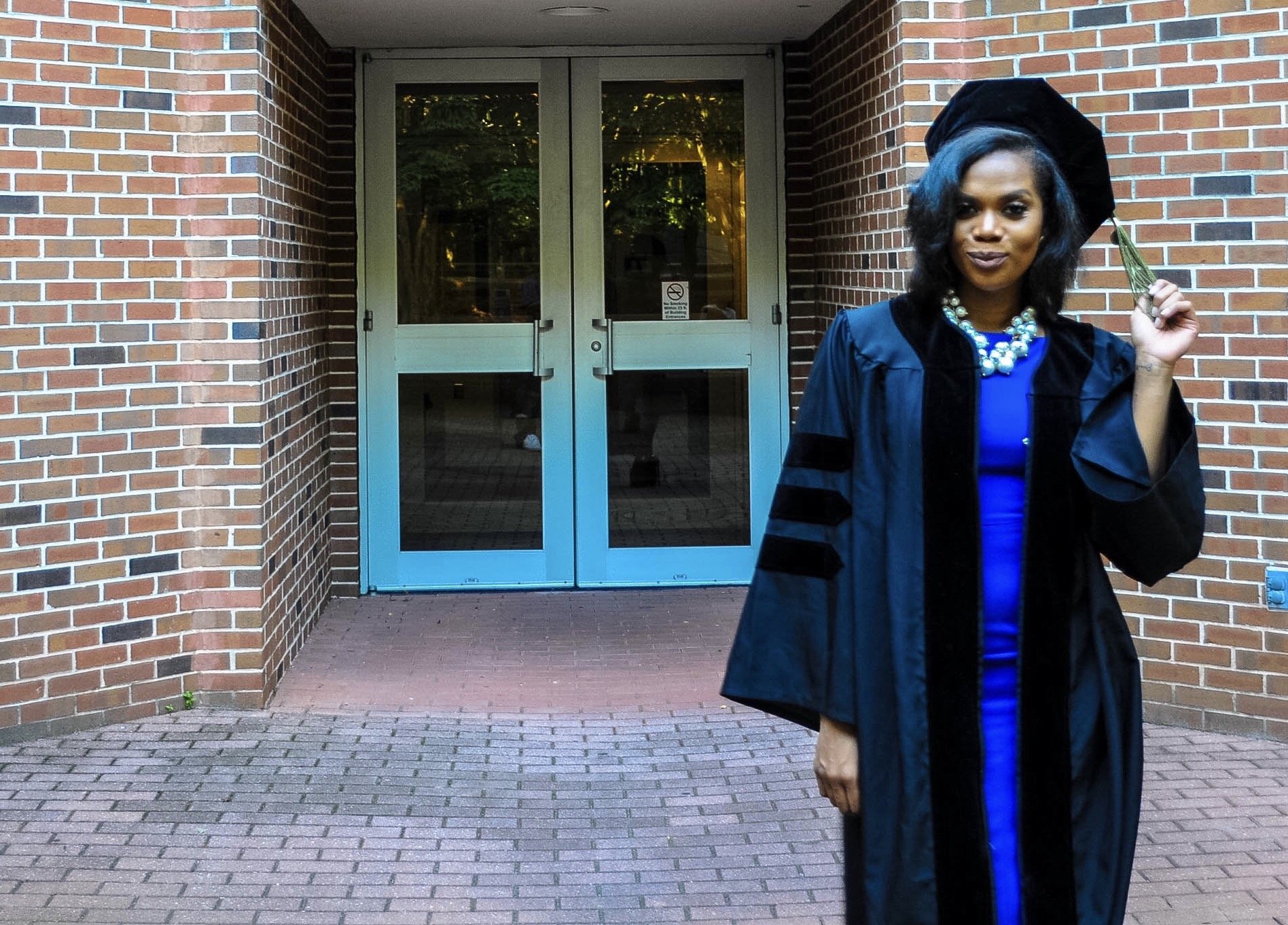
 At a time when women are greatly under represented in the areas of science and math, it's refreshing to speak to a young lady breaking glass ceilings in the sciences. Moreover, she is a pathfinder for African American women in her field. This Haitian-American woman epitomizes the millennial phrase “Black Girl Magic.”Dr. Lesly Samedy is the first African American student, at Mercer University, to procure both a Doctor of Pharmacy and a Doctor of Philosophy (PharmD/PhD) degree. She is the first to successfully complete their dual degree program. A recent (2017) graduate of Mercer’s College of Pharmacy, she is a member of the Rho Chi Pharmaceutical Honor Society, a member of Delta Sigma Theta Sorority and the proud daughter of Haitian immigrants.Dr. Samedy, a three time published clinical research enthusiast, currently resides in San Francisco. In July, she began her postdoctoral research fellowship at University of California, San Francisco (UCSF). Her experiments will focus on pharmacogenetics and personalized medicine. Through her analysis, Dr. Samedy is committed to bridging the health care divide that exists for marginalized minority populations and, in turn, improving their quality of life. Her research is concentrated, in particular, on African Americans with chronic cardiovascular and pulmonary diseases.
 Haitiville: Who are your role models?Dr. Samedy: My role models are women who have overcome obstacles and have not let their circumstances define them. I admire Mrs. Michelle Obama, the only First Lady to attend two Ivy League schools and holds a law degree from Harvard! Secondly, Raquel Pelissier, Ms. Haiti 2017. She is a 2010 Haiti earthquake survivor and an optometrist by trade. In spite of her circumstance she went on to become a runner up in the 2017 Miss Universe Pageant, a first for Haiti since 1975. I also look up to Sadie Mossell Alexander, one of the first three African American women to receive a PhD degree. She was also the first national president of my sorority, Delta Sigma Theta Sorority, Inc. These are just a few I consider role models. It is women like them that inspire me to defy the odds and try to surpass expectations everyday.Haitiville: As a Haitian American woman, did you have to overcome gender/racial stereotypes on your path? If so, how did you deal with it?Dr. Samedy: There is considerable stigma associated with first-generation status as well as being a minority woman. My academic ability, achievements and performances were often underestimated and discredited by others. My background was often viewed as a deficit rather than a strength. For that reason, I chose to remain invisible for a long time throughout my life, second guessing my goals and aspirations. It was the strength of my parents and my family whom helped me to not only deal with these adversities but overcome them. They provided continual guidance and unwavering support.Haitiville: Where would you say your passion for Science stems from?Dr. Samedy: As a member of the African American community, I was exposed to the lack of public health care and the health disparity of chronic conditions. I became aware of the need for more diverse representation in the sciences. Current research and health care initiatives fail to address chronic health conditions in minorities, whom bear a disproportionate burden of disease, injury and death.My passion for pursuing and continuing in STEM [science, technology, engineering and math] was realizing the lack of diversity. In a room of 50 people, 10 might be women and of those 5 might be minorities. I was tired of not seeing myself being represented in STEM careers. My career goal is to become a presence for women, especially minority women, interested in STEM but intimidated by the lack of diversity.
 Haitiville: Your thesis is dedicated to your Haitian immigrant parents. What does growing up Haitian mean to you?Dr. Samedy: Being Haitian has taught me to be mentally strong. I see what my parents sacrificed to pursue a better life for themselves and their families. Being Haitian has taught me to push boundaries and reach for success. In our society today, people are afraid to step out of their comfort zones. Our [Haitian] people literally leave every comfort they know, simply to be great. I am proud of it and want nothing more than to emulate it.Haitiville: What is the best advice your family gave you?Dr. Samedy: The best advice given to me was to simply be the best. My dad has always told me that I could be anything I wanted, even if it was a garbage man. His only expectation is that I be the “best” garbage man I could be.Haitiville: What advice would you give a young lady making her way in your field?Dr. Samedy: My best advice that can be offered to young women looking to flourish in a male-dominated STEM field: (1) Find a mentor, someone who can provide you with guidance and advice. (2) Join a support group, a circle of women that can relate to personal and professional experiences and provide advice. (3) Don’t be afraid to be assertive! Ask questions, have opinions, speak your mind (respectfully, of course). (4) Put yourself first!!! As women, we have a tendency to want to help others before helping ourselves. And (5) Let it roll off your back - Avoid taking healthy criticism or a scientific debate personally!
 My advice to young women in general, is to work hard and not settle. If you want something, claim it. Don’t let anyone tell you what you are capable of accomplishing. Do not dim your light for anyone, “Let your light shine so brightly that others can see their way out of the dark.” Be humble. Be willing to learn. Be receptive to different ways of thinking. Above all, stay true to yourself.Haitiville: If you saw your 16 year old self reflected back at you in the mirror, what would you tell her? Dr. Samedy: Everyone's journey is different, don't get discouraged if you see someone making more progress than you are, your time is coming! And that's with everything, life, love, work..."In speaking to Dr. Samedy her passion, drive and dedication are evident. She is truly humble beyond her scholastic and professional achievements. Dr. Lesly Samedy we wish you every success in the world.
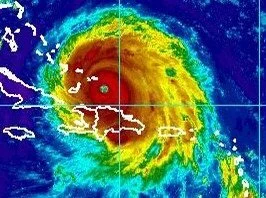
Situation report after the passage of IRMA
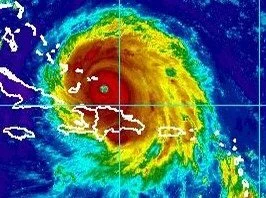
 Situation report after the passage of IRMA Following the passage of Category 5 Hurricane IRMA on Haiti, the National Emergency Operations Center (COUN) in its bulletin #3 informs us:16 communes of the departments of the North-East, North, Central, Artibonite and West are partially flooded by runoff and floods of the main rivers of the said departments:Northeast: Ouanaminthe (severe flooding in places), Fort-Liberté, Caracol, Ferrier and Trou-du-NordNorth: Pilate and LimonadeCenter: Hinche and Mirebalais, Lachapelle, Grande Saline, Dessalines, Saint-MarcWest: Cabaret, Tabarre and ThomazeauCivil Protection and its partners have evacuated people from 10.085 to 59 temporary shelters in 6 departments and thousands went to foster homes;Northwest: 1,553 people in 11 open shelters;Grand-Anse: 529 people in 6 shelters (Chambellan and Beaumont);Northeast: 6,290 people in 14 shelters;Artibonite: 169 in 4 shelters;Center: 550 people in 13 shelters; North: 994 people in 11 shelters.Sections of roads are cut in the center, between Hinche and Thomassique and also Hinche and Cap-Haïtien via Pignon, because of the floods of the Ravine Couine. National road number 3 is divided in two places, at the level of Ravine La Couine and between Saint-Raphaël and Pignon;The red alert is lifted all over the national territoryIn the aftermath of passage of passage of IRMA, which caused flooding, falling trees, damage to agriculture and buildings, the Organization for the Development of the Artibonite Valley alerted the population downstream of the opening on Friday morning of the locks of the dam Cannot, to allow 500 m3 of water to pass, due to the increased flow of the Artibonite river due to the tributaries (Fer-à-Cheval river, Latème river and some gullies);On Friday, heavy rains stopped early in the morning across the country and weather conditions are gradually returning to normal.Habitat :Houses are destroyed or damaged, including roofs blown by winds, at the level of affected departments. Assessments are under way to complement the data on the impacts on the built environment.Agriculture and Environment :The Ministry of Environment is in the process of mobilizing civil engineering equipment to facilitate the cleaning and clogging of the gaps.Flooding of 450 hectares of agricultural perimeters of Jassa by the river bearing the same name. Considerable losses have been recorded in rice, okra, sweet potato, banana, pepper and pea plantations.The Artibonite River has been in flood since the beginning of the evening of 7 September.HaitiLibre | September 9, 2017

Digicel gives free minutes and SMS

With the passage of Hurricane IRMA on several islands in the Caribbean, Digicel today announced that it will provide customers in affected markets with free calls so they can communicate with their relatives.Digicel Haiti will accompany its customers in the affected areas by providing them with a special allowance of 10 minutes and 50 SMSs after the passage of RMA to communicate with Digicel subscribers."We understand the need to be able to quickly contact our relatives to ensure that they are safe and sound after an emergency and we are happy to offer our customers the means to do so," said Maarten Boute, the President of Digicel Haiti "The safety of our customers is always our highest priority. Thus, we encourage everyone to stay tuned to weather messages and to follow the safety instructions."In anticipation of Hurricane Irma, as of Monday, Digicel has activated its emergency plan.With respect to the reopening of its offices in the affected areas, Digicel will keep its subscribers informed as the situation evolves.By: HL/ HaitiLibre | September 8, 2017
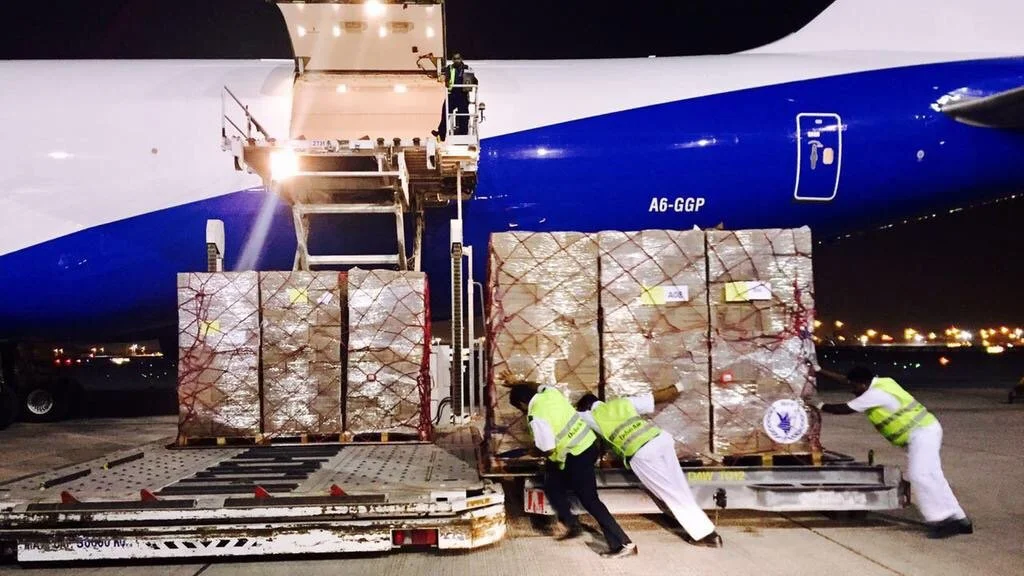
Dubai sends Dh712,500 emergency airlift to Haiti
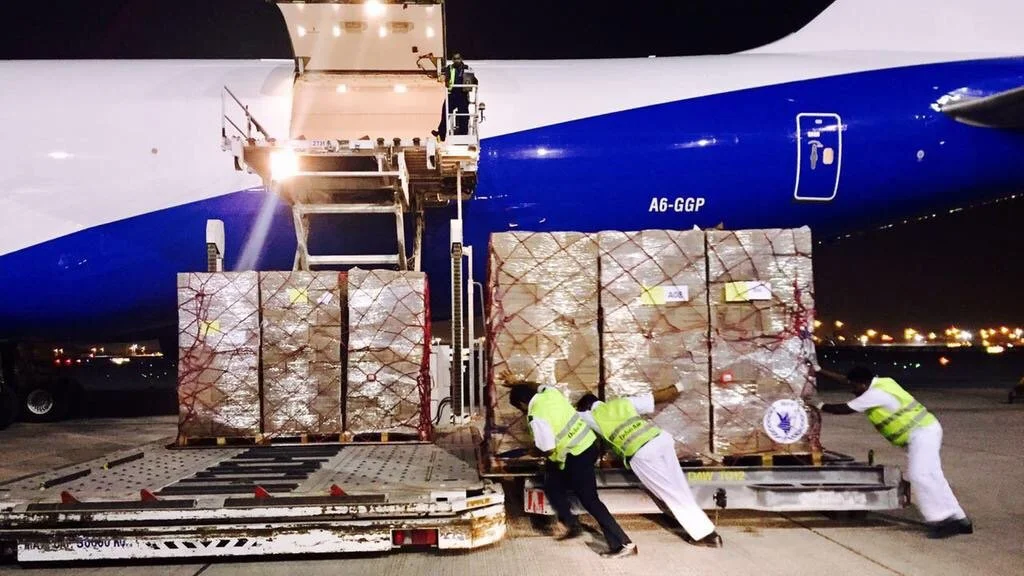
His Highness Sheikh Mohammed Bin Rashid Al Maktoum, Vice-President and Prime Minister of the UAE and Ruler of Dubai, has provided, upon request from the United Nations World Food Programme and UNHRD partners, the B747-400 aircraft which flew out of Dubai International Airport at 4:30 am, September 7, to Port-au-Prince, Haiti airport. The plane is expected to land in Haiti tomorrow, the 8th of September 2017, at 8:00 pm UAE time.The Dubai Air Wings aircraft to Haiti carried more than 90 metric tonnes of key relief items, valued at more than $194,000 (Dh712,500), made available by the International Humanitarian City members.The air cargo transporting aid on behalf of the World Food Programme, Catholic Relief Services, and CARE came in response to the forecast of a monster storm, Hurricane Irma, as it bears down South America, and is expected to hit the Dominican Republic, Puerto Rico, Haiti, and Cuba in the coming days.Upon hearing about Irma, believed to be one of the most powerful Atlantic storms ever recorded, a quick mobilization was crucial to be able to reach the destination before any potential closure of airports. It was made possible thanks to the coordinated efforts of IHC and its members, under the chairmanship of Her Royal Highness Princess Haya Bint Al Hussein.HRH Princess Haya hailed the emergency airlift as a symbol of the UAE commitment to humanitarian assistance. "This rapid response is the fruit of an unprecedented cooperation and a proof of our robust support to vulnerable populations all over the world," she said.Among the relief and survival items, on board are food and non-food supplies: 2000 tarpaulins, enough high-energy biscuits to feed 47100 people over 3 days, mobile storage units, lighting equipment, water purification kits, and pool testers.This is the fifth relief plane sent in 2017 by IHC with the support of HH Sheikh Mohammed Bin Rashid Al Maktoum to crisis and disaster-stricken areas; earlier this year, aid was air dispatched to Madagascar, South Sudan, Uganda and Iraq.Similarly, HRH Princess Haya flew last year in October 2016 to Haiti and personally oversaw the delivery and distribution of relief supplies after hurricane Matthew had demolished the island.By: Khaleej Times |September 7, 2017
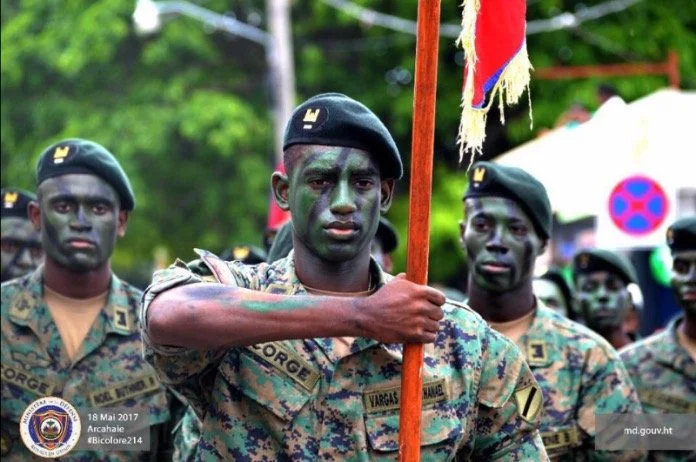
The Implementation Of The Haitian Army: An Imminent Danger For Haiti
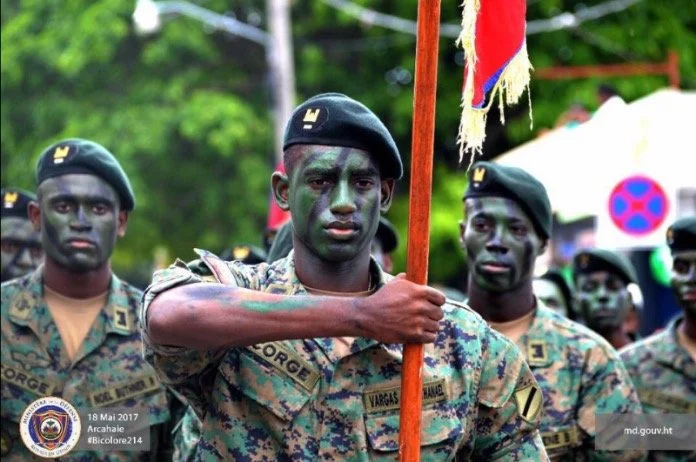
 The current president seems to be more than ever determined to restore the army, and in doing so, picking up where his predecessor, Michel Martelly, left off. The government maintains the demolition of the army was anti-constitutional since the constitution recognizes its existence.Dismantled 22 years ago, by President Jean Bertrand Aristide, the Haitian Gendamerie, later known as Armed Forces Of Haiti (FADH), is an institution that has historically caused more problems for the country than it fixed. For many, in Haiti and in the Diaspora alike, reinstating the army is an idea they would rather not have to think about; in many instances, the wounds inflicted by that defunct organization have not been healed yet.What is the rationale behind reviving an institution that has shamed and abused the very nation it swore to protect? Why would Haiti need an army in the first place? Further, a more relevant question is, “Are Haitians better off with or without the army?” That’s the question!If we were to place the Haitian Army’s performance on a balanced scorecard, the outcomes would be mournful. Ever since the first United States occupation in 1915, there have been at least 32 Coup- d’état. A series of unfortunate events, instigated by the army itself, that only brought about death, despair, destruction, insecurity, organized crimes, institutionalized corruption, violation of human rights on a massive scale, to say the least. From that vantage point, it would not be an exaggeration to suggest the army is directly responsible for the country’s current quagmire. Ironically, even some of those who themselves have caused bloodshed in the country, have not shied away from expressing their doubts about an eventual return of the army. Both Henry Namphi and Prosper Avril, former generals, have cautioned against the eventual reestablishment of the army- the very institution which has made them who they are today.For any country, having an effective border control has its place. But in the case of Haiti, border protection cannot possibly be at the top of the priority list; after all the country is not under any threats of outside invaders. If we were to look at this issue from a practical standpoint, since the Dominican Republic is the only country Haiti shares its borders with, why would the former want to invade the latter now? Why now? Aren’t they already in control of the Haitian markets, whereas Haiti imports more than twice as much as it exports? Isn’t most of the Dominican labor force made up of Haitian nationals living in the most humiliating conditions? Well, why then, would the Dominican Republic want to engage militarily in Haiti while it is more profitable for them not to do so?Today, there are more than 20 countries without an army. Why can’t Haiti remain part of that list? Let’s take Costa Rica and Panama, as two Central American countries. Both countries had their fair share of problems with their respective armies in the past. Costa Rica has not had an army since 1948. Panama’s army was demolished after general Noriega was removed from power in 1989. Today, they are both on the list of countries without conflict, according to the Institute for Economics and Peace (Source: Global Peace Index 2016). Costa Rica is said to have enjoyed greater peace and stability than most, if not all, of its neighbors.In light of the actual conjuncture the country is faced with, should the government be focusing on reforming the army while neglecting to revamp the country’s already broken infrastructure, improve its healthcare system, promote literacy, modernize its agricultural systems, revitalize its flagging economy?An army is there for national defense, not to run governments. And make no mistake about it, this is exactly what will happen should the FADH be allowed to be resurrected. If past behaviors are any indication, this will be the same army that had always been on the side of the rule of force rather than the rule of law. Let’s be pragmatic about it; in the final analysis, in the event should Haiti be invaded by a foreign force, would the country have a defense mechanism strong enough to be worthwhile anyway? If the answer is no, as we know it, why then bother? Such decision can only be counterproductive in that the government will undoubtedly be in need to find funds in order to keep it operated. And those resources could be better spent on other public services instead. This grotesque decision is political, one aiming at appeasing the former cohorts and sympathizers of the Duvalier regime.In closing, there should be an international coalition orchestrated by the United Nations to prevent such undertaking from being materialized. If not, this could be a mistake of biblical proportions, in that all the gains that have been made may be irretrievably lost. If I had any message for the president of Haiti, I would have advised him to do as the former Costa Rican president, Jose Figueres, did in 1948: Transform the military barracks into museums. Future generations will thank you for that.Haitian Times | September 2017
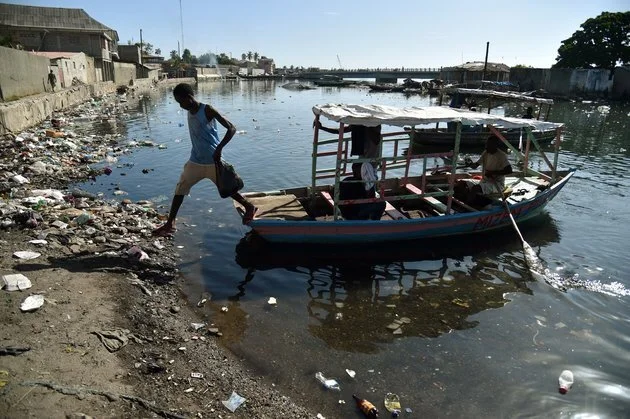
A Struggling Haiti Scrambles To Prepare For Hurricane Irma
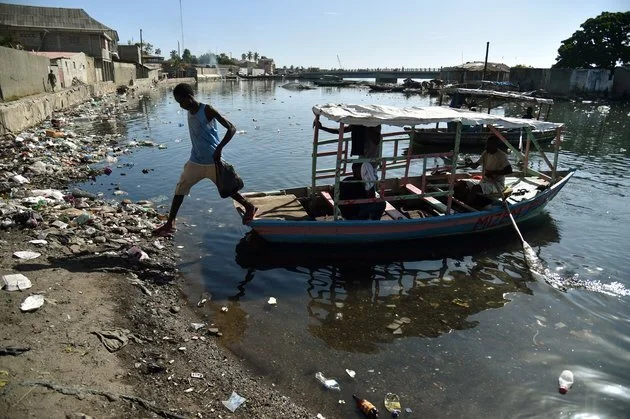
Barreling through the Caribbean, the “extremely dangerous” core of Irma was predicted to strike northern Haiti.
BOGOTA, Sept 6 (Thomson Reuters Foundation) - Haitian authorities and aid agencies were scrambling on Wednesday to prepare for Hurricane Irma, the strongest Atlantic storm on record, warning it could devastate the country still reeling from drought and last year’s Hurricane Matthew.Barreling through the Caribbean, the “extremely dangerous” core of Irma was predicted to strike northern Haiti and the Dominican Republic as well as the Turks and Caicos and Bahamas on Thursday with winds of 185 miles per hour (295 km per hour), the U.S. National Hurricane Center said. The eye of Irma, a Category 5 storm, passed over the northern Virgin Islands on Wednesday after crossing the half-French, half-Dutch island of St. Martin and the Dutch islands of Saba and Sint Eustasius. Category 5 is the highest hurricane ranking used by U.S. forecasters.Haitian authorities put the nation on alert, closing schools, moving people to shelters and mobilizing 18,000 civil and Red Cross volunteers backed by police and the military.“Irma is expected to sweep across the northern part of the country, so besides the strong winds and rain that could cause damage to houses, it is likely that many areas will be affected by flooding, landslides, and loss of livestock,” said Jessica Pearl, Haiti country director for aid agency Mercy Corps.More than half of the population depends on agriculture, “so any damage to their farms or livestock could make the difference of eating or not for the next few months,” she said.Farming communities in Haiti, one of the world’s poorest nations, are struggling to recover from Category 4 Matthew last October.Matthew killed about 1,000 people and left 1.4 million others in need of food aid.Irma will also bring “major consequences” to northern Haiti, which also has suffered three years of drought, said Ronald Tran Ba Huy, Haiti country director for the U.N World Food Programme (WFP).But systems to handle health, water and housing put in place for Matthew remain and can be utilized for Irma, he said.“Lessons learnt and mechanisms are fresh,” he told the Thomson Reuters Foundation.The WFP said it has food supplies across Haiti, a nation of 10.8 million people, for 150,000 people for one month, and trucks carrying emergency food aid to northern Haiti would be able to reach 40,000 people immediately.Poor infrastructure and a lack of flood prevention measures such as coastal embankments and drainage systems, along with widespread deforestation, are likely to magnify damage from Irma as they did with Matthew, aid agencies say.The international aid community has been criticized for a slow response and poor coordination to disasters in Haiti, including a 2010 earthquake.
 “There is an effort on the part of the international community to address the lessons learned from Matthew and have a more efficient response this time,” Pearl said.“That said, the government consists of new people on a steep learning curve,” she added. Haiti’s new government took power in March. HuffPost | September 6,2017Photos: Hector Retamal via Getty Images
Guidance from the Haitian Embassy to Haitians in DR
 Wednesday in a note, the Embassy of Haiti in the Dominican Republic informs the Haitian community that in anticipation of the passage of hurricane IRMA which will touch, on Thursday, September 7, much of the Dominican territory, an emergency unit composed of diplomatic officials was created to meet its needs.Emergency Cell Phone Numbers : (829) 259-0579, (829) 885-3133, (809) 617-7376, (829) 443-8994The Embassy recommends that you prepare an emergency kit for 7 days :"Water, provide at least 3 liters per day per person, plan a stock for 3 to 7 days;Consume non-perishable food (mainly canned), consider the specific needs of infants and the elderly;Kitchen utensils: a can opener, plastic plates and cutlery and other kitchen utensils...;First-aid kit: anti-bacterial product, pair of scissors;Hygienic products;Torch, oil lamp, candles, matches and battery;Mosquito repellent;Portable radio with new batteries;Cash (some banks may remain closed or not replenished for several days),Disinfectant tablets for water;Toys, books, games;Important documents (insurance, medical records, bank, passport, birth certificate, etc...)Gas bottles, Blankets, pillows, Clothes (seasonal, boots, raincoats)For your animals (water, food, cage, leash, muzzle, etc...)"HaitiLibre | September 7, 2017
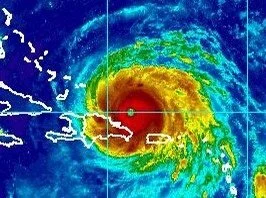
IRMA 415 km from Cap-Haitien - flights canceled
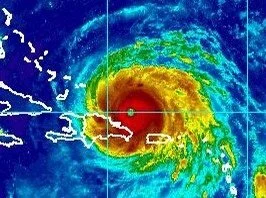
This morning at 5:00 am, the center of Cat. 5 Hurricane Irma on the Saffir-Simpson Hurricane Scale, was located near latitude 20.0 North, longitude 68.3 West, or 160 km north of the eastern tip of the Dominican Republic and 415 km north-east of Cap-Haitien. Irma is moving toward the west-northwest near 17 mph (28 km/h), and this general motion is expected to continue with some decrease in forward speed for the next couple of days. On the forecast track, the center should pass north of the coast of Hispaniola later today, be near the Turks and Caicos and southeastern Bahamas by this evening, and then be near the Central Bahamas by Friday, according to the National Oceanic and Atmospheric Administration (NOAA).Maximum sustained winds are near 180 mph (285 km/h) with higher gusts. Irma is a category 5 hurricane on the Saffir-Simpson Hurricane Wind Scale. Some fluctuations in intensity are likely during the next day or two, but Irma is forecast to remain a powerful category 4 or 5 hurricane during the next couple of days.Hurricane-force winds extend outward up to 50 miles (85 km) from the center and tropical-storm-force winds extend outward up to 185 miles (295 km).The combination of a life-threatening storm surge and large breaking waves will raise water levels above normal tide levels by the following amounts within the hurricane warning area near and to the north of the center of Irma. Near the coast, the surge will be accompanied by large and destructive waves on the North Coast of Haiti and the Gulf of Gonâve where floods are to be feared...Hurricane conditions are expected to begin within the hurricane warning area in the Dominican Republic and Haiti today, with tropical storm conditions beginning in the next few hours.Irma is expected to produce the following rainaccumulations through Saturday in the Northern Dominican Republic and northern Haiti...4 to 10 inches (10 à 25 cm),isolated 15 inches (37cm).In the Southern Haiti 1 to 4 inches (2,5 à 10 cm) of rain is excepted.Flights canceled :Port-au-PrinceLe vol de Jet Blue 1510 à destination de Fort Lauderdale a été annuléLe vol de Jet Blue 1509 en provenance de Fort Lauderdale a été annuléLe vol de Jet Blue 1835 en provenance de New York a été annuléThe flight Jet Blue 1510 to Fort Lauderdale was canceledThe flight Jet Blue 1509 from Fort Lauderdale was canceledThe flight Jet Blue 1835 from New York was canceledCap-HaïtienThe flight American Airlines 2732 from New York was canceledHaitiLibre | September 7, 2017

Accreditation of two new ambassadors

 President Jovenel Moïse, received the credentials of two new Ambassadors accredited in Haiti, at the National Palace. They are their Excellencies André Frenette of Canada and Oscar Chàvez Valiente of the Republic of El Salvador.The two new diplomats renewed their country's commitment to maintain close ties of friendship and strengthen cooperation between Haiti and their countries.The Head of State also reassured these ambassadors on his willingness to work by common agreement to the harmonious development of relations between his Haiti and these two friendly countries.Subsequently, after the delivery of their credentials to the President of the Republic of Haiti, they made a floral offerings to the Haitian National Pantheon.HL/ HaitiLibre