







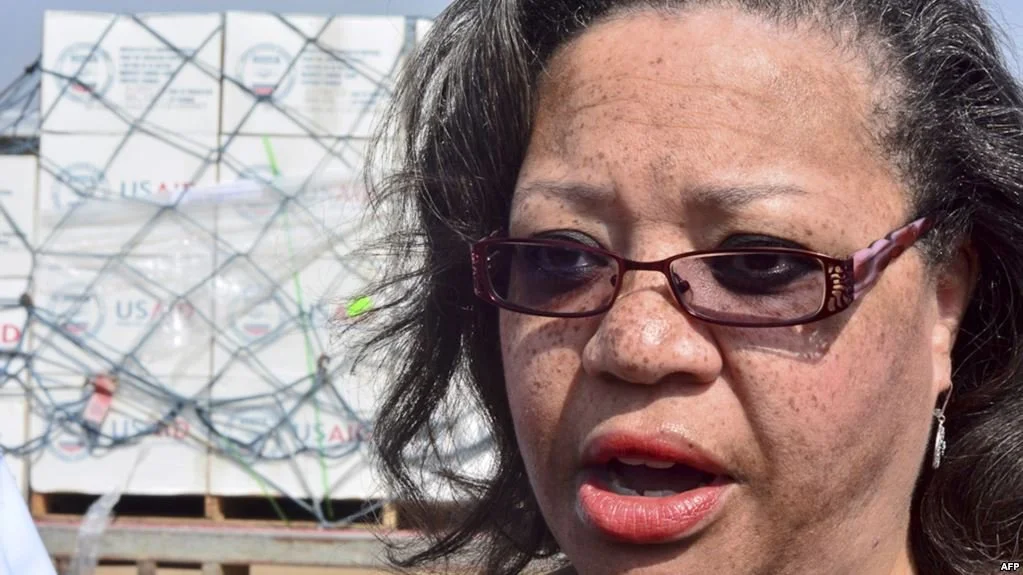

Looking forward to working with you, @minujusth and Haiti to strengthen the rule of law. https://twitter.com/unpeacekeeping/status/926197050928181248 …
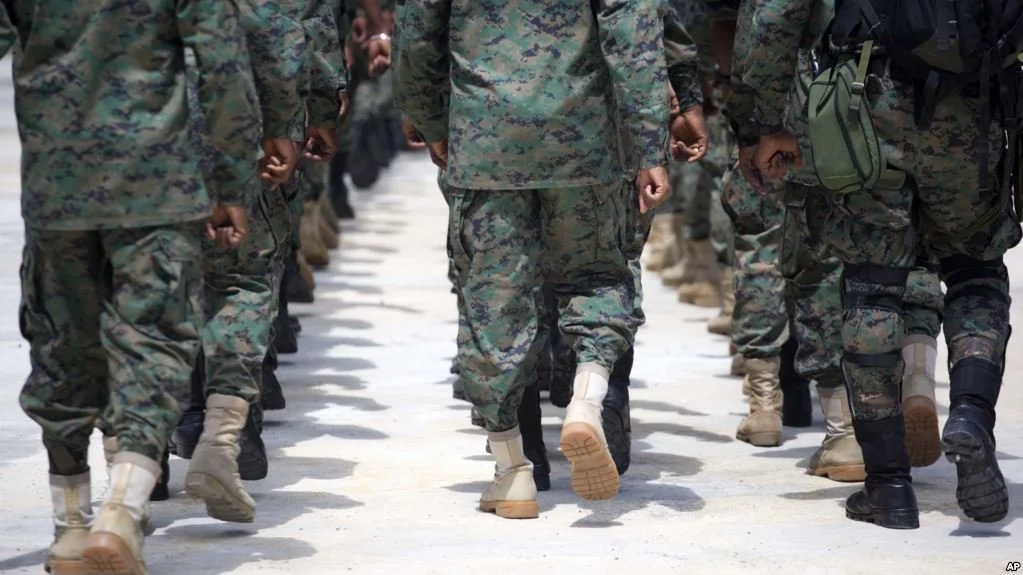
Haiti Prepares to Introduce Its Revived Military
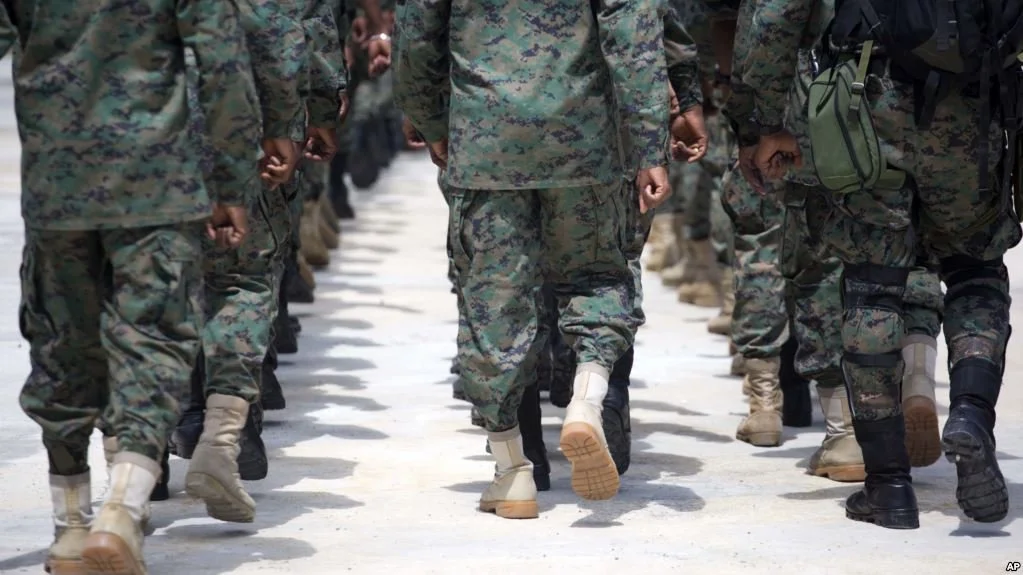
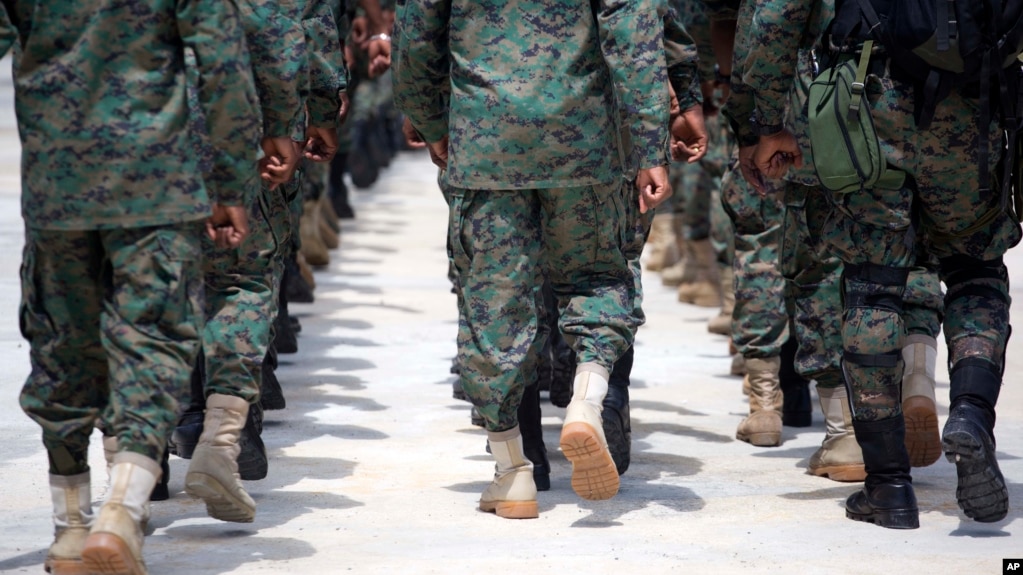 CAP-HAÏTIEN, HAITI — More than two decades after Haiti’s leader disbanded its army, with its history of violent coups, the Caribbean nation is about to unveil a reconstituted military.The Haitian National Army will be formally reintroduced with a parade in this northern port city on Saturday, the anniversary of a decisive 1803 battle [Battle of Vertières] nearby that secured Haiti’s independence from France.“The army I am reinstating for you is a professional one. It is a necessity for our country. It will not be an army of repression,” President Jovenel Moïse, who took office in February, said at a news conference last week. “It will be instead an army that will help out when a hurricane strikes our country. It will help repair roads. This is the army I have promised you.”
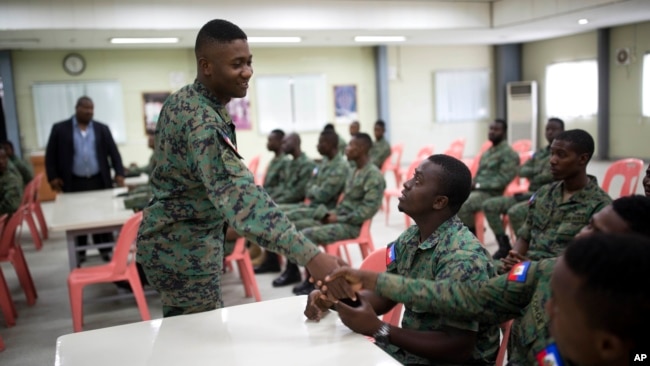
Civilian forceMoise aims to distinguish it from the military that overthrew Jean-Bertrand Aristide in 1991. When Aristide reclaimed the presidency in 1995, he dismantled the army and put security in the hands of the civilian Haitian National Police. That force now has roughly 15,000 officers.In contrast, the army has at least 150 recruits, young men and women mostly engaged in building up the impoverished country’s infrastructure, Defense Minister Hervé Denis said at news conference Monday. Since their selection in late summer, they have set up a medical clinic in central Haiti and begun fixing roads.Eventually, there could be 3,000 to 5,000 troops, Denis said.“But we know that we cannot have an army of that size the next day” because of budget constraints, he added.
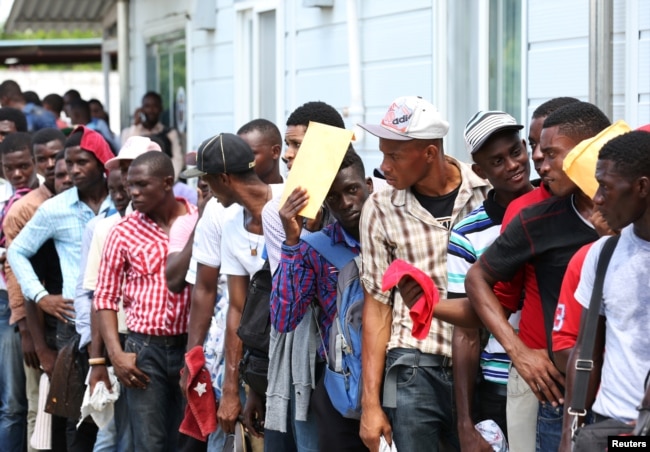
Haiti’s government has allocated $8.5 million for defense spending in the 2018 fiscal year. Denis acknowledged funding challenges but, according to the Miami Herald, said the armed forces’ patrols could stem annual losses of $200 million to $500 million in contraband coming from neighboring Dominican Republic.The army’s restoration draws mixed reactions at home and abroad.The army offers precious jobs in a poor country whose unemployment rate tops 40 percent.But Wednesday marked the third consecutive day of street demonstrations in Cap-Haïtien, the country’s second-largest city, with hundreds of public high school students protesting spending on a new military when their teachers have gone unpaid for months.Their rallying cry: “We don’t want an army, we want an education!”“The country has other priorities that are more important than the army,” Edouard Innocent, the city’s former mayor, told VOA in a phone interview. He said Moise should “prioritize economic development, education, health. … I think this army is [a means] for the president to secure his power.”Right to an armyCiné Aneus Daneus, a lawyer in Cap-Haïtien, pointed out that Haiti has the constitutional and sovereign right to an army. He called for “a professional army” to protect the country’s borders and provide aid in case of natural disasters. He added, “This force must not be involved in politics.”Nenel Cassy, a Haitian senator, told VOA he worried that the army would strain the national budget and could be used to suppress political dissent. He said its reinstatement created “a chaotic situation.”
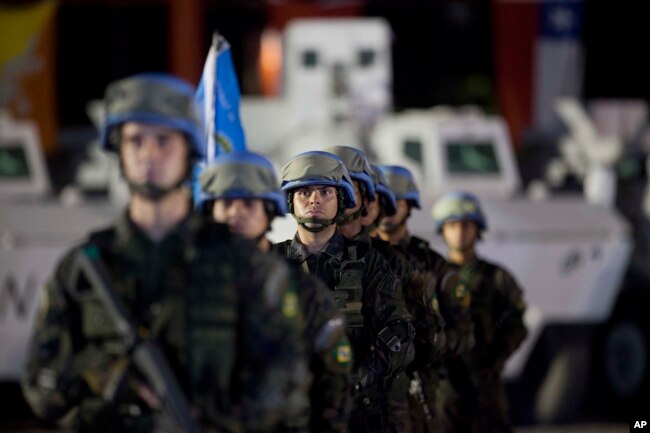
The army’s reinstatement comes a month after the end of the U.N. Stabilization Mission in Haiti (MINUSTAH), aimed at steadying the leadership after the 2004 military coup. That effort has given way to the U.N. Mission for Justice Support in Haiti (MINUJUSTH), meant to strengthen the justice system, policing and human rights protections.The United Nations and foreign governments, including the United States, discouraged Haiti from reviving its army. Instead, they supplied financial aid and training for the Haitian National Police.Kenneth Merten, the State Department’s special coordinator for Haiti, said the U.S. government disapproved of a reconstituted Haitian army because of that army’s history of coups d’etat. He told VOA’s Creole Service early this year that the U.S. has “spent a lot of money so Haiti could have a police force that is competent and transparent.”The United States, Haiti’s biggest benefactor, has disbursed at least $3.9 billion in post-2010 quake aid.‘Good reason to be nervous’Given the high degree of international involvement in Haiti, restoring the army brings “a sense of nationalistic pride with certain elements of the population,” Geoff Burt, executive director of the Canada-based Center for Security Governance, told VOA.But “there’s good reason to be nervous,” added Burt, who has explored the issue’s complexities in a report last year for the International Journal of Security & Development.One argument is that rebuilding the army could distract from the “more important priority of building a more effective, accountable police force.”“The big problem isn’t with the army per se, it’s the connection to the political process,” Burt said. “… Will the army become a player in Haitian politics? That’s what everyone would like to avoid.”By: Jacquelin Belizaire, Jean Philippe and Jean-Pierre Leroy for voanews.com | November 15, 2017.
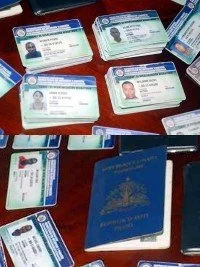
PNRE : False cards, more than a hundred Haitians will be expelled
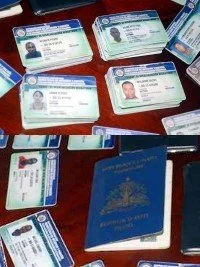
The Directorate General of Migration (DGM) of the Dominican Republic has seized more than a hundred counterfeit cards of the National Plan for the Regularization of Foreigners (PNRE), mainly cards belonging to Haitian citizens, in the possession of others, during operations in the northern provinces of the country.Among the documents confiscated as part of the immigration interdiction operations ordered by the Director General of Migration, Lieutenant General Máximo William Muñoz Delgado, included 152 false documents or with irregularities.The institution's report indicates that 116 of these modified documents of PNRE were confiscated in Dajabón, while in Santiago, 36 PNRE cards were seized, as well as 10 passports with irregularities and 2 student cards.The DGM informed that the documents were discovered and seized, thanks to the use of the readers and the consultation of the institution's database carried out by the migration inspectors.In accordance with the provisions of the Immigration Act and the regulations of the institution, in these cases, the cardholder is expelled because it is irregular in the country and it made an identity theft.Concerning the card owner, it is excluded from the National Plan for the Regularization of Foreigners (PNRE) and is therefore deported, if the existence of a complaint prior to the removal of the document before the corresponding authority is not demonstrated.Similarly, an investigation is still open with other state security agencies to identify those responsible for falsifying documents for subsequent submission to the courts.By: HaitiLibre - 11/15/2017

Book Signing and Fundraiser for Haiti
At a time when so many refugees in America are facing an uncertain future, one man's story may offer them hope. Born into Haiti's poorest class, Jocelyn "Josh" Apo was just 20 years old when he and 60 others crammed onto a makeshift boat and set out on a 17-day overseas trek to the United States, seeking a better life. Apo says his faith and ability to find joy in the little things helped him change his life. Since arriving in the US in 1980, he's been a migrant farm worker, nursing home employee, and middle school custodian. His positive attitude inspired a parent of one of the students Barker Road Elementary School to help him write his 2017 book, "Gold from the Well."Apo will discuss his experience and sign copies of the book at Bernunzio Uptown Music (122 East Avenue) Friday, November 17, from 7 p.m. to 8:30 p.m. For every book sold, $5 will be donated to a grassroots effort to revitalize Apo's home in Haiti. The event will also feature Haitian music, refreshments, and a raffle. Admission is free. For more information, visit bernunzio.com or call 473-6140.By: Kathy Laluk

Haitian President Says Infamous National Army Should Be Reinstated As U.N. Leaves
The Haitian police must now take over the duties of securing the nation now that U.N. peacekeepers have left. And Haiti's President says the United Nations' withdrawal is a perfect time to reinstate the once infamous national army a move that has sparked concerns.
ELISE HU, HOST: After 13 years and controversy, U.N. peacekeepers have left Haiti. The force was credited with bringing stability to the Caribbean island, but the troops also brought a cholera epidemic and were embroiled in sex scandals. Now that they're gone, Haiti must provide the main security for the country for the first time in more than a decade. In the last part of her series about Haiti and U.N. peacekeepers, NPR's Carrie Kahn reports on the country's future without the multinational troops.UNIDENTIFIED PROTESTERS: (Chanting in foreign language).CARRIE KAHN, BYLINE: Dozens of men run through the streets high in the hills above Port-au-Prince drumming and protesting. They chant, we are in trouble, and we want the current president, Jovenel Moise, to leave office.CLAUDE: (Speaking Creole).KAHN: "Moise is destroying our country," says this protester, who only gave his name is Claude. Protesters are angry about the most recent budget that raised taxes dramatically. Police quickly contained demonstrators and reopened streets without bringing out water cannons or tear gas used in previous demonstrations. Now that U.N. peacekeepers have left the country, such crowd control is up to Haiti's national police force. Esmail Luna watched the protest from his motorcycle taxi stand.ESMAIL LUNA: (Speaking Creole).KAHN: "I don't support President Moise or his tax hike," says Luna. But he says he doesn't think he should be removed from office either. He doesn't want any more chaos. Haitians have had a rocky run with democracy. There have been more than 20 military coups since Haiti gained independence from the French in 1804. The most recent was in 2004, when President Jean-Bertrand Aristide was forced out of the country. U.N. troops were brought in to keep the peace. They stayed more than a decade until last month, when the U.N. finally pulled the troops. Taxi driver Luna says it's not a problem for him that the peacekeepers left.LUNA: (Speaking Creole).KAHN: "Though," he says, "they should have done more for the country during their time here." President Jovenel Moise agrees. In an interview with NPR, he says along with the introduction of cholera to the country, he believes the biggest failure of the U.N.'s mission was not giving more training to the country's police force.PRESIDENT JOVENEL MOISE: (Speaking Creole).KAHN: "The U.N. has police here with a lot of experience and investigative expertise. Our police force," he says, "has none. It would have been a good thing for them to give us that during the 13 years they were here." The U.N.'s newly arrived deputy special representative in Haiti, Mamadou Diallo, says the world body is not abandoning Haiti.MAMADOU DIALLO: We humbly recognize and Haitians along us and the government of Haiti that there is still work to be done. A lot has been done, but we can still continue to work.KAHN: While U.N. troops have left, a small 1,200 strong U.N. police force will remain to help strengthen the national police and judicial institutions. The new mission is expected to stay at least two years. Haiti's leaders aren't waiting for their police to get more training. They've decided to relaunch their national army.UNIDENTIFIED MAN: (Foreign language spoken).KAHN: At a military camp in Leogane, about an hour outside the capital, dozens of soldiers practice drills.UNIDENTIFIED SOLDIERS: (Shouting in foreign language).KAHN: A captain yells, you sound like a bunch of pregnant women. Shout like men. This group, a little more than a hundred, are technically not part of the army. The army was disbanded in 1994 following years of complaints of horrific human rights abuses. Human rights advocates worry the president is building back the army now to protect his needs over the country's. Pierre Esperance, a leading human rights advocate, says Haitians don't object to reinstating the army.PIERRE ESPERANCE: (Speaking Creole).KAHN: "But," he says, "he must make sure that this army has a clear objective and follows the law." Critics also wonder how the country, the poorest in the hemisphere, will pay the soldiers. That didn't deter hundreds of Haitians that recently lined up at a recruitment fair. President Moise has announced he will officially reinstate the army this Friday. Carrie Kahn, NPR News, Port-au-Prince.By: Carrie Kahn - November 13, 2017
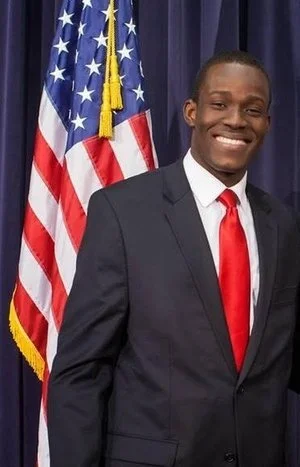
His ‘story of America’ took him from Haiti to Brockton’s City Council
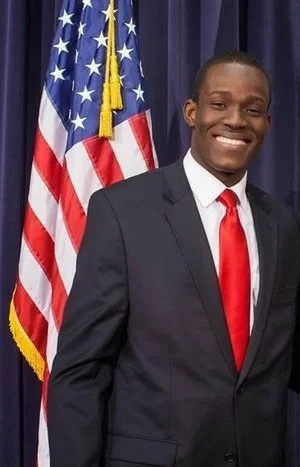
Jean Bradley Derenoncourt, 27, said that he was spurned by well-connected politicians in Brockton during his campaign to become the first Haitian-American member of the Brockton City Council.
BROCKTON – With less than two years of U.S. citizenship under his belt, after coming to this country from Haiti in the wake of the 2010 earthquake, Jean Bradley Derenoncourt was able to get himself elected as a leader of Brockton’s city government.The 27-year-old, who is the first Haitian-American elected to public office in Brockton, took one of the four at-large seats on the 11-person Brockton City Council during Tuesday’s citywide election. While Derenoncourt is proud to be an immigrant and a Haitian-American, the councilor-elect said his story shows the how opportunities are afforded to everyone who comes to live in the U.S.“What I would like people to understand is that it happened to be my name and my face,” said Derenoncourt, “but I do believe there are a lot of people out there, not just from Haiti but people from all over the world, who could do exactly the same thing. It’s not just a Haitian-American story. It is a story of America.”Derenoncourt launched his campaign for Brockton City Council on Feb. 11 this year, on the one-year anniversary of his obtaining U.S. citizenship. During his first campaign for public office, Derenoncourt won on Tuesday by picking up 5,250 votes, finishing fourth in a field of eight candidates.While many believe that he had support from the city’s political establishment, Derenoncourt said it was the total opposite. During an interview at his home on Saturday, the the city councilor-elect said that he built a campaign team of friends who he has met along the way from school and the community, in addition to supporters from the SEIU and the Massachusetts Coalition for Social Justice, which he campaigned with in 2014 to pass a ballot measure giving the chance to earn sick time to all workers in the state.“I would like people to understand the establishment did not support us, they truly did not,” Derenoncourt said. “I thought some of the folks who claimed to be the representation of Brockton would have jumped on board, but they did not. I had no big political backup. People think I do, but I do not.”Without naming names, Derenoncourt said he was spurned by several city leaders that he expected support from during the campaign. The city councilor-elect said some people even personally urged him to drop out of the race. Derenoncourt said that his election showed that a candidate doesn’t need to be well-connected in order to win.By Marc Larocque - 11/13/2017
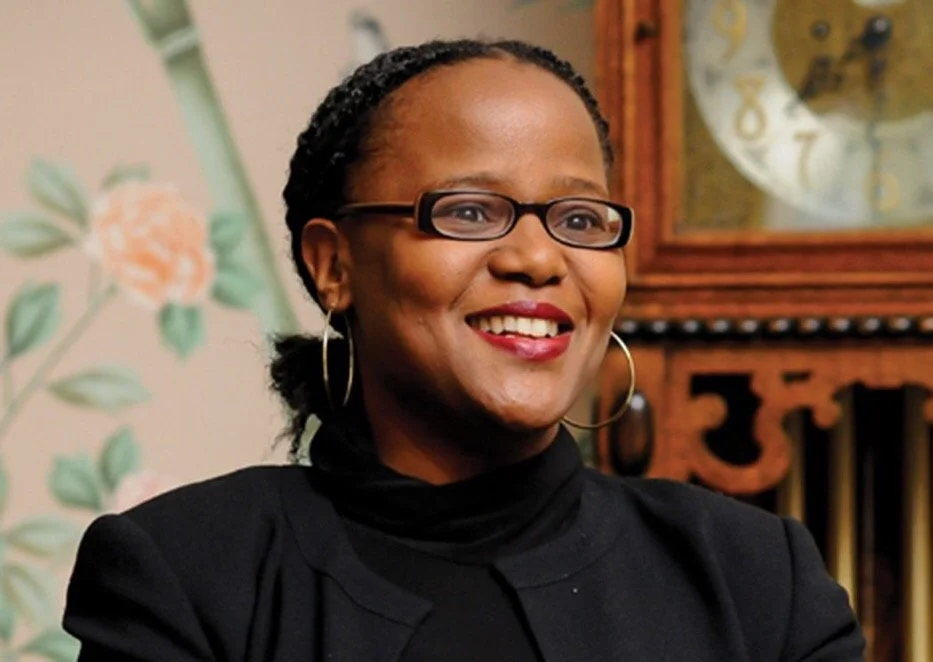
Edwidge Danticat announced as winner of $50,000 Neustadt International Prize for Literature at OU
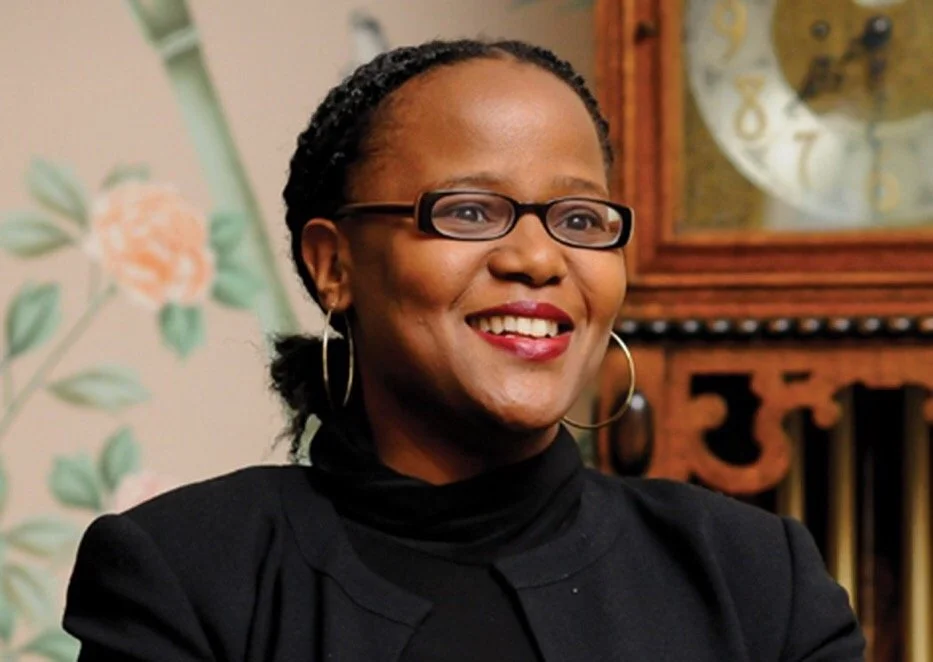
NORMAN — Haitian-American writer Edwidge Danticat has been named the winner of the 2018 Neustadt International Prize for Literature, officials announced Thursday evening.Danticat's award includes $50,000, a silver replica of an eagle feather and a certificate.The announcement was made at a reception at the University of Oklahoma, home to World Literature Today, the university's award-winning magazine of international literature and culture. The Neustadt International Prize for Literature is awarded in alternating years with the NSK Neustadt Prize for Children's Literature."Danticat is the author of stories, essays, travel commentary, film scripts, YA novels and four novels," according to a news release. "In addition to a Pushcart Prize, a National Book Critics Circle Award, the BOCAS Prize, and the Andrew Carnegie Medal for Excellence in Fiction, Danticat won a MacArthur Fellowship and holds two honorary degrees."Her first novel, 1994's "Breath, Eyes, Memory," was included in Oprah's Book Club in 1998."Danticat experiments with form and structure and frequently references the literary history of Haiti and the Caribbean" the release notes. "She paints scenes of immigrant life in New York and Miami with fresh details and palpable familiarity."Robert Con Davis-Undiano, World Literature Today's executive director, said in the release that Danticat is a “master writer whose newest work promises even greater heights.”The Neustadt Prize is the first international literary award of its scope to originate in the U.S., the release states, and is one of the only international prizes available to poets, novelists and playwrights. Any living author writing from anywhere in the world is eligible for the prestigious award. The jury is comprised of acclaimed international authors.By NewsOK | November 9, 2017

UAE go down fighting against Haiti
MENAFN - Khaleej Times) The UAE fought hard but lost 1-0 to Haiti in a friendly match at Khalifa bin Zayed Stadium in Al Ain on Friday. Significantly, this was the first assignment for new coach Alberto Zaccheroni and would have given him an ample idea about work to be done in defence.After the initial moments taken to settle down, both teams played some sublime football. Teams went forward looking for gaps to find a way to score.The UAE had the first attempt on goal. It was a three-pass try with Omar Abdulrahman finding Ahmed Al Hashmi, who set it up for Amer Abdulrahman but the final delivery lacked bite.Minutes later the Haitians made the home side pay dearly for the missed chance.It was a crafty goal orchestrated by Derrick Etienne, who waded past at least five players to find Kevin Lafrance, who passed onto striker Duckens Nazon in the box. The Coventry City striker's ripper rebounded from the woodwork to hit Mahmoud Khamees and back into the goal as keeper Khalid Eisa stood helpless.Following the strike, the UAE responded with vigour. There were long-range posers from Mahmoud Khamees and 'Amoory' but Haiti defence and keeper Johny Placide were up to the task.Both teams had set a tight defence and worked offside traps well. There were no more goals in the half. After the break, the UAE started with a blitz but were unlucky.Mohanad Salem had a powerful header crash into the post. Later Khamis Esmaeel's volley struck the woodwork. Omar tested Haiti goal with a curling free kick. And at the stroke of an hour, his shot rebounded from the post.A 64-minute effort encapsulated the UAE's unlucky outing. A rampaging Walid Abbas had a decent shot blocked by keeper and the rebound fell onto Omar's leg but the talisman couldn't find target from inside the box. The UAE maintained pressure, were consistent but Haiti defence and timber denied an equaliser.At the other end, an alert Khalid Eisa kept a goal-bound shot. The UAE had to change the trend and introduction of young Khalfan Mubarak and Tariq Ahmed spiced up the mix. And in the dying minutes, Khamees almost made amends with a thunderous long-ranger but the ball whizzed past the right post. There were more chances, long and close, and a last-minute header from Mohanad Salem too but there was no equaliser.The UAE kept knocking on the door and even tried to break in but were denied by Haiti defence, keeper and skipper Placide and resolute woodwork. The UAE next play Uzbekistan on Tuesday.By MENAFN | November10, 2017

Violent demonstration in Petit-Goâve
Thursday, was held a violent demonstration of the members of the PHTK and allies of Petit-Goâve to demand their integration in the civil service and the departure of the Director of the APN of Petit-Goâve, Mrs. Carole.Early Thursday, November 9, 2017, after a few days of truce, activists of PHTK and allies of Petit-Goâve have resumed service. They invested the macadam to express their eternal namely : their appointment in the public offices and the Revocation of the Director of the APN Mrs. Carole, a close friend of Deputy Germain Alexandre Fils.The protesters demonstrated violently by burning the main barrier of the Petit-Goâve Customs with the help of inflamed tires.Activities are completely blocked at the offices of the Customs and APN.By Guyto Mathieu | Nivember11, 2017

Haitian Government Will Build About 2,000 Houses
Port-au-Prince, Nov 8 (Prensa Latina) The Haitian government is implementing today a program to build social housing for the victims of Hurricane Matthew, which hit the country in 2016.Over 2,000 houses will be built in the departments of Nippes and Grand'Anse, as part of the Caravan of Change project promoted by the President Juvenel Moise, thus fulfilling one of his campaign promises.According to a government statement, the construction work has already begun Fond Rouge (department Grand'Anse) in which 600 houses will be built, while another 600 will be built in Nippes and 800 in the south of the country.Hurricane Matthew left in Haiti a material loss valued at over two thousand 700 million dollars, and some 175,000 people lost their homes.By PLEnglish | November 8, 2017

Out of the Slums of Haiti Evens Pierre is the No. 1 WBA Contender
Sun City is one of the world’s poorest, crime and disease ridden places in the world. It’s a sprawling shanty town on the outskirts of Port-au-Prince, Haiti. Hope seems to have no place in this wretched, forbidden area of the Earth. Out of this comes Evens Pierre who has worked his way up to the No. 1 contender for the title WBA champion Jorge Linares now holds at lightweight.Pierre is 29-1 (19), at 33 years of age. He goes by the nickname “The Sun City Kid”. He is promoted by Jacques Deschamps a businessman of French extraction who has put time and money into the career of Pierre because Pierre is a role model. His hope is to have Pierre fight Linares for the title.Pierre goes to Evangelical groups to speak against drugs and crime. He buys food that he sends to Sun City. He plans to open a boxing school. If Deschamps is able to have Pierre fight in Haiti, it will be a momentous event probably held at the national soccer stadium that can probably hold 20,000 people. The poor people in Haiti have very little to cheer about and having Pierre fight for a world title would make that unlucky country proud. “Even if I make a lot of money I will never leave Sun City,” said Pierre.Pierre holds the WBA Fedelatin Lightweight title that he won stopping Nicaraguan Rene Gonzalez, 31-6-1, back in November of 2014 for the second time. In his lone fight in May of 2015 he defended that title defeating Jesus Cruz Biblano, 15-9, of Mexico, by an 11 round decision. In 2016 he defended that title twice. In April he defeated Tomas Mendez, 21-6, of the Dominican Republic and in November in his biggest win he defeated former WBA & IBF champion Juan Carlos Salgado, 26-6-1, of Mexico. In March of 2017 he stopped Alfonso Perez, 12-8, of Venezuela, in 8 rounds in a non-title bout. In his most recent fight in October he defended the title and knocked out Jesus Laguna, 21-10-2, of Mexico in five rounds.Pierre’s first twenty-four fights were in Panama up until the Gonzalez fight at the Caribe Convention Center in Petionville, Port-au-Prince, where his last six fights have taken place.Linares, 43-3 (27) is from Venezuela but resides in Japan and has defended his WBA title he won in September of 2016 twice. He lost in his first attempt in 2011 for the WBC title but won that vacant title in 2014 in his last appearance in Japan. He defended it twice and gave it up to win the WBA title. Three of his title fight have been in the UK, one in Venezuela and the last at the Forum in Inglewood, CA, defeating the now No. 3 contender Luke Campbell of the UK. Linares held the same title that Pierre now holds when he fought for the world title.Pierre’s only loss was in his thirteenth fight losing to Rosano Lawrence, 12-9-1, of Panama, in April of 2010, due to the fact the referee penalized him three points. He reversed that loss three fights later stopping Lawrence in six rounds. He is on a seventeen fight win streak since his only loss. He won the WBA Fedelatin title back in July of 2010 just prior to the re-match with Lawrence defeating Augusto Pinilla, 14-3-1.Pierre is not only a No. 1 contender but an example how someone from one of the poorest countries in the world can make something out of himself and be a role model on top of it. With his promoter Deschamps backing him he should be fighting for the WBA world title in 2018. The only question is “where?”By: Ken Hissner

When Haiti stole hearts in 1974
https://youtu.be/lgKdZHZ8xeAWhile West Germany 1974 is perhaps better remembered for legends such as Johan Cruyff, Johan Neeskens, Gerd Muller and Franz Beckenbauer showcasing their talents, often overlooked at the tournament is the story of a plucky Caribbean nation. Making their first appearance at the FIFA World Cup™, a spirited Haiti stole the hearts of host nation fans, who eagerly pledged their support to the underdogs.Pitted against Italy, Poland and Argentina, no-one expected anything of the minnows. But that didn’t stop them from valiantly taking the lead against Italy in their opening game through Emmanuel Sanon, which ultimately ended in a 3-1 defeat. While they exited the World Cup at the group stage, Haiti left with the admiration of the watching world. In the above video, players Serge Racine and Philippe Vorbe reflect on the Caribbean nation's odyssey.By: (FIFA.com) 02 Nov 2017
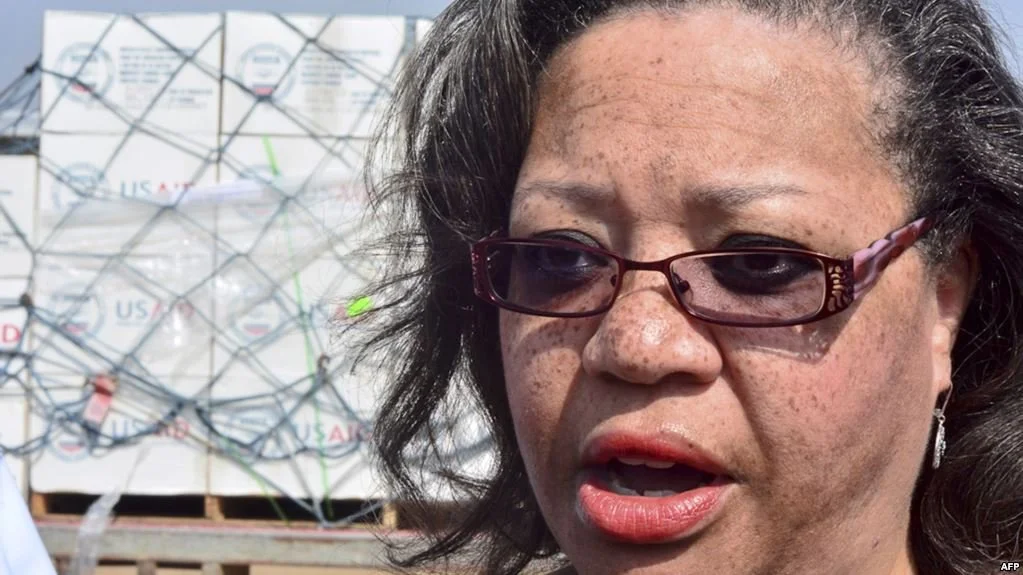
UN Names Special Representative to Haiti
Veteran diplomat Susan Page has been named the United Nations' special representative to Haiti and will lead the new U.N. mission to enhance the country's justice system.Her appointment was announced Wednesday. On Friday, her first official day on the job, Page was expected to travel to Haiti with the deputy secretary-general, Amina Mohammed, and the special envoy for Haiti, Josette Sheer, according to the U.N. press office.
The U.N. diplomats were to meet with government officials and other stakeholders, the press office said. They also planned to tour the Haitian government's development initiatives and visit communities most affected by a deadly cholera epidemic.Since January, Page has served as deputy special representative for rule of law with the U.N. Stabilization Mission in Haiti (MINUSTAH). That mission, aimed at stabilizing the country after a 2004 coup, ended in mid-October.It was immediately succeeded by the U.N. mission for Justice Support in Haiti(MINUJUSTH), intended to strengthen the justice and corrections system, policing and the protection of human rights.The new mission has been embraced by the government of President Jovenel Moise but has some skeptics, as the Reuters news service has reported.“The country should expect nothing positive from this new mission, which is only a tactic to continue with the occupation that the Haitian people have rejected,” former presidential candidate Eric Jean-Baptiste was quoted as saying.
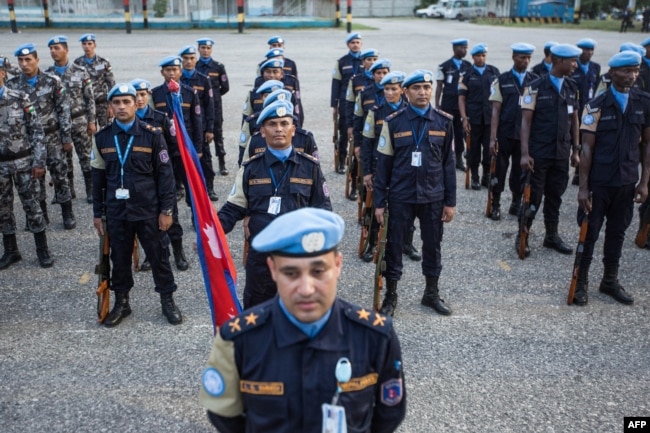
FILE - The Nepalese garrison stands at attention during the official closing ceremony of the United Nations Stabilization Mission in Haiti (MINUSTAH) in Tabarre Haiti on Oct. 5, 2017.
The U.N. has been blamed for the cholera epidemic, allegedly introduced by Nepalese peacekeepers who arrived to help after a massive earthquake in 2010. The bacterial disease has killed 9,722 of Haiti's nearly 11 million people.Last August, acknowledging the U.N.'s role in the epidemic, spokesman Farhan Haq said the organization would "do much more regarding its own involvement."Page is experienced in dealing with conflict.She served as the first U.S. ambassador to South Sudan, from late 2011 through Aug. 23, 2014, then became the acting U.S. ambassador to the African Union and the U.N. Economic Commission for Africa. She also was a U.S. deputy assistant secretary for African affairs and a senior adviser on Sudan and South Sudan.Page led the rule of law advisory unit for the U.N.'s Sudan mission, and served as legal adviser for the U.N. Development Program in Sudan and Rwanda.A native of Chicago, Illinois, Page was born in 1964. She earned a law degree from Harvard University and an undergraduate degree from the University of Michigan, where she majored in English.By: VOA News - November 03, 2017
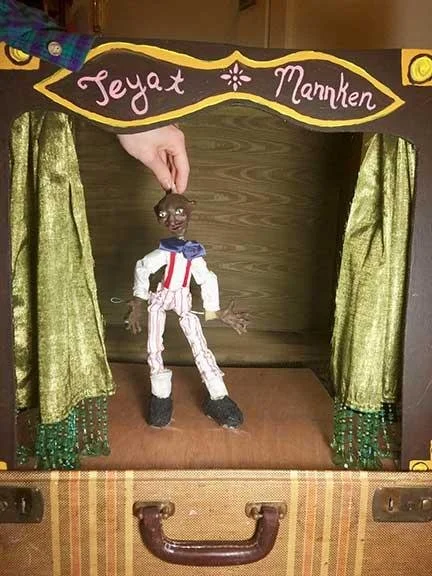
Damascus native daughter plans puppet show in Haiti
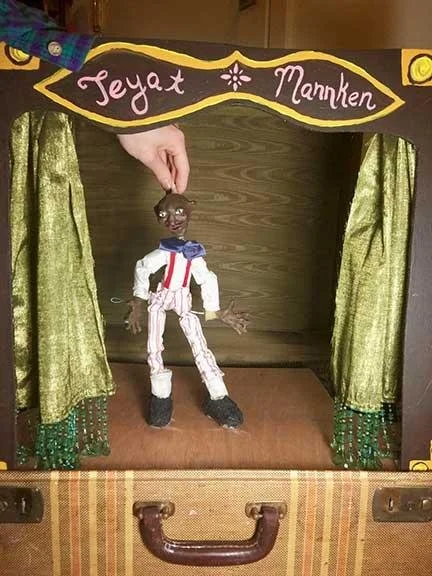
NEW YORK CITY, NY — Lucille Jan-Turan, the daughter of frequent River Reporter contributor Ramona Jan, grew up in Damascus, PA and holds a bachelor’s degree in human ecology from College of the Atlantic. But this winter, she’s utilizing a long history in theatre to stage a puppet show for the children of L’orphelinat de Providence, an orphanage in St. Rock, Haiti.“I’m going out this Christmas and New Year’s; I’m only going to be there for eight days,” says Jan-Turan. “I have a lot of experience working with kids of all ages. I was a preschool teacher in Williamsburg for a summer, I taught ages one through four, and I’m a puppeteer, like my mother. So what I’ve done is, I have built a stage that pops out of a suitcase, and I’ve written and translated an original Creole puppet show. It’s sort of a fairy tale—it’s called ‘Tifi a ak Lalin lan,’ which is ‘The Girl and the Moon’… I’m going to do that show [at the orphanage] for them on Christmas.”Jan-Turan has been working hard to connect with her audience; the other half of her program will include theatrical movement exercises “to help stimulate creative expression and mental health.”“Originally, I thought, ‘Well, I’ll just do movement exercises with them because I can’t actually speak Creole,’” Jan-Turan explains. “But I’ve actually made a lot of [headway], I can actually speak quite a bit of Creole now. I don’t know how well that’s going to translate when I get there, and I’m actually trying to talk to people. But I’m really excited to immerse myself in the language… I’m like a four-month-old Haitian Creole speaker. I study every day—you actually caught me right in the middle of my lesson… I’ve translated the whole puppet show, I’m still working on the puppets—I’ve just got a couple to finish up—and then I have to memorize the script, and then I have to practice the puppet show itself as much as possible.”Assessing the reasons why she got involved in this project, Jan-Turan credits her college roommate Nicole Moss, with whom she is developing ALLWAYS, a “nonprofit connector” in St. Rock. “We’re social entrepreneurs, I guess, in the sense that we’re ultimately trying to start… a community based startup—[Nicole] is going out to live there for four months, to become a part of the community, to get to know these women even more closely. They already have a bunch of sewing machines, and the dream, ultimately, is to start a fanny-pack factory, where it will profit the women 100%. Then she’s going to give them the English skills they need to sell their change purses, fanny packs, to the local American tourists, of which there are many. And then our dream is to eventually bring these fanny packs and change purses back to the United States, and sell them at music festivals on the East and West coasts—and then online, worldwide. It’s kind of funny talking about this, because it’s something that’s going to be years in development. It’s not something that happens in a year; it’s not something that happens in two years—it’s something that really happens in five to 10 years.”To finance the puppet show next month, however, Jan-Turan is conducting an Indiegogo fundraising campaign, which promises that she will “deliver joy.” To view the campaign video and contribute to her cause, visit https://igg.me/at/puppetsforhaiti.By: IAN PUGH - Wed, 11/08/2017

Gaston Vilaire’s new book “The Eve of Paramour” is a profound dissertation about how the fragmented Haitian people face their homeland’s disintegration

 Gaston Vilaire, a migrant from Jérémie, Haiti, who has worked in research laboratories at MIT and University of Pennsylvania, has written articles on Haitian painting and social criticism, served on the board of several Haitian cultural and charitable organizations, and became a founding member of Organization Lavalas Philadelfi, has completed his new book “The Eve of Paramour”: a scholarly account that that presents a phenomenology of questions about metaphysics and its influence on native minds amidst a progressing society.Author Vilaire reflects on the obvious diversity of perspectives, yet seemingly mirrors the collective culture from which one has grown up with or has originated from: “These are fragments littering the American landscape that worldwide immigrants have discarded, sometimes with contempt as they adopted their new nation and their new way of life. I pick them up wherever I find them and mend them in quilt-like fashion, as a symbolic gesture of reverence to our humanitarian heritage. They are vagrants in search of a home. Like the question, they too are experiencing homelessness. Painters and poets of diaspora who capture them on canvas and paper give them a mythical space—though not mythical coherence. They take great care to change them into sterile deities before getting them laid in multicolored media. There, in a whim of fancy, they careen them on one side or the other of the frontier of the sexes. Exiled from their collective cultures, these elements were forced to abandon the countryside for shantytowns, where they would board flimsy kanters for the land of diaspora. They too are as lost and fragmented as their makers.”Published by New York City-based Page Publishing, Gaston Vilaire’s thought-provoking narrative not only confines itself to the Haitian mindset, but it also extends to all in general, as it finds universality in crisis brought about by wars, dictators, and disasters.Readers who wish to experience this powerful work can purchase“The Eve of Paramour” at bookstores everywhere, or online at the Apple iTunes store, Amazon, Google Play, Kobo, or Barnes and Noble.
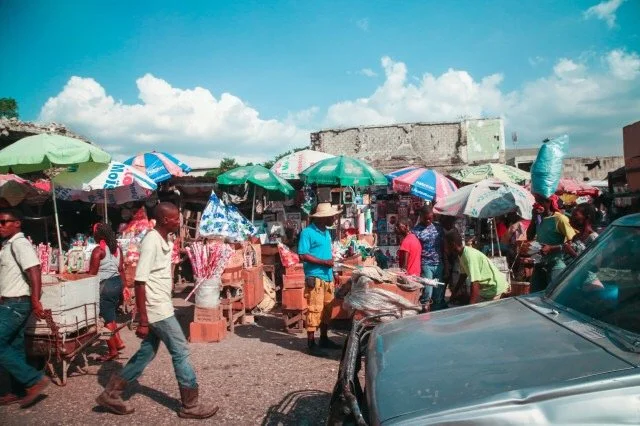
We Want To Stay': Haitian Immigrants In U.S. Fear End Of Temporary Protected Status
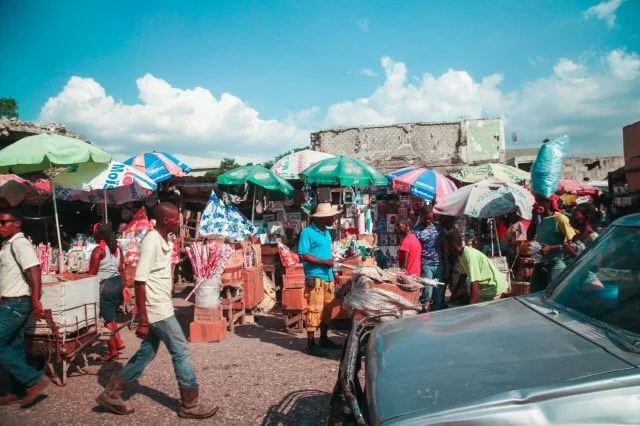
For decades, the United States has provided immigrants from 10 countries, mostly in Central America, what’s known as Temporary Protected Status. Under this status, temporary visas allow them to stay and work in the U.S. and prevent them from being forced to return to home countries at war or devastated by natural disasters.The Trump administration says it plans to end the special status. For 50,000 or so Haitians in the U.S. under the program, that means their Temporary Protected Status would expire Jan. 22.Joana Desir is one of those Haitians. On a recent day in Manhattan, the 32-year-old home health care provider is racing between patient visits.By midday, she already has helped transport one of her regular patients, a young girl with a severe respiratory disease, to school, and visited two senior patients in their homes. Soon she’ll head back to the girl’s school and make sure she gets home safely.“It’s a hard job, but rewarding,” says Desir.On weekends she picks up a few extra patients — just for fun, she says with a laugh.“Most of immigrants that I know, they have a busy life like me,” she says. “I leave home like 5:45 [a.m.] and sometimes I get home by like 9 p.m.”Desir came to the U.S. in 2008 to help out her aging parents, both legal residents. She overstayed her visa and was still in the U.S. when a powerful earthquake struck Haiti in 2010.Hundreds of thousands were killed, and the Obama administration granted Haitians temporary protected status. They were shielded from deportation and given work permits.Critics say the temporary program for Haiti and for others from countries where disasters and wars took place decades ago has become permanent and amounts to a backdoor immigration policy.During her years in the U.S., Desir put herself through nursing school, got a job and rose to supervisor. But she hasn’t forgotten those back home, who she says are still hurting.“We have that connection in Haitian families,” she says. “Since you succeed, you have to help others — it is a must.”It’s estimated by the think tank Inter-American Dialogue that all Haitians abroad this year will send home $2 billion. That’s nearly equal to Haiti’s annual operating budget.In May, citing improved conditions in Haiti, the Trump administration signaled it no longer would extend the temporary visas. It warned Haitians to prepare to go home in January, when the program expires.Desir is devastated — and as the news gets back to Haiti, concern is growing there too. Desir has 19 relatives who depend on her for financial support.In a hillside neighborhood above downtown Port-au-Prince, Desir’s cousin Daniele Joseph shows me around her three-room home. Seven people live here, including her husband, son and four of her sisters — all Desir’s relatives.Joseph says all but the youngest cousin remember Desir. Last month, Desir paid for the young cousin’s First Communion.As two of the girls cook dinner — spaghetti with a few onions and chiles — Joseph ticks off everything Desir helps with. After the earthquake, there was money sent to rebuild their home, preschool tuition for Joseph’s two-year-old son, multiple shipments of clothes — and the list goes on.Joseph says it will very difficult if Desir is sent home.In the same neighborhood Desir’s godmother, Margaret Estefan Altas, paints a much more dire prediction of what will happen to her family without assistance from abroad.“I call Joana and tell her I have a problem, we have no food — and she’ll say, ‘I’ll do what I can,’ ” says Altas. “She always comes through.”Her husband, who hasn’t worked since the earthquake and now has cancer, says it’s clear to him the family would starve without Desir’s help. Desir pays their annual rent, about $1,300 dollars, and tuition for the youngest son’s high school.Altas says she helped raise Desir and considers her a daughter. “These days, I feel more like she is the mother and father,” says Altas.Haitian officials have appealed to the Department of Homeland Security to extend TPS. Several U.S. lawmakers, including a bipartisan group from south Florida, have introduced legislation that would let the immigrants stay permanently.Haiti’s president, Jovenel Moise, told NPR in an interview that he is worried about stability in the region if 50,000 Haitians are sent home.“If they have to return, we have no other choice — they are our brothers and sister and we will receive them,” says Moise — but he is concerned about the loss of U.S. remittance dollars sent to families in Haiti, and the effect of that on the stability of the economy. He said that 25 percent of Haiti’s GDP comes from those remittances.Back in New York, Joana Desir says she can’t imagine giving up the life she’s built there.“I will always be grateful for America,” she says, “but please, we are professional — we want to stay.”For now, Desir has been giving away most of her possessions and reducing her belongings to what will fit in two big suitcases. She says she doesn’t want to leave — and if the U.S. tells her to go, then they’ll have to come get her and drive her to the airport.By Carrie Kahn | Nov. 5, 2017
As the 2017 hurricane season ends, preparing for storms in years to come
 The power of Mother Nature and the fragility of our relationship with her becomes undeniable each hurricane season, particularly for those with loved ones in affected areas. As this year’s tragic hurricane season draws to a close, we reflect on the destruction that has passed and on the ways we can prepare for hurricane seasons to come.Clearly there is no simple solution for communities that lie in the path of hurricanes and we rightly focus on providing urgent humanitarian assistance for those most dramatically impacted by these devastating storms. We are also wise to consider what measures we can take to help the most vulnerable populations strengthen their defenses. Knowing that these storms will continue to threaten the region, what can be done to protect those communities with the most to lose and the least access to large scale investment as they prepare for next year and beyond?The Colorado Haiti Project is a locally based non-profit organization that has been supporting community leaders in rural Haiti for over 28 years. This year Haiti has been spared, comparatively speaking, but we know from experience how destructive these events can be. As we watch the response unfold in Puerto Rico and beyond, we reflect on our experience in Haiti.Last year, after the devastation of Hurricane Matthew, the Colorado Haiti Project invested in agriculture: planting trees, opening a seed bank, and strengthening agricultural education programs for students. By investing directly in local community agricultural structures, soil was conserved, local food systems were reinforced, and yields increased for farmers, thus putting working capital in the hands of local people as they recovered.Haiti is often portrayed as a troubled and distant land, a world away and rife with intractable problems, a daunting place to invest resources. As someone who has worked there for the past seven years, I can promise you that the short-term hopes and long-term dreams of parents and children in Haiti are not so different than those you’d find in Colorado.The Colorado Haiti Project recently hosted a dinner in Longmont, wherein Brian Coppom, director of Boulder County Farmers Markets, along with a sizeable group of Colorado-based farmers, came together to show their support for small farms in Haiti. Over plates of locally produced food, we saw clearly that while miles apart geographically, there is a great commonality between the priorities of the farmers markets and the Haiti project.The Boulder County Farmers Markets’ website reads: “Our farmers and ranchers grow what they sell. Today, the markets serve as community gathering events, provide nourishment to neighbors, boost sustainable agriculture and support the local economy.”These same values are shared by our local leadership in Haiti. The most significant and most troubling difference is that for most Boulder/Denver residents, the alternative to healthy food is unhealthy food. In rural Haiti, oftentimes the alternative to healthy food is no food.The hopeful reality is that there exists in Haiti a long history of community-based structures, families lending each other labor and resources — a community gardening and co-op system. This type of organizing is what the local food movement we see flourishing here in Colorado is all about. Community gardens, farm-to-table initiatives, the sharing of seeds, and the slow food movement are all working to reinforce our connection to food, to our land, and to each other. I find that the same people who are passionate about local food systems here in the U.S. are also committed to the idea that we are not just a local community but a global one.In the face of Mother Nature and her overwhelming power, it’s promising to realize that her beauty and bounty are part of the solution as well. Sifting through the news stories of today, it can be daunting to consider where to place limited resources. I suggest, quite simply, that we invest in the land and its farmers. Investment in rural Haitian communities is strengthening local defenses against climate events, placing capital in the hands of local families, and putting healthy food on tables. By investing in these strategies, we stand for some of our most important values, creating connection to our food, to our land, and to each other, while also building resilience for when the storms roll in.By Wynn Walent | November 6, 2017

Congresswoman Frederica Wilson Leads Bipartisan Bill to Extend Temporary Protected Status for Haitian Nationals

Washington, D.C. – Congresswoman Frederica Wilson has introduced a bipartisan resolution to extend Temporary Protected Status to Haitian nationals until Haiti has demonstrably recovered from a series of natural and manmade disasters. The designation is set to expire in January 2018, but the island nation is still struggling to rebuild in the aftermath of the 2010 earthquake, a cholera epidemic, Hurricane Matthew and other adverse events. H.Con.Res. 88, which has 36 co-sponsors, would extend TPS for Haitians by 18 months.The text of the legislation is available here.“Haiti is enmeshed in a long and extremely challenging process of rebuilding its infrastructure and economy. While it is impossible to predict how long that will take, there is no question that the country is in absolutely no position to absorb and aid tens of thousands of people forced to return to Haiti,” said Congresswoman Wilson.In January 2010, an earthquake displaced more than 1,500,000 people and caused $14,000,000,000 in damages. The level of suffering was exacerbated by a cholera outbreak started by United Nations peacekeepers who engaged in unsanitary practices while there to help with earthquake recovery efforts. Hurricane Matthew made matters even worse, leaving in its aftermath nearly $3 billion in additional damages and 1,400,000 more people in need of humanitarian assistance.According to the World Bank, Haiti’s economic growth has contracted to less than one percent and its unemployment rate is at 40 percent. In addition, 60 percent of Haitians live well below the nation’s shockingly low poverty line of $2.42 per day. Haitian TPS holders contribute a significant share of the $1,300,000,000 that their community in the U.S. sends back home through remittances that help boost Haiti’s economy and support the care of up to 500,000 relatives.“It would be both cruel and heartless of the United States to unnecessarily sentence nearly 60,000 people who have been living and working in the United States to lives of uncertainty and abject despair,” said Congresswoman Wilson. “In addition, such a move also will have an injurious impact on the American economy.”Deporting Haitian TPS holders would cost the United States nearly a half-billion dollars to send them home; more than $2,700,000,000 in GDP; and $428,000,000 in Social Security and Medicare contributions over 10 years.“Having toured the country and viewed first-hand the extreme devastation, I strongly urge Department of Homeland Security officials to travel to Haiti see it for themselves,” the Florida lawmaker adds. “It is the only way they will be able to make a fair and informed decision and I am confident that after doing so they will do the right thing and extend TPS for Haitian nationals.”Congresswoman Frederica Wilson | November 6, 3017
Haitian Gov’t Donates Relief Items To TCI
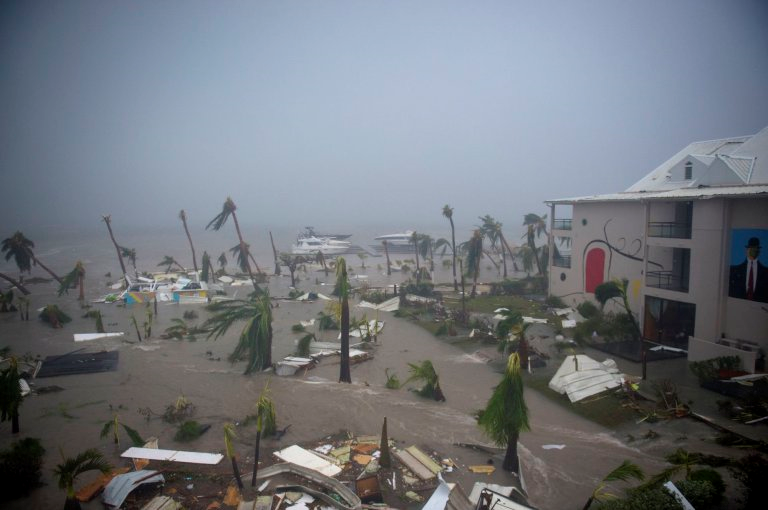
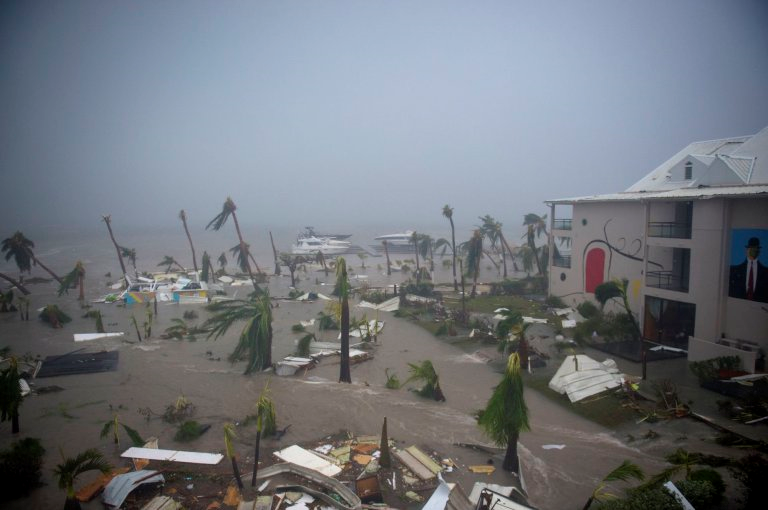
A LARGE number of generators and building supplies were the latest aid donations received by the Turks and Caicos Islands Government this week.The Haitian government donated 630 generators, 1,000 sheets of plywood, 4,500 tarps, 2,000 sheet rocks and 4,000 metal roof sheets.The donation arrived in Providenciales on October 30, direct from Port au Prince, Haiti.Haitian consulate Adolphe Jacques commented on the donation, stating that the Haitian government was committed to providing assistance to neighbouring Caribbean countries."After the passage of hurricanes Irma and Maria that caused a lot of damage to the TCI, in the spirit of solidarity and fraternity, the Haitian government on behalf of the people of Haiti decided to grant an aid relief consisting of building materials,” he said."It is a simple gesture of support to our neighbour, the TCI, where so many of our compatriots reside and even consider this ‘beautiful by nature’ as their second home.”Coordinator of the initiative Stan Wojewodzki said that his vision was to see Caribbean countries unite and help each other in their times of need.He explained how the donation was made possible."I am currently an advisor to the Haitian presidency, but first and foremost, I am a resident of the Turks and Caicos and I have invested interest in seeing that the Turks and Caicos gets back on its feet immediately after the hurricanes."After both hurricanes, I contacted senior authorities in the Turks and Caicos Islands to ask exactly what was needed in immediate relief aid."The Department of Disaster Management and Emergency Services submitted a list of essentials which I then submitted to the Haitian presidency and suggested that Haiti show a gesture of good will and fraternity to the Turks and Caicos Islands.”He added that time for relief was soon closing, so all that can be done should be done, at a Government level, for those communities that are most in need.But at some point leaders need to sit down and think about what those 21 century policies are going to be, in terms of construction and interregional trade, he said.By Daisy Handfield for Turks and Caicos Weekly News | November 6, 2017
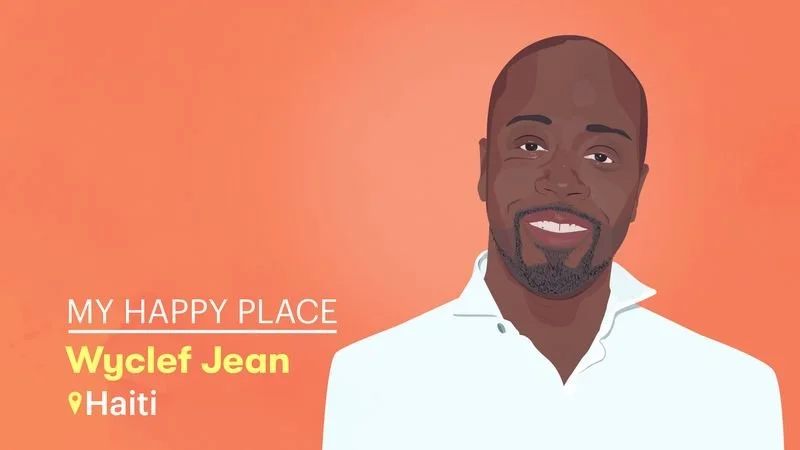
My Happy Place: Wyclef Jean Reveals His Hidden Paradise In Haiti
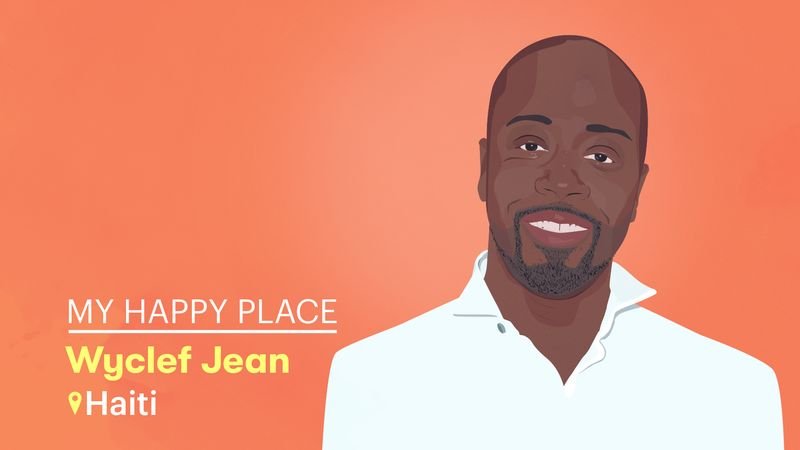
In My Happy Place, we talk to some of our favorite people about their emotional connection with an unforgettable destination.
Wyclef Jean is one the biggest musical names to ever come out of the island nation of Haiti. His star first rose as a member of the famed hip-hop group the Fugees and continued to climb as Jean pursued a career as a solo artist, collaborating with everyone from Shakira to Young Thug. A three-time Grammy award recipient, Jean has never forgotten his home country of Haiti and regularly extols his love for the country through his music. Mic caught up with Jean at an October benefit for VH1’s Save the Music Foundation, which is dedicated to bringing instrumental education to U.S. public schools.For Jean, there’s one place in Haiti that he can’t forget. "It’s like a magical river. It’s called Saut d’Eau," he said. Saut d’Eau is the name of a town and 100-foot waterfall about 60 miles north of Haiti’s capital, Port-au-Prince.

Saut d’Eau -- or Sodo in Creole -- is a place where natural beauty and Haiti’s rich history meet. The towering waterfall was created by an earthquake in the mid-1800s. According to local lore, shortly after a man saw the Virgin Mary appear near the waterfall. Saut d’Eau became a sacred site, and now, as Jean explains, "they have great ceremonies" every year.

The annual festival at Saut d’Eau occurs in mid-July, when Haitians, tourists and members of the diaspora travel to the waterfall to take part in the festivities. Attendees bathe in the water, hoping it will rid them of sicknesses or bring them good fortune. Both the Virgin Mary and her Vodou analog, the Haitian spirit Erzulie Dantor, are associated with the waterfall.Vodou -- more commonly spelled as "voodoo"-- is a key part of Haitian culture, and stems from its colonial history. When French colonizers made African slaves in plantation colonies like Haiti practice Catholicism, many combined the religion with indigenous African gods, giving birth to Vodou. That’s why Vodou spirits, like Erzulie are often so similar to Catholic religious figures like the Virgin Mary.

Music is woven into the yearly Saut d’Eau festivities. "You go out there, a lot of music is played," Jean said. "The style of the music is called rara. Rara is the roots." During the festival, rara musicians lead a procession from a church in Saut d’Eau to the waterfall. The main instrument used in rara is a bamboo or metal cylinder called a vaksen, which is accompanied by drums and other percussion instruments.
Rara is also played during Easter and Haiti’s equivalent of Mardi Gras, Carnival, which happens every year in the weeks leading up to Lent.

Jean hasn’t always had such a rosy relationship with his home country. After a catastrophic earthquake upended Haiti in 2010, his charity Yéle was accused of overspending on travel and luxury office expenses, as well as not fully paying its contractors. Jean responded to criticism in 2010 saying, "I never would ever take money for my personal pocket when it comes to Yéle," and that he has "always been committed to the people of Haiti." Despite being roiled by the Yéle controversy, Jean remains dedicated to uplifting his country, and he released a song named "Lady Haiti" in February 2017. For Jean, the synesthetic combination of music, nature and religious ceremonies make the Saut d’Eau waterfall and festivities one of the most treasured pieces of Haiti. And at the end of the day, it sums up what Jean loves so much about his native home: "You chill. You meditate. You enjoy nature."By: Benjamin Moe for Mic.com | November 6, 2017
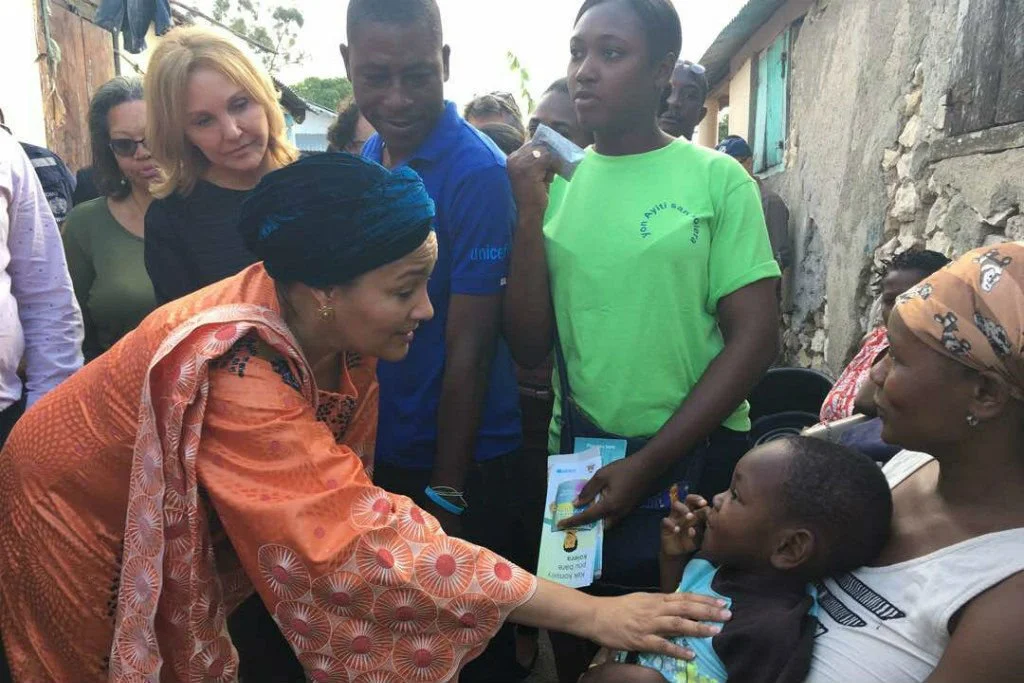
UN 'Will Walk With Haiti' On Path Towards Sustainable Development, Senior Official Pledges
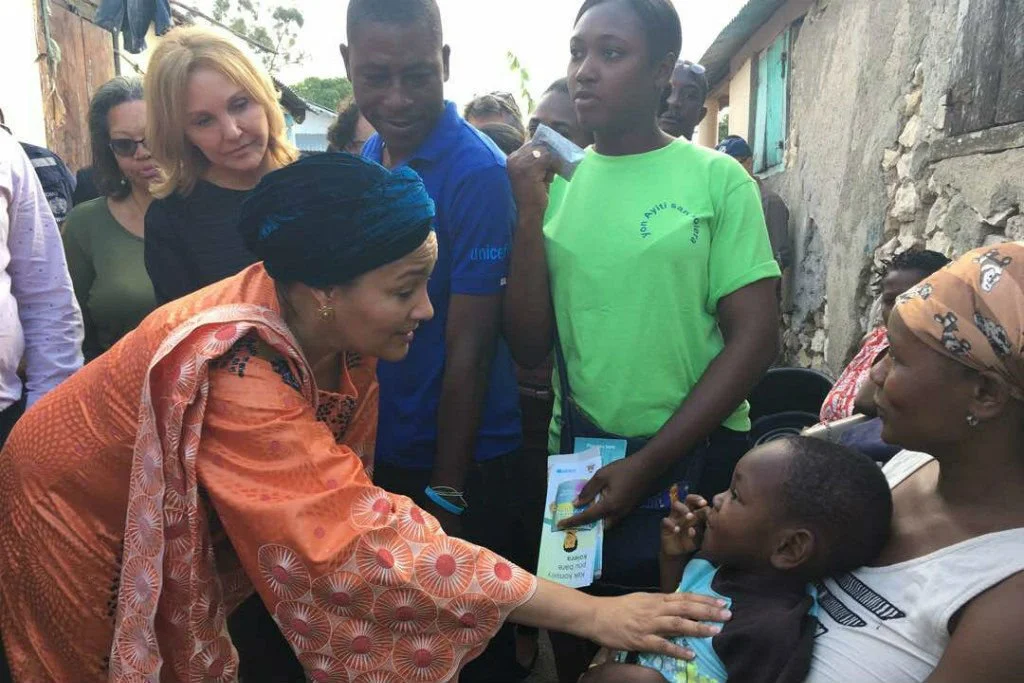

United Nations Deputy Secretary-General Amina Mohammed and UN Special Envoy for Haiti Josette Sheeran wrapped up a three-day visit to the island on Sunday, pledging more help to defeat cholera and assist the Government in achieving the broader aims of the UN 2030 Agenda for Sustainable Development.“The UN will walk this path with Haiti,” Ms. Mohammed said on Twitter, referring the work under way inside Haiti towards becoming an emergent country by 2030, the finish line agreed by all nations to achieve of the Agenda and its landmark 17 Goals, knows as the SDGs.The high-level delegation was dispatched by Secretary-General António Guterres to reaffirm the commitment of the United Nations to the Haitian people in a “new spirit of partnership.”In an opinion piece late last week in the Miami Herald, the UN chief said the partnership would stretch across the UN's work on the island – including to continue addressing Haiti's cholera challenge and the “unacceptable incidents” of sexual exploitation and abuse by UN personnel – and aims to help Haiti move “from an emergency approach to durable solutions, from assistance to investment support, from handouts to hand-to-hand cooperation for sustainable development, to democracy and dignity for all Haitians.”On Saturday, Ms. Mohammed echoed the “new spirit of partnership” set out by Mr. Guterres, saying: “We come to try to find another way to do things better; because in the past, we have fallen short. We were not able to do what we had planned,” she said in a joint press conference with Haitian President Jovenel Moise in the capital, Port-au-Prince.The visit of the two UN officials comes just after the appointment of Susan Page, of the United States, as the Special Representative of the Secretary-General and Head of the UN Mission in Support of Justice in Haiti (UNMIJUSTH), which succeeded the UN Stabilization Mission, known as MINUSTAH, on 16 October.The role of the new UN mission is to assist the Haitian Government to strengthen the rule of law institutions, to continue to develop the capacity of the national police and to promote human rights.
UN reaffirms commitment to eradicating cholera
As a key part of the visit, the two UN officials met families affected by cholera and coping with lack of access to water and sanitation.Ms. Mohammed and Ms. Sheeran also co-Chaired a High-Level Cholera Committee meeting (HLCC) alongside Haitian Prime Minister Jack Guy Lafontant. The Haitian Government and the UN representatives jointly expressed their determination work in partnership to achieve zero transmission of cholera. They further expressed their commitment to achieving the SDGs, including improving access to water, sanitation and healthcare.While cholera transmission has dropped dramatically, from over 18,000 new cases per week at the onset of the epidemic in 2010, to 250 per week this year, success will require more funding to maintain the highly effective work of emergency response teams, and commitment to the fight against cholera in the medium and long-term, the officials jointly agreed.Urging UN Member States and partners to provide comprehensive support, the Deputy Secretary-General emphasized during the meeting that “addressing the root causes of cholera in Haiti is critical to achieving the Sustainable Development Goals (SDGs). Additionally, in the immediate term, we urgently require funding to ensure continued operation of the rapid response teams; failure to do so risks losing the gains achieved to date.”The Deputy Secretary-General and the Special Envoy also witnessed the efforts of the “many heroes” working to eradicate the disease. Their visit was also an opportunity to learn about successful cholera control programmes, including in communities that ended open defecation, mobilized to build toilets, and raised awareness of the importance of sanitation.By: UN News Centre | November 5, 2017