

 10Power
Solar Startup Brings Renewable Energy To Haitian Households
One of the most exposed countries in the world to natural disasters, Haiti, an independent island state in the Caribbean with a population of close to 11 million, has been hit by hurricanes, floods and earthquakes with increasing ferocity and frequency. In 2016, Hurricane Matthew wiped out agricultural farms in South Haiti, which prior that year brought 74% of the country’s new jobs.
Although sharing the island with neighboring Dominican Republic where everyone has access to electricity, Haiti has limited access to electricity - where only 38% of Haitians in 2016 have a connection to the electrical grid, a small improvement from 28% of Haitians in 1990. Even those with access to the grid today still experience frequent blackouts and unreliable power quality.Despite dealing with natural disasters and energy poverty, Haiti has optimistically made hard commitments to create a renewable energy economy.
10PowerHaitian Solar Installers
In September 2017, the Haitian Parliament eliminated import tariffs and duties on solar equipment (the US, moving in the opposite direction, imposed a 30% import tariff on Chinese solar panels only a few months later in January 2018). Economy and Finance Minister Jude Alix Patrick Salomon stated in an interview with Haiti newspaper Le Nouvelliste, "we wanted to encourage, as part of this budget, the acquisition of equipment from alternative sources of energy."Haiti is also positioned well for solar. A study by Worldwatch calculated that Haiti receives a comparable amount of average annual sunlight (calculated in global horizontal radiance) to sunny Phoenix, Arizona, making Haiti ideal for solar power. With the high cost of imported diesel, solar is cost competitive and with financing is immediately cost advantageous in Haiti.How will large-scale solar be implemented in Haiti?Leading the charge, millennial female social entrepreneur, Sandra Kwak, and founder of social venture 10Power, is pioneering the way in Haiti by fostering the collaborative support of the public and private sectors. Working in frontier markets, 10Power partners with local installers, providing and financing project developments for commercial-scale solar and energy storage solutions. In turn, this builds market ecosystems. “Our goal is to provide affordable, reliable renewable energy that will save businesses money and create jobs,” says Kwak.10Power estimates the addressable market for commercial-scale solar in Haiti is currently over $500 million . The company has a current sales pipeline of over $100 million. “Haiti has the potential to quickly become a renewable energy powerhouse,” says Kwak. “The steps that are being taken in this direction are encouraging.”
 10Power
Founder & CEO of 10Power, Sandra Kwak (on the far right) at Solar Project
Launched in 2016, the company has financed and installed solar power for two water purification centers, providing clean drinking water to surrounding schools and communities and supporting over 600 micro-enterprises, majority women-led. 10Power is continuing its work with plans to implement a large-scale solar energy project with an undisclosed international NGO in the coming months.Kwak’s efforts to date have been recognized, from being awarded an Echoing Green Fellowship to most recently receiving investments from LIFT Economy Force for Good Fund and SheEO.10Power's enthusiasm for solar in Haiti is shared and supported by the local government. The Haitian Ministry of Public Works, Transportation and Communications (MTPTC) is working with the World Bank to develop a framework to deploy sustainable mini-grids. “It is exciting to see private sector and international development partnerships taking off,” says Nicolas Allien, Senior Energy Specialist and SREP-CTF Projects Coordinator at MTPTC. “We are implementing well-targeted financial instruments and policy measures in order to attract private sector investments in both on-grid and off-grid renewable energy solutions.”
 10Power
Haitian Solar Installers
Haitian President, Jovenel Moïse has set a goal of 24-hour electricity, which he announced in June 2017. His government has formed a National Regulatory Authority for the Energy Sector (ANARSE) led by Evenson Calixte, who is tasked with “facilitating the transition [of the energy sector] from a quasi-monopoly to unprecedented openness to the participation of other state actors…from the private sector."So what?Haiti, despite dealing with natural disasters and energy poverty, is committed and positioned to achieve a renewable energy future. Emerging nations, such as Haiti, should not be underestimated in their potential to shift rapidly to a green future, leapfrogging the fossil fuels industry , with long-term investment and support from the public and private sectors. “Distributed renewable energy has the potential to increase resiliency, prosperity and power sustainable development,” says Kwak, and to achieve this at scale social ventures, such as 10Power, are critical.By: Neil Yeoh for Forbes.com| April 30, 2018
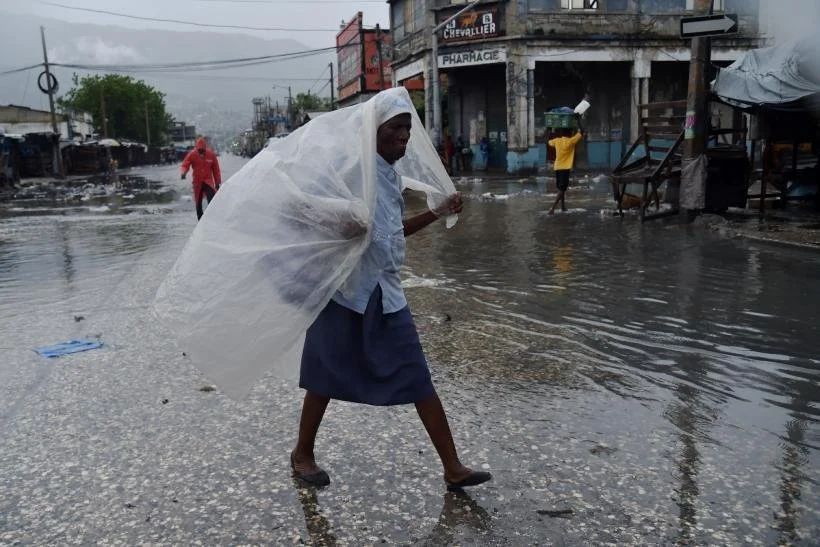
Heavy Rains Leave at Least One Dead in Haiti
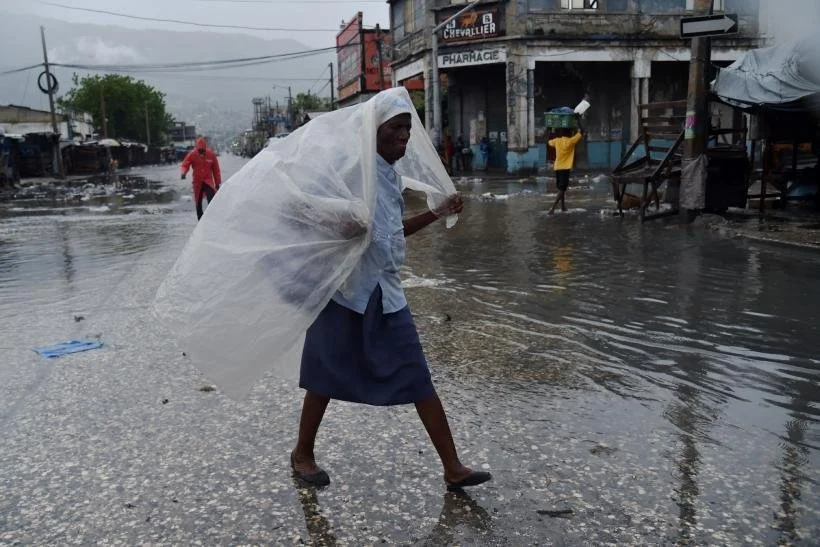
(Featured image from Getty Images)
The Civil Protection Office (CPO) today reported that the heavy rains that hit the Haitian capital caused the death of at least one person.
The tragedy occurred the day before when a landslide took place in Canape-Vert neighborhood, killing a 31-year-old woman.The CPO urged the population to take all measures indicated by the authorities, especially in the current rainy season and the hurricane season that begins next June.In 2017 five people died, while another 19 are still missing, after torrential rains and floods that hit the country.According to specialists, Haiti is more vulnerable to floods and landslides due to the effects of uncontrolled tree cutting and deforestation.
rly/oda/ane
By: Prensa Latina | Apr 25, 2018
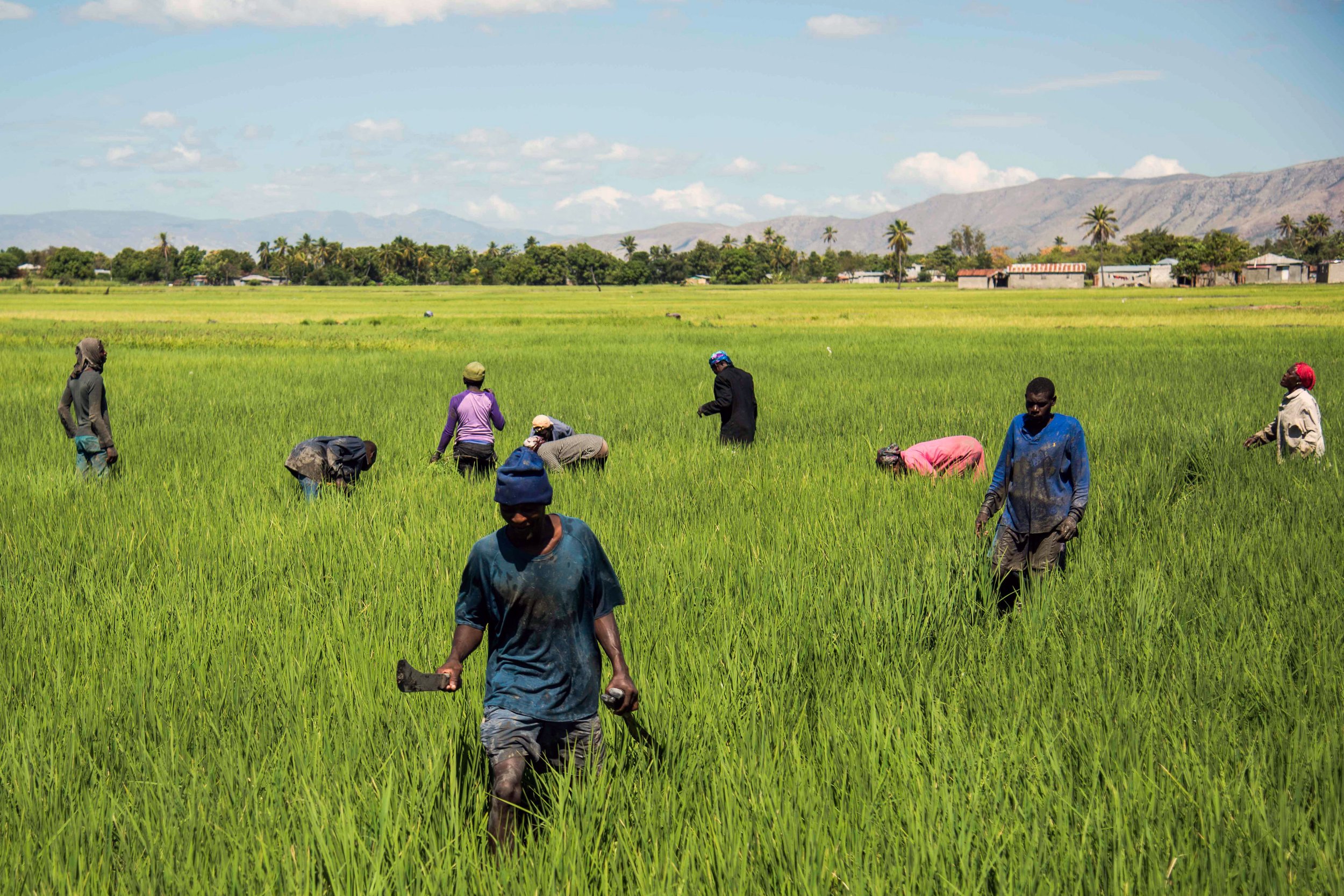
In Haiti, Golden Hopes in a Yellow Grain
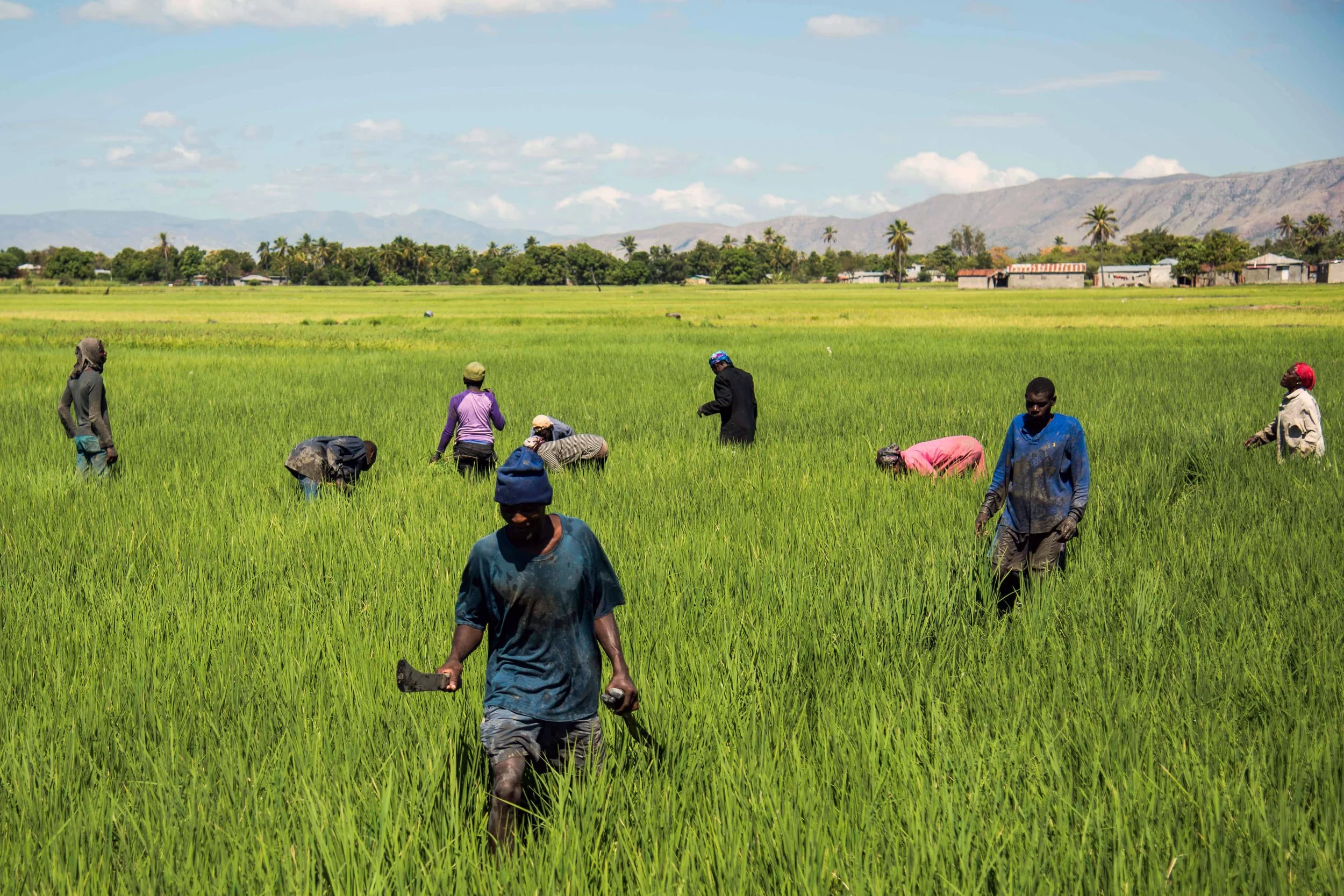
(Featured image by Jean Marc Hervé Abélard/Round Earth Media)
Some entrepreneurs in the Caribbean nation are finding that there is money to be made growing rice.
GONAIVES, Haiti – As the sun starts to set on Haiti's most fertile valley, a silent group of women sweeps grains of newly harvested rice into large, yellow mounds, unfazed by the acrid smoke of nearby wood fires.From there, the rice is placed in barrels, where it will be cleaned over those fires. Then, in a small back room on a winter afternoon, it will be packed in bags and shipped from this mill in west-central Haiti's Artibonite Valley, ending up in the kitchens of Haitian expatriates and other discriminating cooks across the United States.This was once a common scene in Haiti. Now it's a rarity. A few decades ago, Haiti was self-sufficient in rice, a crop so important here that the U.N. estimates it makes up about a quarter of people's daily diet. It even grew enough to export. But production collapsed after the U.S. and international lenders forced the country to dramatically lower tariffs that protected local farmers, from 50 percent to 3 percent in the last three decades.A quarter-century later, about 80 percent of Haiti's rice is imported, and the country is a major market for U.S. exporters. Faced with cheap imports, the country's dire poverty, natural disasters, lack of investment and collapsing infrastructure, production is still dropping in Haiti despite government efforts to halt the slide. Last year, the government reported a rise and a subsequent drop because of bad weather.Some Haitian entrepreneurs say there is money to be made growing rice. Skeptics, however, say hopes to resurrect the rice industry are misplaced and, with too few resources and little international support, represent the challenges that many poor, underdeveloped countries face in turning their economies around.Fabias Voltaire, 37, one Haitian trying to boost rice production, was able to reach an agreement to process his rice at a cooperative that is funded by the aid group Oxfam. He said there is a strong foreign demand for high-quality organic rice. It may cost more, but many regard it as healthier and better-tasting than American varieties. Plus, Haitian émigrés in the States love it, he says: "Haitians are … very sentimental about eating rice from home."In 2015, Voltaire and two cousins launched Caribbean Grains LLC. Three years later, they are shipping to Florida, Alabama and other U.S. states.Haiti is the poorest country in the Western Hemisphere. About three-quarters of its 11 million people live on less than $2 a day and about half the population lives in rural settings. In 2010, following a magnitude 7.0 earthquake that devastated the country, former U.S. President Bill Clinton publicly apologized for forcing Haiti to drop its import tariffs and damaging the economy.

A worker at the Caribbean Grains production facility shows off the production of Haiti’s most fertile region, the Artibonite Valley. Experts say the government could dramatically improve yields by fixing the area’s irrigation canals. (Jean Marc Hervé Abélard/Round Earth Media)
"It may have been good for some of my farmers in Arkansas, but it has not worked," said Clinton at the time, according to news reports. "It was a mistake."Since then, hurricanes Sandy in 2012 and Matthew in 2016 cost Haiti hundreds of millions in agricultural losses, making it even harder to recover.Jovenel Moise, who became Haiti's president in February 2017, has an agricultural background and pledged to relaunch the industry by fixing irrigation canals, financing infrastructure projects and other initiatives. By May 2017, the government had unveiled its program "La Caravane du Changement" – The Caravan of Change – to fund such infrastructure repairs. Although government estimates of the program's cost are difficult to obtain, Haitian news media reports say $55 million was spent in 2017 to repair the country's agriculture infrastructure.
Still, the challenges to boosting the country's rice industry are great. Production costs are high, and farmers have almost no access to loans or insurance to protect them from the ravages of insects and plant diseases.The facts on the ground keep skepticism high that the initiatives will substantially boost rice production. Thousands of acres in the Artibonite Valley are waterlogged, making them prone to disease, especially around the time of harvests. Other parts of the valley aren't getting enough water.Travis J. Lybbert, an economist and professor at the University of California-Davis who has done extensive research in the region, says the government's focus on better irrigation could make a big impact on rice production.
"It is relatively easy to make this happen," he says, adding that it would be much harder to provide access to inputs such as seed and fertilizer or create a better market for farm products.The government can prioritize spending on agriculture without a lot of scrutiny, shortchanging other sectors of the economy in a country that is in desperate need of just about everything."These are very important and heavy costs that are easy to sweep under the rug as many other projects get delayed," Lybbert adds. "That could be a real drag on development in other parts of the country."Looking out over a nearly dry river and irrigation canals that need to be cleaned and rebuilt, Agriculture Ministry representative Renaud Gene says Haiti has the political will to fix the problem, but not the means."There is a serious problem of water management, and it requires a lot of investments," he says.
The government has been fixing roads and canals but doesn't have the resources to make dramatic improvements. Instead of feeding Haitians in need with their own excess production, Gene says rich countries could assist Haiti more by helping develop its infrastructure, and then buying the rice from Haitian farmers to distribute.
In contrast with Voltaire, many in the region say a long history of failure leaves them pessimistic that anything will change. They regard the government initiative as at best populist and naïve. While not questioning the president's intentions, many simply aren't optimistic about the feasibility of breaking through the obstacles that exist.
"Jovenel is struggling like a poor devil but I am not sure where he's going," says Franklin Benjamin, an engineer and rice producer who has dedicated his career to finding ways to supply Haitians with locally produced rice.For decades, attempts to develop the sector have failed, he says, because farmers never get the incentives and solid support system they need."Haiti doesn't interest Haitians. They are all looking to get a visa to go somewhere where they are despised," he adds. "There is still a hope, but we will be disappointed like always."In the midst of such pessimism, Voltaire hopes that his success might inspire the next entrepreneur. And he has even bigger dreams."I want to create an agricultural bank for farmers," he says. "The objective is to make Haiti the economic capital of the Caribbean."He splits his time between West Palm Beach, Florida, and Haiti and still plans to continue growing his business despite the challenges. He says he spent $10,000 to fix the irrigation canals he needed for his own production.
On his farm, Voltaire's workers take a pause to laugh and joke a bit around a broken-down tractor. The fact that the rice mill exists at all is a small miracle.Additional reporting by Jean Pharès Jérôme. This story was produced in collaboration with Round Earth Media.By Aida Alami, Contributor for USNews.com | April 9, 2018

Doctors To Join in Medical Mission to Haiti

Two physicians who practice at Community Hospital in Grand Junction expect to join in a medical mission to Haiti.
Drs. Adam Baker and Katie McKee-Cole plan to travel to Haiti April 28 to May 5 to join a team from Thomas Jefferson University in performing free surgeries. The program is sponsored and coordinated by Chance, a not-for-profit organization that works to improve lives.
“We are incredibly honored to participate in this important mission trip to Haiti,” Baker said. “My first mission to Haiti was at St. Luc hospital in Port Au Prince in 2015. We traveled to Haiti as part of a pilot mission, and the Chance program has been very busy since then. I am very much looking forward to returning to help those in need.”
Drs. Baker and McKee-Cole both provide ears, nose and throat services. Baker specializes in facial plastic surgery and reconstruction, while McKee-Cole specializes in pediatric otolaryngology. For more information, call 644-3800 or log on to www.yourcommunityhospital.com/ENT.
By: TheBusinessTimes.com | April 24, 2018Video and image courtesy of KJCT8.com

Luka Sabbat Partners With Related Garments for Collection to Benefit 'Help Haiti'

Sabbat x Related in Haiti-Building Connections That Go Beyond Bloodlineshttps://youtu.be/tw1gfEPhMBoVideo via https://youtu.be/tw1gfEPhMBoAmerican fashion designer Luka Sabbat has teamed up with the Los Angeles–based luxury men's undergarment brand Related Garments for a collection to benefit the charitable organization Help Haiti.Luka's father, Clark Sabbat, is a first generation American, born in Haiti, and the father-son duo decided to use this 12-piece collection as an ode to their heritage. The collaboration was inspired by a seven-day trip to Haiti, where they met and interacted with local people. The culture and warm nature of Haiti's residents prompted the collective to seek out Help Haiti as the beneficiary for the project's revenue.The collection contains both men's and women's undergarment pieces, as well as men's socks. On the retail site where the collection is available for purchase, the "Sabbat x Related" line is described as "more than marketing, or the casual exchange of design ideas. For Clark, it means nostalgia and the unbreakable bonds of family. For Luka, it means paying homage. For Mike and David, it means extending the brotherhood of their brand beyond bloodlines."Mike and David, the brother duo behind Related Garments, have looked to create a line of stylish basics for men, and now women as well. The team sought out a charity that would give opportunities to local Haitians, and allow them to find success, and keep that positive momentum going. They eventually decided to partner with Help Haiti, whose mission is to "create, through merit and needs based scholarships, a community of young professionals and leaders who will promote a more just society in Haiti."The collection is available for pre-sale now on Related Garment's website, and 12 percent of the net proceeds will go to Help Haiti.By: Nora-Grayce Orosz for Complex.com | April 23, 2018
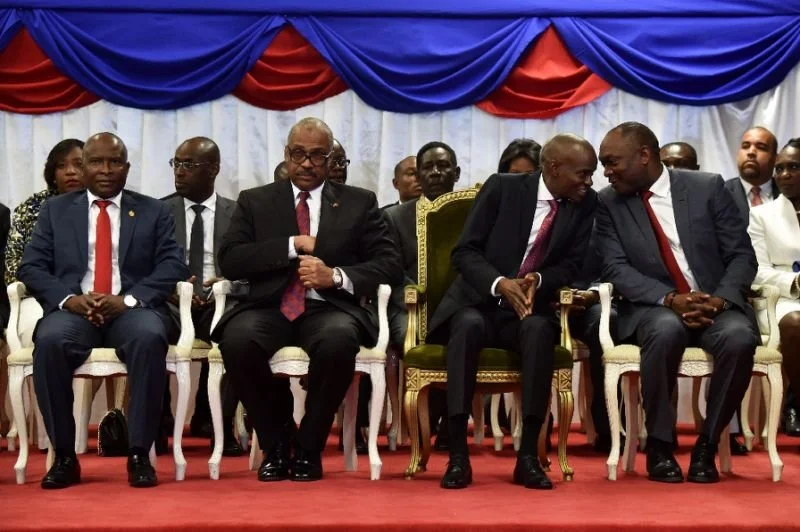
Haiti PM Shuffles Cabinet After Ultimatum
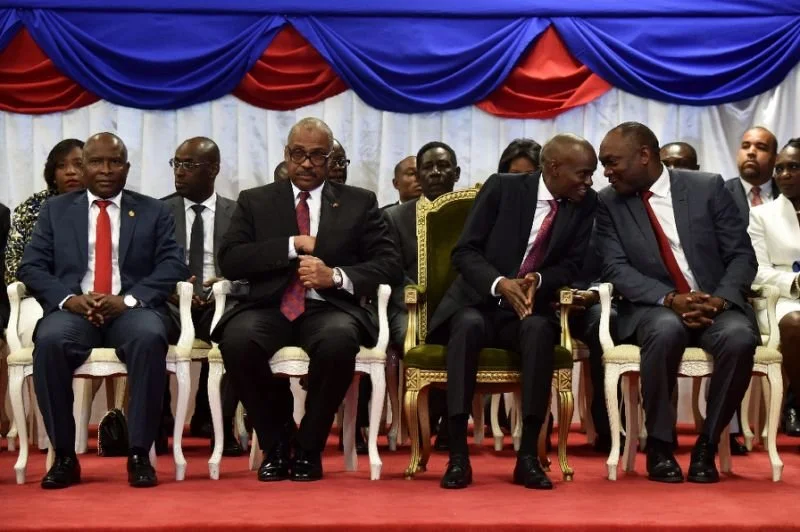
Port-au-Prince (AFP) - Haitian Prime Minister Jack Guy Lafontant, a political novice just over a year into governing the impoverished Caribbean country, has made his first cabinet shuffle after pressure from legislators.
Following his appointment in February 2017, Lafontant, a doctor by profession, nominated his first cabinet of 18 ministers overnight Monday, including five women.
They lack political experience except for a few technocrats.
On Thursday, a lawmaker who backs President Jovenel Moise -- a banana exporter who is also a newcomer to politics -- issued a 72-hour ultimatum for him to make ministerial changes.
The demand came after more than a month of pressure from lawmakers who publicly support the president.
Moise's spokesman had said Friday that the president was not acting "under either pressure or threat from another power," but in the end a shuffle took place.
State television overnight broadcast a recorded message from Lafontant announcing the cabinet changes, but there was no official explanation as to why the reshuffle occurred.
The changes are:
- Jean-Marie Reynaldo Brunet named minister of interior and territorial community. Until 2016, he was an acting mayor appointed by former president Michel Martelly in the absence of local elections.
- Jean Roody Aly appointed justice minister. He was previously the ministry's director general.
- Joubert Angrand, who was coordinator of the national coffee institute, became agriculture minister.
- Guy Andre Junior Francois was named minister responsible for Haitians abroad. He is a former consul in Miami, which is home to most of the diaspora.
- Guyler C. Delva, a journalist, will head the Ministry of Culture and Communication, where he served as secretary of state for communication between 2012 and 2013.
Haiti is still recovering from Hurricane Matthew, which struck in 2016, and almost 40,000 people remain in makeshift camps eight years after an earthquake killed more than 200,000 people.
Since 2010, about 10,000 people have died from a cholera epidemic in Haiti.
By: AFP.com | April 24, 2018
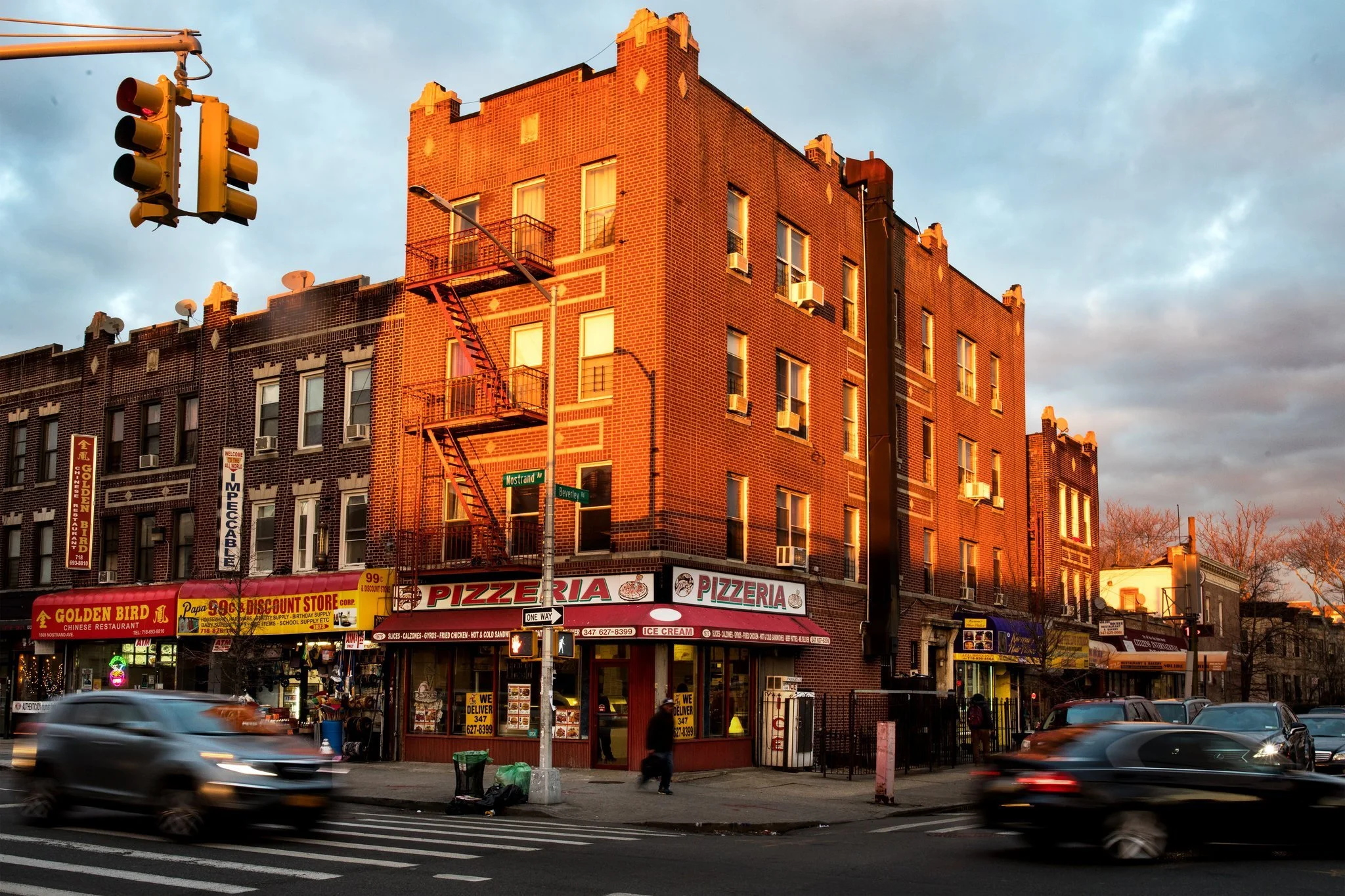
In Brooklyn, Push for a Special Haitian District Hits Resistance
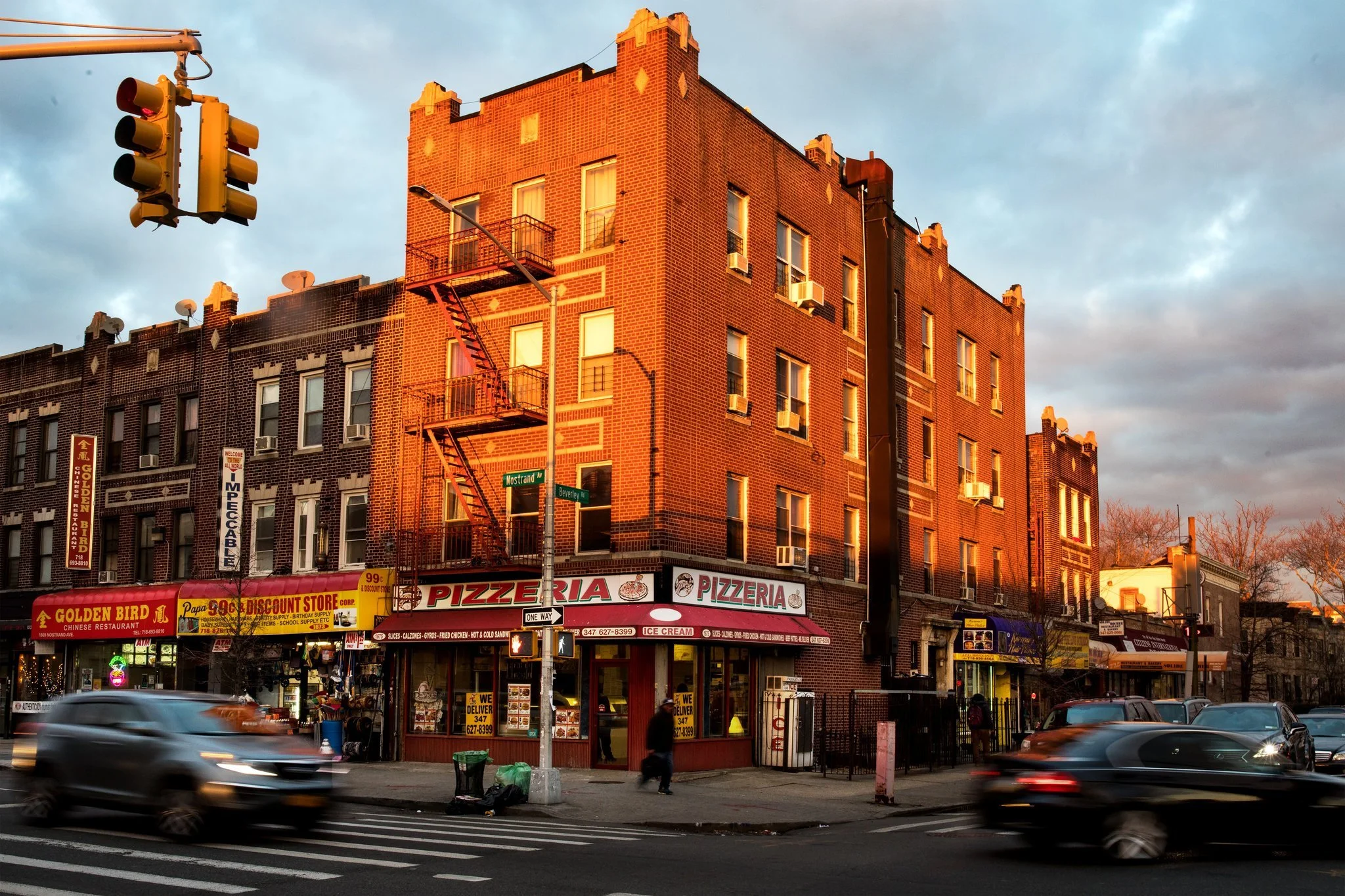
Ben Flambert sat wrapped in an apron at a barber shop on Nostrand Avenue in Brooklyn, listening intently as Assemblywoman Rodneyse Bichotte explained why she was leading an effort to get the city to designate the surrounding neighborhood the Little Haiti Business and Cultural District.

BEN FLAMBERT, 42, LEFT, AT A HAITIAN-OWNED BARBERSHOP IN BROOKLYN, SUPPORTS THE IDEA OF A LITTLE HAITI DISTRICT. “THE HAITIAN PRESENCE OUT HERE IS REAL STRONG,” HE SAID. “IT MAKES SENSE.”
Across the street from the barber shop are a Haitian bakery, a Haitian church and a Haitian restaurant, Ms. Bichotte, the first Haitian-American woman elected to office in New York City, explained. People of Haitian descent make up 20 percent of the Caribbean population in Flatbush and the local Haitian parade used to pass directly in front of the barber shop.
“Miami already has a Little Haiti,” Mr. Flambert, 42, a bus driver for the Metropolitan Transportation Authority, said as he sipped from a miniature bottle of Rhum Barbancourt. “But the Haitian presence out here is real strong. It makes sense.”
Not everyone in the central Brooklyn neighborhood agrees. Last year, an area bounded by Flatbush, Church and Nostrand Avenues was designated the Little Caribbean cultural district, making a separate Haitian district redundant, some local leaders say. Ms. Bichotte says there were plans to name the area Little Haiti dating back more than a decade.
Now, with momentum fueled by anger over recent slights by President Trump, prominent members of the Haitian community in Brooklyn and New York State are hoping the City Council will officially designate Little Haiti in May.
The designation, said members of the nonprofit group Little Haiti BK, is a recognition of the cultural role that Haitians have played in the city and the country, and a sign that the area’s Haitian community is coming-of-age. The resolution would also serve as a formal recognition by the City Council, which organizers hope will make it easier to work with tourism and business improvement officials.
“People are stepping all over us so we’ve got to empower ourselves,” Ms. Bichotte said during a meeting of the Little Haiti BK organizing committee at her district office on Flatbush Avenue.
But even as the push for a designation grows, the area’s Haitian character is already eroding, as gentrification and the movement of Haitians to the suburbs trigger changes. While the number of Haitian-Americans grew to 1.1 million in 2016, from 623,000 in 2000, New York’s place in the Haitian diaspora has been falling. In 2016, 20 percent of the country’s Haitians lived in New York, down from 30 percent in 2000. In contrast, the Haitian population in Georgia and Pennsylvania more than tripled to over 30,000 people each in 2016.
Still, Brooklyn now has more than 90,000 Haitian-Americans, giving it the third highest concentration in the country, according to an analysis by the Migration Policy Institute, a Washington, D.C.-based think tank.
“This is Haitian territory, but it’s changing,” said Ricot Dupuy, director and station manager of Radio Soleil d’Haiti, New York’s first Haitian radio station.
The proposal calls for naming an area bounded by Avenue H, Brooklyn Avenue, Parkside Avenue and East 16th Street the Little Haiti Business and Cultural District to “foster a strong sense of belonging, security, and pride among residents, businesses, nonprofits and community groups in Flatbush,” the group wrote in a letter to members of the City Council seeking their support.
The district is designed to help promote Haitian-owned businesses, but also includes proposals to create a Haitian cultural center, rename streets and erect a monument. Members of the group backing the idea acknowledge that they can’t stop gentrification but want “to leave a legacy behind, something that says we were here and that our ancestors will be proud of,” said Jackson Rockingster, president of the Haitian-American Business Network
 .
.
Ricot Dupuy, 64, is the manager at Radio Soeil d’Haiti. “This is Haitian territory but it’s changing,” he says.
Mr. Trump’s derisive remarks about Haiti and his decision to end the program that allowed Haitians to live and work in the United States after the devastating 2010 earthquake, remind many Haitians of their history of being disparaged in the United States. After they began arriving in large numbers in the 1980s, stereotypes about Haitians committing crime or spreading diseases such as HIV were commonplace.
“This designation is about redefining the narrative,” said Rosemonde Pierre-Louis, chairwoman and co-founder of the Haitian Roundtable, a civic group of Haitian-American professionals. “What has happened over the last couple of months makes it even more urgent.”
Some of those stereotypes about Haitians exist even among other Caribbeans. Last September, Ernest Skinner, a Brooklyn political operative who questioned the need for a Little Haiti, wrote to elected officials that “Sowing division may be why Haiti has never been able to reach its full potential and why it is considered a Fourth World country despite the noble start it gave to the Independence movement among people of color.”
Ms. Bichotte demanded an apology. In an email, Mr. Skinner said he has a “record of strong and unwavering support” for all in the Caribbean diaspora.
Mr. Skinner is a political mentor of Jumaane Williams, a city councilman, who denounced the remarks, is a sponsor of the Little Haiti effort and supports having both a Little Caribbean and a Little Haiti. Mr. Williams, a candidate for lieutenant governor, said that Haiti’s “unique culture” is often maligned.
As a child, Mr. Williams said, his best friend was Haitian and he felt a strong affinity because they were both Caribbean. Mr. Williams’s parents are from Grenada. But Mr. Williams said he soon noticed that his friend often didn’t mention that he was Haitian and used his Anglicized name even among other Caribbeans.

Rodneyse Bichotte, a member of state Assembly, and Jackson Rockingster, of the Haitian American Business Network, are part of the Little Haiti BK organizing committee.
“I slowly realized there was a difference. Haiti is a part of the Caribbean but the hard truth is that it’s sometimes left out when people talk about the Caribbean,” Mr. Williams said.
John Mollenkopf, who directs the Center for Urban Research at the Graduate Center of the City University of New York and studies the political integration of immigrants, said, “There is this pecking order in the Caribbean with Anglophones thinking of themselves as superior to French-speaking Haitians.”
Not everyone agrees with that assessment, either. Shelley Vidia Worrell, founder and chief curator of CaribBEING, a group that promotes Caribbean art and culture and launched the Little Caribbean district, said Haitian culture and businesses are a vital part of the district.
“We see Haiti as very much being a part of the Caribbean. For us, there was never anything that needed to be separated,” Ms. Worrell said.
Jensen Desrosiers, the owner of Tonel Restaurant & Lounge, a well-known Flatbush Haitian night spot on Rogers Avenue, said he and his partners were hoping for a cultural district when they opened five years ago.
“If you have a friend in New York City and you want to give them a taste of Haitian culture, you’d bring them to this neighborhood,” Mr. Desrosiers said as he shared classic Haitian dishes such as pork griot and tassot with Ms. Bichotte, Mr. Rockingster and a local businessman, Fritz Masse Clairvil, after the Little Haiti BK planning meeting.
“Little Haiti is already happening around us,” Mr. Clairvil chimed in.
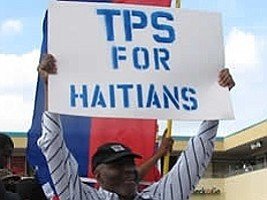
DHS decision to end Haitian immigrant protections questioned

Washington (CNN) - Newly released internal documents are raising questions about the Trump administration's decision to end protections for tens of thousands of Haitian immigrants -- and whether the argument that the protections were no longer merited was valid.
Under President Donald Trump, the Department of Homeland Security has been aggressive in ending a number of temporary protected status designations that have been on the books, in some cases, for decades.
Roughly 300,000 people who have lived in the US with legal permission, most of whom have been here for upward of 15-20 years, could have their status pulled in the coming months as the protections expire. In the case of Haiti, nearly 60,000 immigrants are set to see their status expire next year.
The justification from the administration for ending the protections has been that by law, when the conditions from the original disaster that triggered the protections have improved, they must expire. DHS has been clear that it does not believe it can look at the totality of conditions in the country to factor in its decision making.
But the documents released Tuesday as part of a Freedom of Information Act lawsuit raise questions about whether DHS was accurately interpreting information in drawing those conclusions.
The documents suggest DHS contradicted its own staff assessment of Haiti when it opted to end TPS for the country, which was put in place after the devastating 2010 earthquake. The documents also include email correspondence showing Haiti's deep concern about ending TPS for the country.
While many of the documents are redacted, the release includes a report prepared by staff about the conditions in Haiti, which was included as part of a recommendation by the director of US Citizenship and Immigration Services.
Director L. Francis Cissna wrote in several instances that conditions in Haiti have improved enough from the 2010 earthquake to lift TPS. But the attached report in many cases paints a much more dire picture than the data points Cissna highlighted. Both documents were sent to then-acting Secretary Elaine Duke and resulted in her decision to end the program with an 18-month wind-down period.
In one example, the staff report stated: "Many of the conditions prompting the original January 2010 TPS designation persist, and the country remains vulnerable to external shocks and internal fragility."
The report closed with the conclusion that given a number of conditions -- including economic difficulties, a cholera epidemic, a housing crisis and food insecurity -- recovery has been severely hampered:
"Due to the conditions outlined in this report, Haiti's recovery from the 2010 earthquake could be characterized as falling into what one non-governmental organization recently described as 'the country's tragic pattern of 'one step forward, two steps back.' '"
Cissna, though, wrote to the secretary: "Haiti has made significant progress in recovering from the 2010 earthquake, and no longer continues to meet the conditions for designation."
The report did note that much of the recovery was exacerbated by Hurricane Matthew in 2016, which DHS maintains is not relevant to the earthquake and cannot be factored in.
DHS has made similar decisions about protections for hundreds of thousands of Central Americans, despite the Bush and Obama administrations both extending the renewable TPS designations in most cases.
In response to the documents, Cissna maintained that the government's review concluded that the 2010 conditions that prompted the status no longer exist.
"The decision to terminate TPS for Haiti was made after an inter-agency review process that considered country conditions and the ability of the country to receive returning citizens," Cissna said in a statement, saying the review included an "extensive outreach campaign: for others' input. "Based on all available information, Acting Secretary Elaine Duke determined that the extraordinary and temporary conditions that formed the basis of Haiti's TPS designation as a result of the 2010 earthquake no longer exist, and thus, pursuant to statute, DHS concluded the current TPS designation for Haiti should not be extended."
Separately from the report, email correspondence released as part of the FOIA suit showed that Haitian officials repeatedly reached out to the US government about their concerns over ending TPS, requesting that the program be extended for "at least another 18 months," per Ambassador Paul Altidor. DHS did opt to delay the official end date of TPS for 18 months, but did not formally renew the program.
The documents are the result of a lawsuit brought by the The National Immigration Project of the National Lawyers Guild, a pro-immigrant group.
"DHS' decision to terminate TPS for Haiti is manifestly contrary to the evidence reflected in this report," project Legal Director Sejal Zota said in a statement.
DHS will make a decision in May about another roughly 80,000 immigrants from Honduras protected by TPS. The agency has been sued by advocacy groups who allege racial motivations for ending Haiti's TPS.
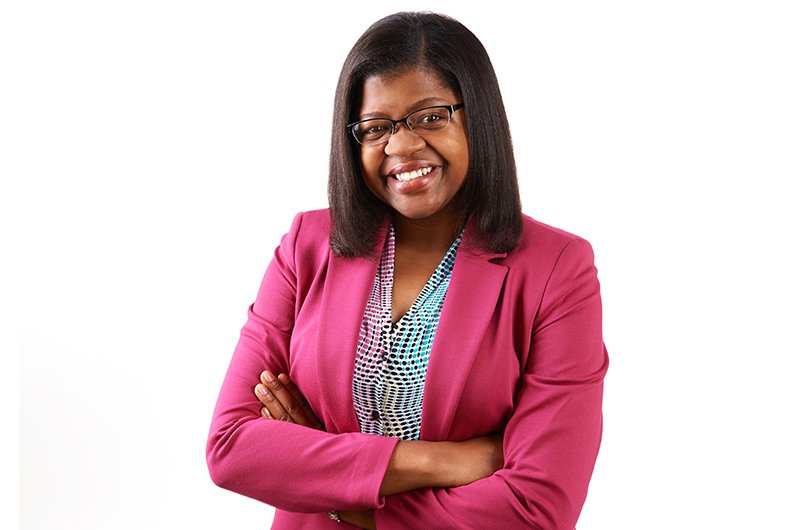
Nedgine Paul Deroly - 2018 Obama Foundation Fellow
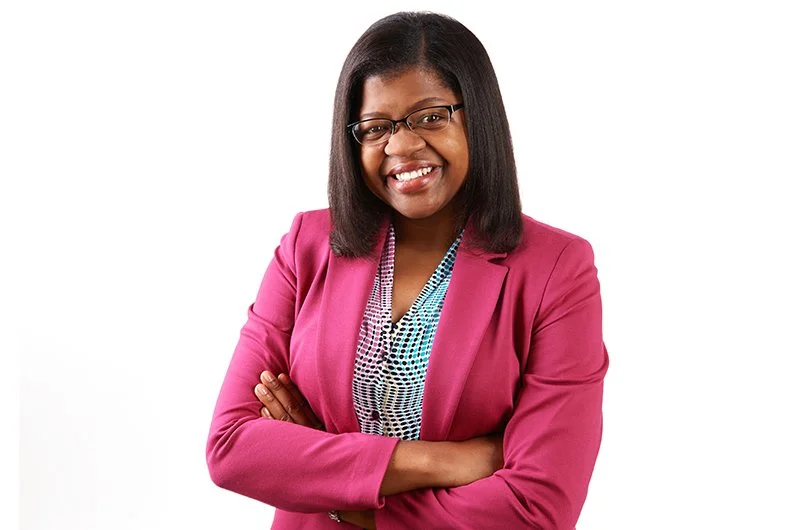
Referring to herself as "a proud daughter of Haiti", Nedgine Paul Deroly attributes much of who she is today to her family, faith, and the community that has surrounded her since birth. Born in Haiti and raised in Connecticut, Nedgine played an active leadership role in community service and youth development programs within the Haitian community.She has earned earned a B.A. in History from Yale University and an Ed.M. in International Education Policy from the Harvard Graduate School of Education. She has also worked with Achievement First and Partners In Health which were particularly transformative in cementing her passion for equal educational opportunity and social justice grounded in community relationships. In 2014, she was named among the top global social innovators by Echoing Green, and she was selected for the Forbes Magazine “30 Under 30” Social Entrepreneurs in 2016.She joins the game changers of the world in the inaugural Obama Foundation Fellowship as the co-founder & CEO of Anseye Pou Ayiti, which is an organization that seeks to dramatically raise education outcomes in underserved and rural areas in Haiti by promoting teacher excellence and student success—all rooted in Haitian culture, customs, and community.The Obama Foundation Fellows exemplify the many ways one can improve our communities. These individuals are leaders working hand-in-hand with their communities to build better futures.This lifetime and life-changing opportunity includes guidance, skill-building and training courses, individual coaching and mentoring, participation in a global cohort of leaders, exposure to opportunities provided by other Foundation programming, and participation in four expense-paid gatherings (more details here).Over 20,000 people applied from 191 countries. Nedgine was selected as one of 20 inaugural Fellows who represent 11 countries around the world.By: Tammy for Haitiville.com| April 17, 2018
(Sources: Obama.org/fellowship and https://naahpusa.org)

Jason Derulo Releases Video For World Cup Song

 Illustrating breathtaking views of and from La Citadelle Laferrière, a beautiful castle on the northern part of Haiti, Jason Derulo (whose real name is Jason Joel Desrouleaux), released the official music video for “Colors,” Coca-Cola’s anthem for the FIFA World Cup this summer. With shots also from Derulo's hometown in Miami, Florida, the video's intent is to bring individuals together from around the world to celebrate their respective flags and nationalities. A guitar-strumming Wyclef Jean, also of Haitian descent, also represents his “colors” in a cameo as well.

 Derulo said of the song that, “Through my years of travel, I’ve been able to see the beauty in our cultural differences and I wrote Colors to celebrate that diversity and be a part of the amazing energy that sports fans around the world give to their teams.”
 "There’s beauty in the unity we’ve found.We’re inundated everyday with negative news and it’s hard to remain positive... That’s why it’s more important than ever to unite with people in your community to try and make a difference. As a Haitian-American, I’ve become more and more invested in giving back to where my family is from. To that extent, this song is a bit of a launch of plans that I am excited to reveal soon…”
IF YOU DIDN'T KNOW...
If you aren't very familiar with Jason Derulo, here are some cool facts:
- He is a multi-platinum powerhouse who has generated over 9 billion audio streams.
- His breakout single “Talk Dirty” [feat. 2 Chainz] has reached 7-times platinum status
- Want To Want Me” and “Wiggle” [feat. Snoop Dogg] went quadruple-platinum.
- “Trumpets,” “Ridin’ Solo,” and “In My Head” went triple-platinum
- "Swalla,” “Marry Me,” and “It Girl” earned double-platinum certifications.
- Platinum singles include “The Other Side,” “Get Ugly,” and “Don’t Wanna Go Home.”
- Cumulative streams continue to soar, exceeding 9 billion overall and nearly 5 billion YouTube view
- At radio, his music has impacted 20 billion-plus listeners with a staggering 3.5 billion spins.
- Derulo was also a featured performer for the Monday Night Football theme
- His clothing line LVL XIII launched in Bloomingdales last Fall
- He has a label in partnership with Warner Bros. Records and a publishing deal with Warner/Chappell Music.
- He is an investor in many enterprises, including Catch L.A. and Rumble Boxing with Sylvester Stallone and Ashton Kutcher.
By: Tammy for Haitiville.com | April 13, 2018(Photos from "Colors" music video)
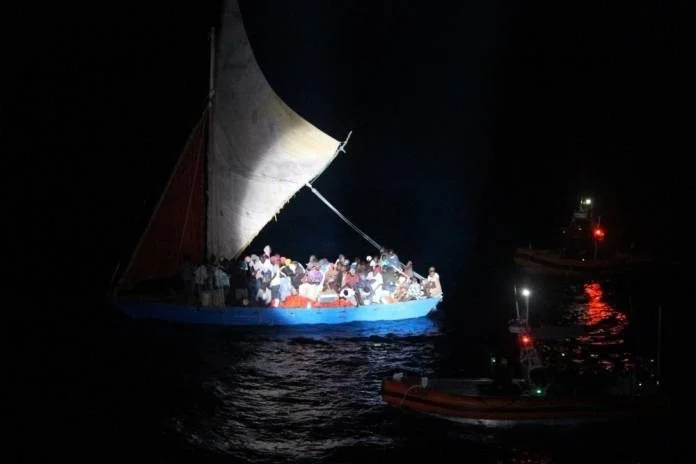
US Coast Guard Stops Haitian Migrant Boat With Cuban Help
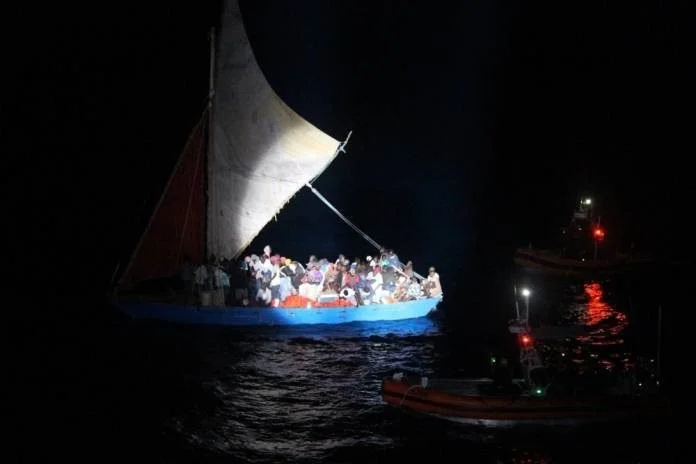
The U.S. Coast Guard says it stopped a dangerously overloaded boat filled with migrants from Haiti, and got assistance from Cuban authorities.A Coast Guard cutter spotted the migrants' open sailboat 20 miles northeast of Cuba. Chief Petty Officer Crystalynn Kneen says the crew of the cutter sent a smaller boat to assist the migrants because their vessel was taking on water.The Coast Guard said in a statement Wednesday that 50 migrants were taken on board the cutter Reliance but another 77 on the small sailboat refused to board or accept life jackets. Their boat drifted into Cuban waters where the Cuban Border Guard took custody of them.The Coast Guard says the 50 detained by the U.S. were turned over to Haitian authorities Tuesday.
World Cup Countdown: 11 Weeks to Go - Haiti, the Nation That Stole Germany's Heart
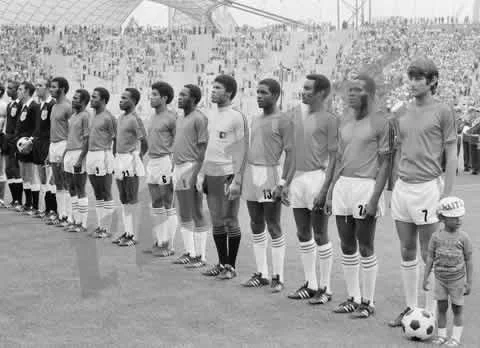
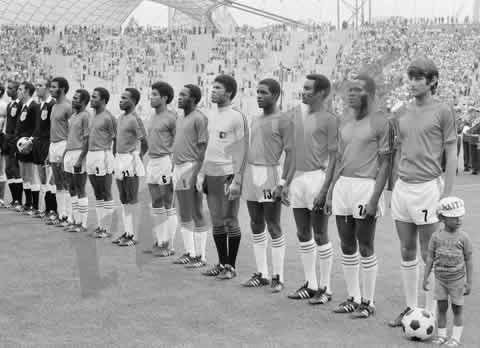
In 1974, West Germany played host to the memorable World Cup of Johan Cruyff and Franz Beckenbauer. However, there were other heroes that year; men from a small Caribbean nation who briefly stole the hearts of a watching world.Haiti, a territory that shares the island of Hispaniola with the Dominican Republic to its east, became only the second country from their small corner of the globe to feature in football's summer festival.
"It was extraordinary", Haitian defender Serge Racine, who was part of the squad which travelled to Munich in 1974, explained. "There were people who didn't know Haiti existed; people were asking us where Haiti was."

But those 22 men who made the almost 5,000-mile trip to Europe 44 years ago left a lasting impression on German soil and went some way towards putting their small island on the map.Although Les Grenadiers did not claim a single point in the tournament, they left West Germany with pride and adoration, partly due to the day XI amateur footballers shocked Italy's Dino Zoff. The Azzurri goalkeeper had not conceded a goal in 12 international games heading into the opening tie of the competition and had also been part of a Juventus defence who went 903 minutes unchallenged. But all that was quickly about to change."The crowd helped us a lot because we were adopted by the German fans", Racine reminisced. "When we played against Italy, there were 70,000 there, and every time we touched the ball, there would be cheering."
However, nobody watching on inside Munich's Olympiastadion could have foreseen what was to come, as 20 minutes in, Emmanuel Sanon, the only man in Haitian history to this day to score at a World Cup, rounded Zoff to give the 1973 CONCACAF Championship-winning side a shock lead.

"Italy had Zoff who had that incredible record", Philippe Vorbe, who provided the assist for the goal, said. "Once I got the ball at my feet I looked up, and I saw Sanon, who was in space because there was only one defender. Sanon was one-on-one with Zoff, and we were all transfixed wondering what he would do. Would he shoot? Would he try to go around him?"He dropped a shoulder, he took Zoff out of the game, and he scored. This was really the most beautiful joy of our careers, even of our lives; to score against Italy. It was so fantastic."Azzurri came back to win 3-1, but the amateurs from Haiti had provided a moment they or indeed the footballing world would never forget.
"The Footballers of Haiti, who came from the Caribbean for this World Cup knowing that at best they would be patronised, at worst dismissed as imposters, gave the competition one of its genuinely electric moments here tonight when they took the lead against Italy – by beating Dino Zoff, a goalkeeper who had not conceded a goal in an international match since September 1972", The Guardian read that evening.

However, the overwhelming pride, spirit and sensation that had been instilled into Haiti following their performance against Italy quickly diminished when facing Poland during their second group match, with the Eastern Europeans steamrolling the Haitians 7-0."It was as different as day is tonight in comparison to the performance against Italy", Vorbe, known today as his nation's most complete midfielder in its history, recalled. "We were literally destroyed by Poland. We lost 7-0, and I think it could have been more."It was a sad thing to happen. It was a sad thing for the World Cup, with so much sympathy for Haiti."
Despite losing their final group game to Argentina, which brought an end to the World Cup journey, the squad who had made the trans-Atlantic trip to West Germany to represent an unknown nation were happier, as again there was something to celebrate.

Sanon found possession 30 yards from goal before unleashing a thunderbolt through a crowd of Argentine players and finding the top right-hand corner of the net. The striker had restored levels of unrivalled joy, and had Cruyff or Beckenbauer not graced the tournament, it could have been held as one of the 1974 World Cup's most spectacular moments."It was a really beautiful goal", Vorbe said. "We ended up with two superb goals scored with honour."And despite going down 4-1 to Argentina, rounding off the tournament with three defeats from the same number of outings, it was Sanon's duo of sensational strikes that allowed Haiti to escape heading home bottom in the tournament's rankings.
"We managed not to finish last in that World Cup because we scored two goals", Vorbe explained. "Bulgaria and Zaire didn't manage to score, so in FIFA's classification Haiti came out as 14th out of the 16 teams. We were very happy with our World Cup."
Today, the squad of '74 remain men of history in Haiti as their only national side to have ever qualified for a World Cup."We have a lot of respect for the team of 1974", Haiti international and former Paris Saint-Germain forward Jean-Eudes Maurice said. "They put Haitian football on the world map. Now we're desperate to carry on and go as far as possible, and hopefully, there will be another generation like that."
Haiti will not be part of Russia 2018; however, the dream of Qatar in 2022 is still very much alive.

Haitian earthquake survivor, aviator takes Army career to new heights

TEMPE, Ariz. -- In 2010, the most destructive earthquake in Haiti's history struck the Caribbean island, killing over 100,000 people and leaving approximately 1.5 million people homeless.Sixteen miles from the 7.0 magnitude earthquake's epicenter, Spc. Carl Denis and his family, natives of Port-au-Prince, Haiti, were among the people suffering in the aftermath.More than eight years later, he was one of four Soldiers in the entire 7th Infantry Division to receive this year's Green to Gold Scholarship, which will give him an officer commission in the U.S. Army upon college graduation."It was my own determination that helped me out and my initiative as well," said the UH-60 Black Hawk helicopter repairer from the 2nd Assault Helicopter Battalion, 158th Aviation Regiment. "When I finally got the letter, it was pretty much like an impossible feat that came into reality."Denis will enroll at Arizona State University this fall to major in information technology and focus on cyber security, he said."When I commission I plan to enter the cyberwarfare field, which is a pretty new career field in the Army," said Denis.The competition to receive a Green to Gold Scholarship is high and it takes commitment and dedication to earn the scholarship -- both common concepts to Denis.From his humble life in Haiti, at the age of 16, Denis moved to the United States shortly after the natural disaster.As a teenager, Denis struggled to speak English, because he wasn't accustomed to the language."It wasn't a language I spoke regularly in Haiti," said Denis. "I knew some English but I wasn't as proficient as I am now."Despite his initial struggles, Denis took advantage of his bilingual skill, joining the Army through the Military Accessions Vital to the National Interest program."I enlisted under the MAVNI language program because I speak Creole," said Denis. "I received my citizenship when I graduated (Basic Combat Training)."Despite living in an earthquake-stricken country, and immigrating to a country with an unfamiliar language, Denis continues to strive forward."It's great to see a young Soldier like Spc. Denis, receive the Green to Gold (Scholarship)," said Sgt. 1st Class Sakpraneth Khim, Denis' flight platoon sergeant. "We always want our Soldiers to do better than us, [and] he is a shining example of that!"As a leader and a future officer, Denis hopes to show what a good leader he can be."It just takes that self-start and knowing where you want to go," said Denis. "You'll never know, you might get there, you might not get there. If you don't get there then try again."By: Sgt. Maricris McLane | U.S. Army | April 9, 2018
Haitians attack Dominican soldiers at the border
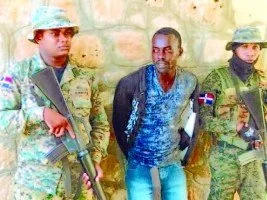
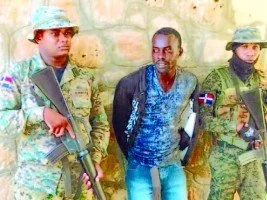
On Wednesday in El Paso de Nonón, in the municipality of Bánica, a van and a minibus from the Dominican Navy Ministry, occupied by soldiers on patrol on the banks of the Artibonite (along the border) were victims of throwing stones, launched by Haitians.A report prepared by Colonel Wilson Castillo González, Commander of the Third Brigade, said that when the two vehicles arrived on the site, several Haitians who were on the other side of the Artibonite began throwing stones, forcing the military to withdraw.Colonel Castillo González indicates that during the return of the troops of the JD-2 of the Dominican army (ERD), led by the first lieutenant Antonio de los Santos, in charge of the Direction of the Drones, they manage to capture on the Dominican territory one of the Haitian attackers, identified as Wilson Santomon, he was arrested and taken to thefortress "José María Cabral", a base of the 3rd brigade in San Juan de la Maguana, where he was incarcerated while waiting to be put in the hands of justice.The Colonel also recalled that the intelligence agencies, informed the 3rd brigade that Haitians throw stones at the drones that were put into service for the surveillance of the border to try to destroy them. In response to a question, Colonel Castillo Gonzalez stated that the aggression of Haitians against the military as well as attempts to destroy the drones, could cause regrettable events "[...] imagine, we do day activities and at night, these drones we must take care of them, but even more of our men and if there is an incident and the Haitians attack our soldiers with stones, they can not let themselves be killed and they must preserve their life..." leaving imagine between the lines, the potential risks and consequences of a replica of the military in such a situation of aggression...By: HaitiLibre | 4/6/2018
Haiti Police Arrest Suspects Who Say They Murdered Journalist Legagneur
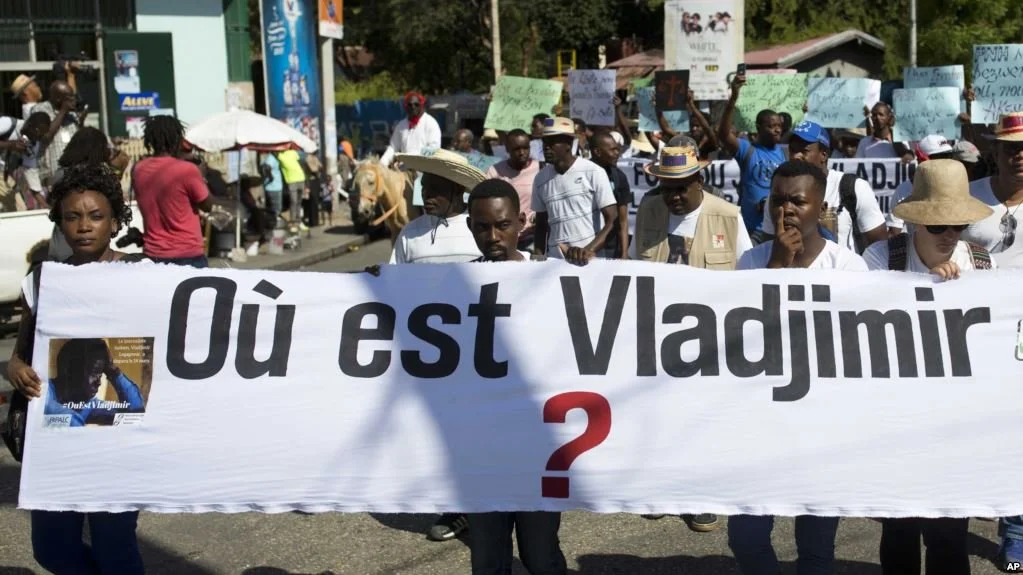
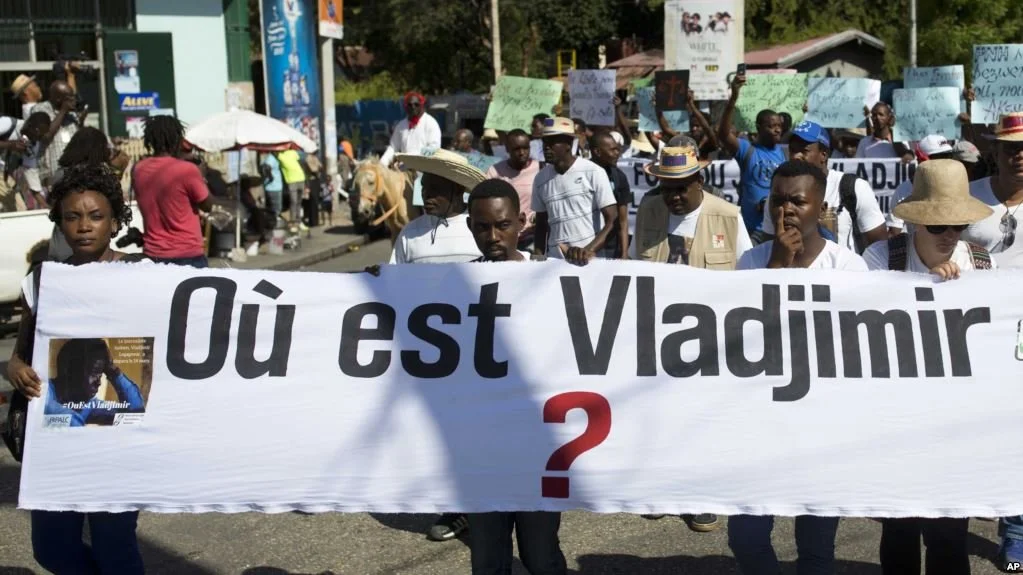
PORT-AU-PRINCE — Haiti's National Police spokesperson told VOA Creole Friday that they have two suspects in custody who say they were involved in the murder of journalist Vladjimir Legagneur, who disappeared on March 14.Legagneur left home on a reporting trip in Grand Ravine that day — a poor Port-au-Prince neighborhood known for its violence and gang activity. He was never heard from again.Frantz Lerebours told VOA Creole police went to the area where the journalist was last seen to verify information it had received on his disappearance. Lerebours said skeletal remains and a hat were found, collected and brought back to Port-au-Prince to be examined by a forensics team."They were pretty fresh," he said, referring to the evidence collected. He said police would try to identify the remains to determine whether or not they belong to journalist Legagneur.The police spokesman said Legagneur's wife, Fleurette Guerrier Legagneur, confirmed the hat was the one her husband was wearing on the day of his disappearance. Lerebours also said police will be ready to make more arrests as soon as they have the results of the forensics and DNA tests.
According to Fleurette Guerrier Legagneur, Vladjimir Legagneur had received a phone call the day before that resulted in an assignment on which he set out the following morning."I was really worried," she told Le Nouvelliste newspaper a few days after his disappearance, recalling her conversation with her husband about the assignment the morning of his disappearance."But I know this is his profession," she added. "I can't keep him from doing his job. So, I talked to him about it, and he was determined to go out and report the story. And before leaving home that morning, he gave me a phone number that he said I could call in case his personal phone did not respond."When Vladjimir Legagneur failed to return home that night, Fleurette Guerrier Legagneur reached out to his journalist colleagues."I've heard a lot of rumors about that day," she said. "Some people say the neighborhood was very active. There was a fight between two gangs. Then, others tell me there was nothing. Other people tell me a person died in the neighborhood, but it was a gang member. You know, everyone has information to give that you can't even verify. I have no way of knowing whether it's true or a lie."
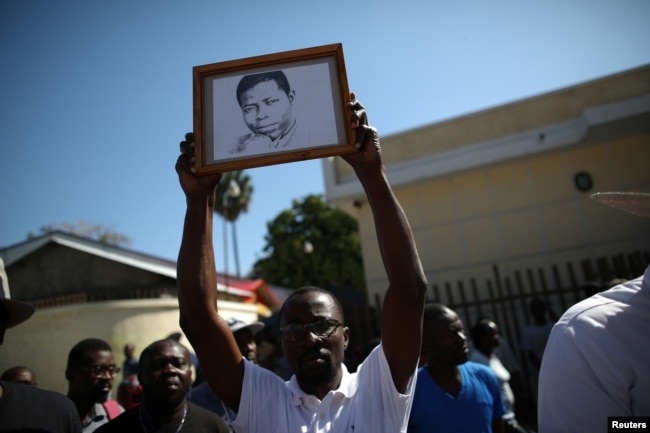
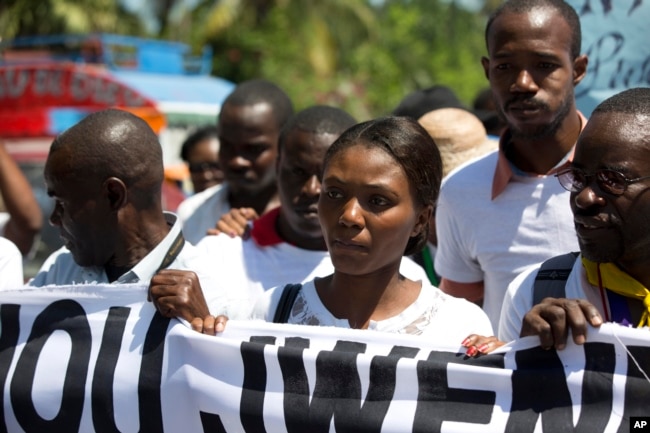
The Ministry of Communication has expressed solidarity with the journalist's family and hopes to find out what happened to Vladjimir Legagneur.On March 28, hundreds of journalists participated in a protest in Port-au-Prince to ask police to do more to find their missing colleague.Meanwhile, the Haitian Journalist Association (AJH), the Association of Haitian Media (ANMH), and other members of the local media have also publicly expressed concern about the disappearance. The Caribbean and Latin American branch of the International Federation of Journalists (IFJ) posted a message on its website expressing concern, as well.By: Sandra Lemaire | VOA Creole service | April 06, 2018
Haitian army general staff appointed amid tensions with the Dominican Republic
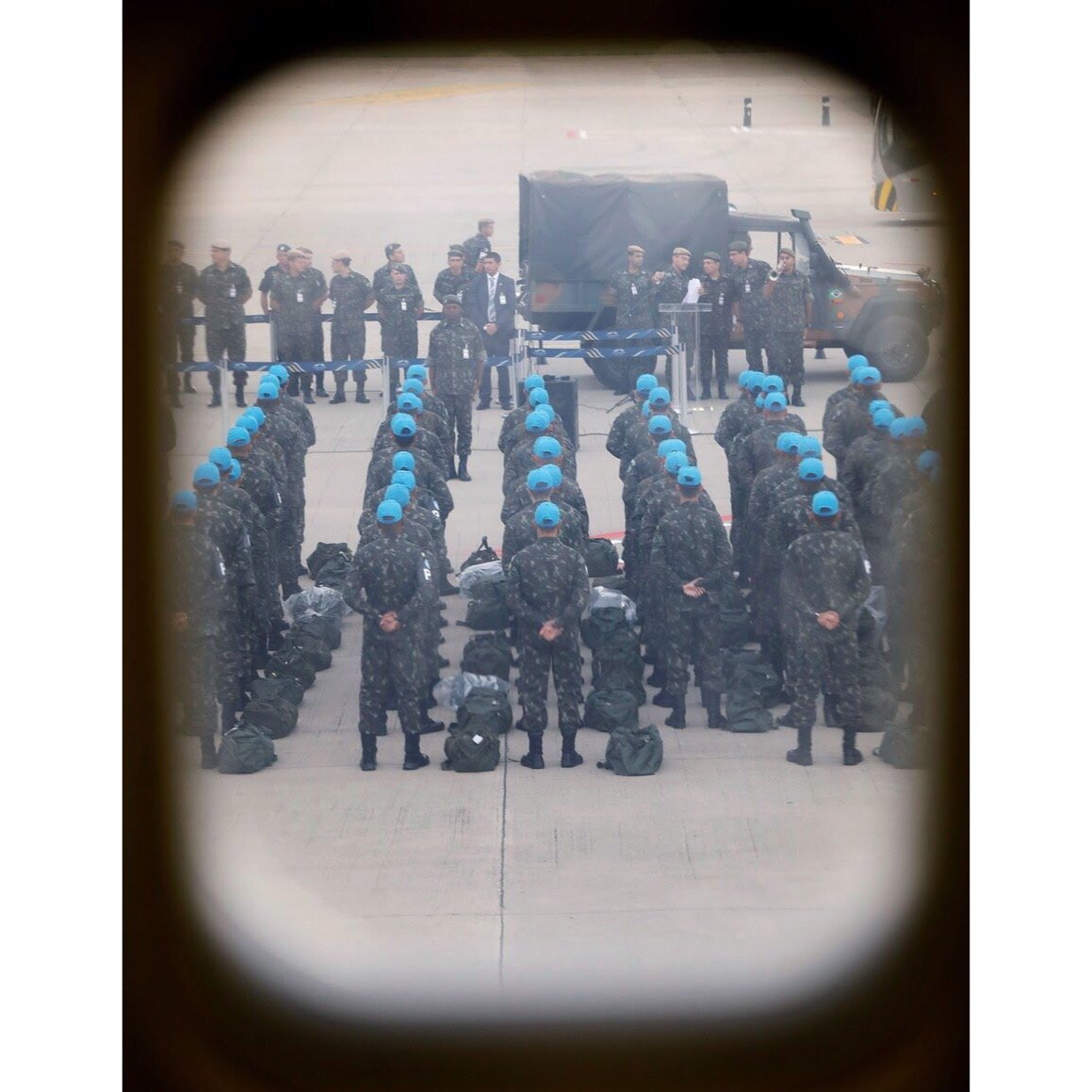
Recent events show that workers and peasants face grave dangers as the ruling elite on both sides of Hispaniola resurrect figures from their violent pasts.Haitian President Jovenel Moïse announced on March 13 the appointment of six general staff members for the reconstituted Forces Armées d’Haïti. All six held senior posts in the FAd’H before it was disbanded by President Jean-Bertrand Aristide in 1995. Three have blood on their hands from the period of the Raoul Cédras military dictatorship in the early 1990s.Colonel Jean-Robert Gabriel, a new assistant chief of staff, was convicted in absentia for his role in the April 1994 Raboteau Massacre under Cédras. After his appointment to the new general staff was announced, the Bureau des Avocats Internationaux, which had secured his conviction in connection with Raboteau in 2000, issued a press release noting that not only was he complicit in the massacre, but he also was a torturer under Cédras.A Haitian court overturned Gabriel’s conviction in 2006, using a technicality it had dredged up from a 1928 law passed during the American occupation.Brigade General Sadrac Saintil, the new army chief of staff, was a Lieutenant Colonel during the Cédras regime and participated in the official whitewash of the Raboteau Massacre.Another assistant chief of staff in the resurrected army, Derby Guerrier, had his assets frozen by the US Treasury in 1993 because of his role in the Cédras dictatorship. The current acting commander in chief of the FAd’H, Jodel Lesage, served in the military of Jean-Claude “Baby Doc” Duvalier and was trained by the US military as a member of the Leopard Corps.In announcing the appointments, Moïse claimed that the army will be used to manage responses to natural disasters and as a coast guard. He undoubtedly views it as a replacement for the United Nations’ hated forces and the US military, which deployed far fewer marines after Hurricane Matthew than after the 2010 earthquake.The US, France, and the UN view the Haitian National Police, which they helped build up to 15,000 members, as a more effective means of suppressing domestic unrest than military troops. US Senator Marco Rubio had this tactic in mind when he pretended last month to oppose Moïse’s military appointments, telling the Miami Herald, “I continue to question why, with so many other needs, Haiti would pursue creating an army.”While the reconstituted army has fewer than 200 troops at present, Haitian Defense Minister Hervé Denis plans to recruit 5,000.Despite his protestations about human rights, Moïse also sees the army as a means of addressing tensions along the border with the Dominican Republic. There is currently no criminal extradition treaty between the two countries, but in March the Dominican military demanded the extradition of a Haitian suspected in the murder of a Dominican husband and wife in Pedernales.In response, Haitian judge Françoise Morailles told Le Nouvelliste that “more than ever it is time for the FAd’H…to get to work on the violent situation with which Haitians find themselves confronted at the border.”Ramfis Domínguez Trujillo, the grandson of murderous dictator Rafael Leónidas Trujillo, has announced his candidacy for the upcoming presidential election in the Dominican Republic. According to a Gallup poll last month, 42 percent of Dominicans support his candidacy while 51 percent are opposed. In order to give his campaign a populist air, Trujillo is promising to institute anti-corruption measures that would include 30-year jail terms for guilty officials.More ominously, he is proposing to build a border wall between Haiti and the Dominican Republic. The Dominican Republic is already monitoring parts of the border with drones and cameras.On Sunday, according to the Providence Journal, Trujillo told a group of Dominican emigrants in Rhode Island that “we need to hold a tough and firm stance before the peaceful Haitian invasion. We need to remove all Haitians who are in the country illegally.”In the Pedernales case, a Haitian named Edner Noël is accused of murdering a couple on whose Dominican ranch he had worked. He was captured and jailed in Haiti after crossing the border.After the murders, vigilantes drove through Pedernales in a pickup truck with a loud speaker on March 13 and demanded that all Haitians leave within 24 hours. At least 250 families fled across the border to Anse-à-Pitres. Dominican President Danilo Medina ordered the deployment of 60 soldiers to Pedernales, along with 30 anti-riot police.There are conflicting reports of whether Haitians had been killed in retaliation, with the mayor of Anse-à-Pitres on the Haitian side of the border telling Le Nouvelliste that he had heard reports of deaths. Tensions continued to be high two weeks after the murders, with the international market still closed by Dominican authorities.In a second incident, a Dominican was murdered on March 19 in Barahona province, with a Haitian co-worker named Jacques Estimphil accused of the crime. The Haitian refugee support group GARR told Alterpresse that approximately 100 people had fled across the border to Haiti to avoid reprisals. Dominican soldiers stopped people who were trying to flee and demanded bribes of 150 pesos.By John Marion for World Socialist Web Site | April 6, 2018

These Boots Are Made From Old Plastic Bottles Recovered In Haiti

Timberland’s latest man-boots have an interesting backstory. Their canvas-like uppers are recycled from plastic bottles picked up from the beaches of Haiti.The outdoor apparel brand gets the material from a social impact startup named Thread, which works with about 1,300 bottle pickers in Haiti. Timberland’s four boots, which build on a previous set of Thread-infused products, range from the Men’s 6-inch Canvas (price $150) to the more sporty Newport Bay Thread Canvas Chukka Boots ($75).
Thread breaks down the bottles into flakes, heats up the mixture, then passes it through an extruder, like water passing through a showerhead. It then rolls and bales up the threads, so they can be spun into fabric. The material is like polyester–after all, PET plastic, like polyester, comes from oil.
Colleen Vien, Timberland’s sustainability director, says Thread’s material is a little more expensive than a comparable fabric. But the expense is worth it as it allows the brand to tell a compelling story about the product’s provenance (see the video above featuring three trash-pickers).Timberland has a long association with Haiti. Working with the Smallholder Farmers Alliance (SFA) and the Clinton Global Initiative, it’s planted millions of trees across the island, helping farmers increase incomes and lay down sustainable seed banks. Recently, it committed to buying organic cotton from Haiti in a unique blockchain-powered project.“It gives us an opportunity to have a conversation with our consumers that we definitely feel it’s well worth the price,” she says. “We are an outdoor company and customers expect us to do things that minimize our footprint and protect the environment. Improving people’s lives is beyond what’s expected–that’s what gets people’s attention.”BSBy: Ben Schiller for FastCompany.com| March 21, 2018
Fashion Designer Victor Glemaud Wants You to Know the Real Haiti
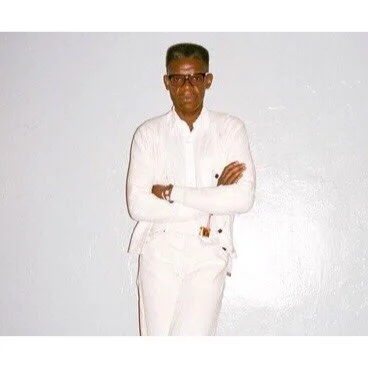
The knitwear designer shares his plans for a summer trip to Haiti and some memories from a recent Nile cruise.
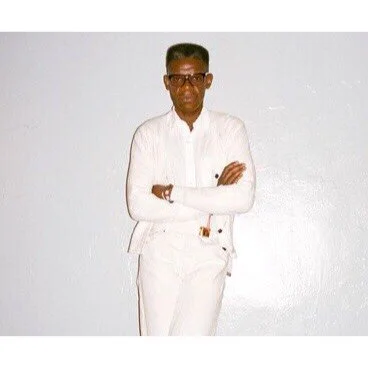
Victor Glemaud moved to New York from Haiti with his family when he was three years old. Growing up, he returned every year, and this summer he’s bringing his fiancé and a few friends. “It’s important to share my perspective of the culture, because it’s different from what you’ve read in newspapers or heard from politicians,” he says. "Haiti has this great Caribbean vibe. It's so vibrant. But people don't think of it that way." The designer known for his colorful knits spoke to us about the trip he's planning this summer and his last great vacation: a Nile cruise.What are your favorite childhood memories of Haiti?Watching people get ready for Carnival. Everyone makes spectacular outfits, there’s music; it’s really fun. And there’s always a lot of sour rum punch, so it gets really festive. And eating the delicious fruit: There are these dense, super sweet mangoes and tiny pineapples.Does Haitian style inspire your work?I'm always inspired by it. Growing up, I remember my father and my aunts and uncles always looking very put together. They have such an interesting sense of color. The way I use prints and stripes and colors comes from seeing and living with Haitian people and seeing the care they put into dressing.What’s the plan for this trip?My mother told me about Île-à-Vache, just off Jacmel, with the clearest blue water. We’ll stay at Abaka Bay Resort or Port Morgan. In Jacmel, we’ll use Hotel Florita as our base. I’d like to take lessons at Surf Haiti. Local kids take you out on the waves. Then we’ll do a day in Port-au-Prince—I want to check out Maxime Boutique Hotel.Any must-sees for first-timers?I can’t wait to show everyone the Citadel, an early 19th-century fortress, and the ruins of the Sans-Souci palace, which was the home of the king during the same time and used to be one of the most incredible buildings in the Caribbean. They’re both in the north, in the mountains. They’re magnificent.Dishes you can’t miss?Fresh fish, djon djon black mushroom rice, and pork griot, which are like yummy fried pork bites. When I host dinner parties at home in New York, I’ll pick up plates of everything at Le Soleil, a Haitian restaurant in Midtown. My friends love it.Where else have you been lately?My fiancé and I planned a last minute trip to Egypt to celebrate my birthday. We started in Cairo and split our time between the Four Seasons and the Ritz-Carlton, then took a four-night trip down the Nile on the Sanctuary Sun IV. It was truly magical. I loved seeing the pyramid in Saqqara and the temple of Isis on Philae.What was the boat like?It was a wooden boat, which I loved—I wanted a smaller boat, more cozy, a little chicer. It was never bursting at the seams with people. And we learned more about the culture and the food: the bread is fabulous wherever you go in Egypt, they have the most perfect cucumbers and beautiful tomatoes. And we got really into Egyptian wine. At first I was like, 'Do I really want to drink Egyptian wine?' But the bottles of white and rosé that we tried were all delicious.

By: Andrea Whittle for Cntraveler.com | April 3, 2018

UN eyes transition of Haiti role from peacekeeping to development

The United Nations has already started to prepare for a post-peacekeeping presence in Haiti, a senior UN official said Tuesday, stressing there are many reasons to be optimistic that the country’s progress towards stability is now irreversible.
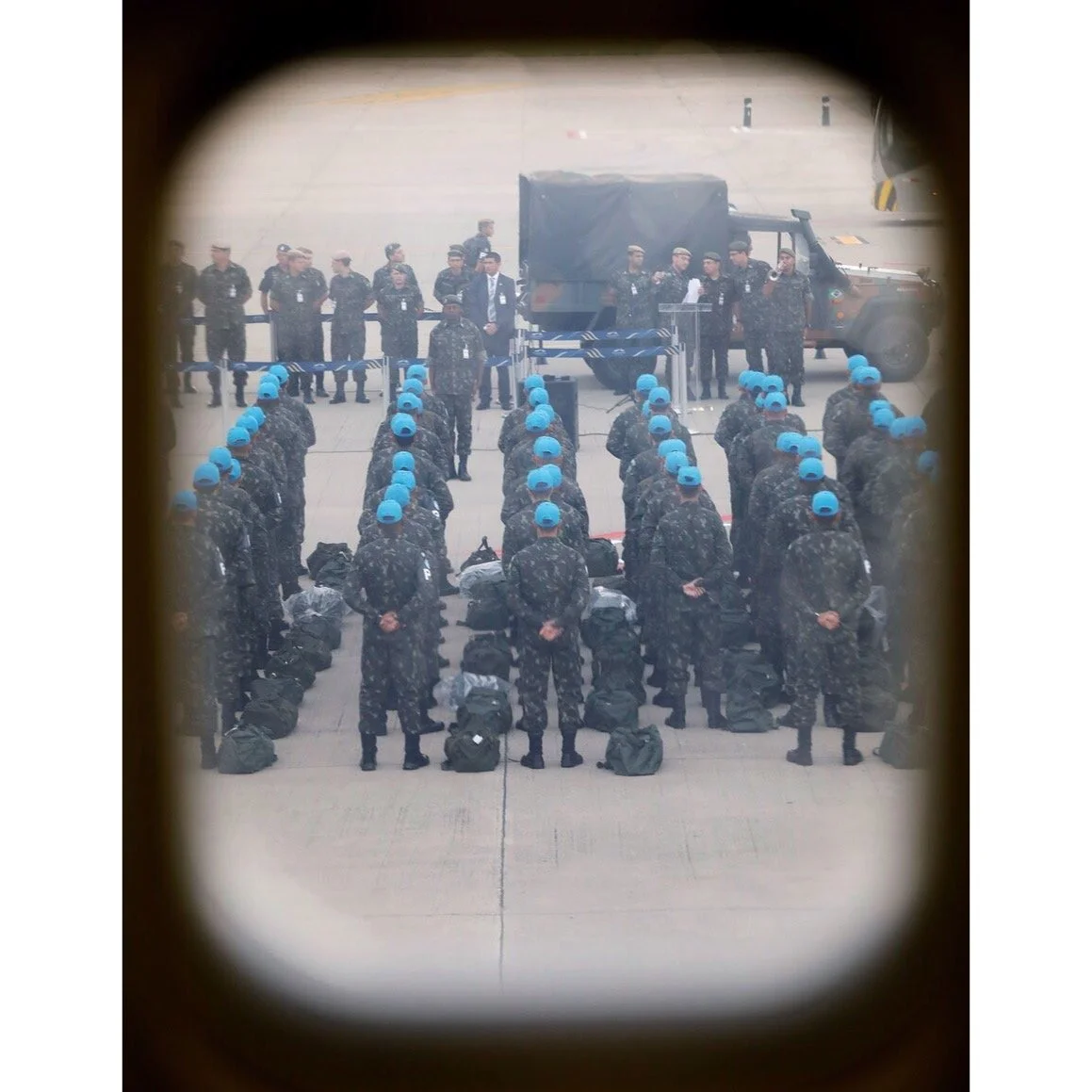
“While achieving results should remain our common priority, we have already started to prepare for a transition to a non-peacekeeping presence, based on lessons learned in Haiti and in other contexts,” the Under-Secretary-General for Peacekeeping Operations, Jean-Pierre Lacroix, told the Security Council.He said that in the coming months, his office will provide progress assessments to allow the 15-member body to take well-informed decisions for the drawdown and eventual withdrawal of the UN Mission for Justice Support in Haiti (MINUJUSTH).Established in October last year, MINUJUSTH replaced UN Stabilization Mission, which operated in the tiny island nation for 13 years.Much smaller than its predecessor, which had more than 4,000 military and police personnel, MINUJUSTH assists Haiti to further develop national police, strengthen rule of law institutions and promote and protect human rights.While the Security Council is expected to renew MINUJUSTH, whose initial mandate expires on 15 April 2018, Mr. Lacroix said the UN is determined to ensure it be the last peacekeeping operation deployed to Haiti.Last month, UN released a strategic assessment of MINUJUSTH, including 11 benchmarks for a smooth transition to a non-peacekeeping presence by the last quarter of 2019.“Haiti has come a long way to achieve the relative political and security stability it is now enjoying, but persistent economic uncertainties, which can result in social exclusion, particularly of youth and the most vulnerable, may undermine this progress,” said Mr. Lacroix.In mid March, he visited Haiti for the first time since taking office a year ago.He said that MINUJUSTH is fully operational and actively implementing its mandate.For instance, the Mission has co-located 135 individual police officers with the Haitian National Police (HNP) in each of Haiti’s 10 departments, and it is dedicated to helping curb prolonged pretrial detention and prison overcrowding through on-site monitoring.The weaknesses of the rule of law institutions continue to generate multiple human rights challenges and encourage a culture of impunity, he said, noting that priorities in this domain include the need to strengthen national human rights institutions.Acknowledging the relationship between the UN peacekeeping mission and the Government of Haiti could have been smoother, he welcomed the most recent announcement by the country’s President of his priorities on reform, including the strengthening of the justice system and national police, the fight against impunity and prolonged pre-trial detention, the fight against and prevention of corruption, the establishment of the Permanent Electoral Council, and the launching of a national dialogue.By: UN News | April 3, 2018
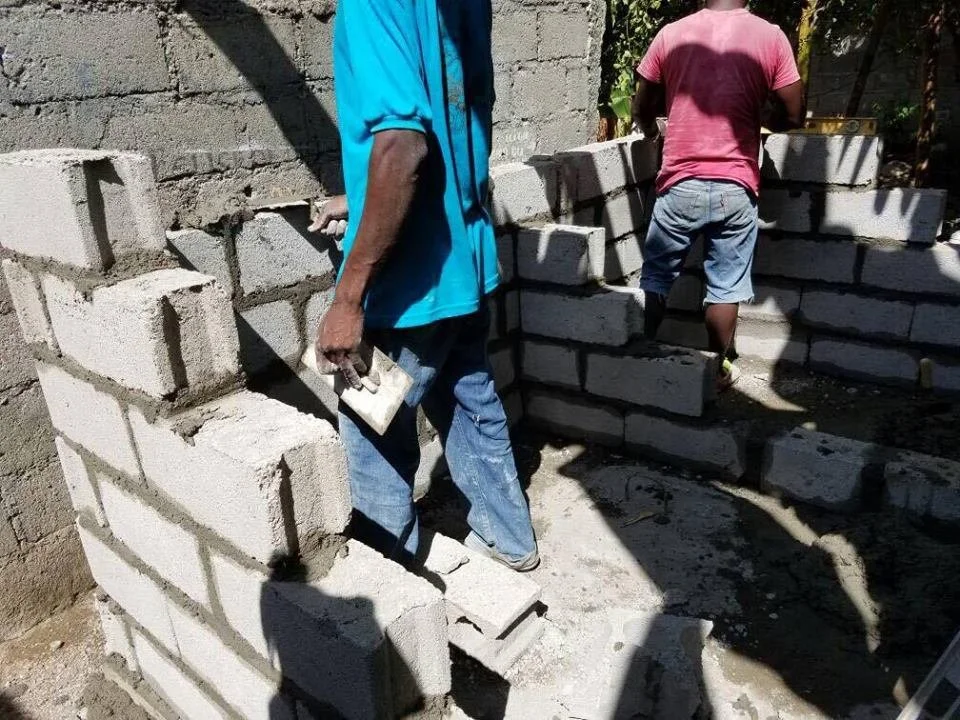
Solving the sanitation situation in Haiti
Haiti (MNN) — Few things are easier to take for granted than toilet paper, but what about people who don’t have bathrooms in the first place?According to Eva DeHart of For Haiti With Love, sanitation is virtually unheard of in the streets of Haiti.“If, in the capital of Port-au-Prince, they have a flushing toilet, you can know that they’re catching water on the roof, and anything that goes into those toilets is going straight out onto the streets,” she says.And that’s a best-case scenario. “If you’re lucky, it goes into canals or rivers and ends up in the ocean,” DeHart says. Everyone else defecates somewhere outside. Sometimes, but not always, they’ll go into bags, but even that only goes so far when they simply throw the bags as far as they’ll fly.“When you have entire communities who have no sanitary system at all, and most of them have no outside latrine, they’re defecating on the ground,” DeHart says. “This is a very unhealthy situation.”That’s why For Haiti With Love is building latrines.
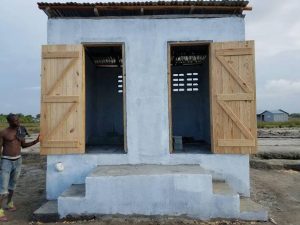
Photo Courtesy For Haiti With Love
For $3,500, they can help set up a community latrine to help provide sanitation needs for indigenous people. So far, their projects have been met with great success, and interest is quickly growing.“The people were so excited about the last one we built that they wanted to know if they could have a three-hole rather than just a two-hole community latrine, and they were willing to forfeit what we would pay them in labor to help build it.”As more latrines go up, more villages are asking for help.“We’ve got a long list of communities now who are willing to set aside enough land to make this happen because they really, really want these projects,” DeHart says. ”We’ve got the land, the workers, the time- all we need is money, materials, and expertise.”And it’s not just about sanitation. These latrine projects give missions workers a chance to share the hope of Christ during construction.“They understand who they work for,” DeHart says. “Jesus will get the glory.”Want to help? Consider giving your time, resources, and prayer to one of the latrine projects.“Jesus uses his people. We need his people to listen to the problem, come forth, and be touched.”By: Alex Anhalt | Mission Network News | March 30, 2018