





 Steve Baboun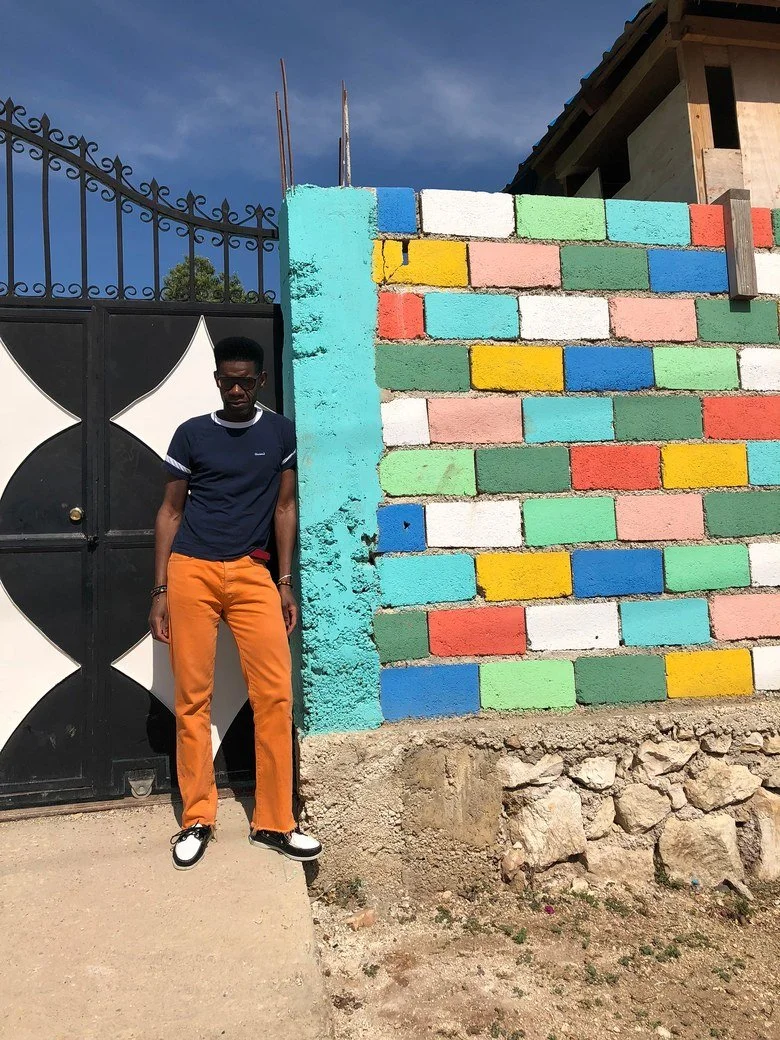
Designer Victor Glemaud Returned Home to Haiti With the Clinton Foundation—And Photographed the Trip for Vogue
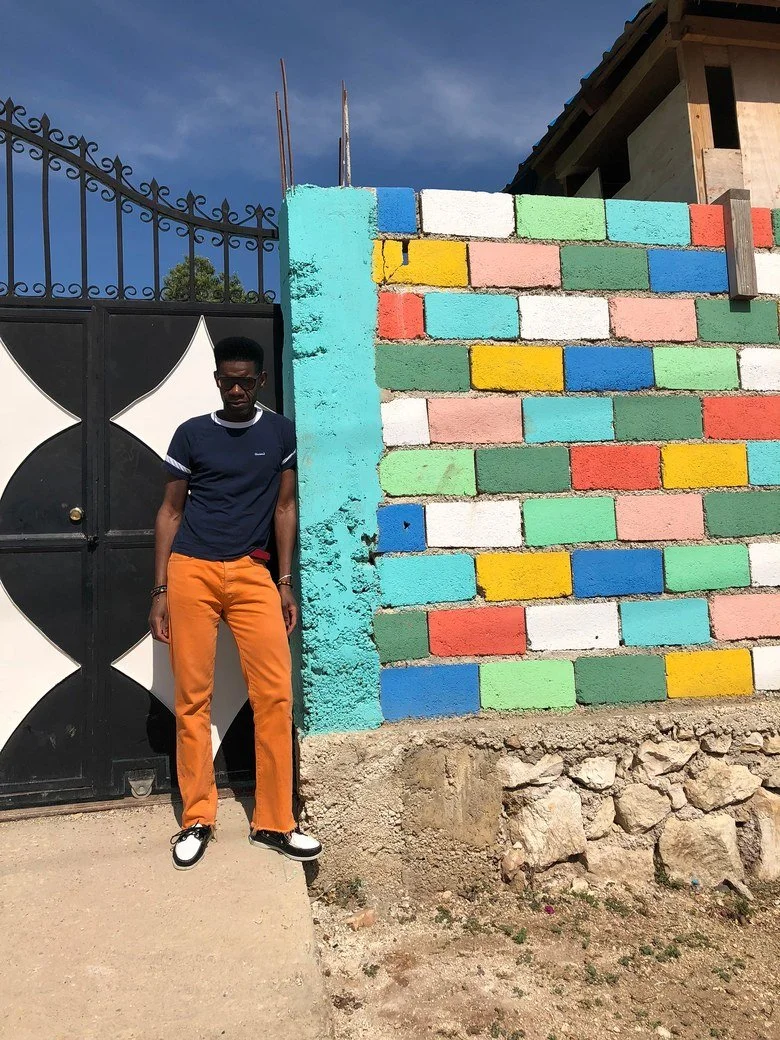
Going back home might crop up in every form of cultural expression—you’ve read the books, watched the movies, karaoked the songs. Yet Victor Glemaud, a 2017 CFDA/Vogue Fashion Fund finalist, who’s a pretty nifty designer of inventive, colorful knits, is going to use his trip for his next presentation, currently envisaged for this coming June. Glemaud, who was born in the island’s capital, Port-au-Prince, and moved to the U.S. when he was 3 years old, visited at the invitation of the Clinton Foundation, to attend an event produced by the Haitian Action Network, an organization focused on women’s empowerment and enterprise initiatives. The opportunity came through a series of interconnected events. One minute he was showing his work to Condé Nast executive David ibnAle, before another, Gina Sanders, passed by. She noticed Glemaud was Haitian. Before long, Sanders reached out to him, and everything was set in motion.


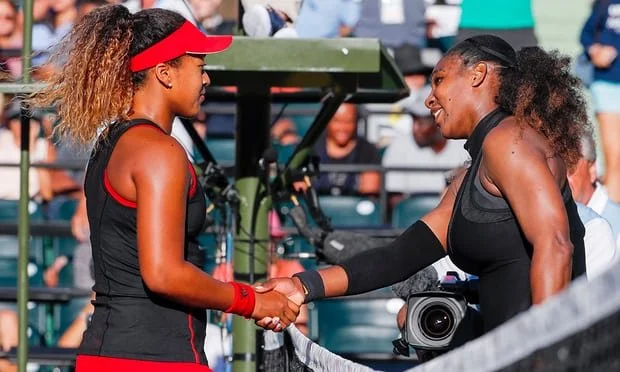
Serena Williams beaten by emerging talent Haitian-Japanese Naomi Osaka at Miami Open
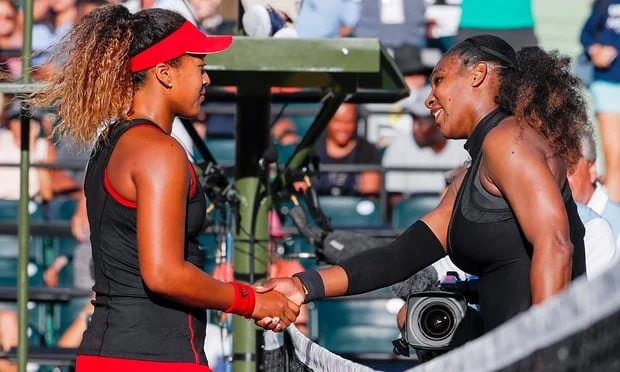
Naomi Osaka defeated 23-times grand slam singles champion Serena Williams 6-3, 6-2 in the Miami Open first round on Wednesday, the latest big win for the emerging 20-year-old Japanese player.The pair were on serve in the first set of their first career meeting until Osaka, who won her first career title at Indian Wells last week, forced break point chances at 3-3 and Williams was unable to deal with a blistering backhand at her feet. The world No22 broke Williams again after a back-and-forth deuce battle to take the first set.Osaka’s powerful serving and relentless return game were even stronger in the second and she broke Williams to go 3-1 up and was never threatened again. The match ended on an ugly unforced error by Williams, who hit a wide open forehand long to send Osaka into the second round, where she will face world No4 Elina Svitolina of Ukraine.“I was extremely nervous coming on to the court. I don’t know if anybody knows this but Serena is my favorite player,” Osaka said in an on-court interview. “So just playing against her is kind of like a dream for me. I’m very grateful I was able to play her and it is even better that I was able to win.”The 36-year-old Williams, playing her fourth match since the birth of her first child in September, is still working her way into form and although she showed her trademark power, she struggled to move smoothly around the court.Some felt it was unfair that the Miami Open allowed Williams, an eight-times champion at the tournament, to play Osaka in the first round. “Serena should have a special seeding, but also WTA should use the most current ranking,former world No1 Lindsay Davenport said on the Tennis Channel. “The men do it. It’s too big a tournament to have something like this happen.”Osaka’s win over Williams was her latest victory over some of the biggest names in the sport. She defeated Maria Sharapova, fifth seed Karolina Pliskova and world No1 Simona Halep in Indian Wells.By: The Gaurdian | March 21, 2018
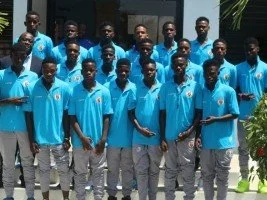
Football : Our young Grenadiers U-16 in France for the Mondial of Montaigu
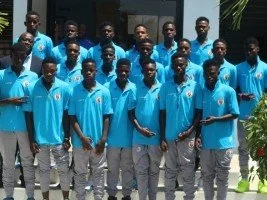
Tuesday afternoon a delegation led by Engineer Daniel Jean Charles, member of the Executive Committee of the Haitian Football Federation (FHF) including the men's Under-16 (U-16) selection and its staff, left Port-au-Prince in the direction of Montaigu (Dep. de la Vendée in France) to participate in the "Challenge Nations" of the 46th Edition of the Mondial Football Montaigu 2018.From March 27 to April 2, 2018, the U-16 of several countries: France, Portugal, Argentina and Haiti (Group 1) and England, Russia, Brazil and Cameroon (Group 2) will compete on the grounds of : Chantonnay, Venansault, ST Gilles Croix de Vie/ST Hilaire de Riez and Montaigu.Haiti will start the competition against Argentina on 27 March in Chantonnay at 6:15 pm (local time), before facing France in Montaigu on 29 March at 7:00 pm and Portugal on 31 March in Chantonnay at 6:00 pm. Depending on their position in their group, our young Grenadiers will know their final rank in the competition after a ranking match. The winning teams of the teams compete to determine the champion and the vice champion, the 2 second for the 3rd and 4th ranks, the 2 thirds for the 5 and 6 ranks and the 2 fourth for the 7th and 8th ranks.Remember that our young Grenadiers live and go to school at Centre Camp Nou except for the striker Fredler who just left for Strasbourg two months ago. As international experience our U-16s played the U15 Concacaf Championship and made a splash in Bradenton Florida winning their 4 games. The Federation has done everything to prepare well and especially equip the U16 national team also investing in new winter equipment, because the conditions will be tough in Montaigu (-2 degrees in the night from Tuesday to Wednesday).The participation in this tournament which all costs, Hotel, air tickets, meals, visas, local transport are the responsibility of each participating country, has cost the FHF and required a budget of ten million gourdes, of which 6 million were donated by the Government.The goal of the FHF for this tournament, is to introduce our young people to the world competitions but especially to take advantage of the superb showcase that is Montaigu to expose the talent of our young people and why not give them the opportunity to sign in professional clubs for help them progress. Young people like Bijou, Dany, Martin, Rolphe, Jolicoeur, etc. have a crazy talent; the FHF has also invited many recruiters and players' agents to attend the matches.The Haitian delegation :The players :1. David Dorelus,2. Stephner Kerweens Paul,3. Samuel Jeanty,4. Corlens Étienne,5. Emmanuel Cedras,6. Dany Jean,7. Fedler Christophe ,8. Ronaldo Dorsainvil,9. Rolphe Woodle Philippe,10. Luis Ronaldy Jean,11. Woodbens Junior Ceneus,12. Kervens Jolicoeur,13. Ronaldo Dicaprio Israel,14. Carl Fred Sainté ,15. Juvenson Jesté Louissaint,16. Ritchy Cedieu,17. Stanley Guirand,18. Jhon Junior Perpilus,19. Thero Rinvil,20. Eaniel Martin .Staff :21. Marc Collat (national coach)22. Gabriel Michel (U-16 coach training at FIFA Goal Center)23. Claude Français Sébastien Guia Lopez (U-16 coach training at FIFA Goal Center)24. Gesner Jr. Regis25. Kerny Vachon26. Jean Charles Daniel (Executive Committee of the FHF)By: HaitiLibre | 03/21/2018
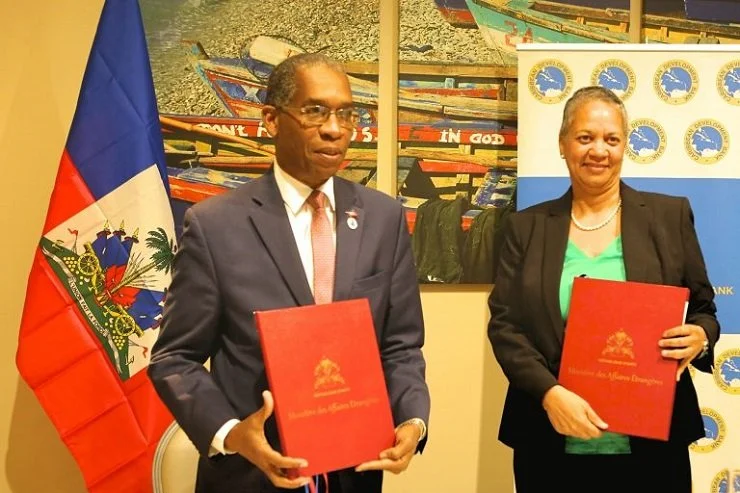
Caribbean Development Bank to Establish First Country Office in Haiti This Year
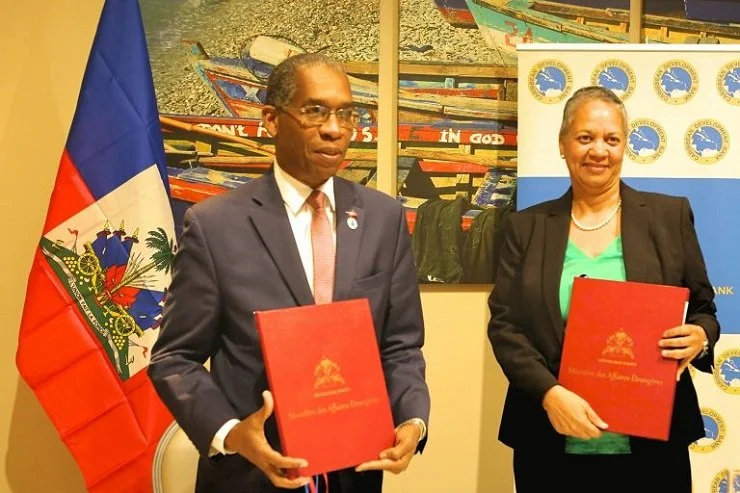
BRIDGETOWN, Barbados, Thursday March 15, 2018 – The Barbados-based Caribbean Development Bank (CDB) will establish its first country office in the Republic of Haiti later this year.Minister of Foreign Affairs Antonio Rodrigue and the Bank’s Vice-President (Operations), Monica La Bennett, recently signed the Country Agreement to pave the way for that to become reality.La Bennett said the signing of the agreement further cements the strong partnership between CDB and Haiti.“Last year, CDB, in collaboration with the Government of Haiti, developed a country strategy plan for the period 2017 to 2021, with an indicative resource envelope of US$100 million to help Haiti meet its development priorities. The strategy focuses on three main themes: agriculture and community development, sustainable energy development and education and training. It is this deepening engagement between CDB and the Government of Haiti that has led us to conclude that there is a need for a country office,” she said.“We expect that this will lead to the development of closer relationships with the Government and the people of this country, enabling CDB to be a more proactive, responsive development partner.”Haiti became a member of CDB in 2007. Since joining the Bank, the country has been allocated grant resources from CDB’s most concessional resource pool, the Special Development Fund (Unified). In 2017, an allocation of US$45 million was approved under the ninth cycle of the Fund.To date, a total of US$133 million has been committed to Haiti. Projects supported included the Education for All Phase II Project; the Technical and Vocational Education and Training Project II; interventions in agriculture and rural development; technical assistance for micro, small and medium enterprise development, and improving the quality of, and access to basic education.CDB’s ongoing work in Haiti includes projects in education, including technical and vocational education and training; climate resilience; and community-based agriculture and rural development. In addition, since May 2013, the Bank has paid the country’s insurance premiums to CCRIF SPC. The payments cover Haiti’s earthquake, tropical cyclone and excess rainfall policies. Under this arrangement, the country has received three major payouts, most recently following the passage of Hurricane Matthew in October 2016.By: Carribean360.com | March 15, 2018
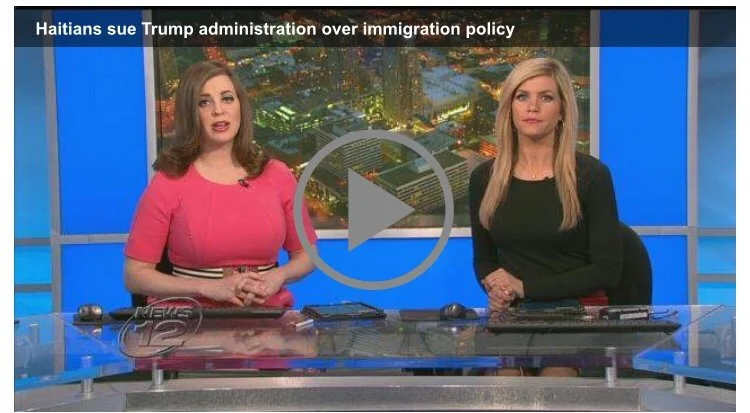
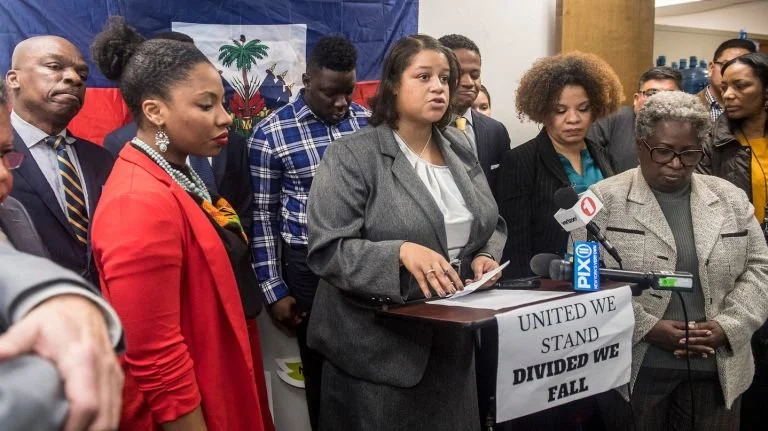
Haitians sue Trump administration over immigration policy
(AP) - Haitian immigrants are suing President Donald Trump and Homeland Security officials, alleging racism influenced a decision to end a program allowing them to live and work legally in the U.S. after disasters in their home country.The lawsuit filed Thursday in New York federal court is one of a handful nationwide challenging the Trump administration's decision to end temporary protected status for people from El Salvador, Haiti, Nicaragua and Sudan.The latest case details how the Haitian-American community could be harmed if roughly 60,000 Haitians become subject to deportation.The dozen plaintiffs include Haiti Liberte, a New York-based weekly Haitian newspaper, where a leading journalist with the protected status may be forced to return home, the lawsuit said.In Miami, the advocacy group Family Action Network Movement Inc. has had to divert resources from core services such as adult education and health care access to assist more Haitians fearing deportation. It also faces losing several activists who also are plaintiffs, the lawsuit said.Six plaintiffs face separation from their U.S.-born children, while another plaintiff with cerebral palsy would lose medical care if separated from his brother who is a U.S. citizen, the lawsuit said.The advocacy group's executive director, Marleine Bastien, said at a news conference in Miami that Haitians with the protected status make more contributions to the U.S. economy than they take."The plaintiffs who are based in Florida are not here because they are working. They have to pay taxes. They can't rely on charity," she said.The lawsuit claims U.S. Homeland Security officials failed to follow protocol when considering whether to renew protections granted to Haitian immigrants after a devastating earthquake struck their Caribbean country in 2010. Those protections were repeatedly extended until the Trump administration announced in November that Haitian recipients have until July 2019 to return home.Trump, Homeland Security Secretary Kirstjen Nielsen and Deputy Homeland Security Secretary Elaine Duke are named as defendants.Instead of reviewing conditions in Haiti, including a cholera outbreak and destruction from Hurricane Matthew in 2016, Homeland Security officials sought to maintain stereotypes about blacks and immigrants committing crimes and receiving public assistance, the lawsuit said.The lawsuit cites Trump's negative comments on immigration from his presidential campaign and separate reports that Trump said thousands of Haitians who came to the U.S. in 2017 "all have AIDS," and that he used vulgar language to question why the country needed more immigrants from Haiti or from African countries instead of from countries like Norway. Trump has denied the comments.The order to end temporary protected status for Haitians violates their due process rights "because the termination was based on the President's categorical and defamatory assertions about all Haitians, which the Haitian TPS recipients were given no opportunity to challenge," the lawsuit said.The NAACP and immigrant advocacy groups in California and Boston made similar allegations in previously filed lawsuits seeking reinstatement of temporary protected status for hundreds of thousands of immigrants.Homeland Security spokeswoman Katie Waldman said in an email Thursday that the agency does not comment on pending litigation.Copyright 2018 The Associated Press. All rights reserved. This material may not be published, broadcast, rewritten or redistributed.by News12 Westchester | March 15, 2018

Over the Line: Haitian and Dominican Artists Team Up for Exhibit
Call them artists without borders.More than a dozen Dominican and Haitian artists will come together to showcase artwork depicting the relationship between the two neighboring Caribbean countries. At the exhibit “Bordering the Imaginary,” opening at Bric House on March 14, artists from both countries will explore the history of the island they share. The show was inspired by a controversial 2013 ruling that stripped Dominican citizenship from children of Haitian descent, and the ignorance that its curator saw displayed at panels and protests about the ruling. . . .The exhibit features 40 pieces from 19 artists, and is split into three sections. The first examines the history of the island, the second looks at the border area between the two nations, and the last is a joint multimedia project by Dominican-American artist Scherezade Garcia and Haitian-American artist Vladimir Cybil Charlier. Their section, titled “Memories of a Utopian Island and the Future,” features an animated video and an installation exploring resistance and race.
. . .The exhibit features 40 pieces from 19 artists, and is split into three sections. The first examines the history of the island, the second looks at the border area between the two nations, and the last is a joint multimedia project by Dominican-American artist Scherezade Garcia and Haitian-American artist Vladimir Cybil Charlier. Their section, titled “Memories of a Utopian Island and the Future,” features an animated video and an installation exploring resistance and race.
On March 17, both artists will join a panel discussion about the island’s shared history in art. The countries have much in commmon, said Garcia.THE EVENT:“Bordering the Imaginary” at Bric House:647 Fulton St. at Rockwell Places Brooklyn, NY -Fort Greene Neighborhood(718) 855–7882www.brica
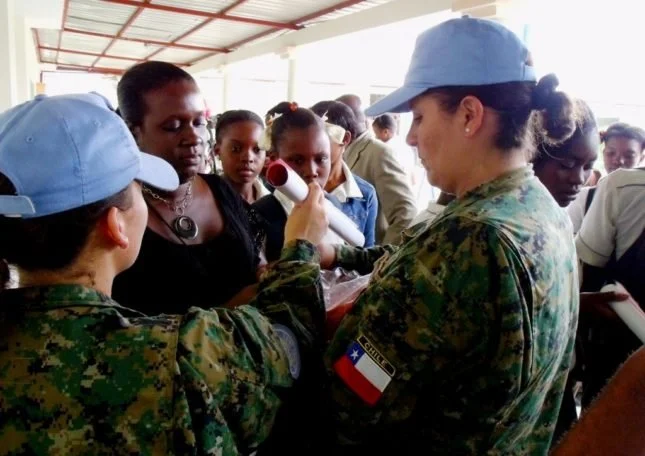
Human Trafficking from Haiti to Chile
In Chile, as in every other country that has historically embraced slavery, there are numerous racists. It is equally fair to say that, like all countries with a similar history, the fraction of those who are appalled by the persistence of slavery in their lifetimes well exceeds the proportion of racists. And when well-meaning people, who seek to expose what they perceive to be human trafficking, are accused of racism by those who do not understand a situation or want to sow confusion, this is a grave injustice. Haiti has been at the forefront of the Chilean news since mid-February, when a video of the nighttime disembarkation of about 140 Haitians, published by Santiago’s RD Herald and disseminated by various other sources, went viral. The video was shot and narrated by an airport employee even as he received messages on his work radio, which were audible. What caught the imagination of many Chileans was not the number of Haitians or their skin color, about which much has been made since, but the details of this curious airport arrival, which many Chileans have interpreted as a case of human trafficking.
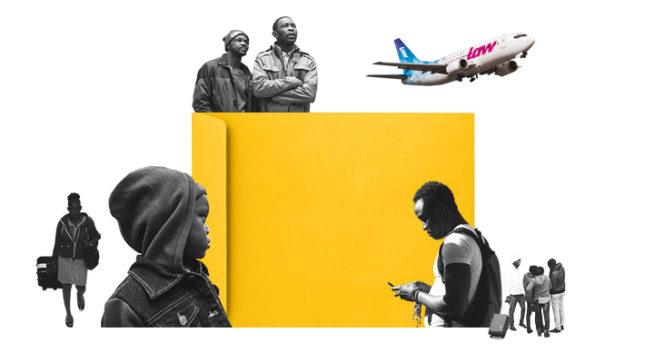 In this video, a large group of Haitians descend single file from a Boeing 767 at Comodoro Arturo Merino Benitez International Airport, also called Santiago International Airport, and are led to four waiting buses as the narrator observes, “This plane just arrived at 21:00 full of Haitian immigrants. They are all stepping down, many with the typical yellow envelope…. It is a charter aircraft. It only carries a license plate, no logo that says which airline it belongs to….”He explains that the Haitians being put on the buses are about to be transported to places where they will be “subjected to heavy work at very low cost. There are between 135 and 145 Haitian passengers doing this; this is every day, all days.”[embed]https://youtu.be/XQhEg9iyGio[/embed]However one might spin the video evidence, some facts cannot be denied. First, every Haitian who stepped off of the airplane did indeed have in hand a yellow envelope: “sobre amarillo,” as this scandal is called, identical to those of his neighbors, front and back. Secondly, the volume of Haitian migration to Chile has been astounding. According to Chile’s Investigative Police (Policía de Investigaciones, PDI), between 2016 and 2017 the number of arriving Haitians climbed from 47,027 to 111,746: a 138 percent increase in one year! This hemorrhage from Haiti is all the more remarkable when one considers that the country’s population is only about 10 million and about 80 percent of the travelers are young men between 18 and 30 years old. Finally, such flights are quite frequent. Three carriers regularly deliver Haitians to Santiago: Latin American Wings (LAW), ONE, and COPA. The plane shown in the video was from LAW.
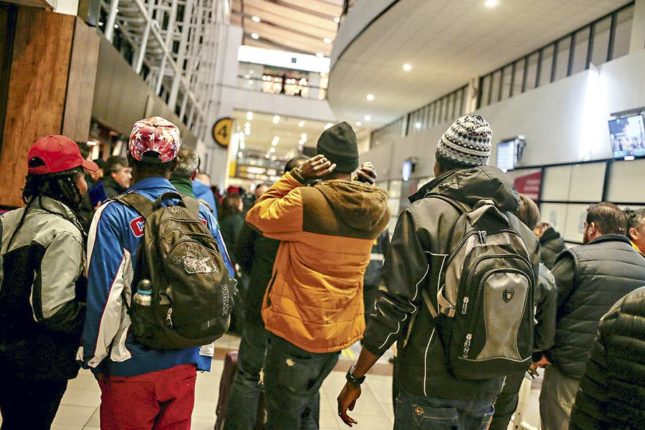 According to official documents, LAW carried 14,000 Haitians to Chile in the 10 months from January to October 2016 alone! It transported another 55,000 Haitians to Chile in 2017 from Haiti and the Dominican Republic. It had already brought four loads of Haitians to Santiago in 2018. A former executive of the company confided to journalist Gonzalo Cifuentes of BioBioChile that the airline, which was founded in 2016, had decided that its “business was no longer vacation, but ethnic.” Since the Haitian passengers were required to buy round-trip tickets to justify their status as tourists, the LAW flights made a profit of about $40,000 each, despite leaving Santiago on every return trip essentially empty.
 Attempts to rationalize the unmarked planes and yellow envelopes have painted an unintended picture of a human trafficking business on an unprecedented massive scale. Possibly the best explanation has come from Fre Foundation Executive Director, Jose Maria del Pino, who told journalist Consuelo Ferrer Duran of Emol that a series of “travel agencies” have sprouted that specialize in migration. “What comes in the yellow envelope is all the documentation for the trip, plus the cash that is required of any tourist entering the country” who lacks a bank account or credit card, del Pino explained. The planes are unmarked because the agencies hire charter flights. The passengers buy an air package for which payment plus interest are due as remittances after they arrive in Chile. Enforcers in Chile and Haiti make sure the payments get made. “We have information on migrants who have told us directly that their families are being threatened in Port-au-Prince. In exchange for this, they have to pay remittances and the money they have been given to remove the threat that weighs on their families,” del Pino added.
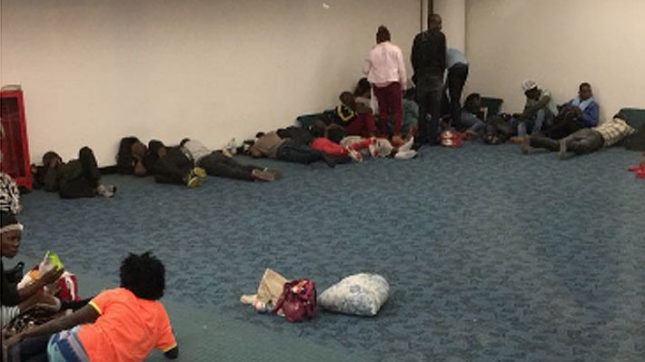
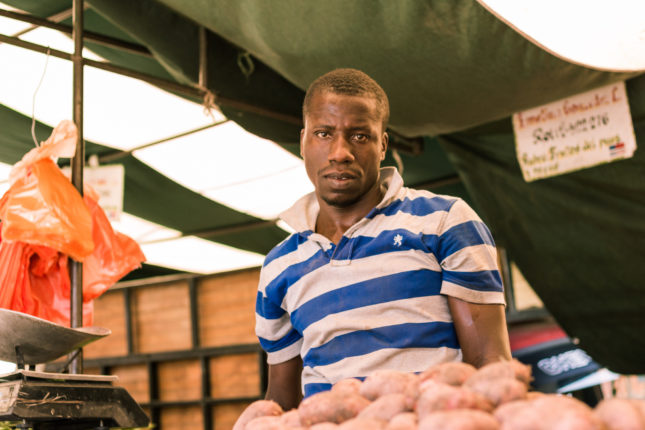 The notoriety of the sobre amarillo affair has forced officers at Santiago International airport to check more closely the documents from supposed Haitian tourists on flights from LAW, ONE, and COPA airlines. According to an article in La Tercera, on Friday, March 2, 2018, out of a total of about 230 passengers, entry was denied to 90 passengers from ONE, 62 from LAW, and 17 from COPA, after they were found to carry invalid reservations to the same hotel. LAW flights were suspended for 15 days. The unfortunate migrants were kept in one room from early Friday morning until Tuesday afternoon, without food or a bath, after which they were put on return flights to Port-au-Prince. While it is true that those Haitians were treated more poorly than animals during their 90 hours in the airport terminal room, one must also consider that they were probably spared a worse fate with their traffickers for much longer. Since they had no hotel reservations, where would they have stayed? How would they have been forced to support themselves? What will happen to them and their families in Haiti when they cannot pay their traffickers?
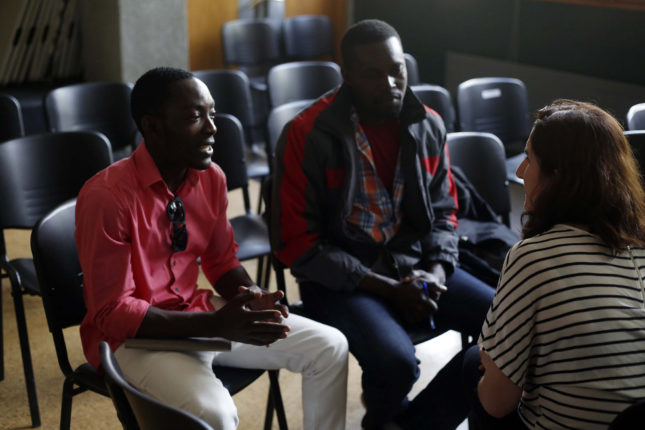 People of Haitian ancestry, and all those who want to punish the sordid practice of human trafficking, would do well to make common cause with the Chileans who are clamoring for an investigation into sobre amarillo. Haitian and Dominican human traffickers have previously been exposed and imprisoned in Chile, but instead of slowing down, the traffic of Haitians has been expanded and formalized. The sobre amarillo affair probably involves highly placed Haitians who want to increase the intake of government remittances as they discard their potentially troublesome population of educated and unemployed young men. An investigation into sobre amarillo might also expose Chilean business owners who order and exploit the cheap Haitian labor, as well as Chilean officials who, for years, have ignored the incongruities in this massive influx of supposed Haitian tourists. These employers and officials are probably racist, but that is a distraction and not the point.
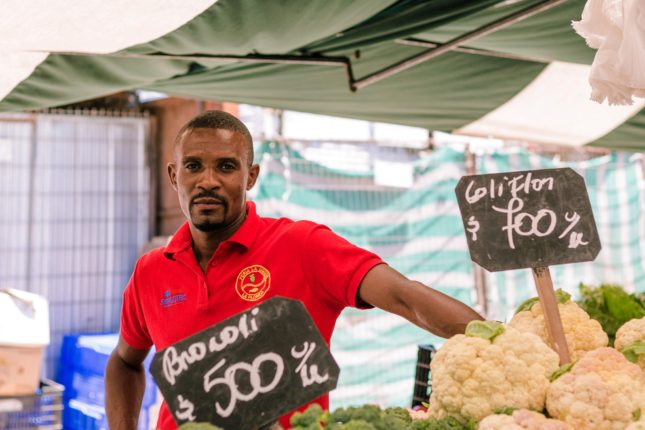 Haitian brothers and sisters: as dire as conditions might be in Haiti, it is vastly worse to be enslaved by human traffickers in a country where one does not fluently speak the language and has no citizenship rights or family members. There is no El Dorado. There is nowhere better to go. The time has come to fight in place for your birthright.By: Dady Chery | News JUnkie Post | March 8, 2018
Caribbean Development Bank To Open Haiti Office
At the 29th Intersessional Meeting of the Conference of Heads of Government of the Caribbean Community in Haiti, the country’s Minister of Foreign Affairs Antonio Rodrigue signed an agreement with the Caribbean Development Bank’s Vice-President (Operations), Monica La Bennett, to establish CDB’s first country office in Haiti.The agreement comes after the CDB and Haiti’s government developed a 100 million dollars country strategy plan for 2017 to 2021. La Bennett says this agreement will help Haiti meet its development priorities and further reinforce the country’s relationship with the CDB: “The strategy focuses on three main themes: agriculture and community development, sustainable energy development and education and training. It is this deepening engagement between CDB and the Government of Haiti that has led us to conclude that there is a need for a country office. We expect that this will lead to the development of closer relationships with the Government and the people of this country, enabling CDB to be a more proactive, responsive development partner,” she said.Haiti joined the CBD in 2007 and has since been allocated 45 million dollars in grant resources from the Special Development Fund.By: Coralie Saint-Louis | The Haitian Times | March 5, 2018
Haiti Aims To Improve Image With Better PR
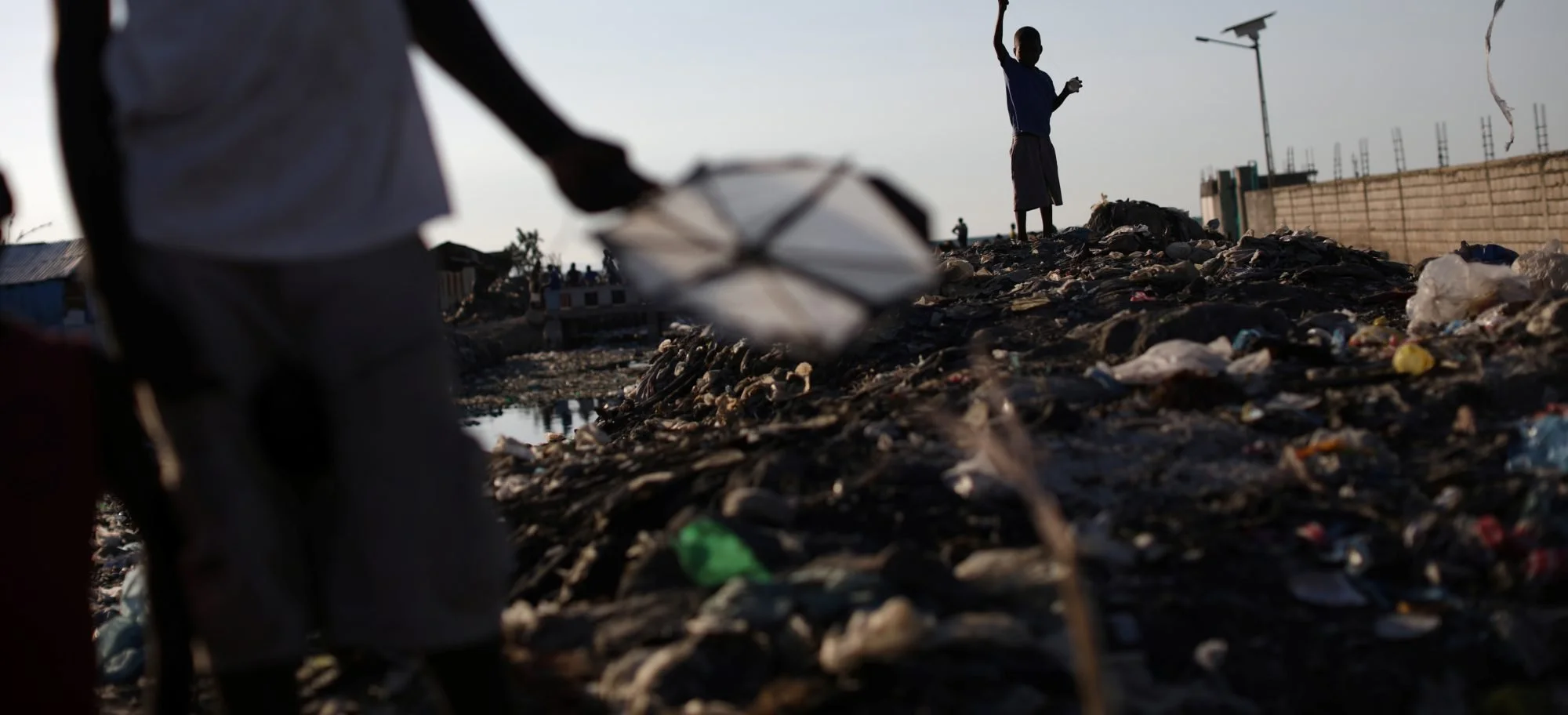
Whether President Trump actually called it a “shithole” country or not, Haiti has hired Mercury Public Relations to provide a diplomatic facelift for one of the poorest countries in the Western Hemisphere.As The Hill reports, Mercury filed notice of its work on Haiti’s behalf with the Department of Justice.In its filing to the DOJ, Mercury indicates that it will massage Haiti’s “print, television, radio, and digital media presence by crafting their narrative and amplifying their message … [and] placing stories, booking media appearances, preparing talking points/media advisories.”The contract stipulates that Mercury will only be doing PR work on behalf of Haiti and “shall not include any lobbying activities (national or local) whatsoever.”Fulton Armstrong, who represents the Center for Latin American and Latino Studies at American University, told The Hill that Haiti is seeking “image survival more than anything else during the Trump administration.”Trump denied making any reference to shithole and Haiti in the same breath, but other reports suggest that Haiti is far from Trump’s favorite travel destination. At one White House meeting in 2017, Trump allegedly claimed that all 15,000 Haitians who visited the U.S. that year “all have AIDS,” according to a New York Times report. The administration said there was no mention of AIDS in the discussion.But the controversy really erupted in January when the president was examining the countries of origin of the many immigrants who seek to come to the U.S. and allegedly asked why so many were coming from “shithole countries” like Haiti, El Salvador and many African nations.“Why do we need more Haitians?” Trump said, according to a Washington Post source. “Take them out.”Trump addressed issue, assuring readers that he had “never said anything derogatory about Haitians other than Haiti is, obviously, a very poor and troubled country. Never said ‘take them out,'” alleging that Democrats fabricated the comments. “I have a wonderful relationship with Haitians.”By: DAVID KRAYDEN | The Daily Caller | March 7, 2018

Haitian Designers Trump Politics At DC Fashion Week
WASHINGTON, D.C – During this year’s DC Fashion Week, the Haitian embassy showcased Haitian-American fashion designers’ collection lines for their first “Diplomacy by Design” event. Four renowned designers of Haitian descent, Prajjé Oscar Jean-Baptiste,Kerby Jean-Raymond, Victor Glemaud and Azède Jean-Pierre, used the occasion to illustrate their creative talent to a diverse audience of dignitaries and fashion insiders.The first of its kind, the event aimed to provide a window into some of Haiti’s finest couture and overall beauty. As models strutted their way through the opulent grand ballroom of the Haitian embassy, a crowd of onlookers admired the individual styles and techniques of the night’s fashionistas.Haiti’s ambassador to the United States, Paul Altidor, who has been on a mission to show a different side of his country since President Donald Trump’s disparaging comments, used this event to once again put Haiti on the center stage.“Most of the world has a singular view of our country that we are looking to reshape,” he said. “By showcasing our art and culture through events like these, most notable our fashion design talent, we are changing the narrative with artistry, innovation, and glamour.” Glemaud, a fashion industry veteran, opened the show with his colorful knitwear line. Prior to launching his own label, Glemaud worked in New York and Paris for popular fashion houses like Versace, Marc Jacobs, and Helmut Lang.Jean-Baptiste, a New York-based womenswear designer introduced his “EZILI” collection, named after the Vodou goddess of love and beauty, and handmade by Haitian artisan women. He uses original prints “Maitresse,” embroidery and beading for his designs.Independent womenswear designer Jean-Pierre, known for dressing former First Lady Michelle Obama, exhibited her personal line in a special display room. Jean-Raymond of Pyer Moss, whose politically-charged runway shows have taken social issues to the forefront of the fashion industry also displayed his signature line.
 Altidor’s latest affair brought out some of D.C.’s biggest names like former D.C. First lady Michelle Cross-Fenty, NFL star Pierre Garcon, and Miss Black America’s Brittany Lewis. Also in attendance was two-time former welterweight world champion Andre Berto, and the first Haitian-American appointed to municipal court in New Jersey, Judge Sibby Elias. For one glamorous night in the nation’s capital, Haiti was once again the talk of the town.By: Tarah-Lynn Saint-Elien | The Haitian Times | March 7, 2018

‘Loving people is what I do:’ Brewers’ Brett Phillips spreads love during mission trip to Haiti
MILWAUKEE -- There are always a lot of smiles in and around the baseball fields at spring training, and maybe the biggest for the Milwaukee Brewers is from Brett Phillips.Every day that he's out on this field, Phillips is trying to make a difference while working to make the Brewers roster, but when he's away from baseball, he's making a huge difference for the people of Haiti."For me, it's just a matter of working hard, continuing to get better on a daily basis," said Phillips. The approach Phillips with his profession is the same he takes away from the field."Whether it's small or big, when an opportunity comes about, I just have to take advantage of it. It's just a matter of staying humble and not forgetting where I came from, and regardless of how much money I make in my career or my trophies I have in my trophy case, it's just a matter of staying humble, remembering where I came from and just being a good person overall. Loving people is what I do," said Phillips.In January, Phillips was showing his love for people by visiting another country.
 "It was a mission trip down to Haiti," said Phillips.He joined fellow Major Leaguer Adam Wainwright and the Pittsburgh Pirates' chaplain Brad Henderson for something much bigger than just a foreign trip.
 "We went down to a children's orphanage, and it was an absolute blessing. It puts things in perspective in my life," said Phillips.In spring training and throughout the season in the Major Leagues, Phillips and his teammates live a very special and privileged lifestyle, something far removed and even unknown to the kids he was with in Haiti."That's the glory of it. They don't care who you are as a person or what you do. They just want to hang out. They just want attention and love and affection. You know, that's something I can give them. We played soccer. You know, just be able to talk with them. It's just something they really enjoy. They climb on you. They're kids. They're little kids, so they just love the attention, and they don't get that because they don`t have parents and that's something that we go down there to do," said Phillips.
 Something else he's able to share with them is his belief in Jesus Christ, the true mission of this trip.
 "Voodoo is actually the number one religion down there, where they believe that evil outweighs good, so they just believe evil's like, that's all there is instead of good, so for me, I hope I changed the process, the thought process. Just that God is good. People are out there trying to help you and there is good in the world, and I hope to be that good just to show them when they grow up that they can be good in the world too," said Phillips.For the guy with the most contagious personality on the baseball field, he's hoping it works as well for the kids at this orphanage in Haiti."I can't give them all the money in the world. I can't get rid of their problems, but for the day, I can hang out with them and make them smile. You know, that goes a long way to them and it goes a long way to myself. I think I gained more out of it than they did, so it was super eye opening, but I'm definitely going to do it again and continue to on a consistent basis," said Phillips.Phillips hopes to recruit other players to help those kids in Haiti next year and for the years beyond.The organization Phillips worked with is the Pittsburgh Kids Foundation.By: BRANDON CRUZ | Fox6 | MARCH 4, 2018,

New military reinforcements, long-range UAVs and cameras on the border
President Danilo Medina, confirmed at the 174th anniversary of the independence of the Dominican Republic (February 27) the establishment of a new security plan on the border with Haiti, including a set of measures to prevent thge massive entry of illegal Haitians in Dominican territory declaring "Dominicans have their own national project, which is neither better nor worse than those of other countries, but it is ours and our responsibility is to strengthen it and to work for it [...] We understand that to be good neighbors we must respect and even collaborate, but we must also know where a house starts and where the other ends [...]"He thus indicated that 900 military trained in the academies of the country, will offer a professional monitoring service of the border, both in terms of formal and informal crossing points, will be sent as reinforcement. He also announced the addition of 30 new off-road vehicles [in addition to the 60 already in operation], 1 additional helicopters [in addition to the 2 already in operation]Medina also mentioned the strengthening of the crossings where there is the greatest flow of people emphasizing "We will coordinate all the institutions that work at the border: brigades of the army, navy and army of CESFRONT and the Directorate General of Migration (DGM) so that they can effectively apply the Dominican law on the border. "As part of the technological means involved in the surveillance, President Medina said that a fleet of long-range UAVs and infra-red detection systems for night surveillance, will be deployed as well as hundreds cameras that will be added to some 200 surveillance cameras already deployed at the border.On Friday, March 2, Lieutenant-General Rubén Darío Paulino Sem, Minister of Defense declared "The Dominican Republic has put in place a new security plan on the border with Haiti" explaining that the 900 soldiers announced by President Danilo Medina for control the illegal migration arrived Thursday at the border to be deployed there. Indicating that these reinforcements are in addition to the 4,500 soldiers already deployed along the border, bringing the total number of soldiers to 5,400 military TO which are added the CESRONT men and the Marine and Air Force units as well as the staff of intelligence and migration (DGM)He also said that the increase in surveillance at the border other than land, will also be provided by air and sea (coastal), including between Montecristi (North-West) and Puerto Plata (North), and Pedernales and Barahona (South West).With more than 10,000 Haitians in irregular migration, deported from the Dominican territory or returned to the border on average each month, more and more moderate political observers no longer hesitate to qualify the situation of "peaceful invasion". Even the high Dominican religious authorities call on the Medina Government to take control of the situation with respect and transparency...By: HaitiLibre | March 5, 2018
Haiti’s Maternal Health Crisis
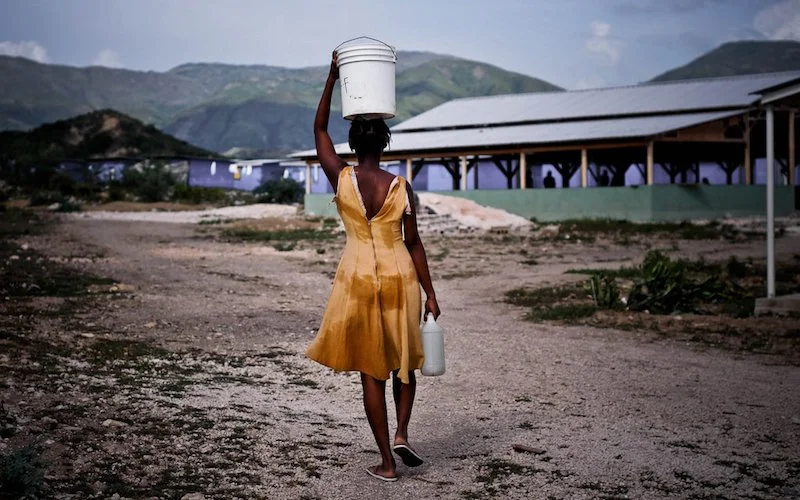
Imagine instructing your mother in Haiti over the phone on how to deliver your cousin’s baby. In 2012, Winfred Tovar’s cousin, Rose Annette, not realizing she was pregnant, suffered a seizure and stroke while delivering twins in her home. Rose Annette believed that she was menopausal and consequently was unaware that her ill symptoms correlated to an unplanned twin pregnancy. Following the delivery, Winfred could hear the agony in his cousin’s voice as she suffered a postpartum hemorrhage. The excessive bleeding was increasingly worrisome and he knew her life was at risk.This experience taught Winfred Tovar, M.D, an important lesson: in the developing world, maternal mortality remains unacceptably high. Expectant mothers in poorer communities experience high-risk pregnancies due to the lack of resources and are in jeopardy of suffering hazardous complications during and following pregnancy and childbirth. Statistics show that 99% of all complications result from lack of prenatal care, often because the ratio of patients to doctors in third-world countries is so high that most women choose to stay home instead of visiting a hospital or a clinic. Consequently, 75-80% of women defer to untrained individuals for home births with no knowledge of underlying complications that may kill them.A former attending physician at St. Barnabas Hospital in NYC, Winfred’s close connection to his mother, strong belief in female empowerment, and desire to invest in humanitarian medicine has inspired him to launch and serve as Executive Director of Mimsi International (Modification In Mother-Baby Mortality Statistics Initiative). Mimsi, a nonprofit organization, is a community-powered organization that provides training and pregnancy care to women in remote, rural areas of the developing world via mobile technology.The Mimsi process sets up mobile clinics, so that community volunteers can enter the home of the expectant mother with the materials needed to transform the patient’s home into a clinic. Mimsi trains young women and men to enter one of three programs: a two-year Pregnancy Care Provider Program to master prenatal care for members of the inner Haitian community, a one-year Ultrasound Provider Training Program or a one-year Postpartum Care Provider Program. The objective of these programs is to provide didactic and hands-on education to members living in disenfranchised, rural areas of Haiti and to transform these underserved areas into fully functioning clinic spaces to serve patients. Volunteers are trained to weigh the pregnant mother; to measure her vitals and blood pressure; to measure fundal height and fetal heart rate; to perform obstetrical ultra-sounds to establish due dates and evaluate the baby’s development; and to engage in preventative measures such as screening for STDs that could adversely affect both the mother and baby.When the members enter the patient’s home, they input all the information about the mother’s vitals into a prenatal mobile application, which is then uploaded to the Cloud and returns with possible diagnoses. In cases where a woman receives a critical diagnosis suggesting she is at high risk of a complication, a community volunteer will accompany her to a nearby hospital to seek medical care. Women in labor or with complications receive assistance in paying hospitalization fees and in obtaining free medication and medical supplies. Expectant and new mothers are also provided social services and support in collecting clothes, linens, sanitary items, and newborn articles for their new family.When Winfred started Mimsi, he felt inclined to pay homage to his family and beloved Haiti. Currently, Haiti has the highest maternal mortality rate in the Western Hemisphere. Every 20 minutes, a woman dies from childbirth in Haiti, a statistic that captures the grave nature of maternal mortality. According to estimates by United Nations Population Fund (UNFPA), a woman over her lifetime in Haiti has a one in 83 chance of dying due to pregnancy or childbirth, compared to a region-wide risk of 1 in 510. Poverty, flawed healthcare infrastructure, and lack of access and education are among the biggest contributing factors to this tragic statistic. Winfred aspires to convert the economically depressed villages into facilities that will ensure safe deliveries and available care to expectant mothers. As a result of Mimsi’s objectives and widespread presence in over 60 rural villages in Southern Haiti, the maternal mortality rate has decreased to 1 in 1,300. The mission continues to increase services with the ultimate goal to decrease and—hopefully one day—eliminate maternal mortality rates.By: Pooja Shah | INTERNATIONAL POLICY DIGEST | 03.03.18
Boston organization brings medical and mental health care to Haiti
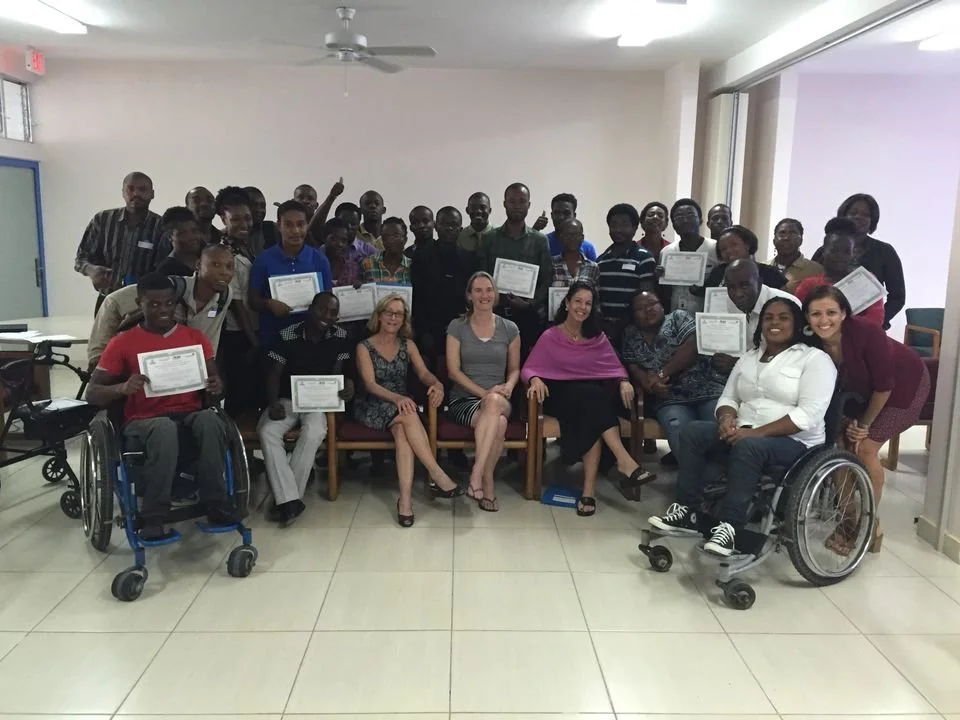
After a major earthquake devastated Haiti in 2010, many people became disabled by injuries. Perhaps equally damaging, many of them were then abandoned by their families."People with disabilities in Haiti, people don't see it like they should, like they are people with rights," said Myzraelle Casimir Zidor, known as Madam Zidor, program coordinator for the Rehabilitation Center at St. Boniface Hospital Haiti. Zidor said families did not know how they would find food and housing after the earthquake, and taking care of someone with disabilities seemed impossible."Many people were abandoned in the hospital, abandoned when they were injured," said Lauren Easton, senior director of behavior health at Commonwealth Care Alliance.Now, with the help of the Boston-based Commonwealth Care Alliance, St. Boniface is running a center that provides rehabilitation services, both medical and mental health, for people with spinal cord injuries.Zidor said before the program started, the hospital was offering good medical care. But it lacked mental health care and follow-up services. Even many doctors did not understand the value of treating psychiatric issues."Both mental health and people with disabilities, it was taboo in Haiti," Zidor said.Spinal cord injuries generally result in paralysis, and they can cause complications with the skin, bladder, respiratory system and other areas. Before the program started, someone with a spinal cord injury in Haiti had a life expectancy of 18 to 24 months.Commonwealth Care Alliance is a nonprofit health insurer and provider network that provides services to people who are eligible for MassHealth and Medicare. In 2010, a CCA doctor was contacted by Doctors Without Borders, which delivers medical services to needy areas, about sending a team to help people with spinal cord injuries.Easton led the team to Haiti and found a need for behavioral health and psychiatric services to help people deal with the trauma, depression and anxiety that came after a natural disaster. The Americans worked with a team in Haiti to set up a rehabilitation center as part of St. Boniface Hospital in a rural area of Haiti called Fond-des-Blancs.The program got funding from the U.S. Agency for International Development, and CCA also does private fundraising. It continues until today.Zidor was in Boston last week to visit CCA facilities, and she and Easton spoke to a reporter in Boston.Today, the inpatient rehabilitation center has 16 beds. Another eight beds are available for people who are medically ready to leave but cannot because of social problems - their family is unable to take them in or they lack appropriate housing.The facility has treated 135 people since 2010.Today, many of the patients are living for years.The rehabilitation center offers specialized medical care and rehabilitation, but it also focuses on social and psychological needs. U.S. clinicians visit annually and train Haitian providers.Social workers may help someone figure out how to return to a village where people are not used to seeing wheelchairs. Staff work with family members to teach the family how to support someone with a disability. The program offers vocational training where people with spinal cord injuries can learn computer skills, so they can work, and gardening, so they can grow food. It connects people with schooling and micro financing loans. Some former patients were hired by the hospital as peer educators. Staff also do home visits.Easton said psychiatric medication remains culturally unacceptable and expensive, so few patients use it.Zidor said she sees a major change in patients once they leave the rehabilitation center. They are no longer afraid of going home, they are more confident and their families tend to be more supportive.One man, after his injury, used to not leave his house. He now goes out in his wheelchair and works as a DJ and a peer educator."We help them to adjust, then find a new way to live," Zidor said.By: Shira Schoenberg | Mass Live | March 4, 2018
Haiti, U.N. Clash Over Probe Into Alleged Misuse of Petrocaribe Funds
PORT-AU-PRINCE (Reuters) - A diplomatic row has erupted between the Haitian government and the United Nations over comments made by a senior U.N. official cheering an investigation into the alleged misuse of Venezuela-sponsored Petrocaribe funds by previous administrations.
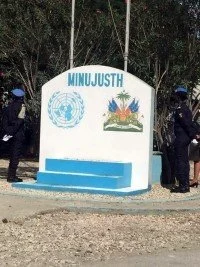
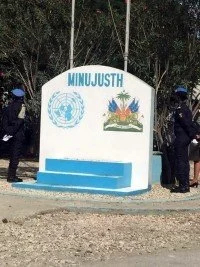
Haiti recalled its ambassador to the U.N. on Tuesday, and summoned Susan D. Page, the special representative and head of the United Nations Mission for Justice Support in Haiti (MINUJUSTH), to explain comments she reportedly made applauding a criminal probe into the alleged siphoning of Petrocaribe money.
Haiti's foreign minister, Antonio Rodrigue, said in a statement on Tuesday that Page had exceeded her authority and that her comments reflect an "attitude harmful to the political and institutional stability acquired during the past few years."
The case is the latest example of governments across the Americas - including Guatemala and Honduras - chafing at criticisms by U.N. bodies, which have highlighted lackluster efforts to tackle corruption, human rights abuses or impunity.
Haiti has a long tradition of corruption, and international partners and anti-graft watchdogs have often blamed Haitian politicians for failing to crack down on the scourge.
Last weekend, local media reported that Page said the U.N.'s Haitian justice mission welcomed the assignment of judges to probe possible acts of corruption with Petrocaribe funds during the administrations of former presidents Rene Preval and Michel Martelly, between 2008 and 2016.
Current President Jovenel Moise, who is from the same party as Martelly, has faced criticism for not pursuing corruption as actively as he had vowed to.
Page was quoted as saying she saluted "the initiative and active role of Haitian citizens and civil society engaged in the fight against corruption and impunity. Their actions demonstrate that the population defends accountability and justice."
Reuters was unable to reach Page.
Venezuela's Petrocaribe scheme, launched in 2005, has furnished about 12 Caribbean states with oil supplies under a flexible credit mechanism, obliging them to pay cash for part of every shipment and finance the rest at low interest rates, or buy it with goods like food and clothing.
A collapse in oil prices, however, has caused a recession in Venezuela, and stalled many of the Petrocaribe shipments.
(Reporting by Gabriel Stargardter; Editing by Leslie Adler)
Copyright 2018 Thomson Reuters.By Joseph Guyler Delva via US News | February 28, 2018
Are N.G.O.s in Haiti doing more harm than good?
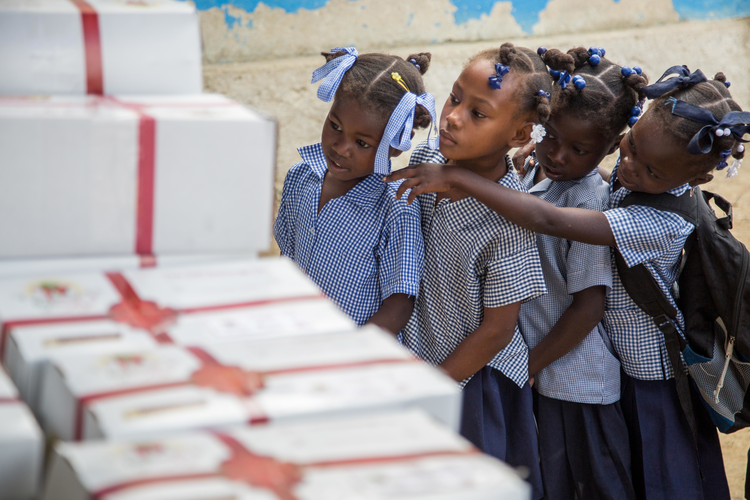
I was in Haiti early this month. It was my first trip there, and I arrived uncertain of what I would find. A country battered by one disaster after another and often represented as the problem child of the Western Hemisphere had come to seem almost imaginary to me, luckless and mythical. But Haiti was real and rewarding, a country of intriguing contrasts—between the richness of the country’s past and the poverty of its present, between the expansiveness and warmth of the people and the scarcity of the resources available to them. From the squalid shantytowns of Port-au-Prince to the bland suburbs of America, a starker contrast with the United States would be hard to find.The plane from Miami to Port-au-Prince was filled with Americans, most of whom seemed to be there on mission trips. There was much good will and no doubt much good work being done. The high school student sitting beside me was there to teach dental hygiene; her schoolmate was painting a mural as part of a group art project; a third friend was distributing water purification systems that use the sun’s ultraviolet light to filter out bacteria. Access to potable water is a major concern in Haiti. Contaminated water spreads disease and is the leading cause of infant mortality in a country with the highest infant mortality rate and the greatest poverty in the Western Hemisphere. I had assumed impure water was primarily a technical problem, but efforts to provide clean drinking water require education, community buy-in and ongoing attention, all of which can be difficult in a poor country with a high illiteracy rate."On the ground in Haiti, it is easy to see that just as wealth breeds wealth, poverty begets poverty."
Before I left the States, I had been present at two conversations in which those around me wondered why poverty was worse in Haiti than in its neighbor, the Dominican Republic, and why it seemed so endemic and extreme despite the very large amounts of foreign aid Haiti had received, both before and after the deadly 2010 earthquake. The disaster, which leveled much of the capital and affected three million people, killing at least 100,000, prompted an outpouring of aid.
On the ground in Haiti, it is easy to see that just as wealth breeds wealth, poverty begets poverty. People who are poor cannot be taxed much, and a government without resources cannot provide much for its people. Foreign aid can be problematic, as much a hindrance as a help. In Haiti, U.S food aid flooding the market has provided cheap food but driven many Haitian farmers off the land. Haiti has a reputation for corrupt government, but waste, mismanagement, fraud and corruption also plague charities, non-governmental organizations and aid agencies. Only a small fraction of the outside aid pledged to Haiti after the 2010 earthquake actually reached the Haitian people. Concerned about corruption, donors circumvented the Haitian government. Unfamiliar with local conditions and resources, they squandered millions of dollars in ill-conceived and poorly executed projects that actually made life worse for Haitians. A 2012 article by Ian Birrell in The Daily Mail reported that as mistakes mounted and money was wasted, “prices of food and basic supplies for local people soared, sanitation deteriorated, there was less safe water to drink and well-meaning interventions made matters infinitely worse.”"In Haiti, foreign aid can be problematic, as much a hindrance as a help."Jonathan Katz, the only full-time journalist in Haiti at the time of the earthquake, tells the story in his book The Big Truck: How the World Came to Save Haiti and Left a Disaster Behind. U.N. troops brought cholera to a country where it had not existed; charities, the American Red Cross notable among them, used the millions of dollars collected for earthquake relief for their own purposes; aid workers from outside the country who swarmed into Haiti operated without oversight or accountability.“Two centuries of turmoil and foreign meddling had left a Haitian state so anemic it couldn’t even count how many citizens it had,” Mr. Katz writes. After the quake, the almost-absolute power of aid groups operating independent of the Haitian government weakened an already weak state, delegitimizing it in the eyes of its people.“There was no way for Haitians to appeal an NGO decision, prosecute a bad soldier, or vote an unwanted USAID project out of a neighborhood,” he writes."More N.G.O.s exist per capita in Haiti than in any other country."
Haiti has been called the Republic of N.G.O.s. More non-governmental organizations exist per capita in Haiti than in any other country. If on one hand the country’s extreme poverty explains their presence, it also raises questions about their effectiveness. Are N.G.O.s—and other people coming to Haiti to help — doing much good?
“They are helping, but they are not here to solve our problems,” said Jean-Ronald Jocelyn, a Haitian who is education program manager at Hope for Haiti, a nonprofit that has operated in Haiti for 28 years and is largely staffed by Haitians. Mr. Jocelyn said economic development is a long-term problem that the government should take care of.“The N.G.O.s help poor people but don’t help them to get out of poverty,” he said. “The government is like the N.G.O.s, providing day-to-day assistance but not a long-term program for development.” Incapacity, rather than indifference, is at the root of the government’s failure.“The N.G.O.s help poor people but don’t help them to get out of poverty.”
I met Mr. Jocelyn in the company of his American co-worker, Jessica Ciccarello, the group’s country administrator, and Lee Cohen. A former official with the United States Agency for International Development, the federal agency primarily responsible for foreign aid, Mr. Cohen now runs a business providing videography and photography to nonprofits to help them better tell the story of what they do.
“Foreign assistance works best when institutions are stronger,” said Mr. Cohen. Without a strong ministry of education, Mr. Cohen said he wondered how nonprofits can complete the work they are doing in Haiti and leave the country.Leaving Haiti should be a goal of every N.G.O., Ms. Ciccarello said. While making a long-term commitment to the country and forming relationships with Haitians are critical to successful work, N.G.O. officials from outside the country need to train Haitians to replace them. Many N.G.O.s do not register with the government; Ms. Ciccarello said registering is important if they seek sustainability for their work."Leaving Haiti should be a goal of every N.G.O."
Nobody I spoke with in Haiti painted a rosy picture of the future. Haiti faces a long and formidable list of problems—from poverty and high unemployment to inadequate housing to weak health, education and sanitation systems to deforestation and environmental degradation. Among its problems, not the least significant is a political class widely seen as self-interested and resistant to sharing power.
“Politics is one of the worst things in Haiti. Everyone wants to be in power to fill their pockets, not to help the country to grow,” one Haitian priest told me.I did not come back to the United States with any ready answers as to how Haiti can overcome the immense political and economic challenges it faces. I doubt there are many ready answers. As to why Haiti is plagued by poverty, I learned just enough to know it is complicated. There is a long history of foreign interference, intrusions and demands going back to Haiti’s first years as a nation when it was forced to pay France exorbitant reparations for the freedom it had won, reparations that continued until the 1950s. The United States, which occupied Haiti from 1915 to 1934, has its own checkered history there, often lending its support to nondemocratic elements and strong-arming unfair trade policies that benefit U.S. interests at the expense of Haitians. In different forms, the domination of Haiti by outside forces continues.The complexities of aid are daunting—the politics and the delivery of it, the effort, intelligence and sensitivity it takes to help others without depriving them of agency or imposing what can easily seem new modes of neocolonialism. Doing good well may be a form of grace. I met admirable Americans performing admirable deeds in Haiti, but I left thinking that despite significant, even life-saving work, Haiti’s fundamental problems are unlikely to be solved by outside angels swooping in and out. The country’s greatest need is not more aid groups or missioners but a more functional state with stronger public institutions and leaders committed to service, not self-enrichment.For all its manifold problems, Haiti is not a gloomy place. In the southern city of Les Cayes, a Catholic priest I spoke to offered the most encouraging words I heard. He had just offered a witheringly realistic assessment of Haiti’s present and immediate future when he said: “What gives strength is the conviviality, joy and courage of the Haitian people. Haitians are very courageous.”By: Margot Patterson | America - The Jesuit Review | February 22, 2018
IMF Staff Reaches Staff-Level Agreement with Haiti on a Staff-Monitored Program
An International Monetary Fund staff team led by Chris Walker, IMF Mission Chief for Haiti, visited Port-au-Prince from February 20-25, to carry out discussions with the Haitian authorities on a Staff-Monitored Program (SMP).At the conclusion of the mission, Alejandro Werner, Director of the IMF’s Western Hemisphere Department, met with President Jovenel Moïse, Minister of Economy and Finance, Governor of Central Bank and Senior Officials to mark the accord and discuss Haiti’s development strategy and continuing engagement with the IMF. Mr. Werner hailed the agreement as an important sign of commitment to improving the living conditions and increasing the economic opportunities of the Haitian people.President Moïse shared his vision for development of Haiti with the IMF delegation. He asked the IMF to play a leadership role in bringing together the country’s development partners to support his reform and development plans, including strengthening the social safety net.Mr. Walker issued the following statement at the end of the visit:“Following extensive discussions, the IMF team has reached a staff-level agreement with the authorities on an SMP covering the period of March-August, 2018. The government of Haiti, under the leadership of President Moïse and Prime Minister Lafontant, and with support of the Minister of Finances and the Central Bank Governor, is committed to carry out economic and structural reforms to promote economic growth and stability, and alleviate poverty, in Haiti. The international community and key donors welcome the government’s resolve to implement reforms to ensure sustainable and inclusive growth.“Under the SMP, fiscal policy will focus on mobilizing revenues and rationalizing current expenditure, to make room for critical public investment in infrastructure, health, education and social services. This will include measures to improve tax collection and efficiency, and to eliminate excessive subsidies, including on retail fuel. Other reforms will focus on stemming the losses of the public electricity company (EDH), which in recent years have amounted to a sizeable portion of the public deficit, by improving the efficiency of billing, and by reforming contracting practices. Fiscal reforms also aim to increase the transparency of public accounts. These reforms are to be accompanied by a substantial package of mitigating measures to protect the most vulnerable members of society.“The Central Bank of Haiti (BRH) will continue to protect international reserves and preserve exchange rate flexibility, while acting as necessary to contain disorderly market conditions. Under the SMP, the authorities will limit recourse to monetary financing of the government deficit, and BRH will align monetary policy to keep inflation in check, while maintaining an adequate flow of credit to the private sector.“IMF staff will work closely with the authorities to monitor progress in the implementation of their economic program. The IMF will also continue to provide technical assistance to support Haiti’s capacity-building efforts and structural reform agenda. The SMP is designed to help the authorities build a credible track record, and successful implementation of the program will catalyze critical flows from development partners as well as support a future request for an Extended Credit Facility (ECF) arrangement.”By: International Monetary Fund | February 25, 2018
Pols to host Haiti celebration in response to Trump comments
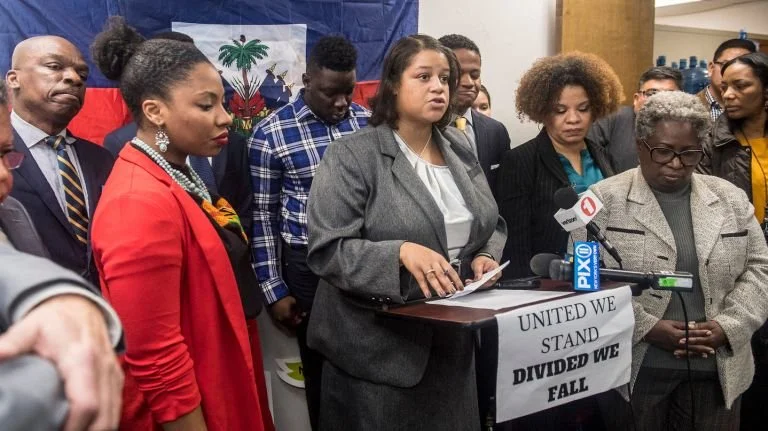
State Assemb. Michaelle Solages and Nassau Legis. Carrié Solages on Wednesday are hosting a cultural and community celebration of Haiti in Elmont after President Donald Trump’s disparaging remarks about the country and African nations last month.Trump, according to media reports, reportedly asked his advisers why the United States should allow immigrants from Haiti and some African countries instead of places such as Norway.“After Trump’s alleged derogatory statements about Haiti, the Assemblywoman decided to host an event to celebrate Haiti’s rich culture and history,” Danielle De Souza, Michaelle Solages’ director of communications, wrote in an email.Michaelle Solages (D-Elmont) was the first person of Haitian descent to be elected to the state Legislature, according to her office’s website. She is the sister of Carrié Solages (D-Elmont).The event, titled “Haiti is Beautiful,” is to be held from 7 to 9 p.m. at the Elmont Public Library, 700 Hempstead Tpk. in Elmont.By: Stefanie Dazio | Newsday | February 27, 2018

Michael Brun's New Music Will Make You Forget The Negative Things You've Heard About Haiti
"Bayo" is what Haitian born artist Michael Brun's new music is all about. In Haitian Creole, the term is associated with generosity and a responsibility the country's contemporary musicians have to give back and represent their culture on a global level.
With his latest music video drop last Friday of the same title as his musical concept, that's exactly what the 25-year-old rising star is on his way to do. He's switching gears from his EDM background and is focusing on tracks he has a greater personal connection to. Through his music, he hopes to combat all the consistent negative misrepresentation of his native country and it's safe to say, Brun is off to an impressive start.
From the colorful dancing to the infectious melodies influenced by Haiti's traditional Rara music, you'll instantly be hooked on the video's visuals and unique sound. Brun also collaborated with Haitian pop star J. Perry along with the king of Haitian hip-hop Baky, and rapper Strong G who came through with strong verses in Haitian Creole.
It's his specialty to bring all kinds of people together, which made him the perfect first non-jazz performer to close out this year's 12th annual Port-au-Prince International Jazz Festival, also known as PAPJAZZ. Right before his set last month, we chatted with Brun about the inspiration that resulted in his one-of-a-kind sound and what we can expect from him next.
[embedyt] https://www.youtube.com/watch?v=q8g86tUC-_A[/embedyt]
Isis Briones: How does it feel to be back in Haiti performing at PAPJAZZ?
Michael Brun: "It's actually my first time taking part in it and I'm so excited. My family and girlfriend are here with me, and I'm super happy to be back home."
IB: Of course, this is where it all started, right? What led you to take inspiration from your background?
MB: "I've been working for about a year and a half, almost two years on my new album. It's an all-encompassing project that shows music and visuals that come from the same place. It's Haitian music as a base, but it's in combination with electronic music, pop, and more — all of that with a Michael Brun twist."
IB: Can you elaborate on what Haitian influences will be incorporated in your upcoming tracks?
MB: "I would say a lot of the sounds that I'm working with now were things that I grew up hearing. Some of that was Rara music, which is parade type tunes based on drums, horns, and a lot of people with high energy. That was a big part of my life as a kid every Sunday and it was awesome. My dad had a band, too, and my mom played the piano. It was a natural progression of everything I was hearing internationally and the local classics I was around, all I ever wanted to do was mix the two together."
IB: Got it, so you always wanted to be a musician?
MB: "Kind of. I always really liked it. First, I was a fan and as a producer, it was a hobby. I never really approached music as a job because I wanted to be a doctor since I was a little kid. I hoped to be a pediatrician. Music was something I enjoyed a lot, but I didn't start making it until I was around 14 or 15.
Then I went to college and had a few songs that started picking up online, which set off this whole Pandora's box of really amazing things that came up. As I was working with more music, I was reaching the same people I wanted to reach through medicine on a larger scale. I felt the core thing about being a doctor that I always gravitated towards was to help people and give back what I received in my life. Music let me do that. I could see all these different opportunities come up where I could use things what I learned from my family and growing up here."
IB: Who would you say have been your biggest musical influences?
MB: I would say, people that influenced this upcoming album is a combination of classic 70's and 80's Haitian artists. What I did was use a bit of what they had in mind of taking local sounds and merging them with influential international genres of their time like rock. For me, electronic and hip-hop are big right now. On one end, it's learning from great artists in the past along with modern stars who are transforming the industry.
I'm also a fan of the development of Latin music. To hear a Spanish song on the radio in the U.S. that's kept as is, I think that's a testament of how the world has evolved. I've been working with Maxwell, so that's a cool collaboration because we've known each other for a while and we've worked on a few projects together before. There's more, too, because I'm in the process of finishing some things up. I can say that I'm teaming up with some Latin and Afrobeat artists, too. The sound is really exciting for me, some of these musicians are are accomplished in their own right, so I think it's interesting for them to come into this new world of Haitian music. It seems like it's kind of getting them out of their comfort zones as well, but in a really good way."
Steve BabounMichael Brun on set of his music video "Bayo."
IB: Since you're so comfortable experimenting with different genres, were you intimated at all being a non-jazz musician performing at a jazz festival?
MB: "I've always loved jazz. Those are the chords and progressions that make you aware of music. There are so many different forms and ways to express it though and that's the point of view I'm taking with my set. I believe the music I'm working on is truly a combination of many different genres and that's what I want to do with all my performances."
IB: What's one message you hope people will take away from your work?
MB: "My music is about working hard and putting the best possible sounds out. That's something I heard my whole life from my family. They've been a huge support system for me. Even if I failed, my parents taught me everything happens for a reason and what matters is what I learn from it. You learn from experience and if you do your best, you won't live with regret.
There's so much beauty and potential in Haiti that has been around since the foundation of the country, but it's really coming back in the youth today. I see so many artists and business owners thinking outside of the box to tackle problems that have been present for many years along with making the country a better place. You only get to that by giving it your all."
IB: Now that you found your inspiration, released your newfound sound, what's next?
MB: "I'm planning a U.S. tour that we're going to be doing in the next few months. It's going to be in a few cities I'm excited to go back to. We just did this New York show in the Music Hall of Williamsburg that sold out. The album is going to be called Bayo and all of the tracks are going to be coming out as singles, but they're interconnected, so the shows as well is going to be the same concept.
These shows are going to be exciting because it's going to be a block party feel. I guess a big part of it is the Haitian street sound mixed with something that you would find at something like Diplo's Mad Decent show. It's going to have a unique flavor and I can't wait for people to experience it."
Haiti vows abuse review of all charities after Oxfam 'hid crimes'
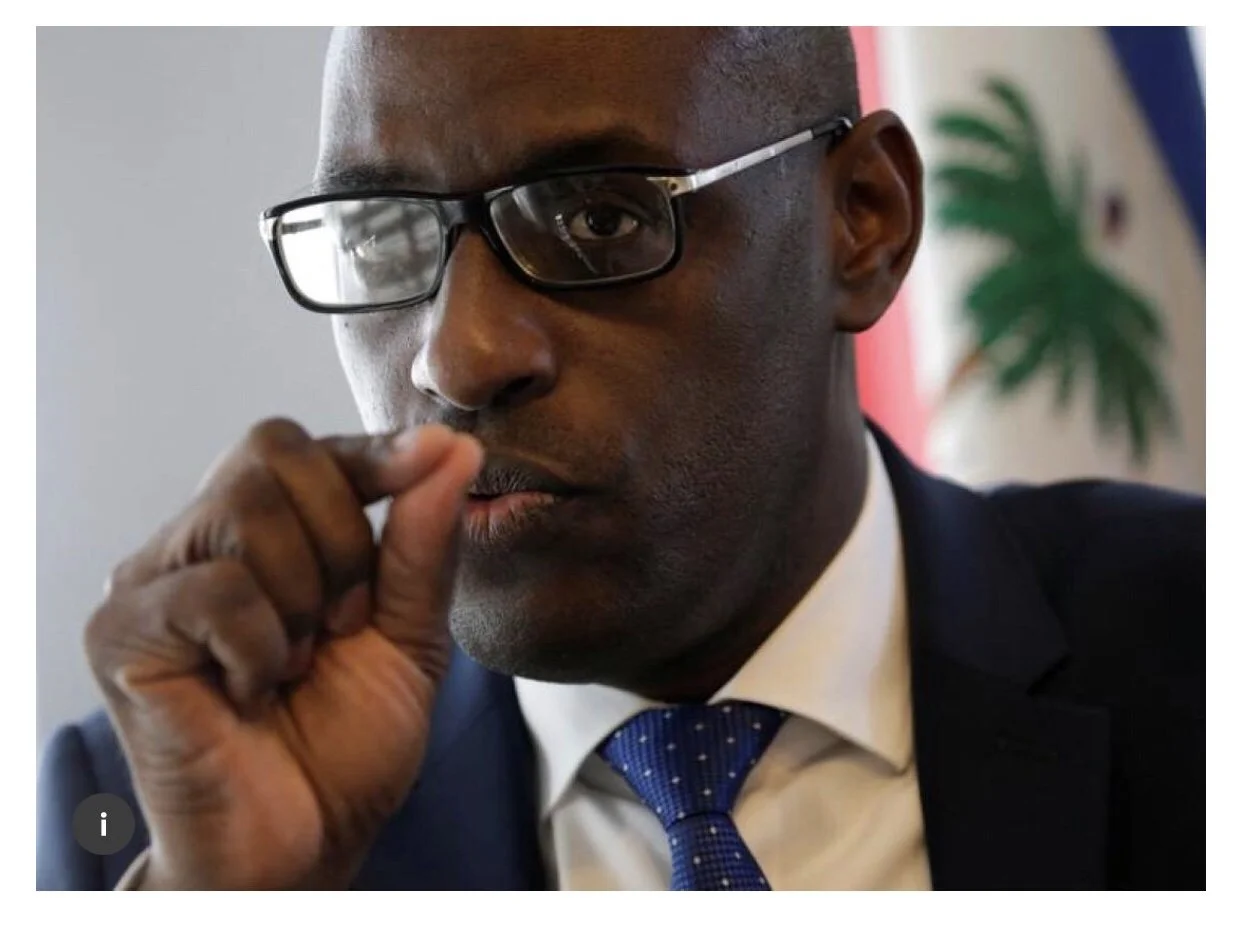
PORT-AU-PRINCE, Feb 19 (Reuters) - Oxfam hid information about sexual misconduct from authorities in Haiti, a senior official in the Caribbean nation said on Monday, and he vowed to launch a wide-reaching investigation into charities operating there.Oxfam officials met Haiti's planning and external cooperation minister, Aviol Fleurant, in Port-au-Prince on Monday to hand over a copy of a 2011 internal report which states that the British charity's former Haiti country director had admitted to using prostitutes during a relief mission following a devastating earthquake that hit the Caribbean island nation in early 2010.It was the first meeting between Oxfam, one of the world's biggest disaster relief charities, and the government in Haiti since a recent Times of London report that said some of Oxfam's staff paid for sex, triggering a scandal that has seriously damaged the charity's reputation in the UK and abroad."What hurt me at the end of the meeting is that they admitted that Haitian authorities had, at no time, been informed by Oxfam about the commission of such crimes," Fleurant told Reuters in an interview."According to the law, someone who is aware of the perpetration of a crime is obliged to alert the nearest authorities," the minister said.Prostitution is illegal in Haiti. The minister also said he was looking into reports, denied by Oxfam, that one of the women was under age.Former Judge Claudy Gassant said that under Haitian law it could be considered illegal to not report a crime to relevant authorities.After the meeting, Simon Ticehurst, Oxfam International's director general for Latin America and the Caribbean, said he apologized to Haiti's government and people for what happened, and said the organization was willing to collaborate "as much as we can" in further investigations.WIDE INVESTIGATIONOxfam earlier on Monday released the 2011 internal report documenting accusations against Roland Van Hauwermeiren, who ran the charity's operation in Haiti after the 2010 earthquake and resigned in 2011. Hauwermeiren has denied paying for sex with prostitutes or abusing minors."We have taken a lot of measures to improve our internal safeguarding measures. We have given, as best as we can, explanations as to what happened in 2011," Ticehurst said.Fleurant said the government wanted all charities operating in Haiti to reveal more about sexual misconduct by their missions in the country."An investigation has been launched into the functioning of all non-governmental organizations, regarding sexual crimes and abuses," he said, without giving more details.Last week, Haitian President Jovenel Moise said sexual misconduct by staff of Oxfam was only the tip of an "iceberg" and called for investigations into Doctors Without Borders and other aid organizations which came to the country after the earthquake.On Monday, Doctors Without Borders said it was unclear from Moise's remarks what specific cases he was referring to, and said it was seeking to gain a better understanding of the Haitian's government's concerns.By Reuters | February 20, 2018