

Taiwan to loan ally Haiti $150 million amid China onslaught

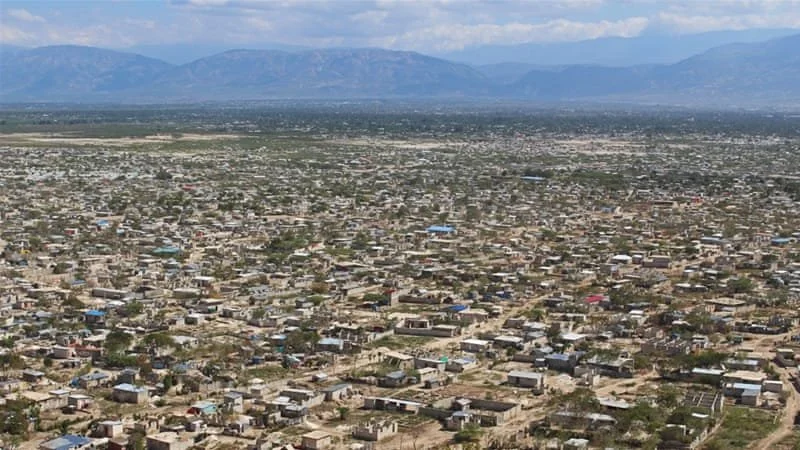
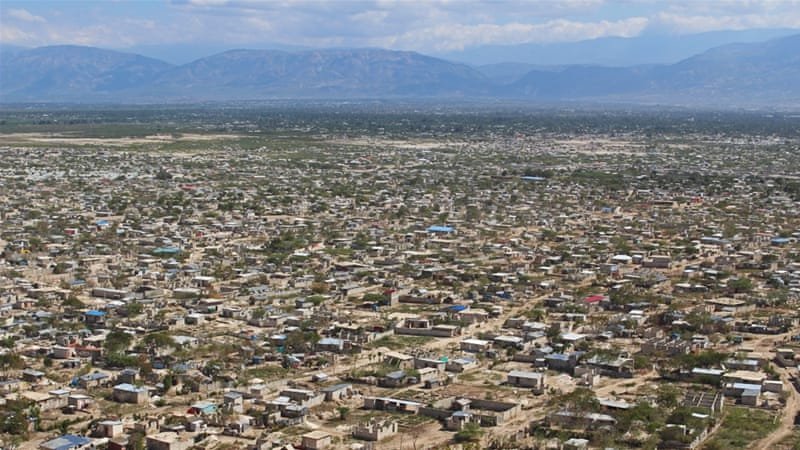
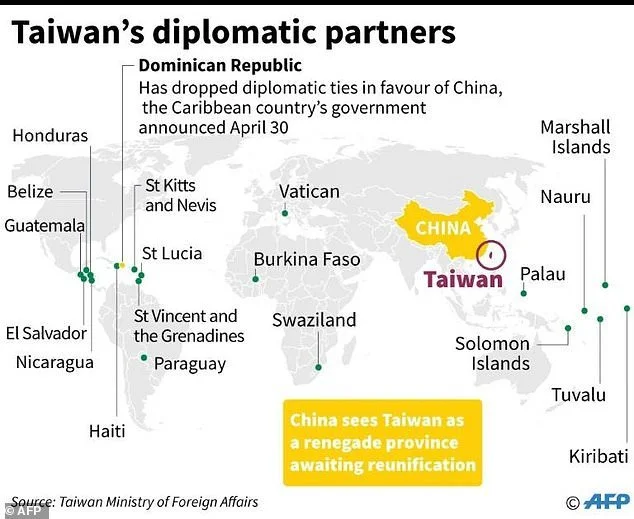
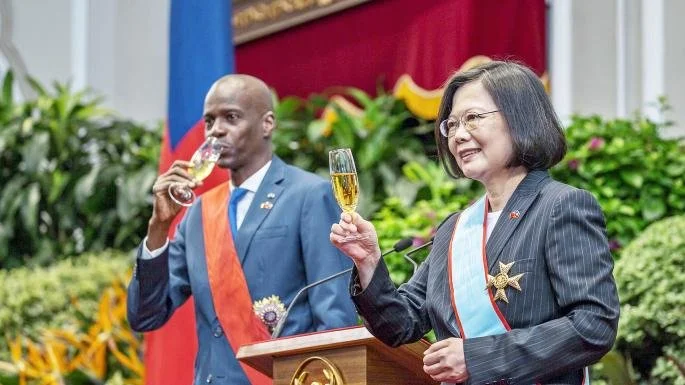
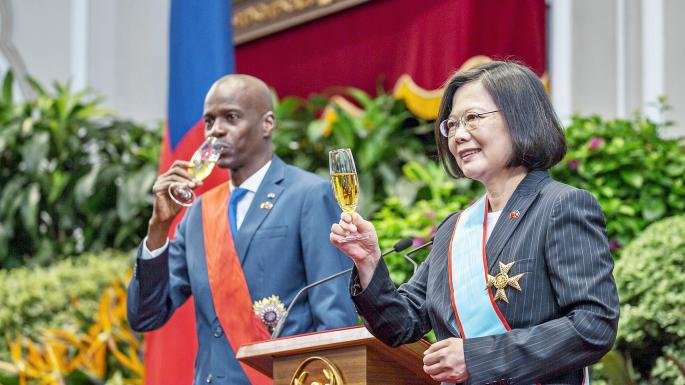
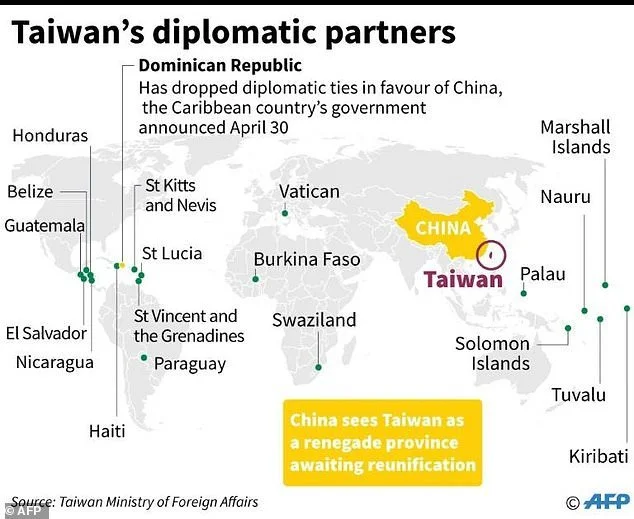
TAIPEI, Taiwan — Taiwan plans to lend ally Haiti $150 million for infrastructure development in a bid to shore up relations amid a renewed diplomatic onslaught by rival China that has stripped it of two foreign allies in the past month.

Foreign Ministry spokesman Andrew Lee said Thursday the aid was aimed at developing rural power grids in the impoverished Caribbean nation that is still recovering from a devastating 2010 earthquake.

“This provides a win-win situation to help a diplomatic ally with a major infrastructure development project and also creates overseas business opportunities for Taiwanese companies,” Lee was quoted as saying by the official Central News Agency.

Haiti is one of just 18 countries that continue to recognize self-ruling democratic Taiwan after the Dominican Republic and Burkina Faso switched ties to Beijing last month.

China claims Taiwan as its own territory and opposes any recognition of the island as an independent state.

Beijing has been steadily increasing pressure on Taiwanese President Tsai Ing-wen over the past two years following her refusal to acknowledge the “one-China principle” under which China defines Taiwan as a Chinese province. The sides split amid civil war in 1949 and China threatens to use force to grain control over the island.

Along with diplomatic pressure, Beijing has cut the numbers of Chinese tourists visiting Taiwan and increased naval and air force patrols around the island in recent months.

Tsai’s administration has remained defiant however, and has received support from Washington in the form of defense assistance and the planned opening this month of a new de-facto U.S. embassy in the capital Taipei.

By: The Asscoiated Press | June 1, 2018

Read More
Sports Sports

Argentina Beats Haiti in Friendly as Lionel Messi Registers Hat Trick

Lionel Messi is ready for the World Cup.Argentina's leading man notched a hat trick Tuesday in a 4-0 victory over Haiti in an international friendly. It was just the show the fans were looking for at La Bombonera in Buenos Aires, considering it was their final home game before the soccer world's attention turns to Russia.Haiti never truly challenged Argentina on the other side and didn't have the firepower to keep pace with the all-time great.Messi Rounding into World Cup FormLook out World Cup, here comes No. 10.The box score says he scored three goals and assisted on Sergio Aguero's, but his impact goes far beyond the raw numbers. Argentina looked lost in its last game—a 6-1 loss to Spain—when Messi wasn't out there, but Tuesday was a much different story with one of history's greatest players creating in the open field, directing through balls—none more impressive than the one to Aguero—and darting past defenders.[embed]https://twitter.com/beINSPORTSUSA/status/1001622532506640384[/embed][embed]https://twitter.com/beINSPORTSUSA/status/1001624996853178368[/embed][embed]https://twitter.com/beINSPORTSUSA/status/1001625676535885824[/embed]The attention he draws just by being involved in a play opens up space for his teammates, and he sent a message to future opponents rather than rest ahead of the World Cup.Giovani Lo Celso took advantage of that space, and the combination of the two playmakers was a problem for Haiti's back line and gives Argentina fans hope there is more magic to come with soccer's biggest tournament on the horizon.Messi's first goal came on a penalty kick after Celso drew a foul inside the box, and the second came off a rebound of Celso's header from point-blank range.Seeing how Messi is 30 years old, this could be his last great opportunity to lift the World Cup trophy as the focal point of Argentina's attack, which is the one significant hole on his otherwise illustrious resume. While Messi will face much stiffer competition in Russia than he did Tuesday, he was clearly the best player on the field and is rounding into form before June.That figures to be a problem for the rest of the world. Argentina Beginning to Look Like One of the World Cup FavoritesThere were two different classes of teams on the field Tuesday, as Argentina controlled the pace, created a number of golden opportunities beyond the four goals and kept Haiti away from goalkeeper Willy Caballero.That was critical, as Cady Siregar of Goal.com noted starting goalkeeper Sergio Romero was out with a knee injury.It is difficult to look at the dominance and brilliance Argentina played with Tuesday and see it as anything but one of the World Cup favorites, especially given the competition it will face in Group D with Croatia, Iceland and Nigeria.According to the FIFA world rankings, Argentina is fifth, Croatia is 18th, Iceland is 22nd and Nigeria 47th. That doesn't exactly scream capable of keeping up with Messi, especially given how impressive he has been of late. Argentina Defense Doesn't Get the Test It NeedsIf there is one concern coming out of Tuesday's contest from Argentina's perspective, it is the fact the back line wasn't tested after an ugly 6-1 loss to Spain.Spain is the type of team Argentina will have to face and beat in the latter stages of the World Cup, and the defense didn't provide much reason for optimism even though it can point to Messi's absence as a reason the opponents were living on their side of the field.While Tuesday's shutout looks nice on paper, Haiti didn't bring the world-class scorers likely waiting for Argentina in Russia. In fact, Haiti managed a single shot with zero on goal compared to Argentina's 21 shots with 11 on goal, per ESPN.com.Argentina also controlled 75 percent of the possession, so it's not as if the defense was playing with its back against the wall for much of the contest.For now, the defense will have to point to the zero goals as evidence of a solid performance, but there are more difficult opponents waiting who will provide more daunting tests.What's Next?While Tuesday was Argentina's last game on home soil before its World Cup opener on June 16 against Iceland, it still has one more tune-up contest on June 9 against Israel.By: SCOTT POLACEK | BleacherReport | May 29, 2018

Read More
Featured, Politics Featured, Politics

Taiwan Welcomes Haiti President as China Chips Away at Allies

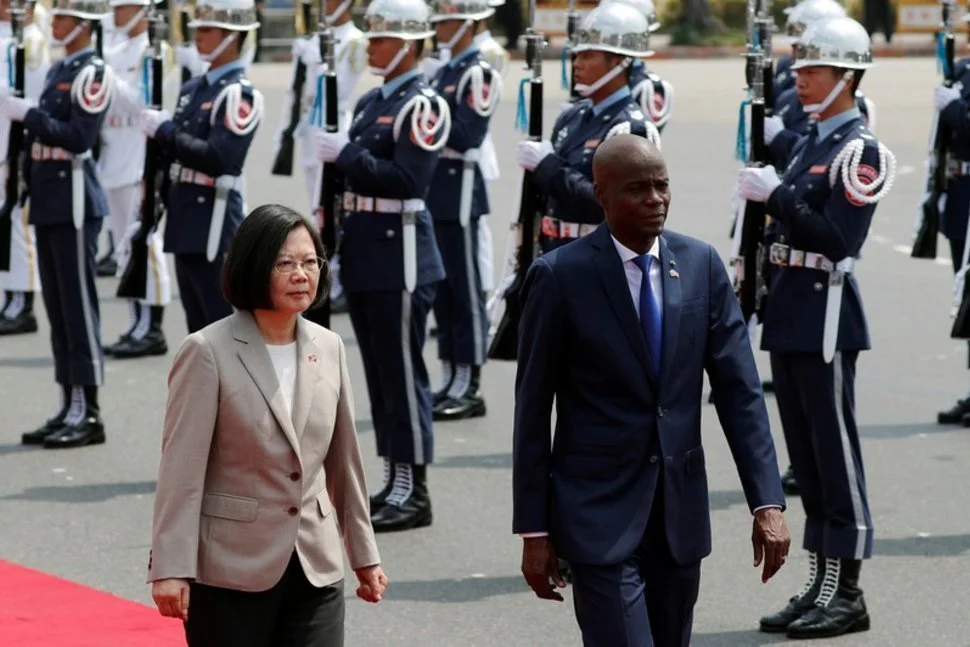
TAIPEI (Reuters) - Taiwan President Tsai Ing-wen welcomed the leader of the Caribbean nation of Haiti with a military salute on Tuesday on his first official trip to Taipei, as China ramps up the pressure to lure away Taiwan's friends.
Taiwan has lost two diplomatic allies in the past month, most recently the West African state of Burkina Faso, which re-established ties with Beijing on Saturday.
China claims Taiwan as its own and considers the democratic island to be a wayward province, with no right to state-to-state relations.
Taiwan is China's most sensitive territorial issue and a potential military flashpoint.
Haiti President Jovenel Moise, along with a 30-member delegation, is visiting amid concern that his country could be among the next to jump ship and establish ties with China.
Earlier in May, the Dominican Republic, which shares the island of Hispaniola with Haiti, severed ties with Taiwan by formally recognizing China.
"We appreciate Haiti's long-term support of Taiwan and our international participation in many areas," Tsai said at a welcoming ceremony outside the presidential office.
"We look forward to both sides continuing and deepening the mutual help and cooperative partnership, as the two countries' friendship remains secure forever," she said.
"Even though Taiwan and Haiti are separated by large geographic distance, both share democratic and freedom values," Tsai said. "In many areas, both sides have seen the results of the long-term and deep partnership."
Taiwan and Haiti have been allies since 1956.
China has launched a campaign over the last two years to lure away Taiwan's remaining diplomatic allies, as it seeks to pressure Tsai, who it fears wants to push for the island's formal independence.
Tsai says she wants to maintain the status quo but will not be bullied by China and will defend Taiwan and its democracy.
Moise said his country was grateful for Taiwan's willingness to help with its development, and that it was looking forward to relations expanding into a new phase.
Haiti is looking to promote employment and economic growth, with a focus on strengthening private investment, agriculture modernization, as well as infrastructure, he said.
"All these plans are currently facing very difficult challenges," Moise said. "We are looking forward to a mutual win."
Taiwan has official relations with just 18 countries, many of them poor nations in Central America and the Pacific such as Belize and Nauru.
Taiwan had accused China of enticing countries into its orbit with generous aid offers.
Speaking to reporters in Beijing, Chinese Foreign Ministry spokeswoman Hua Chunying said those accusations were "totally baseless and pure slander".By: JESS MACY YU | U.S. News & World Report | May 29, 2018
Read More
News, People News, People

Queen Letizia Ends Co-Operation Trip To Haiti

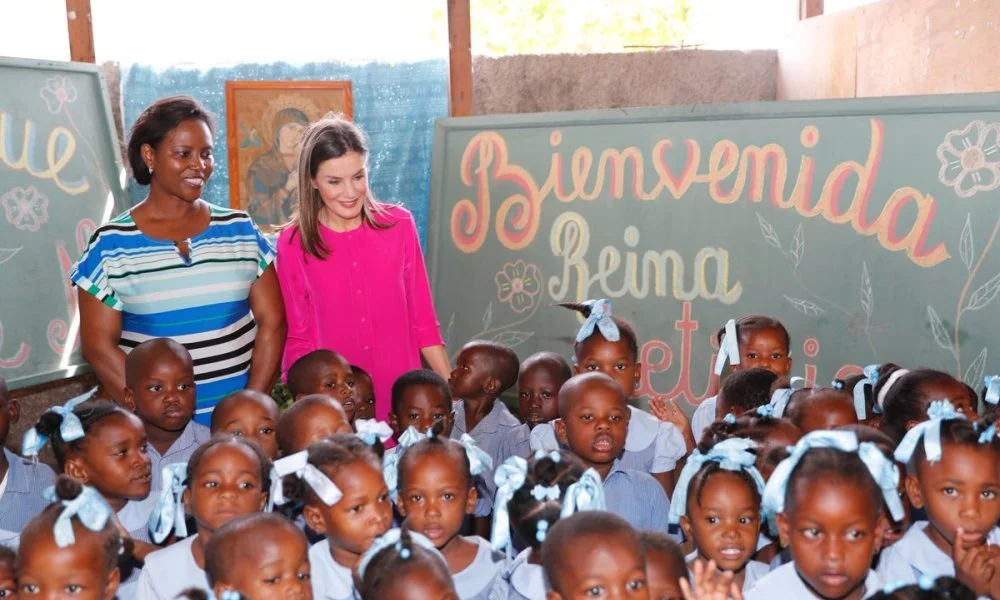
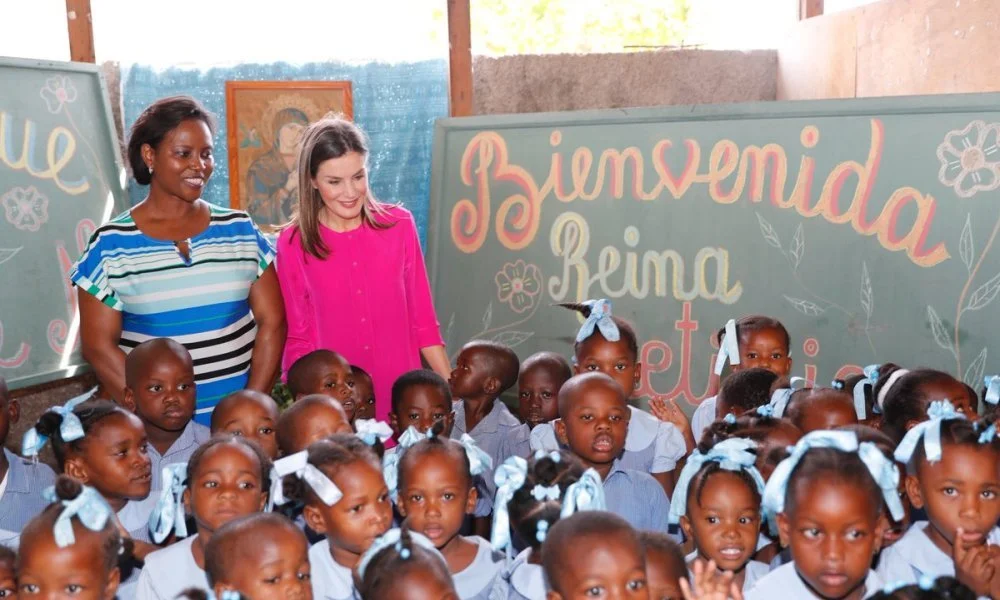
On 23 May, Queen Letizia spent her last day in Haiti, ending a three-day co-operation trip to the Dominican Republic and Haiti.

© Casa de SM el Rey

She first travelled to the Cité Soleil neighbourhood where she visited the Educational Centre of the Sisters of St. Vincent de Paul, in which Spanish Co-operation is financing several projects and, in particular, one on the sanitation of the complex.

© Casa de SM el Rey

Afterwards, Queen Letizia was received by the President and the First Lady of Haiti to have an official lunch at the Presidential Palace. The First Lady and the Queen then visited the National Museum of the Haitian Pantheon where the Queen of Spain held a meeting with a group of prominent Haitian women, to learn about the situation of women in that country.

© Casa de SM el Rey

At the Liceo Alexandre Petion, Queen Letizia attended a meeting with students and Spanish teachers, who will perform various performances before the Spanish delegation. This was the last event of the trip as the Queen then departed from Port-Au-Prince to travel back to Madrid.

© Casa de SM el Rey

Haiti is considered as Country of Association by the Spanish Co-operation. The Spanish Co-operation in Haiti focuses mostly on water, sanitation, and education. In addition to these, other essential intervention sectors have been established that have a large volume of funds: Economic Growth for the reduction of poverty, Rural Development and Fight against hunger, Environment, Democratic Governance and Culture, and Development. The Spanish Co-operation has concentrated its interventions in the capital, Port-au-Prince, and in the southeast of the country, especially in the city of Jacmel. During her co-operation trip, Queen Letizia had the opportunity to learn about all of the Spanish Co-operation’s work in both the Dominican Republic and Haiti.This was Queen Letizia’s third co-operation trip since becoming Queen in June 2014. Before that, Queen Sofía was the one taking part in those cooperation trip.By: Heaven Leemiller for Royalcentral.co.uk | May 24, 2018

Read More
News, Places News, Places

In Miami's Little Haiti, one of the largest waves of evictions is currently underway

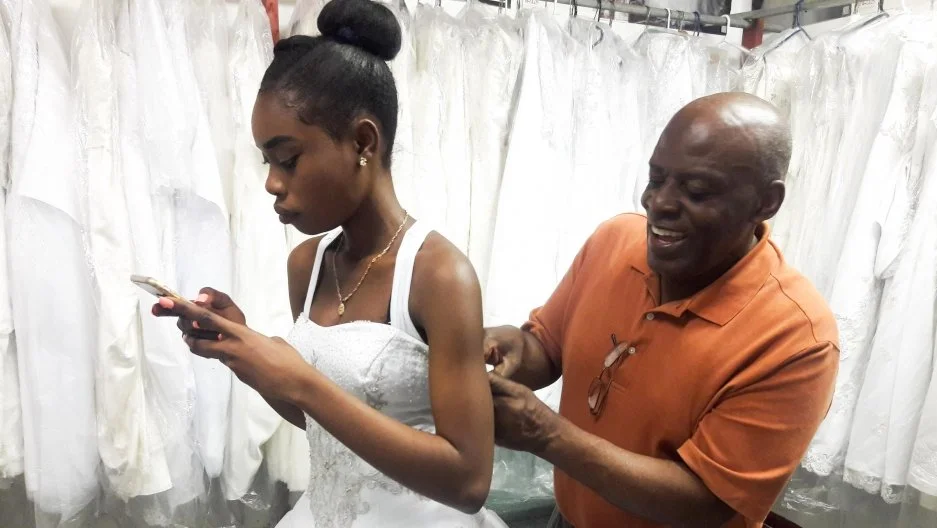
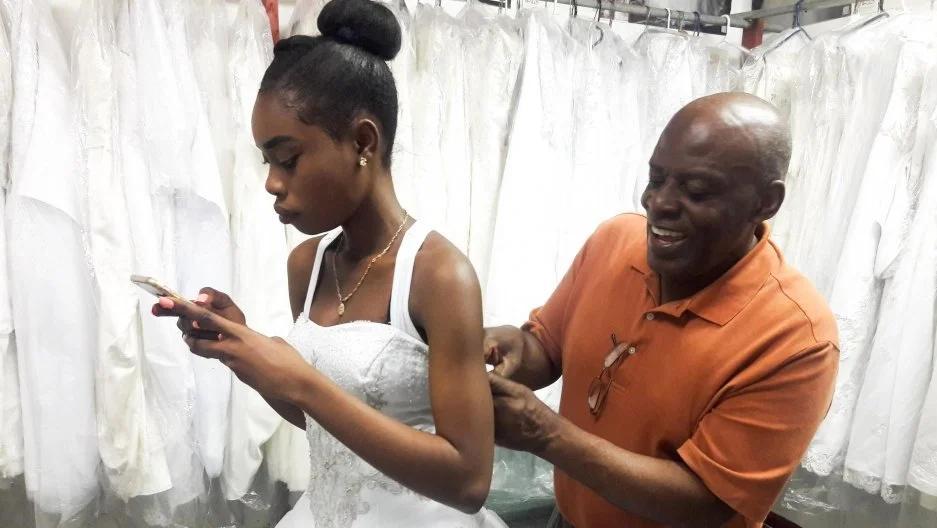
Rollin Virgile adjusts a dress for a young woman who drove from Key West to visit his store. Photo Credit: Nadege Green
Rollin Virgile walks through his store amid dozens of weddings dresses, white floral crowns, men’s tuxedo vests and baptism gowns. He greets customers in Creole: "Bonswa, koman nou ye?" (Good afternoon, how are you all?) Virgile has been in the same location, at Northeast 82nd street and Second Avenue — the heart of Miami's Little Haiti neighborhood — for 32 years. His store, Virgile's Tuxedo & Formal Wear, is a go-to for Miami's Haitian community, where customers can rent a tuxedo, robe bridesmaids or find first communion accoutrements.

But now the store must move. The commercial building and another across the street were recently sold to developer Thomas Conway, who also owns a nearby food hall and a co-working space. Conway has asked most of the businesses, nearly a dozen, to move so that he can transform the two strip malls. The business owners said Conway has given them about 30 days to leave.On a recent afternoon, Virgile shared the news with customer Daniella Eugene, who drove up from Key West to show here.“There’s a new owner,” he said. “And they want us out. It’s a shock to us all.”Little Haiti, a once predominantly Haitian enclave, has seen a burst of new development and interest from real estate investors and developers because of its central location in Miami. New projects are underway in the neighborhood, rent prices are soaring and Haitian business owners, such as those in the two buildings Conway plans to rehab, said that they are being pushed out. Some residents also believe that the threat of climate change is a factor as well.Conway did not respond to several requests for comment.Many of the businesses were operating with month-to-month leases and, in Florida, a landlord is allowed to give a 15-day notice to terminate a lease.

Pierre-Richard Maximilien, who runs a travel agency in one of the complexes, said he wrote Conway a rent check, only to have it returned a few days later with no explanation. Then he got court papers saying he was facing eviction for not paying rent. “He’s just killing the Haitian businesses and what we’re doing for the community because we’re serving the community,” said Maximilien, who has been renting his space for nine years.Maximilien said he asked Conway about returning after the mall rehab is complete and was told his rent would increase significantly. "I said, 'How much higher?' He couldn't tell me exactly."Jorge Isaac, an attorney representing Conway, said his client denies claims that he did not accept rent payments from the tenants.Several other business owners at the complex raised the same issue at a press conference in April, where they denounced one of the largest evictions of Haitian-owned businesses in Little Haiti.One of the signs in Creole read: "We want to pay. Thomas Conway doesn't want to collect."“To me, this is gentrification at its worst right now,” said Cartine Vilson, a community organizer with Family Action Network Movement, a nonprofit that works with Haitian businesses and homeowners in the area.Vilson said Miami must decide how to save small businesses from commercial gentrification to preserve neighborhood identity and the financial livelihood of business owners who invested in communities before they became trendy. “Do we count or do we not count?” she asked at the press conference. “We count and we need to be heard. We matter.”A few blocks south, a Little Haiti thrift store also called a press conference when it shuttered its doors late last year. Schiller Sanon owned the Little Haiti Thrift and Gift Store at Northeast 59th Street and Second Avenue for six years. He blamed a lack of foot traffic in the area coupled with ballooning rent costs for bringing down his business. “We wanted to be part of the well-being of the Haitian community, and it didn’t happen," Sanon-Jules said.At the strip mall on 82nd street that was recently purchased, Jean Luca is sweeping in front of the storefronts. He does odd jobs for several of the Haitian businesses. Sometimes he gets picked up as a dishwasher in one of the restaurants. He said he knows in a month or two the Haitian businesses he relies on to eke out a day-to-day living will be gone. “I don’t think the new businesses will hire me,” he said. “A person like me won’t get any work here anymore.”Some of the business owners said that they are struggling to find new commercial space to relocate.Marie-Janine Desir owns a variety store that sells clothes, lotion, pots and produce. "I can't find anything in this area," said Desir, who lives in Little Haiti and doesn't have a car. She said that she walks to work; at lunch she leaves to check on her disabled daughter, who is in the care of an in-home nurse. She said if she doesn't find a place to rent she'll have to put her inventory in storage. "That will kill my business," she said. "I won't be making any money. How am I supposed to live?"Virgile, the tuxedo and formal wear store owner, said it is heartbreaking to leave Little Haiti, the only place he has worked for 32 years. The most affordable space he could find was in North Miami, about 15 minutes away. He expects to lose some of his customer base in the move, he said.“It’s a lot to deal with as a business owner, but I have to pack up and go,” said Virgile. “I won’t be in Little Haiti anymore.”This piece originally appeared on WLRN

By Nadege Green for PRI.org | May 23, 2018

Read More
News, People News, People

Military Matters: U.S. soldier from Haiti looks to give back to the country

WTOC-TV: Savannah, Beaufort, SC, News, Weather & SportsBENNING, GA (WTVM) - Those of us born in the U.S. take our freedom for granted, but what if you are not a native of America? Well, you learn to appreciate what comes your way.Case in point is a U.S. soldier from Haiti.Jean Jeudy was a radio announcer in Haiti, an occupation that rebels in that country saw as a threat.Jeudy was rescued in 1994 through the U.S. military’s Operation Uphold Democracy, and he is grateful.“When I came to the United States, I looked at myself and says if it wasn’t for the U.S. government, I should be a dead person at that time, and I say what shall I do to give back to this country?” said Jeudy. “I look at the U.S. military, and I joined the Army, and that was a noble decision I made when I joined the United States Army.”Jeudy says his role in the 12th Armored Division has allowed him to learn the teamwork and love for one another that comes with serving in the U.S. military.By: Alex Jones, Digital Content Producer for WTOC.com| May 23, 2018Copyright 2018 WTVM. All rights reserved. 

Read More

The Humble Toilet Is Bringing Health And Hope To Haiti

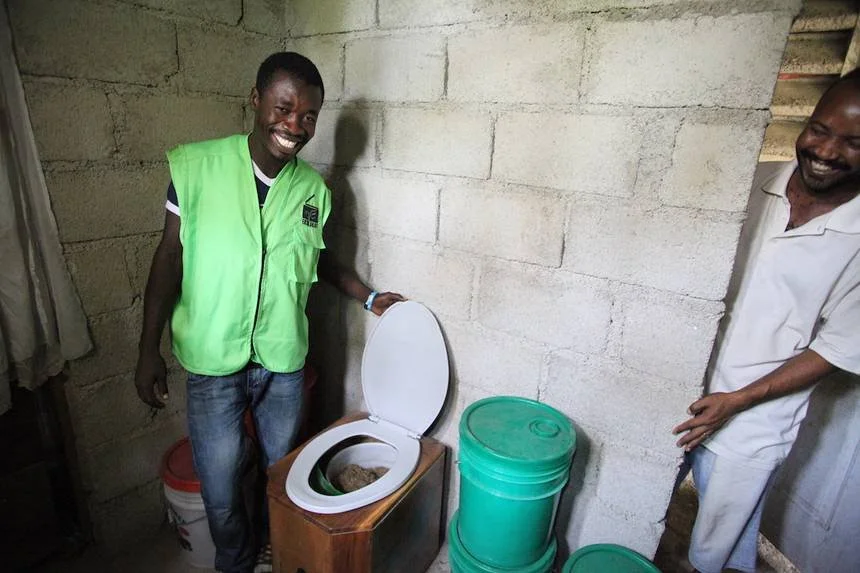
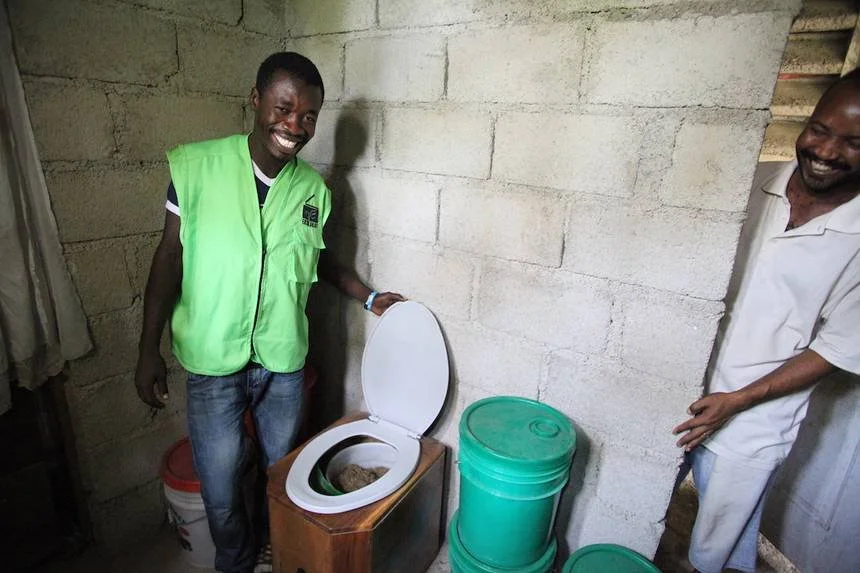
A group called SOIL installs waterless toilets in hard-to-reach, impoverished communities and then transforms the waste into compost, improving food security.Last week, TreeHugger was invited to attend the second annual Spring Prize for Social and Environmental Regeneration, hosted by Lush Cosmetics in the UK (read overview here). The amazing people behind these projects are all fighting to create a world that's more resilient, self-sustaining, and nourishing, and thanks to the Lush Spring Prize, that fight has become a little bit easier.There was a time when Haiti was known as "the Pearl of the Antilles" for its fertile, beautiful land. Sadly, that is no longer the case. While it is still beautiful, much of the island has been deforested, the soil has been degraded, and its citizens suffer from endemic poverty. It has the highest childhood diarrhea mortality rate in the world, one of the worst cholera epidemics in modern history, and does not have enough food to feed its population. Annual hurricanes and occasional earthquakes make the situation worse. To top it off, Haiti was just named the most vulnerable nation in the world to climate change.Haiti's situation is deeply complex, making it a challenge for charities and NGOs to have a lasting effect. Monetary handouts offer temporary relief, but what Haitians need and want is what every other person in the world wants -- a job, a safe and clean space in which to live, a healthy family, and a sense of dignity.Enter SOIL, an organization founded in 2006 that is managing to offer all of these benefits to Haitians with an astonishingly simple solution -- the installation of a toilet in their homes. But this isn't just any toilet: it is a dry, waterless toilet, also known as container-based sanitation (CBS), that allows for human waste to be collected hygienically in sealable, removable containers, without relying on an expensive urban sewer system.

waste collection© SOIL -- Waste is collected in sealed buckets in Cap-Haitien

Participating families pay a small monthly fee (US$3-4) in exchange for toilet installation, maintenance, and weekly waste pickups. The waste is diverted into a bucket and the family adds a carbon cover layer made from sugarcane bagasse and crushed peanut shells to keep flies at bay and odors down. Once a week, SOIL's employees drive three-wheeled motorcycles along the narrow mountain roads to collect the waste buckets and deliver them to a central depot, where they're trucked out to the countryside for composting.The composting process takes nine months, during which all pathogens are killed and the final result is rich organic soil that is bagged and sold to gardeners, farmers, larger companies growing plantains, beans, and mangoes, and groups doing targeted reforestation across the island. Various studies have found it to be a powerful natural fertilizer, boosting crop yields by as much as 400 percent in the case of green peppers.

SOIL compost© SOIL (used with permission) -- Compost produced at the end of the 9-month process

Last week I spoke with Natalie Miller, SOIL's communications and development associate, and Wisner Jean Louis, director of human resources. Both were in the UK to collect a £25,000 Spring Prize award, in recognition of SOIL's work toward social and environmental regeneration.Miller, who bubbles with enthusiasm about her work and delivers facts at dizzying speed, referred to SOIL as a rare success story, in light of so many other charities' struggles to effect lasting change in Haiti. She explained that SOIL's first attempt to build public toilets failed, despite communities having identified the need and saying they would maintain them. She told me:

"Just as would happen in Minnesota, where I'm from, or New York or London, people don't want to manage a public toilet for free, especially people who live in some of the most vulnerable, resource-poor communities in the world. They don't actually have more time to do that because they're working so much harder to help their families survive."

Fortunately SOIL did not give up, but reassessed where the real need lay -- in building toilets in people's homes. Since then, it has provided sanitation services to more than 6,000 people, made over 250 metric tons of compost, and employed 92 Haitians. Currently, it composts 40 metric tons of human waste every month, and that's set to grow. Thanks to the award from Lush, SOIL will be able to expand its composting facilities and further its research and development work.

Miller and Louis© Lush Spring Prize (used with permission) -- Natalie Miller and Wisner Jean Louis at Emerson College, UK
I came away from the interview feeling amazed at the idea that something as humble as a toilet can combat cholera, create employment, boost crop yields to feed a hungry population, sequester carbon, and increase resilience to climate change by allowing the ground to retain more water during periods of drought and stay stable in times of flooding. It all makes sense, of course, that these things are interrelated, but it's such a beautifully simple solution to a problem that can appear extremely complicated.As Miller and Jean Louis told me, their work is about returning to technology that humans have used for thousands of years. "Since water and energy become so cheap and accessible, we went a little crazy with flush toilets," Miller said with a laugh. Container-based sanitation, by contrast, makes much more sense in dense urban settings like Haiti, and prove Miller's words: "Human poop is where it's at!"You can learn more about SOIL's work by visiting its website or Facebook page, or reading their bio on the Spring Prize website.By: Katherine Martinko for The TreeHugger.com | May 21, 2018

Read More
Featured, Health Featured, Health

Haiti vasectomy campaign draws over 300 per cent anticipated turnout

PORT-AU-PRINCE, Haiti – “At 55, I already have four children. I realized that I do not have enough resources to take care of more mouths in my family,” explained Lamour Denis, at a reproductive health clinic in Haiti’s capital, Port-au-Prince. “So,” he added, resolutely, “I decided to do it.”He decided to get a vasectomy.While vasectomies are a relatively common form of contraception in places like the United Kingdom and the Republic of Korea, according to 2017 data from the United Nations, the procedure is much less popular in Haiti.Because of traditional perceptions around masculinity, family planning is widely considered a woman’s responsibility. In 2012, only 0.1 per cent of women surveyed said they relied on a partner’s vasectomy as a form of contraception. Only 5 per cent relied on male condoms.

A press briefing, part of a vasectomy workshop and drive that aimed to increase theavailability of this contraceptive option in Haiti. © Moïse Alex Docteur/UNV

And many women lack access to contraception altogether. It is estimated that only 51 per cent of women in a relationship have their demand for contraception satisfied by modern, reliable methods.Improving information about – and access to – this contraceptive method is essential to empower both men and women to take control of their futures.And, as Mr. Denis’s experience shows, men are increasingly interested in exploring this option.

Increasing interest

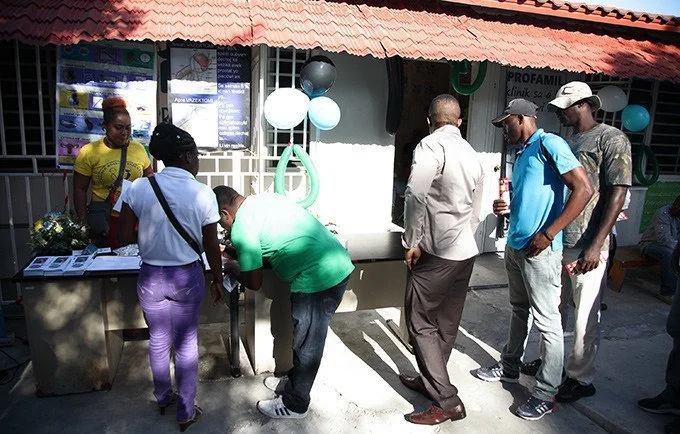
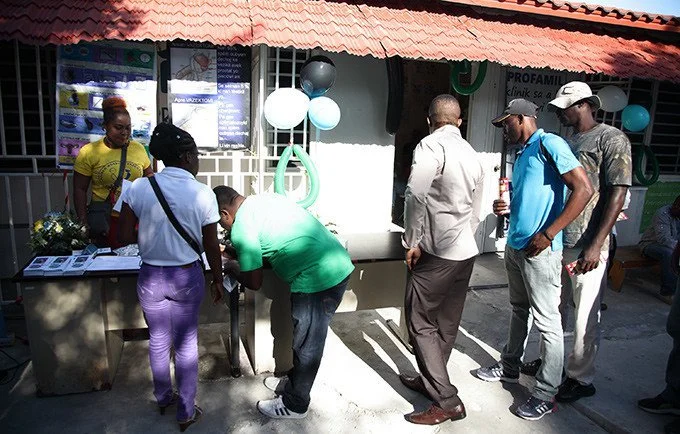
The surgery was offered as part of an outreach event for men, supported by UNFPA and conducted by a health clinic run by the Association for the Promotion of the Haitian Family, also known as Profamil.The partnership hoped to reach 25 men. Organizers were stunned when over 100 people registered.“We had three teams of vasectomy surgeons with commodities for 25 people,” recounted Dr. Gianni De Castro, the director of Profamil. “But there were more than 100 people to register, and we had 83 vasectomies, compared to only 18 last year."Dr. De Castro credits improved awareness in the community for the turnout.Television and radio spots for the event drew attention with humour, announcing that the vasectomy procedure takes less time than a traffic jam at Canapé Vert, a suburb east of Port-au-Prince.And there is truth in this advertising: "Fifteen minutes were enough for each of the interventions, which were conducted without scalpel and by two of the leading specialists in this practice," the head of Profamil added. Two international doctors and three local doctors performed the procedures.

Choosing together

Many of the men who signed on for the procedure arrived at this choice with their partners.Mr. Denis, married for 20 years, spoke to his wife, Marlène Louis, about the surgery. They decided together that it was a sensible option for their family.Ms. Louis accompanied her husband to the event. While there, she reflected on the importance of access to family planning for all Haitians."It would be so much better if everyone on their own made arrangements to plan their lives in relation to the number of children they wanted to have," she said.UNFPA works in Haiti, and around the world, to increase the availability and variety of contraceptives, so individuals and couples can choose the methods that work best for them.By: UNFPA | May 15, 2018  

Read More
Featured, Places Featured, Places

This Ungoverned Haitian City Is Fighting to Stay Alive

A short drive north from Haiti’s overcrowded capital of Port-au-Prince, a metropolis is rising from a previously desolate landscape. Some 250,000 people have flocked to Canaan in the eight years since an earthquake ravaged Haiti, destroying 100,000 homes. Born out of a disaster, it’s a city without a government, and for many, it’s an experiment in self-determination. But its future is increasingly uncertain.A man works to level a plot of land in order to begin building a home in the Canaan settlement. Image by Allison Shelley. Haiti, 2018.

A man works to level a plot of land in order to begin building a home in the Canaansettlement. Image by Allison Shelley. Haiti, 2018.

Absent any authority, Canaan’s residents must settle disputes on their own. They form committees and negotiate with NGOs to solicit water wells, public plazas and schools. They’ve built houses, shops and small businesses from scratch. Without formal jobs, they work as part-time masons, motorcycle taxi drivers, midwives, handymen and street vendors. In one neighborhood, they’ve set aside space for a cemetery—indicating plans to reside here the rest of their lives, and then some.Elias Jean Oriel (left) and Regala Laisse Moi turn sand and cement into cinderblocks in the Canaan 2 section of Canaan, Haiti. "There are four types of block for different building needs," says Oriel, who is making wall block, known as "type 15," which sells for 25 gourds each (about 50 cents). This particular batch will go to expand Oriel's own house nearby, which he's been building for the past four years. Image by Allison Shelley. Haiti, 2018.

Elias Jean Oriel (left) and Regala Laisse Moi turn sand and cement intocinderblocks in the Canaan 2 section of Canaan, Haiti. "There are four types ofblock for different building needs," says Oriel, who is making wall block, known as"type 15," which sells for 25 gourds each (about 50 cents). This particular batchwill go to expand Oriel's own house nearby, which he's been building for the pastfour years. Image by Allison Shelley. Haiti, 2018.

But without roads, transporting goods across the city is a long, expensive trek. The American Red Cross and its partners are preparing to build 2.5 kilometers of paved road that will connect Canaan to the national highway at its perimeter, but Haiti’s government isn’t funding it. In fact, Haiti’s government hasn’t even identified and paid the owner of the land on which the city stands, meaning its appropriation may be legally void. The hundreds of thousands of people living there could someday be evicted.Residents of the former Mozayik tent camp protest at an event attended by Haitian President Michel Martelly commemorating the five-year anniversary of the 2010 earthquake, at the St. Christophe memorial, in Canaan, Haiti. The group of 126 families has been evicted from a tent camp and now from land they bought title to in Canaan. Their signs ask the president to arrest the men who sold them the questionable title. Image by Allison Shelley. Haiti, 2018.

Residents of the former Mozayik tent camp protest at an event attended by HaitianPresident Michel Martelly commemorating the five-year anniversary of the 2010earthquake, at the St. Christophe memorial, in Canaan, Haiti. The group of 126families has been evicted from a tent camp and now from land they bought title toin Canaan. Their signs ask the president to arrest the men who sold them thequestionable title. Image by Allison Shelley. Haiti, 2018.

After the earthquake, then–President René Préval declared the land public, setting the exodus into motion. Since then, Haiti’s national leaders have allowed the city to exist, but otherwise ignored it. Meanwhile, the three local municipalities over which the city now spans have been fighting with one another for control, while the residents of Canaan form tenuous committees in an attempt to bring order to their communities.

The failure of Haiti’s federal government to recognize Canaan as an independent municipality and dish out land titles is at the heart of the uncertainty over Canaan’s future.“If the state cannot give you the land, it will be very difficult for a bank to finance a house on that land, because the bank cannot recuperate the land,” says Leslie Voltaire, an urban planner who consults for Haiti’s post-earthquake housing and reconstruction agency. “The problem is security of tenure. To know that If I build on this land, nobody will come and put me out. We need a guarantee that no one will take it from you.”
First grade teacher Andre Lydie works with her students on a lesson in the main sanctuary of the Church of the Nazarene, which doubles as an elementary school and is split into four classrooms during the week, in the Onaville section of Canaan. The church/school was founded by Pastor Marc Loumette in 2010. Seventy percent of the students are unable to pay their full school fees, but Loumette says he wouldn’t dream of kicking them out of school, though he has been unable to pay the teachers their salaries in four months. Image by Allison Shelley. Haiti, 2018.
First grade teacher Andre Lydie works with her students on a lesson in the mainsanctuary of the Church of the Nazarene, which doubles as an elementary school andis split into four classrooms during the week, in the Onaville section of Canaan.The church/school was founded by Pastor Marc Loumette in 2010. Seventy percent ofthe students are unable to pay their full school fees, but Loumette says hewouldn’t dream of kicking them out of school, though he has been unable to pay theteachers their salaries in four months. Image by Allison Shelley. Haiti, 2018.

And yet, without that guarantee, life in Canaan goes on. Built from scratch by people in poorly governed, disaster-stricken Haiti, the city is emerging as an alternative model of urban existence—and its struggle is holding out lessons for similar future pockets that spring up in the aftermath of disasters. The UN estimates there are 65 million displaced persons in the world today, more than at any time since World War II. Most live in camps where their lives are tightly restricted by host governments. They are barred from owning land or holding jobs, destined to remain dependent on foreign aid.Mona Augustin stands on land near the Village Grace de Dieu in Canaan, Haiti, with some of the 126 families who have been together since they met in a tent camp called Mozayik after the 2010 quake. After being evicted from Mozayik in 2012, they bought title to this property. The group was later forced to move from the land by armed men who claim their own title to that land. Image by Allison Shelley. Haiti, 2018.

Mona Augustin stands on land near the Village Grace de Dieu in Canaan, Haiti, withsome of the 126 families who have been together since they met in a tent campcalled Mozayik after the 2010 quake. After being evicted from Mozayik in 2012, theybought title to this property. The group was later forced to move from the land byarmed men who claim their own title to that land.Image by Allison Shelley. Haiti, 2018.

Canaan is the opposite. Instead of being micro-managed, it has no formal government at all. The pioneers of Canaan formed hundreds of committees that each work on a particular task or oversee the development of a particular neighborhood. These informal power structures give street names to the dirt alleyways, and set aside space for future hospitals and schools.Residents involved with the community group Organisation pour le Developpement de Canaan (OPCD) raise the first of three light poles they have constructed by hand in the Canaan I section of Canaan. “The government has no interest here because there is nothing in it for them,” says Cherestal Dulia, a secretary general of the group. The group pools money to buy materials and meets on Sundays to cast three bags of cement and four pieces of 3/8” rebar into a single pole. In the past six months they have raised 15 of the 51 they estimate they need to reach the main road. “Next, high tension wires,” says Dulia. Image by Allison Shelley. Haiti, 2018.

Residents involved with the community group Organisation pour le Developpement deCanaan (OPCD) raise the first of three light poles they have constructed by hand inthe Canaan I section of Canaan. “The government has no interest here because thereis nothing in it for them,” says Cherestal Dulia, a secretary general of the group.The group pools money to buy materials and meets on Sundays to cast three bags ofcement and four pieces of 3/8” rebar into a single pole. In the past six monthsthey have raised 15 of the 51 they estimate they need to reach the main road.“Next, high tension wires,” says Dulia. Image by Allison Shelley. Haiti, 2018.

But Canaan’s lack of governance might be its undoing. Residents yearn to register their homes and businesses, to pay taxes to earn recognition from the state. In turn, they demand services that only a government can provide: courts, electricity, security. Until those arrive, thousands of people will continue migrating to a city without a core.Eddy Bien Aime repairs a pair of sandals at his business on the main road to the Canaan II section of Canaan. Most of Bien Aime’s business involves selling footwear that he has bought secondhand and refashioned. He moved to this area on Jan. 16, 2010, just days after the quake, and took over a large parcel, some of which he has since given away. “Downtown, there are killings. I have to be careful when I come back from there that people don’t rob me. Here in Canaan, it feels better,” says Bien Aime. Image by Allison Shelley. Haiti, 2018.

Eddy Bien Aime repairs a pair of sandals at his business on the main road to theCanaan II section of Canaan. Most of Bien Aime’s business involves selling footwearthat he has bought secondhand and refashioned. He moved to this area onJan. 16, 2010, just days after the quake, and took over a large parcel, some ofwhich he has since given away. “Downtown, there are killings. I have to be carefulwhen I come back from there that people don’t rob me. Here in Canaan, it feelsbetter,” says Bien Aime. Image by Allison Shelley. Haiti, 2018.
One sunny afternoon, an elderly couple wander through a small cornfield littered with car parts. When Leon Jean and her husband, Alexandre Michelet, left the countryside in 1986 in search of farmland, this flat expanse was theirs for the taking. Apart from a few neighbors, “It was just animals that walked on that land,” recalls Leon.
Destine Jean Robert, 40, adds cement to the wall of a home he is constructing for his nephew in the Canaan 1 section of Canaan. Destine, who is building his own house next door, currently lives downtown in a neighborhood called LaVille, but he hopes to move once the house is done. “If I had the money to buy all of the supplies, I could do it all in two months,” he says. “Here, we don’t put our hope in the government. We just struggle along with what we have.” Image by Allison Shelley. Haiti, 2018.
Destine Jean Robert, 40, adds cement to the wall of a home he is constructing forhis nephew in the Canaan 1 section of Canaan. Destine, who is building his ownhouse next door, currently lives downtown in a neighborhood called LaVille, but hehopes to move once the house is done. “If I had the money to buy all of thesupplies, I could do it all in two months,” he says. “Here, we don’t put our hopein the government. We just struggle along with what we have.”Image by Allison Shelley. Haiti, 2018.
Haiti’s history is unique. At the turn of the 19th century, Blacks rose up against their European slave owners to make Haiti the world’s only nation born of a successful slave rebellion. But Haiti’s leaders began taking territory for themselves and parceling it out to their cronies. Today, half of all Haitians live in poverty, surviving on less than $2.41 a day. A quarter live in extreme poverty, on less than $1.23 a day, according to the World Bank, making Haiti the 13th poorest country in the world for which data exists. It is also a deeply unequal society, studies have shown. That, coupled with the fact that Haiti is one of the most densely populated nations in the world, means disputes over land are commonplace.The earthquake of January 12, 2010, made things worse, initially displacing 1.6 million of Haiti’s 10 million people. Two years later, Haiti’s government estimated that half a million people in the Port-au-Prince area alone still had nowhere to live. Sensing opportunity in the empty space north of the capital, Haiti’s president declared it public domain. In a matter of months, Leon’s lonely farm became engulfed by a rough-and-tumble city in the making as thousands of people began migrating there, claiming pieces as their own. Canaan, named after the Biblical land of promise, was born.A boy walks past a home in the Canaan I section of the Canaan settlement, just outside of Port-au-Prince, Haiti. Image by Allison Shelley. Haiti, 2018. They came from all walks of life. Some were working-class families with hopes of building their first home. Back in Port-au-Prince, 36-year-old Raphael Philippe paid $130 a month in rent for an apartment that came crashing down in the earthquake. For three years, he and his family lived in a tent before moving to Canaan. “There are nicer places to live. But you take what God gives you, and here we are content,” says Philippe. Six days a week, he and his wife wake up at 5 a.m. to make the two-hour journey on a series of tap-taps — colorfully painted pick-up trucks that ferry commuters—to a grocery store in Port-au-Prince, where they work as cashiers. “It’s far. But it’s better to have a house that is your own.”Other early settlers included religious leaders who saw an opportunity not just to live, but to worship. “First I came to find my own land. And since I’m a pastor, I wanted a church,” says Nazerene Pastor Marc Loumette. He opened a primary school, offering scholarships to kids whose families couldn’t afford the $70-a-year tuition. He teaches his students civics and stresses the importance of a government, planning field trips to Haiti’s National Museum and palace to offer inspiration.
From left: Estimei Volmy, Simeus Salma, Louis Midelove, Pierrelien Patrick, Victor Layers and Condiac Julien look at maps provided by UNA/Habitat of developments that are slated for their community at a meeting of the Table Quartier d’Onaville community group, in a church building made of wood and vinyl posters, in the Onaville neighborhood of Canaan. Image by Allison Shelley. Haiti, 2018.
From left: Estimei Volmy, Simeus Salma, Louis Midelove, Pierrelien Patrick,Victor Layers and Condiac Julien look at maps provided by UNA/Habitat ofdevelopments that are slated for their community at a meeting of the Table Quartierd’Onaville community group, in a church building made of wood and vinyl posters, inthe Onaville neighborhood of Canaan. Image by Allison Shelley. Haiti, 2018.
When the house on Leon’s farm collapsed in the earthquake, there was no one around to help her and her husband—both elderly—repair it. “Now that there are more people, it’s better,” says Leon.But absent a police force, they’re vulnerable to theft due to their proximity to the road out of town. One night, five of their seven cows were stolen. The theft ravished her family’s income, but it didn’t rattle Leon’s faith in Canaan’s future. “The whole country has insecurities.”Besides, a city is more than its people. Canaan has parks, schools, hospitals, shops, markets, businesses, restaurants, small cinemas and bars. “It’s the best example of housing after the earthquake—the only example of a viable community for the millions of people in Haiti,” says Voltaire. “They have done a lot without the government. A lot. They are doing a pretty good job.”
A vendor stands in a neighborhood snack shop (his wife’s business) and a workshop for making speakers (his business) in Canaan’s Corail neighborhood. He makes the speakers by hand from plywood, felt and parts salvaged from broken speakers that he buys secondhand. The biggest units he sells to discos and DJs for over $600 (U.S.) apiece. Lately, business has been slow and he has decided to sell the shop so he can afford to buy the parts to finish a few more, which he plans to set up to play music onto the street to attract customers. Image by Allison Shelley. Haiti, 2018.
A vendor stands in a neighborhood snack shop (his wife’s business) and a workshopfor making speakers (his business) in Canaan’s Corail neighborhood. He makes thespeakers by hand from plywood, felt and parts salvaged from broken speakers that hebuys secondhand. The biggest units he sells to discos and DJs for over $600 (U.S.)apiece. Lately, business has been slow and he has decided to sell the shop so hecan afford to buy the parts to finish a few more, which he plans to set up to playmusic onto the street to attract customers. Image by Allison Shelley. Haiti, 2018.
But he worries that the city’s residents “are thinking small.” Without titles to the land or their homes, residents can’t easily receive loans that would allow them to grow their businesses or stock their shops. Currently there’s no authority that’s prepared to give them these documents. Voltaire says the people of Canaan deserve a government. “They’re asking for roads, they’re asking for police, they’re asking for justice, because when there’s conflict, they have to sort it by themselves. They’re asking for water, electricity,” says Voltaire. “They should be allowed to elect their own mayor and think for themselves.”For now, Voltaire says the only solution may be to let one of the neighboring municipalities vying for control over Canaan step in where Haiti’s federal government has not. So far, however, Canaan’s experience with these municipalities has been anything but pleasant. Municipal workers walk the dirt paths and alleyways of the city extorting money. Sometimes they seize construction materials like cement and iron when people refuse to pay.Federal government support remains the city’s best chance in the long run, suggests Voltaire. “If the government takes Canaan seriously—opening roads, avenues, inviting the private sector, the banks, the shops—there is hope,” says Voltaire.At the moment, that’s a big if.Saint-Louis Jean Wilner cuts the hair of a customer in his shop, where he runs a side business charging cellphones from the solar panel he uses to run his electric barbering tools, in the Onaville neighborhood of Canaan, Haiti. Image by Allison Shelley. Haiti, 2018.
Saint-Louis Jean Wilner cuts the hair of a customer in his shop, where he runs aside business charging cellphones from the solar panel he uses to run his electricbarbering tools, in the Onaville neighborhood of Canaan, Haiti.Image by Allison Shelley. Haiti, 2018.

***Critics of the international agencies, NGOs and Haitian president who sparked the mass migration to Canaan worry it may end up little better than a sprawling urban slum, a squatters’ camp for people displaced by the earthquake—which, initially, it was. Oxfam called Canaan “a manifestation of institutional weakness,” a test of whether Haiti’s government and international donors can succeed at developing “livable neighborhoods.”But Canaan’s underlying structure differs from many of the world’s other migrant cities. Take Kakuma, the refugee camp in northern Kenya that opened in 1992 to house the lost boys of Sudan. Unlike Canaan, Kakuma is run under a set of strict rules by Kenyan authorities and UN agencies that oversee it. Its 176,000 inhabitants are legally barred from building permanent homes, holding jobs or owning farmland. Kenya even forbids refugees from venturing outside the camps. As a result, Kakuma today is little different from when it first appeared 25 years ago. In some ways, it’s worse—food rations have recently been cut, and there’s nothing the refugees can do but sit and hope for the best. An entire generation of children has grown up without any agency over their own lives.In Canaan, on the other hand, residents open businesses, and they build: Each day dozens of trucks leave the sand mines in the mountains that form Canaan’s backbone, ferrying sand for concrete. Thousands of houses and other structures are now visible in Open Street Maps.

Sylphat Wilguive, 48, fabricates a set of dentures in his home in Jerusalem, just outside of Port-au-Prince. Sylphat had begun to construct a full dental clinic adjacent to his home when he was suddenly paralyzed, rendering him unable to work. The money that he had set aside over the years from the “Good Samaritan,” a clinic he once ran in the Delmas neighborhood, all went to pay for his medical treatment. He now does the work out of a room in his house, often treating needy neighbors for free. Image by Allison Shelley. Haiti, 2018.
Sylphat Wilguive, 48, fabricates a set of dentures in his home in Jerusalem, justoutside of Port-au-Prince. Sylphat had begun to construct a full dental clinicadjacent to his home when he was suddenly paralyzed, rendering him unable to work.The money that he had set aside over the years from the “Good Samaritan,” a cliniche once ran in the Delmas neighborhood, all went to pay for his medical treatment.He now does the work out of a room in his house, often treating needy neighbors forfree. Image by Allison Shelley. Haiti, 2018.
“They may not have the academic skills to plan their neighborhood, but the Haitian people have a vision,” says Clement Belizaire, who heads Haiti’s government agency that’s theoretically responsible for overseeing the planning and development of Canaan but that hasn’t been allocated the funds to do so. “They want to have public spaces, they want to have the life of a normal family. So they try to plan on a very micro level.”But if neither the central nor local governments invest in developing Canaan and it remains informal for too long, it may become impossible to turn this rapidly expanding city into a legal and fully functioning municipality, suggests Belizaire. “If you let the informal invade the area, you won’t have room for the formal. And it will be a very long process to rehabilitate and have a great Canaan,” he says.Jacob Viknel, 35, and nephew Jacob Riman, 9, pose for a photo at Viknel’s motorcycle repair shop in the Jerusalem section of Canaan, Haiti. Viknel, who has five children, came to Jerusalem in 2007 when there was almost no one else there and he sometimes feared for his safety. “But,” he says, “this is the first place that is truly mine.” Image by Allison Shelley. Haiti, 2018.
Jacob Viknel, 35, and nephew Jacob Riman, 9, pose for a photo at Viknel’smotorcycle repair shop in the Jerusalem section of Canaan, Haiti. Viknel, who hasfive children, came to Jerusalem in 2007 when there was almost no one else thereand he sometimes feared for his safety. “But,” he says, “this is the first placethat is truly mine.” Image by Allison Shelley. Haiti, 2018.

There’s more at stake than just Canaan’s own future. If the city does become viable, it may offer lessons for other poorly governed cities beyond Haiti’s borders. After all, Canaan may be the world’s newest ungoverned city, but it isn’t the first.The most populous region in Somalia remains partially ungoverned and wholly insecure: In October a truck bomb in Mogadishu killed more than 500 people in just one of many attacks attributed to the terrorist group al-Shabaab. In an article called “Better Off Stateless: Somalia Before and After Government Collapse,” Peter Leeson, a law professor at George Mason University who studies the economics of anarchy, argues Somalia’s government “did more harm to its citizens than good,” and concludes that “Somalis are better off under anarchy than they were under government.”It’s unclear whether the same might be true in Haiti, where people live neither in anarchy nor under true governance, but somewhere in between. That could pose a problem when it comes to issues that are too big for a community to solve on its own.

A resident volunteering with the community group Organisation Pour le Développement de Canaan (OPCD) calls out to local men to come help raise the first of three light poles they have constructed by hand in the Canaan I section of the Canaan settlement. The group pools money to buy materials and meets on Sundays to cast the three bags of cement and four pieces of 3/8″ rebar each one requires into poles. Since last July, they have raised 15 of the 51 they estimate they need to reach the main road. Image by Allison Shelley. Haiti, 2018.
A resident volunteering with the community group Organisation Pour le Développementde Canaan (OPCD) calls out to local men to come help raise the first of three lightpoles they have constructed by hand in the Canaan I section of the Canaansettlement. The group pools money to buy materials and meets on Sundays to cast thethree bags of cement and four pieces of 3/8″ rebar each one requires into poles.Since last July, they have raised 15 of the 51 they estimate they need to reach themain road. Image by Allison Shelley. Haiti, 2018.
A study last year by the Technical University of Munich reported that parts of Canaan are prone to flooding, a risk exacerbated by the hurricanes that hit Haiti each year. Erosion from the mountains and the sand mines that form Canaan’s northern rim threaten to send rivers of mud into the city. Born out of a disaster, some fear Canaan may one day be decimated by one.But Canaan’s unsteady land also offers some optimism. The Red Cross has begun projects to mitigate erosion and flooding, and the Technical University of Munich is studying the agricultural and forestry potential of the land to see whether plants could be grown for energy, food or medicine. Already, researchers discovered 85 species of plants growing in the private yards of Canaan residents. And the ongoing construction of the Lafiteau port just west of the city gives hope to those who believe industry will take advantage of the free trade zone there, generating jobs for people in nearby Canaan.BY: JACOB KUSHNER AND ALLISON SHELLEY | Pulitzer Center | May 15, 2018 
Read More
Sports Sports

Herivaux called up by Haiti for May 26 friendly vs. Argentina

The match in Buenos Aires represents Argentina’s final tune-up for the World Cup.

Revolution midfielder Zachary Herivaux has been called up by the Haiti National Team for its upcoming friendly match against powerhouse Argentina and its star Lionel Messi. The game in Buenos Aires is Argentina’s final one before departing for World Cup 2018 in Russia. Herivaux is available for New England’s match this weekend vs Columbus Crew SC in Foxborough, but he’ll miss the next two — at Vancouver and home vs Atlanta United.

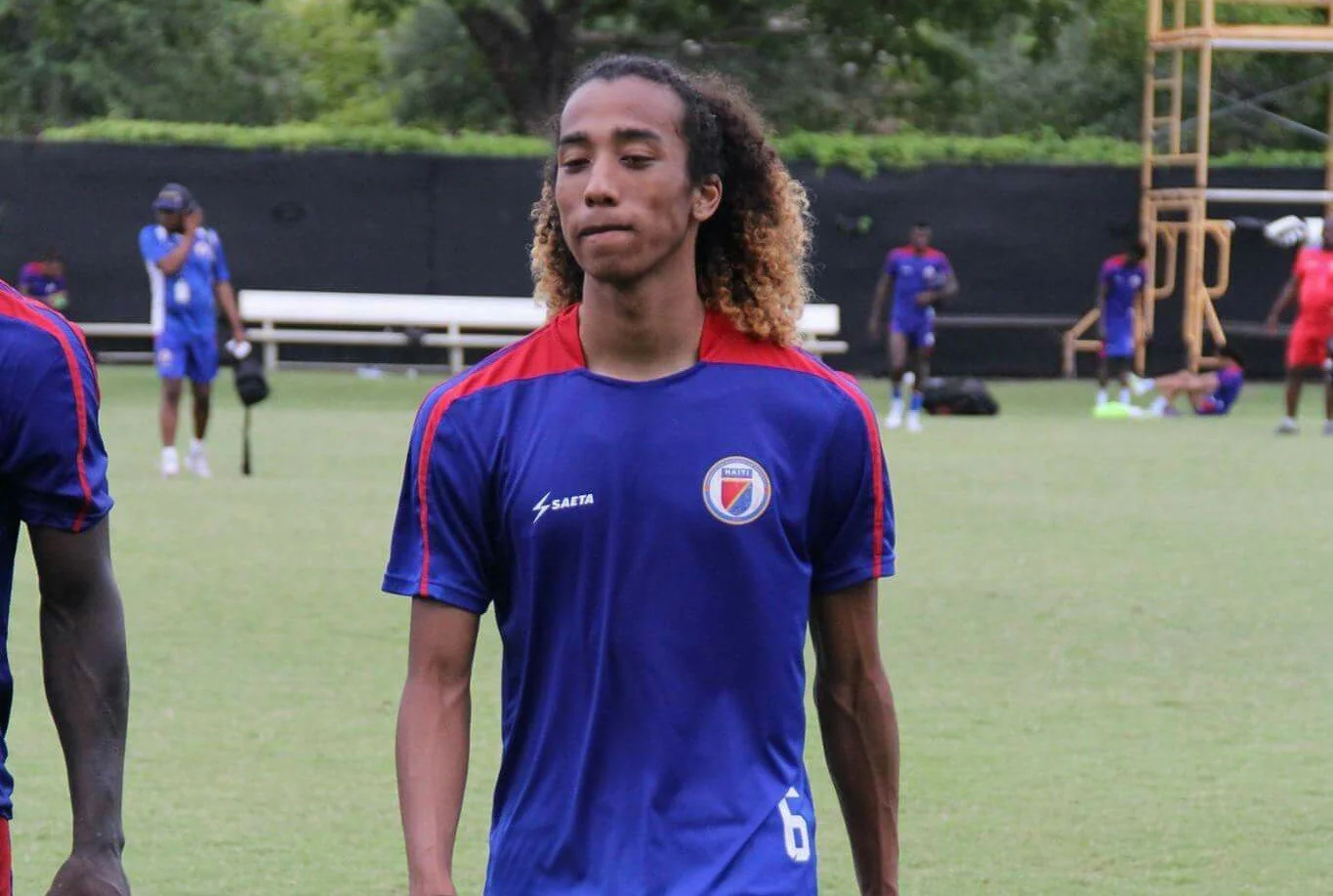
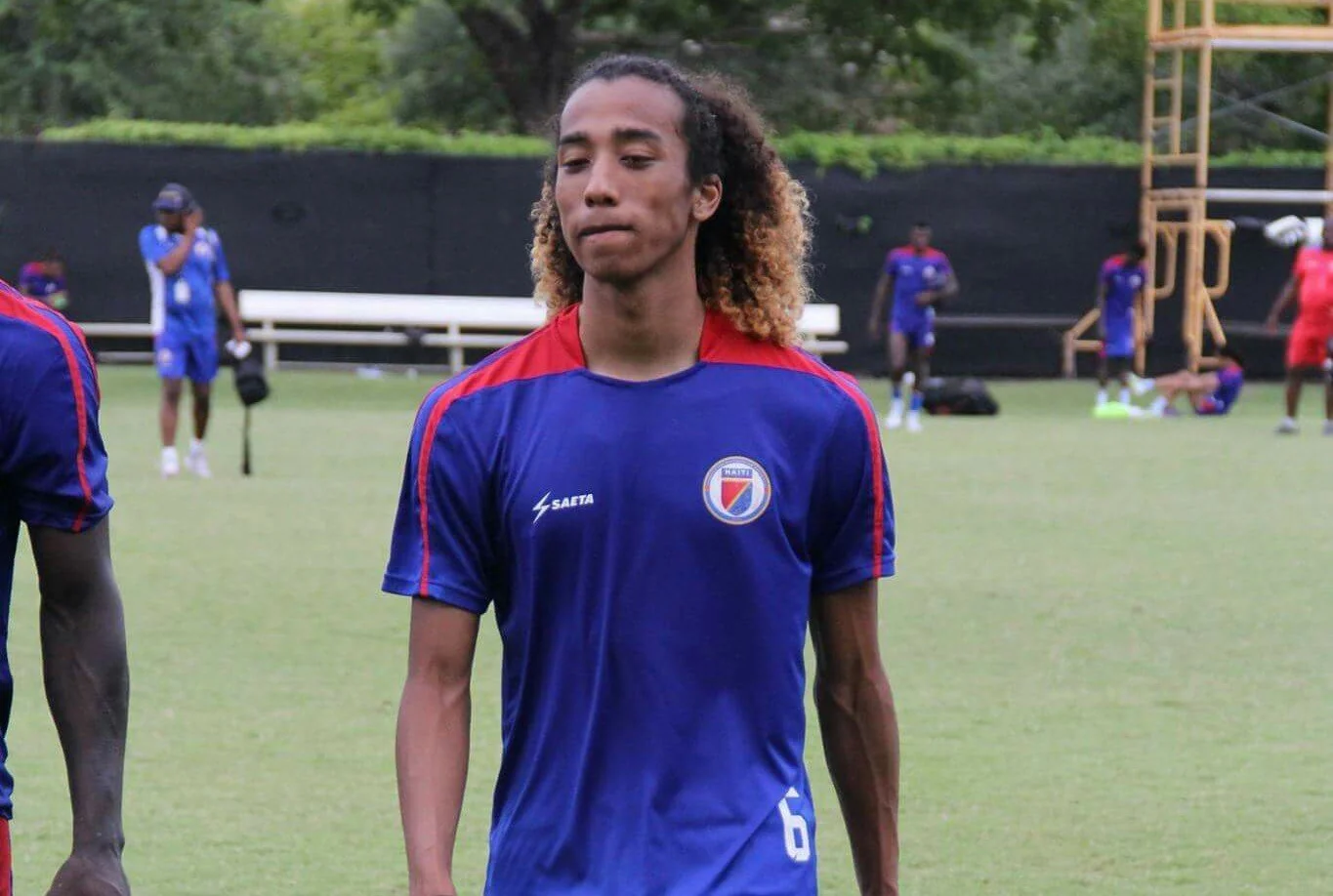
The Revs’ third-ever Homegrown Player was born in Japan, but he spent his formative years in Brookline, Mass. With a Haitian father and Japanese mother, Herivaux actually owns citizenship in three countries. He chose to represent Haiti internationally, following in the footsteps of his footballer father. He made his first appearance with the senior Haitian team in 2017, playing a full 90 minutes and notching an assist in a 3-3 draw, coincidentally, against Japan.

With Diego Fagundez unavailable vs Crew SC on Saturday, Herivaux — who made his first Revolution appearance of 2018 last weekend against Toronto FC — may be called upon to fill Fagundez’s number ten role in manager Brad Friedel’s high-pressing attack.

By: Tony Moninski | SBNation | May 18, 2018

Read More
Sports Sports

Bulls Abroad: Derrick Etienne Jr. called up for Haiti friendly vs Argentina

Etienne has gotten hot at just the right time as Les Grenadiers have come calling once again.

Derrick Etienne Jr., nicknamed The Haitian Messi, will have another opportunity to live up to that mantra later this month as he joins the Haiti national team for a friendly against Argentina.

On Wednesday, the Haiti national team released its 20-man roster for the upcoming friendly in Buenos Aires. On the list was Etienne, who will be poised to get his 6th cap for the team.

The call-up is particularly well-deserved for Etienne based on his recent form: match-sealing goals in back-to-back games against NYC FC and the Colorado Rapids. He has three goals and one assist in just 255 minutes of MLS action this season.

The timing of the match could cause him to miss the Red Bulls’ MLS home game against the Philadelphia Union on May 26th, or the road game against the New England Revolution on June 2nd.

As an international, Etienne has one goal for Les Grenadiers, which he got against Trinidad & Tobago in 2017 during 2017 CONCACAF Gold Cup qualification.

Also called up for Haiti is former New York Red Bulls II defender Andrew Jean-Baptiste.

By: MachlinT | SBNation | May 17, 2018

Read More
Culture, Featured Culture, Featured

Little Haiti Business and Cultural District Is Coming Soon To Flatbush

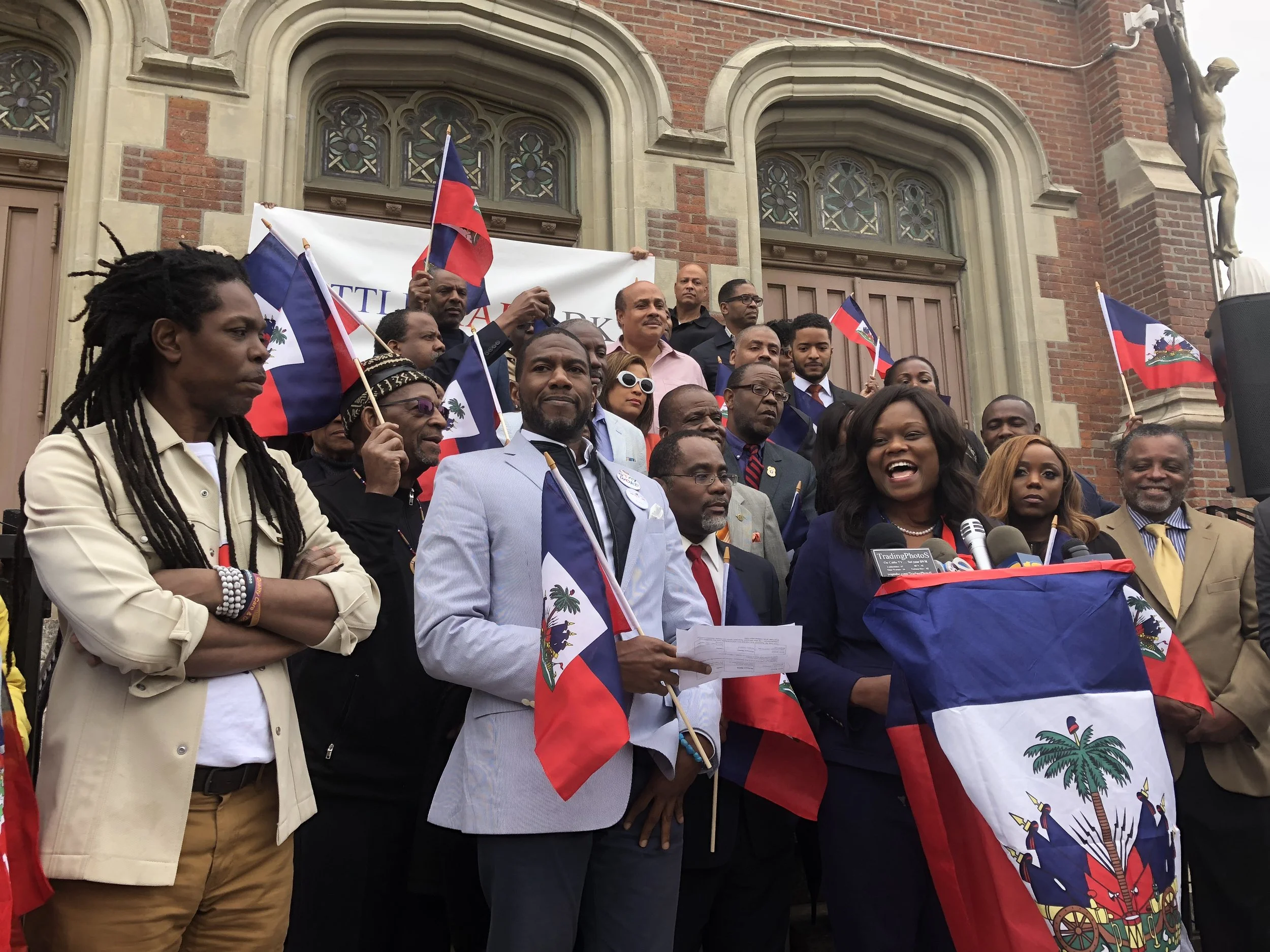
FLATBUSH – Today is Haitian Flag Day and to celebrate, elected officials gathered on the corner of Newkirk and Nostrand Avenues to announce that Little Haiti Business and Cultural district is coming soon. They also unveiled a new sign for Toussaint L’Ouverture Blvd along portions of Nostrand Avenue.The proposed Little Haiti Business and Cultural District (a legislation currently awaiting to pass the City Council) will be defined as the area roughly between Avenue H and Parkside Avenue, East 16th Street and Brooklyn Avenue.

Proposed boundaries of Little Haiti

The proposed legislation is expected to go before the City Council early this summer. It is also expected to pass. The proposed area is twice that of and overlaps with Little Caribbean district that is bordered by Nostrand, Flatbush and Empire.“Little Haiti is an idea whose time has come. Brooklyn is the Port-au-Prince of America, and it’s time for the world to know and come experience all we have to offer,” Borough President Eric Adams said. “On this year’s Haitian Flag Day, we raise our voices to make Little Haiti an official designation in the heart of Flatbush.”Flatbush has a high population of Haitians. As per 2013 statistics, Brooklyn has close to 50,000 Haitian-born residents, most clustered around Flatbush. For Assembly Member Rodneyse Bichotte, the first Haitian-American to be elected to the State Legislature from New York City, having a Little Haiti district means very much.“The Little Italy model provided a blueprint of sorts for Little Haiti,” Bichotte said. “And we believe that with this designation we will see an infusion of tourism and business activity similar to the foot traffic seen in the Lower East Side after the designation of Little Italy.”

Council Member Jumaane Williams speaking. (Photo via Bichotte’s office)

Council Member Jumaane Williams, who represents the Flatbush area and is running for Lieutenant Governor, spoke about how the Haitian culture impacts Brooklyn.“I’m proud to represent the largest group of Haitians in America, outside of Florida. Haitian culture has been and continues to be extremely impactful and beneficial in this community and in the entire city,” Williams said. “This designation is a great way for… NYC to show the world and the nation that Haitians add a cultural, educational, and economic significance to this country that cannot be ignored.”

 Assembly Member N. Nick Perry had this to say: “The establishment of the ‘Little Haiti Cultural and Business District’ is significant in that it is a very public display to the entire nation; that the vast contributions of Haitian-Americans will forever be celebrated here in Brooklyn, a place where we welcome all immigrants with open arms.”

After the press conference, a new sign for Toussaint L’Ouverture Blvd, which overlaps portions of Nostrand Avenue, was unveiled. Parts of Rogers Avenue will be co-named after the Haitian Revolutionary leader Jean-Jacques Dessalines.

Photo via Bichotte’s office.

“Few are aware that Haitians fought in the American Revolution on the side of the founding fathers,” Bichotte said. “In fact, there is a monument to the sacrifice of these Haitians in Savannah, Georgia.”By: Zainab Iqbal | Bklyner. | May 18, 2018

Read More
Sports Sports

Pierre headlines card in Haiti on Thursday

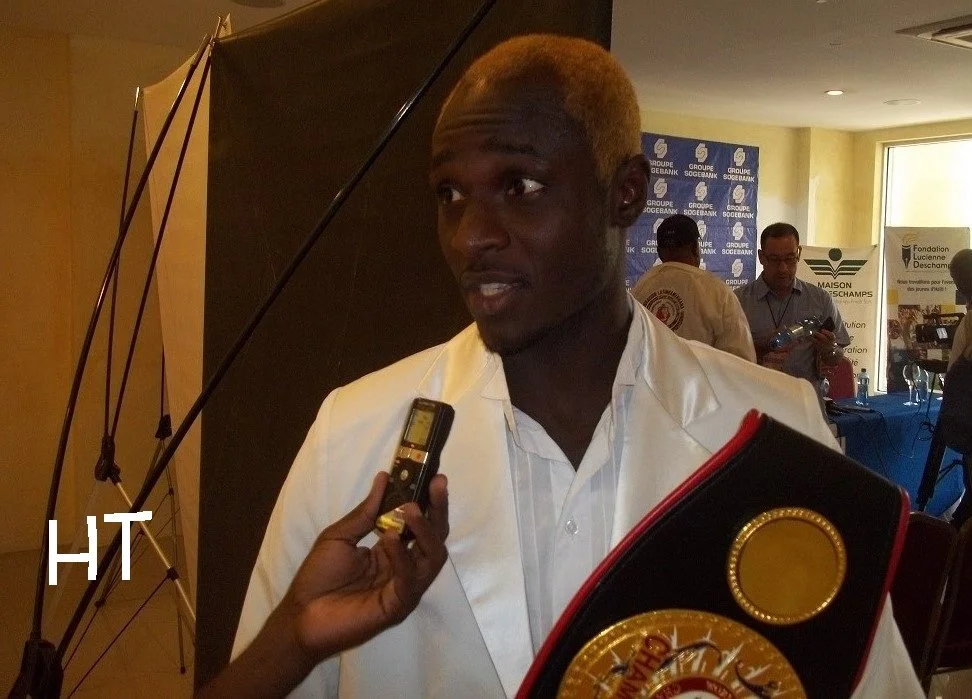
An attractive boxing card billed as “Fightnight One” is being offered to boxing fans in Haiti this coming Thursday with battlers coming from Haiti, the Dominican Republic, Venezuela, Cuba, Mexico and Panama. WBA #1 lightweight contender Evens Pierre (29-1, 19 KOs) is facing hard punching Dominican Francisco Contreras (31-8, 24 KOs) over 10 rounds. Pierre, a local idol in Haiti, has just renounced the WBA Fedelatin title he had held for over four years.Says promoter Jacques Deschamps, “Evens is knocking on the door of a world title fight but he cannot look past Contreras, a tall, long-armed puncher.”The co-main event has WBA #12 jr middleweight, Haitian-American Wilky Campfort (24-3, 13 KOs) crossing gloves with Mexican welterweight champion Rodrigo Mejia (14-10-3, 6 KOs). Campfort is defending his WBA Fedelatin belt.Unbeaten Dominican lightweight prospect Jackson Marinez (12-0, 4 KOs) will battle Rolando Giono (22-9, 16 KOs) of Panama for the WBA Fedelatin title vacated by Pierre.Other bouts on the card: Johan Perez vs Aristides Quinonez (welterweights) 10 rounds; Pablo Vicente vs Brayner Vazquez (jr lightweight) 8 rounds; Damian Rodriguez vs Adrian Perez (welterweight) 8 rounds; Roger Gutierrez vs Willy Morillo (jr lightweight) 8 rounds.Promoter: Boxe Internationale (Jacques Deschamps) Venue: Karibe Convention Center, Petionville, Haiti.By: Robert Coster | FightNews.com | May 21, 2018

Read More
People, Spotlight People, Spotlight

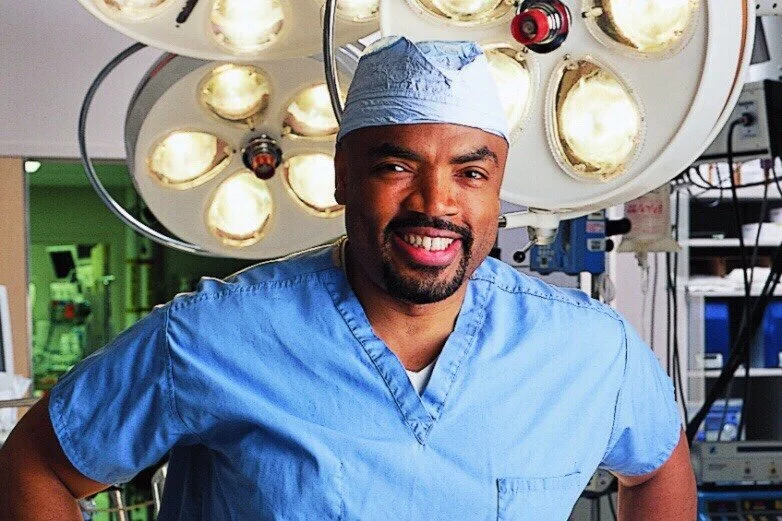
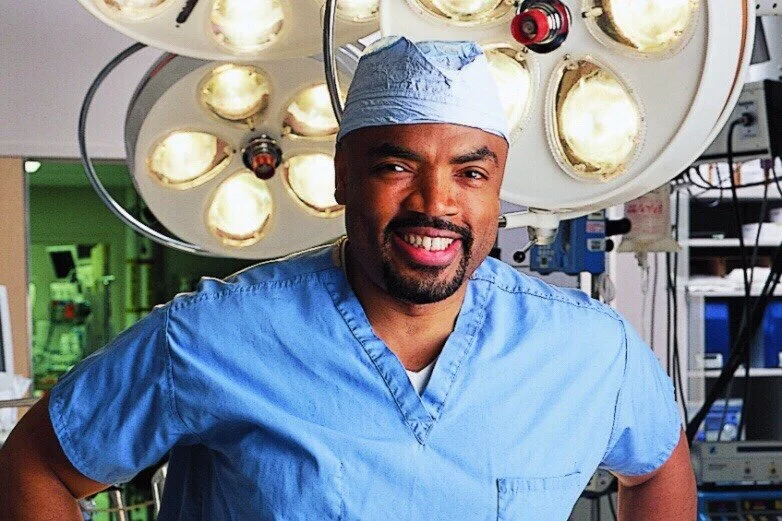
Eleven Things You Need to Know About Henri R. Ford, MD

Henri R. Ford, MD, MHA, FACS, FRCS, FAAP: The Vice President and Surgeon-in-Chief at Children's Hospital Los Angeles and Haitian-born medical maven who has dedicated his life to not only helping the many kids that walk through CHLA's doors, but also the children and people of his home country.These are the top things you need to know about Ford.1.  He’s an Honorary Fellow of the Royal College of Surgeons, and President of the American Pediatric Surgical Association.More: Children's Hospital Los Angeles Surgeon-in-Chief Receives Two Prestigious Honors2.  He attended Princeton University for his undergraduate degree, earned his medical degree from Harvard Medical School, and received his Master of Health Administration degree from the University of Southern California.More: Henri R. Ford, MD, MHA, FACS, FRCS, FAAP3.  He is an expert in necrotizing enterocolitis (NEC), which is a severe and often life-threatening intestinal inflammation in pre-term infants.More: Ford's Laboratory4.  He was presented with the National Humanism Award by American Association of Medical Colleges, which recognizes his mentorship to medical students and the discovery and implementation of surgical alternatives for several pediatric disorders.More: American Association of Medical Colleges Will Present National Humanism Award to Henri Ford, M.D. of Keck School of Medicine of USC, Children’s Hospital Los Angeles5.  When the devastating 7.0 earthquake hit in his home country of Haiti, he quickly moved to lead a humanitarian mission there.More: Humanitarian Efforts in Haiti6.  He helped organize a huge donation of used medical equipment to Haiti from CHLA.More: Children's Hospital Los Angeles Donates to Haiti's Kids7.  He’s a member of the Board of Regents of the American College of Surgeons.More: Henri R. Ford, MD, MHA, FACS, FAAP, Elected to the Board of Regents of the American College of Surgeons8.  He led Haiti’s first conjoined twin separation surgery during a medical mission trip in 2015.More: Children's Hospital Los Angeles Leads Historic Medical Moment 3,000 Miles Away9.  He’s helped lead efforts to establish critical care and trauma facilities in Haiti. More: Children's Hospital Los Angeles Surgeon Helps Lead Effort to Develop Critical Care and Trauma Facilities in Haiti10.  He's working to save more babies' lives through research.11. Dr. Ford was just appointed as the Dean of Miami University's Miller School of Medicine,Congratulations Dr. Ford!!!Thank you Dr. Ford for your dedication and determination in helping kids here and around the world!By: CHLA.org
Read More
News, Politics News, Politics

Haiti maintains ties with Taiwan at Beijing's expense

Haiti confirmed Wednesday it would maintain diplomatic ties with Taiwan, a day after the neighboring Dominican Republic established relations with China."Every country is moving in one direction or another, but for now, it is with Taiwan that Haiti has diplomatic relations," said Haitian communications minister Guyler C. Delva in a press conference."Taiwan is a partner that helps us in different areas and we can say that it is a good partner that supports the government," he added.In signing an agreement with China Tuesday, the Dominican Republic broke off its ties with Taiwan -- a prerequisite imposed by Beijing.China and Taiwan have been ruled by rival regimes since the end of the civil war in 1949. The latter is governed autonomously but has never declared independence -- while Beijing considers it a province to be returned to its control.Now, they are locked in a battle of influence often nicknamed "checkbook diplomacy" -- and Haiti's decision to maintain relations with Taiwan raises questions about possible missed development opportunities.Beijing reportedly offered the Dominican Republican investments and loans to the tune of $3 billion -- and to some, Taiwan's $150 million loan to develop rurual power grids in Haiti pales in comparison.The Dominican Republic is the latest nation -- after Gambia, Sao Tome and Panama -- to cut ties with Taipei in favor of Beijing. Meanwhile, Haiti is among 19 countries to officially recognize Taiwan.By: AFP via Dailymail.co.uk | May 2, 2018

Read More
Culture Culture

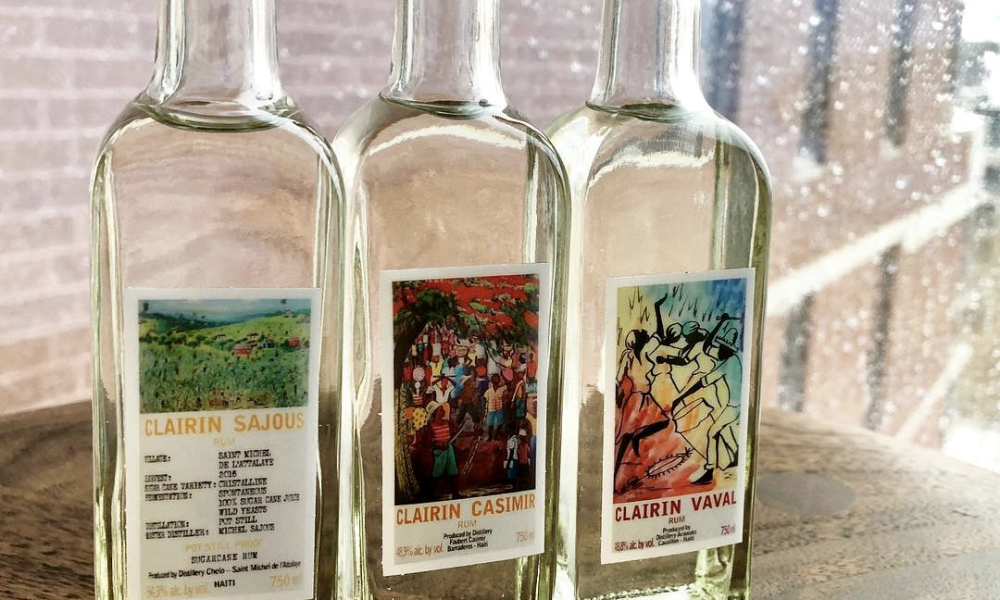
Clairin – Haiti's organic ancestral rum – is coming to America

(Photo via Instagram/rumwonk)

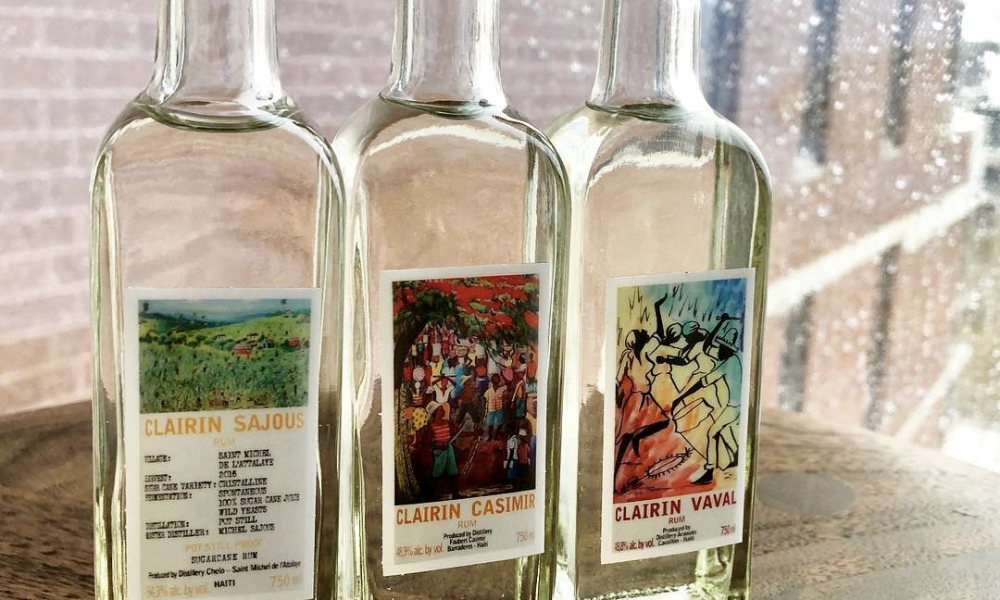
Organic spirits are having a moment. Craft distillers from Maine to California are producing rum, gin, vodka and whiskey from fertilizer- and pesticide-free sources. But in Haiti, there’s an entire spirit category that’s virtually entirely artisanal and organic: clairin. And its coming to America.There are more than 500 distilleries in Haiti naturally fermenting organic sugarcane in small batches to produce clairn, a high-proof white rum that goes for about $1.50 on the streets of Port au Prince.Rather remarkably, this indigenous Caribbean rum, made in rural shacks in the poorest country in the Americas, is about to get a star turn in New York City, and start hitting store shelves across the U.S. for about $40 a bottle.Ironically, lack of sophistication is turning out to be clairin’s best selling point — a rare bit of good luck in a country perpetually beset by hurricanes, earthquakes, landslides and political turmoil.Haitian slaves learned the art of distillation from their French masters before mounting the most successful slave revolt in history, driving off their European colonizers and establishing the first black republic on the planet.“Clairin is produced in the same way today as it was in 1804,” says Kate Perry, U.S. market manager for La Maison & Velier, which is importing the potent spirit and sponsoring a clairin mixology competition in New York in May. “When they kicked out the French, they won their victory, but a lot of things stopped. So they still use stills from 1790 french technology, basically old Cognac stills.”

A post shared by Rum_Explorer (@rum_explorer) on As I found fresh young coconuts I thought I’ll do a bit of experimenting ? I googled recipes with coconut water and found a few simple recipes with most listing white Rhum Agricole. Not much out there yet with Clairins so I just gave it a try with this Vaval. Alas, it doesn’t go well with coconut water I find, as the sweetness of the coconut water doesn’t work with the sweetness of the Vaval imho. Would like to see some more recipes with the Clairins as they are becoming more widely available. • • • • • #velier #clairin #spiritofhaiti #vaval #sajous #casimir #agricole #rhum #rum #rumlover #rumconoisseur #rhumagricole #haiti

Velier’s Luca Gargano and Daniele Biondi basically stumbled across clairin (the word means “clear” in French Haitian Creole) during a trip to Haiti in 2013, finding rough distilleries producing the spirit in the middle of sugarcane fields.

The wild-growing cane, indigenous to Haiti, is cut by hand with machetes, and the clairin is distilled from the first press only. Fermentation is spontaneous, with no yeast added, and the unfiltered rum is bottled at around 100 proof.
#spiritofhaiti #rhumexport #clairin #clairinlakay #productionnational#canneasucre #A post shared by Clairin Lakay (@clairinlakayrhum) on Villages all over Haiti have their own variety of the drink; Velier is working with multiple producers and marketing several different varieties of clairin – all made by the same basic process, but each with its own distinctive flavor.
Perry calls clairin “ancestral rum,” a close approximation of how all rums tasted 200 years ago and the grand-peré of all of the Bacardis, Captain Morgans and – yes – organic, artisanal rums we drink today.
Haïti and Clairin. Pot Still or Column Still, 100% vésou or a blend with Honey Canne… When done right ! It's a wildly amazing Rhum ! #clairin #rhumagricole #rhum #haïti #haïtiamourA post shared by Rhumdiaries (@rhumdiaries) on “Haiti’s rum is the stuff that spirit nerds want: terroir driven, open air, wild fermented with wild yeast, heritage varietals, small pot still and made for local consumption,” said Perry. And, she says, it could be the beginning of something special for Haiti’s economy as a whole.
“They have no chemicals, no fertilizers, no awful stuff we’ve filled the soil with in the rest of the world,” Perry said. “I’d love to see Haiti leverage that advantage and bill themselves as the last natural place in the western hemisphere.”By: Bob Curley for EatSipTrip April 30, 2018
Read More
People People

Eagles' Carson Wentz pledges up to $500,000 to bring lights, Wi-Fi and sports fields to Haiti

(Photo courtesy of Phillymag.com)

The Pro Bowl quarterback visited the country for the second time in as many years this offseason

After his second trip to Haiti in as many years, Carson Wentz is putting his own imprint on the country, and he's doing it by donating up to $500,000 for the construction of a sports complex that will bring ball fields, dormitories, lights and Internet access to hundreds of local residents.The Philadelphia Eagles' third-year quarterback first paid a visit to underprivileged areas of the Caribbean country in the 2017 offseason, when his AO1 Foundation announced a $500,000 commitment to a multipurpose complex. Now, having recently joined teammates Zach Ertz, Nate Sudfeld and Rashard Davis in starting work on the facility back in Haiti, Wentz has announced via Twitter that he'll match every dollar -- up to an additional $500,000 -- pledged to his foundation for the completion of the complex.

The sports complex is a product of Wentz's partnership with Mission of Hope Haiti, a nonprofit that "seeks to bring life transformation to every man, woman, and child in Haiti" through everything from orphan care and nutrition programs to leadership training and Christian church advancement.As reported by NBC Sports Philadelphia, it's set to feature "10 soccer fields, two indoor basketball courts, six outdoor basketball courts, (a) 5,000-shaded-seat track and field, dormitories for 200 people, locker rooms and a community park with Wi-Fi, a play space and lighting" -- most of which area residents do not currently have at their disposal.by: Cody Benjamin for CBSSports.com | May 1, 2018

Read More
Events Events

Haitian Heritage Month (May)

Haitian Heritage Month is not only a celebration of Haitian culture, it also has great historical significance based on the inherited traditions that have been passed on from generation to generation since Haiti's independence in 1804.Over the past few years, Haitians in New York, Florida, Boston, Philadelphia, and New Jersey have celebrated Haitian Heritage Month proudly with parades, conferences, festivals, exhibits, book fairs and the like. It’s a pride-filled month that carries out exciting events within the Haitian community and brings memorable souvenirs, including patriotic songs and the recollection of the history behind the creation of the Haitian Flag.In Florida, Haitian Heritage Month is recognized and celebrated by the School Board of Miami Dade County and supported by the School Board of Broward County. The celebration in Miami includes the largest Haitian festival - Haitian Compas Festival, also known as KompaFest.In Boston, the Annual Haitian American Unity Parade is held annually around May 18th, which is recognized by all Haitians as Haitian Flag Day. This parade features Haitian leaders, state and city officials, marching bands, delegations from schools, colleges and universities. Many youth groups, cultural, professional, and religious associations as well as, community, political and regional organizations and Haitian and American businesses also take part in the festivities.In New York, there is a Haitian Day Parade that usually takes place on the last Sunday of May. Other patriotic and cultural activities are held in Chicago, Georgia, Texas, Philadelphia to acknowledge Haitian Heritage Month with pride and dignity in order to promote and share the Haitian culture.While Haitians never need a reason to "stand-up" and "rep our flag", this year, Haitian Heritage Month definitely comes at a time where perhaps people, including us Haitians, need to be reminded of WHO Haitians are and of our significant contributions to the world, both historically and in present times.

Notable dates in May for Haitian History and Culture

May 1st - Labor and Agricultural Day celebrated in Haiti as a public holiday.May 2nd  - Flowers’ Day During the Duvalier era, May 2nd was celebrated as Flowers’ Day. Many cultural activities were held in the capital’s bicentennial plaza, decorated with flowers and the blue and red colors of the Haitian flag. Well known artists and musical groups also took part in the annual celebration.May 18th - Haitian Flag Day - In a pact signed by the Black and Mulatto officers at the May 1803 congress, the officers created the Haitian Flag on the last day of the congress, May 18, 1803. Bearing this newly created Haitian flag with pride, they fought and expelled the French army and thus Haiti became the first Black independent country in the world on January 1st, 1804.May 20th - Toussaint L'Ouverture 's Birthday General Toussaint L'Ouverture, who was born on May 20, 1743, was the mastermind behind the Haitian Slave Revolution. He organized and led the slaves to victory against Spain, Great Britain and France.Last Sunday of May - Haitian Mother's Day In Haiti, Mothers’ Day is celebrated on the Last Sunday of May. On that day, Haitians honor their mothers by wearing a red flower for mothers that are living and a white or purple flower in remembrance of the mothers who have passed away. 

Read More

U.N. criticized for failing on promise to help Haiti cholera victims

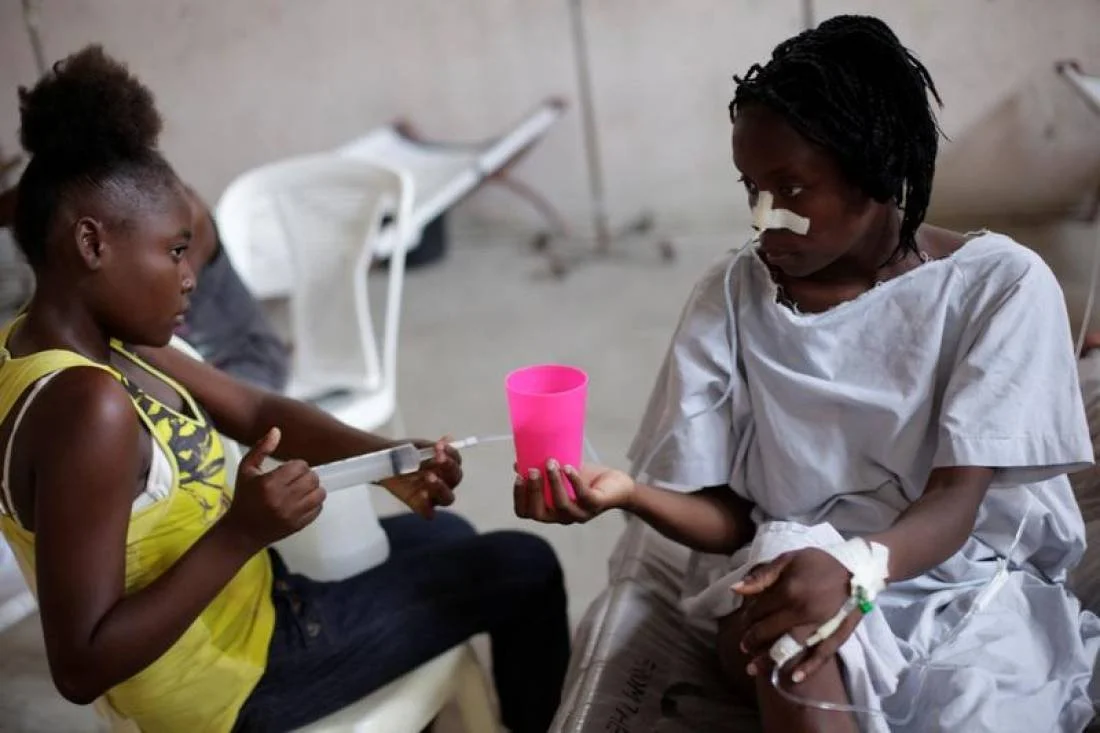
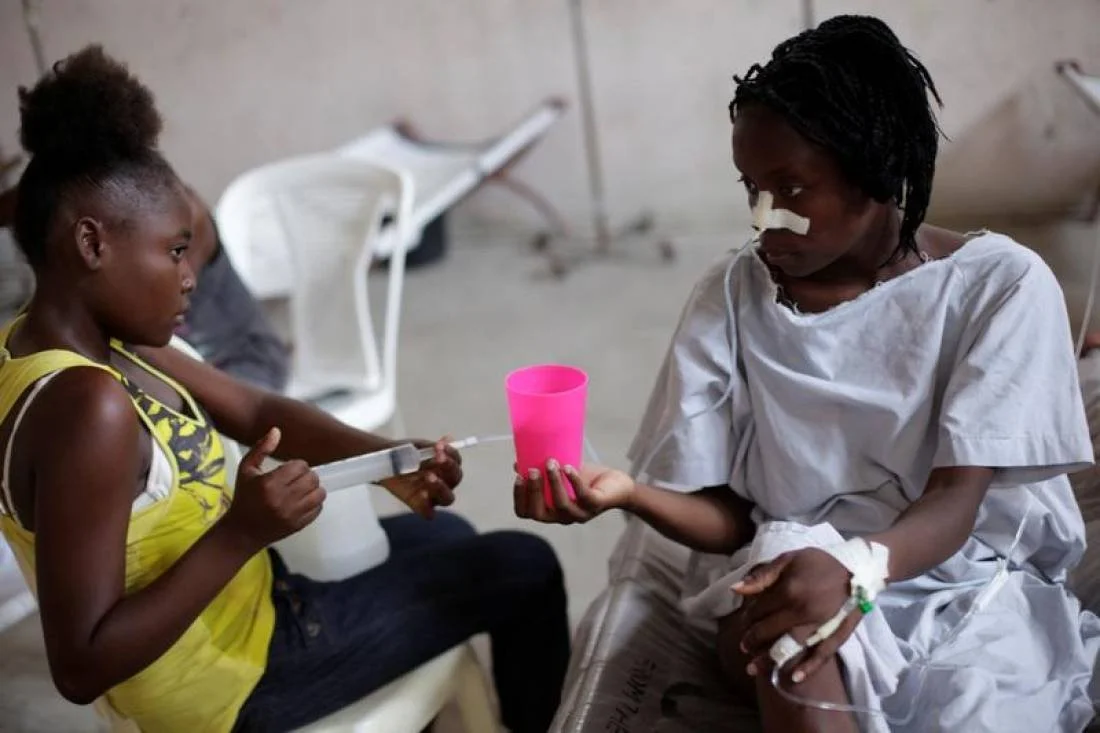
(A relative drip-feeds Louis Rosu Marcelle (R) in the Cholera Treatment Center of Diquini in Port-au-Prince, Haiti, September 7, 2016. Picture taken September 7, 2016. REUTERS/Andres Martinez Casares)

Haiti was free of cholera until 2010 when peacekeepers helping after a devastating earthquake accidentally dumped infected sewage into a riverBOGOTA, April 30 (Thomson Reuters Foundation) - Haitians battling cholera blamed on United Nations peacekeepers are getting little support with only two percent of promised funds materialising, according to campaigners accusing the global community of again failing the Caribbean nation.Haiti was free of cholera until 2010 when peacekeepers helping after a devastating earthquake that killed more than 250,000 people accidentally dumped infected sewage into a river.Since then about 9,750 Haitians have died of the waterborne disease that has infected more than 800,000 people, with the epidemic continuing to affect dozens of people every week.The United Nations has not accepted legal responsibility for the outbreak but in late 2016 outgoing U.N. Secretary-General Ban Ki-moon apologised to Haiti for the organisation's role and announced a $400 million fund to help affected Haitians.But to date - almost halfway through the fund's expected three-year term - the U.N. Haiti Cholera Response Multi-Partner Trust Fund has only raised $8.7 million or 2.2 percent of the total - and less than half has been spent, U.N. figures show.Sienna Merope-Synge, a human rights lawyer at the U.S.-based Institute for Justice and Democracy in Haiti (IJDH), said this showed "a failure by the U.N. system to honour that promise"."The U.N. promises, in particular to create a package of assistance that would provide redress to victims, (have) not been moved forward," she said.The IJDH previously filed a lawsuit against the U.N. on behalf of cholera victims, including a demand for financial compensation, but in 2016 a U.S. federal appeals court upheld the organisation's immunity from damages.

SLOW PROGRESS

The spotlight on the failure to eradicate cholera comes after the United Nations and aid organisations have faced criticism for slow reconstruction efforts in Haiti due to a lack of coordination and bypassing the government and businesses.The behaviour of aid workers in Haiti after the earthquake has also come under scrutiny with Oxfam rocked by allegations that staff, including a former Haiti country director, used prostitutes during the relief mission.Eight years after the disaster Haiti remains the poorest nation in the western hemisphere. World Bank figures show only one in four rural Haitians has access to a toilet, and less than half to clean water.Experts said improving the country's water and sanitation systems is vital to overcome Haiti's vulnerability to new cholera outbreaks, particularly after hurricanes.In emailed comments, the U.N. Special Envoy for Haiti, Josette Sheeran, said nearly $700 million had been spent by the U.N. and global community on fighting cholera in Haiti since 2010 but funding for the Multi-Partner Trust Fund was lacking.The office said Sheeran was working on "new innovative financing mechanisms" to raise funds but gave no details."There is still a big funding gap, and we urgently need $80 million to complete the next phase of cholera reduction, and community support," Sheeran said by email.Cholera is currently infecting about 74 more people each week although this is down from 18,500 at the outbreak's peak.Cholera expert Louise Ivers, executive director of the Centre for Global Health at the Massachusetts General Hospital said it was not enough to say things had improved since 2010."This has been one the biggest cholera epidemics in recent history and we are into the eighth year," said Ivers, a doctor who led cholera response efforts during the outbreak in Haiti as head of mission for medical charity Partners In Health."Epidemics go down because people have had the disease, they have some natural immunity now."

NO COMPENSATION

The U.N. fund envisions a two-track process.The first track would focus on eradicating cholera and building infrastructure for sanitation and clean water.The second is described as "a package of material assistance and support to those most affected by the disease" which Ban described as a "concrete expression of the regret of our organisation for the suffering so many Haitians have endured".But Merope-Synge said so far no one has received any type of financial compensation, and projects to help rebuild affected communities - such as constructing markets and clinics - were virtually non-existent.Ivers said working out which families could receive support is "daunting" because it is now hard to prove who died of what but that this should not account for the slow progress made."What's happened over the last year is a real reluctance by the U.N. system, including the donor states, to support direct payment to households," Merope-Synge said."There's a fear among the donors and within the U.N. system that it could set a precedent, that if the U.N. does something bad in the future it might have to compensate."In response to emails from the Thomson Reuters Foundation, the U.N. Office of the Special Envoy for Haiti did not confirm whether the U.N. had provided any direct financial assistance to individual cholera victims or families, or plans to do so.The U.N. office also did not provide requested details about any development projects that are up and running.It did say Sheeran and Haitian government officials met some cholera victims in February to discuss proposed pilot projects.Following consultations with four communities in the central town of Mirebalais, the first set of projects had been chosen, and will start next week, with $1.1 million disbursed, the U.N. office said.The United Nations did not provide details about what this would entail or look like on the ground but said it planned to carry out similar work in at about 140 more communities.However Ivers said some Haitians feel they have been excluded from the U.N. consultation process which had led to street protests over the past year.Merope-Synge said the cholera outbreak had left thousands of families struggling to rebuild their lives with little support."Families lost breadwinners that have plunged them further into poverty, people took on debt to buried loved ones. All these very real financial consequences," she said. (Reporting by Anastasia Moloney @anastasiabogota, Editing by Robert Carmichael and Belinda Goldsmith. Please credit the Thomson Reuters Foundation, the charitable arm of Thomson Reuters, that covers humanitarian news, women's rights, trafficking, property rights, climate change and resilience. Visit http://news.trust.org)By: Anastasia Moloney for Thomson Reuters Foundation News| April 30, 2018

Read More
Art, Culture Art, Culture

Utah Symphony Message to Haiti Musicians: We Are With You and Your Country

(Utah Symphony music director Thierry Fischer (right) and Haitian conductor Pierre Leroy with participants in the National Orchestra Institute, March 30, 2018, Cap-Haitien, Haiti.(Photo: Colby Bryson)

We are one orchestra, one American organization in Utah, sharing our music to show support for Haiti. We hope our actions will inspire U.S. political leaders.

About 20 of us from the Utah Symphony recently spent a week in Cap-Haitien, in the north of Haiti. It’s about an hour-and-a-half flight from Miami. Close and yet so very, very far.

We were there for the National Orchestra Institute, a partnership with Building Leaders Using Music Education. For the second year in a row, BLUME had brought together about 100 Haitian musicians for a week of intensive training.

I’m the conductor of the Utah Symphony and I first learned about the institute last year when John Eckstein, one of our cellists, told me in an email that “we just want you to know that 17 of us are going to Haiti on our week off to teach music.” The musicians were volunteers raising their own funds for the trip from private donors, he explained, and added, “you might want to think about supporting this institute…” But I didn’t even get that far. I was already thinking to myself, “Am I free that week? I want to join them.”

This year, I was even more determined to go after recent unfortunate comments attributed to our president about Haiti and other parts of the world. I was thinking that if we can show our Haitian counterparts that we are with them and not against them, or worse, ignoring them, then we have made a difference. Even if we are just a drop of water in an ocean.

So there we were, professional musicians prepared to talk about technique and intonation to people (some of them with no electricity, very little clean water) who are taking care of sick parents and struggling to have access to education.

Their instruments were often in disrepair. We had brought many with us, violins, violas, bows, a horn, trombones, music books and scores to give them. We also brought a luthier and bow maker so they could be instructed on how to repair their own stringed instruments.

My initial reaction was to go easy — to take into consideration the way they live and the obstacles they face. But then very quickly I realized, absolutely not. They didn’t need to feel apologetic because of their current level of playing, and I didn’t need to feel sorry because some of them don’t have a proper house. Art is not just about perfection, it’s about the experience and what that experience can bring. Art can create solidarity and fraternity, as opposed to divisiveness.

I was very demanding (in French, since I'm Swiss!) but also very patient. They have said they want to create a National Orchestra of Haiti one day, so they deserved to know what it means to be an orchestra. They were so hungry to learn. For many of them, this week is the highlight of the year.

They worked hard. They had four hours of lessons with Utah Symphony musicians in the morning and three more in the afternoon with me. Our musicians instructed them on their own playing and on how to teach their instruments to others. They also led section rehearsals to prepare them for the concert that would cap our week.

As a conductor, I had much to tell them. Nobody had ever shown them how to tune as an orchestra, so that took a few minutes. And in an ensemble, you have to listen to each other so precisely — with this idea that playing exactly together, they can create a wave of beauty. You have to give them encouragement and be very patient. But they are so committed, it is beautiful to watch. Honestly, when you see them achieve the right tone, it’s breathtaking. You know that you have opened doors, and that these doors will lead them to even more discoveries. They don’t need to tell you — you see it in their eyes, in their smiles, in their body language.

They just want to work, to learn, to be better.

The last evening they performed Tchaikovsky's Symphony No. 5, and after the concert we had a celebratory meal together. I made a little speech at the end. They kept telling us how grateful they were. But I told them they absolutely don’t realize how much we receive and learn from them with their genuine desire just to know more — about everything. Our commitment is our way to show them we love them.

It’s one thing to make yourself feel collaborative by making a donation, but it’s a completely different thing to give your time. To take the initiative and be prepared to be confronted by a different world and to give of yourself. The minimum we can do as artists is to share what drives us every day. A week a year to share and to translate what the notion of art can bring to life in general, it’s not too much.

I am so proud of the musicians of the Utah Symphony for bringing us there in the first place. We are an orchestra — just one American organization, committed to both our work in America and in developing countries like Haiti, and to the notion of sharing what sounds can bring. We hope to inspire our leaders through our actions.

Thierry Fisher is the music director of the Utah Symphony, principal guest conductor of the Seoul Philharmonic, and a frequent guest on international podiums.  

By: Thierry Fisher for USAToday.com | April 30, 2018

Read More