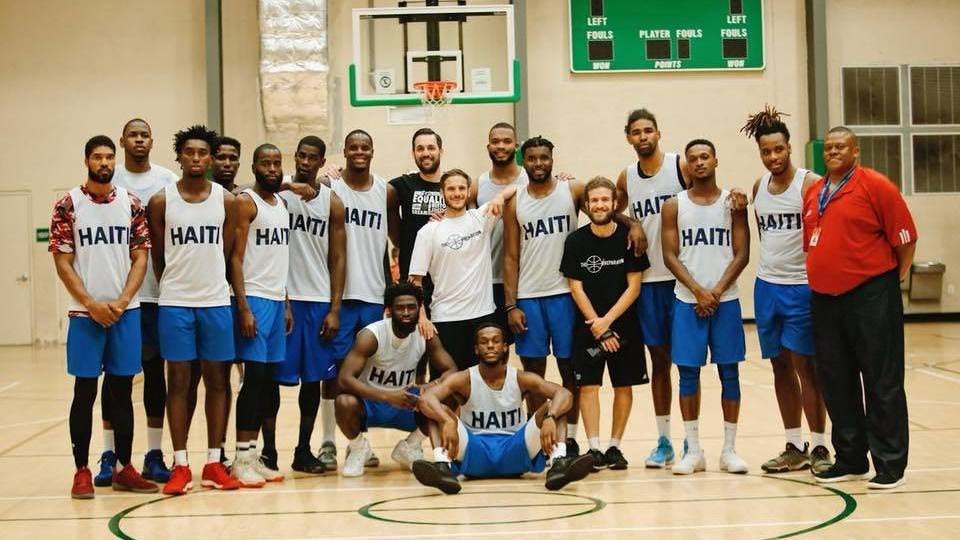
As part of the playoffs of the 19th edition of the Americas Cup FIBA 2021, the largest international basketball tournament in the Americas that takes place in Paramaribo, capital of Suriname from 24 to 30 June 2018, Haiti after 37 years of absence on the international scene the Haitian selection, under the leadership of the American coach, Matthew Brase has made a strong comeback in the world of international basketball.After 4 straight victories and qualifying for the semi-finals, Haiti were hopeful to see themselves in the final and win the title :Haiti - Barbados [78-62]Haiti - Monserrat [110 -50]Haiti - Antigua [76 -59]Haiti - Bermuda [96-60][youtube https://www.youtube.com/watch?v=Nc5J0iTXyPo]But, within 12 hours of its semi-final match against Suriname, the International Amateur Basketball Federation (FIBA) decided to disqualify the Haitian selection from the FiBA Americup 2021 tournament, alleging that 9 of the players in the Haitian selection were born outside Haiti on American soil, invoking Article 3.21 of the Regulations.A situation that raised the indignation of the Haitian delegation and the Haitian Basketball Federation (FHB) which in a letter acknowledging the decision of FIBA, informs FIBA "of its decision to appeal to the Court of Sporting Arbitration" underlining that "The arguments will be presented so that the best decision for the development of the sport in Haiti is favored," affirming to FIBA "all the players of our list are Haitians in their own right and are not naturalized."Alph Ulysse, Vice President of the FHB, evokes a form of persecution against his team recalling "a person born of a Haitian parent automatically obtains Haitian nationality, regardless of his country of birth" which does not seem to take into account FIBA.In addition, a few hours after Haiti's disqualification from the rest of Americup's playoffs, FIBA forced our national basketball team to play a title match against Saint Lucia on Friday, threatening the FHB with a fine of 25,000 US dollars and an exclusion from all competitions of FIBA for 5 years, if Haiti refused to play this game.Match that Haiti played and won against St. Lucia [100 - 62]By: HaitiLibre | jUNE 30, 2018
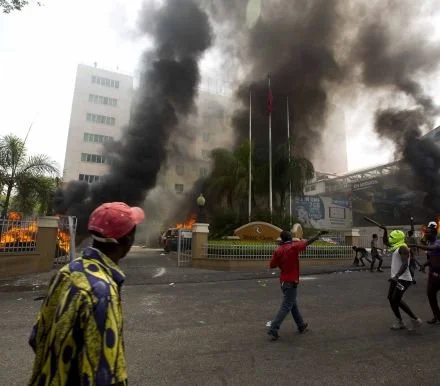
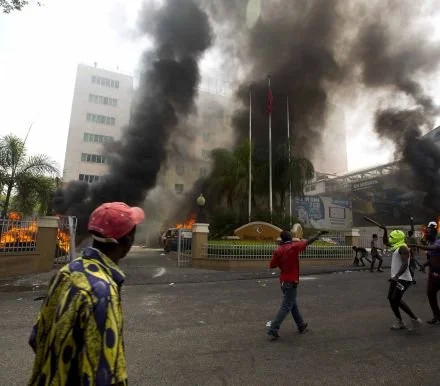
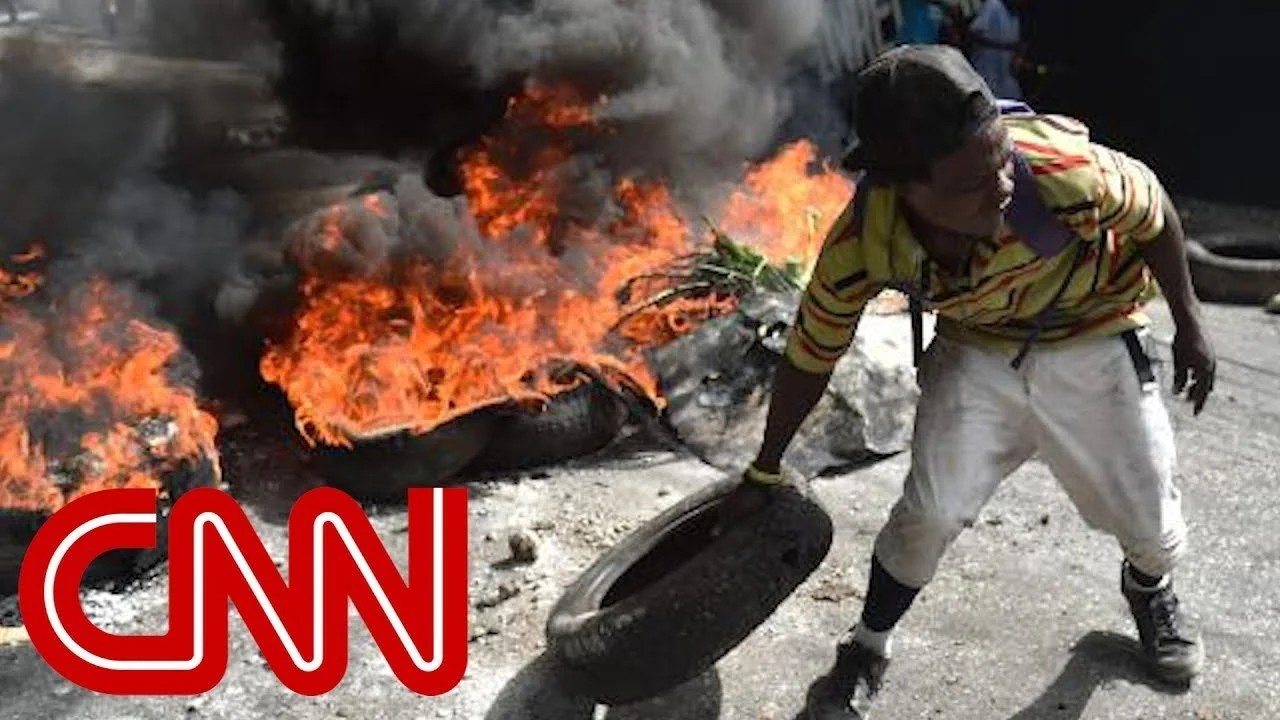
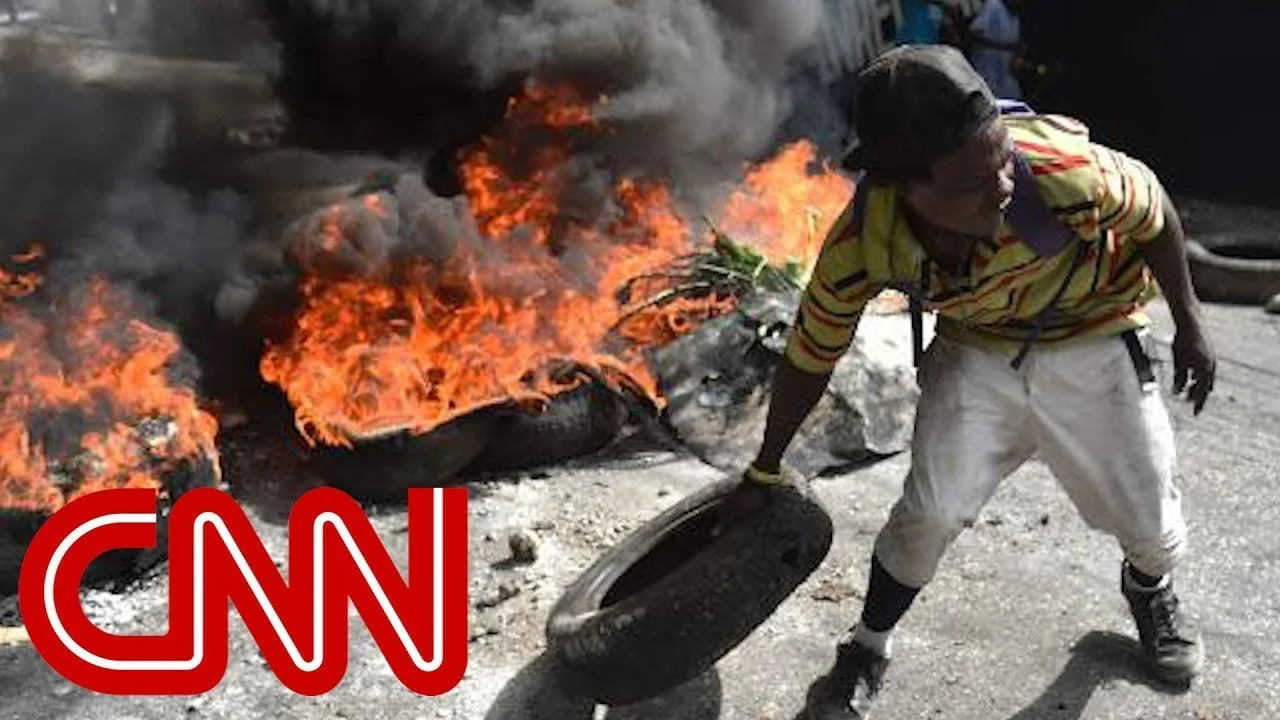
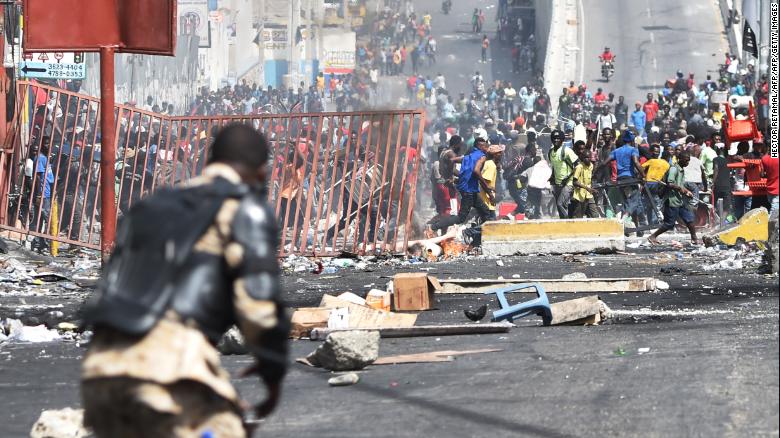
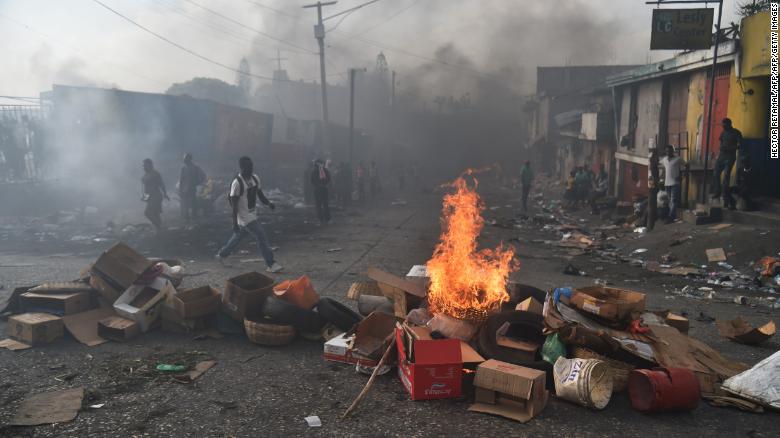
Protesters barricade a street in the Port-au-Prince suburb of Petion-Ville on July 7, 2018, to protest against the increase in fuel prices. (Photo: Hector Retamal/AFP/Getty Images)
The Haitian government suspended a fuel price hike Saturday after widespread violence broke out across the capital and in the northern city of Cap-Haitien.Prime Minister Jack Guy Lafontant had originally said the country needed to raise prices to balance the budget and gave no indication he would back down.But his administration bowed to pressure after demonstrators took to the streets in protest.
A journalist from The Associated Press reported seeing several hundred people on Saturday attack a Best Western Premiere hotel in Petion-Ville, one of the capital’s wealthiest neighborhoods. Guests were forced to remain inside as rocks were hurled through windows around 10 a.m. local time.
http://www.youtube.com/watch?v=P4mncxTJcDo(CNN)A number of US missionary groups are stranded in Haiti after protesters took to the streets following a fuel price hike ordered by the government.
One group described burning barricades preventing them from reaching the airport in the nation's capital, Port-au-Prince.
The US Embassy in Haiti warned its citizens Saturday to stay inside amid continued demonstrations in Port-au-Prince and a northern city.
Prime Minister Jack Guy Lafontant on Saturday announced a temporary stop to the price increases and appealed for calm. Prices for gasoline were to rise 38% while diesel prices were to go up 47% and kerosene 51%, the Haitian daily newspaper Le Nouvelliste reported.
Burning barricades
A youth group from Bradenton, Florida, that was scheduled to return from a missionary trip in Haiti is stranded until at least Monday, Executive Pastor Dewayne McFarlin said.
The group from Bradenton's Woodland Community Church left Neply, Haiti, early Saturday for a 3 p.m. flight from Port-au-Prince International Airport, McFarlin said. Only a few miles into the approximately 30-mile journey, the group, which includes middle school- and high school-age children, encountered individuals demanding payment for access to the roadway, according to McFarlin.
They talked their way past the roadblock, but elected to turn around when they came to second group of individuals who had erected a blockade of burning tires on the road, McFarlin says.
A local colleague of McFarlin's was riding on a motorcycle a few miles ahead of the missionary group's bus. The friend called him to say that the road ahead was filled with similar impromptu "checkpoints," McFarlin said.
"They weren't government or police," McFarlin says. "Just people taking advantage of the situation."
The group returned to Neply but McFarlin said he thinks they won't get out until Monday at the earliest.
"They were on a bus with the owners of the mission, the leaders, our adults, three armed guards. And they just kept getting stopped by road blocks and people asking for money. And that's when they decided that, at that point, it was just ... it wasn't worth it, to try to make it to the airport," Jill Kramer, the parent of one of the teens told CNN affiliate WFLA.
Pastor Jeff McCauley told WFLA he stressed that the group was conscious that it had a purpose for being in Haiti.
"Continue to let our people, if we can't get through to them, know that we're safe and that their continued prayers are appreciated.
"We know that we're not here by accident. We know that God has us here for a reason, for a few extra days to make that clear. Maybe it's so that you can share that with people, McCauley told the station.
The Glade Church in Mount Juliet, Tennessee, also has a number of members on the missionary team, which was organized by the non-profit organization myLIFEspeaks.
"The Woodland Community Church and The Glade Church team and myLIFEspeaks staff are safe on our campus in the village of Neply, Haiti and Neply is the peaceful, welcoming place we have always known it to be. Today, team members are helping with Children's Church, playing soccer, and relaxing at a nearby pool," myLIFEspeaks said in a Facebook post Sunday.
Waiting it out
Jody Flowers -- the lead minister from Chapin United Methodist Church, in South Carolina -- told CNN Sunday that 13 members of his church were supposed to leave Haiti on Saturday but their departure date was now uncertain.
"We just don't know when it's gonna be safe for them to travel," he said. "Other than just nerves, a little anxiety, they're fine doing well, plenty of food and water."
Flowers said the group had participated in a week of service through Mission of Hope (MOH), a faith-based organization with headquarters in Texas and Haiti. MOH would decide when it was safe to travel to the airport, he said.
MOH provides housing and transportation for volunteers who work on education projects, job fairs, and training for various trades in the country.
A member of Flowers' church earlier told an NBC affiliate that 160 people from American churches were waiting out the protests at MOH's office in Titanyen, about 30 miles north of Port au Prince.
MOH said on Facebook that the teams on its Haiti campus "have plenty of food, water, and security, as we continue to monitor the situation carefully."
"Mission of Hope is thankful for our friends and family in neighboring villages, who have been so encouraging and supportive," it said. Please join our entire MOH family, both North American and Haitian, as we pray for a quick conclusion to these demonstrations."
Flowers expressed some sympathy for the protesters.
"When you think about the fact that some Haitians make just $5 a week and the government wants to increase the price of gasoline by 38% that in and of itself points to the reason for the unrest," he said. "Our hearts are just broken for the people out there and we're just thankful for our group, which has a lot of love and hope and a desire to help out however they can."
Canceled flights
An estimated 120 American and 100 Haitian guests are staying in a Port-au-Prince hotel where demonstrators earlier tried to set fire to the hotel and get past security, said Stacy Librandi Bourne, an emergency medical professional from HERO Client Rescue who is at the Oasis Hotel.
After the Prime Minister announced a temporary stop to the price increases the situation calmed down, she said.
US officials told tourists and missionaries to shelter in place.
"Do not attempt to travel at this time. Avoid protests and any large gathering of people. Do not attempt to drive through roadblocks," a State Department Bureau of Consular Affairs official said.
There are no reports of US citizens in Haiti being injured, the embassy said.
American Airlines, JetBlue and Spirit Airlines said Saturday they have canceled flights to Haiti.
American spokesman Curtis Blessing said the airline canceled seven flights and will re-evaluate the situation Sunday.
Spirit said it will resume service as soon as possible.
CNN's Steve Almasy and Keith Allen contributed to this report.
In a small home in Chansolme, a municipality in northwestern Haiti, Frantzy Monfilston’s three children are finishing their homework before they head to bed.
Monfilston, a primary-school teacher at École Mixte Jérusalem d’Andreau, says that his home had no electricity for years, so his children were forced to finish their homework before sunset.Many in Chansolme and other remote, rural areas in Haiti have limited or no electricity, Monfilston says. Students are only one segment of those hard-hit by the lack of electricity; residents struggle to complete daily chores, start and run businesses, and access information during natural disasters.But some remote communities in the country will soon have a reliable electrical supply.
Frantzy Monfilston, a teacher who lives with his family of four in Chansolme, helps his children finish their homework. Before Monfilston became a beneficiary of “Ma Maison Eclairée” in May 2017, he says, his home had no electricity.
Frantzy Monfilston, a teacher who lives with his family of four in Chansolme, helpshis children finish their homework. Before Monfilston became a beneficiary of“Ma Maison Eclairée” in May 2017, he says, his home had no electricity.Credit: Marie Michelle Felicien/GPJ
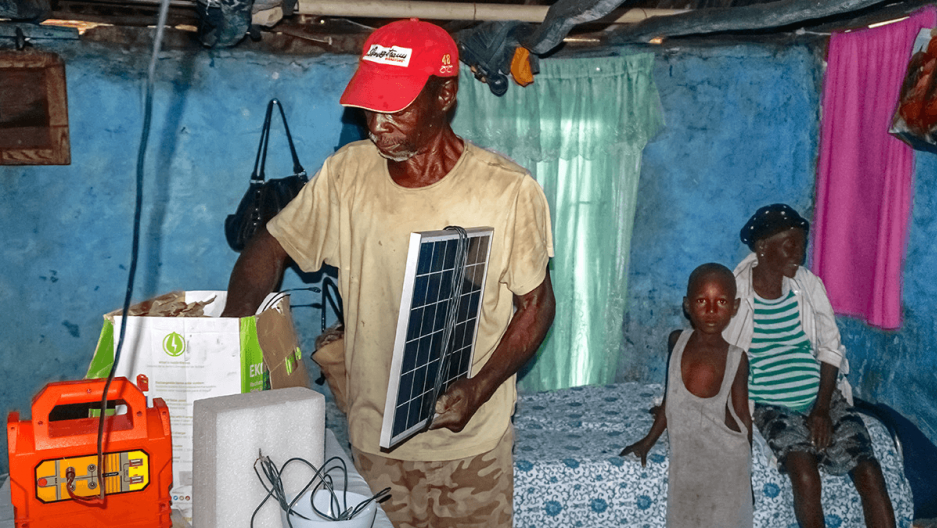
“Ma Maison Eclairée,” or Electricity in My Home, a government initiative introduced in May 2017, is bringing electricity to an estimated 10,000 families in Haiti. “I can safely say that the electrification program will result in remote-area dwellers feeling less left out,” says Monfilston, whose family is one of 850 living in Chansolme who have benefited from the initiative, according to government officials.Cost and infrastructure challenges have long prevented Haitian people from getting regular access to electricity, hindering key national developments in health, education and the economy. Officials and beneficiaries say the initiative is improving safety, communications and the quality of life in remote communities across the country.Globally, more than 1.1 billion people have no access to electricity. In Haiti, only 25 percent of the population has access to electricity, according to a 2014 report from the Worldwatch Institute, an independent research organization. Many rely on nonrenewable sources of energy, including charcoal, wood fuel and traditional lamps.The government’s goal of bringing renewable sources of energy to remote communities includes the use of solar panels, says Evenson Calixte, government special adviser on energy and director general of Autorité Nationale de Régulation du Secteur de l’Énergie, the nation’s energy-sector regulatory agency.Les Irois, a municipality in western Haiti with an estimated 23,374 residents, was one of the first communities to receive electricity through the government initiative. A total of 380 solar panels, 36 wind turbines and a standby generator have been installed in the municipality, Calixte says.Ma Maison Eclairée also supplies inverters equipped with solar-panel-powered bulbs, which can charge phones and which double as radio receivers, to people living in communities without electricity, Calixte says.The device is rechargeable but can be used for up to three days without recharging. The device, when used as a radio receiver, will allow families to access information instantly, instead of having to travel long distances to urban centers to charge their phones in order to contact relatives and friends in emergencies.During the 2010 earthquake, the most devastating in the country’s history, Haitians without electricity were among those most affected, Calixte says.The initiative, which costs 52.6 million Haitian gourdes ($820,000), requires beneficiaries to pay 125 gourdes ($1.94) each month over a two-year period to help cover the expense, Calixte says.For some, this is a cheaper way to power homes. Before receiving the solar-powered device, residents would pay up to 15 gourdes (23 cents) to buy 6 ounces of gas to use in traditional lamps.Though beneficiaries are required to pay, the devices are sustainable and free to maintain.“In case any equipment breaks down, there’s always a technician ready to provide a repair solution that works free of charge, and people don’t have to pay a single penny for the service,” Calixte says.To become a beneficiary, families in the communities where Ma Maison Eclairée is being implemented must register with their local government. Currently, 3,000 families either have received the solar-powered device or have access to electricity through the installment of solar panels, wind turbines and the standby generator in Les Irois, Calixte says.For Rasita Mesi, electricity in Chansolme has improved the way her children are learning. The mother of three says her household has been a beneficiary of Ma Maison Eclairée since November. Before that, her three sons were forced to do their homework with a wick-fed lamp in the evenings.But other remote communities across the country remain without electricity.St Anne Estil, who resides in Bassin Bleu, a municipality in northwestern Haiti, says she and her neighbors have lived without electricity for decades.But bringing electricity to the country’s remote communities takes time, Calixte says. Ma Maison Eclairée is in its first year of what will be years’ worth of improving Haiti’s electrical networks, he says.By: PRI | Marie Michelle Felicien | Global Press Journal | July 2, 2018
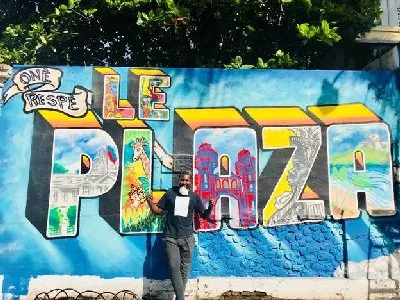
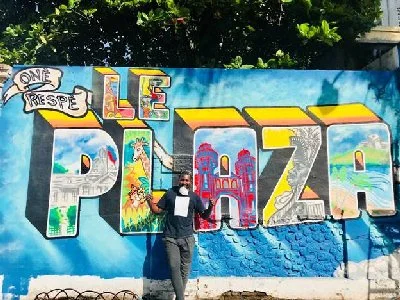
PORT-AU-PRINCE, Haiti--An historic Caribbean hotel is beautifying the streets of downtown Port-au-Prince with a stunning mural of Haitian art.Commissioned last summer by the hotel’s management team and created by renowned Haitian graffiti artist Jerry Rosembert Moise, the mural wraps around the popular Le Plaza hotel to feature the globally-famed creativity of Haitian artisans.
Rosembert Moise, assisted by Nadia Todres, an American photographer resident in the country since 2010, is known for highlighting the vibrancy of Haiti’s art and culture.After the devastating earthquake in 2010, Rosembert Moise took his painting tools to the streets of Port-au-Prince with a strong political message, but today he uplifts his compatriots with lively artistic renderings of Haitian life.His work, redolent with the humour and colour of Haitian life, also graces the walls of a new shopping and restaurant compound in Pétion-ville, enlivening an otherwise undistinguished corner of town. He is nearing completion of his latest creation, which features lush jungle scenes, on the walls of Le Plaza located in a dense urban setting.“As one of the few hotels that has stayed open in downtown Port-au-Prince during these challenging years, there is no way that we could miss this opportunity to celebrate Haitian culture and beautify this historic downtown area for the benefit of citizens and visitors alike,” said Marc Pierre-Louis, general manager of Le Plaza. “We hope more visitors will come and see the creativity of our people, and the vibrant history and culture of this, the second-oldest independent state in the hemisphere.”By: The Daily Herald | July 4, 2018
Haiti hasn't had a military since 1995, when it was disbanded after a series of coups, brutal crackdowns, and an American intervention. But now, officials there say it's time for a comeback.Last year, President Jovenel Moïse declared that the Caribbean's poorest nation would be reconstituting its army, just in time for the drawdown of United Nations troops, who have been part of the Haitian security landscape for years.For the past two decades, responsibility for law and order has largely fallen to the country's National Police, a force that is heavily funded, and heavily vetted, by the U.S.According to official polls, the renewed army has the support of the majority of the population, where the U.N. is widely seen more as a force of instability and foreign control, rather than peace.But on a recent visit to the country, VICE News learned that many Haitians remain deeply skeptical of the plan.Mario Joseph, a leading human rights lawyer in the capital, Port-au-Prince, says the military brings back dreadful memories. And the decision by authorities to reappoint many of the original officers to the new High Command has only reinforced his concerns."This is an army that was re-formed — that's it," Joseph told VICE News. "It's not a new army."The question facing Haitian officials is whether they can really make peace with the troubles of the past, or if they are simply hoping to turn the page."I can understand, you know, for some people there's some concern," said Herve Denis, the Haitian Minister of Defense. "But I said, 'Watch us. You will see that we are doing the best for the country.'"But in a country already strapped for cash, and barely recovered from a 2010 earthquake that left thousands of people dead and much of Port-au-Prince in ruin, it's hard to know where the money for an army would come from. Watch as Haitians discuss the plans for a new army:By Joshua Hersh and Harriet Dedman | Vice News | Jul 5, 2018
[video width="640" height="352" mp4="http://haitiville.com/wp-content/uploads/2018/06/4A935F56-10EA-4144-91B9-FE561A4673E7.mp4"][/video] courtesy of NBC South Florida
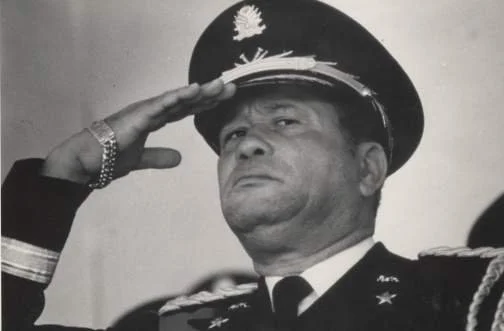
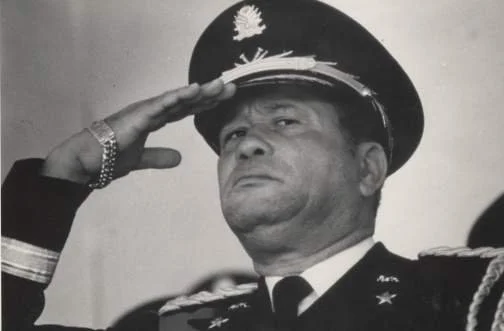
PORT AU PRINCE, Haiti (CMC) — Former Haitian coup leader, Lieutenant General Henri Namphy is dead.Namphy died on Tuesday in the neighbouring Dominican Republic following a battle with lung cancer.Namphy, who lived in exile in the Dominican Republic, headed Haiti's military-dominated government after the fall of the Duvalier family dictatorship.He became head of the interim National Council of Government that took charge of Haiti in 1986 when Jean-Claude “Baby Doc” Duvalier fled into exile in France.He also served as president before he was ousted in a coup in 1988.His presidency lasted only last three months, and after being ousted he fled to the Dominican Republic.He was 85.By: JamaicanObserver.com | June 27, 2018
"Are there Haitians in Moscow? The answer is "yes" since the Haitian community is made up of 54 students, most of them studying at the University of Peoples' Friendship in Moscow. Four of them are enrolled in other universities, still in Moscow.Less than a dozen other Haitians live in Russia. Most are children of former compatriots who lived in the communist era or students who married Russian women. It is even said that one of the first Haitian immigrants, René Théodore (Unified Party of Haitian Communists, PUCH) have children living in Russia.Haitian academics study economics, public relations, international relations, agronomy, computer science, engineering and medicine. With few exceptions, Haitian academics score very well in exams.The biggest difficulty faced by our compatriots is learning the Russian language and adapting to the climate. Before starting regular classes, at least 12 to 18 months are necessary to become familiar with Russian, a difficult language, since even after four years, some can not speak it well.The climate in Russia is hard to bear: summer lasts only 2 months, with temperature drops from 30 ° to 16 ° in the space of a few hours. In winter, temperatures of up to 40 ° are scary, breathing becomes difficult and the cold is very intense.While most of the students are past fellows in Cuba, some have applied as 'contractual' with the help of a Boston-based Association and pay only $ 2,000 to $ 2,500 a year. Next year, some twenty young Haitians under the age of 23 must arrive in Moscow to continue their university studies.Although small, the Haitian community is not isolated, as students live on the same campus of the University of Peoples' Friendship and gather to celebrate special occasions, including Haiti's Independence Day. January 1st, or that of the flag on May 18th and sometimes constitute prayer cells.An association has even been created with a view to bringing the two peoples closer together. Although there is still no diplomatic relations between Russia and Haiti, the President of the "Association of the Haitian Community in Russia" the medical student Fabiola Dalvius, said to work towards the establishment of a Haitian Consulate in Moscow and also hopes that more Haitians, like her, will have the opportunity to study in Russia.When one considers the quality of the State University of Haiti which does not even have a real campus and the exorbitant cost of the treatment of the private faculties, it would be necessary to salute the craze of the Haitians to study in Russia.Haitian students do not intend to stay in Russia after graduation. In addition to those who plan to work in other foreign countries, many are planning to return home ; one way, they say, to contribute to the development of Haiti and to renew intellectual and professional resources at a time when many of our brains are being recovered by other nations, Canada in particular."By: Joël Lorquet | HaitiLibre | June 20, 2018
Women seeking treatment at the Innovating Health International offices.Image by Kate Corrigan. Haiti, 2017.
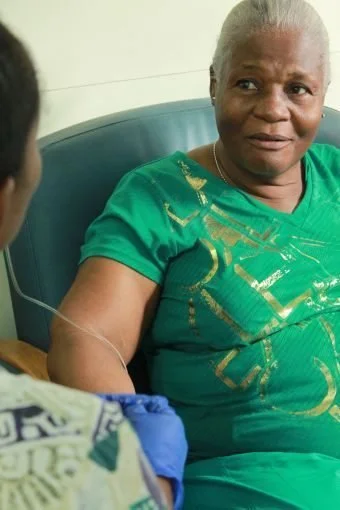
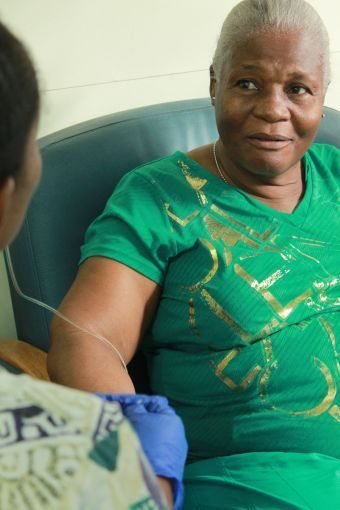
Youlette (whose name has been changed to protect her privacy) was a woman in her 30’s, newly married, when she arrived at the cancer program offices that Dr. Joseph Bernard works from in Port au Prince, Haiti.The day was very much like any other for the program that provides cancer care services: There were approximately 20 patients to be seen that day, some of them program patients in the midst of their chemotherapy. Others were like Youlette, women seeking treatment without understanding the cause of their ailment.The women who show up at the Innovating Health International (IHI) offices, the not-for profit organization where Bernard is the primary oncologist, are frequently referred from other physicians who suspect breast cancer but lack the capacity to diagnose and treat it. Often these women know why they are being referred but sometimes they do not. They only know that the mass growing in their breast is painful and negatively impacts their daily lives as they care for their families.After sitting down for a preliminary assessment, Bernard took a biopsy of Youlette’s affected breast and sent off standard labs he requires for any patient potentially undergoing treatment. He was certain it was cancer, and likely advanced stage, but what he found was not something he, or Youlette, was prepared for.It was indeed have cancer, stage IV, the most advanced stage and not survivable, but Youlette was also HIV-positive and likely pregnant.Global implications of cancer:Cancer has become a leading cause of death in both more and less economically developed countries, and the burden is expecting to grow worldwide, particularly in less developed countries, where a majority of the world's population resides.21.7 million new cases and 13 millions of deaths are predicted by 2030 as the population ages.Of that, breast cancer is by far, the most common cancer and most common cause of cancer-related death among women worldwide with trends in incidence and also mortality on the rise, specifically in less economically developed countries, like Haiti. The implication here is that women in less economically developed countries do not have the access to treatment they need.Bernard says half of the patients he treats are under the age of 50 and arrive with advanced stage cancer. For comparison, in the United States the average age of diagnosis is 63 and women typically present in the earliest stages of the disease. While it is unclear why this is the case, this is one area where Dr. Bernard and the team at IHI are researching to find answers.With only four facilities in Haiti that have the ability to provide chemotherapy treatment there is clearly a lack of access to care. The few laboratories functioning with the capacity to definitively provide diagnosis of cancer including grade and stage, key elements to creating a national database, are unable to meet the needs of an entire country.This scarcity of data regarding breast cancer in Haiti is due to poor infrastructure, and because of that the true extent of this emerging crisis is still unknown. Most experts agree that they only expect the number of cases to increase over the next few years as more research can be done.In a country of 10 million people, half of them women, Dr. Bernard estimates that there are millions of women at risk who are not even aware let alone able to seek screening and treatment services.Training a Haitian Oncologist:Dr. Bernard, a Haitian physician, first became interested in treating cancer while near the end of his medical studies at the L'Université Notre-Dame d'Haïti in Port-au-Prince. He was participating in an externship in Belgium, at which time he was able to participate for two months in the Belgian hospitals oncology services. “It was very active. You saw patients had spent years taking chemo… I really appreciated the first month.” Coming from a country like Haiti, where there are no formally trained oncologists, this opportunity was life changing.“There’s no oncologists per se in Haiti to even train with” stated Dr. Bernard, a situation similar to many other less economically developed countries.To that end, he decided to gain whatever training he could that might help him deliver oncology services in his home country. “I started to study cancer drugs and I was fascinated by the mechanism of action. And…I also presented on oncology in Haiti when I could. What I found though was there [is not] much information about cancer in Haiti. Most things [I found] were projections or estimations. But no good data,” Bernard said.“I went to a conference in Miami [in 2015] just to get more knowledge in oncology because at a certain point I wanted to do a study on cancer care in Haiti.” He learned about a U.S.-based physician in Haiti who was attempting to launch a cancer care program. “I approached and told him I’m pretty interested in oncology. I mainly want to know what cancer drugs they use here in Haiti so he gave me some information. But what stuck in his head was my interest in oncology so at the second meeting I proposed to him that I would be happy to help volunteer. When I could come see patients I would. And that’s how it started.”Through IHI, Bernard and other Haitian physicians have been able to receive intensive classroom education on breast cancer pathophysiology, presentation, diagnosis, and treatment. Additionally they are trained to use chemotherapy treatment algorithms and they receive direct supervision with the program director while initially managing clinic patients—a method of training particularly useful in a country with limited infrastructure and few resources. Using algorithms for treating something like breast cancer is similar to how HIV is treated in less economically developed countries—providing structure and a clear path that can be learned quickly and replicated easily. The results are effective.Cancer Care for Haiti in the Future:Bernard, a seasoned practitioner, discusses his long-term goals: He still refers to himself as a student but he hopes to create a center of excellence from his site in Port au Prince that can be replicated throughout the country. To him cancer-care treatment is attainable for the island nation, not just breast cancer but also all cancers though it will take a significant amount of time and commitment from physicians, surgeons, nurses, social workers and psychologists. Cancer care cannot be accomplished without being able to support all the needs of the patient, Bernard explains.Youlette never came back to the IHI offices and Bernard does not know what has happened to her. He thinks about her often though, because as sad as the story is, there are so many women in the country similarly at risk and in need of help. This is one of the many stories that drive him to continue this work.“Don’t be discouraged. It’s not your fault, we are all only human.” [IHI cancer patient, future survivor]By: KATE CORRIGAN | Pulitzer Center | June 19, 2018
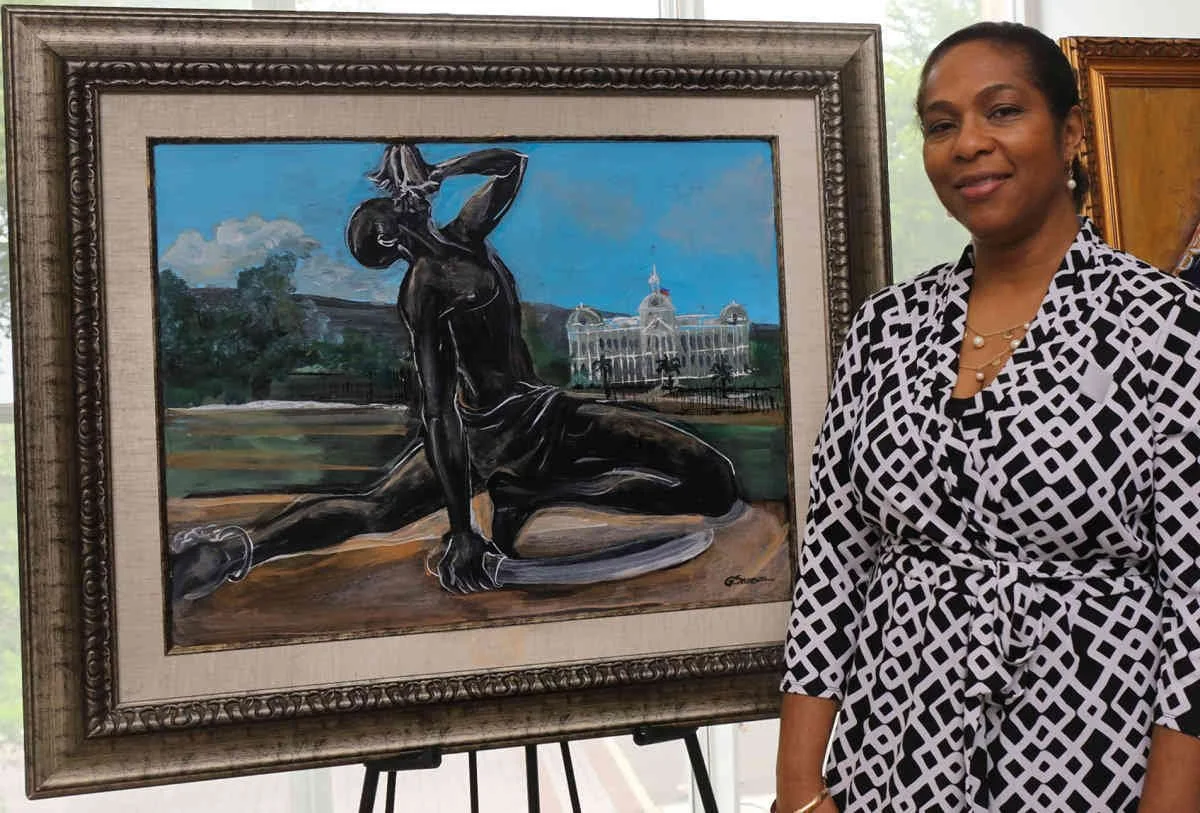
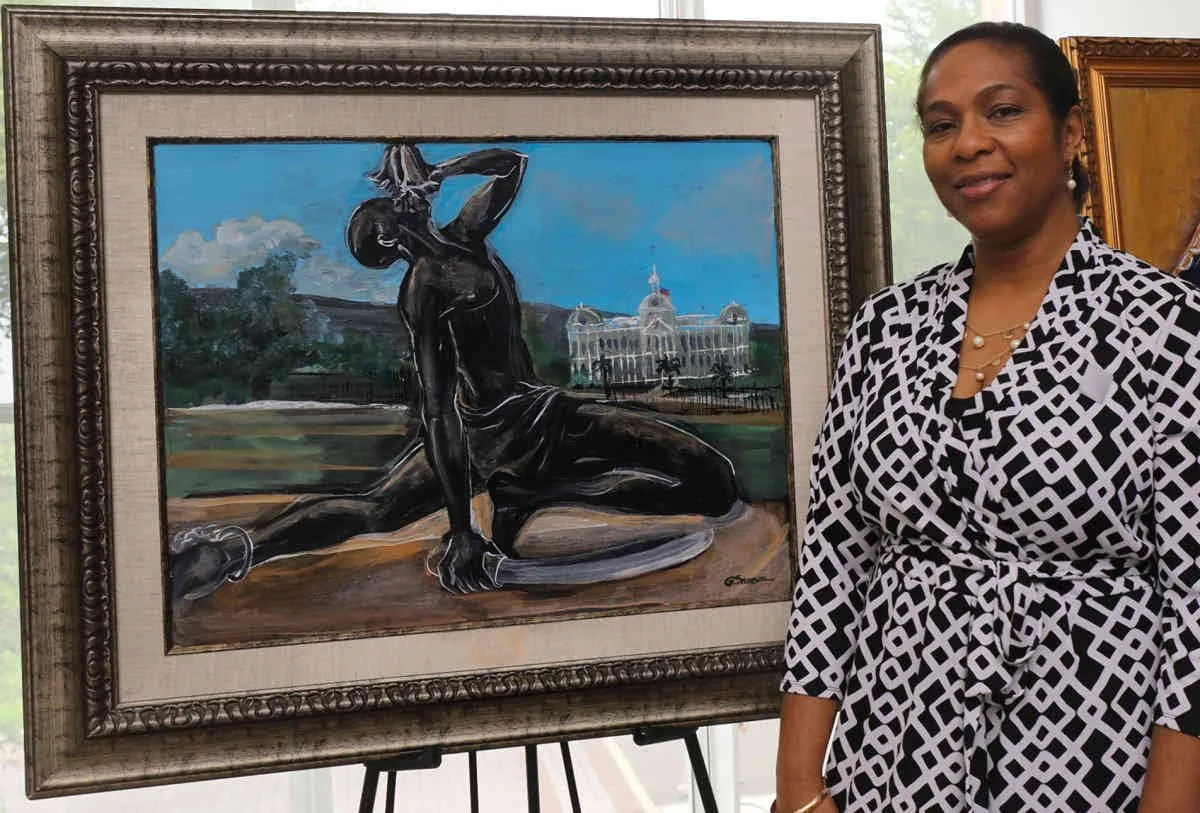
The Queens Museum is a vital partner with the Haitian community and hosting topical symposiums is a good example.Last week’s L’Education du Regard (Educating for Deeper Understanding), an annual event has been held at the museum for more than a decade, initiated by architect and urban planner Etienne Telemaque and later joined in planning by artist Patricia Brintle.“I handle art and architecture and Etienne handles other content,” says Whitestone resident and painter Brintle, who wrangles other artists to participate, so a mini-exhibition is also part of the symposium.Brintle expounded on the topics of years’ past — water systems, electricity, transportation, and sanitation. Historic gingerbread houses with World Monument experts participating were a topic one year. The symposiums all add breadth to understanding the issues.One year, there was a heated discussion on the importance of parks with the focus on Martissant Park; the issue raised: Why put a park in the middle of a slum?Experts reiterated how putting a park in a “terrible area” breathes air (and life) both literally and metaphorically into its neighborhood. It’s also about saving the environment.In the case of Martissant Park, situated in the poor, crowded neighborhood of Martissant, there is a medicinal garden, an educational environment center on the premises, and people can get cuttings from the gardeners there.Peaceful and a conducive environment in the middle of noisy, hectic day-to-day Port-au-Prince streets is where students are also seen on benches and along the paths, books open, intently studying.“Our audience of Haitians and friends are happy that people care and that there are symposiums about these subjects,” says Brintle as she admits, “For a lot, they’re hearing about a particular issue for the first time.”This year’s “Le Champs-de-Mars: A Public Sector to be Preserved Absolutely” focused on an area of Port-au-Prince that is a series of downtown parks split by wide boulevards, almost like the Washington Mall in function.There are also statues of Haiti’s founding fathers: Toussaint Louverture, Jean-Jacques Dessalines on horseback, Alexander Petion, and Henri Christophe, collectively known as Place des Héros de l’Independence (Place of the Heroes of Independence). It is also where the wonderful history museum Musee du Pantheon National Haitien is located and the site of the destroyed-by-earthquake demolished National Palace.Artist and author George Patrick Gaspard spoke of how in his growing-up years Le Champs de Mars (Chanmas, in Haitian Creole) existed as a Sunday park of walking, congregating, children riding bicycles and breathing fresh air.Patrick Durandis, Haiti’s Director General of the Institute of Saving the National Patrimony (ISPAN), cancelled at the last minute so the program became a general discussion with attendees of what needs to be done to restore the area to its former stature in Haiti’s urban life. Preservation is not fostered in the population of Haiti, says Brintle, on the need for education in this regard.Also, during the afternoon, Haitian authors George Patrick Gaspard and Eddy Mesidor, caricaturist Castro Desroches, and poet Janie Bogart sold and signed their books.By: Caribbean Life | June 15, 2018
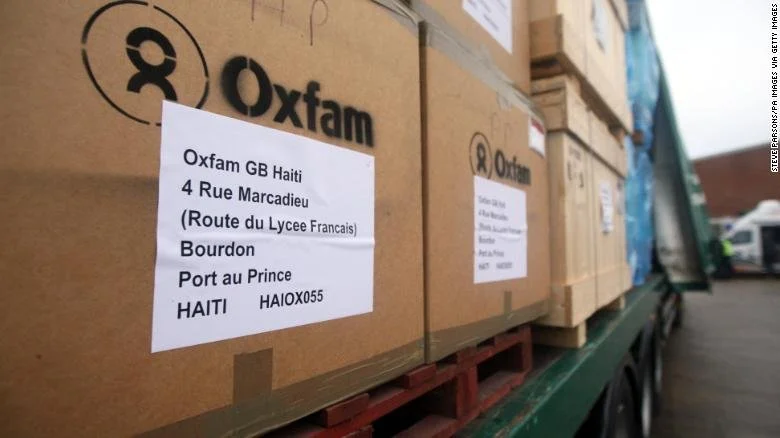
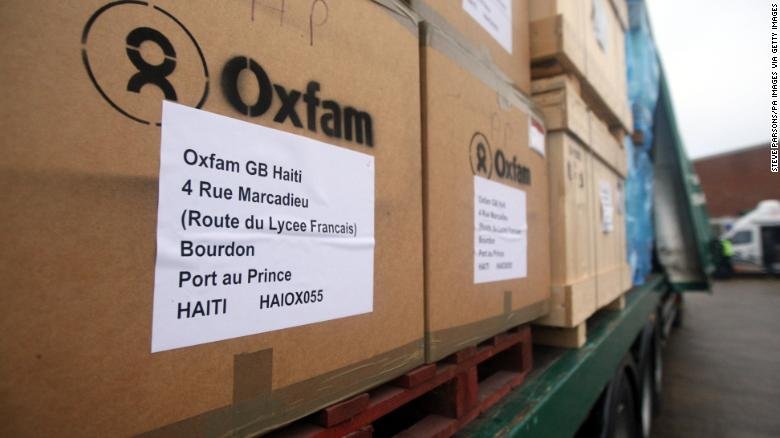
(CNN) - Haiti's government officially banned Oxfam Great Britain from operating in its country on Wednesday, following the sex scandal that rocked the British charity earlier this year.
Oxfam's right to operate in Haiti had already been revoked in February following allegations that staff members, including the country director, hired prostitutes at Oxfam properties while working in Haiti after the devastating 2010 earthquake.
Oxfam responded to the decision in a statement on Wednesday, apologizing again to the Haitian government and its people.
"Oxfam is disappointed but understands the Haiti Government's decision to withdraw Oxfam Great Britain's permission to work in Haiti," the statement read. "The behavior of some former Oxfam staff working in Haiti following the 2010 earthquake was completely unacceptable."
The statement also noted that since stronger measures have since been implemented to prevent abuse, including a hotline and safeguarding team.
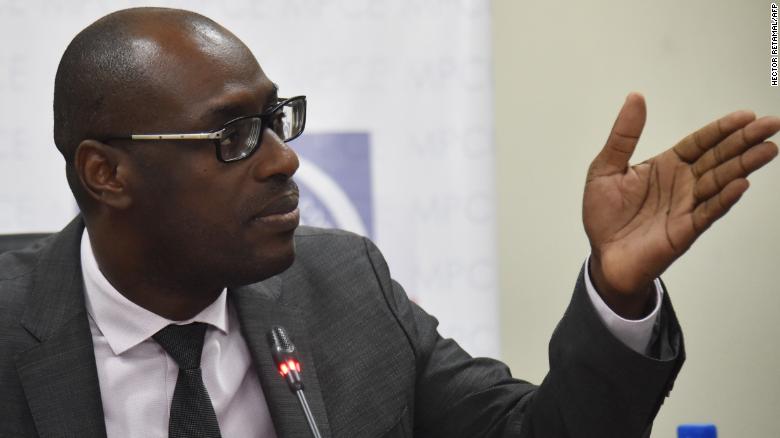
The allegations first emerged in 2011, prompting an internal investigation, but Oxfam didn't make the report public until this February. According to the report, four staff members were dismissed for "gross misconduct" and three others resigned after the investigation, including Haiti country director Roland van Hauwermeiren.
The report also described three staff members who "physically threatened and intimidated" a witness during the investigation, leading to accusations that Oxfam had deliberately covered up the scandal.
The report didn't address claims that van Hauwermeiren and his team had been previously reported for alleged sexual misconduct while working in the African nation of Chad, but no action was taken at the time.
Global outrage ensued. 7,000 people canceled their regular donations in just 10 days, Oxfam chief executive Mark Goldring told British lawmakers in February.
Several ambassadors and donors pulled their support. Oxfam's deputy chief stepped down, and in May, Goldring followed suit.
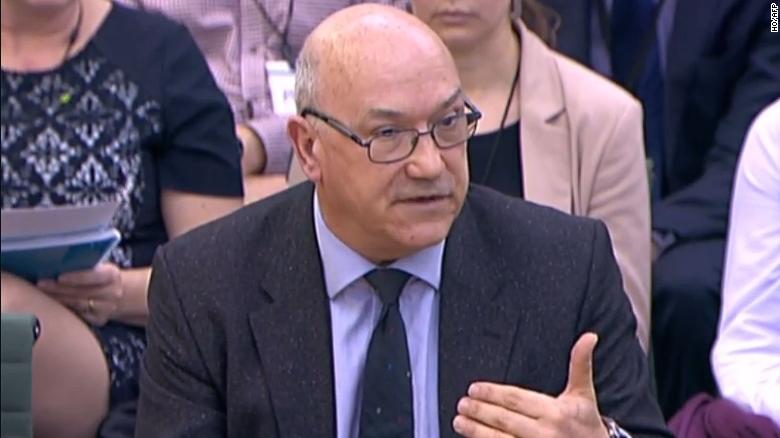
This is about abuse of power," Winnie Byanyima, the executive director of Oxfam International, told Parliament in February. "Whether they have given them some money from an Oxfam program or from their pocket as their salary, it's still abhorrent, and we are ashamed and upset about it, and we're going to root it out of our organization."
The staff members were deployed to Haiti in response to the devastating earthquake in 2010, which killed between 200,000 and 300,000 people.
Wesley Laîné MAIPS ’14 has spoken at the Clinton Global Initiative, delivered the graduation speech at the Sciences Po Law School in Paris, and appeared on the front page of the New York Times with his classmates when he participated in Harvard’s first commencement for black graduate students. But if you are to ask him what place or moment in his life matters most, he will always return to his native Haiti.
In the fall of 2012, a student turned a class exercise about a love triangle and alligators into a passionate but playful debate on the morals of intervention and neutrality. The student was Wesley Laîné, and it was his very first day at the Institute; the exercise was a part of new student orientation. Despite the weighty direction of the conversation, the debate never got hostile or contentious, but felt meaningful and open.Laîné lived in Port-au-Prince, Haiti, until he was 12 years old and his family moved to Oklahoma City. His father, a minister who had put himself through law school in the evenings, had deep ties in the community, and the family decision to leave was not an easy one. “He bet on us,” Laîné says. “Like most parents in Haiti, my parents dreamed their kids would have it better than they did.” He says that his family had “crawled” its way to the middle class by the time they left, but violence was increasing, and going to school was a daily struggle, if there was school at all, because of frequent strikes. In many ways, he says, it was the typical immigrant story once they got to the United States: his dad worked lots of odd jobs to make ends meet and made ambitious plans for the children to get quality educations and make better lives for themselves. “My dad worked so much I used to hide his shoes so he wouldn’t have to go.”
Like most parents in Haiti, my parents dreamed their kids would have it better than they did.
Returning to Haiti after the devastating earthquake in 2010, Laîné worked there for two years before enrolling at the Institute. His foundation, Haiti Philanthropy, became heavily involved with clean water projects in the Southeast Department of Haiti as a response to the outbreak of cholera brought by UN peacekeepers from Nepal. The foundation has expanded to include a rainwater harvesting reservoir and projects to help women and children. Last summer he visited many villages where the foundation serves beneficiaries and spent time “bearing witness to the daily struggles.” He adds: “Anyone who aspires to political work has to be aware of what life is really like. It is so easy to get out of touch with what is happening on the ground.”He credits his love of history, politics, and historical figures such as James Baldwin for inspiring him to go to Paris through Middlebury Schools Abroad while he was a student at the Institute. Like the author, he felt the City of Light offered him the chance to “just be a person, anonymous. There is a degree of liberation in anonymity that I craved during this part of my journey.” In the U.S. most of the time, he says, the daily injustices that American society levies on black citizens does not allow for that. “The U.S. is also my home, and I love it, which is why I have strong feelings about the current state of American society. The sad fact is that many of the things Baldwin talked about are still true today.” He particularly hates when people use him as an example in order to turn a blind eye to the systemic injustice that exists today. “In many ways, I am the exception. I feel very fortunate. America’s promises are not available to everyone. If two or three things had gone differently, I would not be here. Many of my friends are stalked by the justice system.”
The U.S. is also my home, and I love it, which is why I have strong feelings about the current state of American society.
Laine lives in Paris now, where he is a lawyer with a top firm. The distance between his home and Oklahoma City, where his family still lives, can seem great, both literally (4,820 miles) and figuratively, the distance traveled reflected in his achievements. Laîné earned two law degrees; his classmates at Sciences Po elected him to give the commencement address, and he was part of the inaugural black commencement at Harvard.“It was truly an affirmation of everything we and our families had gone through to help us get there.” He feels strongly that the only way forward is to face the past.He says that every action, degree, career choice he takes is to lay the groundwork for a political career in Haiti, where he wants to shepherd transformative change for the impoverished country. All of the character traits that served him well that first day at the Institute—a quick wit, nimble intellect, and warm demeanor—are sure to be an asset to him as a politician promoting progress. “Like all Haitian parents, mine are strict and hard to please,” Laîné says with a chuckle, “but this visit my dad told me that I would probably accomplish what I want to do in Haiti.”
Michael Brun held his microphone out toward the crowd at Miami’s Little Haiti Cultural Complex as they erupted in cheers and some waved Haitian flags. The venue was packed, the cocktail bar did a roaring trade and the smells of fried pork griot and spiced pickled cabbage, or pikliz, and fried plantains were in the air.Brun hoped his Bayo Block Party, which he hosted in Little Haiti in March, would bring a sense of unity. From the stage, the New York-based music producer and DJ encouraged people to shout out the Creole word "bayo." That’s the title of his newest track, too. “Bayo” means "to give.”“It also means give your heart and soul to what you do,” says Brun. “When you put everything into your work, people can tell.”In a call-and-response, the audience sang along while the mix of hip-hop and Caribbean rhythms pushed the PA system to the brink. It is here in Miami that he decided to take the Bayo Block Party on the road and bring the festive spirit of Port-au-Prince to both Haitians and non-Haitians.
“I want people to know how much of a strength Haitian culture is. Don’t forget the history of the country’s accomplishments,” says Brun.About 1,000 people were treated to live guests and a finale led by an ensemble of drummers and horns. The Bayo Block Party goes on tour during the month of June.Brun is attempting to cultivate an alternative narrative to combat misconceptions of Haitians by speaking out publicly any chance he gets. In January, President Donald Trump allegedly included Haiti on a list of “shithole” countries. Earlier, officials told the New York Times, he said that people in Haiti “all have AIDS.”Brun says he has heard the same things all his life.“Empowering the youth, empowering the people that are most vulnerable — you have to get strength from within,” Brun says. “These words aren’t going to hurt me. But for a young kid hearing every day that Haiti is this and Haiti is that, that you're basically trash, it is going to have an effect.”He reminds people about his country’s proud history and resilience. In 1804, Haiti became the first black republic in the Western Hemisphere, after winning independence from French colonial rule and abolishing slavery.
Dj Michael Brun wants to change the narrative on Haiti
“Haitians have taken every type of hit imaginable over the course of their history, from natural disasters to political and economic instability," says Brun. “We're still standing and we're still smiling and we're still fighting.”Brun remembers hearing Haitian rhythms when he was a kid on his walks through the streets of Port-au-Prince on the way to visit his grandparents. He grew up in Port-au-Prince where street processions were led by rara. Nothing wakes up a neighborhood like a rara street procession, with its goat-skinned drums, bamboo horns, tin trumpets and exuberant chanting and clapping. A small group can turn into thousands, carrying on for miles, especially during Haiti’s annual carnival held in February.You’ll hear rara often in Brun’s latest music.“It is a really raw, primal sound, but very infectious,” Brun says. “It is fast-paced, but it's also very soulful. I find it is a combo that I haven't really seen in many other countries around the world.”
Brun, 26, was already playing piano, guitar and violin by the age of six. In the age of music production software, Brun got into playing around with beats as a teenager. After high school, he enrolled in the pre-medicine program at Davidson College in North Carolina and was on track to become a pediatrician. But he decided to take a hiatus from medical school to pursue his other passion: Electronic Dance Music, or EDM. As a young EDM producer and DJ, he quickly became popular and performed at Coachella and Miami’s Ultra Music Festival. In 2013, he released “Gravity,” his debut EP, and in 2014 he founded the Kid Coconut label and released music by Basement Jaxx and Dirty Twist, among others.As yet, Haitian music has not enjoyed the international success of other Caribbean styles. Miami-based music promoter Farah Larrieux says it’s because Haitian music is not as visible in the international market as soca, calypso, reggaeton and reggae. There is a “language barrier and lack of organization, leadership and professionalism in the Haitian music industry,” she says. That’s what Brun wants to change.“I am going to take the Bayo live show around the US and around the world,” Brun says. “Really giving a snapshot of Haiti from my point of view.”“It’s a party that I would invite anyone who wanted to hear the hottest Haitian music, and also to hear new upcoming artists,” says Jonathan Perry, better known as J. Perry. He joined Brun onstage in Miami. “For Haitians in the US and in the world, I want them to know that they have a connection with Haiti. Even if they don’t live there, they should know that we appreciate them. We’re all one, we’re united."
It’s a mix that has paid off. Spanish-language broadcasting company Telemundo recently revealed their anthem for the 2018 FIFA World Cup in Russia. The song, “Positivo,” teams up Colombian reggaeton star J. Balvin singing in Spanish over the beats from Brun’s song “Bayo,” taking Haitians rhythms global.“Using Haitian music as the backbone of what I'm creating now is also a way to show how far Haitian music can really go,” says Brun. “That’s my journey as a producer, an artist and DJ — to take those sounds in new directions, in new contexts."
J. Balvin, Michael Brun - Positivo
J-Perry, Paul Beaubrun, Gardy Girault, Niska, Rutshelle, Mikaben, Anie Alerte and Sandro “Dro” Martelly will make guest appearances on stage. Michael Brun’s Bayo Block Party, now on tour with stops in New York City, Washington, DC, Montreal and Boston.By: Maria Bakkalapulo and Niall Macaulay for PRI.org | June 13, 2018
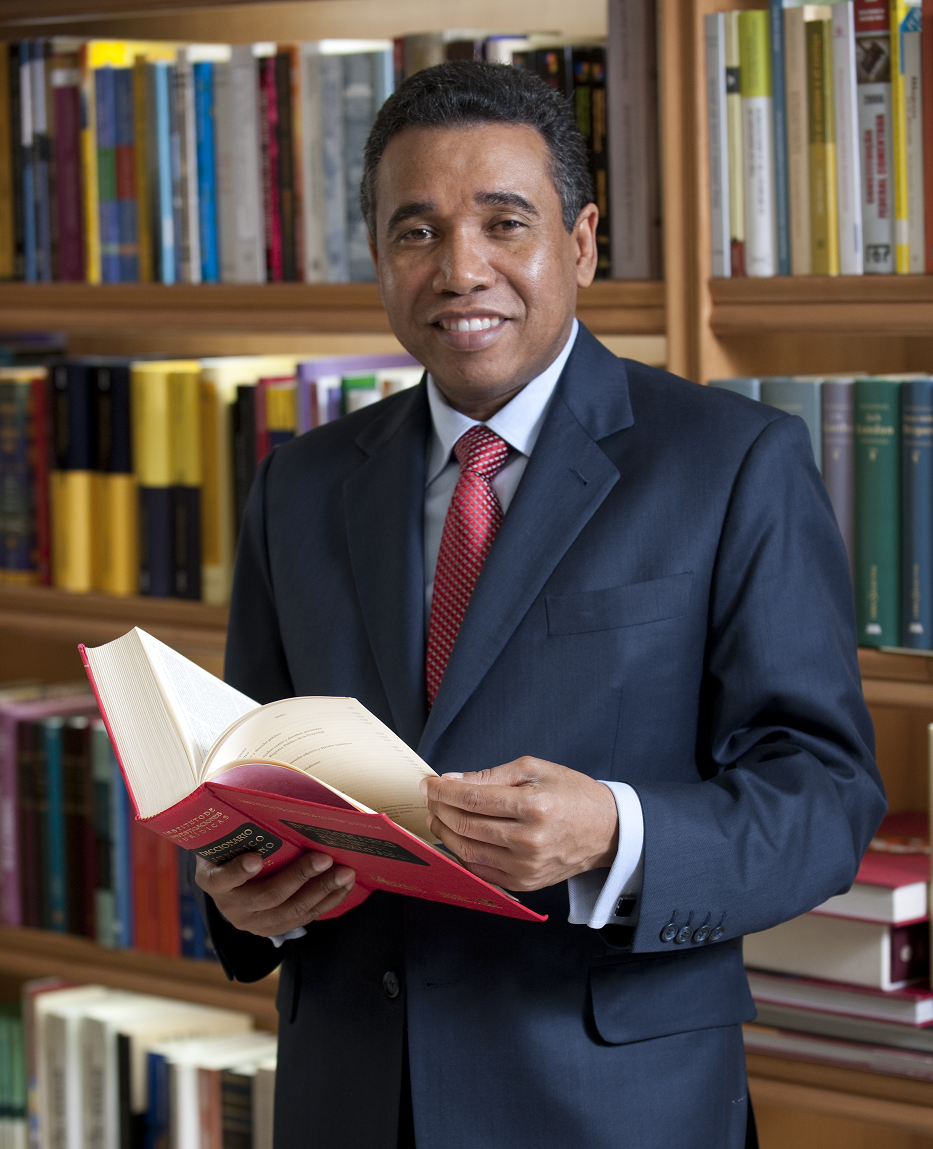
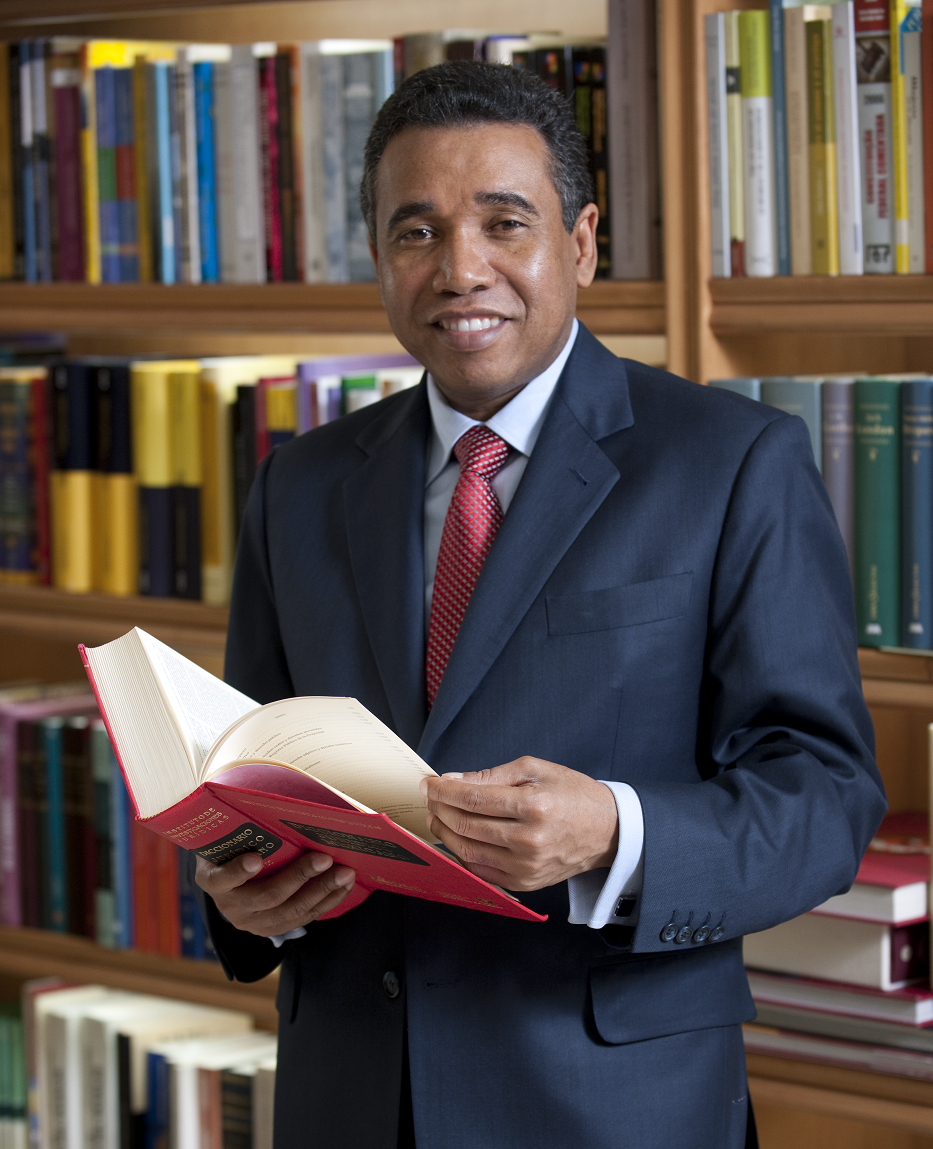
The U.S. Department of the Treasury’s Office of Foreign Assets Control (OFAC) issued a press release whereby they've "sanctioned Dominican Republic Senator Felix Ramon Bautista Rosario (Bautista) for engaging in corrupt acts, including in relation to reconstruction efforts in Haiti. “These actions are part of our continuing campaign to hold accountable government officials and other actors involved in human rights abuse and corrupt activities. Senator Bautista used his position to engage in corruption, including profiting off of humanitarian efforts related to rebuilding Haiti..." said Sigal Mandelker, Under Secretary of the Treasury for Terrorism and Financial Intelligence. “The United States will continue to use Global Magnitsky and our other authorities to ensure that corrupt actors and human rights violators cannot use our financial system to enable and support their abhorrent activities and exploit the innocent.”According to the Department of Treasury, "Bautista is a Senator from the Dominican Republic who has engaged in significant acts of corruption in both the Dominican Republic and Haiti, and who has been publicly accused of money laundering and embezzlement. Bautista has reportedly engaged in bribery in relation to his position as a Senator, and is alleged to have engaged in corruption in Haiti, where he used his connections to win public works contracts to help rebuild Haiti following several natural disasters, including one case where his company was paid over $10 million for work it had not completed.In a related action, OFAC designated five entities in the Dominican Republic that are owned or controlled by Bautista: Constructora Hadom SA, Soluciones Electricas Y Mecanicas Hadom S.R.L., Seymeh Ingenieria SRL, Inmobiliaria Rofi SA, and Constructora Rofi SA.The law also requires the Secretary of State to publicly or privately designate such officials and their family members. In addition to the designation of Senator Bautista, the Department is also publicly designating his spouse, Sarah Haydee Rojas Pena, their minor children, and his other children including Felix Ramon Bautista Abreu, Felix Jose Bautista Abreu, Felix Augusto Bautista Abreu, Felix Miguel Bautista Soler, Felix Fidel Bautista Grullon, and Yanilssa Bautista Bencosme.See full press release from The U.S. Department of the Treasury | June 12, 2018
A large tattoo from Karl Joseph's left shoulder through the center of his back, a detailed emblem also featured on the Haitian flag.
Joseph was born in the impoverished island nation and raised there 11 years before moving to Orlando, Fla. with his mother. That formative period helped define the Raiders safety's work ethic, commitment to family and his roots.
Joseph hasn't forgotten it. Haiti remains a part of him, bonded by a connection expressed well beyond body art.
That's where he spent one of life's biggest moments, shunning the spotlight to be with relatives in Haiti when the Raiders selected him No. 14 overall in the 2016 NFL4. That was celebration of where he came from on the day he became wealthy beyond childhood dreams.
"It keeps me grounded," Joseph said on NBC Sports Bay Area's Raiders Insider Podcast. "That's one of the reasons I went back for my draft party. Anytime I get a chance to go back, I take it. It makes you appreciate the little things you have, the luxuries you often take for granted. It also makes me hungrier to work hard, play well and give back. Every time I go the memories come flooding back, which hits the reset button for me. It gets ready to come back here, ready to work."
Joseph frequently visits family in his native Jacmel, a port town off Haiti's southern coast. He went back again this spring, but not on holiday.
He joined former Seahawks defensive lineman Cliff Avril's annual pilgrimage to Haiti, which is more than a fundraiser and photo opp. This group goes to work.
They helped build a school, supply a health clinic and run a football camp. They met with Haiti president Jovenel Moise, discussing issue pressing a beautiful in need of help for its poorest people.
"That's one of the main reasons I was excited to go on this trip," Joseph said of the weeklong charitable venture. "I've seen some of the work he had done out there, and I was ready to get involved. A lot of people go out there and put their name on stuff, but few want to interact with the people and get their hands dirty."
Joseph broke from the pack late in the trip to visit family still living in Jacmel. They toured the now rundown house Joseph grew up in, a moment, among others, chronicled on his Instagram page.
Joseph plans to join Avril's trip each year, and eventually start his own foundation focused on helping bring awareness, funds and infrastructure to Haiti.
He understands that performing well will help that cause.
"I have to continue to do my part on the field," Joseph said. "The better I play, the more I contribute to Raiders victories, the more people will pay attention. I need to use that to shine a light on issues in the country I grew up in."
Joseph believes he can reach new heights working with new head coach Jon Gruden and staff. The safety has played well in spurts, but doesn't believe vast potential has been reached.
"I don't even feel like I've scratched the surface yet," Joseph said. "I feel like I have so much room for improvement in every aspect of my game. I've improved my mental game this offseason, and fit into this new defense. We've come a long way as a group, and that I've made strides personally. I'm going to keep pushing, even during the down period. I have such high expectations for myself. I'm excited about the season. People haven't even seen the real Karl Joseph yet."
The real Karl Joseph is a thumper, someone who can play deep and aggressive near the line of scrimmage. He's part of a safety group that also features Marcus Gilchrist and Reggie Nelson, and will have a chance to thrive in Paul Guenther's defense.
That would help the Raiders win and bring attention to Joseph and the place he's commitment to helping.
"Football is my platform to give back there," Joseph said. "That's my purpose in life, to be able to make this an opportunity to shine light on issues (in Haiti) and give back. I cherish the chance to go back and see the place where I was born and family that was around during a critical time in my life. It's a special place to me."
Brightly colored clothes air from lines strung between rudimentary plywood-sided homes. Cinderblocks stacked chest-high form the skeletons of unfinished houses, anda pile of unused rebar lies in the dirt patio.A billboard puts a name to what has become something of a neighborhood interrupted: "Little Haiti. City of God."The arid hillside barrio, on property belonging to the Ambassadors of Jesus evangelical church, made headlines last year when nearly 3,000 Haitians ended up in this city bordering San Diego on a failed bid to get to the United States. About 200 were taken in by the church.But the church's plans to build a community for Haitians hit a roadblock when civil defense officials said there was a flood risk and barred further construction. A year later, just eight of the 100 homes envisioned are in place, with another 50 people or so living in similar conditions in nearby Scorpion Canyon."The neighborhood was not built, and the Haitians who were here went to rent elsewhere and became part of the work life," Tijuana Mayor Juan Manuel Gastelum Buenrostro said.Indeed, the denizens of Little Haiti represent a small portion of the local migrants from the impoverished Caribbean nation, many of whom are putting down roots just across the border from what was once their destination.Most of the Haitians had gone to Brazil after a 2010 earthquake devastated their own country and found jobs during the Olympics and World Cup. When Brazil's economy slumped and work dried up, they headed north. Some decided to stay in Tijuana because they had found decent work and were eager to settle down. Others said they feared the U.S. would be unwelcoming.Across the city, Haitians have found employment as welders and factory workers, and have become part of the urban landscape, seen boarding buses, pumping gas or wading into traffic selling flavored waters to motorists."With this job plus what my wife earns selling tamales ... it gives us enough to pay the rent and the monthly expenses," said Thony Mersion, a 34-year-old working as a security guard at the Tijuana airport.On Sundays, many attend a special service at Ambassadors of Jesus. Recently the Haitian ambassador flew up from Mexico City to officiate at a mass wedding of his compatriots. Some have now had Mexican-born children, which makes it easier to qualify for residency.One of the most successful, commercially, is Marie Toussaint, 30, who this year opened a beauty salon with money loaned from an uncle in Los Angeles."With how well it's going, I can hire Mexican employees to attend to my clients who come from San Diego," Toussaint said.The Haitians also got a high-profile shout-out last week when, during a presidential debate, candidate Ricardo Anaya praised Tijuana for taking them in."I get goose bumps. ... That is the Mexico I want, a generous Mexico, a Mexico with arms open," Anaya said.However, an estimated 500 to 800 arrived after authorities stopped issuing humanitarian visas for Haitians in April 2017, and they are living on society's fringes, unable to work legally.Pierre Franzzy, 26, said he goes almost every week to the migration office, trying to legalize his status. But when a high-profile caravan of Central American migrants that had attracted the ire of U.S. President Donald Trump arrived in the city recently, he was told his case was no longer a priority."For that reason I have made the decision to return to Haiti voluntarily before they file a complaint or deport me," Franzzy said.Back in Little Haiti, pastor Gustavo Banda said about $20,000 has been spent on the existing homes and he's hopeful — optimistic, even — that he'll be able to put up more, despite the opposition from civil defense officials."Here the property tax is paid and the government does not do anything for the improvement of the homes ... or even basic services such as trash collection, paving and drainage," Banda said. "We have been dealing with this problem for 12 years, and this will not stop us.""The Haitians wish to stay here, and with the government authorizing them in two years to bring close relatives who currently live in Haiti, I am sure that Little Haiti is going to become a community with Creole as its main language," he added.Not all envision a permanent stay in the neighborhood, which is next to a pungent wastewater channel at the bottom of Scorpion Canyon.Saintanier Jeune, 40, has a stable factory job and said he is comfortable in Little Haiti. But he hasn't lost sight of the U.S., visible from a nearby high point in the form of San Diego's bay and gleaming office towers."I have the possibility to become a permanent Mexican resident since my daughter was born in this country," Jeune said. "Still, I want to leave ... because I do think I could have a better quality of life on the other side."
Haiti Tech Summit, founded by Forbes 30 Under 30 entrepreneur, mother, and wife, Christine Souffrant Ntim, is back and will be even bigger than last year. The 13-year initiative of the Global Startup Ecosystem (GSE), which brought together hundreds of entrepreneurs, investors, digital marketers, and creatives, will be taking place June 21–23 and like last year, Black Enterprise will be in the building.
In case you missed the first annual tech summit, Haiti hosted 100 global speakers from around the world including Silicon Valley tech titan Ben Horowitz. Additionally, the summit welcomed over 500 guests for two historic days—turning it into the region’s largest tech gathering and Haiti’s first major international global summit ever.
“Hosting an event of this magnitude in Haiti not only aimed to revitalize economic activity in the country but to also provide a new narrative for Haiti and emerging markets,” stated founder, Souffrant Ntim. “Haiti is not open for business. Haiti is open for disruption.”
Founder, Christine Ntim (Image: Haiti Tech Summit)
Companies present last year included Google, Facebook, Uber, Airbnb, Facebook, PayPal, Mastercard, LinkedIn, Github, Dropbox, Sendgrid, YouTube, and Adobe and in addition to Horowitz, spotlight speakers included, the President of Haiti, his excellency Jovenel Moïse and celebrity influencer, Vicky Jeudy from Netflix series, Orange is the New Black.
The conference also provided resources and tools for entrepreneurs, like access and information to high-end ecosystems like Steve Blank’s Launchpad, Galvanize, Puerto Rico’s Parallel 18, Pivotal Labs, Angel Hack Accelerator, WIN Lab, Startup Grind, Forbes 30 Under 30 listmakers, Brazil’s Laiob-Latin America Institute of Business, and Alter Ventures.
So what resulted from all of this? Airbnb was able to close a 5-year agreement with the Ministry of Tourism; Facebook launched the country’s first internationally recognized developer community, and Google Launchpad launched an accelerator program to source and support the country’s leading startups. Furthermore, the president of Haiti announced the country’s first national incubator for entrepreneurs to be located in the nation’s capital—Port-au-Prince. The incubator launches the first week of June.
With all of that said, what can we expect this year? Well, the summit will return to the luxurious Royal Decameron and will kick off the event, none other than Twitter’s own co-founder and CEO, Jack Dorsey. Dorsey will be discussing his experiences launching and scaling two globally recognized tech startups that both aim to “simplify complexity’—Twitter via communication and Square via financial inclusion.
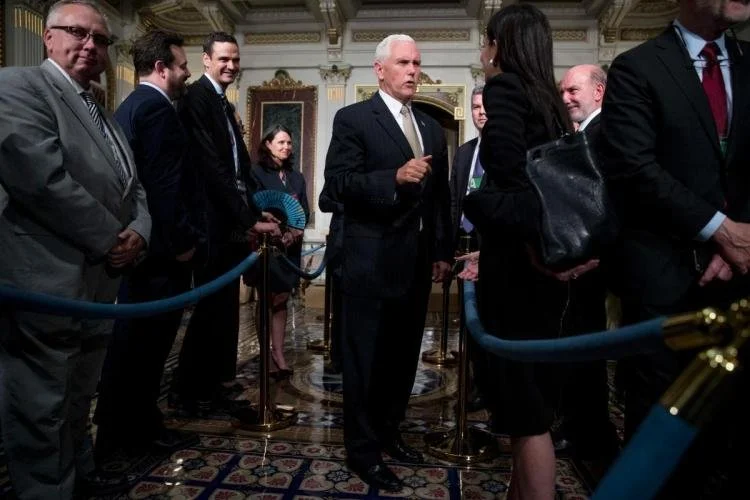
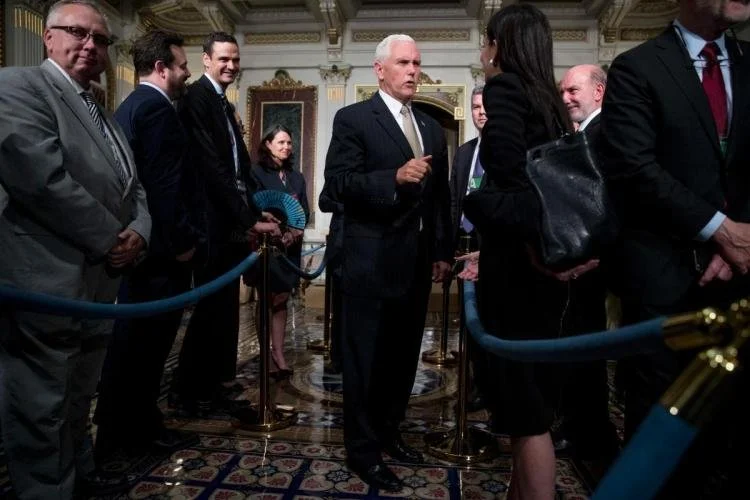
Vice President Mike Pence greets members of the audience at a reception for the Organization of American States in the Indian Treaty Room at the Eisenhower Executive Office Building on the White House complex in Washington, Monday, June 4, 2018, as the Trump administration renewed its call Monday for the Organization of American States to suspend Venezuela and for other members to step up pressure on the country's government to restore constitutional order. Andrew HarnikAP Photo
WASHINGTONThe government of Haiti was not invited to a special White House reception Monday night for “like-minded” governments who are standing with the United States in a call to suspend Venezuela from the Organization of American States.Vice President Mike Pence and his wife Karen invited a group of more than 22 countries' leaders to the White House for a cocktail reception. Mike Pence described the gathering as a “small token of appreciation” for support on such a challenging issue in the hemisphere.“I’ll make a promise to you,” Pence said. “Stand with us and know we’ll stand with you. Work with us and we will work with you.”Haiti was noticeably absent from the reception that also included top ranking members of the National Security Council and State Department as well as the Secretary General of the OAS Luis Almagro.It was a clear indication that despite considerable pressure in recent days by the administration and an April meeting between Haitian President Jovenel Moïse and Florida Republican and Venezuela hardliner Sen. Marco Rubio that the country had not caved and would not be supporting the U.S. toughening position on the Maduro regime.Held in conjunction with the 48th annual OAS General Assembly, Pence used the reception to call on allies to kick Venezuela out of the United Nations-like organization for the hemisphere.Carlos Trujillo, the U.S. ambassador to the OAS, said Haiti and others who backed Venezuelan leader Nicolás Maduro were intentionally left off the invitation list.“We did not invite any countries that recognize the Maduro regime as legitimate,” Trujillo said.Haiti has been under considerable pressure by the United States to change its stance from abstention to expulsion. But based on the speech Monday from its foreign minister, Antonio Rodrigue, it doesn’t appear that the Trump administration succeeded.While Caribbean ministers for the most part made no mention of the Venezuelan crisis in their interventions, Rodrigue pushed for dialogue with Venezuela and respect for all nations’ sovereignty and independence.“It is obvious to us that the Venezuelans themselves must resolve their problem. It’s the only way to a sustainable and lasting solution,” Rodrigue said.Among those who did receive invites were Argentina, Bahamas, Barbados, Brazil, Colombia, Ecuador and Guyana. But notably several Caribbean nations who have also been sympathetic to Venezuela were also invited, including Jamaica, Saint Lucia and Saint Kitts and Nevis.Tuesday’s vote will be a significant test for the Latin American and Caribbean diplomats who have been reluctant to take punitive measures against one of their own.“Whether the OAS takes this step will speak volumes about its relevance in the 21st Century — and it will make clear which nations in our hemisphere truly stand for freedom,” Pence said.Venezuela's subsidized oil export program, Petrocaribe, has been a powerful tool that the Maduro government has used to wield political influence in the Caribbean.Caribbean and Latin American nations such as Haiti, Saint Vincent and Grenadines, Dominica, Saint Kitts and Nevis and Nicaragua receive billions in cheap loans for oil. And in return, they have helped Maduro retain crucial diplomatic support and block hemispheric efforts to punish the regime.Moïse also currently serves as chair of the 15-member Caribbean Community regional bloc known as Caricom. While Caricom usually votes as a bloc on international issues, members have increasingly been divided over the Venezuelan issue.One observer noted those divisions are likely to continue should the issue go for a vote with some Caribbean countries voting for, others against and others abstaining.During a meeting of Caribbean ministers on Sunday, Rodrigue gave no indication of Haiti’s position, leading many to wonder if the country, an ally of the U.S. with a $2 billion debt to Venezuela, would switch its stance.Trujillo was not unsympathetic, but said the United States hoped Haiti would recognize the worsening conditions in Venezuela.“They’re in a difficult position,” Trujillo said of Haiti. “They have two friends, the United States and Venezuela. They have $2 billion in external debt that is due to the government of Venezuela but we’re hopeful that the government of Haiti will make the right decision. It’s a country that has suffered a lot.”By: Franco Ordoñez And Jacqueline Charles for mcclatchydc.com | June 4, 2018
Despite Haiti dominating the news cycle earlier this year over the infamous Oxfam sex scandal, some more recent positive news stories coming out of the country seem to have completely flipped the script. Earlier this month, President Jovenel Moïse’s flagship policy – the ‘Change Caravan’ – marked its one-year anniversary. This initiative is a big deal for Haiti and represents a bold new approach to addressing the long-time lack of adequate infrastructure and other necessities, which has prevented meaningful development in the country. This policy enables unprecedented coordination among multiple government departments, resulting in infrastructure project costs being almost halved and projects being completed at an unprecedented pace.
The Change Caravan has produced a number of impressive achievements in areas ranging from health care to education, from the environment and energy to infrastructure. In twelve months, over 200 kilometres of road have been built or renovated, eleven rivers cleaned, eight hospitals and health centres rehabilitated, and 400 classrooms renovated. Arguably, however, one of the most ambitious goals is rural electrification, with President Moïse going so far as to promise 24-hour electricity for all Haitians by the end of his term.I recently chatted with President Moïse about the Change Caravan, as well as his vision for Haiti’s future.What are the biggest challenges facing Haiti?There are some inherently complex problems facing Haiti, one of them being faith in the government and what it can achieve, so when I took office I vowed to win back and restore confidence. Our goal is to be at the service of the Haitian people and create a better life, a better country, for them. That’s why we launched the Change Caravan.Through this initiative, we’ve made great headway on some of the challenges facing the country, notably relating to electricity. I promised to deliver electricity 24 hours a day for all and, while I recognise this is a tall order, I have every confidence that we can do it. It is incredibly important because the lack of power is one the most significant constraints to economic growth and empowerment, with small businesses and households often needing to use expensive and unsustainable generators.In undertaking this challenge, we took advantage of lessons learned from our neighbours’ experiences. A key lesson is that a centralized power supply is the worst option for a climate-vulnerable island nation – a storm need strike only one area connected to the national grid in order to destroy the entire country’s power supply. Decentralisation thus became an integral part of our strategy.What exactly does your electricity strategy entail? Our strategy consists of three main components to generate the needed power. First, it means building and rehabbing the traditional, national grid to connect a handful of large urban centres across the country’s ten Departments (or regions). Secondly, we plan on building microgrids – decentralised, independent power sources – in the 100 or so smaller population centres, many of which are in hurricane-prone areas that currently have no access to electricity. All the energy generation from the microgrids will be mainly based on renewable energy sources (solar, wind, hydro and biomass).While these smaller cities could have been connected to the national grid, it is not cost-effective to connect them to the grid, as they are widely dispersed across lowly-populated areas. In addition, these microgrids are smaller and easier to create, meaning the whole project can be completed much faster. Remarkably, each microgrid requires less than 1 megawatt (MW) versus the 600 - 700 megawatts (MW) required to power the ten (10) regional grids.Lastly, for scarcely populated areas such as our mountain regions, electricity will be provided via small stand alone solar power systems. In fact, we have already deployed around 10,500 such off-grid systems through a pilot programme. With a government subsidy of 50%, the fee of each system is less than $2 per month.How does this compare to power challenges in other countries in your region, or even in Africa where power supply has been a major challenge?In emerging markets, the grid is only one part of the electricity strategy. We knew how important it was to diversify. Islands like Puerto Rico, for example, have learned the importance of diversification the hard way. The generating capacity in Puerto Rico is overly centralised and with hurricane season starting on June 1, there is a strong possibility that the whole country may be plunged into darkness, once again.Comparisons can be made further afield too with climate-vulnerable countries in Africa.As we are experiencing in Haiti, and as also evidenced in many African countries, there is a direct correlation between rising energy costs and slowed economic growth. A similarity between our approach and those seen in some African countries is that decentralising the grid is increasingly recognized as the necessary first step in solving power problems. Solar systems, which in our case will be supplied to people in places where mini grids are not viable, are a good way to connect people for whom it is a struggle to get on the main grid. Solar PV (photovoltaic) systems also can help people who are using expensive kerosene generators, which are ineffective and bad for the environment – something we are very serious about avoiding in Haiti. Solar PV systems have caught on in places like Nigeria too, with many private companies offering self-installed solar kits to a growing pool of customers.Besides the grid, are there any other energy-related projects in Haiti?Our energy strategy extends beyond the grid and mini-grids. We also are committed to renewable energy, as evidenced by the building of a hybrid diesel/wind/solar power plant – a technology first for Haiti. This power plan will operate four blocks containing 48 small vertical wind turbines capable of producing 500 watts each and a system of 408 solar panels (128 kW), for a combined total output of 152 kilowatts, and will include a diesel backup generator with a capacity of 100 kilowatts.Clean energy is very important to us and, in spite of the devastating natural disasters Haiti has faced, we are fully committed to creating a renewable energy economy. Last September, our parliament abolished import tariffs and duties on solar equipment to encourage as much growth in this industry as possible. Our reason for doing this is because we understand how well-placed Haiti is for solar power – we have a great deal of sunlight, comparable to, say, Phoenix, Arizona, and of course there are massive cost and environmental benefits.Like Africa, Haiti can leapfrog the fossil fuel industry and the construction of traditional grids as we work to achieve energy independence and economic stability.Where do you see Haiti in five years’ time?Through the Change Caravan, which has already achieved much in its first year, I anticipate in five years’ time Haiti will be almost unrecognisable. Besides becoming a renewable energy powerhouse, I see us making great leaps in terms of agriculture, education, health care, infrastructure, and many other areas.For decades, the relationship between the government and the people in Haiti was in disrepair, with international groups taking the place of the Government and providing some basic services to our country. My administration is changing this and restoring faith in the government. The Change Caravan is our way of putting an end to business as usual, putting an end to the inadequacies that have existed for far too long in Haiti’s government.We know that what we are undertaking is ambitious, but our unwavering priority is to modernise Haiti and restore its people’s faith in their Government, and I am confident that the Change Caravan has set us on the right path.By:Mfonobong Nsehe , Contributor for Forbes.com | June 5, 2018









 The allegations first emerged in 2011, prompting an internal investigation, but Oxfam didn't make the report public until this February. According to the report, four staff members were dismissed for "gross misconduct" and three others resigned after the investigation, including Haiti country director Roland van Hauwermeiren.
 This is about abuse of power," Winnie Byanyima, the executive director of Oxfam International, told Parliament in February. "Whether they have given them some money from an Oxfam program or from their pocket as their salary, it's still abhorrent, and we are ashamed and upset about it, and we're going to root it out of our organization."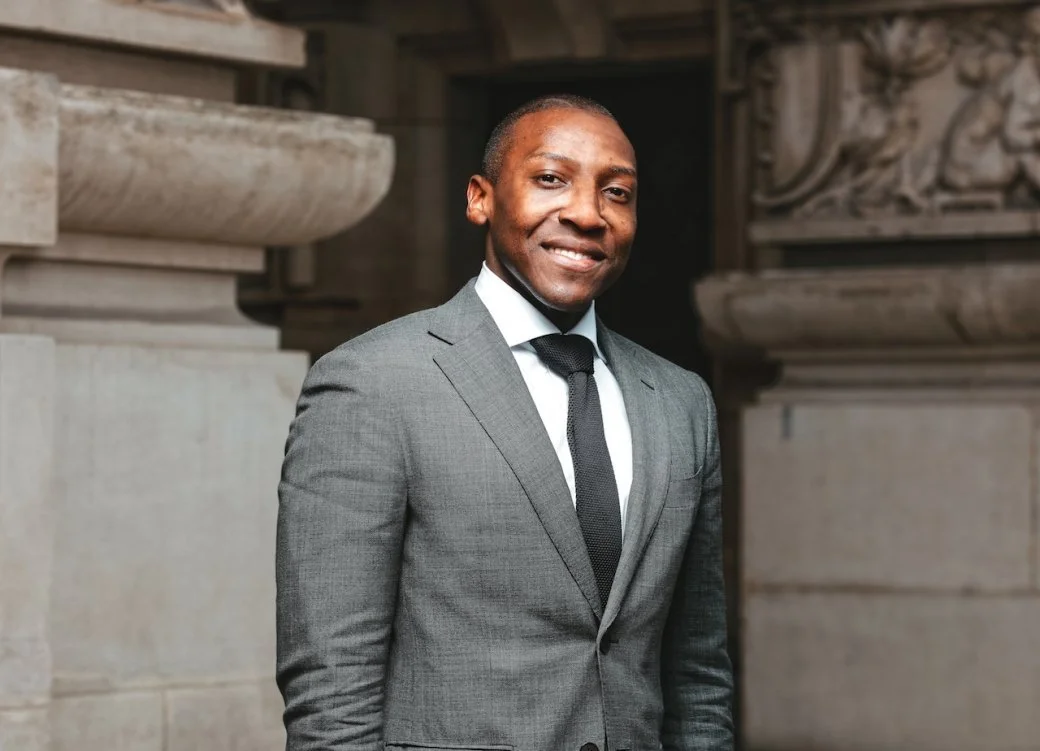
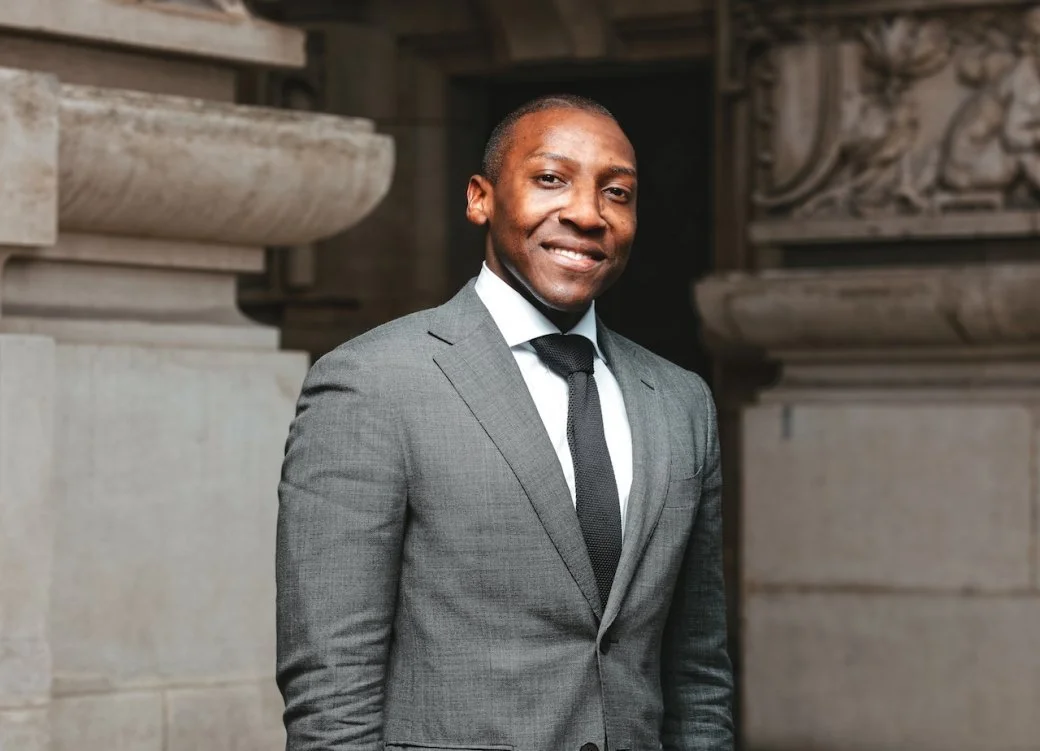


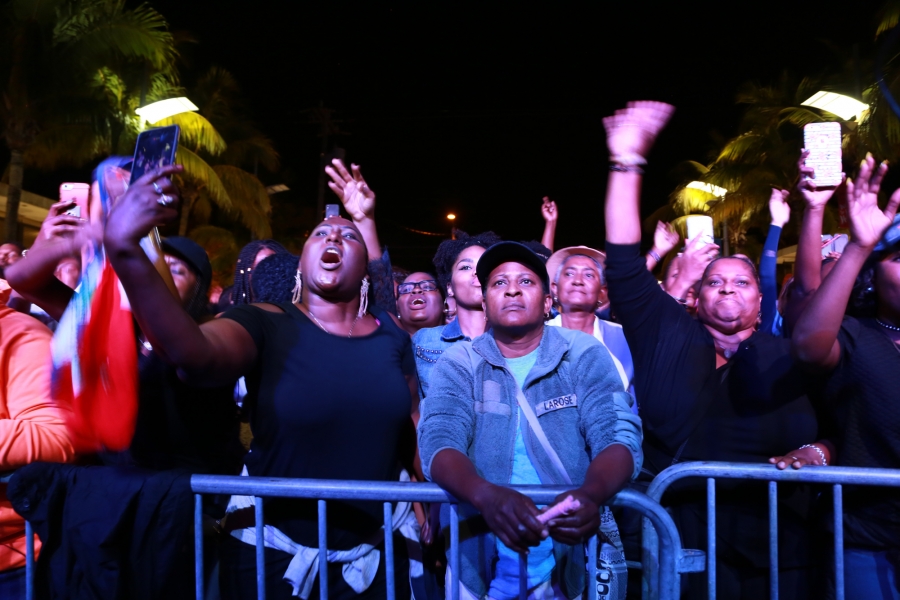
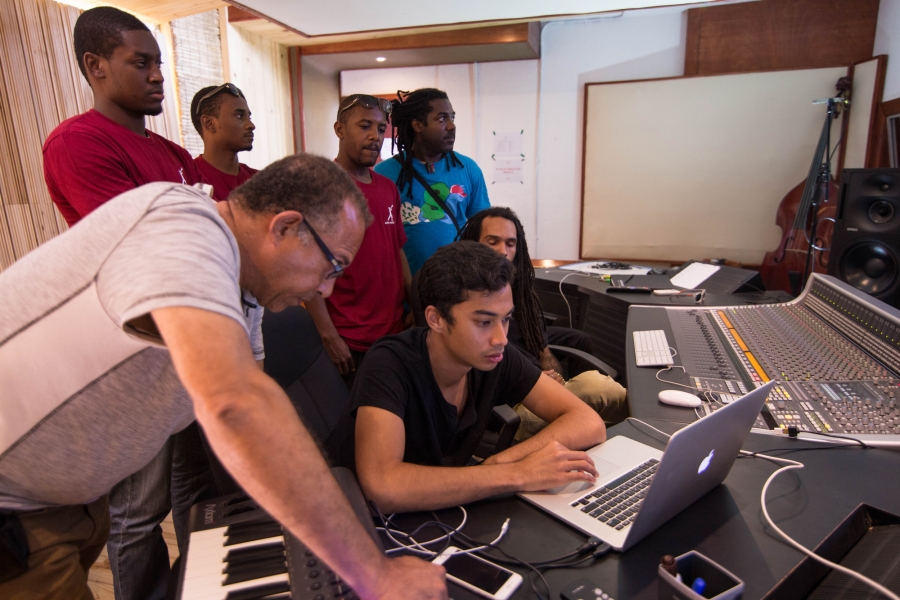


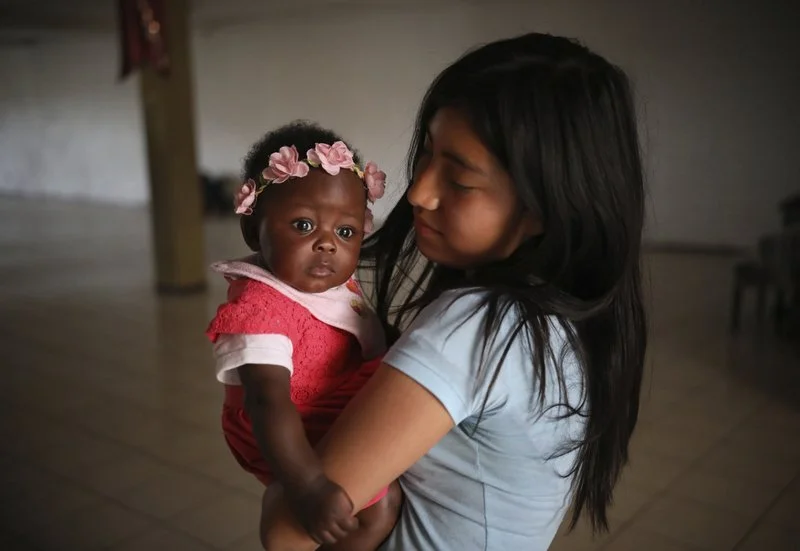
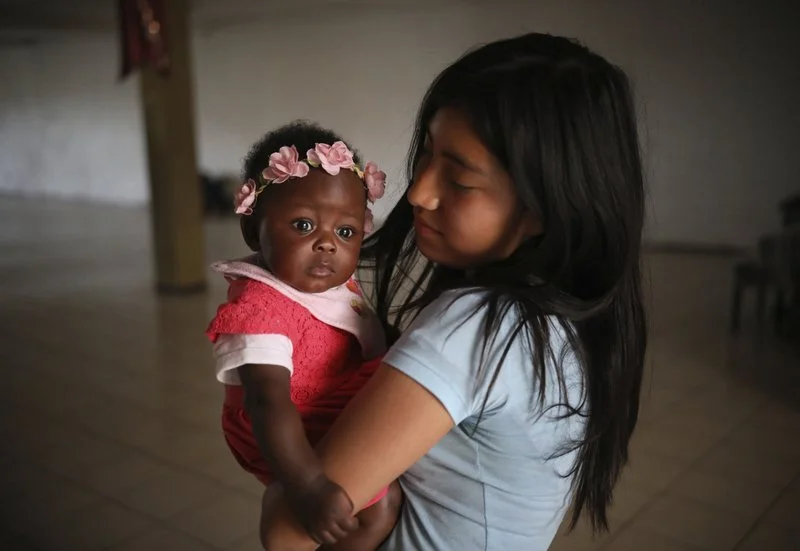
 Brightly colored clothes air from lines strung between rudimentary plywood-sided homes. Cinderblocks stacked chest-high form the skeletons of unfinished houses, anda pile of unused rebar lies in the dirt patio.A billboard puts a name to what has become something of a neighborhood interrupted: "Little Haiti. City of God."
 The arid hillside barrio, on property belonging to the Ambassadors of Jesus evangelical church, made headlines last year when nearly 3,000 Haitians ended up in this city bordering San Diego on a failed bid to get to the United States. About 200 were taken in by the church.But the church's plans to build a community for Haitians hit a roadblock when civil defense officials said there was a flood risk and barred further construction. A year later, just eight of the 100 homes envisioned are in place, with another 50 people or so living in similar conditions in nearby Scorpion Canyon."The neighborhood was not built, and the Haitians who were here went to rent elsewhere and became part of the work life," Tijuana Mayor Juan Manuel Gastelum Buenrostro said.Indeed, the denizens of Little Haiti represent a small portion of the local migrants from the impoverished Caribbean nation, many of whom are putting down roots just across the border from what was once their destination.Most of the Haitians had gone to Brazil after a 2010 earthquake devastated their own country and found jobs during the Olympics and World Cup. When Brazil's economy slumped and work dried up, they headed north. Some decided to stay in Tijuana because they had found decent work and were eager to settle down. Others said they feared the U.S. would be unwelcoming.
 Across the city, Haitians have found employment as welders and factory workers, and have become part of the urban landscape, seen boarding buses, pumping gas or wading into traffic selling flavored waters to motorists."With this job plus what my wife earns selling tamales ... it gives us enough to pay the rent and the monthly expenses," said Thony Mersion, a 34-year-old working as a security guard at the Tijuana airport.On Sundays, many attend a special service at Ambassadors of Jesus. Recently the Haitian ambassador flew up from Mexico City to officiate at a mass wedding of his compatriots. Some have now had Mexican-born children, which makes it easier to qualify for residency.
 One of the most successful, commercially, is Marie Toussaint, 30, who this year opened a beauty salon with money loaned from an uncle in Los Angeles."With how well it's going, I can hire Mexican employees to attend to my clients who come from San Diego," Toussaint said.The Haitians also got a high-profile shout-out last week when, during a presidential debate, candidate Ricardo Anaya praised Tijuana for taking them in."I get goose bumps. ... That is the Mexico I want, a generous Mexico, a Mexico with arms open," Anaya said.However, an estimated 500 to 800 arrived after authorities stopped issuing humanitarian visas for Haitians in April 2017, and they are living on society's fringes, unable to work legally.
 Pierre Franzzy, 26, said he goes almost every week to the migration office, trying to legalize his status. But when a high-profile caravan of Central American migrants that had attracted the ire of U.S. President Donald Trump arrived in the city recently, he was told his case was no longer a priority."For that reason I have made the decision to return to Haiti voluntarily before they file a complaint or deport me," Franzzy said.Back in Little Haiti, pastor Gustavo Banda said about $20,000 has been spent on the existing homes and he's hopeful — optimistic, even — that he'll be able to put up more, despite the opposition from civil defense officials."Here the property tax is paid and the government does not do anything for the improvement of the homes ... or even basic services such as trash collection, paving and drainage," Banda said. "We have been dealing with this problem for 12 years, and this will not stop us.""The Haitians wish to stay here, and with the government authorizing them in two years to bring close relatives who currently live in Haiti, I am sure that Little Haiti is going to become a community with Creole as its main language," he added.Not all envision a permanent stay in the neighborhood, which is next to a pungent wastewater channel at the bottom of Scorpion Canyon.
 Saintanier Jeune, 40, has a stable factory job and said he is comfortable in Little Haiti. But he hasn't lost sight of the U.S., visible from a nearby high point in the form of San Diego's bay and gleaming office towers."I have the possibility to become a permanent Mexican resident since my daughter was born in this country," Jeune said. "Still, I want to leave ... because I do think I could have a better quality of life on the other side."