









It's a Haitian Gold Rush - that's the rumour we were hearing as we made our way to Trup du Nord in the northern part of the country.After an eight hour car ride on mainly dirt roads, we finally arrived at our destination.Or at least that's what we thought. Once we got to the small town we realised that few locals were willing to take us to the rivers where people panned for gold. It turns out that over the past year dozens of foreigners - mostly Canadians and Americans had been poking around the same area trying to convince Haitians to allow them to drill on their land to take samples.For centuries, Haitians in these parts have panned for gold and it's a secret they don't want to get out. One local woman told us that she's worried the white people will steal her gold. "Since I was a kid I have been panning for gold. I don’t want any company to come here and take our gold away. Gold is my life!"It took about an hour to convince her to show us the river where she pans, so worried was she that we would reveal the location to a mining company.According to an investigative report by Haitian Grassroots Watch - a Haitian organisation which works with journalism students from the University of Haiti - foreign mining companies have already invested more than $30 million dollars collecting samples, building roads and digging.Nearly 15 per cent of Haiti’s territory is now under license to North American mining firms and their partners.In the neighbouring Dominican Republic, mining companies believe they’ve found the largest gold reserve in the Americas: 24 million ounces.They are hoping the gold rush extends to Haiti – a country where the average person earns about a dollar a day.Laurent Lamothe, the country's prime minister, is hopeful that a gold rush could help his country, which is still struggling to recover from the devastating earthquake in 2010."It gives us the opportunity to have our financial independence with programmes against extreme poverty and programmes to create jobs. "Keeping those potential profits in the country, however, will be a challenge - Haiti has one of the lowest royalty rates in the western hemisphere — only 2.5 percent of the value of each ounce of gold extracted.The question of who will benefit from a potential windfall of profits if large quantities of gold are found is one that worries Jane Regan, a professor of journalism who is involved with Haiti Grassroots Watch."There is absolutely no transparency and in the meantime Canadian and American companies now control more than 1,100 square miles (2,849 sq. km) of Haitian territory and I think that would make anybody nervous. "Environmental impact from possible future open pit mining projects is also a major concern.It's still a question whether or not a country which ranks in the bottom ten of Transparency International’s Corruption Perceptions Index can provide the necessary oversight to ensure that both profits and the environment can be preserved.Many Haitians we spoke to are divided on the issue. Some locals like Jean Igo, who has been unemployed for months, says he would welcome a job working in a mine. However, after he allowed a Canadian company to drill on his land he is now having second thoughts about doing business with foreigners."I don’t trust doing business with them. They did not give us a good guarantee. They gave us a little cash but it was nothing. They promised they would give people jobs operating the machines and they did not fulfill any of their promises."The reality, however, is that big companies will most likely create thousands of jobs for locals. A fact that might just convince many that it's worth taking the risk.By: Rachel Levin for Al-Jazeera.com |July 31, 2012

US Open 2018: Serena Williams falls to Naomi Osaka in controversial final marred by penalty
The Japanese number one overcame any nerves she had to come through to win her first major title.The Queen vs The Debutant. The Veteran vs The Rising Star. Twenty-Three vs Zero. Serena Williams and Naomi Osaka took center stage for the women's final at the US Open and either way, history was going to be made.Serena was looking to tie Margaret Court's all-time record of 24 Grand Slam titles while Osaka was looking to become the first Japanese player to win a major title and the seventh player and women born in the 90s to win a major title.It was a final marred with a controversy that involved Serena, chair umpire Carlos Ramos, Tournament Referee Brian Earley, but even given one game, Naomi Osaka earned every bit of her first Grand Slam title.Osaka Produces Dominant Opening SetJust like in her last two matches against Karolina Pliskova and Anastasija Sevastova, Serena fell quickly behind in her opening service game but recovered to hold to open the match. Like Serena, Osaka fell behind 0-30 before she fought her way back to hold.Osaka stayed down on her backhand return to force an error out of the 17 seed to set up the match's first break point. A wild double-fault from Serena handed the first break of the match to the 20-year-old. Taking the ball early and finding the short angles seemed to be working for the 20th seed, consolidating her break comfortably.Serena looked to be the shaky one, handing a double break to Osaka after another mediocre game in addition to some tremendous defense from the Japanese number one. The American had her first two break point chances, but Osaka continued her run of break points saved from the end of her match against Aryna Sabalenka to her semifinal match with Madison Keys and carried it through here to get out to a 5-1 lead.Down 0-30 trying to stay in the set, Serena clawed her way back for 2-5 to force Osaka to serve for the opening set. The set ended just how Osaka wanted, a comfortable hold of serve to take the opening set 6-2.Second SetSerena is one of the best, if not the best, at resetting when behind to get on the board to start the opening set. Serena was hit with a coaching violation after Patrick Mouratoglou was giving a "thumbs up" signal to Serena which chair umpire Carlos Ramos thought was a sign.Serena then responded that she doesn't get coaching and that she would "rather lose than cheat to win". Serena brought out the feel her next service game, bringing Osaka into the net more, even hitting a drop shot winner.The 30-all point in the fourth game may have been a turning point with Osaka missing an open backhand down the line with Serena going the opposite direction. How did she respond though? Winning the longest rally of the match by moving Serena all over the court and capping off the point with a forehand winner down the line.Osaka has been out of this world when put under pressure over the last three-and-a-half sets dating back to the quarterfinals, but Serena finally cracked her to go up a break at 3-1. Despite serving better in this set, Serena's two double-faults cost her as she broke back and smashed her racquet.The smashed racquet in addition to the coaching warning put Serena down 15-0 in the following game as the American was fuming at the thought she was cheating. Osaka held at love and broke with another passing shot to go up 4-3."You are attacking my character and you owe me an apology. You are a liar. You will never umpire on a court of mine as long as you live. Give me my apology. You stole a point from me and you’re a thief too" is what Serena said to chair umpire Carlos Ramos who then gave her a game penalty for verbal abuse after a coaching warning and then racquet abuse.Much confusion was amongst everyone in Arthur Ashe as Serena was in near tears as she called out tournament referee Brian Earley in his last year here. Serena held comfortably at 3-5 down, but as she was when she needed to be, Osaka had ice in her veins when the pressure was thrown upon her to win her first Grand Slam title.It was a final marred with a controversy that involved Serena, chair umpire Carlos Ramos, Tournament Referee Brian Earley, but even given one game, Naomi Osaka earned every bit of her first Grand Slam title.By: Noel John Alberto for Vavel.com | September 8, 2018

US Open 2018: Naomi Osaka, the new face of tennis, gears up for another battle against 'biggest idol' Serena Williams
Today, for the first time in the history of women’s tennis, a Japanese player made the finals of a Grand Slam. That player is Naomi Osaka, currently ranked No 19 on the WTA Tour and poised for a top 10 breakthrough. Now, she faces her “biggest idol” — one she shares with millions — Serena Williams, who, in the year after giving birth to her daughter, has now already made two Grand Slam finals.Osaka was born in Osaka in October of 1997, over two years after her idol and now rival at the US Open, went professional. With the option to sign with the United States Tennis Association, Osaka’s father chose to sign her to where he said she found significantly more support: The Japanese Tennis Federation, which is incidentally the earliest-founded tennis federation in Asia. Osaka herself has lived in the United States since she was three years old.

Naomi Osaka became the first Japanese women's player to reach a Grand Slam final. AP
In so many ways, their courses through the tennis court have been similar and yet so different. Born to a Japanese mother and a Haitian-American father, Naomi Osaka has had to face racial prejudice and assumptions through her relatively young career so far. In a 2016 interview, Osaka said Japanese locals were often left surprised when they saw her. “When I go to Japan, people are confused. From my name, they don’t expect to see a black girl," she revealed.It goes without saying that the Williams sisters have had a transformational effect on tennis but this effect is so much more significant for athletes of color. Venus and Serena have been the biggest female athletes of colour since Althea Gibson, who was the first person of colour in the history of tennis to win a Grand Slam — at the 1956 French Open. In a sport that has been pushing to become more inclusive, the WTA’s top 20 features Osaka herself, her semi-final competitor Madison Keys, and defending US Open champion Sloane Stephens. Each of the three — not to mention a number in the top 20 — cite Serena Williams as the biggest, most significant inspiration and for many, the reason they began playing tennis. It is truly staggering just how much one significant idol can change the face of a sport, and Serena Williams has been that idol.This year, Osaka played Williams at the Miami Open and trounced her in straight sets. But a Grand Slam is a different beast, and Serena, with 23 (as of now) has more Grand Slam titles than the years Naomi Osaka has been on earth. That win might have been followed up by a drubbing to Elina Svitolina, but for Osaka, it followed her first Premier title at Indian Wells, where she defeated former No 1 Maria Sharapova in the first round, and then handed World No 1 Simona Halep a bagel in the semi-finals before taking home the trophy as the tournament’s first unseeded champion in over a decade. That win came 13 years after a certain Belgian player named Kim Clijsters achieved the feat in 2005.2018 has been Osaka’s best year so far, but the tall ace showed promise early on. At the Bank of the West Classic in Stanford in July 2014 — less than a year after she went pro, the then 16-year-old beat 2011 US Open champion Samantha Stosur with serves that came in at just under 200km/h, giving plenty of people plenty of reasons to sit up and take notice. She also saved match point against the experienced former World No 4 as much as a mental game as it is physical.Both women are tall. Serena at 5’ 9” and Osaka at a staggering 5'11", and it is a fact that other than Serena Williams, Osaka has one of the most powerful serves on the current women’s tour. Big forehands, aggressive baseline play. Sound familiar? That might be because Serena is one of Osaka’s biggest idols. “I’ve always wanted to play her.”Indeed, both their styles are very reminiscent of one another and in a few ways, different. Both play aggressively from the baseline, but while Osaka focuses on a powerful forehand, Serena has a more all-round game which of course, also comes from experience. Osaka’s serves have speed but then, so always have those of Serena, who has the added advantage of having one of the most powerful serves in the history of tennis. Those are some pretty big shoes to fill and currently, Serena is still very much in them. While Osaka has a more offensive style of play, Serena has always managed both the offensive and defensive game with aplomb. Williams is also known for her consistent aces, especially at critical times — something she has been doing even more than usual in recent years — while Osaka’s serves are consistent and speedy, her ace delivery is not frequent.Last year, Osaka made perhaps the biggest stride forward in her career when she enlisted Sascha Bajin to be her coach. The Serbian-born German player was on the ITF circuit in 2007 when he received a call-up to be the hitting partner of a professional tennis player — Serena Williams. From a hitting partner, Bajin has evolved over the years into more of a coach, and worked with former No 1s Victoria Azarenka and Caroline Wozniacki, with whom he parted ways only last year, before taking Osaka under his wing.Bajin himself highlights perhaps the biggest difference between the two players. Serena Williams is known to be one of the most outgoing players on the tour, and her drive spills over from her professional life into the personal, and vice versa. On the other hand, Osaka is more reserved, and although she can fire big shots that are reminiscent of Serena, she does not have the on-court aggression that has become a trademark of Williams’ game.Similarities and differences in game aside, Osaka has established herself quickly as one of the funniest characters off the court even if she is a bit shy. Known for her quick, dry humour, Osaka said the Serena win at Indian Wells was her ‘second-favourite’ win, second to her victory over her sister Mari. When Osaka met her other idolVenus Williams at the WTA Finals in 2016, she stood around the former No 1 in awe, and in typical Naomi Osaka fashion, said at the time she thought she was “kind of creeping her out.” Her social media is further evidence to her dry brand of humour:
In the middle of telling a joke 😫 pic.twitter.com/85ZkO7RoQ5
— NaomiOsaka大坂なおみ (@Naomi_Osaka_) March 17, 2018
Osaka’s Indian Wells acceptance speech was one for the ages. Prefacing it by warning the crowd it might be the “worst acceptance speech ever”, she thanked rival Daria Kasatkina and her team, then her own team for “putting up with me”, and the “awesome ball kids.” Stumbling over her own words, she consistently had the crowd in stitches.On Serena Williams: “I was really impressed by her and wanted to play like her when I was little. Well, I hope I’m starting to play like her now,” Osaka said at the start of her professional career. Once described by Serena as “talented and dangerous”, Naomi Osaka is both of those things and a package of talent, honesty and hilarity all rolled into one.In the years since her debut, Osaka has picked up more conversational Japanese, and says she can “understand almost everything”, which has endeared her significantly to what is now a loyal Japanese fan base.Osaka is nothing if not open, and a refreshing change from the manicured, curated speeches and public images so many athletes have today. Youthful but not necessarily exuberant, Naomi Osaka is the new face of tennis: a talent for her generation, a receiver of a baton that has not yet been passed and this weekend, a young tennis star who faces her biggest idol across the net once again.
Naomi Osaka took these photos with her idol Serena Williams at the Bank of the West Classic in 2014. Now they will play for the 2018 US Open Title on Saturday. 😀🎾(photos WTA, Bank of the West Classic FB) pic.twitter.com/JpEw0X4W0K— LaWanda (@lawanda50) September 7, 2018
By: Anuradha Santhanam for firstpost.com | September 7, 2018

Naomi Osaka Reaches US Open Semifinals
NEW YORK -- Naomi Osaka charged into the first Grand Slam semifinal by a Japanese woman in 22 years, routing Lesia Tsurenko 6-1, 6-1 on Wednesday in the US Open quarterfinals.The No. 20 seed continued what's been a largely dominant run through the draw by winning in just 57 minutes, the third time in her five matches she didn't even have to play an hour.She raced to a 3-0 lead in the first set and then 4-0 in the second against the shaky Tsurenko, who finished with more unforced errors than points in her first major quarterfinal.Osaka will face either 14th-seeded Madison Keys or No. 30 Carla Suarez Navarro in the first major semifinal appearance for a Japanese woman since Kimiko Date reached the final four at Wimbledon in 1996.Osaka, who was born in Japan but moved to the U.S. at age 3, was followed on Arthur Ashe Stadium by Kei Nishikori facing Marin Cilic in a men's quarterfinal.Together, Osaka and Nishikori were the first Japanese woman and man to make the quarterfinals of the same Grand Slam since Date and Shuzo Matsuoka at Wimbledon in 1995.The 20-year-old said she was nervous, claiming to be "freaking out inside" -- though it certainly never showed."Just like my entire body was shaking, so I'm really glad I was able to play well today," she said.She won 59 points to just 28 for the unseeded Ukrainian, who knocked off No. 2 seed Caroline Wozniacki in the second round.But after laboring through the heat in her previous match, Tsurenko said she was sick Wednesday, waking up with a sore throat and not breathing well."Unfortunately during this tournament I had many issues with my health, and today was not my day obviously. I was not feeling well," she said.Osaka had consecutive 50-minute matches earlier in the tournament, including a 6-0, 6-0 thrashing of Aliaksandra Sasnovich in the third round.She was finally tested in the round of 16, edging past No. 26 Aryna Sabalenka 6-3, 2-6, 6-4 in a little more than 2 hours, but she was back in complete control against Tsurenko, winning 20 of 22 points (91 percent) on her first serve.Tsurenko labored in the heat during her fourth-round victory over Marketa Vondrousova, having her temperature and blood checked during a medical timeout in the first set and nearly quitting when she trailed early in the second. She recovered to win in three sets, with her opponent accusing her of acting after the match.It was another hot afternoon Wednesday, with temperatures in the high 80s but feeling some 10 degrees hotter with the humidity.Tsurenko didn't appear bothered by the conditions, but whether it was her health or just first-time jitters, she was off from the minute she stepped onto Arthur Ashe Stadium.She pushed some balls a few feet past the baseline, often failing to make Osaka do anything special to win a point and finishing with 31 unforced errors."I hate matches like this," Tsurenko said. "I didn't want to show this kind of game in front of this big crowd, but unfortunately I'm just not able to play now."By: Associated Press via ESPN.com| September 5, 2018

Jason Derulo On Going From Pop Superstar To Philanthropist With Haiti Gala
Jason Derulo is about to hop on a plane from New York to Los Angeles when we speak on the morning the platinum singer has released his latest smash, "Goodbye," a collaboration with David Guetta featuring Nicki Minaj and Willy Williams.
While he has a lot on his plate, filming a video for the track, promotional stops, etc, his heart and head are firmly in Haiti when we speak on this day. Derulo, a Haitian-American, is holding his first-ever "Heart Of Haiti Gala" in Los Angeles September 6.Featuring performances by Derulo. Shaggy and Florida Georgia Line's Tyler Hubbard, the seated dinner event is a major step for Derulo, who sees it as a responsibility to give back to the country his family comes from.I spoke with Derulo about how an insult to Haiti by Trump motivated him to put on the event he had been wanting to do for years, booking his friends for the show, what he wants people to know about Haiti and his dream headliner for the gala going forward.Steve Baltin: Where are you this morning?Jason Derulo: I'm in New York City. We had the launch for my song today, so I made a couple of rounds to radio and shot some of the music video last night here.Baltin: For "Goodbye"?Derulo: It's for "Goodbye," the video is not out yet. It'll be a while.Baltin: Does it have a very NY feel?Derulo: Actually not at all. It has a very island feel. It feels very party and, as you can imagine, the clash of worlds with David [Guetta], myself, Nicki [Minaj] and Willy [Williams] we all come from very different places, but it all meshes so chaotically well.Baltin: Talk about how it inspires you getting to work with all those different artists.Derulo: It's always amazing to come together with other talented people and other big personalities too. It's not like you're working with people that blend in. You're talking about some of the most influential people in the world. So it's amazing, because like you said everybody has their own thing. And when I'm creating a song I have a specific vision in mind. And you can never know what the ending product is. So that's always the fun part, you start an idea and you have a picture in your mind, you start in a room by yourself and it ends up being this whole other thing after everybody has done their thing. It's really cool. I've never had a song with this many collaborations, I gotta say it's exciting. It feels like a very world record and I feel part of that reason why is we come from so many different places.Baltin: Do you see yourself wanting to work with more collaborators like this or this song lent itself to that?Derulo: I probably won't continue to do songs like this. I think there's only space enough for one of those kind of songs on a project. So I probably won't be doing that, but it's fun to come together for a music video like that as well. It's something really cool to see it all come together. Our performance might not need backup dancers. We might fill up the whole stage.Baltin: Moving to the event, do you feel like you're at the point you can use your name for good and it's part of the inspiration for starting this event?Derulo: I think it's important as a human being to help others. I believe in my heart of hearts if I was a teacher I would have the same goals. The fact that I'm a musician and I have a platform and a stage and a voice, so to speak, is just a cherry on top. It's added bonus and it makes things easier. But I don't think I'm doing it because of who I am. I'd have the same heart if I decided to have another career. I've been so blessed in my life. And I always wondered where my big impact would be humanitarian wise. And I wrestled with myself for years and years where my place was and what the perfect situation was. Finally one day I was like, "I can't wait another day, I'm starting today. I'm gonna put a gala on and I'm going to start a benefit based on my home country, one, but also people that are less fortunate around the world." And that's what it took.Baltin: Where does your philanthropic bent come from?Derulo: It's something I always wanted to do because I grew up in a household where it was the norm. My grandmother was a very charitable woman and my mother grew up that way. So we grew up that way as well. We would get up on Sunday mornings. My mom would fill up these bags with clothes we didn't feel we needed and I'm like, "Why are we doing this?" Then we get to a location and we're giving our clothes to the less fortunate or waking up on a Saturday morning, my mom is cooking pasta, pasta, pasta, boom, we'd take those pasta bowls to the homeless. Feeding the homeless at a young age I'm getting to see the impact that a plate of food means to somebody. I grew up in that environment. So with this concert it's been interesting reaching out to people for a different reason. It's not to come to a party or get on a song. It's for a great cause and it's really incredible to see the response.Baltin: Are there artists you really have looked to or learned a lot from in how they balance music and philanthropy?Derulo: I visited Sean Penn's work in Haiti firsthand. It was really impressive what I've seen. I didn't know what to expect. I was going into it blind. And I really admired the work he did. And for a country that's so close to my heart, obviously it strikes a different chord. It's one thing to do something for a place just because that place is suffering. But it's another thing to feel the same pain because essentially you're from there and those are your people, they're family. So I feel like it's my responsibility. It's much more than me wanting to lend a hand. I feel I'm responsible to a degree for the Haitian culture. I wake up in the morning and I think and I'm strategizing on what the next steps are because I feel like I have to. I feel like God gave me a gift for a reason. It's not because I was necessarily inspired by another artist, but because I feel the need.Baltin: What finally made you say, "This is the day?"Derulo: I'll tell you exactly what it is specifically. It's when Trump called Haiti a "S**thole country."Baltin: It's so great that rather than get into a war on social media you took action. Talk about the importance of being a role model for people who aren't sure what to do or how to help.Derulo: I think it's difficult starting somewhere. And I think we don't get started for different reasons. We don't get started cause we're looking for the perfect thing. And also think we don't get started because we don't think what we're doing it is worth enough. But every penny counts, every bit of effort counts. It all counts. And I think if you start somewhere it's like a snowball effect. It'll continue to grow until that small impact that you started with becomes a huge one.Baltin: You have Shaggy there and Tyler [Hubbard] from Florida Georgia Line. Talk about the talent for this night.Derulo: Reaching out to friends of mine, it was a no-brainer and they have the same feeling, just wanting to do something right now. And I think this was a perfect start for them. This event is the start for me. But why not just give a performance and start there? It doesn't necessarily have to be your night for you to make a large difference. Having them there is so helpful, man. I couldn't ask for a better pair. For those artists to come out and perform at this gala I am so super thankful. Most galas I've ever been to I've been one performer. I've performed at some of the largest ones in the world. So it's not all the time where you go and get a trifecta like that. So for all our guests to come and receive this treat, I'm thankful because I know people are gonna want to come back the next year. "Who's gonna do it next year? We had so much fun this time, what's gonna happen next year?" I want this to be an annual thing. I want this to grow and grow and grow until we change the world.Baltin: Who is the dream artist for you to do the gala in the future?Derulo: I'd love to have Stevie [Wonder], man. I'd love for Stevie to come out and perform. He's just incredible. I'd love J. Lo to come out. The lost can go on and on. Anybody that I'm a fan of. I'm a very normal guy, like I'm an average dude. All the big legends, Earth, Wind & Fire, Justin Timberlake. I can go on and on.Baltin: What Stevie song would you want to do with him?Derulo: "Ribbon In The Sky," you gotta do your favorite song, right?Baltin: What is the most important thing you want people to learn about Haiti from the event?Derulo: The most important thing I want people to know about Haiti is the fact that we have some of the most beautiful beaches in the world and there is such an opportunity for this to be such a destination. It is not a country that is just turmoil. It can be such a destination and it's a shame these beautiful clear waters haven't been tapped into on a larger scale. It's such a beautiful place that has so many nooks and crannies and its beautiful waterfalls. It has such a negative light on it all the time, but it's a place people will want to go to for their vacations, their honeymoons.By: Steve Baltin for Forbes.com | August 31, 2018

Fire of the power plant of Digicel Data Center
Early Sunday morning a fire broke out in the power plant that feeds the Data Center of the Digicel, which affected some customer services (Internet services and phone calls).Sunday on his Twitter account, Maarten Boutes President and CEO of Digicel in Haiti indicates that the fire could be controlled thanks to the intervention of the firefighters of Pétion-Ville and that a backup generator had been installed in order to the resumption of the services affected.On its Facebook page, the Digicel indicates that technicians are working to restore 100% service.By: HaitiLibre | 08/27/2018

American Airlines Cuts Service to Haiti; Delta Adds Additional Flight
PORT-AU-PRINCE, Haiti– American Airlines (AA) is cutting direct flights to Haiti’s capital from November, while Delta Airlines has announced it will begin a weekly flight the following month.AA said yesterday that from November 3, it will reduce the number of daily flights from six to four. The two that have been cut are services from Fort Lauderdale-Hollywood International Airport and New York’s John F. Kennedy (JFK) International Airport.But it will continue to operate three daily flights connecting Port-au-Prince to Miami International Airport. It will also continue to serve Cap-Haïtien, Haiti’s second largest city, with a daily flight from Miami.“It was a painful but necessary decision, given the economic circumstances, particularly in an environment where the cost of fuel is high,” American said in a letter to Renet Prévilon, Director of Customs at Toussaint Louverture International Airport yesterday.Peter Vittori, American’s managing director of sales for Florida, the Caribbean and Latin America, said the cuts, which are among several reductions, “makes for much more viable economics”.However, Guy Francois, minister of Haitians Living Abroad, the government ministry dedicated to the diaspora, said the move was “a big loss” for Haiti.At the same time, the country has welcomed news of an additional Delta Air Lines flight from JFK on Saturdays, starting December 22.Delta will also start a Saturday flight to Antigua beginning on the same date, and daily non-stop flights between JFK and Kingston, Jamaica from December 20. It is also expanding its service to the Bahamas with a second daily flight between JFK and Nassau, starting October 1.By: Carribean360.com | August 22, 2018

Haitians protest alleged misuse of PetroCaribe funds, demand accountability
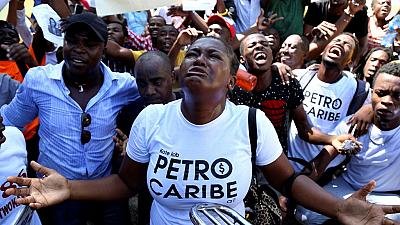
Haitians hit the streets to call for an investigation into the alleged misuse of Venezuela-sponsored PetroCaribe funds by previous administrations.A social media campaign drew attention to the issue and led hundreds of Haitians in front of the Superior Court of Accounts with some holding signs that read, “Where is the PetroCaribe money?”“We’re here to ask the court, the (Ministry of ) Justice – I want to know where the fund given by Venezuela is, the fund that should be invested in development projects in the country? A fund estimated at more than 3 million dollars. It’s unacceptable that a small group of people, the (Ministry of) Justice, the parliament can’t understand this dynamic. This morning we’re mobilizing to ask where is this fund”, an unidentified protester said.
I want to know where the fund given by Venezuela is, the fund that should be invested in development projects in the country?
Another protester said “We’re here to denounce the thieves. They should turn over the PetroCaribe fund. We’re starting a peaceful movement. If they don’t turn over the money this movement can take any form. It’s their obligation to turn it over.”Venezuela’s PetroCaribe scheme, launched in 2005, has furnished about 12 Caribbean states with oil supplies under a flexible credit mechanism. It obliging these states to pay cash for part of every shipment and finance the rest at low interest rates, or buy it with goods like food and clothing. However, a collapse in oil prices has caused a recession in Venezuela, and stalled many of the PetroCaribe shipments.Earlier this year judges were appointed to probe possible acts of corruption with PetroCaribe funds during the administrations of former Haitian presidents Rene Preval and Michel Martelly, between 2008 and 2016.Current President Jovenel Moise, who is from the same party that ruled during the period, has been criticized for not pursuing corruption as actively as he vowed to do.Haiti has a long tradition of corruption, and international partners and anti-graft watchdogs have often blamed Haitian politicians for failing to crack down on the menace.By: Reuters via Africanews.com| August 25, 2018

An investment opportunity for Haiti’s Diaspora
A Brooklyn-based Haitian-American entrepreneur is on a mission to lead her fellow country folk living abroad to invest in the city of Cap-Haitien, commonly known as Okap — Haiti’s bustling northern city. Maritza Boudoir spearheaded “Thriving Okap,” — an initiative that encourages the economic revitalization of her home city from other Haitians interested in investing in the Caribbean nation. She says the city is open for business and if Haitians wanted to seek out a location in Haiti outside of Port-au-Prince.“There are lots of opportunities for Haitians in the Diaspora to get involved. Okap has a rich history and a growing tourism industry which could be very lucrative for the local economy and entrepreneurship,” said Boudoir. “There are risks but the opportunities are also there, with hard work, faith, dedication, and tough skin — we can thrive as a community.”Thriving Okap aims to present the issues and possibilities the city have, connect prospective investors with major players in the city, and analyze the various industries and find ways those problems can be resolved with business creation. And the prospects the country overall can offer is abundant.“The land in Haiti is very fertile so there are opportunities to expand in several areas such as agriculture, environment, and manufacturing,” she said.To jumpstart on bringing the initiative’s efforts forward, she connected with fellow Haitian-American and founder of the Haitian cultural site L’Union Suite, Wanda Tima. She says the pair share similar aspirations on Haiti’s improvement, and Tima’s influence within the Haitian Diaspora could raise awareness about the project.“We are both from Okap and I always admired her work in promoting our culture and her drive as a social entrepreneur, so when I had the intention of launching “Thriving Okap,” I knew she would be an effective media partner,” said Boudoir. “Her company does a fantastic job at bridging the gap between the locals and the Diaspora.”Other than Okap being Boudoir’s place of birth, she chose the city as the location for this initiative because of it being the country’s urban hub in the north, its fascinating past, and her established connection to it.“Okap is the second largest city and it’s rich in history, and as we are talking about Haiti being the first black independent nation — most of that history stems from the north,” she said. “‘Why Okap? Why not Okap?’ I had to start somewhere so I went with what I love and know best. If there’s any social, cultural and economic revolution to take place in Haiti, Okap is definitely the nucleus.”She says very often Haitians living abroad show little interest in going back to create economic development because they may view the country’s problems as challenges, but Boudoir wants to shift those attitudes and show that there are favorable options.“I am an entrepreneur at heart and a woman who is deeply connected and committed to her country, and instead of focusing on the problems, I decided to focus on the possibilities which is why I launched Thriving Okap,” she said.One of Okap’s biggest economies is self-employment through the strong presence of vendors, according to Boudoir. And the existence of such an industry shows the desire the city’s locals have finding work for themselves. She said that other emerging industries such as technology is growing rapidly and helps ease the way business owners connect.With Thriving Okap, Haitians interested in starting a business in Haiti should make visits to the city to assess what is there, and the team will make contact with established businesses they are in collaboration with, to determine the avenue one can delve into.Boudoir added that Okap was like any city across the globe and with an uptick in investment and job creation, the city will grab more interest that will benefit its growth.“Part of the reason the economy of any country works is when people have the opportunity to buy, and part of that is creating jobs, and in order to create jobs, we need thriving businesses. With “Thriving OKAP,” the focus is on local entrepreneurship,” she said. “When we create jobs, we decrease poverty and elevate the standard of living. But if we can educate people, we can change their mindset, and let them know that they are valued because feeling valued is at the core of every human being.”By: ALEXANDRA SIMON | Caribbean Life | August 21, 2018
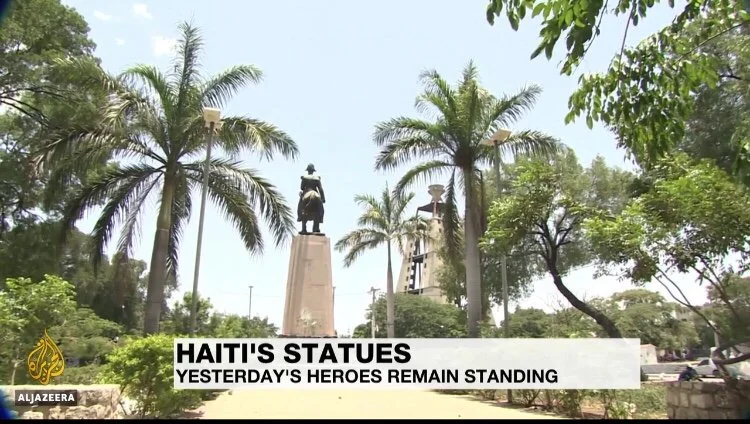
Haitians Resurrect Honour For Historic Heroes
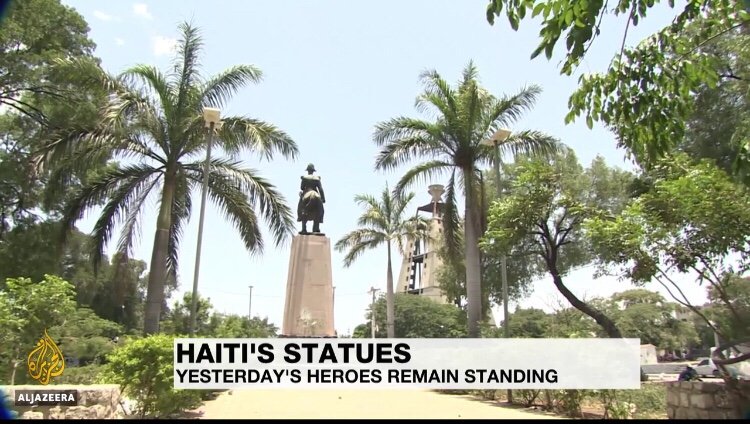
Newer generation reminded of roots by statues of iconic figures that went unnoticed for long time.Most countries have statues to honour iconic figures of the past, but in Haiti, statues of former heroes often go unnoticed.However, for the younger generation, they are now becoming a reminder of their roots.Al Jazeera's Gabriel Elizondo reports from Port-au-Prince.By: Gabriel Elizondo for Aljazeera.com | August 19, 2018
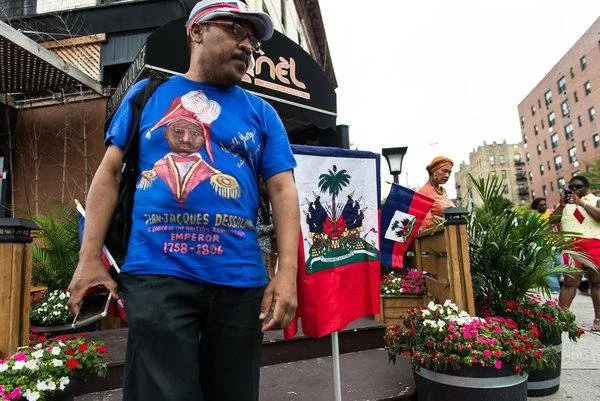
Street Is Renamed in Flatbush, to Joy and Controversy
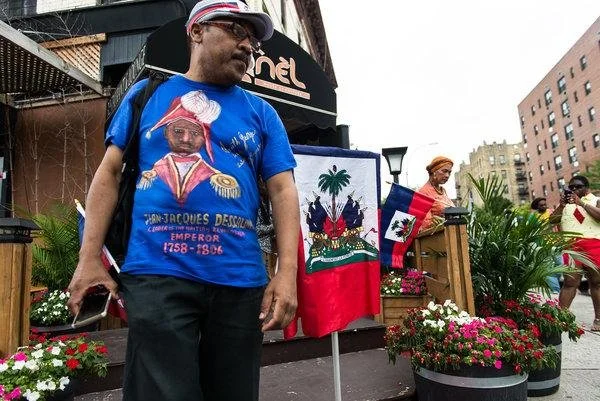
Stephania Casimir, a first-generation Haitian-American, remembers her parents talking about Jean-Jacques Dessalines, a former slave who became one of Haiti’s founding fathers, but not all of the details.
They came flooding back on Saturday on a street corner in the Flatbush neighborhood of Brooklyn as speakers explained why a stretch of Rogers Avenue was being co-named in honor of Dessalines, who declared Haiti’s independence after helping lead the revolt against France.
“This moment means so much to the Haitian community,” said Ms. Casimir, 26, a social worker. “It shows we are strong and powerful.”
As the paper bag covering the new street sign was removed by Assemblywoman Rodneyse Bichotte, the crowd began singing the Haitian national anthem. Those gathered said the decision, along with the recent ceremonial City Council resolution that designated Flatbush Little Haiti, meant that Haitians’ contributions to New York will not be forgotten.
“These street co-namings are the equivalent of placing your flag in the neighborhood,” said Laurie Cumbo, the City Council majority leader. “We have placed a Haitian flag in this neighborhood today for people here and the future to always know that this is a Haitian community.”
But the naming of Jean-Jacques Dessalines Boulevard — along Rogers Avenue between Farragut Road and Eastern Parkway — and the neighborhood designation were not without complications.
Some felt Little Haiti was redundant because the area had previously been christened Little Caribbean by another group. And the street co-naming was delayed because of Dessalines’s controversial history.
After Haiti’s victory against France, Dessalines became Haiti’s first emperor in 1804. Aware that the French wanted to re-enslave the country, Dessalines called for the slaughter of all remaining white Frenchmen. Thousands of white people were killed in the massacre, historians believe.
Historical figures are being re-evaluated across the United States, with several Southern cities removing Confederate monuments in recent years, and Mayor Bill de Blasio establishing a commission to examine statues in New York. In that climate, the City Council committee that vets street co-namings flagged the Dessalines name as possibly offensive.
“Everything is political,” Councilwoman Inez Barron of Brooklyn said. “This was not something that was done in the usual manner and passed with ease. This was a fight and a struggle.”
After a hearing, more research and behind-the-scenes pressure, the City Council approved the co-naming.
“The Council leadership team moved forward with the street renaming after a review of the issue and engaging with the community,” said Jennifer Fermino, a spokeswoman for Corey Johnson, the City Council speaker.
Ms. Bichotte, the assemblywoman, noted Dessalines’s contributions to world history: He helped Haiti become the second country in the Western Hemisphere to free itself from colonial rule and inspired other nations to pursue freedom. The Constitution that Dessalines created advocated equality and more equal distribution of wealth.
The massacre, supporters say, must be viewed in the context of war and is no different than historical acts that the leaders of other countries committed that would now be considered differently.
“As narrators, we get to define the narrative,” said Ms. Bichotte, the first Haitian-American woman elected to office in New York City. “No longer will the Haitian Revolution be a fluke, a historical accident or a nonevent. No longer will Jean-Jacques Dessalines be disregarded or portrayed merely as a tyrant.”
Not everyone supported honoring Dessalines. Street co-namings should be limited to local people who affected life in New York City, said Seth Barron, associate editor of City Journal and project director of the NYC Initiative at the Manhattan Institute.
“It seems like at a time when we are being careful about who we celebrate and commemorate, the question remains of why him?” Mr. Barron said. “I don’t know why New York City has to name a street for someone who is obscure to most Americans.”
Organizers say they hope the street will help educate the public. Flatbush is a center for Haitian culture in the United States, and Brooklyn has 90,000 Haitians, the third-highest concentration in the country, only after two counties in South Florida, according to an analysis by the Migration Policy Institute, a Washington-based think tank.
But gentrification is changing Little Haiti, which is bounded by Avenue H, Brooklyn Avenue, Parkside Avenue and East 16th Street. It is still full of restaurants and retailers that cater to Haitians, but many Haitian business owners and residents are facing the pressures of rising rent.
In 2000, 30 percent of the country’s Haitian population lived in New York State, many of them in Flatbush. That number fell to 20 percent in 2016.
Little Haiti BK, the group that organized Little Haiti, wants to use the designation to help small businesses remain in the neighborhood, erect a monument and build a cultural center.
The designation means more than ever, speakers said on Saturday, given recent slights by President Trump against Haitians and his decision to end a temporary program that allowed Haitians to live and work in the United States following the devastating 2010 earthquake.
“Our human dignity is under assault,” Representative Yvette Clarke said.
Marie Prosper, 35, a security analyst, saw the street co-naming as a chance to come together in spite of recent political developments.
“This corner is where the history of Haiti and the history of the United States meet,” Ms. Prosper said. “It represents the power of our ancestors and their strength.”
By: Jeffery C. Mays for nytimes.com| August 18, 2018
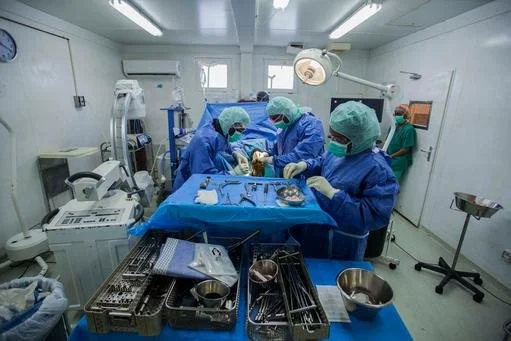
First-class surgery for all in Tabarre hospital
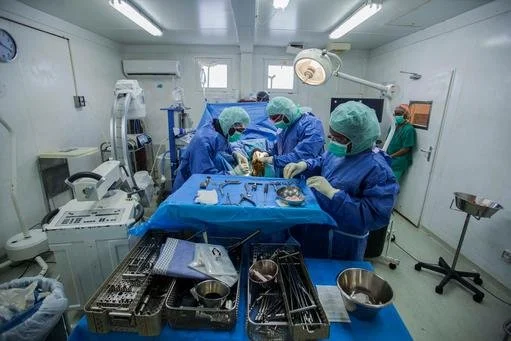
Since 2012, 60,000 Haitians from all walks of life have benefited from free, first-class surgical trauma care through MSF’s Nap Kenbé hospital in the Tabarre neighbourhood of Port-au-Prince.Opened in response to the earthquake in 2010 and the resultant spike in acute medical needs, MSF is gradually reducing its activities in the hospital and preparing for closure by mid-2019 so as to reallocate its resources according to current needs, in Haiti or elsewhere.We take a look at what has been achieved in one of MSF’s most advanced surgical projects and hear from some of the patients who have benefited.12 January 2010: the earth shatters in Haiti. Within a few seconds, the capital city is flattened. Over 100,000 die and thousands upon thousands are injured or trapped in the rubble.“In terms of consequences for the local health system, it’s similar to a large epidemic; but one caused by injuries instead of an infectious disease,” explains Dr Miguel Trelles, MSF surgical advisor. This spike in acute medical needs happened right at a time when the country was the least able to treat the wounded, as its medical infrastructure had been destroyed or was in disarray after the catastrophe.Faced with the scale and long-lasting impact of the disaster, MSF decided to open one of its first and most advanced trauma hospitals in Port-au-Prince. The organisation was already managing a trauma aisle in Port-au-Prince’s Trinité hospital, but it was flattened by the quake. It was also too small to meet the demand for such services, which soared even after the ‘epidemic of injuries’ had subsided, as a result of violent trauma and road accidents among other things.A surgical success storyNap Kenbé hospital, a temporary structure built on containers in the Tabarre neighbourhood of Port-au-Prince, opened its 107 beds on Valentine’s Day in 2012 and offered, for free, first-class surgeries that were before only available to the richest Haitians through the private sector.The hospital was quickly a victim of its success: within less than a year, the number of surgical interventions was twice the original plans, and demand kept growing, mainly from victims of accidental injuries such as traffic accidents.In its six years of existence, Nap Kenbé hospital has treated 60,000 Haitians from all walks of life, providing emergency trauma and visceral surgeries with often long physiotherapy follow-up required to ensure full recovery and use of limbs.Eight years after the earthquake, the emergency phase is clearly over and MSF, as an emergency organisation, is preparing to close its hospital by mid-2019.By that time there should be additional capacity to take over trauma care in Port-au-Prince, including the scheduled reopening of the Hopital de l’Université d’Etat d’Haïti (HUEH). With over 500 beds, the HUEH was the largest hospital in the country. It was destroyed during the quake but, with strong support from other international partners, its rehabilitation is nearing completion.First-class fracture treatmentInternal fixation is one of the services provided, for free, at Nap Kenbé hospital.In high-income countries, it is a routine procedure for closed fractures (i.e. where the skin has not been broken); it was routinely used to treat the wounded after the large 2011 earthquake in Japan, for example.Besides making recovery less painful, internal fixation speeds the recovery time and shortens the hospital stay. But it is a costly procedure and was not available in Haiti.The alternatives (for example using plaster or traction) require the patient to be immobilised, in hospital, for six weeks. This was a challenge following the Haiti earthquake, the most devastating in living memory: not only there were more people in need of hospitalisation than there were beds available in Port-au-Prince, but each patient needed to stay a very long time in those too few hospital beds.Internal fixation not only requires specific equipment and trained staff; it also carries too high a risk if not performed in perfect infectious control conditions – the risk of bone infection. “If surgery and hospitalisation conditions are not optimum, using internal fixation can do more harm than good,” Dr Trelles explains.Most low-resource countries where MSF traditionally works and has often provided emergency trauma care following natural disasters (Haiti, Indonesia and Nepal, to name but a few) have weak health systems and underfunded health facilities. It is not recommended to perform internal fixation in such situations, so MSF mostly uses traction or casts to treat patients with closed wounds.For MSF, Nap Kenbé hospital was a training ground to improve its intensive care unit management and improve its protocols for internal fixation. And from 2014 onwards the organisation trained 24 Haitian orthopaedic doctors and future surgeons each year as part of a residency programme.“I can rely on my hand again”Nine-year-old Derlens lives with his mother, who runs a small stall in in Port-au-Prince’s main market. His life was turned upside down on 25 July 2017, when he almost lost his right hand and forearm doing a few odd jobs for some bakers who had set themselves up in a yard next to his house.“I was only distracted for a moment, but my arm was already crushed,” says Derlens. “I shouted out so everyone would realise my arm was stuck in the machine.” He was taken to the Martissant emergency centre (managed by MSF) and was transferred from there to Nap Kenbé hospital in Tabarre.“After the accident I was very scared. I thought I was going to lose my hand. But when I arrived at the hospital, a nurse gave me hope. Now I’m healed and I find I can rely on my hand again,” says Derlens. After two months of hospitalisation and three months of rehabilitation, he has regained most of the function in his hand, despite being left with a noticeable scar.“A surgical operation like this one would have been impossible for us to afford in a private clinic. Look! I’m here with Derlen because his mother can’t even come with him to medical check-ups because she has to go and find food for her kids,” explains Guerdline, Derlens’ cousin, who has accompanied him to his physiotherapy session.A bullet in the leg in the name of revenge“I didn’t get this bullet in my leg during a fight or a scuffle. It was my best friend’s boyfriend. He was part of a notorious group of bandits operating in our community,” says Cheldine, 17, coolly. “I had tried to explain to my school friend that she didn’t realise who he really was. Unfortunately, she told him what I’d said, and he vowed to take revenge on me.“I bumped into him at a big crossroads, one afternoon when I was leaving school. He took out his gun in front of everyone and shot a bullet into my left leg. I gathered all my strength and didn’t cry, despite the blood running to the ground and the people panicking around me.“Frustrated and aware they couldn’t question him, the people who lived nearby came with me to the MSF clinic in Martissant, which is not too far from my neighbourhood. In the meantime, others told my mother to meet me there in the emergency centre. It was the first time I’d set foot in an MSF hospital. I already knew that services were offered for free. But I didn’t know all the care was free: I didn’t have to pay for medicines, radiography or lab exams.”“It was already difficult for me to pay for transport so I could visit Cheldine in hospital. I don’t know what I would have done if I’d had to pay [hospital] bills,” Mrs Jean Pierre, Cheldine’s mother, adds.“I was hit by the projectile when I was in bed.”Sophonie, 32, was hit by a stray bullet while she was lying in bed. “It was a little after 9pm,” she explains. “I wasn’t yet asleep when I felt something hit me right in the stomach. It was hot, and it hurt a lot. I rubbed the spot and realised that it was bloody. My boyfriend tried to give me some first aid, then I ran into the street to grab a motorbike to get to hospital.”“Once I’d reached the hospital, a private one, the staff gave me an intravenous infusion and advised me to go to MSF’s hospital in Tabarre because, according to them, my injury required specialised surgery that they weren’t able to offer. My partner had arrived in the meantime, and then an ambulance took me to MSF’s Nap Kenbé hospital. Of course I had a little money but I couldn’t pay for care at that level. And I didn’t want money to make the difference between life and death.”“I explained what had happened, and then I fell unconscious. It was if I had just been hit by the bullet. When I woke the next day, a nurse explained that I had been operated on, but that the doctors had decided not to touch the bullet because of how close it was to my heart. I followed the necessary treatment until I left the hospital after two weeks. Now I return regularly to the outpatient clinic for radiography. They tell me that the bullet hasn’t moved a millimetre. But it’s still possible that it might, which causes me great stress. I also have respiratory problems that are getting more and more serious. I’m haunted by the idea that someone will tell me one day that my days are numbered. I have to talk about this often with my only daughter so that she won’t suffer a terrible shock if I must leave her one day.”Sophonie sighs as she explains: “Since all this I’ve fallen into deep despair. I was no longer able to sleep in my room. I had to escape from it, and went to live in another neighbourhood. I knew that anything could happen in this country, but I still can’t believe that something like this could happen so easily. I’m not living in anger about my situation, but I remain frustrated, continually asking myself, ‘Why did this happen to me?’”By: Médecins Sans Frontières | August 13, 2018
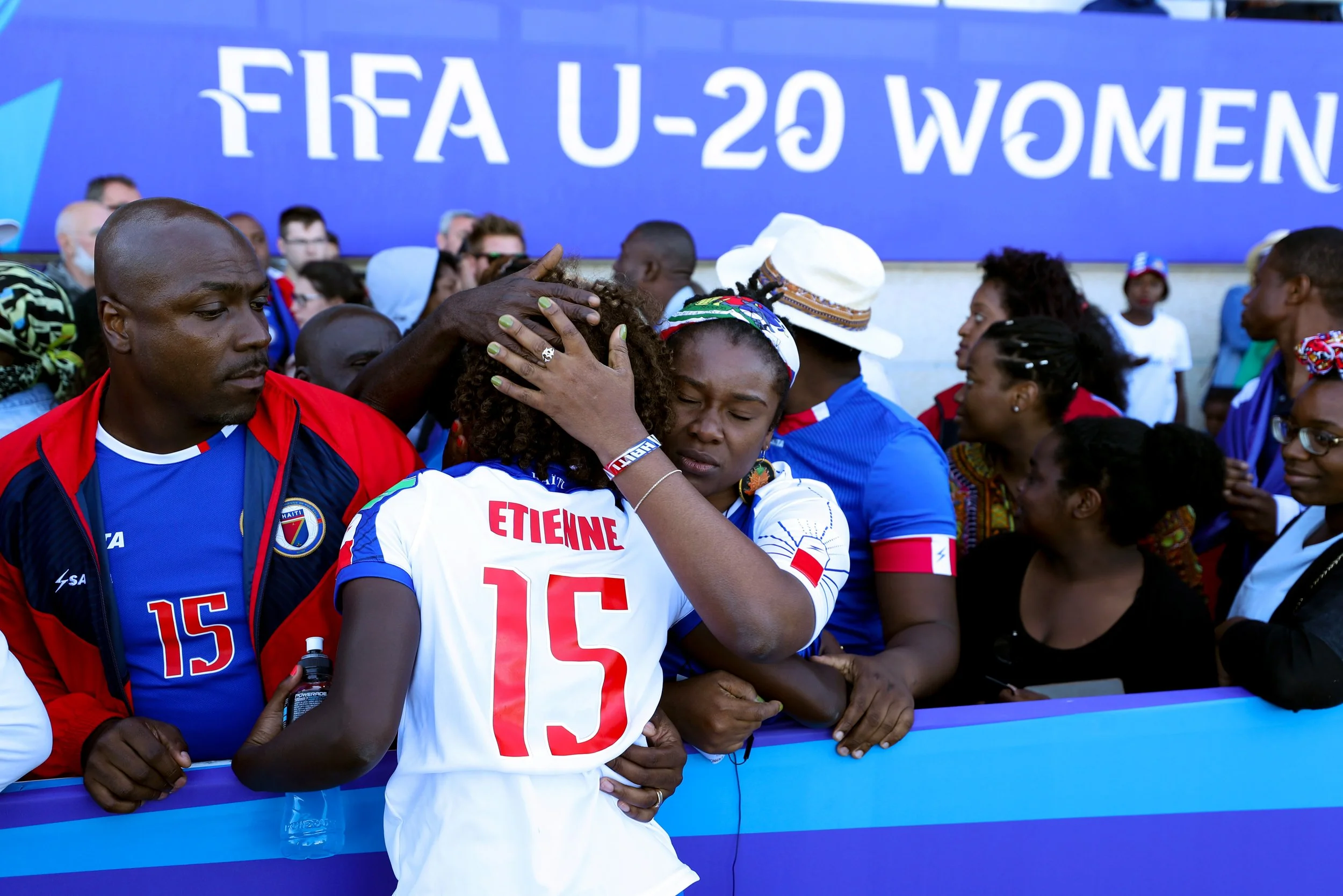
Perfect Germany progress, Haiti go out fighting
[embed]https://youtu.be/uLZP2INGRoI[/embed]Germany finished the FIFA U-20 Women’s World Cup group stage with a perfect record after a 3-2 victory against Haiti at Vannes’s Stade de la Rabine. Laura Freigang opened the scoring from close range, before Kristin Kogel doubled the lead shortly after the break.Klara Buhl made it three for Germany on the hour-mark, while Haiti captain Nerilia Mondesir netted a second-half brace to put pressure on the Germans. After making it three wins from three, Maren Meinert’s team will now face Japan - who finished second in Group C - in France 2018’s quarter-finals.Germany applied early pressure with Dina Orschmann seeing an effort go narrowly wide after just two minutes. They bagged the opener on 18 minutes when defender Sarai Linder embarked on a valiant run, charging towards the byline before sending a low ball into the centre of the area for Freigang to tap home.Orschmann had the chance to make it 2-0 shortly after the half-hour mark, but her effort was aimed straight at shot-stopper Kerly Theus. Spirited Haiti were not content with sitting back, but while they looked threatening moving down the flanks, they were unable to convert their chances. They went close shortly before the break, though, with Melchie Dumonay’s free-kick being tipped wide by goalkeeper Janina Leitzig.After a strong end to the first half, Haiti found themselves two goals down shortly after the break when Buhl found Kogel inside the area, the midfielder getting the better of Theus to find the bottom corner. Germany then made it three on the hour-mark when substitute Giulia Gwinn played in a delightful low ball to Buhl, who found the net with a strong left-footed strike.Three goals down, Haiti looked to battle back. They grabbed their first on 63 minutes when skipper and star performer Mondesir pounced on a loose ball after a corner to tap in from close range. Mondesir then netted her second of the game ten minutes later, rifling the ball into the net from the centre of the box, to put pressure on the Germans.The Europeans, however, held on to preserve their lead against the spirited Haitians, finishing the group stage with a 100 per cent record.
“Dare To Shine” Player of the Match: Nerilia Mondesir (HAI)

New York City Council Approves Co-Naming Street In Honor Of Former Haitian Leader
NEW YORK, Aug. 9, CMC – New York City Council on Wednesday approved a proposal from Caribbean American Council Member Jumaane D. Williams for the co-naming of a street in Brooklyn in honor of Jean-Jacques Dessalines, the first leader of independent Haiti.Williams – the son of Grenadian immigrants, who represents the 45th Council District in Brooklyn, said a section of Rogers Avenue in Brooklyn will be co-named Jean-Jacques Dessalines Boulevard.He said Jean-Jacques Dessalines Boulevard will span along Rogers Avenue, from Farragut Road to Eastern Parkway, within the Little Haiti Business and Cultural District.Last month, the New York City Council ceremonially designated a section of Flatbush, Brooklyn as “Little Haiti” “in recognition of the profound impact and continued presence of Haitian culture in the area,” said Williams, who is also a candidate for New York State Lieutenant Governor.He said “Jean-Jacques Dessalines Boulevard will be set just a few blocks from Toussaint L’Overture Boulevard,” which is located on Nostrand Avenue between Glenwood Road and Flatbush Avenue in Brooklyn.“The two Haitian leaders are celebrated in Haitian-American culture for their roles in establishing a free and independent Haiti,” Williams said.On May 18, Haitian Flag Day, Williams joined New York State Assembly Member Rodneyse Bichotte, the daughter of Haitian immigrants, and other elected officials and advocates in unveiling a new sign for Toussaint L’Overture Boulevard. They also announced the proposed co-naming for Dessalines.L’Overture and Dessalines are two celebrated leaders of the Haitian Revolution.“Jean-Jacques Dessalines is one of the founding fathers of Haiti, having taken charge of the Haitian Revolution and leading them to victory in defeating the French Napoleon Army in 1804,” the legislation states. “The Haitian Revolution became the first slave revolt in modern history to result in an independent nation.”Williams said Dessalines was declared “Emperor of Haiti” in 1804 and “advocated many progressive policies during his time leading Haiti.”He said Dessalines today “remains a very popular symbol of Haitian nationalism.”Brooklyn is home to the largest percentage of foreign-born Haitian residents in New York State, with more than 40 percent of the foreign-born population residing in Flatbush, Williams said.According to 2015 data by the Migration Policy Institute, Brooklyn had the second highest concentration of Haitians in the United States, with an estimated 156,000 Haitian Americans residing in New York City.“Jean-Jacques Dessalines was a revolutionary who fought for his people and overthrew an oppressive regime who brutally enslaved and persecuted the Haitian people.” Williams said. “This revolutionary spirit, to fight for independence and against oppression, burns bright in Haitian Culture today.“Haiti and its proud people are an intrinsic part of my district, and it is only right to honor that spirit with this co-naming,” he added. “I thank Assembly Member Bichotte for her fierce advocacy on this issue, as well as Little Haiti BK [Brooklyn] and the Haitian community I am proud to represent.”“Jean-Jacques Dessalines is one of the greatest heroes of the modern world,” said Bichotte, who represents the 42nd Assembly District in Brooklyn.“As one of the leaders of the first successful slave rebellion to result in the first Black republic and second country after the United States in the Western Hemisphere, Jean-Jacques Dessalines’ remarkable leadership impacted countries around the world in gaining their independence, and strengthened the United States by leading to the Louisiana Purchase, which doubled its size,” she added.“We are grateful that the City Council has recognized Dessalines’ contributions not only to the Haitian community but to all of New York City and the United States,” Bichotte continued.She said the City Council’s passage of the Jean-Jacques Dessalines Boulevard “will allow the community to proudly acknowledge and remember Jean-Jacques Dessalines’ contributions to Haitian and American history, as well as spark interest in learning about his influence as a leader."By: trinidadexpress.com | August 9, 2018
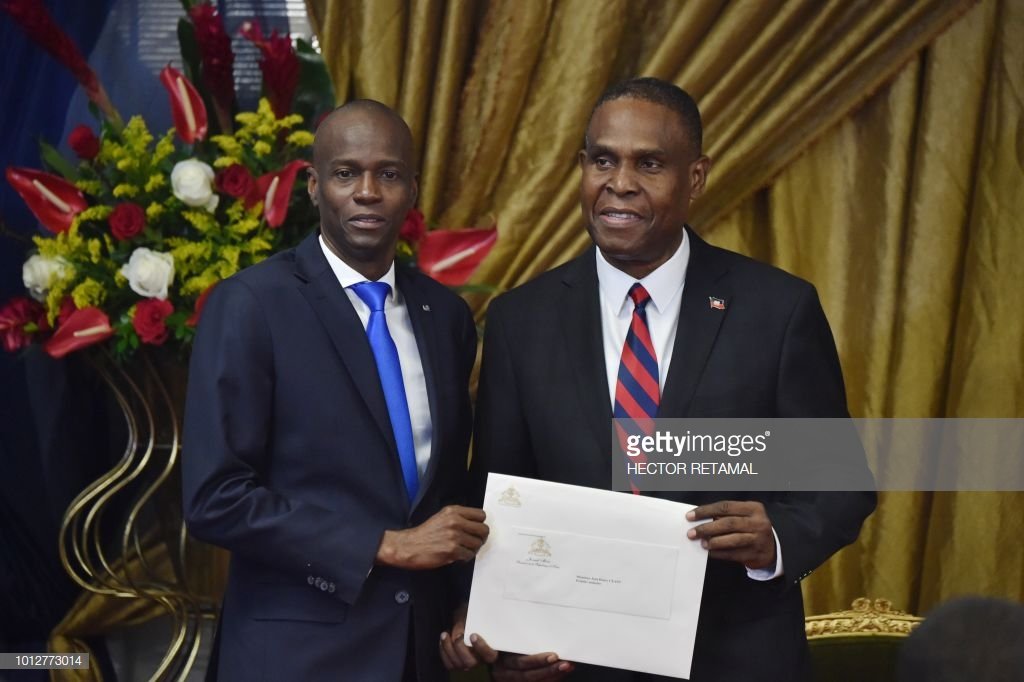
New Prime Minister Announced in Haiti Weeks After Deadly Protests
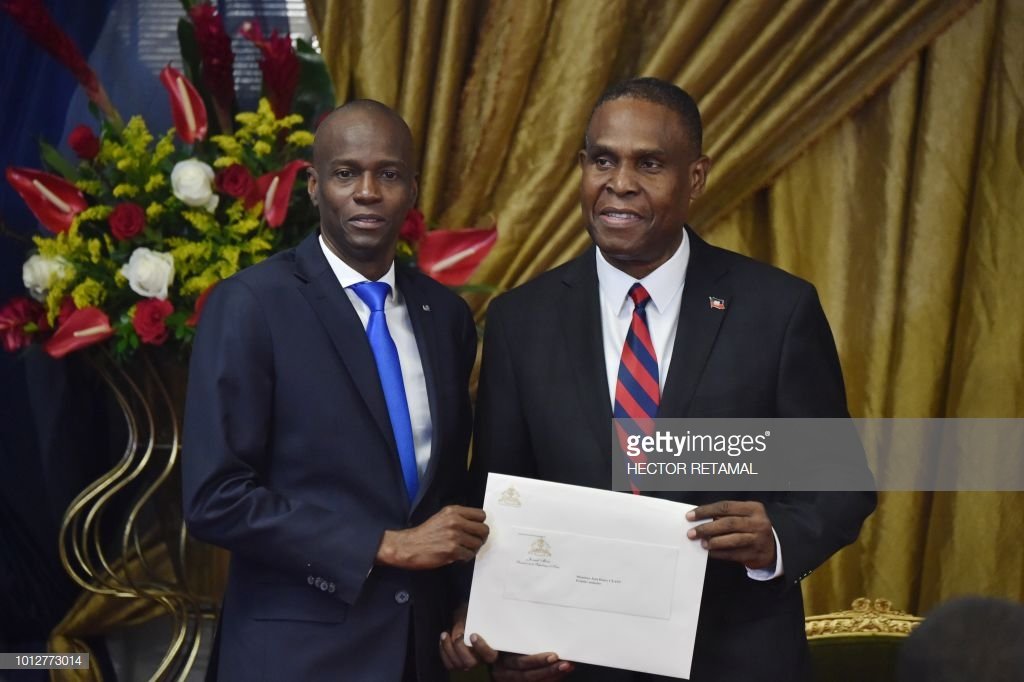
(CNN) Haitian President Jovenel Moise announced on Sunday that Jean-Henry Céant will be the nation's new prime minister.
"Following consultations with the Presidents of the two branches of Parliament, I made the choice of the citizen Jean-Henry Céant as the new prime Minister," President Moise said in an official tweet.
The announcement comes three weeks after former Prime Minister Jack Guy Lafontant resigned amid violent and deadly protests sparked by a proposed plan to significantly raise fuel prices. A former notary by profession, Céant has long been involved in Haitian politics and was a presidential candidate in 2016.
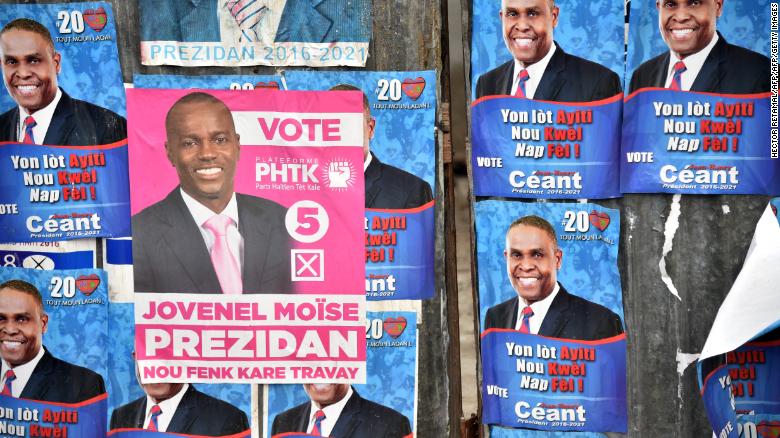
Election posters of current President Jovenel Moise and newly appointed Prime Minister Jean Henry Céant in Port-au-Prince, Haiti in 2015.
"I thank the President of the Republic for choosing me as his Prime Minister and welcome the commitment of the Presidents of both chambers," Céant tweeted, referring to the two chambers of Haiti's National Assembly. "I understand the scope of the task and the challenges that await me."
Former Prime Minister Lafontant resigned on July 14 in front of the nation's parliament before he was due to face a vote of no confidence.
Lafontant's government came under fire after protesters took to the streets in early July in response to a controversial plan that would have increased the cost of gasoline by 38%, diesel by 47% and kerosene by 51%.
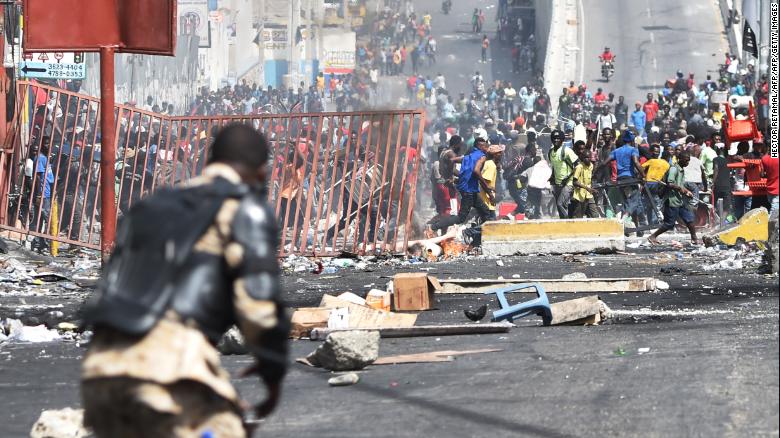
Looting broke out on the streets of Haiti's capital on July 8, after two days of deadly protests over ultimately suspended fuel price hikes.
At least two people -- a police officer and social leader -- were killed in violent demonstrations in the capital Port-au-Prince, according to Yves Germain Joseph, the general secretary of Haiti's National Palace.
The US Embassy in Haiti issued a security alert urging American citizens to avoid travel and instructed all staff to shelter in place. The embassy also requested additional US Marines and State Department security personnel to bolster security amid the riots.
"The security and safety of Americans are among our highest priorities," The State Department said in a statement on July 10. "Local law enforcement and U.S. embassy security authorities will take appropriate measures to safeguard personnel and visitors."
The State Department's advisory was later downgraded from "do not travel" to "reconsider travel."
The protests also caused several airlines to suspend flights to Haiti temporarily.
By: Spencer Feingold for CNN.com | August 6, 2018

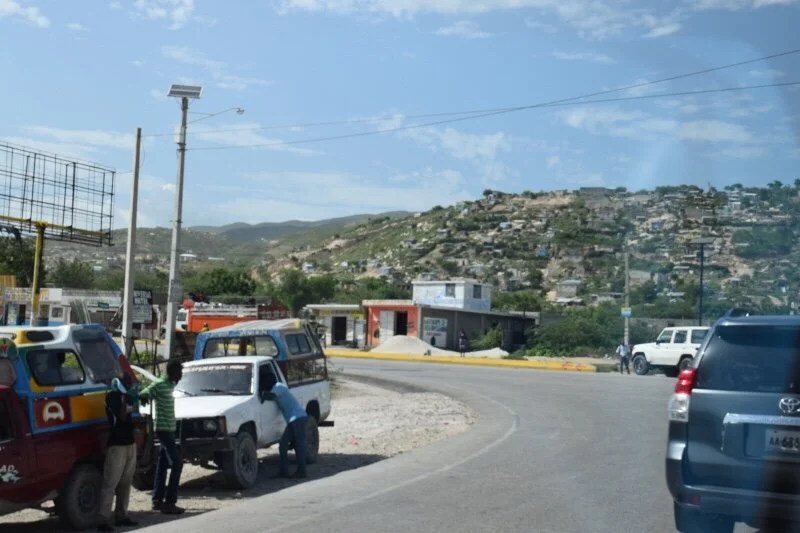
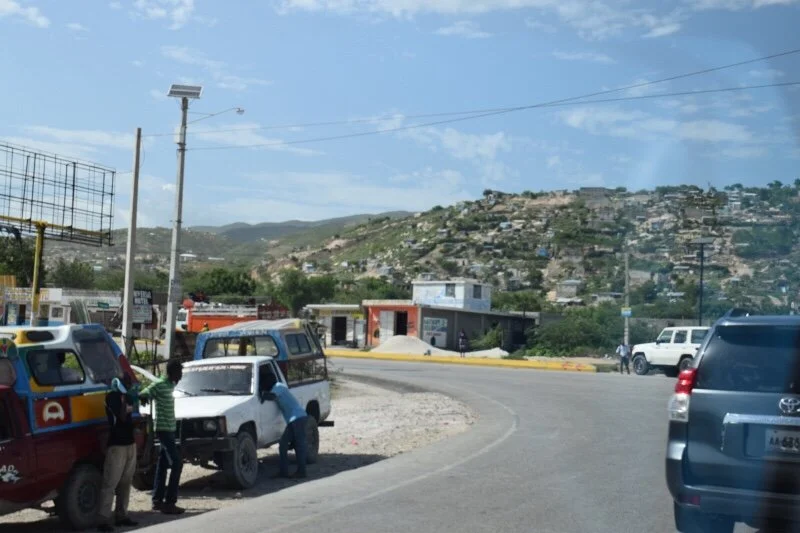
In Haiti, Concern Over Gold Rush
In country still struggling to recover from 2010 earthquake, citizens are hesitant to trust foreign mining companies.
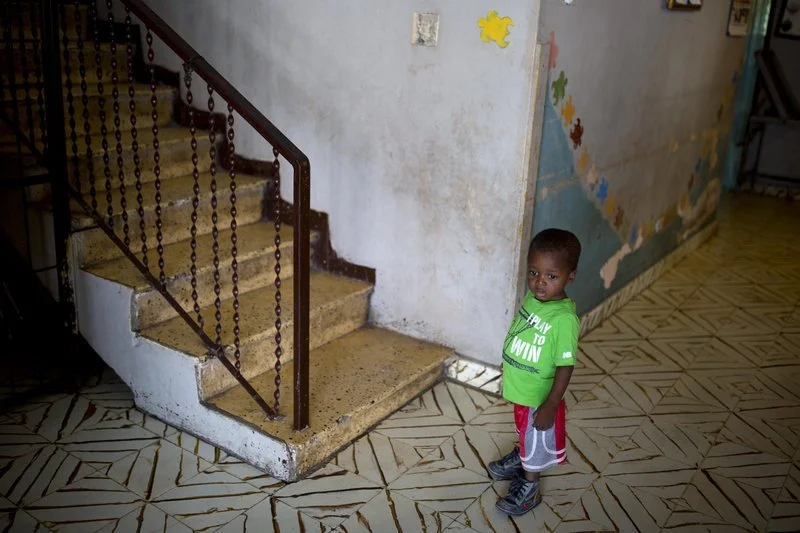
Haiti grapples with helping its vulnerable children
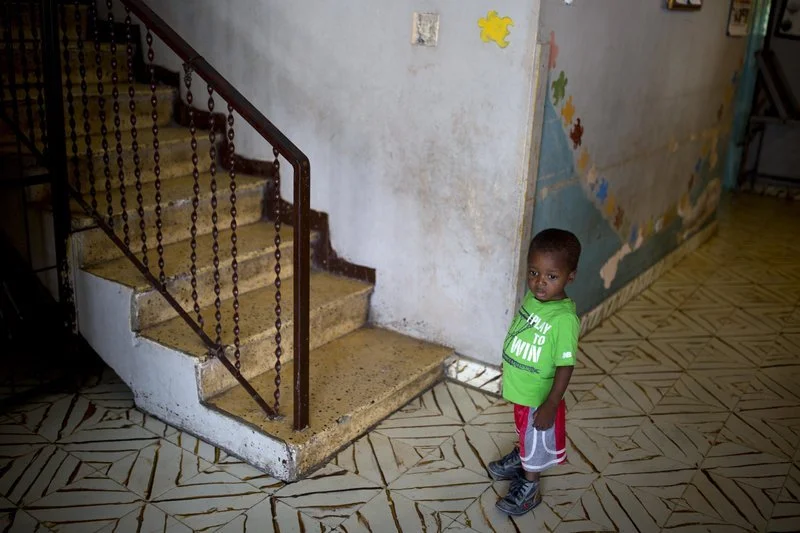
PORT-AU-PRINCE, Haiti (AP) — Like roughly a quarter of Haiti’s children, 11-year-old Franchina has spent much of her short life without parents.Her mother dead, her father in prison, Franchina was placed in a state-run orphanage as a toddler, remaining illiterate year after year and seemingly destined for a hard life in the Western Hemisphere’s poorest nation.But this year, Franchina’s fortunes took a hopeful turn.She has benefited from the newfound resolution of Haiti’s government to improve the deplorable status of the country’s children, and more specifically from a partnership between the state child welfare agency and several international child-service organizations.In a country and region with no tradition of formal foster-care systems, they are recruiting and training Haitians who buy into the idea that being a foster parent is a noble mission.“There’s a certain satisfaction to it,” said Jeannes Pierre, 61, a Baptist pastor in Port-au-Prince who is now Franchina’s foster father. “It’s doing something extraordinary.”In her orphanage, Franchina shared a bunkroom with many other children. Now she has a bedroom to herself, small and simple but enlivened by a colorful stack of books. To her delight, her foster parents taught her how to read within weeks of her arrival.“It’s like removing the darkness from the eyes of a child,” Pierre said.The Pierres do not know how long Franchina will be with them. “We want to keep her as long as possible,” Pierre said. And Franchina, it seems, would agree.Asked what she likes best about her new life, at first she was too shy to respond.Then she confided: “I like everything.”

Many of Haiti’s youths live on the streets; hundreds of thousands are domestic workers in other families’ homes. Franchina was among the 30,000 or so consigned to orphanage-like institutions ranging in quality from adequate to abominable.By itself, foster care won’t come close to resolving the plight of Haiti’s children. Long-term solutions are needed that for now are beyond the government’s financial reach — notably, better educational opportunities and social supports so poor families don’t feel compelled to place their children in orphanages or domestic servitude in the first place.But the new program is cited by Haitian and foreign experts as evidence of the government’s determination to modernize and strengthen an array of child-oriented policies and practices — and lessen reliance on foreign-based charities and mission groups.“There’s no magic bullet, no one solution,” said Marc Vincent, who heads UNICEF’s operations in Haiti. “But it’s important to recognize the steps the government is taking — it is passionate about making things better.”Some of the changes derive from the island’s devastating 2010 earthquake, which fueled a surge of international adoptions, primarily to the United States. Some Haitian children were airlifted to the U.S. even though they were not approved for adoption; an Idaho church group leader was convicted of arranging illegal travel after trying to take other children out of Haiti without government approval.Such incidents prompted Haitian authorities to sign an international convention setting ethical standards for international adoptions. Regulations were tightened and the number of international adoptions from Haiti fell sharply, from more than 1,300 a year to around 300 or 400.The child welfare agency — known by its French initials, IBESR — also is trying to beef up oversight of Haiti’s roughly 750 orphanages. Most are privately run and financed, operating with little or no government regulation to rein in abuse and neglect.Thus far, just a few of the orphanages have been shut down, but IBESR officials say about 400 are targeted for closure unless they meet a deadline for swift improvements. Large-scale closures will increase pressure on the government to reunify affected children with their biological parents, and to find foster homes when reunification proves impossible.“We can’t go on placing kids in institutions,” said Vanel Benjamin, IBESR’s foster-care coordinator. “The answer is family.”UNICEF estimates that 80 to 90 percent of the children in orphanages have one or two living parents. Lumos, the nonprofit founded by Harry Potter author J.K. Rowling, is among several groups seeking to reunite some of those children with their biological families, but the work is slow and the orphanage operators — often recipients of donations from well-meaning foreigners — are not always cooperative.

“They don’t want to change,” said Eugene Guillaume, the Haiti program manager for Lumos. “Orphanages are their business.”Even at competently run orphanages accredited by IBESR, heartbreak is the norm, as Dallye Telemaque Bernard, director of the Nest of Hope home in Port-au-Prince, makes all too clear.She oversees the care of about 50 children, ranging in ages from 5 months to 13 years. Some are brought in by government social workers, or by police who find them in the streets. But most are dropped off by their impoverished parents.“Some children come here very sick, from families in very bad economic situations,” said Bernard. “Ideally, there should be a program to help the children stay with their own families, but there isn’t.”Sections of her orphanage are cheerful, including a courtyard where children take art classes around brightly colored plastic tables. But the upstairs bedrooms, with sets of four or five bunk beds lining the walls, are spartan — including one bedroom set aside for infants.Bernard said the babies generally arrive from Port-au-Prince’s largest shantytown, Cite Soleil, dropped off by heartbroken mothers.“It’s difficult for them,” she said. “But they don’t have a choice.”Over the years, the goal for most children at the orphanage has been to arrange their adoption by families in Europe or North America. On a bulletin board in the entryway, there are photos of children posing with their adoptive families in France, Canada and elsewhere.With Haiti now cutting back on such adoptions, Bernard wishes there were ways to reunify more children with their biological families — and she’s also intrigued by the new foster-care program.One recent visitor was a 23-year-old woman from Cite Soleil who had placed her son in the orphanage six years ago, when he was 2. He was adopted by a family in France last year, and the mother, Kenia Tunis, came by to see some photographs of her son sent to Haiti by his new family.Tunis began to cry as she told her story, glancing at the photographs. Someday, she said, she hoped she might see her son again in person.

Would she have preferred him to be adopted by a Haitian family? She chose not to reply.The foster-care program began three years ago in Port-au-Prince and the southern city of Les Cayes. This month, at a modest resort hotel, about 100 government officials and social-service providers gathered to extend the program into the northern region around the city of Cap Haitien.“Today is a day of victory,” declared Antonio Jean Louis of Children of the Promise, a Christian-oriented mission. “There’s now an option besides international adoption.”Among the attendees was IBESR’s Vanel Benjamin, who said the program will keep expanding to other regions of Haiti, with a goal of having 200 foster families accredited by the end of this year.International adoption “should be the last resort,” he said. “Foster care is a better alternative.”In the United States, there’s a constant struggle to recruit foster parents even though they’re generally paid many hundreds of dollars a month. In Haiti, the plan is to build a foster care system exclusively with parents willing to take on the task at their own expense.One of the groups recruiting and training foster parents is Bethany Christian Services, which for decades has been a leading adoption agency in the United States. Recently, it has helped countries such as Ethiopia and Haiti develop their own foster-care systems.Bethany’s recruiting in Haiti focuses on a network of Protestant churches where pastors extol foster-parenting as a Christian act of love.“People in the churches have responded positively even if they don’t have a lot of financial resources,” said Vijonet Demero, head of Bethany’s Haiti operations. “For them, it’s a calling, not a job.”Jeannes Pierre and his wife Nelia have an adult daughter who recently became a physician. Over the years, they have provided a temporary home to other children on an informal basis. Never had they received the type of formal training that was required to become foster parents.As the foster-care program took shape, some advocates for children expressed concerns related to Haiti’s huge population of child domestic workers. UNICEF estimates that roughly 400,000 children — called “restaveks” by many Haitians — live away from their parents in households where they’re expected to perform work on a regular basis in return for lodging and food.Some of these children are treated well and included in the family life of the home; others suffer various forms of abuse, prompting some advocacy groups to depict such arrangements as “child slavery.”

Aspiring foster parents are screened to ensure they’re psychologically and economically capable of caring for foster children without exploiting them. Demero said the foster families recruited by Bethany are visited at least every three months — and in some cases every week — by social workers from Bethany or IBESR.Terre des Hommes, a Swiss-based nonprofit also working on the foster-care program, said the lack of payment to the foster parents complicates recruitment efforts but serves as a deterrent to families who otherwise might sign up for financial gain.Even in the absence of regular payments, foster families can be provided with emergency funds to meet medical needs or cover the costs of school uniforms and supplies.Among the earliest batch of new foster parents were Ezekial Isme, 32, and his wife, Guerna, who heard about the program at their Port-au-Prince church, where Vijonet Demero is pastor.“Our hearts were opened,” said Ezekial Isme, who teaches at a church-run school.Two and a half years ago, when the Ismes took in a girl from a troubled orphanage being closed by the government, they had no children of their own. They now have two sons, 1 and 2 years old, along with Michelene, who’s now 10.According to Isme, Michelene was 3 when her parents gave her to the orphanage. She was the youngest of her family’s nine children.When Michelene arrived in her new foster home, she was very withdrawn and had a bothersome skin disease. With attentive care, she’s healthy now, and doing well at school, although still not up to the normal grade level for her age.The Ismes would be willing to adopt Michelene, but don’t know if or when the government would allow that sometimes difficult process to begin.“She’s our girl — she feels at home with us,” Isme said. “Our hearts have already adopted her.”By: DAVID CRARY, Associated Press | July 26, 2018
Taiwan To Build Haiti Power Grid
FORMAT:The project is to be financed via an official development assistance loan, using a Taiwanese bank, with a Taiwanese firm serving as contractor.Taiwan and Haiti are expected to sign an agreement by the end of this year for the construction of a power grid in Port-au-Prince to alleviate the Caribbean nation’s energy supply problems, a high-level government official said.It would be Taiwan’s first official development assistance (ODA) loan to a diplomatic ally, the official said on condition of anonymity.The project, which would reportedly cost NT$4.5 billion (US$146.98 million), is one of the initiatives being discussed by a bilateral high-level task force that was established to draft new terms of cooperation in accordance with a consensus reached between President Tsai Ing-wen (蔡英文) and Haitian President Jovenel Moise during his visit to Taiwan in May.The project includes the construction and renovation of substations and transmission towers, as well as the provision of maintenance training to local personnel, the official said.“The project is to be executed in the form of an ODA, under which a Taiwanese bank would provide a commercial loan to the Haitian government and the project would be contracted to a Taiwanese construction firm,” the official said, adding that the project is expected to take at least two years to complete, based on reconnaissance trips.Both sides are keen to finalize negotiations on the project as soon as possible, as improving Haiti’s power supply was one of Moise’s key campaign promises, the official said.Amid China’s growing efforts to poach Taiwan’s diplomatic allies — luring four in the past two years — the official said that the government is hoping to demonstrate to the leaders of its allies that “we are as good as our word” by quickly starting work on the project.The government has warned its allies against Beijing’s pledges of large sums of monetary aid, which it said do not always materialize.It is considering facilitating trade through a public-private partnership model to better consolidate its relations with diplomatic allies, rather than simply encouraging local businesses to invest in the nation’s allies, the official said.“Our existing cooperative schemes with our diplomatic allies are mostly designed to improve the well-being of their people, but we are now also seeking to strengthen our trade relations by bringing the public and private sectors together,” the official said, adding that targeted sectors might include the industrial, agricultural and infrastructure sectors.By: Stacy Hsu for Taipeitimes.com | August 2, 2018
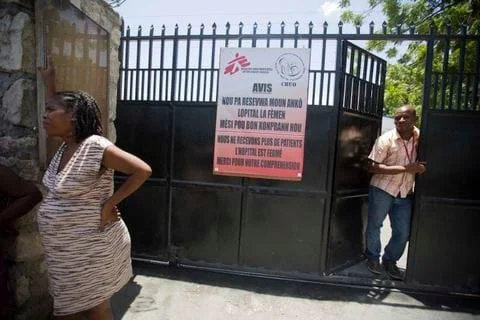
Doctors Without Borders Closing 2 Hospitals in Haiti
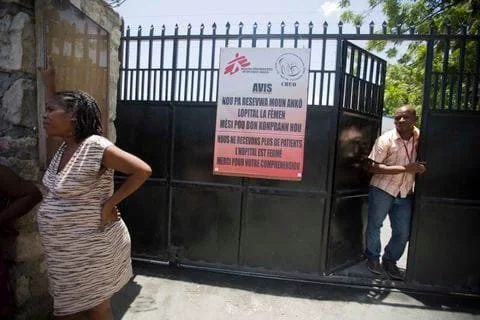
PORT-AU-PRINCE, Haiti — Doctors Without Borders is closing two hospitals in Haiti’s capital opened by the aid group in the aftermath of the January 2010 earthquake that devastated much of the city, an official with the organization said Friday.
A 176-bed obstetrics hospital in the Delmas area of Port-au-Prince will close in the coming days after some final patients are discharged and a hospital in the Tabarre area will close next year, said Michelle Chouinard, who heads the group’s mission in Haiti. Both facilities opened in the wake of the earthquake that killed tens of thousands of people and left the capital and much of southern Haiti in ruins. Both were intended to be temporary but were extended because of the medical needs in the impoverished country. “Given that the situation in Haiti is still difficult it was a very hard decision,” Chouinard said. Many poor people in the capital depend on the obstetrics hospital, which has treated about 500 patients a month. About 40,000 babies have been born there. Doctors Without Borders will continue to operate four clinics in Haiti, including one in Delmas that provides emergency medical care to victims of sexual and gender-based violence. Copyright 2018 The Associated Press. All rights reserved. This material may not be published, broadcast, rewritten or redistributed.
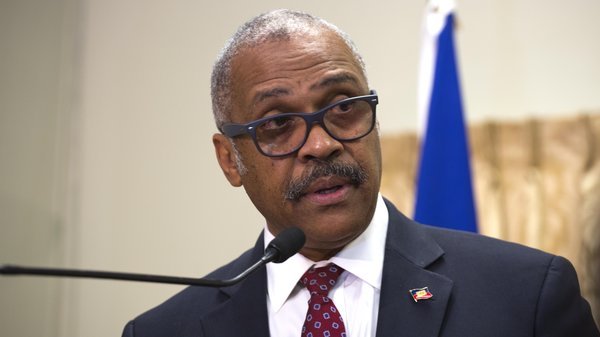
Haiti's Prime Minister Resigns After Riots Over Fuel Price Hike
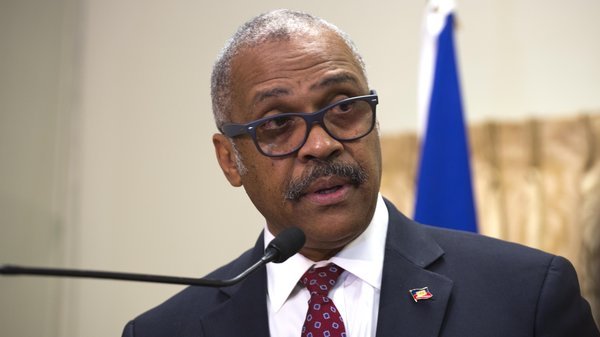
Haiti's Prime Minister Jack Guy Lafontant resigned Saturday after days of riots sparked by a plan to raise prices on fuel.Haitian President President Jovenel Moïse said on Twitter that he had accepted Lafontant's resignation as well as members of his cabinet. Moïse said he would work to choose a new prime minister.Lafontant, a doctor who only took up the job of prime minister in early 2017, resigned shortly before a no-confidence vote was to be called in Haiti's parliament, which could have led to his removal from office.Reports differ on how many people have been killed in riots — at least two, three or seven — that happened over the last weekend. Demonstrators reportedly blocked roads, burned tires and vandalized shops.The government announced on Friday, July 6 that prices would go up the following day by 38 percent for gasoline, 47 percent for diesel and 51 percent for kerosene.By the following day, Lafontant said the price rises would be suspended, and said the government "strongly condemns the acts of violence and vandalism" that happened after the initial announcement was made.The price increases were part of an agreement with the International Monetary Fund, which often requires countries to implement economic reforms in exchange for access to funds. The Haitian government signed an agreement earlier this year with the IMF to gain access to $96 million in loans and grants, according to the Miami Herald.The Herald reports that for the past week, Lafontant "had refused calls to step down from business and opposition groups, which accused the government of mishandling the double-digit fuel increase that its ministers announced with little notice."Haiti's government subsidizes the cost of fuel in the country. The World Bank said in a report last year that the richest 20 percent of Haitians were receiving 93 percent of the subsidies and that the country was spending 2.2 percent of its GDP on subsidies in 2014.But the price hikes were too much to bear for many in one of the world's poorest countries. The World Bank says the majority of Haitians, about 59 percent, make less than the equivalent of $2.41 per day.The IMF said Thursday that it still supports removing subsidies as a way to give the government funding for social services, but advised doing so more gradually.The U.S. State Department issued a "do not travel" warning for U.S. citizens on July 9 over what it called "widespread civil unrest and violent demonstrations in Haiti. Protests, tire burning, and road blockages are frequent and unpredictable."By: James Doubek for NPR.org| July 15, 2018

Stevens Cadet and the International Haitian Lacrosse Team

[video ]Stevens Cadet, from Elmont, New York shares with News12 what playing for the International Haitian Lacrosse Team means to him.A GoFundMe Page dedicated to collecting donations to help fund their journey to The World Championships in Netanya, Israel in July 2018. Much support is needed for food,lodging,transportation and equipment. Please help these young athletes by donating to their cause at https://www.gofundme.com/haiti-lacrossefaith-foundation
