

GOP Rep. Mark Sanford: Haitian babies born in US don’t deserve birthrights because they are not ‘former slaves’
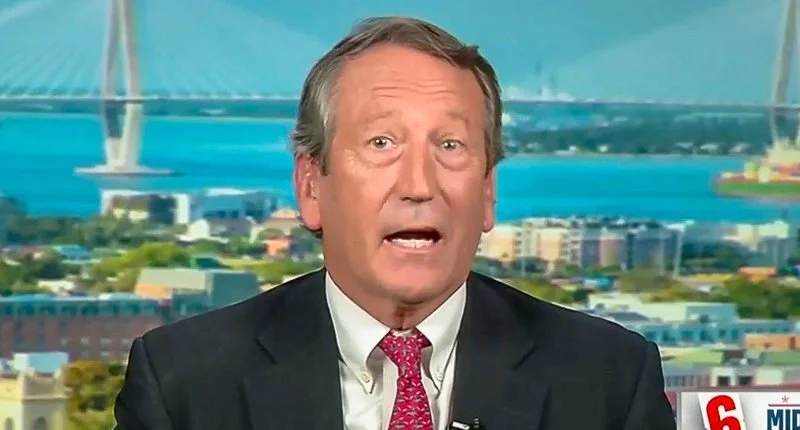
Outgoing South Carolina Republican Rep. Mark Sanford on Wednesday insisted that some babies born in the U.S. — from places like Haiti — do not deserve to be granted birthright citizenship because the 14th Amendment was only intended to apply to descendants of slaves.During a discussion on MSNBC about President Donald Trump’s plan to end birthright citizenship, Sanford argued that the constitution did not apply to immigrants when it said all “persons” born in the U.S. have the right to be citizens.“What do you make of the suggestion that birthright citizenship can be revoked with the stroke of a pen?” MSNBC host Craig Melvin asked the South Carolina Republican.“I would find that hard to believe,” Sanford replied. “I’m not a fan of birthright citizenship. But I think it’s much more complex than the stroke of a pen.”“Why are you not a fan of it?” Melvin wondered. “You do recognize that it’s in enshrined in the Constitution, the Fourteenth Amendment?”“I happen to be [co-sponsoring] a bill that would say otherwise,” Sanford stuttered. “I think there are a number of folks who have said that particular interpretation is not really what the founding fathers intended.”“The idea that you just happen to come in from Haiti or anywhere else and because you get your boat to shore, all the sudden you are open to the same rights and privileges that anybody else is, I think that’s at odds with the intent,” he continued. “I think it was ultimately about slavery at that time and rights that should come to former slaves. But we’ll leave that to legal experts.”The Fourteenth Amendment to the Constitution, however, does not mention slavery as a requirement for bestowing citizenship rights on people born in the U.S.Section 1 states: “All persons born or naturalized in the United States and subject to the jurisdiction thereof, are citizens of the United States and of the State wherein they reside. No State shall make or enforce any law which shall abridge the privileges or immunities of citizens of the United States; nor shall any State deprive any person of life, liberty, or property, without due process of law; nor deny to any person within its jurisdiction the equal protection of the laws.”Sanford, who lost his seat in this year’s Republican primary, also said that he could not condemn the alleged racism of Rep. Steve King (R-IA) because he has been “focused on shutting down the office here.”Watch the video below from MSNBC.https://twitter.com/r35i5t/status/1057718366516011009?s=21By: David Edwards for rawstory.com | October 27, 2018

This Beauty Queen Builds Schools in Haiti

Christie Desir is more than meets the eye. She's a fashion model -- and a role model. She won Miss Universe Haiti in 2014, but she's much more than a beauty queen. The self-described "entrepreneurial hustler" is building her career as an actress, model and host. She's also helping build schools in Haiti."I'm Haitian, and I'm an American. And I'm chasing my dreams in both countries," Desir said.

Desir grew up in what she calls a tough neighborhood in the south end of Stamford, Connecticut. Her childhood home, now dilapidated and surrounded by a chain link fence, is a relic from a bygone area as other parts of the neighborhood are being rapidly revitalized. But Desir has always had perspective on the challenging circumstances of her childhood."I spent summers in Haiti," she recalled, "where other children had it much worse."That motivated her. She worked hard in school, fondly recalling her mother's insistence on a perfect attendance record. She would eventually go on to to be the first person in her family to graduate with a bachelor's degree. She landed an internship with music mogul Sean "Diddy" Combs and then got a full-time job at a record company in New York City. She was chasing her dreams -- and catching them."But something was always calling me back to Haiti," Desir said.

In 2014, she left everything behind and moved back to Haiti, with a primary focus on volunteering and teaching English, although she said in the back of her mind she had considered competing in Miss Universe Haiti. Both the volunteer work and the competition were demanding. For the pageant, she trained and competed in a series of local contests nearly every day for three months, but she says everything was worth it when she won."I truly wanted to show the world a different side of Haiti," Desir said. "And that's what kept me pushing."The accolades brought Desir newfound attention and opportunities. She partnered with the nonprofit Haiti Health Initiative on a mission trip to the small village of Timo. When she asked the people of the community what they needed most, the resounding answer was a school. At the time, the town's school and church were both housed in a small shed-like structure.Desir noted with pride that the school is now under construction, will be built to withstand a hurricane and is scheduled to be completed by September 2019. "The ultimate dream is to continue to open schools throughout Haiti," she said.Another of Desir's dreams was to become an actress, something she put on hold while living full-time in Haiti. So she recently decided to move back to New York City and chase that goal."I go from waitressing to hosting events to fundraising to auditioning to modeling," Desir said. "That's how women entrepreneurs like me hustle to get things done."

If her past is any indication, Desir will find success in her current pursuits. Her website boasts a calendar full of upcoming events and creative endeavors, and she has an Instagram following of more than 22,000. When asked what she wanted to share with contemporaries and fans, she said: "My message to all the little girls and women entrepreneurs out there is stay true to yourself, be nice, work hard, write your own narrative. And if one door shuts, kick the next door open."By: -MoneyWatch -for CBSnews.com | October 30, 2018

High-school-basketball-coach-threatens-send-player-home-Haiti-profane-rant

'I'm the dirtiest, baddest motherf***er on this earth': High school basketball coach calls a player 'r*****ed' and threatens to send him back to his home in Haiti in a profane rant
- Mike Woodbury – the owner of Port Saint Lucie's Nation Christian Academy, where he coaches boys basketball – was recorded threatening the player
- During the recording, Woodbury can be heard saying that he 'control[s] transcripts,' seemingly implying he could control the player's GPA
- When the player received his transcripts, he had a 1.4 grade-point average (GPA). He asserts that Woodbury changed his grades to harm his future
- Woodbury denied the accusation and attributed the lower numbers to an 'error'
- The rant seems to be in response to the player's decision to transfer schools
- In the statement, Woodbury claims the foreign student actually lived with him
- The player and a teammate claim they found a damaging conversation between Woodbury and a woman, which spurred him to ask for a request to transfer
- Players coached by Woodbury in Maine claimed he verbally abused them
 A basketball coach who owns a private academy in Florida has admitted to a profanity-laced tirade in which he called a player 'r*****ed' while threatening to send him back to his home country of Haiti after the student told him he was transferring to another school.
After a recording of the profane tirade was released on YouTube, Mike Woodbury – the owner of Port Saint Lucie's Nation Christian Academy – admitted to the rant in a school statement.
Woodbury said the full conversation lasted 20 minutes. The YouTube clip is about three minutes long, but contains a litany of derogatory terms aimed at the player, who was seemingly telling the coach he intended to transfer.
In speaking with Stadium, the player said he left Nation Christian Academy two days after the

'Just get out of my face,' Woodbury said at the start of the clip. 'Take your broke asses – I'll say it again – your broke asses back to the garage. I don't want to hear from you. The bottom line … get the f*** out. Just walk the f*** out. I don't give a shit. I control transcripts. I control where you go next. It could be back to Haiti, mother****er. That's how easy it is for me.'
According to Stadium, that player and a teammate claim they found a damaging conversation between Woodbury and a woman, which spurred the player to ask Nation Christian's head of school for a release and transfer.
When the player, who is reportedly being recruited by McNeese State, Louisiana Tech and other mid-majors, received his transcripts, he had a 1.4 grade-point average (GPA). He asserts that Woodbury changed his grades, but Woodbury denied the accusation and attributed the lower numbers to an 'error in calculation.'
During the recording, Woodbury can be heard saying that he 'control[s] transcripts,' seemingly implying he could control the player's GPA.
Woodbury alleged to Stadium that the player had attempted to extort school leadership.
The player, who was in his second season at the school after moving over from Haiti at 15, allegedly skipped school, which, as Woodbury told Stadium, was the final straw.
The player denied many of the specific charges made against him by Woodbury to Stadium, and insists he was not trying to extort anyone.
Rather, the player claimed, he was worried the school would be shut down and he wanted to transfer before that happened.
He claims Woodbury's efforts to misrepresent his GPA negatively impacted his chances to transfer: 'I’ve already had two schools close down on me. I was afraid this one would be shut down also, so I wanted to get out of there.'
Multiple players coached by Woodbury in Maine told Stadium they witnessed verbal abuse from him. The private school league in which Nation Academy was a member of, Sunshine Independent Athletic Association, told Stadium it parted ways with the institution.
Woodbury released a statement Wednesday: 'First, I want to apologize for the vulgar language that was used in the video that has been circulating around. I have had this particular student for a year. He is like family and sometimes family arguments get blown out of proportion.
'I am in no way justifying the language, however, there are two sides to every story. This conversation did not take place at school, I do not coach the team. Without indicting the child too much, there were multiple conduct issues while this student was attending school and living in my home with my wife and son. One issue was criminal in nature, that was not pursed as the intentions are not to cause lifelong damage to this student.
'Also, this particular student was asked to leave the school and we arranged for it to be done so amicably. The timeline on this "conversation" is deceiving as this was on 10/17/2018 with 4 other students and another coach present. This conversation was in regards to the several conduct issues and lasted 35 minutes, the particular clip was dubbed to 3 minutes. I am readily available for comment.'
The rant went viral after former Kentucky Wildcats star and journeyman NBA guard Rex Chapman posted the YouTube link on Twitter.
'Sickening,' Chapman wrote. 'Please pay attention to the people "coaching" your kids. This is Nation Christian Academy Head Basketball Coach Mike Woodbury reacting to a player transferring. He was recorded. This is not coaching. Or teaching...'

By Alex Raskin Sports News Editor For Dailymail.com and Associated Press | October 31, 2018See full video below - Warning: Graphic content

Fun-raising! Comics raise cash for Haiti

The joke’s on Haiti.A Haitian comedian has recruited three high-profile stand-up stars to join his comedy show benefit for the Caribbean country. The third annual “Jokes for Haiti” at Littlefield on Nov. 11, will feature Caribbean-born Brooklyn comedian Janelle James, “Saturday Night Live” writer Sam Jay, and rising local stand-up Tim Dillon. The show’s organizer and host, Tanael Joachim, says that he is a big fan of all three artists, and that he knows that they will pack the room for the charity event.“These are all funny people that I like and funny people that I know will get attention, and they are all doing great things,” said Joachim.”Joachim created the show after Hurricane Matthew ravaged parts of southern Haiti in 2016. He wanted to help his native country, but was frustrated by reports of wasted money by the Red Crossand similar humanitarian groups, so he wanted to donate to a reputable grassroots organization.“I started this because I wanted to do something and I wanted to find a good charity,” he said. “But I was very careful because a lot of them go down there, and abuse their names and the power they have.”After doing some research, Joachim discovered Nova Hope for Haiti — a New Jersey-based group that organizes medical mission trips and operates two medical clinics in the rural southwest Haiti towns of Cavaillon and Boileau, which supply Haiti’s most vulnerable populations with vaccines and other medication.The group has a proven track record, and it employs healthcare professionals with a direct connection to Haiti, said Joachim.“They only hire Haitian nurses, doctors, and most of their staff is Haitian, and that was even more an incentive for me to support them,” he said.Joachim created the fund-raising comedy show to support the medical group, and also to spearhead a movement against major non-profits in favor of smaller one. And his stand-up set during the show will make light of many organizations that have profited from money intended to help Haiti’s people, he said.“I will definitely be making a jokes about them,” he said. “And this goes beyond the Red Cross. I find that generally speaking when a charity is big, a lot of things get lost in translation and the money goes into too many hands leading to a lot of weird things happening.”The night will not only be a great time, but it will go to a good cause, said Joachim.“People should come first and foremost because it’s good entertainment, it’s high level comedy, and what makes it better is knowing the entertainment you’re getting comes with the added benefit of doing something good,” said Joachim. “The money from the show is going directly to the organization, the community, and the people left behind by the government.”“Jokes for Haiti” at Littlefield [635 Sackett St. between Third and Fourth avenues in Gowanus, www.littlefieldnyc.com]. Nov. 11 at 8 pm. $15 ($12 in advance).By: By Alexandra Simon | Courier's Life Brooklyn Daily | November 1, 2018

Has Haiti Lost Nearly All of Its Forest? It's Complicated

The cloud forests of Haiti’s Macaya National Park are believed to carry the world’s largest concentration of endemic amphibians. Island ecosystems are hotspots for biodiversity, and historically, Haiti was no different.But a dire new study published Monday in the Proceedings of the National Academy of Sciences claims the Caribbean country has less than 1 percent of its original primary forest left. By around 2035, all that forest is estimated to be gone, leaving Haiti’s wildlife—from endemic orchids to the Mozart’s frog—with no safe place to go.Or so, that’s the story the study tells. Other researchers who’ve spent time in Haiti studying its forests aren’t sold on the methodology or the narrative around the need for untouched forests to support biodiversity.The study authors, who work with the Haiti Audubon Society, Temple University, the U.S. Forest Service, and Oregon State University, expect Haiti to lose up to 83 percent of its species by 2036. By their estimates, the country is in the throes of a mass extinction event.The researchers examined satellite images of the country’s forest cover from 1984 to 2016. In 1988, their analysis showed primary (aka undisturbed) forest made up 4.4 percent of Haiti’s total land cover. By 2016, that number had dipped to 0.32 percent. Only eight mountains in Haiti contain primary forest now, compared with 43 of the island’s 50 mountains in 1988.

The data shows that the secondary growth that’s largely replaced Haiti’s original forestland supports a fraction of the biodiversity. The team checked out the 10 highest mountains firsthand between 2009 and 2015, and they found “significantly more” endemic species and species, in general, in primary forests. When looking at specific sites on these mountains, the average total species richness per site dropped 66 percent without primary forest. For endemics, that number stood at 88 percent.Why has primary forest become nearly non-existent in Haiti? It’s complicated.The nation’s deforestation woes trace back to the 17th century when French colonizers invaded the land and cleared forests for slave plantations, per VICE. Since colonial times, modern agriculture and charcoal production have only exacerbated the loss of primary forest. The major 2010 earthquake didn’t make anything better.While many environmentalists have historically blamed poverty and the people of Haiti people for the loss of trees—in 2016, a meteorologist even made the wild (and false) claim that starving Haitian children eat them—some researchers who have spent time on the ground in Haiti have called claims of dramatic deforestation, including those made by the new study, overblown.Peter Wampler, a geology professor at Grand Valley State University, is one of them. He’s spent time in Haiti since 2007 and has seen firsthand the way community members take care in handling and protecting their trees. He knows that tree cover and biological diversity have decreased in the study period the authors examine, but Wampler also found the methodology “subjective and biased to ensure that Haiti will eventually reach 0 [percent] primary forest cover,” he wrote to Earther in an email.That, in turn, creates a hopeless situation for the people in Haiti who are the ones actually impacted by a loss of biodiversity and trees, he said.“This article’s use of a new forest cover definition, ‘primary forest,’ makes it virtually impossible for Haitians to restore Haiti’s forests,” Wampler said, “as it seems by the definition applied, one cannot restore a ‘primary forest.’”Wampler also pointed out that the study used a very strict definition of forest cover that only included primary growth and areas with 70 percent tree cover—much higher than standards the United Nations uses. Other studies that have used 10 percent as a threshold, for example, peg the country-wide forest cover at 32 percent.Andrew Tarter, an anthropologist who’s studied the relationships people in Haiti have to trees, said in an email to Earther that this strict threshold represents a “conservationist” viewpoint. And he emphasized secondary tropical forest that’s regrown should still support biodiversity.“Thirty years of regrowth in the tropics represent trees of significant stature,” he wrote to Earther. “Even 10 years does.”In response to these criticisms, author S. Blair Hedges, the director of Temple University’s Center for Biodiversity, said the “paper is only about facts (science), which should always be the basis of policy.”No one disagrees that deforestation is a problem in Haiti. That doesn’t make it any less complicated, though, especially in a place wrought with the scars of colonization and slavery. And many would argue hopeless numbers and expiration dates solve nothing. What Haitians need is an opportunity to restore the land they live and depend on every single day.By: Yessenia Funes | Gizmodo | November 1, 2018

First of Its Kind, Women Owned Factory Creates Sustainable Jobs in Haiti

January 14, 2019 factory grand opening in memory of Haiti earthquake victims, and in celebration of survivors perseverance PORT-AU-PRINCE, Haiti, October 23, 2018 (Newswire.com) - In less than 100 days the world will remember the 200,000+ lives that were lost in the 2010 Haiti earthquake. Frontline news will marvel at the 1.5 million people who became homeless overnight and the aid dollars that seemed to vanish. One company, however, will not only honor those lost, they will celebrate the livelihoods created due to the tenacity of the survivors. deux mains, an ethical fashion brand, is using innovation to invest in the long-term development of Haiti. Combining industrial manufacturing with handmade craftsmanship, deux mains introduces an ethical production system that is sustainable.
"We have beaten all the odds of growing a business in Haiti. Our vision to create an innovative and competitive manufacturing system has come to fruition. We have doubled production, as well as, doubled our environmental and social impact by creating more jobs and repurposing more tires. Haiti may be poor in many ways, but access to the limitless sunshine is not one of them. We have increased impact by outfitting our building with solar so that we may harness the power of the Haitian sun, reducing C02 emissions," -said Colombino
A ribbon-cutting ceremony on Jan. 14, 2019 will mark another milestone in the deux mains story of creating sustainable employment in Haiti. With dignitaries and ambassadors in attendance, deux mains will showcase local manufacturing, blending their industrial and handmade processes. The eco-brand also uses 100 percent solar energy to run their facility. deux mains is a registered Haitian business transforming the manufacturing industry by creating a set of standards that ensures products are designed to defend the environment, craftsmen and women are protected by policy, and consumers have the power to shop responsibly.First investors in the company are institutions working on global poverty such as USAID, Clinton Global Initiative, and the United Nations. Ethical fashion brand, Eileen Fisher, has also invested in the scale of the business.The deux mains factory grand opening and ribbon cutting ceremony takes place on Jan. 14, 2019 at 10 a.m. in Port au Prince, Haiti.Via: Newswire.com | October 23, 2018

Haiti: Top Officials Fired After Anti-Corruption Protests

Haitian President Jovenel Moise removed Monday two top government officials in a purge of people linked to a corruption scandal that sparked violent mass protests last week, Channel News Asia reported.
The cabinet chief and the secretary general of the presidency were fired from their posts along with 15 government advisers, according to an official announcement.
These firings follow a report compiled in August by the Haitian Senate that called for charges to be brought against two former prime ministers and several other government officials for alleged embezzlement of US$3.8 billion, abuse of power and forgery in connection with a Venezuelan oil loan program.
PetroCaribe, a Venezuelan-led oil alliance between the South American nation and Caribbean countries, was funneling money into Haitian government coffers. But the Haitian Senate’s report follows up parliamentary investigation into whether the PetroCaribe funds were then misspent by previous administrations.
“To have a healthy process, the president has decided to rid the environment of people linked to Petrocaribe without admitting they are guilty of anything,” Prime Minister Jean-Henry Ceant said at a news conference this week.
Haiti’s citizens remain outraged by the lack of arrests and the slow pace of the investigations. Last week at least two people were killed and dozens were injured as anti-corruption protesters numbering in the thousands surged through the streets of the Haitian capital of Port-au-Prince.
A police spokesman said 11 civilians were injured by bullets and 11 officers by flying rocks, but other officials reported higher civilian injuries.
The protests were kicked off by a photo tweeted by Haitian filmmaker and writer Gilbert Mirambeau Jr. showing him blindfolded and holding a cardboard sign reading “Where is the PetroCaribe money?” in Creole.
The social media campaign, called the #petrocaribechallenge, has spread like wildfire throughout Haiti, one of the poorest nations in the world.
“We are fed up with what’s going on,” said Mirambeau, 35. “It’s like we have a knife under our throats, and are looking at the government and not doing anything.”
Some marchers were heard calling for the resignation of President Jovenel Moise, who took office in February 2017 and whom many accuse of thwarting the PetroCaribe investigation.
In response to the protests, both Moise and Prime Minister Ceant reasserted their commitment to investigating the alleged embezzlement.
“No one will escape justice. It is a moral duty and a righteousness,” Moise tweeted on Thursday.
“We are going to create an independent commission to investigate the truth of Petrocaribe,” Ceant told journalists.

Sean Penn, Rainn Wilson And Soleil Moon Frye Launch Digital Recovery Campaign For Haiti

Rainn Wilson and Soleil Moon Frye hosted a special evening on October 11 in conjunction with Sean Penn’s J/P Haitian Relief Organization. Held at Gjelina restaurant in Venice, the intimate occasion included cocktails, dinner and discussion of ongoing disaster relief efforts, including the newly launched campaign, The Long Run For Recovery.
Also present was Wilson’s wife, author Holiday Reinhorn. The couple’s foundation, Lidè Haiti, provides academic support and arts programs to Haitian girls ages 11 to 21. Lidè is one organization partnering with J/P HRO for the Long Run campaign. Additional hosts included Ann Lee, CEO of J/P HRO, and Bill Baumgart, CEO of WRLDX Funds Without Borders, who made the evening possible.
The philanthropic evening’s focus was on The Long Run for Recovery, a virtual marathon throughout Haiti that allows participants to join as digital runners, syncing their personal supporter page to FitBit, MapMyFitness or Strava to track their progress on the virtual course. Funds raised support relief efforts in Haiti and in United States areas recently affected by hurricanes.

Photo Credit: Donato Sardella/Getty Images for WRLDX
Sean Penn founded J/P HRO in 2010 following the massive earthquake that devastated the Caribbean country. The organization has worked tirelessly to improve the situation there, having relocated 60,000 people, administered 4,000 vaccinations, and placed 6,000 students in school programs, among other milestones.
Although not present for the evening in Venice, Sean Penn shared with Haute Living his thoughts on J/P HRO’s progress. “Of course, we’re very proud of what we accomplished in Haiti, in the immediate aftermath of the earthquake, again after Hurricane Matthew, and in years since,” Penn said. “However, we at once recognize that the destruction which disasters inflict is really the symptom of bigger problems that need to be addressed — poverty, inequality, and broken systems. Crises like earthquakes and hurricanes uncover underlying problems that have always been there, and it’s incumbent upon us to address not only the symptom, but also the cause of this suffering.”

Photo Credit: Photo by Donato Sardella/Getty Images for WRLDX
Sean Penn also shared his thoughts on how the American government and American businesses could improve in the approach to assistance, both worldwide and close to home. “In terms of our government’s aid policies, we’d like to see a focus on preparedness,” Penn said. “Every dollar spent on disaster preparedness is six times more effective that post-disaster spending.”
Of this desired emphasis on preparation, not just recovery alone, Penn continued: “At J/P HRO, we want to work with local governments, businesses, and communities to invest in preparedness; so future disasters have less deadly, destructive, and expensive impacts. That’s exactly what we’re piloting in Savanah, Georgia. We’re partnering with local stakeholders to train young people as certified disaster preparedness advocates in their communities.”
Echoing Sean Penn’s remarks that relief efforts in disaster-stricken areas can uncover problems that require long-term aid, hosts Rainn Wilson and Soleil Moon Frye shared with guests their own personal experiences assisting the cause.

Photo Credit: Donato Sardella/Getty Images for WRLDX
“I first went to Haiti about 10 years ago,” Soleil Moon Frye said, recounting the story of how a conversation with Sean Penn was the catalyst for her involvement. “I bumped into Sean, who had been a lifelong friend of my father’s. And I said, ‘I really want to go see what’s happening.’ And he said, ‘If you’re serious, pack up a suitcase, meet me there on Tuesday.’ And I packed up as much medical supplies as I could find … I didn’t even know what to expect, but I walked into a situation that was unlike any I’ve ever seen — 65,000 people living in a tent city.”
Rainn Wilson also addressed the small gathering at Gjelina, relating how his involvement began long before the 2010 earthquake, through his work with The Mona Foundation, for which he served as a board member. Following the natural tragedy, he and his wife established Lidè, which translates to “leaders.” He said, “[I realized] that education was where my passion was, that I wouldn’t be where I am without the education that I have — the teachers and mentors who stepped in at the right time to show me and help me along the way. And I wanted to give children around the world those same opportunities.”

Photo Credit: Donato Sardella/Getty Images for WRLDX
Wilson says he and his wife were so inspired by the Haitians’ vibrant culture, humor, language and music that they wanted to find more ways to help. At a J/P HRO camp, the couple participated in a United Nations-supported arts workshop for adolescent girls. “It was an extraordinarily powerful experience to see these shy, frail, girls who had no voice utterly transform over the course of 10 days … and these girls had gained confidence and a sense of themselves, a pride in who they were and in their work and we were really struck,” Wilson said.
To close his remarks, Wilson shared a memory of his very first visit to Haiti, when he saw a little girl trying to do her homework by the light of a trash fire. And he stressed the importance of supporting, in particular, female youth in Haiti to encourage positive societal changes. “If you want to impact the world in the best possible way, just micro-target girls’ education, because that transforms communities,” Wilson said.
BY: MARIE LOOK | HAUTE LIVING | CELEBRITIES, NEWS, PHILANTHROPY | OCTOBER 16, 2018

Sigora Solar powers homes in Haiti with give-back program

Sigora Solar is proud to announce the launch of their “Sigora Gives Back” program which will provide clean, renewable electricity to underserved families in Haiti that have never had electricity before.Through this program, Sigora is promising that with every U.S. home that receives the Produce and Reduce package, a whole home solar and energy efficiency solution, the company will provide 24/7 electricity to a family in Haiti. The Sigora Gives Back program utilizes a partnership between Sigora, Sigora Haiti and a non-profit, HADPRE.Sigora Haiti was founded in 2016 and serves over 20,000 people with clean, reliable, and fairly-priced energy. The company was founded by Andy Bindea, the founder of Sigora Solar, with a mission to sustainably electrify underserved communities in Haiti and give access to the 87 percent of the population in Haiti that does not have access to electricity. It has been recognized by Forbes, Fast Company, and Renewable Energy World Magazine. Sigora Haiti is currently the only privately held utility company in the country, providing 24/7 grid-tied electricity to homes, schools, hospitals, and businesses sourced from renewable and clean energy.Sigora Haiti partners with HADPRE (Hummingbird Academy for Disaster Preparedness & Renewable Energies) a non-profit, to provide energy access for all and answer persisting social problems that many rural Haitian communities face in terms of education, access to healthcare and natural disasters. HADPRE aims to guarantee inclusive access to electricity and to foster gender-equal, sustainable economic and social development in rural Haiti.The positive impact that these partnerships have had on Haiti, the poorest nation in the western hemisphere, is immense. Hospitals that are now able to power life-saving medical equipment, students can now read and study in the evenings, and business are opening due to the ability to sell refrigerated and frozen goods.Logan Landry, CEO of Sigora Solar said about the program, “We are dedicated to ensuring our impact on the community and the world is an embodiment of our values of integrity, diversity, respect, and support”.After the hurricanes in 2016, relief efforts in Virginia initiated by Sigora Solar supported emergency relief and the grid repairs in Haiti. These efforts restored power to Sigora Haiti customers within six hours of the hurricane passing and provided relief for over 15,000 people. These efforts included repairing homes, reconstructing a local orphanage, and providing clean drinking water.Sigora Solar continues relief efforts in North and South Carolina after the flooding of Hurricane Florence, drawing from the long history and company values of disaster relief, community outreach, and philanthropy.By: Billy Ludt | October 16, 2018

Councilman Eugene celebrates Haiti Day

Councilman Mathieu Eugene (D–Flatbush) celebrated New York City Haitian Day at Bowling Green in Lower Manhattan on Oct. 6. Students, clergy, and local community leaders joined the Flatbush politician for a flag raising ceremony of the Haitian banner, honoring the Haitian soldiers that fought for American independence.The councilman said the celebratory day acknowledges the importance of Haitians in American history in current times, and in the past.“Today we are going to celebrate the contribution of Haitians to American history, and we’re also going to celebrate the contributions of Haitians who currently live in the United States to the fabric of America,” he said.Two years ago, City Council passed into legislation a resolution designating Oct. 9 as Haitian Day. It marks a significant date in Haitian and American history, commemorating the Battle of Savannah — an important combat during the American Revolution that more than 500 Haitian troops participated in.Eugene said this fun fact of history was a moment of pride for Haitians everywhere, and should be recognized by the global community.“This is such a wonderful moment, not only for Haitian people, but also for the friends of Haitians, and for people from the United States and those residing all over the world,” he said.By: ALEXANDRA SIMON | Caribbean Life | October 9, 2018
Quake Reminds Haiti Its Structures Are Still Vulnerable – And Its Fault Lines Mysterious
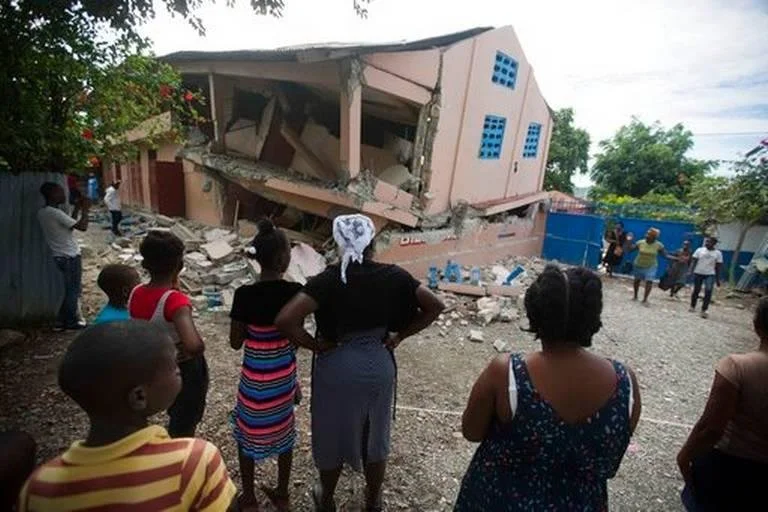
Folks on Haiti’s north coast are still shaken after Saturday night’s strong earthquake there killed at least a dozen people and injured almost 200. The quake was produced by a Caribbean fault line that’s been relatively quiet for centuries.The 5.9-magnitude earthquake’s epicenter was in the sea northwest of Haiti. It was the first strong jolt to hit Haiti since the 2010 earthquake that killed more than 200,000 people. And it was a reminder that too many of Haiti’s houses and other structures still aren’t sturdy enough to withstand large quakes.David Diller, an American Mennonite missionary in Port-de-Paix, on Haiti’s north coast, says some of his congregants lost their homes.“One of the people in our church, their house – I mean, it took the whole thing," Diller told WLRN. "They ran out of the house, but they had forgotten one child. And when the thing stopped they went back in – and it was God’s protection, because that child was on the floor, there was a pile block on both sides of that child and that child did not have a mark on it.”Like the fault line in southern Haiti that caused the 2010 earthquake, the Caribbean fault involved in Saturday’s quake had been relatively dormant for the past few centuries. It’s called the Septentrional Fault. And it’s a bit of a mystery to scientists, says University of Miami geophysicist Falk Amelung.“This fault is supposed to rupture," says Falk. "We know from GPS measurement that it’s moving relatively fast. But there was very little seismic activity in the last 500 years – and that is surprising.”Amelung says data show Saturday’s earthquake involved a lot of vertical thrust instead of the horizontal push expected from that fault. And that adds to concerns about tsunamis should the fault move in that fashion under the sea again. Saturday's earthquake epicenter was in the Caribbean Sea just to the northwest of Haiti, along the Septentrional fault line.By: TIM PADGETT/WLRN/OCT 8, 2018
Neighbors on call: Haiti may offer window to Montana’s healthcare future
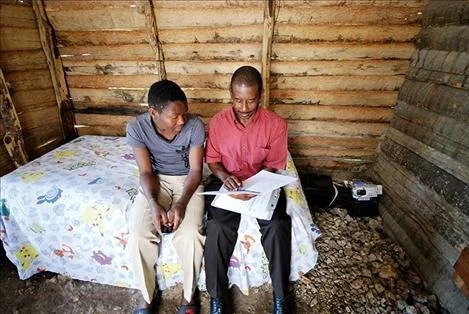
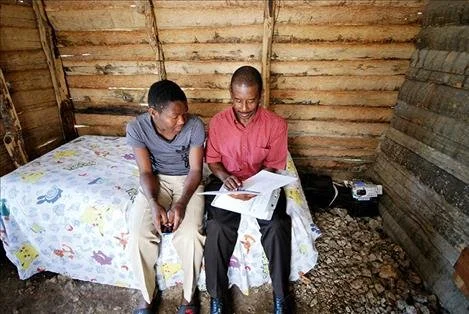
This is the first part of a three-part story on the role of community health workers in rural health care from the Montana Gap project. Part one: What’s working abroad? In rural Haiti, locals trained as community health workers help mentally ill neighbors where full-fledged physicians are few and far between.As a child, Presandieu Charles suffered severe headaches and stomach pains. One day he beat his mother on the foot and thigh with a stick, and later cried when he saw what he had done.In October 2017, Charles began to hammer at the timber walls of his family’s dirt-floored home with his fists. He would not stop. Neighbors bound his ankles and wrists with leather straps and metal chains. They called his affliction “the madness.” He still has the scars: dark star-shaped marks on the skin on his right wrist.The house perches on the edge of a lush, forested ridge several miles outside Cange, a remote Haitian village near the Dominican border. Inside it is cool, and slivers of light stream through the white lace curtain hanging in the front door frame. Charles’ shoulders droop as he sits on a bed dressed with Pokémon sheets. The 24-year-old wears an Adidas t-shirt and plastic Nike sandals. Beside him is Joseph Benissois, a local community health worker with the Boston-based global health nonprofit Partners in Health (known in Haitian Creole as Zanmi Lasante). The two exchange no small talk, and Benissois begins to ask Charles questions from a clipboard in his lap. Charles doesn’t often smile as Benissois asks them. When he does, though, it’s a sweet, knowing flash of pride at the progress his answers reveal.Does he cry? Not as often as he used to.Does he have difficulty sleeping? No, but he feels weak when he wakes, and he has trouble going to the garden or fetching water. That might be the drugs he is taking.Does he feel bad or uncomfortable with himself? In the past he felt bad. Now he tells jokes to the friends he sees on the street, smiles and laughs with them.In the past 15 days, has he wanted to die? “He used to say to himself that it’s better if he died, but not now,” an interpreter relays.Partners in Health, which was founded just down the road in Cange by renowned physician and humanitarian Paul Farmer, has been recruiting and training individuals like Benissois since the late 1980s and placing them on the frontlines of the organization’s efforts to combat cholera, HIV and other major health threats. But the 2010 earthquake that devastated this rugged Caribbean nation — killing an estimated 220,000 people, injuring more than 300,000 more and leaving some 1.5 million homeless — brought to the forefront another widespread Haitian health risk: This country of more than 10 million people had only 10 psychiatrists. The loss of homes, jobs and loved ones in the quake triggered a rash of depression that Haiti’s few specialists, already struggling to treat a host of other mental-health issues, were ill-equipped to handle. In the central plateau, Partners in Health tasked its community health workers to help fill the gap in mental-health coverage.The questions Benissois asks Charles come from a depression symptom inventory developed by the nonprofit. They’re identical to those asked by its 58 other mental-health-focused CHWs. Since April 1987, Benissois has worked with the organization as a CHW (or accompagnateur in Creole), a non-specialist position designed to provide patient check-ups and administer basic health care in small, remote communities. The model traces its roots back to the mid-1950s and China’s so-called barefoot doctors: farmers and other villagers who received short-term medical training to meet immediate needs in isolated towns. Gradually embraced and refined by the global health community over subsequent decades, the model is now a vital component of health-care strategies in scores of developing nations, and is being increasingly implemented in the United States. In fact, after five years of coordinated development by various stakeholders, Montana recently rolled out a CHW training curriculum of its own to support statewide implementation of a model that the Montana Office of Rural Health/Area Health Education Council says is proven to increase health-care access, reduce costs and improve responsiveness to patient needs. That the timing of that roll-out coincides with state budget cuts and widespread layoffs among community-based health-care service providers is entirely coincidental.Benissois is a familiar face in the hills around Cange, having served as the local pastor and a community advocate for more than 30 years. He visits as many as 20 patients a month throughout the Cange and nearby LaHoye regions. Occasionally, he’ll take a moto — a motorcycle taxi, one of the more popular modes of transportation in Haiti — to visit people like Charles. Today he’s on foot, shuffling with a lopsided gait along the shoulder of the highway, smiling casually to those he passes and greeting them with a familiar “bonjour.”Benissois visits Charles once a month. While Charles keeps regular appointments with Partners in Health physician Reginald Fils Aime in Cange, and is currently taking antipsychotic medications, the at-home check-ups with a trusted neighbor free him from having to make extra trips — a mile walk each way — to the clinic. When asked what the veteran CHW has done to help him, Charles wraps an arm around Benissois and beams.“I love him so much,” Charles says. “He is my father and Jesus Christ.”That Montana, an isolated, largely rural state nearly 3,000 miles from Haiti and, geographically, nearly 14 times the size, has recently embraced the CHW model in the face of its own health-care challenges makes the organization’s decades of work a compelling case study. Though culturally distinct, the two areas share many commonalities: remote populations, impoverished communities and, particularly in the wake of last year’s cuts to Montana’s mental-health budget, a pressing need for local solutions. And if the benefit that Benissois delivers to Charles is any indication, CHWs could become a valuable asset for Montanans as well.by: Alex Sakariassen Missoula Independent via Valleyjournal.net | October 10, 2018

Venice Plane Company Makes Weekly Service Trips to Haiti

From earthquakes to hurricanes, disasters like those only exemplify the need Agape Flights tries to offer.
VENICE, Fla. -- Allen Speer looked up at his red, white, and blue plane and smiled. It was ready to be loaded again for another life-saving flight to Haiti.“It’s more than a job. It’s a calling,” said the pastor-turned-CEO at Agape Flights in Venice.The plane’s tail tag reads “N316AF,” which Speer explained stands for John 3:16 – one of the world’s most quoted Bible verses.“For God so loved the world that He gave His only begotten son that whosoever believeth in Him should not perish but have everlasting life,” he said.Everything Agape Flights does operates on faith. It’s a company that supports missionaries all over the Caribbean in places like Haiti, Cuba and the Dominican Republic. In all, 375 missionaries are supported by Agape Flights, which has operated in Florida for 39 years.“For me, there is no better feeling than to be able to help somebody else who can’t help themselves,” said Rod Aldrich, who sold his cows and retired as a dairy farmer in order to move to Florida to begin working for Agape Flights. “God drew us here.”"Agape" means "unconditional love" in Greek. It costs $5,000 per week just to fuel the planes that Agape Flights sends to and from the Caribbean. The supplies, mostly mail and non-perishable food, helps sustain the men and women ministering to nationals all over Hispaniola.“We’re supplying the supplies that enables them to continue reaching out and, like you said, show the people of Haiti, Bahamas, Dominican Republic, that we care about them,” said pilot Jeff Yannucciello. “They’re not forgotten. We’re doing a flight a week usually, sometimes up to 65 flights a year.”Haiti is considered the poorest country in the western hemisphere. Agape Flights is fewer than 800 miles away. A 5.9 magnitude earthquake shook Haiti Saturday night and at least ten people died. A disaster like that and devastating hurricanes only exemplify the need Agape Flights tries to offer.“When they see that plane coming, they say, ‘Hope is Life,’ and they’re so thankful for this red, white, and blue plane when they see it coming in,” Speer said.The company's motto is "Serving Christ by Serving His Missionaries."By: Bobby Lewis for wtsp.com (10 News) | October 8, 2018

Death toll in Haiti earthquake rises to 15; at least 333 injured

PORT-DE-PAIX, Haiti — The death toll from a 5.9 earthquake that hit Haiti over the weekend rose to at least 15 people with 333 injured, according to updated figures released Monday by authorities, as rescue crews worked to help victims spooked by strong aftershocks.Haiti's civil protection agency said in a statement that it will soon deploy 70 soldiers to the Nord-Ouest and Artibonite provinces that were hardest hit, noting it already sent 14 soldiers along with nurses and doctors to the area over the weekend.
Among them was Marc-Sena Docteur, a 24-year-old carpenter whose girlfriend died in the earthquake."Now I'm left with a 9-month-old baby with no aid at all," he said. "I'm still crying. I don't know what I'm going to do without her."The walls of the room that the couple had been renting for a year collapsed, and he and the baby have been sleeping outdoors since the quake.
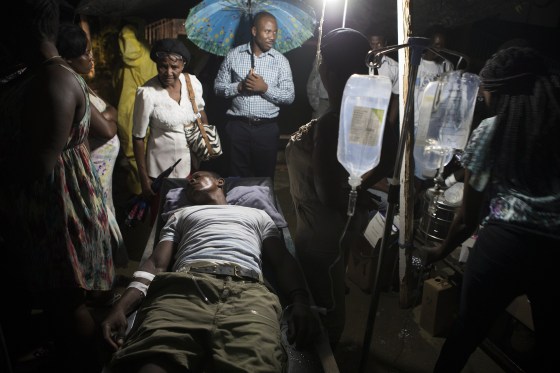
Sunday's aftershock caused panic on streets where emergency teams were providing relief to victims after cinderblock homes and rickety buildings toppled in several cities. The U.S. Geological Survey said the epicenter of the aftershock was located 9.8 miles (15.8 kilometers) north-northwest of Port-de-Paix.Among the dead were a 5-year-old boy crushed by his collapsing house.Impoverished Haiti, where many live in tenuous circumstances, is vulnerable to earthquakes and hurricanes. A vastly larger magnitude 7.1 quake damaged much of the capital in 2010 and killed an estimated 300,000 people.Etanvie Dimorne, a 50-year-old mason, said people have to rebuild stronger given the earthquakes that have hit Haiti. He lost his home in Saturday's quake and is now sleeping under a tarp in someone's yard."Last night it rained," he said. "I have to sleep under difficult conditions."
The USGS said Saturday's quake was centered 12 miles (19 kilometers) northwest of Port-de-Paix, which is about 136 miles (219 kilometers) from the capital of Port-au-Prince.It was felt lightly in the capital, as well as in the neighboring Dominican Republic and in eastern Cuba, where no damage was reported.In Haiti, officials have struggled to shore up buildings despite the two major fault lines along Hispaniola, which is the island shared with the Dominican Republic.
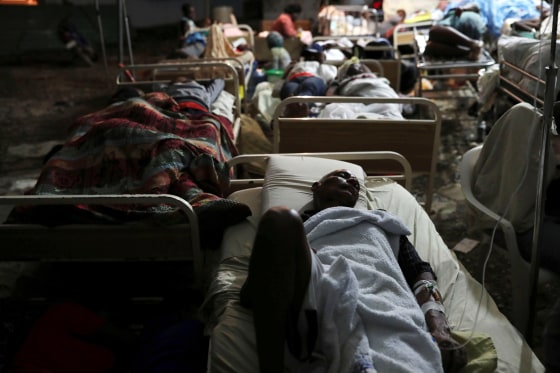
The damage from the temblors was visible. In Gros-Morne, one bed was covered in rubble, while the exterior walls of some homes were cracked. Others tilted at precarious angles.Pierre Jacques Baudre, a farmer and father of seven, said he was afraid to return to his home after one wall built with rocks and cement crumbled."The house can fall at any time," he said.The civil protection agency issued a statement saying that houses were destroyed in Port-de-Paix, Gros-Morne, Chansolme and Turtle Island.Damage was also reported at the Saint-Michel church in Plaisance and the police station in Port-de-Paix. Parts of a hospital and an auditorium collapsed in Gros-Morne, where parliamentarian Alcide Audne told The Associated Press that two of the deaths occurred.By: Associated Press via NBCnews.com | October 8, 2018
Haiti Calls For Funds To Deal With Cholera
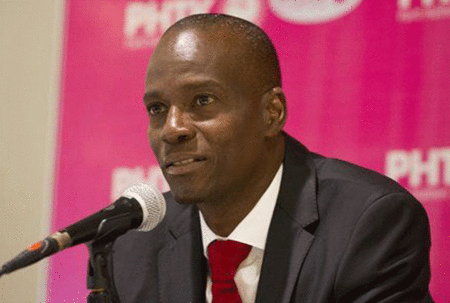
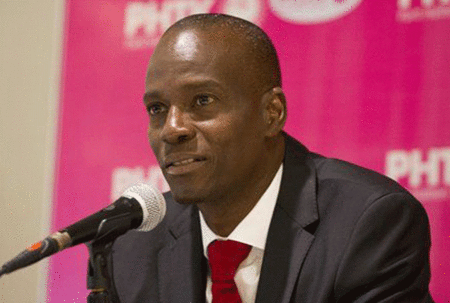
UNITED NATIONS – President Jovenel Moise has called on the international community to provide the funding needed to help the French-speaking Caribbean Community (CARICOM) country deal with the cholera epidemic.Addressing a round table discussion at the United Nations General Assembly (UNGA), Moise said that while significant progress had been made since the epidemic was first reported in 2010, the disease continues to claim victims in Haiti.He said much funds are needed if the country is to eradicate the disease completely by 2022.“I am advocating to the UN General Assembly to remind the urgency of continuing international funding to defeat cholera. We will need an estimated US$390 million if we really want to end this epidemic by 2022,” he said, adding that Haiti had a plan that is already operational to eradicate cholera.
“If the resources provided are available to us, the elimination of the disease will be within our reach,’ Moise said, recalling that the US$390 million request corresponds to the United Nations multi-partner trust fund for cholera in Haiti, which was launched in December 2016 by former UN Secretary-General Ban Ki-moon.But Moise told the meeting that despite the repeated calls of the former secretary general and his successor, Antonio Guterres, only two per cent of the promises made by international donors have been met.The fund has two main components including establishing a new strategy to develop a programme of material assistance and support to Haitians most directly affected by cholera as well as reducing the incidence of cholera, while addressing short- and long-term water, sanitation and health system improving access to care and treatment.The cholera outbreak here is being blamed on United Nations peacekeepers deployed from Nepal.The authorities have said more than 10 000 people have died since the first case was reported in October 2010 and several hundred thousand others have been sickened by the disease. (CMC)

CDB Officially Opens Office In Haiti

PORT-AU-PRINCE – The Caribbean Development Bank (CDB) on September 21 officially opened its Country Office in Haiti, the first outside its headquarters in Barbados.To commemorate the occasion, Dr William Warren Smith, president of the Bank, hosted an inauguration event, which First Lady of the Republic of Haiti, Her Excellency Martine Moïse; Apostolic Nuncio, Ambassador Eugène Martin Nugent; Ministers of Government; and representatives from the diplomatic community in Haiti attended.“The opening of the new Country Office here is timely, as we seek to advance Haiti’s development and to assist with its further integration into the Caribbean Community,” said Smith during the event.“Be assured that CDB stands ready to provide further support and to continue improving the quality of programmes and services to enhance the livelihoods of the people of Haiti,” he added.
Speaking to the gathering at the Royal Oasis Hotel in Pétion-Ville, the President noted that since 2007, CDB has committed approximately US$134 million in grants to Haiti from the Bank’s Special Development Fund (Unified). CDB’s new Country Office will become the focal point for the implementation of its country strategy for Haiti for the period 2017 to 2021, he said.“This Office represents the Caribbean Development Bank’s deep and unwavering commitment to continue working with the Government of Haiti to deliver positive development results for the people of Haiti,” said Monica La Bennett, vice-president (operations), CDB during a ribbon-cutting ceremony held during the inauguration of the new location.The First Lady; Minister of the Economy and Finance, His Excellency Ronald Décembre; and the Apostolic Nuncio joined the Bank’s management for the private ceremony.On February 27, 2018, CDB signed a Country Agreement with the Government of Haiti to establish the Office. The Bank’s ongoing work in the Republic includes projects in education, climate resilience, community-based agriculture, and rural development. In addition, since May 2013, CDB has paid the country’s catastrophic insurance premiums to CCRIF SPC.The Bank’s resident country representative in Haiti is Stephen Lawrence. A civil engineer by training, he is also a development practitioner whose career has included posts in Africa and the Caribbean. (PR)By:NATASHA BECKLES for NationNews.com | September 22, 2018

New York Knicks: Former Columbia Forward Jeff Coby To Sign

The New York Knicks will sign Jeff Coby, a former Columbia forward, according to Nicola Lupo of Sportando.
The New York Knicks appeared to complete their training camp roster for training camp, with the signing of Tyrius Walker on an Exhibit 10 deal. This brought the group to 20 players, but could there be another change on the way?
According to Nicola Lupo of Sportando, the Knicks will sign Jeff Coby, a former forward at Columbia. ESPN’s Ian Begley added how Coby worked out for the team recently and impressed in informal sessions and garnered the coaching staff’s attention.
Coby played for the Haitian National Team and spent the past year in Spain, and while at Columbia, he averaged 5.2 points and 3.9 rebounds on 43 percent shooting from 2013-17.
No indication on what kind of deal Cody signed, but another Exhibit 10 deal makes sense so he can join the Westchester Knicks for the 2018-19 season.Coby’s presence makes him the 21st player on the training camp roster, and teams can only carry 20 into the season. That puts someone onThat puts someone on the outside looking in.The obvious name is Joakim Noah, with reports of his impending departure before training camp. He and the Knicks have battled through a tumultuous relationship for the past two years, since the former president of basketball operations, Phil Jackson, gave the veteran center a four-year, $72 million deal in 2016.A waive-and-stretch scenario is the most likely way to remove Noah from the roster. That’s unless a team steps up with trade interest.If not Noah, the Knicks have players on partially guaranteed deals, including Kadeem Allen and Noah Vonleh, but it would be a surprise to see either be cut as this saga reaches its conclusion.With Coby around, look for the Knicks and Noah to end this two-year-long adventure and open a roster spot for camp. It still leaves decisions before the start of the season, as the squad must trim down to 17 (15 without the way-way players).
by: Rob Wolkenbrod for dailyknicks.com | September 21, 2018

Naomi Osaka is reportedly set to sign Adidas' biggest deal with a female athlete — and it could make her one of the highest-paid women in sports

- Naomi Osaka may be about to sign the biggest deal Adidas has agreed to with a female athlete.
- A deal worth $8.5 million annually could be announced Thursday, according to The Times.
- The new agreement would come hot on the heels of Osaka's straight-sets victory over Serena Williams, a match known for Williams' sparring with a chair umpire.
- Osaka is now seen as "a branding sensation," as the New York Post put it.
Naomi Osaka is reportedly set to sign the biggest deal Adidas has ever agreed to with a female athlete.
Osaka, a 20-year-old tennis player, just won the US Open — her first Grand Slam title. She defeated the 23-time major winner Serena Williams in straight sets, 6-2, 6-4, on Saturday at Arthur Ashe Stadium in New York, collecting a $3.8 million paycheck.
But her new deal with Adidas could dwarf her earnings from tennis, The Times reports.
Osaka is reportedly on a "six figure" salary with Adidas that will expire this year.
The Times says a contract worth an estimated $8.5 million a year will be announced Thursday. This would be Adidas' biggest deal with a female athlete, according to Yahoo, which also says it would see the Japanese star rocket up Forbes' list of the highest-paid women in sports.
With the new endorsement deal, Osaka could become the second-highest-paid woman this year, above her fellow tennis player Caroline Wozniacki but one rung below Williams.
Osaka's newfound fame
Osaka has been thrust into the global spotlight because of the nature of her victory over Williams, who received three code violations during the US Open final match. The first violation was for coaching, which Williams argued against. "I don't cheat to win — I'd rather lose," she said. Her coach later acknowledged giving hand signals, though it was unclear whether Williams saw them. She was later given a violation for smashing her racket, costing her a point. Her third violation, for calling the umpire Carlos Ramos a "thief," cost her a game.
Williams has since been lampooned by an Australian newspaper cartoonist, bringing even more notoriety to the match.
The massive Adidas renewal could be a reflection of Osaka's increased standing in the sport and around the world, Yahoo reports.
The Adidas deal could be a sign of things to come for Osaka, as the New York Post believes another endorsement, potentially with a car manufacturer, could also be on the horizon. The publication says Osaka is likely to become "a branding sensation."By: Alan Dawson | Business Insider | September 12, 2018

Suit Designer Davidson Petit-Frère Teaches Us the Art of Being a Gentleman

The man behind all of our favorite Omari 'Power' suitsWhen Davidson Petit-Frère steps into the room, it's all eyes on him.Everything about his look is a reflection of who he is and what he values. Nicely fitted blazer? He's willing to spend a little extra for that perfect fit. Pressed pants, slightly loose but not young man low? He's patient enough to iron out the wrinkles, and mature enough to understand the importance of keeping it above the waistline. Tastefully polished shoes? He's aware that even the smallest details can make or break a carefully selected suit.He's a man's man—one who knows what he likes and isn't afraid to go after it. The 26-year-old fashion designer and co-founder of Musika Frère has dressed everyone from Jay-Z to Omari Hardwick in his European-inspired threads, and his designs have been seen on runways at the Mercedes Benz Fashion Week and on the backs of celebrities stylin' on the red carpet.
Not too shabby for a kid from Flatbush, Brooklyn.
Fashion wasn't always his business, but he's always been about his business. At 18, he chose to forgo spending six figures attending a four-year college to earning six figures pursuing a career in real estate. Selling luxury homes became the catalyst to his career in fashion. Having a baby face made it difficult for him to be taken seriously by clients, so he ditched the polos, khakis and square-toed shoes and flipped through the pages of GQ to craft a more cultured look—one that would separate him from the masses and give him a little credibility. But at a slim 6'4, he couldn't just shop anywhere; so he broke out his sketchpad, created styles to fit his frame, and found tailors to bring his designs to life.Looking for ways to share his designs, he hopped on the social media bandwagon and began showcasing his portfolio of colorful outfits on Instagram and quickly garnered a large following. By this time he was three years deep into real estate, but found that the money wasn't worth sacrificing his happiness, and instead turned his full attention to fashion. He reached out to his tailor for an apprenticeship, and after six months launched his first brand P.Frère. Soon he was receiving requests for his custom suits from celebrities and other notables working in the entertainment industry, but the product wasn't quite at the level where he wanted it to be. Using his large following as leverage, he approached his tailors with the idea of partnering for a brand. They turned him down.
“I remember the day I left the meeting, they told me 'you'll be out of business in six months. You're a 21-year-old kid and your head is all blown up with Instagram and you think you can succeed.'"
"Adversity drives me more, so I left very confident."
Taking his real estate savings, business contacts, and devoted Instagram followers, the young boss connected with business partner Aleks Musika in Miami, and found an investor to fund the brand Musika Frère.Two years in the game, and Petit-Frère shows no signs of slowing down. He's now garnered over 144,000 followers—including an extensive list of celebrity clientele—and travels the world doing the one thing that he's truly passionate about—fashion.Looking to snag this xoMan? Well, you'll have to do more than sliding into his DMs and telling him that he's sexy. He already knows that. I spoke with Petit-Frère about the kind of woman that gets his attention, lessons life has taught him, and how he plans to build his legacy.

Being that you were already a businessman by the time you were 18, I'm sure you've had more than enough experiences that have impacted the way you move in life. What have you learned thus far that has shaped who you are today?
In terms of life, just integrity and how to be a good man and businessman, you can't put all of your eggs in one basket. I've learned that you can't trust everyone, because everyone's intentions are not to see you do well. My philosophy now is to be very aware of your surroundings in terms of whom you're around and what you do. For instance, I drink here and there, but I don't do anything to myself that's going to put my in a bad light because my image is everything now. Be honest in business, and never let any type of accomplishment get to your head. People don't' know that I'm the most humble, down to earth guy. I still have friends where I was from in Brooklyn that I'm cool with. I'm never going to shy away from where I came from. I'm never going to be that guy who's fake now because I'm this type of guy. I never want to them to think that I'm someone who's a bourgeois guy or a fake guy because I'm still a 25-year-old growing man. I'm still learning everyday. I'm not going to sit here and say I've learned every life lesson in life because I haven't. I can't predict the future so I have to pretty much live everyday embracing life because all I have is me. I'm still going to make mistakes. I'm not perfect.
"Be honest in business, and never let any type of accomplishment get to your head."

So you live a busy lifestyle between running your business and traveling all over the world, what do you do for fun?
I like to work out, cook, and read.
Oh?! What are you cooking?
Oh, you tell me! I have the best teacher in the world, my mother. I've been living alone since I was 18, so I kind of had to adapt to life being single [in New York City], and if I had a girl I may cook for her. I'm not cocky or conceited, but you give me a recipe and I'll make it for you.
Dinner at your house then (laughs). You mentioned dating is hard for you being a successful entrepreneur in the fashion industry, so what type of women do you normally go for? Who would be your #WCW?
I like girls who are career-oriented and who have their head on their shoulders. You don't have to be a CEO, you can be working at Staples, but as long as you know what the hell you're going to do [in life]. You know, someone who's driven and motivated. What's more sexy to me is a girl who likes to work. I want a girl who will make me work harder. I hate bringing this into the scenario, but I want my Beyoncé. I'm stronger with you than apart, so I'm going to do everything that I can to love you and to make sure that you're happy. I don't want a sit-at-home wife. I don't want a girl that I marry and you stay home and take care of the kids. I'm going to feel some type of way because both my parents were hard workers, so it's hard for me to be around anyone lazy. I also like to go for girls who have respect [for themselves], and who know what they bring to the table.

Well, you definitely know what you want! What would be your ideal date if a girl were to surprise you?
This is tough…I wouldn't mind just going and walking down Madison Ave. and just talking about life and fashion, you know, something simple. I feel like that's just me. I don't have a fantasy date; I can do anything. I can go to Chipotle or Burger King, as long as we're having good conversation and we're enjoying each other's company. I've had dates in Starbucks before. I can go to France or Abu Dhabi—have a date anywhere. Just show me a good time, and I'll have fun with you.
Being a fashion designer, do you want a girl to dress up if she's going to some place simple like the movies?
Not at all. If we're going to the movies, wear sweats. I just want a girl with her own personal style. When a girl knows what she likes, that's sexy to me. We can learn together. You might tell me, 'I don't like this coat on you and I'd be like oh wow you're right.' You might tell me something that I might not like, but you can learn from me too. That's just how I look at life.
What are some signs that a guy is a true gentleman?
Respect and how you treat a lady. If you've ever walked around with a girl who's comfortable in a thong when you guys are walking down the block in Miami, it shows you have no type of respect for yourself. You don't have to show your body just to have some type of acceptance in the world. For me, I just feel being respectful to a female is what she wants. She wants to feel like your all. Don't degrade women. Just uplift her, make her feel like she's the only thing like outside of family, like she's god. The ground that she walks on, you have to kiss it every time that she walks because you love her that much. I'm a hopeless romantic. I've had girlfriends that I cook dinner for, and I love surprises. I love bringing you flowers to work and showing your friends that I'm a good man and that I appreciate you.

"Being respectful to a female is what she wants. She wants to feel like your all."
What's a lesson that your mom taught you about women?
She told me to treat every girl like you'd treat me. You have to treat your best friends and your girl like your mother. I would never curse a woman; I would never put my hands on a woman, or disrespect a female because I would never do that to my mother. Don't do what you don't want done to yourself. You call a girl a b*tch, you don't know what type of emotional damage you can do to a female because in the world we live in now suicide is a real thing, so I would never put my hands on a female, I'd rather walk away.
What are some turnoffs for you with women?
A relationship is not a job interview. If you like me, then say you like me and let's rock. But if you want me to chase you while you are giving me the runaround, then listen, you can go to the other guys. Because girls who do that run the risk of being single for the rest of their lives, because a guy is not going to waste his time. He'll be like, I'll go and treat somebody else better with a girl who actually appreciates it instead of you just wanting me to text you everyday, chase you, call you. Why can't you call me as well? Why does it always have to be that a man has to chase a woman? I hate the stigma. I think it's the dumbest thing in the world. Like all of my [female] friends are like I'd never ask a man out. Why? He might like you but might not know how to approach you. Don't ever put your ego and say you're never going to ask a guy out. I think that's the problem now, people think that they're too good to ask a man out. I've had so many friends who are beautiful girls and I tell them if you like that guy just go up to him.
That's real. So what are you reading?
I read a lot about fashion. I love learning the business and the industry—a lot of autobiographies and documentaries. My big idol is Ozwald Boateng, he was the first black tailor on Savile Row [in England]. he started at 23, and now he's 45. A great documentary to watch is A Man's Story, where he documented his life from 1998 to 2013. It shows the growth of him. He was ahead of his time; he was 6'4 or 6'5 black man who loved color like me.
What do you want your legacy to be?
I want my legacy to be a hardworking individual who did what he loved. I want people to appreciate the work that I do, and express how I feel about the world and how I feel about fashion through the clothes that I design. I want people to appreciate that. There are things that I want to do outside of fashion, like charity work. I'm Haitian, so I want to go back and give back to my country. I'm not doing this to be famous or rich, but because I love this. I wake up everyday with ideas like, oh this zipper would look great with this jacket or this fabric would look great. I can't sleep at night because I wake up sometimes to sketch. I'll have a dream like, that's a dope color combination. Just bringing in imagination and making it a reality.By: Kiah McBride | Sep. 12, 2018 05:45PM EST

Naomi Wants the World to Know Haiti for Its Beauty and Its Cuisine

"I have no problem becoming an ambassador for my father’s country. Haiti deserves to be known by the world for its magnificent beauty and especially its delicious cuisine ” Osaka
Noami Osaka, who was born from a Japanese mother and a Haitian father, visited Haiti recently in her effort to learn and connect more with her father’s country. The young superstar, who defeated Venus Williams recently in the second round tournament in Hong Kong expresses her interest in being an ambassador for Haiti. “I have no problem becoming an ambassador for my father’s country. Haiti deserves to be known by the world for its magnificent beauty and especially its delicious cuisine ” Osaka said during a press conference at the Karibe Hotel.Osaka who was raised in Japan, and started to play tennis at the age of 3, admits that she always hear negative things about Haiti, and she wanted to find out for herself, and that is why this year she decides to come to Haiti. “I am grateful for this experience; I had the opportunity to visit Jacmel, where I visited several beautiful beaches,” she said. although it is her first time in Haiti, Osaka was able to experience this beautiful sunny country, and she does not want to keep it for herself, she wants to share it with the world.The 20 years old, Naomi Osaka has a very promising tennis career, and she says her parents have been very supportive. This experience changes her life, and her perception about Haiti and she is determined to help educate the world about the natural beauty of Haiti and everything it has to offer.By Davidson Toussaint for Davidson Toussaint.com | October 31, 2017