

POWER LIST

The 2021 MWBE Power 50
The executives and officials boosting government contracting with women and people of color in New York.
Minority- and women-owned business enterprises, or MWBEs, enjoy increasing support in City Hall and Albany. Both Gov. Andrew Cuomo and New York City Mayor Bill de Blasio have set ambitious targets for awarding government contracts to MWBEs. Cuomo has prioritized MWBE contracting since his first year in office, while de Blasio has moved the needle recently by demanding that each city agency appoint a chief diversity officer as soon as possible.
While sexism and racism continue to pose formidable hurdles for business owners who are not white men, racial and gender disparities are increasingly under public scrutiny. And while the coronavirus pandemic has disproportionately harmed people of color, policymakers have doubled down on their efforts to diversify the pool of city and state government contractors as one way to rectify historical inequities. City & State’s first MWBE Power 50 – compiled in partnership with journalist Leonard Robinson – recognizes the contractors, public officials, industry leaders and advocates behind rising utilization rates for New York’s businesses owned by women and racial minorities.
1. Julissa Gutierrez
Chief Diversity Officer for the State of New York
julissa.jpg
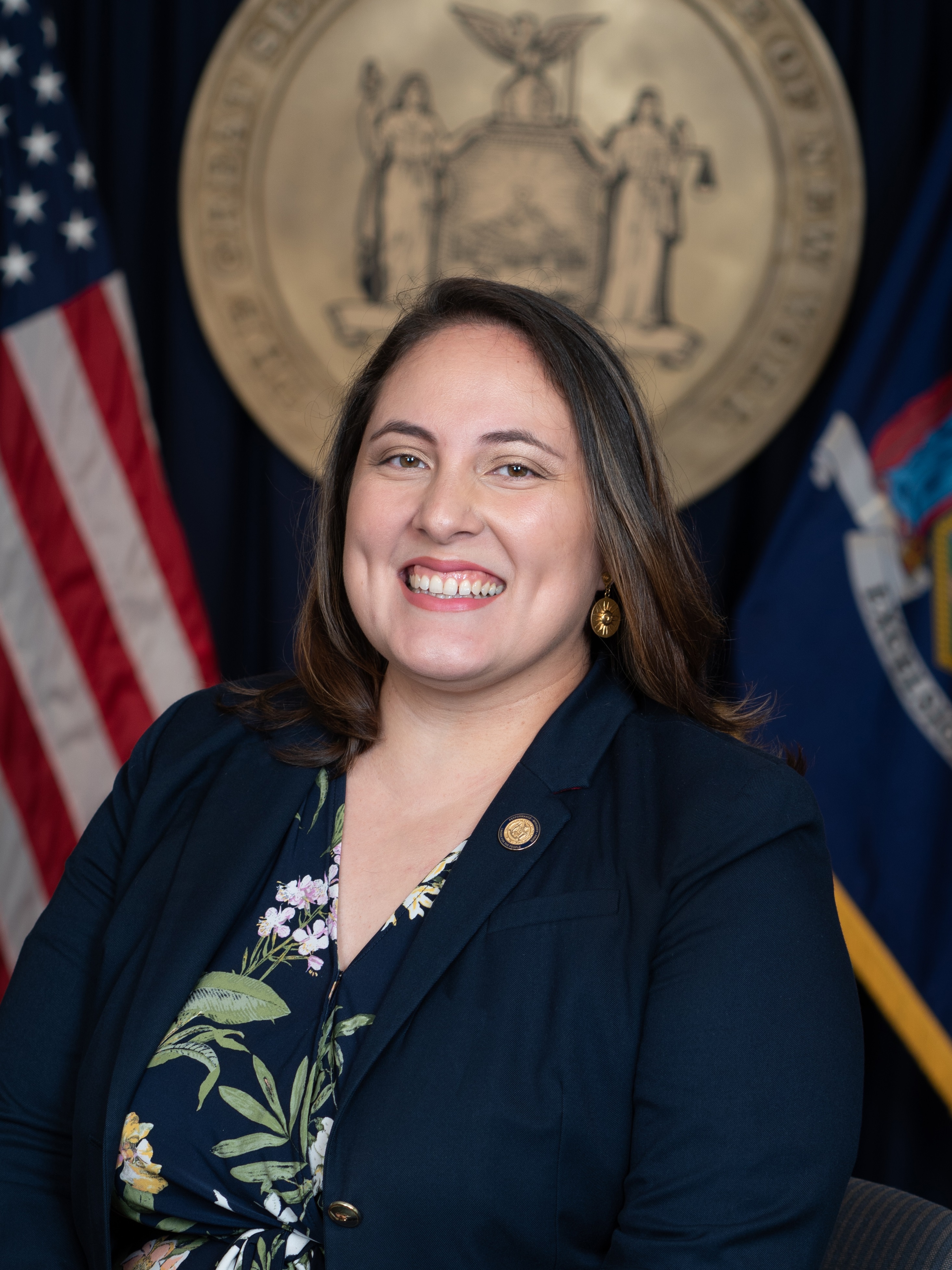
When Julissa Gutierrez was appointed New York’s chief diversity officer last summer, she was tasked with registering more MWBEs and reaching the state’s ambitious 30% MWBE contract utilization goal – which New York nearly did, with the state announcing in December that 29.51% of its contracts had been awarded to firms owned by women or minorities in the 2019-2020 fiscal year. An expert on Latino issues and civic engagement, Gutierrez previously held key roles with the National Association of Latino Elected and Appointed Officials Educational Fund.
2. Jonnel Doris & Dynishal Gross
Commissioner; Deputy Commissioner, Division of Economic and Financial Opportunity, New York City Small Business Services
Jonnel Doris - NYC Department of Small Business Services.jpg
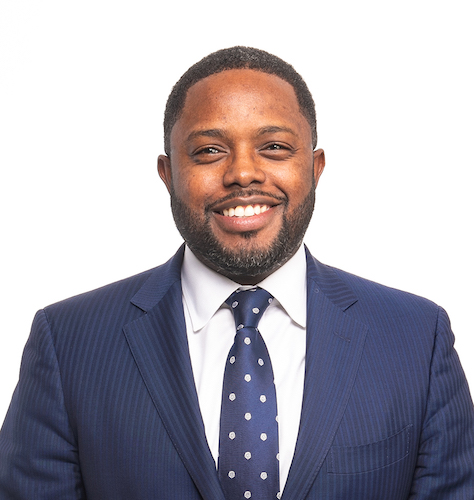
Jonnel Doris ( NYC Department of Small Business Services )
Dynishal Gross.jpg
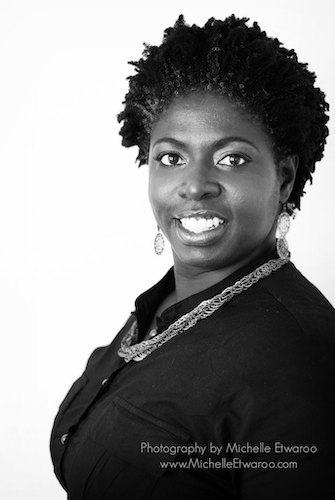
Dynishal Gross ( Submitted )
Jonnel Doris has been a key advocate for MWBEs long before he was appointed to lead New York City Small Business Services in May 2020, having previously led the Mayor’s Office of MWBEs and having served as chief diversity officer for Gov. Andrew Cuomo’s Office of Storm Recovery. In addition to overseeing the city’s MWBE program at SBS, Doris co-chairs the Small Business Subcommittee of the Taskforce on Racial Inclusion and Equity. His colleague Dynishal Gross, the deputy commissioner for SBS’ Division of Economic and Financial Opportunity, manages the city’s certification of MWBEs while also connecting them with resources for procuring city contracts. She previously worked for members of the New York City Council and was assistant commissioner for business programs in SBS’ Division of Business Services.
3. Michael Garner
Chief Diversity Officer, Metropolitan Transportation Authority
Michael Garner-Pat Cashin.jpg
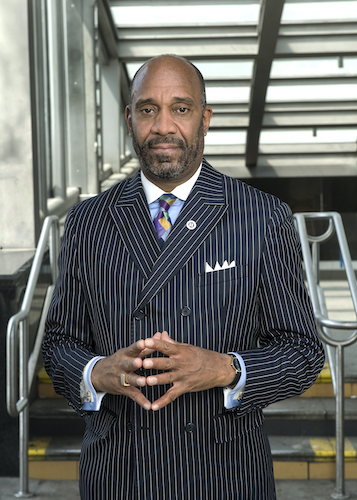
Michael Garner ( Pat Cashin )
As the MTA’s chief diversity officer, Michael Garner has overseen significant growth in MWBE contracting. The transit authority, which has the state’s highest discretionary program threshold at $1 million and assists with lending, appropriated $722 million to MWBE firms in the 2019-2020 fiscal year, the largest amount of any New York agency, and is on track to hit Gov. Andrew Cuomo’s goal of utilizing MWBE firms for 30% of the state’s contracting. Garner previously worked at the New York City School Construction Authority, another agency leading the way on MWBE contracting, and serves as president of One Hundred Black Men of New York, a nonprofit empowering the Black community.
4. Rodneyse Bichotte Hermelyn
Chair, Assembly Subcommittee on Oversight of Minority and Women-Owned Business Enterprises
Rodneyse Bichotte Hermelyn-Office of Rodneyse Bichotte Hermelyn.jpg
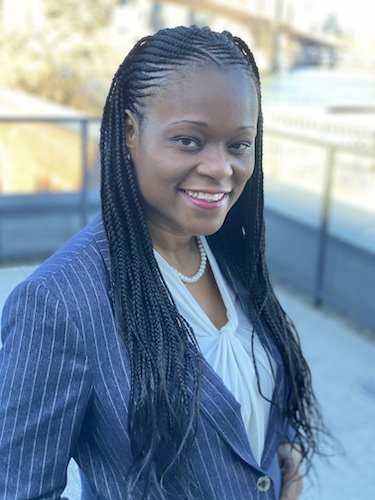
Rodneyse Bichotte Hermelyn ( Office of Rodneyse Bichotte Hermelyn )
Assembly Member Rodneyse Bichotte Hermelyn is a vocal advocate for MWBEs in Albany. As chair of the Assembly’s MWBE oversight subcommittee, the Brooklyn lawmaker has provided legislative support for Gov. Andrew Cuomo’s 30% MWBE contracting target, expanding MWBE lending options and educational resources, pressuring state agencies to collect more data on MWBE firms that seek government contracts and making resources available at the state level for MWBEs and other small businesses impacted by COVID-19. She is a member of the Mayor’s Advisory Council on MWBEs.
5. James Sanders Jr.
Chair, State Senate Committee on Banks
James Sanders.jpg
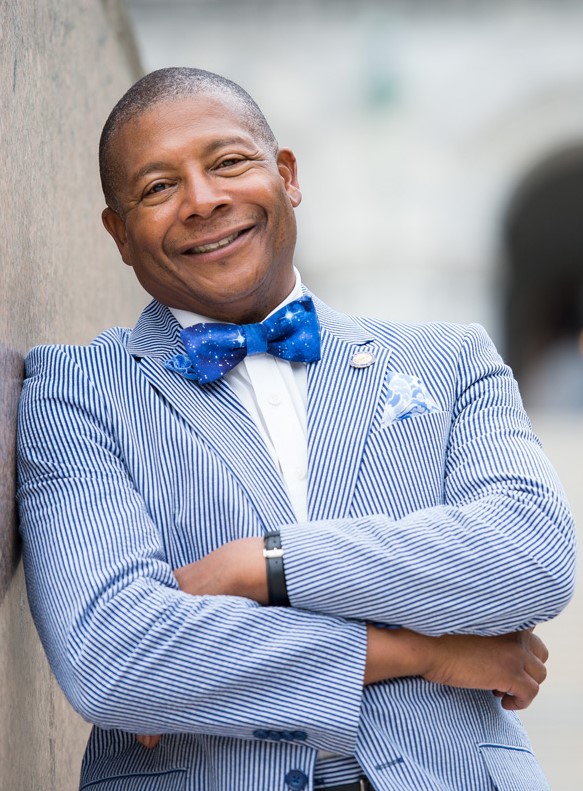
State Sen. James Sanders Jr. has long been a leading voice in Albany for MWBEs. As chair of the Committee on Banks, he has sought to expand lending options, combated predatory lending practices in marginalized communities and ensured access to lending resources during the COVID-19 pandemic. Last May, Sanders and Assembly Member Rodneyse Bichotte Hermelyn hosted an MWBE and small business call to discuss the pandemic’s impact and how to provide resources for inclusion and recovery.
6. Magalie Austin
Senior Adviser and Director, Mayor’s Office of Minority- and Women-Owned Business Enterprises
Maggie Austin last May was appointed to lead the New York City Mayor’s Office of Minority- and Women-Owned Business Enterprises. She has led the city’s MWBE program during a critical period, as the coronavirus pandemic threatened many small businesses and disproportionately affected people of color. In July, as city agencies were required by executive order to appoint chief diversity officers to help reach the city’s goals for MWBE contract procurement, the Mayor’s MWBE office was tasked with implementing the executive order and ensuring compliance.
7. Robert Cornegy
Chair, New York City Council MWBE Task Force
RobertCornegy - Raeshon Robinson.jpg
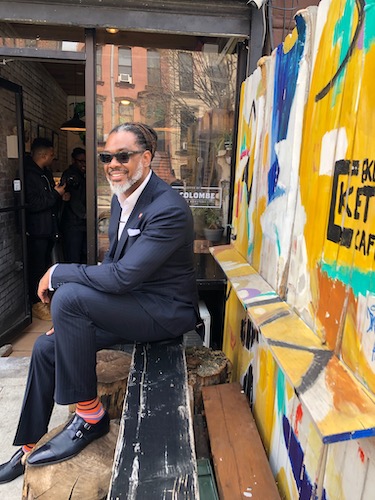
Robert Cornegy ( Raeshon Robinson )
New York City Council MemberRobert Cornegy, who represents Bedford-Stuyvesant and Crown Heights, is seeking to represent all of Brooklyn as he campaigns to be the next borough president. In addition to chairing the Housing and Buildings Committee, Cornegy also leads the New York City Council MWBE task force, which supports efforts to boost MWBE contract utilization and increase the number of minority-owned businesses throughout the city. He is also a member of the Mayor’s Advisory Council on MWBEs.
8. Nina Kubota & Suzanne Veira
President; Chief Diversity Officer, New York City School Construction Authority
Suzanne Veira-Scott Lindeman.jpg
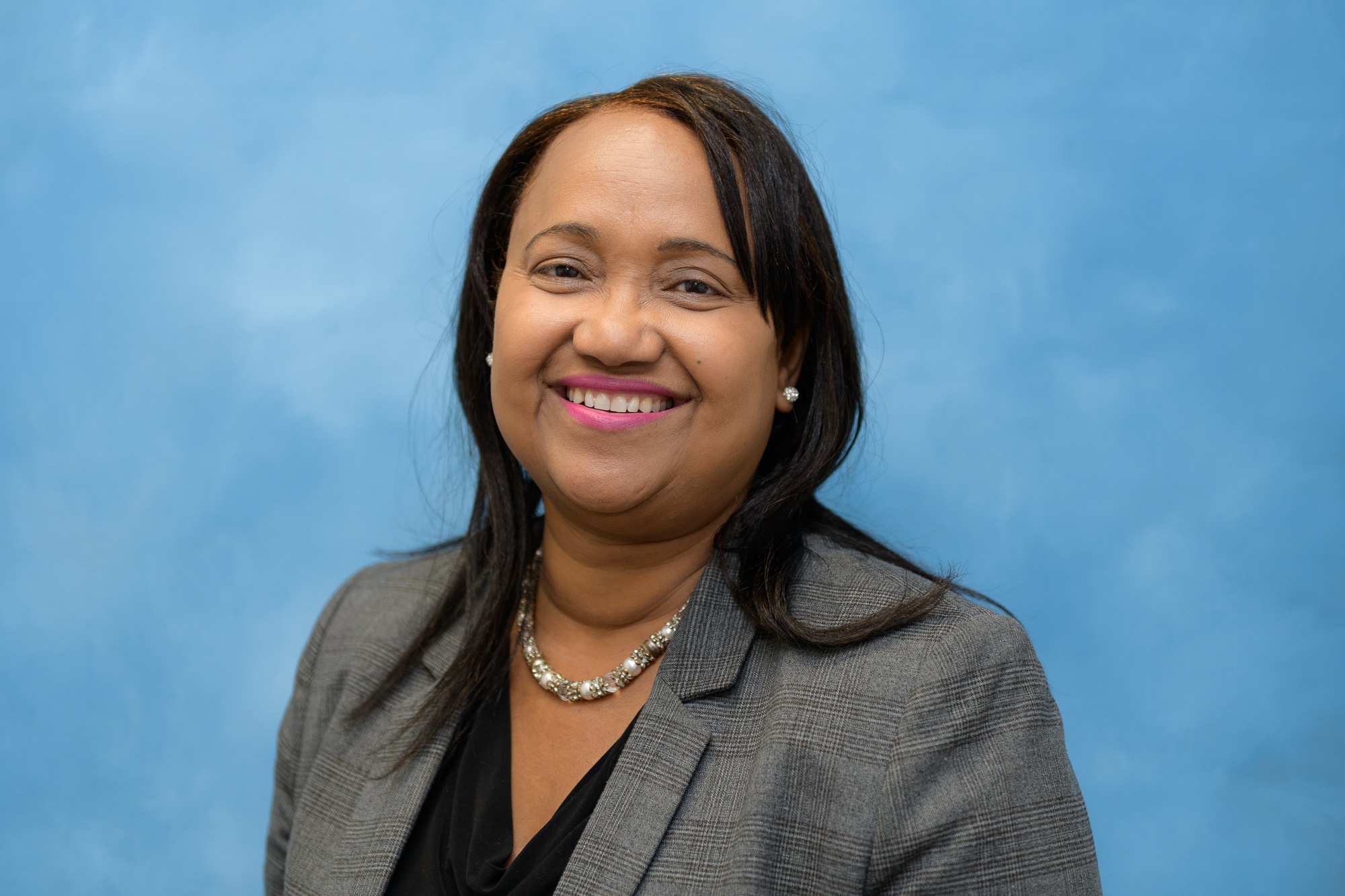
Suzanne Veira ( Scott Lindeman )
After Lorraine Grillo was appointed senior adviser for recovery by New York City Mayor Bill DeBlasio in February 2021, she handed off the reins at the New York City School Construction Authority to Nina Kubota. Kubota, who served as the SCA’s senior vice president for capital plan development and implementation, has big shoes to fill. But she’ll continue to work alongside a fellow SCA veteran in Suzanne Veira, above, the authority’s chief diversity officer, to boost the number of contracts made available to MWBE firms and involve minority communities in dialogue about school construction throughout New York City.
9. Crystal Peoples-Stokes, Inez Dickens & Latrice Walker
Assembly Members
Crystal Peoples-Stokes - Office of Assemblywoman Crystal Peoples-Stokes.jpg
Office of Assemblywoman Crystal Peoples-Stokes
Inez Dickens office pic.jpeg

Inez E. Dickens ( Office of Inez E. Dickens )
latrice-monique-walker-celeste-sloman.jpg
Latrice Monique Walker ( Photo by Celeste Sloman )
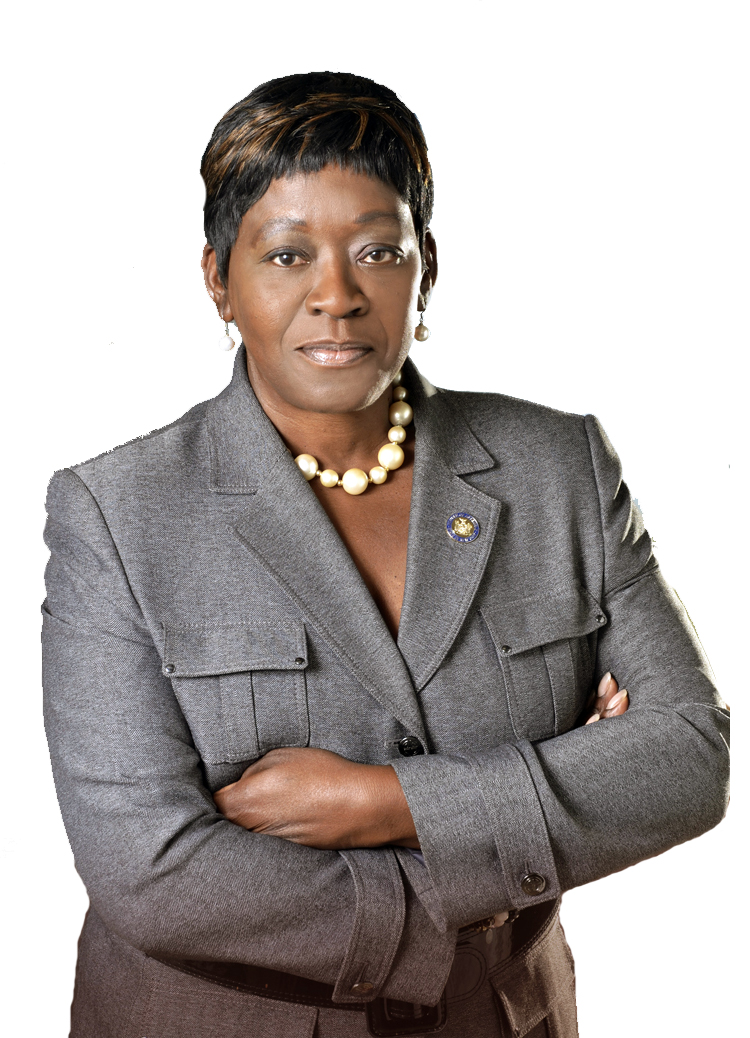
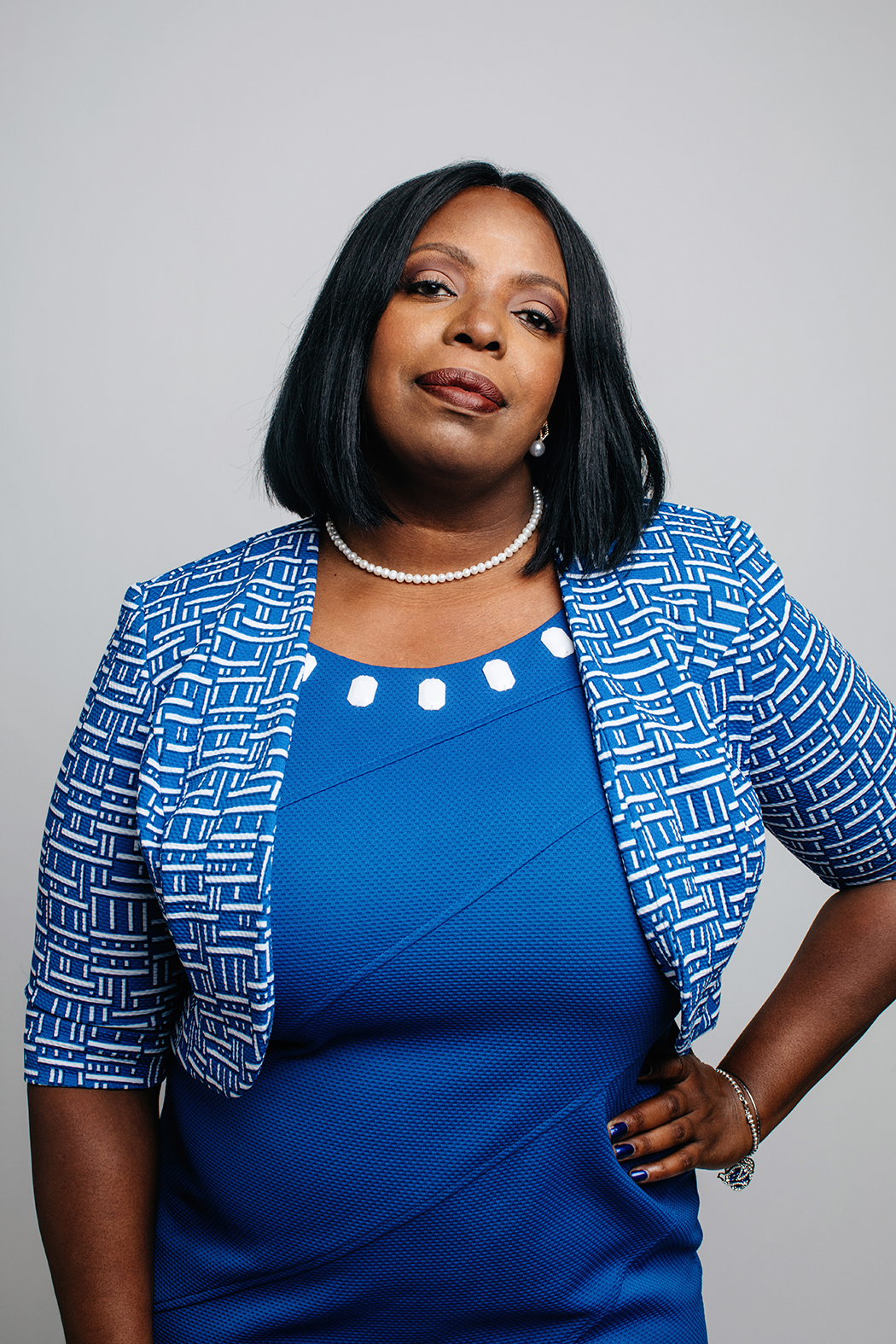
Long before she became Assembly majority leader in 2018, Buffalo lawmaker Crystal Peoples-Stokes was an advocate of MWBEs. She served on an MWBE task force Gov. Andrew Cuomo created in 2011, helped create the Assembly Subcommittee on MWBEs and served as its chair for several years starting in 2012, a time when the state began setting more ambitious MWBE contracting targets. This year she notched a big win with the passage of her legislation legalizing recreational marijuana, which includes language ensuring revenue is reinvested in communities of color. Fellow Assembly Member Inez Dickens of Harlem has also supported MWBEs in Albany, supporting a 2019 measure extending the state’s MWBE program. Assembly Member Latrice Walker of Brooklyn has also championed MWBE causes, including efforts to establish a Women of Color in Tech Day last year and eliminate net worth requirements for MWBE certification.
10. Louis Coletti
President and CEO, Building Trades Employers Association
Lou Coletti.jpg
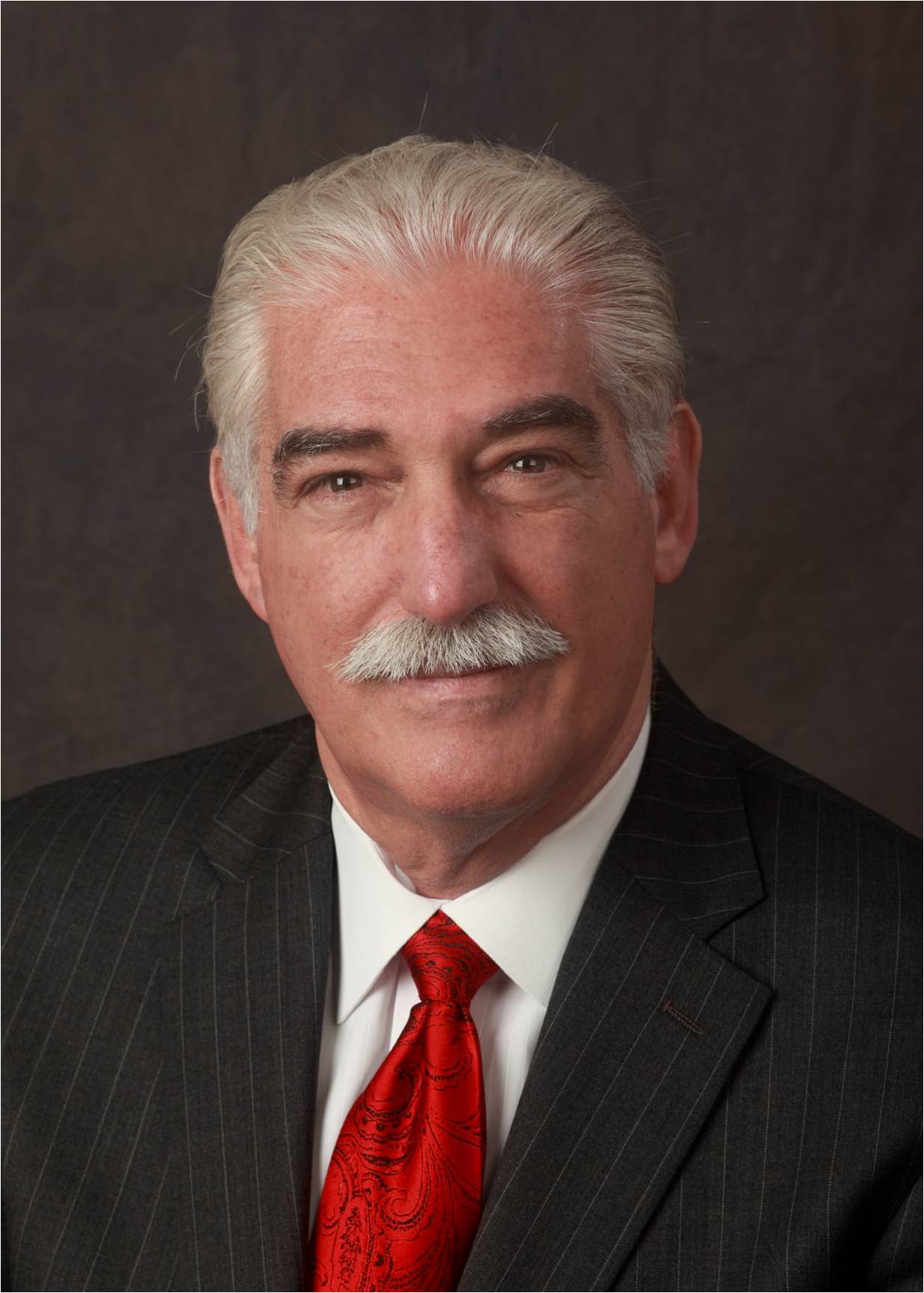
Since 1997, Louis Coletti has served as president and CEO of Building Trades Employers Association, which represents construction contractors in New York and has been an important player in the industry’s local MWBE community. Coletti has spearheaded the BTEA’s MWBE Leadership Council, which meets quarterly to discuss and strategize on MWBE topics in the construction industry. Additionally, Coletti is a member of the New York City Comptroller’s Advisory Council on Economic Growth through Diversity and Inclusion.
11. Wendy Garcia
Chief Diversity Officer, Office of the New York City Comptroller
WENDY GARCIA.jpg
Wendy Garcia ( Submitted )
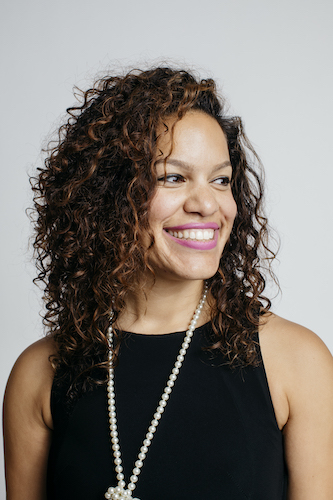
Wendy Garcia has served for seven years as chief diversity officer for New York City Comptroller Scott Stringer, a mayoral candidate whose office has kept close tabs on MWBE contracting. Garcia leads the Office of Diversity Initiatives, which publishes “Making the Grade: New York City Agency Report Card on Minority- and Women-Owned Business Enterprises,” an annual report assessing city agencies’ progress towards diversity goals. She also runs the Comptroller’s Advisory Council on Economic Growth through Diversity and Inclusion, which aims to increase supplier diversity.
12. Stephanie Burns
President, Women Builders Council
Stephanie Burns is president of the Women Builders Council, a leading New York membership association focused on empowering women in the construction industry. In this capacity, her efforts of implementing programming and strategic planning have proven essential to New York’s construction MWBE community. Her responsibilities have also included building a pipeline of students studying in STEM programs to find careers in construction and engineering. As a vice president at Turner Construction, she leads strategic project and community planning on numerous workforce development projects.
13. Michael Massiah
Chief Diversity and Inclusion Officer, Port Authority of New York and New Jersey
Michael Massiah Headshot.jpg
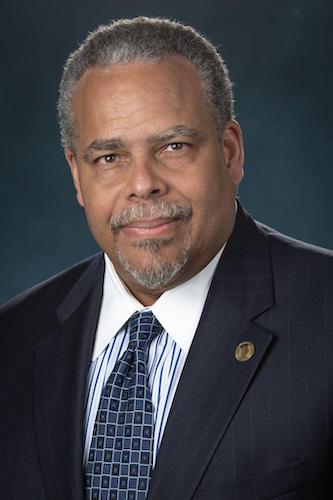
Michael Massiah ( Submitted )
As the chief diversity officer for the Port Authority of New York and New Jersey, Michael Massiah spearheads the authority’s diversity efforts, including awarding more contracts to MWBE firms. The veteran Port Authority official has had a higher target since 2018, when the MWBE contract participation goal was raised to an ambitious 30%, including 20% of contracts going to minority-owned firms and 10% to women-owned enterprises. The authority has reported that two-thirds of the companies it works with are MWBE-certified.
14. Reuben McDaniel III
President and CEO, Dormitory Authority of the State of New York
Reuben R McDaniel III-DASNY.jpg
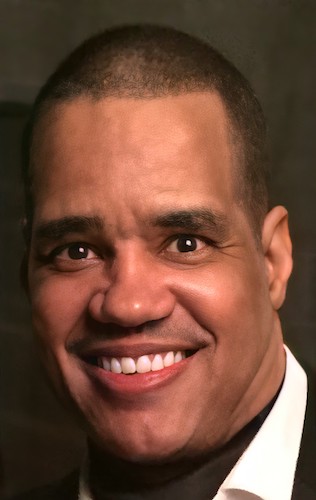
Reuben R McDaniel III ( DASNY )
Last summer, Reuben McDaniel was confirmed as the president and CEO of the Dormitory Authority of the State of New York, a trailblazer in awarding contracts to MWBEs. McDaniel arrived at DASNY after a career in finance, most recently at Raymond James. McDaniel, who gained governmental experience as chair of the Atlanta Board of Education while still in the private sector, now runs an authority that awarded $184 million to MWBE firms in the 2019-2020 fiscal year, or nearly a third of all its contracts.
15. Elizabeth Velez
President and Chief Contract Officer, Velez Organization
Elizabeth Velez - Greg Morris.jpg
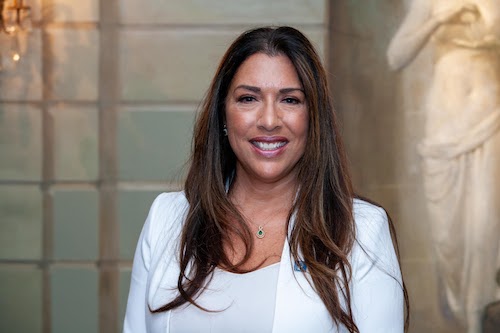
Elizabeth Velez ( Greg Morris )
Elizabeth Velez is one of the leading contractors in the MWBE space, building her construction firm into a heavyweight in an industry dominated by white men while continuing to advocate for smaller operations seeking to follow in her footsteps. Her Velez Organization was launched in 1972 and has built affordable housing in the Bronx and Harlem as well as a portfolio of health care, educational and other large-scale projects throughout New York. A member of the Mayor’s Advisory Council on MWBEs, she was named chair of the New York Building Congress last year.
16. Jacques Andre DeGraff
Chair, Minority Business Enterprise Leadership Summit
Jacques DeGraff- Celeste Sloman.jpg
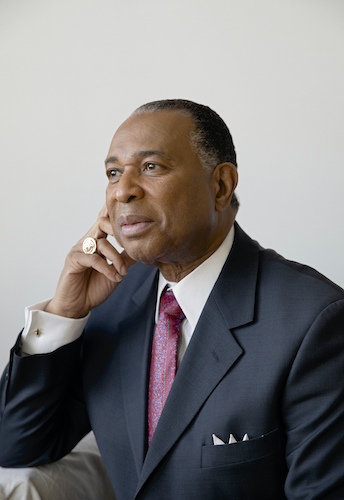
Jacques DeGraff ( Celeste Sloman )
Rev. Jacques Andre DeGraff has been involved in MWBE coalitions for a quarter century. His role as a spiritual leader of Canaan Baptist Church of Christ in Harlem has placed him on the front lines of numerous social justice efforts, including boosting coronavirus vaccination rates among Black New Yorkers. He is an active member and former vice president of 100 Black Men of New York and helped launch the Eagle Academy for Young Men of Color. DeGraff previously chaired the New York City School Construction Authority Diversity Council.
17. Sandra Wilkin
Founder and President, Bradford Construction Corporation
Sandra Wilkin-Andre Beckles.jpg
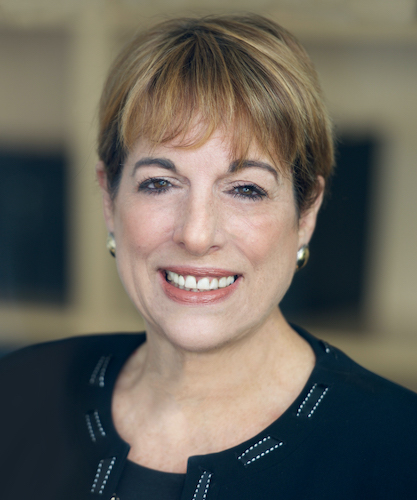
Sandra Wilkin ( Andre Beckles )
As founder and former president of the Women Builders Council and a member of the Mayor’s Advisory Council on MWBEs, Sandra Wilkin has been recognized for mentoring other MWBE firms as means to boosting capacity and achieving city and state contracting targets. She has also led successful efforts to use legislation to boost MWBE contracting. Her women-owned Bradford Construction Corporation is also part of the Bravo Group, a partnership with fellow MWBEs Velocity Architecture & Engineering Group, Chu & Gassman Consulting Engineersand Skyline Engineering.
18. Cheryl McKissack Daniel
President and CEO, McKissack & McKissack
Cheryl McKissack Daniel - McKissack & McKissack.jpeg
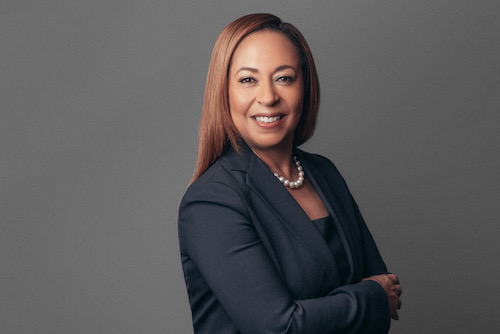
Cheryl McKissack Daniel ( McKissack & McKissack )
Cheryl McKissak Daniel leads McKissack & McKissack, a minority-owned design and construction firm that dates back more than a century. Her company worked on Columbia University’s expansion, the World Trade Center and the former Atlantic Yards development. A past president of the Women Builders Council, she is a member of Women in Transportation, the New York Building Congress and the Mayor’s Advisory Council on MWBEs. Her sister, Deryl McKissack, runs another construction company named McKissack & McKissack, with a headquarters in Washington.
19. Samuel Padilla
President, Padilla Construction Services
Samuel Padilla-Submitted.png
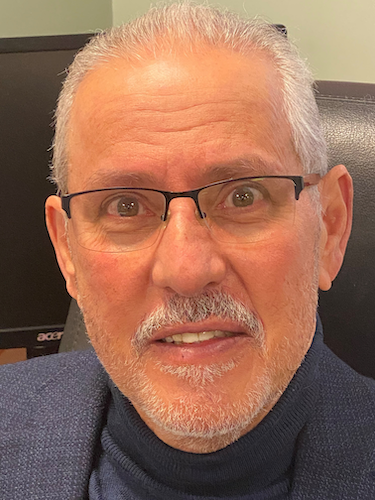
Samuel Padilla ( Submitted )
Samuel Padilla leads Padilla Construction Services, an MWBE-certified construction firm that quickly established itself after its founding in 1993. Padilla was appointed to New York City Mayor Bill de Blasio’s MWBE advisory board when it was launched in 2015. His construction company has completed projects at the World Trade Center and the United Nations while working with major city and state agencies, including the Metropolitan Transportation Authority, the Port Authority of New York and New Jersey and the New York City School Construction Authority.
20. Nayan Parikh
President, Ashnu International
Nayan Parikh-PNC Photo.jpg
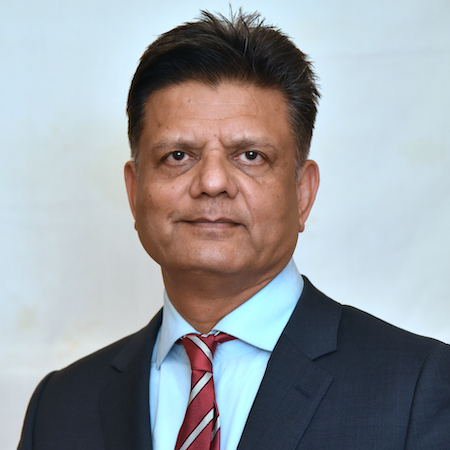
Nayan Parikh ( PNC Photo )
Nayan Parikh started out as a civil engineer in India and is now the owner of a Queens-based construction firm with multiple offices around the country and abroad, and along the way he has become a leader in New York’s MWBE community. Parikh founded Ashnu International as a general contracting and construction management company in 1998, becoming a trusted contractor to federal and state agencies along with clients in the private sector. He serves on the Mayor’s Advisory Council for MWBEs and is executive vice president of the National Association of Minority Contractors and president of NAMC's New York Tri-State Chapter.
21. Christopher Williams
Principal, Siebert Williams Shank & Co.
Christopher Williams-Travis Curry.jpg
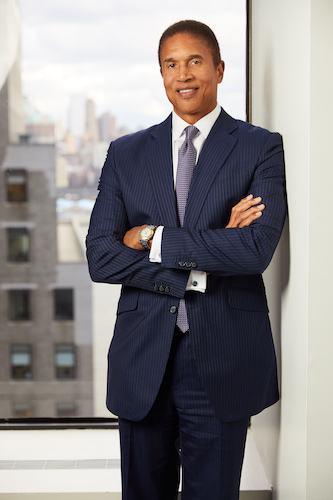
Christopher Williams ( Travis Curry )
As board chair at Shank Williams Cisneros & Co. and principal of the affiliated Siebert Williams Shank & Co., Christopher Williams leads one of the largest MWBE financial services firms on Wall Street. Williams, who previously led The Williams Capital Group and Williams Capital Management, merged with Suzanne Shank’s Siebert Cisneros Shank in 2019. Other key executives at the company include former HUD Secretary Henry Cisneros and former New York City Comptroller William Thompson Jr.
22. Anyori Hernandez
Director of Emerging Managers, Office of the State Comptroller
Anyori Hernandez-Office of the State Comptroller.jpg
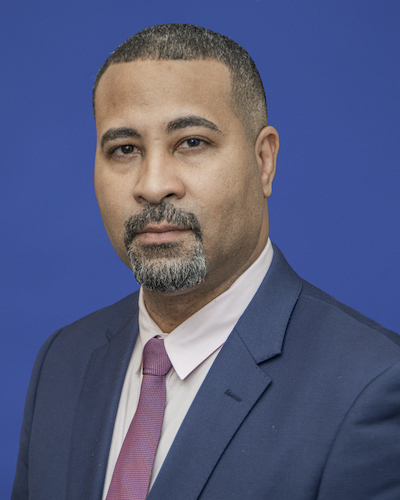
Anyori Hernandez ( Office of the State Comptroller )
While much attention is paid to how many contracts New York agencies award to MWBEs, another significant source of government funds that minority and women business owners compete for is in the pension fund managed by the state comptroller. State Comptroller Thomas DiNapoli’s Emerging Manager Program has diversified the portfolio of the Common Retirement Fund, with Barclays alum Anyori Hernandez investing more than $20 billion in assets with MWBEs.
23. Ehab Shehata
President and CEO, Bravo Group
Ehab Shehata-Kim Tyler Photography_BRAVO Group.jpg
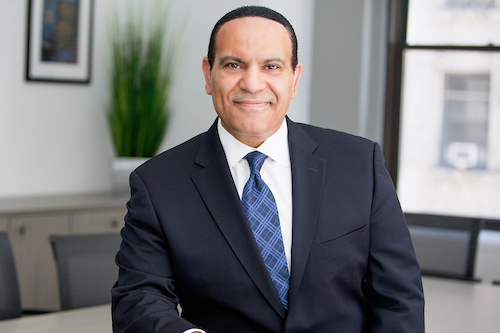
Ehab Shehata ( Kim Tyler Photography/BRAVO Group )
Ehab Shehata heads up Bravo Group, a full service architecture and engineering firm. Spearheaded by Shehata and Sandra Wilkin, Bravo is a collaborative effort of Velocity Architecture and Engineering Group, Chu & Gassman Consulting Engineers, Bradford Construction Corporation and Skyline Engineering, all leaders in construction and engineering. Under Shehata’s leadership, Bravo Group has taken on projects with educational institutions, national organization headquarters, health care facilities, transportation hubs and industrial projects, such as the ongoing restoration work at the Brooklyn Navy Yard.
24. Quenia Abreu
President and CEO, New York Women’s Chamber of Commerce
Quenia Abreu-Niurka Vidal.jpg
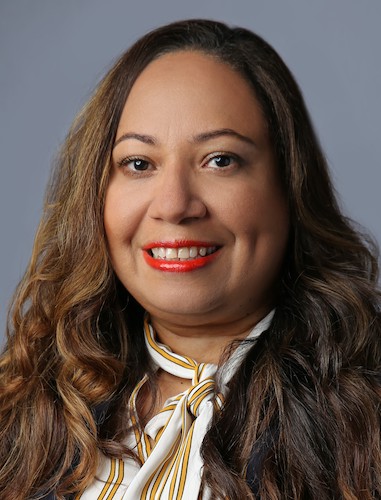
Quenia Abreu ( Niurka Vidal )
Quenia Abreu co-founded the New York Women’s Chamber of Commerce in 2002, when it became the first and only women’s chamber of commerce in the state. Abreu, who previously directed the Women’s Business Centers at the Queens Economic Development Corporation and the Hunts Point Economic Development Corporation, has led the NYWCC since 2004, spearheading its efforts in assisting firms seeking MWBE certification. A member of the Mayor’s Advisory Council on MWBEs, she also launched a women and minority business development center in Upper Manhattan.
25. Thai Lee
President and CEO, SHI
Since SHI was founded in 1989, Thai Lee has been at the helm of the leading information technology firm. The New Jersey-based company, formerly Software House International, has billed itself as the country’s largest minority- and women-owned business, with certifications from the Women’s Business Enterprise National Council, the New York & New Jersey Minority Supplier Development Council and New York City. Lee’s firm is currently the top MWBE contractor in New York City, with more than $100 million received on a $285 million contract.
26. Roly Acosta
President and CEO, JAG Companies
Roly Acosta runs JAG Companies, the New Jersey-based parent company of construction heavyweights such as Northeast Remsco Construction and Caldwell Marine International. The family-owned JAG Companies is one of the country’s biggest Hispanic-owned firms. The company has supported supplier diversity by growing and utilizing their MWBE subcontractor database. Northeast Remsco Construction is currently a top MWBE in New York City, having received $52 million to date this fiscal year.
27. Lourdes Zapata
President and CEO, SoBro
Lourdes Zapata-Kimberly Singh_LOFT.jpg

Lourdes Zapata ( Kimberly Singh/LOFT )
Lourdes Zapata in 2019 took the top position at the South Bronx Overall Economic Development Corporation, or SoBro, a community development organization serving one of the poorest congressional districts in the country. Zapata, the first Latina and woman to hold the position, had previously served as the organization’s director of community development. In between, Zapata served as chief diversity officer under Gov. Andrew Cuomo, a position in which she oversaw increased contracting for MWBE firms.
28. Lloyd Williams
President and CEO, The Greater Harlem Chamber of Commerce
Lloyd Williams - Hubert Williams.jpg
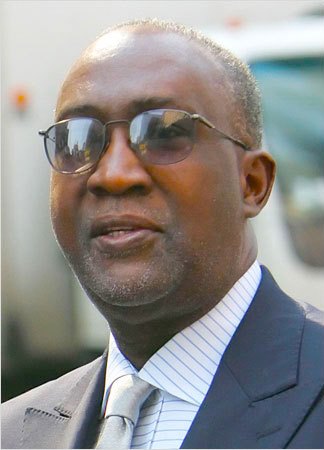
Lloyd Williams ( Hubert Williams )
Lloyd Williams, a lifelong Harlemite and the godson of Malcolm X, is the longtime leader of the Greater Harlem Chamber of Commerce. The organization, which dates back to 1896, aims to improve the lives of Harlem residents, and during the height of the COVID-19 pandemic it delivered hundreds of meals and personal protective equipment each day. Williams, who co-founded Harlem Week and the Harlem Jazz & Music Festival and serves on the board of NYC & Company, has also been an outspoken proponent of MWBEs.
29. Barbara Armand Kushner
President and CEO, Armand Corporation
Barbara Armand-Armand Corporation.jpg
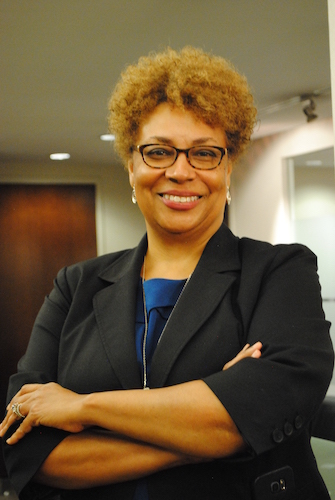
Barbara Armand ( Armand Corporation )
Barbara Armand is the owner and chief executive of Armand Corporation, a program and construction management firm she founded in 1991 that now has offices in New York City, New Jersey and Philadelphia. She is a consultant on MWBE policy and her clients have included large organizations in the private and public sectors, such as the New York City Economic Development Corporation and the New York City School Construction Authority. She’s also the president emeritus of the New York chapter of Professional Women in Construction.
30. Deborah Bradley
President, Deborah Bradley Construction & Management Services
Deborah Bradley launched her construction management firm in 1994 after graduating from Columbia University, her first client. A past president of the Women Builders Council, she formed a partnership with the United Nations to encourage women to enter the construction industry, helped launch student chapters and lobbied New York officials to adopt a 30% MWBE utilization goal. The former accountant is a member of the New York Building Congress and has served since 2019 on the Mayor’s Advisory Council on MWBEs.
31. Bill Howell
President, Howell Industries
Bill Howell-Megan Kelly.jpeg

Bill Howell ( Megan Kelly )
Bill Howell’s company started out in the petroleum business before transitioning to construction work. Howell Industries today mentors small MWBE contractors and contracts with large governmental bodies including the New York City School Construction Authority, Metropolitan Transportation Authority and the Dormitory Authority of the State of New York. It also assists Service Disabled Veteran Owned Businesses through the MTA Small Business Development Program. In 2019, Howell was appointed to the Mayor’s MWBE Advisory Board.
32. Bonnie Wong
Founder and President, Asian Women in Business
Bonnie Wong is the founder and leader of Asian Women in Business, a national membership organization to support Asian women-owned businesses. The nonprofit offers mentorship and networking for Asian women in corporate and legal sectors. AWIB has grown to become a widely recognized organization championing MWBE efforts in New York and nationally. Wong serves on MWBE and diversity boards for both New York City Mayor Bill de Blasio and City Comptroller Scott Stringer.
33. Tunisha Walker-Miller
Principal, Capalino
Tunisha Walker-Miller - Leigh Beckett .jpg
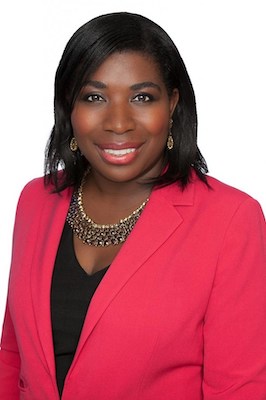
Leigh Beckett
Tunisha Walker-Miller, a principal at Capalino, manages the leading lobbying firm’s MWBE Consulting Group, which has helped procure contracts for firms on both state and local levels across a variety of sectors since 2015. She also founded the Association of Black Lobbyists and Consultants in 2019. She has previously served as executive director of the state Senate Conference of Black Senators.
34. Charles Williams III
Partner, Peckar & Abramson
Charles E. Williams III-Tony David Photography.jpg
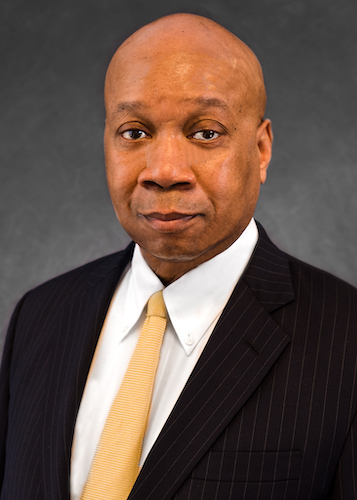
Charles E. Williams III ( Tony David Photography )
As a partner at Peckar & Abramson, Charles Williams III practices construction and real estate law, with a special expertise in MWBE regulations and certification. Williams previously served as vice president and general counsel of the New York City School Construction Authority, a leading agency in awarding MWBE contracts, and he also has worked with the Office of the Manhattan Borough President, the New York Department of State and the NAACP. He’s also general counsel for the Building Trades Employers Association’s MWBE Leadership Council.
35. Kenneth Thomas & Jason Cintron
Co-Managing Directors, Minority & Women Contractors & Developers Association
Kenneth Thomas-Sepia Prince.jpg
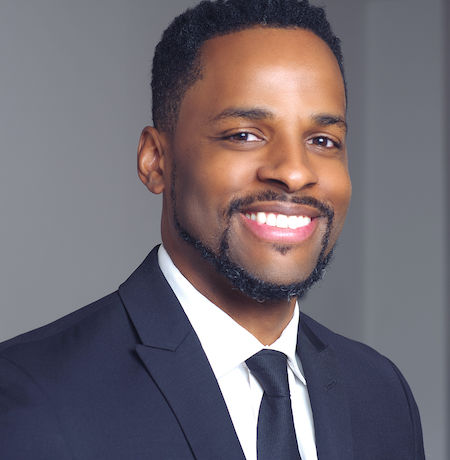
Kenneth Thomas ( Sepia Prince )
Jason Cintron-Jason Cintron.JPG

Jason Cintron ( Jason Cintron )
Kenneth Thomas and Jason Cintron launched the nonprofit Minority & Women Contractors & Developers Association in 2019, with the goal of empowering MWBE firms and diversifying the real estate and construction industries. MWCDA has been focused on growing its membership and promoting workforce development training. Cintron previously held key staff positions with the New York City Council, while Thomas worked in the real estate industry.
36. Brian Matthews
Senior Consultant, Brown & Weinraub
Brian Matthews-Timothy Raab_Northern Photo.jpg
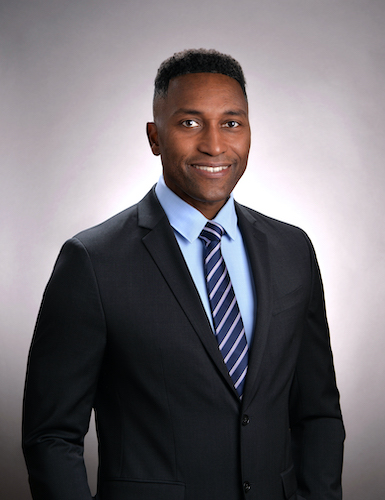
Brian Matthews ( Timothy Raab/Northern Photo )
After three decades working in state government, Brian Matthews joined top Albany lobbying firm Brown & Weinraub in January and has been helping to build out its MWBE practice. Matthews brings plenty of relevant experience, including as chief financial officer for the state Office of General Services and director of the Bureau of Financial Administration in the Office of the State Comptroller. Matthews recently called for revisions to evaluation standards for government contractors to prioritize the “value of community progress” as much as cost and experience.
37. Rick Miranda
President and CEO, Brooklyn Hispanic Chamber of Commerce
As the longtime leader of the Brooklyn Hispanic Chamber of Commerce, Rick Miranda has driven the membership organization’s efforts to support Hispanic-owned businesses across the borough. A member of the Mayor’s Advisory Council on MWBEs and other diversity boards and councils – and as a small business owner himself – Miranda has helped boost the number of certified MWBEs through a partnership with New York City Small Business Services.
38. Kristin Malek
Director of Business Diversity, CDW
Kristen Malek-Margaret Koukos Photography.JPG

Kristen Malek ( Margaret Koukos Photography )
Since December, Kristin Malek has overseen business diversity initiatives for CDW, an Illinois-based information technology services provider that does significant business in New York. Malek has managed some $2 billion yearly in investments through the company’s supplier diversity program, partnering with hundreds of minority- and women-owned firms. Since Malek joined the company in 2017, it has twice been a finalist for the National Minority Supplier Development Council Corporation of the Year.
39. Justin Nelson & Jonathan Lovitz
Co-Founder and President; Special Adviser, National LGBT Chamber of Commerce
Jonathan Lovitz-Topher Scott.jpg
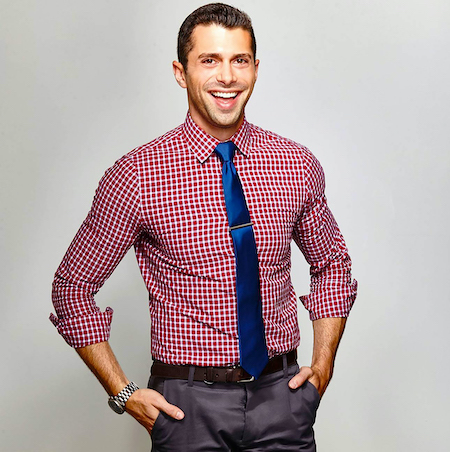
Jonathan Lovitz ( Topher Scott )
The National LGBT Chamber of Commerce recently reached an agreement with the New York City Department of Small Business Services to certify firms owned by LGBTQ New Yorkers. Supporters say the move connects these firms with city resources, but without undermining official MWBE government contracting efforts. The agreement, which was reached in lieu of passing proposed legislation, is a victory for NGLCC’s Justin Nelson, who is typically more active on the national level, and Jonathan Lovitz, who was previously NGLCC’s New York director and lobbied for the recent local change.
40. Paul Williams Jr.
Founder, Brown Hatchett & Williams
Paul T. Williams, Jr.-Paul T. Williams, III.jpg
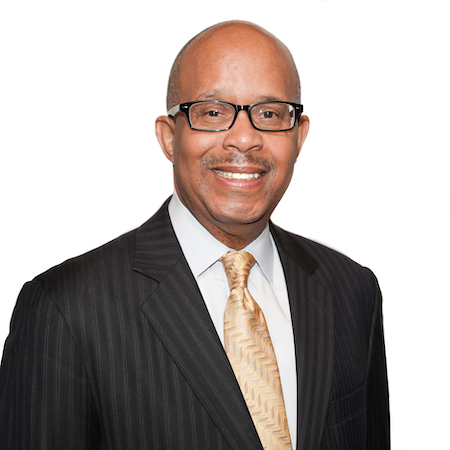
Paul T. Williams, Jr ( Paul T. Williams, III )
Paul Williams is a founding partner at Brown Hatchett & Williams, a law firm well-versed in corporate governance, finance and real estate matters. Williams made history in 2008 as the first African American to lead the Dormitory Authority of the State of New York and established DASNY as an innovator in developing new strategies to award contracts to MWBEs. He also chaired then-Gov. David Paterson’s MWBE task force, and continued to lead DASNY under Gov. Andrew Cuomo until 2015. Williams now advises companies on diversity and inclusion.
41. Jacqueline S.L. Williams
Founding Partner and Co-Owner, State & Broadway
Jacqueline S.L. Williams is a fierce advocate for MWBEs in New York. The owner of the lobbying firm State & Broadway served on Gov. Andrew Cuomo’s MWBE task force in 2011 in her capacity as MWBE Coalition coordinator, and she continues to work with firms owned by women and minorities and on broader economic development and labor issues as a top lobbyist in Albany.
42. John Flateau
Professor, Medgar Evers College
John Flateau-NYC Board Of Elections, Annual Report 2019.jpg
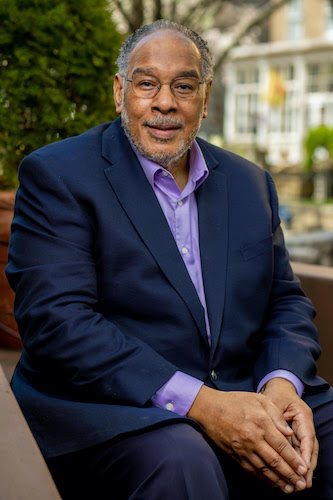
John Flateau ( NYC Board Of Elections, Annual Report 2019 )
John Flateau is the co-founder of Medgar Evers College’s DuBois Bunche Center for Public Policy and US Census Information Center. Previously, he served as chief diversity officer at Empire State Development under former Gov. Mario Cuomo, executive director of the New York State Black and Puerto Rican Legislative Caucus and chief of staff to former New York City Mayor David Dinkins. A founding father of New York MWBEs, he played a key role in conducting a disparity study that paved the way for New York City’s MWBE program.
42. Hazel Dukes
President, NAACP New York State Conference
Hazel Dukes.jpg
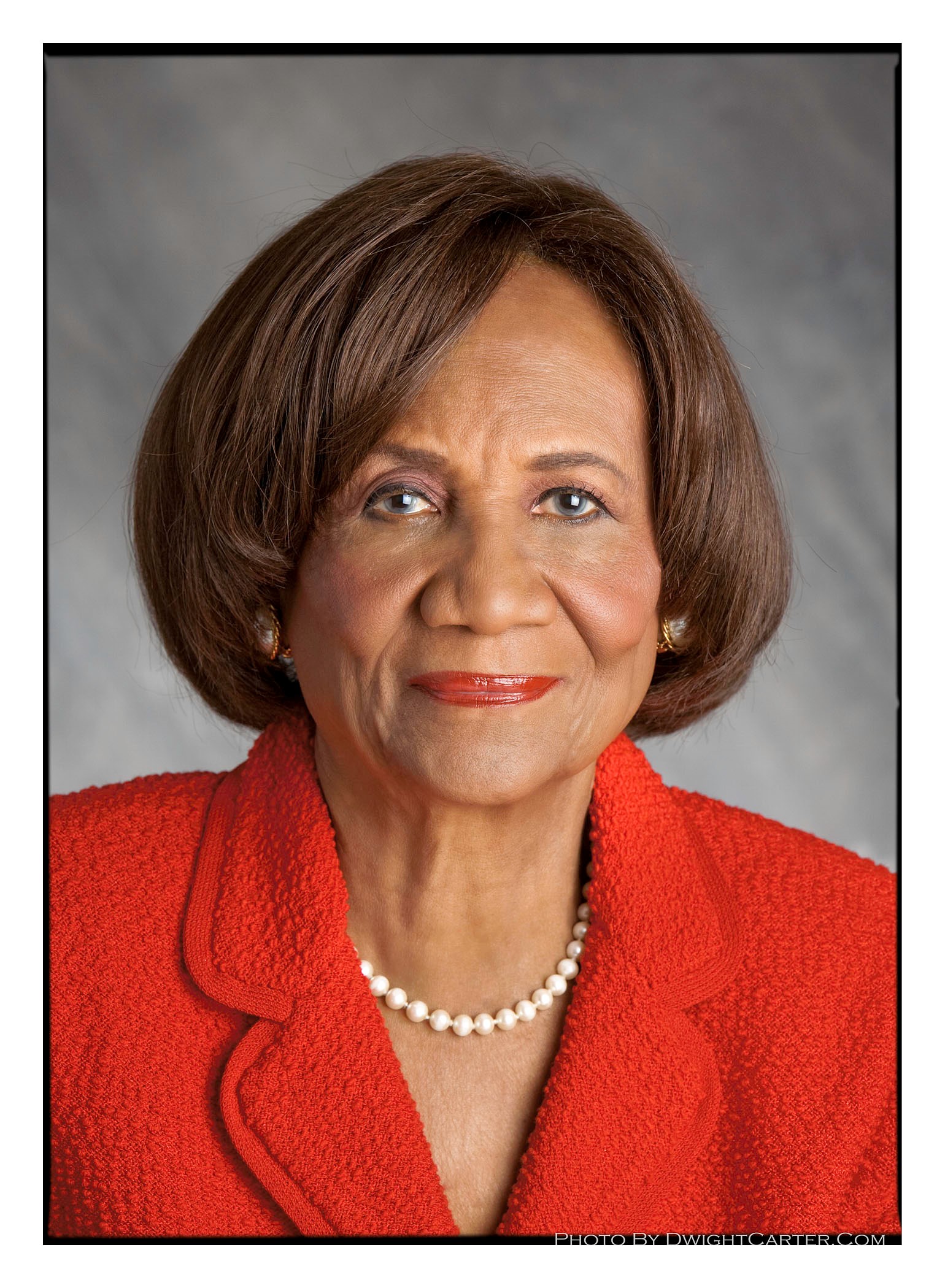
As a longtime leader with the venerable civil rights organization the National Association for the Advancement of Colored People, Hazel Dukes has spent decades seeking to create social and economic opportunities for New Yorkers of color. Dukes’ consulting firm Hazel N. Dukes and Associates focuses on public policy, health and diversity, and she was appointed to serve on Gov. Andrew Cuomo’s COVID-19 Vaccine Equity Task Force. She’s also a member of New York City Comptroller Scott Stringer’s Advisory Council on Economic Growth through Diversity and Inclusion.
43. Valerie White
Executive Director, LISC NYC
Valerie White-Roger Archer, Phaats Photos.JPG
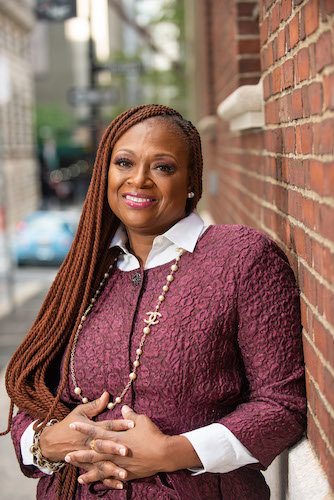
Valerie White ( Roger Archer, Phaats Photos )
Valerie White took the reins of the New York City office of the Local Initiatives Support Corporation, or LISC NYC, a year ago. White, who previously led Empire State Development’s Division of Minority and Women’s Business Development, now is tasked with continuing initiatives that have pumped $3.1 billion into affordable housing, health care, jobs and business development programs. LISC, which was founded in New York by the Ford Foundation and corporate partners in New York in 1979, now has a presence in 45 states.
44. Liz Neumark
Founder and CEO, Great Performances
Liz Neumark-Great Performances.jpg
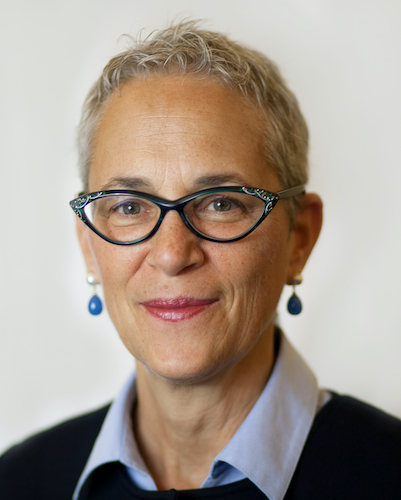
Liz Neumark ( Great Performances )
Liz Neumark has led Great Performances for four decades, building it out from a part-time staffing agency for women in the arts into a top-tier catering and events company. In 2019, Gov. Andrew Cuomo announced that Neumark’s women-owned firm was relocating from Manhattan to the South Bronx, while creating nearly 200 new jobs and investing $4.4 million into a 40,000-square-foot space.
45. Jean Kristensen
President and CEO, Jean Kristensen Associates
After a career in private security, Jean Kristensen switched gears to run her own consulting firm, Jean Kristensen Associates. The firm, which is a minority- and women-owned business, assists other small business owners in getting certified with city and state MWBE programs and pursuing government contracts. Government agencies have also consulted Kristensen to identify firms for their supplier diversity programs.
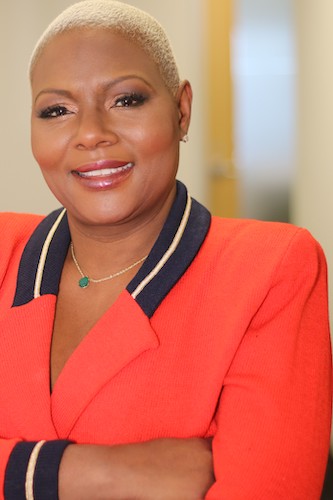
46. Jacqui Williams
Principal, 99 Solutions
Jacqui Williams-TL Holmes_MCG.jpg
Jacqui Williams ( TL Holmes/MCG )
Jacqui Williams is one of New York City’s top lobbyists, specializing in everything from real estate to recreational marijuana to retail and grocery stores, including helping the popular Wegmans Food Markets bring a supermarket to Brooklyn. As the longtime owner of the consulting firm 99 Solutions, she has long sought to assist business owners who are people of color.
47. Larry Scott Blackmon
Founder and CEO, The Blackmon Organization
Larry_Scott_Blackman.jpg

Larry Scott Blackman ( Andrew Morales )
When Larry Scott Blackmon founded his consulting firm The Blackmon Organization, it was the latest stage in a career straddling the public and private sectors. He previously served as vice president of public affairs at FreshDirect, forging relationships with MWBEs in the company’s supplier network and managing government and community relationships. He also worked for the New York City Department of Parks and Recreation and New York City Small Business Services and is an active member of One Hundred Black Men of New York.
Blackmon is a member of City & State’s advisory board, but did not have direct input on this list.
48. Mohammad Razvi
Co-Founder and Executive Director, Council of Peoples Organization
An immigrant from Pakistan and a former businessman, Mohammad Razvi founded the Council of Pakistan Organization five months after the 9/11 terrorist attacks. Now the Council of Peoples Organization, the nonprofit assists low-income immigrant families, primarily of South Asian and Muslim descent, as they adapt to life in New York City. An advocate for minority and immigrant owned businesses, Razvi also serves on the Mayor’s Advisory Council on MWBEs.
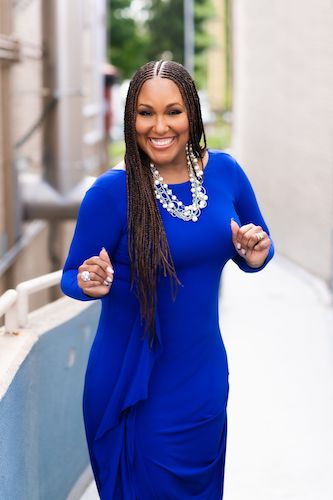
49. Stacie NC Grant
Chief Brilliance Officer, C&G Enterprises Unlimited
Stacie NC Grant- Emma Burcusel Photography.jpg
Stacie NC Grant ( Emma Burcusel Photography )
An author, motivational speaker and MWBE advocate, Stacie NC Grant leads C&G Enterprises Unlimited, which provides meeting facilitation, professional development and event services for various community, nonprofit and educational organizations. During the COVID-19 pandemic, the company pivoted to providing decontamination services for small businesses and meeting spaces. Previously, Grant was selected as the facilitator for the JFK International Airport Redevelopment Community Advisory Council, a part of the $13 billion redevelopment project.
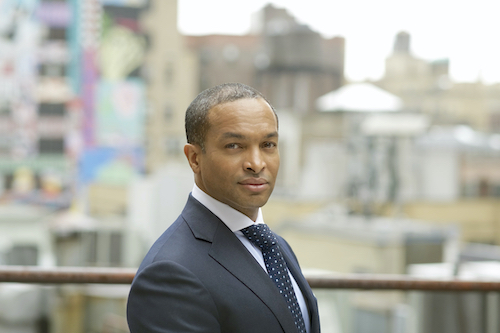
50. Everett Perry
President and Founder, Urban EcoSpaces
Everett Perry-Urban Ecospaces, Inc..jpg
Everett Perry ( Urban Ecospaces, Inc )
In 2009, Everett Perry launched Urban Ecospaces, a development and general contracting firm and a certified MWBE. Perry’s firm has worked on major projects with the New York City Department of Design and Construction, the New York City School Construction Authority and the Build It Back program after Superstorm Sandy. Perry is also the fundraising chair for the NYC MWBE Alliance, a diverse coalition of MWBEs that works with city, state and federal agencies and contractors to secure government contracts.

If You Know H.E.R., You Should Know Him: Oscar & Grammy Winning Producer D'Mile

D'Mile was born to make music. The 36-year-old producer, born Dernst Emile II, grew up in a studio-ready household -- his mother a vocalist and father an instrumentalist and producer. "I was like two or three, banging on the piano," he explains. "It was a part of me."
In the last few months, D'Mile has established himself as a force in the award show circuit. "I Can't Breathe" was named song of the year at the Grammys, and about a month later, "Fight For You" from Shaka King's Judas and the Black Messiah took home best original song at the Oscars. Both tracks, brought to life by power team D'Mile, H.E.R. and singer-songwriter Tiara Thomas, center on the relentless racial injustice of the past and present.
While D'Mile's introduction to music was mostly centered in Caribbean and jazz songs, by age 10 he became immersed in R&B/hip-hop by way of The Notorious B.I.G. and Junior M.A.F.I.A. As a burgeoning producer, he began working alongside Rodney Jerkins (a.k.a. Darkchild) for two years, and later collaborated with the likes of Mary J. Blige, J. Lo, Janet Jackson and Justin Bieber. It was during this time with Jerkins that D'Mile met 11-year-old Gabriella Sarmiento Wilson, now known as R&B star H.E.R.
D'Mile was at the studio with Jerkins when H.E.R. arrived, along with her parents and longtime manager, Jeff Robinson. They all spent the weekend together, even attending church, where Jerkins got the young H.E.R. to perform during offering time. "She's on stage killing it on the bass and singing at the same time, and I'm just like, 'Yo, she's a prodigy,'" D'Mile says.
Around that time, D'Mile was noticing a trend in R&B. He says many notable R&B acts like Chris Brown and Rihanna were moving into pop, as R&B's mainstream appeal began to fade. Because pop was in demand, the Brooklyn-raised producer shifted his own focus. "I was doing [pop] so much at one point that I felt like I couldn't even go back to R&B," he explains.
In a matter of a few years, D'Mile found his way back to R&B, and began collaborating with H.E.R., around the time of her 2014 deal with RCA Records. Since his return to R&B, the award-winning producer has also worked with Ty Dolla $ign, The Carters, Charlie Wilson, Lucky Daye and most recently, Silk Sonic, expanding on his already star-studded resume.
Now, as R&B continues its resurgence, D'Mile finds himself at the forefront. Billboard caught up with the Grammy and Oscar award winner to discuss his big wins, the historical importance of "Fight For You" and "I Can't Breathe," and his advice on cultivating the right studio environment to create timeless music.
Less than 24 hours have passed since you won your first Oscar. How’s the day been?
It’s [been] crazy, my phone is hot from everybody just calling and texting and DM'ing me. I still don't know if it's hit me. I have to look at the award and be like, “Yo, that is really here at my house.” Right now, it's just on my dining room table.
What does this Oscar win mean to you?
It means everything. [Judas & the Black Messiah] took place in the '60s, but it still weighs [heavily on] today. Outside of that, to know that my mom and dad are over there watching, and my team, all my friends. I did not think that they were going to call our names, all of it was moving fast. All I heard was when Zendaya said “H.E.R." -- I don’t even think I heard when she said my name.
It means everything to me. I didn't come in expecting to get to the Oscars or the Grammys before that. And for everything to turn out the way it did, it was definitely God's plan.
“Fight For You” is attached to such a monumental historic moment that a lot of people weren’t fully aware of before watching Judas and the Black Messiah. What do you think is the significance of the song today?
I actually was one of those people. I knew about the Black Panthers, but I didn’t know anything about Fred Hampton himself. As the movie was going along and I'm learning this stuff, I'm just like, "Man, this is this is very, very important." It still hits home for a lot of people because we're dealing with some of the same fight. It's not over, so it will always be relevant -- until we get to that place of finally overcoming all the stuff that’s still happening in the world.
How did the song come together?
We were blessed enough to be able to watch [Judas and the Black Messiah] while we were in the studio. I don’t think we had popcorn, but we had M&Ms. Right after we finished watching, we had to come up with something on the spot. H.E.R. had a conversation with the directors and the only direction they gave us was that they wanted something upbeat, uplifting and hopeful. We had to cater to the time of it -- the '60s and '70s -- which is up our alley. Then we just took it from there.
How long have you been working with H.E.R.?
I've known H.E.R. since she was 11. I was at a studio working with Rodney Jerkins (Darkchild) and [H.E.R.] came to see him [with] her mom and dad. She spent that whole weekend with us. At this church, Rodney got her to do a couple of numbers during offering time. She's the on the stage killing it on the bass and singing at the same time, and I'm just like, "Yo, she's a prodigy." We reconnected when she was 16 and did one or two songs around that time. Then we connected four years later and we've been working ever since.
That's my sister. I always was looking out for her. Just seeing her grow up, with the talent that she has, and to become the woman that she is today, and what she stands for and everything, it’s just an amazing thing to see.
After spending 15 years making R&B music, what are the transformations that you’ve seen?
Growing up, the people I used to look up to were the Timberlands and the Pharrells, Quincy Jones, Darkchild. It started shifting around 2008, where Chris Brown’s “Forever” came out and Rihanna’s “Disturbia.” All of the black artists were going pop. I was doing [pop] so much at one point that I felt like I couldn't even go back to R&B. I would get calls to work with certain people and I was just like, "I don't even know how to do R&B music anymore."
Shortly after I was just like, I just want to do what I want to do. If it works, it works. Then Drake comes around. He is responsible for a certain kind of R&B [coming] back and for it to be cool. Childish Gambino for me, with “Redbone” and [Awaken, My Love!] also helped me feel like it was okay to do [R&B] again. History repeats itself. So, everything always comes back one way or another, in a new way.
What is it that always brings you back to R&B music?
To me, [this is] the way I look at it now: When you leave your hometown, let's say you find beautiful places that you love and you may even move. But you always have your hometown to come back to. I feel like R&B is my hometown.
How did your work with Silk Sonic come about?
I met Bruno first, through a mutual friend of ours, James Fauntleroy. It was a mix of Bruno finding me on Instagram and hearing what I did on the Lucky Daye album. Then I get a call from James and he was like, “What are you doing on Friday?” and I’m like, “Nothing.” He said, "Come over to the studio. Bruno wants to meet you and he wants to work with you." Then during that time, Anderson .Paak came in.
Were Bruno and Anderson .Paak already established as Silk Sonic at the time?
[Silk Sonic] wasn’t planned from the beginning -- until one day Bruno called and was like, “Yo, come to the studio and let’s just vibe.” We all worked on one song, it turned into more and turned into Silk Sonic down the line, organically.
As a producer, how do you create an environment where great music happens?
I hate meeting somebody for the first time and getting straight into work. I always get nervous. If we start a conversation, that's very helpful. Plenty of times, I've been in a room with people, and we'll just be talking, then I'll get quiet because now I'm reading the personalities in the room and building something based off of that. That's why I like just creating from scratch, instead of like coming in with tracks already made.
Do you have any advice to rookie producers?
Listen to yourself. Know who you are. If you're in the middle of learning who you are, explore different things. Hone in on whatever it is [you like] and just start. That's how you sharpen your skills -- that's how you find yourself and what gravitates to you. If you’re a religious person, pray. But just don't ever stop.

Naomi Osaka Expanding Tennis Academy to Haiti and Los Angeles: 'All Kids Deserve a Chance to Play'

Play Academy, which Naomi Osaka created with Nike and Laureus Sport for Good, originally launched in Japan last summer.
Naomi Osaka is lending a helping hand to even more aspiring athletes.
The tennis superstar's Play Academy with Nike and Laureus Sport for Good — which first launched in Japan last summer — is expanding to two new locations: Los Angeles, California, and Haiti. Play Academy provides grants and capacity-building training for community organizations in order to boost girls' access to and participation in sport.
"We believe that all kids — especially girls — deserve a chance to play, no matter where they come from or what they look like," Osaka tells PEOPLE. "The more we provide girls with opportunities to get active, the more opportunities we are giving them to become leaders in their communities."
In Haiti, Play Academy will be partnering with GOALS Haiti to reach underrepresented youth. Osaka says they're hoping to "hire more female coaches, and provide girls with education to help build up their confidence, self-esteem and leadership skills."
Play Academy is still seeking community partners in Los Angeles, and aiming to focus on girl athletes from Black, Asian and Latino communities. Osaka notes that interested partners can apply at http://laureus.com/playacademyla.
Both locations have special meaning to the athlete: Los Angeles is where Osaka currently lives and trains, and Haiti is where her father is from.
Osaka's own tennis journey is, of course, part of the inspiration for Play Academy. "Growing up I dreamed about winning Grand Slams and becoming number one in the world," she recounts. "While it was not easy, my family was dedicated to helping me get the access I needed to reach my goals. But unfortunately, not all girls have the same opportunities that I did."
Continues Osaka, "There are huge barriers that girls face in getting active. Some girls, especially those from marginalized communities, never even get the chance to play. The more I learned about these barriers — through my work with Nike and Laureus Sport for Good — the more I felt determined to do something about it."
"It started with conversations and it became this incredible program working with community partners that are committed to leveling the playing field for girls."
And Osaka sees how much sports impact youth in all areas of their lives. She notes that research shows active kids are not only healthier, but happier and more confident. She hopes to be a role model for youth to see all those things are achievable.
"Growing up, I saw my mother work incredibly hard to support me and my passion for play," says Osaka. "She always put others first and encouraged me to embrace my diversity. Every role model I've had has inspired me to dream big. To level up in every way. And while I'm still working on how to be the best role model I can be, I want to show them that I stick to my beliefs and love who I am. Then maybe one day it will help them feel confident that it's okay to be different and create their own lane – as long as they remain true to themselves."
The first group of the new Play Academy partners will be announced summer 2021.
FIFA bans Haiti women's soccer official in sexual abuse case
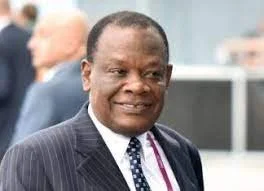
ZURICH (AP) — A soccer official in Haiti was banned for 10 years on Monday for her part in the systematic sexual abuse of women’s national team players.
FIFA ethics judges ruled Nella Joseph, former supervisor of the Haiti Under-20 women’s team, was guilty of “actively coercing and threatening (players) into engaging in sexual relationships” with the then-president of the Haitian Football Association.
FIFA expelled the long-time former Haitian FA president, Yves Jean-Bart, from soccer for life last year.
A FIFA judgment in Jean-Bart’s case said he raped girls as young as 14 and took “habitual mistresses” among players starting in 2014.
Joseph “failed to protect the physical and mental integrity of various female players who were under her authority and responsibility” at the national training center in Haiti, FIFA said in a statement.
She was also fined 20,000 Swiss francs ($22,000).
FIFA said its ethics committee is working on other cases pending against Haitian soccer officials.
The allegations were first revealed in British newspaper The Guardian in April 2020.
Biden Nominates US Haiti Ambassador to State Department Position
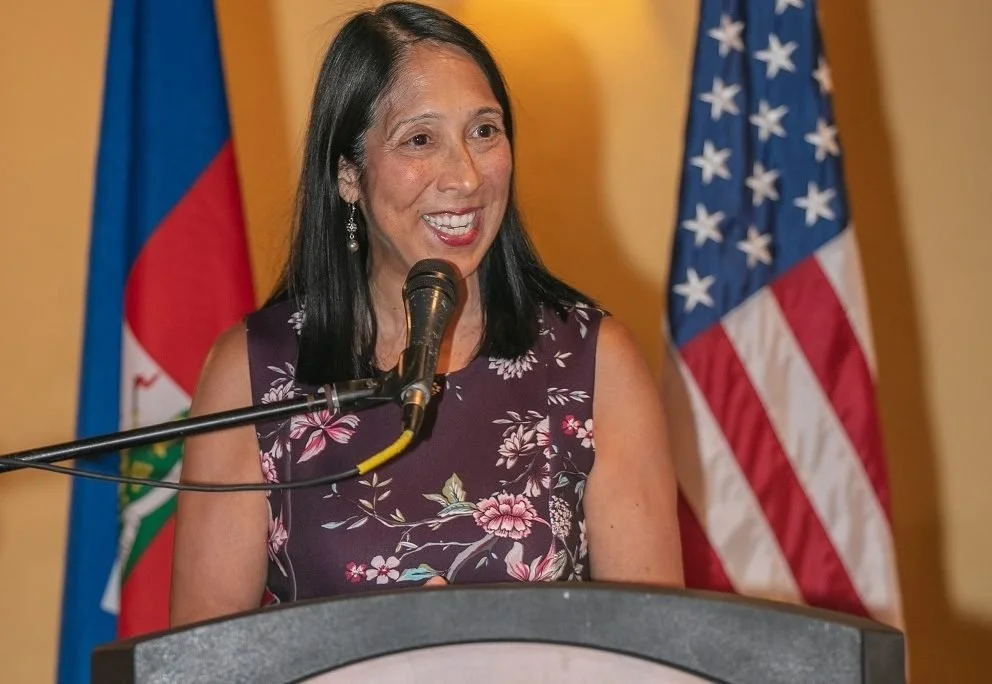
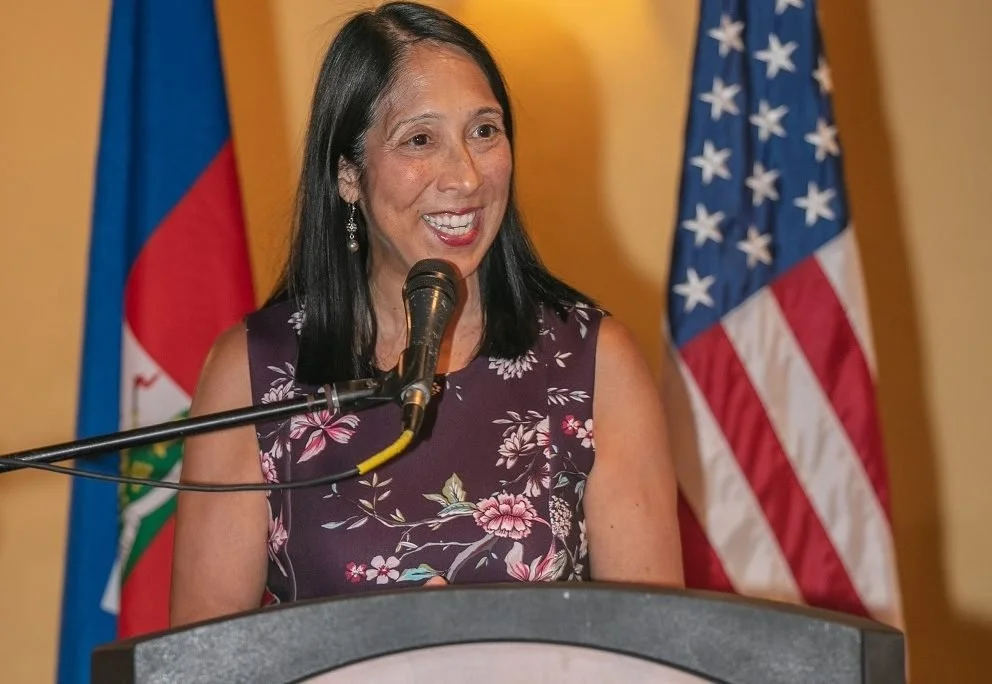
WASHINGTON - U.S. President Joe Biden has nominated U.S. Ambassador to Haiti Michele Sison for the position of assistant secretary of state for international organization affairs.
Sison, a career ambassador, the highest rank in the U.S. Foreign Service, has served in Haiti since 2018. She is a respected diplomat in Port-au-Prince, where she has been outspoken about democratic governance, the rule of law and respect for human rights.
"We are very concerned about any action that risks undermining democratic institutions in Haiti," Sison told VOA during an exclusive interview in February.
Before arriving in Port-au-Prince, she served as U.S. deputy representative to the United Nations with the rank of ambassador from 2014 to 2018.
She is experienced in global coalition building, transnational threats, peacekeeping, international development and humanitarian relief.
Among Sison's prior posts are U.S. ambassador to Sri Lanka, the Maldives, Lebanon and the United Arab Emirates; assistant chief of mission in Iraq; and deputy chief of mission in Pakistan.
At the State Department, she held the position of principal deputy assistant secretary of state for South Asian affairs.
Sison has been recognized with multiple awards, notably the Distinguished Service Award and the Presidential Meritorious Rank Award.
The U.S. Senate must confirm her nomination before it becomes effective.

Fundraiser aims to bring trail-blazing Haitian EMT to US for paramedic education

Haiti Air Ambulance EMT Claudel Gedeon aims to become Haiti's first-ever paramedic by completing the program at Dixie State University
ST. GEORGE, Utah — A fundraising effort has been launched to help a trail-blazing Haitian EMT complete his paramedic education in the United States.
Haiti Air Ambulance EMT Claudel Gedeon aims to become the country's first-ever paramedic after attending the program at Dixie State University in St. George, Utah, according to the St. George News. Currently, there are no paramedic programs in Haiti, but Gedeon said he hopes to teach paramedic courses in the country after receiving his certification in the United States.
Gedeon is already an EMS educator, having established EMPACT Haiti in 2012, a non-profit that provides and develops EMS education in Haiti. The fundraiser for Gedeon's paramedic education was started by St. George resident Armadeus Davidson, a fellow medical responder who met Gedeon while providing aid in Haiti after the devastating 2010 earthquake. Gedeon was a high school student at the time and helped translate for the American medical volunteers.
Dixie State University Director of International Student Services Shadman Bashir said the department is working with Gedeon to ensure he meets the prerequisites to apply for the program. Donations will help fund Gedeon's tuition and additional expenses during his time in the United States.
"Claudel has demonstrated the traits of selflessness, commitment to his profession and humanity and asked for nothing in return," Davidson wrote in the description for the online fundraiser, which has so far raised nearly $11,500 of its $20,000 goal.
'Descent into hell': Kidnapping explosion terrorizes Haiti
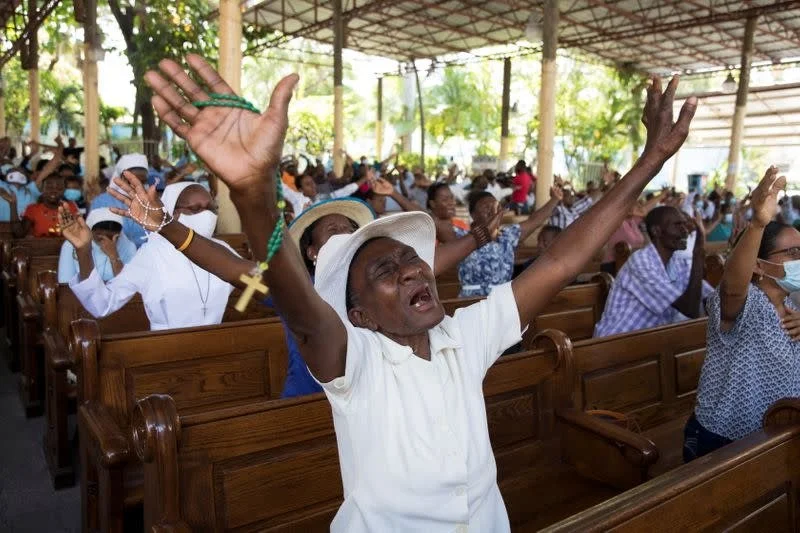
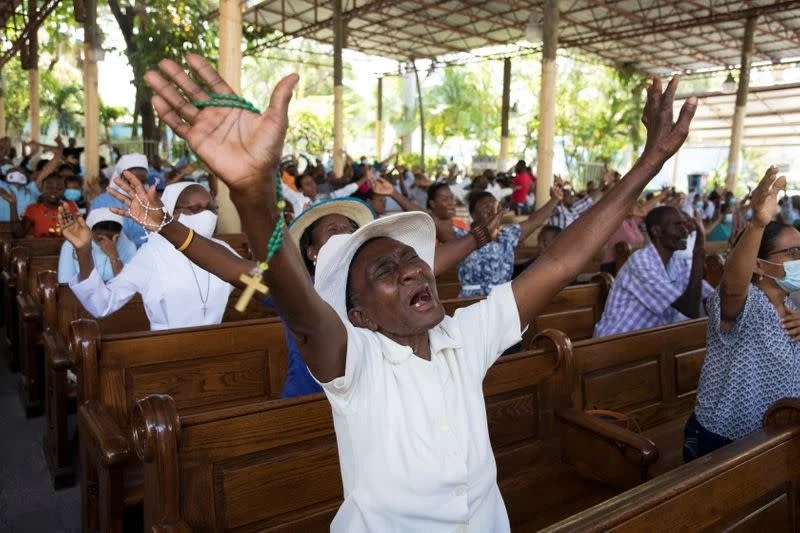
PORT-AU-PRINCE (Reuters) - A wave of kidnappings is sweeping Haiti. But even in a country growing inured to horrific abductions, the case of five-year-old Olslina Janneus sparked outrage.
Olslina was snatched off the streets of the capital Port-au-Prince in late January as she was playing. The child's corpse, bearing signs of strangulation, turned up a week later, according to her mother, Nadege Saint Hilaire, a peanut vendor who said she couldn't pay the $4,000 ransom. Saint Hilaire's cries filled the airwaves as she spoke to a few local radio stations seeking help raising funds to cover funeral costs.
Saint Hilaire is now in hiding after receiving death threats, she said, from the same gang that killed her daughter. "I wasn't supposed to go to the radio to denounce what had happened," she told Reuters.
Police in her impoverished and crime-ridden neighborhood, Martissant, told Reuters they were investigating the case.
Haiti’s epidemic of kidnappings is the latest crisis to befall this Caribbean island nation of around 11 million people, roiled by deepening political unrest and economic misery. Kidnappings last year tripled to 234 cases compared to 2019, according to official data compiled by the United Nations.
The real figures are likely much higher because many Haitians don't report abductions, fearing retribution from criminal gangs, according to attorney Gedeon Jean, director of the nonprofit Center for Human Rights Analysis and Research in Port-au-Prince. He said the research center recorded 796 kidnappings last year.
Haiti's national police force did not respond to a request for comment. President Jovenel Moise has said repeatedly that his government is doing all it can, and has put more resources into anti-kidnapping efforts. Still, he publicly acknowledged on April 14 that “kidnappings have become generalized” and that efforts to combat persistent insecurity have been "ineffective."
Human rights activists and a new report from Harvard Law School’s International Human Rights Clinic allege that Moise’s government has allied itself with violent criminal gangs to maintain its grip on power and to suppress dissent. Opposition groups have called for Moise to resign and hand power to a transitional government that would delay presidential and legislative elections slated for September until the nation is stable enough to ensure a free and fair contest.
Haiti’s acting Prime Minister Claude Joseph denied those allegations and the report's findings. He said anti-democratic forces are whipping up violence to destabilize Moise's administration in an election year. “They are fomenting the gangs to stop there being elections,” Joseph told Reuters.
Criminals have targeted some poor people, like Saint Hilaire, for modest sums. Many more victims come from the ranks of the Haitian middle class - teachers, priests, civil servants, small business owners. Such targets aren't rich enough to afford bodyguards but have enough assets or connections to scrape up a ransom.
In one of the most high-profile recent cases, five Catholic priests, two nuns and three laymen were kidnapped on April 11 in the commune of Croix-des-Bouquets, northeast of the capital. Four members of the group were subsequently released and six are still missing, according to an April 25 statement by the Society of Priests of St. Jacques, a French missionary society linked to four of the kidnapped priests. An official with that group declined to comment on whether a ransom was paid.
“For some time now, we have been witnessing the descent into hell of Haitian society,” the Roman Catholic Archdiocese of Port-au-Prince said in a statement earlier this month.
‘KILLING THE ECONOMY’
Haiti last experienced a major surge in kidnappings and gang violence after a rebellion toppled then-President Jean-Bertrand Aristide in 2004, prompting the United Nations to send in a peacekeeping force.
The departure of that force in October 2019 was followed by a resurgence in gang crime, according to human-rights activists, who say kidnapping has proven lucrative at a time when Haiti's economy is teetering.
Rights activists say politics also play a role. They allege Moise’s government has harnessed criminal groups to terrorize neighborhoods known as opposition strongholds and to quell public dissent amid street protests that have rocked the country the past three years.
The report released April 22 by the International Human Rights Clinic at Harvard Law School alleges “high-level government involvement in the planning, execution and cover-up” of three gang-led attacks on poor neighborhoods between 2018 and 2020 that left at least 240 civilians dead. The report relied on investigations of the attacks by Haitian and international human rights experts. It alleges the government provided gangs with money, weapons and vehicles and shielded them from prosecution.
The U.S. Department of the Treasury in December sanctioned reputed Haitian gang leader Jimmy Cherizier and two former Moise administration officials - Fednel Monchery and Joseph Pierre Richard Duplan - for helping orchestrate one of the attacks. All three have denied wrongdoing.
Kidnapping is an outgrowth of impunity for criminal organizations, according to Rosy Auguste Ducena, program manager of the Port-au-Prince-based National Network for the Defense of Human Rights.
"We are talking about a regime that has allied itself with armed gangs," Ducena said.
Justice Minister Rockefeller Vincent denied any government alliance with gangs. He told Reuters in December that the wave of kidnappings was the work of political enemies seeking to undermine Moise "by creating a sense of chaos."
The rise in kidnappings has petrified many Haitians. The heads of seven private business associations this month issued a joint statement saying they had reached "a saturation point" with soaring crime. They endorsed a nationwide work stoppage that occurred on April 15 to protest Haiti’s security crisis.
"Kidnapping is killing the economy," said Haitian economist Etzer Emile. He said the tourism and entertainment sectors have withered.
Moise's administration says it is working hard to end the terror. Two years ago it revived a commission aimed at disarming gang members and reintegrating them into society. Over the past year, the government has increased the police budget and solicited advice from Colombia, which once battled its own kidnapping epidemic. In March, Haiti created an anti-kidnapping task force to attack the problem with tactics such as tracing laundered ransom money.
Still, four policemen died last month in a gun battle with alleged criminals in a slum where kidnapping victims are often held. The government declared a month-long state of emergency in gang-controlled neighborhoods. Yet abductions continue to mount.
Moise, who has opted not to seek re-election this September, has defied the opposition's calls for him to step down early. On April 14 he issued a statement saying he aimed to form a government of national unity to better tackle the "pressing problem of insecurity."
HOODS, GUNS AND TORTURE
Many Haitians remain skeptical - and on edge.
One victim was a 29-year-old doctor. He was kidnapped in his own vehicle last November after leaving the Port-au-Prince hospital where he had just finished an overnight shift. He told Reuters his story on condition of anonymity.
At dawn, four armed assailants hustled him into the back seat, threw a hood over his head and held him at gunpoint as they drove, he said. His captors eventually tossed him into a room with three other abductees - a man and two women - who had been snatched earlier.
The physician said his kidnappers ordered him to phone his family to request $500,000 for his release. The first two people he tried said they couldn’t pay. The kidnappers slapped him and delivered a threat.
"They said that if I called a third person that didn't give me a satisfying response, they would kill me," he said.
The doctor's girlfriend said she and three friends negotiated with the gang. She wouldn't say how much they paid, fearful of becoming targets for other criminals.
The doctor said he reported his abduction to Haiti's national anti-kidnapping police unit. That unit did not respond to requests for comment.
The physician does not know the fate of his fellow abductees. He said the kidnappers poured melted Styrofoam on their skin because their families had yet to pay up.
Saint Hilaire, the mother of the young girl who was kidnapped and murdered, said she continues to watch her back after speaking publicly about the abduction.
The kidnappers "told me to make sure I never ran into them, because they would kill me," she said.
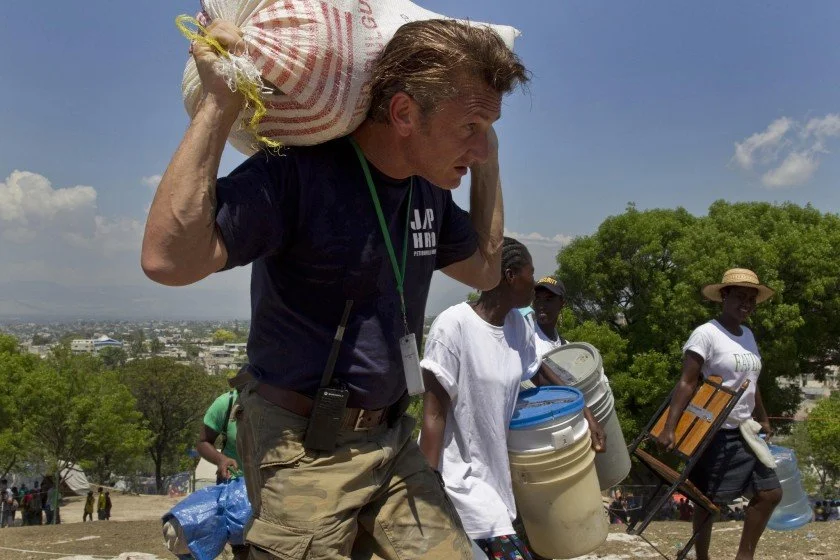
Sean Penn runs toward tragedy in Haiti earthquake doc Citizen Penn
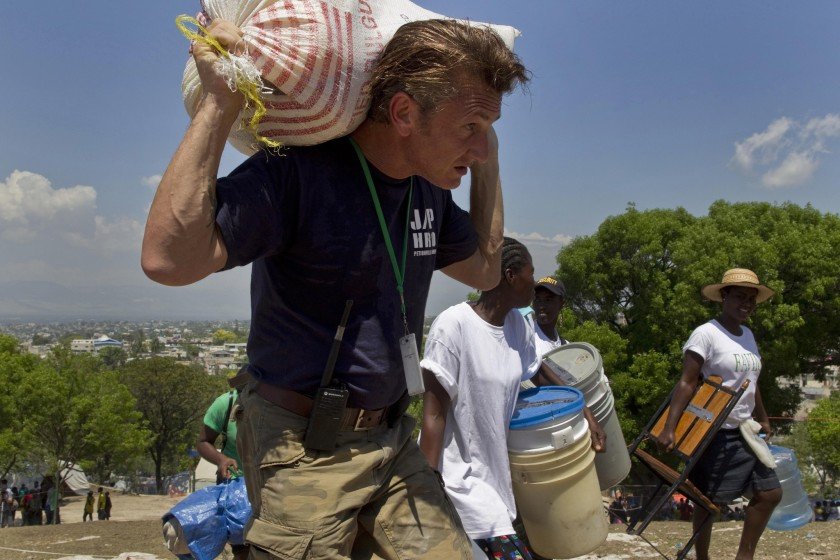
Sean Penn documented his travels to Haiti in the aftermath of the magnitude 7.0 earthquake that rocked the country in 2010 to be revealed in the Discovery+ documentary Citizen Penn premiering on May 6.
"From climate to conflict resolution, to poverty and COVID-19, citizenship increasingly requires service. Service itself can be a bumpy road, but one we all have to travel," Penn, whose humanitarian efforts through his organization CORE have continued on the island a decade later, said in a statement.
"[Director] Don Hardy traveled it with CORE (JP/HRO) for over a decade, and I hope his insightful filmmaking will find some form of inspiration for those who watch it. He shows the good, the bad, and the ugly," he continued.
Roughly 300,000 people lost their lives during the catastrophic event while hundreds of thousands were injured and 1.5 million were left homeless. Over a decade later, the country still has not recovered.
The documentary will feature the original song "Eden (To Find Love)" performed by Bono, who co-wrote the track alongside the film's composer Linda Perry.
The two-time Academy Award-winning actor was already affecting change prior to the disaster. In 2005, Penn headed to New Orleans to aid in search and rescue efforts amid the mass destruction of Hurricane Katrina.
Since his journey to Haiti, Penn has been a constant on the island through his organization, which also expanded its reach in the U.S. during the COVID-19 pandemic. CORE helped organize free testing sites across the country and is running the nation's largest vaccine site in Los Angeles.
Watch the trailer for the documentary above.

Three Killed as Heavy Rains Lash Haiti

At least three people have died and three others missing following the torrential rains that have caused widespread damage and flooding in Haiti.
Officials said that the rains, linked to the passage of a frontal system, lashed Haiti for the past three days, resulting in the people being killed, three others missing and extensive damage being reported in several departments.
Floods and river overflows have been recorded in the Center, North, North-East and North-West and several communes are affected by flooding.
“I visited the affected families following the flood in Jean-Rabel. On this occasion, I spoke with the city authorities including the mayoress, members of the civil protection (and) I asked the Prime Minister to issue instructions to the Ministers of the Interior and of Social Affairs in order to come to the aid of some 60 affected families,” President Jovenel Moïse said after visiting the affected families.
The authorities said that two deaths have been confirmed in the commune of Bois de Lance (North) and three other people are missing in the department. More than 1,270 houses were flooded in the communes of Terrier-Rouge, Caracol and Trou-du-Nord (North-East).
Heavy rains affected several main streets in the city of Cap Haitien and the districts of Blue-Hills, Haut du Cap, Petite Anse, Charrier, Zo-Vincent Cité du Peuple, Fort Saint Michel, Bas-Champin were flooded.
The authorities said that one shelter that has been activated in Cap Haitien houses around 85 people and that the departmental directorates of Civil Protection partially had activated their emergency operations centers.
The Hydrometeorological Unit is warning people to continue to be prepared as the rains will continue to spread to the rest of the country.
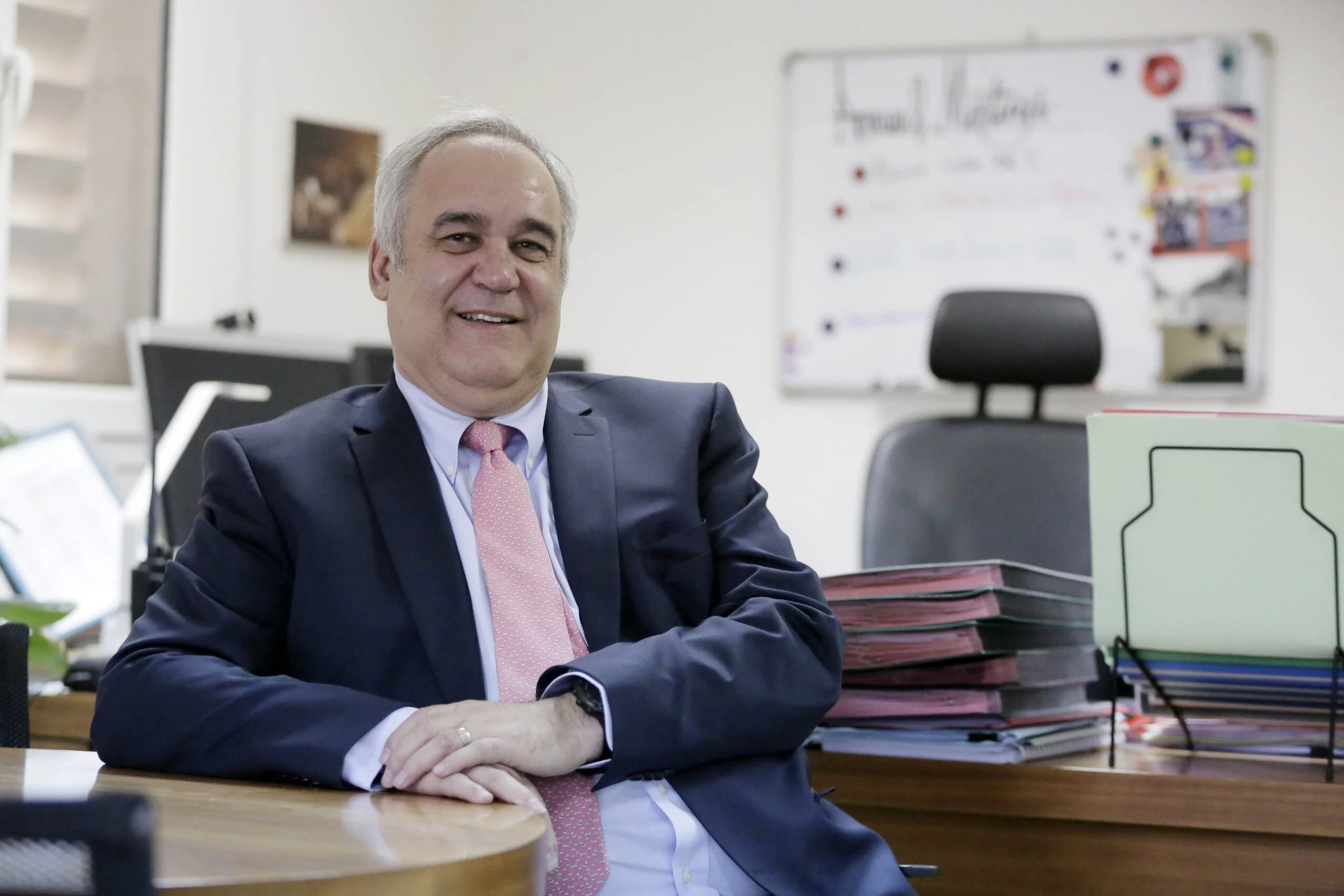
Laurent Msellati Appointed Country Manager for Haiti
PORT AU PRINCE, April 1, 2021 – Laurent Msellati, a French national, has been appointed as the World Bank’s new Country Manager for Haiti, effective April 1, 2021. He will be based in Port au Prince.
In this new role, Mr. Msellati’s top priorities will be to lead the World Bank’s engagement with the Government of Haiti, work closely with key development partners and stakeholders, manage the country program and team, and support staff in the Haiti Country Office.
“Haiti has experienced several challenging years, and the social and economic impacts of the COVID-19 pandemic have been severe. I look forward to continuing our work to support the Haitian people, focused on inclusive growth, and building resilience. I will work closely with stakeholders across Haitian society to support the country’s development priorities, and provide support for the most vulnerable,” said Laurent Msellati.
Since joining the World Bank in 1991, Mr. Msellati has held several positions in the Africa, Middle East and North Africa, East Asia and Pacific, and Latin America and the Caribbean regions. He recently served as World Bank Country Manager for Mauritania and has also been Practice Manager of the Agriculture Global Practice in Latin America and the Caribbean region. Mr. Msellati holds a Master’s in Business Administration in Finance and Economics from the Università Commerciale Luigi Bocconi (Italy), and a Doctorate Degree in Veterinary Medicine from the Ecole Nationale Vétérinaire de Nantes (France).
Mr. Msellati will lead the implementation of the World Bank’s program in Haiti, which includes an active portfolio of 20 projects worth about US$915 million, financed by the International Development Association and trust funds. Project areas include transport, energy, agriculture and food security, health, education, water supply and sanitation, finance, governance, macroeconomics, social protection and jobs, and digital development.
Fritz Daguillard, immunologist who studied art and Haitian history, dies of covid-19
To those who knew him, Fritz Daguillard was a man driven by curiosity. He reveled in the culture of his native Haiti, loved studying its history and also collected artwork that viewed the accomplishments of Black people through the eyes of European artists.
But the doctor, who died of covid-19 at Suburban Hospital on Nov. 30, 2020, could point with equal pride to a remarkable career in medical research. He was 85.
In the 1970s, Daguillard founded one of the first schools in the field of immunology at Laval University in Quebec and served on the Canadian Medical Research Council.
Later, at the Hôpital des Enfants-Malades in Paris, the world’s oldest pediatric hospital, he studied severe combined immunodeficiency (SCID), the genetic condition that causes children to live as “bubble babies” in a plastic-cocooned, germ-free environment.
“He was proudest of his work on the T cell; he was one of the first researchers to identify its involvement in immune response,” said his wife, Rita. “He also organized one of the earliest leukocyte conferences in 1972 at La Malbaie in Quebec.”
His work with UNESCO and the World Health Organization in the 1980s took Daguillard to sub-Saharan Africa at the height of the AIDS epidemic. He continued his study of HIV, the virus that causes AIDS, when he came to the District in 1985 to lead the AIDS evaluation clinic for the D.C. Department of Health.
In the last two decades, after his retirement from medicine, Daguillard zealously focused on historical research and art collecting, teaching a course on the Haitian Revolution at Benedict College in Columbia, S.C., and serving on the Committee for the Celebration of the Haitian Revolution.
His collections formed the basis of three art exhibits sponsored by the Haitian Embassy, one on the abolitionist Sen. Charles Sumner of Massachusetts and his efforts to gain U.S. diplomatic recognition for Haiti; a bicentennial celebration of the Haitian Revolution; and “Enigmatic in his Glory,” an exploration of the frequently contradictory likenesses of revolution leader Toussaint L’Ouverture in artwork. Daguillard returned several times to his native land to lecture on L’Ouverture and the Haitian revolution and even used his medical background to explore the controversies surrounding the Haitian liberator’s death and autopsy.
“He expressed pride that he was a medical professional who had interests outside his work,” his son Robert said.
Daguillard began acquiring sketches, prints and paintings in the 1960s, but the avocation really took hold during a Paris sabbatical. By the 1980s he had cultivated innumerable relationships in the Parisian art world, not only with galleries and dealers but often with the artists themselves.
French informalist painter and sculptor Jean Messagier gifted him a sketch of civil rights icon Angela Davis. He purchased several portraits of renowned American jazz musicians by Polish painter and poster artist Waldemar Swierzy and later commissioned a portrait of the Rev. Martin Luther King Jr. from Swierzy.
Fritz Daguillard was born June 1, 1935, in Les Cayes, Haiti. His father owned an import-export business. He received a medical degree from the University of Haiti in Port-au-Prince and came to the United States in 1963 for a residency at Albert Einstein Hospital in Philadelphia. He received a master’s from Harvard Medical School and, after moving to Canada, a PhD from McGill University in Montreal.
Daguillard and wife Rita, an attorney who has retired from the U.S. Transportation Department, were married for 53 years and lived in Bethesda.
John Lawrence, a retired curator with the Historic New Orleans Collection, worked with Daguillard on an exhibit about the Haitian migration to Louisiana before the Louisiana Purchase. He recalled how devoted the doctor was to chronicling the story of his people.
“He was always a student,” Lawrence said. “He never stopped learning.”
“That’s what makes a good collector,” he added. “You’re never at the point where you know it all. It’s having a great eye and a sharp mind and passionate pursuit for the material coupled with a willingness to share it — the ability not only to present these things but to tell the story and also state where the objects drive the narrative.”

Mitch Albom’s Orphanage in Haiti is Improving Children’s Lives

TACOMA, Washington — As the most poverty-stricken country in the Western Hemisphere, Haiti is an island with a troubled history. When a 7.0-magnitude earthquake hit on January 12, 2010, about 16 miles away from the capital of Port-au-Prince, the consequences were devastating. The island had not experienced an earthquake of this size since the 18th century. Every hospital in Port-au-Prince was seriously damaged and almost 300,000 buildings, many of them homes, were destroyed. An estimated 316,000 people died as a result with close to one million displaced. An orphanage in Haiti was one of the many facilities severely impacted by the earthquake.
Have Faith Haiti Mission
The Caring and Sharing Mission in Port-au-Prince was founded in the 1980s. However, with the 2010 earthquake, the orphanage struggled to maintain its operations. Later that same year, operations were taken over by internationally renowned author, Mitch Albom, who wrote “Tuesdays with Morrie” as well as “The Five People You Meet in Heaven” and “Finding Chika.”
Originally, Albom flew to Haiti several weeks after the earthquake with a pastor who founded the orphanage. Seeing its dilapidated condition, Albom began returning every month, bringing volunteers to repair the structure. In mid-2010, Albom began running the orphanage.
Albom had written a bestselling book called “Have a Little Faith” that inspired a new name for the orphanage: Have Faith Haiti Mission. The book’s message is about people’s ability to come together, regardless of their faith. “I felt that my being there in Haiti, coming from America and with such a different religious background, was pretty much the embodiment of what I had written, thus the name.”
Poverty in Haiti
Haiti ranked a low 169 out of 189 countries on the 2019 Human Development Index. The most recent official poverty estimate, made in 2012, states that more than six million individuals in Haiti lived below the poverty level of $2.41 per day. Additionally, more than 2.5 million people fell below the extreme poverty level of $1.12 per day.
Helping Haitian Orphans
These conditions mean that even a decade after taking over the orphanage’s administration, there are ongoing challenges such as ensuring the children’s health, safety and education, hiring teachers and funding the entire operation. The maximum capacity of the orphanage is 54 children. Albom makes the orphanage a top priority, returning every month for three or four days. He also commits to extended stays on holidays and in the summer. “I have made more than 130 trips to Haiti,” he says, adding, “I plan to continue to do so for the rest of my life.”
The educational staff includes 14 paid teachers, many of whom are Haitian and some are American or British. In addition, there are a few volunteer teachers. The children are taught in both French and English with the goal of achieving a college or vocational degree. Additionally, there is a music room with instruments. Especially rewarding to Albom is seeing the older teenagers attend college. Three are currently attending college in the United States. One young man plans to attend medical school and eventually return to Haiti as a doctor.
Caring for Chika
Chika was a 5-year-old girl with who Albom and his wife, Janine Sabino, shared a close bond from the moment she arrived at the orphanage. But, when Chika turned 5, she began exhibiting symptoms that indicated a rare brain tumor. Albom and his wife decided to take Chika with them to their home in Detroit. She had the surgery and they cared for her until she passed away at age 7. The author, who wrote a moving book about the experience, states that “Chika gave us the blessing of having a family, even late in life. Her courage was an inspiration and continues to motivate us to take care of all the other kids.”
Changing Children’s Lives
Albom spends much of his time raising funds to keep the orphanage in Haiti running smoothly. This involves providing the best education, medical care and nourishment to the children. Donating to the orphanage “literally will change a life,” he says. He further explains that donations enable kids to have meals that they otherwise would not have. It also enables the kids to receive an education that serves as a stepping stone for their futures. Albom believes that it is a moral obligation to help such children who had no choice in the circumstances they were born into. “These kids are just as bright and just as talented and just as deserving as kids born into more fortunate countries. People with the means or time to help out would want to do so if they just knew about the need.”
The Road Ahead
With the COVID-19 pandemic exacerbating conditions in Haiti, the Have Faith Haiti Mission needs support now more than ever. This orphanage in Haiti is committed to providing a means for vulnerable Haitian children to reach their full potential and rise out of poverty.
Haiti has no Covid vaccine doses as violence looms larger than pandemic
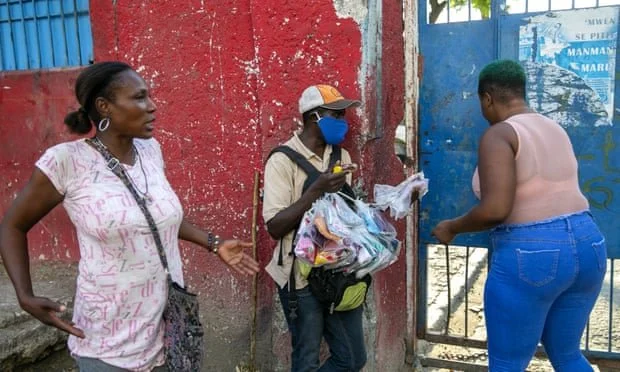
- Caribbean republic’s 11m people have yet to receive a single jab
- Doses due to arrive in May but delays expected
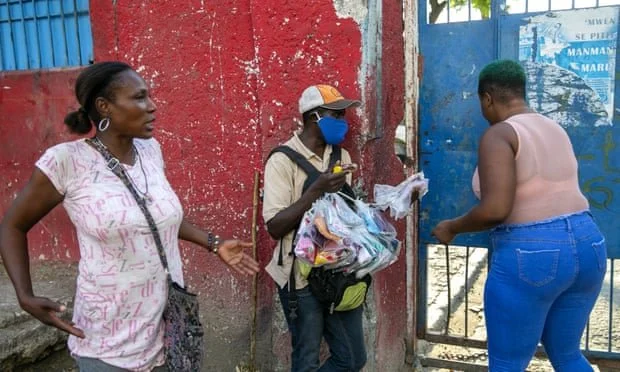
Haiti does not have a single vaccine to offer its more than 11 million people over a year after the pandemic began, raising concerns among health experts that the wellbeing of Haitians is being pushed aside as violence and political instability across the country deepen.
So far, Haiti is slated to receive only 756,000 doses of the AstraZeneca vaccine through a United Nations program aimed at ensuring the neediest countries get Covid-19 shots. The free doses were scheduled to arrive in May at the latest, but delays are expected because Haiti missed a deadline and the key Indian manufacturer is now prioritizing an increase in domestic demand.
The country also didn’t apply for a pilot program in which it would have received some of its allotted doses early, according to the Pan American Health Organization. However, a spokeswoman commended its other pandemic efforts, including reinforcing hospital preparedness.
Meanwhile, a human rights research center cited in a new US state department report found Haiti’s government misappropriated more than $1m worth of coronavirus aid. The report also accused government officials of spending $34m in the “greatest opacity”, bypassing an agency charged with approving state contracts.
Lauré Adrien, general director of Haiti’s health ministry, blamed the vaccine delay on scrutiny of the AstraZeneca shots and concerns that the country lacks the necessary infrastructure to ensure proper vaccine storage, adding that his agency prefers a single-dose vaccine. AstraZeneca requires two doses.
“It’s no secret that we don’t have excellent conservation facilities,” he said. “We wanted to be sure that we had all the parameters under control before we received vaccine stocks.”
Adrien also noted all the money his agency received has been properly spent, but said he could not speak for other agencies. A presidential spokesman did not return calls for comment.
Many poorer countries have experienced long waits in getting Covax vaccines as richer countries snapped up supplies, though most have received at least an initial shipment. Some took matters into their own hands, securing shots through donations and private deals.
Haiti’s lack of vaccines comes as it reports more than 12,700 cases and 250 deaths, numbers that experts believe are underreported.
Ongoing protests and a spike in kidnappings and gang-related killings have some wondering how any vaccine will be administered given the lack of stability coupled with a growing number of people afraid to leave their homes.
Perceptions also remain a big challenge.
While face masks remain mandatory at Haiti businesses, airport closures and curfews have long since been lifted, and other precautions are rare.
“People don’t really believe in the coronavirus,” said Esther Racine, a 26-year-old mother of two boys whose father died in the catastrophic 2010 earthquake.
Racine once worked as a maid but began selling face masks at the beginning of the pandemic, making brisk business with some 800 sales a month. Now, she barely sells 200.
“Look around,” she said, waving at a maskless crowd bustling around her in downtown Port-au-Prince. The only customers nowadays are those who need a mask to enter a nearby grocery store, she said, adding that Haitians have other problems on their mind: “People worry more about violence than the virus.”

Human Trafficking Intensifies Along Haiti-Dominican Republic Border

PORT AU PRINCE (CMC): The trafficking of children and adolescents along the border shared by Haiti and the Dominican Republic has intensified.
This is according to Jorge Galván, a human-rights activist in the Dominican Republic, who says the trafficking mainly takes place along the border of the province of Dajabon.
According to Galván, when these minors are illegally transferred from Haiti, they are exposed to all kinds of abuse from the traffickers, stressing that the problem is dramatic and that an urgent solution must be sought because more and more of them are arriving every day.
He said most of the children and adolescents spend nights in public places or sleep in abandoned buildings.
“On the day, they walk the streets with shoe polish boxes, others clean the windows of vehicles, still others devote themselves to begging, collecting bottles, plastics and other objects that people throw away and that they can resell, often on behalf of unscrupulous individuals.”
He added that some victims of mafias operating in Haiti, in collusion with Dominicans, are being exploited and often abused or sold in prostitution networks.
According to Haitian Professor Jean Baptiste, who is also a former leader of Civil Protection in Cap Haitien, child trafficking to the Dominican Republic is serious.
Meanwhile, the vice-president of the Coordinator of Popular Organizations of the South Zone of Santiago, José Alberto Peña, says that along with representatives of other entities, he recently saved seven Haitian children who were residing in the poor area known as ‘Cañada del Diablo’, where they were being exploited.

Haiti’s Doctors, Lawyers and Handicapped Join Pro-Democracy, Anti-Kidnapping Protest

WASHINGTON/PORT-AU-PRINCE - Thousands of Haitians filled the streets of the capital, Port-au-Prince, again Sunday to call on President Jovenel Moise to step down and to demand a crackdown on kidnappers, who they say are holding the nation hostage.
“We cannot accept this kind of society,” said a doctor, who was part of the protest but did not give his name. “We have an incapable government. We need the proper conditions to work and treat patients.”
Medical professionals who spoke to VOA said they are outraged over the Feb. 28 attempted kidnapping and killing of one of their colleagues. They organized a two-day work stoppage March 2 in a show of solidarity and took to the streets Sunday.
Haiti has seen a spike in the last year in abductions targeting citizens from all sectors of society. The criminals have been indiscriminate in their targets, asking for ransoms as large as $5 million from the poor as well as the rich. Protesters hold the president responsible for failing to bring the perpetrators to justice.
During the first week of March, Moise took several steps to respond to the kidnappings, which have raised alarm among officials from the U.S., the United Nations and the European Union. The president held a series of meetings with law enforcement officials and members of his cabinet. Moise said a special anti-kidnapping unit of Colombia’s police force will help Haiti shape a more targeted response.
“Law enforcement has been instructed to intensify their efforts against insecurity. They must better coordinate their strategies, share intelligence, launch interventions and take all necessary actions to this end,” Moise tweeted on March 2.
Lawyers from the legal human rights group Collectif des Avocats pour la Défense des Droits de l’Homme (CADDOH) also joined Sunday’s protest, offering free legal assistance to anyone who might be arrested. Lawyer Arnel Remy decried the government’s disregard for the rule of law and had a message for the international community.
“It’s important for the international community to respond to this protest. … Jovenel (Moise the president) has been here for five years, and the judicial system has not functioned properly during that time,” he told VOA.
Remy took issue in particular with a communique announced this week by Prime Minister Joseph Jouthe that outlaws tinted glass on all vehicles except government and diplomatic cars. The measure outraged Haitians who have spent a lot of money to have their windows tinted as a measure against kidnappers and will now lose their investment and that protection.
The prime minister defended his communique, saying it was aimed at kidnappers who ride around in cars with tinted windows, preying on victims.
“Kidnapping is state-sponsored. So of course it will never be defeated,” alleged ex-Senator Steven Benoit, who marched with protesters. “Just wait, two or three weeks after Jovenel (Moise) is no longer in power, the kidnappings will stop.”
The president has denied any link to kidnappers.
Businessman Wolfi Hall, himself a kidnapping victim, said people need to understand that the trauma of the crime lingers long after a person is freed.
“There are pains that remain with you for the rest of your life,” he told VOA. “God only knows why your life was spared. Because after you’ve been traumatized, it doesn’t go away in a day. It’s an ugly experience — I don’t wish this on anyone — and you can only understand what I mean if you’ve been kidnapped.”
A group of handicapped people told VOA they had decided to join the protests for the first time to send a clear message to the president and the international community.
“Jovenel Moise, you are Haitian just like me, you say you love the country, please leave us the key to the (national) palace. You can’t be pleased with the situation we are in now. You represent everything that is wrong,” a blind woman told VOA.
She then turned her attention to U.S. officials.
“You say you are the friends of Haiti. Jovenel Moise does not represent us. I know the United States can’t do anything for Haiti — we know you have your own interests (to defend),” she said. “You take good care of dogs in your country, they get special care — I know you love people, too — well, we the handicapped are in the streets of Haiti today. You understand what that means. This is something we never do. We are the most disadvantaged (people) in society and look USA today we are in the street.”
It is rare for handicapped people to participate in street protests due to the grueling nature of the course, largely on foot at a brisk pace, climbing up steep, winding hills on roads that are sometimes not well paved, do not have sidewalks, in a hot and humid climate.
On March 5, two men linked to kidnappings were arrested in Haiti and turned over to U.S. Drug Enforcement Agency and FBI agents.
Peterson Benjamin, also known as Ti Peter Vilaj, and Lissner Mathieu, also known as Ti Nwa and has used the last name of Joseph, were flown to the United States where they are wanted in connection with drug trafficking, violating terms of probation and kidnapping.
Mathieu, a U.S. citizen, pleaded guilty in 2006 to drug charges in the U.S. but fled to Haiti in 2008.
Benjamin has been linked to a dozen kidnapping cases, some of which involved U.S. citizens, the Miami Herald reported.
Prison Break Lays Bare Haiti Gang Leader’s Ties to Elites
A gang leader killed after a deadly Haiti prison break may have been sprung intentionally — raising further concerns about toxic relationships between gangs and political elites in the run-up to new elections.
A February 25 riot at the Croix-des-Bouquets prison in Haiti’s capital, Port au Prince, led to the deaths of 25 people and the escape of about 400 inmates, including notorious gang leader Arnel Joseph.
Prime Minister Joseph Jouthe told the newspaper Le Nouvelliste that the detainees had kidnapped the prison director, who was later killed, and escaped via a ladder at a lookout point. According to Alterpresse, gunshots were heard shortly before the prison break.
Secretary of State Frantz Exantus announced the formation of three commissions to investigate the causes and circumstances of the break.
Observers have suggested that the point of the riot was to free Joseph, who led a gang active in the low-income neighborhood of Village de Dieu, south of Haiti’s capital, and two rural areas. Famous for having escaped prison on two different occasions in 2010 and 2017, Joseph was Haiti’s most wanted criminal until his arrest in July 2019.
A day after the prison break, Joseph was stopped by police at a checkpoint while riding on the back of a motorcycle in l’Estère, a municipality in the Artibonite department, a spokesperson for Haiti’s National Police told reporters. Police say that Joseph attacked the officers, who shot and killed him in response. The person driving the motorcycle escaped.
According to investigators, half the inmates who escaped in the prison break remain at large.
InSight Crime Analysis
Arnel Joseph’s ties to Haiti’s political elites have been exposed on multiple occasions, including recently.
During a January 25 appearance before a judge in his case, Joseph made revelations about members of the state and private sector who facilitated his criminal operations. This information was shared by journalist Valéry Numa on his radio show February 1, along with a series of related Tweets.
Following Joseph’s arrest in 2019, the Village de Dieu gangs, which formerly opposed the government of Jovenel Moise, reportedly joined the G9 and Family, which supports the current leadership. The G9 united nine gang chiefs in the low-income neighborhoods of Port-au-Prince in July 2020. It was promoted by Jimmy Chérizier, one of Haiti’s most powerful gang leaders. In response to armed attacks against police patrols last year, security forces have conducted several offensives to evict the gangs from Village de Dieu but have yet to report results.
Relations between allies of the Moise government and armed groups — including the G9 – have been denounced by human rights organizations like the National Human Rights Defense Network (Réseau National de Défense des Droits de l’Homme — RNDDH), the Fundasyon Je Klere and the Center for Analysis and Research on Human Rights (Centre d’analyse et de recherche en droits de l’homme — CARDH). The groups have expressed concerns that ties between politicians and gangs have compromised the rule of law in Haiti.
Most recently, Haiti has seen a surge in gang kidnappings, which has even prompted the president himself to call on citizens to cooperate with authorities to try and confront the problem.
With parliamentary elections scheduled for September this year, Haiti’s human rights organizations have reiterated their concern that the government will use these gangs to help keep the ruling party in power.
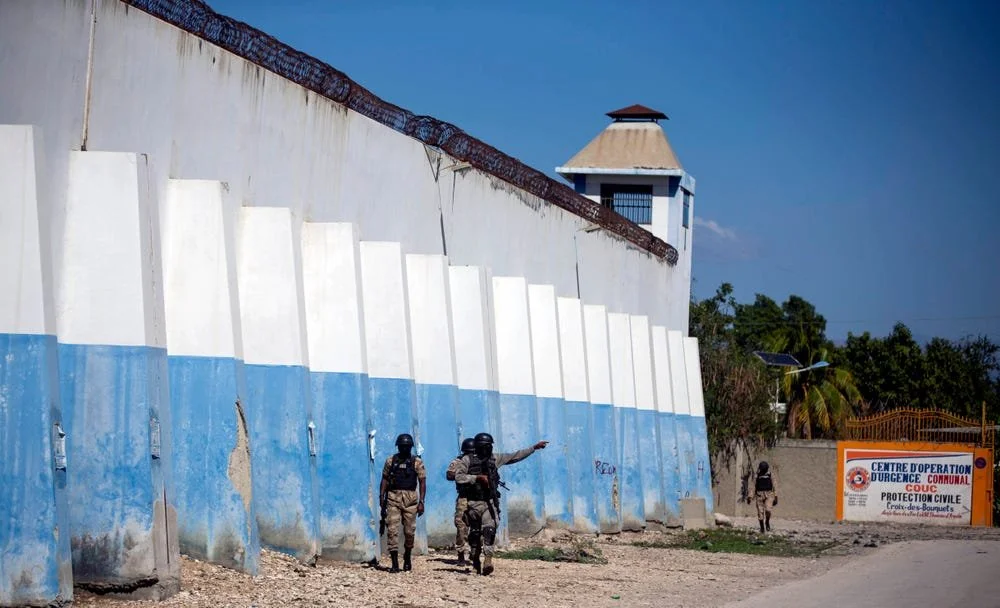
Hundreds of inmates are still on the run in Haiti after a massive prison break that resulted in 25 deaths
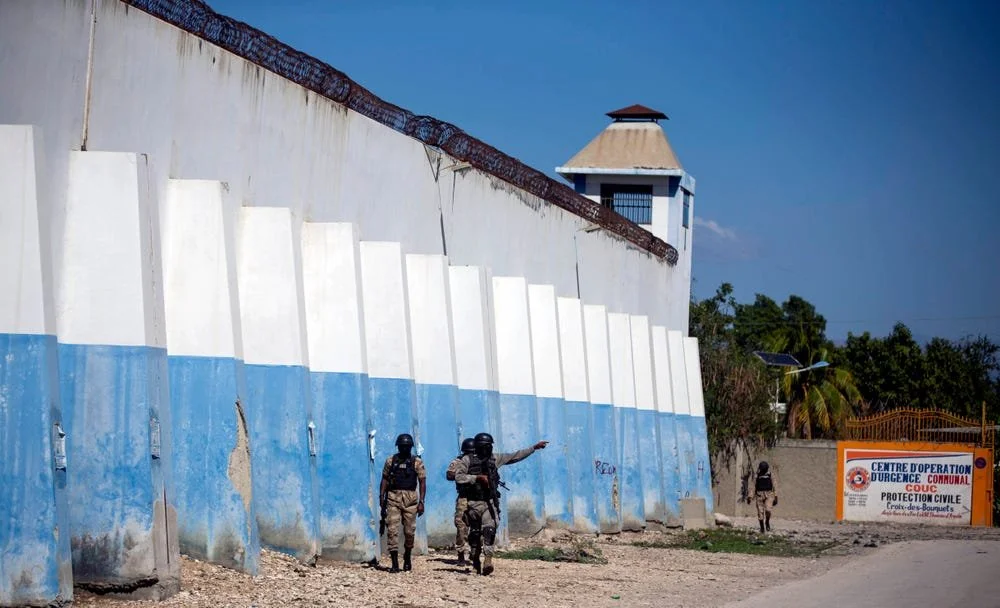
- Hundreds of prisoners escaped prison in Haiti on Thursday, according to multiple news reports.
- At least 25 people have died following the break including citizens and prisoners, officials said.
- A high-profile gang leader, Arnel Joseph, and the prison's director also died during the breakout.
More than 20 people have died and hundreds of inmates have escaped after a prison break at a jail nearby Port-au-Prince in Haiti, according to multiple reports.
Over 200 people escaped from Croix-des-Bouquets Civil penitentiary on Thursday, as the Independent reported. Amid the escape, at least 25 people died, including the prison director and a high-profile gang leader, Arnel Joseph, the report said, citing authorities.
According to the Associated Press, Joseph was the country's most-wanted criminal until he was arrested. He faced rape, murder, and kidnapping charges. According to the report, he was seen at a checkpoint on Friday on a motorcycle before he was struck in the midst of gunfire with local police.
"Twenty-five people died including six prisoners and Divisional Inspector Paul Hector Joseph who was in charge of the prison," Haiti's Communication's Secretary, Frantz Exantus, said during a news conference Friday, according to BBC News. "Among those killed were some ordinary citizens who were killed by the prisoners during their escape."
Eyewitnesses told the Associated Press they saw armed men shoot at guards at the prison prior to the mass escape.
In a Twitter post on Friday evening, Exantus said 60 inmates were captured, and over 200 were still at large.
"I encourage the police to speed up investigations on the circumstances surrounding this incident, redouble its efforts to re-apprehend the escapees, and strengthen security around prisons throughout the country," Helen La Lime, United Nations Special Representative for Haiti told NPR in a statement.
The Associated Press reported that hundreds of inmates similarly escaped the prison in 2014.
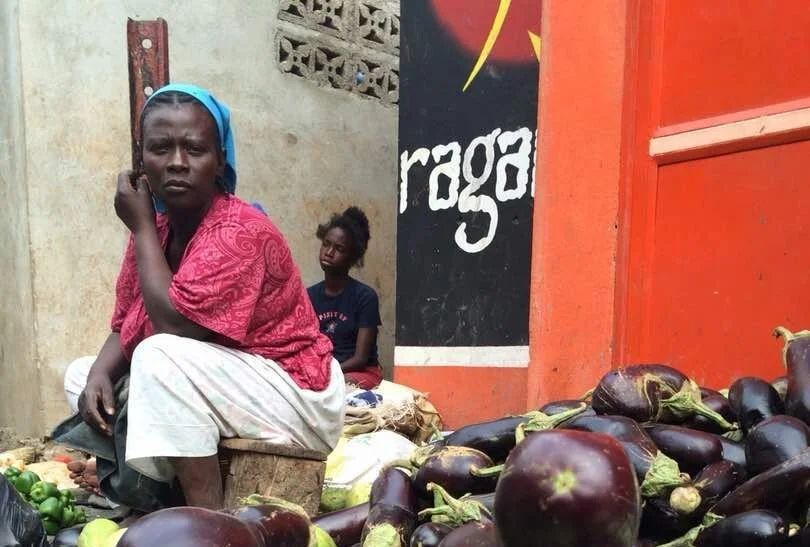
“Madan Sara” Tells the Story of Haitian Women Both Ordinary and Extraordinary
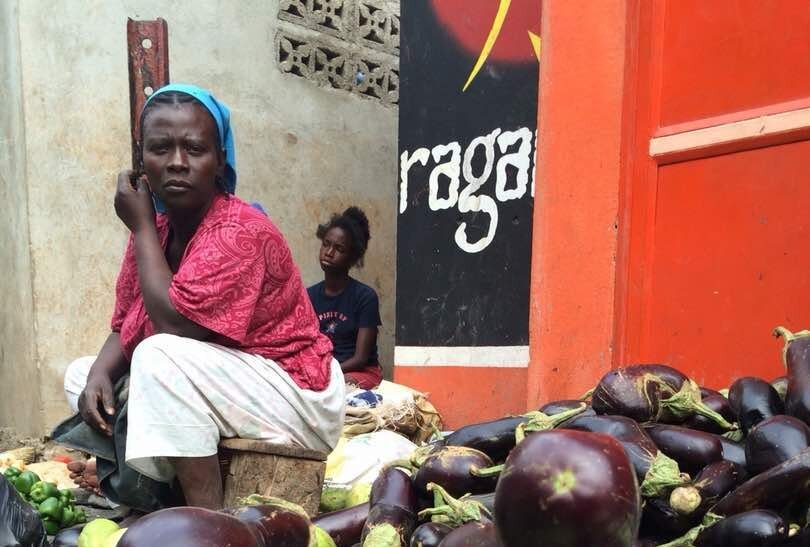
Madan Sara is a film about the power of Black women in a global economy and their contributions that too often go unacknowledged.
The new film Madan Sara begins and ends with writing by acclaimed writer and MacArthur “genius” Edwidge Danticat. Reading an excerpt from her first novel, Breath, Eyes, Memory translated into Kreyòl, Danticat recites in her trademark measured and melodious voice:
“There is a place where women live near trees that, blowing in the wind, sound like music … These women, they are fluttering lanterns on the hills, the fireflies in the night … There is always a place where women, like cardinal birds return to look at their own faces in stagnant bodies of water … Where women return to their children as butterflies … My mother was as brave as stars at dawn.”
Like the passage that introduces it, the documentary Madan Sara focuses on the lives of Haitian women who are simultaneously ordinary and extraordinary.
“To talk about Madan Sara is to talk about Haitian women,” according to the filmmaker Etant Dupain. As the film makes clear, it is also to talk about pressing issues like structural violence, government failures and resistance to neoliberalism that resonate throughout the Global South.
When I asked him about his vision, Dupain said he saw Madan Sara as a “different way to introduce people to Haiti.” He accomplished just that in a series of bright, stunning, visually captivating images that convey an atmosphere of abundance.
The ubiquitous poverty trope regularly used to describe Haiti is notably absent from the narrative. Instead, copious amounts of produce—piles of mangoes, loads of cabbage, bunches of bright orange carrots—are present in almost every shot, disabusing the viewer of the idea that Haiti is only a place of lack. The vibrant atmosphere of the marketplace infuses the film with energy as the beauty and fecundity of the land take center stage. Early in the film, a mouth-watering variety of produce appears, as if Dupain is inviting us to sit at an exquisite Haitian table of fruits and vegetables.
Indeed, Madan Sara is a story of abundance. The documentary focuses on two “madan sara”—business women who purchase, distribute and sell food and other essential items in Haitian markets. As the Haitian economist Camille Charlmers explains, “A madan sara is a person who specializes in commerce; they are pillars of the Haitian economy.” These women have mastered their profession, understand their worth in the global economy, and take pride in their craft.
“If you aren’t smart, you cannot be a madan sara,” Clotilde Achille explains.
Madan Sara explodes many of the binaries that the media has used to characterize Haiti: urban versus rural, rich versus poor, lack versus abundance. Seemingly simple in its focus, the documentary takes on a number of broader global issues: the history of Haitian agriculture, government corruption and neglect, resistance to a capitalist system that denies the collective.
When I asked Dupain how he managed to cover such an incredible range of topics, he explained, “It is impossible to talk about Madan Sara without understanding [this broader context because] their work is a resistance movement against neo-liberal policies.”
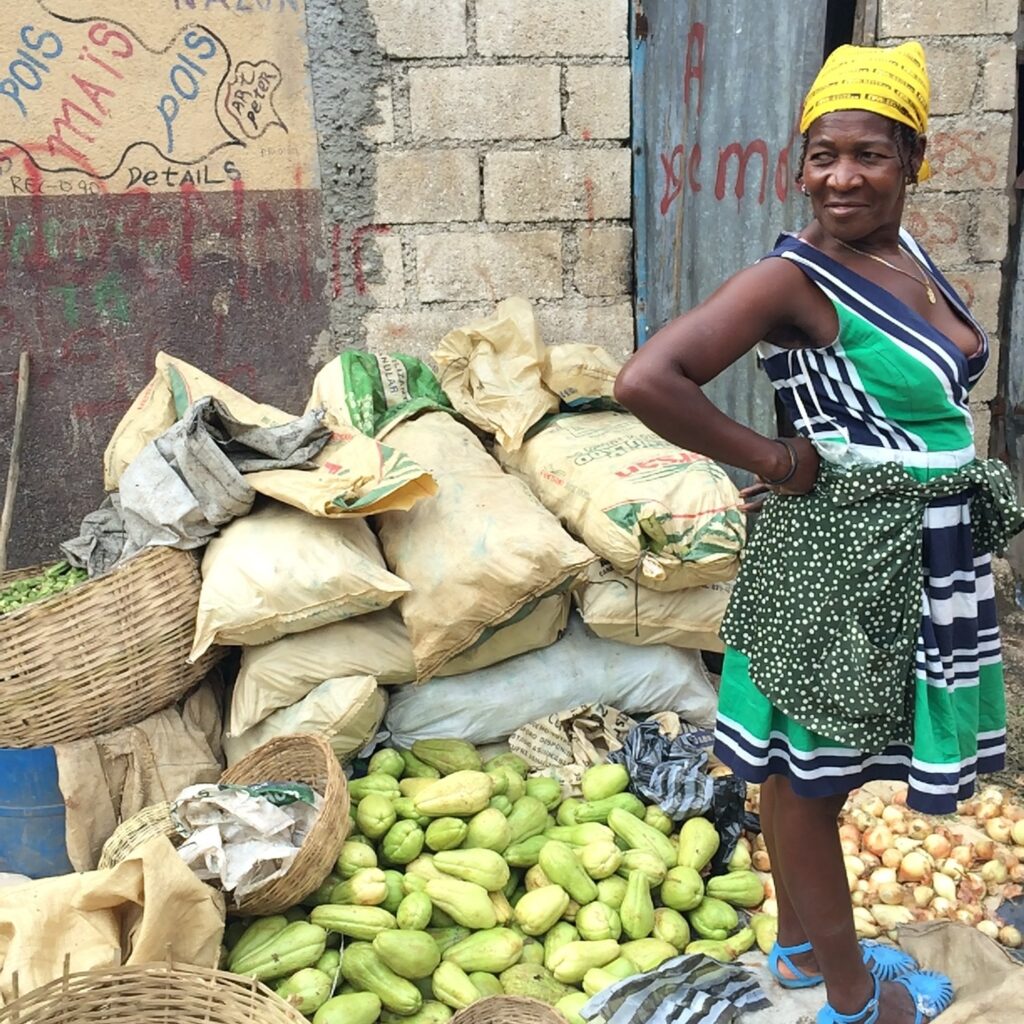
At the film’s premier in Port-au-Prince last month, the two main subjects, Clotilde Achille and Monique Metellus, appeared alongside filmmaker Dupain and shared their perspectives about the documentary. They were proud of the film and insistent on the need for more recognition and protection for women like them in Haiti and throughout the Global South.
One of the greatest contributions of Madan Sara is Dupain’s ability to center the women’s voices, perspectives and even policy recommendations to imagine a future in which the madan sara is no longer on the margins. After all, what sense does it make to marginalize those who are so central to the economy and the function if of the small island nation? To use the words of one scholar interviewed in the film, the madan sara keep the country running; there would be no Haiti without them.
One of the most striking contributions of the film is the critique of capitalism and U.S. influence over the Haitian economy. According to Chalmers, the Madan Sara system represents a socialist solidarity economy that is fundamentally anti-capitalist. There is an ethic of social justice that undergirds the entire documentary: As an example of the global machinations of gender, power and economics, the madan sararemind us of what the world is getting wrong—especially as it concerns Black women of the Global South.
Madan Sara raises salient points about women’s contribution to the global economy and enters into academic debates about the autonomy of rural women. As the Haitian feminist scholar and author Myriam Chancy has argued in Framing Silence: “Haitian women of the rural working class appear to have some power equity due to the fact that many are market women (handling booths at the market, money, trade) while their male counterparts work the fields.”
Perhaps this is why madan sara have also been ignored by the state and targeted with violence. About halfway through the documentary, the camera pans out to a wide shot showing plumes of smoke wafting from one of Port-au-Prince’s largest markets. The fire that tore through this market was far from an isolated case, in fact in 2018 five fires blazed through Haitian markets.
Crying out for help after seeing all of her commerce destroyed in a market fire, one madan sara shouts desperately, “We are asking for justice not peace!” To Dupain, the fires are a metaphor for the structural violence and injustice these women are subject to. It is also evidence of the government’s lack of compassion for the people.
Filmed over the last five years, Madan Sara, is also unabashed in its critique of Haitian president Jovenel Moïse and the political elite. At one point, footage of the PetroKaribe Mouvement protests contrasts what up until this moment had been a film dominated by the presence of women.
This feminist film is unequivocal in making the point that government neglect of the madan sara population results in their marginalization. Or, as one of the women featured puts it, “We aren’t safe in cars, homes, in the market”—emphasizing how the lack of security has deleterious effects that are exacerbated by the intersections of gender and class. Madan Sara makes clear that the government’s lack of support, investment and outright neglect is a form of structural violence that has resulted in widespread harm.
And yet, the film showcases the ingenuity, brilliance and steadfast nature of these women in a nuanced way. Extolling the perspicacity of madan sara, another expert opines: “They really know what they are doing. They need more support, sure, but they know what they are doing.”
So as much as Madan Sara puts Haitian agriculture and markets on display, it is ultimately a film about the power of Black women in a global economy and their contributions that too often go unacknowledged.
They represent hundreds of thousands of women engaged in daily practices that the state does not support, protect, or invest in. As Madame Monique explains to the viewers, Madan Sara se lekol li ye—The madan sara network is an entire school. It is an education about empowered women in the Global South who though they are overlooked by the government continue to press forward.
Towards the end of the film, Dominique Boyer, the CEO of Fonkoze, a non-profit organization that provides micro loans to Haitian women in commerce explains the connection of madan sara to all of Haitian culture. “Every Haitian has a madan sara story in their own family.”
Personally, this point struck home for me as I recalled the story of my paternal grandmother, who spent some of her life working as a madan sara. When I told my father—a physician living in Port-au-Prince—about the film, he shared childhood memories about accompanying his mother on some of her business trips. Like Etant Dupain, he understood the importance of madan sara’s contribution to his education, development and professional trajectory.
As Dupain expressed so eloquently, and with a touch of longing for home, “Madan Sara is ours. Madan Sara is Haiti.”
How to Watch Madan Sara
In honor of International Women’s Day, and in partnership with the University of Pennsylvania, the Madan Sara Project will be hosting a free public online screening of Madan Sara on March 8, 2021 at 6:00 pm EST. Spaces are limited, so reserve your spot today by following this linkto register for the event.
For more information on future film screenings and to support the efforts of the Madan Sara Project as they work to share the film across Haiti, please visit MadanSaraFilm.com.
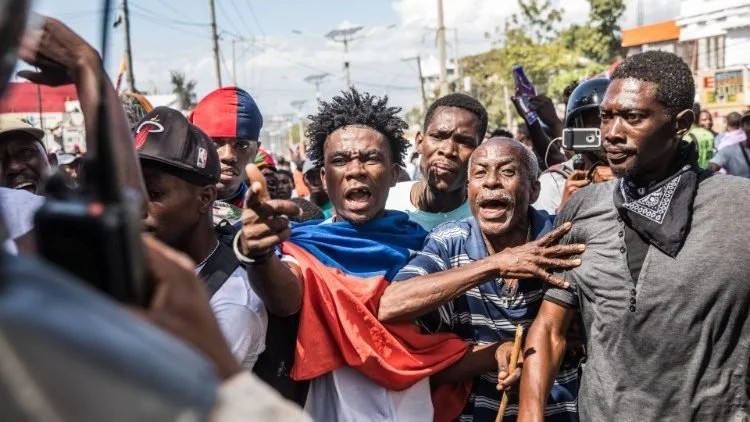
After a Decade of Misrule, the People of Haiti Have Had Enough
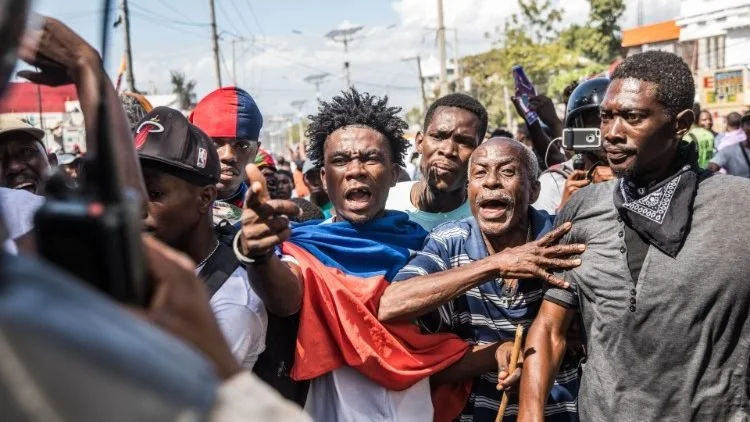
On Sunday, the people in Port-au-Prince filled its broad boulevards, blowing the traditional celebratory one-note vaksen horn, waving Haitian flags and branches of trees, and singing improvised songs, as well as the rousing Haitian national anthem. And I mean “filled,” curb to curb and out of sight against the horizon, coming and coming. There were similar protests in six other cities in Haiti. The Port-au-Prince demonstration was not like the lesser, though important, protests we’ve seen in Haiti in recent years against cost-of-living increases and food prices and gas taxes and government corruption. This well-organized, massive protest was an economy-stopping, throat-swelling, regime-changing political demonstration, more like the ones that preceded and followed the ouster of the Duvalier dynasty in February 1986. “Aba diktati,” read many of the handwritten pancartes held up by people in the surging crowd. Down with dictatorship.
A population with too much experience in the methods of dictatorship sees in President Jovenel Moïse an emerging strongman. In August 2020, a respected human rights group accused his government of outright collusion with the gangs in a Port-au-Prince shantytown, in a report ominously titled “Assassinations, Ambushes, Hostage-Takings, Rape, Arson, Home-Invasions.” Another much-feared gang, under the leadership of the strangely charismatic criminal Jimmy Cherizier (aka Barbecue), has staged marches honoring Moïse. Meanwhile, Moïse allowed the Haitian legislature to lapse, and has been ruling by decree for more than a year now. He is trying to amend Haiti’s constitution to permit consecutive presidential terms, which were outlawed in order to prevent the development of presidential cults of personality, as in the Duvalier era. Last month, Moïse, facing rising unrest, falsely accused opposition leaders of staging a coup against him and of planning to assassinate him, and rounded up 23 of them, many still languishing today in one of Haiti’s inexcusable prisons. Among them are health care workers and judges from Haiti’s Supreme Court. Because during this spate of arrests, Moïse also shut down the Supreme Court.
Here’s what’s really going on, and it circles around disputed elections—an incendiary topic that we in the United States now understand more intimately than we used to. Moïse and his predecessor, pop musician Michel Martelly, were each elected in highly questionable votes. Martelly seemed to have lost his election in 2011, but the OAS—with the support of then–Secretary of State Hillary Clinton and her husband, the UN’s special envoy to Haiti, as well as the French and Canadian governments—investigated the balloting and decided that Martelly had won enough votes to participate in the runoff voting. In this OAS-sanctioned runoff, Martelly emerged as the victor. A wide sector of the Haitian public did not believe in this election’s validity.
Five years later, Moïse, tapped by Martelly to run for president after Martelly’s term ended, was elected in balloting with very low turnout and vote-counting issues. That election was annulled, and an interim president installed until a new election could be held, which also suffered from low turnout and questions about the final count, but was eventually validated by the OAS. Along with the OAS, the same outsiders, known as “the international community” or the Core Group, continued to support the Martelly-Moïse relay of the presidential office, and continue to this day. That means they’ve supported a decade of rule by presidents chosen in highly suspect elections.
Martelly’s was a crucial election for all involved, though, because it was the first election after the earthquake of 2010, and the aid moneys that were about to flow into Haiti had all the traditional partners in corruption salivating: politicians, businessmen, contractors, bankers, and the international charitable funders and development investors who also play their part in the depraved dance. It was important to have the right person as president, putting the right people in the way of all the millions and even billions of dollars that were supposed to begin flowing. In Haiti, charitable and entrepreneurial funding goes to members of a class of people already well known to those outside funders: people who are familiar, the people whom those people suggest, Haitians who speak English and have already done business with the donors.
Haitians are almost never surprised to hear who’s received a donation to build a school or a sanitation system or a power plant, or to start or expand a small business; nor are they ever surprised to find that the school, or sanitation system, or power plant has never been actually finally fully built nor the business expanded. And bigger projects, like hotels, agribusiness, mineral extraction, and free enterprise zones, also offered a chance for investment for foreign interests, if the right Haitians were in place to give the go ahead. The people who are left out of this big money giveaway are the people whose misery is the excuse for the funding in the first place: the masses of suffering Haitians.
But the people of Haiti have now had enough. Ras le bol. Enough of the corruption that milks money out of the public coffers, enough of the rampant violence that keeps taking the lives of everyday Haitians, mostly people who can hardly be expected to pay heavy ransoms. And the murders and kidnappings haven’t stopped, even after a seeming hunt by authorities for some of the more egregious gang leaders, and the timid 2020 US sanctions against Cherizier and two government officials for their involvement in the notorious 2018 massacre at the La Saline market in Port-au-Prince. It’s not about one criminal; it’s about a criminal system, supported by very heavy hitters, including the international community.
On Sunday morning, the morning of the incredible and inspiring demonstration against the Moïse government, a beloved and dedicated pediatrician, Ernst Paddy, was killed on the street in Port-au-Prince by five or six heavily armed kidnappers as he resisted his attackers. They reportedly kidnapped his wife, who was with him. The day before, a highly coordinated and dazzling prison escape by the infamous gang leader Arnel Joseph ended soon after in his point-blank execution by the Haitian police, along with 25 other deaths, including the prison director. It’s assumed among Haitians that Joseph was freed and then targeted and killed because of his connections to the Moïse regime and to others involved in violence and criminal retribution. To stop Joseph from talking, in other words. (An estimated 400 more prisoners escaped during the break.) Also this week, a film crew from the Dominican Republic and their Haitian translator were released by gang-associated kidnappers into the custody of the police who had demanded complete control over negotiations for their release and who in turn kept them incommunicado for 44 hours, despite pleas from the Dominican Republic that they be released to the embassy: They were kidnapped again, essentially, the second time by the Haitian National Police.
My WhatsApp feed has been full of blood and guns this week, simply following the lives of Haitians living in a country plagued by systemic corruption and violence. I scroll down and there is Arnel Joseph, in a bloody T-shirt, slumped over a motor bike. Pictures of others killed during the prison break follow. Blood on cement floors, bodies in strange positions. Scroll further, and I find a bleak black-and-white video of the killing of the poor pediatrician. The SUV arriving, the men and their machine guns leaping from within, the doctor dragged from his car… A few messages further down, and there’s a still of the two Dominican cameramen being interrogated by police. More messages and then a video of Dr. Paddy’s grown son sobbing over the loss of his father and the abduction of his mother.
A Haitian protest is never just a mass of disgruntled and hungry citizens. Participants always have certain interests in mind, and particular targets of their anger and frustration. They are filled with purpose and the desire for change. The huge protest yesterday stopped in front of BINUH, the United Nations Integrated Office in Haiti, and called for the removal of its director, Helen Meagher La Lime, by name. La Lime is seen by Haitians as a symbol of the continuing unwanted hand of foreign powers in Haitian affairs. She’s made many unfortunate statements and seems to consort with all the wrong people in Haiti. She’s continued the UN’s almost unstinting support of Moïse, though his recent egregious activities seem to have diminished her enthusiasm slightly. Meanwhile, we have Joe Biden continuing Trump’s support of Moïse—a real slap in the face to the Haitian Americans who voted for him with high hopes.
It’s not as if there aren’t scores of Haitians who are more responsible, politically astute, law-abiding, and patriotic than Moïse. Some have been around for years, and others are newer to the scene. Any one of them or all of them could participate in an interim committee of government that could organize respectable and credible elections. They are lawyers, human rights workers, community organizers, women’s group leaders, doctors, educators—everyone in Port-au-Prince knows them by name; the US Embassy knows them by name. They stand at the ready to do their duty to the Haitian people, I’m sure. But the government currently in place, illegitimately, must get out of the way before this can come to pass. And if recent Haitian history is any guide, no matter how large the peaceful demonstrations against Moïse may grow, he will never leave as long as he retains the unswerving support of the international community.

Haitian Roots Osaka Is New Queen Of Women’s Tennis

MELBOURNE, Australia, Mon. Feb 22, 2021 (Reuters) – Haitian Roots tennis star Naomi Osaka has cemented her standing as the new queen of the women’s game of tennis.
Osaka crushed Jennifer Brady 6-4 6-3 to secure her second Australian Open title on Saturday. The one-sided win over the 22nd-seeded American in the final at Rod Laver Arena gave the Japanese Haitian juggernaut her fourth major crown, with her career still budding at the age of 23.
She joined Monica Seles and Roger Federer as winners in their first four Grand Slam finals, marking her out as the ultimate big match performer.
“My reaction is that that’s very amazing company,” Osaka told reporters, sitting next to the winner’s Daphne Akhurst Memorial Cup.
“I hope that I can have one grain of how their career has unfolded. But you can only wish and you can only just keep going down your own path.
“But it’s definitely something crazy to hear.”
More major trophies surely await if she can convert her irresistible hardcourt form to French Open clay and grass at Wimbledon.
Having humbled Serena Williams in the semi-finals, a victory that reinforced a changing of the guard, Osaka was untroubled by Brady in the clash of power hitters.
She romped to a 21st straight win in completed matches, a streak dating back more than a year.
Fans hoping for a repeat of the pair’s engrossing U.S. Open semi-final last year were left disappointed as Brady froze in the spotlight of her first Slam final.
U.S. Open champion Osaka was also short of her best tennis, joining Brady in producing a dour, error-strewn first set.
But she settled to clinch six straight games, roaring to a 4-0 lead in the second before serving out the match to love.
A big serve sealed it, causing Brady to fire a forehand return long, and Osaka held her racket over her head, beamed and gave a little leap in an understated celebration.
“Tonight I felt like was (it) more of a mental battle,” said Osaka who also won the 2019 title.
“Of course, I can’t speak for her, but I was extremely nervous. I honestly just told myself before the match, I’m probably not going to play well.
“I shouldn’t put that pressure on myself to play perfectly but just go out there and fight for every point.”
EARLY NERVES
On a cool and breezy night at Rod Laver Arena, Osaka warmed up with two aces but the fast start fizzled out in a stream of errors from both players.
A nervous Brady was especially culpable, spraying 18 unforced errors in the opening set.
Both players dropped their serve before Brady breathed some life into the contest at 4-4, luring Osaka in with a drop-shot, then scrambling forward to retrieve and lob her for break point.
Osaka cancelled it nervelessly with an imperious forehand winner fired from the baseline and hung tight until Brady gifted her the lead.
Serving to stay in the set at 5-4, Brady slapped a wild forehand over the baseline to cough up set point then stepped in to pound a would-be forehand winner straight into the net.
The crowd groaned and Brady went to her chair ashen-faced.
Osaka seized the momentum, breaking Brady again in the second game of the second set with a sumptuous crosscourt backhand winner.
She rolled on to a 4-0 lead before Brady belatedly conjured some resistance to break Osaka.
The American clawed back to 5-3 but bowed out as she started, smashing wild returns to allow Osaka to serve out the match without trouble.
It was a forgettable display from Brady’s racket but she had a remarkable run in Melbourne, after being one of the 72 players unable to train during their two-week hard quarantine in the lead-up.
“I think she’s human like the rest of us in this room,” Brady told reporters of Osaka. “She just brings out her best in the big moments.
“But I don’t think, you know, she’s God,” she added with a smile. “I think maybe Serena is. Maybe she’ll get there, I don’t know.”