
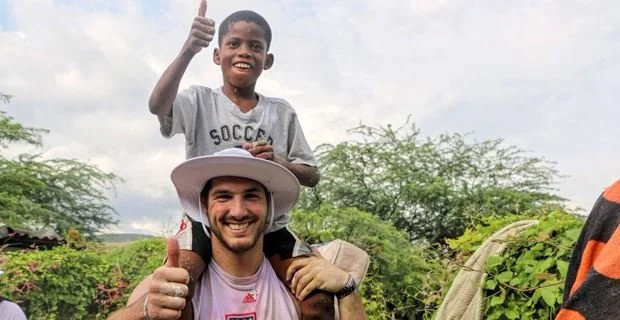
Aggie athletes headed to Haiti on mission trip this weekend
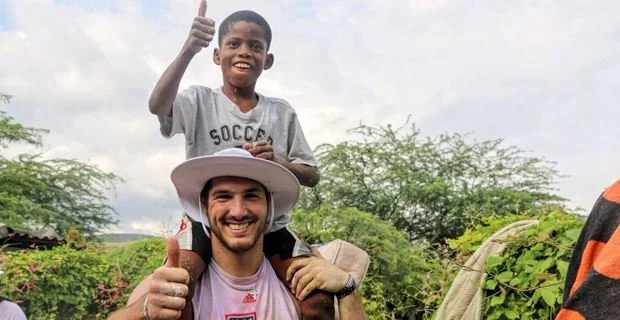
A year ago, at the suggestion of graduate transfer quarterback Trevor Knight, who had made the trip multiple times before, several Texas A&M athletes went on a mission trip to Haiti over the summer.A year ago, Director of Player Development Mikado Henson talked about how the trip came to be.“When Trevor Knight transferred from Oklahoma, I told him about the trip and it is the same organization that takes OU. He’s been there three times and he told me, ‘Mikado, I’m an Aggie, but I’m going back to Haiti whether it is with A&M or OU. I’m going back.’ Jake Hubenak is going back and I don’t care whether you are scholarship or not, offense or defense, black or white. We’ve got 15 football players signed up and we’ve all had to raise money."Fifteen football players, 12 volleyball players and one soccer player made the trip. The football players included the likes of Knight, Hubenak, Myles Garrett, Daeshon Hall, Josh Reynolds, Otaro Alaka and Koda Martin.Now, a year later, there will be 67 athletes from A&M making the same trip."About ten percent of our student athlete population is going with us this year," Hinson recently told KBTX. "We'll do a lot of painting of homes, delivering goats as a form of income and stewardship. Building, painting, planting... We told them we'll bring plenty of manpower."It's amazing to see what we get to do there, but it's even more amazing to see what happens in us," Hinson said. He remarked that students returned last year with a renewed since of humility and brotherhood. "It's an eye opener."The group will be leaving on Sat., May 13 and will return a week later on May 20. With most athletes having to take summer school in order to work out with their sports over the summer, the group going on the Haiti trip will be giving up almost all of their summer vacation.Brian Perroni - May 10, 2017

From Haiti to Philly, From Nurse to Bridal Designer

As a child in Haiti, Madelange Laroche dressed her dolls in fashions she’d made herself. As a teenager, she made school uniforms for herself and seven relatives. She dreamed of a career in fashion, designing formal wear and wedding dresses.Then life derailed her. Emigrating to the United States and learning a new language was challenging. To support herself and her brother, she took up nursing, working her way up from home health aide to certified nursing assistant to licensed practical nurse.“I thought, ‘Well, I can do fashion on the side and be a nurse full-time,’ ” Laroche said.That didn’t quite happen. Four years ago, she began studying for a bachelor’s degree at Moore College of Art and Design. She dazzled in the classroom while working more than 40 hours a week at two nursing jobs. Her work won designer Frank Agostino’s critic’s choice award at a student showcase. Last week, a dozen friends and family members — many of whom had traveled from Haiti and Florida — came out to support her at her senior fashion show at the Barnes Foundation.At 36, the new Moore graduate is finally finding her way into fashion. She’s not deterred by her age or her responsibilities. Those who know her say they have a difficult time imagining anything can hold her back now.“She’s absolutely driven, and I think she can make a go of it,” said award-winning fashion designer Danny Noble, who worked with Laroche at Moore. “I’m sure she makes a decent income as a nurse and it’s incredibly admirable that she has such courage and drive.” Agostino, who has been judging Moore student contests for about 12 years, said Laroche was definitely in his top 10, maybe even the top five. “I have great respect for her. If anyone could make a living at it, she’s the one.”Laroche’s unique background and life experiences infuse her design aesthetic. She paints or weaves fabrics as she learned to do as a child. Classic silhouettes are embellished with details and embroidery, and extremely complex designs are superbly constructed, Noble said.Her dream is to create formal wear, specifically wedding gowns. When her bridal wear first appeared on the runway last week, there was a collective gasp from the audience.“It’s just a matter of time,” said Le Tran, who teaches technical design to Moore seniors. “She can do anything.”Laroche was largely raised by her grandmother while her mother worked as a dry cleaner and seamstress in the U.S. She remembers picking up scrap fabric and making her first doll dress at 7. She showed it to her sister.“She said, ‘That’s very nice,’ but I didn’t know if she was telling the truth or not, but since that day, I started making doll dresses,” Laroche said. When Laroche was 12, her mother returned to Haiti after five years away. To reconnect with the family, Laroche’s mother asked whether any of the children would like to learn how to sew.“Nobody said anything,” Laroche recalled, “and I felt so bad for her, so I raised my hand and said OK.”Laroche and one of her brothers sat down and learned how to take measurements and cut fabric and made a pencil skirt. It was Laroche’s true start as a designer.“I never stopped. I never stopped looking for fabric,” Laroche said, describing how she’d hide in her grandmother’s closet and hand-sew the older woman’s garments into new shapes and styles that would fit her.Then, she said, she’d wait until the rest of the family had gone to church to emerge wearing her grandmother’s now-altered clothes.When she was 16, Laroche persuaded her grandmother to let her make the school uniforms — a white blouse and an olive green skirt or pants — for the family. She changed the design, adding olive green accents to the shirts. School officials protested and demanded the uniforms be, well, uniform. But within weeks, about half of the school’s students had altered their shirts accordingly. Administrators gave in. “They said, ‘Well, it’s a lost game’ and it became our school uniform and it made us stand out,” Laroche said. “I don’t know but I think they were proud that a 16-year-old could do that.”In 2001, with high school completed, Laroche moved to Florida to live with her mother. After two aborted attempts at attending a fashion school — cost and the language barrier held her back — Laroche took a friend’s advice and tried nursing.It was steady work, just what she needed after she settled in Philadelphia and took in her 33-year-old brother, who has mental handicaps that weren’t fully understood in Haiti. She decided to get her bachelor’s degree in nursing and began taking classes at Manor College. She still designed and made clothing — dressing the entire bridal party for a relative’s wedding, designing both a ceremony and a reception dress for a teacher — but fashion design became a hobby, not a destiny.And then, during a meeting with her college adviser, the truth burst out: She wanted to go to fashion school. She would love to open a made-to-order wedding dress business. The adviser was surprised. Another student who’d overheard the conversation told Laroche to look into Moore, where Project Runway Season 10 winner and Philly native Dom Streater had studied.Four years later, her senior show was about to begin and Laroche was nervous and excited. She wore an off-white lace appliqué formfitting dress that she had started making at 11 p.m. the evening before.It fit perfectly.by Natalie Pompilio | May 16, 2017
Chronicles of a Chronic Caribbean Chronicler: Europe and US dodging demands for slavery reparations
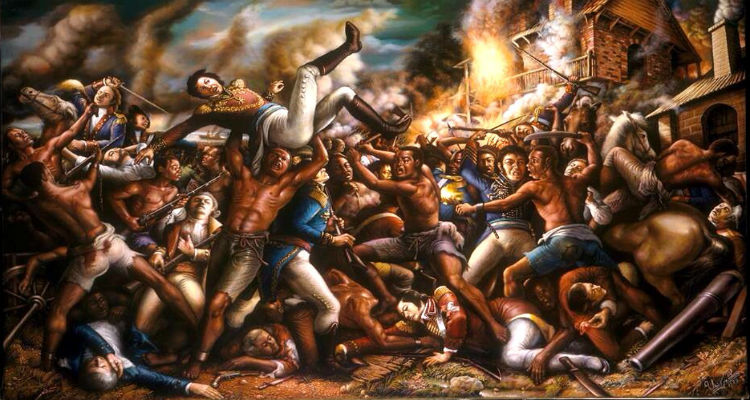
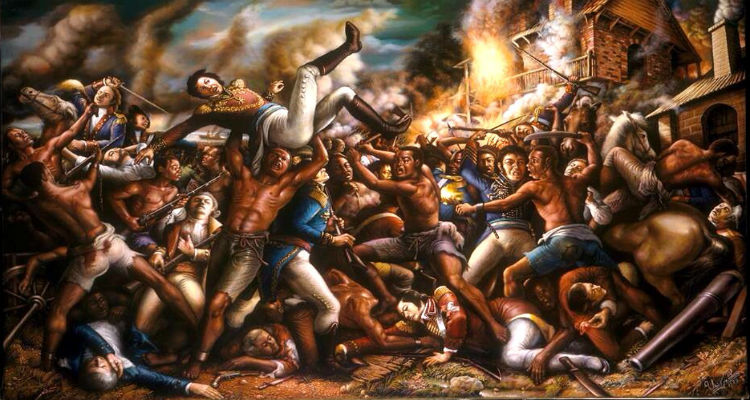
Today, over 180 years after abolition, descendants of African slaves in the Caribbean, North and South America are demanding reparations for slavery from Europe – and the United States.
 |
| Earl Bousquet is Editor-at-Large of The Diplomatic Courierand author of the regional newspaper column entitledChronicles of a Chronic Caribbean Chronicler |
In the Caribbean, the demands include apology and atonement for 400 years of both slavery and native genocide; in the USA it’s about compensation for African American descendants of slaves; and in South America, today’s descendants of Africans (who arrived both as shipwrecked mariners and slaves) are demanding their fair share of recognition, equality and atonement.Africa and the Caribbean experienced the brunt of the brutal slave trade that saw Europeans sail to West Africa, kidnap millions of men and women and ship them like animal cargo to the newly colonized ‘West Indies’ captured through wars of extermination against the original native ‘Caribs’ and ‘Arawaks’.While the focus of British and French slavery was mainly concentrated on the Antillean (Caribbean) islands and mainland territories (including Haiti) that they claimed to own, the Portuguese and Spanish concentrated on South American mainland territories such as Argentina, Brazil, Colombia, Costa Rica, Chile, Ecuador, Peru and Venezuela, as well as the larger islands of Cuba and Puerto Rico.In the case of the USA and South America (except in Brazil), African descendants form small minorities, unlike the 15 Caribbean Community (CARICOM) member-states, where they form an absolute majority, in each case.CARICOM governments have thus easily and collectively agreed to a joint approach to the European Union (EU) member-states that benefited from slavery, inviting them to discuss reparations by way of acknowledgement and atonement.The EU countries have so far resisted engaging the Caribbean in any discussions whatsoever on reparations, the likes of former British PM David Cameron saying during an official visit to Jamaica that traditional aid and assistance given by Britain since independence to the former colonies has sufficed.But the response by the Britain, Denmark, France, The Netherlands, Portugal and Spain, thus far, (or lack thereof) is very much unlike when France demanded reparations after the first African slaves in the Caribbean – and the world -- successfully revolted.Haitian slaves, led by Toussaint L’Ouverture, rebelled in 1791 and declared their independence in 1804. Not even in Africa had a free nation yet been born and the humiliated slave masters enlisted the support of the French government to make the former slaves pay dearly for their freedom.In 1825, France demanded 90 million gold francs to recognize Haiti’s independence -- the same amount demanded in compensation by the former slave masters.Historians and economists agree that this high cost paid by Haiti to France over 122 years (payments continued until 1947) is largely responsible for the country having been almost eternally anchored in poverty.In 2003, Haitian President Jean Bertrand Aristide called on Paris to return the 90 million gold francs, by then estimated at US $21 billion. Soon after, however, he was swiftly and secretly taken hostage by US and French forces and exiled to South Africa.French President Francois Hollande, in May 2015, ahead of a visit to Port au Prince, said Paris “will repay its debt” to Haiti – only to later retract, saying he only meant repaying France’s “moral debt”.The Hollande disappointment notwithstanding, no other concerned EU member-state has even mentioned the possibility of considering paying reparations for slavery – in the Caribbean or North or South America.Same in the USA, where not even President Barack Obama accommodated calls to initiate reparations moves and to pay to survivors the wages of the slaves who built the White House.In 1865, Union General William Sherman set aside thousands of acres of land for newly-freed American slaves, by way of a special field order. But President Andrew Johnson soon returned the titles to the original white owners. Freed slaves were also each promised “40 acres and mule” to start their own lives. But here too they were disappointed.The US Congressional Black Caucus has for the past 28 years backed a bill called HR-40, submitted annually by Michigan Rep. John Conyers, calling for a commission to study “the Reparations Proposals for African Americans Act”. Designed to examine the negative effects of slavery, it also seeks to “recommend appropriate remedies”. But HR-40 has long been referred to the House Judiciary Committee, where it has since remained...US blacks are somewhat divided over what mechanism to use to assess the real costs and value of slave wages and related rates of conversion over the centuries slavery lasted.Likewise, white Americans largely reject calls by blacks for reparations, some seriously arguing that ‘slaves were freed by the Civil War’ and ‘blacks benefited from affirmative action’ government policies over the years.The reparations movement is however gaining traction across the hemispheric horizon.The momentum has just begun in South America, with an International Reparations Conference held in Cali, Colombia in March 2017, essentially to outline a road map for the movement for recognition and inclusion of the African-descended minority across the continent.The African Americans are encouraged by a 2016 report by the Geneva-based United Nations Working Group on People of African Descent, urging US lawmakers to implement reparations, citing “a legacy of colonial history, enslavement, racial subordination and segregation, racial terrorism and racial inequality.”Also, according to an exclusive poll released in March 2017 in conjunction with a new PBS Series ‘Point Taken’, 40 percent of US ‘millennials’ think there should be reparations for African American descendants of enslaved people.Indeed, some of the leaders of the revived reparations movement in the USA are confident enough of the momentum gained thus far to conclude that ‘this could be reparations’ best chance since 1865.’In the Caribbean, the governments’ approach is naturally quite different from North and South America – more diplomatic than agitational, seeking dialogue over confrontation.In March 2014, the CARICOM governments unanimously adopted the ten-point plan to demand “Reparatory Justice for the victims of Crimes against Humanity in the forms of genocide, slavery, slave trading and racial apartheid.” The EU member-states that built their imperial wealth on slavery were also duly informed.A CARICOM Regional Reparations Commission was also appointed (chaired by the vice chancellor of the University of the West Indies Sir Hilary Beckles), with national reparations committees also established in member-states.The Caribbean hasn’t put a price tag on slavery, even though a sum of US $17 trillion is often mentioned. Instead, it’s seeking a mutually agreed CARICOM-EU approach to what forms the atonement will take, to the common and mutual benefit of all the CARICOM states and peoples.Failing this negotiated approach, the Caribbean countries reserve the right to file formal criminal charges against the culprit EU member-states at the International Criminal Court (ICC)).Citing the will of the Western world to proudly acknowledge and atone for the Jewish Holocaust, reparations paid by the US government to Japanese interned during World War II, reparations made to US native peoples and Britain recently being ordered by its own courts to pay reparations to tribal Kenyan ‘Mau -Mau’ independence fighters, CARICOM feels it has a very good case.Those demanding reparations for slavery everywhere are also buoyed by the UN’s declaration of 2015 to 2024 as the Decade for People of African Descent.The CARICOM Prime Ministerial Subcommittee on Reparations (led by Barbados Prime Minister Freundel Stuart) met in late April 2017 to review European responses to their request for a negotiated settlement.In the meantime, the 15 member-states, including Haiti, are preparing their individual legal cases for collective submission to the ICC, should the culprit EU member-states continue to dodge and dither to duck their individual and collective responsibilities for the greatest ‘crime against humanity’ known to mankind.The reparations demands by African descendants in CARICOM, US and South American states do have the backing of regional and international entities, including similar non-governmental Europe-based movements and an increasing level of interest and support from African states and entities, including the African Union (AU) and the Pan African Congress (PAC).The European and American governments today may continue to duck their responsibilities. But the results of the strong reparations demands on them, whether achieved today or tomorrow, also offer added hope to the likes of the Australian Aborigines and New Zealand’s Maori first peoples, who may have received formal apologies, but continue to feel treated less than equal in the lands they first inhabited.Meanwhile, the Grenada ‘slavery and tourism’ discussion is an interesting starting point to revive earlier discussions on the establishment of a national reparations committee (NRC) for Grenada, Carriacou and Petit Martinique.That will not only be in line with the reality of the vast majority of CARICOM member-states (where NRCs exist), but will also facilitate ongoing discussion across the three-island state on reparations and related issues during the UN Decade for People of African Descent, which continues until December 31, 2024.Caribbean News Now
New initiative will promote digital jobs in Haiti
 PORT AU PRINCE, Haiti -- Entrepreneurs in Haiti will soon have broader access to technical skills training, because of an initiative to promote digital jobs in the country. The initiative is led by LACNIC, the Internet Registry for Latin America and the Caribbean.Since 2013, LACNIC has strengthened the technical skills of more than 300 Haitian ICT students and professionals, through a project called Ayitic. This year, LACNIC has expanded the project.“In this new phase, Ayitic is going global, adding important innovations such as technical courses delivered via an e-learning platform, training for women in digital data management, and efforts aimed at inserting participants in digital employment markets,” a release from LACNIC said.Some of the new training workshops will be offered to women aged 18 to 25, enabling a target group of young female Haitian entrepreneurs to create and find jobs in Haiti and abroad."The goal of these transformations is that, in addition to promoting Internet development at the local level, the initiative will help promote the digital services market, creating new job opportunities in both local and international markets, in the latter case through the outsourcing of services," noted Carolina Caeiro, cooperation project coordinator at LACNIC.The project also anticipates the creation of an information technology cluster in Haiti led by Max Larson Henry of Transversal, which is expected to boost Haiti's Internet infrastructure. The cluster will seek to promote initiatives that impact on the security and stability of the Haitian Internet.Ecole Supérieure d'Infotronique d'Haïti will be the local organization responsible for the project, with the support of local consultants.Other organizations participating in the initiative include the Caribbean Open Institute of the University of West Indies, 3x3 Design and Slashroots.The project has the support of the International Development Research Centre, a public corporation created by the Canadian government to help communities find solutions to social, economic and environmental problems. http://www.caribbeannewsnow.com/topstory-New-initiative-will-promote-digital-jobs-in-Haiti-34434.html

Rihanna Partners With Donna Karan, The New School’s Parsons School of Design | The collaboration will benefit Haitian artisans and the singer's Clara Lionel Foundation.

 Rihanna’s impact on the fashion world is indisputable. Now the singer has revealed that she will further strengthen her ties to the industry by collaborating with The New School’s Parsons School of Design, Donna Karan’s Urban Zen Foundation and Haitian artists to develop a line of merchandise.Sales of the product will help support the Grammy winner’s Clara Lionel Foundation, which was founded in 2012 to benefit impoverished communities worldwide in areas like health care and education.Select students of the art and design school will have the opportunity this summer to work with local Haitian artists at the Design, Organization, Training Center in Port-au-Prince. Karan, Parsons and designer Paula Coles founded the center as a creative meeting place offering vocational training and materials to the Haitian artist community.“We are ecstatic that our students will have the opportunity to work with and develop a merchandise line for Rihanna’s Clara Lionel Foundation, that, like Parsons, shares a strong commitment to creating positive social change,” explained Alison Mears, director of the Healthy Materials Lab at Parsons who was instrumental in launching D.O.T.On May 22, Rihanna will be honored at the Parsons Benefit in New York City and will reveal the winners of the Design Fellowship program, which sends three Parsons students to Haiti for six to eight weeks beginning in early June.By Andrew Nodell | May 5, 2017

Leonardo DiCaprio, Sean Penn Help Raise Money for Haiti

Leonardo DiCaprio bid on, and won, a VIP soccer experience with Real Madrid’s Cristiano Ronaldo at the first-ever Haiti Takes Root gala at Sotheby’s on Friday night. The event, which benefited Sean Penn’s J/P Haitian Relief Organization, also boasted some other one-of-a-kind experiences, including a five-star meal in New York City with Bill Clinton, Penn, and DiCaprio. In addition, artworks by Deborah Kass, Ed Ruscha, Thomas Houseago, and Jonas Wood were auctioned. Andy Cohen was hoping to pick up some art for his digs.“I’ve been on a little bit of an art tear lately,” Cohen divulged “I bought some lithographs from Christie’s and Sotheby’s at their last two sales, and I bought something at Frieze today. I just renovated my apartment, so this is my moment.” The Bravo star sported a five o’clock shadow that he put down to the fact that he didn’t have to tape an episode of Watch What Happens Live that evening.“I have to shave for the show every night, so any night that I don’t have to, I don’t,” he explained, before helpfully noting that he was wearing a purple suit, which was meant to offset the stubble.Donna Karan, who has her own Haitian charitable project, said, “We’re doing it together. You can’t take on this country. You need a posse. We’re part of the posse.”And as for why Karan is so committed to Haiti, she exulted, “I love Haiti. Love, love, love Haiti. The people are magnificent. They have such quality. They’re all artisans, they all have such potential . . . the energy in Haiti is amazing.”The designer revealed that she has started a school there with Parsons School of Design, and Rihanna has just signed up to do a project together.“We’re creating products, giving them jobs,” she said. “Instead of giving them money, you’ve got to give them fishing rods, and the one thing about them is that they’re all creative.”Also in attendance were Penn, Naomi Campbell, Ellie Goulding, and Gayle King. The evening finished with a spirited performance of “Rise Up” by Andra Day, which got the crowd on their feet. By NICKI GOSTIN MAY 8, 2017

Haiti's Main International Airport Flooded By Downpour

The terminal at the Haitian capital's international airport has been flooded after a sustained downpour transformed some low-lying Port-au-Prince streets into brown rivers.Videos circulating on social media show passengers up to their ankles in water inside Toussaint Louverture International Airport in Port-au-Prince.
Irving Mehu is director general of Haiti's airports authority. He says the Port-au-Prince airport's arrival and departure zones were flooded by the Tuesday downpour.In a statement, Mehu apologized to travelers for the "disturbing situation." He indicated that no flights were grounded by the deluge, saying "all services of the airport operate as usual."It wasn't immediately clear if there were any deaths or injuries in the crowded capital from the latest spring rains.Much of Haiti is saturated from downpours in recent days. By THE ASSOCIATED PRESSPORT-AU-PRINCE, Haiti — May 2, 2017
Sean Penn and His Famous Friends Hit New York City for Haiti Takes Root Charity Event
 Sean Penn is an actor that keeps on giving....On Friday night, the Oscar winner and some of his Hollywood insider friends, Dreamworks SKG's David Geffen and Creative Artists Agency's head honcho Bryan Lourd, will be hosting the Haiti Takes Root event at Sotheby's in New York City.The dinner and auction, which will be emceed by Gayle King, is to support Penn's charity, the J/P Haitian Relief Organization. The charity hosts an annual gala in Los Angeles, but this will is the first time Penn will be taking his cause to the Big Apple.The benefit intends to help the organization's movement to reforest and rebuild Haiti. Tickets start at $5K and there will be a live auction, which features works of art by Ed Ruscha, Henry Taylor, Deborah Kass, Thomas Houseago and Jonas Wood. Audra Day and Damien Rice will be performing at the star-studded event.The live auction has a slew of VIP experiences, including a soccer experience with Real Madrid’s Cristiano Ronaldo, a trip to Monaco for the Grand Prix, an art and culinary trip to Denmark with Noma chef René Redzepi, and a private tour and dinner at James Turrell's Roden Crater, led by Michael Govan, CEO and Wallis Annenberg Director, at the Los Angeles County Museum of Art.
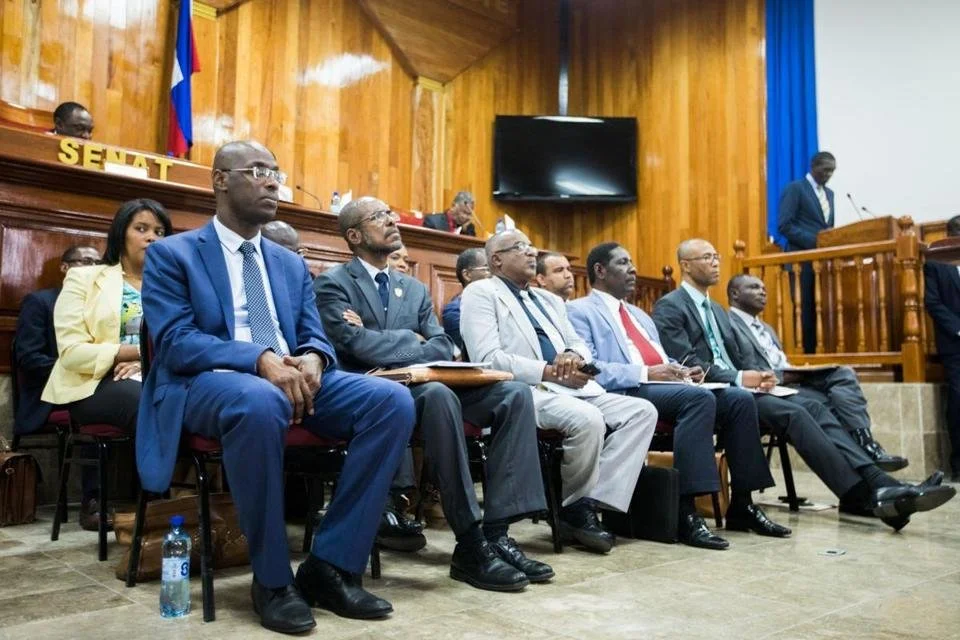
Haiti should relinquish its sovereignty
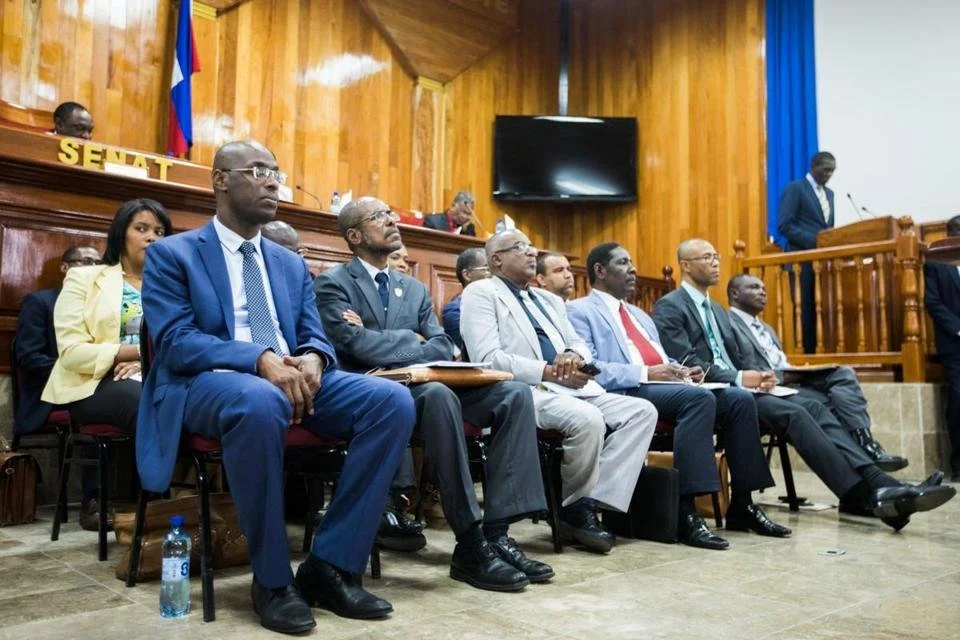
I moved back to my native Quebec from Port-au-Prince not long before Haiti adopted its constitution 30 years ago. Since then, Haitians have failed to build the democracy they envisioned for their new era of constitutionalism. Military rule, a legacy of colonial devastation, natural disasters and two coups — one engineered by the United States — certainly have not helped.The truth is that the constitution has not made much of a difference because the country needs a far more dramatic intervention. Nearly every part of everyday life is worse now than it was then. Conditions are so unspeakably awful that some find themselves recalling with misplaced affection the days of the Duvalier dictatorship.
The problem rests not with the Haitian people but with their leaders. This year on the occasion of the constitution’s 30th anniversary, the Chamber of Deputies launched nationwide public consultations on how to amend the Haitian Constitution to rebuild faith in the country’s corrupt public institutions.Yet there is little reason to believe that constitutional amendments will do anything to give Haiti and its long-suffering citizens what they need most: political leaders inspired by an ethic of public service, not driven by narrow self-interest. History has proven that the political class has neither incentive nor interest to put the country first.This moment nonetheless offers an opportunity to transform Haiti for the better. Instead of settling for mere tinkering with their constitution, Haitians should demand an altogether new one that can help to finally bring the peace and prosperity they have lacked for over 200 years of independence since driving away their French slavers in 1804.The new Haitian Constitution should do something virtually unprecedented: renounce the power of self-governance and assign it for a term of years, say 50, to a country that can be trusted to act in Haiti’s long-term interests.Why would a country accept this multigenerational commitment? The optics alone of a majority-white country running Haiti — even if in Haiti’s best interests — revive ghosts of the distant but never-forgotten past of slavery.
The choice of sponsor is delicate, and the list is short. Despite the hundreds of thousands of Haitians who live in New York City, Miami, and Boston, the United States has ruined nearly everything it has touched in the land once called the “pearl of the Antilles.” France and the United Kingdom are likewise nonstarters. Brazil and South Africa are possibilities, though both are now preoccupied with their own political crises. And the United Nations in Haiti? It has been a disaster.The answer may be Canada, for years one of Haiti’s most loyal friends and foreign aid donors — and today one of the most popular destinations for the diaspora. Canadians today yearn for real influence in the world, and there may be no better way than building Haiti anew drawing from Canada’s values of equality, diversity, and compassion, and its unique expertise in humanitarian assistance. Prime Minister Justin Trudeau is still looking for a major foreign policy achievement since his election in 2015, and this commitment could leave a legacy that would match his father’s own achievements as prime minister.Critics would be right to wonder whether Haiti would remain a country in the conventional sense of the term. We live in a post-Westphalian world, but the organizing logic of countries today remains rooted in traditional understandings of the nation-state. We hold sometimes too strongly to the idea that a country is sovereign — all-powerful within its jurisdiction and an independent actor beyond its borders — to fully appreciate that external pressures are not only a reality of our global order but often also a force for good.Haiti would not be alone in surrendering an important marker of national sovereignty in the pursuit of larger objectives, in this case the most basic ones of all: improving the quality of life of its people and building a modern infrastructure for the country. Other countries have on occasion willingly forfeited some measure of their sovereignty to a foreign power. For example, many countries of the Commonwealth Caribbean choose to retain the Judicial Committee of the Privy Council in London as their court of final appeal instead of acceding to the jurisdiction of the homegrown Caribbean Court of Justice. Similarly, roughly 25 countries choose to outsource their monetary policy to the United States. And until 35 years ago, Canada had voluntarily ceded to the United Kingdom the power to amend its own constitution.Difficult times often yield impossible choices, and this would be an extraordinarily difficult decision for Haiti’s political leaders. Yet the greatest gift Haiti’s political class can give their fellow citizens is to give up the power to govern. This ultimate sacrifice would be a triumph of national over individual interests, and it would forever memorialize Haiti’s current leaders as the country’s modern founders.By Richard Albert May 02, 2017
50,000 Haitians face being deported by Trump back to country still reeling from natural disasters
 More than 50,000 Haitians are at risk of being deported to a country still reeling from a series of natural disasters, after Donald Trump’s immigration agency recommended ending their temporary right to live in the US.Up to 55,000 Haitians are living in America under so-called temporary protected status (TPS), initially granted to them after the 2010 earthquake, that killed an estimated 150,000 people.The status has been updated every 18 months, as Haiti has confronted the challenges of a cholera epidemic triggered by UN peacekeepers, a sexual abuse scandal involving those peacekeepers and political uncertainty following the postponing of elections that eventually saw Jovenel Moïse become president.
 But James McCament, acting director of US Citizenship and Immigration Services, has recommended Mr Trump end their starus. He said there should be a temporary, six-month extension to allow a period of “orderly transition” but that people should then return.The revelation, first reported by the Miami Herald, has triggered intense concern among the Haitian community in the US, and their supporters.“Anxiety is extremely high. They are calling me and asking me what they should do,” Emmanuel Depas, a former president of the Haitian American Lawyers Association of New York, told The Independent.“The temporary status is not necessarily a path to a green card, but it gives people the right to work here.”Campaigners said the threat of deportation could result in the splitting up of families, if the parents of children born in the US were forced to leave. Others have questioned whether Haiti, where more than 1,000 people were killed last October by Hurricane Matthew, the most powerful storm to make landfall there since 1964, is able to handle the return of so many people.Hurricane Mathew leaves Haiti orphans homelessNana Brantuo of the Black Alliance for Just Immigration, said: “From what we’ve heard, they are going to terminate this status. Then these people will be undocumented, and likely to be deported.”She added: “As black immigrants, they are in a state of vulnerability.”The decision on whether or not to end the Haitians’ temporary protected status falls to with Secretary of Homeland Security Secretary, John Kelly. His department said in a statement: "Secretary Kelly hasn't yet made a decision and we don't discuss pre-decisional documents."In his letter to Mr Kelly, Mr McCament said a review of the situation in Haiti led his organisation to conclude the conditions “no longer support its designation for TPS”.“Although Hurricane Matthew recently caused a deterioration of conditions in Haiti’s south-west peninsula, overall conditions in the country have continued on an upward trajectory since the 2010 earthquake,” he wrote.
 Jovenel Moïse was elected Haiti's president last November (AP)“The institutional capacity of Haitian government to respond to the lingering effects of the earthquake remain weak, but the US government is actively working to strengthen the Haitian civil service and government service delivery.”Haiti is the poorest country in the Western Hemisphere, with an average per capita annual income of about $1,700 (£1,365). Educational and medical facilities are inadequate and overburdened. Around 3.2m people - approximately 30 per cent of the population - suffer from food insecurity.The US, the regional power, has long interfered politically in the country, less than a two-hour flight from its coastline. In 1991, the first democratically elected president, Jean Bertrand Aristide, was ousted in a coup backed by the CIA. He was returned, under a deal brokered by Bill Clinton, only to be forced into exile again in 2004, with his opponents once more receiving the backing of elements in Washington.In recent years, UN peacekeepers have been accused of indiscriminate killing of civilians. In the aftermath of the earthquake, UN peacekeepers from Nepal were almost certainly responsible for an outbreak of cholera that killed at least 10,000 people and made more than 700,000 ill.Indeed, Mr McCament’s letter pointed out the country is still facing problems in housing, health, the economy, sanitation services, gender-based violence and overall security.“Haiti is the poorest country in the hemisphere and it had enormous problems before the 2010 earthquake,” he wrote. “Even before the earthquake, the Haitian government could not, or would not, deliver core functions to the majority of its people.”Reaction to the proposal to end the TPS has met with criticism from both Republicans and Democrats.“Haiti is still struggling to recover from two major natural disasters that killed more than 200,000 people. Haiti is one of the poorest countries in the world and right now it’s unable to support the roughly 50,000 Haitians that are currently receiving protected status here in the US,” said Democratic senator Bill Nelson of Florida. “The US should be focused on helping Haiti recover, not sending people back to a country that can’t support them.”Republican senator Marco Rubio, also from Florida, was among a bipartisan group that has written to Mr Kelly urging him to extend TPS.By: Andrew Buncombe for independent.co.uk| May 1, 2017

First international medical training center in Haiti!

 Chargé d'Affaires Brian Shukan joined St. Luke's Foundation, the Haitian Ministry of Health, and the United States Agency for International Development (USAID) to inaugurate the first international medical training center in Haiti.The training center consists of two training and simulation rooms, a conference room, and an administrative meeting room. "This state-of-the-art medical training center will ensure that St. Luke staff and the greater Haitian medical community have a base to build and hone the most current skills they need to continue their vital work," said Shukan.The construction was supported by a $500,000 grant from USAID's Office of American Schools and Hospitals Abroad (ASHA), and the facility will host its first international conference, "The Haitian Acute Care and Emergency Care Conference" on April 28 and 29."Continuing Medical Education (CME) is a guarantee of quality in healthcare," said St. Luke Mission medical director, Dr. Marc Edson Augustin. "The conference will be the first of many such experiences at St. Luke's new training center, furthering our primary goal of bringing quality and dignified care to the most vulnerable."USAID/ASHA grants support the construction and purchase of equipment for medical institutions in Haiti. Additional recipients of ASHA grants include St. Boniface Haiti Foundation; Catholic Relief Services for equipment at Hospital St. Francois de Sales; Albert Schweitzer Hospital; and the International Child Care's training center and inpatient child care unit. Since 1979, ASHA grants have provided over $21 million in support to projects in Haiti.HL/ HaitiLibre HaitiVille
Haiti's new president taps medical doctor to be the country's new prime minister!
 PORT-AU-PRINCE - A relatively unknown medical doctor was tapped to be Haiti’s new prime minister, tasked with steering the government’s legislative agenda through parliament, President Jovenel Moise said late Wednesday.The choice of Jack Guy Lafontant as prime minister of the impoverished Caribbean country came two weeks after Moise took power as president.If parliament confirms Lafontant, perhaps best known as the president of the Rotary Club in the upscale district of Petionville, and allows him to choose other ministers, it would mark the country’s first elected government in a year.Moise announced the surprise pick on Twitter and noted that he consulted with the heads of both chambers of parliament on the selection. Moise did not indicate why he had chosen Lafontant. The two men are believed to be friends, according to local media.Haiti has been headed by a caretaker government since Michel Martelly, the last elected president and Moise’s political benefactor, stepped down early last year without a designated successor.Source: http://www.nydailynews.com/news/world
UN votes to end Haiti peacekeeping mission in October
![The 13-year UN mission began when violence erupted after president Jean-Bertrand Aristide's departure [Andres Martinez Casares/Reuters]](http://www.aljazeera.com/mritems/imagecache/mbdxxlarge/mritems/Images/2017/4/13/8a35e424c67040e0b2f3db1205c46a64_18.jpg) The UN Security Council voted unanimously on Thursday to end its 13-year-long peacekeeping mission in Haiti and replace it with a smaller police.The move signals the international community believes the impoverished Caribbean nation is stabilising after successful elections.The peacekeeping mission - one of the longest-running in the world and known as MINUSTAH - has been dogged by controversy, including the introduction of cholera to the island by UN troops that killed thousands of Haitians, as well as sexual abuse claims against them.
The UN Security Council voted unanimously on Thursday to end its 13-year-long peacekeeping mission in Haiti and replace it with a smaller police.The move signals the international community believes the impoverished Caribbean nation is stabilising after successful elections.The peacekeeping mission - one of the longest-running in the world and known as MINUSTAH - has been dogged by controversy, including the introduction of cholera to the island by UN troops that killed thousands of Haitians, as well as sexual abuse claims against them.
|
|
The 15-member Security Council acknowledged the completion of Haiti's presidential election, along with the inauguration of its new president, as a "major milestone towards stabilisation" in the Caribbean country."What we now need is a newly configured mission which is focused on the rule of law and human rights in Haiti," British UN Ambassador Matthew Rycroft said."Peacekeepers do fantastic work but they are very expensive and they should be used only when needed," Rycroft said.The shutdown of the $346m mission, recommended by UN chief Antonio Guterres, comes as the United States looks to cut its funding of UN peacekeeping.The US is the largest contributor paying 28.5 percent of the total budget.Al Jazeera's Mike Hanna, reporting from the UN headquarters in New York, said the decision to downsise may be because of American pressure to save money."The US has been demanding that the UN become leaner and meaner in its operation, and has at times threatened to withhold some of the massive funding that it gives the organisation," Hanna said.There are 2,342 UN troops in Haiti, who will withdraw over the coming six months.The new mission will be established for an initial six months, from October 16, 2017 to April 15, 2018, and is projected to exit two years after its establishment. It will be a police force of about 1,000 personnel.
|
|
UN peacekeepers were deployed to Haiti in 2004 when an uprising led to the ouster and exile of then-president Jean-Bertrand Aristide. It is the only UN peacekeeping mission in the Americas.Haiti suffered a two-year political crisis until the recent election and inauguration of President Jovenel Moise. It has suffered major natural disasters, including an earthquake in 2010 and Hurricane Matthew last year.But the impoverished Caribbean country has not had an armed conflict in years.UN peacekeepers have been accused of sexual abuse and blamed for the cholera outbreak. Haiti was free of cholera until 2010, when peacekeepers dumped infected sewage into a river.The UN does not accept legal responsibility for the outbreak of the disease, which causes uncontrollable diarrhea. Some 9,300 people have died and more than 800,000 sickened.In late March, the council reduced the size of its peacekeeping mission in the Democratic Republic of Congo, bringing the ceiling down from 19,815 troops to 16,215.Missions in Liberia and Ivory Coast are also set to end, while the joint UN-African Union peace operation in Sudan's Darfur region is also expected to be drawn down.http://www.aljazeera.com/news/2017/04/votes-haiti-peacekeeping-mission-october-170413162903710.html
Haiti - Economy : 14,4% inflation forecast for January

| In the first month of fiscal year 2016-2017, annual inflation, measured by the change in the Consumer Price Index, was 13.3% after reaching 12.5% at the end of the fiscal year 2015-2016. In October 2016, monthly inflation increased by 1.8% http://www.haitilibre.com/en/news-19385-haiti-economy-inflation-continues-to-rise-at-double-digits.html against + 1.3% the previous month. |
The increase in inflation in monthly variation is mainly attributable to the decrease in the supply of food products, the increase in food prices on the international market and the continued depreciation of the gourde in October 2016.Following of passage of Hurricane Matthew, more than 90% of food crops and fruit trees in the South, Southeast and Grande Anse were devastated. This had the immediate consequence of reducing the available food supply. Indeed, in October, the item "Food, drink and tobacco" rose by 2.1%, up 1.4 percentage points from the previous month. Note that the contribution of this item to monthly inflation, which had reached 27.73% in September 2016, rose to 62.91% in October 2016. Given its strong weighting in the general price index, the "Food, Beverages and Tobacco" function strongly influenced price developments in October 2016.At the same time, on the international market, the FAO Food Price Index rose by 0.7% in October 2016, averaging 172.6 points compared to 171.4 points the previous month. The increase in the FAO index is mainly due to higher prices for cereal products, which rose by 1.4 percentage points compared with the month of September 2016. The evolution of food prices on the international market is likely to amplify inflationary pressures via the increase in the import bill of these goods in a context of weak local food availability.In addition, the month of October 2016 was characterized by a continuous evolution of the depreciation of the gourde. At the end of October the exchange rate was 66.3278 gourdes for one US dollar against 65.5368 gourdes for one dollar the previous month. Consequently, the gourde experienced a depreciation of 1.21% against 1% the previous month. This change in the exchange rate thus influenced the rate of increase in prices in the Haitian economy during the month of October 2016.Inflation forecasts :According to forecasts by the Bank of the Republic of Haiti (BRH), inflation will fluctuate over the next three months in monthly terms, while year-on-year inflationary pressures are expected to continue. Considered on an annual basis, the IPC will show a rate of 13.9%, 14% and 14.4% for the months of November 2016, December 2016 and January 2017. On a monthly basis, Rate of +1.3%, +1.1% and +1.4% respectively for the next three months.HaitiVille
Haiti - Results of elections 1/3 senate, complementary legislative...
 The Provisional Electoral Council, in accordance with Article 171.1 of the Electoral Decree of 2 March 2015, publishes the preliminary results of the first round of the third of the Senate, the complementary legislative and the municipal elections for the Commune of Cotes de Fer of 20 November 2016.It should be noted that the elections for the Constituency of Roseaux, in Grand'Anse, will be resumed for the election of the deputy.NOTE: Please note that these are preliminary results and may be subject to change at the end of the challenge period.Results third Senate (1st round) - Preliminary results :North EastWanique Pierre (PHTK) 58.74% is elected in the first roundSouth EastJoseph Lambert (KONA) 53.78% is elected in the first roundWestFednel Monchery (PHTK) 21.74%Pierre Paul Patrice Dumont 18.68%They will go to the second round because there is neither a majority nor an advance over their immediate pursuer equal to or greater than 25%.NorthJean Marie Ralphe Fethiere (PHTK) 35.68%Theodord Saintilus (Pitit Dessalines) 14.04%They will go to the second round because there is neither a majority nor an advance over their immediate pursuer equal to or greater than 25%.CentreRony Celestin (PHTK) 31.73%Abel Descollines (KID) 18.89%They will go to the second round because there is neither a majority nor an advance over their immediate pursuer equal to or greater than 25%.ArtiboniteGarcia Delva (AAA) 28.46%Marc Antoine Aldorphe (Bouclier) 15.63%They will go to the second round because there is neither a majority nor an advance over their immediate pursuer equal to or greater than 25%.SouthPierre François Sildor (PHTK) 25.51%Fritz Carlos Lebon (fanmi Lavalas) 25.33%They will go to the second round because there is neither a majority nor an advance over their immediate pursuer equal to or greater than 25%.NippesDenis Cadeau (Bouclier) 21.08%Louberson Vilson (Fanmi Lavalas) 21.03%They will go to the second round because there is neither a majority nor an advance over their immediate pursuer equal to or greater than 25%.Grand AnseRiche Andris (OPL) 30.77%Jean Rigaud Bélizaire (Consortium) 28.46%They will go to the second round because there is neither a majority nor an advance over their immediate pursuer equal to or greater than 25%.North WestKedlaire Augustin (PHTK) 33.62%Francois Lucas Sainvil (MOSANOH) 15.79%They will go to the second round because there is neither a majority nor an advance over their immediate pursuer equal to or greater than 25%.Senate Results complementary legislative(2nd turn) - Preliminary Results :CentreWillot Joseph (PHTK) 38.68% is electedWilfrid Gelin (PHTK) 23.77% is electedGrand'AnseGuy Philippe (Consortium) 35.46% is electedSorel Jacinthe (Inite Patriyotik) 29.64% is electedNorthDieudonne Etienne Luma (PHTK) 34.94% is electedNawoon Marcellus (BOUCLIER) 31.21% is electedResults Deputy complementary legislative (2nd turn) - Preliminary results :Saint Marc (Artibonite), Samuel d'Haiti (KONA) 61.47% is electedVerrettes (Artibonite), Gerard Paul Lormeus (PLATfÒM LEVE KANPE) 58.20% is electedCôte-de-Fer (Sud Est), Roudy Devil (OPL) 64.00% is electedCabaret (Ouest), Joseph Manes Louis (Fanmi Lavalas) is electedArchaie (Ouest), Pieere Fequiere Julien (CANAAN) 56.79% is electedCornillon (Ouest), Raymonde Rival (APLA) 55.10% is electedCité Soleil (Ouest), Lemaire Pierre 76.54% is electedGressier (Ouest), Joseph Antonio Vericain 56.41% is electedPort-au-Prince 1er (Ouest), Roger Millien (Fanmi Lavalas) 32.84% is electedPort-à-Piment (Sud), Daniel Letang (KID) 52.86% is electedCamp-Perrin/Maniche (Sud), Bertin Augustin (VERITE) 66.53% is electedJérémie (Grand Anse), St Jean Marie Gladice Lundy (BOUCLIER) is electedPlaisance (Nord), Audne Alcide (VERITE) 52.22% is electedMarigot (Sud), Dieudonne Lherisson (PHTK) is electedMôle Saint-Nicolas (Nord Ouest), Yves Dupras (VERITE) 58.52% is electedPort Margot (Nord), Philome Hilaire Fanfan (PHTK) 51.87% is electedDondon (Nord), Hermogene Daniel (FUSION) 54.58% is electedSaint Raphael (Nord), Jean-Wilfrid Borgella (PHTK) 59.09% is electedAcul du Nord (Nord), Rodney Charles (Pitiy Dessalines) 53.76% is electedGrande Rivière du Nord/Bahon, Jacques Julmioce (VERITE) 55.27% is electedBoucan Carre (Centre), Jude Jean (PHTK) 53.15% is electedSavanette/quartier Baptiste (Centre), Guerda Bellevue Benjamin Alexandre (APLA) 51.92% is electedDesdunes (Artibonite), Baudelaire Noelsaint (OPL) 57.68% is electedPetite Rivière de l'Artibonite (Artibonite), Prophane Victor (BOUCLIER) 54.20% is elected.Municipal elections Côtes-de-Fer (2nd turn) - Preliminary results :Côtes-de-Fer (South East), Francoeur Dalexis (OPL) 44.34% is elected HaitiVille

Breaking News: Politics In Haiti...

 New CIMO Commander On Friday, Commissioner Vladimir Cherubin was installed as the new Commander of the Corps of Intervention of the Preservation of the Order (CIMO). He replaces Commissioner Jean Louis Paul Ménard who has just been transferred to the Central Administration of the Administrative Police.Convocation to the SenateFor Sen. Jean Renel Sénatus, Chairman of the Senate Justice and Security Committee, the proliferation of demonstrations by those responsible and sympathizers of Famni Lavalas are only disorder and violence, stressing that these demonstrations are organized on the margins of the law without being notified to the Police and sow fear in the population."[...] I learned that there was a meeting in the metropolitan area of Port-au-Prince to plan attacks against private companies." He announced that his Commission convened the Minister of Justice and Public Security and the Director General of the National Police on Wednesday. "It is necessary that the Government Commissioner and the Director General of the PNH arrest these perpetrators [...] It is not normal for people to think about how to burn private property."Martelly was in CubaA delegation composed of former President Michel Martelly, accompanied by former First Lady Sophia Martelly and former Prime Minister Evans Paul left the country on Saturday, December 3, 2016, to participate in the funeral ceremonies of Commander Fidel Castro in Santiago de Cuba. This delegation returned in Haïti yesterday Sunday.Privert returned from CubaReturning to the country after his participation in the funeral of Cuban Revolutionary Leader Fidel Castro, de facto President of the Republic, Jocelerme Privert, accompanied by First Lady Ginette Michaud Privert and members of the government, gave a short Press briefing at the international airport of Toussaint Louverture International Airport on Sunday, December 4, 2016. The opportunity for the Head of State to renew his sympathies, on behalf of the Haitian government and people, the Cuban people and the family of this orld-wide genius who was nicknamed El Commandante. He took the opportunity to salute the frank collaboration between Haiti and Cuba.Training on International Human Rights LawThis Tuesday morning will open a Training Session in International Human Rights Law, to the School of Magistrature, in Frères, in the presence of Representatives of the European Union, the Embassy of France and the René Cassin Foundation; This training course for lawyers, magistrates and members of human rights organizations will be provided by professors from the René Cassin Foundation of Strasbourg. The Central Theme will be "International Law of Human Rights, with emphasis on the issue of Statelessness."HaitiVille
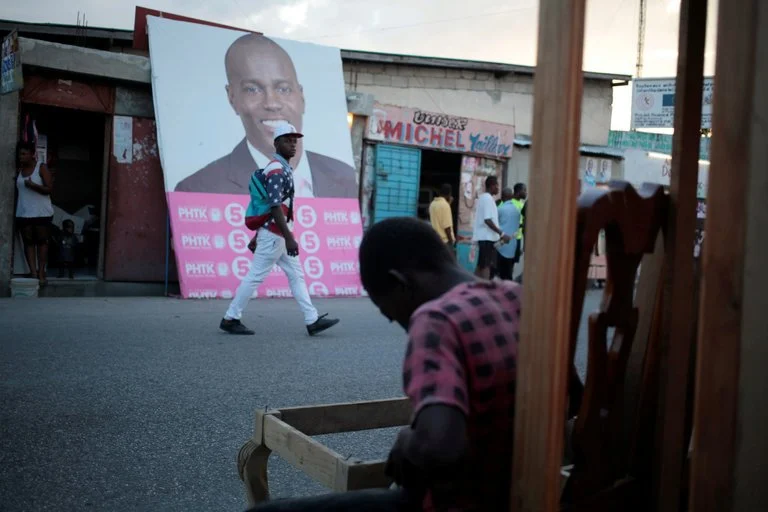
President-Elect Jovenel Moïse of Haiti Vows to Create Plan to Channel Aid
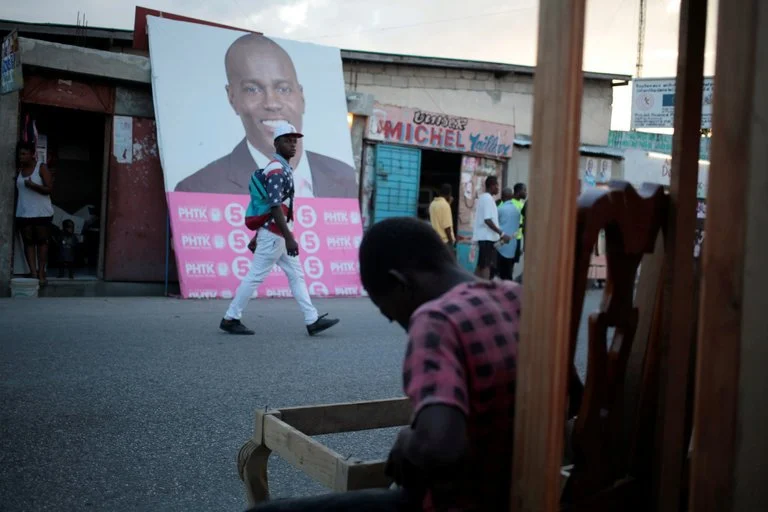

MIAMI — He’s often called the Banana Man, because he exports produce. Now, he will be known by another title: president of Haiti.
Jovenel Moïse, 48, rose from obscurity to win the country’s presidential elections this week, after a nearly two-year electoral process marred by allegations of fraud, delays, natural disasters and a staggeringly low voter turnout.
“I have had 20 months of campaigning,” Mr. Moïse said in a telephone interview on Wednesday. “I am really ready.”
He received 55 percent of the vote in a field of 27 candidates, Haiti’s electoral council said on Monday night. But three of his opponents are vowing to contest the results, which will not be verified until late December.
It will fall to Mr. Moïse to heal and govern a bitterly divided nation that is still struggling to rebuild after the 2010 earthquake, and that wasbattered again this year by a catastrophic hurricane.
At first, many Haitians viewed Mr. Moïse guardedly; he was formerPresident Michel Martelly’s handpicked successor, and few people had heard of him.
Mr. Moïse won the first round of the election in October 2015. Although international agencies said the elections were clean, the second round was delayed after losing candidates complained of widespread fraud, including large amounts of repeat voting by election monitors tied to various political parties.
The runoff was delayed several times, and a commission eventually decided that the election process should start over. With Mr. Moïse’s benefactor, Mr. Martelly, out of office and a provisional government in place for nearly a year, only about 21 percent of the electorate, in a country of 11 million, ended up casting ballots on Nov. 20.
Mr. Moïse insisted that he was ready for the challenges that lay ahead — and to dispel the notion that he was Mr. Martelly’s “puppet.”
“It is a good privilege for me to have a former president I can talk to about his success, and his problems also,” Mr. Moïse said. “For example, this morning I called him, because I needed some advice about something. But you know, I am 100 percent Jovenel Moïse.”
Mr. Moïse said that among his first priorities, in addition to addressing corruption and climate change, would be to modernize and revive agriculture, with the aim of establishing a viable organic food industry. If that can be accomplished, he argued, more Haitians may be able to find work in their own country, instead of immigrating to the Dominican Republic or the United States.
He added that he would create a master plan under which all aid groups and foreign governments would have to operate their development projects.
“We don’t just want the help. I want to see results,” Mr. Moïse said. “If they want to spend money, we are open to that, but we will show you exactly where to spend this.”
Many aid groups have been criticized for shutting the Haitian government out of decision-making. Haiti, Mr. Moïse said, needs to stop just receiving handouts. “We want to show the world Haiti can endure,” he said.
In an interview this year, Mr. Moïse shrugged off the notion that he was a virtual unknown before entering the presidential race, noting that he had been president of the chamber of commerce in the country’s northwestern region for eight years. He grew up on a large sugar plantation, he said, adding that he could relate to a vast majority of Haitians who live off the land.
A father of three, he was raised in a rural area in the north but attended school in the capital, Port-au-Prince. He said he had learned the keys to success by observing his father’s profitable farming business.
He runs a large produce cooperative that employs 3,000 farmers.
“Since I was a child, I was always wondering why people were living in such conditions while enormous lands were empty,” he said in January. “I believe agriculture is the key to change for this country.”
Mr. Moïse’s adviser, Damian Merlo, acknowledged that widespread voter apathy had led to the paltry turnout, but he said that Mr. Moïse’s margin of victory was so wide that it should be considered a mandate.
Jake Johnston, a research associate for the Center for Economic and Policy Research in Washington, observed the Nov. 20 elections and said that he had generally been impressed with how much the process had improved over the past year.
In 2000, nearly 70 percent of voters cast ballots; just over 20 percent did this time.
“What caused that break and how to fix it is a big question for all political leaders,” Mr. Johnston said.
Some of the electoral council members refused to sign the preliminary results, arguing that more clarification was needed regarding the complaints filed by losing candidates.
Jude Célestin, who came in second with 19 percent of the vote, lodged a complaint even before the results were announced, contending that unsigned votes had been accepted. Maryse Narcisse, who came in fourth with just under 9 percent, called it “an electoral coup.”
The Haiti Democracy Project, a Washington-based organization that monitored the elections, said its sample tally matched the electoral council’s results. It noted that the gap between the first- and second-place winners was so big that it would have taken enormous fraud to pull it off.
“They are obviously fishing for some issue on which to challenge the results,” said James Morrell, the group’s executive director.
The election delays helped Mr. Moïse, Mr. Johnston said, because he was able to establish name recognition by campaigning on his own, without being seen as Mr. Martelly’s surrogate.
Mr. Moïse agreed. “Jovenel is his own man,” he said.
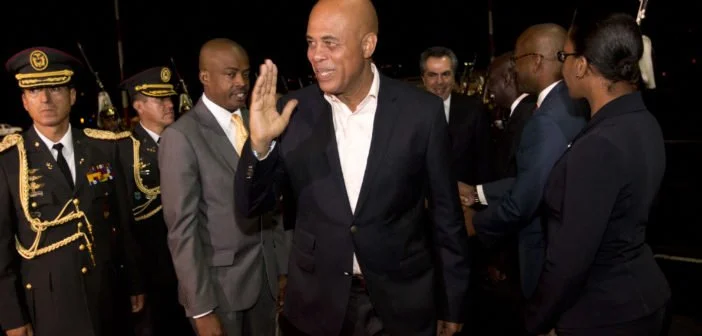
Many challenges ahead for Haiti’s new president...
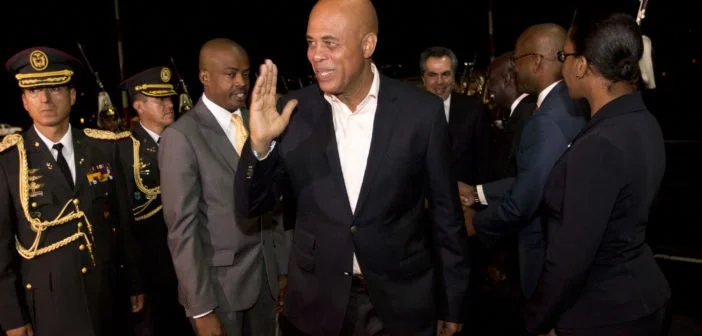
 Haiti's former President Michel Martelly, who hand-picked the winner of this week's election, Jovenel Moïse.Haiti’s newly elected president, Jovenel Moïse, faces enormous challenges in rebuilding a broken and deeply divided country, beginning with a legal challenge to the election results by his opponents.Moïse, a former banana exporter, also won the presidential election in October 2015, but that result was annulled amid allegations of fraud. This time around, he won 55.6 percent of the votes in the Nov. 20 election, beating 26 other rivals, according to provisional results released by the election council on Monday“The Haitian people have made their choice and elected me as early as the first round,” Moïsewrote on his Facebook page. “Now, in the spirit of gathering, I invite you, dear countrymen, to borrow with me the way of endogenous development for a Haiti at the height of its historical performance and its legitimate ambitions.”Under Haiti’s election rules, Moïse – who ran as the candidate of former President Michel Martelly’s Tet Kale party – won with a large enough margin to secure his victory without a second round. The final results will be handed over to the country’s electoral tribunal, where other parties say they will appeal the outcome, before a winner is certified on Dec. 29.Some experts say Moïse has already started his presidency – if the results stand – on the wrong foot. Political analyst Fritz Dorvilier, who teaches sociology at the State University of Haiti in Port-au-Prince, told the Miami Herald that the president-elect may have made a grave mistake in skipping the second round of elections. Doing so may have helped lower tensions, he said, or at least been the “politically correct” thing to do.
RELATED Cholera in Haiti: WHO considers using half doses to vaccinate more people
Instead, the elected president is now faced with an additional challenge: uniting an opposition deeply divided by anger and distrust. Violent protests have already erupted across the country among supporters of the opposition parties, many of whom called the vote an “electoral coup” and are demanding yet another redo of the election.Haiti faces enormous challenges, from its failed health and sanitation systems to its crumbling infrastructure. This year, months of doctor strikes paralyzed state hospitals, leading to countless deaths. Haiti is also ill prepared for natural catastrophes, an ongoing problem recently brought back into the spotlight in the grim aftermath of last month’s Category 4 Hurricane Matthew.Perpetuating these problems is the devastating poverty in Haiti, which has driven hundreds of thousands of Haitians on perilous journeys through Latin America and the U.S. in search of better, if not just decent, living conditions.Martelly, who hand-picked Moïse as a candidate, has been widely criticized for failing to adequately address these issues. Martelly, a former carnival singer, pledged to rebuild the western hemisphere’s poorest country from the ruins of its 2010 earthquake, but earned a reputation for indecision and populist authoritarianism. Martelly also did little, if anything, to uphold his promises for parliamentary elections and other basic democratic policies.Throughout his campaign, Moïse made promises to improve the quality of education, create jobs in the agricultural sector and make Haiti an exporting country after decades of absence.Still, some experts say it is not yet clear how Moïse intends to undertake the massive task of rebuilding Haiti, or where his priorities lie in distributing international aid. As of now, Moïse’s program still seems rather broadly defined, said Robert Maguire, a Haiti expert and international affairs professor at George Washington University, but international actors will likely have a lot to say in shaping it.“Certainly, in that regard, M. Moïse will continue to say that ‘Haiti is open for business’,” he said in an email to Humanosphere.
New President ALERT! Jovenel Moise "Neg Bannan'n nan"
 Businessman Moise wins Haiti election in first round!
Born: June 26, 1968 (age 48), Trou-du-Nord
Spouse: Martine Marie Etienne Joseph(m. 1996)
Education: Quisqueya University
Parents: Lucia Bruno
Party: Haitian Tèt Kale Party
Moise won 55.67 percent of the vote in the November 20th election.His closest rival, Jude Celestin, polled 19.52 percent.12 percent of the voting slips were set aside because of irregularities and were not included in the count, the council said.
Who is Moise Jovenel?
He was the chosen successor to former President Michel Martelly, a singer.A political unknown before last year, Moise also came first in the October 2015 vote.The result triggered protests and claims of fraud from opponents.The 48-year-old is a successful businessman, running a banana export company he sees as a model for rural development.As president, his task will be to revive Haiti’s economy and rebuild that country as it recovers from a devastating earthquake in 2010, as well as Hurricane Matthew.
Haiti & China sign 2 donation contracts for $150,000+
  |
On Thursday November 10th 2016, as a part of the Program "Assistance in the form of Donations to Local Micro-Projects Contributing to Human Security" (APL) two donation contracts were signed between Mr. Yoshiaki Hatta, the Ambassador of Japan to Haiti and representatives of two beneficiary local organizations : "Union of Peasants for the Development of Source Sable Santo and its Surroundings" (UPDSSE) and "Organization Youth and Peasants for the Advancement of the Center" (OJPSAC).UPDSSE received an amount of US $ 80,836 for its improvement project of the BERACA Community Health Center in Thomazeau, whose objective is to strengthen the capacity of this Center which provides health care to more than 10,000 inhabitants from neighboring areas.OJPSAC benefited from US $ 76,789 for its project to develop the VIAH Community School in Sarrazin, which will enable the construction of 6 classrooms, a sanitary block and the installation of School facilities (tables, chairs and blackboards) to enable more than 230 pupils to benefit from quality education in an appropriate environment.11/16/2016