





Ruling interests often saw it as a threat. It wasn’t just the French slave masters, who condemned practitioners to the whip and branding iron, and priests to death, as they sought to put down slave rebellions. The black military leaders and elites who led Haiti after they ejected the French in late 1803 also tried to suppress the faith, mandating imprisonment and fines for participating in Vodou ceremonies and working at times with the Catholic Church to eradicate “superstition.” As historian Kate Ramsey has written, these leaders felt they had to “assert Haiti’s ‘civilization’ and ‘progress’ in the face of the republic’s diplomatic isolation and exclusion following independence.”This sense of Vodou as a primitive practice also shaped American impressions of Haiti. The U.S. military occupied the country from 1915 to 1934, during a formative period in the U.S. empire-building in Latin America and Asia. Marines who served on the island, and journalists who covered them, returned with lurid tales of what they called “voodoo” and characterized as black magic. Pop-culture distortions, in both books and films, weren’t far behind. In 1932, the year after Bela Lugosi starred in Dracula, he played an evil sorcerer in Haiti named “Murder” Legendre in White Zombie.

Poule an sauce (Chicken and gravy)
 Ingredients:1 lbs of chicken1/2 onion (sliced)1/2 green pepper (sliced)1 tablespoon of Lowry seasoning salt1 tablespoon of butter1 habanero pepper1/2 chicken bouillon cube3 cups of chicken broth1 tablespoon of pepper2 tablespoon of epis3 limes (sliced in half and juice)3 1/2 cups of boiling hot water8x8 baking dishaluminum foil1/2 cup olive oil1 garlic (crush)1 tablespoon of tomato paste1 tablespoon of flour Directions:Clean chicken and remove any access fat, rub each individual chicken pieces with limes. Discard limes and drown in hot water for 30 seconds. Rinse with cool water and place chicken in a medium sized bowl. Add lime juice, epis, bouillon cube, salt and pepper. Mix thoroughly with hands, cover with saran wrap and let marinade in refrigerator for 1 to 24 hours.Preheat oven to 415 degrees. Completely cover baking dish with aluminum foil (TIP: this makes it easier for cleaning), drizzle with 1/4 cup of oil and place chicken pieces inside dish then in pour marinade. Place in oven and turn the meat over once it has achieved a golden brown color. Once golden brown on both sides remove from oven. In a preheated saucepan on medium heat and add remaining oil and fry crushed garlic and tomato paste for 2 minutes, pour in 1/4 cup of chicken broth and add flour. Make sure flour and tomato paste has completely dissolved and then add remainder of chicken broth, habanero pepper, green pepper, chicken and remaining sauce from baking pan. Let cook for 5 minutes, add onions, pepper and stir in butter. Lower temperature and cook until onions are clear.
Organization Pushes For Sustainable Solutions To Cholera, Typhoid
In the wake of the damaged caused by Hurricane Matthew in Haiti, Marie-Yolaine Eusebe is taking the long view of aid work. Not that she is working with any less haste than other organizations, but the CEO and FireStarter of Community2Community (C2C) looks at the underlying causes of some of Haiti’s most pressing needs after the storm.“This isn’t an issue of a hurricane,” Eusebe said. “This is an issue of the lack of proper infrastructure.”The damage of Hurricane Matthew is still being calculated, with the Directorate of Civil Protection of Haiti confirming 546 deaths. Another 2.1 million people were affected by the hurricane, along with 36 destroyed health facilities. But the lack of proper infrastructures made the damage and resulting emergency need even worse, Eusebe said. For example, mudslides are less likely if structures are built to code.Also, “If there’s clean water, there’s sanitation,” Eusebe said. “These are the things that decrease the rate of typhoid and cholera.”Stopping the spread of disease is one of the most pressing issues in the country after the hurricane. As of Oct. 25, PANO/WHO estimated 3,423 suspected cholera cases. Cholera is a virus, spread by contaminated water, that severely dehydrates those with the disease. Haiti’s Ministry of Health announced a vaccination campaign starting Nov. 8 to bring 1 million oral vaccines to areas affected by cholera.Research tied the arrival of typhoid in Haiti to United Nations aid workers arriving from Nepal. The strain of the disease in Haiti originated in Southeast Asia and was first spread throughout Caribbean country from a UN camp in the upper Artibonite River valley after the 2010 earthquake. According to the United Nations, 9,145 people have died from cholera since 2010, with more than 779,000 suspected cases.Typhoid fever is also spread by contaminated water, as well as food, and severe cases can lead to death. The disease shares many risk factors with cholera, which is why organizations are concerned about its possible rise in Haiti.The damage caused by Hurricane Matthew allowed cholera, and possibly typhoid, to spread at a faster rate. Haitians were walking through the contaminated water in the street because they had no other choice. Bottled water was available, but some residents who could not afford the bottles were left trying to purify the water, Eusebe said.While this process that does not always kill off all diseases, often residents had no other choice in order to survive, Eusebe said. “Water is a non-negotiable item.”C2C, a nonprofit focused on Haitian development, has been working on access to clean water with two communities in Petit-Goâve–a mountainside community of around 16,000 people and a city neighborhood of about 70 families–since 2010. The group partnered with indigenous leadership to build a captage for collecting groundwater and reservoir.The group is focusing on repairing its water distribution system, as well as a destroyed school, in Petit-Goâve. A needs assessment from those two groups said the hurricane destroyed 40 homes and damaged 140, destroyed two schools and damaged two more, killed 1,621 animals and destroyed 74 acres of garden. None of the captages were destroyed, but 10 were damaged. C2C is raising $645,000 to address the most pressing needs, but maintain its sustainability goals, Eusebe said.C2C is partnering with the International Black Women’s Public Policy Institute to provide immediate relief for Haitians in the form of boots. The policy organization collected more than 200 pairs of work and rain boots in Los Angeles, Perkins said. C2C will deliver 100 of them to their partners in Haiti on November 13.Barbara Perkins, president and co-founder, became involved in Haiti after seeing C2C’s long-term impact on the country. IBWPPI was working on the boot collection before Hurricane Matthew because proper footwear allows men, women and children to work in a variety of conditions and seasons. The boots also protect people if they have to walk in contaminated water, which is now a pressing need in Haiti.IBWPPI will begin advocating policy changes to make boots part of the emergency relief checklist, Perkins said.“If our cities, our counties and our state are going to help in a disaster, let’s make sure boots are on that list,” she said. “It’s not just charity because it lets everyone work and help themselves, too.”Perkins said her organization will continue to help Haiti by focusing on economic security and education.Eusebe said her efforts this year focus on how to prepare Haitians for the next hurricane. International organizations cannot be doing relief every year, she said, because it is not a sustainable system.“The relief and charity narrative have not worked,” Eusebe said, which is why she advocates for investment in long-term infrastructure solutions and support for indigenous leadership.“These are the things that are going to help the community move out of this relief narrative,” she said “We need to move out of relief to relieved.”

$5M for the future CRH National Blood Transfusion Center
On Tuesday, the National Society of the Haitian Red Cross laid the foundation stone for the reconstruction of the National Center for Blood Transfusion (CNTS) of the Haitian Red Cross (CRH), which was destroyed during the 2010 earthquake.This new infrastructure, which will include a medical laboratory for specialized analyzes, is currently funded by the American Red Cross for close to $5 million and meets an urgent need for the installation of new physical facilities and equipment to ensure a regular supply of blood products to the Haitian population by the CRH.The ceremony was held at the headquarters of the National Society in Maïs-Gaté which will house the new building. Present for the occasion, alongside the Secretary General of the Federation, Mr Elhadj As Sy, Gthe eneral Councilor of the American Red Cross, David Meltzer, welcomed the commitment of the American Red Cross Sister Society to strengthening the Haitian Red Cross's work and capacity, particularly in the health sector where the organization has already invested $73 million over the 7 years following the earthquake in 2010 to strengthen Haiti's public health system to prevent disease and improve access to quality medical services.In his speech, Dr Guiteau Jean-Pierre, President of the National Society of the Haitian Red Cross, took the opportunity to thank the various partners involved in the implementation of the project, in particular the American Red Cross and the Secretary General Of the Federation who made the trip to testify to the commitment of the movement alongside the Haitian Red Cross.Note that this construction project also benefits from the additional financial contribution of other partners of the Red Cross movement including the Belgian, Japanese and Spanish Red Cross and the Italian Red Cross.HL/ TB/ HaitiLibre 20/07/2017
New Exhibit Chronicles Haiti Films of Two VT Artist-Activists
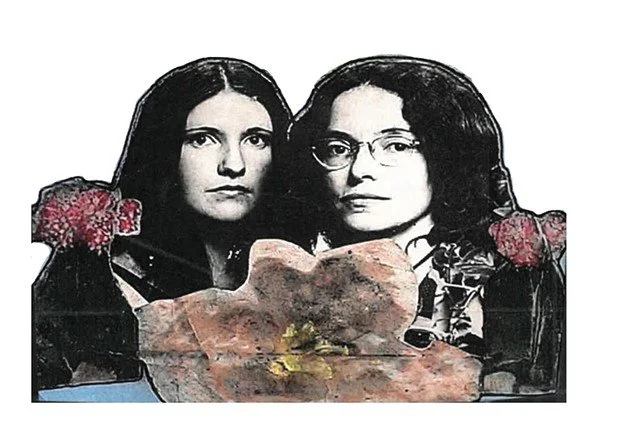
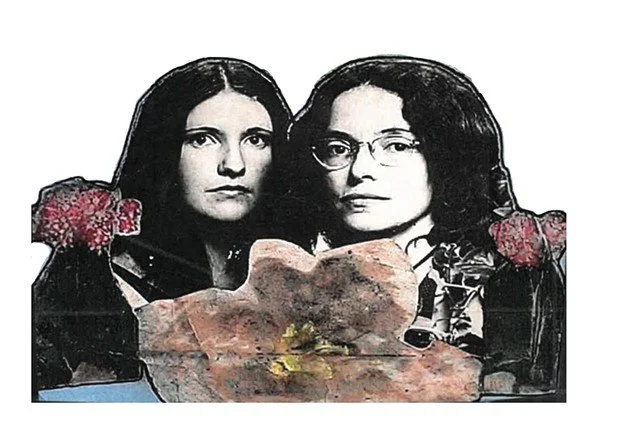
Independent curator Margaret Coleman first met longtime Burlington activist and filmmaker Robin Lloyd in December 2015, when they were seated side by side at a women's dinner hosted by a local artist. Today, Lloyd is perhaps best known for her work with the city's Peace & Justice Center. But as they talked, Coleman realized Lloyd had a rich past in the arts, too, encompassing local history, global activism, the anthropology of religion, experimental film and 1970s feminism.
That chance meeting evolved into an exhibition, "'Black Dawn' to 'Medusa': A Retrospective of 1970s Art & Film by Robin Lloyd & Doreen Kraft," curated by Burlington-based Coleman and on view at the Champlain College Art Gallery through September 9.At last Thursday's opening, guests gathered around a borrowed 16mm projector to watch a time-worn print of Kraft and Lloyd's 1978 collaborative work "Black Dawn." The 20-minute short tells, in broad strokes, the story of Haiti's successful struggle for liberation from French rule. Like all stop-motion animations, it is essentially a handmade film. After two trips to Haiti (out of four total together), the artists employed scissors, tweezers and patience to bring to life narrative paintings commissioned from 13 Haitian artists. In a 1977 Burlington Free Press article, Lloyd observed that theirs was "the only animation stand between Boston and Montréal."Artifacts from the film's production hang on the walls surrounding the projection. Among these are several paintings, an original rotoscope drawing from the film's vodou possession scene and a colorful, hand-painted panel depicting the MGM lion by late Burlington artist Kathleen De Simone. ("Vodou" is more commonly spelled "voodoo" in the United States.) "Black Dawn," said Coleman in a recent interview, represents the "crux of [Kraft and Lloyd's] career and collaboration together."The snapshot that she has assembled offers a glimpse into much more than Haitian history. It pays tribute to the personal and political creative work of two women who have become pillars of the Burlington community: Kraft as the longtime director of Burlington City Arts and Lloyd as an untiring activist and founding member of the Peace & Justice Center."Both women are such strong leaders in the community," Coleman said. "The show [and] their work in the early 1970s point to the path that they ended up following in their involvement [with] and commitment to the community."In her show, artworks used in the making of "Black Dawn" are accompanied by a selection of looping experimental shorts and a series of handmade fliers for community screenings. Offerings ran the gamut, from the multiday Take the Bull by the Horns women's film festival to Jean Cocteau's The Blood of a Poet.Admission generally ran from a suggested donation of 75 cents to $2.Kraft and Lloyd first met in the early '70s, when they worked as high school art teachers in the Rochester, Vt., area. They lived as roommates for a winter at Wing Farm, a property owned by Lloyd's family. In a recent interview, the pair recalled organizing a collaborative effort to make seasonally themed interpretive banners for a local church, which "may have been a little too pagan for them," Kraft mused.In 1973, the women sought a more urban environment and moved to Burlington. Kraft was 21 years old, Lloyd 35.Exhibition text for "'Black Dawn' to 'Medusa'" declares, "Lloyd and Kraft worked to bring the essence of the feminist art movement to Burlington." In 1974, as part of a group of women artists, they collectively opened the Delighted Eye gallery on Church Street. The space would host the "Vermont Women Group Show," an exhibition that included sculpture by Kraft and Lloyd along with works by 12 other local artists. It was here that the pair debuted their short film "Medusa," an interpretation of polarized female archetypes. Around this time, Kraft and Lloyd's interest in experimental film led them to a fascination with filmmaker Maya Deren (1917-61). In addition to creating celebrated and groundbreaking surrealist works, Deren had traveled to Haiti in the 1940s and '50s to study the dance components of vodou ceremonies. Ultimately, the filmmaker would become entranced by the religion and reportedly possessed by the goddess Erzulie. She recounts her journey in the 1953 volume Divine Horsemen: The Living Gods of Haiti."[Divine Horsemen] was like our bible," Kraft said. She and Lloyd took their first trip to Haiti in 1974. Their resulting 1975 short "Moving Pictures" documented the colorful scenes painted on the "tap-tap" buses in the country's capital, Port-au-Prince.The following year, Kraft and Lloyd returned to the island nation, their trip funded in part by small grants. In one proposal they wrote, "Our contact with Haitians has deepened our interest not only in this historical period [of the revolution], but also in mythological imagination and the collective unconscious, areas explored in our previous films."To provide the artists they would commission with proper materials, Kraft and Lloyd shipped seven hefty boxes of supplies to Haiti — specifically, to the island's American embassy, without permission. Despite the ambassador's scolding, they were later invited back to discuss their film.Fortuitous circumstances found the pair in a vodou temple in the capital's Carrefour neighborhood — in a room dedicated to Erzulie, no less. By night, they attended ceremonies, where they were participant observers but never became possessed. By day, the women wrote in their journals, read Divine Horsemenand wondered, Is this how Maya saw it?, they recalled. "Our hosts thought we were from an obscure order of nuns," reads the filmmakers' statement.Vodou is an integral aspect of the story of Haitian liberation recounted in "Black Dawn." The 1791 uprising that eventually led to independence from the French in 1804 was sparked by a vodou ceremony that took place at Bois Caïman. At the exhibit opening, Kraft quoted the saying that, in Haiti, 90 percent of the population is Catholic and 100 percent is vodoun.Indeed, the filmmakers purport to have used the proliferation of animist beliefs to their advantage. They wrote in their statement, "The involvement of the artists with Vodoun — wherein objects are 'animated' by spiritual forces — made them all the more receptive to the creative concepts of animation that permeate 'Black Dawn.'"Lloyd in particular repeatedly emphasized, both at the opening and during her interview, the significance of the Haitian revolution (and, by extension, of "Black Dawn") as a stark example of enslaved black people successfully overthrowing their white rulers. The film debuted in 1978 as part of the first-ever American survey of Haitian art, held at the Brooklyn Museum. In 1988, it was included in the Smithsonian Institution traveling exhibition "Haiti: The First Black Republic and Its Monuments to Freedom," which toured for more than three years. As an educational film, "Black Dawn" remains the best-selling title of Green Valley Media, a production and distribution company that Kraft and Lloyd founded in 1974.After "Black Dawn," Lloyd went on to make the short documentaries "Haitian Pilgrimage" and "Haiti's Piggy Bank." The latter recounts the destruction of the rural Haitian economy by American economic meddling.In conjunction with "'Black Dawn' to 'Medusa,'" the Champlain College gallery will host a panel discussion titled "Hopes for Haiti" on August 23, led by Saint Michael's College associate dean Moise St. Louis. On September 5, Kraft and Lloyd will offer a dialogue on "Reflections on the Feminist Art of the 1970s.""[Doreen and Robin have] dedicated their lives to art, community and social justice," Coleman said, "and I think this is a nice way to recognize the amazing body of work that they made."You can look at both women and their lives as integral parts of their artwork," she continued. "There's no separation."By RACHEL ELIZABETH JONES

1st edition of the Haiti Bodybuilding Classic competition
Sunday, July 23, at the Hotel Marriott will be held for the first time a friendly bodybuilding competition between Haiti and the Dominican Republic, Haiti Bodybuilding Classic (HBC). This competition is open only to Haitian and Dominican amateur athletes who will be able to participate in the following categories: Bodybuilding (welter, medium and light weight); Men's Physics; Bikini and Bodyfitness.One of the main objectives of this competition is to relaunch the strength training industry in Haiti and to allow the Haitian Federation to better supervise the Haitian athletes. With the support of the International Federation of Bodybuilding (IFBB), HBC organizers hope to eventually host a professional competition in Haiti where Haitian athletes could obtain their professional cards.For its First Edition, HBC will feature athletes from the Haitian diaspora and of course the Haitian pioneers who will come to support the event.Notes for Athletes :This competition will follow the IFBB standards and will be approved by the Federations of Haiti and the Dominican Republic. This competition is reserved only for Haitian and Dominican athletesAthlete Registration: 10 US DollarsRegistration and weight: from 7am to 9am a.m.Opening and competition: from 10.30 amNotes for the public :Sunday at the Marriott Hotel Port-au-Prince from 10:30 amAdmission: 10 US dollars or 650 GourdesVIP entry: 15 US dollars or 1,000 GourdesMusical entertainment during the show: DJ Olse.BF/ HaitiLibre 20/07/2017

Diri kole ak pois rouge (Haitian brown rice and beans)

INGREDIENTS
1.5 cups dried red beans2 cups of white long grain ricesalt1 teaspoon of pepper1/2 bouillon cube1/4 cup of rough chopped onions or less2 garlic cloves, crushed5 cloves2.5 tablespoon canola oil (any oil with due)
Directions
Rinse and soak beans overnight (or a few hours) in bowl in filled with water. Be sure to discard any broken, bruised or discolored beans. In the morning, drain beans and set aside to cook.
Put beans to boil in a medium sized saucepan, 1 teaspoon of salt and allow to cook/boil for 45 minutes to an hour. Be sure to watch the water, if the water reduces and the beans are not yet edible add in more water. Once the beans are soft and edible they are ready. Strain, but do not discard the water (you will need that for later).
On medium high heat add 2 tablespoons oil and fry the onions, garlic and chicken bouillon cube for 4 minutes. Make sure the bouillon cube is completely crushed. Then add in 3/4 cup of drain beans and fry for 3 to 4 minutes. Once the beans start to get darker but not burned add in remaining beans, pepper, cloves and the water you boiled the beans in. If you need more water add in 1 cup of water. Cover the pan and allow water to come to a boil.
Taste to see if any salt is needed (This is what your rice will taste like). At this point, I like to add a pinch of salt. If it's too salty just add in more water. Add in your rinsed rice. Once the water has reduced to the point where you can see the rice, stir in 1 teaspoon of oil and 1 tablespoon of butter. A quick stir then cover your pot and reduce temperature to medium low. After 15 mins, reduce temperature to low and rice should be ready in 10 to 15 minutes.
End result should be soft, tasty rice and beans.

Haitian American Senator Linda Dorcena Forry speaks her mind over Donald Trump's ban
Great speech by Haitian American Senator, Linda Dorcena Forry. Senator Forry speaks her mind over Donald Trump's ban on Immigration. Forry is a Democratic member of the Massachusetts Senate, representing the 1st Suffolk district since June 2013. She previously represented the 12th Suffolk District in the Massachusetts House of Representatives after winning a special election in April 2005. Haitian-American, Forry, is the former House Chair of the Joint Committee on Community Development and Small Business. #haiti #haitianamerican #america
Explore the Timeless World of Vodou, Deep Within the Caves of Haiti
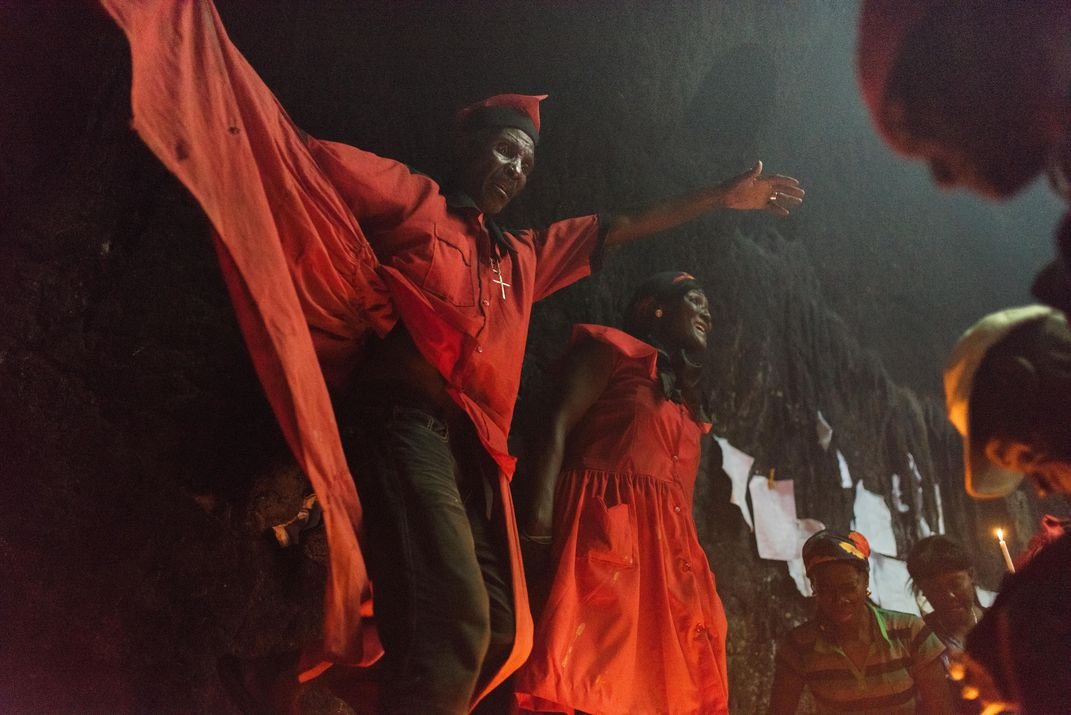
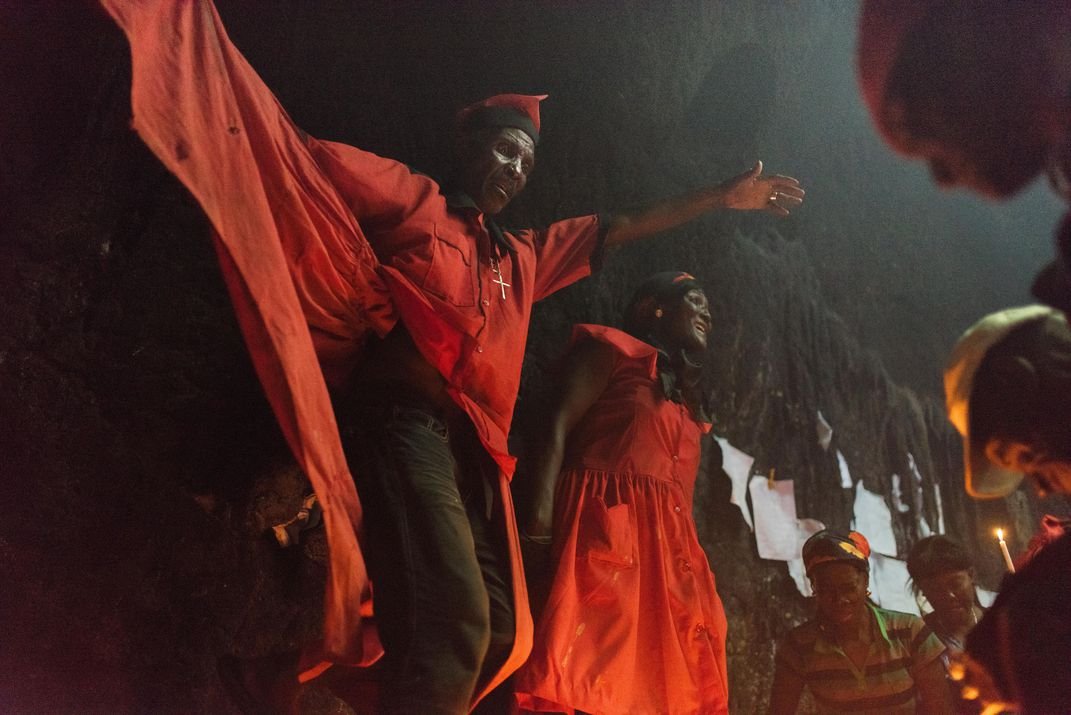
It was the height of the summer solstice, the brightest day of what had already been a long, hot year in Haiti. But deep within the caves outside Saint-Michel de l’Attalaye, beneath the mountain-ringed northern edge of the island nation’s central plateau, there was no light. Troi Anderson had to feel his way along the cool limestone walls and follow the worshipers’ singing to find his way to the Vodou ceremonies below. A photographer based in Oregon, he had come for the pilgrimage of St. John, an annual event that generally draws hundreds of participants.
Anderson had once worked with a major aid group on the island, and as he photographed people on Haiti’s streets, he noticed their suspicion and came to share their distrust of what he calls the “poverty industry,” or those aid efforts better at serving themselves than the people they’re supposed to help. So he left that work behind and focused instead on images of Haitian pride. That led him to the “sacred theater” of Vodou, a uniquely Haitian cultural force.
The religion honors a supreme creator god who is considered too remote to reach directly. Worshipers venerate intermediary spirits, such as the orisha gods of the Yoruba people who inhabit what is now Nigeria, Benin and Togo, and figures from Haitian history. The faith is decentralized. It is practiced creatively, not prescriptively, which helps to account for the differing forms practiced elsewhere, such as in New Orleans. Like many great religions, throughout its history Haitian Vodou has provided both solace and an intimate sense of community to the oppressed.
Those perceptions persist. In 2010, two days after the catastrophic earthquake that killed up to 316,000 people in and around Port-au-Prince, New York Times columnist David Brooks blamed “the influence of the voodoo religion” as first among a “web of progress-resistant cultural influences” that had made Haiti vulnerable and impoverished.
Many Vodouisants refer to their faith as sevis lwa, or “service to the spirits.” Ancestor worship is a bedrock element of the faith. So is trance possession by the spirits, which is aided by the complex, sacred rhythms of master drummers. The sacrifice of chickens, goats or cows is also widely practiced, with the animal intended to replenish the life-giving energy of the universe. The meat is usually distributed among family and friends.The Vodou calendar is filled with pilgrimages, often coinciding with Catholic saints’ feast days, to sites around the country. Around Easter, the faithful, robed in white, pay homage to the spirits near the sacred site of Souvenance. In summer, thousands flock to a towering waterfall where the Virgin Mary (also venerated as Ezili Danto, a goddess of love) is believed to have appeared. It was this pilgrimage tradition that attracted Troi Anderson to Saint-Michel de l’Attalaye last year.Inside the caves, the floors were slick with the blood of past sacrifices. Occasional beams of light streamed in through holes in the limestone roof. In the darkest recesses, candles cast orange light onto walls that fluttered with small papers bearing written prayers. A woman dressed in red held up a chicken—an offering to Ogou Feray, a god of iron and war, a divinity drawn directly from West African traditions and often represented by the icon of St. James the Greater.Some sang to spirits such as Damballah and Ayida Wedo—the snake and rainbow—and Baron Samedi, spirit of the dead. A woman’s voice rose to praise the spirit of the forest as a chorus chanted behind her. Other pilgrims sang of ritually cleansing themselves with river water. Some went into trances, their bodies providing a medium for lwa to dwell in the caves.Anderson trod lightly. He had come without a flashlight, to avoid disturbing the ceremonies, and he kept his silence as he worked and the worshipers prayed. “I tried to follow a request by one of the pilgrims,” he said. “He told me not to photograph the people here, but instead to photograph the spirits.” By Jonathan M. Katz, Photographs by Troi Anderson Smithsonian Magazine | Subscribe July 2017
Haiti - Football : U-17 women's team in training to Minnesota
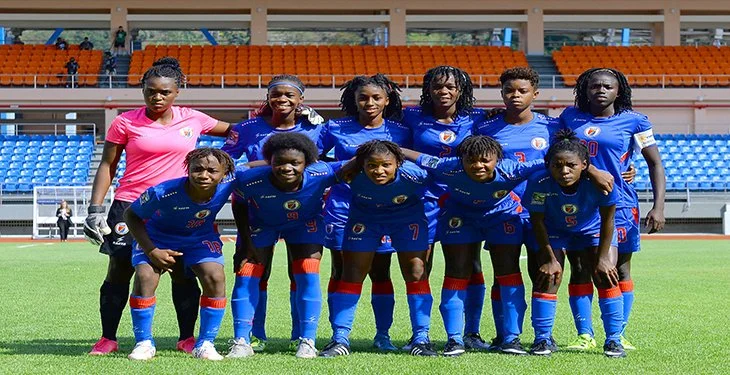
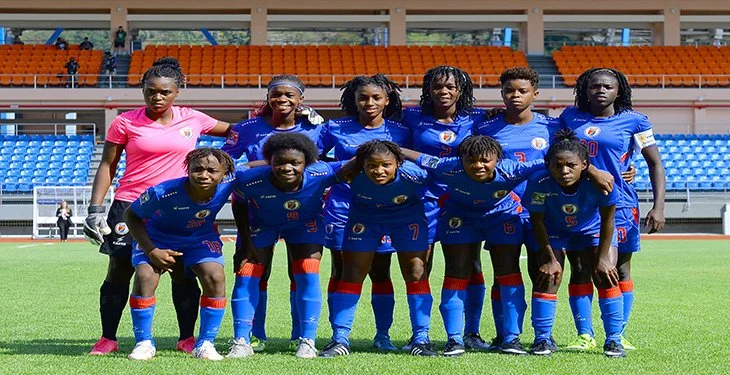
The U-17 women's team left Haiti on Monday afternoon to Minnesota where they will play 3 matches (Tuesday, Wednesday and Thursday).They will remain in the United States for a week longer to train with the courtesy of the US Government, which offers a stay from 23 to 29 July. This is a very expensive trip for the Haitian Football Federation (FHF) which financed all the airfares and hotel fees of the first week.The Haitian delegation is composed of 6 people, 14 players and two coaches Fiorda Charles and Esther Milord. Our Grenadières U-17 will be back on July 30th.Our Grenadieres are determined to take advantage of this course and they have great ambitions for the FIFA U-17 Women's World Cup, whose the third elimination phase will be played in Haiti from 16 to 23 October.During their stay in Minnesota our players will be supported by former Haitian international Ricardo Pierre Louis, who will bring football equipment.1,278 teams from 19 countries from more than 20 US states participate this year at the USA CUP in Minnesota. The teams from Manchester and Bayern will also compete as well as other top-level women's teams.BF/ HaitiLibre 19/07/2017 09:35:50
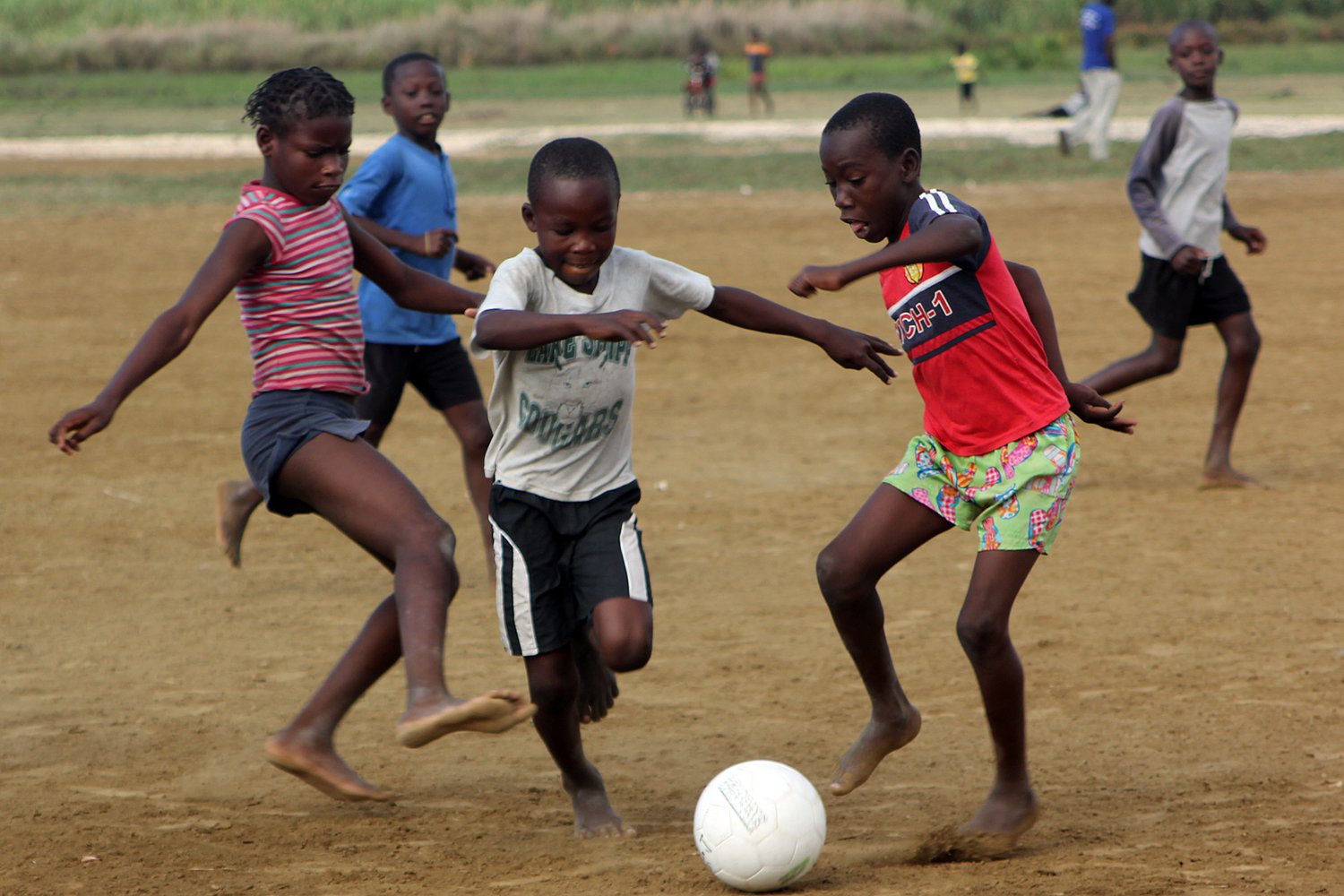
New Jersey Family Collects 1,000 Soccer Cleats For Needy Kids In Haiti
WEST WINDSOR, N.J. (CBSNewYork) — Imagine playing soccer with no shoes.As CBS News’ Meg Oliver reported, it happens in poor countries all over the world. But a soccer-loving family in West Windsor, New Jersey decided to do something about it.For kids in Haiti, soccer is a way of life. Erick Noel, 18, had played for a decade barefoot in gravel and grass until this summer.Boxes full of 1,000 used cleats arrived from America, giving kids in Haiti their first chance to play in shoes.The generous idea came to light more than 1,000 miles away in New Jersey. Every week, the Grescek family holds board meetings with cheese pizza around their kitchen table.Fourteen hardworking cousins – ages 8 to 17 – started a charity collecting used cleats for needy kids a year ago.To set themselves apart, 1KCleats4Kids set a lofty goal of 1,000 pairs of cleats for kids in Haiti.“We wanted to push the kids, and said, if we’re going to do this, we’re going to go for something really big,” said Jerry Grescek of 1KCleats4Kids.It did not take long before the colorful cleats poured in. Social media sparked interest from across the country.“We were just collecting cleats by the day, and it started to grow every day,” said Gavin Grescek of 1KCleats4Kids.Then, two nonprofits volunteered to pack up and ship all the cleats to Haiti.“It’s all about kids helping kids,” said Jerry Grescek. “I tell my kids all the time, just imagine when you see their smiles – because for us, that’s going to be our closing moment.”It was moment that Erick Noel summed up thusly in French: “I think it’s a beautiful gesture and I think God is happy and will bless them.”The family has set a new goal of collecting 2,000 pairs of cleats. They plan to distribute them to needy children within the U.S.CBS New York July 6, 2017 7:29 PM
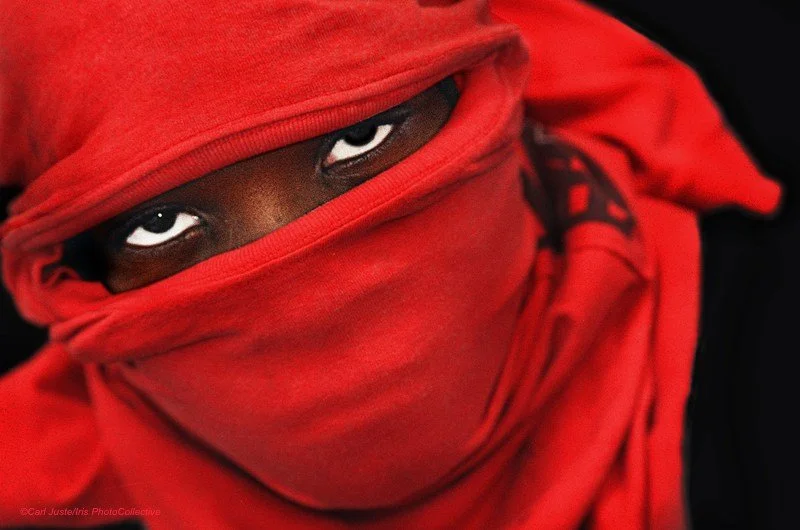
Haiti through Pulitzer Prize-winning photojournalist Carl Juste’s eyes
Carl Juste could not silence his inner voice calling him to become a photographer.For the past three decades, Juste has traveled the world using photography to tell meaningful stories and shed light on the struggles of Haitians in the United States and abroad.A Pulitzer Prize-winning Miami Herald photojournalist, Juste has been working diligently to advocate for the Haitian community’s diverse voices by capturing images that bridge the gap between opposing views and bridge gaps of understanding.“My camera is my weapon of choice,” Juste said. “When I make an image, people really stop and look at it. It allows me to amplify my voice and the voices of other people.”Juste recently spoke at FIU to discuss the struggles of Haitians experiencing racial, social, political and economic oppression.During his lecture, Juste showed a preview of his project, “Havana and Haiti: Two Cultures, One Community,” a visual narrative that concentrates on the common themes of both Cuban and Haitians through essays and photography, highlighting the two communities’ shared experiences.“My book is about celebrating these two cultures,” he said. “I stay as true to the message as much as I can. For me, it’s very important to communicate and expand the truth. Pictures have power to change the world but they aren’t responsible for the change.”After fleeing his homeland of Haiti under threat of persecution, Juste and his family settled in Miami’s Haitian community in the 1970s. From his experiences living in Miami, Juste, who was born to Cuban and Haitian parents, said that both communities have more in common than most people understand.“The story of Haiti and Cuba isn’t just for them but it’s for the world,” he said. “Both cultures have influences in art, dance and even science. You have this narrative that those identities are contained by boundaries, but they’re not. Their influences are global, and it’s about time that people understand that they’re not small and poor countries, but rich places.”Since becoming a photographer, Juste loves capturing Miami’s diversity.“A lot of my work stems from here,” Juste said. “I think what makes Miami so unique is the way all these cultures and various languages blend. It … also offers immigrants a place close to their birthplace.”Juste’s lecture, “Documenting Haiti: Realities and Representations,” was part of an annual lecture series, which this year celebrated the 20th anniversary of the Kimberly Green Latin American and Caribbean Center’s (LACC) Haitian Summer Institute.The Haitian Summer Institute is a six-week program designed for anyone interested in learning basic Haitian Creole and also for students who wish to continue their language training at the intermediate and advanced levels.“For over 20 years, LACC has been committed to investing in and promoting Haitian Studies and Haitian Creole language training,” said LACC Director Frank Mora. “The Haitian Summer Institute has been the center of that effort and is a cornerstone of the Haitian Studies Program of Excellence at FIU.”The institute offers students intensive language training courses, the lecture series and an optional two-week study abroad trip to Haiti, designed to expose students to its culture and allow them to experience Haitian Creole in Haiti.“The institute is the only one of its kind in the U.S., and we consistently attract a diverse group of students, scholars and professionals from across the globe,” Mora said.The final lecture of this year’s series, will feature Rodny Estéus, a founding member of the Haitian Creole Academy of the Republic of Haiti, and will be hosted on Monday, July 17.Juste hopes that students who participate in the Haitian Summer Institute and attend the lectures can be advocates for Haitians.“Become an ambassador and look beyond,” Juste said. “Be advocates for Haitians because they’re human and because they look like you and value the things you value. That’s what I’ve been trying to do for 30 years and it’s a beautiful struggle.”To learn more about the Haitian Summer Institute, click here.Posted by Melissa Burgess × 07/13/2017

Accra


Ingredients
- Grate the malanga to make 2 cups.
-
In a blender, mix the black eyed peas, 1/2 cup water, salt, black pepper, scallion, shallot or onion, garlic, green bell pepper, and scotch bonnet pepper until it's the same consistency as the grated malanga.
-
In a bowl, mix the malanga with the black eye pea mixture. Mix in the beaten egg. Mix the flour and baking powder until you get a nice consistency.
-
Heat the oil on high heat until very hot.
-
Drop in a tablespoonful of the mixture in the hot oil.
-
Do not turn to the other side until the fritter is very dark brown.
-
While frying, scoop out any extra mix that breaks away from the batter in the hot oil, so it does not clutter or burn the oil.
-
When both sides of the fritter are very dark brown. scoop out of oil and Drain on a paper towel.

Miss Haiti 2017: Meet the 15 Top Finalists!

 Name: Christelle YoubinAge: 26International Relations

Name: Gredeline Rousseau
Age:24
Legal Sciences
 Name: Madjolah PierreAge: 23Social Communications
Name: Marie Gerline Moreau
Age 22
Accounting

Name: Junnie MichelAge: 23Administrative Assistant

Name: Weendy Legerme
Age: 25
Psychology
 Name: Alise Murielle JosephAge: 23International Relations
Name: Alexandra Eloisier
Age: 24
Political Science
 Name: Chrystel DufourAge: 24Psychology/Communications

Name: Joanne Shirley Delbeau
Age:24
Sociologist
 Name: Cassandra CheryAge: 21Model

Name: Daphnee Brutus
Age: 25
Hostess
 Name: Caroline Minerve BegeinAge: 22Administrative Assistant
Name: Sophonie Basquin
Age: 20
Management Systems
 Name: Wheytnie AlexandreAge: 26Medical Student
These are the top the top 15 finalists for the Miss Haiti title. 
Photos and information from Miss Haiti Organisation.
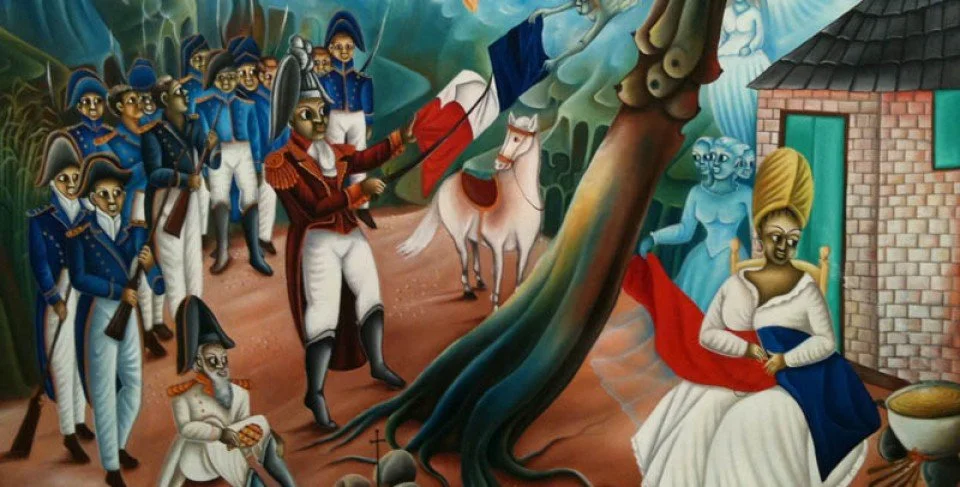
Biography of Haitian Revolution Leader Toussaint Louverture
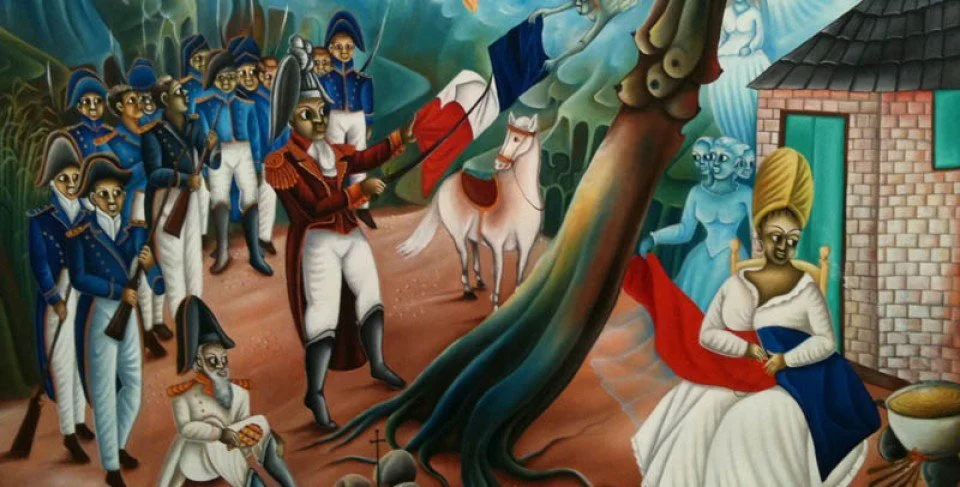
Toussaint Louverture led what is known as the only triumphant mass slave revolt in history. Thanks largely to his efforts, Haiti won its independence in 1804. But the island-nation didn't live happily ever after. Institutional racism, political corruption, poverty and even natural disasters have left Haiti a nation in crisis. Still, Louverture remains a hero to the Haitian people and those throughout the African diaspora. With this biography, learn about his rise, fall and the political prowess that resulted in him leaving an indelible mark on the island-nation once known as Saint Domingue.EARLY YEARSLittle is known about François-Dominique Toussaint Louverture before his role in the Haitian Revolution. According to Philippe Girard, author of 2016's "Toussaint Louverture: A Revolutionary Life," his family came from the Allada kingdom of West Africa. His father, Hippolyte, or Gaou Guinou, had been an aristocrat. Around 1740, however, members of the Dahomey Empire captured his family and sold them as slaves to the Europeans. Hippolyte specifically was sold for 300 pounds of cowrie shells.His once aristocratic family now the property of European colonists, Louverture was not born in West Africa but likely on May 20, 1743, in the city of Cap on the Bréda plantation in Saint Domingue, a French territory. Louverture displayed a giftedness with horses and mules that impressed his overseer, Bayon de Libertat.He also received training in veterinary medicine. His godfather, Pierre Baptiste Simon, likely played a large role in educating him. He may have also received training from Jesuit missionaries and from West African medicinal traditions.Eventually Libertat freed Louverture, although he had no authority to do so, as the absentee slaveholders the Brédas owned Louverture. It is unclear exactly which circumstances led Libertat to free him. The overseer reportedly had him drive his coach and then released him. Louverture was about 33 years old at the time.Biographer Girard points out that it was highly unusual that Louverture was freed. The slave mothers of mixed-race children were most often freed, with men making up fewer than 11 percent of liberated slaves.In 1777, Louverture married Suzanne Simone Baptiste, born in Agen, France. She is believed to have been his godfather's daughter, but she may have been Louverture's cousin. He and Suzanne had two sons, Issac and Saint-Jean. Each also had children from other relationships.Biographers describe Louverture as a man filled with contradictions. He led a slave insurrection but never took part in smaller revolts that occurred in Haiti prior to the revolution. In addition, he wasn't partial to any religious faith. He was a Freemason, who practiced Catholicism devoutly but also engaged in voodoo (in secret). His embrace of Catholicism may have factored into his decision not to participate in voodoo-inspired insurrections that took place in Saint Domingue before the revolution.After Louverture won his freedom, he went on to own slaves himself.Some historians have criticized him for this, but he may have owned slaves to free his family members from bondage. As the New Republic explains:To free slaves required money, and money on Saint Domingue required slaves. As a free man, Toussaint leased a coffee estate from his son-in-law, including the slaves. True success navigating the slave system meant joining the other side. The revelation that the 'Black Spartacus' drove slaves spurred some modern historians to over-correct, speculating that Toussaint was a well-heeled bourgeois by the time of the revolution. But his position was more precarious. The coffee estate failed, and a slave register unearthed in 2013 records his tragic next move: Toussaint resumed his place on the Bréda plantation.In short, Touissant remained a victim of the same exploitative system he'd joined to free his family.But as he returned to the Bréda plantation, abolitionists begin to gain ground, even convincing King Louis the XVI to give slaves the right to appeal if their overlords subjected them to brutality.HAITI BEFORE AND AFTER THE REVOLUTIONBefore the slaves rose up in revolt, Haiti was one of the most profitable slave colonies in the world. About 500,000 slaves worked on its sugar and coffee plantations which produced a significant percentage of the world's crops. The colonists had a reputation for being cruel and engaging in debauchery. The planter Jean-Baptiste de Caradeux, for example, is said to have entertained guests by letting them shoot oranges off the tops of slaves' heads. Prostitution was reportedly rampant on the island as well.After widespread discontent, slaves mobilized for liberty in November 1791, seeing an opportunity to rebel against colonial rule during the throes of the French Revolution. Toussaint’s comrade Georges Biassou became the self-appointed Viceroy and named him general of the royal army-in-exile. Louverture taught himself about military strategies and used his newfound knowledge to organize the Haitians into troops. He also enlisted deserters of the French military to help train his men. His army included radical whites and mixed-race Haitians as well as blacks.As Adam Hochschild described in the New York Times, Louverture "used his legendary horsemanship to rush from one corner of the colony to another, cajoling, threatening, making and breaking alliances with a bewildering array of factions and warlords, and commanding his troops in one brilliant assault, feint or ambush after another."The slaves successfully fought the British, who wanted control over the crop-rich colony, and the French colonizers who'd subjected them to bondage. Both French and British soldiers left detailed journals expressing their surprise that the rebel slaves were so skilled. The rebels had dealings with agents of the Spanish Empire as well. Haitians also had to confront internal conflicts that sprang up from mixed-race islanders, who were known as gens de couleur, and black insurgents.Louverture has been accused of engaging in the very practices for which he criticized the Europeans. He needed weapons to defend Saint Domingue and implemented a forced labor system on the island that was virtually the same as slavery to ensure that the nation had sufficient crops to exchange for military supplies. Historians say he held onto his abolitionist principles while doing what was necessary to keep Haiti secure. Moreover, he intended to free the laborers and wanted them to profit from Haiti's achievements.“In France, everyone is free but everyone works,” he said.Louverture has not only been criticized for reintroducing slavery to Saint Domingue but also for writing a constitution that gave him the power to be a lifelong leader (much like the European monarchs he despised), who could choose his own successor. During the revolution, he took on the name "Louverture," which means "the opening" to emphasize his role in the uprising.But Louverture's life was cut short. In 1802, he was lured into talks with one of Napoleon’s generals, which resulted in his capture and removal from Haiti to France. His immediate family members, including his wife, were captured as well. Abroad, tragedy would befall him. Louverture was isolated and starved in a fortress in the Jura mountains, where he died in April 1803. His wife survived him, living until 1816.Despite his demise, Louverture biographers describe him as a leader who was far savvier than either Napoleon, who completely ignored his attempts at diplomacy, or Thomas Jefferson, a slave owner who sought to see Louverture fail by alienating him economically.“If I were white I would receive only praise,” Louverture said of how he'd been slighted in world politics, “But I actually deserve even more as a black man.”After his death, Haitian revolutionaries, including Louverture's lieutenant, Jean-Jacques Dessalines, continued to fight for independence. They won freedom in January 1804, when Haiti became a sovereign nation. Two-thirds of the French army died in their bid to squash the revolution, most from yellow fever rather than armed conflict.LOUVERTURE'S LEGACYLouverture has been the subject of numerous biographies, including 2007's “Toussaint Louverture” by Madison Smartt Bell as well as biographies by Ralph Korngold, published in 1944; and Pierre Pluchon, published in 1989. He was also the subject of 1938's "The Black Jacobins” by C.L.R. James, which the New York Times has called a masterpiece.The revolution Louverture led is said to have been a source of inspiration to abolitionists such as John Brown as well as the many African nations that won independence in the mid-20th century.by Nadra Kareem Nittle

Adoption in Council of Ministers: Bill on Legal Assistance!

The bill on the creation and organization of a National Council of Legal Assistance (CNAL) was adopted in the Council of Ministers, confirmed on Tuesday July 4th by the Secretary General of the Council of Ministers.In order to make justice accessible to the economically disadvantaged and the vulnerable in our society, the Government has drafted this Bill in accordance with the requirements of the Universal Declaration of Human Rights and other international conventions and agreements signed by Haiti on the matter.This bill proposes to create a National Council of Legal Assistance, offering counseling and advocacy services to the poor, irrespective of gender, age and political opinion, with administrative and financial autonomy under the supervision of a Board of Directors chaired by the Minister of Justice.Recall that legal assistance is recognized throughout the world as a fundamental human right, without which one can not speak of a system of fair justice nor of respect for the rule of law. It should also be noted that this public service proposed in this draft law has been inspired on the basis of observations and experiences already made in Haiti.HL/ HaitiLibre
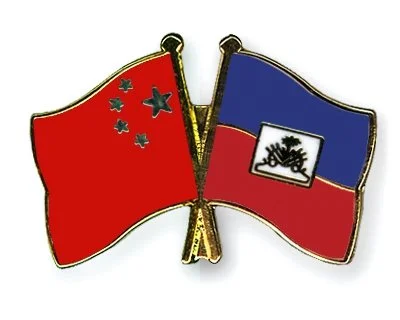
China Donates To Haiti
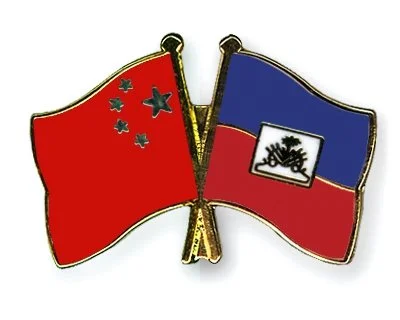
On Wednesday July 5th in the annex of the Ministry of Youth, Sports and Civic Action (MJSAC) to Frères, Mario Florvil the Director General of the Ministry of Youth, Sports and Civic Action, in the presence of the executives of the Directorate of Physical and Sports Activities (DAPS) of the Ministry, received from Ling Jun, the Permanent Representative of the China Trade Development Bureau in Haiti, a donation of sports equipments and materials as part of bilateral cooperation Haiti - People's Republic of China.The donation consisted of 18 lots of sports equipment, including balls, jerseys, football boots, basketball and volleyball, sports socks, nets, trophies.Mario Florvil welcomed China's initiative "This aid comes at a time when the Haitian government through the MJSAC wants to give another direction and a new breath to the sport sector," considering that Haiti greatly needs all the forms of support that can enable it to support sport, whose development represents a priority for the new government, ensuring that its Ministry will make good use of these materials.Ling Jun hopes that these materials will contribute to the improvement of the conditions of training and the physical constitution of the young Haitians. Reaffirming the importance that China attaches to physical and sports development before evoking the Haitian Ministry's desire to return sport to school.HL

Haiti Plans Recruitment for Small Army

Haiti plans to start recruiting for a small, newly reformed army, the defense minister said on Tuesday, while critics questioned the need for such a force in a poor country with a history of military coups.The government expects to recruit fewer than 500 soldiers, whose duties will include rebuilding after natural disasters and monitoring borders for smuggled contraband, Defense Minister Herve Denis told Reuters in an interview."I was planning to recruit 500 in the first recruitment but now, because of budget problems, we have to reduce the numbers," he said. "We are waiting on the vote on the budget to determine how many we will eventually recruit."The vote is expected in the next few months.Former president Jean-Bertrand Aristide disbanded Haiti's army in 1995 following a military coup.Previous president Michel Martelly drafted a plan for a small military force in 2011. Calls from politicians for an expanded army have grown with the looming departure in October of a 13-year United Nations mission in Haiti intended to restore stability after a second coup against Aristide in 2004.However, Haiti's budget is tight and critics say the government should focus its resources on the two decade-old national police force, which has roughly 15,000 officers."Haiti does not need an army," said Mario Joseph, a human rights attorney and one of Aristide's lawyers. "We must use what little money Haiti has rationally. ... Haiti cannot even take care of the police with the national budget."By Joseph Guyler Delva | Reuters

Sauce Pois/ Sos pwa (bean soup)


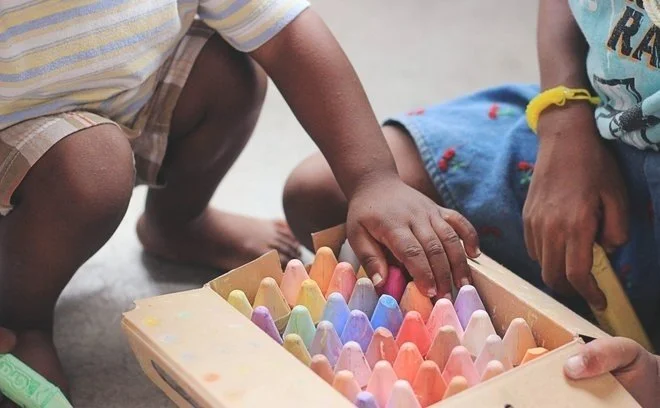
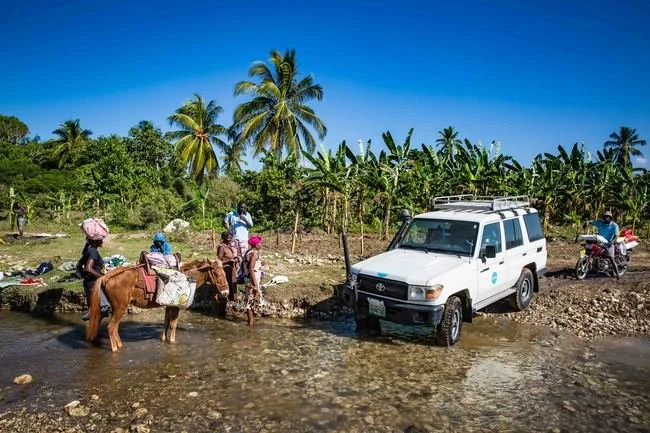
Helping Haitian Children When It Matters the Most
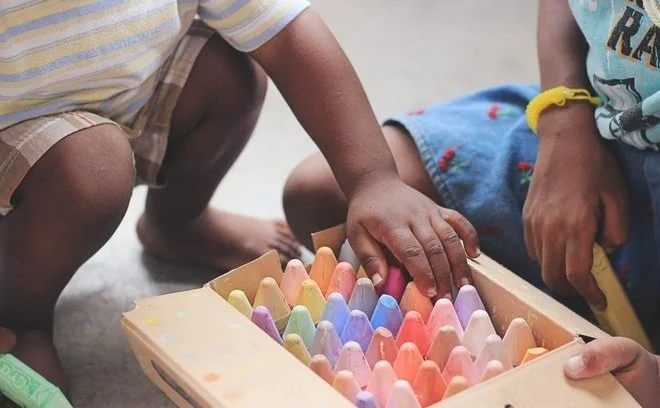
When a child is born, a clock starts ticking. Scientists have shown that half of a child’s intelligence potential is developed by the age of four. Early development makes a huge difference to life-long wellbeing.

Banan Peze (Fried green plantains)

 Fried Plantains, twice-fried green plantains, are a favorite snack and side dish. Haitians call them bananes pesées, or banan peze.
6 to 8 servings
INGREDIENTS
- Green plantains, peeled and sliced diagonally into 1-inch pieces -- 2
- Oil for deep frying
METHOD
- Heat about 1/2-inch of oil in a heavy skillet over medium-high heat. Add half the plantain slices to the hot oil and fry, turning frequently, until they begin to brown on all sides. Remove to a paper-towel-lined plate and repeat with the remaining slices.
- When all the slices have been fried, use a glass or small plate to press each slice to a thickness of about 1/3-inch.
- Return half the flattened slices to the hot oil and fry again on each side until well browned and crispy. Drain on paper towels and repeat with the remaining flattened slices. Serve hot.
BANAN PEZE VARIATIONS
- Sometimes the plantains are soaked in salted water for about an hour and then dried well before they are fried. This is said to make them crispier and add flavor.