
Pikliz Recipe (also known as Haitian Spicy Pickled Vegetables)
 Pikliz (also known as Haitian Spicy Pickled Vegetables)
About 2 quarts
INGREDIENTS
- Cabbage, shredded -- 1/2 head
- Carrots, peeled and chopped into small pieces or grated -- 2
- Onion, thinly sliced -- 1
- Scotch bonnet peppers -- 2 to 6
- Garlic cloves -- 4 to 6
- Salt -- 2 teaspoons
- Peppercorns -- 8 to 10
- White or cane vinegar -- 3 cups
METHOD
- Add all of the ingredients to a large bowl and toss well to mix. Place all of the vegetables into a clean 2-quart glass jar. Pour in enough vinegar to cover the vegetables, tamping them down to remove any air bubbles.
- Store the pikliz in the refrigerator for at least 24 hours before serving. It will keep in the refrigerator for a month or two.
PIKLIZ VARIATIONS
- Other Possible Additions: Sliced bell peppers, Serrano or jalapeno peppers, chopped green tomatoes, chopped cauliflower, peas.
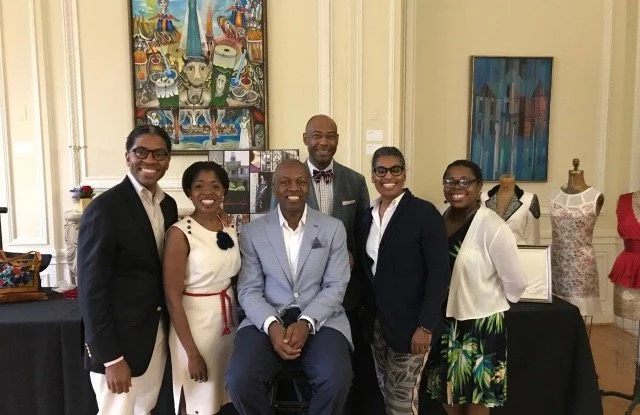
U.S. Embassy Hosts Pop-up Shop for Haitian-American Entrepreneurs
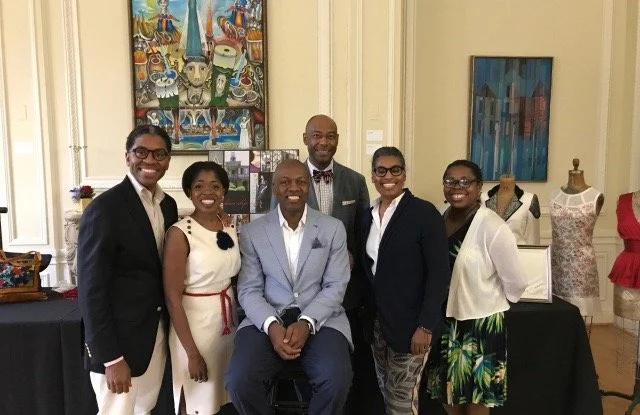
Embassies are all about helping the homeland, but the U.S. Embassy of Haiti went above and beyond presenting the Bien Abyé “Les Jardins de la Mode” pop-up shop.More than 400 people turned up for the event, the finale to D.C.’s first “Haiti Week,” hosted by Ambassador Paul Altidor, and it featured an assortment of products from Haitian-American entrepreneurs. All of the apparel, accessories, home goods and gourmet products that were featured are sourced or inspired by Haiti. Bien Abyé’s founder and designer Dayanne Danier orchestrated the event, which included “Artisan du Monde” by Nathalie Tancrede, “Deux Noirs” by Eddy Albertini, “Vetiver Les Cayes” by Reginald Boisrond Canal and “Zesa Raw” by Michelle Jean. Art fans, diplomats and tastemakers checked out the collection and shopped in the embassy’s newly renovated courtyard. They also listened in when former White House liaison Karen Andre quizzed participants about their careers.“The recent event was the first in a series and “is in line with the mission of the Embassy to be a platform for Haitian-owned businesses to showcase their products,” Altidor said.Bien Abyé is currently offered in five U.S. boutiques and via e-commerce. “Doing pop-up allows me to give a unique experience to clients that they might not find in a retailer. It also gives me the opportunity to have direct interaction to clients and hear about their needs.In New York earlier this month, the Consul General of Sweden Leif Pagrotsky also provided a forum for one of its own. Swedish designer Gudrun Sjödén returned to the U.S. for a fashion show at the official Swedish Residence. Guests like Liliana Cavendish, Nancy Donahue, Katie Ford, Christine Mack, Kelly Rutherford and Audrey Smaltz previewed Sjödén’s fall and spring collections. Former Miss Africa and water activist Georgie Badiel helped model the eco-friendly label, as did Angel Pai. But anyone who wanted to actually buy one of the colorful designs had to go downtown to the SoHo store or shop online.By Rosemary Feitelberg | May 26, 2017
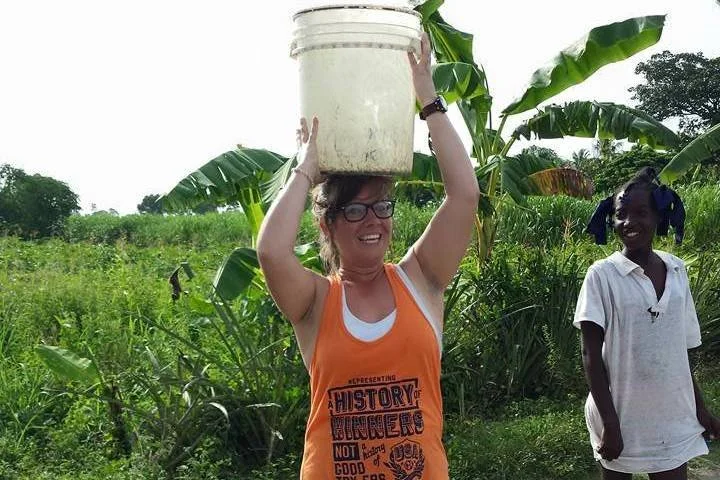
Duke's First Undergraduate Thesis Written in Creole
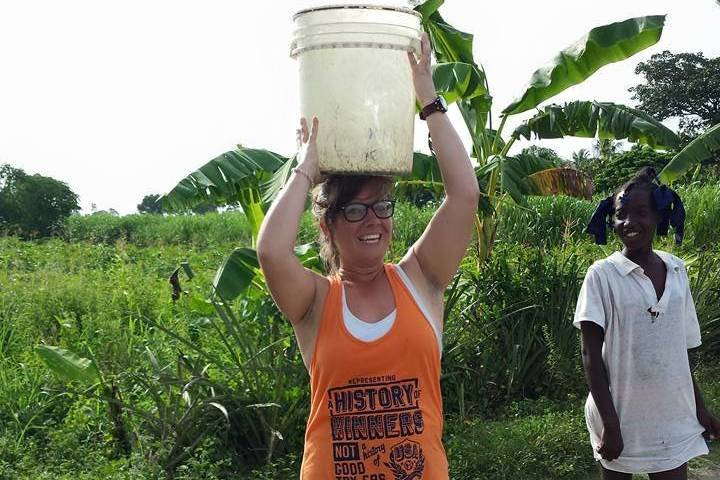
Lydia Bradford's project attests to growth of Duke's Haiti scholarship
Lydia Bradford came to Duke from Oklahoma City four years ago expecting to immerse herself in global health issues. But when she discovered that Duke offered Creole language courses, her plans changed.
Having learned some about Haiti in middle and high school, Bradford enrolled in one Creole course, and then another, and soon enough she was involved in the Franklin Humanities Institute’s Haiti Lab, taking three courses along with an independent study and two trips to Haiti.
Earlier this month, Bradford received a bachelor of arts in Romance Studies, becoming the first Duke student to write an undergraduate honors thesis in Creole.
Here, Bradford talks with Duke Today about her academic journey and love of Creole.
The Creole program at Duke is still fairly young. What made you go in that direction, and what was your experience like?
To have a concentration in Haitian Creole, the department told me that I had to write a thesis to show my proficiency. In hearing this, I actually assumed that my thesis had to be written in Haitian Creole, so from the beginning, I had already planned to write it in Creole. In addition to this, throughout the Haitian Creole program our professor, Jacques Pierre, always encouraged us to understand the importance of fighting for the language in the language itself. This Haitian Creole program at Duke is great, and very encouraging. Jacques Pierre teaches all the levels and the way he integrates the language, history and culture into the classes was good. I learned a ton and by my second semester of Creole, I was speaking Creole comfortably. I was never afraid to speak in class, and that in turn helped my Creole immensely.
Is there a Creole-speaking community here large enough for you to hone and keep up your language skills? How about when you graduate? What are your plans?
There is a small Creole-speaking community in Durham that I got to know while at Duke; however, the biggest help in honing my language skill was my friend Tanya Thomas, who is a Haitian-American student at Duke. She would speak with me in Creole and correct all of my mistakes. It was always a huge help.
In addition to Tanya and the small Haitian community, I made friends in Haiti with whom I stay in contact and practice my Creole over Messenger or Skype. Right now having graduated, I am teaching with Teach for America in Tulsa, Okla., for two years, so I do not know if I will be able to find a way to continuing honing my skills in Haitian Creole, but I hope to do so.
What is it about Haiti that drew your interest?
I became interested in middle school because of the beauty of the country. It’s such a beautiful island in the Caribbean. As I would continue to explore Haiti more in the classroom, begin to speak the language and visit Haiti, I would learn more about the culture and history and people. The culture, history and language are rich and full of beauty.
And a Question for Jacques Pierre
What is the significance of Lydia Bradford completing Duke’s first honors thesis written in Creole?The Haiti Lab has long been promoting Haitian Creole and culture, and therefore it is very important for someone to write his or her thesis in the language. It shows that students and scholars can use the language at any level, not just learn it for the so-called humanitarian aid.At Duke, we lead by example. Creole is taught here, and we promote the teaching of the language through a consortium we have with the University of Virginia, Vanderbilt UNC-Chapel Hill. We have been holding International Creole Day every October 28, and we have other events, like a film series, music performances, etc. In all, at Duke it’s not just talking about Creole in another language; it’s important to talk about Creole in Creole.
By Eric Ferreri | May 19.2017

Neocolonialism in Haiti, Water for Profit and the Cholera Epidemic

The notion of a colonist as cannibal in Haiti is widespread. This idea, called manje moun (eating people), could hardly qualify as superstition, given the experience of colonialism. It is daunting to find a better description for those who grab control of water and food, and then calculate the minimum caloric intake a population needs so that a maximum of labor may be extracted from its emaciated and zombified workers without killing them. The neo-colonists may call themselves humanitarians, but their victims know exactly what they are.A Haitian front for a consortium of foreign aid and finance agencies, founded in 2009 and called DINEPA (Direction Nationale de l’Eau Potable et de l’Assainissement, or National Water and Sanitation Authority), has wrested control of all of Haiti’s drinking water from city authorities and non-governmental organizations (NGO). To handle the country’s water rehabilitation and distribution, DINEPA now calls on companies from Haiti’s former colonial masters. These include Spain’s INCATEMA Consulting and Engineering and the world’s top water privatizers, the French corporations Veolia Environnement and Suez Environnement.Like other corporations, water-privatization companies make money for their investors by increasing their revenues, either by expanding their reach or seeking better prices for their products and services. Both Veolia and Suez reported growths of about 4.6 percent in the first quarter of 2017, compared to 2016; during the same period in 2017, their revenues were, respectively, a whopping $6.83 billion and $4.12 billion. Before you start to think that water-privatization companies might be a good investment, remember that you, personally, are 70 percent water and could not live without this liquid for more than three to four days. Consider also that the easiest way to profit from something as naturally plentiful as water is to create a shortage and sell it to the highest bidder. The logical outcomes are thirst, hunger, and water-borne diseases, all of which have already settled on places like Haiti. While you might be the kind of person who does not give a rat’s ass what happens in Haiti, you are probably not too keen on the idea of having your life ruled by water and paying through your nose for the taste or even the sight of it. What happens in Haiti doesn’t stay in Haiti.It is a little known fact that Haiti’s cholera epidemic of October 2010 started while the water network for the nearest city of Mirebalais was under repair. Both the water outage and the UN were responsible for the initial explosion of deadly disease, because the water cut-off forced people to collect their drinking water from the very stream that the Nepalese UN troops had contaminated with their untreated wastes. In other words, if Mirebalais’ potable-water system had been working as it should when the UN soldiers contaminated the stream, the casualties from the epidemic would probably have been low to negligible. The incentive to grant contracts to private companies to overhaul Haiti’s municipal water systems would have been trifling too, since there would probably not have been a humanitarian emergency for them to address.The work of water privatizers in Haiti did not really get the notice of the general public until the protests started in Ouanaminthe in summer 2011. The town had been without water for three months because the service to its center had been cut by INCATEMA. With funds from the Inter-American Development Bank (IDB) and Spain’s aid agency (Agencia Espanola de Cooperacion para el Desarrollo, AECID), in early 2011 DINEPA had contracted INCATEMA to extend Ouanaminthe’s water network by about 20 miles to a slum called Gaillard, where cholera was raging. DINEPA tried to placate the population with promises of a 300,000-gallon water tower and tap water in 6,400 homes in the immediate future, but there was no indication that the service would ever even be restored to its former status. Ouanaminthe had grown from a quiet border town that mostly cultivated peanuts and tobacco, to a so-called free-trade zone, because in the mid-2000s the IDB and Soros Economic Development Fund had financed the construction of an industrial park called CODEVI. In this consortium of sweatshops, six textile companies currently extract the labor of Dominicans and Haitians for about $0.45 per person hour. A network of slums surround the industrial park, which employs only 6,500 people, despite its presence swelling the city’s population more than three-fold, to about 100,000. There has hardly been any new infrastructure to keep up with the rapid rate of growth, and the nearby Massacre River has been polluted by the textile manufacturers: these two factors have created a perfect opportunity to squeeze a population of the poor for their drinking water.A taste of the money to be made from the sale of water might be all it took to decide that, for privatization to proceed, Haiti’s Constitution would have to go and the government become more centralized. Under cover of carnival, in February 2012, Haiti’s executive branch began, by decree, to dissolve all the local governments and dismiss the country’s elected mayors. The mayors held press conferences to alert the population of their removal and wrote open letters to inform the public about threats to their lives, but, with enforcement from the United Nation’s so-called peacekeeping force, the decree was shoved down Haitians’ throats. By July 2012, nearly all of the country’s departmental delegates (state governors) and 120 elected mayors had been replaced by presidentially appointed Interim Agents, some of whom where actively wanted by police for alleged crimes.Simultaneously with the decree to remove the mayors, and the continuing cholera epidemic, there began a rash of sabotage of the municipal-water systems. As a result, about 2.5 million residents of Gonaives and Cap Haitien, both large cities that were unaffected by the earthquake, lost their service of piped water. In Cap Haitien, some pipes under repair were cut and removed in December 2011. Around the same time in Gonaives, the control panels and electrical cables were yanked from three out of five pumping stations. In another section of Gonaives, the water pipes were accidentally damaged one year later by construction work. DINEPA, by then, had contracted Veolia to reconstruct the water supplies of cities outside of Port-au-Prince; it announced that it would study the networks of both cities and expand them. To date, there has been no report of the completion of either project.
Haiti’s smaller towns of about 30,000 to 40,000, untouched by the earthquake, were also not spared. In Hinche, the drinking water system was sabotaged at least three times in two years. In the border town of Anse-à-Pitres, several solar panels were removed from a system that had been installed by a local organization. In Belladère, all but two community faucets were damaged by road construction. These are but a few examples.Ouanaminthe endured three dry years. After that, the angry residents got their water from INCATEMA by confronting the UN troops and blocking, with walls of blazing tires, the streets to the CODEVI industrial park and a binational market. When the Haitian president finally came to inaugurate the supposed $9 million water project in August 2014, it was mainly to inform the townspeople that they would henceforth have to pay for their water. Two years after the inauguration, more than 85 percent of the homes still lacked water service, and DINEPA was requiring a $54 to $92 deposit, plus a monthly fee of $1.75 for water. People in the area, who earn slave wages in the sweatshops, now complain, not only about the impossibly high costs for them but also the quality of the water, which they say is often covered with yellow foam and reeks of chlorine.
Where did the money go? Given the state of affairs, it is impossible to account for the contributions to DINEPA of more than $75 million from the World Bank, $10-15 million from the UN International Children’s Emergency Fund (UNICEF) per year, $35 million from Spain, and $15 million from the IDB, all for water, sanitation, and the supposed fight against cholera. In my view, much of what has been achieved in Haiti is the dismantlement of the municipal potable-water networks and their replacement with a tanker-truck delivery system. DINEPA appears to have learned that desperately poor people will buy water from its trucks quite expensively, since they get it in smaller volumes. Between 2012 and 2014 alone, the price of a gallon of water, if it could be found, rose by 40 percent. All over Haiti, a country where water is plentiful, people travel for miles to rivers and water faucets. Some die in traffic accidents collecting their water. Others die from drinking it.
Water-privatization companies, having gorged themselves initially on reconstruction contracts from agencies like the World Bank and IDB in countries like Haiti, have become too strong to control without a Herculean effort. In a Spanish scandal nicknamed “pica en los pies,” which exploded in April 2017, INCATEMA is alleged to have paid bribes for public works contracts in Haiti. Veolia and Suez have both donated money to the Clinton Foundation. In an unprecedented move, a few days before the French second-round presidential elections, Veolia’s CEO endorsed Emmanuel Macron by attacking Marine Le Pen in a published statement. A donation from Suez to US President Donald Trump’s transition team was equally surprising for having a foreign origin. The long and short of it is that fights against water privatizers at the ballot box will probably be futile. In March 2017, Suez began to purchase the Philadelphia-based US utility, GE Water. In December 2016, Veolia took control of Europe’s longest beach, La Baule, in France, to the dismay of much of the population. Water privatizers are unlikely to have a shred of party loyalty or nationalism. They are modern-day vampires, and it is reckless to allow them to wander among us even as they lust after our lifeblood.
globalresearch/neocolonialism 22 May 2017
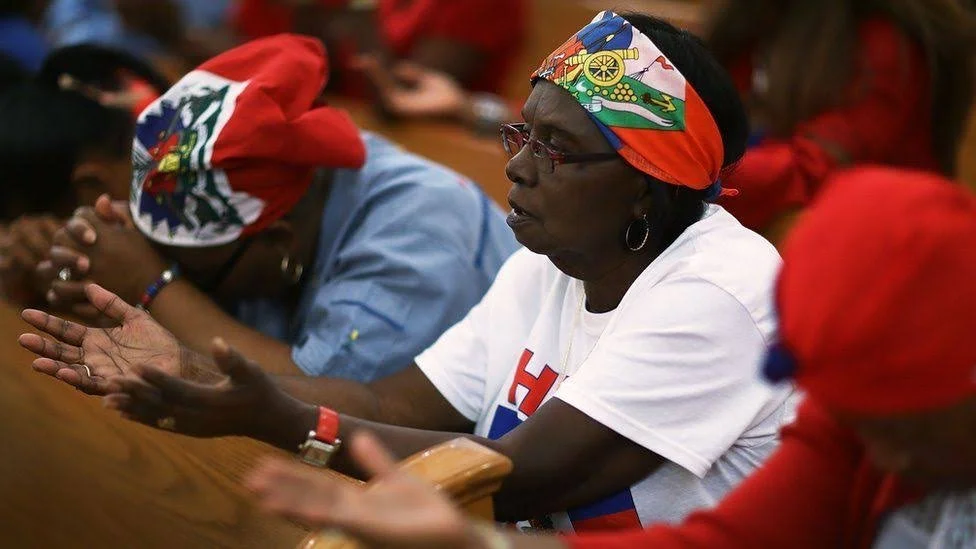
Haitians who came after earthquake granted six-month extension
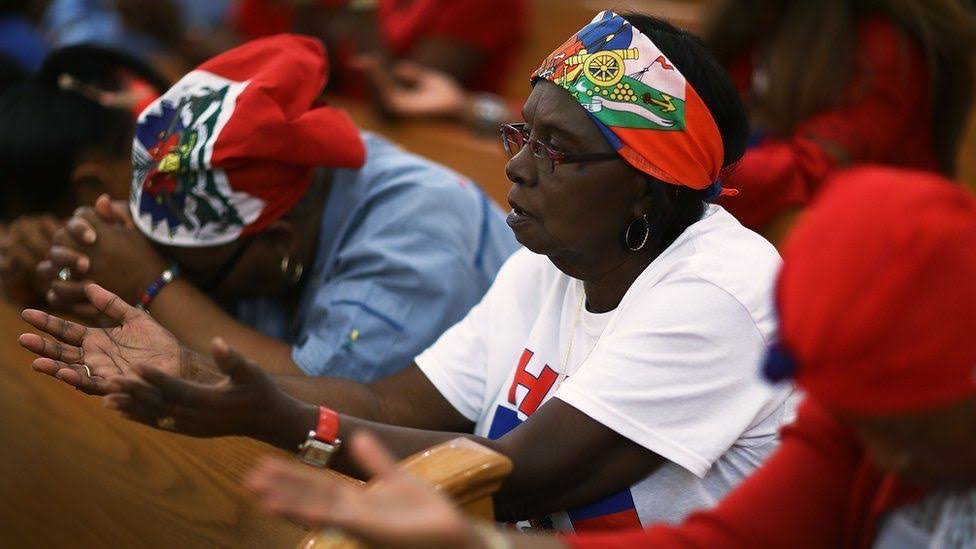
The Trump administration has granted a six-month extension to nearly 60,000 Haitians who were offered temporary protection in the US after a devastating earthquake in 2010.The extension will allow them to remain in the US until January 2018.But a DHS official said the agency was encouraging Haitians on the TPS scheme to "get their affairs in order".Immigration advocates have protested against deportations, saying conditions in Haiti remain too dangerous.The earthquake killed tens of thousands of Haitians and displaced more than one million, and the country has since been hit by a cholera epidemic.DHS officials who briefed reporters on the decision said only conditions seen as caused by the earthquake were taken into account in analysing Haiti's readiness to accept the TPS residents back.They said no decision had been made over whether the TPS status would be extended again in January 2018, but that the agency "highly encouraged all TPS recipients to handle their affairs as appropriate, including obtaining travel documents".There are roughly 58,700 Haitians living in the US on the TPS scheme, many in a large Haitian community in Florida, as well as New York and Massachusetts.They will be required to reapply for TPS status within 60 days of official notice from the DHS. No new Haitians will be allowed to join the scheme during the extension period."This is temporary status, it's not supposed to be permanent. It can't go on in perpetuity," an official said.Homeland Security Secretary John Kelly said in a statement: "This six-month extension should allow Haitian TPS recipients living in the United States time to attain travel documents and make other necessary arrangements for their ultimate departure from the United States, and should also provide the Haitian government with the time it needs to prepare for the future repatriation of all current TPS recipients."The government has already sought to deport some Haitians who don't have TPS status, in line with part of a wider crackdown on illegal immigration.According to internal emails passed to the Associated Press earlier this month, immigration officials sought crime data on Haitians on the TPS scheme, as well as information about whether they were seeking benefits.The TPS scheme currently grants protections to nationals of 10 countries, including Sudan, Somalia, Syria, El Salvador, Nepal and Yemen. Source: BBC News, May 22, 2017
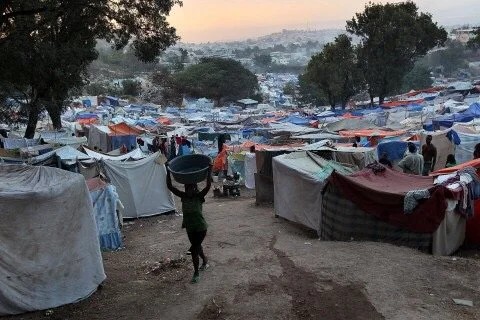
For Haitians Who Came to U.S. After Earthquake, Another Deportation Reprieve
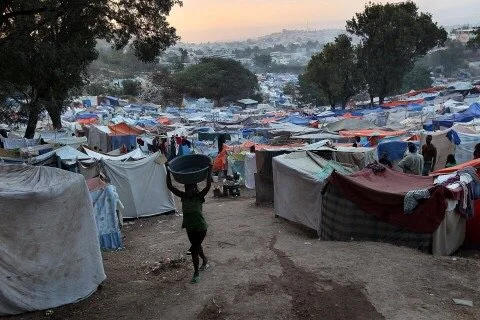
Homeland Security Secretary John F. Kelly granted a six-month extension Monday to 58,000 Haitian immigrants who have been spared from deportation since a devastating 2010 earthquake, saying the conditions in their struggling homeland are not stable enough to force them to return.Kelly said Haitians, whose permission to stay in the U.S. was to end in July, may now stay until Jan. 22. He said he would monitor conditions in the Caribbean nation, but added that Haitian immigrants should prepare to return home next year.“I believe there are indications that Haiti – if its recovery from the 2010 earthquake continues at pace - may not warrant further ... extension past January, 2018,” Kelly said in a statement.The announcement did not please advocates on either side of the immigration debate. It foreshadowed the battles to come next year, when the Trump administration will decide the fate of some 263,000 people from El Salvador, whose temporary protected status expires in March. Protection for about 86,000 Hondurans is set to end in January.Temporary Protected Status is a Homeland Security program that grants short-term work permits and reprieves from deportation to immigrants from nations upended by disaster, epidemics, or war. Haitians received the status after the earthquake killed hundreds of thousands of people; it was renewed as their homeland grappled with a cholera epidemic, food shortages and acute poverty.Many had hoped the administration would extend Haitians’ protection for 18 to 24 months. Now they face a potential deadline to pack up their lives and return to the poorest nation in the Western Hemisphere.“We have a lot of families that are in shock right now,” said Nancy Treviño, spokeswoman for Haitian Women of Miami, an organization also known by its initials in Creole, FANM. “It’s pretty devastating to them right now.”Temporary protection ended this week for a smaller group of people from Guinea, Liberia and Sierra Leone.Only Haitians who were in the United States by Jan. 12, 2011, the one-year anniversary of the earthquake, were eligible to apply for protected status. Opponents of the federal program complain that it is billed as “temporary,” but often drags on for years. They also note that the U.S. government has resumed deportations to Haiti of people who came after the deadline date for protected status and have since lost their cases in immigration courts.“If we’re deporting people to a country, then there’s no excuse for continuing TPS for a certain subgroup of illegal immigrants,” said Mark Krikorian, executive director of the Center for Immigration Studies, which favors tough controls on immigration.Republican and Democratic lawmakers, including Senator Marco Rubio (R-Florida), and hundreds of faith-based groups had urged Kelly to grant relief to Haitians, who reside in large numbers in Florida, New York, Massachusetts and New Jersey. Rubio and other lawmakers hailed Kelly’s decision.“Last week, I asked the White House to extend the TPS deadline for Haitians until at least January 18, and I’m glad to see that the administration agreed,” Rubio said in a statement.Steven Forester, immigration policy coordinator for the Institute for Justice & Democracy in Haiti, said six months is not enough time for Haiti to recover from “sledgehammer blows” it has suffered.The Jan. 12, 2010 earthquake killed thousands of people and destroyed much of the infrastructure. The cholera epidemic has sickened 800,000 people and killed over 9,000 Haitians. Last October, Hurricane Matthew wiped out crops and livestock and sparked a shortage of food and potable water.“It gives us a chance to fight another day,” Forester said. “Six months from now we’ll be facing the exact same situation. “Kelly noted that Haiti’s economy continues to recover and 98 percent of makeshift camps that sprung up after the earthquake have closed.Kelly made the announcement a day before the deadline to publish a 60-day notice in the Federal Register announcing its plans for the program.Source: Maria Sacchetti, May 22, 2017
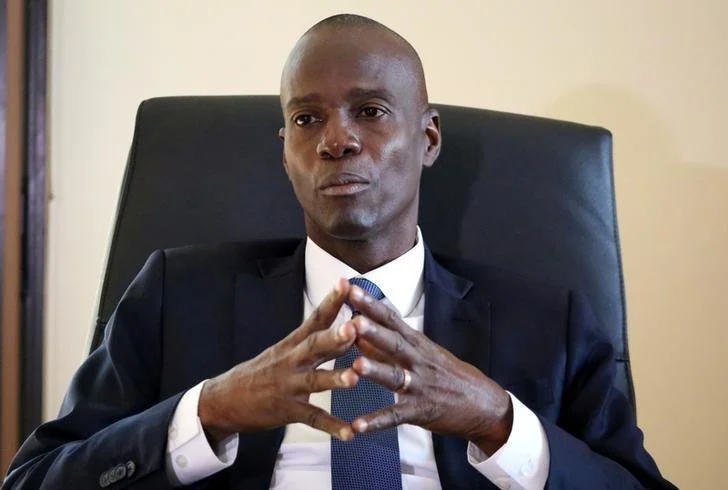
Money Laundering: Haitian President fires director of agency!
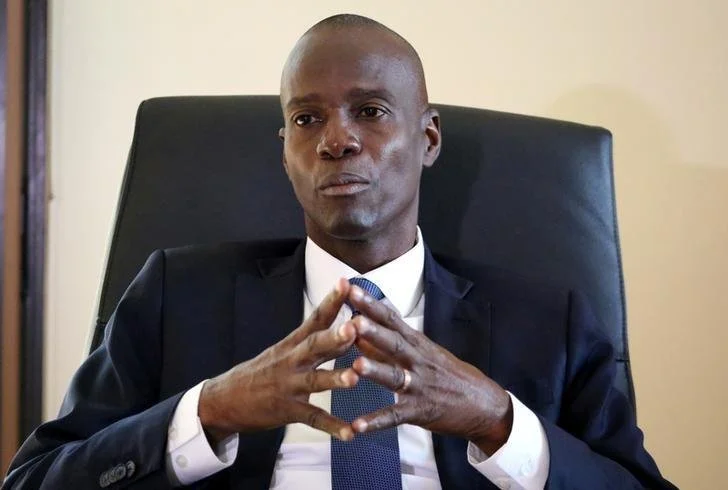
Haitian President Jovenel Moise last week fired the director of The Central Unit of Financial Information (UCREF) Sonel Jean-Francois, who was leading an investigation into money laundering allegations that were made against Jovenel Moise as President-elect; even though Jean Francois' mandate was not due to expire until 2020; a move that closely resembles the recent decision of American President Donald Trump, to fire the Director of the FBI, James Comey, who was investigating the possible collusion of Donald Trump's campaign with Russian operatives, in the hacking of the 2016 american election by releasing damaging leaks about Trump's opponent, former Secretary of State Hillary Clinton.
A new UCREF director was suppose to be installed Thursday, but the inauguration was cancelled, no other date was given and no question was taken from the press._______________________________________________________________
A few weeks after Jovenel Moise was officially declared President-elect of Haiti, an official report of UCREF about the financial transactions of the then President-elect was leaked to the media. The report concluded that there were numerous indications that the President had laundered money through a personal bank account which he held jointly with his wife, Martine Moise.
The UCREF report cited financial transactions of Jovenel Moise between 2007 and 2013 which were considered suspicious and forwarded to the Prosecutor's Office at the Civil Court in accordance with article 35 of the Law of 11 November 2013 on money laundering and The financing of terrorism.
The leaked report indicated that more than $5 million in suspicious transfers were made through a National Credit Bank account.
The president vehemently rejected the allegations as political maneuvers and while he didn't deny to have had an account at the National Credit Bank, he said that the account in question was in Haitian gourdes, not in US dollars, meaning that its value was 40 times less than reported. But the President has never made public any information related to the controversial account; such as pictures or any shred of evidence to prove that the bank account that was being investigated for money laundering was actually in Haitian gourdes and not in US currency, as alleged in the official UCREF's report.
The leaked report caused a huge scandal and the Haitian Senate had urged the Judiciary branch to take up the case. Four lawmakers on January 16th, 2017 penned a letter to the president of the Senate, Yourie Latortue to urge the National Assembly to give appropriate attention to the report before the inauguration of the President on February 7th, 2017.
Days after Judge Breddy Fabien took over the case, On January 25th 2017, Jovenel Moise, still as President-elect, interfered into the investigation by showing up at the judge's office without an invitation. The President said that he was not interfering but simply wanted to show that no one was above the law, not even himself, who had just been elected President of Haiti few weeks ago. The undisclosed conversation between the President and the Judge went on for more than two hours.People with close knowledge of the investigation and who have spoken under the condition of anonymity, said that Judge Fabien, behind closed door have also questioned the first lady, Martine Moise, in regards to the case.
Since the unexpected visit of the then President elect to the Judge's office, no one has ever heard of the money laundering case against the President, as rumors and suspicions about the president's possible money laundering continues to grow, after a close friend of the president, Guy Phillpe, a well known criminal who in 2004 had overthrown the democratically elected president of Haiti, Jean Bertrand Aristide and who had also been under an international search warrant by the US Drug Enforcement Agency (DEA) since 2006 for drug trafficking and international money laundering, was arrested by Haitian police and extradited to the United States 3 days before he was due to take the oath of office as Senator of the Grande Anse Department.
Guy Phillipe and then Presidential candidate Jovenel Moise publicly campaigned for each other, the endless pictures of them hugging and smiling together filled social networks, but since the arrest the president has not said a word about Philippe nor his arrest. The Special advisor to the Haitian President Guichard Dore, said in a local television interview that the then "poor candidate" Jovenel Moise like every other candidate was not in a position to know what case the Haitian justice had against him. You know, Guy Phillipe was not the kind of criminal known to every one was for decades, but some kind of alien that appeared out of nowhere.Guy Phillipe despite his long list of drug and financial crimes was allowed to run for Senator under the banner of the PHTK party, the same political party as the current president of Haiti, Jovenel Moise, as well as his immediate predecessor, Michel Martelly. Part of the investigation into Guy Phillipe's money laundering and drug trafficking by American justice is to also find out whom and what he has been financing with his illegal money. Political campaigns, such as that of the President himself perhaps?While it is easy to squash a money laundering allegations against the president in Haiti by interfering into the judge's investigation and firing the director of the agency which drafted the damning official report, the colossal mistake of the PHTK party to associate itself with a well known international drug trafficker, will continue to torment president Jovenel Moise, who seems to be sensitive about bad press, as Guy Philipe will continue to be on the news every time a new development during his trial in the United States takes place, and political names in Haiti, which are expected to have possible close connection to the PHTK party will continue to come out.During other times, high ranking american officials perhaps would have had something to say about the firing of the man leading the investigation into the Haitian president's money laundering allegations. Such as when the Obama administration condemned the Michel Martelly government when Judge Lamarre Belizaire fred two infamous criminals close to President Martelly: Woodly Etheart aka Sonson Lafamilia and Renel Nelfort on whom weighed heavy loads, including kidnapping against ransom, murder, illicit drug trafficking, money laundering and conspiracy.
The Special advisor to the Haitian President Guichard Dore, said in a local television interview that the then "poor candidate" Jovenel Moise like every other candidate was not in a position to know what case the Haitian justice had against him. You know, Guy Phillipe was not the kind of criminal known to every one was for decades, but some kind of alien that appeared out of nowhere.Guy Phillipe despite his long list of drug and financial crimes was allowed to run for Senator under the banner of the PHTK party, the same political party as the current president of Haiti, Jovenel Moise, as well as his immediate predecessor, Michel Martelly. Part of the investigation into Guy Phillipe's money laundering and drug trafficking by American justice is to also find out whom and what he has been financing with his illegal money. Political campaigns, such as that of the President himself perhaps?While it is easy to squash a money laundering allegations against the president in Haiti by interfering into the judge's investigation and firing the director of the agency which drafted the damning official report, the colossal mistake of the PHTK party to associate itself with a well known international drug trafficker, will continue to torment president Jovenel Moise, who seems to be sensitive about bad press, as Guy Philipe will continue to be on the news every time a new development during his trial in the United States takes place, and political names in Haiti, which are expected to have possible close connection to the PHTK party will continue to come out.During other times, high ranking american officials perhaps would have had something to say about the firing of the man leading the investigation into the Haitian president's money laundering allegations. Such as when the Obama administration condemned the Michel Martelly government when Judge Lamarre Belizaire fred two infamous criminals close to President Martelly: Woodly Etheart aka Sonson Lafamilia and Renel Nelfort on whom weighed heavy loads, including kidnapping against ransom, murder, illicit drug trafficking, money laundering and conspiracy.But we are living in the Donald Trump era, where an American ambassador to Haiti has still not been named five months after Donald Trump took office and how his controversial actions are still inspiring the Haitian President Jovenel Moise.
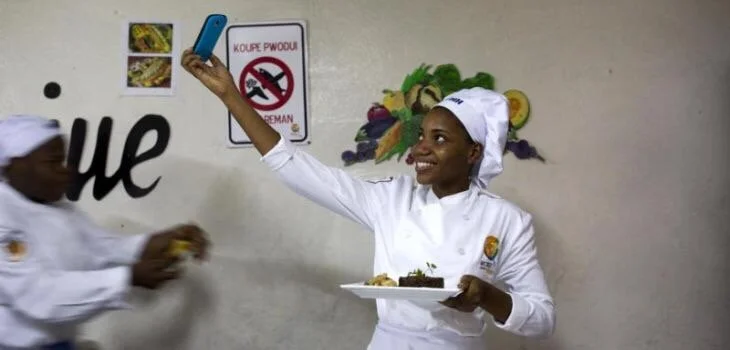
Haiti chefs carving out higher profile for country's cuisine
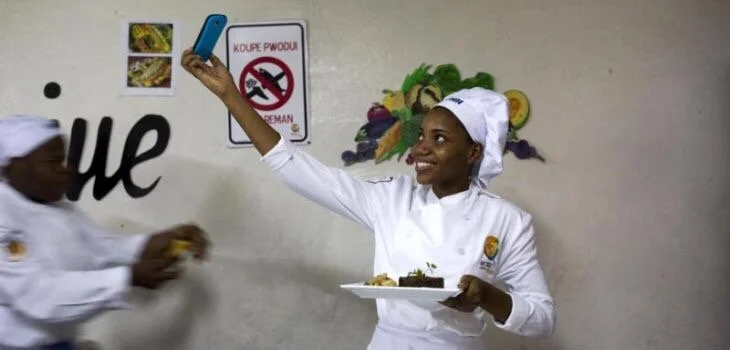
PORT-AU-PRINCE, Haiti - (AP) -- In a dining room in a wealthy district in the hills above Haiti's capital, waiters in black outfits whisk plates of crunchy malanga fritters and a creamy cornmeal dish to well-off locals and tourists. In the kitchen, the chef ladles glistening, fresh conch into a pot as his staff dice tomatoes and watercress.Haitian cuisine is a spicy confluence of French, Spanish, African and Amerindian cooking traditions that blends indigenous ingredients like the rich, earthy black mushroom known as djon djon with a variety of cooking techniques, crusted baguettes and flaky pastries. For decades, Haitian food has been seen as simple, hearty fare best simmered for hours over charcoal stoves at home or fried up and served in cheap curbside restaurants. Haitians who could afford a night out at a restaurant used to opt for versions of continental menus or a generic Caribbean fusion mimicking the food in island resorts.In recent years a new generation of Haitian chefs here and abroad has begun reimagining the country's cuisine. Traditional delicacies like the milky cornmeal beverage called akasan; the fiery carrot and cabbage condiment called pikliz; citrus-marinated chicken with boiled cashews; and whole fish in spiced broth are being prepared using haute cuisine techniques and served in the growing number of restaurants serving foreigners and Haiti's small middle- and upper-class."It's a real exciting time right now for Haitian gastronomy. We have serious, bona fide culinarians who are creative and focused on raising the profile of our food," chef Jouvens Jean said as chile-laced shrimp sizzled in a pan at Jojo Restaurant in Petionville.Accomplished chefs like Jean and Stephan Berrouet-Durand moved back to their homeland from the United States, importing the presentation and kitchen know-how of the various countries where they've worked, while others are increasingly vocal ambassadors for their food culture overseas, appearing on U.S. and European cooking programs."Suddenly, a lot of Haitian chefs don't have this fear of saying 'Haitian cuisine' out loud. It is becoming a very popular thing," said Georges Laguerre, a Miami-based food entrepreneur who ran a Haitian eatery in Los Angeles for over a decade.Dependence on food imports has grown as a result of intractable economic stagnation, but local favorites like malanga root, chayote squash and a dark spinach are still grown organically on farmland plowed by oxen and maintained without pesticides or chemical fertilizers only because most farmers could never dream of affording them.The fact that Haiti has a vibrant food culture at all can be surprising to those who only associate this Caribbean nation with hunger and crushing poverty. But even through decades of decline and recurrent political turmoil, Haiti never lost its delicious recipes."I think one of Haiti's greatest resources is its food. I have yet to meet anyone who did not appreciate the flavors of traditional Haitian cuisine," said Nadege Fleurimond, a Haitian-born writer and caterer based in New York City whose 2014 cookbook "Haiti Uncovered: A Regional Adventure into the Art of Haitian Cuisine " helped kick-start a fresh look at the country's recipes.Some beloved dishes have roots stretching back to Haiti's founding on Jan. 1, 1804, following the world's only successful slave rebellion. The vibrantly colored pumpkin soup known as joumou is a typical Sunday dish and a must on independence day for the world's first black republic. During the dark days of bondage, plantation slaves in Haiti were prohibited from eating an aromatic squash soup - a favorite of their French masters - or much of anything else other than rudimentary provisions."When we got our independence what better way to celebrate than to eat the very thing that we were unable to eat as slaves," Fleurimond said.Haitian restaurants and food festivals are springing up in cities such as Miami and Montreal, where members of the Grammy-winning rock group Arcade Fire back a Haitian eatery that serves specialties like stewed oxtail over rice along with cocktails made from the country's Barbancourt rum.One famed chef, Spanish-born Jose Andres, turned his culinary adventures around Haiti into a 2015 television documentary.In a culinary school in downtown Port-au-Prince operated by Andres' nonprofit and the Haitian government, young people eagerly prepare for careers as the nation's chefs and food-industry professionals, learning the basics of preparing dishes delectable to the eye as well as the palate."Haiti has a rich culinary history and we make sure we celebrate that in our curriculum," said Andres, whose World Central Kitchen nonprofit is also working to rejuvenate the country's fishing sector by investing in a new processing facility in the south coast town of Jacmel.A growing pride in Haitian food is apparent among aspiring chefs."This is my country's culture and I want to show it off," said 23-year-old culinary student Peraldine Alceguerre as she sliced juicy Haitian mangos to bake into a pie.Source : The Associated Press By DAVID McFADDEN (Associated Press)
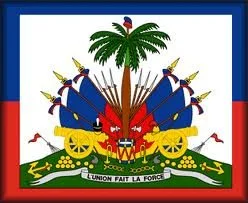
MAY 18 | HAITIAN FLAG DAY
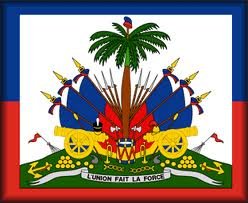
One of the primary symbols of Haitian freedom is the Haitian flag created in Arcahaie, a town located outside of Port-Au-Prince) on May 18, 1803. Since then, May 18th has been observed as the Haitian Flag Day as it has become a symbol of pride, unity, and individual liberty. In Haiti, Flag Day is a major national holiday celebrated with great fanfare on the grounds of the national palace and all cities in the country; also in other countries with a large number of Haitians. In the United States, Haitians give homage to the blue and red flag by carrying it around them for at least a week. As a matter of fact, the Haitian flag is tightly linked to a history of struggle and freedom.On August 21, 1791 the Haitian Revolution began its struggle against the French occupation. From 1791 to about 1793, the revolt became more widespread and gave rise to a number of large groups still fighting independently. In those times, each main leader would use any piece of cloth as a flag. Slowly the slave movement found some synergy and came to follow the leadership one main person: Toussaint Louverture. He had led his whole war with the French tricolor: blue, white and red flag. After the capture of Toussaint, Jean-Jacques Dessalines had taken up the torch in 1802 with the same color flag, but with a slight difference: the general had simply removed the French rooster and the initials RF République de France which at that time were found on the white band of the flag of the French Republic.
At that time, an original Haitian flag was not yet created. The fact that the rebel army was carrying a French flag was presented by the press of the time under the title of "Proclamation." The headquarters of the French army in Saint Domingue pretended that this tricolor flag, carried as a rallying sign by the indigenous army, was proof that the insurgents were not fighting for the independence of Saint Domingue but only to keep their liberty, just like the French of the home land, a liberty that the First Consul, the dictator Napoleon Bonaparte wanted to take from them.
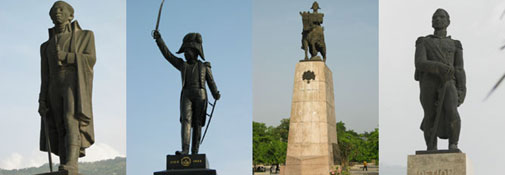
Toussaint Louverture, Jean-Jacques Dessalines, Henri Christophe, Alexandre Petion
During a famous battle in the Cul-du-Sac, a plain not far from Port-au-Prince, on December 1, 1802, Alexandre Pétion confronted the colonial troops of Gilbert Gérard.
This confrontation was not successful to the rebel army and in the course of retreat, they lost the tricolor flag which was quickly seized by the enemy as a prize of war. This served to reinforce the determination of Pétion about the necessity for the rebels to have their own flag. In February 1803, when Pétion happened upon this newspaper which contained the story of his flag lost during the battle of December 1, he raced to get the newspaper in question to the headquarters of Dessalines, the commander in chief, in Petite-Rivière de L'Artibonite; he carefully explained the affair in details and took the opportunity to advise the commander-in-chief that the revolutionary army urgently needed to adopt a different flag.
Dessalines immediately reacted to Pétion's recommendation. He grabbed a red, white and blue flag, and with a sharp jerk, ripped the white stripe to pieces and joined the blue and red together, making the first Haitian flag, symbolizing the union of the mulattoes and the blacks against the colonialist, pro-slavery France. That is how the famous national bicolor was born between the end of February and the beginning of March 1803.
Pétion wanted to hold a big meeting with all the high ranking officers where this new flag would be adopted after debate. Pétion finished by convincing Dessalines and his principal lieutenants, in particular his private secretary and confidant Boisrond Tonnerre, to hold a major meeting during May in Arcahaie.
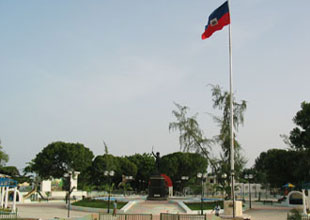
This meeting, known as the Congress of Arcahaie, was set for May 14 to 18, 1803; the agenda had two essential points: the establishment of a united command of the revolutionary army under the supreme authority of Jean-Jacques Dessalines, and the adoption of a flag by the indigenous army. The two principal leaders at this time, Dessalines and Pétion, jointly drew up this agenda. On May 14, 1803, military delegations flocked to Arcahaie; only a few of them were from the south.
The principal heads of the insurgency did answer the call. The Congress was opened by Dessalines and Pétion May 15, 1803, on the Mérotte plantation in Arcahaie. The two men focused on the military situation, insisting on the need for all forces rebelling against the enemy to unite so that victory would be more rapid and decisive. Curiously, there was not a word about the new Haitian flag; priority was put on new strategies and tactics to thwart the colonial army and also to select a Commander of the insurrection army.Dessalines was appointed general-in-chief of the insurrection army.The question of the new Haitian Flag came up on the last day, May 18. The new Commander General suggested the old slogan "Live Free or Die" be replaced by "Liberty or Death." The debate over the proclamation of the creation of a new Haitian flag lasted a whole day. It was only in the evening that the Congress of Arcahaie definitively adopted the new Flag of Haiti. The white stripe was eliminated, while the remaining red and blue bands were attached together. The removal of the white stripe symbolizes the abolition of the White Man's control and the union of blacks and mulattoes in Haiti. The arms are composed of a palm tree surmounted by the Phrygian cap of liberty and ornamented with trophies with a banner across the bottom saying "L'Union Fait La Force" (through Unity there is Strength). 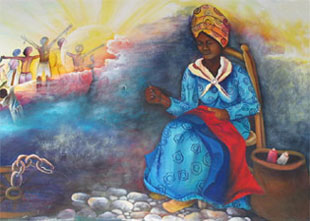 By this gesture, they publicly designated that this country no longer wanted to be recognized as a French territory and that the people who lived on this land preferred to be dead rather than be slaves. "Liberté ou la Mort!" meaning "Liberty or Death" had become the new motto as it had already been embraced at the Ceremony of Bwa Kayiman " held on August 14, 1791.Haiti's first flag was sewn by a lady named Catherine Flon at the Congress
The French troops were defeated during the battle of Vertieres (November 18, 1803). Their capitulation allowed the proclamation of Haiti's independence on January 1 st , 1804. Haiti new flag has been raised proudly all over the country.Since May 18, 1803, the Haitian flag has known many changes in position or of color. Haitian flag has known many changes in position or of color.


 In 1805 , shortly after Jean-Jacques Dessalines proclaimed himself emperor, the Haitian flag color was changed to black and red bands placed vertically respectively. After the emperor's death, in 1806, the country will be divided into two republics for 14 years. Henri Christophe , in the northern part kept the flag that Dessalines used.In the South and the western part of the country, Alexandre Petion nourished the idea of giving the indigenous army its own flag. He went back to 1804's flag that was blue and red only this time he added the white squared portion that included the country arms and the famous motto " L'UNION FAIT LA FORCE ", meaning that through unity we find strength.This flag was in use till 1964 when Papa Doc Duvalier modified it with the black-red vertical bicolor of Dessalines on which he added a modified version of the arms of the Republic.On February 25 1986, after the fall of Baby Doc and the Duvalier regime, the Haitian flag was again changed with the request of the Haitian people to two equal-sized horizontal bands, a blue one on top and a red one underneath. The coat of arms of the Republic remained in the center. That is the flag used until today.As we celebrate the Haitian flag Day, we need to remember that our ancestors created this bicolor blue and red as a symbol of unity among all of us of Haitian descent to fight colonialism and live free forever.
In 1805 , shortly after Jean-Jacques Dessalines proclaimed himself emperor, the Haitian flag color was changed to black and red bands placed vertically respectively. After the emperor's death, in 1806, the country will be divided into two republics for 14 years. Henri Christophe , in the northern part kept the flag that Dessalines used.In the South and the western part of the country, Alexandre Petion nourished the idea of giving the indigenous army its own flag. He went back to 1804's flag that was blue and red only this time he added the white squared portion that included the country arms and the famous motto " L'UNION FAIT LA FORCE ", meaning that through unity we find strength.This flag was in use till 1964 when Papa Doc Duvalier modified it with the black-red vertical bicolor of Dessalines on which he added a modified version of the arms of the Republic.On February 25 1986, after the fall of Baby Doc and the Duvalier regime, the Haitian flag was again changed with the request of the Haitian people to two equal-sized horizontal bands, a blue one on top and a red one underneath. The coat of arms of the Republic remained in the center. That is the flag used until today.As we celebrate the Haitian flag Day, we need to remember that our ancestors created this bicolor blue and red as a symbol of unity among all of us of Haitian descent to fight colonialism and live free forever.
Source: Haitantreasures.com
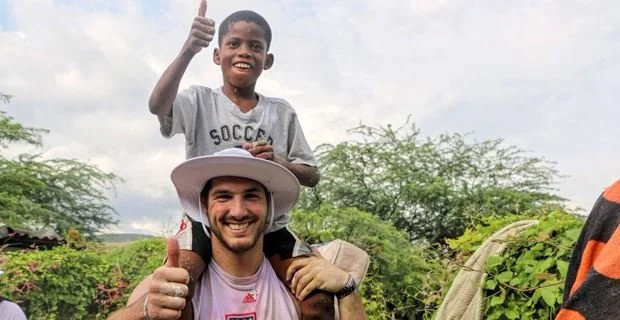
Aggie athletes headed to Haiti on mission trip this weekend
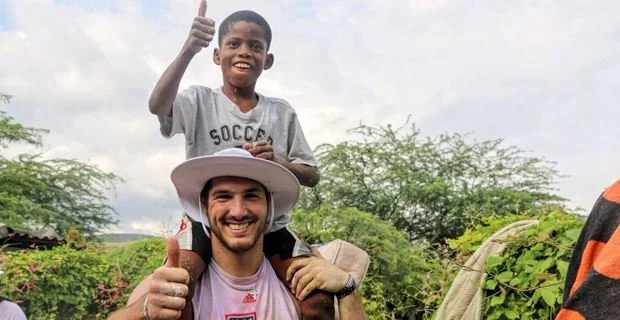
A year ago, at the suggestion of graduate transfer quarterback Trevor Knight, who had made the trip multiple times before, several Texas A&M athletes went on a mission trip to Haiti over the summer.A year ago, Director of Player Development Mikado Henson talked about how the trip came to be.“When Trevor Knight transferred from Oklahoma, I told him about the trip and it is the same organization that takes OU. He’s been there three times and he told me, ‘Mikado, I’m an Aggie, but I’m going back to Haiti whether it is with A&M or OU. I’m going back.’ Jake Hubenak is going back and I don’t care whether you are scholarship or not, offense or defense, black or white. We’ve got 15 football players signed up and we’ve all had to raise money."Fifteen football players, 12 volleyball players and one soccer player made the trip. The football players included the likes of Knight, Hubenak, Myles Garrett, Daeshon Hall, Josh Reynolds, Otaro Alaka and Koda Martin.Now, a year later, there will be 67 athletes from A&M making the same trip."About ten percent of our student athlete population is going with us this year," Hinson recently told KBTX. "We'll do a lot of painting of homes, delivering goats as a form of income and stewardship. Building, painting, planting... We told them we'll bring plenty of manpower."It's amazing to see what we get to do there, but it's even more amazing to see what happens in us," Hinson said. He remarked that students returned last year with a renewed since of humility and brotherhood. "It's an eye opener."The group will be leaving on Sat., May 13 and will return a week later on May 20. With most athletes having to take summer school in order to work out with their sports over the summer, the group going on the Haiti trip will be giving up almost all of their summer vacation.Brian Perroni - May 10, 2017
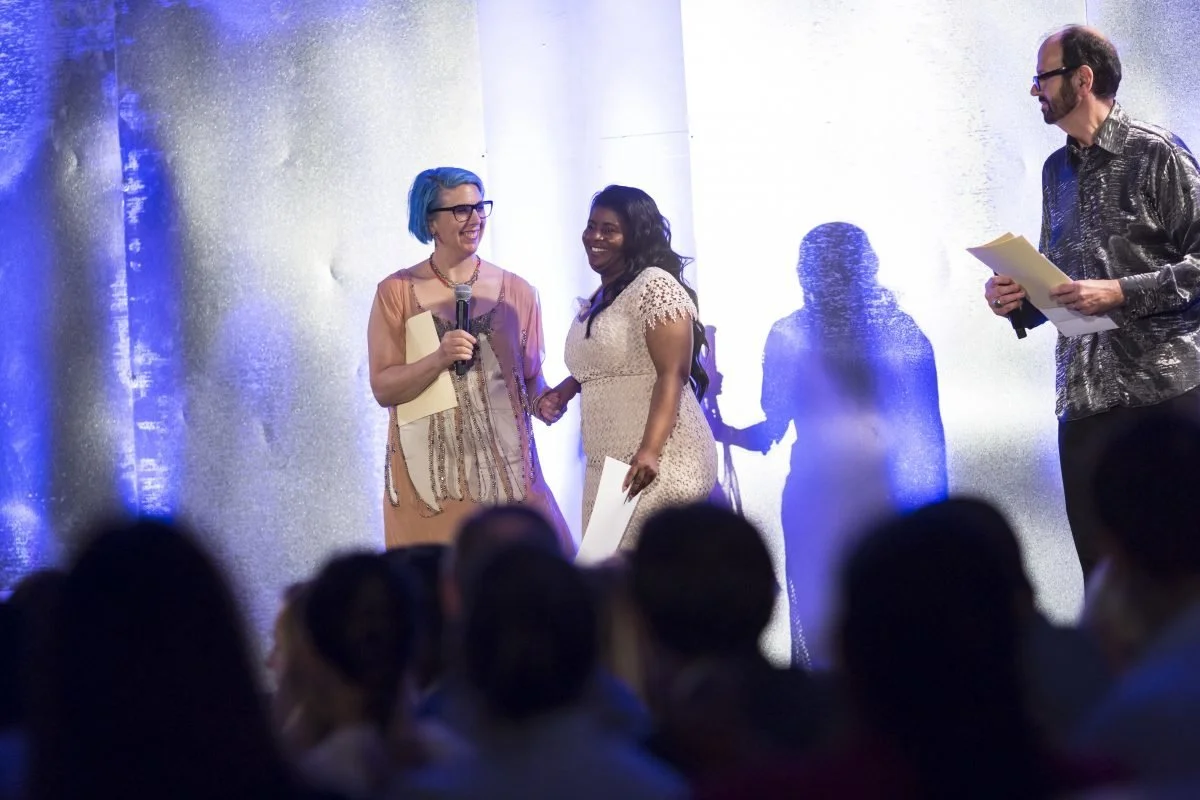
From Haiti to Philly, From Nurse to Bridal Designer
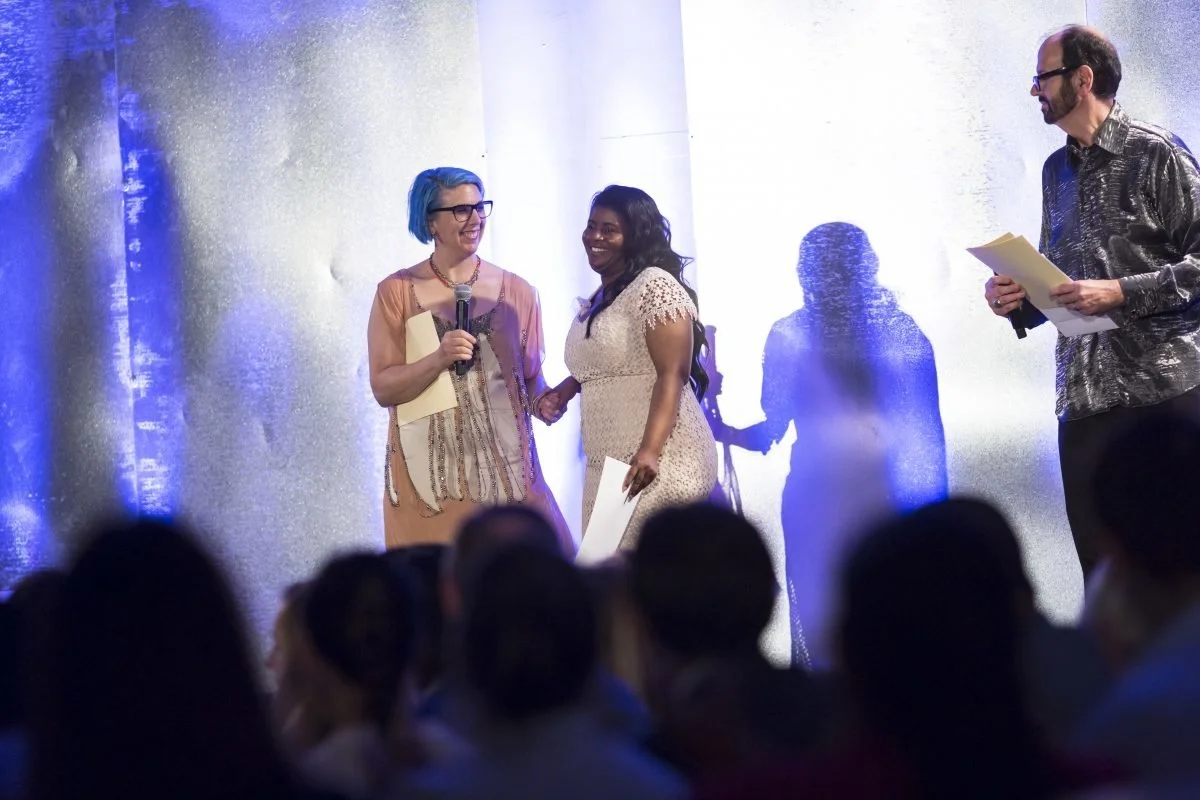
As a child in Haiti, Madelange Laroche dressed her dolls in fashions she’d made herself. As a teenager, she made school uniforms for herself and seven relatives. She dreamed of a career in fashion, designing formal wear and wedding dresses.Then life derailed her. Emigrating to the United States and learning a new language was challenging. To support herself and her brother, she took up nursing, working her way up from home health aide to certified nursing assistant to licensed practical nurse.“I thought, ‘Well, I can do fashion on the side and be a nurse full-time,’ ” Laroche said.That didn’t quite happen. Four years ago, she began studying for a bachelor’s degree at Moore College of Art and Design. She dazzled in the classroom while working more than 40 hours a week at two nursing jobs. Her work won designer Frank Agostino’s critic’s choice award at a student showcase. Last week, a dozen friends and family members — many of whom had traveled from Haiti and Florida — came out to support her at her senior fashion show at the Barnes Foundation.At 36, the new Moore graduate is finally finding her way into fashion. She’s not deterred by her age or her responsibilities. Those who know her say they have a difficult time imagining anything can hold her back now.“She’s absolutely driven, and I think she can make a go of it,” said award-winning fashion designer Danny Noble, who worked with Laroche at Moore. “I’m sure she makes a decent income as a nurse and it’s incredibly admirable that she has such courage and drive.” Agostino, who has been judging Moore student contests for about 12 years, said Laroche was definitely in his top 10, maybe even the top five. “I have great respect for her. If anyone could make a living at it, she’s the one.”Laroche’s unique background and life experiences infuse her design aesthetic. She paints or weaves fabrics as she learned to do as a child. Classic silhouettes are embellished with details and embroidery, and extremely complex designs are superbly constructed, Noble said.Her dream is to create formal wear, specifically wedding gowns. When her bridal wear first appeared on the runway last week, there was a collective gasp from the audience.“It’s just a matter of time,” said Le Tran, who teaches technical design to Moore seniors. “She can do anything.”Laroche was largely raised by her grandmother while her mother worked as a dry cleaner and seamstress in the U.S. She remembers picking up scrap fabric and making her first doll dress at 7. She showed it to her sister.“She said, ‘That’s very nice,’ but I didn’t know if she was telling the truth or not, but since that day, I started making doll dresses,” Laroche said. When Laroche was 12, her mother returned to Haiti after five years away. To reconnect with the family, Laroche’s mother asked whether any of the children would like to learn how to sew.“Nobody said anything,” Laroche recalled, “and I felt so bad for her, so I raised my hand and said OK.”Laroche and one of her brothers sat down and learned how to take measurements and cut fabric and made a pencil skirt. It was Laroche’s true start as a designer.“I never stopped. I never stopped looking for fabric,” Laroche said, describing how she’d hide in her grandmother’s closet and hand-sew the older woman’s garments into new shapes and styles that would fit her.Then, she said, she’d wait until the rest of the family had gone to church to emerge wearing her grandmother’s now-altered clothes.When she was 16, Laroche persuaded her grandmother to let her make the school uniforms — a white blouse and an olive green skirt or pants — for the family. She changed the design, adding olive green accents to the shirts. School officials protested and demanded the uniforms be, well, uniform. But within weeks, about half of the school’s students had altered their shirts accordingly. Administrators gave in. “They said, ‘Well, it’s a lost game’ and it became our school uniform and it made us stand out,” Laroche said. “I don’t know but I think they were proud that a 16-year-old could do that.”In 2001, with high school completed, Laroche moved to Florida to live with her mother. After two aborted attempts at attending a fashion school — cost and the language barrier held her back — Laroche took a friend’s advice and tried nursing.It was steady work, just what she needed after she settled in Philadelphia and took in her 33-year-old brother, who has mental handicaps that weren’t fully understood in Haiti. She decided to get her bachelor’s degree in nursing and began taking classes at Manor College. She still designed and made clothing — dressing the entire bridal party for a relative’s wedding, designing both a ceremony and a reception dress for a teacher — but fashion design became a hobby, not a destiny.And then, during a meeting with her college adviser, the truth burst out: She wanted to go to fashion school. She would love to open a made-to-order wedding dress business. The adviser was surprised. Another student who’d overheard the conversation told Laroche to look into Moore, where Project Runway Season 10 winner and Philly native Dom Streater had studied.Four years later, her senior show was about to begin and Laroche was nervous and excited. She wore an off-white lace appliqué formfitting dress that she had started making at 11 p.m. the evening before.It fit perfectly.by Natalie Pompilio | May 16, 2017

Team Broken Earth to Host 3rd Orthopaedic Trauma Symposium in Port-au-Prince, Haiti


ST. JOHN’S, NEWFOUNDLAND AND LABRADOR and PORT-AU-PRINCE, HAITI (May 15, 2017)—Team Broken Earth will undertake its third Orthopaedic Trauma Symposium in Port-au-Prince, Haiti this week. The Pan-Canadian Medical Team, led by Dr. Andrew Furey, founder of Team Broken Earth, will head to the region on Tuesday, May 16, 2017 with the Symposium taking place on May 18 and 19. About 60 Medical Residents and Staff Physicians are expected to take part from four Port-au-Prince hospitals: l’Hôpital de l’Université d’État d’Haïti (HUEH); Hôpital Université de la Paix; Hôpital Justinien; and, Hôpital Bernard Mevs.“Team Broken Earth, through its over 1,000 volunteers across Canada and the United States, continues to have far-reaching effects on the lives of people in Haiti,” said Dr. Andrew Furey. “We have had a sustained medical relief effort in the country since the devastating earthquake in 2010, and it remains the core of our organization’s efforts.” Team Broken Earth has now expanded around the globe to also bring support to Nicaragua, Guatemala, Nepal and Bangladesh.The Symposium is intended to upgrade knowledge and skills for those practicing orthopaedic trauma care, including treatment of upper and lower extremity injuries. It will also focus on immediate care of injured patients with extremity injuries. The Symposium is funded through an educational grant from DePuy Synthes, part of Johnson and Johnson Medical Products. Team Broken Earth also acknowledged l’Hôpital Bernard Mevs/Project Medishare for facilitation of the Symposium and delivery of equipment in Haiti.Canadian Ambassador to Haiti, Paula Caldwell St-Onge, will officially open the Symposium on May 18. During this mission, Haitian President Jovenel Moïse and Prime Minister Dr. Jack Guy Lafontant are expected to extend a thank you to the organization for all it has done for the people of Haiti. A delegation from Canada’s Senate will also observe the Symposium on May 19.“We are humbled by the many thanks we receive for our efforts,” said Dr. Furey. “For us it’s about changing someone’s world for the better, and giving them hope to carry on, care for others and provide leadership in very difficult times.”The May 2017 Mission Team includes:Dr. Chad Coles (NS)Dr. Andrew Furey (Lead) (NL)Dr. Stephen Hunt (AB)Dr. Robert Leighton (NB)Dr. Ross Leighton (NS)Erin Marshall (NL)Dr. Rod Martin (NL)Karen McCarthy (NL)Kurt Misik (NL)Dr. Steve Papp (ON)Dr. Brad Petrisor (ON)Dr. Arthur Rideout (NL)Dr. Prism Schneider (AB)Broken Earth owes a debt of gratitude to its many sponsors and supporters, as well as Dr. Joanna Cherry, Chief Medical Officer, Hôpital Bernard Mevs, for her on-the-ground support in Port-au-Prince.About Team Broken EarthTeam Broken Earth is a volunteer task force composed of physicians, nurses, and other health professionals from across Canada and the United States committed to delivering and improving healthcare in impoverished nations.The team was initially assembled to support the relief effort in the aftermath of the 2010 earthquake that left the people of Haiti in dire need of medical assistance. From this extensive frontline experience, Team Broken Earth determined that the people of Haiti needed a sustained medical relief effort to help rebuild the country’s healthcare system and create sustainability through education of Haitian people and health care professionals. Our teams treat patients, providing acute care to the people of Haiti, but also work with Haitian medical professionals to train and upskill them in best practices, and educate the Haitian people on matters of public health. The model used in Haiti has been extended to other nations in need as Team Broken Earth expands its mission footprint.Many members of our team volunteer their vacation time to join our effort. Team Broken Earth is in Haiti to make a difference… for as long as it takes.For more information visit www.brokenearth.caBroken Earth | May 16, 2017
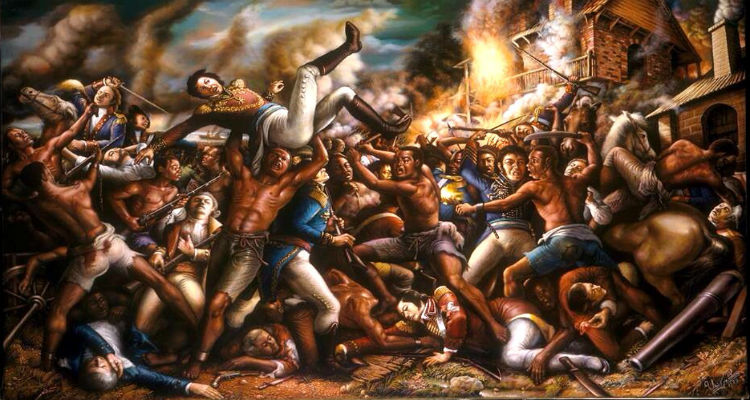
Chronicles of a Chronic Caribbean Chronicler: Europe and US dodging demands for slavery reparations
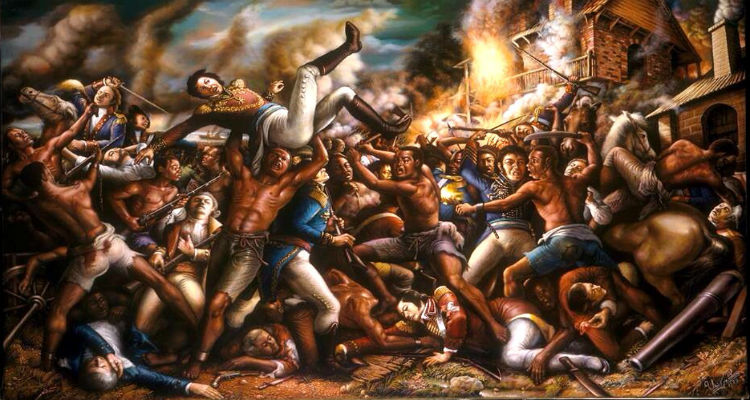
Today, over 180 years after abolition, descendants of African slaves in the Caribbean, North and South America are demanding reparations for slavery from Europe – and the United States.
 |
| Earl Bousquet is Editor-at-Large of The Diplomatic Courierand author of the regional newspaper column entitledChronicles of a Chronic Caribbean Chronicler |
In the Caribbean, the demands include apology and atonement for 400 years of both slavery and native genocide; in the USA it’s about compensation for African American descendants of slaves; and in South America, today’s descendants of Africans (who arrived both as shipwrecked mariners and slaves) are demanding their fair share of recognition, equality and atonement.Africa and the Caribbean experienced the brunt of the brutal slave trade that saw Europeans sail to West Africa, kidnap millions of men and women and ship them like animal cargo to the newly colonized ‘West Indies’ captured through wars of extermination against the original native ‘Caribs’ and ‘Arawaks’.While the focus of British and French slavery was mainly concentrated on the Antillean (Caribbean) islands and mainland territories (including Haiti) that they claimed to own, the Portuguese and Spanish concentrated on South American mainland territories such as Argentina, Brazil, Colombia, Costa Rica, Chile, Ecuador, Peru and Venezuela, as well as the larger islands of Cuba and Puerto Rico.In the case of the USA and South America (except in Brazil), African descendants form small minorities, unlike the 15 Caribbean Community (CARICOM) member-states, where they form an absolute majority, in each case.CARICOM governments have thus easily and collectively agreed to a joint approach to the European Union (EU) member-states that benefited from slavery, inviting them to discuss reparations by way of acknowledgement and atonement.The EU countries have so far resisted engaging the Caribbean in any discussions whatsoever on reparations, the likes of former British PM David Cameron saying during an official visit to Jamaica that traditional aid and assistance given by Britain since independence to the former colonies has sufficed.But the response by the Britain, Denmark, France, The Netherlands, Portugal and Spain, thus far, (or lack thereof) is very much unlike when France demanded reparations after the first African slaves in the Caribbean – and the world -- successfully revolted.Haitian slaves, led by Toussaint L’Ouverture, rebelled in 1791 and declared their independence in 1804. Not even in Africa had a free nation yet been born and the humiliated slave masters enlisted the support of the French government to make the former slaves pay dearly for their freedom.In 1825, France demanded 90 million gold francs to recognize Haiti’s independence -- the same amount demanded in compensation by the former slave masters.Historians and economists agree that this high cost paid by Haiti to France over 122 years (payments continued until 1947) is largely responsible for the country having been almost eternally anchored in poverty.In 2003, Haitian President Jean Bertrand Aristide called on Paris to return the 90 million gold francs, by then estimated at US $21 billion. Soon after, however, he was swiftly and secretly taken hostage by US and French forces and exiled to South Africa.French President Francois Hollande, in May 2015, ahead of a visit to Port au Prince, said Paris “will repay its debt” to Haiti – only to later retract, saying he only meant repaying France’s “moral debt”.The Hollande disappointment notwithstanding, no other concerned EU member-state has even mentioned the possibility of considering paying reparations for slavery – in the Caribbean or North or South America.Same in the USA, where not even President Barack Obama accommodated calls to initiate reparations moves and to pay to survivors the wages of the slaves who built the White House.In 1865, Union General William Sherman set aside thousands of acres of land for newly-freed American slaves, by way of a special field order. But President Andrew Johnson soon returned the titles to the original white owners. Freed slaves were also each promised “40 acres and mule” to start their own lives. But here too they were disappointed.The US Congressional Black Caucus has for the past 28 years backed a bill called HR-40, submitted annually by Michigan Rep. John Conyers, calling for a commission to study “the Reparations Proposals for African Americans Act”. Designed to examine the negative effects of slavery, it also seeks to “recommend appropriate remedies”. But HR-40 has long been referred to the House Judiciary Committee, where it has since remained...US blacks are somewhat divided over what mechanism to use to assess the real costs and value of slave wages and related rates of conversion over the centuries slavery lasted.Likewise, white Americans largely reject calls by blacks for reparations, some seriously arguing that ‘slaves were freed by the Civil War’ and ‘blacks benefited from affirmative action’ government policies over the years.The reparations movement is however gaining traction across the hemispheric horizon.The momentum has just begun in South America, with an International Reparations Conference held in Cali, Colombia in March 2017, essentially to outline a road map for the movement for recognition and inclusion of the African-descended minority across the continent.The African Americans are encouraged by a 2016 report by the Geneva-based United Nations Working Group on People of African Descent, urging US lawmakers to implement reparations, citing “a legacy of colonial history, enslavement, racial subordination and segregation, racial terrorism and racial inequality.”Also, according to an exclusive poll released in March 2017 in conjunction with a new PBS Series ‘Point Taken’, 40 percent of US ‘millennials’ think there should be reparations for African American descendants of enslaved people.Indeed, some of the leaders of the revived reparations movement in the USA are confident enough of the momentum gained thus far to conclude that ‘this could be reparations’ best chance since 1865.’In the Caribbean, the governments’ approach is naturally quite different from North and South America – more diplomatic than agitational, seeking dialogue over confrontation.In March 2014, the CARICOM governments unanimously adopted the ten-point plan to demand “Reparatory Justice for the victims of Crimes against Humanity in the forms of genocide, slavery, slave trading and racial apartheid.” The EU member-states that built their imperial wealth on slavery were also duly informed.A CARICOM Regional Reparations Commission was also appointed (chaired by the vice chancellor of the University of the West Indies Sir Hilary Beckles), with national reparations committees also established in member-states.The Caribbean hasn’t put a price tag on slavery, even though a sum of US $17 trillion is often mentioned. Instead, it’s seeking a mutually agreed CARICOM-EU approach to what forms the atonement will take, to the common and mutual benefit of all the CARICOM states and peoples.Failing this negotiated approach, the Caribbean countries reserve the right to file formal criminal charges against the culprit EU member-states at the International Criminal Court (ICC)).Citing the will of the Western world to proudly acknowledge and atone for the Jewish Holocaust, reparations paid by the US government to Japanese interned during World War II, reparations made to US native peoples and Britain recently being ordered by its own courts to pay reparations to tribal Kenyan ‘Mau -Mau’ independence fighters, CARICOM feels it has a very good case.Those demanding reparations for slavery everywhere are also buoyed by the UN’s declaration of 2015 to 2024 as the Decade for People of African Descent.The CARICOM Prime Ministerial Subcommittee on Reparations (led by Barbados Prime Minister Freundel Stuart) met in late April 2017 to review European responses to their request for a negotiated settlement.In the meantime, the 15 member-states, including Haiti, are preparing their individual legal cases for collective submission to the ICC, should the culprit EU member-states continue to dodge and dither to duck their individual and collective responsibilities for the greatest ‘crime against humanity’ known to mankind.The reparations demands by African descendants in CARICOM, US and South American states do have the backing of regional and international entities, including similar non-governmental Europe-based movements and an increasing level of interest and support from African states and entities, including the African Union (AU) and the Pan African Congress (PAC).The European and American governments today may continue to duck their responsibilities. But the results of the strong reparations demands on them, whether achieved today or tomorrow, also offer added hope to the likes of the Australian Aborigines and New Zealand’s Maori first peoples, who may have received formal apologies, but continue to feel treated less than equal in the lands they first inhabited.Meanwhile, the Grenada ‘slavery and tourism’ discussion is an interesting starting point to revive earlier discussions on the establishment of a national reparations committee (NRC) for Grenada, Carriacou and Petit Martinique.That will not only be in line with the reality of the vast majority of CARICOM member-states (where NRCs exist), but will also facilitate ongoing discussion across the three-island state on reparations and related issues during the UN Decade for People of African Descent, which continues until December 31, 2024.Caribbean News Now
New initiative will promote digital jobs in Haiti
 PORT AU PRINCE, Haiti -- Entrepreneurs in Haiti will soon have broader access to technical skills training, because of an initiative to promote digital jobs in the country. The initiative is led by LACNIC, the Internet Registry for Latin America and the Caribbean.Since 2013, LACNIC has strengthened the technical skills of more than 300 Haitian ICT students and professionals, through a project called Ayitic. This year, LACNIC has expanded the project.“In this new phase, Ayitic is going global, adding important innovations such as technical courses delivered via an e-learning platform, training for women in digital data management, and efforts aimed at inserting participants in digital employment markets,” a release from LACNIC said.Some of the new training workshops will be offered to women aged 18 to 25, enabling a target group of young female Haitian entrepreneurs to create and find jobs in Haiti and abroad."The goal of these transformations is that, in addition to promoting Internet development at the local level, the initiative will help promote the digital services market, creating new job opportunities in both local and international markets, in the latter case through the outsourcing of services," noted Carolina Caeiro, cooperation project coordinator at LACNIC.The project also anticipates the creation of an information technology cluster in Haiti led by Max Larson Henry of Transversal, which is expected to boost Haiti's Internet infrastructure. The cluster will seek to promote initiatives that impact on the security and stability of the Haitian Internet.Ecole Supérieure d'Infotronique d'Haïti will be the local organization responsible for the project, with the support of local consultants.Other organizations participating in the initiative include the Caribbean Open Institute of the University of West Indies, 3x3 Design and Slashroots.The project has the support of the International Development Research Centre, a public corporation created by the Canadian government to help communities find solutions to social, economic and environmental problems. http://www.caribbeannewsnow.com/topstory-New-initiative-will-promote-digital-jobs-in-Haiti-34434.html
Trump Thinks This Is Pro-Life?
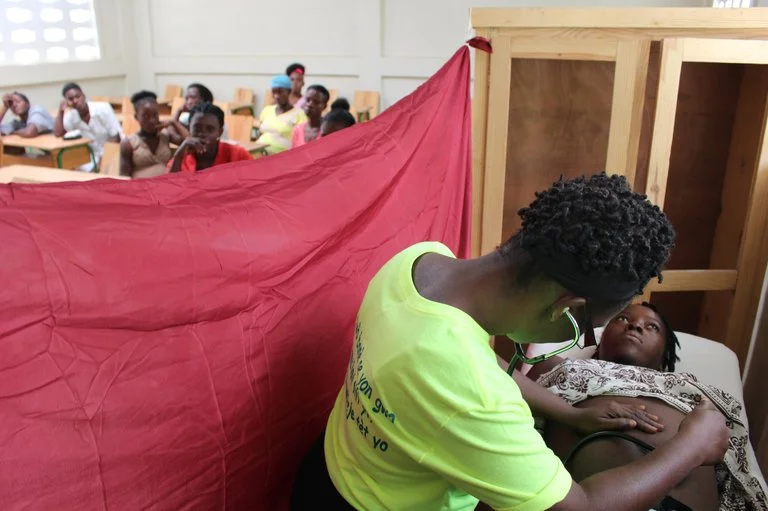

PORT-AU-PRINCE, Haiti — When President Trump and his (male) aides sit at a conference table deciding to cut off money to women’s health programs abroad, they call it a “pro-life” move.
Yet here in Haiti, I’ll tell you the result: Impoverished women suffer ghastly injuries and excruciating deaths. Washington’s new women’s health policies should be called “pro-death.”
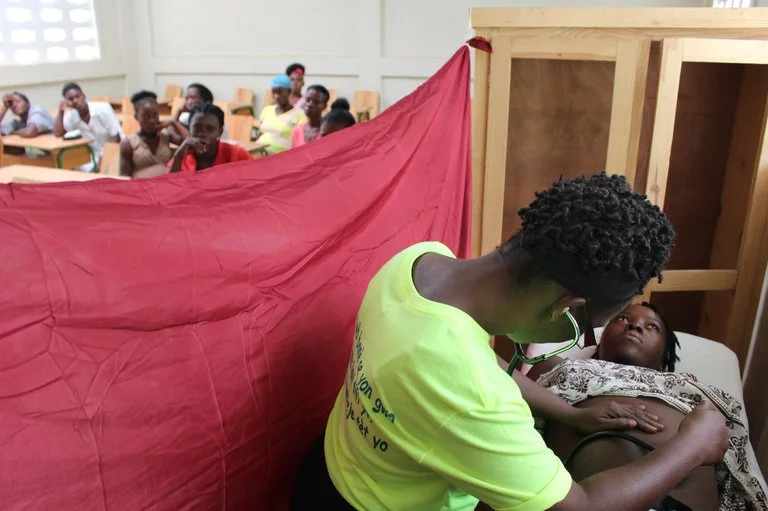
When women and girls don’t have access to family planning and reproductive health care, they’re more likely to suffer pelvic organ prolapses, in which the bladder, uterus or bowel may protrude from the vagina. Or they suffer a fistula, a childbirth injury that leaves them leaking urine or feces, stinking and ostracized, and sometimes unable to walk. Women with prolapses or fistulas sit in their huts, humiliated, wondering if they are cursed, waiting to die.
In a room here in the Haitian capital, women with cervical and breast cancer wait for nurses to examine their ulcerated bodies. Beyond their almost unbearable physical pain is their mortification that they smell of rotting flesh, and in some cases incontinence. They are heroic in their quiet refusal to give up.
It’s not that these horrific conditions are caused by U.S. policy, but Trump is now halting all funds for many organizations working tirelessly to prevent this suffering. First came the “global gag rule,” ending funding to overseas health aid groups linked in some way to abortion, including counseling that mentions it as an option.
The latest is that Trump just cut every penny the U.S. provides the United Nations Population Fund. This organization has nothing to do with abortions but is a central player in the global effort to fight for women’s health.
“If the U.N. Population Fund has less money, more impoverished women in Haiti will die,” said Holdie Fleurilus, a nurse at Innovating Health International, which runs the cancer center I visited.
Across town, Dr. Raymond Fleurimon, the medical director of the Isaïe Jeanty Maternity Hospital, was equally blunt: “If U.N.F.P.A. is out of the game,” he said, using the initials of the fund’s old name, “this maternity ward will collapse, it’ll be completely dysfunctional, and more women will die.”
“What a nightmare,” warned Dr. Rahel Nardos, a women’s health expert, cautioning that less money for the fund meant more prolapses and fistulas.
Republicans pushed to cut off the money because they think the fund colludes with China’s government in forced abortions there. But I lived in China for years, reporting extensively on the subject — and the critics have it all wrong.
Yes, China has relied on forced sterilizations and forced abortions. The U.N. Population Fund initially was oblivious, and in 1983 it stupidly gave a gold medal to the Chinese official overseeing forced abortions. But that’s history, and for decades the fund has put strong pressure on China to end the coerced abortions.
Moreover, the fund persuaded China in 1992 to switch to a more effective IUD, averting half a million abortions a year. Over the years, that’s 12 million abortions the Population Fund has prevented there. Can any anti-abortion group match that?
Those affected by Trump’s cutoff of funds for women’s health are people like Darling Leonce, a pregnant 16-year-old I met when she showed up for a prenatal exam at a one-day clinic set up in a remote part of southeastern Haiti. The clinic was supported by the U.N. Population Fund, and it was the first interaction Darling had ever had with a doctor or nurse in her life.
Darling never went to school, can’t read or write, and had never heard of birth control. Yet here she received her first-ever physical exam and was encouraged to deliver in a hospital rather than in her village. A nurse coached her on breast-feeding, gave her prenatal vitamins and acquainted her with contraception.
“Choose your partner carefully, and don’t have a kid just because you have a boyfriend,” the nurse advised.
Politicians in Washington don’t have a clue about the hideous things that happen when women are marginalized and health care is unavailable. What the Population Fund does is help girls like Darling avoid unwanted pregnancies and the nightmare of a fistula, a prolapse or cancer. That’s why The Lancet medical journal called Trump’s cutoff of funds “misogyny.”
Oh, and on abortion — one more thing.
When contraception is unavailable, people find ways to get abortions even where it’s illegal, as it is here. On my way back to the capital from the one-day clinic, I stopped at a pharmacy in a small town and asked for misoprostol, an abortion drug. For $15, the sales clerk handed over more than enough pills for an abortion.
The birth control provided by the U.N. Population Fund averted more than 3.7 million abortions last year alone, health advocates say. So if you’re against abortion, you should support the U.N. Population Fund, not try to destroy it.
Yet a group of blundering men in the Trump administration posture as moral leaders, and the result is that women in places like Haiti will suffer fistulas, prolapses and agonizing deaths in childbirth or from cervical cancer. Some of these women will be humiliated by the failures of their flesh, but the real shame belongs to sanctimonious zealots in Washington who don’t have a clue what they’re doing.
And this is pro-life?
Nicholas Kristof | APRIL 22, 2017

ToTo ak yon fi ki sot fè lanmou...

ToTo ak yon fi ki sot fè lanmouLè yo fini.....ToTo di fi a : "Cherie eske ou se Infimiyè ?"Fi a reponn : "wi! komanw fè konnen ?"ToTo reponn : "paske ou sot byen pran swenm."Fi a dil : "e ou menm Cheri eskew se yon Anestezis?"ToTo reponn ak on fyèrté : "Byen sur, koman ou fè konnen?"Fi a reponn: "PASKE MPAT SANTI ANYEEEEEN!!!!!!!!!!!!" Belblag

Eklà Beauté - More than a salon....it's an Experience!!!

 Eklà Beauté is a beauty salon like no other.
 Owner, Christina Fils-Aimé, had a vision. She wanted to offer professional service, excellent hair care and a truly one on one experience; All of that while inviting you into the peaceful, serene and calm environment of her studio.Christina, left Haiti at the age of 18 and moved to New York. There, she became a hair colorist and makeup artist and worked in many hair salons. At 30 years old, she moved back to Haiti and left the hair and makeup business. However, her love for fashion and hair care pulled her back to the hair business. Its her passion; And it shows in the results.She works by appointment only to give each client the time and care they expect, need and deserve. Her goal is simple: "I want it to be 100% about my clients. I want them to walk out feeling good about themselves and with a smile on their faces. That’s what I enjoy most of my job, to be able to put a smile on my clients’ faces”, she says. Eklà also offers manicures, pedicures and makeup services for a one stop shop to pamper yourself.The décor has a zen feel and the relaxing ambiance with soothing music is sure to please.
 If you're looking to escape the chaos of everyday, check them out for your beauty needs. Eklà is located at 46 Rue Rebecca, Petion-Ville, Haiti. You wont be disappointed!
Source: FashionAyiti, pagespro
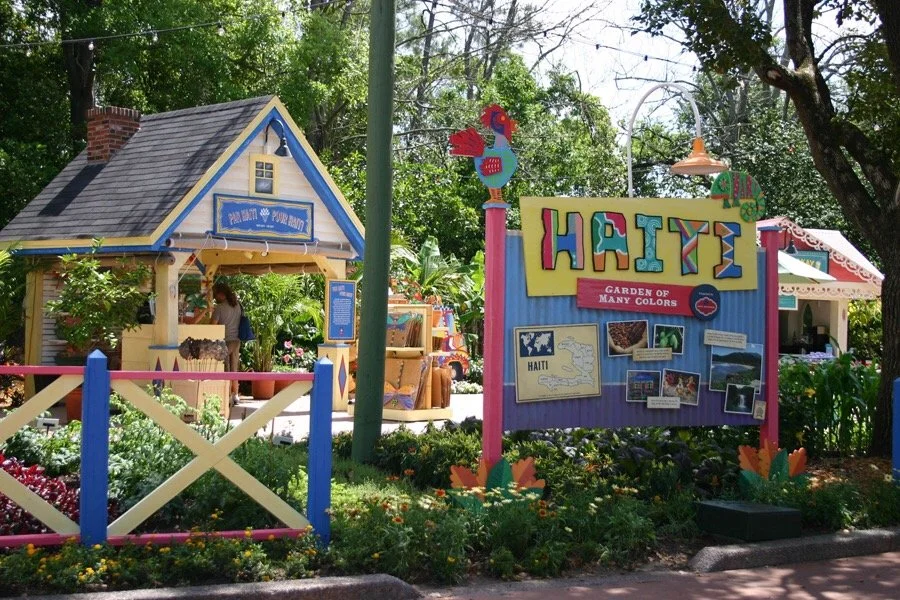
Fun Fact: Did You Know There Once Was A Haiti Garden Exhibit At Disney's Epcot Center?
FUN FACT:
In 2012, Disney's Epcot Center introduced HAITI | GARDEN OF MANY COLORS
 Well, the Epcot International Flower & Garden Festival, presented by HGTV, is in full bloom! And throughout the festival, we at the Disney Parks Blog will be bringing to your attention to some of the exciting new things for 2012.One of the great horticulture additions this year is called Haiti: Garden of Many Colors. Sponsored by Haiti Originale, the spectacular garden exhibit showcases signature plants, flowers and crops of Haiti and offers information on the cultural heritage, sustainable art and artifacts of the beautiful island.Sugar cane, mustard, thyme and curly leaf parsley are bounty from the Creole Garden. Guests can also find information on Recyclable Art, Haitian Arts and Crafts, Art in Motion and the Art of Haitian music; and they can purchase Haitian coffee (a major industry in Haiti) and crafts made by Haitian artists.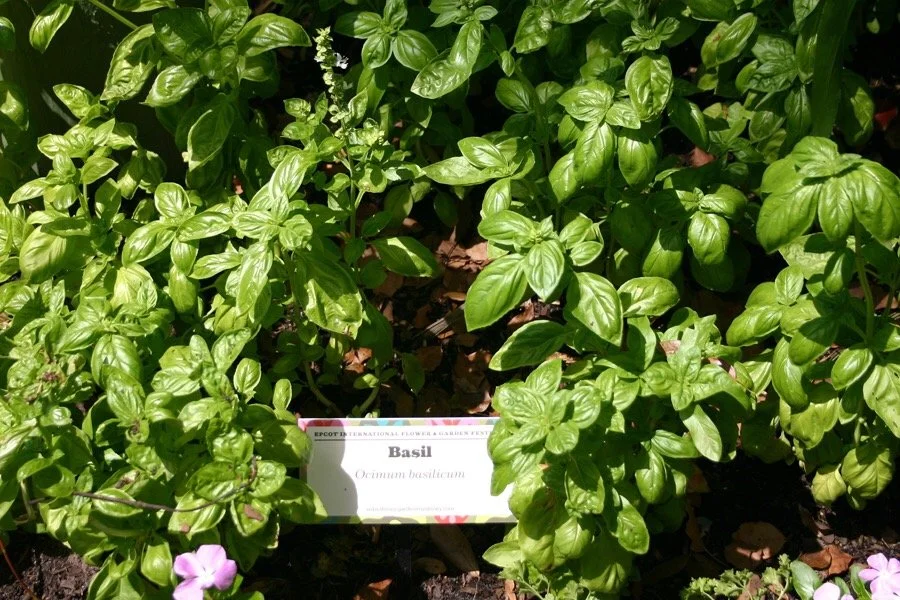





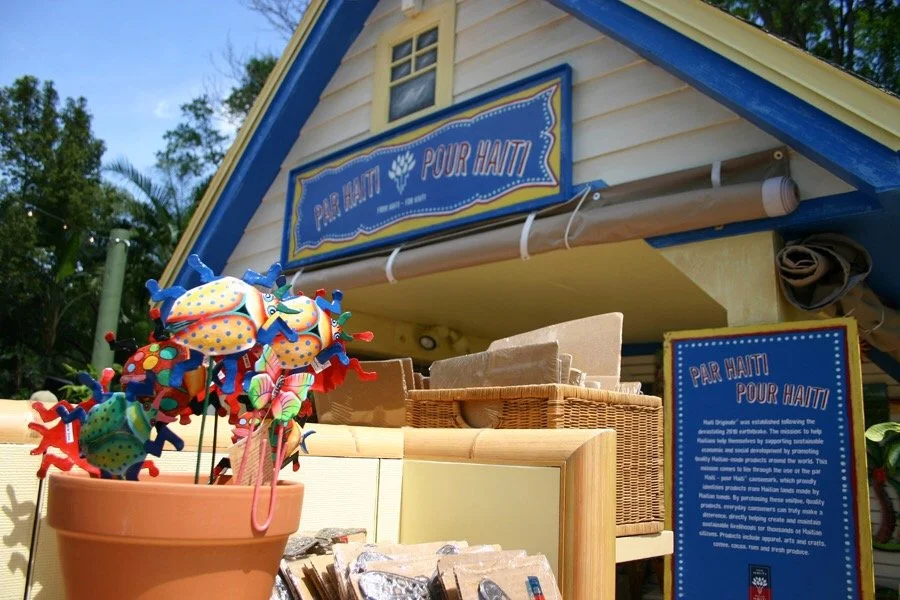
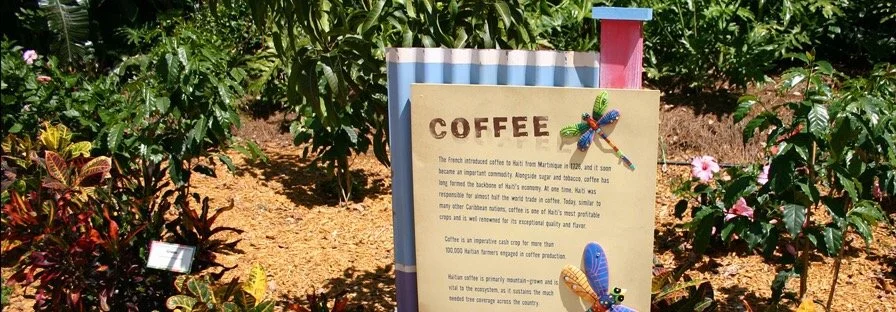
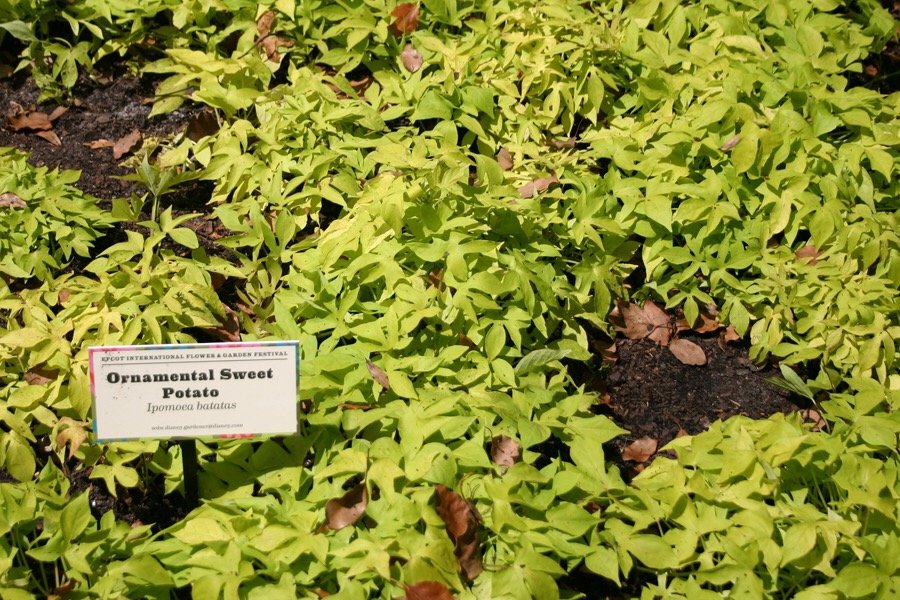
Haiti: Garden of Many Colors at Epcot Haiti: Garden of Many Colors at Epcot The Creole GardenCoffee Plants in the Creole Garden Sugar Cane in the Creole Garden Tropical Hibiscus in the Creole GardenOrnamental Sweet Potatoes in the Creole Garden Basil in the Creole Garden Mustard Plants Grown in the Creole GardenLocated between the Germany Pavilion and the African Outpost in World Showcase at Epcot, the exhibit features a refreshment stand called Bwason Lakay, meaning “Haitian Refreshments” in Haitian Creole, which offers island libations – in both adult and non-alcoholic versions. And speaking of color, the Art in Motion storyboard gives insight into Haiti’s colorful tap-tap buses.Haiti Originale was formed to help Haitians help themselves by supporting sustainable economic and social development through the promotion of quality Haitian-made products within Haiti and around the world. Their cause mark is “par Haiti – pour Haiti,” which means “from Haiti – for Haiti.”Organizers of the Epcot International Flower & Garden Festival have told us that the garden has been a huge success – both with our guests and our cast. At Walt Disney World Resort, we have a large population of cast from Haiti and that speak Haitian-Creole as a second language.The Epcot International Flower & Garden Festival, presented by HGTV, runs until May 20. For more information on the festival, you can check out disneyworld.com/flower and continue to check back here for more updates.by Charles Stovall, Public Relations Manager | Wed, March 28, 2012
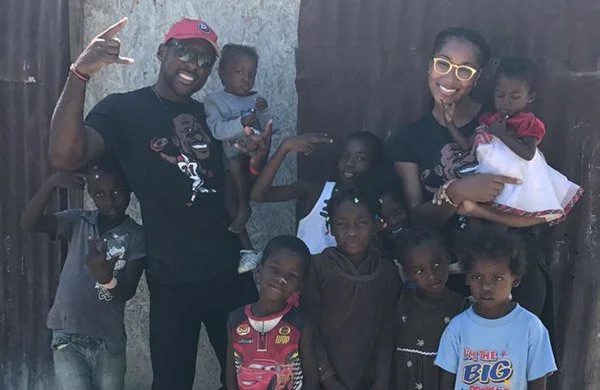
Patrick Peterson Makes Trip To Haiti
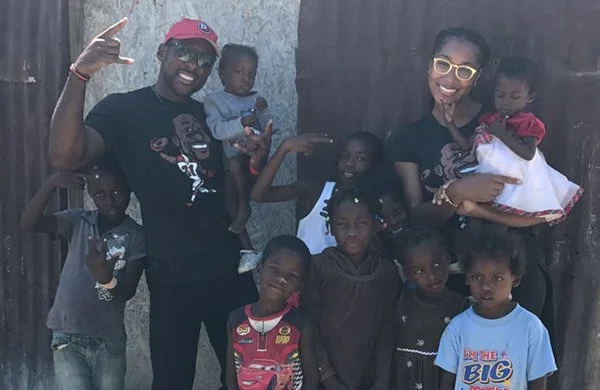
Patrick Peterson knew that Larry Fitzgerald had been a part of more than a couple aid missions to needy countries, and when the cornerback was returning from his first – time in Haiti this weekend – he shot a text to his teammate.“This,” Peterson wrote, “was a great, eye-opening experience.”Peterson and his wife, Antonique, left last Wednesday night on a red eye to the country, guests of Mission of Hope. There, Antonique – who will finish her schooling to become a doctor a year from now -- visited and helped at medical centers. Patrick visited schools and helped teach children how to read and build things, and played soccer and kickball with the students.The two also visited villages without clean water, so they took part in trips to local spring wells to collect fresh water to bring back to affected areas.There, Patrick Peterson is not a Pro Bowl cornerback but just a humanitarian looking to give back.“Just to see how resilient those people are was unbelievable,” Peterson said. “People in the U.S., we can complain about some of the smallest things, and these people, sometimes their kids are running around with no bottoms on, they have no fresh water, no power. No AC. Sleeping in tents. But when you go speak with them, they have a smile on their face. They have high energy. They have hope.”That encouraged Peterson, an offset of some of the “heartbreaking” things he saw. In particular, there was a family with seven children, with twins around 8 years old. The parents underfed the well-underweight twins, Peterson said, in part to convince strangers in the street to provide the family money to help feed all of them.Mission of Hope convinced the parents to let them take in the kids for a time so they could get the right nourishment. Still, Peterson said, “it was devastating to see.”The visit made a deep impression on Peterson. He said he will pay for three of the houses that are being built for needy families in the village they visited. He will also send items down from his own home, and asked teammates if they had anything to donate to do the same.He added that he and his wife plan on going back next year, and Peterson wants to involve his young daughter Paityn when she is old enough to take part some years down the road.“It really touched home,” Peterson said. “I want to make sure I can do whatever I can to make their lives better.”ArizonaCardinals/Peterson May 8, 2017

Pharmacy school establishes public health program in Haiti

Submerging one’s self into another culture and providing medical and pharmacy care in an environment with few resources is a life-changing opportunity for student learners.
The Southern Illinois University Edwardsville School of Pharmacy is adding another such opportunity to its international learning experiences. The school has established a public health experiential rotation in Haiti that will begin in spring 2018.Kelly Gable, associate professor in the Department of Pharmacy Practice and coordinator of global partnerships; and Misty Gonzalez, clinical associate professor in the Department of Pharmacy Practice, traveled to Jacmel, Haiti, March 6-13 to explore opportunities for future student learning.Part of a team of eight volunteer medical professionals, the two participated in a medical mission through Hands Helping Haiti.“The purpose of our trip was to explore pharmacy student learning opportunities while also providing medical care to an underserved patient population in Haiti,” Gable said. “The SOP aspires to create programs such as this, as we believe that hands-on, culturally submerging experiences promote both personal and professional student growth.“These experiences force students to think critically, practice creative problem-solving with limited resources, and self-reflect,” Gable said. “Participation has the potential to not only dramatically enhance a student’s clinical skill set, but it also directly builds upon a student’s expression of compassion and altruism.”Through the new rotation, two fourth-year students will spend one week in Haiti, actively participating in the medical mission. They will then spend four weeks working on health education programming at two shelters in St. Louis. The public health focus of the learning experience includes reduction in infectious disease transmission, substance use and harm reduction, and preventative primary health care.“These types of experiences are invaluable for the student learner,” Gonzalez said. “We are excited to add this international learning experience to the growing number of opportunities offered to SIUE pharmacy students in Guatemala, Jamaica, India and Costa Rica.”Gable, Gonzalez and team provided preventative and acute medical care to 301 children and adults in Haiti through a pop-up pharmacy they set up in a school. They treated and encountered common illnesses such as scalp and skin fungus, ear infections, hypertension, diabetes, parasites and scabies.“Hands Helping Haiti travels to Jacmel twice a year and sets up ambulatory care clinics and a pharmacy at The Modern School and Kindergarten of Savannette,” Gable said. “This school is continually sponsored by the Hands Helping Haiti organization and provides education for pre-kindergarten through sixth-grade students.“The organization’s co-founders, Ruth and Warren Smith, are both health care providers practicing in Illinois,” Gable said. “Their central Illinois location and well-established medical-focused mission made for a perfect SIUE-SOP collaboration.”When not providing direct patient care, the team had the opportunity to enhance their cultural awareness by learning more about the clean water project, trying authentic Haitian cuisine, and exploring the beautiful growing art scene in Jacmel. Gonzalez documented the experience with the creation of this video.For more information, contact Gable at kgable@siue.edu, visit the School of Pharmacy’s global education website, or follow the school’s Global Education Facebook page.Advantage News/May 9, 2017