


Partners sign agreement for first optometry school in Haiti
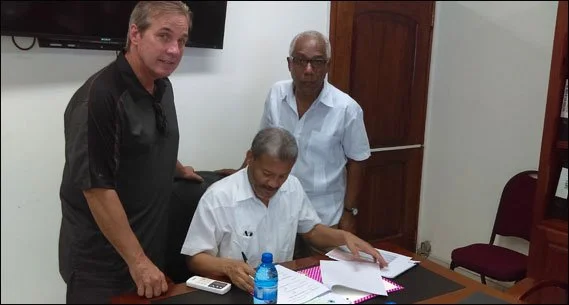
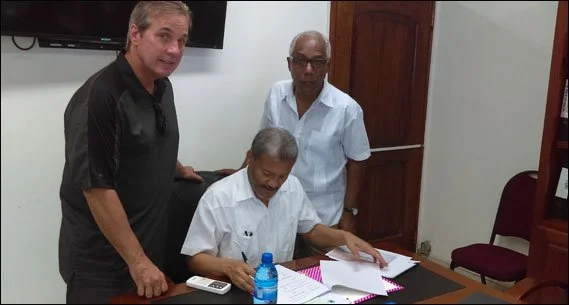
A memorandum of agreement has been signed to establish the first School of Optometry in Haiti, representing a collaboration between I’Universite d’Etat d’Haiti, Brien Holden Vision Institute, Optometry Giving Sight, VOSH International and Charity Vision, with support from University of Montreal.“This is a great moment in the development of eye health in Haiti,” Jean Claude Cadet, MD, dean of the faculty of medicine and pharmacy at I’Universite d’Etat d’Haiti, said in a press release from Optometry Giving Sight. “We are grateful to our international partners for helping us to realize our vision of establishing optometry as a profession in Haiti in order to improve access to primary eye care for the millions of people in need.”Currently, only three optometrists and 58 ophthalmologists serve Haiti’s 10 million people, most of whom are located in the capital, representing a significant barrier to access of eye care.The school will be offering a 5-year Bachelor of Vision Science degree and aims to graduate 16 optometrists per year.The collaborators hope to have students begin in October.Healio July 24, 2017

China Extends Her Silk Road To Haiti

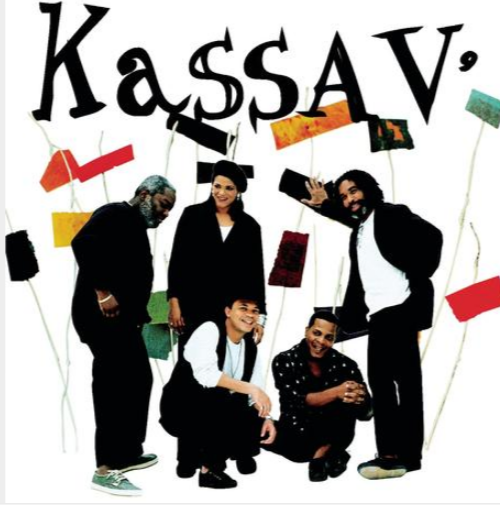
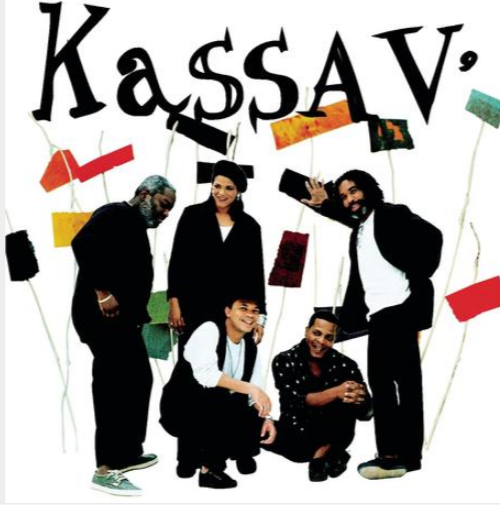
China plans to invest $30 billion in Haiti’s infrastructure according to the Haitian Press Agency (AHP). This week the Mayor of Port-au-Prince, Youri Chevry, hosted the signing of an agreement between the Haitian company Bati Ayiti (Build Haiti), headed by former Senator Amos André, and the Southwest Municipal Engineering and Design Research Institute of China.The agreement includes the construction of a 600 megawatt power plant to electrify Port-au-Prince, the construction of a new City Hall, markets, thousands of apartments, and eventually a railway from Port-au-Prince to the countryside. The center of the discussion was “the reconstruction of the main building of the Town Hall and the construction of several public contracts on the territory of the commune of Port-au-Prince,” according to LoopHaiti.20,000 workers will begin work before the end of 2017, backed by an initial infusion of $5 billion. The Chinese Government has a deadline of September 30, 2017 to unblock the funds. In the meantime, Bati Ayiti, the City of Port-au-Prince and their partners continue to work on the recruitment of staff.Last May, China’s president Xi Jinping hosted the first Belt and Road Forum (“One Belt, One Road”) in Beijing, offering hundreds of billions of dollars to over 100 interested countries for infrastructure projects. Haiti stands to be a beneficiary of the ambitious Chinese initiative, which is modeled on the ancient “Silk Road.” 2,000 years ago China opened up routes of trade that linked the civilizations of Asia, Europe and Africa.China now stands to have influence in the Caribbean corridor stretching from Cuba to Venezuela.Some analysts have compared the One Belt One Road enterprise to the Marshall Plan. After World War II, the United States was such a strong manufacturing entity that it was forced to seek markets for its industrial products. The Marshall Plan required that aid to Europe involve a quid pro quo of U.S. investment and imports.Today, China has an excess amount of industrial capacity. China is exceptionally skilled at infrastructure. Foreign investment provides an outlet for exports of labor and resources.“This accord may finally break the grip that the eternal exploiters of Haiti had for decades on the poor people of Haiti while they greatly benefited from favors and monopolies from corrupt governments,” says Bernard Sansaricq, the former Senate President of Haiti, in an email.Is it also possible that the Chinese initiative is less about altruistic globalization and more about finding markets for its industrial over capacity? Is China trying to lure Haiti into its geo-political orbit? Both motives may work together for the benefit of Haiti.It worked in Rwanda. Figures from the Rwanda Development Board indicate that Rwanda registered 45 Chinese investments from 2010 – 2016.The change in Kigali is stunning over the past 15 years. I have witnessed this transformation myself in multiple visits since 2004. The streets are clean and not a plastic bag in sight. A woman can walk the streets alone at midnight and feel as safe as on a moonlight stroll on Sanibel Island’s beaches.Chinese engineers built the country’s tallest building, Kigali City Tower, “a gleaming 20-story glass skyscraper; the building that houses Rwanda’s foreign ministry; various hotels, schools, and hospitals; and 80% of the country’s roads,” according to an article in Quartz Africa.There are still problems, of course, and outside development offers no guarantee of utopia. Competition for jobs remains fierce.As Ezili Danto of the Haitian Lawyers Leadership network suggests, China can capitalize on the failures of the Clinton Foundation failures in Haiti.“If Trump is too tied up with the Deep State and China leaves a bit of clean water, electricity, and road infrastructure- so be it. But anything done under the illegitimate (left-over Clinton/Bush establishment) government is worrisome. They put Jovenel (the current President) in to keep the status as is — the people too hungry, sick, and weak to fight back,” Danto says.See also this article on the Haiti Mafioso.A power plant to light up the roads certainly won’t be welcomed by the dark forces of the criminal mafias.“I’d have preferred to champion a U.S. government initiative, but it (the China investment) is what it is,” says Danto.HuffPost | August 4, 2017

After 12 years in U.S., Stamford student may be ordered back to Haiti

STAMFORD — Mary was 8 years old when she stepped off a plane from Haiti with her older sister to visit their ailing grandmother in Stamford.
What was meant to be a short trip with their mother was unexpectedly extended after Mary’s 10-year-old sister wound up hospitalized for four months with a bacterial infection. After the girl’s recovery, doctors advised the family that she not return to Haiti.
That was the summer of 2005, six years before a magnitude 7.0 earthquake would devastate the island nation, killing 220,000 people and displacing 1.5 million.
The disaster prompted the U.S. government to extend what’s known as Temporary Protected Status (TPS) to Haitians without permanent legal residency. The designation is afforded to immigrants who are unable to return to their home countries because of humanitarian emergencies.
Along with her family, Mary, who did not want her real name used because of her immigration status, ended up staying in Stamford while her mother petitioned for legal status. They were ultimately denied, but then came TPS, which has enabled them to remain in the U.S. for the past six years.
This may change under new orders from the Trump administration that could put an end to TPS for Haitians and send 58,000 immigrants — including up to 150 in Stamford and 750 statewide, according to one attorney’s estimate — back to an impoverished country still reeling from one of the worst natural disasters in recent memory. The move is yet another example of the immigration upheaval set into motion under President Donald Trump.
For someone like Mary, a lot has changed since leaving Haiti, a country the 21-year-old can now barely recall. She went on to enroll in Stamford public schools and excelled academically, landing a scholarship to study civil engineering at a Manhattan college. Her sister became a registered nurse.
With a year left in school, Mary worries about being ordered back to Haiti before she can graduate. At this point, she has no family there — her father disappeared after they left for the U.S. — and says she wouldn’t know where to stay or how to navigate life there.
“All I remember is that it wasn’t particularly safe,” said Mary, who lived an hour outside the Haitian capital of Port-au-Prince. “We stayed inside our house and went to school and came back.”
Mary and her family could be ordered to leave the country as soon as Jan. 22, when the most recent extension of Haitian TPS expires. TPS for Haiti and 12 other nations, including El Salvador, Honduras, Syria, Somalia, Yemen and Nepal, is re-evaluated for continuation every 18 months.
In May, U.S. Citizenship and Immigration Services announced it would extend Haitian TPS for just six months, and encouraged recipients like Mary to prepare for their return. At the time, then-Secretary of Homeland Security John Kelly said the agency would announce 60 days before the January deadline whether it may extend Haitian TPS again. Thousands of Haitians are anxiously awaiting the decision.
Activists like Angelucci Manigat, editor and publisher of The Haitian Voice, a monthly newspaper once based in Stamford, have called for TPS to be extended for the standard 18-month period. Meanwhile, he said, Haitians have begun fleeing over the Canadian border to seek asylum in anticipation of a canceled TPS.
Manigat said Haitians, who make up at least 4 percent of Stamford’s population, are frightened of attracting attention. They are avoiding churches and community centers that were once well attended, and fear doing everyday things like picking up their children from day care or paying a parking fine, he said.
“People are really, really scared,” said Manigat, who now runs his publication out of Bridgeport. “Community leaders are trying to prepare them for the worst. It doesn’t look good, but we’re waiting to see what happens. A lot of people are in denial.”
Mayor David Martin in May joined a coalition of city leaders from across the country who signed a letter to Kelly and Secretary of State Rex Tillerson urging a longer extension of Haitian TPS, which would have ended on July 22 without the six-month continuation.
Philip Berns, a Stamford immigration attorney who has about 30 clients with Haitian TPS — and estimates there could be up to 150 impacted citywide — said he is preparing clients for what comes next.
For many TPS Haitians who have lived peaceful and productive lives in the U.S., “what it will feel like is not deportation, but exile,” said Berns, who added that Haiti has still not recovered from the 2010 earthquake. Many say Hurricane Matthew last year undid much of the progress made since the earthquake.
“Things have not seriously changed in Haiti,” Manigat said. “The government still doesn’t do much for the people.”
People like Mary have been in the U.S. for so long they don’t know a life back in Haiti, Berns said.
“This young lady is basically, in her heart and soul, an American,” he said. “She would be sent a to a country where she’s barely familiar with the culture and language, and completely out of her element.”
Mary said she understands the challenge the U.S. government faces managing a program like TPS, and deciding which undocumented immigrants out of many get a reprieve from deportation.
“It’s a temporary solution,” she said. “It’s not a status that’s made for assimilation.”
In the meantime, life for people like Mary is a high-stakes game of wait-and-see.
“The thing that makes me worry is that I don’t know will happen,” she said. “But it’s also my calming factor — that I don’t know what will happen.”
By Liz Skalka | August 5, 2017

Bannann Douce (Sweet Plantain)


INGREDIENTS:
3 large ripe yellow plantains. Plantains must be (very) black skinned! 2/3 cup vegetable oil, or lard (to cover half the thickness of plantains in the pan)
DIRECTIONS:
Peel and bias cut (diagonal) plantains into one-inch thick slices.
Heat the oil until medium hot -- a drop of water will sizzle.
Fry the pieces briefly, about a minute or two per side. Reduce heat to low and continue cooking, turning occasionally until they are brown and caramelized.
VARIATION: Some people like to lightly roll the plantains in white or brown sugar before frying.



Labouyi Bannann (Plantain Porridge)


One of the many foods Haitians eat for breakfast is Labouyi Bannann (Plantain Porridge). If you have never had Labouyi for breakfast than you are missing out. Porridges have long been an integral part of Caribbean cuisine.
Ingredients
1 Green Plantain (Washed)
3 cups of water
1 Star Anise
1/2 cup of Evaporated Milk
1/2 cup of Coconut Milk
1/2 tsp cinnamon Powder of 1 stick
1/4 cup of sugar
1 Tbs butter
1 tsp vanilla extract
1 tsp salt (or to taste)
Direction
Step 1
Peel the skin of the plantain and cut into small 4-8 small pieces. It is ok to leave some of the skin for extra nutrients.
Step 2
In a blender, puree the plantain and 2 cups of water.
Step 3
In a 1 quart saucepan, add 1 cup of water, evaporated milk, coconut milk, cinnamon, star anise and bring to boil.
Step 4
Once the pot is boiling, add the plantain puree to the pot and bring to a boil while stirring continuously for 5 min. The porridge will thicken slightly.
Step 5
Add the salt, sugar, vanilla and keep stirring for 10 min.
Step 6
Reduce the heat to medium and keep stirring for another 10 min while tasting porridge to ensure the plantain is thoroughly cooked. The porridge is ready when the texture is creamy.
Step 7
Serve warm with some Haitian Bread

Olympic Stadium In Montreal Turned Into Welcome Center For Refugees From U.S.

Faced with a flood of asylum seekers traveling from the United States into Quebec, Canada, local authorities have repurposed Montreal's Olympic Stadium and turned it into a refugee welcome center.A spokesperson for PRAIDA, the local government agency that helps refugees, tells the CBC more than 1,000 asylum seekers crossed the border into Quebec last month. "In comparison, PRAIDA helped 180 people in July 2016," the CBC writes.The vast majority of the asylum seekers are Haitians who initially fled the devastating earthquake in 2010, and whose future status in the U.S. is unclear under the Trump administration.The surge of refugees overwhelmed the YMCA facilities that are normally used to temporarily house new arrivals.So the agency turned to the Olympic Stadium — specifically, to the area by the concession stands, the CBC says.The first refugees to stay at the stadium were bused in on Wednesday, The Associated Press reports."Volunteers from the Quebec Red Cross helped set up the cavernous, concrete stadium for a temporary stay with cots and food in the rotunda," the wire service writes. "The stadium was the main venue of the 1976 Olympics. It has not had a main tenant since the Montreal Expos left in 2004."The stadium will be hosting up to 450 people for several months, but cannot provide shelter permanently, given the event schedule, the AP says.The Guardian reports on the transformation:
"It took just 24 hours for the stadium – built in the 1970s as a venue for the city's 1976 Olympics – to be converted into a welcome centre where the asylum seekers will be sheltered and receive help in finding housing and completing paperwork related to their asylum claims."So far, 150 cots – arranged neatly into rows among the concrete walls of a windowless area ... of the stadium – have been set up, along with access to showers and a cooking area."
The Haitians who make up the majority of the new arrivals are in a precarious legal situation in the U.S. Tens of thousands of people fleeing the disastrous earthquake were given temporary protected status in the U.S. under the Obama administration; that's not the same as asylum or refugee status, but it acknowledges a person can't return to their home country safely.The Trump administration extended that status for just six months — and urged Haitian refugees to "prepare for and arrange their departure from the United States." The administration cited "Haiti's success in recovering from the earthquake," although Haiti continues to struggle with a number of crises, including an ongoing cholera epidemic, a nightmarish sewage problem and a catastrophic hurricane.That helps explain why a sudden surge of refugees are leaving the U.S. As to why they're entering Quebec, the CBC cites the large Haitian community in Montreal."Obviously, there is a stronger attraction to coming to Quebec for Haitians than in other provinces," PRAIDA spokeswoman Francine Dupuis told the CBC. "They have the help of their community to get settled."But it's not clear if the Haitian refugees arriving in Canada will be permitted to stay, the CBC reports. The challenge is fundamentally the same as in America: A government evaluation of just how bad life is in Haiti."Asylum seekers originally from Haiti who have crossed the Canada-U.S. border could be deported back to Haiti if their application is refused because Canadian authorities deem Haiti as a sufficiently safe country," the CBC writes.NPR International August 2, 2017

Haiti Senate Votes to Ban Gay Marriage

Haiti's constitution established a secular republic but the country is marked by deep religious beliefs. "Although the state is secular, it is people of faith who are the majority," Latortue said, stressing the commonly held belief in Haiti that homosexuality is a Western practice only.A vote by the Haitian Senate to ban gay marriage as well as “public demonstration of support” for homosexuality reflects the will of the people, the chamber’s president has said. The Senate approved a bill late Tuesday that said “the parties, co-parties and accomplices” of a homosexual marriage can be punished by three years in prison and a fine of about USD 8,000.“All senators are opposed to same-sex marriage, so this simply reflects the commitments the senators made during their campaigns,” Senate President Youri Latortue told AFP. Haiti’s constitution established a secular republic but the country is marked by deep religious beliefs. “Although the state is secular, it is people of faith who are the majority,” Latortue said, stressing the commonly held belief in Haiti that homosexuality is a Western practice only.“A country has to focus on its values and traditions. Some people in other countries see it differently, but in Haiti, that’s how it’s seen.” Haitian law already defines marriage as a union between a man and a woman, making it unclear what consequences the bill, if passed, would have in practice.However, it also called for banning “any public demonstration of support for homosexuality and proselytizing in favour of such acts.” It is this ambiguous wording that raises concern among Haitian homosexuals and their advocates.“We see this as an attack on the LGBT community in this country,” said Charlot Jeudy, president of the Kouraj group, which defends the rights of homosexuals and transgender people.“This text divides our society, it reinforces prejudices and discrimination. It’s really a shame.” The two gay rights organisations still officially recognised by the state record daily instances of insults, threats and violence. Politicians “know very well that this will bring much more violence and prejudice against the LGBTI community,” Jeudy said.Only police and the judicial system can intervene in response to reported violations under the measure. The bill now goes to the Chamber of Deputies for debate, though its passage into law is all but certain.By AFP | August 3, 2017

NEW MUSIC - Mikaben - Turn Up - Crown Love Riddim

Listen to Mikaben's new track on the Crown Love Riddim. Enjoy....and TURN UP! [embed]https://youtu.be/XuglLBmPdGc[/embed]
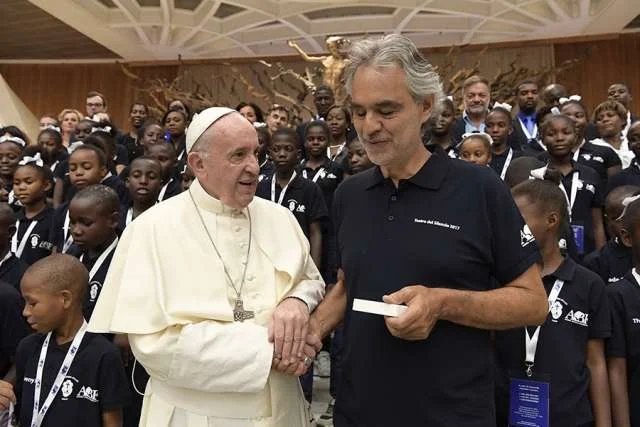
Haitian children, Andrea Bocelli sing for Pope Francis
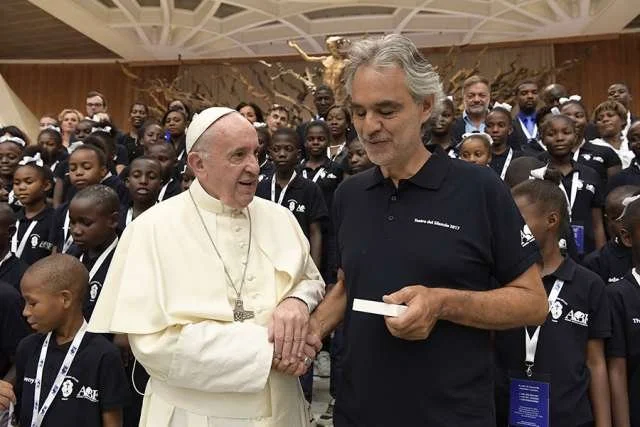
A choir of children from Haiti led by world-renown opera singer Andrea Bocelli sang for Pope Francis after his weekly general audience on Wednesday. The choir, called “Voices of Haiti,” is made up of youth ages 9-15 from the poorest areas of Haiti and are in Rome for their two-week-long European tour.
ROME - There was a special surprise at the end of Pope Francis’s general audience on Wednesday - a performance by acclaimed Italian tenor Andrea Bocelli and a choir of 60 children from the poorest areas of Haiti.The choir, called “Voices of Haiti,” sang three songs with Bocelli, including ‘Amazing Grace’ and ‘Ave Maria,’ following the general audience in the Vatican’s Pope Paul VI hall Aug. 2. After the performance the children and world-renowned singer were greeted by Pope Francis.The performance was part of a nearly two-week-long European tour of the children’s choir, made up of youth ages 9-15, coming from some of the poorest areas of Port-au-Prince Haiti. Besides Rome, the tour included stops in Pisa, Florence and Lajatico, Italy, Bocelli’s birthplace.In Lajatico they will perform with Bocelli in front of 15,000 people for the 12th edition of his annual concert at the famous Teatro del Silenzio. In Florence they sang for the inauguration of a foundation dedicated to the Italian director Franco Zeffirelli.According to a press release, the project, “offers the opportunity to children and young Haitians coming from extremely disadvantaged situations to enhance their talent thanks to a highly specialized training, benefitting also of a wealth of opportunities, precious for their future.“Grown up in a context of extreme poverty, thirsty for beauty, eager to learn, through a highly professional educational path, the young singers have reached a great understanding, have become aware of discipline, passion, love for music and of the joy of sharing. Therefore, what they can convey through their singing is pure joy.”The children of the choir and related projects come from the Citè Soleil slums where over 300,000 people live in tin shack houses, without access to water and sanitation.The project has been ongoing since January 2016. The children participate in weekly rehearsals on Saturdays, which include breakfast, lunch and game time in addition to vocal exercises, music therapy and song rehearsal. Buses pick them up and bring them home after.They learn both folk Haitian and international music and perform throughout the year in local celebrations in their community, such as Easter and the end of the school year. In September 2016 they traveled internationally for the first time, performing in New York City.“Voices of Haiti” is a project of the Andrea Bocelli Foundation. In addition to the choir, the foundation also introduces music into the 30 schools supported by the local St. Luc Foundation in Haiti.They also help to provide education, food, and health assistance to thousands of children, water and electricity to remote and poor communities, solar panels and libraries.According to their website, “because all the students come from poor economic and social backgrounds, through music they have been able to find a way to consolidate discipline, cooperation, and have moved away from the misery brought on by the grip of poverty.“Music becomes an additional means for social and intellectual development, not only personal, but for entire communities.”“Voices of Haiti” is directed by Malcolm J. Merriweather, a professor at Brooklyn College Conservatory in New York, and is run by a team of Haitian collaborators made up of musicians, teachers, and administrators.Why a choir? Because “music is the soul’s voice, its strength and beauty open minds, and develop thoughts…” the website continues.“From the secret melodies of celestial bodies to the beat of the fruit fly wings, creation is a sound metaphor of its Creator, and every element contributes, imperceptibly, but effectively to universal harmony, that with immeasurable perfection rules life and expresses a poetic, amazing synonym of God.”By: Hannah Brockhaus | August 2, 2017



Dous Makos (Haitian Fudge)


Ingredients
-
2 Cups of sugar
-
1/2 Cups of Whole Milk
-
1 Can of sweetened condensed milk (14 ounces)
-
8 Tbs of butter
-
1 tsp vanilla extract
-
1/4 tsp of Anise star extract
-
1/4 tsp of nutmeg
-
1/4 tsp of cinnamon
-
Red Food Coloring (Optional red layer)
-
1/4 tsp of cocoa powder (Optional Dark brown layer)
-
wax paper
-
mini loaf pans
Directions
- In a 3 quart non-stick pot, add all ingredients (except food coloring and cocoa power) and cook on medium heat until sugar dissolves while constantly stirring.
- Once sugar dissolves, raise heat to high and continue stirring for 20 - 25 min or until mix has a lava consistency. If you have a candy thermometer it will be around 115 °C/ 239 °F
- Remove the pot off the heat and continue stirring for another 10-15 min. The mix will start to lose its shinny color as it cools.
- * OPTIONAL - If you want to make the signature stripes, take half the mix and separate the half into 2 containers. Add 2 drops of food coloring in the first and a 1/4 tsp of coca powder in the second. Mix the thoroughly. *
- Place wax paper in the mini loaf pans and fill it with the mix.
- Allow the mix to cool and harden for about an hour.
- Remove the mix from the pan and slice vertically.
- Store in a cool place.

Haiti's Revived Military Could Pose More Security Risks Than Solutions

Haiti is reconstituing its previously disbanded army after more than two decades, amid concerns about growing insecurity as a United Nations peacekeeping force is set to withdraw later this year. And while politicians have justified the move as a step toward combating contraband trafficking, the real motivations behind the decision may be political.The recruitment effort for the new army was announced by the Defense Ministry in early July and has seen more than 2,200 candidates sign up in the first round, reported Haiti Libre. Due to budget constraints, the force will have fewer than 500 members.Defense Minister Hervé Denis said the army's mission would be to fight against contraband smuggling and provide relief in case of natural disasters, according to the Miami Herald. The minister argued that the cost of the force will be outweighed by its impact on smuggling from the Dominican Republic, which he estimated causes lost tax revenues for Haiti of between $200 million and $500 million per year.However, critics have said that the recruitment process has lacked transparency and has been conducted in the absence of a command structure for the force, reported AlterPresse.Others have questioned the logic of investing in an army instead of dedicating increased resources to Haiti's 15,000-strong National Police. An August 2016 report by the UN Secretary General noted significant shortcomings in planned improvements to the force, including ramping up its border control capabilities.
InSight Crime Analysis
 Several experts consulted by InSight Crime raised concerns about the potential efficacy of the army in terms of the proposed anti-contraband efforts, while pointing to possible political motivations for re-establishing the force. And all warned of the risk that the violent and abusive history of Haiti's military repeat itself."Sending a poorly-trained, underpaid military to the border to confront a massive corruption scheme appears destined for failure," said Jake Johnston, a research associate at the Center for Economic and Policy Research (CEPR) who has done extensive research and reporting on Haiti.Indeed, an inadequate fiscal framework and corruption within an inefficient customs agency are the two primary drivers of contraband along the border -- not the lack of a military presence."The push to restore the military is not a rational one based on Haiti's needs, but an ideological one," he told InSight Crime."This is a party with close connections to the old Duvalierist and militarist clique that had ruled Haiti for decades and whose power and influence was threatened by previous governments. It would be difficult for the government to turn its back on its source of power now that it is in office," the CEPR researcher said, referring to the governments of François "Papa Doc" Duvalier and his son Jean-Claude, also known as "Baby Doc." The authoritarian political dynasty, which lasted from the 1950s to the 1980s, was associated with the use of armed forces as a tool of political repression -- a fact that contributed to the decision of then-President Jean-Bertrand Aristide to disband the army in 1995.Johnston's comments echoed those of Brian Concannon, the executive director of the Institute for Justice and Democracy in Haiti advocacy organization."I have seen nothing that would indicate that the army would do a better job of policing the borders or responding to natural disasters than civilian police," Concannon said.He added that other examples of militarized security initiatives across the Americas suggest a better course of action may be to strengthen the civilian police rather than create a new, military institution."That is especially true considering the Haitian army's history of corruption and professional misconduct," the human rights advocate told InSight Crime.Concannon also pointed to political motives at play, arguing the army would help the government "exert control over its political opponents," evidenced by "the initial army proposal of [former] President [Michel] Martelly that specifically included spying on journalists and others, to the current efforts to recruit soldiers before there is even much structure."Interestingly, both Concannon and Johnston noted underlying socioeconomic factors behind the public's support for the army and the seemingly widespread interest in the recruitment effort."This has gained some additional traction because of the high level of youth unemployment, where any opportunity for steady pay is welcome. Also, given the high proportion of Haiti's population which is quite young, many lack the historical experience that others have of the Haitian military and its repressive actions," Johnston explained."People are signing up because they are desperate for jobs and meaning," Concannon added, and warned that "once [members of the new army] have the position, they will do what they need to do to preserve that status."By Tristan Clavel

Dsquared2 Dresses Andrea Bocelli’s ‘Voice of Haiti’ Chorus

The Haitian kids will perform in Bocelli's Tuscan hometown on Thursday.
MILAN — Dsquared2 founders and creative directors Dean and Dan Caten are supporting Haitian kids.In particular, the twins designed customized dresses and tuxedos for the children’s chorus of Andrea Bocelli’s “Voice of Haiti,” which will perform at the 12th edition of the “Theater of Silence” event taking place at the Italian tenor’s native town close to Pisa on Thursday.Bocelli and the Andrea Bocelli Foundation, focused on finding opportunities for talented young Haitians in need, launched the “Voice of Haiti” project last September in New York with an event hosted at the Lincoln Center.“We met these talented and passionate children for the first time last year in New York. It is such a blessing and a great pleasure to be part of this special journey again,” said Dean Caten. “We created something that could emphasize the strength and the beauty of the Haitian singers. Through their amazing singing, the young choristers spread pure love and joy.”By Alessandra Turra | August 1, 2017

Haitian artist, Zoey Dollaz drops 'M'ap Boule' EP

 Zoey Dollaz, the Haitian artist and Freebandz signee unleashed his EP M'ap Boule.The new EP's title is for “I'm Chillin" but technically means "I'm Burning". The EP's title and cover art couldn't be more fitting, Zoey is on FIRE!!!. Executive produced by Future (who also appears on two songs) and featuring the likes of Chris Brown, Casey Veggies, A Boogie Wit Da Hoodie and other hip-hop top dogs, M'ap Boule is already generating buzz online, and deservedly so.Through seven tracks, the EP explores trap, R&B, reggae and even Asian-tinged sounds, ruminating on love and success in 2017. Take "Post & Delete," the Chris Brown-featuring track on which Dollaz muses, "Shawty got all in her feelings, told her I ain't with the Instagram/ Little mama when we chillin'/ I ain't down with the filmin'/ No Snapchat or no Periscope/ You can do that shit but not by me though." A new version of Dollaz's 2016 hit "Bad Tings," featuring new verses from Future and Tory Lanez, is sure to be another standout.M'ap Boule comes right on the heels of the Miami rapper's mixtape Nobody's Safe, which dropped in May. Now, he's hitting the road with Future for select stops on his labelmate's HNDRXX Tour, alongside other big names like Ty Dolla $ign, Post Malone and Lil Yachty.Stream M'ap Boule in full below, and look out for more from this up-and-comer.
 source: Billboard.comby
Haiti - Symposium on University and Territorial Development
 Aware of the fundamental social role attributed to the university in the production and animation of ideas and convinced of the need to strengthen the governance capacity of local authorities, territorial development managers; the UPR network, under the patronage of the Ministry of National Education (MENFP), has decided to organize (28 to 30 July) at the Hotel La Cretonne, in Les Cayes of assizes, which are supported by Unesco and several experts from universities in Haiti, Canada, France, the Caribbean and the United States.These scientific days are intended to provide a space for critical debate on the mission of the University in a framework of analysis of sustainable territorial development according to local resources, needs and expectations of the various actors (citizens, users of public services, companies, tourists and visitors) to offer them a quality of life.Pierre Josué Agénor Cadet, the Minister of National Education, officially launched the Symposium in the presence of the Rectors of the Public Universities in Regions (UPR), Senator Pierre Francois Sildor, former Prime Minister Jacques Edouard Alexis, technical and financial partners, deans, professors and researchers from France, Canada, the USA and the Caribbean.For the Minister Cadet "the University must play its role in the production and animation of ideas and help to strengthen the governance capacity of public authorities, managers of territorial development. In this sense, we must listen to the various actors, citizens, users of public services and businesses [...]"He hoped that the outcomes of the conference would provide an inexhaustible source for researchers and a redefinition of more rational and responsible public policies based on a reliable diagnosis of our reality.Speaking also at the opening ceremony, representatives of the French Embassy, the Agence Universitaire de la Francophonie (AUF) and Unesco welcomed this initiative by the UPR and the Ministry and expressed their willingness to cooperate in this action for the benefit of local and regional authorities.Research and territorial development, University and territorial development, higher professionalization and territorial development, ICT and decentralization of higher education, financing of territorial development are among the main themes to be debated during these three scientific days.HL/ HaitiLibre

Pen Patat (Sweet Potato Pudding)


INGREDIENTS: 2 lbs. white sweet potatoes (batata), peeled and cut 1 large banana, peeled and cut in 1 inch pieces 1 cup brown sugar 1/2 cup seedless raisins 1 tsp grated ginger 1/4 tspn salt 12 oz evaporated milk 1 tsp vanilla extract 1/2 tsp grated nutmeg 1 tsp ground cinnamon Rind of 1 lemon, grated 1 1/2 cups coconut cream 3 tsp butter 1/2 cup of Crisco shortening (I only used 1/4)
DIRECTIONS: 1. Preheat oven to 375 degrees. 2. Cut the sweet potatoes into 1 in cubes then grate them using a blender. 3. Place them into a mixing bowl. Peel and mash the banana into the sweet potatoes. 4. Add the remaining ingredients. Mixed all until well blended. 5. Transfer onto a pot and cook over medium heat, stirring constantly with a spoon for about 30-35 minutes until brown. 6. Place in a baking pan and bake for 1.5 hours or until toothpick inserted into the center comes out clean

The literary world loses a major poet

President Jovenel Moïse, is profoundly saddened by the death Saturday in Canada, of the poet and Haitian of talent Claude C. Pierre (born in Corail) author of numerous collections of poetry and texts in magazines and collectives."By saluting his memory the Head of State recalled of Claude Pierre as a man who has helped advance the linguistic and literary work on Creole languages and cultures, thus enabling the sharing of solidarity and respect values.In these painful circumstances the Head of State presents his sincere condolences to his family and the great literary community of Haiti and the Diaspora.The memory and the work of the poet Claude Pierre, will live long in the heart of all"Prime Minister Jack Guy Lafontant :The Prime Minister learned with emotion the death this morning of Claude C. Pierre, poet, linguist, teacher and academician [the Haitian Creole Academy]"The poetic work of Claude C. Pierre is characterized by a real work on language and bias for social and existential problems. He is both a major poet of Haitian literature, a literary critic, a linguist specializing in semiotics, a discipline he has taught for more than 30 years at the State University of Haiti.He was one of the strong advocates of the Creole language and will have been a coordinator of the Office of the Secretary of State for Literacy from 2004 to 2006 and a member of the Haitian Creole Academy.The Head of Government salutes the memory of this important figure of Haitian culture. He takes this opportunity to express his condolences to his family, his relatives, the literary and academic worlds and the members of the Haitian Creole Academy saddened by this departure."HL