

GOP Lawmaker Matt Gaetz Slams Haiti: ‘Sheet Metal And Garbage’ Everywhere You Look

[embedyt] https://www.youtube.com/watch?v=Z31C6I9YUbg[/embedyt]Rep. Matt Gaetz (R-Fla.) slammed Haiti on Tuesday, saying the country is covered with garbage and that conditions there are “disgusting.”
“Yes; I could also prove you wrong, because I could bring you to Okaloosa County and show you that it’s the home of the most beautiful beaches in America. I don’t know that in Haiti they can make the same claim.”
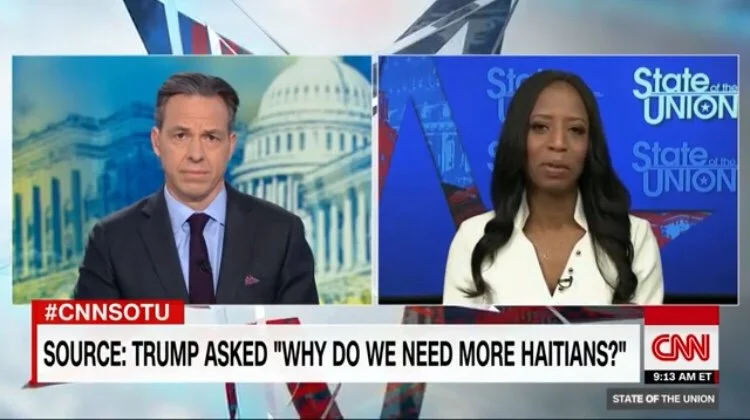
Trump meets with GOP Haitian-American congresswoman amid fallout from obscene remarks
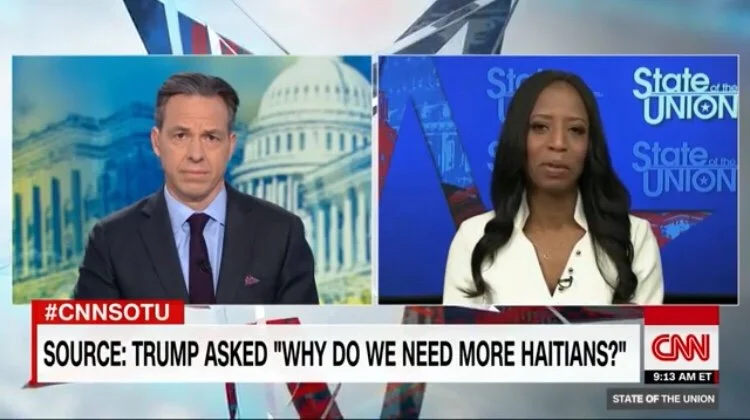
[embedyt] https://www.youtube.com/watch?v=-uvlvxiKec8[/embedyt] (CNN)Republican Rep. Mia Love discussed immigration with President Donald Trump in the Oval Office for half an hour Tuesday, just two days after she said she believed the President made racist remarks about Haitians during a meeting with lawmakers.
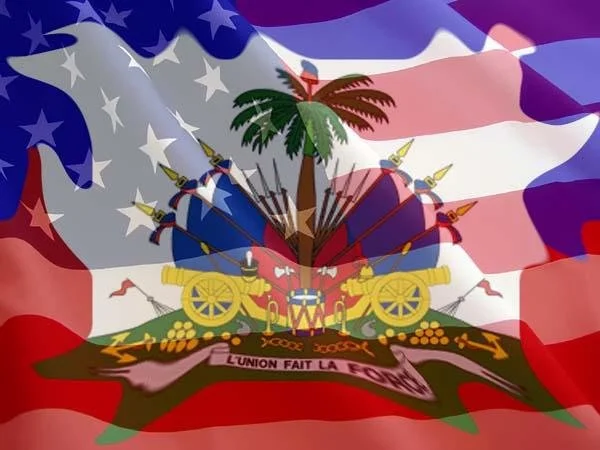
If You Think Haiti Is a Shithole, Then Blame America for Helping to Make It That Way
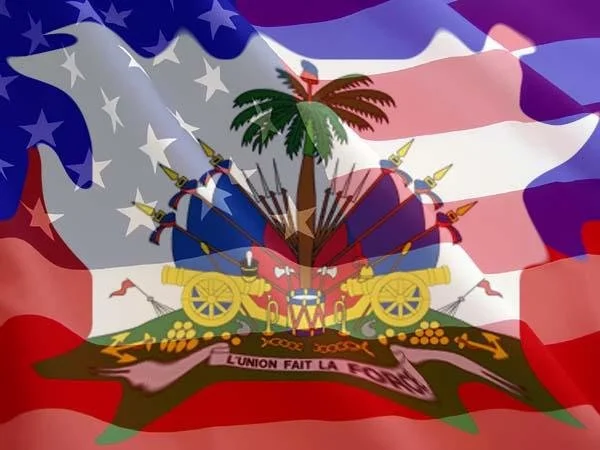
Centuries of mistreatment by the U.S. is a primary cause of Haiti's plight.
President Donald Trump reportedly described Haiti and a slew of other nations as "shithole countries" while meeting with lawmakers about immigration policy yesterday. If you expected more from from him, then you probably expect too much.But eight years to the day after an earthquake brought Haiti to its knees, most Americans view the country closer to the way Trump describes the place than they'd like to admit. The typical American's understanding of Haiti doesn't go much further than the global press's tagline: the "poorest country in the Western Hemisphere." And there is undeniably poverty in Haiti. The average economic output for a Haitian is $820 per year, compared with their neighbors in the Dominican Republic, who average $6,000.I spent nearly four years working in Haiti, first as an economics journalist and then as the manager of a coffee-farming venture. As I wrote in Haitian Coffee Grows on Trees, my book about my time there: "Over half of all Haitians are undernourished, compared to just 15 percent of Dominicans. Just one in four Haitians has access to a toilet. More than half of all adults cannot read. Money sent home by friends and family who live abroad powers almost a quarter of the economy. That's not too surprising once you know a figure that development economist Michael Clemens often cites: 80 percent of Haitians who have escaped poverty have done so not by staying in their own country but by leaving for the United States." Only about one in five Haitians have a job that pays a steady wage. The rest work informally, or not at all.
Today, if you look at a list of coffee-growing countries, you might not even find Haiti on it. Which is shocking, given that just over 200 years ago, the colony that predated Haiti was the world's biggest coffee producer. The story of how the tiny place that once sold half the world's coffee fell off those lists takes many pages to tell. But the country's current predicament has far more to do with the U.S. government than everyday Haitians.To be clear, the Haitian state and its leaders have perpetually hamstrung their own people, when not outright decimating them. But Haiti's history also includes a United States that initially refused to acknowledge or trade with the second free republic in the New World—the first free black republic, borne of a successful slave revolution. It includes two decades of occupation by U.S. Marines, a time when free Haitians were conscripted into chain gangs and shot dead for attempting to escape. It includes hundreds of millions of dollars in aid to a father-son dictatorship whose three-decade reign ruined the country's economy and murdered thousands of citizens. And it includes a foreign aid faucet that continues to flow today, despite the ill incentives it creates. Tweaks to immigration policy would do orders of magnitude more to help ordinary Haitians than that aid—as if helping Haitians were a concern of the present administration.For everyday Haitians, life working as in the United States as a manual laborer, hotel housekeeper, or fruit picker is often much better and more lucrative than doing much of anything in Haiti. Roughly 80 percent of the half-a-million-plus Haitians who live in the U.S. are working age. Eight in 10 of them who are over 25 have high school degrees, which means they're slightly more educated than the average immigrant and only slightly less than native-born Americans.Clemens has called immigration Haiti's "most successful poverty reduction program." He and fellow economist Lant Pritchett have estimated that a low-skilled worker from Haiti can increase his or her earnings by sixfold by immigrating to the United States. A coherent immigration system would allow employers to hire willing foreigners from Haiti and any other country on the president's shit list to fill niches in the service sector, on construction sites, and wherever else they're needed. It would also make it much easier for highly skilled or entrepreneurial foreign nationals to invest in the U.S. regardless of where they come from.Frantz Duval, editor in chief of Haiti's largest daily, responded to yesterday's reports with a column that called his home "a country that deserves better from us." After 200-plus years of policy forged with a mixture of racism and condescension, Haiti surely deserves better from Washington too.By: Tate Watkins | January 12, 2018

Adam Silver Says President Trump's References To Haiti, African Nations Were 'Discouraging'

NBA commissioner Adam Silver tells ESPN that he found President Donald Trump's recent alleged remarks about Haiti and some African nations as "discouraging" but believes that the NBA will not be deterred in its work within communities, according to Ohm Youngmisuk of ESPN.Trump was speaking with Republican and Democratic lawmakers when he questioned why the United States would accept more immigrants from Haiti and “shithole countries” instead of places like Norway. The White House did not deny his remark but released a statement that said Trump supports immigration policies that welcome “those who can contribute to our society.”"I think for both Michele [Roberts] and me, it is a reminder and an impetus to continue pushing forward with the kind of things that we can do together as a league," Silver said. "Sports continue to be a unique opportunity to unite people and it is a place where there is a rare sense of equality. Certainly we are proud that within the NBA you are judged by your performance on the floor, regardless of your background, nationality or ethnicity. ... To me, it is also reinforcement of how important it is that we stay the course in terms of the programs that this league has been operating for decades and new programs like NBA Voices that we are beginning this week.""I tend to be an optimist," he added. "Certainly as I am reminded of the history of this country, much of it which took place during my lifetime, there has been tremendous progress, there is no question about it. Having said that, we have a long way to go."Silver was in Memphis for several events on the weekend of the 50th anniversary of Martin Luther King Jr.'s death. The weekend included a tour of the National Civil Rights Museum.By CHRIS CHAVEZ | January 14, 2018
5 Key Things to Know About Haiti After Donald Trump's Insult
President Donald Trump referred to Haiti and other nations as “shithole countries” during immigration talks with lawmakers on Thursday, according to the Washington Post.“Why are we having all these people from shithole countries come here?” Trump reportedly said about Haiti in addition to El Salvador and African nations. He reportedly singled out Haiti further in his remarks, asking “Why do we need more Haitians? Take them out.”Trump’s slur was widely condemned by Democratic lawmakers, along with some Republican lawmakers. Many called the remarks racist including a United Nations human rights official.On Friday, Trump denied the comments, tweeting that his language was “tough” but that he did not use the words attributed to him in news reports. “I never said anything derogatory about Haitians other than Haiti is, obviously, a very poor and troubled country,” Trump added.Here’s what you need to know about Haiti, which is indeed impoverished, rocked by natural disasters, and a frequently beset by political upheaval. But it also has a rich culture and has played an important role in American history.
Haiti’s history
Christopher Columbus landed on the island (now called Hispaniola) in 1492, and during colonization, most of the native population was wiped out. In 1697, the western third of the island was given to the French, who prospered from the export of sugar, coffee, cacao and more. Most of the agricultural work was done by slaves brought from Western Africa, who made up the majority of the population.The Haitian Revolution, a series uprisings occurring between 1791 and 1804 by both freed men and slaves, ended French colonial rule. However the legacy of poverty from slavery shapes the island even to this day.In 1825 Haiti was forced to pay France an “independence debt” of 150 million gold francs, under the threat of invasion, which The Guardian notes was “ten times the fledgling black nation’s total annual revenues.”
Haiti helped with the American Revolution
Nearly 500 free black men from Haiti recruited by a French admiral participated in the 1779 Siege of Savannah, fighting with colonists against British. They were known as the Chasseurs Volontaires, and they were recruited with the hope that by serving in the military they’d be recognized as citizens of the French empire, according to Ozy. The siege failed and the Chasseurs were ultimately exiled.
Haiti’s troubled economy
Haiti’s economy has lagged due to the legacy of slavery, poverty, natural disasters, corruption, U.S. occupation, and political turmoil. In 2016 Haiti’s GPD per capita was $1,800. It is the poorest nation in the Western Hemisphere, according to the CIA’s World Factbook, with 60% of the population living below the poverty line.
Haitian immigration to the U.S.
There were 676,000 Haitian immigrants living in the U.S. in 2015—up from 587,000 in 2010. Around 58,000 Haitians remained in the U.S. after the 2010 earthquake through temporary protected status (TPS), a policy rescinded by the Trump administration in 2017 that required them to leave the U.S. by July 2019.U.S. Department of Homeland Security established the Haitian Family Reunification Parole (HFRP) in 2014. The program “will allow certain eligible Haitians with already approved family-based immigrant visa petitions an opportunity to enter the United States up to two years in advance of their visa eligibility dates,” according to the State Department. Through this, approximately 5,000 Haitians are eligible to legally immigrate to the U.S. annually.
Haiti’s response to Trump’s remarks
Haiti denounced Trump’s remarks in a statement from President Jovenel Moise’s administration. “The Haitian government condemns in the strongest terms these abhorrent and obnoxious remarks which, if proven, reflect a totally erroneous and racist view of the Haitian community and its contribution to the United States,” the statement read.
Haiti’s 2010 earthquake
Trump’s comments came just a day before the Jan. 12 anniversary of the calamitous 7.0 earthquake that struck Haiti in 2010, killing hundreds of thousands of people.By: SARAH GRAY | January 12, 2018
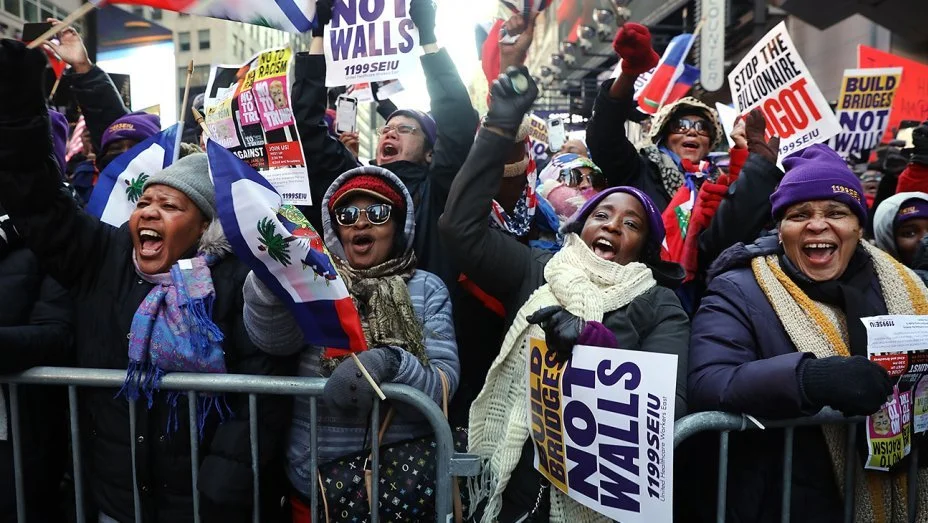
Times Square Protestors Denounce Alleged Trump Remarks on Haiti
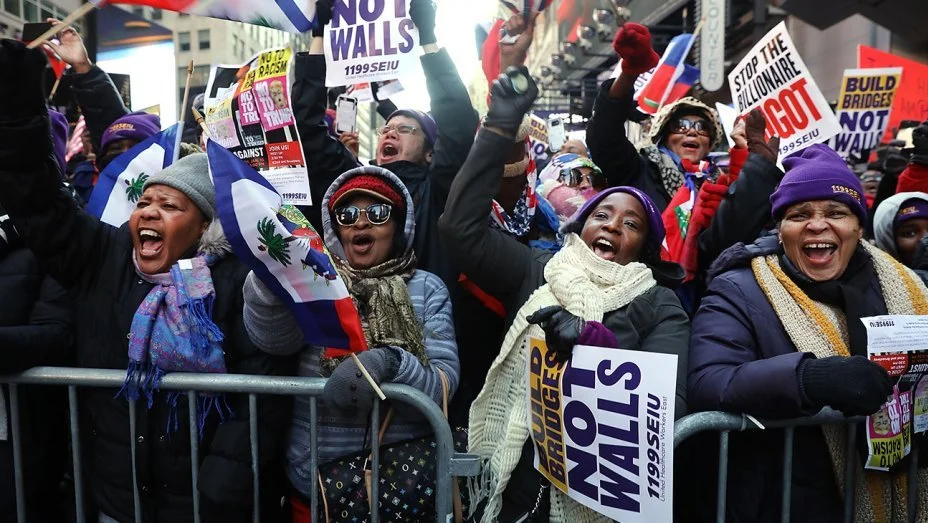
The president is accused of using a vulgarity to describe African nations and questioning why to allow more immigrants from Haiti, rather than countries like Norway.
Hundreds of Haitian-Americans and others have rallied in Times Square in New York City to denounce racism and remarks that President Donald Trump is said to have made disparaging African countries and questioning further U.S. acceptance of Haitian immigrants.Politicians including Democratic New York City Mayor Bill de Blasio joined the demonstration Monday.Protesters carried Haitian flags and signs with messages including "peace, love, power, dream."Police at one point ushered demonstrators out of space designated for walking, but there were no immediate reports of any arrests.Trump is accused of using a vulgarity to describe African nations and questioning why to allow more immigrants from Haiti, rather than countries like Norway.The Republican has said the comments "weren't made" and that he's not a racist. Trump has said he has "a wonderful relationship with Haitians."By: The Hollywood Reporter | 1/15/2018

Conan Announces Trip to Haiti, Despite Trump’s ‘Very Negative Yelp Review’

The nation has been collectively riffing on President Trump’s “shithole” comment since Thursday, but so far, only one late-night host has responded to the president’s denigration of Haiti, El Salvador, and countries in Africa by booking himself a flight. “Headed to Haiti later this week to explore and make some new friends. Stay tuned for my report. #ConanWithoutBorders,” Conan O’Brien tweeted on Sunday.
O’Brien, whose self-titled TBS show has set itself apart from the herd with specials shot abroad in countries like Mexico, Cuba, and Israel, predicted his fondness for the Caribbean island nation based solely on Trump’s extremely low opinion of it. Joked Conan, “Still reeling from @realDonaldTrump’s very negative Yelp review of Haiti, which means I’ll love it.”

Konparet




Blanc Manger (Custard pudding)



Akasan/ Ak100


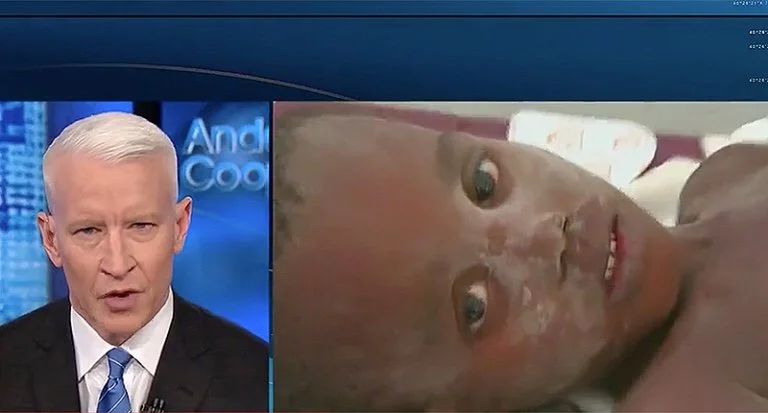
Anderson Cooper breaks down while defending the dignity of Haiti: ‘A dignity many in this White House could learn from’
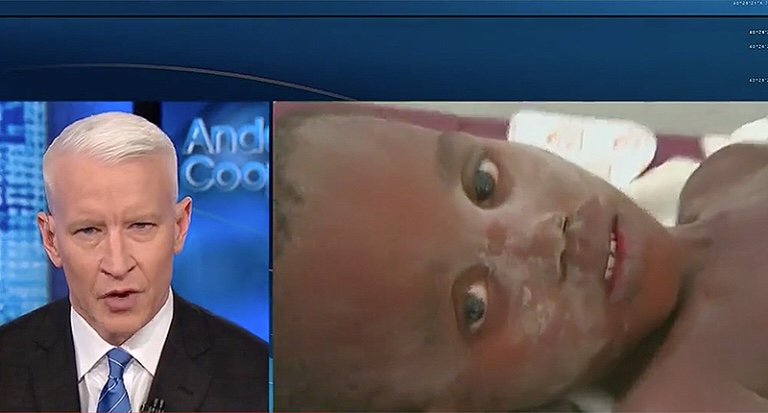
In a commentary about the remarks President Donald Trump made about the people of Haiti, Anderson Cooper spoke about those he encountered while covering the earthquake in Haiti in 2010.Cooper talked about the way people slap your hand when they shake it. “They look you in the eye,” Cooper said. He talked about the heart and soul of a people determined to overcome the worst moments of their lives.eople dug through rubble “with their bare and bloody hands to save complete strangers, guided only by the cries of the wounded and the dying,” Cooper said.“I was there when a young girl named Bee was trapped in rubble for nearly a day was rescued by people who had no heavy equipment. They just had their God-given strength and determination and their courage,” Cooper continued.“I was there when –” Cooper paused, his voice cracking. “When a 5 year-old boy named Mowgli was rescued after being buried for more than seven days. Do you know what kind of strength it takes to survive on rain water, buried under concrete? A 5 year-old boy, for seven days.”“They stand tall and they have a dignity,” he closed. “It’s a dignity many in this White House could learn from. It’s a dignity the president with all his money and all his power could learn from as well. On the anniversary of the earthquake, when this president has said what he’s said about Haitians, we hope the people in Haiti who are listening tonight, in Port-au-Prince and Jacmel in Miami and elsewhere we hope they know our thoughts are with them.”Watch below:[embedyt] https://www.youtube.com/watch?v=rjIsrpAg3JE[/embedyt]Video courtesy of CNN.comBy: Sarah K. Burris for rawstory.com | January 11, 2018
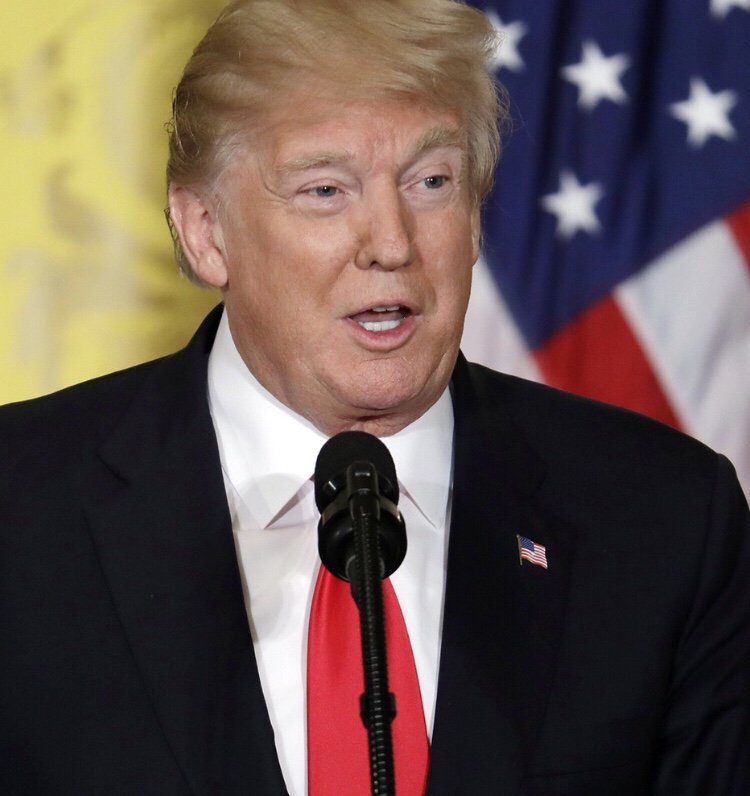
Trump referred to Haiti and African nations as 'shithole' countries

President Donald Trump referred to African countries, Haiti and El Salvador as "shithole" nations during a meeting Thursday and asked why the U.S. can't have more immigrants from Norway.
Trump referred to Haiti and African nations as 'shithole' countriesWASHINGTON — President Donald Trump on Thursday referred to Haiti and African nations as "shithole countries" during a meeting with a bipartisan group of senators at the White House, a Democratic aide briefed on the meeting told NBC News.Trump's comments were first reported by The Washington Post, which said the group of nations referred to also included El Salvador.The comments came as senators huddled in the Oval Office with the president to discuss a path forward on an immigration deal. Trump questioned why the United States would want people from nations such as Haiti while he was being briefed on changes to the visa lottery system.According to the aide, when the group came to discussing immigration from Africa, Trump asked why America would want immigrants from "all these shithole countries" and that the U.S. should have more people coming in from places like Norway. Thursday's meeting came one day after Trump met with Norwegian Prime Minister Erna Solberg at the White House.Ap source familiar with Thursday's meeting told NBC News the president was particularly frustrated during discussions about the visa lottery system — a program Trump has railed against repeatedly in recent months. Another White House source explained the language Trump used as his way of trying to emphasize his support for a merit-based immigration system.The White House issued a statement that did not deny the remarks."Certain Washington politicians choose to fight for foreign countries, but President Trump will always fight for the American people," White House Deputy Press Secretary Raj Shah told NBC Thursday, as part of a lengthy statement that did not directly dispute the language reportedly used in the meeting."He will always reject temporary, weak and dangerous stopgap measures that threaten the lives of hardworking Americans, and undercut immigrants who seek a better life in the United States through a legal pathway."Republican congressional reaction trickled in Thursday night, with some statements critical of the reported language calling on the White House to immediately provide an "explanation" or additional "context."But Republican Rep. Mia Love — the daughter of Haitian immigrants herself — released a tough statement calling Trump's comments "unkind, divisive, elitist, and fly in the face of our nation's values" and demanding an apology from the president.And Rep. Ileana Ros-Lehtinen (R-Fla.) said in a tweet that the reported remark "ignores the contributions thousands of Haitians have made to our #SoFla community and nation. Language like that shouldn't be heard in locker rooms and it shouldn't be heard in the White House".It’s not the first time reports have surfaced of Trump speaking unfavorably about immigrants, and Haitians in particular. The New York Times reported in December that Trump said Haitian immigrants "all have AIDS," during a summer 2017 meeting about immigration.According to the Times, Trump also targeted Nigerian immigrants during that meeting, complaining that once they came the United States they would never "go back to their huts." The White House vigorously denied the claims in the story at the time.By: Ali Vitali and Kasie Hunt for NBCnews.com | January 11, 2018
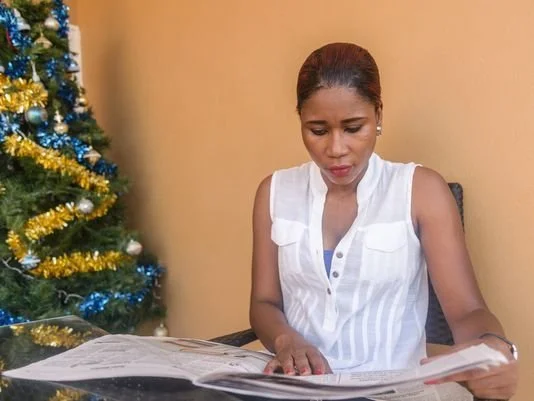
Since Haiti earthquake, rent has been too high for middle class
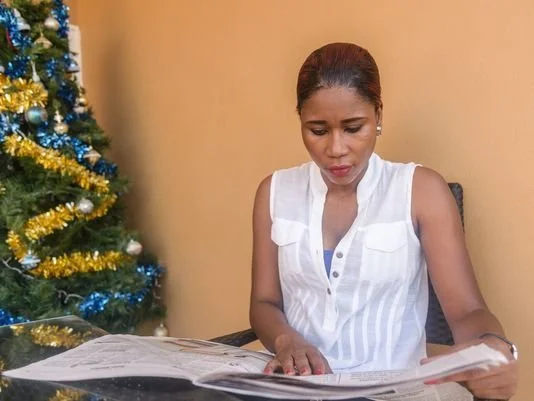
PORT-AU-PRINCE, Haiti — She's a sports journalist at one of Haiti’s most respected radio stations, university educated and middle class. But ever since an earthquake destroyed much of her city in 2010, she's been unable to secure a decent place to live.
Like many living here, Shelove Perrin’s family had to move out of their home because of quake damage. Then they had to move again, and again, and again. Landlords kept jacking up the rent or failing to provide even tap water.
Any country, much less the poorest in the Americas, would have struggled to cope with the massive quake damage. More than a million Haitians moved into squalid camps, and more than 2 million received food aid. But Perrin thinks the biggest reason for her persistent housing problem was the flood of international organizations that rushed in to help Haiti recover.
Aid groups saved lives and brought essential assistance. They provided good jobs to many Haitians. But foreign staff needed housing, and their presence exacerbated a severe shortage, pushing already high rents into the stratosphere and reducing incentives for landlords to keep local tenants happy.
Their presence may have inadvertently helped reinforce Haiti’s class structure, already rated by the United Nations as one of the most unequal in the world. Observers said most of those who benefited from the real estate boom were members of Haiti’s upper class, estimated at roughly 3% to 5% of the population, including many people living overseas.
Among those who suffered were professionals and other members of Haiti’s struggling middle class, believed to make up no more than 15% of the population. As small as it is, a former economy minister said their numbers seem to be falling because of problems that include high rents, debt, lack of opportunity and emigration.
Well before the earthquake, Haiti was often snidely referred to as "the Republic of NGOs" for the number of non-governmental organizations active here. Former president Bill Clinton famously put the figure at 10,000. The number exploded after the earthquake and then diminished over the years.
Now, almost eight years later, conditions should be in place for rents to fall dramatically. Most post-earthquake contracts are finished, and many humanitarian groups have cleared out. The U.N. peacekeeping mission put in place years before the quake has left, as well, to be replaced by a much smaller one.
Perrin, who said she moved seven times in the past eight years, is eager to put her housing woes behind her.
In one case, rent went up 14% for a house she was already stretching to afford by supplementing her day job with marketing gigs and public appearances. She couldn’t pay the extra amount. She considered legal action when a landlord violated her lease, but realized the legal fees would be more than the increase in rent.
Vanel Sylvestre, a real estate agent operating in an upscale suburb of Port-au-Prince, said rental prices, and his commissions, are lower now than any time since he started real estate work five years ago.
Movement is grudging and uneven. Some furnished two-bedroom apartments with 24-hour electricity have fallen from $1,400 to $900 a month. Others won’t budge, like $2,000 two-bedrooms sitting vacant for months. The Facebook page of Sylvestre’s company, Vally Realstate Agency, still features a house for rent for $4,500 a month and one for sale for more than $1 million.
Sylvestre said he made most of his money off foreigners, especially staff for the U.N. peacekeeping mission. The force, which peaked at more than 12,000 after the quake, operated in Haiti from 2004 until last October. The new mission will have about 1,600 people, mostly police.
Although most of the old mission’s military and police lived on bases, some rented homes, as did the more than 1,000 civilian staffers. Sylvestre said that’s why a four-bedroom house that once rented for $5,000 rose to $8,000.
Landlords would ask the same price of Haitians, even if they didn’t want the same amenities. “If you are a local guy, you say, ‘What? Why do you ask so much money?” Sylvestre said. “And the landlord will say, ‘Sir, if you can’t take it, just leave.’”
Landlords have been spoiled, said Yves Francois, a Haitian-American who moved back to Haiti in 2009 and started a construction firm.
For the four years after the earthquake, he was stunned at having to pay more in rent for office space in Haiti than he’d paid the previous decade on Park Avenue in Manhattan. He said he knows many people who built high-end apartments for foreigners after the earthquake, “and most of those apartments are vacant now.” The prices should be falling, he said, but the owners are holding off.
“Some owners are still waiting for a miracle,” Sylvestre said. “They think, ‘I can wait. They will come back.’” Unfortunately, that "miracle" would probably be another natural disaster or more political upheaval — occurrences all too common in Haiti throughout its 214-year history.
Sylvestre said the foreign presence on balance did not make Haiti’s class divisions worse. Besides the rich landlords, some middle-class people moved into more modest homes so they could rent to the foreigners, and Haitians who found jobs working for the international organizations were able to afford better places to live.
Jeremie Dalusma, a civil engineer, is an example of someone who benefited. He has headed logistics operations for State Department programs and several non-governmental organizations since the earthquake. Without that work, he said, he probably would have left Haiti by now.
While the presence of foreign organizations has hurt middle-class renters, it’s not the primary reason the country is so impossibly expensive, said Daniel Dorsainvil, Haiti’s former minister of economy and finance. Haiti needs to improve productivity with better infrastructure and increased domestic production, he said. That will improve the entire economy.
Perrin recently moved again, into a new place she is sharing with her sister. She said the rent is cheaper but still takes most of her income.
Overall, she still regards the foreign presence as a negative for the middle class, but she is pleased with one aspect. There is a lot more housing on the market with amenities like generators and air conditioning. For some in the middle class, these units just might be coming within reach.
By: Amy Bracken, Round Earth Media Published 6:05 a.m. ET Jan. 11, 2018 /Contributing: Michel Joseph

Jus Papaye (Papaya Juice)



Boulette (Meatballs)


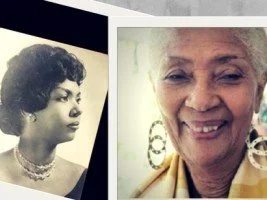
«Emmy», a star of Haitian voodoo folklore passed away

The Haitian cultural community does not end suffering the torments of death these days. After the disappearance of the Anthropologist of Culture, Rachel Beauvoir-Dominique on January 5th. It is the news of the passing of the singer, dancer and actress, Emerante Despradines Morse aka "Emmy", a day earlier, which comes to spread sorrow in the sector of Culture and in many homes."Limond Toussaint, Minister of Culture reverently salutes the memory and legacy of Madame de Despradines who was one of the first promoters of Haitian folklore. The first woman of a relatively educated and easy-going medium to dare to sing and dance Haitian voodoo folklore and put it on stage [...]The Haitian cultural sector will never forget a figure like Emerante Despradines Morse. The Minister Toussaint, the Director General, Jean Michel Lapin and all the executives of the Ministry, send to the members of the family and the close of this icon of the Haitian folklore, the testimony of their sincere affection."Learn more about Emerante de Despradines Morse :Emerante Despradines Morse, born September 23, 1928, is the daughter of the famous singer Auguste Linstant Despradines aka "Candio" and the late mother of Richard A. Morse musician and singer of the famous Haitian Racine Group RAM and also the deceased aunt of the former President of Michel Martelly. Emmy attended the schools of the best choreographers of her day, Catherine Dunham and Martha Graham. During a brief five-year career in the United States, she was employed by Catherine Dunham to teach others songs of Haitian folklore. It is perhaps thanks to this contribution that Haitians are now amazed and proud by watching on Youtube foreign choirs performing "Wangol" or "Peze Kafe". Accomplished artist, Emerante de Despradines, has 3 records to her credit.HL/ S/ HaitiLibre - January 8, 2018
Carnival 2018 : Mayor Chevry apologizes for the change of slogan
Mayor Ralph Youri Chevry of Port-au-Prince "sincerely apologizes" to all those who joined the Municipal Administration on November 10 to determine a slogan and the theme of the Carnival 2018 and informs that "Following the negotiations with the National Carnival Committee, established by the Presidency, we had to give in and adopt their slogan "Ayiti Sou Wout Chanjman" (Haiti is on the road to change)," instead of the slogan decided initially in Port-au-Prince during the first round table "Ayiti Jan L Dwe Ye" (Haiti as it should be).Nevertheless, the mayor said that the artistic activities of Carnival 2018, will develop around the theme of recycling, as it was decided at this round table.The Communal Administration of Port-au-Prince thanks all those who answered his call [among others Ralph Allen, Mario Benjamin, David Charlier, Jean-René Delsoin, Fred Hype, Haze Sylvester, Joseph Merline and Tamara Philippeaux, the Director General of the Town Hall, Anne-René Louis, that of the External cooperation, Alexa Louis and representatives of the diaspora] and hopes to see them again at his discussion table for the Carnival festivities of 2019.HL/ S/ HaitiLibre - January 8, 2018

From Haiti for Shady: Bills have an unsung hero, and punches the clock

As a freshman in high school, Vladimir Ducasse was starting to play more basketball and less soccer, his favorite sport growing up.After all, a child in Haiti, Port-Au-Prince to be exact, is expected to embrace the sport.Today, at 6-foot-5, 329 pounds, the Buffalo Bills are glad they have this athletic, gifted American Football player on the left side of the offensive line.Ducasse, left Haiti with his brother for Miami in 2002, wound up at a high school in Connecticut. Despite being raw, he played at the University of Massachusetts before being drafted by the Jets.He’s a long way from Haiti, and his workmanlike approach to football fits in perfect with what Buffalo Bills coach Sean McDermott is trying to accomplish.After practice this week, Ducasse stayed a few minutes extra to work on technique then went to the locker room alone, took his practice jersey and blue rib vest, his undershirt soaked with sweat.This was a guy preparing for a playoff game. He isn’t caught up in the 17-year playoff drought by the Bills or any of the storylines. He is an 8th-year veteran on his fifth team.“I’ve been sleeping and getting rest,” he said when asked about the hype surounding the city of Buffalo. “I’ve been driving home and coming back to work. From the minute we got here (for training camp), our head coach said, ‘Trust the Process’ and we are. We’ve had ups and downs but we’ve stuck together.”During an interview with the Batavia Daily News, Ducasse, or Vlad as players and coaches call him, doesn’t talk about his upbringing in Haiti, rather with his unique accent talks about the line coming together each week, setting records with running back LeSean McCoy.“When you have someone like Shady it makes your job easier, but whoever is back theRe, they all understand the game, I mean everyone knows what they are doing and it makes it easier,” he said, pausing for a moment, maybe realizing the magnitude of the playoffs, and said, “Every week we were getting closer and closer, it is a great group.”Defensive end Kyle Williams scored a touchdown against the Miami Dolphins last week and Ducasse made a devastating block to allow Williams to run in untouched.“I remember my time with the Jets, I played against him, he was always at a high level, I have tremendous respect for him,” he said. “Anytime you have a guy like Kyle - he’s been here so long - when he’s lining up that play, you know he’s going in!”So how does a guy make it from Haiti to an unsung hero on the Bills?“Some of my teammates in high school during my sophomore year, when I got up to 275 pounds said ‘hey, you should come out here.’ So I did, and the rest of history,” he said.So is the game Sunday.But don’t tell Vlad, he’s too busy working.THE DAILY NEWS - SATURDAY, JANUARY 6, 2018

Coffee


A young couple treated themselves to a meal in an expensive restaurant in Petionville. After eating a huge meal they had settled back in their chairs to relax and chat. The waiter came along and asked: "Will you have American coffee or Haitian coffee?" The woman replied that she'd have American coffee, while the man chose Haitian coffee. The waiter said, "coming right up," and rushed off. "Ah," said the woman, this is a fantastic restaurant. The service is so solicitous and they have just everything." Her date agreed. After a few minutes the waiter returned with two cups, one small demitasse cup and one large coffee cup. He placed the large cup in front of the woman and the small cup in front of the man. Then, with great ceremony, he filled both cups from the same coffee pot!