
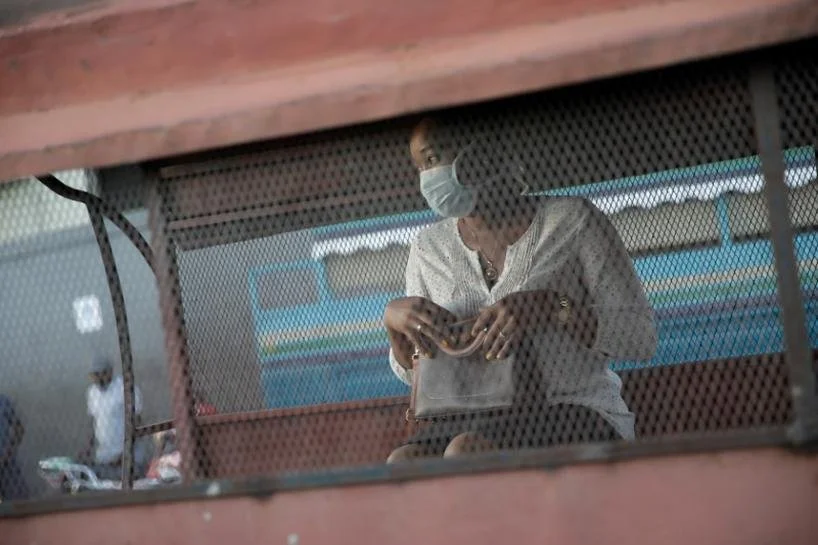
Haiti reports its first coronavirus death
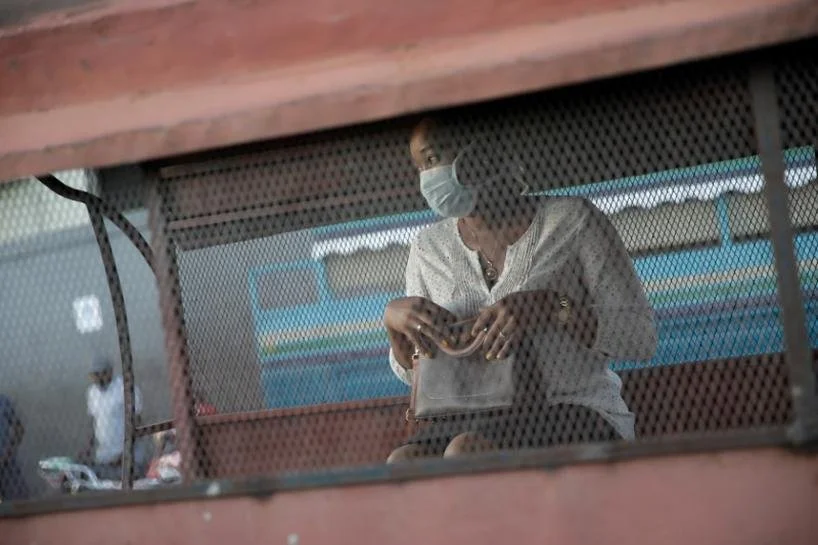
Port-au-Prince (AFP)
Haiti on Sunday reported its first novel coronavirus death, a 55-year-old man who had underlying health conditions.
The health ministry said the man suffered from diabetes and hypertension.
He was one of only 21 confirmed cases of the COVID-19 virus in Haiti, a demographically young country where over half those diagnosed with the disease have been under age 45.
Only 218 tests for the new coronavirus have been carried out in Haïti since the first two cases were confirmed March 19, however, leading to criticism from the national medical community of the government's handling of the pandemic.
Since the virus first appeared, the government has announced stringent measures to contain it, but they have not been rigorously followed or enforced.
A ban on gatherings of 10 or more people is routinely violated, notably in the country's crowded public transportation system.
Stay-at-home measures, like those in place in Italy and France, are difficult to apply in Haiti because the vast majority of its inhabitants depend on the informal economy to survive.
The density of the population of Port-au-Prince, the most populous capital in the Caribbean, with three million people, also makes strategies like social distancing impractical.

Haiti Street Vendors Have Little Knowledge of Looming Coronavirus Dangers

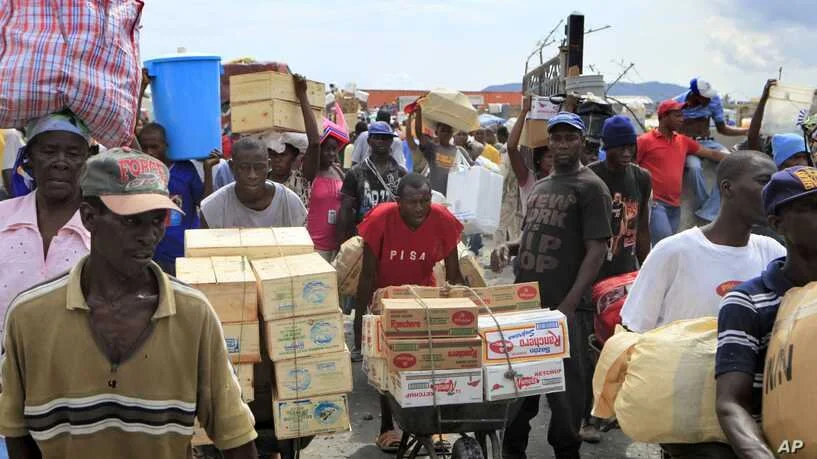
WASHINGTON/PORT-AU-PRINCE - Vendors at the busy Croix-des-Bossales market in downtown Port-au-Prince have not heard much about the coronavirus pandemic that is currently sweeping the world.
VOA Creole found Monday that half of the vendors were busy trying to make ends meet and had no knowledge or incorrect information about the virus.
“I haven’t heard about it. I only came back to the capital yesterday,” a female vendor told VOA. “I do have a radio at home, but it’s not working.”
“I heard it’s people who eat mice who have this disease,” a vendor in her 20s told VOA. “People who eat rats. I heard coronavirus is killing people, but I have no idea whether it’s here in Haiti.”
Farther down the row of merchants, another female vendor had more accurate information.

“I heard that corona is a virus that we should avoid. We should wash our hands, but that’s all I know,” she said. “But I did hear someone say it originated with white people who eat cockroaches, rats and mice — that’s what I heard on the street.”
A male vendor in his 40s knew that COVID-19 has infected people worldwide.
“I don’t know much else about it,” he said, “because I’m still waiting to hear what the experts have to tell us.”
Another vendor told VOA she believes drinking moonshine can keep the virus at bay.
“I heard the virus doesn’t like hot climates nor strong alcohol, so that’s our protection,” she said.
Among vendors who had some knowledge of the virus and the precautions they can take to keep it from spreading, several admitted the advice wasn't easy to follow.
“They told us we shouldn’t touch our faces, but after moving merchandise, sometimes we sweat, and out of habit, we wipe our forehead (with our hand),” a woman said. “How are we supposed to avoid doing that?”
A vendor selling rice and beans said she washes her hands often, but noted that her clients may or may not do the same.
“When a person is hungry, they may not remember to wash their hands before they come to my stand to buy food. All they can think of is eating,” she said.
A male vendor said he was praying for God’s protection. As for social distancing, he said Haitians will never stop kissing each other when they meet.
“We poor people are used to bacteria, so it doesn’t kill us,” he said, adding that he will say an extra prayer to remain healthy as he continues to greet his friends with kisses.

Haiti has no confirmed cases of COVID-19 and is working to keep it that way, through nationwide information campaigns, public service announcements on radio and television, and daily press briefings.
Over the weekend, the National Federation of Haitian Mayors announced a nationwide campaign in the country’s 10 departments to inform people about the pandemic.
On Sunday, Interior Minister Audin Bernadel Fils announced he would go downtown Monday evening, accompanied by members of the police force and Justice Ministry officials, to shut down roadside merchant stands.
“We will close them, because coronavirus is not a ghost, it’s not fake news, it’s real,” he said. “We have been fortunate not to have any cases yet, and we intend to keep it that way as long as we can.”
Monday at midnight, Haiti is shutting its border with the Dominican Republic, where the coronavirus has sickened 11 people. An exception is being made for merchandise coming across the border, which will be required to undergo screening both in the Dominican Republic and in Haiti immediately after entering the country.
Haiti has also stepped up patrols of its maritime borders and has suspended air travel from Europe and Latin America. Air travel between Haiti and the United States has not yet been halted but is currently under review, according to Prime Minister Jouthe Joseph.
Haiti Closes Border with Dominican Republic, Suspends Most Flights
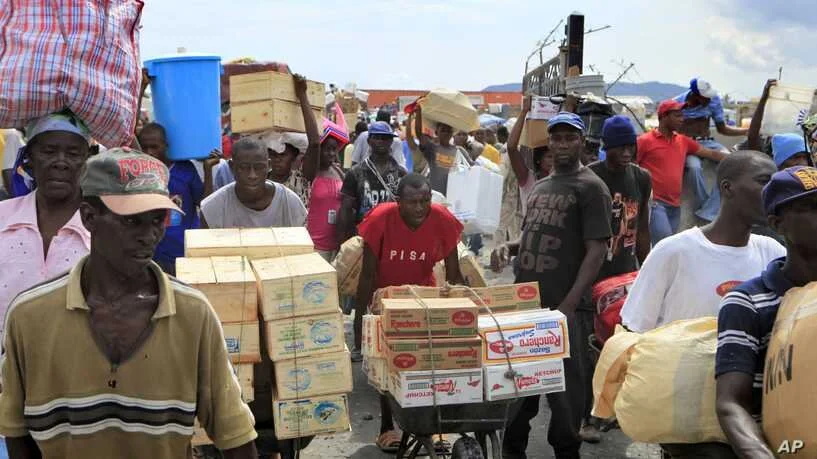
WASHINGTON/PORT-AU-PRINCE - Haiti will close its border with the Dominican Republic as of midnight on Monday, Prime Minister Jouthe Joseph announced Sunday.
Joseph said an exception is being made for merchandise, which will still be allowed across the border after screening. He said Dominican officials will test those aboard the vehicles prior to entering Haiti, and Haitian health officials will also test them upon entry.
The move aims to keep the coronavirus, which has sickened 11 people in the neighboring Dominican Republic, out. So far Haiti has no confirmed cases of the deadly disease. The country's first suspected case, an unidentified foreign woman who had traveled to one of the countries where the coronavirus has spread, tested negative for the disease.

“We are asking people to take this pandemic very seriously,” Joseph said. “We are asking for the cooperation of all Haitian citizens as well as foreigners living in Haiti.”
The prime minister announced that Haiti is also suspending all flights from Europe and Latin America. Flights from the United States are under evaluation, he said.
“We are evaluating fights between Port-au-Prince and New York, Port-au-Prince and Miami, Cape Haitian and Miami, Cape Haitian and Fort Lauderdale,” he said. “We have an agreement with American air transportation officials that all passengers boarding planes for Haiti must be screened for coronavirus.”
He said Public Health officials at the nation’s two international airports - in Port-au-Prince and Cape Haitian - are already screening passengers for the virus upon arrival. Quarantine facilities have also been set up for passengers who exhibit flu-like symptoms. They will be required to fill out a special form, regarding the disease.
“If you are asked to undergo testing or if you are ordered to be quarantined, we urge you to cooperate. Don’t be angry, this is being done to protect our country,” he said.

Joseph appealed to avoid traveling outside of the country, unless it’s an emergency.
“We urge all Haitians to avoid all non-essential travel. Do not travel to any foreign country unless it’s urgent that you do so,” Joseph said.
According to the prime minister, the extra measures to reinforce the country’s land and maritime borders and its airports have been successful in keeping the pandemic out so far.
In addition to new restrictions affecting civilian travel, the prime minister said the government has cancelled all official travel. Joseph said any official who wants to travel abroad must first get approval from either President Jovenel Moise, the prime minister or the foreign minister.
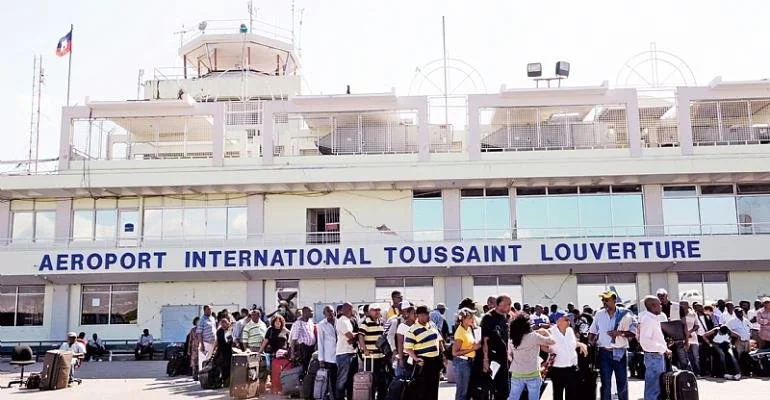
Coronavirus: Haitian Leaders Urging Authorities To Secure Airports And Bus Stations As Virus Hit The Dominican Republic
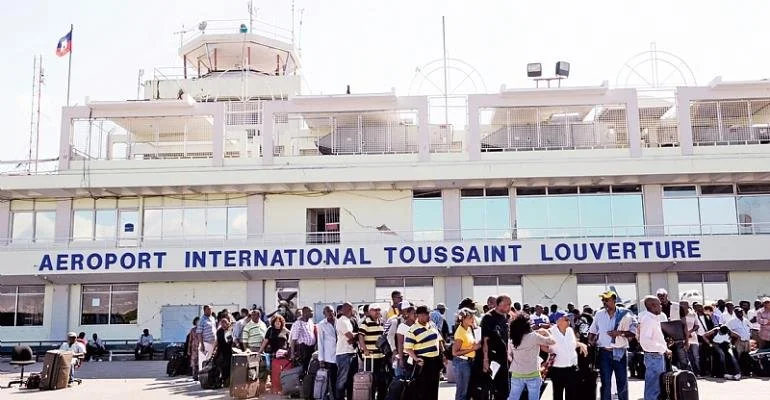
According to reports from local media like Bon Déjeuner! Radio (BDR! Live), VOA, and Radio Television Caraibes, the opposition leaders, health leaders, and other political leaders across Haiti are asking the Haitian Government officials and other agencies officials across Haiti to keep their eyes on the tourists from the U.S. and other countries who are entering the country due to Coronavirus fear as death are growing overseas.
The opposition leaders and other political leaders across Haiti are afraid that the Coronavirus hit Haiti when the country doesn't have good hospitals and types of equipment to solve the problem. That virus is from China and it is reportedly in the Dominican Republic now, so this is why the leaders in Haiti are making sure that the virus stays overseas because Haitian authorities are not ready for cases in a poor country like Haiti. Unfortunately, President Jovenel Moise and the new Prime Minister Jouthe Joseph are quiet about how to secure the security and the safety of Haiti Citizens.
As the Coronavirus death toll going up in Asia countries, Italy, the United States, and others, the leaders in Haiti are making sure there are no cases in Haiti because the health leaders said Haiti doesn't have the proper equipment for such a thing.
"It's sad that the Coronavirus is already in the Dominican Republic, and I hope the Dominican Republic leaders do their best to protect their Citizens like we are doing our best to protect our Citizens in Haiti.", said Mr. Werley Nortreus and other political leaders across Haiti.
As the virus is growing overseas, even the employees at the government-run, General Hospital in Haiti’s capital, Port-au-Prince, fear the day when the first coronavirus patient checks in.
Dr. Jacques Mackenzie told VOA that no measures have been taken to protect the staff at the nation’s largest health facility if Coronavirus hit the country.
“It’s sad to say this but the hospital receives a lot of patients daily and we are not — I repeat — we are not ready, as far as I know, to diagnose a person who has the coronavirus,” he said, adding that they don’t even have the test to determine if someone is infected.
According to reports, the Dominican Republic health officials are now reporting five cases, including a 56-year-old Dominican woman who lives in Italy, and a 12-year-old who recently returned from a European vacation with his family. Both are in quarantine at home. There are now a total of 15 confirmed COVID-19 cases in the Caribbean, and that's why Haiti leaders are making sure that Haiti stays clean without Coronavirus in the country.
"I am calling the Government officials and other agencies officials to keep their eyes on the tourists from the U.S. and other countries entering the country to make sure that they are not infected because Haiti is not ready for this mess.", said Mr. Werley Nortreus, a political leader and founder of Vanyan Sòlda Ayiti and A New Haiti Before 2045 (ANHB 2045).
The number of people in the Caribbean who have contracted the novel coronavirus continues to grow with the Pan American Health Organization confirming Friday an additional positive case in the Dominican Republic and eight new ones in the French overseas territories, bringing the total to 12.
“The diagnosis is biological so the laboratory has to confirm the diagnosis. We don’t have the test. We, the medical personnel, have not received any instructions at all with regards to detecting coronavirus cases, nor how to protect ourselves. We are seeing (in the news) all the equipment other countries have to deal with the coronavirus, their doctors, their technicians are well equipped. We, on the other hand, have never received anything that would allow us to face the possible arrival of coronavirus in the country.”, said health officials and Doctors in Haiti.
French Guiana is reporting five cases of COVID-19 while Martinique confirmed two cases. The cases are in addition to three previous cases — two in St. Martin and one in Saint Barthelemy — that had been previously reported along with a previously confirmed case in the Dominican Republic. No information was released on whether any of the 12 patients have died.
As the Coronavirus death toll going up in Asia countries, Italy, the United States, and others, some leaders in Haiti, including Mr. Werley Nortreus are making sure there are no Coronavirus cases in Haiti and the Caribbean.

Haiti president fights ‘PetroCaribe’ $2bn oil corruption scandal

Jovenel Moïse tells FT he is pushing for constitutional changes amid popular anger
Scrawled in Creole on the walls of Port-au-Prince are the words: “Kot Kòb Petwo Karibe a?” — “Where is the PetroCaribe money?” It is a question posed by the protesters who have been trying to oust Haitian President Jovenel Moïse for the past year.
PetroCaribe, set up in 2005 by then-Venezuelan president Hugo Chávez, allowed Caribbean nations to buy Venezuelan oil on favourable terms. The countries were supposed to use the money they saved to improve infrastructure, but more than a decade later Haiti has little to show for it.
Last year, Haiti’s court of auditors reported that officials mismanaged up to $2bn of PetroCaribe cash and that a company managed by Mr Moïse was involved in a questionable road-building scheme. A new report is due within weeks.
In his modest, rented residence in the hills above Port-au-Prince, Mr Moïse, a 51-year-old businessman who made his name as a banana farmer, denied all charges of corruption.
“I was president of a company and that company had a contract with the state,” he told the Financial Times, seated in front of the blue-and-red Haitian flag. “You’re here in Haiti, go and see it if you like. You’ll see there’s a road and it’s 80 per cent built.”
The protests began in 2018 after Haitian film-maker and activist Gilbert Mirambeau tweeted a photograph of himself, blindfolded, holding a sign with the question “Kot Kòb Petwo Karibe a?”
Mr Mirambeau’s tweet went viral and helped spark a movement of self-styled “Petro-Challengers”. They have posted photographs online of the empty shells of buildings they say should have been completed with PetroCaribe savings.

The protests against Mr Moïse’s rule came to a head late last year. Between October and December, Port-au-Prince was in lockdown. Thousands took to the streets, angry not only at the corruption allegations but also spiralling inflation and dire public services. More than 40 people were killed in clashes between demonstrators and the police. “The security forces under the command of President Jovenel Moïse have used excessive force,” Amnesty International concluded.
Since then the city has been calmer but armed gangs roam poor neighbourhoods and locals say kidnapping is on the rise.
“People are afraid,” said Nixon Salomon, a motorcycle taxi-rider waiting for customers in the Carrefour Feuilles area of the city. “They only travel if they have to. You never know when someone is going to pull a gun and shoot you. I’ve already had one motorbike stolen. The situation is really unstable.”
Mr Moïse has responded by calling for a new constitution that will give the presidency more power. That, he said, would halt the constant bickering between the executive and the legislature and allow government to get things done.
But in Haiti, with a history of dictatorship, such talk sets off alarm bells. Mr Moïse’s critics point out that parliamentary elections scheduled for last October were scrapped and congress is no longer sitting. Mr Moïse is ruling by executive order.
The president blamed this on the opposition who had failed to turn up for a crucial vote on a new electoral law. He said the closure of parliament was proof of Haiti’s broken political system rather than his thirst for power, and was nothing new.
“Five!” he said, holding up the palm of his hand, his fingers and thumb splayed. “I’m the fifth president of Haiti to rule without a parliament,” he explained, listing his recent predecessors — Jean-Bertrand Aristide, René Préval, Boniface Alexandre and Michel Martelly. “This suggests we have a problem.”
He said a new constitution would solve that problem and could be drafted quickly. The last one was written in less than five months. Once done, he would put the charter to a referendum, he said. Only then would he call fresh congressional elections and consider stepping down.
“This is not about abolishing parliamentary power,” Mr Moïse said, insisting he would not seek a second term beyond 2022. “It’s about rebalancing power.” Asked when new congressional elections might be held, he said: “I can’t give an exact date but the idea is to do it as soon as possible.”
Political instability in Haiti has been a constant refrain since at least the 1980s and arguably since independence from France in 1804, when it became the first country in the Caribbean to break free of colonial rule and only the second in the hemisphere — after the US — to declare itself a republic.
For nearly 30 years until 1986 it was ruled by father-and-son dictators — “Papa Doc” and “Baby Doc” Duvalier. Since then, it has been rocked by coups, US intervention, hurricanes, a cholera outbreak and the devastating earthquake of 2010.
Even by those standards, the current situation is bad and this time largely man-made. “The political crisis and the social unrest are having consequences,” said Antoine Vallas, of the World Food Programme in Port-au-Prince. “They’re making people more vulnerable.”

The World Bank says 60 per cent of Haiti’s 11.1m population lives below the poverty line on less than $2.41 per day. The currency, the gourde, depreciated 30 per cent in 2019, inflation is nearly 20 per cent and the economy is stagnant. “We’re seeing dramatic levels of hunger,” Mr Vallas said. “Almost 4m people don’t have enough to eat and of those, about 1m are facing severe hunger and need urgent humanitarian assistance.”
For the Petro-Challengers, these are the consequences of years of mismanagement and corruption. They want Mr Moïse to quit and state officials to be brought to trial.
“He should resign. He has so clearly been involved in corruption,” said Emmanuela Douyon, an activist and head of Policité, a new Haitian think-tank. “We’ve had presidents before him. We’ll have presidents after him. He won’t be missed.”
For many ordinary Haitians, constitutional reform seems a world away from their day-to-day reality of crime, poverty, blackouts and water shortages.
“It’s all just talk,” said Jaqueline Joseph, a 32-year-old mother, as she sold second-hand clothes from a pavement in Port-au-Prince. “I have no faith in politicians any more. The only thing they’re interested in is themselves.”
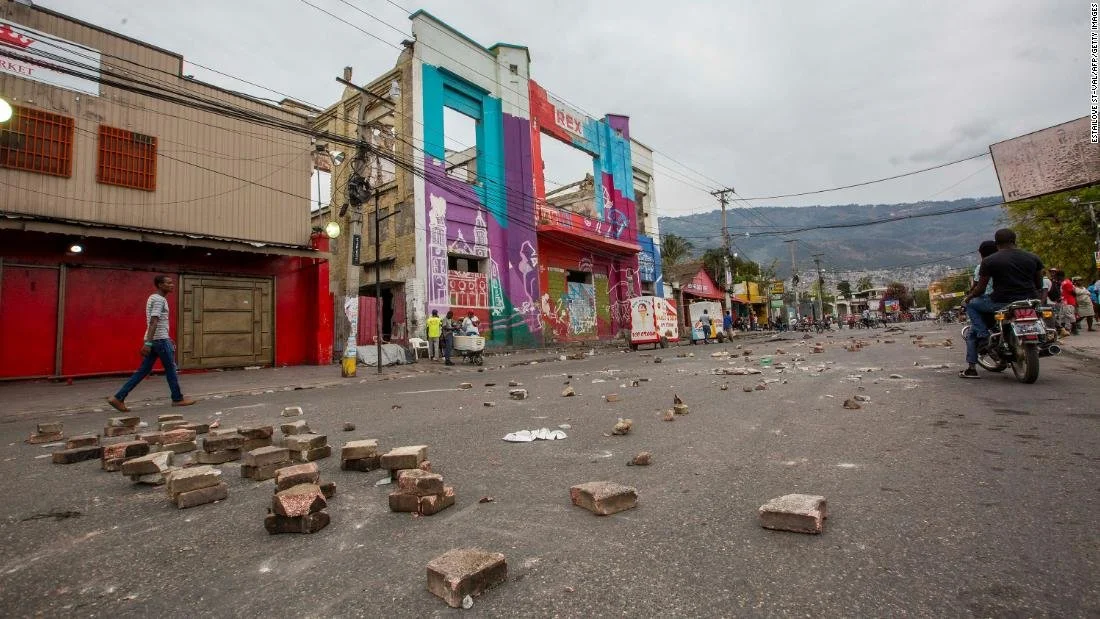
Violence forces Haiti to cancel Carnival
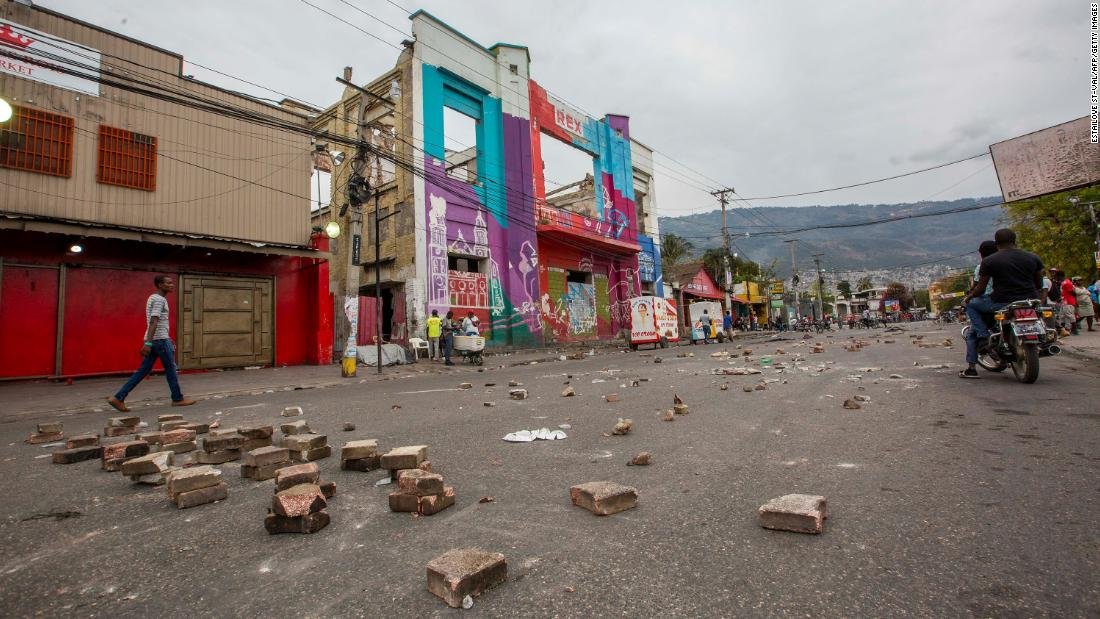
Haiti's biggest celebration of the year, Carnival, has been canceled after deadly protests and gunfire interrupted the first day of festivities in Port-au-Prince, leaving at least one person dead.Haiti's vibrant Carnival draws thousands every year for mass celebrations. But the three-day festival was cut short after gunshots were heard and people ran for cover in the nation's capital over the weekend."In order to avoid a planned bloodshed, the Government takes the opportunity to inform the population that the carnival has been canceled in Port-au-Prince and invites the Haitian people to remain calm while waiting for the next announcements," a statement from Haiti's communication ministry read on Sunday.
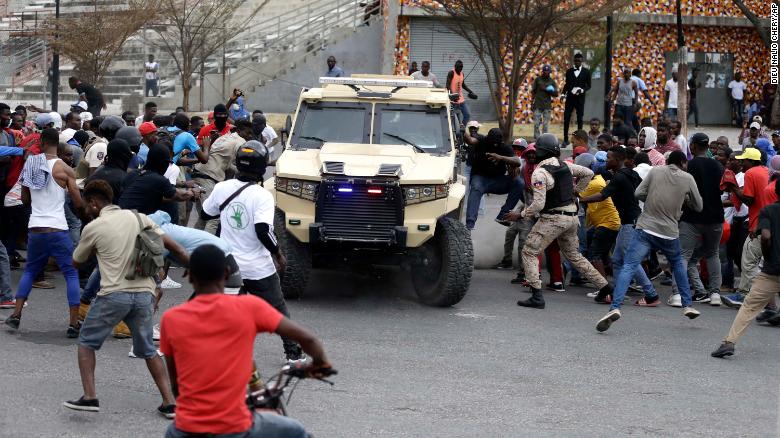
Armed off-duty police officers commandeer an armored vehicle during a protest over police pay and working conditions, in Port-au-Prince, Haiti, Sunday, Feb. 23, 2020.Haiti's Armed Forces said protesters from the country's National Police had attacked its headquarters, leaving one soldier dead and two others injured. Haitian police have been protesting for months, demanding better pay and conditions, but have not yet responded to claims their officers were involved in this incident.
"Despite the repeated assaults of the attackers, the military authorities maintain a defensive posture to avoid a bloodbath. The High Command of the Armed Forces once again calls on the National Police of Haiti to restore calm," Sunday's statement from the Armed Forces read.Video from Reuters shows chaos in the city, with fire burning near the festivities and people ducking for cover as gunshots are heard. Other images show several people with guns running throughout the event.
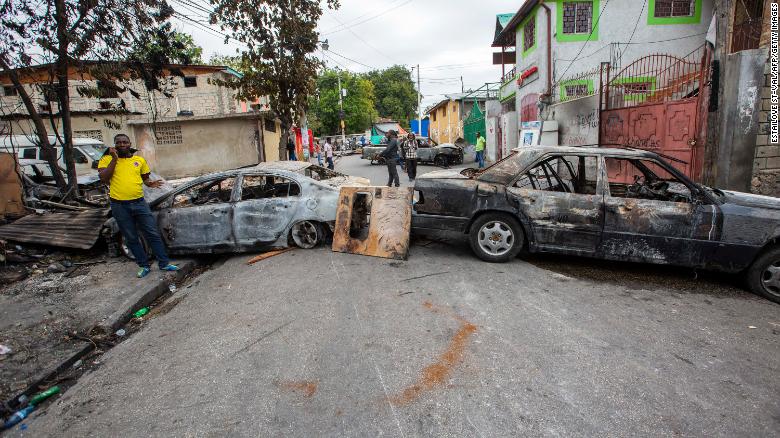
Main roads through the city of Port au Prince are blocked after Sunday's clash between Haitian police and the army in Port au Prince, Haiti February 24, 2020.The United Nations office in Haiti expressed its "grave concern" for "the serious incidents Sunday" that "lead to the cancellation of the Carnival celebrations," on Monday.
"The United Nations calls on all sectors, in particular those elements of the national police demanding better working conditions, to avoid any situation which could cause tensions to escalate and jeopardize the security of the population," the statement read.
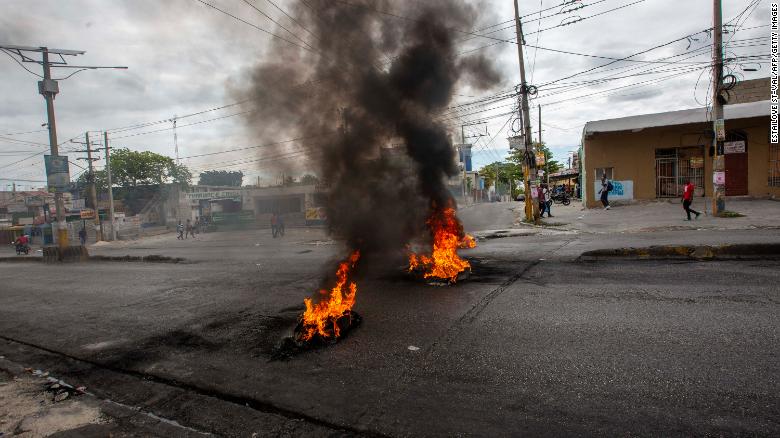
Main roads through the city of Port au Prince are blocked after Sunday's clash between Haitian police and the army in Port au Prince, Haiti February 24, 2020.The police protests are not directly related to recent anti-government protests, but they add to the widespread unrest that has gripped the nation since February last year as demonstrators demand the resignation of Haitian President Jovenel Moise.
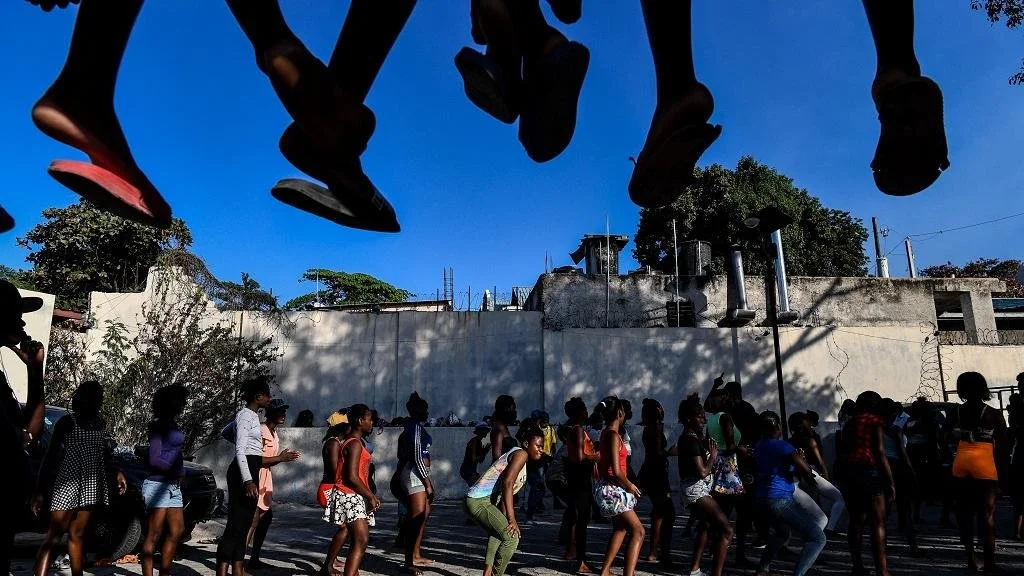
Haiti gears up for annual carnival celebration
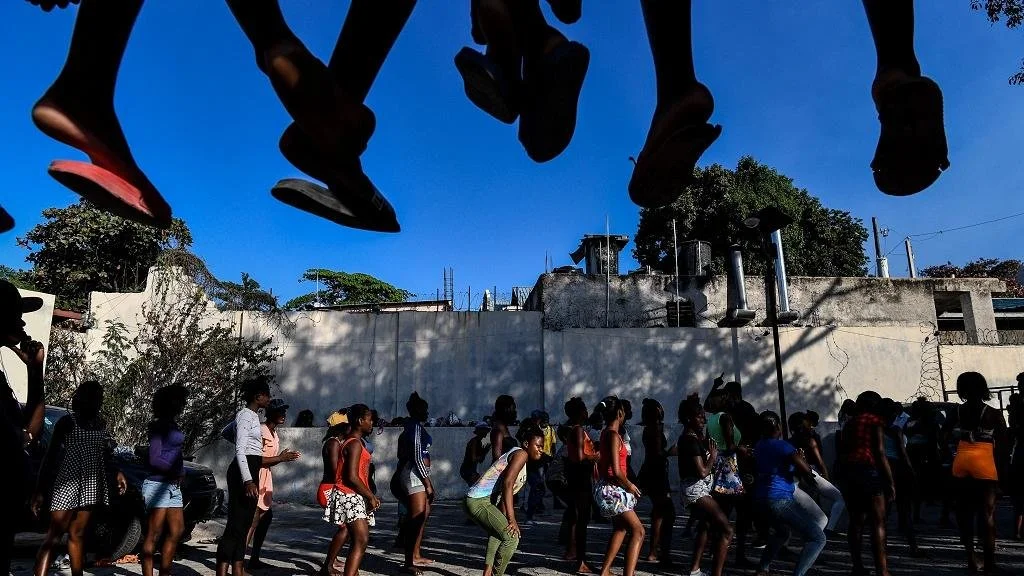
Haitians gear up for the annual Carnival celebration.
This year, the Mardi Gras festivities are seen as controversial in a country struggling
with gang violence, kidnappings and political unrest.
“I could go to China to take that (raw textiles) basically because, I know I will work with that, with more money but we don’t have money. But in the last minute we know that we are still going to be called (by the government) anyway. Anyway, as producers we don’t have a place where we can go to borrow money”, Arnelle Laguerre, a designer said.
Think about the children who are dancing and the cash required for their transportation.
The colorful parade generates money and some say much of those funds are badly needed in the Caribbean nation. For others, the merrymaking is wildly misplaced.
“If the carnival ends todayor tomorrow they should start thinking about the carnival for next year. Start thinking about things like the infrastructure, the road where they will have the carnival procession, clothes for children, the ambiance and money the children will need. Think about the children who are dancing and the cash required for their transportation”, dance instructor, Pierre Kerense said.
There have been damage done to parade stands and several vehicles. This has prompted calls for the carnival to be cancelled for a second year in a row.
But Haitian Prime Minister, Jean-Michel Lapin is having none of it.
He said festivities would go ahead as scheduled and along the usual route.
Rehearsals have been taking place in the Haitian capital of Port-au-prince for the February 23- 25 event.
The carnival is the most intense period for Haiti’s dress makers as it involves parties and other culturally related gatherings.

From Haiti with love: Caribbean cooking in Portland

Local programs helped entrepreneur Mathilde Aurélien-Wilson scale up her business
PORTLAND, Ore. (KOIN) — When Mathilde Aurélien-Wilson first arrived in Portland, she noticed something missing: the great food of her home country, Haiti.
“When I arrive here, I was looking for some food, Haitian food, Caribbean food, and I couldn’t find anything. So I find there is an opportunity to do something part of the community, it’s a diverse community,” she told KOIN 6 News.

Aurélien-Wilson was able to find her path to establish and grow her food-centered small business thanks to Portland Mercado, a Southeast Portland food cart pod and non-profit that assists Latino businesses.
Originally Aurélien-Wilson sold her products at local farmer’s markets, then she opened her own food cart. With Portland Mercado’s help, she opened a second location at their food cart pod.
The non-profit was then able to secure her a scholarship to attend a Portland Community College program called Getting Your Recipe to Market.
“That help me boost my knowledge about how to package. So I realize instead of selling my food and my beverage at the food cart, I can package and have it available for a bigger audience,” Aurélien-Wilson explained.

Mathilde’s Kitchen has since done away with the food cart format and is now a wholesaler of a pre-packaged ginger hibiscus drink for local grocery stores and a catering service. Offerings include dishes such as roasted pork, chicken pumpkin soup and fried plantains. She still uses Portland Mercado’s shared commercial kitchen space for her business.
Aurélien-Wilson and her husband Bruce Wilson previously started the first school at her home village in Haiti before moving to Portland in 2013.
Called La Renaissance Elementary School in the hillside village of Au Cenre, the school started as nothing more than a shack but has since grown to a prominent building of the village.
“It wasn’t that easy because with nothing available, no running water, no electricity,” it was difficult to get teachers to come in, Aurélien-Wilson said.

Eventually, they worked out a system where professional teachers would come in to train the local villagers to teach.
The school now partners with the Haitian government to help run it.
“We have them taking over the school. We still oversee what’s going on. But at least they’re taking on with the curriculum, with the teacher, the daily supervising, I cannot do it,” Aurelian-Wilson said.
Previously to moving to Portland, the entrepreneur lived in St. Croix in the U.S. Virgin Islands.
However, when the devastating 2010 earthquake struck Haiti, where many of Aurélien-Wilson’s friends and family still lived, she took a plane over there the next day.
She helped set up a camp in her sister’s backyard to facilitate emergency medical attention with 30 volunteers.

“We were right there where people couldn’t reach the bigger hospital, the bigger care and we were trying our best,” Aurélien-Wilson recalled.
She says in the future for her business she wants to produce more flavors for her beverage line and become a Farm to School food provider for public schools in Oregon.
“Amazingly, not only Caribbean people like the food, I find people that from many other sides of the world, when they taste it, they tell me it reminds me of their home food, their mom’s food,” Aurélien-Wilson said.
Carnival in violence-wracked Haiti: good business or bad taste?
Port-au-Prince (AFP) - Haiti is gearing up for its annual Carnival celebration, but the Mardi Gras festivities are controversial in a country struggling with gang violence, kidnappings and political unrest.
Some say the money generated by the colorful parades is much needed in the impoverished Caribbean nation. Others believe the partying is wildly misplaced and in poor taste.
"How can anyone think about going to Carnival and dancing without being able to get home safely, with the risk that you could be killed, kidnapped or shot at?" said one official who asked not to be named.
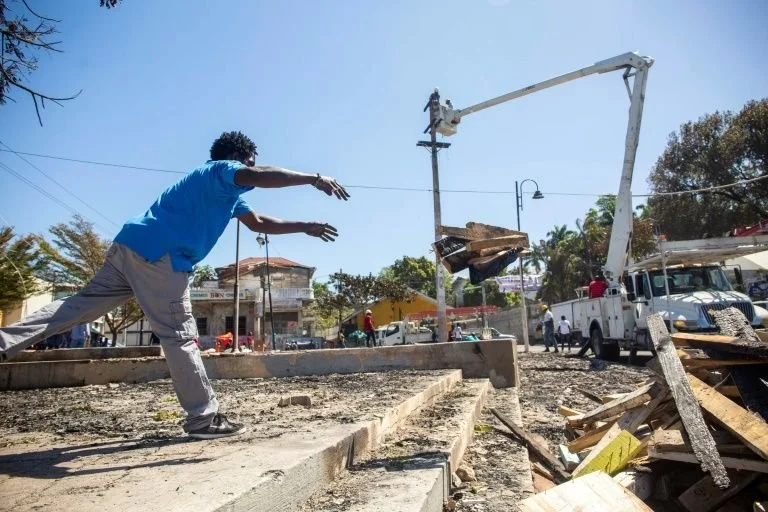
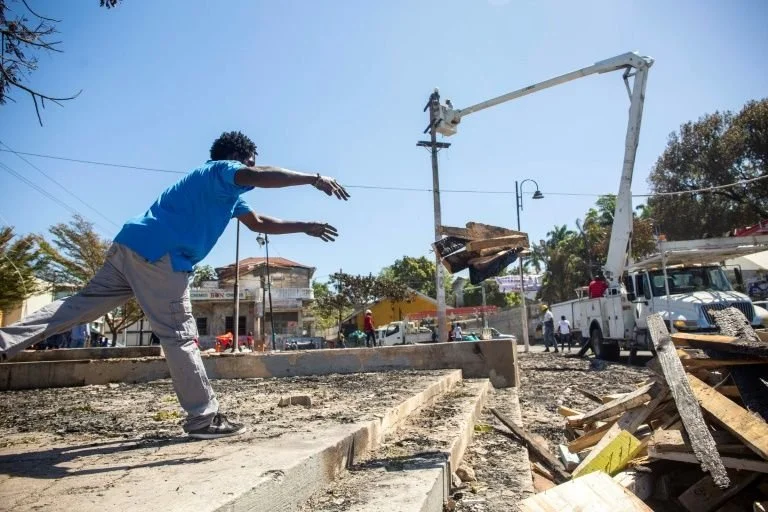
The official was standing on the main square in the capital Port-au-Prince where the annual parade usually takes place -- amid the charred ruins of the grandstands that went up in flames this week.
Since the start of the year, Haiti has seen an uptick in kidnappings for ransom, against the backdrop of constant gang violence in poor urban areas.
In the face of the crime wave, police in Port-au-Prince protested Monday, demanding better working conditions and the right to unionize.
At the end of that demonstration, the parade grandstands were set alight.
"An officer just starting out makes 19,000 gourdes a month," or about $180, said one cop taking part in a fresh protest on Wednesday.
Dressed in civilian clothes, but carrying his service weapon and wearing a mask, the officer said he had not been able to pay his daughter's school fees for five months.
- Not just a party -
Despite the destruction of the parade stands and several vehicles, and amid calls for Carnival to be cancelled for the second year in a row, Prime Minister Jean-Michel Lapin said the festivities would go ahead on schedule -- and along the usual route.
In a street adjacent to the central Champ de Mars, dance instructors observe young girls rehearsing their parade routines.
Like most everyone in Port-au-Prince, Pierre Kerense is stressed out by the tense atmosphere in the city caused by the seemingly endless violence and crime.
But the 45-year-old choreographer says that the three-day Carnival ending on Mardi Gras is more than just a party.
"This is also business -- many people depend on Carnival every year to pay their rent and their children's school fees," he said.
Carnival is the most intense period each year for the country's seamstresses and tailors.
The workshop of Arnelle Laguerre is buzzing with activity -- fabric is cut, feathers are attached and sequins are sewn into costumes by hand.
"In the days leading up to Carnival, we work flat out, with lots of extra people -- I can sometimes have 40 people working by day and others who come to take the night shift," says Laguerre, who has worked on costumes for the festival for 20 years.
- Deadly protests in 2019 -
In February last year, at least seven people were killed in violent incidents as protesters demanded the resignation of President Jovenel Moise and an improvement in their standard of living.
The upheaval prompted the government to cancel Carnival -- a bitter pill to swallow for all of the professionals who depend on the festivities to make ends meet.
"We had started to do the work, and to spend money," recalls Laguerre, who stocks up several months before Carnival in anticipation of the costume orders she usually gets.
"We still had to pay (the workers)."
Given the steep lending rates at Haiti's banks, many artisans rely on informal loans, which can threaten the stability of their small businesses if things go sour -- and their ability to keep workers on the payroll.
Surrounded by piles of half-made costumes, Laguerre prefers not to do the math on how much she has laid out this year.
"Power in the neighborhood just went out. We have to turn on the generator. All that adds to the costs," says the 58-year-old.
In her studio, everyone knows how many sewing machines can be plugged in at the same time without blowing the power.
Every day, the electricity cuts only magnify the stress and fear among the residents of Port-au-Prince, who flee the streets of the capital when night falls to avoid being the next kidnapping victim.

How The Clintons Robbed and Destroyed Haiti

The Clintons became masters of debilitatingly empty promises when it comes to Haiti.
The imprint of Bill Clinton and Hillary Clinton is indelible. The couple’s presence and impact on the Caribbean island have brought nothing but prolonged despair for the Haitians. Their elusive and opaque deals in the country have not done anything to alleviate the country out of poverty depths. The purported interests of helping Haiti from its myriad of problems have only caused stagnation in Haiti.
The presence of Bill Clinton, who also served as the president of the United States together with his wife who served as the Secretary of State during Obama’s tenure can be traced back to the 90s. Their interests in Haiti are not a new phenomenon. If not, their interests in Haiti have almost become irrevocably entrenched and have had far-reaching consequences in the lives of ordinary Haitian citizens.
Their history with the country dates back to 1975 when they had their honeymoon there. If there is an unpopular couple in Haiti, it definitely has to be the Clintons; for they are held in contempt and in despicable terms. What the Clintons did is unforgivable to the Haitians.
The devastating 2010 earthquake left Haiti in tatters. The country’s economy reeled under the biting and excruciating effects of the earthquake. Because of their history with Haiti, the Clintons seized this chance in the interests of “assisting” Haiti in its times of unparalleled difficulty. But their involvement with the earthquake relief programs was the final proof Haitians needed to show that the Clintons’ true intentions with the country were to rob it for their own parochial interests.
Bill Clinton’s influence in Haiti ranges from the 1990s agricultural policies in Haiti that destroyed the country’s rice industry to the meddling in internal affairs and finally to the earthquake. There is a sense of permanency attached to the Clintons’ name as regards their activities in Haiti, particularly the Clinton Foundation.
When the earthquake struck, the global response was to send in donations to Haiti. But of course, that needed a commission that would be designed to have an oversight role as regards the disbursement of the various relief packages pouring through. The Clintons stepped up to lead the global response. The Interim Haiti Recovery Commission (IHRC) was brought into life and Bill Clinton was selected to be its co-chair. At that time, Hillary Clinton was still the Secretary of State and thus responsible for channeling USAID relief spending to Haiti.
One could not have found an escape from their influence. Bill Clinton co-chaired the commission alongside Haitian Prime Minister Jean-Max Bellerive. Some $13.3 billion was pledged by international donors so that Haiti could be rebuilt and the lives of Haitians uplifted.
The IHRC was comprised of two parts: one that had the foreigners and one led by the Haitian Prime Minister. Bill Clinton chaired the foreign part and it had all the donors; they had to the IHRC $0.10 billion over two years or forgive $0.20 billion of Haitian debt. Each and every decision made by the Haiti section of the commission had to be endorsed by the foreign section. And Clinton was at the helm of the foreign part of that commission.
As the money found its way into the possession of the IHRC, it increasingly became arrogant and opaque. The only thing that came out of the post-earthquake relief plans was the construction of an industrial park called Caracol, which cost $300 million. The US was also amenable to financing a power plant. The belief held by the Clintons and their allies in terms of rebuilding Haiti was premised on employing short-term plans espoused in the foreign aid industry that the US had imposed on Haiti all these years.
They hoped that Caracol would sizeably attract foreign businesses for the reconstruction of the country’s badly fractured economy. It was the same old policy that did not care about the pertinent issue of creating long-lasting projects that would eventually help the poverty-stricken Haitians. The foreign-aid industry plans are concerned with benefiting the international players, the private contractors.
The industrial park is considered a very big flop by the US. Worse still, several hundred farmers were evicted from there in order to make way for the 600-acre park. Too much emphasis was placed on “outside players” instead of the Haitian government to effect change.
As such, the jobs that Caracol was expected to make fall far below the reality on the ground. The post-earthquake efforts by the Clintons, particularly Caracol, was a damning failure that did nothing to lift the Haitians out of their misery but only lined the pockets of big firms. South Korean textile giant Sae-A Trading Co, which is the main employer at Caracol, gifted the Clinton Foundation with donations between $50,000 and $100,000.
The IHRC had little to show for all the money that came through except the Caracol industrial park. Not much reconstruction in Haiti was done. Where did all the money go? The Clinton Foundation has refuted claims that it had influence in the running of the IHRC, saying, “Since 2010, the Foundation has worked on the ground in Haiti with a range of partners - helping more than 7,500 farmers lift themselves out of poverty; improving the Haitian environment by planting more than 5 million trees and installing more than 400 KW of clean energy; and supporting women through literacy training and job skills for over 2,000 women,” when responding to the BBC.
It has been speculated some of the money that came through the commission found its way towards sponsoring Hillary Clinton’s presidential campaign which she lost to the incumbent Donald Trump in 2016 but this is an area she has always been evasive about when probed. They become allegations without proof but to Haitians the more she dodges the question, the more she becomes suspicious and pernicious to the interests of Haitians.
It is estimated that the IHRC collected over $5.3 billion over two years and $9.9 billion in three years but Haitians still find themselves mired in abject poverty. A US Government Accountability Office report circumvented the issue by deciding not to find any iota of wrongdoing, but the gravity of the failure made them mention that the plans by the IHRC, co-chaired by Bill Clinton, “did not align with the Haitian priorities.”
The failure by the IHRC to rebuild Haiti is still haunting Haiti. The failed agricultural policies by the US made sure Haiti, a country that produced its own rice, would be reliant on US food to the extent that Haiti imports food from the US. Foreign aid is continuously pumped into Haiti, and no plan is made to bolster the country’s own capacity to rebuild and produce.
Haiti is still run on which business finds favor with the US, and while the Clintons were in charge of the US, they presided over all these failed policies. It is high time the onus to build Haiti shifts back to the government.

Children’s Nutrition Program Of Haiti To Host Annual Benefit Dinner On March 20

The Children’s Nutrition Program of Haiti will host their annual awards ceremony and benefit dinner at Stratton Hall on March 20. This year’s theme is “Building a Firm Foundation – One Child at a Time.” The Legacy Reception will begin at 5:30 p.m. followed by dinner at 6:30 p.m.
"Jan. 12 marked the 10th anniversary of the catastrophic earthquake that took the lives of over 200,000 people in Haiti," officials said. "The epicenter of that quake was in Leogane, just miles from the Children's Nutrition Program headquarters. To commemorate this event, the evening will invite attendees to remember the lives lost in the earthquake and celebrate the everyday heroes who continue to help Haiti to build a firm foundation. Proceeds from the night will further their work to prevent and treat malnutrition in Haiti."
The keynote speaker will be Len Gengel, co-founder of Be Like Brit.
"Len's work in Haiti began in 2010, only months after his 19-year-old daughter, Britney, lost her life in Haiti's devastating earthquake," officials said. "Len's work reflects his inspiring commitment to honor her legacy by investing in Haiti's children."
The Deb Watlington Heart for Haiti award recognizes individuals who have given their heart, soul and time to fight against childhood malnutrition in Leogane. This year’s award will be presented to Dr. and Mrs. Chuck and Martha Sternbergh and Reverend and Mrs. John and Mary Talbird.
For more information or to register or donate online, visit www.cnphaiti.org.

Burn clinic in Haiti treats all victims for free

Haiti (MNN) — From Haiti with Love is the only free burn clinic in the country, and Haiti desperately needs it.
Last Thursday, a fire burned an orphanage in Haiti, killing 15 children. Not only was the orphanage unprepared for the fire (the living conditions were cramped and dirty, and candles were used for lighting), but firefighters took 90 minutes to respond. When they did arrive, they lacked the equipment necessary to save any of the children, such as bottled oxygen.
This tragedy only highlights the danger posed to Haitian citizens by fire and burning, and ongoing unrest in this poverty-stricken country doesn’t help.
The clinic

Haitians uses motorcycles as axis, and even ambulances. (Photo courtesy of For Haiti With Love)
Eve DeHart from For Haiti with Love points out that every burn is unique, and that many burns result from people falling off overcrowded motorcycles (these vehicles are used as taxis.) Others result from house fires. Children are often burned from falling or reaching into pots of cooking food.
Because burn victims need bandage changes, the small clinic treated almost 600 people by themselves in January. “So for a relatively small organization, that’s a lot of gloves. That’s a lot of bandages. That’s a lot of tape. That’s a lot of masks. That’s a lot of burn cream. That’s a lot of antibiotic cream for the cuts.”
And the work is directly saving lives. DeHart says, “With the living conditions down there, burns open your body to outside germs and possible infections. And the more the burn, of course, the more the exposure and the more likely it is that without treatment it would be fatal.”
“So, there are a lot of people leaving the clinic when they’re well who acknowledge, “Thank you for everything, you saved my life.’”

Pray that the gospel would spread through Haiti. (Photo courtesy of For Haiti With Love)
DeHart says one trouble facing the clinic is that pharmaceutical companies don’t typically give donations to small organizations. Instead, they give to very large organizations. “That’s the way the pharmaceutical [companies] handles [it]. They don’t dole out little bits anymore. And by little bit, so I would be talking [roughly] 5000 tubes, but still that is small when you’re thinking of filling a container. And that’s the only way they want to donate it. And the expiration date wouldn’t allow us to take it even if we had the [storage space].”
Healing and the Gospel intersect
While the patients are being treated, they want to talk about something to distract them from the pain. Workers at the clinic often share the Gospel with them.
“And that is the best topic for keeping their mind off of what is happening to them. And particularly if it happens to be self-inflicted injuries, by someone who was involved in Voodoo. Because it’s very easy to talk about a loving Lord who does not require you to do those things to show your faithfulness to Him. So it’s probably the most relaxed, the most concentrated focus you could get . . . for sharing the gospel because you literally have their undivided attention when they’re on the table.”
Because DeHart can’t foresee how many people the clinic will be treating, she asks for prayer that the money for supplies will stay available. The clinic tries to treat anyone who shows up with an injury, and DeHart doesn’t want to turn anyone away. “Because they don’t have anywhere else to go. The hospitals wrapped them in dry gauze and sent them to us.”
Pray also for the staff and patients at For Haiti With Love, that the healing would thrive, and that many would come to know the great Healer. Consider giving to support the ministry and the work God has given them to do.
15 Killed in Fire at Haiti Orphanage Run by US Church
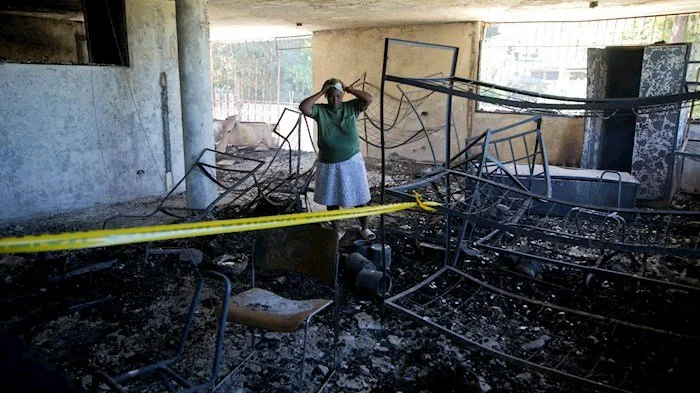
The controversial Church of Bible Understanding lost accreditation several years ago for unsanitary conditions at the facility.
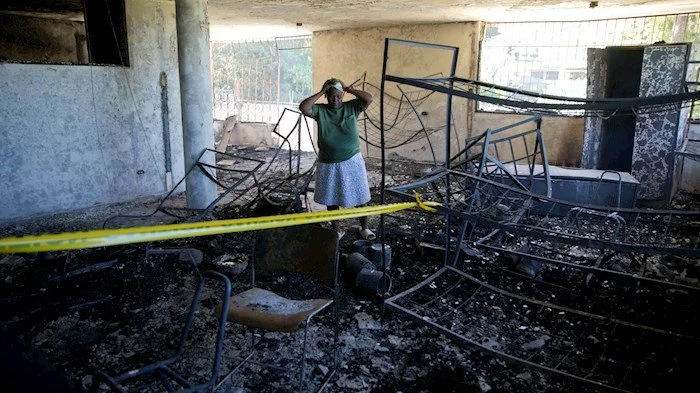
A fire swept through a Haitian children’s home run by a Pennsylvania-based Christian nonprofit group, killing 15 children, officials said Friday.
Rose-Marie Louis, a child-care worker at the home, told The Associated Press that the fire began around 9 p.m. Thursday and firefighters took about 90 minutes to arrive. The orphanage had been using candles for light due to problems with its generator and inverter, she said.
About half of those who died were babies or toddlers and the others were roughly 10 or 11 years old, Louis said.
Late Friday afternoon, police raided another home also run by the Church of Bible Understanding and took away several dozen children in a bus over protests from employees.
The fire happened at the group’s orphanage in the Kenscoff area outside Port-au-Prince, the Haitian capital.
“It could have been me,” said Renadin Mondeline, a 22-year-old who lived in the home with her son, now 6, for about two years until she started making enough money as a street vendor to start renting her own place to live last year. “These little girls inside were just like my baby.”
Rescue workers arrived at the scene on motorcycles and didn’t have bottled oxygen or the ambulances needed to transport the children to the hospital, said Jean-Francois Robenty, a civil protection official.
“They could have been saved,” he said. ‘‘We didn’t have the equipment to save their lives.’’
The Associated Press has reported on a long-standing series of problems at the two children’s homes run by the Church of Bible Understanding.
“‘We are aware of the fire in the children’s home in Haiti,” said Temi J. Sacks, a spokesman for the group, which is based in Scranton, Pennsylvania. “It would be irresponsible for us to comment until after all the facts are in.”
The Church of Bible Understanding lost accreditation for its homes after a series of inspections beginning in November 2012. Haitian inspectors faulted the group for overcrowding, unsanitary conditions, and not having enough adequately trained staff.
Members of the religious group were selling expensive vintage building fixtures like banisters and chandeliers at high-end stores in New York and Los Angeles and using a portion of the profits to fund the homes.
The Associated Press made an unannounced visit to the group’s two homes, holding a total of 120 kids, in 2013 and found bunk beds with faded and worn mattresses crowded into dirty rooms. Sour air wafted through the bathrooms and stairwells. Rooms were dark and spartan, lacking comforts or decoration.
The Church of Bible Understanding operates two homes for nearly 200 children in Haiti as part of a “Christian training program,” according to its most recent nonprofit organization filing. It has operated in the country since 1977. It identifies the homes as orphanages but it is common in Haiti for impoverished parents to place children in residential care centers, where they receive lodging and widely varying education for several years but are not technically orphans.
“We take in children who are in desperate situations,” the organization says in its tax filing for 2017, the most recent year available. “Many of them were very close to death when we took them in.” The nonprofit reported revenue of $6.6 million and expenses of $2.2 million for the year.
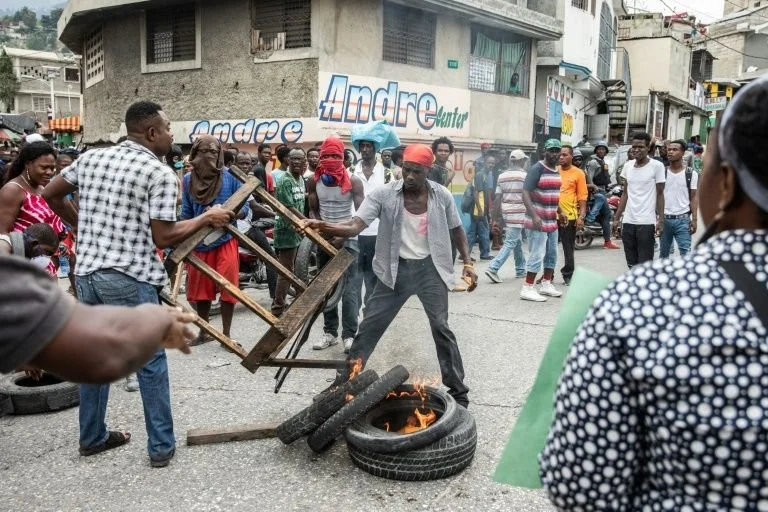
With Government Paralyzed, Rising Crime Terrifies Haitians
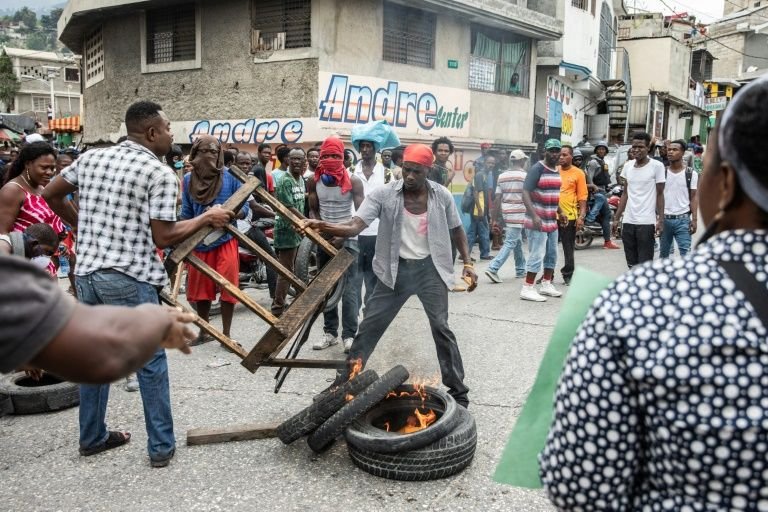
PORT-AU-PRINCE, Haiti — Thousands of young Haitians spent 2019 on the streets, demanding President Jovenel Moise resign over his government’s failure to prosecute years of unbridled corruption that siphoned billions in international aid into bank accounts overseas.
For now, Moise's opponents have failed.
Haiti’s parliament shut down indefinitely in January because of the chaos, eliminating the check on presidential power that paralyzed Moise for years. Thursday marks the president's first month of ruling the country by decree.
But the reed-thin former banana farmer looks nothing like the strongmen of Haiti’s past. With weak political support at home and an international community wary of democratic backsliding, Moise has issued no significant decrees and billions in development aid is blocked.
Three years into his five-year term, the president appears barely able to enforce his will beyond the gates of the National Palace downtown and his relatively modest rented home in the hills above Port-au-Prince. In the city below, gangs rule entire neighborhoods and a wave of kidnappings is terrifying ordinary Haitians.
“A few hundred feet from the National Palace, armed gangs control the streets,” said Paul Denis, who served as justice minister under President René Preval. “But the president who leads us, what is he doing? What is he doing to impose order, to render these bandits harmless? Absolutely nothing.”
The United States, United Nations and Organization of American States are trying to midwife a deal between Moise and his opposition that would lead to declaration of a unity government and avert a return to chaos on an island that’s seen two coups, U.S. intervention, a U.N. peacekeeping mission and a devastating earthquake in the 34 years since the end of a decades-long dictatorship.
“The president of the republic has no power and the people demand everything from the president of the republic,” Moise, 51, lamented last week in an interview with The Associated Press “The president is responsible for everything,”
In the vacuum, insecurity is growing.
Two years after the departure of U.N. peacekeepers, young bandits with automatic weapons randomly halt cars on the main routes in and out of the capital. The economy appears to be shrinking. Electricity comes only a few hours a day in most of the capital. Some police are protesting working conditions and demanding a union, which the government says would be illegal.
“The people have been thrown to their fate,” said Edel Berger, a slender 29-year-old apprentice lawyer who was walking to work in a suit Tuesday morning despite the 90-degree heat. “We’re all in danger. Every Haitian needs to buy a gun to protect themselves. It’s the law of the jungle.”
Along with the Canadian and French ambassadors,, diplomats from the U.S., U.N. and Organization of American States are trying to persuade as many political players as possible to agree on an agenda for talks and sit down to negotiate.
"The U.S. would really want to see forward movement here," Ambassador Michele Sison told the AP. "Getting a political accord in place that would lead to a functioning government, to be able to move this country forward and restart, we would hope, economic growth, bring in a functioning government that could serve the people."
Backed by the international community, Moise is demanding to stay in office until he can oversee the passage of a new constitution that strengthens the presidency and eliminate the ability of just a few opposition legislators to block virtually all laws and appointments.
Members of the moderate opposition say they are open to such a deal. The hard-line politicians who brought the country to a halt last fall demanding Moise’s immediate resignation are also talking about joining negotiations.
“The opposition has never rejected dialogue as a means of resolving the crisis,” said André Michel, a lawyer and hard-line opposition spokesman. “All of this should be on the table: When should the president leave power? Should the president leave power in three weeks, this week, in two months?”
Michel said the opposition’s non-negotiable demand was the release of about 150 opposition members jailed over the last year and the cancellation of arrest warrants for another 50 people. Sison, the U.S. ambassador, said the Trump administration's central demand was holding legislative elections as soon as technically possible.
Representatives of the president and the moderate opposition held three days of fruitless talks late last month at the mission of the papal envoy to Port-au-Prince.
Sidelined in the negotiations is the anti-corruption movement known as the Petro Challengers, which began on social media in 2018 and spread onto the streets. The movement was sparked by reports from government investigations into the misdirection of hundreds of millions of dollars in revenues from PetroCaribe, a now-defunct Venezuelan program providing subsidized oil to Caribbean countries.
Several of the young, well-educated leaders of the movement said Moise had proven himself incapable of governing and should immediately hand power to a technocratic transition government that could oversee prosecutions for corruption and the reconstruction of public institutions.
“We've said that we don't want to continue with Jovenel Moise, that we want a transition that would move the Haitian people toward honest elections, and the international community has said, ‘No, we're going to continue with Jovenel Moise,'' and the meanwhile the situation is degenerating every day,' said James Beltis, a 37-year-old sociologist and spokesman for one of the movement's main groupings.
Jean-Lylus Louis-Jean, 57, earns a little more than $100 a month as a sanitation supervisor for the city of Port-au-Prince. On Tuesday morning he stood in the shade of a cinderblock wall in the Delmas 33 neighborhood waiting for a truck to come pick up a long pile of trash that had been dumped along the sidewalk.
He said he felt in danger every day in Port-au-Prince from the gangs of muggers and kidnappers that roam the city, and things were no better in his hometown of Las Cayes, a town on the southern coast where he once felt completely secure.
"I"m risking my life every day being in streets," he said. “Young men are killing each other for pocket change. The only thing I have keeping me safe is God watching over me.”
Prime Minister Jean-Michel Lapin announced Wednesday that police would begin searching vehicles at random in an attempt to crack down on kidnapping. And he said Moise would pass a budget by degree that would raise the salaries of police and other public employees.
“We are working secure the population,” he said.
But after months without protests, Port-au-Prince saw hundreds of university students and other demonstrators return to the streets Wednesday in a demonstration against the wave of kidnappings. Protesters chanted "Down with kidnapping!” and destroyed stands set up for carnival celebrations this month. Police fired tear gas to disperse them.
“We not going to stop,” said Mario Brice, an unemployed 34-year-old. “Jovenel have to leave office, the country is not moving anywhere ... Look around, it's nothing but guns and people being kidnapped.”

Krewe Du Kanaval Honors The Haitian Roots Of New Orleans

It's Mardi Gras season and in North America, no celebration is more famous than the one put on by the people of New Orleans. For two weeks, local groups called Krewes organize balls, parades and dance parties. Colorful plastic beads are everywhere.
A few years ago, a new krewe sprung up with the aim of celebrating the Haitian roots that run deep through the city's cultural identity. Krewe Du Kanaval was co-founded by Win Butler and Régine Chassagne, best known as the husband-and-wife duo who front the Grammy award-winning rock band, Arcade Fire. These days, the Canadian musicians are residents of New Orleans and good friends with Ben Jaffe of the storied Preservation Hall Jazz Band.
Butler says the idea to start the Krewe stemmed from a trip he took with Jaffe to Haiti. It was Jaffe's first time in the country.
"I remember when we first got to the central plateau [of Haiti]," Butler said. "There was a brass band that played for us when we got there. Ben's almost crying. It sounded like if you got in a time machine and went to New Orleans — pre-swing, pre-jazz New Orleans — and it's pretty powerful."
And it wasn't just the music: the architecture, the food and the people reminded Jaffe of home.
Thousands of Haitians landed in Louisiana in the early 19th century after fleeing their home country's revolution. By 1809, more than 10,000 Haitians had arrived in New Orleans, doubling the population of the city.
Along with the Haitian people came their culture, establishing a deep relationship between the two places. Many locals refer to New Orleans as the northernmost Caribbean city. Celebrating this connection was the guiding principle for Butler, Chassagne and Jaffe when they founded Krewe du Kanaval in 2017.
"That was sort of the idea," says Butler. "What if we did this thing that everyone wants to do anyway, for a party? And we actually did something good with it. [We're] just paying tribute to the root of it."

Krewe Du Kanaval founders Ben Jaffe, Regine Chassagne and Win Butler.Kanaval/Courtesy of the artist
For Chassagne, the connections are also personal. Her parents are native Haitians who fled the country in the 1960s during the 13-year rule of dictator Francois "Papa Doc" Duvalier. Her family first landed in the US, but eventually ended up in Montreal, where Chassagne grew up. And it wasn't until 2008, when she was in her 30s, that she visited Haiti for the first time.
But Chassagne says she inherited the Haitian culture through her parents.
"You just absorb it. You absorb the inflections, you absorb the humor, certain reactions to certain events," she says. It had always felt like an insular experience to her, but she says, "When I went to Haiti, I really realized this is why! This is all why."
Chassange has been publicly thinking about her relationship to her parents' home country at least since 2004; the first Arcade Fire album, Funeral, came out that year and included the semi-autobiographical song, "Haiti."
"And then when we realized that we were going to starting selling out venues," says Chassagne, "I was like, okay, maybe I will not work at the bakery anymore. Then I started to think about how to raise money, and how to be efficient in the gifts that I've been given and how to make them useful."
The answer came to her in 2010, when Chassagne co-founded Kanpe, a foundation that supports an array of health education and agriculture programs in Haiti. The Krewe Du Kanaval celebrations raise funds for the foundation.

The inaugural appearance of Krewe du Kanaval in February 2018.Erika Goldring/Courtesy of the artist
Paul Beaubrun, a Haitian singer-songwriter based in New York and a member of Krewe du Kanaval, says Carnival is like therapy for Haitians.
"You scream. Some people you curse, if you want, because you have to let your frustrations out," Beaubrun says. "So it's a very important tradition for us. And at the same time, it's that time where you almost begin your year. We call that "N'ap boule" — that means you're burning everything and then you start anew. So it's a very important tradition for Haitians and it's a lot of fun, you know, so it's like a win-win."
Beaubrun says at Carnival in Haiti, music hits you from all directions. It's at the center of the celebrations.
"There's this part where you put a band on the float and people are dancing, singing too, and then they have stands. And then it's like millions of people everywhere! Dancing, screaming ... so many things happening!"
Like Butler and Chassagne, Beaubrun says you can just feel the connections between the music of Haiti and New Orleans. And he should know: Beaubrun is a member of the prominent Haitian fusion band, Boukman Eksperyans, which rose to fame playing Carnival in Haiti in the early 1990s. The group brought their music to the Krewe Du Kanaval ball last year.
"It's just to that exchange between New Orleans and Haiti," Beaubrun says, "to really show that similarity, the influences. That's what Krewe Du Kanaval is. We just bring it together."
Butler says the theme of the Krewe Du Kanaval parade this year is "Merci Haiti" — simply, "thank you, Haiti."
"We're just trying to pay respect to all that we have [been] grateful for — that Haiti has contributed — and just to give back. I think that's the idea of the whole thing," he says.
This year's Krewe Du Kanaval features Arcade Fire, the Preservation Hall Jazz Band, DJ Michael Brun, Jillionaire, Pierre Kwenders and Lakou Mizik. The parade, ball and party all go down this weekend.

Win Butler at Krewe Du Kanaval.Courtesy of the artist

He left Haiti for a better life. Twenty years later he's playing soccer in Milwaukee and enjoying every minute.

Max Ferdinand is blessed. He says that a lot.
Most times Ferdinand is talking about his life in soccer, about the success he’s had making his teammates look good, about a championship or the friends he has made over 4½ years in Milwaukee.
Most times. Because that’s the Max Ferdinand most people know.
He’s the Milwaukee Wave’s quiet star with the deft touch and million-watt smile. Ferdinand has managed to make a living in the game he played tirelessly as a child, and for that he understands how fortunate he is.
But go deeper.
Go back to his childhood. Go back to Haiti, the impoverished Caribbean nation further devastated by a 2010 earthquake, where none of these other things would have been possible.
“I moved to the States when I was 13,” said Ferdinand, who went to New York City to live with the father who had left when he was 2 and a stepmother who didn’t speak his language.
His mom stayed behind in Haiti. Ferdinand left his friends, his school and his culture there, too.
“New everything,” he said.
“But I was very fortunate to come here and have a better life compared to Haiti. I know how many of my friends I left back there in not such a good situation also. So it’s definitely a blessing to come here.”
Everyone has his struggles and challenges, Ferdinand says. There’s not a contest. By telling his story, he’s not looking for sympathy or extra credit. It’s just part of who he is, and someone asked.
Tilden High School in Brooklyn had a sizable Haitian population, so Ferdinand sensed some connection to his old home. His stepmother, born in Grenada, spoke no Creole, so English was the primary language at home, and he picked it up quickly.
Because basketball is to New York what soccer is to Haiti – with playground pickup games from dusk to dawn, where skill means more than age – Ferdinand learned to play.
“I’m all right,” said Ferdinand, now 33 but still a spindly 5-foot-9. “You challenge me, we can play anytime.”
He is, after all, a competitor.
Ferdinand actually stepped away from soccer briefly, but after moving to Baltimore he found a team and picked up the game again.
Reinvigorated, Ferdinand made the Baltimore Blast indoor team on an open tryout and spent his first six seasons there before Wave star Ian Bennett – an outdoor teammate with the Rochester Rhinos – helped bring the speedy, cerebral forward to Milwaukee.
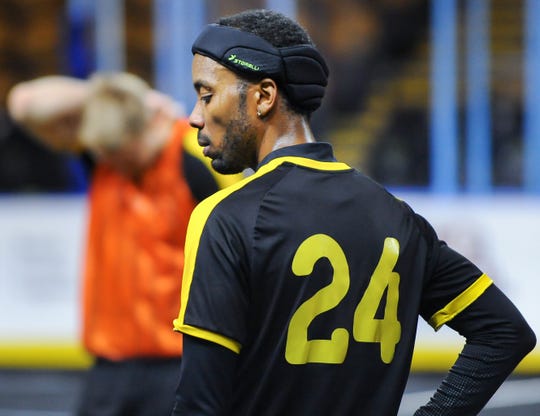
Buy Photo
Veteran forward Max Ferdinand takes a breather between drills at Milwaukee Wave practice. (Photo: Dave Kallmann / Milwaukee Journal Sentinel)
Here Ferdinand became known for an infectious smile, his headgear – a trademark since he suffered head injuries early in his career – and his quiet demeanor and unselfishness.
Ferdinand led the MASL in assists in 2016-17 and 2017-18, has finished among the top three each season and was ranked third entering the weekend. The defending champion Wave (9-4) split a pair of games over the weekend and next plays at 5 p.m. Sunday against the Florida Tropics at the UW-Milwaukee Panther Arena.
“I don’t think he’s a guy who wants to shine, to be the star, so he’s more than happy to make other guys look good,” Wave captain Marcio Leite said. “He’s a big reason Ian scores so many goals, their relationship. Ian loves scoring, and Max loves passing the ball, so it’s a great thing we’ve got going on.”
In 13 games, Ferdinand is second on the team with 29 points on 10 goals and a team-leading 19 assists. Bennett leads with 31 points on 27 goals and four assists.
“Max is one of those guys, a guy who’s always thinking, how can we score, what can I do?” Leite said. “And he’s creative. He finds some passes that nobody else would.
“It’s hard to defend, because you never know what Max can do. He can dribble you, he can pass, he can score. But there’s always a little trick, a little something that he pulls out of his sleeve and all of a sudden somebody is scoring.”
In addition to finding his place on the team with the Wave, Ferdinand also has made a comfortable home in Milwaukee. It’s a far cry from Brooklyn and even farther from Haiti but fits his laidback personality.
“Enjoying it every day,” he said.
The community, the game, the team and his life – all of it – Ferdinand enjoys. He is blessed.
Ferdinand’s mother, who resettled in New Jersey, watches the Wave play online and they talk afterward. She didn’t get to see the team win the 2019 MASL title in person, but he hopes to help give her another chance.
Ferdinand has yet to go back to Haiti as an adult, but he intends for that to happen as well.
His mother has 12 siblings and family spread about the East Coast, Ferdinand said, and the hope is that as many aunts and uncles and cousins as possible could visit together. He has kept up with some old friends and keeps them in his heart.
“It’s a poor country. Poverty, no food. Not clean water,” Ferdinand said. “Back then it was bad. I can imagine now after the earthquake.
“You just got to pray, right? I appreciate being here for sure.”

Papa Jean Opens Up About His New Play, LES BOITES NOIRES

Coming soon to the New York Theatre Festival is Les Boîtes Noires, running February 17, 19 and 22 at the Hudson Guild Theater.
Written by Papa Jean, Les Boîtes Noires is the story of a Haitian Family living in modern day NYC dealing with everyday life. The American born children of this family must try to juggle to fit into their own lives while still trying to survive their parents' old school, immigrant ways. They all have dreams of living the American dream...
Below, BroadwayWorld checks in with Papa Jean to hear all about the new play!
Tell us about Les Boîtes Noires...
Les Boîtes Noires is French title and it is translated to The Black Boxes. Les Boîtes Noires is a captivating story about a Haitian family living in a modern day, gentrifying NYC dealing with the ups and downs of everyday life. In this comedy-drama, the American born children of this family must try juggle fitting into their own lives, while trying to survive their parent's old-fashioned traditions and immigrant ways. The American dream is very important to everyone in the household, and each person will take things to the edge to see their dreams come true in this story,
Why is this story so important now?
With the proactive movement of society today, many more opportunities have been created for more diverse voices to have a platform. Les Boîtes Noires not only culturally shines a light on a voice that is rarely heard in the arts, it depicts the stunning traditional similarities that Haitian families have to other families from a large number of diligent backgrounds.
What inspired the creation of the show?
Les Boîtes Noires is inspired by true events in my life. Being born and raised in NYC, growing up with immigrants parents was basically an ongoing day time soap opera: General Hospital with out the suspenseful instrumentals. I am not just the writer and director of the show, I also play a role in the story. After studying acting, theatre and writing in my earlier years, I took to social media with a barrage of characters, sketches, and short films. I soon gained a strong following who constantly requested live performances. So I did what I do best, took my fingers to my keyboard and wrote a story; Les Boîtes Noires.
How long have you been working on the show and how has it evolved during that time?
I wrote the show in 2017 and every scene and moment of the show has truly evolved since then. My everyday life and the lives of the people around me have helped me make new discoveries in Les Boîtes Noires everyday. Not to mention, pop culture has also influenced the show in the terms of, depending when and where we perform, making necessary adjustments and changes as we see needed.
What are your favorite plays/musicals?
My top five favorite plays/musicals are A Raisin in The Sun, The Lion King, The Piano Lesson, Freeman, A Street Car Named Desire, Antigone, and Hamlet. I love anything Shakespeare.
How hard is it to get stories out about communities that haven't been well-represented on stage?
I don't think it's hard getting stories out about communities that have not been well represented on stage, I feel the difficulties more lie in outside communities actually coming to see these shows. Although I have self produced my show a handful of times, I am excited at the opportunity to have Les Boîtes Noires at The NY Theatre Festival because it is a new platform for us and hopefully it is one opportunity for unheard voices to start helping bridge the gap of representation on stage and entertaining new communities.
What do you hope audiences come out of the show saying and thinking?
I hope the audiences say, "Wow, that Haitian family was just like ours!" Or "I want to see this again!" Or " I gotta tell my friends about this show!"
How can our readers get more information?
Les Boîtes Noires is part of The NY Theatre festival and will be going up on 2/17,2/19,&2/22 at The Hudson Guild Theater in the heart of NYC. You could always check out my website for more info and updates: PapaJeanRepublik.com or follow me on social media @iampapajean.
What else would you like the BroadwayWorld audience to know about your work and this production?
As a creative person of color and son of hard working immigrants, I just want all audiences to know that Les Boîtes Noires is not just my story and my voice, but it is the story of millions of people around America! My cast and I are very excited to bring forth this fun filled, comedy drama to the stages of The Big Apple.


LES BOITES NOIRES By Papa Jean

Story of a Haitian Family living in modern day NYC dealing with everyday life. The American born children of this family must try to juggle to fit into their own lives while still trying to survive their parents’ old school, immigrant ways. They all have dreams of living the American dream and push things to the limits at home.
.
The Play is 90 minutes long
.
Feb. 17, 2020 @ 9pm
Feb. 19, 2020 @ 9pm
Feb. 22, 2020 @ 6:45pm
All Shows at the Hudson Guild Theater

Haitian-inspired musical revival 'Once on This Island' comes to the Twin Cities
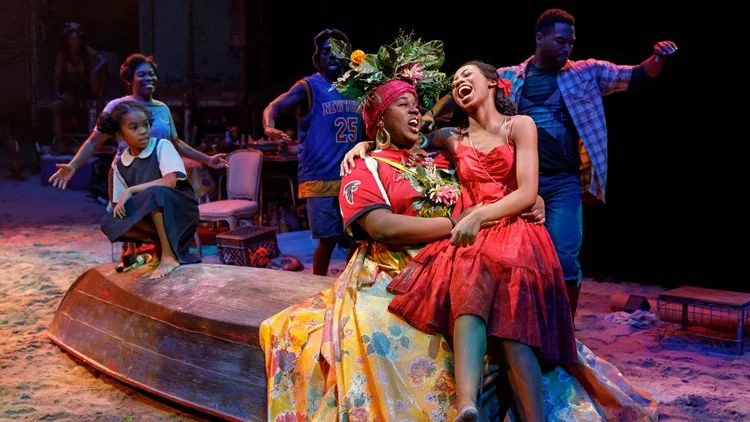
The 2018 Tony-winning musical is at the Ordway through Feb. 9.
A musical inspired by the islands of the Caribbean is now playing at the Ordway in St. Paul.
"Once on This Island" is tale of Ti Moune, a fearless peasant girl in search of her place in the world, who's ready to risk it all for love. Based on the 1985 book, “My Love, My Love,” by Rosa Guy, it is a retelling of Hans Christian Andersen’s “The Little Mermaid.
The show debuted on Broadway in 1990, and won a Tony Award in 2018 for Best Revival of a Musical. The revival was inspired by a trip to Haiti by the director and scenic designer, who witnessed the people of Haiti dealing with the aftermath of the 2010 earthquake and Hurricane Matthew in 2018.
The show includes a few unique features: materials used in set design and costumes are recycled from everyday objects, inspired by the ways the Haitian people survived and thrived in the wake of natural disasters. Also unique for this show: some audience members are invited to sit on stage during the performance, where sand and water is set up in a circle, to help provide an immersive experience.
This is the first time time this touring production of "Once on This Island" has appeared in the Twin Cities.
Performances continue at the Ordway through Sunday, Feb. 9. Ticket details can be found on the Ordway website, or by calling the box office at 651-224-4222.
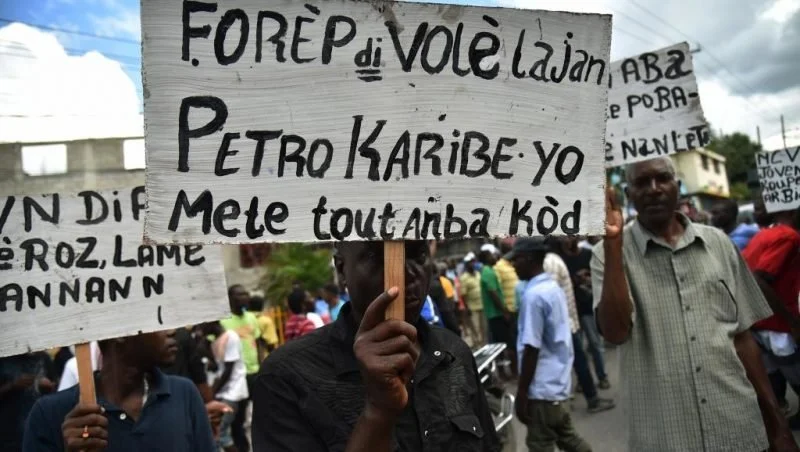
Will Venezuela exclude Haiti from the PetroCaribe relaunch?
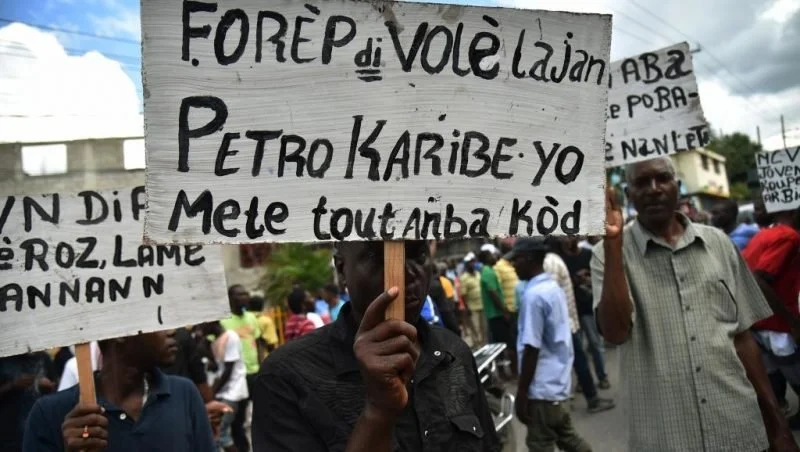
“Haiti has excluded itself' said a Venezuelan official
According to multiple reports, Venezuela will relaunch its PetroCaribe energy cooperation agreement with Caribbean nations sometime in 2020, prompting Haitians to wonder if Haiti stands a chance to get included this time around.
PetroCaribe, a generous deal with long-term payment plans meant to benefit the Haitian people, was suspended in 2018 following Venezuela's presidential crisis. When Venezuela's President Nicolás Maduro announced the PetroCaribe relaunch, he warned that the deal would not be “extended to countries that are ‘at war’ with Venezuela,” which could include Haiti, according to Haiti Liberte media.
That's because, at a January 2019 vote at the Organization of American States (OAS), the Haitian government, under President Jovenel Moïse, sided with the United States in rejecting the legitimacy of Maduro as president. Instead, Haiti endorsed Juan Guaidó, an opposition politician who continues to contest Maduro's presidency.
“Haiti doesn’t recognize us, so we haven’t excluded Haiti,” a high-ranking Venezuelan government told Haïti Liberté. “Haiti has excluded itself,” he said.
Interestingly, former senator Jean-Charles Moïse, who chairs the opposition party Pitit Desalin, recently met with President Maduro to apologize for Haiti's vote at the OAS, hoping to smooth things over so that Haiti may actually benefit from the PetroCaribe deal.
But Haitians wonder if the apology will be enough.
Haiti's PetroCaribe controversy
PetroCaribe has been a hugely contentious issue in Haiti, thanks to a corruption scandal that sparked violent street protests nearly a year ago on February 7, 2019, and continued for months.
The Haitian government allegedly squandered PetroCaribe funds meant to develop its economy and aid social programs. More than $3 billion United States dollars were embezzled by government officials through opaque contracts — including one with a company called Agritrans, owned by President Moïse.
As a result, few Haitians saw any benefits promised from the PetroCaribe deal and demonstrations calling for Moïse's resignation have plagued the president's term of office.
Meanwhile, Haitian taxpayers are stuck with at least a $2 billion USD debt to Venezuela, which was siphoned off the PetroCaribe endowment.
According to Haiti Liberte:
Jovenel Moïse’s betrayal of Venezuela has been one of the motive forces behind the massive nationwide insurrection calling for his resignation since July 2018, when his government tried to raise fuel prices following PetroCaribe’s cut-off.
The first incarnation of PetroCaribe happened in 2005, under then-Venezuelan president Hugo Chavez. The regional energy program was intended to provide petroleum products to member states under preferential terms.
Haiti did not join right away — it was only after Chavez “actively courted” newly elected, then-president René Préval, that the country was included in the deal — which further complicated Venezuela's already strained relationship with the United States.
The United States and Haiti have had a complicated history that includes, among other things, occupation and US interventions, questionable humanitarian initiatives and the United States President Donald Trump's dismissal of it as a “shithole country.”
Yet, on January 30, 2020, Haiti joined the US-backed Lima Group, comprised of 12 Latin American countries, aimed at seeking an end to the Venezuela crisis, who have urged global pressure on Maduro to “re-establish democracy” since 2017, when the presidential crisis began.
Today, the questions remain — with Preident Moïse still holding onto power, will Venezuela ultimately include Haiti in the relaunch of PetroCaribe? If so, would it have to be under a new government in order to win the trust of both Maduro and Haitian citizens? Or will Haiti lose a second chance to benefit?