

Fun Fact: Did You Know There Once Was A Haiti Garden Exhibit At Disney's Epcot Center?
FUN FACT:
In 2012, Disney's Epcot Center introduced HAITI | GARDEN OF MANY COLORS
 Well, the Epcot International Flower & Garden Festival, presented by HGTV, is in full bloom! And throughout the festival, we at the Disney Parks Blog will be bringing to your attention to some of the exciting new things for 2012.One of the great horticulture additions this year is called Haiti: Garden of Many Colors. Sponsored by Haiti Originale, the spectacular garden exhibit showcases signature plants, flowers and crops of Haiti and offers information on the cultural heritage, sustainable art and artifacts of the beautiful island.Sugar cane, mustard, thyme and curly leaf parsley are bounty from the Creole Garden. Guests can also find information on Recyclable Art, Haitian Arts and Crafts, Art in Motion and the Art of Haitian music; and they can purchase Haitian coffee (a major industry in Haiti) and crafts made by Haitian artists.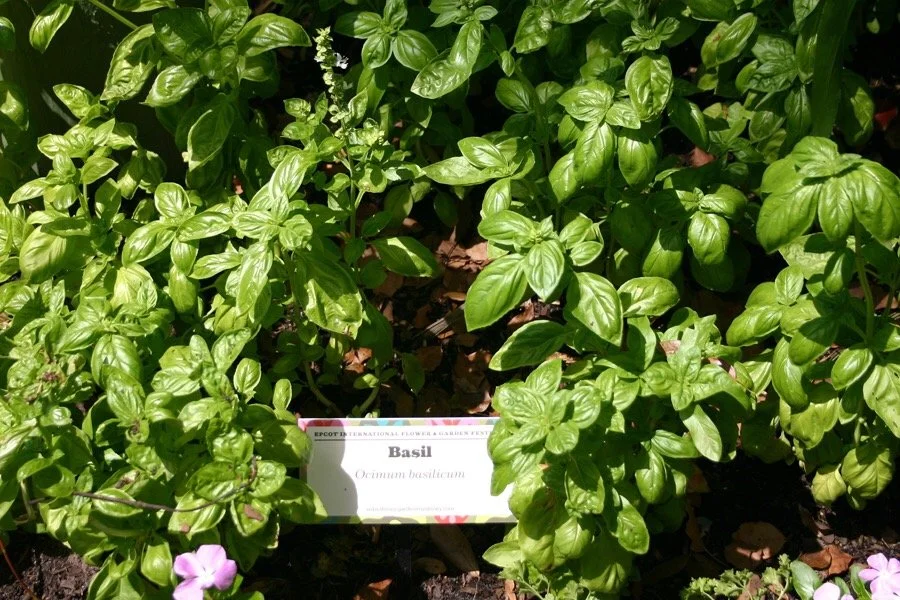






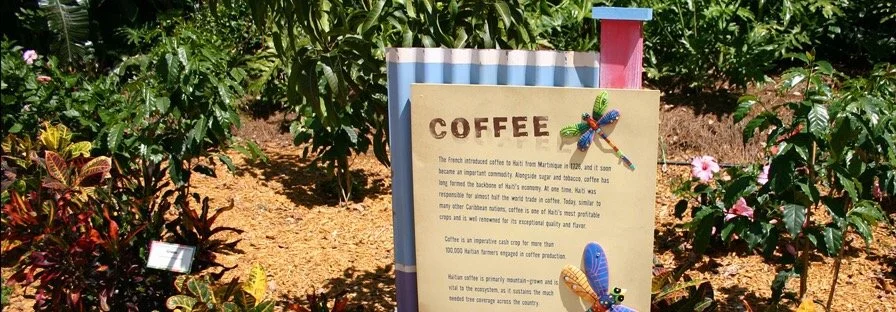

Haiti: Garden of Many Colors at Epcot Haiti: Garden of Many Colors at Epcot The Creole GardenCoffee Plants in the Creole Garden Sugar Cane in the Creole Garden Tropical Hibiscus in the Creole GardenOrnamental Sweet Potatoes in the Creole Garden Basil in the Creole Garden Mustard Plants Grown in the Creole GardenLocated between the Germany Pavilion and the African Outpost in World Showcase at Epcot, the exhibit features a refreshment stand called Bwason Lakay, meaning “Haitian Refreshments” in Haitian Creole, which offers island libations – in both adult and non-alcoholic versions. And speaking of color, the Art in Motion storyboard gives insight into Haiti’s colorful tap-tap buses.Haiti Originale was formed to help Haitians help themselves by supporting sustainable economic and social development through the promotion of quality Haitian-made products within Haiti and around the world. Their cause mark is “par Haiti – pour Haiti,” which means “from Haiti – for Haiti.”Organizers of the Epcot International Flower & Garden Festival have told us that the garden has been a huge success – both with our guests and our cast. At Walt Disney World Resort, we have a large population of cast from Haiti and that speak Haitian-Creole as a second language.The Epcot International Flower & Garden Festival, presented by HGTV, runs until May 20. For more information on the festival, you can check out disneyworld.com/flower and continue to check back here for more updates.by Charles Stovall, Public Relations Manager | Wed, March 28, 2012
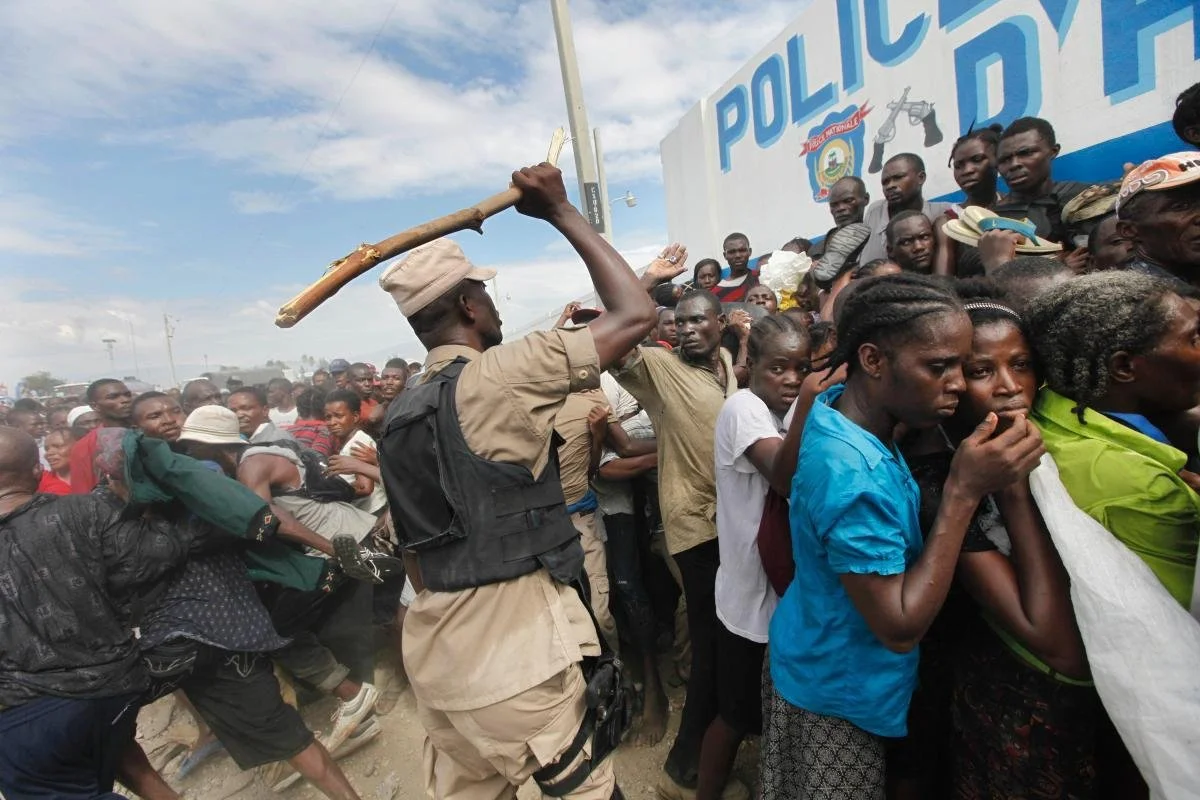
Trump administration wants evidence of Haitian immigrants' crimes as it considers humanitarian aid options...
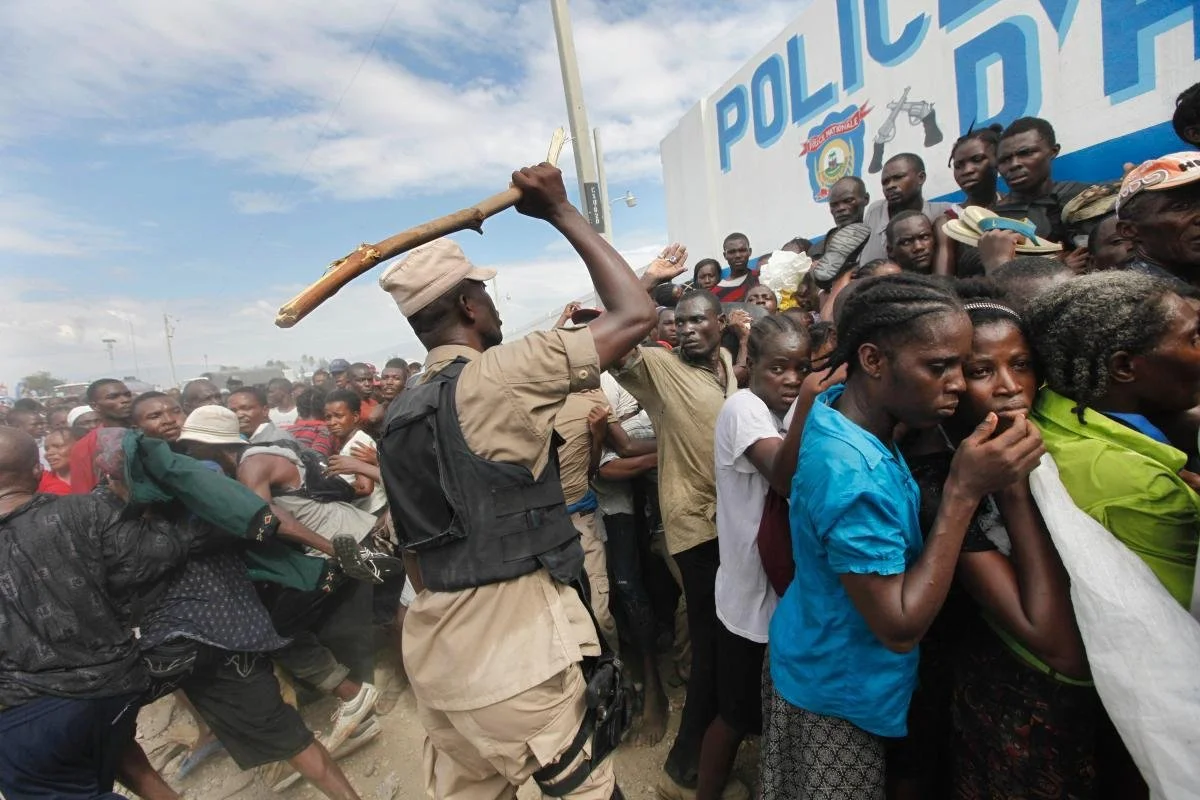
WASHINGTON — The Trump administration is taking the unusual step of hunting for evidence of crimes committed by Haitian immigrants as it decides whether to allow them to continue participating in a humanitarian program that has shielded tens of thousands from deportation since an earthquake destroyed much of their country.The inquiries into the community's criminal history were made in internal U.S. Citizenship and Immigration Services emails obtained by The Associated Press. They show the agency's newly appointed policy chief also wanted to know how many of the roughly 50,000 Haitians enrolled in the Temporary Protected Status program were taking advantage of public benefits, which they are not eligible to receive.The emails don't make clear if Haitian misdeeds will be used to determine whether they can remain in the United States. The program is intended to help people from places beset by war or disasters and, normally, the decision to extend it depends on whether conditions in the immigrants' home country have improved enough for them to return. But emails suggest Homeland Security Secretary John Kelly, who will make the decision, is looking at other criteria."I do want to alert you ... the secretary is going to be sending a request to us to be more responsive," Kathy Nuebel Kovarik, the USCIS head of policy and strategy, wrote on April 27. Addressing the inability of agency employees to gather the requested information about wrongdoing, she said: "I know some of it is not captured, but we'll have to figure out a way to squeeze more data out of our systems."The request for criminal data for an entire community is unorthodox. The law doesn't specify it should be a consideration for Temporary Protected Status and the government has never said it would use criminal rates in deciding if a country's citizens should be allowed to stay under this program. Introducing new criteria is likely to cause consternation among law-abiding Haitians who may feel they are being penalized for the wrongdoing of their compatriots.But the request fits in with President Donald Trump's broader, tough-on-immigration focus that is a core demand of his political supporters. He has enhanced efforts to arrest people living illegally in the United States and sought, unsuccessfully so far, to suspend refugee arrivals and temporarily block visitors from seven Muslim-majority countries. He has accused those in the U.S. illegally of fueling criminality in the U.S.It is unclear if the agency is asking such questions about other recipients of the temporary protection, including immigrants from Honduras and El Salvador.The Homeland Security Department said Kelly has not made a final decision about Temporary Protected Status for Haiti and declined to comment on the process.Temporary Protected Status is intended to be just that, temporary. The Obama administration included Haiti in the program shortly after the January 2010 earthquake that killed as many as 300,000 people and devastated schools, hospitals, homes and even entire neighborhoods. Since then, Haitians have been eligible to stay regardless of how they entered the United States — legally or illegally — as long as they were residing in the U.S. before Jan. 12, 2011.Eligibility for Haitians has been extended several times and is set to expire July 22. The Trump administration must decide by May 23 so that it can provide 60 days' notice about its plans.USCIS' acting director has recommended letting the program expire. In an April 10 memo first reported by USA Today, James McCament said Haiti is no longer in crisis despite its poverty and political instability. However, he wants to allow the Haitians to stay until January so they have time to make arrangements to voluntarily leave. If they don't depart the U.S. by then, the government could move to deport them.Still, Homeland Security's Kelly has the final word.The emails inquiring about misdeeds were sent from April 7 to May 1.In her first week on the job, Kovarik, the policy chief, asked officials how often Haitians with temporary status have been convicted of "crimes of any kind," and how many have taken advantage of public benefits. She asked for that information in four separate emails. She also asked how much money Haitians have sent home and how often they've traveled back to Haiti. Left unsaid is that frequent travel could suggest improved conditions."Please dig for any stories (successful or otherwise) that would show how things are in Haiti - i.e. rebuilding stories, work of nonprofits, how the U.S. is helping certain industries," Kovarik wrote on April 28. "We should also find any reports of criminal activity by any individual with TPS. Even though it's only a snapshot and not representative of the entire situation, we need more than 'Haiti is really poor' stories."The emails were largely directed to non-political employees. They responded by saying much of the data were not available or were difficult to find in government records systems.Criminal fingerprint records, for instance, don't generally indicate if a suspect has Temporary Protected Status. And the employees said the public benefits request was almost impossible to answer because TPS participants aren't eligible for most.About the only firm information Kovarik's queries turned up, according to the emails, is that Haiti benefited from about $1.3 billion in remittances from the United States in 2015. Officials said they could only guess how much came from the temporarily protected group, which comprise only a fraction of the estimated 954,000-strong Haitian diaspora in the United States.Maria Odom, a former Citizenship and Immigration Services ombudsman who served in the Obama administration, said she was puzzled by the inquiries about criminal activities. She said the government already checks criminal histories of applicants and denies protections to those who've broken U.S. laws."You should not craft a humanitarian policy based on the few," said Odom.NYdailyNews
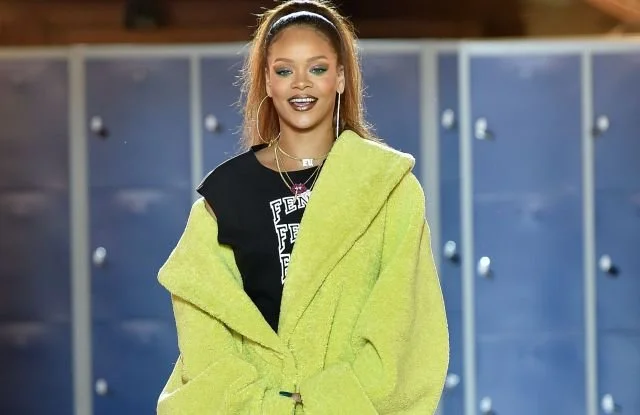
Rihanna Partners With Donna Karan, The New School’s Parsons School of Design | The collaboration will benefit Haitian artisans and the singer's Clara Lionel Foundation.
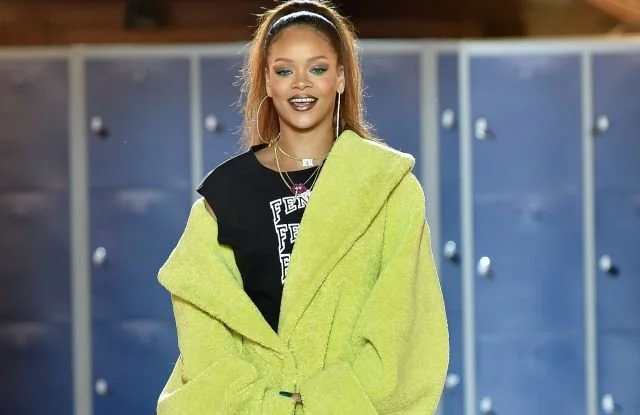
 Rihanna’s impact on the fashion world is indisputable. Now the singer has revealed that she will further strengthen her ties to the industry by collaborating with The New School’s Parsons School of Design, Donna Karan’s Urban Zen Foundation and Haitian artists to develop a line of merchandise.Sales of the product will help support the Grammy winner’s Clara Lionel Foundation, which was founded in 2012 to benefit impoverished communities worldwide in areas like health care and education.Select students of the art and design school will have the opportunity this summer to work with local Haitian artists at the Design, Organization, Training Center in Port-au-Prince. Karan, Parsons and designer Paula Coles founded the center as a creative meeting place offering vocational training and materials to the Haitian artist community.“We are ecstatic that our students will have the opportunity to work with and develop a merchandise line for Rihanna’s Clara Lionel Foundation, that, like Parsons, shares a strong commitment to creating positive social change,” explained Alison Mears, director of the Healthy Materials Lab at Parsons who was instrumental in launching D.O.T.On May 22, Rihanna will be honored at the Parsons Benefit in New York City and will reveal the winners of the Design Fellowship program, which sends three Parsons students to Haiti for six to eight weeks beginning in early June.By Andrew Nodell | May 5, 2017
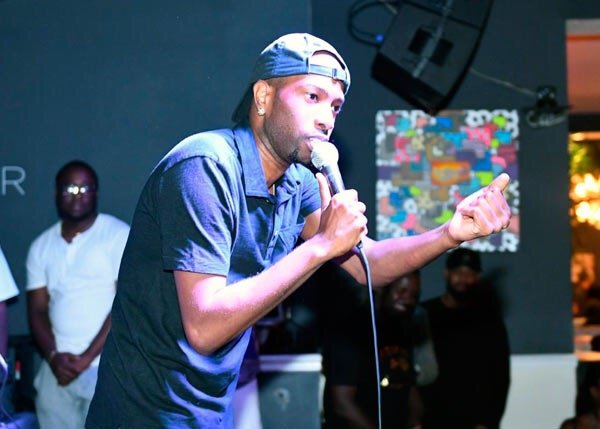
Comedy Show Rings In Haitian Heritage Month
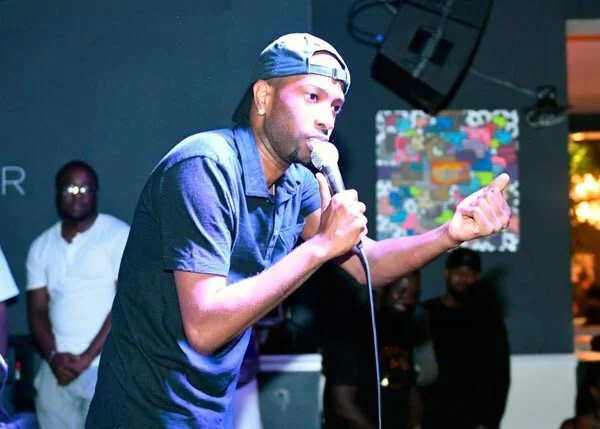
A comedy show is pitting viral and stand-up Haitian comedians to kick off the celebration of Haitian Heritage Month at Loft172 on May 12. “Haitian Bad Boys of Comedy: North versus South” will have the popular jokers battle out to decide which region has the funniest comics. With Haitian flag day around the corner, what better way to celebrate that than with some interactive team challenges with some well-known faces online, said the organizer.“This is a flag day celebration through comedy, but this time we’re doing something different than regular stand-up,” said Moses Merisier, organizer of the event. “A lot people are into social media and stand-up and we wanted to combine that and do a North versus South battle with the comedians.”The show is set to be about two hours and is introducing popular games that will be done with a Haitian style of comedy, according to Merisier. A family feud-like game and a segment similarly modeled after the popular MTV show, “Wild’ N Out,” are a few of the games the jokesters will partake in and this element of the show is relatively new to most Haitians, he added.“We’re going to have a lot of different challenges, a lot of improvisation and impersonations, and a lot of these have never been done in the Haitian community before,” he said.Two teams of five comedians are going to be divvied up to represent their regions, and towards the end of the show the audience decides which team was the funniest. Comedians include Haitian Jonas and Chelo Chelo, who will act as team captains for both regions respectively. Besides the final judging, guests can participate in the challenges because it will be very interactive, said Merisier.He said the show is more than a party and highlights the adamant champions of Haitian culture, which is important to him because throughout the year these comedians are uplifting the culture and keeping it alive with humor, said Merisier.“I try to choose comedians who are really funny and also dedicated to Haitian culture, because I find it very important to do this around Haitian flag day,” he said. “During this time of the year I like to give back and this is a way for us to show who is doing that.”Most of the show will be done in English with little references in Haitian Creole, according to Merisier. But non-Haitians and kids under 18 who come with adults, are invited to the show.“If you’re Haitian and have Haitian pride this is one of the best events to come to and one of the few moments where we celebrate our culture with laughter,” said Merisier. “We have a family-oriented show and besides the regular comedy, we’re doing something everyone can laugh at and all generations are invited.”“Haitian Bad Boys of Comedy — North versus South” at Loft172, 172 Classon Ave. between Myrtle and Park avenues in Bedford-Stuyvesant. May 12 at 7 pm. $30 ($75 VIP). By Alexandra Simon, May 4, 2017
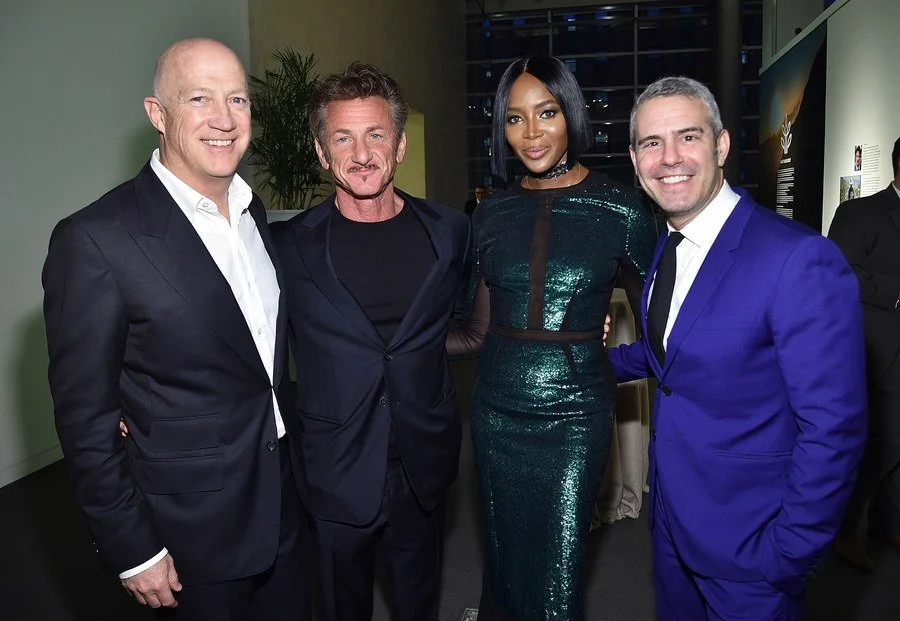
Leonardo DiCaprio, Sean Penn Help Raise Money for Haiti
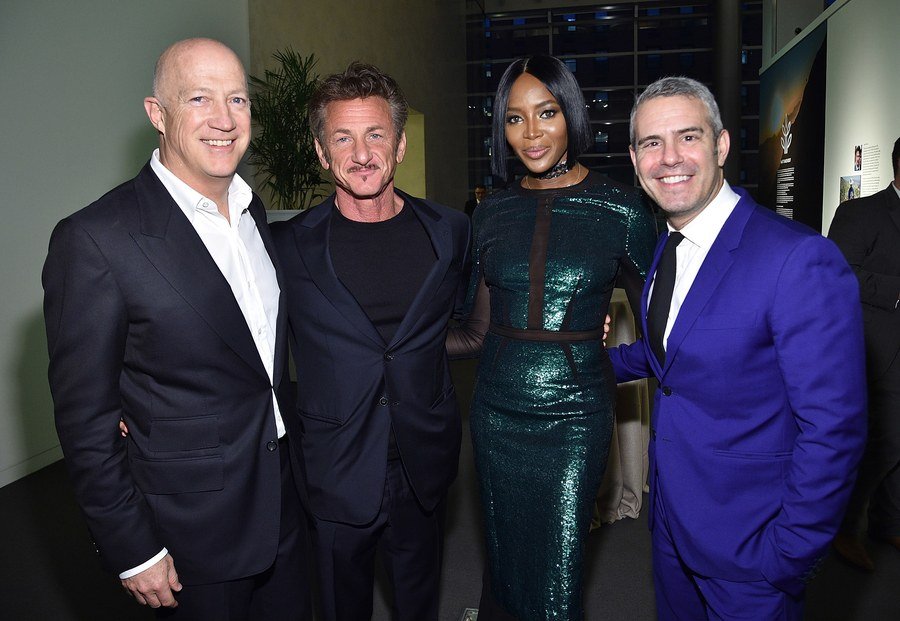
Leonardo DiCaprio bid on, and won, a VIP soccer experience with Real Madrid’s Cristiano Ronaldo at the first-ever Haiti Takes Root gala at Sotheby’s on Friday night. The event, which benefited Sean Penn’s J/P Haitian Relief Organization, also boasted some other one-of-a-kind experiences, including a five-star meal in New York City with Bill Clinton, Penn, and DiCaprio. In addition, artworks by Deborah Kass, Ed Ruscha, Thomas Houseago, and Jonas Wood were auctioned. Andy Cohen was hoping to pick up some art for his digs.“I’ve been on a little bit of an art tear lately,” Cohen divulged “I bought some lithographs from Christie’s and Sotheby’s at their last two sales, and I bought something at Frieze today. I just renovated my apartment, so this is my moment.” The Bravo star sported a five o’clock shadow that he put down to the fact that he didn’t have to tape an episode of Watch What Happens Live that evening.“I have to shave for the show every night, so any night that I don’t have to, I don’t,” he explained, before helpfully noting that he was wearing a purple suit, which was meant to offset the stubble.Donna Karan, who has her own Haitian charitable project, said, “We’re doing it together. You can’t take on this country. You need a posse. We’re part of the posse.”And as for why Karan is so committed to Haiti, she exulted, “I love Haiti. Love, love, love Haiti. The people are magnificent. They have such quality. They’re all artisans, they all have such potential . . . the energy in Haiti is amazing.”The designer revealed that she has started a school there with Parsons School of Design, and Rihanna has just signed up to do a project together.“We’re creating products, giving them jobs,” she said. “Instead of giving them money, you’ve got to give them fishing rods, and the one thing about them is that they’re all creative.”Also in attendance were Penn, Naomi Campbell, Ellie Goulding, and Gayle King. The evening finished with a spirited performance of “Rise Up” by Andra Day, which got the crowd on their feet. By NICKI GOSTIN MAY 8, 2017

Haiti's Main International Airport Flooded By Downpour

The terminal at the Haitian capital's international airport has been flooded after a sustained downpour transformed some low-lying Port-au-Prince streets into brown rivers.Videos circulating on social media show passengers up to their ankles in water inside Toussaint Louverture International Airport in Port-au-Prince.
Irving Mehu is director general of Haiti's airports authority. He says the Port-au-Prince airport's arrival and departure zones were flooded by the Tuesday downpour.In a statement, Mehu apologized to travelers for the "disturbing situation." He indicated that no flights were grounded by the deluge, saying "all services of the airport operate as usual."It wasn't immediately clear if there were any deaths or injuries in the crowded capital from the latest spring rains.Much of Haiti is saturated from downpours in recent days. By THE ASSOCIATED PRESSPORT-AU-PRINCE, Haiti — May 2, 2017
Award-Winning Filmmaker Daphne Valerius Digs Deep Into Culture, Beauty, and Identity in ‘The Souls of Black Girls’
Daphne Valerius’ shares, for the first time publicly, her personal and courageous journey of facial paralysis, insecurities as a young black girl, acceptance, and healing
How we choose to define ourselves, inside out, sets the tone for how we navigate through life—and how life intrinsically navigates through us. As black women, our need for a sense of identity and self-worth—and the importance attached to it—brings to the light the values we often accept placed by society, and the manner in which we treat and regard ourselves. We recognize, too, that there is a danger in allowing others to define who and what we are.In her 2008 award-winning news documentary The Souls of Black Girls, filmmaker Daphne Valerius took us on a riveting examination of the truth about self-image disorders, beauty standards, and the degrees by which black women view themselves, in and out of the media. The Souls of Black Girls was a blueprint that originated as part of Valerius’ journalism program while at Emerson College, and has received national recognition and numerous awards. Included in the film’s assessment on the historical and modern representations of women of color [and beauty standards] were prominent African Americans such as PBS Washington Week moderator Gwen Ifill, actress Regina King, actress Jada Pinkett-Smith, rapper and cultural activist Chuck D., cultural critic Michaela Angela Davis, Juanita Jennings, and more.When I asked Daphne Valerius how she personally defines culture, beauty, and image, this was her response:
“It’s an individualistic definition. Ultimately, culture and beauty is something that we have to define for ourselves. It starts with identity. Your beauty and identity come from your culture first, because culture has a way of influencing identity. For me, being a woman and growing up Haitian-American, one of the first things I recognized was that my parents immigrated to the United States from Haiti, and that was a part of my identity. I found beauty in that. I find beauty in the shunt of my history. I was 10-years-old and I knew who Toussaint Louverture was; I felt that I could identify with that. I could identify with the fact that I was part of a great culture that had power and beautiful language. Those things, alone, reared me to have a clear awareness of who I was, which was very different from the African American experience. In my culture, there is beauty in the family unit, in the language we speak, the food we eat, and the music we listen to. Although, I was born in the United States, the Haitian-Creole language was my first language; that’s what my mother knew until she learned how to speak English, which I learned as I was going to school.Culture, beauty, and image are really about how you self-identify as a human being on the earth. That’s how I’ve been able to arrive at that place. Yet ,that beauty that I experienced through my culture and language, and all of the things that connected me to being Haitian-American, also tainted what I saw around me. So, there’s a tainting that happens being in a culture and in a society that celebrates specific images, which don’t necessarily reflect what your beauty and truth are. The challenge is in defining what your beauty is for yourself. That’s where the real question is. How do you identify beauty for yourself? If you’re looking on the outside, everything else is going to contradict what you know for sure, based on your culture, the people you know, the language that you speak, and things of that nature. I come from a people who have a beautiful culture and historical background, but it’s also tainted by the American experience, which sort of washes away that beauty and tells you that something else is beautiful. That’s where much of the contradiction lies. It took a very, very long time for me to even arrive at that place—that was my ultimate struggle.”
 During the rest of our interview, Valerius elaborated further on the impact of her impeccable film, The Souls of Black Girls. Check it out below:BLACK ENTERPRISE: Your award-winning documentary The Souls of Black Girls was a necessary and poignant on-screen conversation piece. Given your intercultural experience, do you feel that African women view themselves, their image, and their beauty much differently than African American women?Valerius: Yes—I believe that it may come from a few different things. On one hand, you’re exposed to American culture, so you see beauty all around you. You see beauty in your mother, your grandmother, how she raised you, family morals, and the food you eat, whether you’re Nigerian, Liberian, and so on. But, it isn’t until you are a young black girl going to school, when, for the first time, someone calls you ugly or says your hair is nappy. You figure, “Oh, I never knew there was anything wrong with what I look like, my hair, the language I speak, or the clothes I wear.”I think for the African, in many ways, we embrace this culture, because that’s who we are; that’s what we are innately born into. It’s within the American culture and society that we are told otherwise. The African American woman and the African woman identify very differently. The African American experience in this country has been accompanied by such brutality and slavery, and there is no innate connection to anything of beauty. When African Americans speak of their experience, they are speaking from a place of pain—from the slave ships, to the cotton fields, to this–and there is no beauty in that. There is no other language; there is only soul food. There is no beauty in the imagery of what you know about your history–being black and American in this country. It may be harder for the African American woman to identify feeling beautiful versus the African, because the African has somewhere to turn to. It may be that they know they have a tribe in Ghana, even though it’s complex and contradicts it in many ways, there is still beauty in that connection.BE: The Souls of Black Girls is such a confirmatory title that addresses the totality of the black girls experience with image–skin color, mentality, weight, hair, and so on–particularly as it relates to the media. What most compelled you to make this film?Valerius: The title, itself, was inspired by the book The Souls of Black Folks by W.E.B. DuBois. I read that book as an undergraduate student at St. John’s University, and I just loved the book. He talked about the duality of having to be an American and black in this country, and the contradictions that exist within the identity of a black person in the United States. But then, within that, I found a void because he didn’t speak to being a woman, [because] he could not.As a woman, there are so many other elements. Not only do we have to be black, not only do we have to be American, but we also have to be female. That’s an identity within itself. The inspiration for the title came from that place and from my own lack of self-esteem and self-confidence. For years, I spoke about the beauty of being Haitian-American, but to be honest, I grew up feeling like the ugly duckling.For many years, I was teased and called “Daffy Duck.”I had dark circles around my eyes; I suffered from hyperpigmentation and allergies at a very young age. I was always taunted, teased, and placed in an environment with schools where I was the one black girl in my class. I was very aware of my surroundings, and of the fact that I was different. To add insult to injury, I once had a crush on a white boy, who told me–first– he would never like me because I was black, and second, [he would never like me] because I was ugly. That takes a tremendous toll on your self-esteem. I carried much of the burden of not feeling good about myself for years. The one thing I knew for sure was that I was smart; I soared with my academics. I always placed high on testing, and at one of the top high schools in Rhode Island. So, I knew that I had my academics going for me, if nothing else.BE: Was it this experience, also, that catapulted you into researching the effects of culture, beauty, and image in the media?Valerius: Absolutely. I was given an opportunity to do research as a Ronald McNair Scholar, while being an undergraduate student at St. Johns University. By the time I reached college, I had arrived at a place where I was completely aware of who I was and confident in certain areas, but there was still a residue of low self-esteem and self-confidence that lingered. While I wasn’t sure as to why it was still there, I was sure that it couldn’t be just me.I decided to apply my research on the topic of identity, just to explore what was going on. One of the images of the woman that really impacted me was rapper Lil’ Kim. I grew up with the music of Lauryn Hill and Lil’ Kim, and they looked like me. I loved Lil Kim’s music, but by the time I reached college, Lil’ Kim had begun to transform into someone nearly unrecognizable. No one was having that conversation, not even from a place of love. That’s when the light went off. I had to question, “Where does that come from and why?” And no one was talking about it.Much of the film’s inspiration came from that research. The Ronald McNair Scholar Program prepares minority students and students from disadvantaged backgrounds to pursue a higher level of education–at the doctoral level. My research fulfilled the requirements of the program, and I knew that I was going to graduate school. In my final thesis project, I naturally reverted to all of the research I’d done. That’s how The Souls of Black Girls came to be–then, it became its own entity.BE: As black women, what responsibilities do we hold to ourselves and others, when it comes to encouraging positive images in the media?Valerius: It’s completely our responsibility. People ask me all the time, ‘Why are we still having this conversation after so many years?’ The hardcore truth is that we still need to have this conversation. We’re doing it each other. White people weren’t the ones bashing Gabby Douglas’ hair at the Olympics. We do it to one another, and then we do it to ourselves.A philosopher and scholar that I so admire is the theorist Antonio Francesco Gramsci, talks about the theory of hegemony, and how the concept of what we see around us reflects back to us. When we put out the energy and feed into it, the energy of those images come back to us.For example, you have a black female executive at a television network, and she’s aware of the culture, the struggle, and so on. Discussed in her meeting are the ratings from her program, which are skyrocketing because people are watching. How can she then justify to her network that people are not watching, when the ratings are so high? In the final analysis, media is going to push out what generates money and sales. So, as women of color, we have that responsibility, and–unfortunately–we’re all guilty of it. We’re all contributing to it. As black women, we need to have these conversations and be on the frontlines doing something, because we’re the ones doing the damage to one another.BE: What are some actions that we, as black women, can internally employ to reaffirm who we are, how we see ourselves and our sisters?Valerius: One of the things we can do is to really begin to speak our truth, honestly, and to one another, especially when we’re hurting. That’s the only way we can begin to heal. It needs to be less about having a conversation about your shoes, or your Louis Vuitton, or what’s in your bank account. Instead, we should be talking about how we’re hurting. We are so amazing, yet, we tend to give our power and energy to so many things that have no meaning or value. Nowadays, we have so many reality television programs and shows, but these are all women who are hurting on the inside. They’re hurting because of the relationships they got into. They’re hurting because of their marriages that are failing. They’re hurting from a lack of self-esteem and identity, and no one is doing the work to heal.Most times, I love to see women just speak honestly about their truth. One of the things I encourage women to do is pick up a copy of the film, invite your young ones and young girls who love you and are looking up to you. This is an opportunity to have many of these honest conversations about what they are struggling with. I used to have those conversations, here and again, with my own sister, or with my cousin. I would ask, “Do you think I’m ugly? Do you think I’m pretty?” And that kind of dialogue opens the door on a very real level, because so many of our girls do feel that way. They wake up in the morning feeling inadequate. If we spoke to one another more vulnerably, about our truth, I believe that would be a huge step in the right direction.
What is Daphne Valerius Working on Now?
Nearly 10 years after the making of The Souls of Black Girls and being among the hundreds of private screenings held at institutions, organizations, colleges, and universities across the U.S., our conversations on culture, beauty, and identity continue to permeate, inside and outside, of those walls.Valerius says, “We need to restart the conversation, because the issues are even more complex now. With the younger girls of this generation, the complexities lay in much of social media, and its rating system(s). Now, young girls are basing their validation on Facebook likes, retweets on Twitter, likes on Instagram, and who’s watching their YouTube channels. The dialogue now needs to shift, because we need to talk about what’s affecting these girls today, versus 10 years ago. Where are we now and what is happening with our girls?” Inspired to empower girls beyond her documentary, Valerius launched I AM HER Apparel line, an unapologetic fashion brand empowering women and girls to leave their mark. To date, I AM HER Apparel collections have been seen on Showbiz Tonight, VH1, TVOne, ASPIRE-TV, and in Ebony magazine.After overcoming a private battle with a severe form of facial paralysis, Valerius aspires to influence, encourage, uplift and serve women and girls from her battle scars along her journey to recovery. Based on her transparency and vulnerability, Valerius coaches one-on-one, by sharing her deeply personal journey of healing through a series of online master classes called “Being Her Best Self with Daphne”. In doing so, she helps women and girls shift their thinking of themselves in two distinct areas: conquering fear and conquering insecurities from false self-perception.Her documentary-in-progress, The Souls of Black Girls, Too , will continue the awareness and examination of the global struggles of black women and girls, as it relates to self-esteem, self-love, identity, and questioning of their standards of beauty and self-acceptance.For more information regarding the film please visit www.soulsofblackgirls.com.By: Rochelle Soetan | April 11, 2017
Sean Penn and His Famous Friends Hit New York City for Haiti Takes Root Charity Event
 Sean Penn is an actor that keeps on giving....On Friday night, the Oscar winner and some of his Hollywood insider friends, Dreamworks SKG's David Geffen and Creative Artists Agency's head honcho Bryan Lourd, will be hosting the Haiti Takes Root event at Sotheby's in New York City.The dinner and auction, which will be emceed by Gayle King, is to support Penn's charity, the J/P Haitian Relief Organization. The charity hosts an annual gala in Los Angeles, but this will is the first time Penn will be taking his cause to the Big Apple.The benefit intends to help the organization's movement to reforest and rebuild Haiti. Tickets start at $5K and there will be a live auction, which features works of art by Ed Ruscha, Henry Taylor, Deborah Kass, Thomas Houseago and Jonas Wood. Audra Day and Damien Rice will be performing at the star-studded event.The live auction has a slew of VIP experiences, including a soccer experience with Real Madrid’s Cristiano Ronaldo, a trip to Monaco for the Grand Prix, an art and culinary trip to Denmark with Noma chef René Redzepi, and a private tour and dinner at James Turrell's Roden Crater, led by Michael Govan, CEO and Wallis Annenberg Director, at the Los Angeles County Museum of Art.

Cliff Avril, Michael Bennett and Marshawn Lynch give back in Haiti

Seattle Seahawks defensive end Cliff Avril is carrying on a tradition he began last season.Avril, along with defensive end Michael Bennett and retired running back Marshawn Lynch, are in Haiti this week building schools for at-risk youth, hosting a camp and creating homes to endure natural disasters.Following the catastrophe of Hurricane Matthew in 2016, Avril pledged to build a home in Haiti for every sack he recorded. He tallied 11.5 with the team last year.This is Avril’s second trip to Haiti with his Seahawks teammates. Avril’s family emigrated from Haiti in the 1980s and prior to last year’s visit, it had been over a decade since Avril returned to the country.He has been active on both Twitter and Instagram detailing his travels for #AvrilHaiti2017, including one today where he and teammate Bennett visited God’s Plan Orphanage.Bennett was one of the Seahawks starters who was noted as absent during yesterday’s offseason program workouts. His whereabouts are now known.
By: Lindsey Wisniewski | April 19, 2017

"Jeu de Bâton" A Fighting Art of the National Army

Monday in Lagrange (Artibonite Department), as part of the Day of Agriculture and Labor, the National Bureau of Ethnology (BNE) in collaboration with the Ministry of Tourism and Ministry of Culture organized a show of «Jeu de bâton» (stick game). This tradition that has existed since the colonial period in St Domingue, was also a means of combat used by the native army during the war of independence. It is also a martial art inspired by the forms of African combat. A variety of stick styles such as : "Baw Blan", "Migel" and "Pati kola" were used during this activity. An intangible cultural heritage strongly practiced and preserved in the Artibonite. Jessy C. Menos, the Minister who traveled to encourage stick Practitioners and BNE dancers, said the show "is part of a promotion of the 'Jeu du bâton' and a duty to remember."According to Erol Josué, the Director General of the BNE "This ritual was the means of combat of the native army" recalling that "Gran Toya", great aunt of the Emperor Jean Jacques Dessalines, was a great warrior and would have initiated the Emperor at this game from a young age. Other peoples like the Amazons of the former Dahomey also practice stick fighting.From this collaboration around the development of Ethno-Tourism in Haiti, an inventory of cultural practices and sites will be launched, which will begin in the Department of Artibonite in order to highlight the riches Haitian heritage. HaitiLibre | May 3, 2017
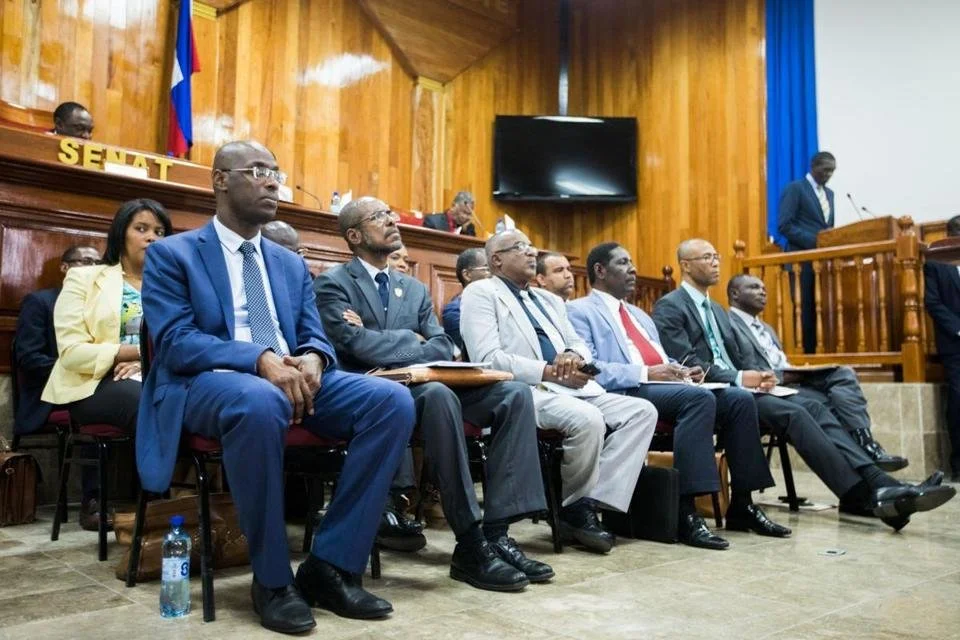
Haiti should relinquish its sovereignty
I moved back to my native Quebec from Port-au-Prince not long before Haiti adopted its constitution 30 years ago. Since then, Haitians have failed to build the democracy they envisioned for their new era of constitutionalism. Military rule, a legacy of colonial devastation, natural disasters and two coups — one engineered by the United States — certainly have not helped.The truth is that the constitution has not made much of a difference because the country needs a far more dramatic intervention. Nearly every part of everyday life is worse now than it was then. Conditions are so unspeakably awful that some find themselves recalling with misplaced affection the days of the Duvalier dictatorship.
The problem rests not with the Haitian people but with their leaders. This year on the occasion of the constitution’s 30th anniversary, the Chamber of Deputies launched nationwide public consultations on how to amend the Haitian Constitution to rebuild faith in the country’s corrupt public institutions.Yet there is little reason to believe that constitutional amendments will do anything to give Haiti and its long-suffering citizens what they need most: political leaders inspired by an ethic of public service, not driven by narrow self-interest. History has proven that the political class has neither incentive nor interest to put the country first.This moment nonetheless offers an opportunity to transform Haiti for the better. Instead of settling for mere tinkering with their constitution, Haitians should demand an altogether new one that can help to finally bring the peace and prosperity they have lacked for over 200 years of independence since driving away their French slavers in 1804.The new Haitian Constitution should do something virtually unprecedented: renounce the power of self-governance and assign it for a term of years, say 50, to a country that can be trusted to act in Haiti’s long-term interests.Why would a country accept this multigenerational commitment? The optics alone of a majority-white country running Haiti — even if in Haiti’s best interests — revive ghosts of the distant but never-forgotten past of slavery.
The choice of sponsor is delicate, and the list is short. Despite the hundreds of thousands of Haitians who live in New York City, Miami, and Boston, the United States has ruined nearly everything it has touched in the land once called the “pearl of the Antilles.” France and the United Kingdom are likewise nonstarters. Brazil and South Africa are possibilities, though both are now preoccupied with their own political crises. And the United Nations in Haiti? It has been a disaster.The answer may be Canada, for years one of Haiti’s most loyal friends and foreign aid donors — and today one of the most popular destinations for the diaspora. Canadians today yearn for real influence in the world, and there may be no better way than building Haiti anew drawing from Canada’s values of equality, diversity, and compassion, and its unique expertise in humanitarian assistance. Prime Minister Justin Trudeau is still looking for a major foreign policy achievement since his election in 2015, and this commitment could leave a legacy that would match his father’s own achievements as prime minister.Critics would be right to wonder whether Haiti would remain a country in the conventional sense of the term. We live in a post-Westphalian world, but the organizing logic of countries today remains rooted in traditional understandings of the nation-state. We hold sometimes too strongly to the idea that a country is sovereign — all-powerful within its jurisdiction and an independent actor beyond its borders — to fully appreciate that external pressures are not only a reality of our global order but often also a force for good.Haiti would not be alone in surrendering an important marker of national sovereignty in the pursuit of larger objectives, in this case the most basic ones of all: improving the quality of life of its people and building a modern infrastructure for the country. Other countries have on occasion willingly forfeited some measure of their sovereignty to a foreign power. For example, many countries of the Commonwealth Caribbean choose to retain the Judicial Committee of the Privy Council in London as their court of final appeal instead of acceding to the jurisdiction of the homegrown Caribbean Court of Justice. Similarly, roughly 25 countries choose to outsource their monetary policy to the United States. And until 35 years ago, Canada had voluntarily ceded to the United Kingdom the power to amend its own constitution.Difficult times often yield impossible choices, and this would be an extraordinarily difficult decision for Haiti’s political leaders. Yet the greatest gift Haiti’s political class can give their fellow citizens is to give up the power to govern. This ultimate sacrifice would be a triumph of national over individual interests, and it would forever memorialize Haiti’s current leaders as the country’s modern founders.By Richard Albert May 02, 2017

Porter-Berto Bout Drew Average of 468,000 Viewers on Showtime

By KeithAn average of 468,000 viewers watched Showtime’s broadcast of the Shawn Porter-Andre Berto welterweight fight Saturday night from Brooklyn.The average viewership was lower than the two previous main events Showtime televised in prime time this year, according to figures released by Nielsen Media Research.The previous main event Showtime aired in prime time, Adrien Broner’s split-decision defeat of Adrian Granados, drew an average of 779,000 viewers February 18 from Cincinnati. Three weeks earlier, Leo Santa Cruz’s majority-decision defeat of Carl Frampton in their featherweight championship rematch, averaged 587,000 viewers from Las Vegas.The decline in ratings for the Porter-Berto show, a rarity in what thus far has been a strong 2017 for Showtime’s boxing programming, could’ve partially been attributable to competition from NBA playoff games that generated strong ratings while airing at the same time.The San Antonio-Memphis game, which began at 8 p.m. ET on ESPN, averaged 3.4 million viewers. The Golden State-Portland game, which started at 11 p.m. ET on ESPN, drew an average viewership of 4.3 million.The Porter-Berto broadcast began at 9:30 p.m. ET and ended just before 11:20 p.m. ET.Showtime’s doubleheader began with Jermell Charlo’s spectacular sixth-round knockout of Charles Hatley at Barclays Center. An average of 401,000 viewers watched Houston’s Charlo (29-1, 14 KOs) make the first defense of his WBC super welterweight title against Dallas’ Hatley (26-2-1, 18 KOs), his mandatory challenger.Porter (27-2-1, 17 KOs), of Akron, Ohio, stopped Berto (31-5, 24 KOs), of Winter Haven, Florida, in the ninth round of the main event. His victory in their WBC elimination match made Porter the mandatory challenger for WBC welterweight champion Keith Thurman (28-0, 22 KOs, 1 NC), who beat Porter by unanimous decision in an entertaining battle June 25 at Barclays Center.Boxing Scene
50,000 Haitians face being deported by Trump back to country still reeling from natural disasters
 More than 50,000 Haitians are at risk of being deported to a country still reeling from a series of natural disasters, after Donald Trump’s immigration agency recommended ending their temporary right to live in the US.Up to 55,000 Haitians are living in America under so-called temporary protected status (TPS), initially granted to them after the 2010 earthquake, that killed an estimated 150,000 people.The status has been updated every 18 months, as Haiti has confronted the challenges of a cholera epidemic triggered by UN peacekeepers, a sexual abuse scandal involving those peacekeepers and political uncertainty following the postponing of elections that eventually saw Jovenel Moïse become president.
 But James McCament, acting director of US Citizenship and Immigration Services, has recommended Mr Trump end their starus. He said there should be a temporary, six-month extension to allow a period of “orderly transition” but that people should then return.The revelation, first reported by the Miami Herald, has triggered intense concern among the Haitian community in the US, and their supporters.“Anxiety is extremely high. They are calling me and asking me what they should do,” Emmanuel Depas, a former president of the Haitian American Lawyers Association of New York, told The Independent.“The temporary status is not necessarily a path to a green card, but it gives people the right to work here.”Campaigners said the threat of deportation could result in the splitting up of families, if the parents of children born in the US were forced to leave. Others have questioned whether Haiti, where more than 1,000 people were killed last October by Hurricane Matthew, the most powerful storm to make landfall there since 1964, is able to handle the return of so many people.Hurricane Mathew leaves Haiti orphans homelessNana Brantuo of the Black Alliance for Just Immigration, said: “From what we’ve heard, they are going to terminate this status. Then these people will be undocumented, and likely to be deported.”She added: “As black immigrants, they are in a state of vulnerability.”The decision on whether or not to end the Haitians’ temporary protected status falls to with Secretary of Homeland Security Secretary, John Kelly. His department said in a statement: "Secretary Kelly hasn't yet made a decision and we don't discuss pre-decisional documents."In his letter to Mr Kelly, Mr McCament said a review of the situation in Haiti led his organisation to conclude the conditions “no longer support its designation for TPS”.“Although Hurricane Matthew recently caused a deterioration of conditions in Haiti’s south-west peninsula, overall conditions in the country have continued on an upward trajectory since the 2010 earthquake,” he wrote.
 Jovenel Moïse was elected Haiti's president last November (AP)“The institutional capacity of Haitian government to respond to the lingering effects of the earthquake remain weak, but the US government is actively working to strengthen the Haitian civil service and government service delivery.”Haiti is the poorest country in the Western Hemisphere, with an average per capita annual income of about $1,700 (£1,365). Educational and medical facilities are inadequate and overburdened. Around 3.2m people - approximately 30 per cent of the population - suffer from food insecurity.The US, the regional power, has long interfered politically in the country, less than a two-hour flight from its coastline. In 1991, the first democratically elected president, Jean Bertrand Aristide, was ousted in a coup backed by the CIA. He was returned, under a deal brokered by Bill Clinton, only to be forced into exile again in 2004, with his opponents once more receiving the backing of elements in Washington.In recent years, UN peacekeepers have been accused of indiscriminate killing of civilians. In the aftermath of the earthquake, UN peacekeepers from Nepal were almost certainly responsible for an outbreak of cholera that killed at least 10,000 people and made more than 700,000 ill.Indeed, Mr McCament’s letter pointed out the country is still facing problems in housing, health, the economy, sanitation services, gender-based violence and overall security.“Haiti is the poorest country in the hemisphere and it had enormous problems before the 2010 earthquake,” he wrote. “Even before the earthquake, the Haitian government could not, or would not, deliver core functions to the majority of its people.”Reaction to the proposal to end the TPS has met with criticism from both Republicans and Democrats.“Haiti is still struggling to recover from two major natural disasters that killed more than 200,000 people. Haiti is one of the poorest countries in the world and right now it’s unable to support the roughly 50,000 Haitians that are currently receiving protected status here in the US,” said Democratic senator Bill Nelson of Florida. “The US should be focused on helping Haiti recover, not sending people back to a country that can’t support them.”Republican senator Marco Rubio, also from Florida, was among a bipartisan group that has written to Mr Kelly urging him to extend TPS.By: Andrew Buncombe for independent.co.uk| May 1, 2017

First international medical training center in Haiti!

 Chargé d'Affaires Brian Shukan joined St. Luke's Foundation, the Haitian Ministry of Health, and the United States Agency for International Development (USAID) to inaugurate the first international medical training center in Haiti.The training center consists of two training and simulation rooms, a conference room, and an administrative meeting room. "This state-of-the-art medical training center will ensure that St. Luke staff and the greater Haitian medical community have a base to build and hone the most current skills they need to continue their vital work," said Shukan.The construction was supported by a $500,000 grant from USAID's Office of American Schools and Hospitals Abroad (ASHA), and the facility will host its first international conference, "The Haitian Acute Care and Emergency Care Conference" on April 28 and 29."Continuing Medical Education (CME) is a guarantee of quality in healthcare," said St. Luke Mission medical director, Dr. Marc Edson Augustin. "The conference will be the first of many such experiences at St. Luke's new training center, furthering our primary goal of bringing quality and dignified care to the most vulnerable."USAID/ASHA grants support the construction and purchase of equipment for medical institutions in Haiti. Additional recipients of ASHA grants include St. Boniface Haiti Foundation; Catholic Relief Services for equipment at Hospital St. Francois de Sales; Albert Schweitzer Hospital; and the International Child Care's training center and inpatient child care unit. Since 1979, ASHA grants have provided over $21 million in support to projects in Haiti.HL/ HaitiLibre HaitiVille
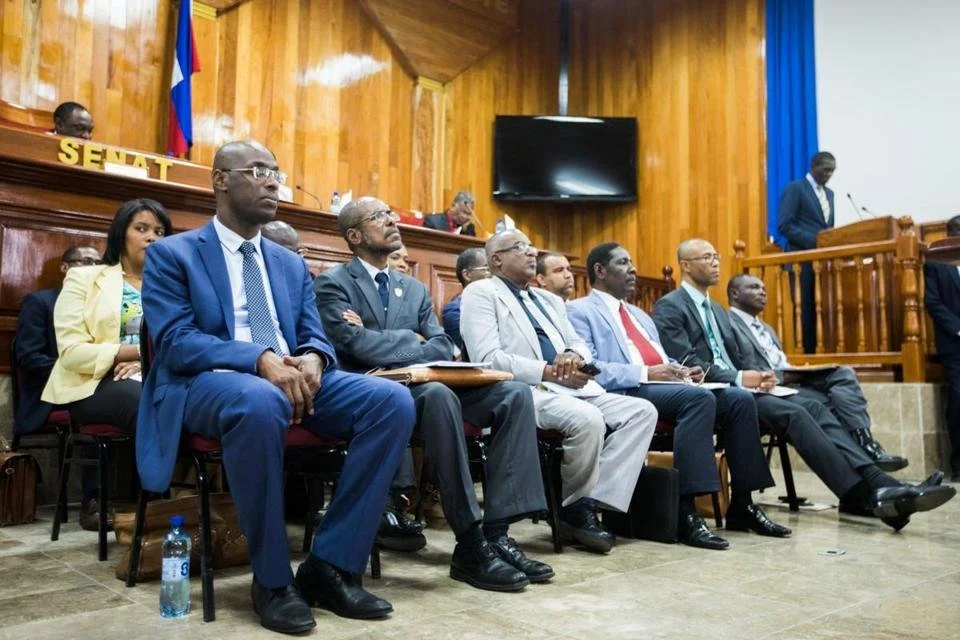
Haiti's new president taps medical doctor to be the country's new prime minister!
 PORT-AU-PRINCE - A relatively unknown medical doctor was tapped to be Haiti’s new prime minister, tasked with steering the government’s legislative agenda through parliament, President Jovenel Moise said late Wednesday.The choice of Jack Guy Lafontant as prime minister of the impoverished Caribbean country came two weeks after Moise took power as president.If parliament confirms Lafontant, perhaps best known as the president of the Rotary Club in the upscale district of Petionville, and allows him to choose other ministers, it would mark the country’s first elected government in a year.Moise announced the surprise pick on Twitter and noted that he consulted with the heads of both chambers of parliament on the selection. Moise did not indicate why he had chosen Lafontant. The two men are believed to be friends, according to local media.Haiti has been headed by a caretaker government since Michel Martelly, the last elected president and Moise’s political benefactor, stepped down early last year without a designated successor.Source: http://www.nydailynews.com/news/world
PAOLA MATHE: CHANGING THE GAME
 Paola Mathé is a lover of epic adventures, African headwraps, and all things colorful. Born a dreamer from a small town in Haiti, Paola moved to the United States right around her teenage years. She obtained her dual bachelor's degree in Economics and French Literature at Drew University. Lost between her artistic desires and thirst for adventure, Paola moved New York City after her studies to live her dreams. She started her career in hospitality where she went to manage, operate and open trendy hotels and restaurants in Manhattan. In her spare time, she shared her dreams, colorful personality, and style on Finding Paola, her lifestyle blog.In 2014, Paola launched Fanm Djanm, a head wrap collection and popular lifestyle brand that celebrates the strength of women while also empowering to live boldly. Known for her bold style and creative visions, Paola has been featured in many established online and print publications such as The New York Times, Teen Vogue, NY Magazine/The Cut, Oxygen, Cup of Jo, Harper's Bazaar, Buzzfeed, Huffington Post, Design Sponge, and Essence.com.

Word on the streets ... O.T GENASIS and FABOLOUS in Haiti soon!

 Lets wait and see! #Summer2017 Source: partyinginhaiti IGWhat do you think these 2 mainstream artists have planned? Either way, seems like a good look for Haiti!!! #staytuned
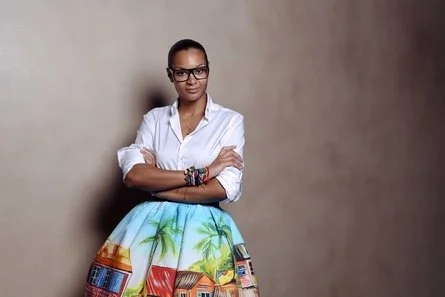
Why This Italian-Haitian Designer Loved by Beyonce, Rihanna and More Should be On Your Radar
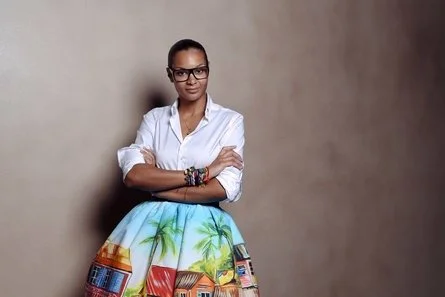
 This Rome-based fashion star opens up about her Haitian roots and how clothes can be a cultural connector.ESSENCE: What inspires your creations?STELLA JEAN: My own story—my roots and background have always inspired my work. I'm half-Haitian and half-Italian. Haiti influences my creativity. The sociocultural fusion I bring in my collections is perfectly represented by a country like Haiti and in line with my fundamental need to convey a new concept of multiculturalism. Fashion can be a cultural translator; we can reestablish the proportion among symbols, stories and different worlds through style.ESSENCE: How would you describe the Stella Jean woman?S.J.: Women who are confident, curious, audacious, not afraid to experiment and who cherish family memories, plus have a pinch of irony—all of which makes every look personal and unique.ESSENCE: Who are your favorite designers?S.J.: Dries Van Noten, who mixes different cultures in a tasteful and respectful way. And Etro, who sums up a blend of tradition and innovation.ESSENCE: What are your go-to beauty products?S.J.: Kreyòl Essence 100% natural Haitian black castor oil, pure organic moringa oil (from the southern coast of Haiti) by Ayiti Natives and MAC's In Extreme Dimension mascara.By Bridgette Bartlett Royall (for Essence.com) | Apr, 26, 2017

Haitian Black Castor Oil Now Available at Whole Foods Market

Haitian Black Castor Oil Now Available at Whole Foods Market
 Kreyol Essence is excited to be the first company to launch Haitian beauty products at Whole Foods Market and the first Haitian company to bring Haiti’s beauty treasure to the mainstream U.S. & Canadian market! Haitian Black Castor Oil aka Lwil Maskriti is the Liquid Gold of the Caribbean. We have known for centuries how this indigenous oil promotes hair growth, moisturizes hair and skin, and is a staple for medicinal purposes.Having our products at Whole Foods is a testament to our quality and commitment to social impact in Haiti. We are launching in over 95 stores in Pennsylvania, New Jersey, Virginia, Maryland, Washington DC, Ohio, Kentucky, Florida, Canada, and are working on additional locations every day. If you want the best black castor oil and to help create work for women and farmers, purchase your bottle of oil at any of the Whole Foods Stores listed below and tell a friend to do the same. Check our website frequently for additional store addresses.
 KENTUCKYLexington – Lexington, KYMARYLANDBethesda – Bethesda, MDColumbia Maryland – Columbia, MDHarbor East – Baltimore, MDMount Washington – Baltimore, MDSilver Spring – Silver Spring, MDOHIOChagrin- Beachwood, OHPENNSYLVANIA Philly Center City – Philadelphia, PAPittsburgh – Pittsburgh, PAWexford – Wexford, PANEW JERSEY Cherry Hill – Cherry Hill, NJVIRGINIAArlington VA -- Arlington, VACharlottesville – Charlottesville, VAVirginia Beach, Virginia Beach VANewport News — Newport News, VAOld Town -- Alexandria, VAShort Pump – Glen Allen, VATysons, Fall Church, VAWASHINGTON DC Foggy Bottom – Foggy Bottom, DCGeorge Town – Washington, DCTenleytown – Washington, DCP Street – Washington, DCH Street— Washington, DC
- March 03, 2017
- Kreyol Essence
Kreyol Essence | March 3, 2017
UN votes to end Haiti peacekeeping mission in October
![The 13-year UN mission began when violence erupted after president Jean-Bertrand Aristide's departure [Andres Martinez Casares/Reuters]](http://www.aljazeera.com/mritems/imagecache/mbdxxlarge/mritems/Images/2017/4/13/8a35e424c67040e0b2f3db1205c46a64_18.jpg) The UN Security Council voted unanimously on Thursday to end its 13-year-long peacekeeping mission in Haiti and replace it with a smaller police.The move signals the international community believes the impoverished Caribbean nation is stabilising after successful elections.The peacekeeping mission - one of the longest-running in the world and known as MINUSTAH - has been dogged by controversy, including the introduction of cholera to the island by UN troops that killed thousands of Haitians, as well as sexual abuse claims against them.
The UN Security Council voted unanimously on Thursday to end its 13-year-long peacekeeping mission in Haiti and replace it with a smaller police.The move signals the international community believes the impoverished Caribbean nation is stabilising after successful elections.The peacekeeping mission - one of the longest-running in the world and known as MINUSTAH - has been dogged by controversy, including the introduction of cholera to the island by UN troops that killed thousands of Haitians, as well as sexual abuse claims against them.
|
|
The 15-member Security Council acknowledged the completion of Haiti's presidential election, along with the inauguration of its new president, as a "major milestone towards stabilisation" in the Caribbean country."What we now need is a newly configured mission which is focused on the rule of law and human rights in Haiti," British UN Ambassador Matthew Rycroft said."Peacekeepers do fantastic work but they are very expensive and they should be used only when needed," Rycroft said.The shutdown of the $346m mission, recommended by UN chief Antonio Guterres, comes as the United States looks to cut its funding of UN peacekeeping.The US is the largest contributor paying 28.5 percent of the total budget.Al Jazeera's Mike Hanna, reporting from the UN headquarters in New York, said the decision to downsise may be because of American pressure to save money."The US has been demanding that the UN become leaner and meaner in its operation, and has at times threatened to withhold some of the massive funding that it gives the organisation," Hanna said.There are 2,342 UN troops in Haiti, who will withdraw over the coming six months.The new mission will be established for an initial six months, from October 16, 2017 to April 15, 2018, and is projected to exit two years after its establishment. It will be a police force of about 1,000 personnel.
|
|
UN peacekeepers were deployed to Haiti in 2004 when an uprising led to the ouster and exile of then-president Jean-Bertrand Aristide. It is the only UN peacekeeping mission in the Americas.Haiti suffered a two-year political crisis until the recent election and inauguration of President Jovenel Moise. It has suffered major natural disasters, including an earthquake in 2010 and Hurricane Matthew last year.But the impoverished Caribbean country has not had an armed conflict in years.UN peacekeepers have been accused of sexual abuse and blamed for the cholera outbreak. Haiti was free of cholera until 2010, when peacekeepers dumped infected sewage into a river.The UN does not accept legal responsibility for the outbreak of the disease, which causes uncontrollable diarrhea. Some 9,300 people have died and more than 800,000 sickened.In late March, the council reduced the size of its peacekeeping mission in the Democratic Republic of Congo, bringing the ceiling down from 19,815 troops to 16,215.Missions in Liberia and Ivory Coast are also set to end, while the joint UN-African Union peace operation in Sudan's Darfur region is also expected to be drawn down.http://www.aljazeera.com/news/2017/04/votes-haiti-peacekeeping-mission-october-170413162903710.html